




Abstract
Geothermal resource is a kind of crucial clean, renewable energy with high potential development and application. However, it involves great exploiting risks since it buried deep beneath the crust of the Earth. The location and depth of geothermal resources can be determined using the geophysical methods. Controlled source audio-frequency magnetotellurics (CSAMT) and transient electromagnetic method (TEM) have relatively high efficiency and robustness. In this paper, a simplified geothermal system resistivity model was established, which allowed TEM and CSAMT to differentiate target faults with various characteristics (resistivity, dip angle and width). Through a comprehensive electromagnetic exploration in Huairen County, Shanxi Province, China as an example, the performance of TEM and CSAMT in determining geothermal resources was evaluated. The results showed that both methods could examine the geoelectrical structures from various perspectives, and the effectiveness of comprehensive electromagnetic method for geothermal resources was presented.
Keywords
Introduction
Geothermal resources are a kind of low-carbon, green clean energy, which are the most abundant and widely distributed in China (Hu et al., 2011). Thus far, the geothermal resources used in China are less than 5‰ of the total reserve and the prospect for full deployment of geothermal resources is quite remarkable (Zhang et al., 2019). Besides, the depth of geothermal resources is relatively large (exceeding 2000 m), and they have high exploiting risks (Ozdemir et al., 2021). In order to further understanding geothermal resources, a geological survey of geothermal resources should be conducted before exploitation by determining their depth, location and reserve (Yang, 2017). Thus, selecting the most effective geophysical methods for exploring geothermal resources is of great importance.
Various geophysical techniques have been used for geothermal exploration, including the magnetotellurics (Bai et al., 1994; Didana et al., 2014; Heise et al., 2017, 2019; Ozdemir and Palabiyik, 2019; Singh et al., 2018), shallow seismic method (Yin et al., 2007), micro-motion method (Xu et al. 2013), transient electromagnetic method (TEM) and controlled source audio-frequency magnetotellurics (CSAMT; Di et al., 2008; Fu et al., 2019). Rock faults and bases are critical targets of geothermal exploration, rather than surrounding rocks, they normally have various electrical features. The electrical information of rock fault and base locations can be acquired using the electromagnetic methods for estimating the distribution of geothermal resources.
Considering that the exploration results can be obtained by all geophysical methods, the comprehensive electromagnetic method has emerged as the new technique for geothermal exploration. The comprehensive electromagnetic method is more effective than a single electromagnetic method for exploring geothermal resources from various perspectives. Several research groups have conducted experiments on comprehensive electromagnetic methods, and excellent results have been achieved (Chen et al., 2011; Muñoz, 2014; Muraoka et al., 1998; Robertson et al., 2020; Smith, 2014; Spichak and Manzella, 2009; Tauber et al., 2018; Tripathi et al., 2019; Yang et al., 2009; Younis et al., 2015). However, most of the studies on comprehensive electromagnetic methods for geothermal exploration have focused on their practical applications, whereas the theoretical framework has been neglected. Moreover, there is a lack of research on numerical simulation and optimization of comprehensive electromagnetic method.
In this study, a geothermal system model is established according to low-resistivity faults. Next, the finite volume method of TEM and CSAMT is used to differentiate target faults with various characteristics (resistivity, dip angle and width), and the performance of these methods for exploring geothermal resources are evaluated. A comprehensive electromagnetic method of TEM and CSAMT is used as an exploration example in Huairen County, Shanxi Province, China, by combining with theoretical analysis. The data indicate that these two methods can display the geoelectrical structures from various perspectives, and that the comprehensive electromagnetic method for exploring geothermal resources is efficient and robust.
Geological settings of the study area
Description of the study area
In this paper, to examine the effect of comprehensive electromagnetic method on geothermal exploration, a field experiment was conducted in Huairen County, Shanxi Province, China.
The study area was located at the uplift zone in the western part of the Sangganhe new rift. The northwest of the Sanggan River new rift is bounded by the Kouquan Fault and the Hongtaoshan Horst, and the southeast is bounded by the Yanmenguan Horst. The faults in this area were all normal faults, and their strikes are almost all in the northeast-southwest direction, providing good communication channels for various underground aquifers. These faults also controlled the strata deposition in the basin and divide the whole basin into five sub-structural units: Huairen Graben, Huanghualiang Horst, Housuo Graben, Hunyuan Fault Stage, and Shuozhou Fault Stage. The strata in this region included Cambrian, Carboniferous, Permian and Cenozoic (Q + N), Lower Ordovician, Late Tertiary basalt and Archean granite intrusions. The basalts and metamorphic rocks of the Wutai Group were excellent geothemal reservoirs (Xie et al., 2013).
The geological structure map of the Sanggan River New Rift is displayed in Figure 1, and the geological profile is also shown.
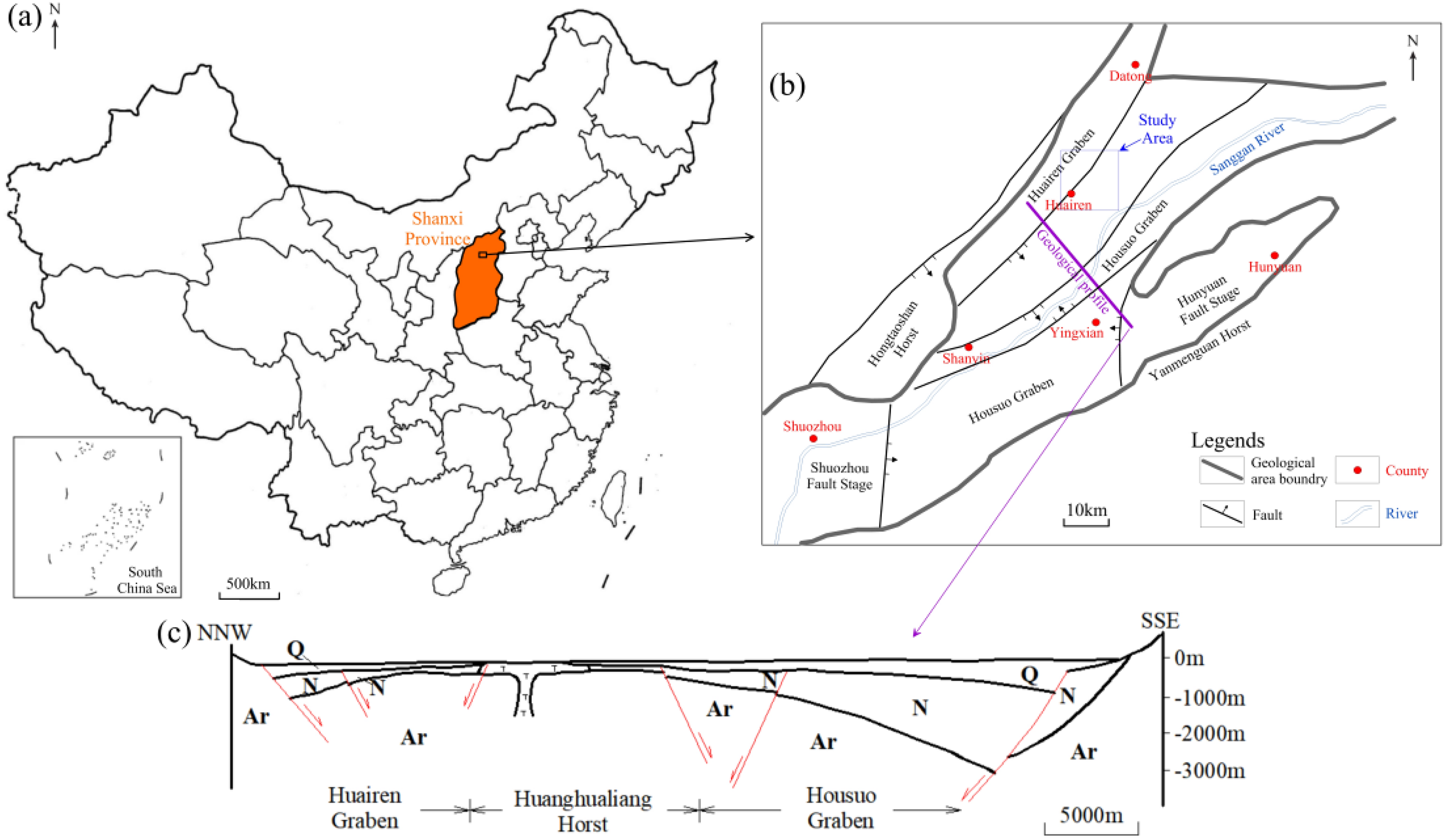
Geological structure map of the Sanggan River New Rift: (a) location of New Rift of Sanggan River Area; (b) schematic map of geological structure; (c) geological profile of the Sanggan River New Rift (cited from Xie et al., 2013).
Geophysical features of the study area
Different conductivities are found during the formation of different rocks. After long-term metamorphism, the formation of most rocks is complete and compact, without any fracture. In the horizontal direction, the resistivities remain constant, then increase gradually with increasing depth in the vertical direction.
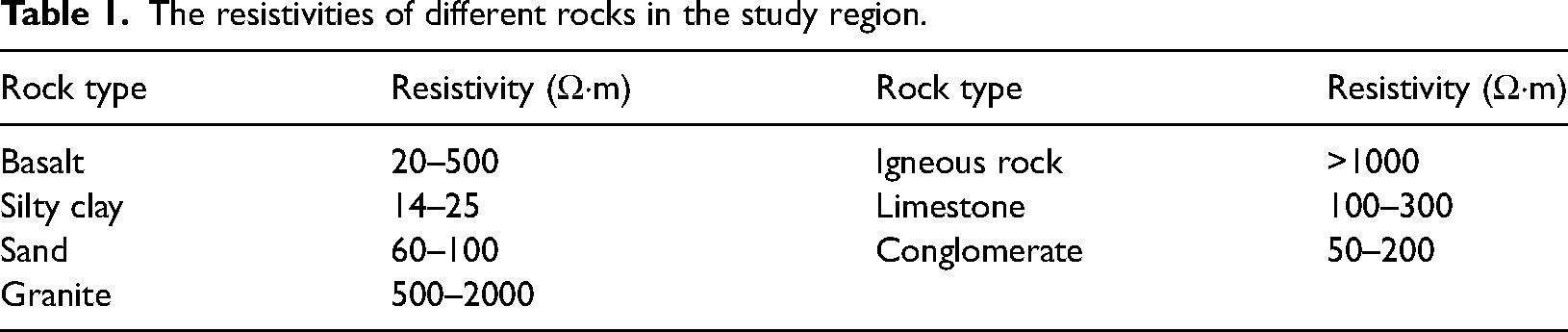
After receiving the intermittent leakage replenishment of surface water and vertical infiltration replenishment of atmospheric precipitation, the pore water of the overlying loose layer can flow into the deep igneous rock basement via the rock fissures and fault fracture zone. An aquifer is an underground layer of water stored in the igneous rocks. The resistivities of eruptive igneous rocks (e.g. rhyolite, basalt, etc.) are relatively lower (20–500 Ω·m) than granite (>500 Ω·m), while higher than the sediments of surrounding rocks. Hence, the differences in resistivities between sedimentary surrounding rocks and igneous rocks are determined using the geophysical method for identifying igneous rock locations and then exploring geothermal resources (Zhang et al., 2016) (Table 1).
Furthermore, the resistivities can alter in regions with the presence of faults. The fault activity can induce a fracture zone surrounding the faults, leading to a hydraulic relation between the lower and upper strata. In such manner, an anomaly region with low-resistivity is generated near the faults, which appears steeper on the resistivity profile. This may reflect the occurrence of faults, after which the location of geothermal resources can be identified.
Method of numerical simulation
Based on the close relationship of the key elemental resistivity of the geothermal system, and there is much interconnected pore water with strong conductivity in the low-resistivity faults, a simplified geothermal system resistivity model is developed, to simulate the geological conditions of the study area.
Generally, the basic structure of thermal reservoir is deep bedrock. Compared with the shallow stratum, the resistivity of the deep bedrock as the thermal reservoir is relatively high, which is the main target of electromagnetic exploration. In addition, the migration channel of geothermal fluid is the fault within the geothermal system. To meet the space demand of fluid migration, the fault is large in scale and has good water abundance, which makes the fault have good water and thermal conductivity. Due to the strong water-rich property of the fault, compared with the surrounding rocks, the fault is usually reflected as low resistivity, and is also the geophysical target of geothermal exploration (Bastani et al., 2011; Cairns et al., 1996). As demonstrated in Figure 2(a), the basic model contains four layers with deep and shallow resistivities of 100, 200, 500 and 1000 Ω·m. Given that strata dislocation may be induced by faults, the resistivities of all layers are staggering along the faults (Figure 2(b)). The design of this model aims to focus on the low-resistivity feature of the water-conducting faults. Hence, the faults are placed in the high-resistivity layered surrounding rocks.
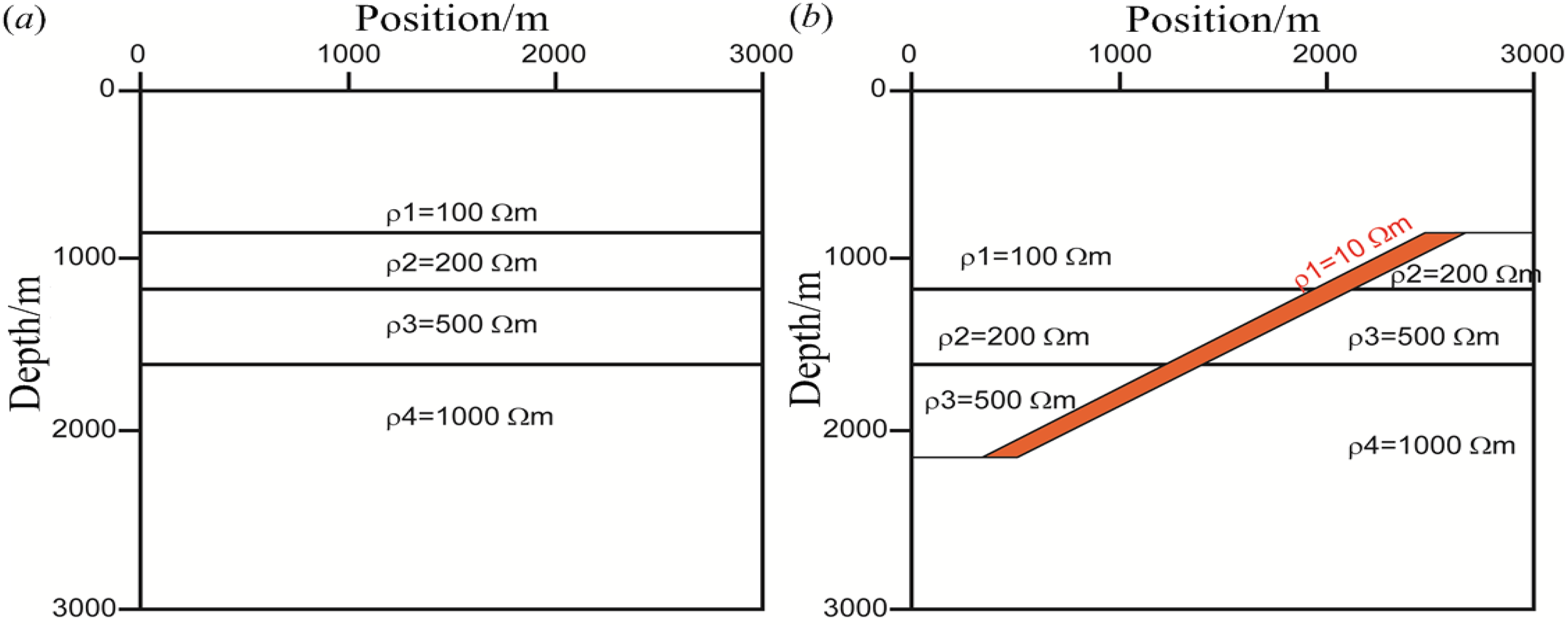
Simplified geothermal system resistivity model the faults as a target body: (a) is a background model, while (b) involves fault dislocation.
By CSAMT and TEM numerical simulations, the anomalous responses of the two methods to faults were compared, and the abilities of the two methods to identify and characterize faults were analyzed, which verified the complementarity of the two methods in detecting faults with different characteristics.
Regarding to the numerical simulation methods, many scholars have done a lot of researches, and the commonly used methods are as follow: finite volume method, finite difference method, finite element method, and integral equation method, etc. In this paper, an open-source code SIMPEG is used as the numerical simulation program, and finite volume method is used as the forward method, as displayed in the “Appendix” part.
Assumption of CSAMT responses
According to the simplified geothermal system resistivity model, the abnormal responses of CSAMT with various fault characteristics (resistivity, dip angle and width) are subjected to numerical simulation and analysis. The transmitting current and transmitting source length are normalized during the estimation of apparent resistivity.
CSAMT responses to the faults with various resistivity values
In the simplified geothermal system resistivity model, the fault's resistivity is 10 Ω·m. In the half-space strata, the faults can be considered as a plate-like, angularly inclined body with a downward extension. A massive amount of cracks is found in the fault region, which are filled by breccias and different resistivities of the filled substances, which can determine the features of the fault resistivity. Hence, the resistivity of faults often alters within a broad range. Then, fault models with various resistivities (10, 50 and 100 Ω·m), fault dip angle of 30° and width of 70 m are developed, and forward simulations are conducted to determine all responses. Later, their apparent resistivity are measured (Figure 3(a)–(c)).
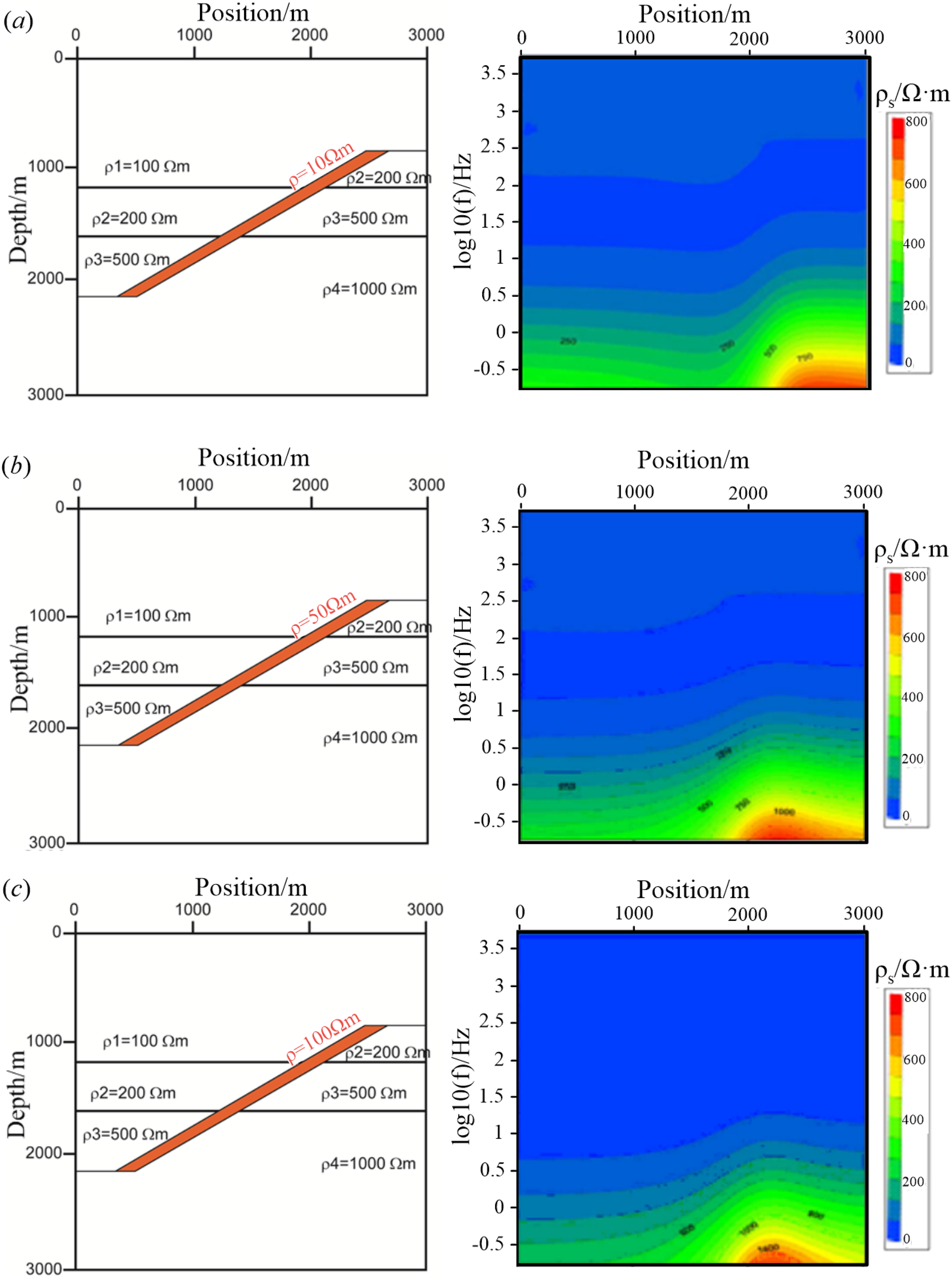
The models where the fault resistivities are 10, 50 and 100 Ω·m, together with the apparent resistivity. The apparent resistivity contour surrounding the faults is quite smooth when the fault resistivities are low (10 and 50 Ω·m), in which the apparent resistivity contour changes relatively more gently compared with (c). With increasing fault resistivities, the apparent resistivity contour increases greatly. Overall, the differences in fault resistivities can reflect a distinct apparent resistivity profile.
CSAMT responses to the faults with various dip angles
The dip angle of the faults is a crucial indicator of geothermal exploration. Therefore, fault models with various dip angles (dip angles: 30°, 45° and 60°, width: 70 m, fault resistivity: 10 Ω·m) are developed and forward simulation is conducted (Figure 4(a)–(c)).
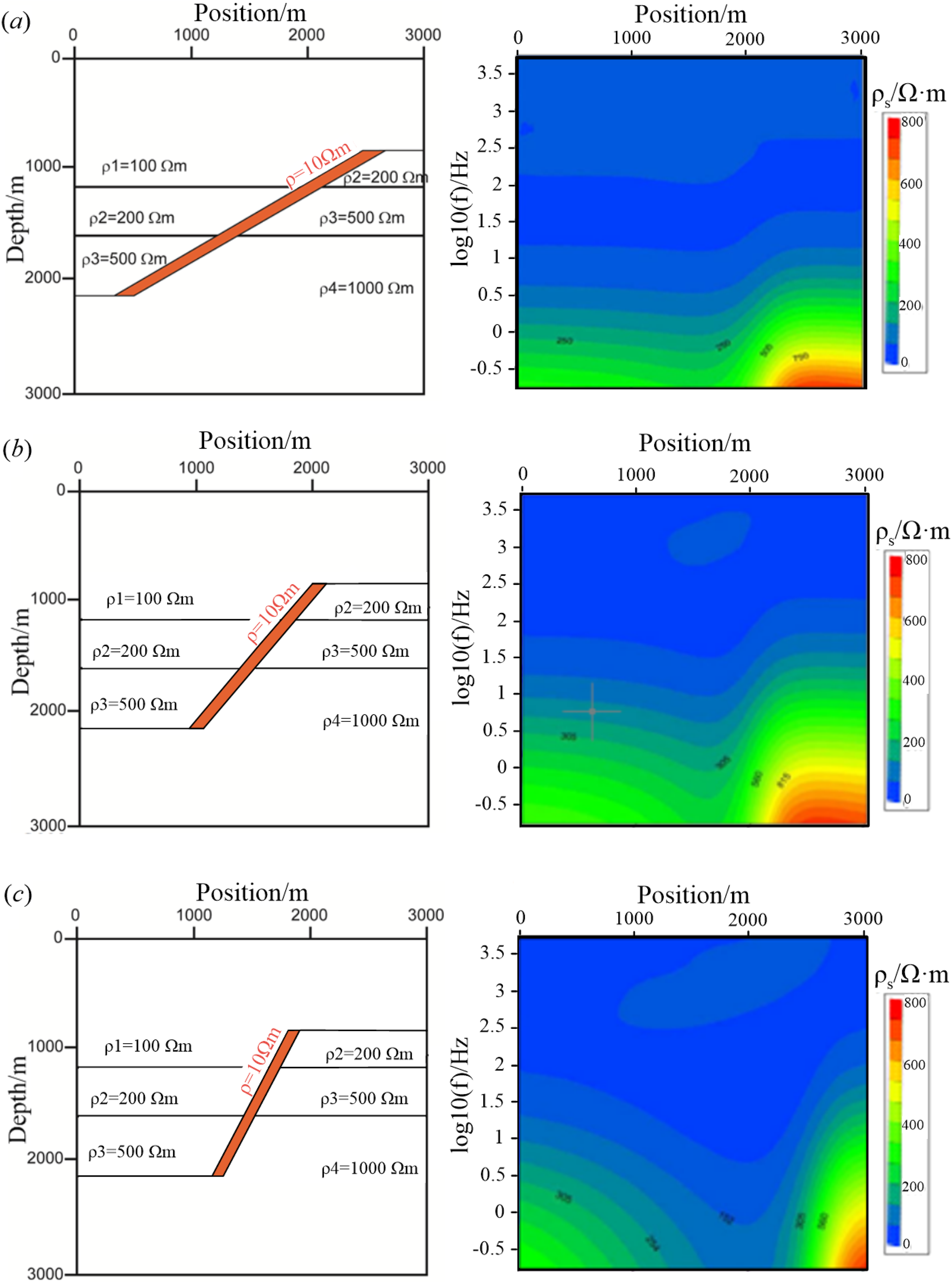
The models with fault dip angles of 30°, 45° and 60°, together with apparent resistivity profile. The “sags” is observed in the fault position of the apparent resistivity profile when the dip angles are 30°, 45° and 60°. The larger the dip angles, the higher the degrees of “sag”. The dip exceeds the actual fault.
CSAMT responses to the faults with various widths
Width can be used to determine the size of faults. Then, the widths of faults are 30, 70 and 100 m, dip angle is 30° and fault resistivity is 10 Ω·m, and forward simulation is conducted (Figure 5(a)–(c)).
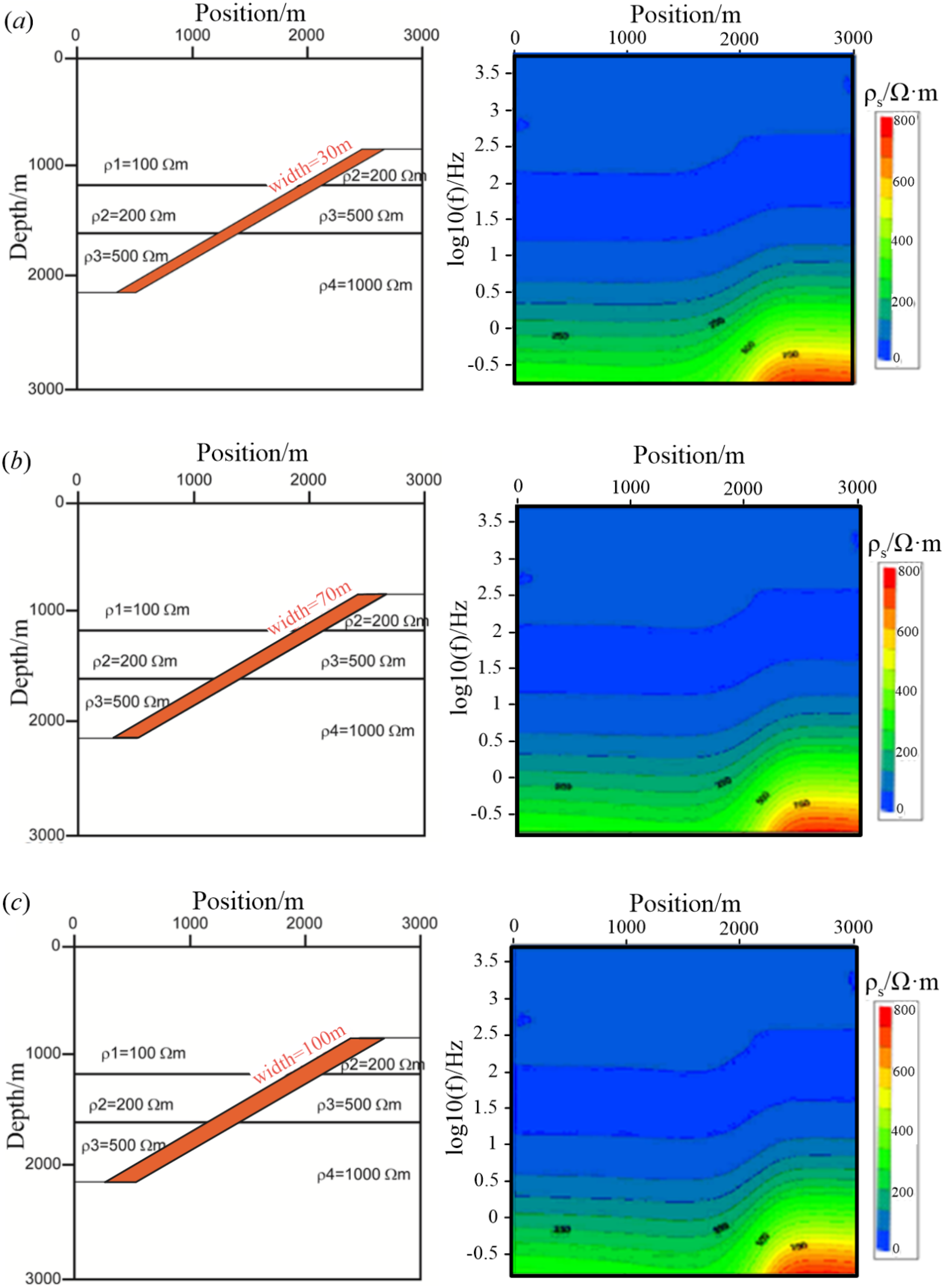
The widths of faults are 30, 70 and 100 m, together with the apparent resistivity profile. The “sags” is observed around the point 1500 when the widths are varied. Then, the apparent resistivity increases, which agrees well with the actual shape of the faults in resistivity model shown on the left side. With increasing fault widths, the degree of “sags” in the apparent resistivity contour slightly elevates. Therefore, it remains hard to precisely measure the actual fault width according to the features of apparent resistivity contour.
Assumption of TEM responses
According to the stimulation of low-resistivity fault models with various characteristics (resistivity, dip angle and width), the capability of CSAMT to determine low-resistivity faults was evaluated. Given that the apparent resistivity of TEM can be classified as late and early time channels, it remains hard to include all time channels into the apparent resistivity calculation formula. Hence, TEM analysis is conducted with voltage response (μV) at various moments.
The following parameters are used for TEM numerical calculation: the voltage response s at various moments are received in the center of the receiving loop; the transmitting source is a single-turn square loop (1000 × 1000 m); three receiving points are set in each receiving loop, the distance between the receiving points is 100 m, and the center of the transmitting loop coincides with the second receiving point; the transmitting loop moves along the direction of the surveying line, and the distance of each movement is 300 m; the number of time channels is 22; the time range is 0.48–28.7 ms; the transmitting waveform is a bipolar rectangular pulse (Figure 6). The geoelectric model is similar to that described in previous section.
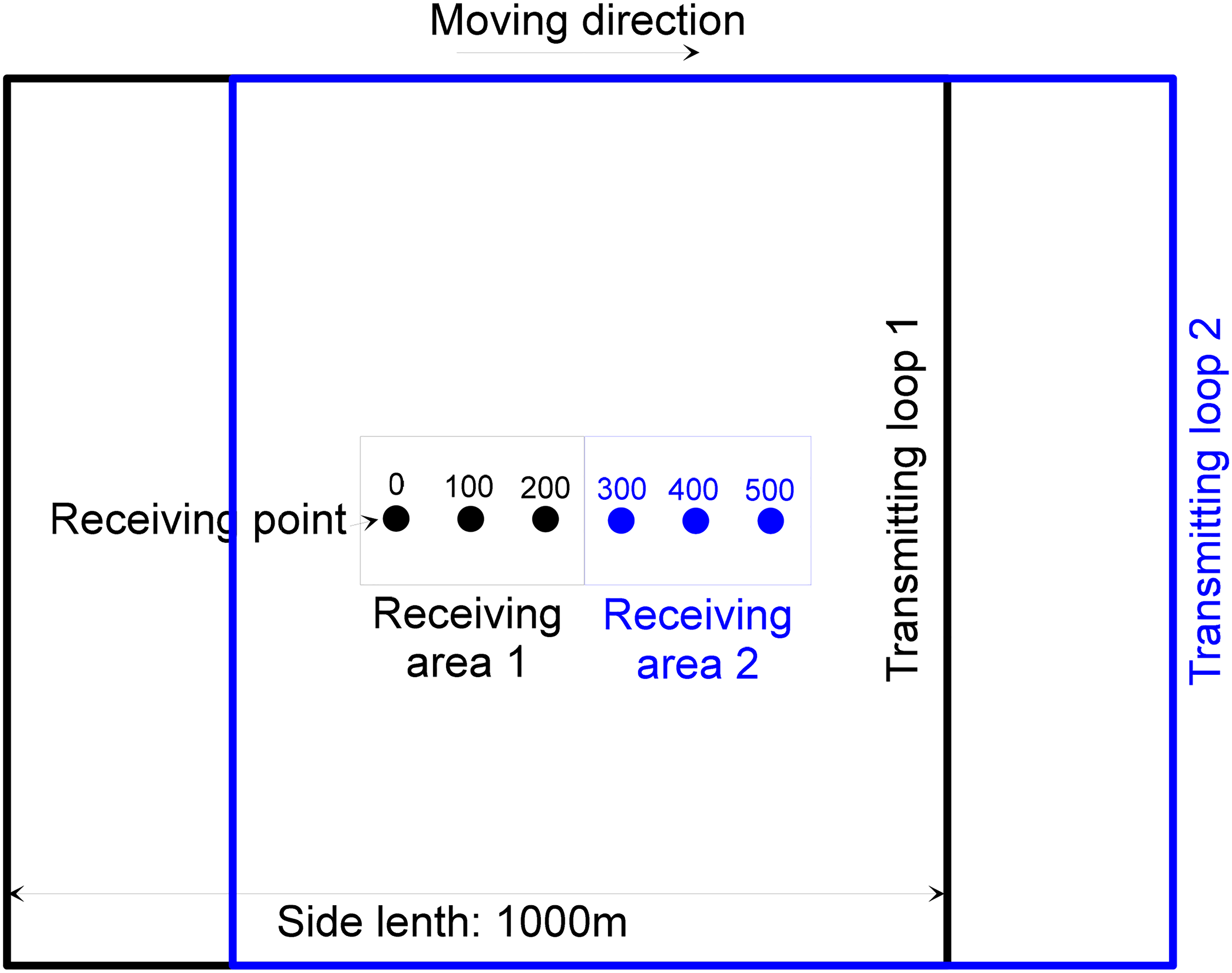
Schematic diagram of the TEM transmitting device.
TEM responses of the faults with various resistivities
The simplified models with various resistivities of 10, 50 and 100 Ω·m, width of 70 m, and dip angle of 30° are developed, and the VRs are measured. Considering the large buried depth, the anomaly response appears primarily in the late time channels of the TEM response, whereas the early time stages are not significantly influenced (Figure 7(a)–(c)).
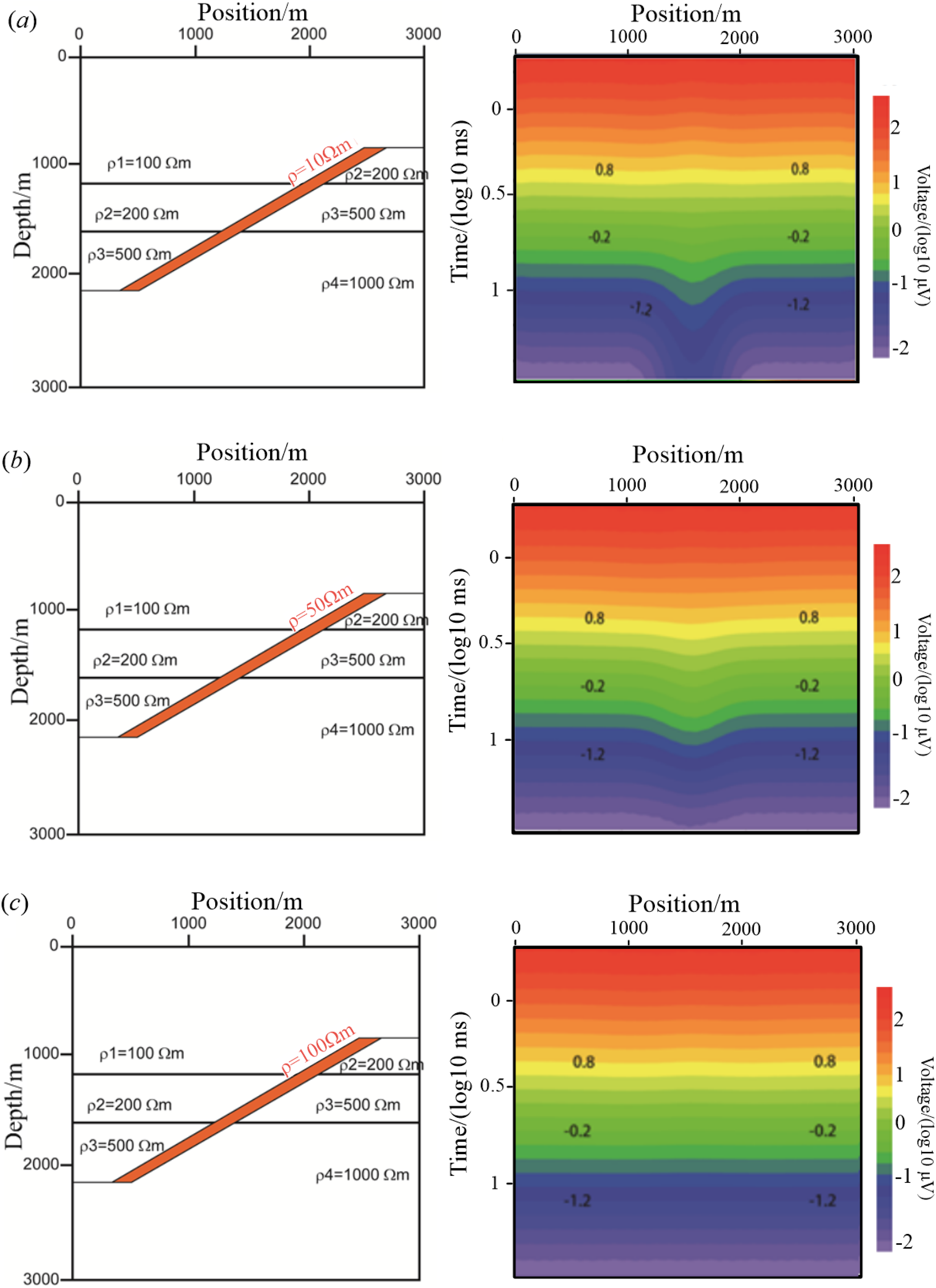
The models with fault resistivities of 10, 50 and 100 Ω·m, together with VR profile. A significant anomaly is observed when the fault resistivity is low, with its maximum value is located at the midpoint of the faults. The smaller the resistivity, the more significant the abnormal VR. No large anomaly is formed in the VR profile, and the difference in resistivity between the faults and surrounding rocks is small, when the fault resistivity is 100 Ω·m. This indicates that TEM is not easy to identify the faults if the difference is small.
TEM responses to the faults with various dip angles
Simplified models with various dip angles of 30°, 45° and 60°, resistivity of 10 Ω·m and width of 70 m, are developed, and the VRs are measured (Figure 8(a)–(c)).
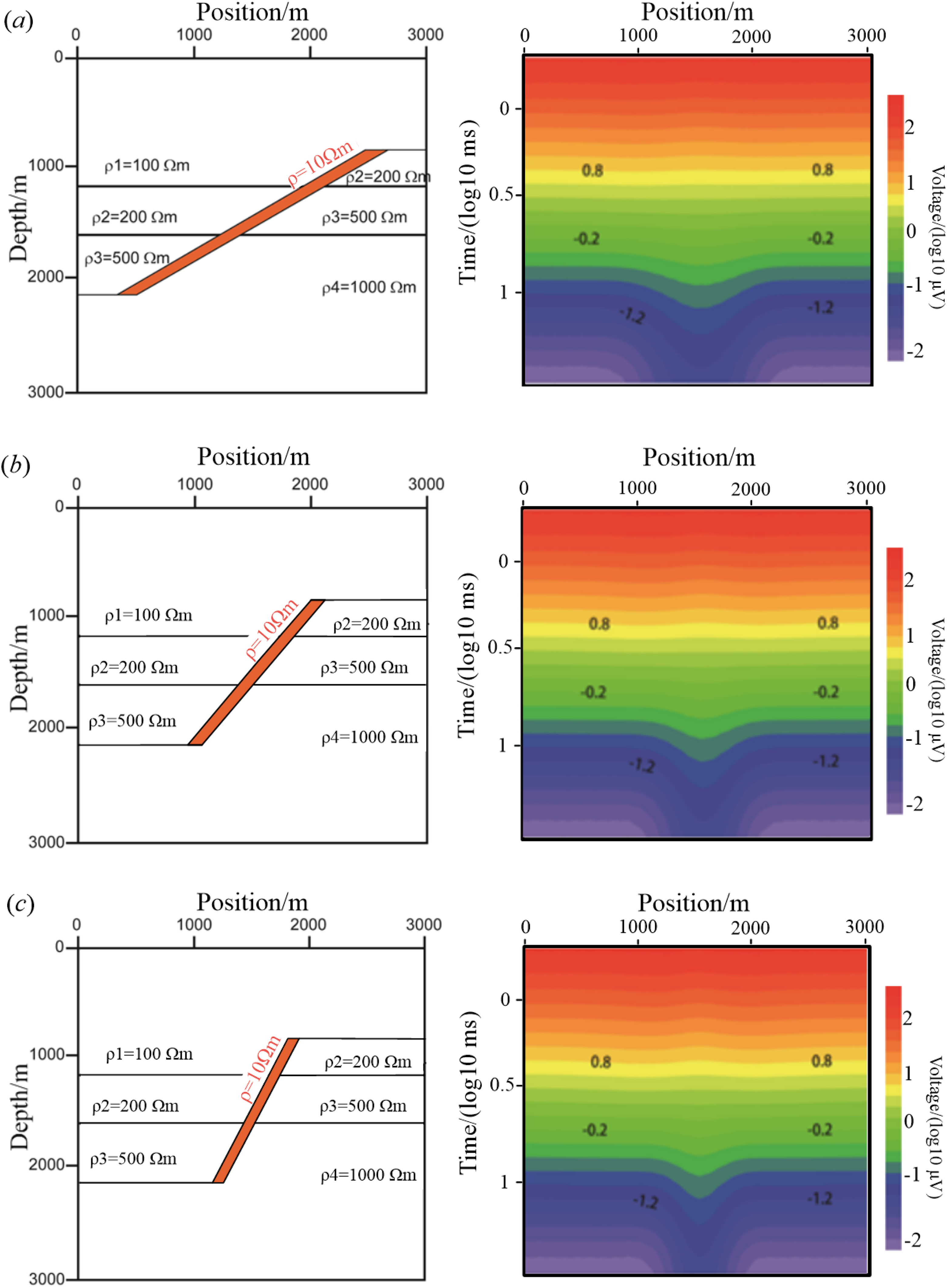
The models with various dip angles of 30°, 45° and 60°, together with the VR profile. The VR is altered when the dip angle changes. With increasing dip angles, the surveying point that receives abnormal VR decreases gradually, while the abnormal VR amplitude increases gradually, indicating that TEM is responsive to the fault dip angles.
TEM responses to the faults with various widths
Simplified models with various widths of 30, 70 and 100 m, dip angle of 30° and resistivity of 10 Ω·m are developed, and the VRs are measured (Figure 9(a)–(c)).
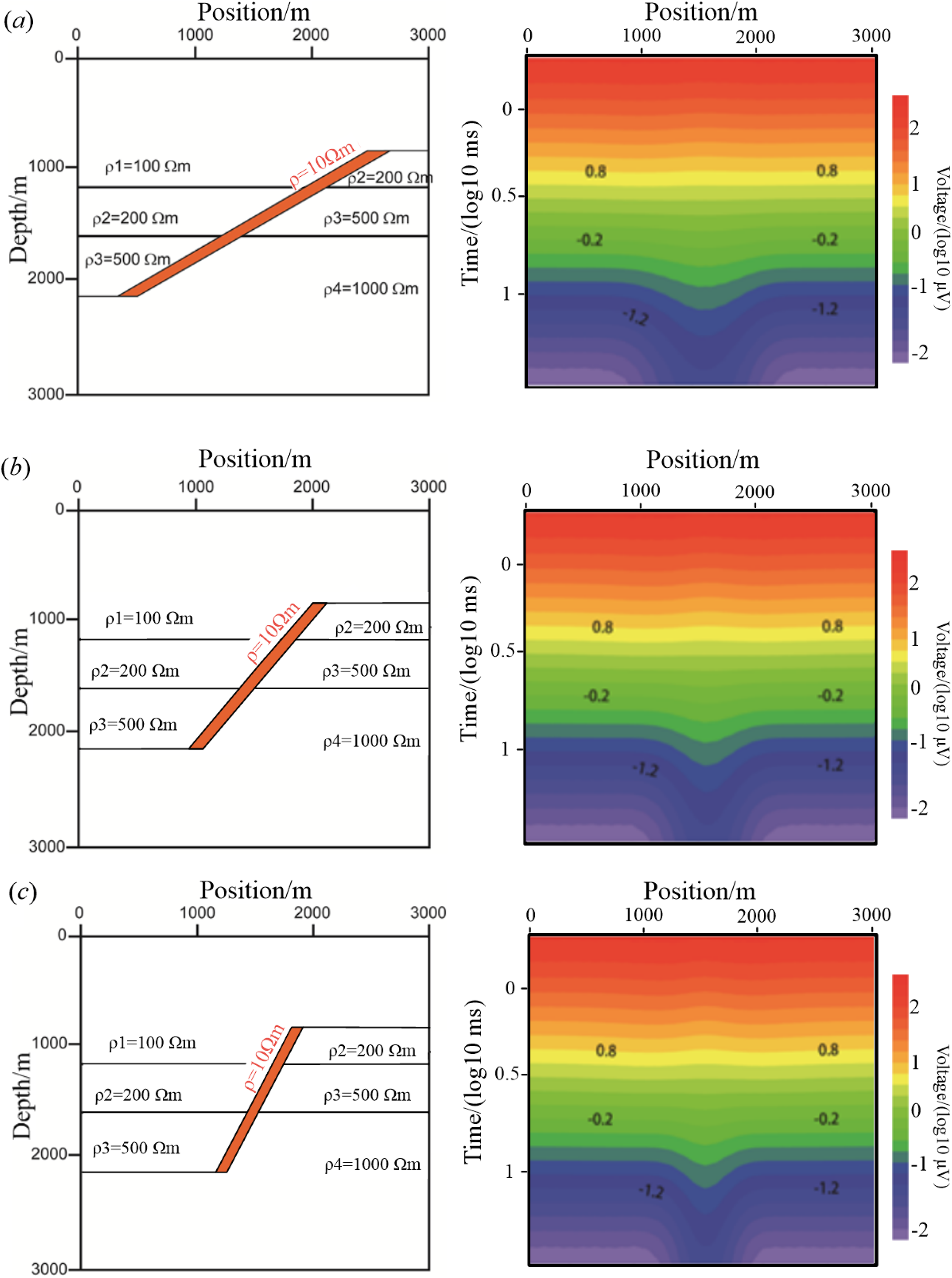
The models with various widths of 30, 70 and 100 m, together with the VR profile. The VR changes when the width is altered. With increasing fault widths, the abnormal VR amplitude becomes more apparent, indicating that TEM is responsive to the fault width.
Results of numerical simulation
Using the numerical simulation based on the abnormal changes in the resistivities, dip angles and widths of the low-resistivity faults in the simplified geothermal system model, both TEM and CSAMT are conducted, which can be inferred as follows.
The impact of low-resistivity faults on CSAMT responses occurs primarily in the low-frequency band, while that on TEM responses is more towards the late time channels. Data still can be obtained with relatively high quality in the low-frequency band, while the quality of the late TEM responses is normally lower, and the fault resolution of CSAMT is higher than that of TEM.
Meanwhile, the abnormal responses caused by the fault width can be clearly distinguished by TEM responses but not CSAMT responses, showing that TEM has an outstanding capability to explain the characteristics of low-resistivity fault compared with CSAMT. Additionally, the faults are mostly characterized by the resistivity of dislocation on the apparent resistivity profiles of CSAMT, and the lower and upper plates of faults can also be distinguished by CSAMT.
Although low-resistivity faults can be identified by the two methods in this model, these methods show an in-depth exploration of complementary and capability for detailed description, which are applicable to geothermal exploration.
Example of field experiment
As shown in Figure 10, a surveying line was arranged in the study area.
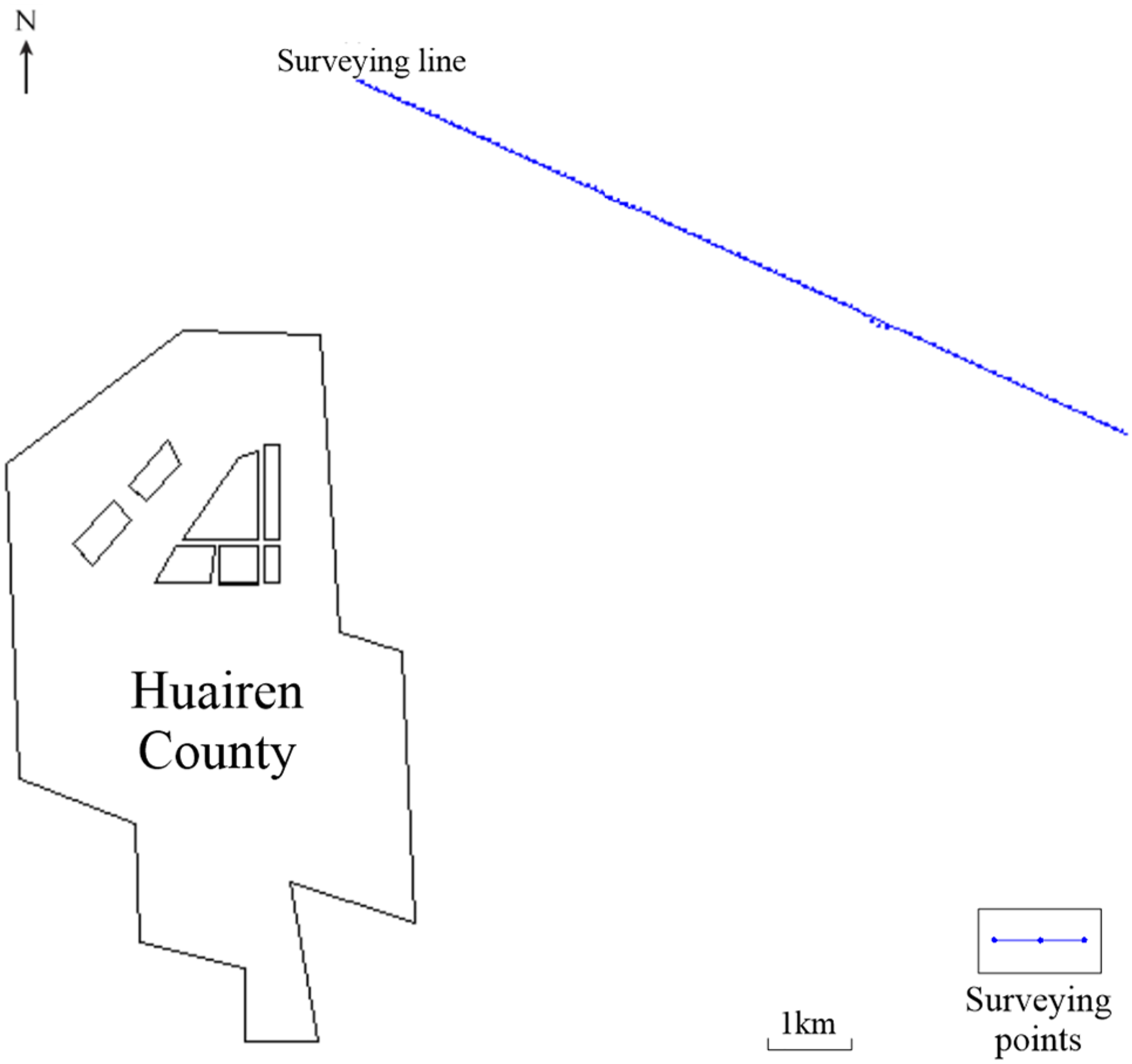
Layout of the project.
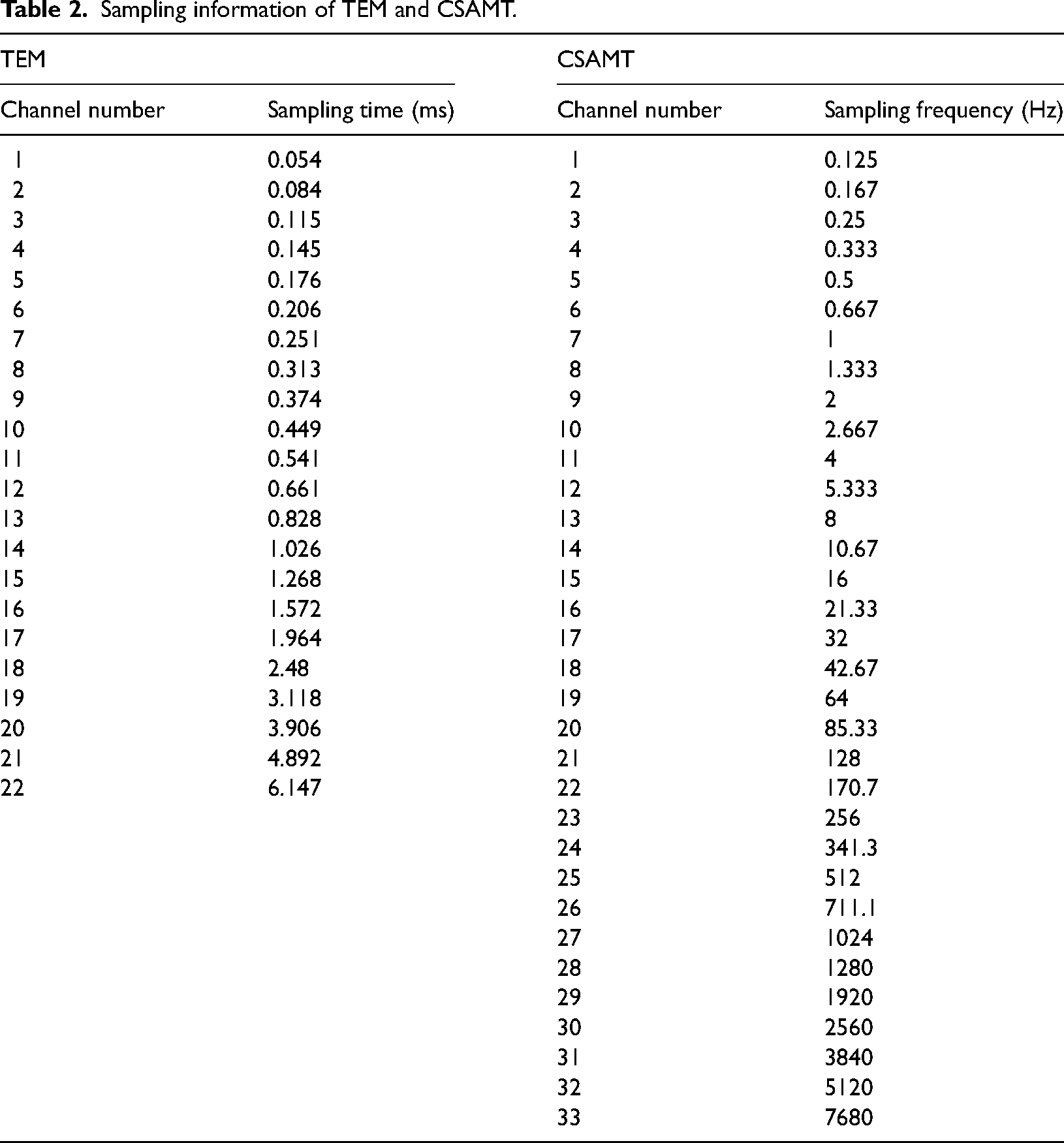
The GDP32II multifunctional electrical method workstation was used for the exploration of CSAMT. The transmitting-receiving distance, current and pole distance AB are 6 km, 14–16 A and 1500 m, respectively; the signal frequency range is 0.125–7680 Hz; the distance between the surveying points is 100 m for lines 10 and 60 and 50 m for lines 59 and 64. The same instrument was also used for TEM exploration, along with the center loop device. The transmitting current, frequency and source are 15 A, 16 Hz and a 1000 × 1000 m single-turn loop, respectively; the distance between the surveying points is 50 m. After completing the CSAMT survey, line 60 is set as the TEM surveying line, due to an obvious resistivity anomaly of CSAMT, and a comparison between the two methods is made.
Verified situation
To process the obtained data, the GDP32II data preprocessing software is applied for data sorting and removal of dead pixels. Then, TEM-1D software (Guo et al., 2020; Sudha et al., 2014) and CSAMT-2D software (Fu et al., 2013; Hedlin et al., 1990; Kouadio et al., 2020) of Zonge Co. were used to invert the data. The two softwares use the OCCAM inversion method (Constable and Parker, 1987; Xing et al., 2021) to solve the Green function and the adjoint function in the 2D domain and the 1D domain, respectively, to obtain the Jacobian matrix required for the inversion, and then realize the spatial inversion of the electric field data.
The inversion data of TEM and CSAMT resistivity profiles are displayed in Figure 11(a)–(c).
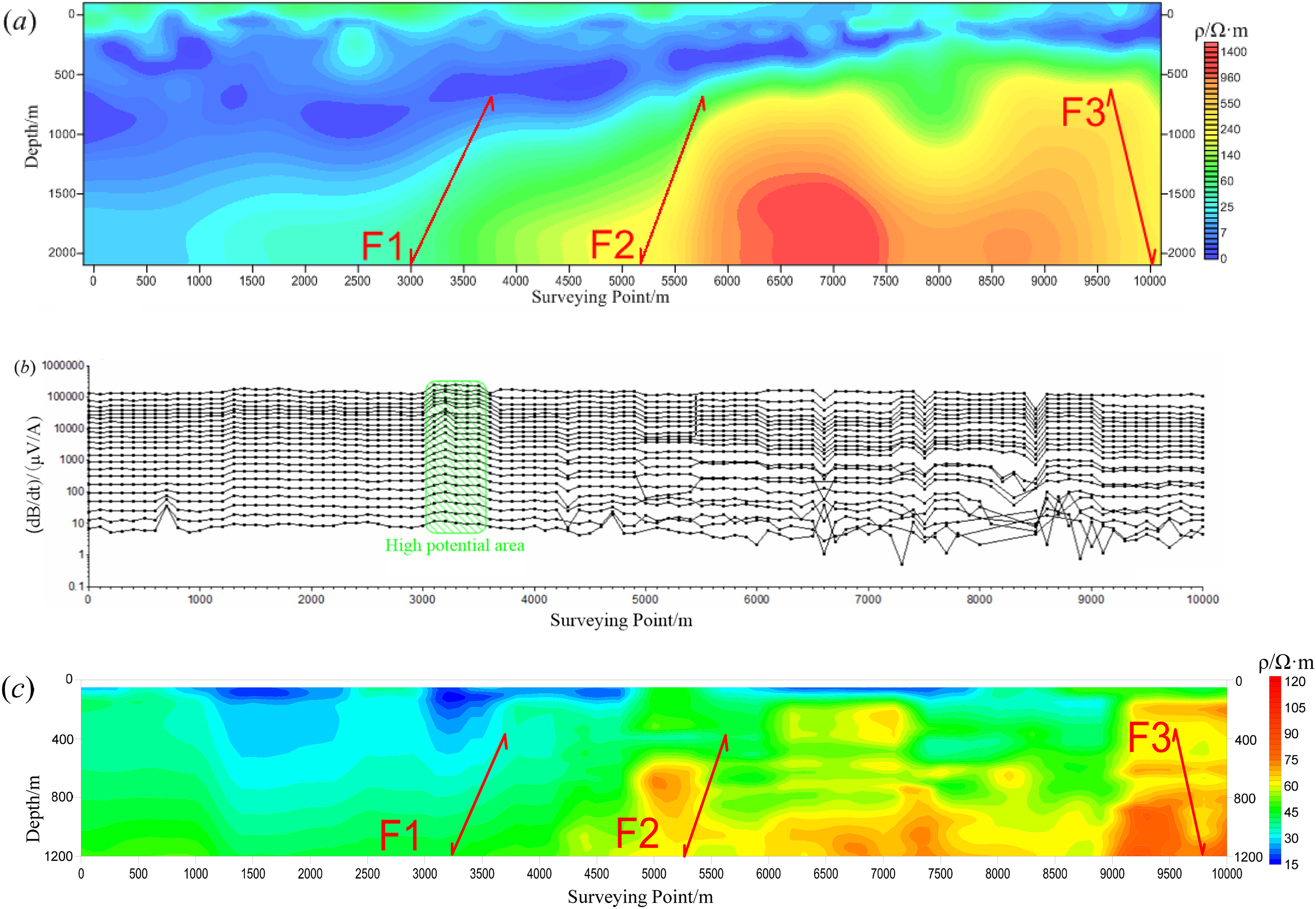
(a) Resistivity profile of CSAMT surveying line. (b) Secondary field potential profile of TEM surveying line. (c) Resistivity profile of TEM surveying line.
The CSAMT inversion results are shown in Figure 11(a). It can be seen that the resistivity from shallow to deep is low–medium–high and has a significant three-layer structure. The specific analysis of each layer is as follows.
The first electrical layer: the low resistivity layer, the shallow layer in the profile, the inversion resistivity is basically continuous along the profile, and the thickness ranges from 15 to 100 m; it is speculated that this layer is a dry argillaceous sand and clay layer of the quaternary, and the relatively thick part is the part where the stratification of the tertiary and quaternary is not significant. The second electrical layer: the medium resistivity layer, the resistivity basically spreads along the section, the continuity of the local area is poor, the depth range is between 200 and 750 m, and the thickness increases from right to left; it is speculated that this layer is the loose accumulation of the Pliocene of the Late Tertiary. The third electrical layer: a relatively high resistivity layer, the top interface buried depth is between 300 and 750 m; it is speculated that this layer is the basement of basalt or middle-deep metamorphic rock of Wutai Group. The electrical resistivity distortion occurred in the vicinity of the 3500 point, the 5600 point and the 9750 point in the electrical layer, and it is inferred that these places are fault locations.
The TEM inversion results are shown in Figure 11(b) and (c). It can be seen that the TEM profile features are similar to those of CSAMT, the electrical layers are basically distributed in layers, and the resistivity from shallow to deep also shows a low–medium–high three-layer structure. The inferences for each layer are described as follows.
The resistivity of the shallow strata is relatively small, and it is inferred that the quaternary sand and clay layers are in the range of 15 to 200 m in thickness. There is no significant stratification between the quaternary and the tertiary in this layer. The resistivity in the middle part increases, and the depth decreases from left to right, which is inferred to be loose deposits of the Late Tertiary Pliocene. The resistivity of the deep part is relatively high, and the depth on the right side is small, and the top interface is buried at a depth of 300 m, which is presumed to be a basalt or a mid-deep metamorphic rock base in the Wutai Group. In the 3000–3500 section, the resistivity is distorted, showing the characteristics of low resistivity, and it is inferred that this section is the fault F1 part; in the 3000–3500 section of 11 (b), the secondary field potential has a high value anomaly, which is consistent with the low-resistance feature in the resistivity cross-sectional diagram, and is also the electrical feature exhibited by the fault F1; Section 7500–8800 has a high resistance area in the deep, which is inferred as the location of basalt.
According to the results of the inverted resistivity, the geological profile of the surveying line was drawn, as shown in Figure 12.
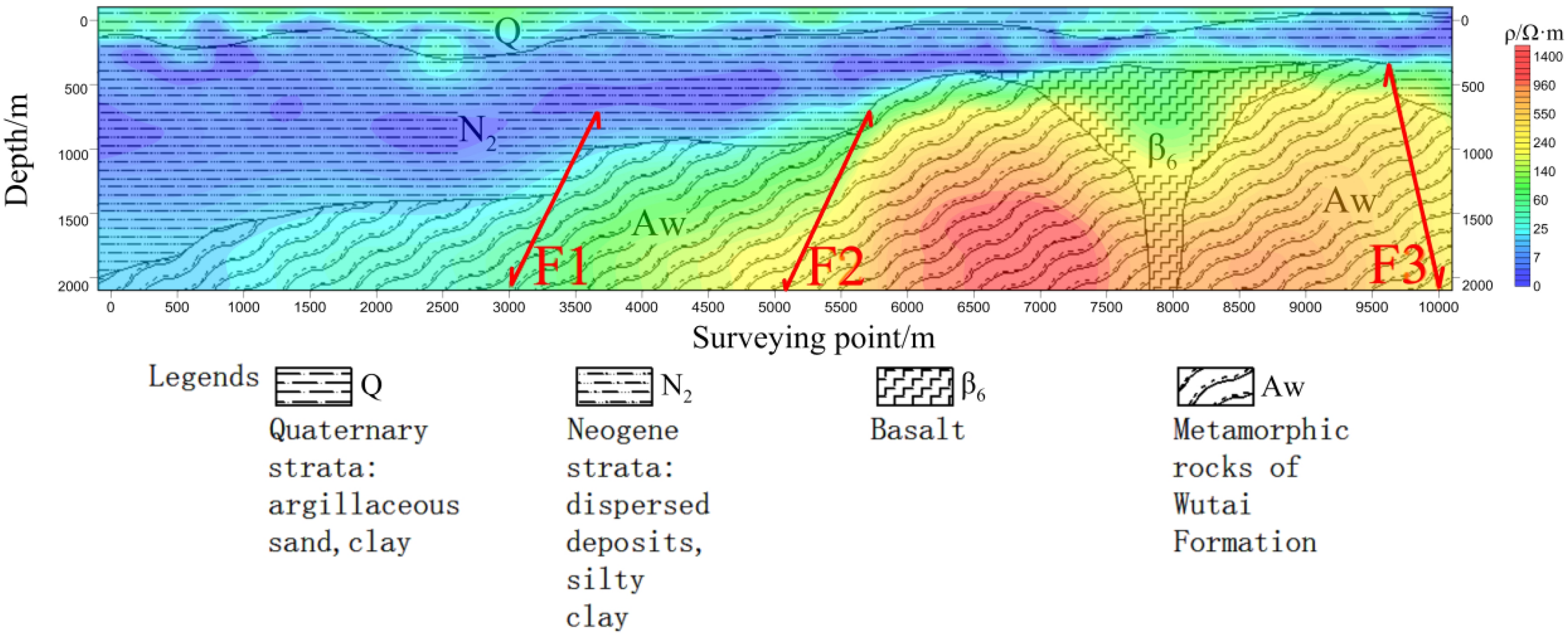
Geological profile of the surveying line.
Discussion
In general, the resistivity profiles of TEM and CSAMT are relatively similar, indicating a layered distribution of low-to-high resistivity from shallow to deep formation. The depth of high-resistivity region gradually reduces with increasing number of the surveying lines. A deep high-resistivity component can be obviously found starting from point 6000. The positions of F1, F2 and F3 faults in the resistivity profile can be revealed by the two methods, which indicate an excellent effect with regard to mutual verification.
Meanwhile, some differences are found in the geothermal exploration results of the same surveying line between the two methods. Based on these differences, the advantage, disadvantage and complementarity of the two methods in actual exploration are presented as follows:
The geothermal exploration of TEM is greater than CSAMT in the shallow layer: The exploration of CSAMT is greater than on TEM for deep high-resistivity strata:
The signals of TEM and CSAMT have similar signal: noise ratios for determining shallow formation. However, the sampling density and channel number of TEM are relatively larger than CSAMT during shallow formation (Table 2). In view of resistivity profile, the resistivity of TEM in shallow formation is relatively constant in the horizontal direction, which reflects the actual geological features. Meanwhile, the positions of the fault shallow part examined by TEM is much obvious, thus providing more solid evidence to reveal the extension positions of the faults in the shallow and middle parts.
The resistivities of different rocks in the study region.
Sampling information of TEM and CSAMT.
Given that the time interval is large among different sampling channels of TEM in the late time channels, the exploration depth is markedly limited, the late signal error is high, and the signal:noise ratio is low, the geothermal exploration effect of deep electrical structures is reduced. In CSAMT exploration, the lower the signal frequency is, the greater the detection depth will be. CSAMT has stronger penetrating ability and higher energy at lower frequencies, but satisfactory exploration results can still be obtained in the deep part. According to the apparent resistivity profile, the reflection of deep basement strata is weak and the deep structure of TEM is not clear, while CSAMT obviously exhibits the morphology of deep basement structure.
The exploration of TEM is greater than CSAMT for water-conducting faults:
The pure anomaly field of TEM is responsive to low-resistivity targets, as revealed by the exploration of F1 faults. There is clear discontinuity observed for the apparent resistivity profile of TEM in the low-resistivity region, while CSAMT shows nearly no reflection on the F1 fault. This is supported by the secondary field potential of TEM, in which a high anomaly is observed in the secondary field potential near the fault F1. The primary benefit of CSAMT for determining faults is that it can differentiate the lower and upper plates of the faults.
After completing the geothermal exploration, the verification of drilling was conducted at point 3350. The drills encountered underground heat at 1610 m, and then a pumping test was performed. Based on the finding geothermal system of the pumping test, the unit output of underground heat was 233 m3/d, and the temperature of hot water was 58°C. These data indicated the existence of geothermal water in the faults and igneous rocks.
Conclusion
Through numerical simulation and anomaly comparison, it is found that both methods show different abilities to describe the fault details. Moreover, the resolution of CSAMT is stronger for deep target, similar to the capability of TEM for describing the details of shallow target. These two methods can identify targets at various depths. Moreover, the two methods are obviously complementary, and they are applicable for geothermal exploration. The actual exploration results of TEM and CSAMT on the same surveying line demonstrate that CSAMT outperforms TEM for the deep basement exploration of magmatic rocks, whereas TEM outperforms CSAMT for the exploration of shallow target and water-conducting fault structure. The comprehensive electromagnetic method used in this study can enhance the integrative effect of two complementary methods and overcome the limitation of a single method.
For exploring geothermal resources in Huairen County, the geological results are obtained as follows. It can be inferred that F1, F2 and F3 faults are identified, and the main channel for underground hot water is F1. The mid-deep metamorphic rock or deep basalt basement may involve a GR storage structure. Our findings in geothermal system highlight the advantages and disadvantages of TEM and CSAMT with regard to geothermal exploration.
Footnotes
Acknowledgements
This research is supported by the Comprehensive Investigation and Evaluation Project of Geothermal Resources in the Cuona-Chayu Area, Tibet (No. DD20211548).
Data availability statement
The data which support the findings of this study are available from the corresponding author upon request.
Declaration of conflicting interests
The author(s) declared no potential conflicts of interest with respect to the research, authorship, and/or publication of this article.
Funding
The author(s) received no financial support for the research, authorship, and/or publication of this article.
