




Abstract
The Fengcheng Formation in the Hashan area of the northwestern Junggar Basin is a complex fine-grained sedimentary rock deposited in a saline-alkaline lake basin and influenced by mechanical, volcanic, chemical, and biological processes. The Fengcheng Formation, influenced by synsedimentary volcanism, has a complex mineral composition, abundant organic matter, and frequent sedimentary structure. As a result, the commonly used lithofacies classification scheme based on rock composition and grain size is difficult to characterize accurately, hampering the evaluation of the Fengcheng Formation's hydrocarbon exploration potential. Therefore, the shale lithofacies classification scheme of Fengcheng Formation was proposed. This scheme classifies the Fengcheng Formation shales into four categories and eight sub-categories based on terrigenous clasts, carbonate minerals, and volcanic clasts, as well as organic matter content and sedimentary structure. Furthermore, this scheme considers the organic and tuffaceous matter, which is essential for evaluating hydrocarbon generation properties, reservoir properties, and the brittleness of fine-grained sedimentary rocks.
Introduction
China has made several breakthroughs in shale oil exploration in recent years, including the Permian Lucaogou Formation in the Junggar Basin, the Triassic Yanchang Formation in the Ordos Basin, the Cretaceous in the Songliao Basin, the Kongdian Formation in the Bohai Bay Basin, and the Paleogene in the Jianghan Basin, among others, indicating that lacustrine shale has great exploration potential (Liu and Sun, 2021; Sun et al., 2021; Zhao et al., 2021; Zou et al., 2020). Provenance, climate, hydrodynamics, and synsedimentary volcanism greatly influence lacustrine sediments, which can result in strong heterogeneity and various lithofacies in lacustrine shale. The lithofacies of lacustrine shale are critical in determining shale oil potential because they control the hydrocarbon generation potential, physical properties, oil-bearing properties, and shale brittleness. Shale is characterized by rapid lithology change, complex mineral composition, and laminae development, complicating lithofacies classification. Previous research has proposed various lithofacies classification schemes for shale. The classification scheme of “three end members + four components + biota” was proposed for marine shale. The three end members of the ternary diagram are clay minerals, carbonate minerals, and felsic minerals, with organic matter as the fourth component, combined with biological. The classification scheme of “three end members + four components + structure” was proposed for lacustrine shale. That is, the three end members of the ternary diagram are clay minerals, carbonate minerals, and felsic minerals, and organic matter is the fourth component, combined with its structure (Loucks et al., 2012, Ning et al., 2017, Schieber, 1989). However, the above classification schemes ignore the influence of sedimentary structures on shale lithofacies and do not consider organic matter in shale.
The Mahu Sag is a hydrocarbon-bearing lacustrine sag on the Junggar Basin's northwest margin. The primary source rock in the Mahu Sag is the Fengcheng Formation (Tao et al., 2021). The organic matter types of source rocks in the Fengcheng Formation are I∼III, primarily II1, indicating that the source rocks have good hydrocarbon potential. The source rocks on the slope are in the mature evolution stage, while the source rocks in the sag's center are in the high mature evolution stage (Tang et al., 2021). The alkaline lake provided conditions for microorganism survival; the alkaline environment can also improve microorganism activity (Wang et al., 2018). The bioprecursor of the Fengcheng source rock is characterized by algae and bacteria, and bacterial activity increases with depositional environment alkalinity (Cao et al., 2020; Wang et al., 2018). The hydrocarbon-generating parent material of the Fengcheng Formation source rock is characterized by bacteria and algae, which distinguishes the alkali lake from the traditional Salt Lake. The hydrocarbon-generating parent material characterized by algae and bacteria, as well as the hydrocarbon-generating parent material dominated by bacteria and algae, both have a high hydrocarbon generation conversion rate. However, a large amount of oil is produced after reaching the oil-generating window, resulting in increased pressure in the source rock, inhibiting hydrocarbon generation and extending the oil-generating window (Zhi et al., 2016). The Fengcheng Formation contains a layer of thick organic-rich shale, and the entire formation is oil-bearing, exhibiting typical shale oil accumulation characteristics (Li et al., 2021; Zhi et al., 2021). The Halarat mountain (also known as “Hashan”) area is located on the northwest margin of the Junggar Basin, in the piedmont structural belt. It is adjacent to the Mahu Sag to the south (Figure1). The structure of the Hashan area is strongly overthrusted compared to the Mahu Sag. The strata have undergone multi-stage thrust nappe superposition and transformation, resulting in complex and diverse lithofacies types of the Fengcheng Formation in the Hashan area (Zhu et al., 2013). To meet the actual exploration and development needs, a suitable shale lithofacies classification scheme must be established.
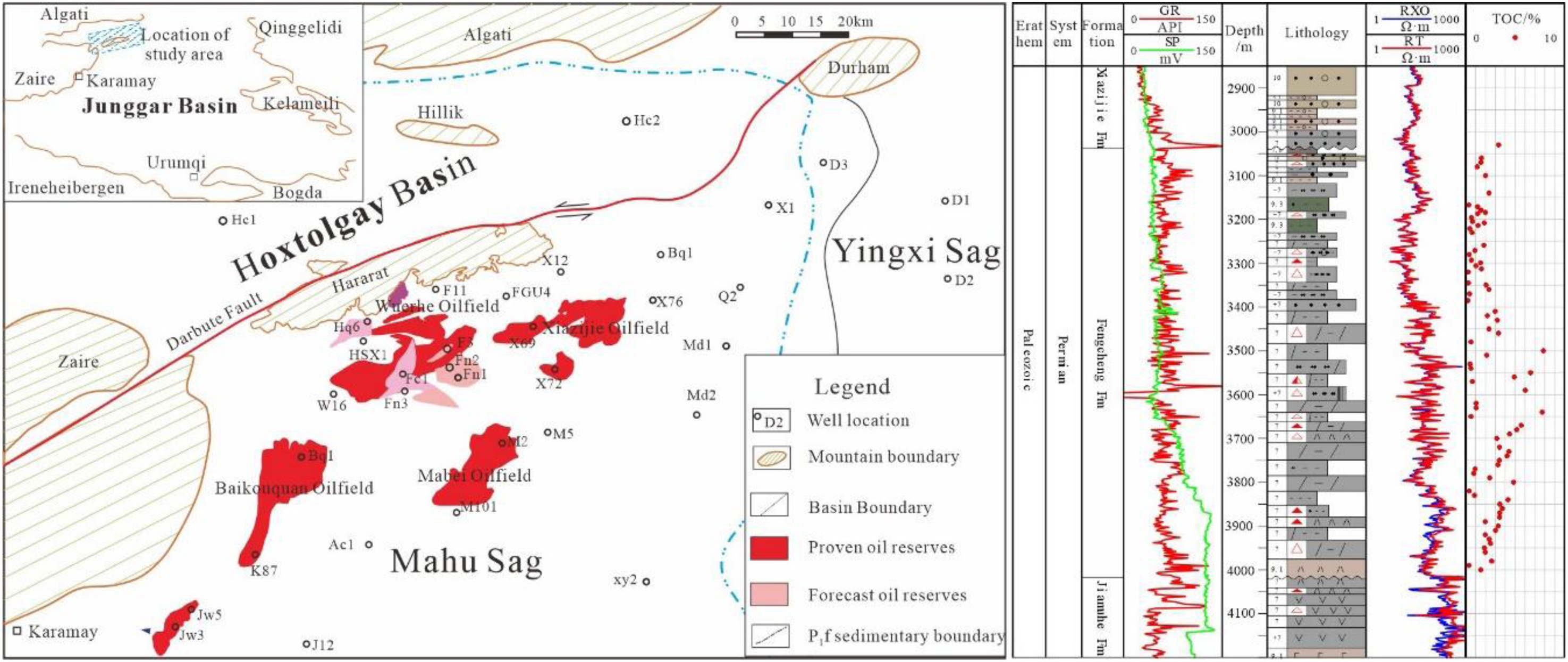
Geological settings of Mahu Sag in the northern margin of Junggar Basin, China.
Previous research on the Fengcheng Formation has primarily focused on the sedimentary environment, source rocks, dolomite genesis, and reservoir quality (Ma et al., 2019; Tang et al., 2021; Yu, 2019; Yu et al., 2019; Zhu et al., 2013). Additionally, geological and reservoir characteristics of the Fengcheng Formation-mixed shale have been studied in recent years with the goal of shale oil exploration (Xu et al., 2019; Zhi et al., 2019). Previous studies, however, lacked the lithofacies classification of the Fengcheng Formation shale, which hampered shale oil exploration.
Based on previous research, this study investigated the mineral composition, sedimentary structure, and organic matter content of shale lithofacies and proposed a widely applicable “four components + three end members” shale lithofacies classification scheme. This study classifies the shale lithofacies of the Fengcheng Formation based on this classification scheme, analyzes the relationships between sedimentary environment, brittleness, and shale lithofacies, and then discusses lithofacies guidance for shale oil exploration and development.
Samples and experiments
Here, eight samples were collected to evaluate the major element contents; four samples were selected to test the trace element and rare earth element concentrations; 13 samples were collected to test the C–O isotopes, 20 samples were tested by X-ray diffraction, and 20 samples were tested by total organic carbon to decode the geological background, and sedimentary environment of the Fengcheng Formation-mixed shale.
The major element contents were tested at Nanjing University's State Key Laboratory for Mineral Deposits Research. The sample was accurately weighed 0.6000 ± 0.0050 g and X-ray fluorescence special melting agent (Li2B4O7: LiBO2 = 67: 33) 6.6000 ± 0.0050 g, and then mixed evenly in the Pt–Au crucible, the glass sample was made by automatic melting with the Canadian claise automatic gas melting prototype. LiBr (40 mg/mL, 0.6 mL) is used as the cosolvent, and the analysis error is less than 5%.
Agilent 7700x inductively coupled plasma mass spectrometry was used to measure trace and rare earth element concentrations (ICP-MS). Twenty-five mg of rock samples were dissolved in a self-made high-pressure closed sample dissolving device at 190 °C with 1 mL concentrated HF +0.5 mL concentrated HNO3. After being steamed dry, the residue was extracted at 140 °C with 5 mL and 30% HNO3. Rh (Rhodium) was used as an internal standard to account for the matrix effect and instrument drift. The detection limit is greater than 5 × 10⁻⁹, and the relative standard deviation is less than 5%.
Based on geological and petrological studies, fresh and representative vein rocks were chosen for C–O isotope determination. Because of the low carbonate content in the selected samples, some calcites are only microcrystalline, making it impossible to choose single minerals. To determine the C–O isotope of carbonates, CO2 was collected by adding 100% phosphoric acid (5 g) to powdered rock samples for 25 h. The CO2 produced was measured using a gas isotope (NAT252) mass spectrometer with a measurement error of less than 0.02%.
Core and thin section observations were used for X-ray diffraction. Typical rock samples were chosen and ground to a particle size greater than 300 mesh with an agate mortar. To determine the percentage of different minerals in rock samples, a polycrystalline X-ray diffractometer was used in conjunction with the jade6.5 analysis software in accordance with the national industry standard SY / T5163-2018. Table1 displays the results of the experiment.
Data from X-ray diffraction and TOC tests on 20 samples from the Fengcheng Formation in the Hassan area of the Junggar Basin.
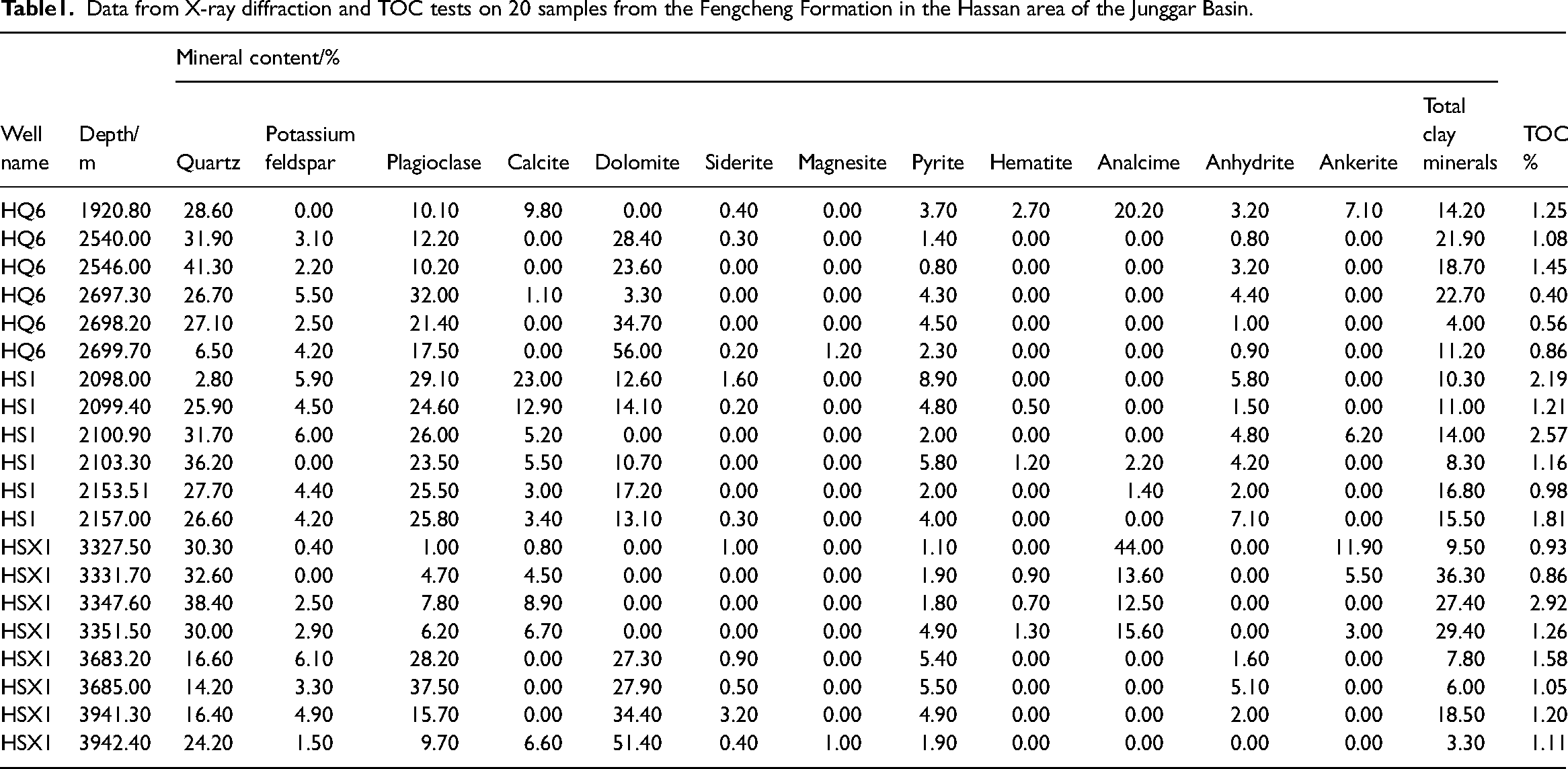
The organic matter content of 200-mesh powder samples was determined using a LECO CS 744 carbon and sulfur analyzer in accordance with GB/T 19145-2003 industry standard. Table1 displays the results of the experiment.
The rock component and elastic parameter methods of rock mechanics can be used to calculate the brittleness index. The rock composition method determined the type and content of brittle and plastic minerals in rocks using X-ray diffraction data, considering the content of organic matter and tuffaceous, and then divided the sum of brittle mineral content by the sum of plastic mineral content to obtain the brittleness index of rocks, which is the sum of felsic minerals, carbonate minerals, and tuffaceous content divided by the sum of felsic minerals, carbonate minerals, and tuff Elastic modulus and Poisson's ratio are used to calculate the elastic parameter method of rock mechanics. Using orthogonal multipole array acoustic logging data, the longitudinal wave time difference and transverse wave time difference of acoustic wave propagation, closely related to the characteristic parameters of rock mechanics, can be obtained. The Young's modulus and Poisson's ratio are calculated using the model in SY/T 6937-2013 Specifications for the processing and interpretation of multipole array acoustic logging data, which is combined with the formation and skeleton volume density measured by rock density logging data.
Sedimentary environment of the Fengcheng Formation-mixed shale
Several drilling wells in the Hashan area encountered Early Permian volcanic rocks, which could provide a foundation for decoding the sedimentary environment of the Fengcheng Formation. The Early Permian Fengcheng Formation volcanic rocks from Well X 1 in the Hashan area have nearly flat REE and trace element curves. The volcanic rock samples under study fall within the field of within-plate setting in the Hf/3-Th-Ta diagram (Figure2). Furthermore, the volcanic rock samples analyzed show positive εNd(t) and low 87Sr/86Sr, indicating that the Early Permian volcanism formed in an intracontinental extensional tectonic environment (Chang, 2016).
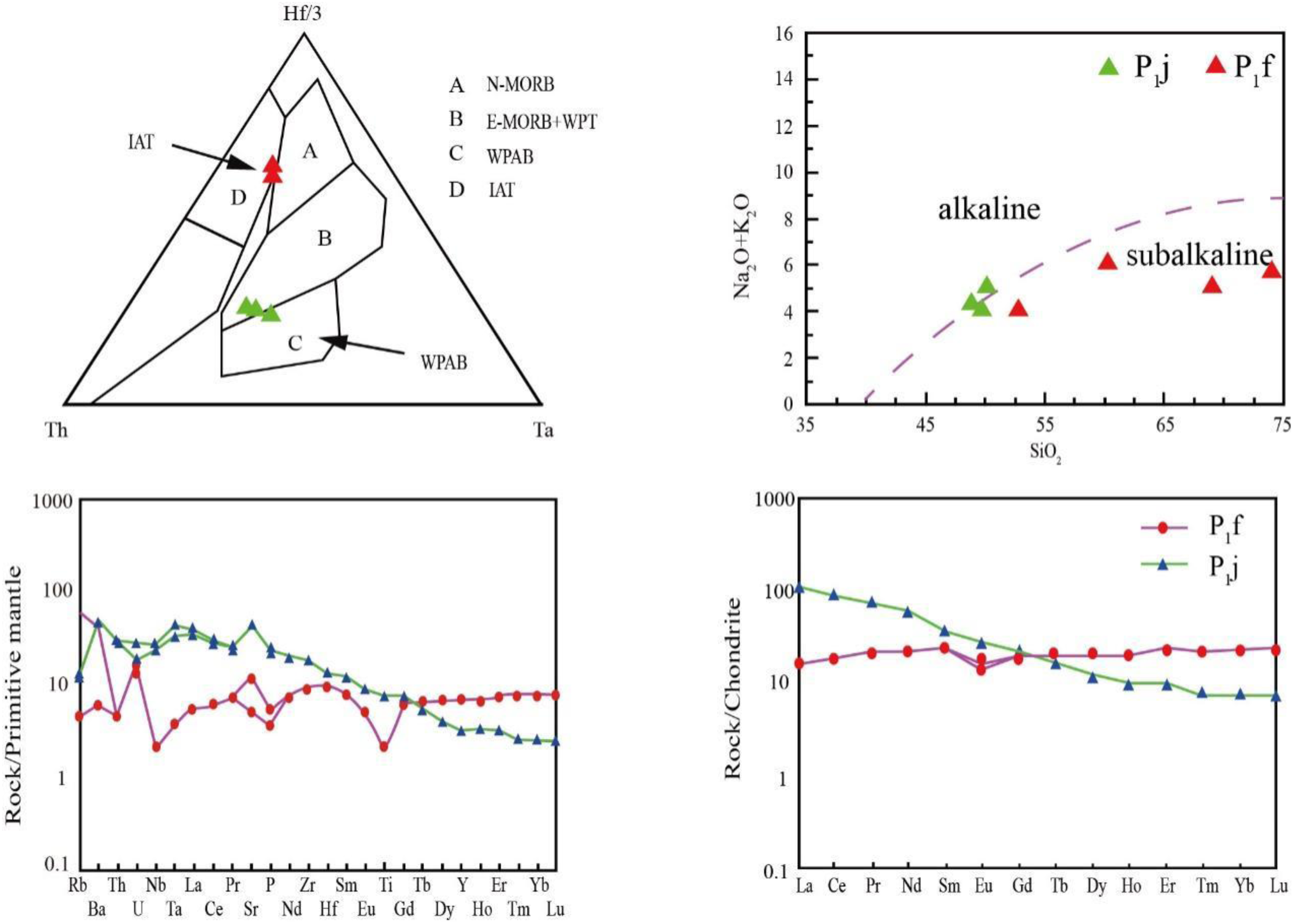
Early Permian tectonic environment analysis of the Hashan area depicted as a diagram of the tectonic setting. (E-MORB denotes enriched MORB, WPT denotes within-plate tholeiite, WPAB denotes within-plate alkaline tholeiite, IAT denotes island arc tholeiite, and N-MORB denotes normal type mid-ocean ridge basalt) kind. (a) Tectonic environment discrimination diagram (Well X1) (Wang et al., 2016); (b) TAS diagram of Igneous rock (Well X1) (Guo et al., 2020); (c) Spider diagram of trace elements (Well X1); (d)Rare earth elements distribution pattern diagram (Well X1).
The Ba content of the Fengcheng Formation shale in the Hassan area ranges from 303.7 to 520.4 ppm, with an average of 351.33 ppm, indicating a terrestrial environment. Generally, the Ni content of marine sediments is higher than that of terrestrial sediments, with a difference of 40 ppm. The Ni content of the Fengcheng shale ranges from 26.1 to 43.2 ppm on average, indicating a terrestrial sedimentary environment.
When the Z-value is greater than 120 for the marine (saline) environment and less than 120 for the terrestrial (freshwater) environment, the carbon–oxygen isotope coefficient Z can be used to determine the paleo salinity of ancient sediments (equation (1)) (Keith et al., 1964).

where Z is the carbon and oxygen isotope factor; a is 2.048; b is 0.498; δ13C is the carbon isotope ratio; δ18O is the oxygen isotope ratio.
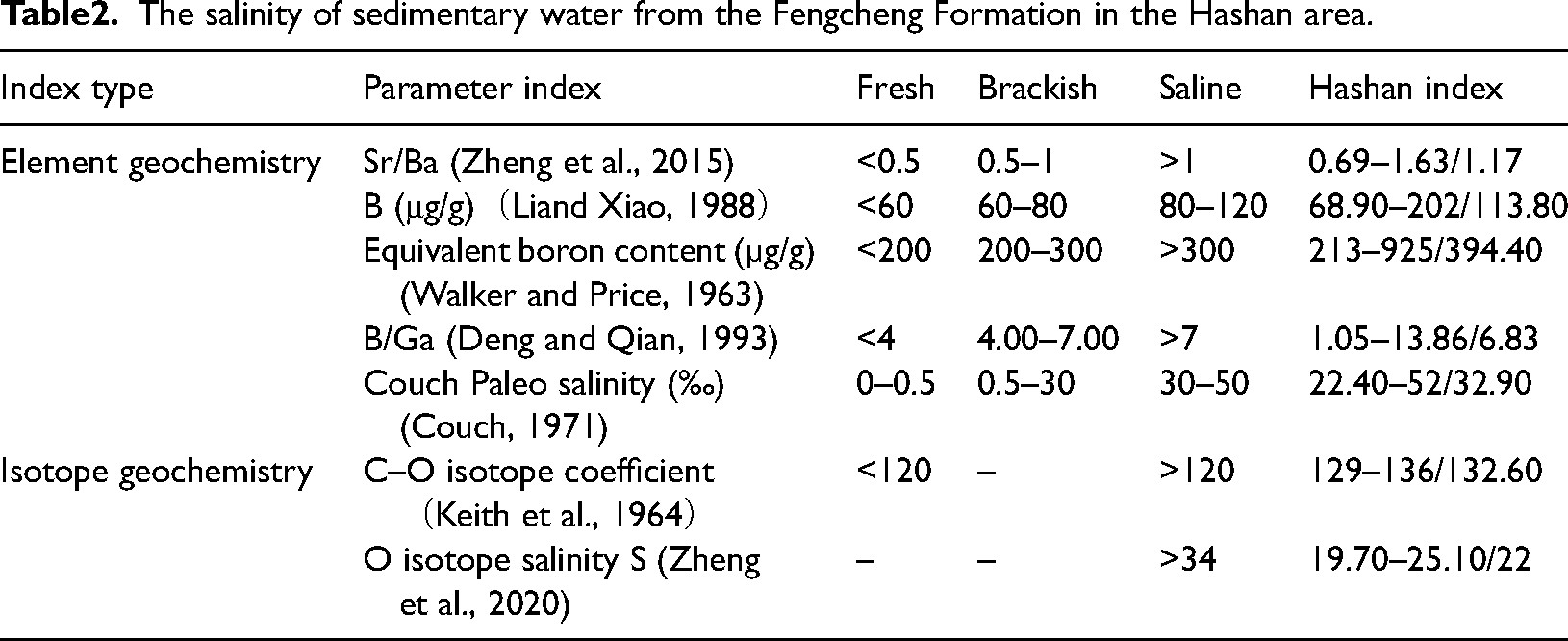
The Fengcheng Formation shale's carbon–oxygen isotope coefficient Z ranges from 125.25 to 130.86, with an average value of 127.87, indicating that the Fengcheng Formation deposited in a saline water environment. The average equivalent boron content of the Fengcheng Formation samples is 240 ppm, and the average paleosalinity is 20.15, indicating that the Fengcheng Formation was deposited in brackish-saline water, according to the Walker equivalent boron content standard. Furthermore, the Sr/Ba ratio, B/Ga ratio, B content, and other parameters indicate that the Fengcheng Formation in Hashan was deposited in brackish-saline environments (Table2).
The salinity of sedimentary water from the Fengcheng Formation in the Hashan area.
The V/(V + Ni) ratio and Ce/La ratio of the Hashan Fengcheng shale range from 0.72 to 0.79 (avg. 0.76) and 1.1 to 2.63 (avg. 2.03), respectively, indicating an anoxic environment. Furthermore, the pristane (Pr)/phytane (Ph) ratio of the Fengcheng shale ranges from 0.27 to 0.88, with an average value of 0.5, indicating phytane dominance and abundant carotene, indicating a reducing environment (Table3).
Index of sedimentary water oxidation-reduction in the Fengcheng Formation in Hashan.
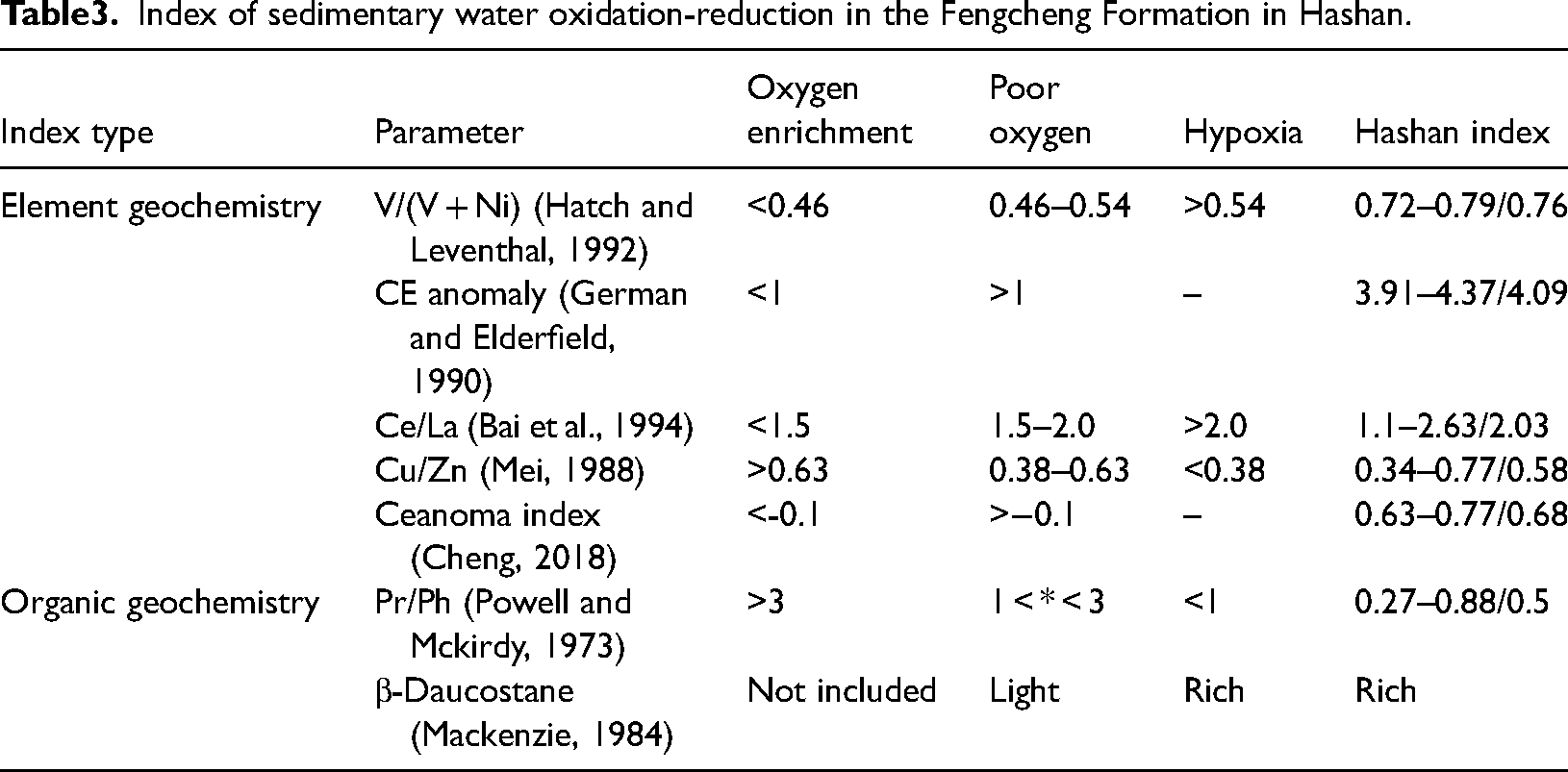
The drilling data in the Hashan area show that the Fengcheng Formation is composed primarily of shale, dolomitic shale, tuffaceous shale, tuffaceous dolomite, and argillaceous dolomite, and is dark fine-grained sedimentary rocks with horizontal bedding and wavy bedding. The Fengcheng Formation's sedimentary structures reflect the sedimentary environment of stagnant water and low energy. To summarize, the Fengcheng Formation shales are complex mixed sedimentary rocks formed in a saline-alkaline lake basin and were influenced by mechanical, volcanic, chemical, and biosedimentary processes.
Difficulties in shale facies classification in the Fengcheng Formation
The composition and structure of the Fengcheng Formation-mixed shale demonstrate its complexity. The Fengcheng Formation-mixed shale has a complex composition that includes clay minerals, felsic minerals, carbonate (dolomite) minerals, evaporite minerals, pyroclastic, opaque minerals, and organic matter (Figure2(a)). As a result, the lithofacies of the Fengcheng Formation include claystones, siltstones, carbonate rocks, evaporites, pyroclastic rocks, and transitional mixed rocks (Figure3(f) and (g)).
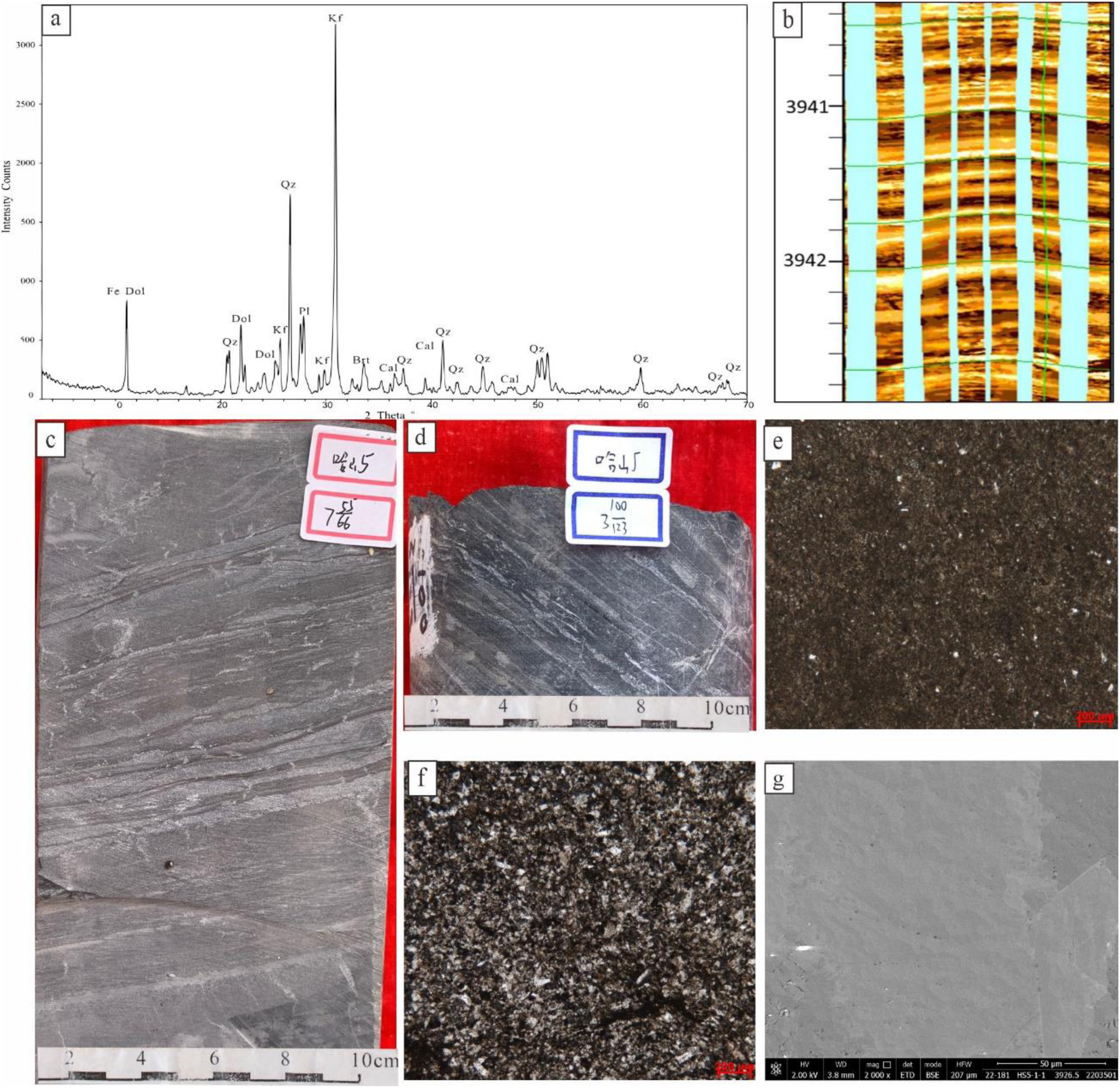
Lithologic characteristics of Fengcheng Formation shale in the northern Hashan area, Junggar Basin, China. (a) Full rock X-ray diffraction spectrum, dolomitic mudstone, Well HSX1, 3941.3 m.(b)Electrical imaging of rocks, Well HSX1, 3940.6 m–3942.8 m.(c) Photo of core, Well HS5, 5137.40 m.(d) Photo of core, Dolomitic mudstone, Well HS5, 4467.80 m.(e) Microscopic image, Well HS5, 4185.81 m, 5 × 10 single polarized light. (f) Microscopic image, Well HS5, 4187.50 m, 5 × 10, single polarized light. (g) SEM image, dolomite, Well HS5, 3926.5 m.
The Fengcheng Formation's core and microscopic characteristics show that the mineral particles in the mixed shale have different grain sizes ranging from nanometer to millimeter, spanning multiple scales. The sedimentary structure of the Fengcheng Formation shale is well developed, with single laminae ranging in thickness from 1 mm to 50 cm (Figure3(b) to (e)). As a result, in most cases, the content of each mineral component or grain size of shale is less than 50%, making classification by commonly used lithofacies classification schemes based on mineral composition or grain size difficult.
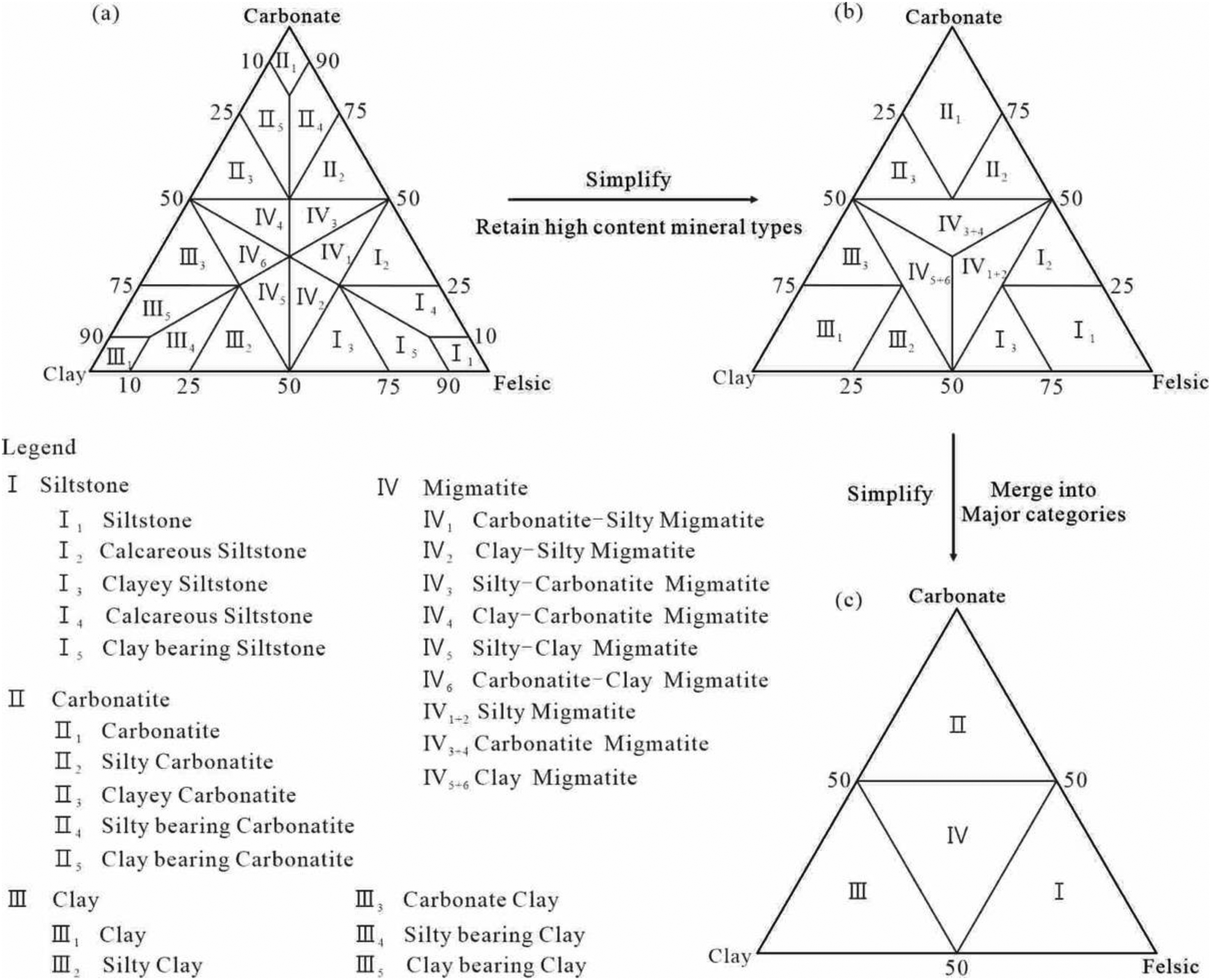
Currently, shale lithofacies are classified using a combination of sedimentary structure and lithology. The sedimentary structure of shales is frequently determined through core observation and thin section identification, whereas lithology is typically determined through whole-rock mineral analysis via X-ray diffraction. The carbonate minerals, felsic minerals, and clay minerals are used as three endmembers in lithofacies classification methods based on major mineral compositions (Dong et al., 2015; Hao et al., 2012; Loucks et al., 2012; Zhang et al., 2014). However, when compared to sandstone and carbonate rocks, the unique component of shale is organic matter, which can account for up to a quarter of the total volume of the shale. The volume fraction of inorganic minerals in shale, excluding the organic component, is determined by X-ray diffraction analysis. As a result, the shale lithofacies classification diagram based on the results of X-ray diffraction analysis ignores the organic matter in shale. Furthermore, the Fengcheng Formation shale usually contains volcanic material, reflecting its distinct sedimentary environment. Under single polarized light, it is dark yellow, and the granular feeling is weak; under orthogonal light, it is full extinction, with partial alteration of visible light; after inserting the gypsum test plate, the carrier table rotates 90° to compare the color of the tuff, which is basically unchanged (Figure4), which differs from the terrestrial felsic minerals. Because volcanic materials are not genetically related to terrigenous felsic minerals, they should be considered in the classification of shale lithofacies.
Microscopic characteristics of volcanic ash. (a) Under single polarization, Well HQ6, 1921.8 m; (b)Under orthogonal polarization, Well HQ6, 1921.8 m; (c) After inserting gypsum plate, well HQ6, 1921.8 m; (c) After 90° of carrier stage rotation after inserting the gypsum plate, Well HQ6, 1921.8 m.
Lithofacies classification scheme of the Fengcheng Formation
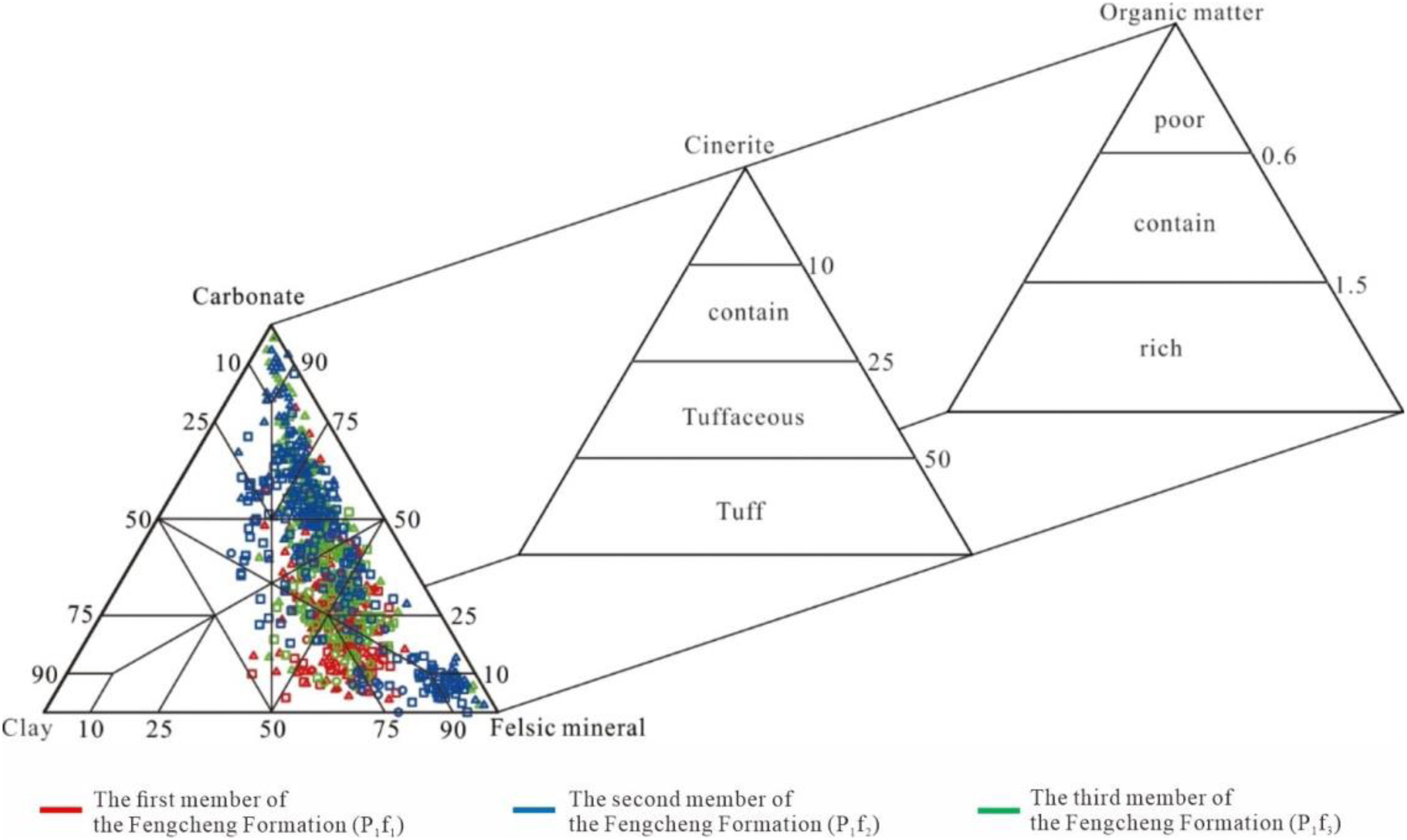
To address the difficulty in lithofacies classification of the Fengcheng Formation, mixed shale, carbonate minerals, felsic minerals, and clay minerals are chosen as the three end members, and tuffaceous matter and organic matter are chosen as the fourth and fifth components, respectively, and the three-level naming principle is used (Figure5). Shale lithofacies are named after the “sedimentary structure + lithology” principle.
Lithologic classification scheme of the Fengcheng Formation shale in the Hashan area.
The thickness of bedding is determined, and the sedimentary structure types of the shale are classified through detailed observation and description of drilling cores, combined with imaging logging and microscopic identification. The thickness of a lamina greater than 100 cm is referred to as a block, 10–100 cm is referred to as layered, 1–10 cm is referred to as lamellar, and less than 1 cm is referred to as sheeted in this study. The Fengcheng Formation's shale lithofacies are classified into three levels based on the content of organic matter, tuffaceous matter, and the relative content of carbonate minerals–felsic minerals–clay minerals.
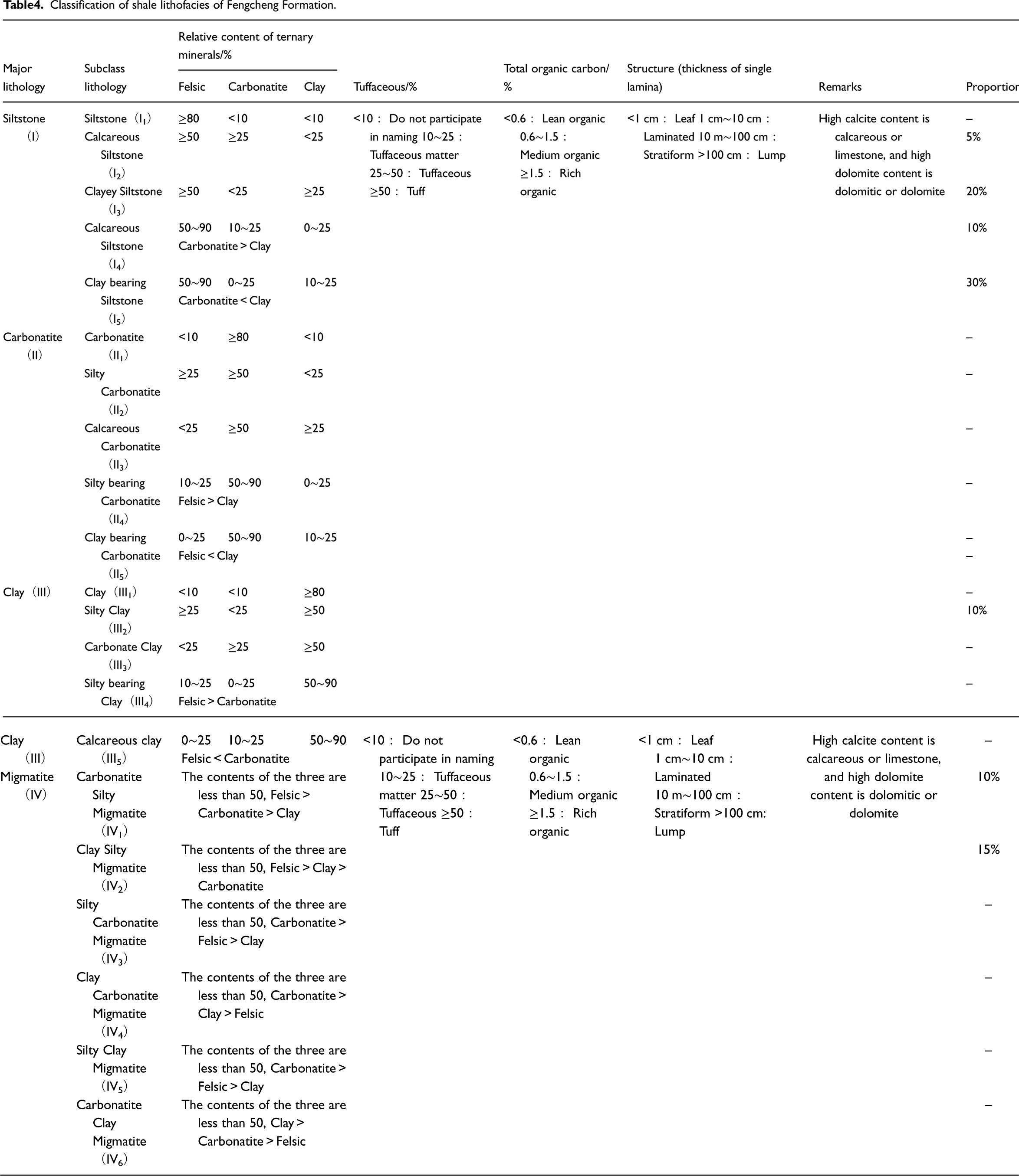
Given the limited number of measured samples, a logging evaluation model of the hydrocarbon source rock is established based on the measured data to calculate the abundance of organic matter, allowing for systematic evaluation of the TOC in the entire well. According to the statistics of the measured TOC in the Fengcheng Formation shale, the change boundaries of frequency and cumulative frequency are 0.6% and 1.5% of TOC, respectively (Figure6), which are close to the boundaries commonly used by scholars (Dong et al., 2015). As a result, in this study, TOCs of 0.6% and 1.5% were chosen as the limits for shale lithology classification, followed by lithology classification into low organic matter, containing organic matter, and rich organic matter. Furthermore, shales were classified as containing tuff, tuff, and tuff-based using tuff concentrations of 10%, 25%, and 50%. Finally, the three end member diagram method is used to classify carbonate minerals, clay minerals, and felsic minerals based on their relative content. We considered practical principles during the naming. Table4 contains the detailed nomenclature.
Lithologic classification scheme and simplification of mixed shale in the Fengcheng Formation.
Classification of shale lithofacies of Fengcheng Formation.
Exploration significance of the Fengcheng Formation shale lithofacies
The Fengcheng Formation's lithofacies classification scheme reflects a mixture of organic matter, carbonate minerals, felsic minerals, clay minerals, and tuffaceous matter. This scheme's foundation is more comprehensive, systematic, and refined than in previous studies, and it is simple to observe and describe the lithofacies classification of field rocks and drilling cores. Because organic and tuffaceous matter are considered in this scheme, it is critical to assess hydrocarbon generation potential, reservoir property, and brittleness of shale.
Implications for the sedimentary environment
This shale lithofacies classification scheme has some indicative significance for the analysis of the sedimentary environment from the standpoint of sedimentology. Most felsic minerals in shale are of extrabasic origin and are transported by rivers. The variation in these felsic mineral contents reflects mechanical sedimentation strength, such as variations in provenance supply, hydrodynamic force, offshore distance, or water depth (Zhou et al., 2020). Clay minerals are widely distributed in lake basins, where they are mostly deposited as colloids in a hydrostatic environment with deep water and low hydrodynamic force far from the provenance areas (Ye and Zhu, 2006). Furthermore, clay minerals are affected by climate, and a humid climate increases chemical weathering and water depth, resulting in an increase in clay mineral content (Zeng et al., 2014). The carbonate minerals in shale are primarily calcite and dolomite, which form in lake basins far from the source, with limited supply and shallow water. The change in lake salinity caused by climatic conditions has a significant impact on the carbonate mineral deposition. Aridity increases evaporation, the concentration of water, and salinity, which favors the carbonate mineral deposition. On the contrary, a humid climate causes freshwater recharge and salinity reduction, both of which are detrimental to carbonate mineral deposition (Li et al., 2020). Carbonate minerals in shale, as a result, are good indicators of water salinity and can reflect the climate change. In shale, volcanic ash is mostly dispersed or lamellar. Thin section analysis, scanning electron microscopy, and energy spectrum analysis reveal that the tuffaceous materials in the Fengcheng shale contain a high concentration of cryptocrystalline plagioclase, primarily composed of anorthite and albite (Yu, 2019), a product of the synsedimentary volcanic hydrothermal process. The increase in volcanic ash concentration increases hydrothermal activity, which affects the sedimentary conditions of felsic minerals and organic matter and, to some extent, promotes carbonate formation (Cervato, 1990; Wilson et al., 2001). The organic matter in the Fengcheng Formation shale is dominated by bacteria and algae, and it has a close association or symbiotic relationship with carbonate minerals and volcanic ash (Cao et al., 2015; Frogner et al., 2001). Changes in organic matter content should be considered in conjunction with the sedimentary environment of carbonate minerals or volcanic ash. Finally, the mixed sedimentation characteristics of various components in shale indicate that the shale's sedimentary mechanism is controlled by mechanical sedimentation, chemical sedimentation, hydrothermal sedimentation, and biological sedimentation, and an increase in the content of a specific component indicates an improvement in the corresponding sedimentation.
Implications for brittleness evaluation
This shale lithofacies classification scheme considers volcanic ash and organic matter, which has an excellent indicative significance for shale brittleness evaluation in the Fengcheng Formation. The brittleness index, calculated by multiplying the proportion of brittle minerals by the mechanical elastic parameters, is a commonly used shale brittleness evaluation index (Buller et al., 2010; Jarvie et al., 2007; Rickman et al., 2008). The proportional coefficient between normal stress and longitudinal strain of a linear elastomer under simple tension or compression is known as Young's modulus. The higher its value, the easier the formation of the complex fractures. Poisson's ratio is the transverse strain to axial strain ratio. The higher its value, the less likely fracture will form. The brittleness index is a ratio of brittle minerals to clay minerals that can reflect the complexity of fractures formed after reservoir fracturing (Sun et al., 2020).
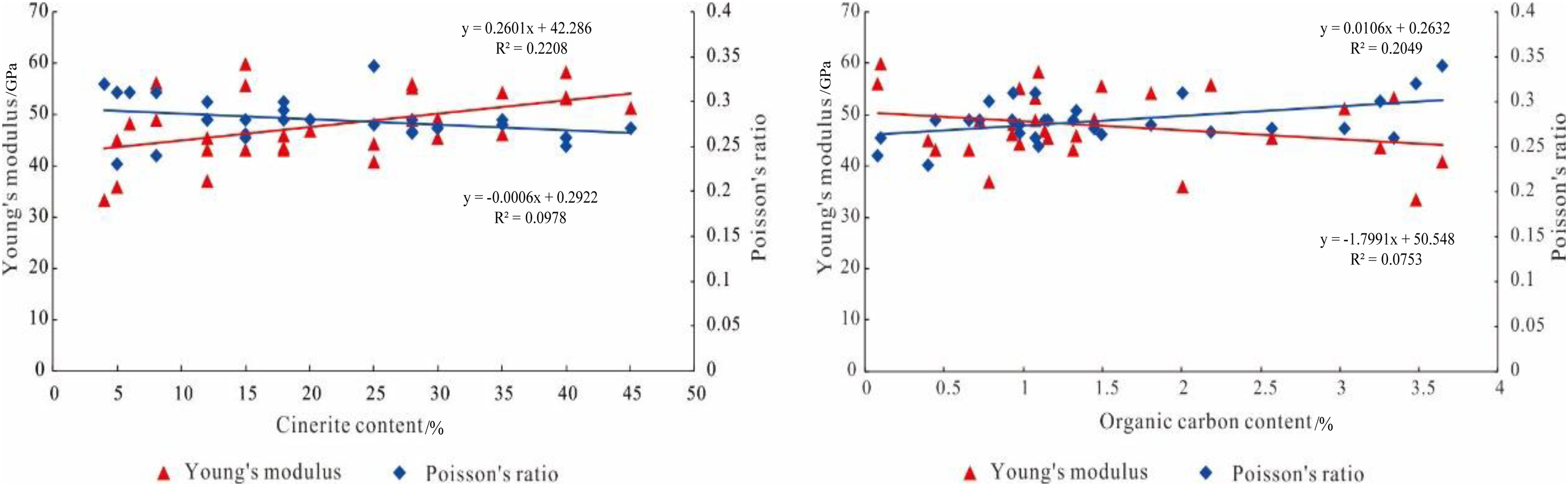
The Young's modulus and Poisson's ratio of the Fengcheng Formation shale obtained using orthogonal multipole array acoustic logging were corrected in this study based on the measured mechanical elastic parameters of core samples in the study area. By examining the correlations between the Fengcheng shale's volcanic ash content, organic matter content, Young's modulus, and Poisson's ratio, it is discovered that volcanic ash content is positively correlated with the Young's modulus and negatively correlated with Poisson's ratio, whereas the organic matter content is negatively correlated with Young's modulus and positively correlated with Poisson's ratio.
The rock component and elastic parameter methods of rock mechanics can be used to calculate the brittleness index. When the volcanic ash content is not considered in the calculation of the brittleness index by the rock composition method, the brittleness index of shale based on mineral composition is relatively small. After accounting for the volcanic ash content, the higher the brittleness index, the higher the volcanic ash content. When organic matter is excluded, the brittleness index of shale is relatively high based on the rock composition. When organic matter is considered, the higher the organic matter content, the lower the brittleness index (Figure7).
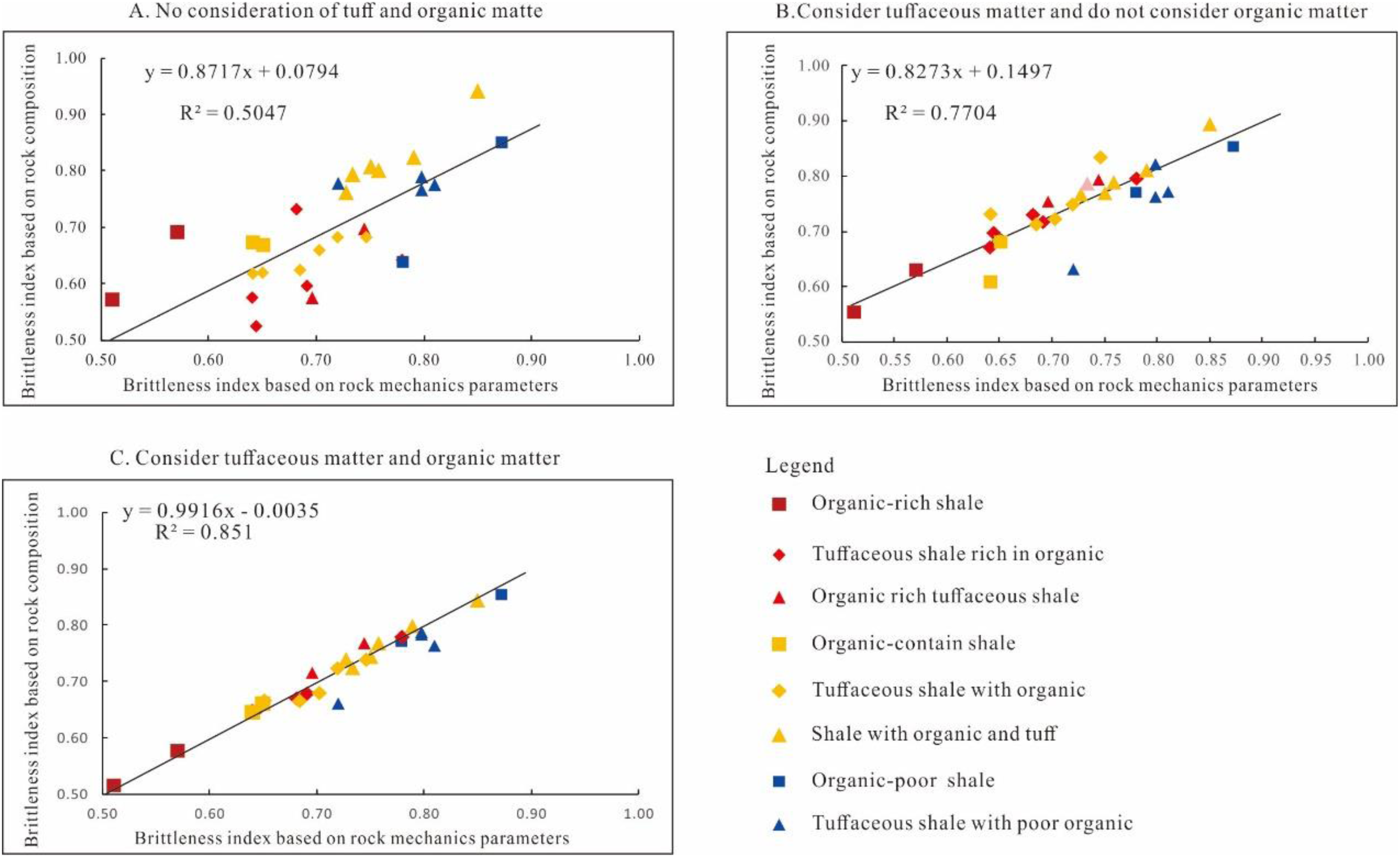
Brittleness index test of Fengcheng Formation shale based on rock composition.
Conclusion
The fine-grained sedimentary rocks of the Mahu Sag's Fengcheng Formation are primarily composed of quartz, feldspar, dolomite, and calcite, with low clay mineral content and abundant volcanic ash. Generally, the dominant minerals in the Fengcheng Formation, characterized by mixed sedimentation of various components, are not developed. The fine-grained sedimentary rocks of the Fengcheng Formation can be classified into felsic fine-grained sedimentary rocks, calcareous (dolomitic) fine-grained sedimentary rocks, and mixed fine-grained sedimentary rocks based on the three end members of felsic minerals, carbonate minerals, and clay minerals, combined with volcanic ash and organic matter contents.
Therefore, we integrated organic matter into the rock composition and normalized it alongside the inorganic minerals in shale, and then incorporated the contents of volcanic ash and organic matter into the shale lithofacies classification scheme, which is critical for ascertaining the sedimentary environment and evaluating shale brittleness.
Footnotes
Acknowledgements
This study was jointly supported by the national 13th 5-year plan key scientific and technological project “formation law and exploration direction of large and medium-sized oil and gas fields in clastic rock series of Junggar Basin” (No. 2016zx05002-002-01) and Sinopec key project “T-P oil and gas accumulation conditions and target evaluation in Junggar exploration area.”
Declaration of conflicting interests
The author(s) declared no potential conflicts of intere st with respect to the research, authorship, and/or publication of this article.
Funding
The author(s) disclosed receipt of the following financial support for the research, authorship, and/or publication of this article: This work was supported by the formation law and exploration direction of large and medium-sized oil and gas fields in clastic rock series of Junggar Basin (grant number 2016zx05002-002-01).
