




Abstract
Failure characteristics of the coal seam floor above-confined aquifer are key to evaluating the water inrush risk from the floor in the deep mining. At present, based on the analysis of water inrush impact indicators, mathematical evaluation methods are often used to evaluate the water inrush risk of a mining floor. This study proposes a theoretical risk assessment method for water inrush from the floor considering the failure characteristics of the coal seam floor above-confined aquifer. The 11301# coalface in the Wanglou colliery, Shandong Province, is considered as a case study. The mechanical model of the mining floor stress along the coalface inclination direction was established, and the analytical solutions of the vertical, horizontal, and shear stress and floor failure depth were derived. The floor failure mode along the coalface inclination direction is similar to the letter “lying flat-B” and the maximum and minimum failure depth is around 13 and 6 m. Furthermore, the dynamic failure characteristics of the floor during coal mining were simulated. Subsequently, the thickness of the floor key aquiclude was determined and the water inrush coefficient exhibits a certain trend from increasing to becoming stable in the mining process, that is, from 0.05 to 0.08 MPa/m. The analytical solution of the critical water pressure for floor aquiclude failure was derived based on the limit equilibrium theory. That is, the ultimate water pressure 3.9 MPa is greater than the actual water pressure 2 MPa, and there is no floor water inrush risk. Taking these into account, the water inrush risk of the mining floor above-confined aquifer was comprehensively analyzed and evaluated. The findings were deemed to be consistent with the actual mining case.
Keywords
Introduction
Coal accounts for around 70% of China's primary energy consumption, making it the key energy resource in the country, in addition to playing an important strategic role in the national economy (Sun et al., 2016; Wu, 2016). The hydrogeological conditions of many coalfields in China are very complex, and they are threatened by a variety of water bodies in the process of coal mining. Thus, water hazards in coal mines constitute a major technical challenge in coal mine safety production that needs urgent intervention, control, and prevention. With the depletion of shallow coal resources in the mining area, coal development has shifted to deep mining. In this regard, the water pressure of confined water aquifers is increasing, and the mining damage depth of coal seam floor is also increasing. In addition, the water-blocking capacity of the effective water-resisting layer is poor, resulting in an increased risk of water inrush from the mining floor (Adam and Paul 2000; Andreas and Nikola 2011; Ma et al., 2016; Xu et al., 2022; Zhang et al., 1997). Therefore, it is important to accurately evaluate and predict the water inrush risk of confined water on a mining floor, both at the theoretical and practical levels. This aids in ensuring the safe and efficient mining of coal resources.
The water inrush of confined aquifer on a mining floor is mainly caused by the destruction of the effective aquiclude under the failure depth of the mining floor. This makes it difficult to prevent the pressure of confined water and leads to the formation of a water inrush channel. Taking this phenomenon into account, the analysis of the failure characteristics of the mining floor and the water resistance capacity of the effective aquiclude serves as a basis for predicting the risk of water inrush from a mining floor. Nevertheless, the failure characteristics of a mining floor are generally evaluated by using field measurements (Chen et al., 2011; Huang et al., 2014; Wu and Fan, 1999; Zhang et al., 2013), experimental simulations (Guo et al., 2018; Liu et al., 2017a, 2017b; Zhang et al., 2015), and theoretical analyses (Li et al., 2021; Lu and Wang 2015; Yang et al., 2003). In addition, the failure of the coal seam mining floor is affected by many factors. In this regard, the most effective and reliable way to determine the failure depth of a mining floor is by carrying out a field test. However, the accuracy of different test methods has certain differences. At present, the most commonly used test methods for on-site testing of the damage depth of mining floors include the borehole water injection test method (Dong, 2005; Li et al., 2016), acoustic detection method (Zhang et al., 2000), computed tomography (CT) imaging test method (Chen et al., 2018; Cheng et al., 1999), resistivity detection method (Zhang et al., 2022), and Brillouin optical time-domain reflectometer (BOTDR) technology (Hu et al., 2022; Zhai et al., 2018), among others.
In terms of test simulations, these mainly include numerical simulations and similar material behavior simulations. For instance, Jiang et al. (2011) used self-made floor-confined water simulation equipment to conduct material simulation research on the instability characteristics of the roof and the floor during coal mining. In their study, they analyzed the development height of the confined water lifting zone of the floor rock stratum and calculated the maximum failure depth of the mining floor. In a connected study, Liu et al. (2017a, 2017b) investigated the lagging water inrush process from an insidious fault in a coal seam floor using FLAC3D. With respect to theoretical analyses, water–strata–stress relationship, zero failure, in-situ tension fracture, key strata layer, and lower three zones have been developed and presented successively by multiple researchers (Li, 1991; Wang and Liu, 1994; Xiao et al., 1999), aiming to reveal the failure characteristics of the mining floor. In addition, Meng et al. (2010) established an elastic mechanics model for calculating the stress at any point on the floor according to the distribution law of the bearing pressure in front of the coalface. As a result, they highlighted the criterion of rock mass failure of the floor in combination with the Mohr–Coulomb criterion. However, this study didn't take into account the confined water pressure. As for the water resistance capacity of effective aquiclude, the presented research focus is mainly on the change of strata permeability in the process of coal mining (Noiriel et al., 2010; Oda et al., 2002; Pang et al., 2014; Watanabe et al., 2011). Moreover, for the risk assessment of water inrush of confined water on the mining floor, the vulnerability index method, the water inrush coefficient method, and the mathematical theory method are among the most commonly used and applied methods. For example, Hu et al. (2019, 2021) used the Analytic hierarchy process-entropy weight (AHP-EW) combination to determine the relative weight of various influencing factors of floor water inrush in deep coal seam mining. They established a risk evaluation model, which is used for vulnerability evaluation and early warning of water inrush risk of the floor in deep coal seam mining. Moreover, Shi et al. (2019) used the improved water inrush coefficient model and the water inrush index model to evaluate the water inrush risk of an underlying aquifer. Furthermore, using the mathematical theory method, Wu et al. (2009, 2010, 2013a, 2013b, 2017) and Zhang et al. (2019) evaluated the water inrush risk of the mining floor based on the variable weight theory and the uncertainty analysis and vulnerability index method. Moreover, the neural network method (Dong et al., 2012; Shi et al., 2020; Yao et al., 2022; Yin et al., 2021), multiple information fusion (Liu et al., 2018; Zhu et al., 2013), dynamic and nonlinear dynamic models (Chen et al., 2021; Shao and Xu, 2015; Wang et al., 2000) are some improved methods which were applied to carry out risk evaluation or prediction of water inrush from the mining floor. Such studies' results and findings serve as an important theoretical basis for safe mining.
The presented studies and research works above have important theoretical and practical significance in terms of the prevention and control of water inrush from the mining floor. However, there are still major challenges that need to be addressed. Generally, the rock mass is in the equilibrium state of the original stress before the coal seam is mined, and the stress of the strata around the mining space is redistributed after the coal seam is mined. Under the combined action of the mine pressure and the confined water pressure, the mining floor is deformed and damaged. At present, there is a lack of a mining floor failure mechanics model that accurately describes the process, taking into account the mine pressure and the confined water pressure. On the other hand, there is a lack of a systematic prediction method of the risk of water inrush from the mining floor, which comprehensively considers the failure zone of the mining floor and the water resistance of the aquiclude. Aiming to address these two needs, this study presents and establishes a failure-characteristic mechanical model of the mining floor under the combined action of mine pressure and confined water pressure. In addition, it derives the analytical solution of the critical water pressure for floor aquiclude failure. Moreover, this work proposes and develops a theoretical risk assessment method for water inrush from the floor based on the failure characteristics of the coal seam floor above-confined aquifer.
Methodology
Failure characteristics of the coal seam floor
Theoretical analysis
Theoretical analysis of mining floor stress
Overall, the rock mass is in the equilibrium state of natural stress before coal seam mining. After coal seam mining, the natural stress of the floor rock mass is affected, and the mining floor stress is redistributed under the combined action of the mining ground pressure and the confined water pressure. This results in the deformation and failure of the floor rock mass. In order to investigate and evaluate the stress distribution and failure characteristics of the mining floor, the mining floor along the coalface inclination direction is simplified into a spatial semi-infinite body (Xu, 2001). According to the joint action of the mine pressure distribution along the coalface inclination direction and the confined water pressure, it can be seen that both sides of the coalface are in the stress concentration area, as shown in Figure 1. The distance from the coal wall of the two sides to the stress peak is f, which can be regarded as a triangular linear load. On the other hand, the distance from the stress peak to the original rock stress is denoted by g, which can be regarded as a trapezoidal linear load. In addition, the confined water pressure P can be regarded as a uniformly distributed load acting on the coal seam floor. Considering these phenomena, the stress at any point of the mining floor along the coalface inclination direction is evaluated as the transmission of these five loads, that is, Q5(y), Q6(y), Q7(y), Q8(y), and Q9(y), under the semi-infinite elastic plane. As a result, and as shown in Figure 1, the mining floor stress calculation model along the coalface inclination direction is established.
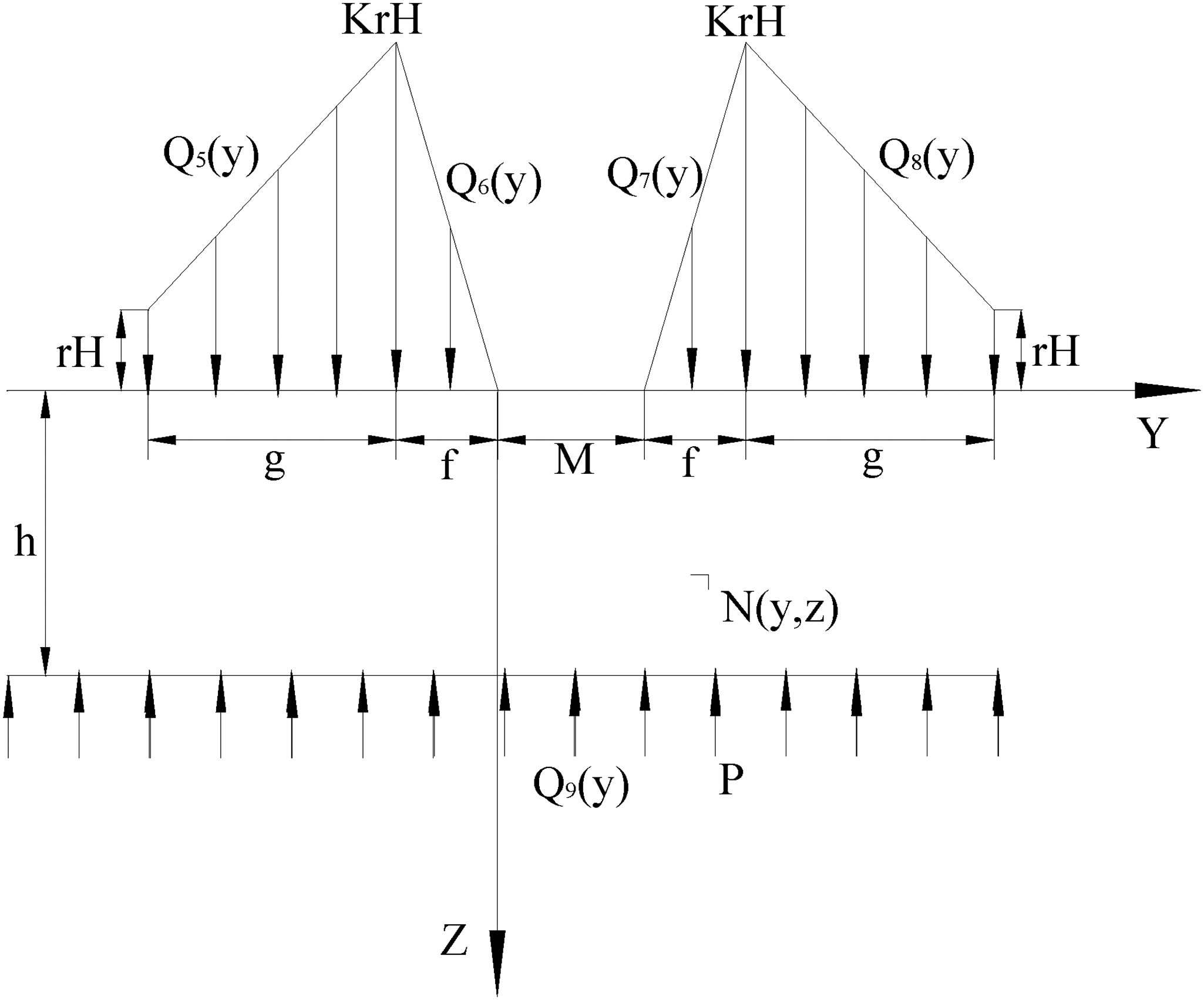
Mechanical model of the mining floor stress along the coalface inclination direction.
According to the established mechanical model shown in Figure 1, the five linear loads can be obtained by equations (1)–(5) as follows: The stress component of any point N(y, z) of the mining floor under the action of the linear load Q5(y) is given by: The stress component of any point N(y, z) of the mining floor under the linear load Q6(y) is given by: The stress component of any point N(y, z) of the mining floor under the linear load Q7(y) is given by: The stress component of any point N(y, z) of the mining floor under the linear load Q8(y) is given by: The stress component of any point N(y, z) of the mining floor under the linear load Q9(y) is given by:





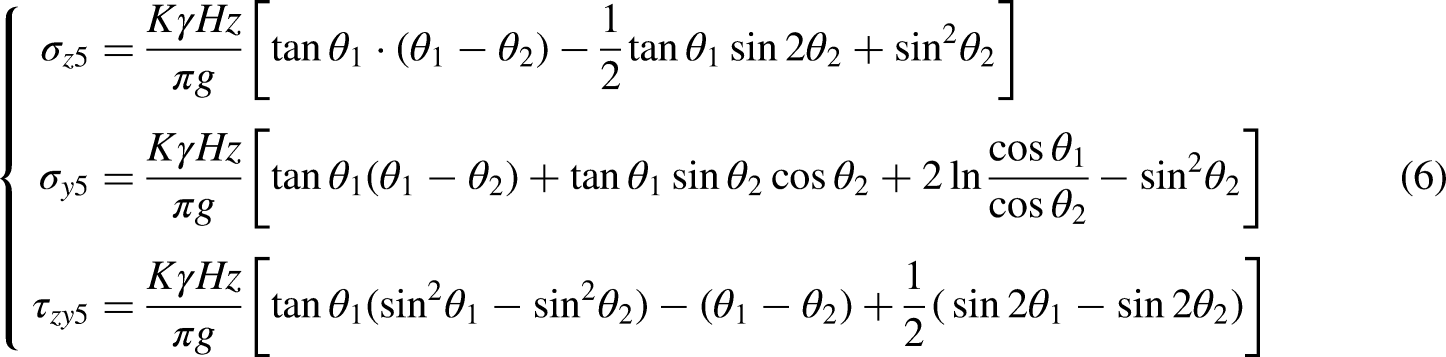
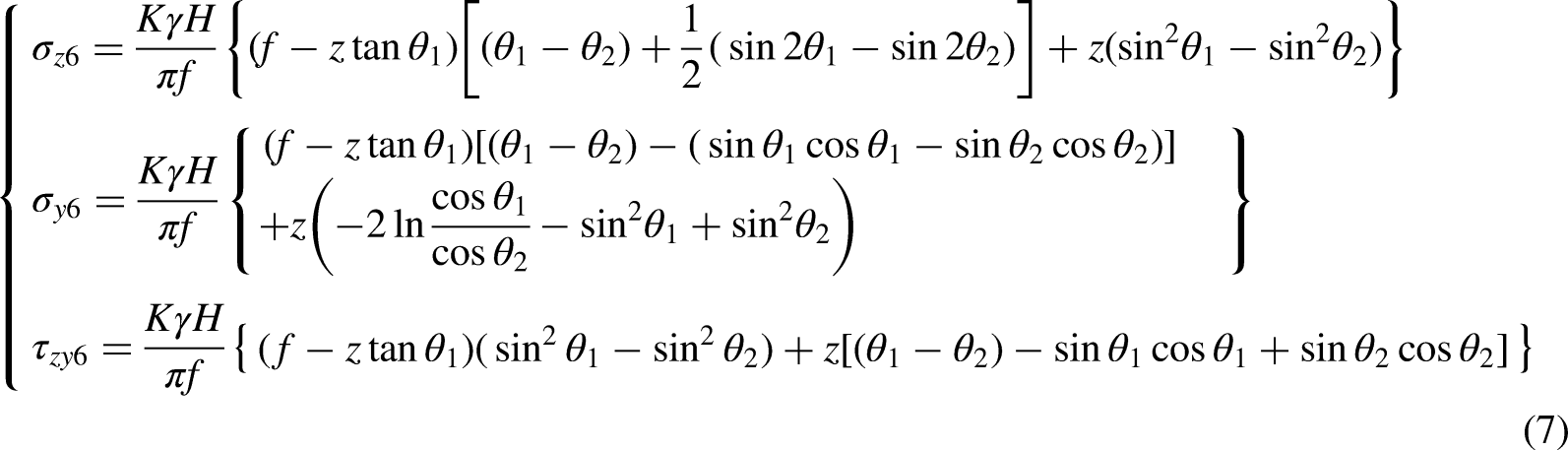
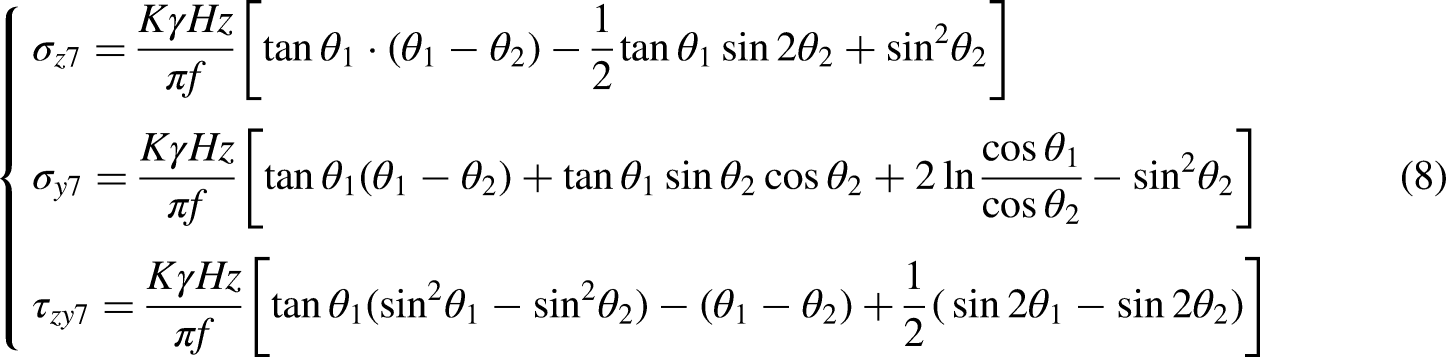
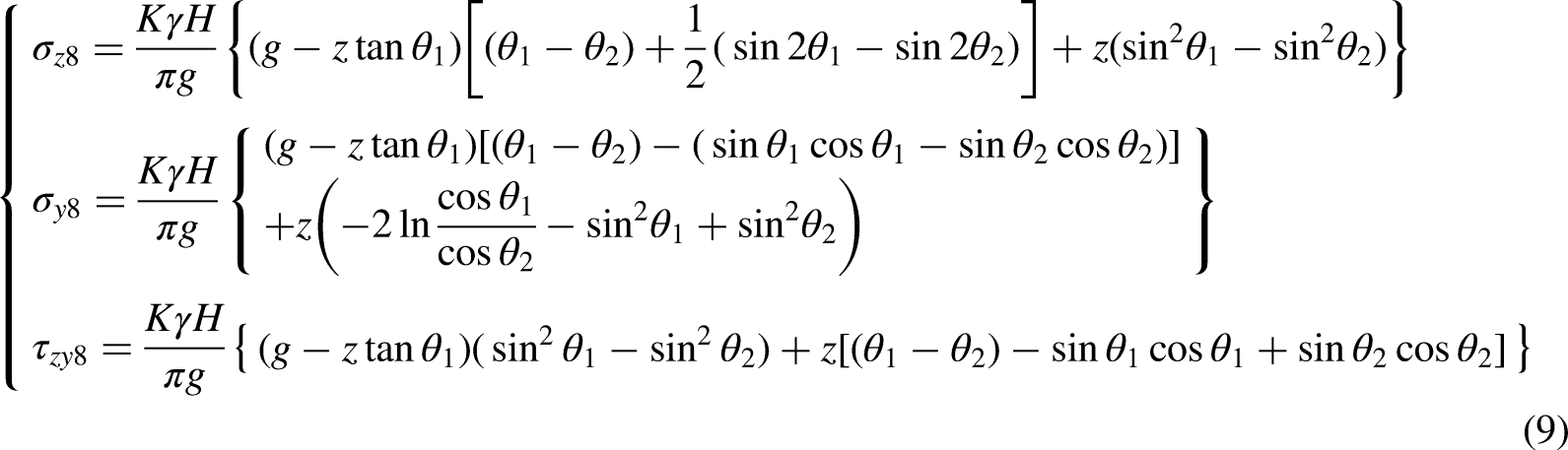
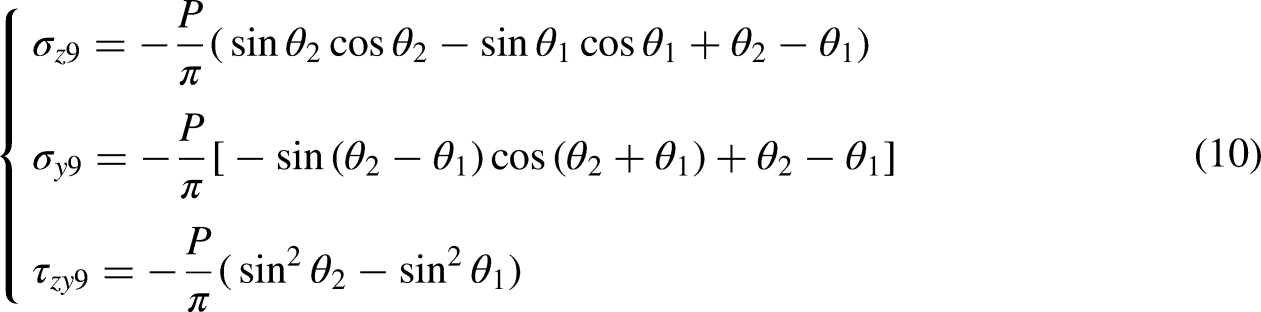
In summary, under the influence of the mine pressure and the confined water pressure, the stress at any point N(y, z) in the mining floor rock mass along the coalface inclination direction can be given by:

Considering the detailed data had in hand and the representativeness of engineering background, the 11301# coalface at Wanglou colliery is considered as a case study in this work. The 11301# coalface adopts the long wall retreating comprehensive mechanized coal mining method, where the roof is managed by the full caving method, and the ventilation mode of the mine is of the central parallel extraction type. The buried depth H of the coal seam is around 957.43 m, and the thickness of the coal seam is fixed at 1.91 m. The inclined length of the 11301# coalface M is equal to 100 m. In addition, the coal seam roof of the 11301# coalface is mainly mudstone and siltstone, occasionally medium and fine sandstone, where the floor is made up of mudstone and sandy mudstone. Based on the observation data for the mine pressure, f = 10 m and g = 20 m. In the investigation, it is considered that when the coalface is advanced for 60 m, one initial pressure and one periodic pressure are completed. In this regard, the coal seam floor when the coalface is advanced for 60 m is taken as the research object in this work. Thus, the horizontal, vertical, and shear stress distribution laws of the mining floor based on Origin are studied.
Theoretical analysis of the mining floor failure characteristics
The investigation and research of the stress distribution law of mining floors is an important premise for analyzing the depth and range of floor failure. As the stress of the floor rock mass propagates down to the depth, the failure of the floor rock mass is determined by the shear strength of the floor. In this regard, when the shear strength of the floor rock mass exceeds the maximum shear stress, the floor rock mass is damaged until the shear strength becomes less than the maximum shear stress. Combined with the Mohr–Coulomb criteria, the maximum shear stress in the mining floor rock mass is calculated by equation (12) (Zheng and Kong, 2010).



Numerical simulation
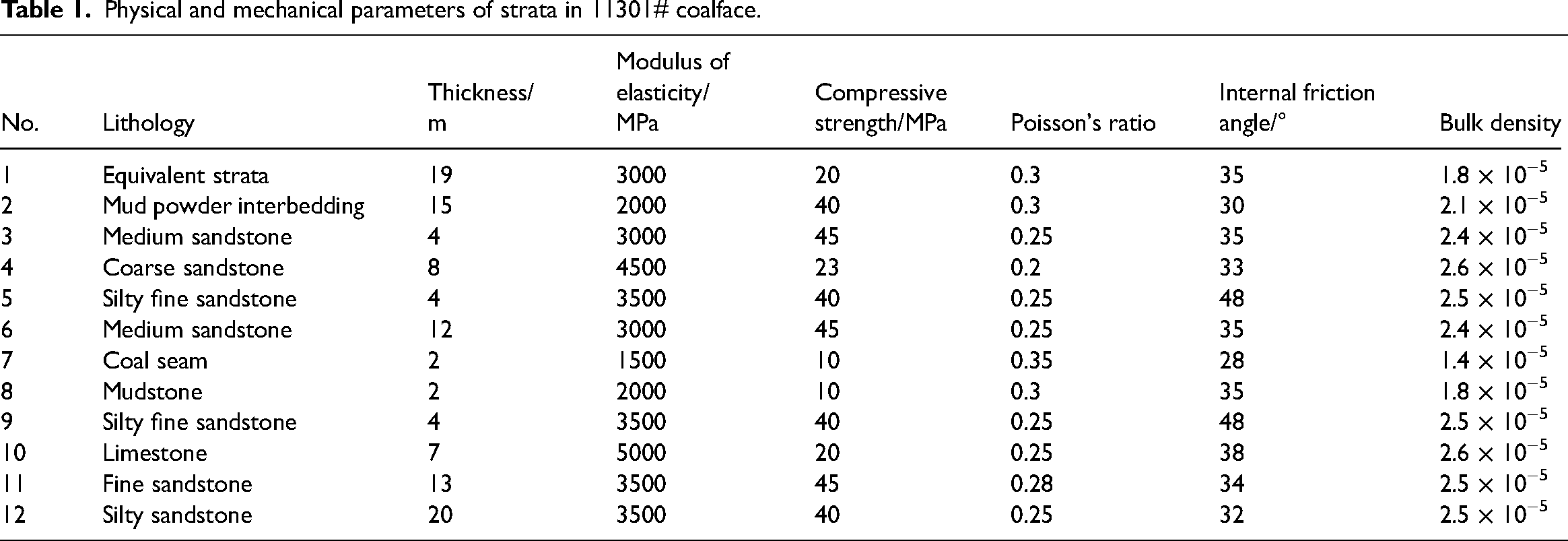
In this study, the failure characteristics and the dynamic development law of the mining floor are simulated using FLAC3D software (Itasca Consulting Group, Inc., 1997), which can intuitively show the dynamic failure development process of the mining floor. According to the lithology of the coal seam roof and floor exposed by boreholes in 11301# coalface of Wanglou Colliery, partial strata are homogenized and integer processed to facilitate modeling and calculation. The mechanical parameters of each stratum are shown in Table 1. The length, width, and height of the numerical model are 400, 200, and 110 m, respectively, as shown in Figure 2. The boundary conditions of the model are defined that the upper boundary is free and can move vertically; the rock stress load is loaded; the lower boundary is fully constrained; and the front, rear, left, and right boundaries are unidirectionally constrained. In addition, the Mohr–Coulomb criterion is adopted and employed in this work as the failure criterion of coal and rock mass. Furthermore, the simulated coal seam has a buried depth of 960 m, a thickness of 1.91 m, a full mining thickness, a working face width of 120 m, coal pillars of 40 m on both sides, a working face length of 200 m, and 100 m coal pillars at the front and the back. Excavation is carried out in steps 10 times, 20 m each time.
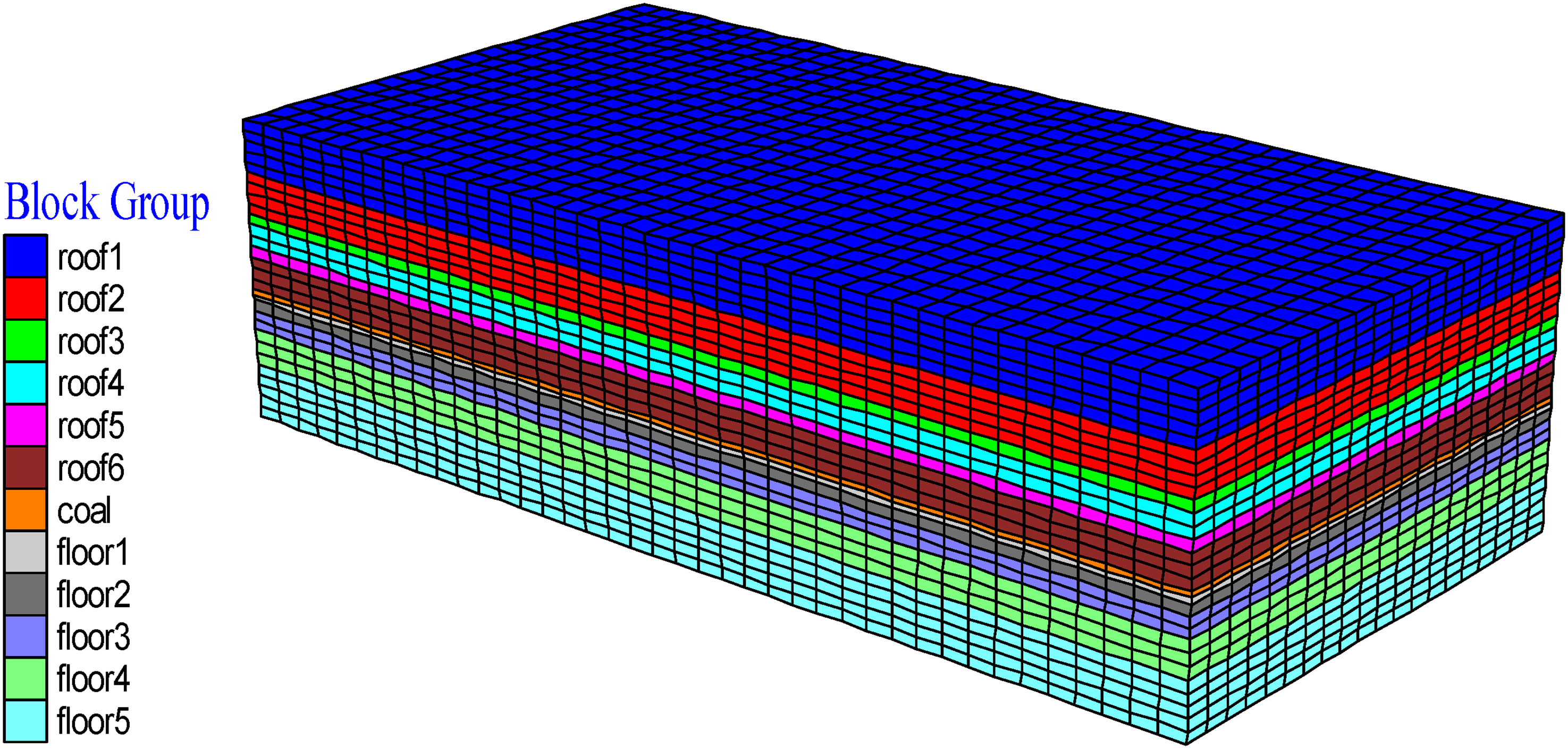
Numerical model.
Physical and mechanical parameters of strata in 11301# coalface.
Risk assessment of the floor water inrush
Water inrush coefficient method
By using the water inrush coefficient, the key to determining the water inrush risk of mining floors lies in the key aquiclude of the mining floor and the original height zone of confined water. The thickness of the key aquiclude is calculated considering the failure depth of the mining floor. Based on this, the water inrush coefficient in the mining process is calculated based on equation (15). Considering the results of the numerical analysis of the failure depth in different excavation steps, the evolution law of the water inrush coefficient of the mining floor in the process of coal mining is studied. Then, the standard of 0.1 MPa/m is used to judge the water inrush risk of the mining floor (State Administration of Work Safety and State Administration of Production Safety Supervision of China, 2009; Wu et al., 2013a, 2013b).
Criterion of floor water inrush based on the limit equilibrium theory
In order to quantitatively evaluate the water inrush risk of the mining floor from a theoretical point of view, the analytical solution of the critical water pressure for the floor aquiclude failure was derived based on the limit equilibrium theory. Therefore, in the key aquiclude (h2) of the mining floor, the unit body with the thickness of dy is arbitrarily taken along the coalface inclination direction. In addition, the horizontal and vertical directions of the upper surface of the key aquiclude are considered as the X and Y coordinate axes, respectively, as shown in Figure 3. In the evaluation, σx is the horizontal stress of the key aquiclude of the mining floor, σy is the vertical stress of the key aquiclude of the mining floor, and τ is the friction resistance of the surrounding rock on both sides of the unit.
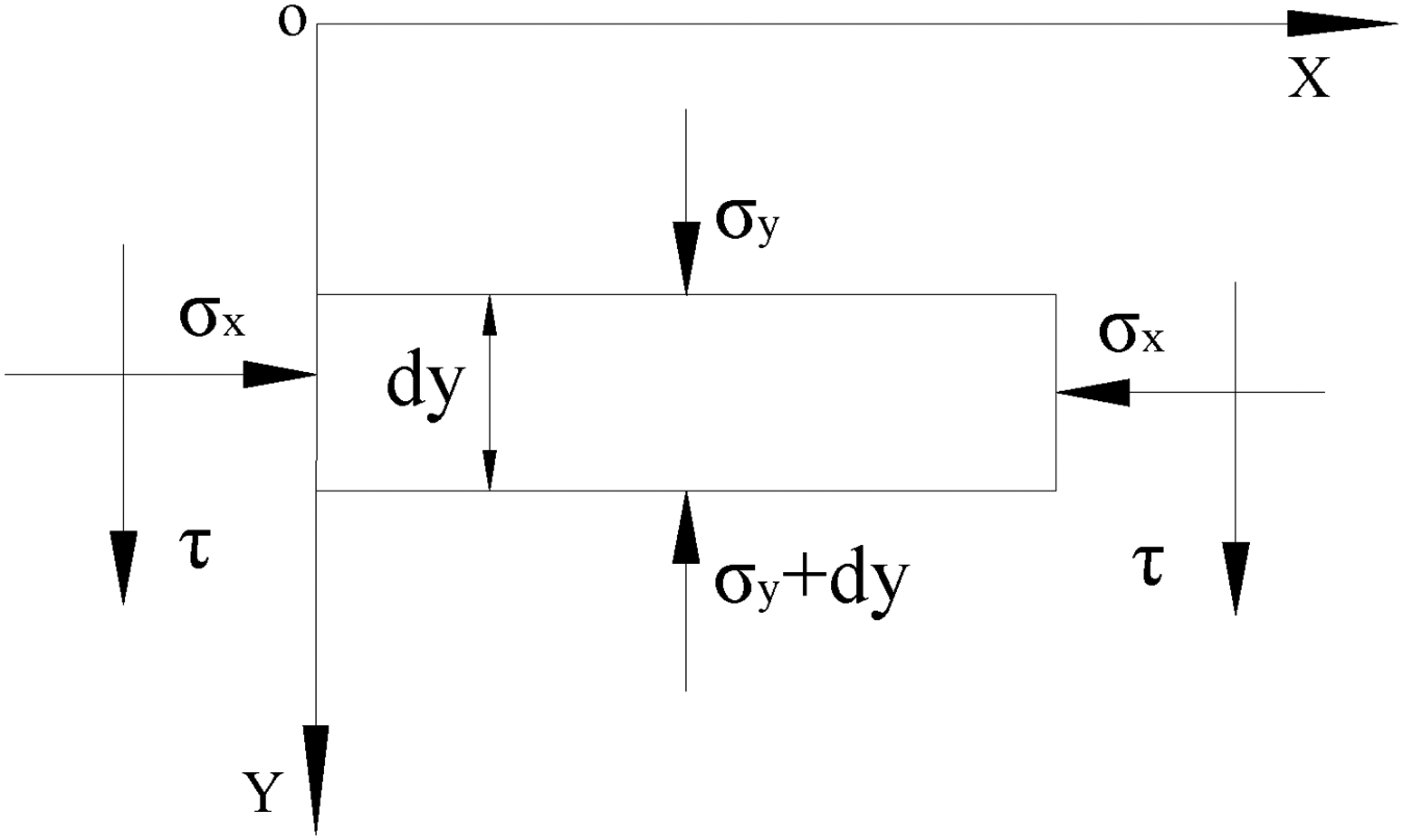
A sketch of forces in the unit of the aquifer.
Taking into account the theory of rock mechanics, when the key aquiclude of the mining floor is not damaged, the mechanical condition, so the unit can maintain balance in the y direction is as follows:

The condition for limit equilibrium of the rock mass based on Mohr–Coulomb criteria is given by equation (18).






Furthermore, in the 11303# coalface case, the distance from the coal seam to the confined aquifer h is equal to 40 m, the measured confined water pressure P is equal to 2 MPa, and the confined water lifting height h3 is equal to 9 m. In addition, the measured value of the mining floor failure depth h1 was found to be equal to 13 m and the calculated thickness of aquiclude h2 is equal to 18 m. On the other hand, the average uniaxial compressive strength of the floor aquiclude Rc is equal to 40 MPa, the internal friction angle φ0 is equal to 35°, the cohesion C is equal to 5.2 MPa, the unit weight γ is equal to 21 kN/m3, and the Poisson's ratio μ is 0.25. Considering these inputs and parameters, the critical water pressure of the mining floor aquiclude failure is calculated.
Results and discussion
Analytical solutions of the floor failure characteristics
Stress distribution law of the mining floor above-confined aquifer
Using the data processing software Origin, the floor rock mass stress contour along the coalface inclination direction is calculated, as shown in Figures 4–6. The value of isoline in Figures 4–6 is equal to the stress value divided by the original rock stress value. The theoretical calculation results showed that the stress contour law of the floor rock mass along the coalface inclination direction is as follows:
The horizontal/vertical/shear stress contour is symmetrical around the coalface inclination direction center line. The vertical stress contour of the floor rock mass below the coal body on both sides of the coalface is generally semi-elliptical, and the stress concentration is clear as shown in Figure 4. In addition, the semi-elliptical vertical stress concentration area is slightly inclined to the side of the coalface and gradually attenuates from 3.0 to 0.9, with the increase in the floor depth. The horizontal stress contours of the floor rock mass under the coal body on both sides of the coalface are generally “inverted concave” and gradually decrease from 2.4 to 0.2, with the increase in the floor depth. Similarly, the shear stress contours of the floor rock mass under the coal body on both sides of the coalface are generally “symmetric ellipse” and gradually decrease from 0.6 to 0.2, with the increase in the floor depth. The rock mass stress value of the floor is the smallest at the junction of the unloading area and the concentration area, that is, the location of the maximum unloading point of the mining floor. Therefore, this is the area that is characterized by the most severe floor damage zone.
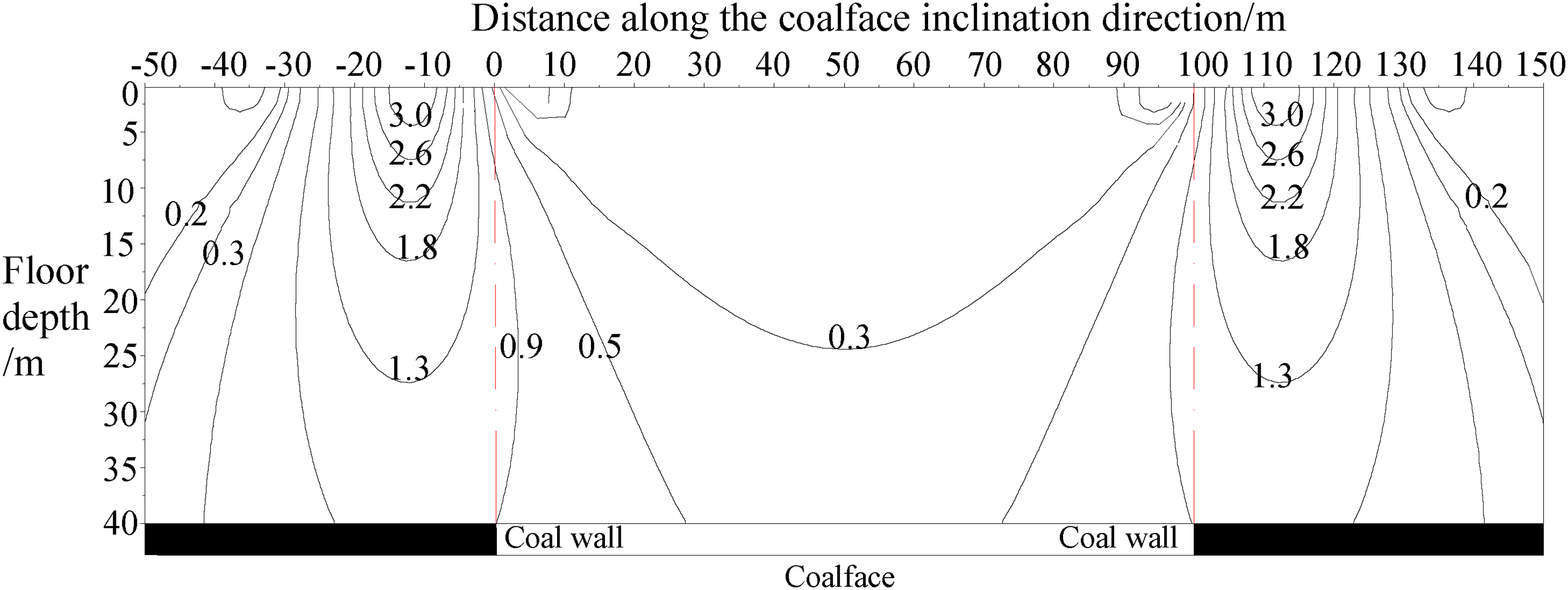
Floor rock mass vertical contour along the coalface inclination direction.
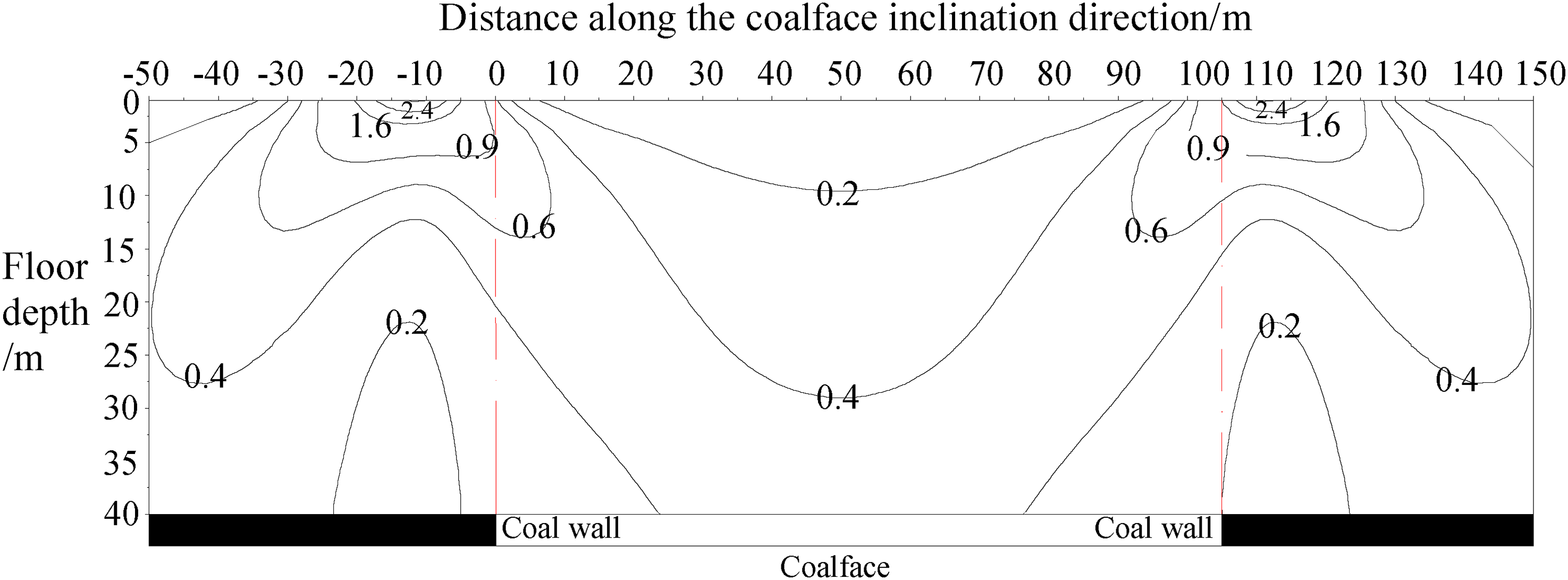
Floor rock mass horizontal contour along the coalface inclination direction.
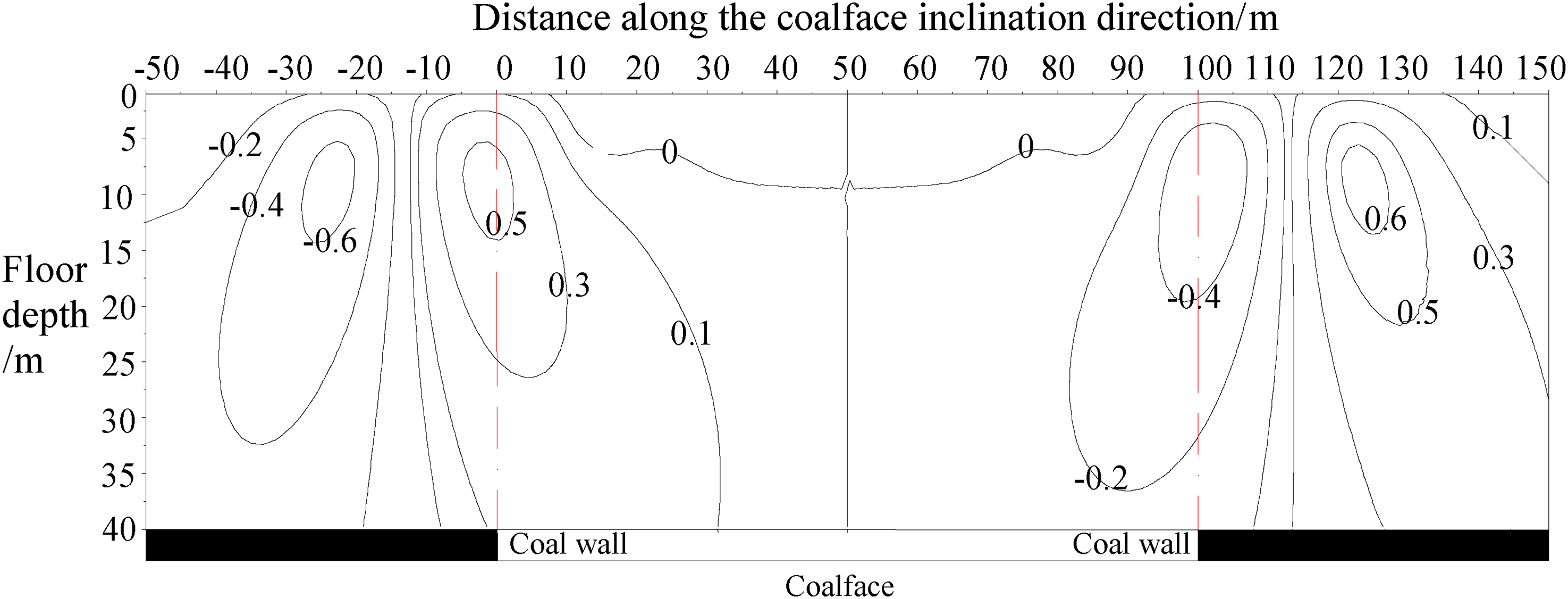
Floor rock mass shear contour along the coalface inclination direction.
Failure characteristics of the mining floor above-confined aquifer
Using equations (11)–(14), the failure characteristic range of the floor rock mass when advancing 60 m along the coalface inclination direction is obtained based on data processing, as shown in Figure 7.
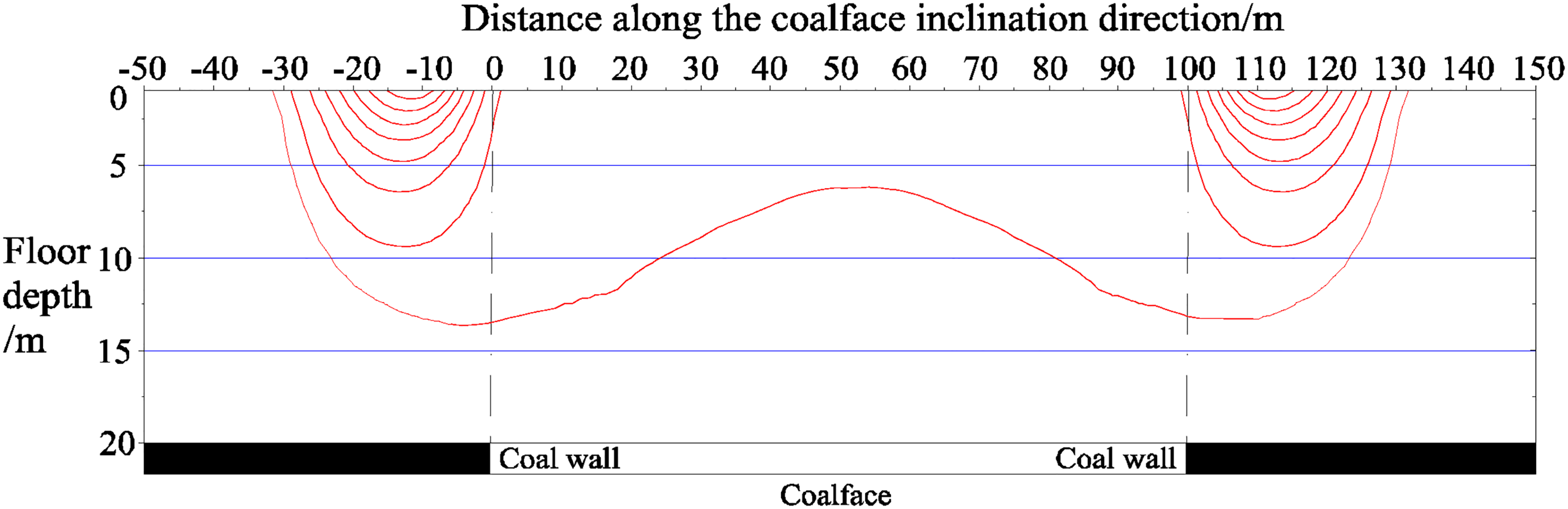
Failure characteristics along the coalface inclination direction when advancing 60 m.
As highlighted in Figure 7, when the coalface is advanced for 60 m, the failure range of the floor rock mass along the coalface inclination direction is found to be about 164 m. Due to the bearing pressure on both sides of the coalface, the failure range on both sides of the left and right coal walls of the coalface is about 32 m. Because the roof collapses upward at a certain caving angle, the amount of caving in the middle of the roof is deemed to be relatively sufficient. On the other hand, the caving on both sides is insufficient, indicating that the floor can fully expand on the coal walls on both sides of the goaf, resulting in more cracks. Therefore, the failure depth of the floor rock mass near the coal walls on the left and right sides of the coalface is the largest, with a value of around 13 m. Furthermore, at the middle of the coalface inclination direction, the minimum damage depth of the mining floor is found to be 6 m. Overall, the floor failure mode along the coalface inclination direction is similar to the letter “lying flat-B.”
Numerical simulation results of the mining floor failure characteristics
Employing the developed numerical model, the stress distribution and plastic zone distribution at different advancing distances are analyzed along the coalface strike and the inclination direction. The results are presented in Figures 8 and 9. With the advance of the coalface, the range of the goaf increases. At the same time, the stress near the coal wall is concentrated, and the front and rear bearing pressures on the coalface floor gradually increase. In addition, the failure depth and the scope of the floor are found to expand gradually.
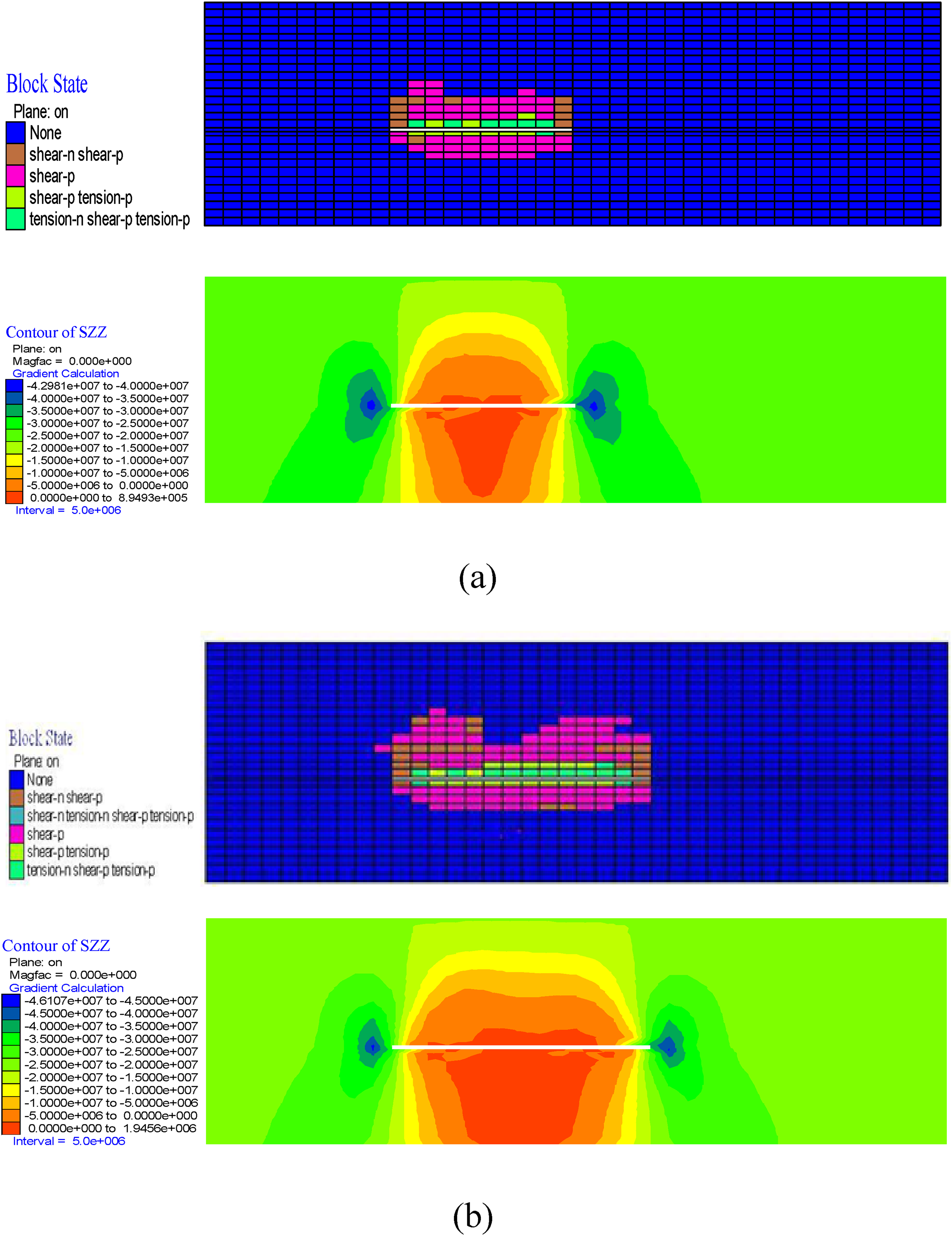
Plastic zone and vertical stress distribution of the mining floor along the coalface strike direction. (a) Advancing 60 m, (b) Advancing 200 m.
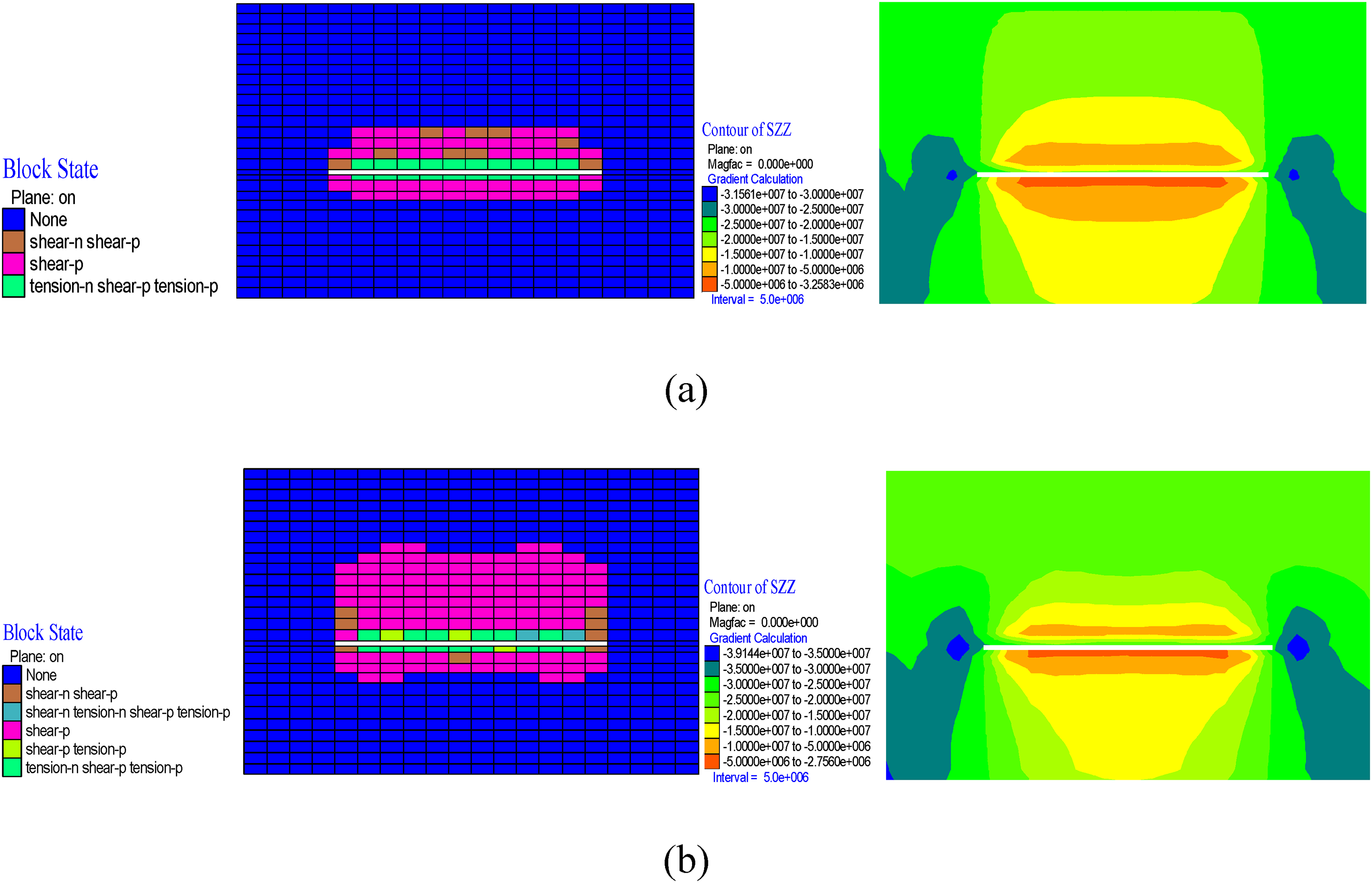
Plastic zone and vertical stress distribution of the mining floor along the coalface inclination direction. (a) Advancing 60 m, (b) Advancing 200 m.
When the coalface advances to 60 m along the coalface strike direction, the failure depth of the mining floor is found to be around 13.2 m, reaching the maximum failure depth of the mining floor, as shown in Figure 8(a). As the coalface continues to advance, the failure depth of the mining floor didn't exhibit an increase, and its resulting failure range shape is similar to the “inverted arch,” as shown in Figure 8(b). As shown in Figure 9(a), when the coalface advances to 60 m along the coalface inclination direction, the failure depth of the mining floor is found to be around 12.5 m. With the continuous advancement of the coalface, the failure depth didn't increase, and the shape of the failure range is similar to the letter “lying flat-B,” as shown in Figure 9(b). Overall, the failure forms of the floor rock stratum in the whole mining process mainly include tensile failure, tensile failure, and tensile shear failure.
Furthermore, the average value of the strike and the inclination failure depth of the coalface (12.85 m), is considered to be used further as the comprehensive value in the numerical simulations, which is basically consistent with the 13 m value attained in the theoretical analysis. Based on the vertical stress distribution law of the mining floor, both results are basically consistent. Moreover, along the strike direction of the coalface, the concentration area and unloading area of the vertical stress in the floor rock mass correspond to the concentration area and unloading area of the abutment pressure and gradually decline with the increase of the depth, which is basically consistent with the theoretical analysis results.
Moreover, the on-site measurement maximum failure depth of the mining floor using drillholes double-pointed sealing side leakage device is 12.9 m (Huo, 2012). Compared with the measured values, the theoretical analytic model (13 m) and numerical simulation model (12.85 m) for mining floor failure depth are reasonable and accurate.
Risk assessment for the floor water inrush
In Figure 10, the floor failure depth is the average value of the coalface inclination direction and the strike direction obtained in the numerical simulations. With the coalface advancement, the lifting height of the confined water ranges from 1.5 to 2.0 m. Using equation (15), the water inrush coefficient was found to exhibit a certain trend, switching from increasing to becoming stable, that is, from 0.05 to 0.08 MPa/m. Then, the trend remains unchanged, as shown in Figure 10, which is less than the 0.10 MPa/m value highlighted in the specifications and guidelines (State Administration of Work Safety and State Administration of Production Safety Supervision of China, 2009). On this basis, it was noted that there is no floor water inrush risk during the coal seam mining in the 11301# coalface case.
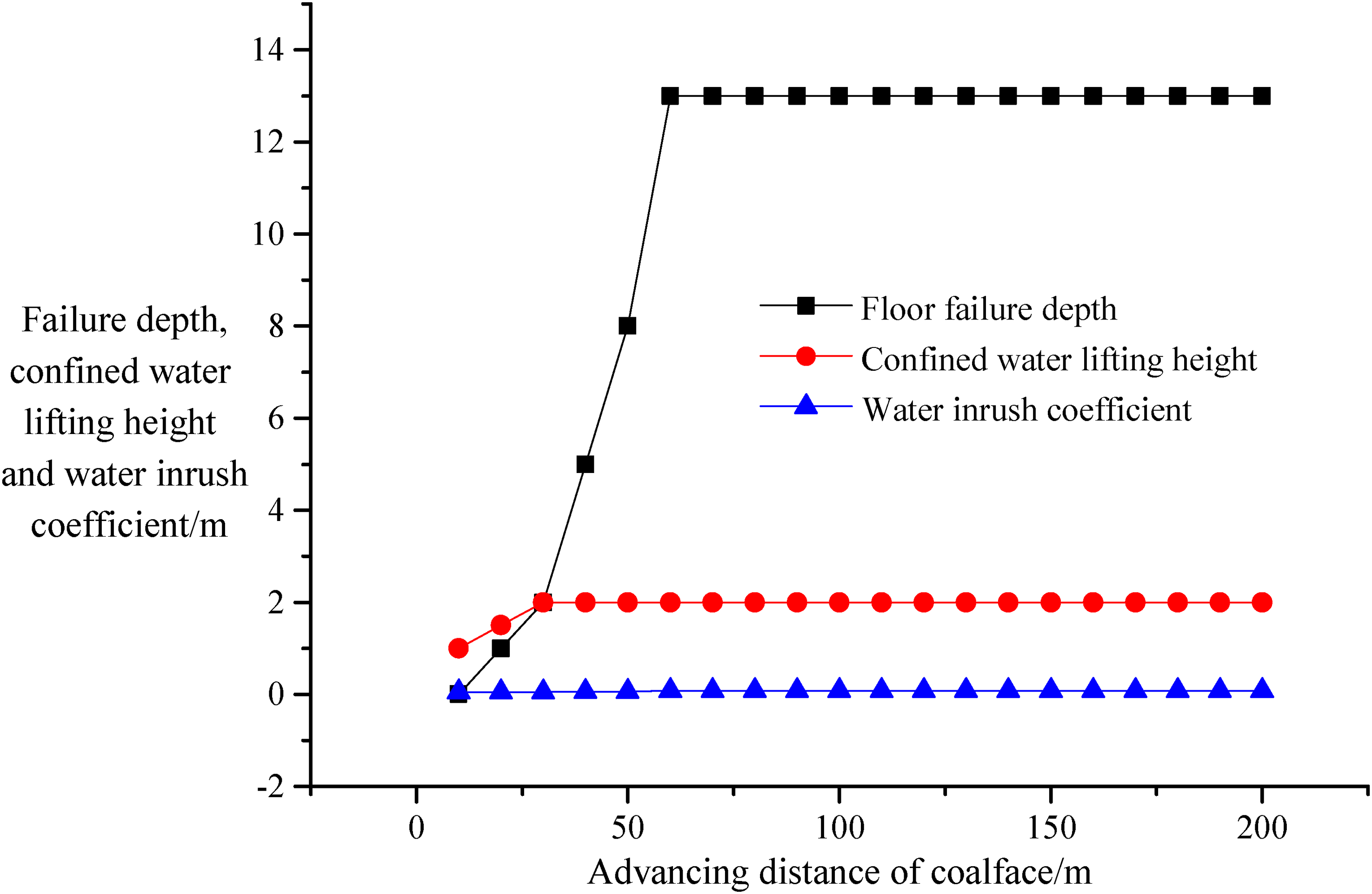
Line chart of the mining floor failure depth and the water inrush coefficient.
In terms of the limit water pressure of the key aquiclude based on the limit equilibrium theory, the above parameters are used as inputs to equation (23). As a result, it was found that P2 = 3.9 MPa > P = 2 MPa. Thus, the ultimate water pressure that the coal seam floor can bear is found to be greater than the actual water pressure, and there is no water inrush in the 11301# coalface case.
Combining both analyses of the water inrush coefficient and the ultimate water pressure of the aquiclude failure, it was comprehensively evaluated and concluded that there is no floor water inrush risk during the coal seam mining in the 11301# coalface case.
Conclusion
This study presented and developed a mechanical model of the mining floor failure characteristics under the combined action of mine pressure and confined water pressure, in addition to deriving the ultimate bearing water pressure criterion for the aquiclude failure. On this basis, a theoretical risk assessment method for the water inrush from the coal seam floor above-confined aquifer was proposed. The main findings of this work are as follows:
The horizontal/vertical/shear stress contour is basically symmetrical around the center line of the coalface inclination direction and gradually attenuates with the increase in the floor depth. The contour lines of the vertical stress, horizontal stress, and shear stress of the mining floor rock mass below the coal body on both sides of the coalface exhibit a “semi-elliptical,” “inverted concave,” and “symmetric ellipse” shape, respectively. The maximum failure depth of the floor rock mass near the coal wall on the left and right sides of the coalface is around 13 m. The minimum failure depth of the mining floor is 6 m, which is at the middle of the coalface inclination direction. Moreover, the failure position is found to be consistent with the severe failure area of the mining floor in the stress analysis. In numerical simulation, along the coalface strike direction, the maximum failure depth of the mining floor is 13.2 m, and its failure range shape is an “inverted arch” shape. Along the coalface inclination direction, the failure depth of the mining floor is 12.5 m, and its failure range shape is similar to the letter “lying flat-B.” Combining the findings regarding the water inrush coefficient and the ultimate water pressure of the aquiclude failure, it was comprehensively evaluated and noted that there is no floor water inrush risk during the coal seam mining in the 11301# coalface case, which was also verified considering the actual mining situation.
Footnotes
Declaration of conflicting interests
The author(s) declared no potential conflicts of interest with respect to the research, authorship, and/or publication of this article.
Funding
The author(s) disclosed receipt of the following financial support for the research, authorship, and/or publication of this article: Financial support for this work was provided by the National Natural Science Foundation of Shandong Province (No. ZR2020QE130), Open Fund for State Key Laboratory of Mining Response and Disaster Prevention and Control in Deep Coal Mines (SKLMRDPC21KF11), the National Natural Science Foundation of China (No. 42007239), the Future Plan for Young Talent in Shandong University (31410082064103), and the Fundamental Research Funds of Shandong University (2019GN080).
Data availability
Some or all data, models, or code that support the findings of this study are available from the corresponding author upon reasonable request.
