




Abstract
The hidden collapse column has the characteristics of concealment, suddenness and connection with karst water, which pose a serious threat to safe production in coal mines. In this study, a numerical model of collapse columns with a random distribution of pores was constructed by a finite difference calculation program. Numerical simulation analyses of the coal mining face advance were carried out to explore the response characteristics of rock in the collapse column area under the influence of four factors: mining impact, lateral pressure coefficient, pore water and confined groundwater. The results show that the abutment pressure reaches its maximum when the working face advances to the boundary of the elastic stress elevated zone of the collapse column. The plastic zone above the collapse column shows a "Λ" shape and keeps growing during the advance of the working face. The height of the plastic zone in the top and bottom of the coal seam increases with the increasing lateral pressure coefficient. An increase in the lateral pressure coefficient can amplify the effect of mining on the vertical displacement and plastic zone distribution of the collapse column. When the collapse column is connected to the confined groundwater, the pore water pressure will increase significantly with the advancement of the working face. Under the joint action of confined groundwater and pore water, the extent of the plastic zone around the collapse column will be larger, and the development of the plastic zone inside the collapse column is especially obvious. This study will provide a basis for revealing the rock response rules in the area of the hidden collapse column during mining.
Introduction
Water inrush in mines is considered a major disaster affecting safe production and is a significant mining safety problem faced by coal-producing countries around the world (Ma et al., 2019; Zhang and Lin, 2020). There are many reasons for water inrush in coal mines, among which the water hazard caused by karst collapse column will do great harm to the safe production and the lives of local people due to its characteristics of concealment, suddenness and contact with karst water (Hou et al., 2018; Bai et al., 2013). The karst collapse column is a special kind of hidden vertical structure in the Carboniferous Permian coalfield of North China that is widely distributed (Wu et al., 2019; Yin et al., 2004; Yao et al., 2013). The Kailuan Fangezhuang Mine, Wanbei Renlou Mine, Anyang Tongye Mine, Xuzhou Qingshanquan Mine, Liuqiao Mine, Xuzhou Dahuangshan Mine, Shanxi Xishan Mine and other mines have experienced major water flooding accidents caused by karst collapse columns (Kong et al., 2018). With the rising depth and intensity of mining, the mining environment is becoming more and more complex, and the mining impact, water pressure and crustal stress are growing. Inevitably, the threat to coal mine safety from collapse columns will be increasing.
After the formation of the coal system, on the basis of the development of karst both in the sedimentary period and in the exposure period, the karst caves continuously expanded and formed collapse columns (Zhu and Wei, 2011; Yao et al., 2018). Therefore, the structural characteristics of the collapse column are influenced by hydrogeological conditions, lithological characteristics and stress conditions. Many scholars have conducted a large number of basic theoretical studies on water inrush induced by karst collapse columns, which provides a scientific basis for water control in mines. Cao et al. (2021) studied the karst collapse column above the coal seam in the southern coalfield of China and constructed a discrete element numerical model by analyzing the particle size distribution and mineral composition of the collapse column to reveal the evolution mechanism of the water conductivity channel. Li et al. (2016) used the geological background of the Shuangliu mine as a prototype to study the formation of hydraulic conductivity channels and water inrush processes by examining the variation in rock resistivity. Feng et al. (2018) used self-designed equipment to measure the permeability coefficients of fractured rock and clarified the mechanism of water inrush in the fracture zone of the collapse column. Lin et al. (2021) used the consolidation drainage method to remodel karst collapse columns and studied the variation in compressive strength, tensile strength, cohesive force, internal friction angle and permeability with consolidation pressure and water content and proposed the mechanism of hysteresis water inrush in karst collapse columns during the mining process. Zuo et al. (2019) established a slip and bending fracture model for collapse columns based on the theory of elastic thin plates and clarified the critical conditions for destabilization of the top floor. Cheng et al. (2021) provided necessary information for the placement of surface directional detection wells by quickly locating suspected water inrush points through microseismic monitoring. In conclusion, the internal composition of the collapse column is not uniform, and fractures and cavities are developed. The existing literature focuses mostly on the mechanism of water inrush in the collapse column of the test mine under specific geological conditions. There is a lack of research on the response characteristics of regional rock masses under the influence of multiple factors.
Unrevealed small hidden collapse columns are difficult to predict and pose a serious threat to the safety of coal mine production (Wang et al., 2014). The rock structure is so complex that theoretical analysis of the rock structure in underground engineering is almost impossible or overly simplified and imprecise (Yang et al., 2007). Numerical simulation has become a powerful analytical calculator and universal material testing machine for underground engineering because of its adaptability to complex conditions and its "memory" function with stress-strain history (Wang and Zhuang, 2018; Kong and Wang, 2018). In this study, a finite-difference calculation program was used for numerical simulation of coal mining to investigate the response characteristics of the rock body in the collapse column area under the influence of mining impact, lateral pressure coefficient, pore water and confined groundwater. The coupling action of mining and various geological factors on the deformation of rock mass in the working face area were discussed, which provided a theoretical basis for the prediction of karst collapse columns and safe mining under various coal seam occurrence conditions.
Methodology
Engineering background
The Sima Coal Mine is located in the eastern part of the Qinshui Coalfield, the deepest mining area is 500 m, the average burial depth is approximately 370 m, the average thickness of the coal seam is 4.5 m, and the top and bottom floors of the coal seam are mainly mudstone, marl and sandy mudstone (The lithological column is shown in Figure 1). The available geological data show that there are numerous collapse columns in the working face of the Sima Coal Mine. Many cracks and microfaults are distributed in the surrounding rocks of the top and bottom floors of the collapse columns. The special geological formations placed in the coal seam mining area may lead to the entry of confined water within Ordovician limestone into the working face, which is a serious threat to safe mining work.
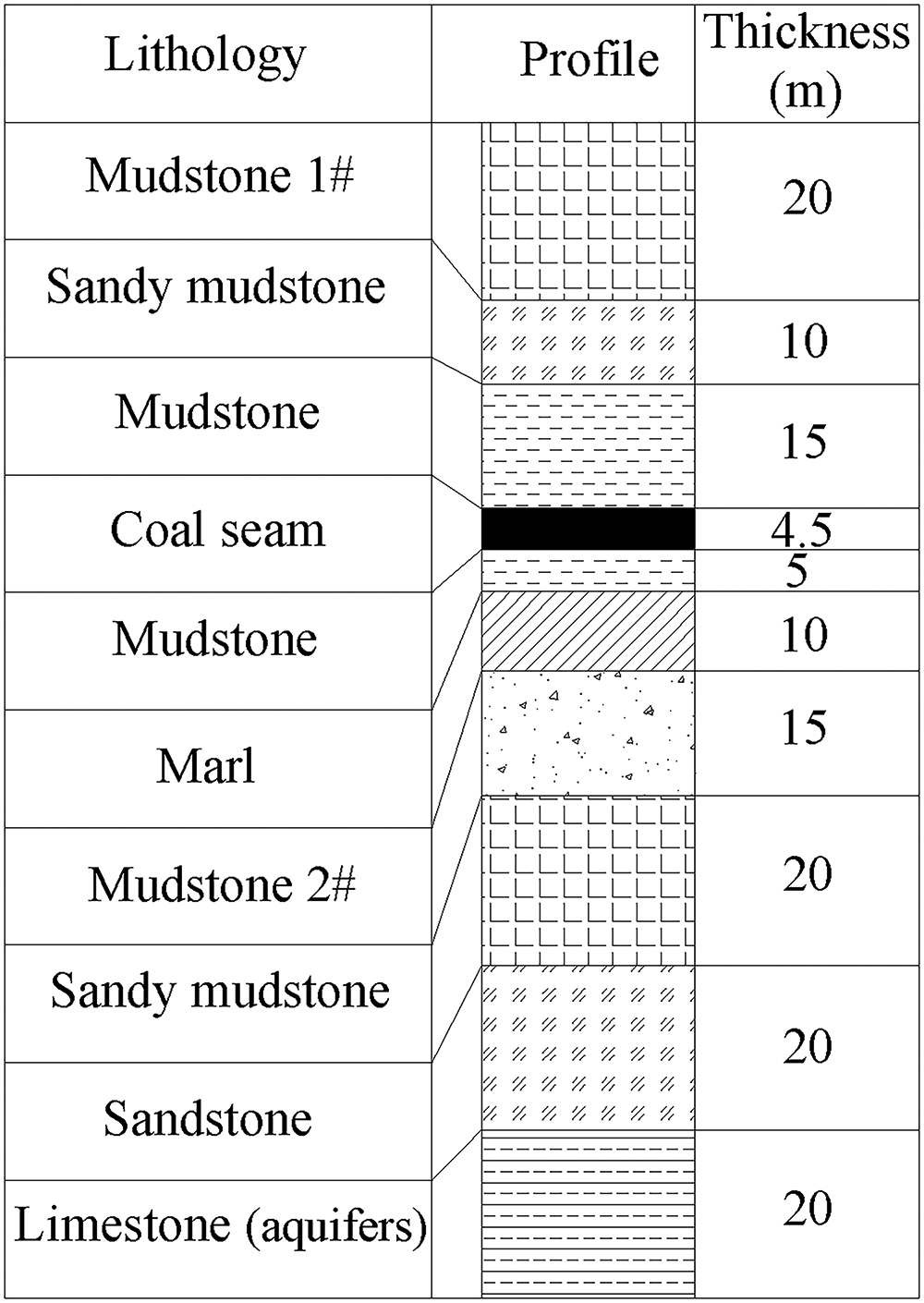
Lithological column.
Theoretical analysis
To theoretically analyze the stress distribution around the collapse column, the following assumptions are made here for the collapse column and its surrounding rocks: (i) the section of the collapse column is circular; (ii) the surrounding rock is homogeneous, isotropic, and linearly elastic; and (iii) there is no creeping behavior or viscous behavior. The collapse column and its surrounding rock are assumed to be a cylindrical model, as shown in Figure 2, where F1 is the pressure on the top and bottom of the collapse column. When r = ra,
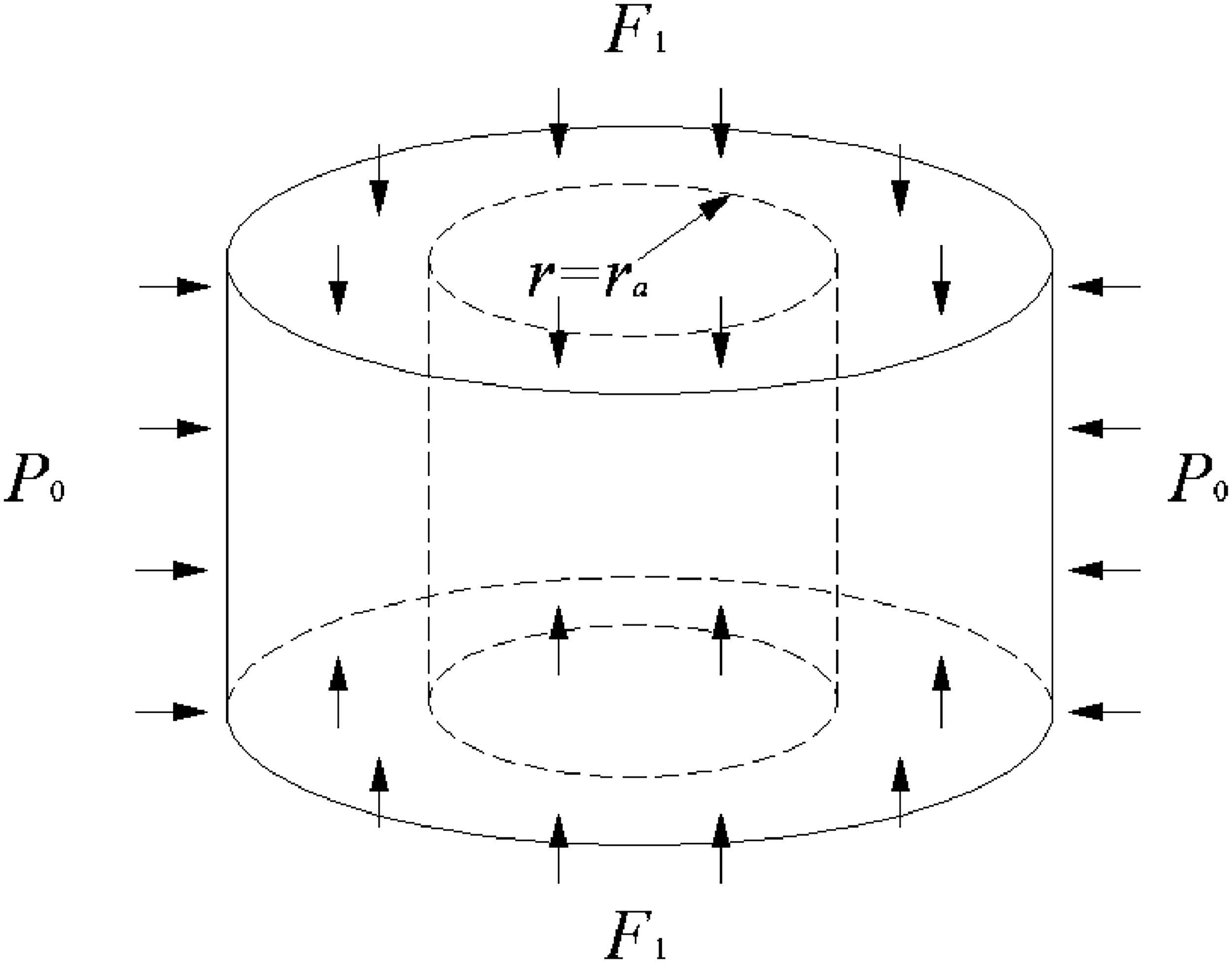
Mechanical model of collapse column.
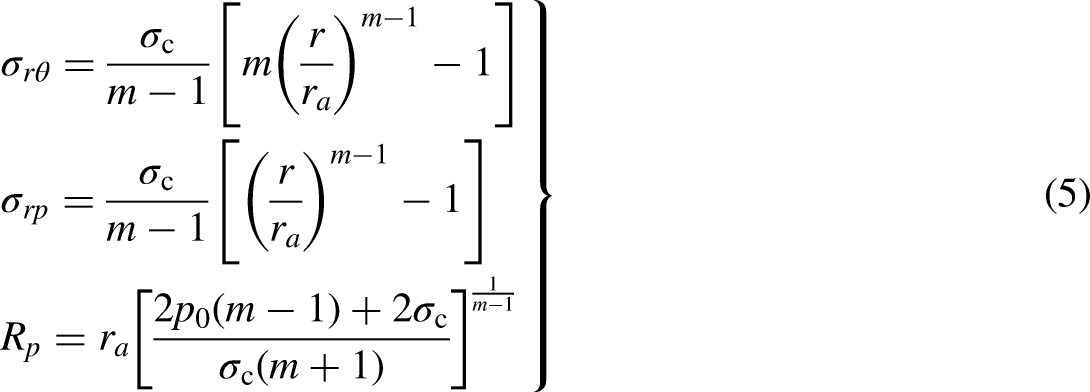
The collapse column disrupts the stress equilibrium state of the overlying rock and induces stress adjustment in the rock structure. The redistributed stress will easily exceed the yield strength of the rock, and part of the rock around the collapse column will enter the plastic state. The surrounding rock away from the collapse column gradually transforms to the elastic state. Therefore, the elastic zone and plastic zone coexist in the surrounding rock, and both are circular in shape. The Mole-Coulomb strength criterion is used as an approximate criterion for rock failure, expressed in terms of principal stresses as follows.




Numerical simulation model
The filler of the collapse column is mostly the rock block of the coal stratum, which is the accumulation formed by the gradual downward movement of each rock layer at the top. The internal structure of the collapse column is disordered, and the cracks and cavities are all over. Therefore, a plane strain collapse column model with a random distribution of pores is required. The fish language and its random functions are used to obtain a series of random integers and randomly select a certain number of elements in the model. The selected elements are assigned to the null constitutive model to represent the random distribution of pores in the collapse column, as shown in Figure 3.
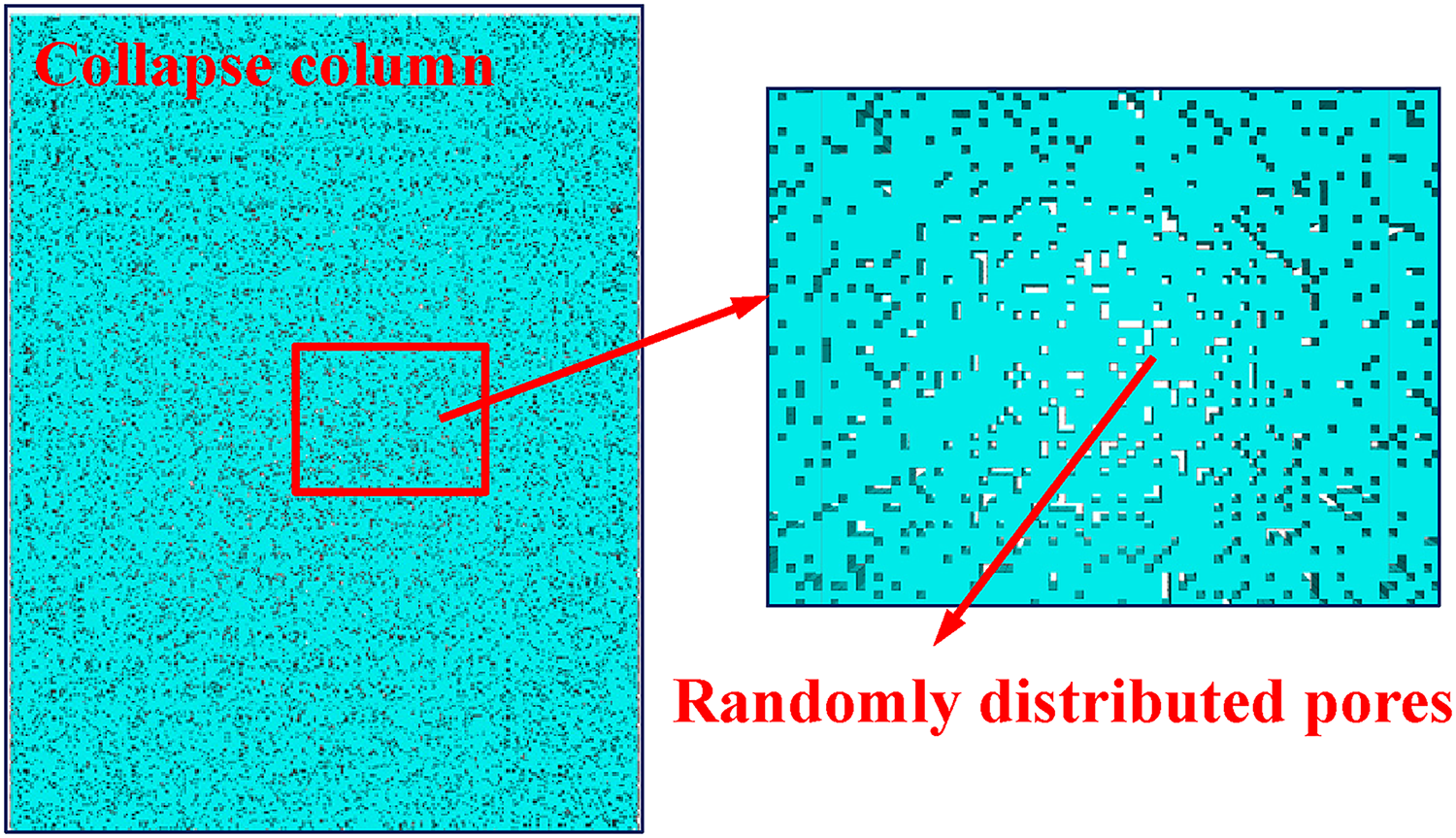
Plane strain model with random distribution of pores in the collapse column.
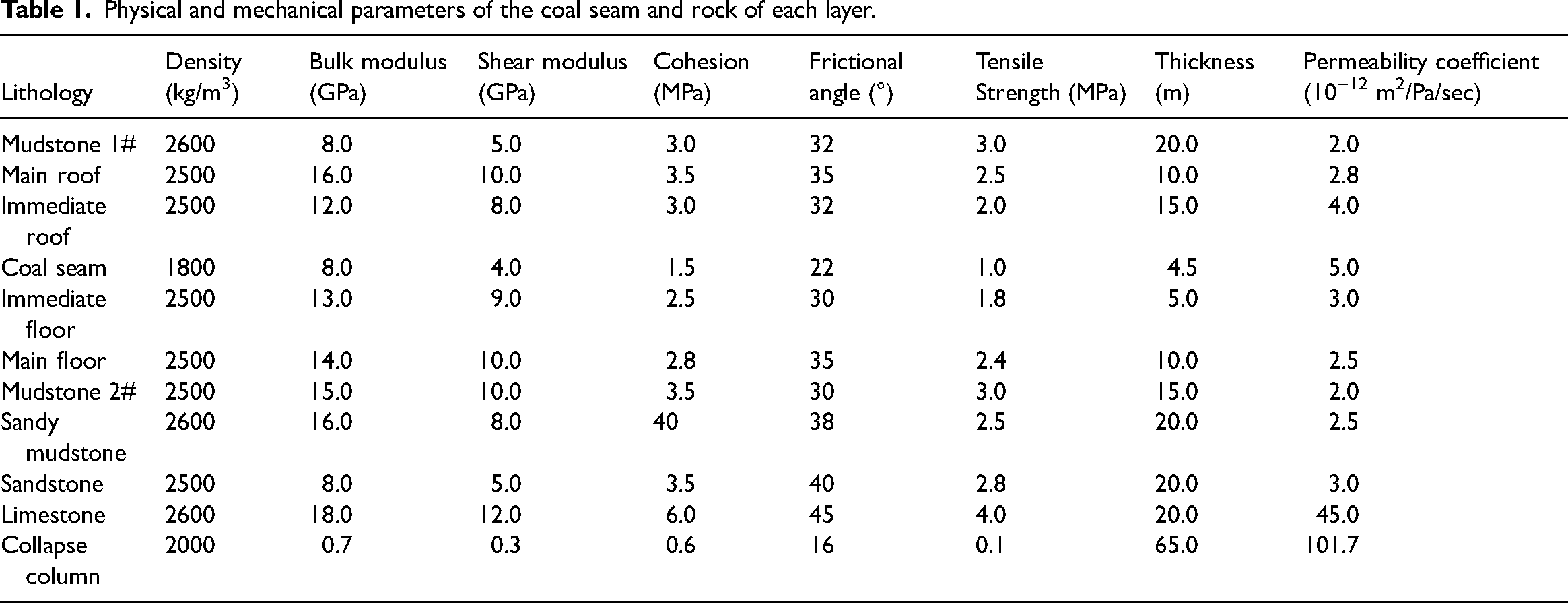
Based on the geological data from the drilling of the Sima Coal Mine, the physical and mechanical parameters of the rock layer required for the simulation were selected, as shown in Table 1. To facilitate the calculation, the collapse column is simplified to a rectangle of length 50 m and height 65 m. Based on the geological data containing the hidden collapse column, a simplified calculation model with a length of 230 m and height of 139.5 m was constructed, as shown in Figure 4. Monitoring points are arranged at 5 m intervals along the collapse column axis to determine the vertical displacement, horizontal displacement and vertical stress. A stress of 11 MPa is applied at the top of the model to replace the self-weight generated by the overlying rock layer at 440 m. Both sides and the bottom of the model are set to fixed displacement boundary conditions. The pore elements of the collapse column adopt the null constitutive model, and the remaining elements are assigned to the Mole-Coulomb constitutive model.
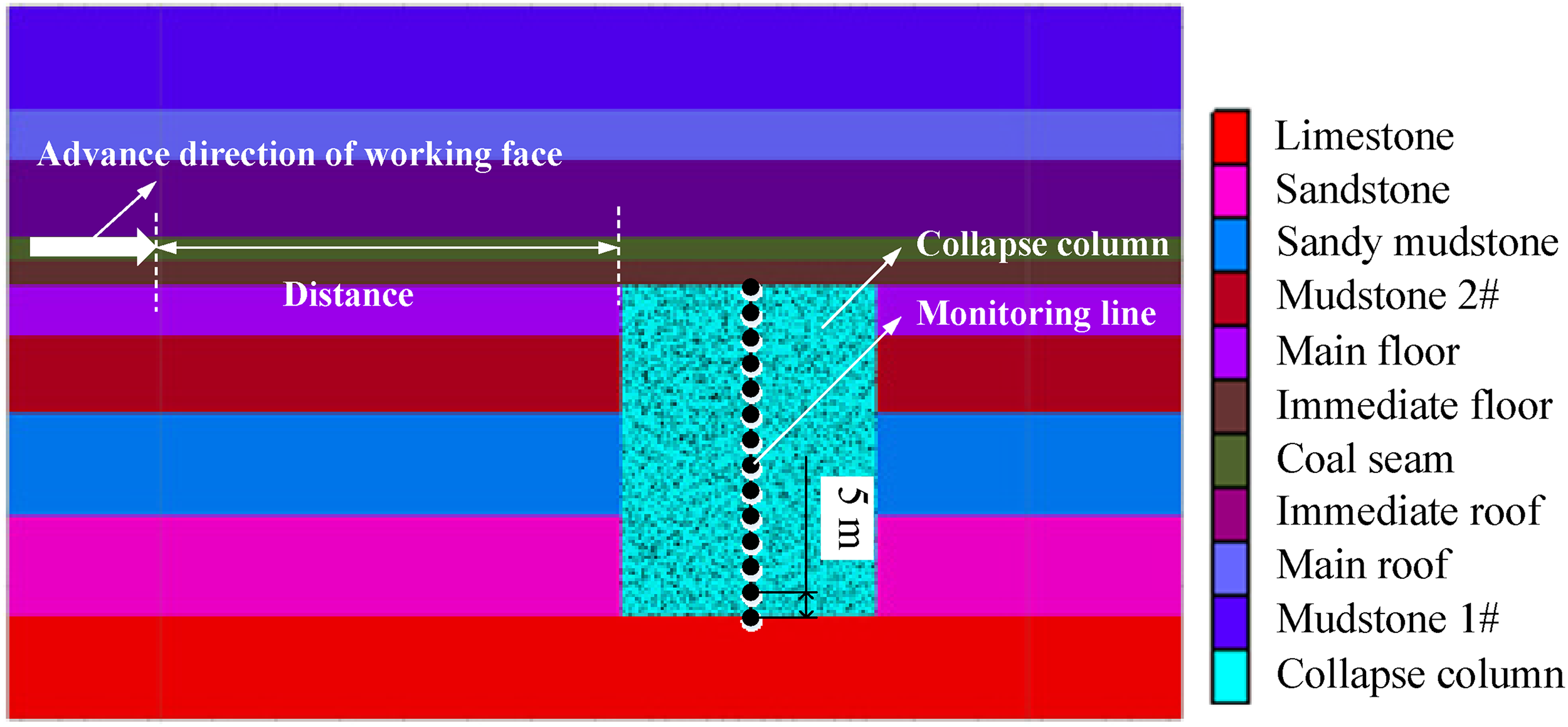
Numerical model of the collapse column under the influence of mining.
Physical and mechanical parameters of the coal seam and rock of each layer.
Simulation scheme
The original stratigraphic numerical model was built with reference to Figure 4, and the lateral pressure coefficient was fixed at 1.5. To analyze the effect of different influencing factors on the collapse column, four simulation scenarios were developed: (i) the working face is excavated 15 m each time to simulate the impact of mining on the rock response characteristics in the area of the hidden collapse column; (ii) on the basis of scheme (i), lateral pressure coefficients of 0.5, 1.0, 1.5 and 2.0 were set to study the influence rule of different lateral pressure coefficients on the collapse column and the stope; (iii) on the basis of scheme (i), the model is numerically calculated by fluid-solid coupling, and the pore water pressure of the collapse column is set to 0.01 MPa, 0.05 MPa, 0.10 MPa, 0.30 MPa and 0.50 MPa, respectively, to investigate the influence rule of the pore water pressure on the collapse column and the stope; and (iv) on the basis of scheme (i), an Ordovician limestone confined aquifer with a water pressure of 5 MPa was set at the bottom of the collapse column to analyze the mechanism of water inrush under the influence.
Results and discussion
Mining influence
As the working face advances, the vertical stress change rules of the immediate roof are shown in Figure 5. The plastic zone was 5 m outside the collapse column, and the elastic stress elevation zone was 5–45 m. If the radius of the collapse column of 25 m was added, the radius of the plastic zone would reach 30 m. Substituting the parameters in Table 1 into equation (5), the radius of the plastic zone was approximately 29 m by theoretical calculation, which was basically consistent with the results of numerical calculation.
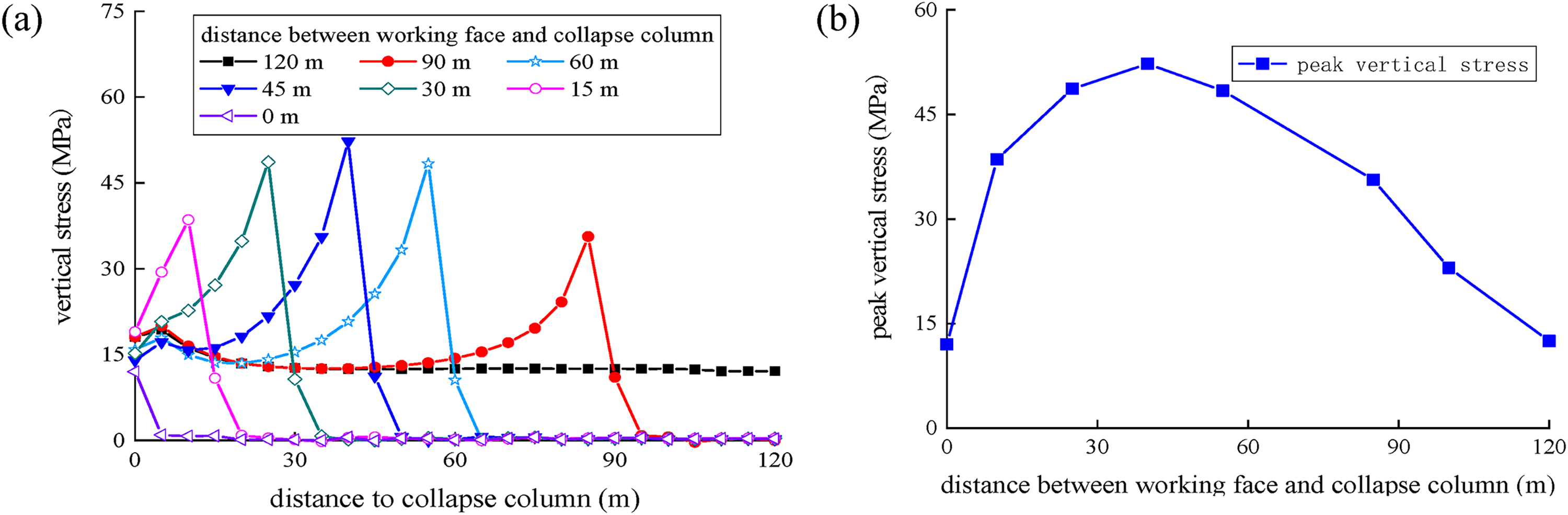
Variation rules of vertical stress above the coal seam during working face advancement. (a) Variation rule of vertical stress. (b) The variation rule of the peak vertical stress.
The vertical stress in the goaf at the back of the working face was released, while the stress concentration phenomenon appeared in front, i.e., the abutment pressure. The abutment pressure was significantly influenced by the collapse column. As the distance between the working face and the collapse column gradually decreased, the peak abutment pressure initially increased and then decreased, as shown in Figure 5(b). When the working face was 45 m away from the collapse column, the peak abutment pressure reached the maximum, which was approximately 4.2 times the in-situ stress. Consequently, the abutment pressure reached its maximum when the working face advanced to the boundary of the elastic stress elevation zone of the collapse column.
As the working face advances, the distribution of the plastic zone is shown in Figure 6. At the early stage of mining, the range of the plastic zone in the surrounding rock of the coal seam was small, and stress concentrations appeared in front of the coal wall. As the working face advanced, the plastic zone in the overburden and floor of the coal seam began to expand. The plastic zone above the top of the collapse column had a "Λ" shape and maintained a growing trend during the advance of the working face. When the distance between the working face and the collapse column was less than 45 m, the plastic zone at the bottom of the working face gradually started to connect with the plastic zone of the collapse column, and the impact of mining on the collapse column became increasingly obvious. When the distance between the working face and the collapse column was 15 m, the plastic zone of the coal seam in front of the working face was large and connected with the "Λ" plastic zone of the collapse column. There was a risk of collapse if the working face continued to advance. Under the higher additional stress of mining, the primary defects inside the collapse column gradually broke down and entered the plastic yield state. The rock around the pore in the collapse column first underwent tensile damage, after which shear damage occurred. The plastic zone expanded to form cracks, and the cracks were connected to form a crack belt. The cracks were observed to gradually extend from the periphery of the collapse column to the interior and eventually spread throughout the collapse column.
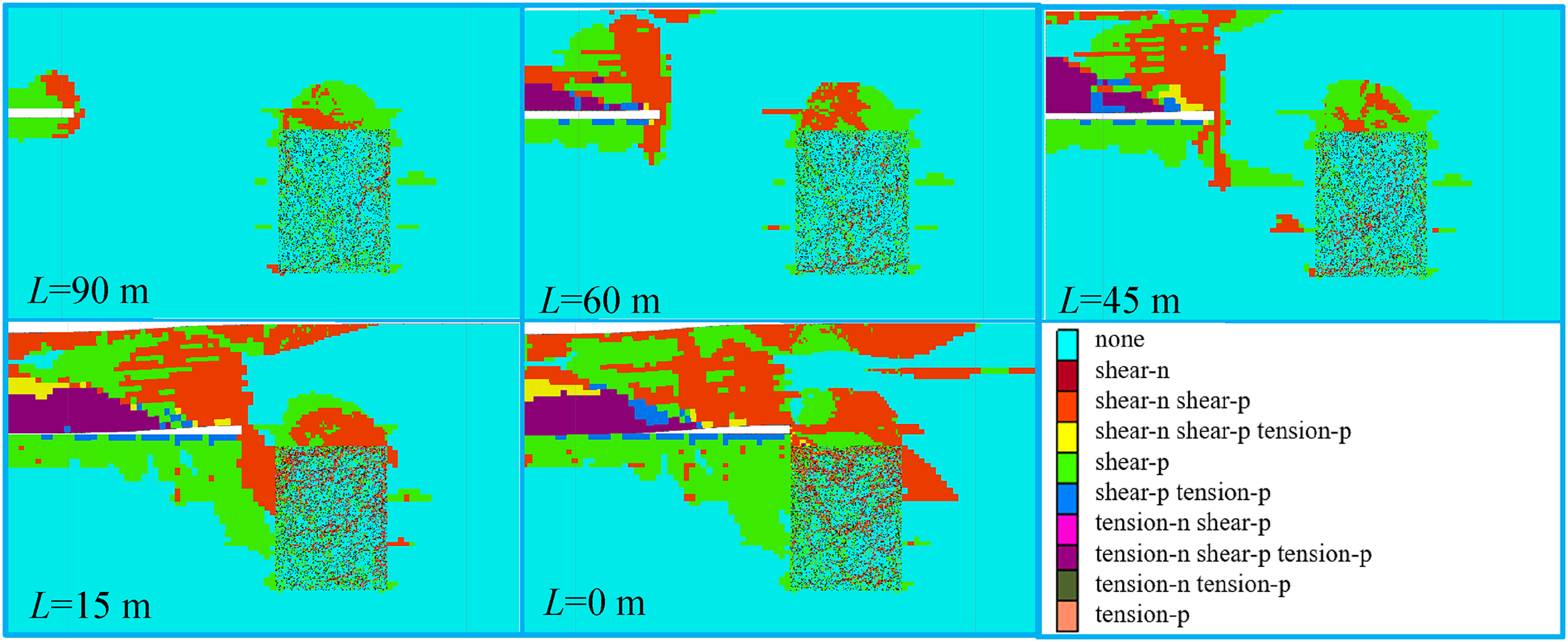
The distribution of the plastic zone during the advance of the working face.
The vertical displacement variation curves of the monitoring points on the axis of the collapse column are shown in Figure 7. When the working face was more than 60 m away from the collapse column, the small vertical displacement of the collapse column indicated that the impact of mining was not significant. When the working face was less than 60 m away from the collapse column, the vertical displacement of each monitoring point of the collapse column increased significantly, and the magnitude increased remarkably with the approaching distance.
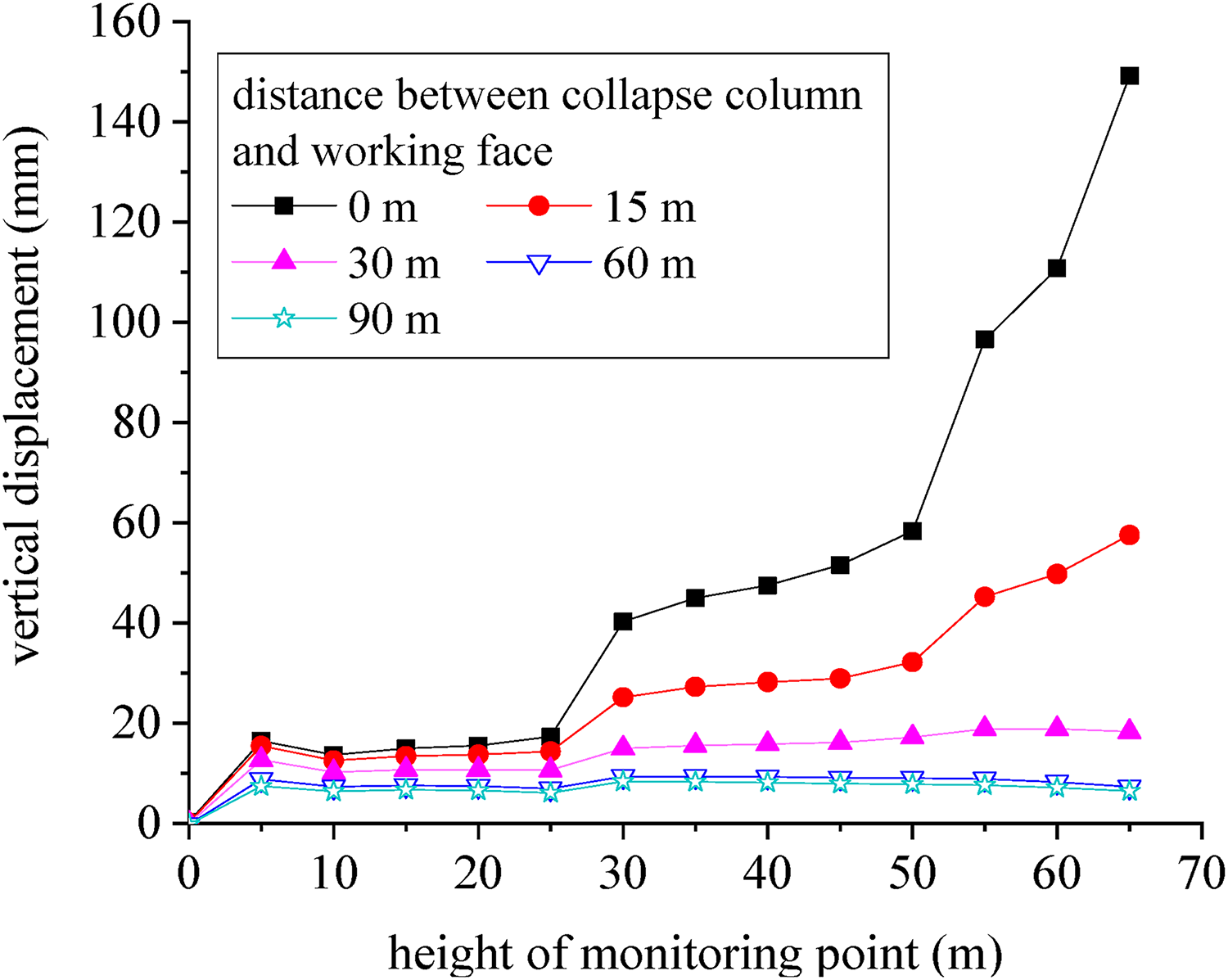
Vertical displacement of the collapse column under the influence of mining.
Influence of lateral pressure coefficient
The effect of the lateral pressure coefficient on the plastic zone of the rock around the working face and the collapse column is shown in Figure 8. The damage mode of the surrounding rock around the working face and collapse column varied with the lateral pressure coefficient. When the lateral pressure coefficient was 0.5, the plastic zone of the surrounding rock around the collapse column was dominated mainly by shear damage on both sides. When the lateral pressure coefficient gradually increased from 1 to 2, the plastic zone of the collapse column showed a symmetrical Λ-type distribution. The lateral pressure coefficient had a significant effect on the distribution of the plastic zone in the working face, and the height of the plastic zone in the top and bottom of the coal seam increased with the increasing lateral pressure coefficient. From Figure 8(c), when the working face was 30 m away from the collapse column, the overlap area of the plastic zone of the working face floor and the plastic zone of the collapse column could be seen to increase significantly with the increasing lateral pressure coefficient. Tensile damage occurred around the internal pores of the collapse column, and shear damage occurred around the plastic zone of tensile damage under the influence of mining pressure. The plastic zone inside the collapse column increased with increasing lateral pressure coefficient.
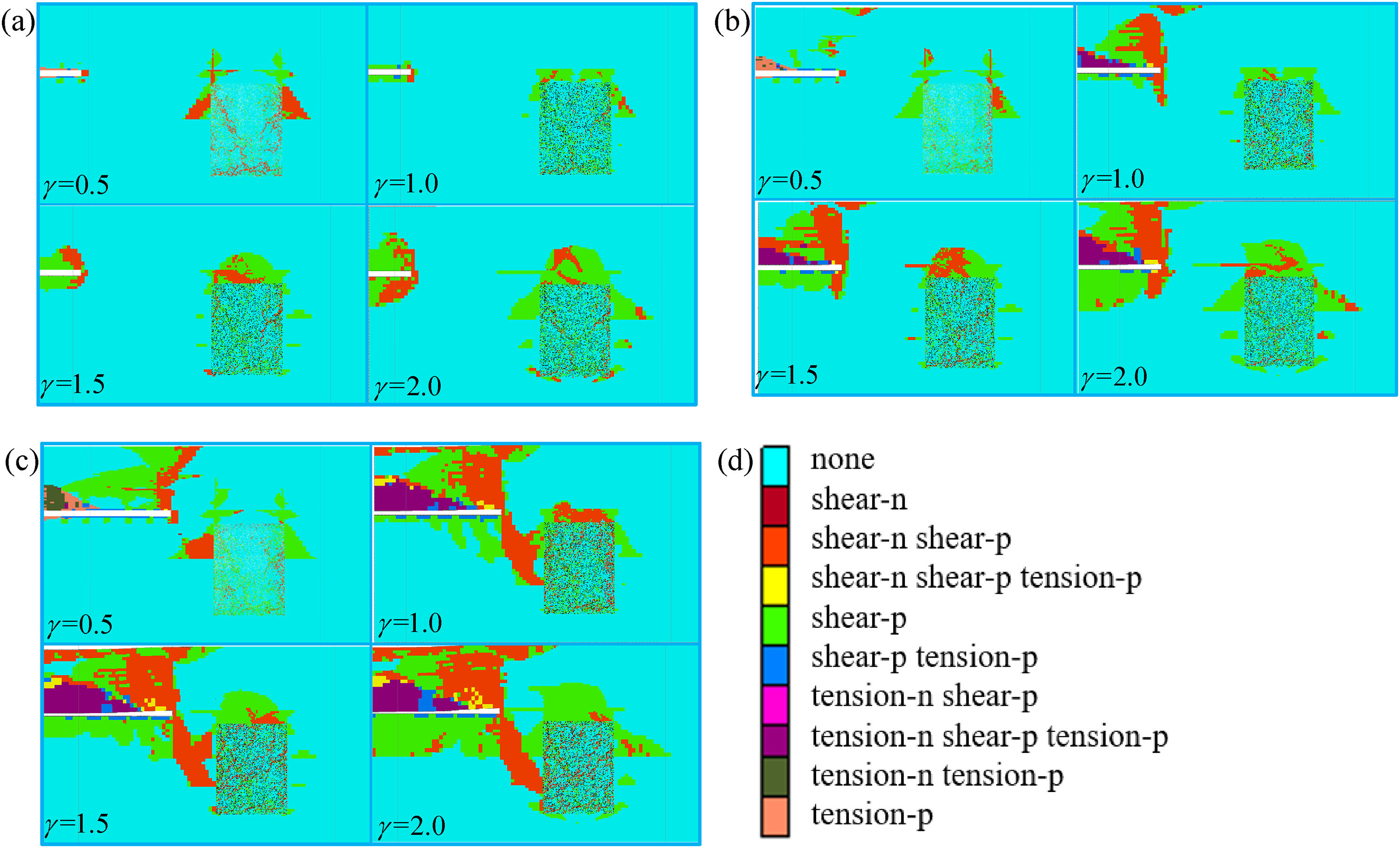
Cloud map of the plastic zone distribution under the influence of different lateral pressure coefficients. (a) The working face is 90 m away from the collapse column. (b) The working face is 60 m away from the collapse column. (c) The working face is 30 m away from the collapse column. (d) Color distribution of plastic zone.
The height variation curves of the plastic zone in the coal seam roof under different lateral pressure coefficients are shown in Figure 9(a). The height of the plastic zone continued to increase as the distance between the working face and the collapse column decreased. The height of the plastic zone in the coal seam roof increased with the increasing lateral pressure coefficient. The missing data of plastic zone height indicated that the height of the plastic zone had reached the top of the numerical model. The height variation curves of the plastic zone at the bottom of the coal seam under different lateral pressure coefficients are shown in Figure 9(b). The height of the plastic zone at the bottom of the coal seam increased as the distance between the working face and the collapse column decreased. The growth rate of the plastic zone height at the bottom of the coal seam increased as the lateral pressure coefficient increased. When the distance between the working face and the collapse column was 45 m, the height of the plastic zone at the bottom of the coal seam with different lateral pressure coefficients was approximately equal.
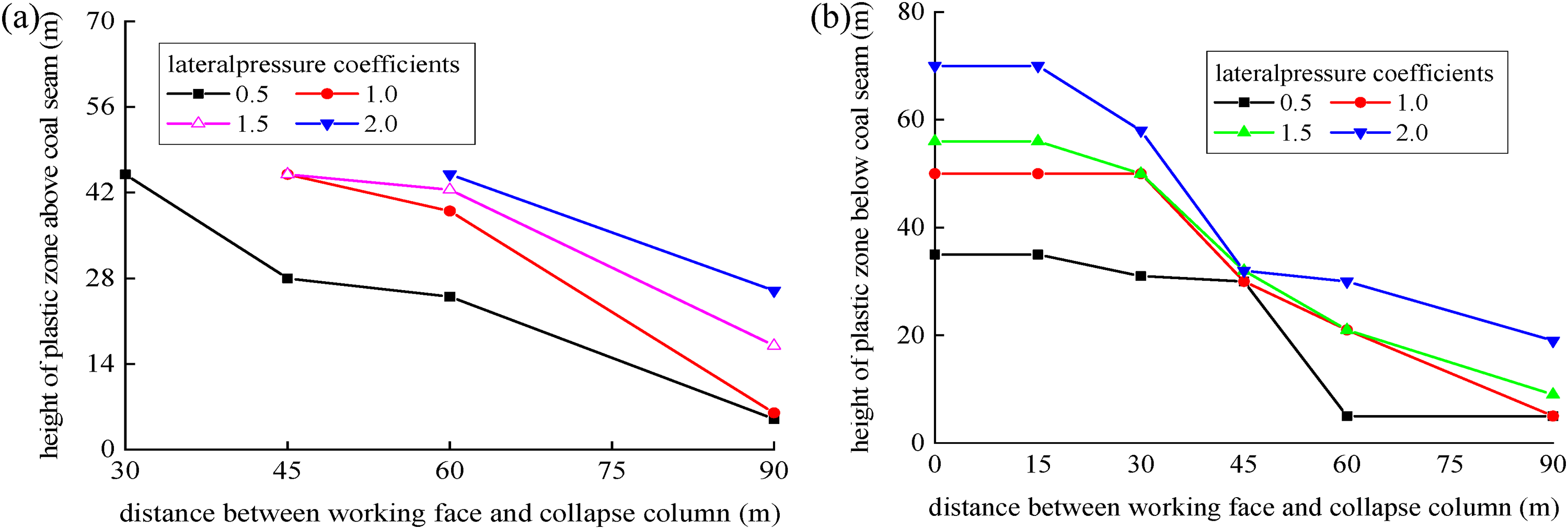
The influence rule of the lateral pressure coefficient on the height of the plastic zone. (a) Height variation of the plastic zone above the coal seam. (b) Height variation of the plastic zone below the coal seam.
The vertical displacement of the monitoring points on the axis of the collapse column is shown in Figure 10. As the lateral pressure coefficient increased, the vertical displacement of the collapse column gradually increased overall, indicating that an increase in the lateral pressure coefficient could amplify the effect of mining on the vertical displacement of the collapse column.
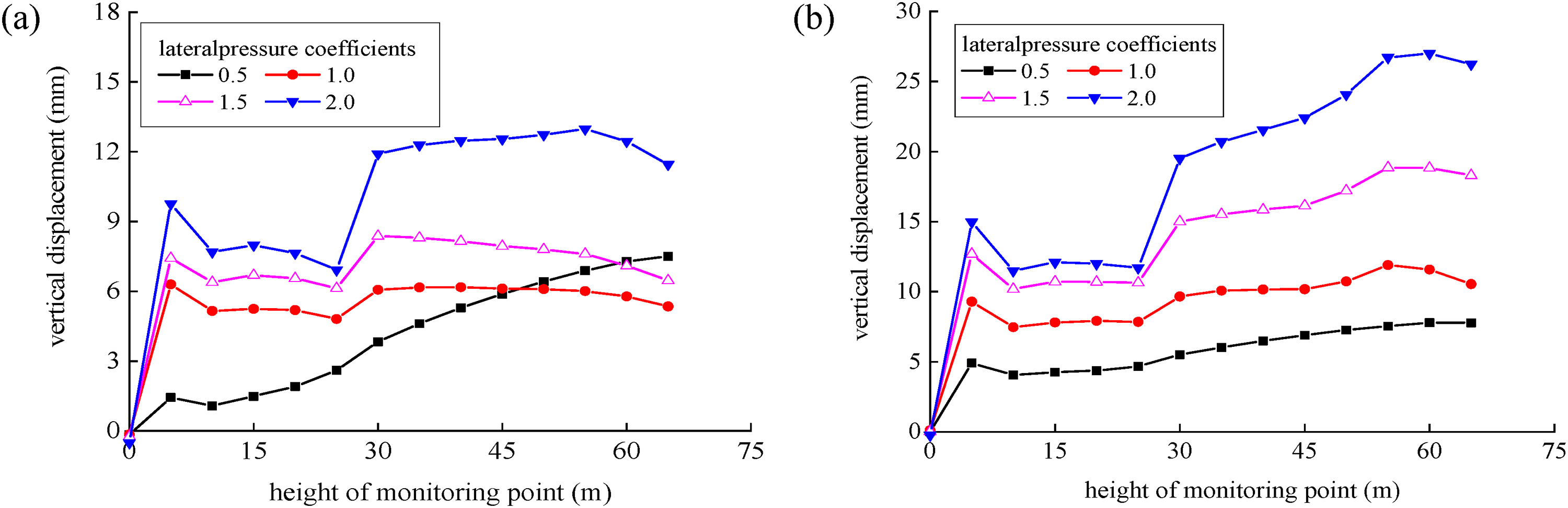
Vertical displacement of the collapse column under different lateral pressure coefficients. (a) The working face is 90 m away from the collapse column. (b) The working face is 30 m away from the collapse column.
Influence of pore water pressure
When the distance between the working face and the collapse column is 60 m, the distribution of the plastic zone of the rock around the collapse column under different pore water pressure conditions is shown in Figure 11. The results show that when it was less than 0.1 MPa, the pore water pressure had little influence on the plastic zone of the surrounding rock. Nevertheless, when the pore water pressure was greater than 0.3 MPa, the extent of the plastic zone at the top and side of the collapse column would increase with increasing pore water pressure. The water pressure inside the collapse column made the rock around the pores subject to tensile stress, while the tensile strength of the rock was much less than the compressive strength, resulting in the rock around the pores being susceptible to tensile damage. Under the influence of mining pressure, shear damage occurred around the tensile damage plastic zone. The plastic zone around the pore gradually became large enough to form cracks and eventually spread within the collapse column.
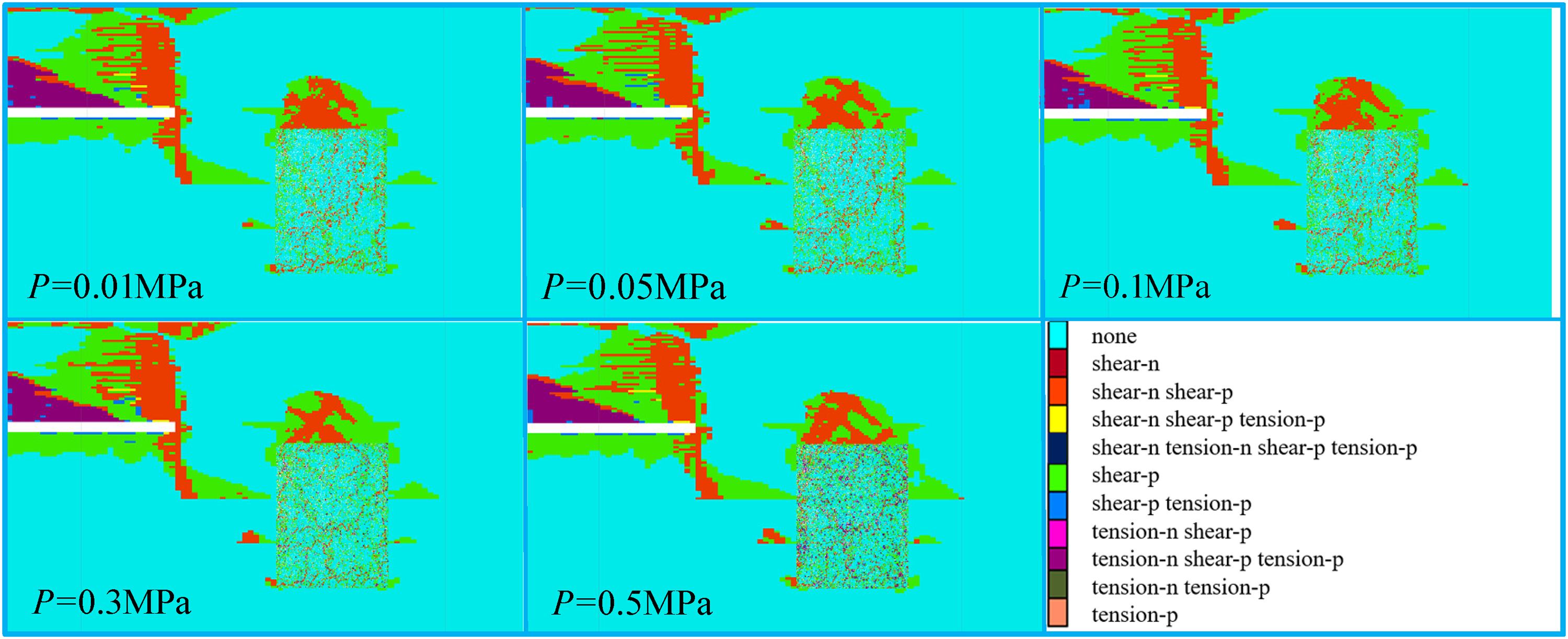
Cloud map of the plastic zone when the working face is 60 m away from the collapse column.
The variation in pore water pressure during the workface advance is shown in Figure 12. The pressure of confined groundwater at the bottom of the collapse column was large, and the pressure gradually weakened as the height of the collapse column increased. The pore water pressure inside the collapse column continued to increase with the advance of the working face. Under the combined action of mining and pore water pressure, damage occurs in the collapse column, resulting in an increase in the permeability coefficient. When the distance between the working face and the collapse column is 30 m, the water pressure at the top of the collapse column reaches 2.9 MPa.
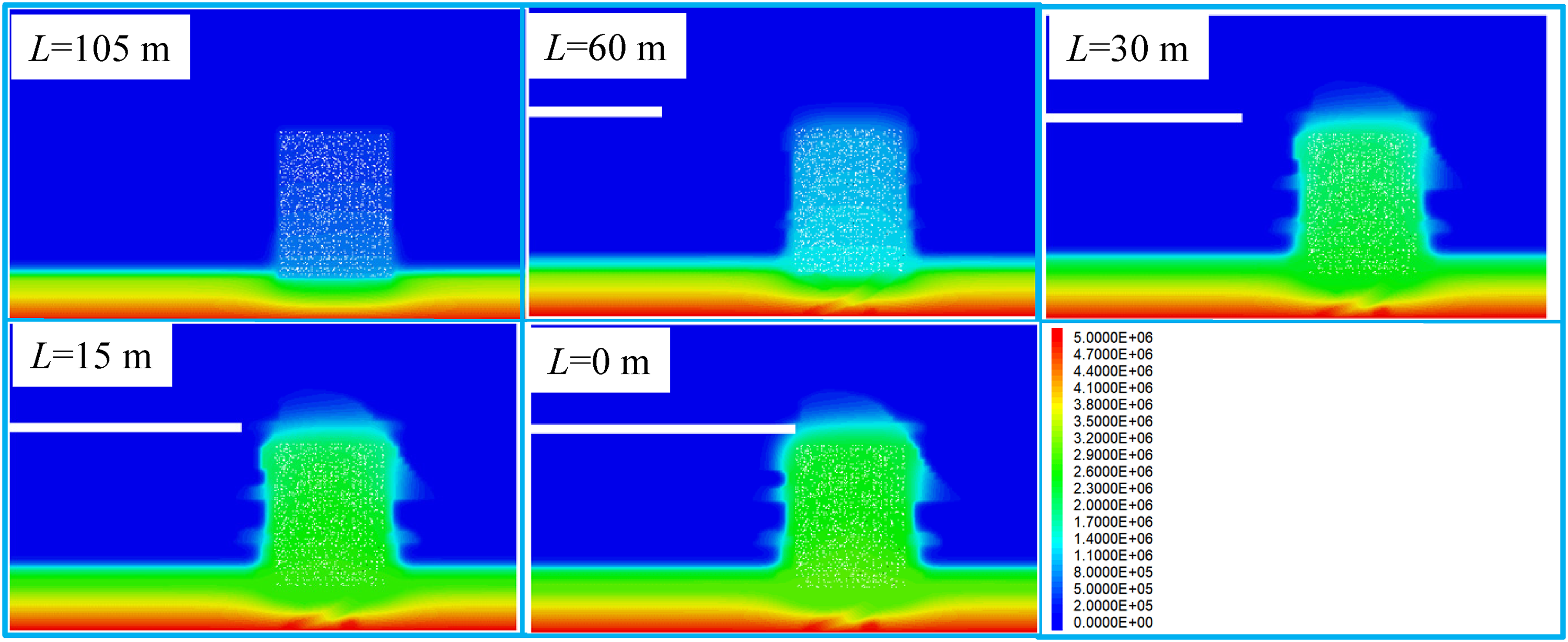
Cloud map of pore water pressure around the collapse column during the advance of the working face.
Influence of confined groundwater
As the working face advances, the distribution of the plastic zone around the collapse column is shown in Figure 13. Due to the influence of confined groundwater, the extent of the plastic zone at the top and side of the collapse column will be large, and the development of the plastic zone inside the collapse column is especially obvious. When the working face is 30 m away from the collapse column, the plastic zone in the floor of the coal seam and the plastic zone on the side of the collapse column are connected. The pore water pressure of the collapse column shown in Figure 12 has reached 2.9 MPa; if no measures are taken to keep advancing, the working face will be a water inrush.
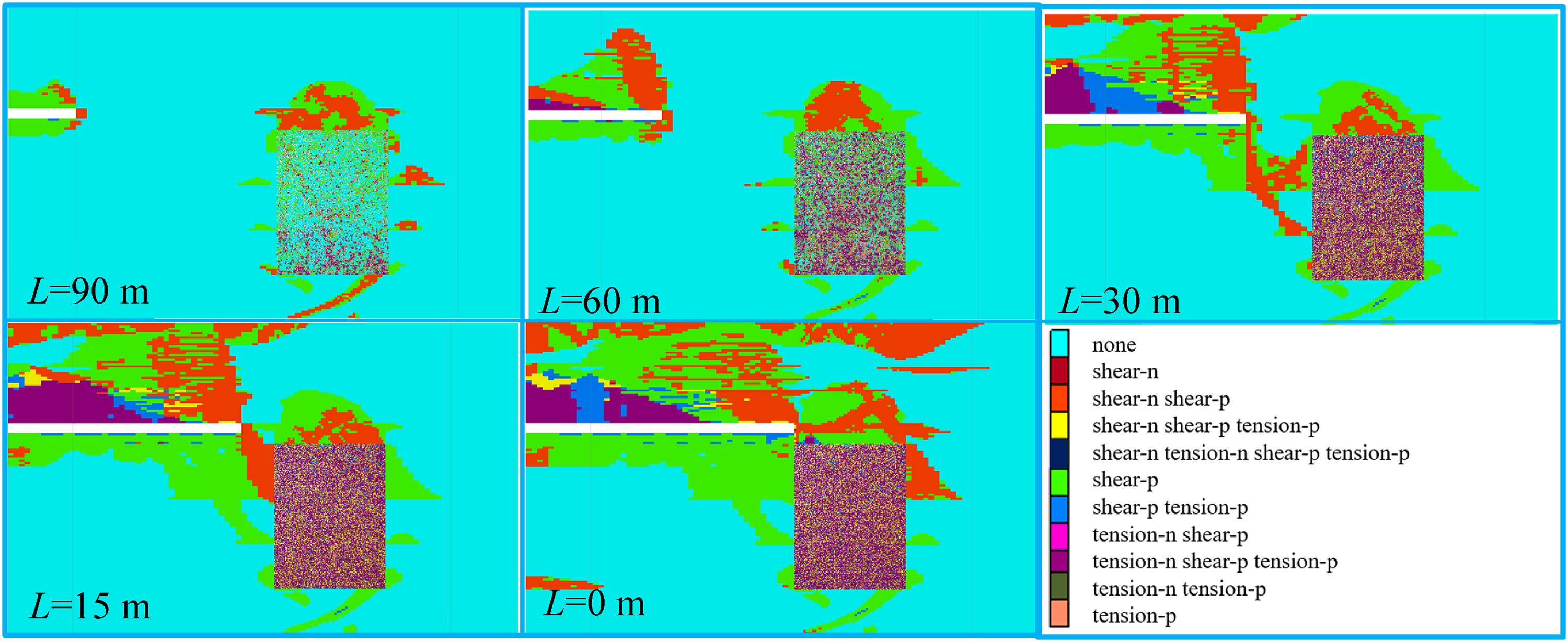
The distribution of the plastic zone around the collapse column.
Conclusions
Unrevealed small hidden collapse columns are difficult to predict and pose a serious threat to the safety of coal mine production. To investigate the problem of unclear rock response characteristics in the area of the hidden collapse column induced by mining, a plane strain numerical model of a collapse column with a random distribution of pores was constructed. Through numerical simulation, the influence of mining impact, lateral pressure coefficient, pore water and confined groundwater on stope and collapse columns were analyzed. The following conclusions were reached.
The abutment pressure is significantly influenced by the collapse column. As the distance between the working face and the collapse column gradually decreases, the peak abutment pressure shows a trend of initially increasing and then decreasing. The abutment pressure reached its maximum when the working face advanced to the boundary of the elastic stress elevation zone of the collapse column. The plastic zone above the top of the collapse column has a "Λ" shape and maintains a growing trend during the advance of the working face. When the working face enters the elastic stress rising zone of the collapse column, the plastic zone at the bottom of the working face gradually starts to connect with the plastic zone of the collapse column, and the impact of mining on the collapse column will become increasingly obvious. Under the action of the higher additional mining stress, the original defects in the collapse column gradually damage into the plastic yielding states, and the vertical displacement also increases with the approach of the working surface. The damage mode of the surrounding rock around the working face and collapse column varies with the lateral pressure coefficient. When the lateral pressure coefficient is 0.5, the plastic zone of the surrounding rock around the collapse column is dominated mainly by shear damage on both sides. When the lateral pressure coefficient gradually increases from 1 to 2, the plastic zone of the collapse column shows a symmetrical Λ-type distribution. The lateral pressure coefficient has a significant effect on the distribution of the plastic zone in the working face, and the height of the plastic zone in the top and bottom of the coal seam increases with the increasing lateral pressure coefficient. An increase in the lateral pressure coefficient can amplify the effect of mining on the vertical displacement and the plastic zone of the collapse column. The pore water pressure is greater than 0.3 MPa before it has some effect on the distribution of the plastic zone in the rock around the collapse column. When the collapse column is connected to the confined groundwater, the pore water pressure will increase significantly with the advancement of the working surface. Due to the influence of confined groundwater, the extent of the plastic zone at the top and side of the collapse column will be larger, and the development of the plastic zone inside the collapse column is especially obvious.
According to this study, the lateral pressure coefficient, the pore water pressure and the confined groundwater will enlarge the stress and deformation around collapse column induced by mining. With the working face advanced into the elastic stress elevation zone of collapse column, the mine pressure monitoring and support should be strengthened, especially when the lateral pressure coefficient is greater than 1 or the collapse column is connected with the confined water.
Footnotes
Acknowledgements
This work was supported by the National Natural Science Foundation of China (52004082), the Foundation for Higher Education Key Research Project by Henan Province (22A130002), the project of Henan Key Laboratory of Underground Engineering and Disaster Prevention (Henan Polytechnic University), the science and technology project of Henan Province (222102320381).
Data availability
The data used to support the findings of this study are included within the article.
Declaration of conflicting interests
The author(s) declared no potential conflicts of interest with respect to the research, authorship, and/or publication of this article.
Funding
The author(s) disclosed receipt of the following financial support for the research, authorship, and/or publication of this article: This work was supported by the the National Natural Science Foundation of China, the Science and Technology Project of Henan Province, the Foundation for Higher Education Key Research Project by Henan Province, (grant number 52004082, 222102320381, 22A130002).
