




Abstract
The Chang 8 reservoir of the Maling Oilfield in the Ordos Basin, China is facing a series of challenges in hydrocarbon resource development, including rapidly decreasing production rates, declining dynamic fluid levels, and elevated water cuts in oil wells, along with heterogeneity in microscopic pore-throat structures and notable interstratal inconsistencies. To systematically address these issues, this study selected representative samples from the reservoir and conducted rigorous microscopic percolation experiments on them. A comprehensive evaluation of the heterogeneity in microscopic pore structures was conducted using an integrative methodological approach, involving physical property quantification, petrographic thin-section analysis, scanning electron microscopy, constant-rate mercury intrusion, and nuclear magnetic resonance techniques. The primary objective of this investigation is to elucidate the underlying formation mechanisms, states of occurrence, and spatial distributions of residual oil. Understanding of these issues will facilitate the establishment of empirical correlations between diverse microscopic pore structures and water-flooding efficiencies, and aid in the identification of key variables governing the distribution of residual oil. Analytical outcomes reveal substantial variations in seepage characteristics contingent upon the nature of microscopic seepage conduits. Specifically, the Chang 8 reservoir manifests four discernible categories of microscopic seepage pathways: solely intergranular pores, a confluence of dissolution and intergranular pores, exclusively dissolution pores, and micropores. A correlative decline in oil displacement efficiency is observed across these conduit types. Critical variables such as throat radius and its distribution patterns emerge as pivotal determinants influencing oil displacement efficiency, eclipsing the impact of conventional physical properties and mobile fluid saturation levels. Remarkably, samples characterized by a composite of dissolution and intergranular pores demonstrate superior displacement efficiency. Distinct types of pore structures correspond to noticeably different water-flooding oil pathways and oil displacement efficiencies. During the water-flooding process, fingering network displacement is dominant, and it exerts a significant control on oil displacement efficiency. Key factors affecting this efficiency include the injected water volume multiples and displacement pressure, values of which should be optimized during the actual water-flooding process.
Keywords
Introduction
Amidst the rapid economic expansion, the escalating demand for oil underscores the pivotal role of the Ordos Basin as one of the China's preeminent natural gas production bases in sustaining national energy security. Recent statistical data reveal that low-permeability reservoirs constitute over 60% of total oil reserves. Concurrently, the inherent challenges in developing these low-permeability reservoirs contribute to a sluggish growth rate in oil production within China, exacerbating the supply-demand imbalance (Huang et al., 2018a). Consequently, the efficacious development and optimized recovery from low-permeability reservoirs become paramount for the advancement of the national petroleum sector. In the ongoing water-flooding operations aimed at reservoir development, prevalent issues include layer-specific heterogeneity in water absorption, discrepancies between the water-absorptive capacities of different strata and actual intrusion volumes, and suboptimal recovery rates during water-free production intervals (Dai et al., 2016; Shao et al., 2017; Wang et al., 2018a; Gao et al., 2023a).
Focusing on low-permeability sandstone reservoirs developed via water-flooding, critical parameters such as the type of fluid displacement, seepage pathways, and sweep efficiency of the injected water emerge as constraining factors for efficient reservoir exploitation (Wang et al., 2018b). Employing nuclear magnetic resonance (NMR) techniques, Liu et al. (2016) quantitatively characterized the microscopic pore structure and multiphase fluid seepage dynamics, thereby determining the oil–water co-permeability ranges and permeability fluctuations. Li et al. (2017) formulated microscopic capillary bundle models to understand the seepage behavior in tight sandstones, identifying pore architecture, wettability, dual-phase permeability, and interfacial tension as principal determinants. Various experiments have been conducted on dissolved gas drive, air foam drive, and CO2 drive (Testamanti and Rezaee, 2017; Wang et al., 2017; Liu et al., 2017). They explored the flow characteristics of different gases in the pore spaces of tight sandstones and analyzed various strategies to enhance oil recovery. Cui et al. (2019) utilized numerical simulations in conjunction with intrusion-production coupling methods to investigate fluid dynamics and enhanced oil recovery metrics in reservoirs undergoing CO2 miscible flooding. Specifically, the study modeled variations in sweep efficiency and oil recovery rates under two operational paradigms: continuous intrusion-production and intermittent intrusion-production coupling. Although existing research on microscopic water-flooding phenomena has reached a level of quantitative description, the visualization capabilities are notably limited. This constraint hampers the precise quantification and classification of oil–water flow characteristics and permeation mechanisms within the pore network. As a result, the key determinants influencing displacement efficiency are not well-defined, thereby impacting the efficacy of water intrusion strategies in oil field exploitation (Daigle and Johnson, 2016; Leng et al., 2022; Li et al., 2023).
During the intermediate and late phases of low-permeability sandstone reservoir exploitation, a substantial volume of crude oil remains unextracted within the reservoir matrix, commonly referred to as residual oil. Investigating the microscopic distribution of this residual oil is imperative for enhancing the recovery rates of tight oil reservoirs. For instance, the ultimate recovery factor of Yanchang Formation tight oil reservoirs in the Ordos Basin typically ranges from 20% to 40%, leaving a considerable volume of crude oil unexploited (Zhang et al., 2017; Xiong et al., 2017).
Therefore, understanding the intrareservoir oil–water distribution and the dynamic interplay among oil, water and rock is crucial. Given the marked heterogeneity and anisotropy characteristic of tight reservoirs, visual observation of in situ fluid distribution poses significant challenges. In this context, water-flooding experiments offer an objective methodology for scrutinizing the triadic coupling interactions among oil, water, and rock within these constrained environments (Cao et al., 2021; Abbas et al., 2022). These experiments serve to emulate the distribution of residual oil and furnish precise descriptions of the occurrence states of oil and water molecules across diverse pore architectures. Such insights inform the efficient extraction of residual oil in high water-cut reservoirs and are instrumental in devising targeted hydrocarbon development strategies. Water-flooding experiments enable both intuitive and quantitative representation of fluid displacement pathways, rates, and extents, thereby elucidating the microscopic mechanisms governing residual oil displacement. Key to the efficacy of water-flooding techniques is the construction of an accurate microscopic reservoir model and the meticulous design of the experimental test protocols. Typical research subjects in water-flooding experiments can be bifurcated into two categories: synthetically constructed pore structure core models and authentic reservoir core samples. Utilization of NMR methodologies for acquiring mobile fluid saturation parameters offers significant advantages in characterizing microscopic pore structures and discerning fluid mobility variations within the reservoir (Al-Mahrooqi et al., 2006; Gao and Li, 2015; Lyu et al., 2018; Huang et al., 2020). Importantly, genuine reservoir rock samples provide a more veracious representation of the fluid migration dynamics inherent to the reservoir.
As the exploration of low-permeability sandstone reservoirs advances in China, it has become evident that ultra-low and extremely low-permeability reservoirs constitute over 50% of low-permeability reserves, forming a crucial foundation for sustainable development. These reservoirs present distinct challenges compared to conventional counterparts. They are characterized by extremely tight lithology, fine pore throats, high stress sensitivity, intricate oil–water distribution, and low recovery rates, features that are generally unfavorable for water-flooding development. One of the primary limitations to their efficient recovery is the inadequate understanding of their microscopic water-flooding characteristics (Wang et al., 2020; Nie et al., 2021; Huang et al., 2023; Gao et al., 2023b). In this context, the current study conducted a comprehensive investigation into the micropore structure heterogeneity of the Chang 8 tight oil reservoir in the Maling oil field, the Ordos Basin. Employing representative samples from the targeted reservoir, a multimethodological experimental approach was adopted. This involved petrophysical evaluations, thin-section petrography, scanning electron microscopy (SEM), constant-rate mercury intrusion, and NMR analyses (Yao and Liu, 2012; Yang et al., 2013; Wang et al., 2023; Zhang et al., 2023). The objective is to offer a comparative assessment of micropore structural variations across the reservoir matrix. By implementing water-flooding experiments, this study aims to delineate the formation mechanisms, occurrence states, and spatial distribution of residual oil within the reservoir.
The rock physics evaluation could be used to analyze the porosity and permeability. The thin section petrography provided direct information about the surface porosity, pore and throat radii, pore-throat coordination number, and lithic compositions. This information could be combined with dynamic field data to effectively evaluate the impact of these parameters on oil and gas recovery. The SEM could be used to analyze the occurrence patterns of pores, throats and clay minerals, and identify the sensitive minerals that affect the oil recovery by combining the reservoir sensitivity evaluation experiment. The mercury intrusion technique could quantitatively determine the pore size from the microscopic perspective and help obtain a series of parameters, including threshold pressure, median pressure, maximum pore-throat radius, median pore-throat radius, coefficient of variation, sorting coefficient, maximum mercury saturation, and mercury removal efficiency. The NMR technique could help effectively observe the occurrence characteristics of movable fluids. The relaxation time, referred to as T2, could more objectively characterize the microscopic pore structures and fluid occurrences in the pores. The T2 spectrum also could be used to analyze the occurrence of fluids in pores and thus further quantitatively characterize the movable and bound fluid saturations.
To more scientifically apply the microscopic real sandstone water-flooding model to improve the reservoir evaluation, this study comprehensively integrated the rock physics evaluation, thin section petrography, SEM, mercury intrusion, and NMR test on the reservoir. Correspondingly, microscopic pore structure characteristics, physical properties, water-flooding characteristics, and average pore-throat radius were compared and analyzed to characterize the microscopic pore structure of reservoir and explore its influence on the water-flooding efficiency.
This work specifically targeted the identification of correlations between diverse micropore structures and their corresponding water-flooding efficacies. Moreover, this study sought to pinpoint critical determinants influencing the spatial distribution of the residual oil content. Such insights are poised to contribute significantly to the formulation of optimized development strategies for tight oil reservoirs (Tabatabaie and Pooladi-Darvish, 2017; Lai et al., 2018a; Lai et al., 2018b; Dai et al., 2019; Loucks and Dutton, 2019; Sun et al., 2019).
Sample and method
Geological settings
The Ordos Basin comprises six secondary tectonic units: the Yimeng Uplift to the north, the Weibei Uplift to the south, the Northern Shaanxi Slope in the basin center, the Tianhuan Depression amd West Margin Thrust Belt to the west, and West Shanxi Flexure Belt to the east, respectively. The Northern Shaanxi Slope, characterized by its relative tectonic stability and gentle gradient, serves as the principal zone for hydrocarbon accumulation within the basin. During the Late Triassic Yanchang Formation, the basin hosted an expansive inland lake-delta-fluvial sedimentary system, resulting in approximately 1000 meter of strata. The Yanchang Formation is stratigraphically organized into ten hydrocarbon-bearing intervals, ascending from Chang 10 to Chang 1. The Chang 10 interval features the emergence of the lake basin, distinguished primarily by its fluvial depositional environment and sedimentary dynamics. The developmental phase during the Chang 9 and Chang 8 intervals witnesses peripheral deltas progressively encroaching towards the lake's central axis, with fluvio-deltaic depositions taking precedence. The Chang 7 interval represents the apogee of the lake basin, notable for its maximal areal extent and the emplacement of organic-rich lacustrine source rocks. Chang 6 to Chang 4 intervals correspond to a gradual tectonic uplift of the basin floor, manifesting in extensive deltaic accretion. Chang 3 to Chang 1 intervals signify the basin's lacustrine regression, reverting to fluvial depositional patterns.
Situated in the Ordos Basin's southwestern quadrant, the Maling Oilfield exhibits a conspicuously stable stratigraphic profile in the focal horizons. Operational complexities emerge from a rapid intrusion-to-production feedback, compromised water-flooding efficiencies, and pronounced disparities in well-specific productivity. These challenges exacerbate developmental intricacies and constrain the reserves amenable to extraction. Additionally, extant research on the microscale mechanisms governing fluid displacement and their contributory factors remains scant. Addressing these shortcomings, this investigation centered on the Chang 8 reservoir within the Maling Oilfield. Employing characteristic reservoir samples from the research region (Figure 1), this study synthesized microscale water-flooding assays on authentic sandstone substrates with corroborative analyses, encompassing petrophysical evaluations, thin-section petrography, constant-rate mercury intrusion, and nuclear magnetic resonance studies. The overarching aim was to decipher the fluid dynamics governing oil–water interactions during the displacement regimen, thereby furnishing a nuanced explication of the variables inducing heterogeneity in oil displacement attributes across disparate samples (Ren et al., 2016; Huang et al., 2018b; Gao et al., 2019; Li et al., 2019).
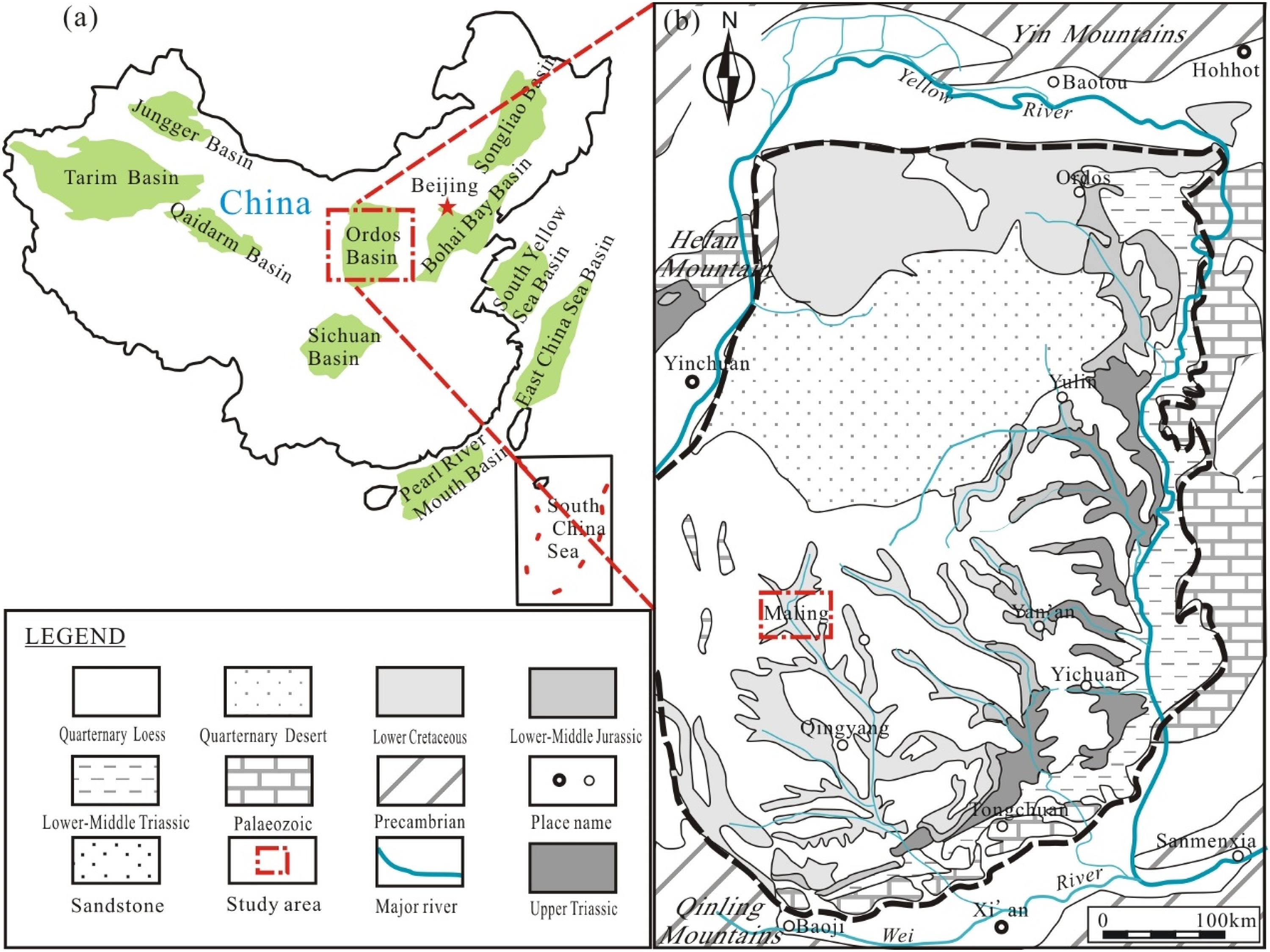
Geographic location of (b) Maling oilfield in the (a) Ordos Basin.
Experimental and samples
Microscopic water-flooding characteristics, which encompass fluid displacement modalities and flow states across diverse reservoir types, serve as direct indicators of subterranean crude oil seepage properties when displaced by injected water. The high-pressure mercury intrusion experiment, capable of reaching pressures up to 220 MPa, facilitates quantitative characterization of pore structure parameters, with a minimum detectable pore diameter of 3.7 nm. NMR analyses enable the study of mobile fluid distribution within pore spaces in both saturated and centrifugal states, providing data on the bound water content within pore channels.
The experimental framework leveraged a patented real sandstone micromodel developed by Northwest University, China. Authentic reservoir samples from the study area were subjected to a series of preparatory procedures, including oil washing, drying, slicing, and grinding, to yield rock sample slices with dimensions of 3.5 cm × 3.5 cm × 0.08 cm. The precision engineering employed in the micromodel's fabrication ensured the maximal preservation of the native pore-throat structural attributes and the matrix interstitial material properties. This meticulous approach rendered the samples as proximate to the original formation as feasible, thereby enhancing the reliability of experimental outcomes. For the experimental procedure, either authentic or synthetic formation water and intrusion water were utilized. To facilitate microscopic observation of water-flooding oil seepage characteristics, experimental fluids were dyed with methylene blue for water and oil-soluble red for oil, respectively.
The experimental methodology was delineated into several critical steps. Initially, the sandstone model was subjected to vacuumization and was then saturated with formation water. Subsequently, the liquid permeability of the model was measured. This set the stage for the oil flooding water experiment, followed by a water flooding oil experiment. During this latter phase, fluid seepage characteristics and residual oil distribution were closely monitored. Data collection included capturing images, recording relevant experimental metrics, and calculating oil displacement efficiency. Finally, the collected data were processed and images were analyzed for interpretive insights.
The fluids used for simulation in the water-flooding experiment warranted particular attention. The simulated oil was a composite of epoxy resin and active diluents. Notably, this simulated oil maintained stable physicochemical properties at temperatures below 50°C, and its viscosity and density could be fine-tuned. Upon heating, the simulated oil underwent a strong curing process, resulting in a substance with robust mechanical strength, toughness, and transparency. The simulated water, an aqueous solution of high-polarity, high-concentration ACM along with minor additives, offered good flowability and adjustable salinity levels at sub-50°C temperatures. The additives in the simulated water were chemically active and tended to polymerize upon heating. Postpolymerization, the substance experienced volumetric expansion and demonstrated the ability to absorb minor quantities of water. Some additives even facilitated the polymerization of polyacrylamide monomers with other substances when subjected to heat.
The Chang 8 reservoir in the study area was categorized into four types based on the microscopic seepage channel characteristics observed during water flooding: intergranular pores, dissolution pores-intergranular pores, dissolution pores, and micropores. Classification and statistical analysis of the experimental results revealed significant variations in the percolation characteristics among samples with different seepage channel types. Owing to the samples’ inferior physical properties and fine pore throats, the migration pathways of the oil–water phases during the displacement process exhibited considerable complexity and variability. Meticulous records were kept of both the data and images generated at each experimental step. This comprehensive dataset was later subjected to image analysis and data processing (Figure 2).
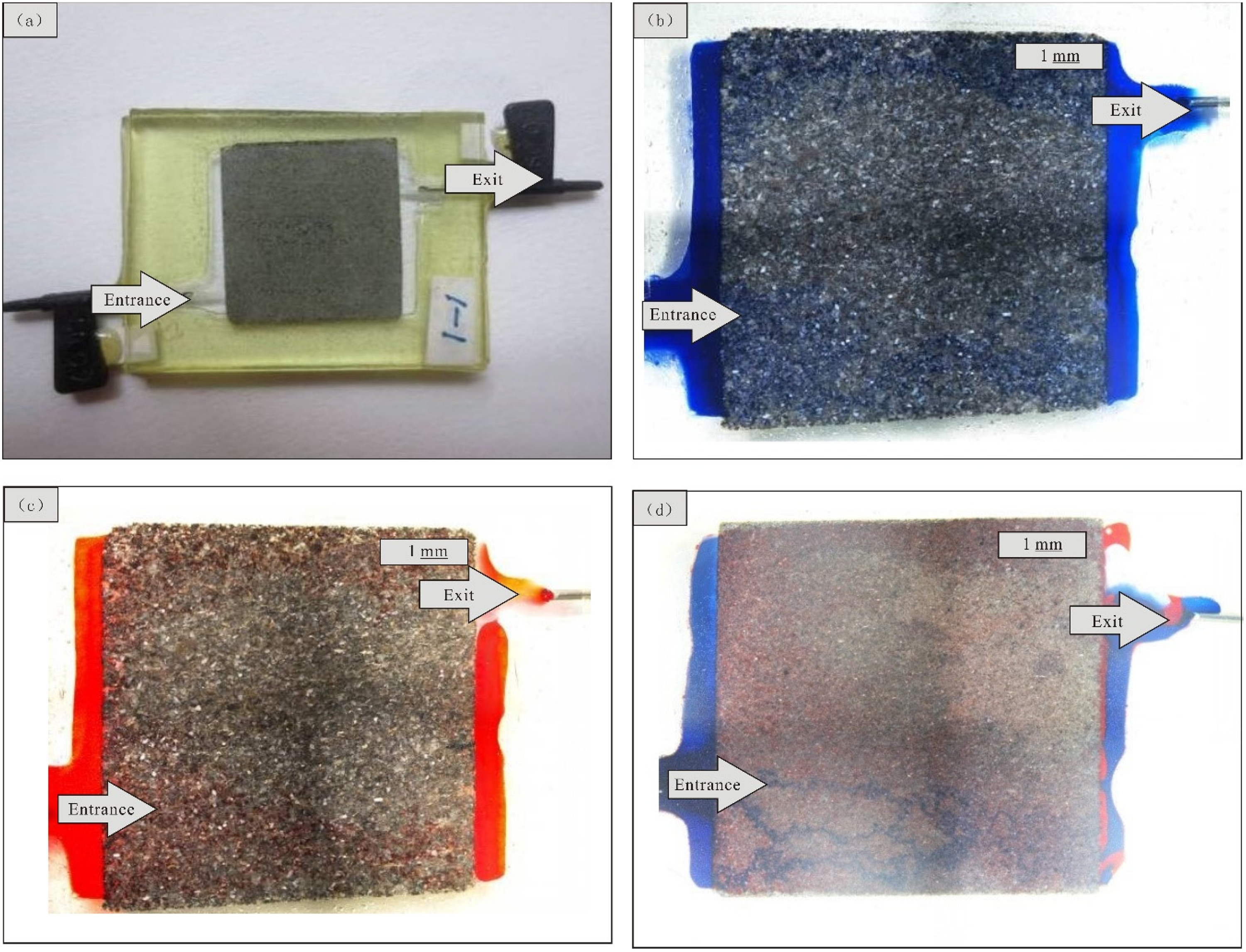
The real sandstone microscopic model of the Chang 8 reservoir in the study area. (a) Microscopic sandstone model. (b) Water-saturated model. (c) Oil-saturated model. (d) Water-flooding model.
Results
Microscopic pore structure characteristics
Petrological characteristics
Upon analyzing 114 petrographic thin sections from the Chang 8 reservoir in the Maling Oilfield and extrapolating based on the relative abundances of quartz, feldspar, and lithic fragments, this study established that the dominant lithology of the Chang 8 reservoir included lithic feldspar sandstones and feldspathic lithic sandstones, with lithic sandstones occurring less frequently (Figure 3).
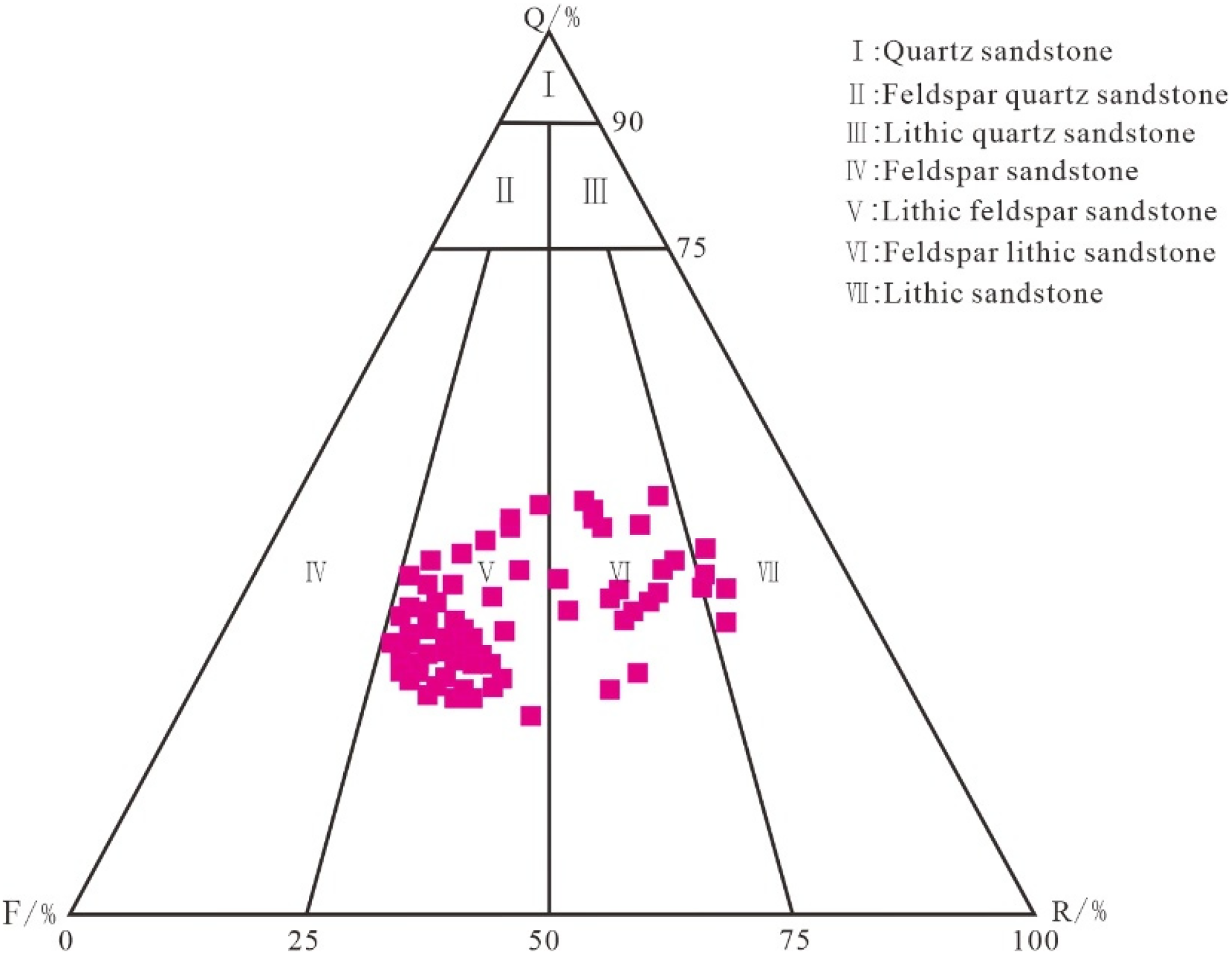
Classification of the sandstones in the Chang 8 reservoir in the study area.
Statistical analysis of thin-section petrography revealed that the clastic composition of the Chang 8 reservoir predominantly consists of quartz, followed by feldspar, with the least amount of lithic fragments and a minor presence of mica. The quartz content varied between 8.5% and 72.5%, averaging 32.3%; feldspar content ranged from 1.5% to 47%, with an average of 26.7%; and lithic fragment content fluctuated between 6% and 41.4%, averaging 18%. The overall compositional maturity was found to be medium to low. Among the lithic fragments, igneous and metamorphic rock fragments were most abundant, accounting for 3.6% and 11.9%, respectively, with a minor presence of sedimentary rock fragments at 2.5%. The igneous rock fragments were primarily volcanic in origin, while the metamorphic rock fragments included a variety of types such as quartzite, schist, phyllite, slate, and metamorphic sandstone (Figure 4).
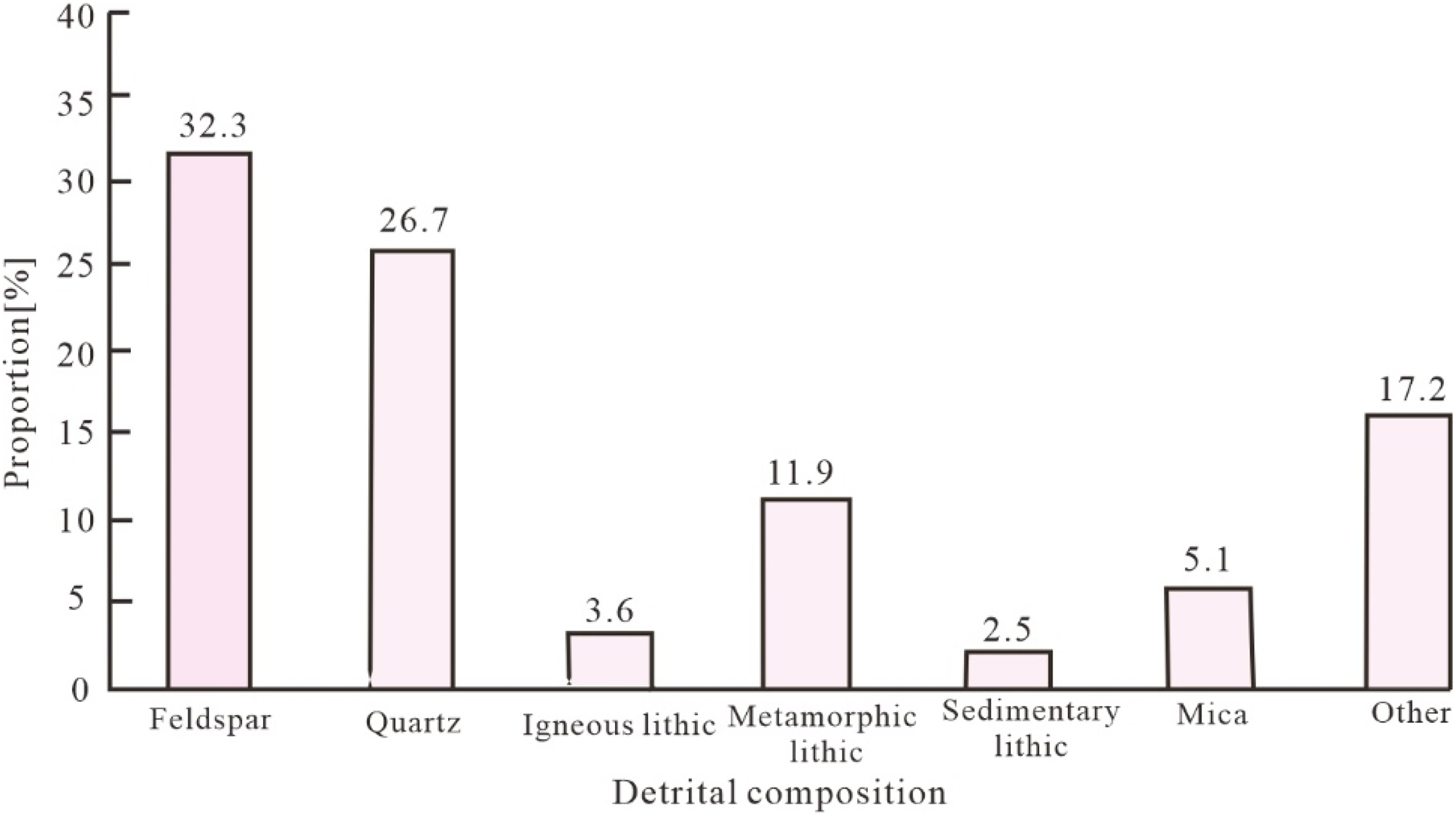
Clastic component contents of the Chang 8 reservoir in the study area.
Interstitial materials within the Chang 8 reservoir primarily consisted of cement, with a minimal matrix content. The average total content of interstitial material was 13.46%, and the mica content averaged 5.1%. Cement constituents included kaolinite, illite, chlorite, ferroan calcite, and silicates. Chlorite was the most abundant clay mineral, averaging 3.56% in content. Its presence on the surface of pore-throat spaces inhibited compaction and mineralogical cementation to some extent, but also resulted in narrowing of the pore-throats, adversely affecting reservoir storage and permeability characteristics. The content of kaolinite was relatively high (average 2.13%), which is often formed authigenically, contributing to the abundance of dissolution pores in the study area. Ferroan calcite and silica contents were relatively high, at 2.95% and 2.93% respectively, indicating that the reservoir experienced significant carbonate cementation in its early stages, adversely impacting its porosity and permeability. Silica typically filled the pore spaces in the form of secondary quartz enlargement and authigenic quartz, further deteriorating the pore characteristics.
Storage space
Through extensive SEM and thin-section petrography, pore types were observed to be highly complex and variable. Predominantly, these are mixed pores comprising both primary and secondary pores. Pore types can be categorized by their genesis into intergranular pores, dissolution pores (including feldspar and lithic dissolution pores), intercrystalline pores, and microfractures. Intergranular and feldspar dissolution pores are the most prevalent, contributing significantly to the reservoir's storage capacity, with average absolute contents of 1.45% and 1.18%, respectively. Intercrystalline pores and microfractures are less common. The total surface porosity across all pore types was 2.94%, and the average pore diameter measured 17.46 μm.
Intergranular pores
Intergranular pores are the most abundant and serve as the primary storage and flow pathways for reservoir fluids. They contribute 49.32% to the total surface porosity, with pore radii mainly ranging between 15 and 105 μm. Based on their formation timing, these pores can be divided into primary and secondary categories. Most primary intergranular pores have undergone diagenetic alteration, leading to their depletion. The extant intergranular pores are mainly secondary, formed due to incomplete or partial filling by matrix and cement material. These pores are prevalent in well-sorted reservoirs and exhibit diverse planar shapes, primarily triangular, polygonal, and irregular (Figures 5(a)–(d) and 6(a)and (f)).
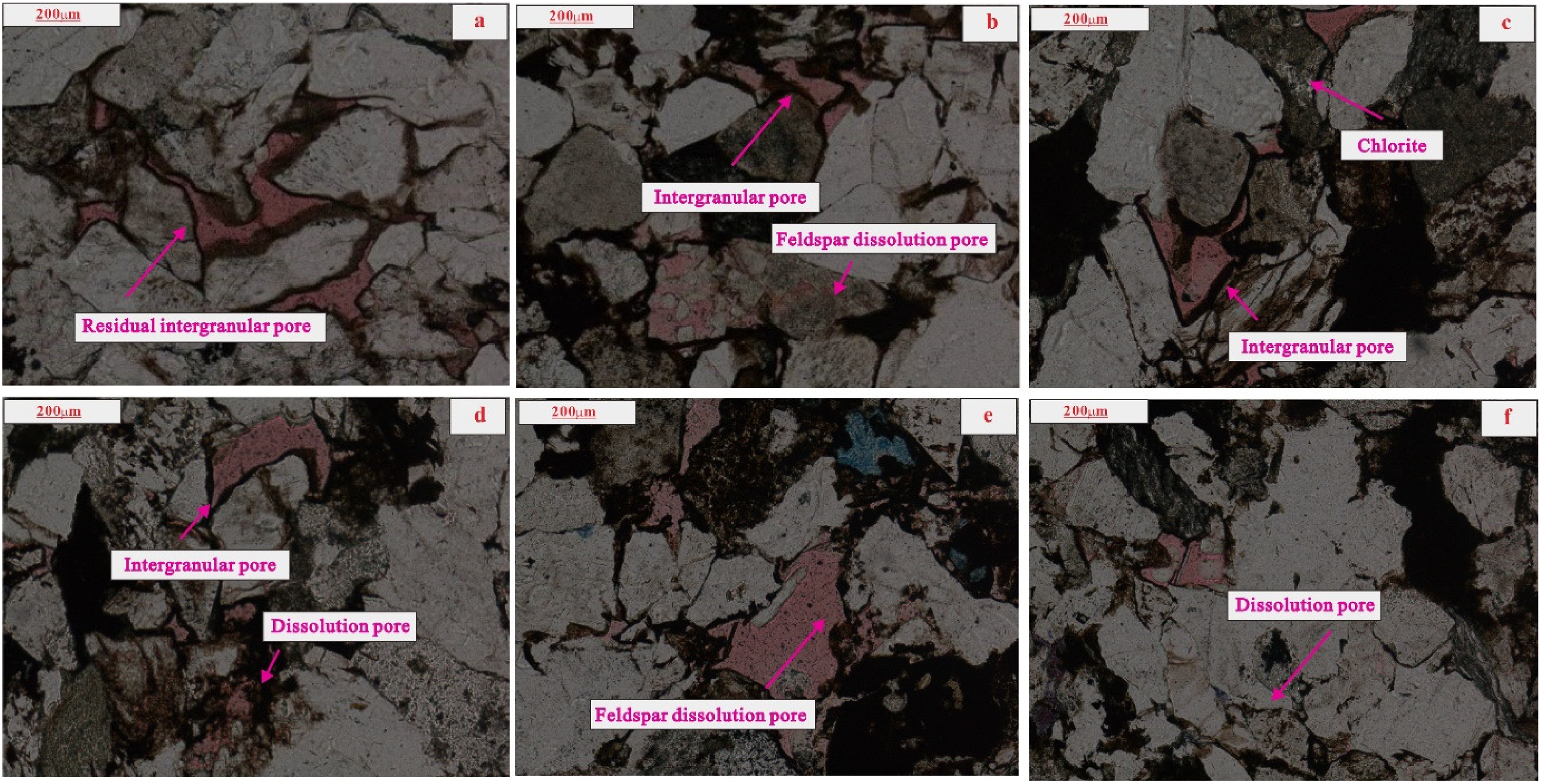
Thin-section images of Chang 8 reservoir samples. (a) Residual intergranular pores, sample 1, 2491.78 m. (b) Partial feldspar particle dissolution resulting in dissolution pores, sample 2, 2418.02 m. (c) Intergranular pores and chlorite film, sample 3, 2661 m. (d) Intergranular pores and dissolution pores, sample 4, 2398.86 m. (e) Feldspar dissolution pores, sample 5, 2439.3 m. (f) Dissolution pores, sample 6, 2011.58 m.
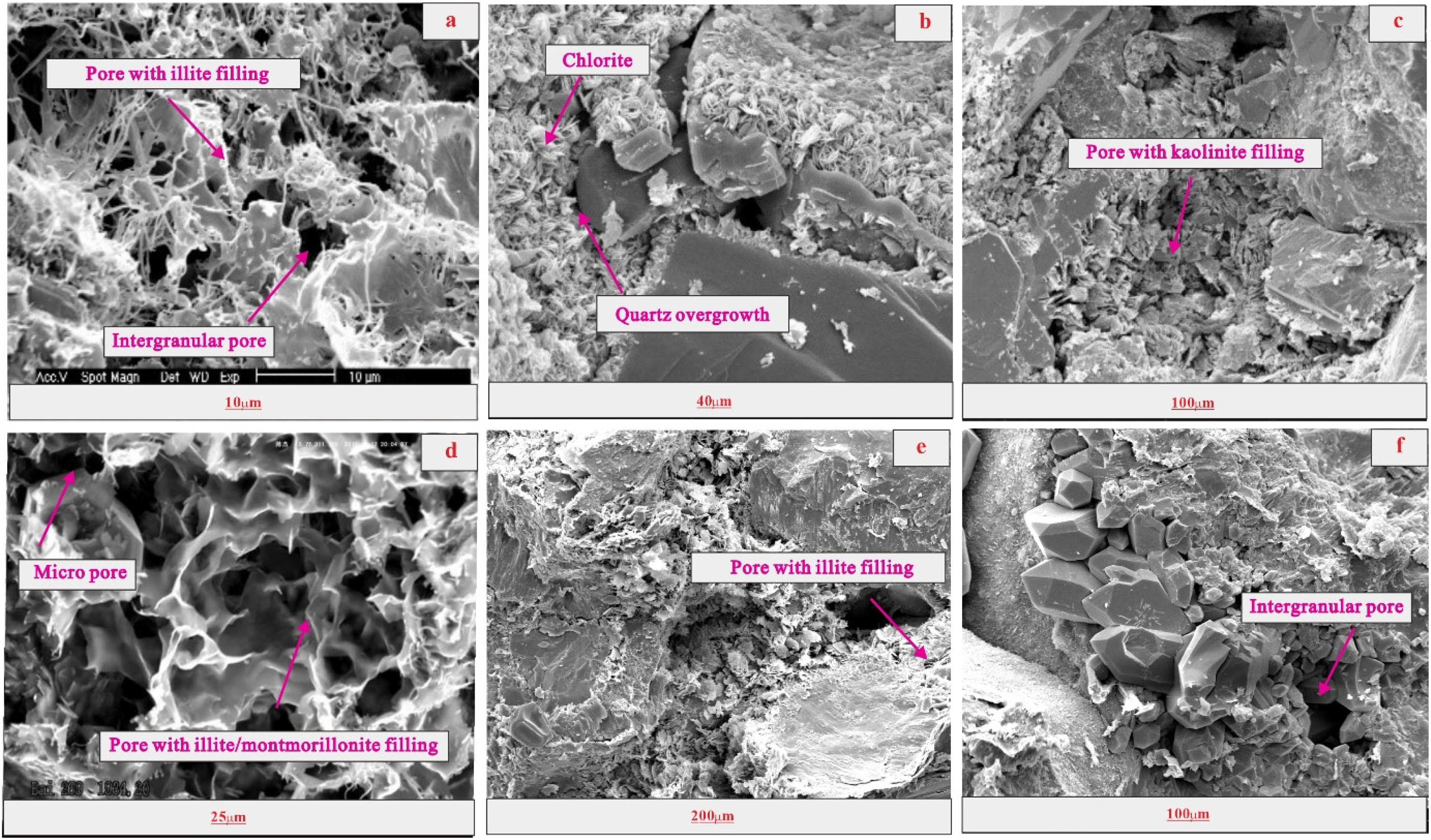
Scanning electron microscopy images of Chang 8 reservoir samples. (a) Illite, sample 7, 2437.7m. (b) Chlorite film, sample 8, 2551.2 m. (c) Kaolinite filling, sample 9, 2481.6 m. (d) Illite-montmorillonite mixed layer, sample 10, 2411.48 m. (e) Pore with illite filling, sample 11, 2356 m. (f) Intergranular pores, sample 12, 2290.42 m.
Dissolution-intergranular pores
Reservoir samples of this pore-type feature good connectivity between remnant intergranular pores and dissolution pores. Seepage characteristics in these samples are detailed in Figure 4(b). The main throat radius averages 1.458 μm and dominates the throat distribution, thereby facilitating fluid flow. During displacement, injected water initially enters the sample through the largest surface throat radius and subsequently invades adjacent intergranular pores with lower flow resistance to displace oil droplets. As the water-flooding front advances, water infiltrates into highly connected dissolution pore regions near intergranular pores, moving oil droplets away from the pore walls. Upon increasing the displacement pressure differential, water overcomes greater capillary resistance to penetrate smaller adjacent pores, thereby diversifying the water-flooding pathways. This pore type exhibits a relatively uniform distribution and high connectivity, with an average effective pore space volume of 0.050 cm3. Water advances uniformly across multiple channels, achieving high water-flooding efficiency (average 45.60%) and oil displacement volumes averaging 0.010 and 0.016 cm3, respectively (Figure 5(b) and (d)).
Dissolution pores
Based on thin-section petrography and SEM data, the predominant types of dissolution pores are feldspar dissolution pores and lithic dissolution pores. Other types of dissolution pores are minimally present. The average absolute content of dissolution pores is 1.42%, contributing 48.3% to the total surface porosity. The formation of these dissolution pores significantly enhances the reservoir's permeability and improves pore-throat connectivity (Figure 5(f)).
Micropores
Intercrystalline micropores can be categorized into two types based on their origin: those formed from clay minerals present in the original pore-filling material, and those resulting from feldspar kaolinization or lithic alteration. These pores can be clearly distinguished under SEM and generally exhibit a pore radius of <5 μm. Although the size of these micropores is exceedingly small and they often occur in clusters, their impact on the reservoir's physical properties is minimal. However, when effectively connected with dissolution and intergranular pores, they can somewhat enhance the reservoir's seepage performance. The average absolute content of these micropores is 0.05%, contributing 1.70% to the total surface porosity (Figure 6(d)).
Types and characteristics of pore structure
Due to the pronounced heterogeneity in the pore structure of ultra-low and extremely low-permeability reservoirs, relying solely on physical properties for classification proves challenging. In this study, 50 representative samples underwent high-pressure mercury intrusion porosimetry. Pore-throat characterization was performed based on capillary pressure curves, displacement pressure, median pressure, median radius, and maximum pore-throat radius obtained from these experiments. Utilizing these characteristic parameters, along with petrophysical properties and oil testing data, the pore structure of the Chang 8 reservoir in the study area was categorized into four types, namely types A to D (Figure 7 and Table 1). This categorization is based on previous studies (Ren et al., 2016; Li et al., 2018a, 2018b).
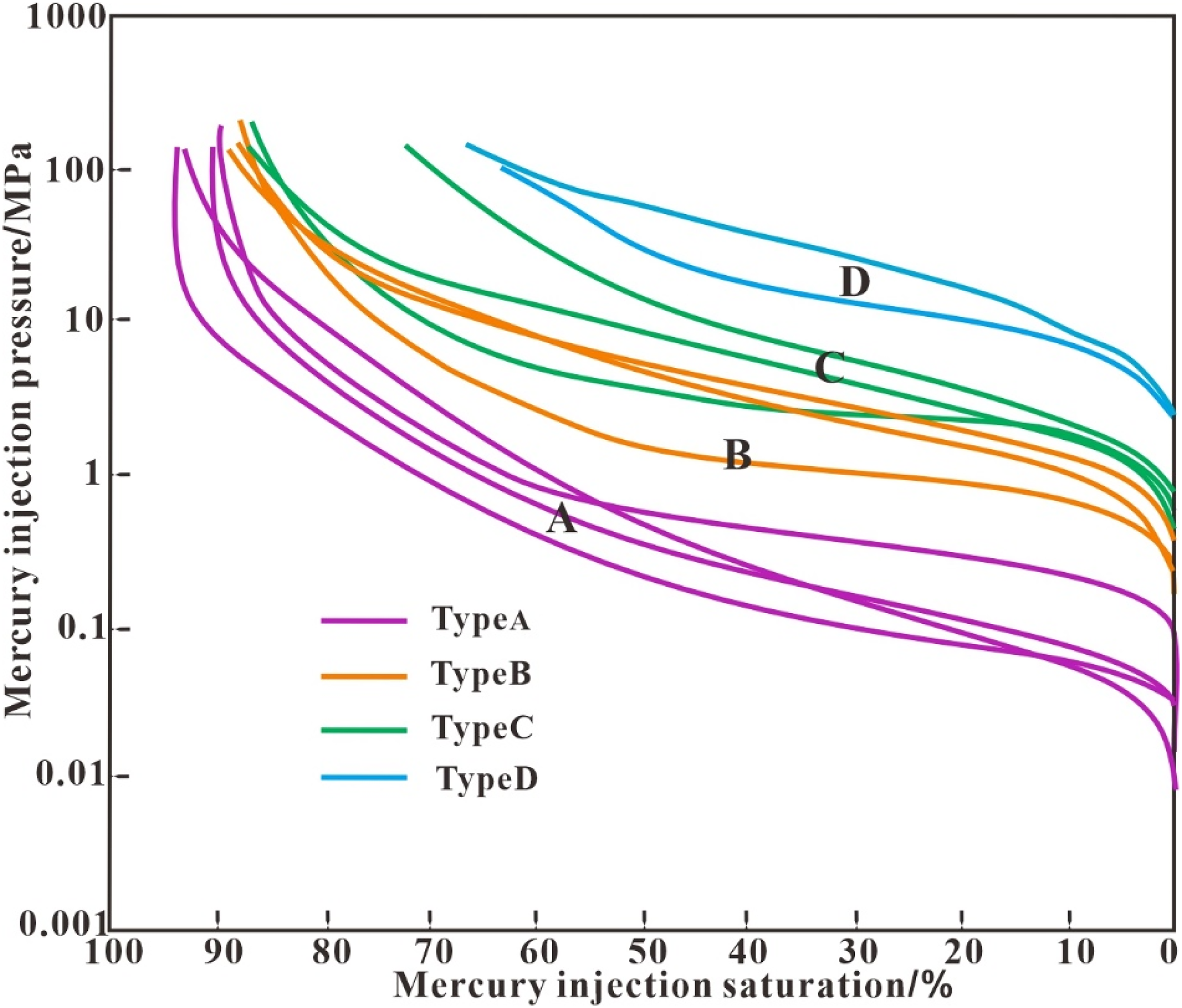
Capillary pressure curves of various types of reservoirs.
Statistical summary of pore structure parameters based on conventional mercury intrusion experiments.
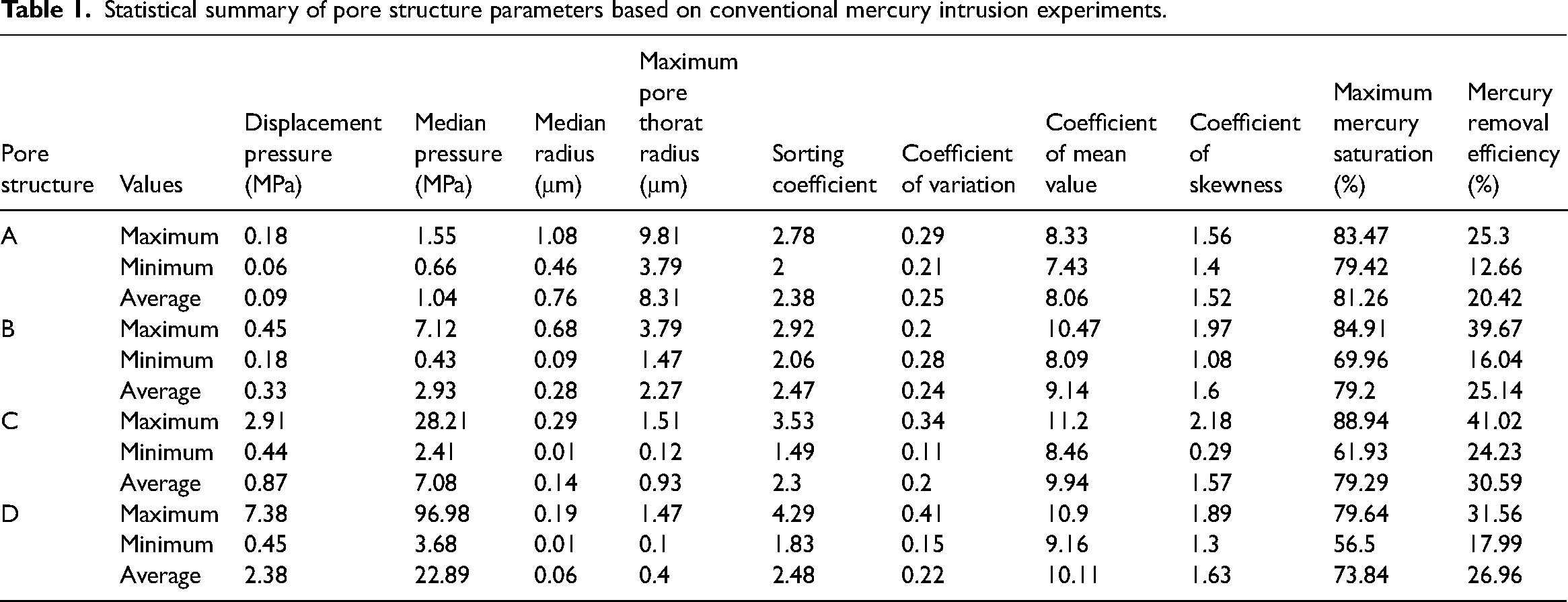
Samples of type A pore structure constituted 9.3% of the total, while those of types B and C accounted for the majority at 72.09%. Samples of type D pore structure made up 18.6% of the total. In type A pore structure, the capillary pressure curve closely approximates the x-axis and tilts toward the lower left. This type of pore structure manifests moderate to good pore-throat sorting, with predominantly narrow throats. The reservoir space predominantly consists of intergranular pores, supplemented by some dissolution pores. Both the permeability contribution rate curve and the pore-throat mercury intrusion curve exhibit a single-peak state. Reservoirs corresponding to this pore structure type demonstrated the most favorable reservoir and seepage characteristics in the study area but were less commonly distributed, mainly occurring in the thick underwater distributary channel sand bodies.
In contrast, type B pore structure presented a shorter gentle section in its capillary pressure curve compared to type A, inclining gently upwards. Both displacement and median pressures were slightly higher, indicating smaller initial pore-throat radii and a marginally increased capillary resistance. Overall pore-throat sorting was moderate, slightly coarse, and skewed, with microfine throats being predominant. The reservoir space primarily comprised a mix of dissolution and intergranular pores. Illite and chlorite cements were observed within the pore space (Figure 6(a), (b), (d), and (e)). This pore structure type displayed relatively robust storage and permeability characteristics and was more frequently found, especially in the main distributary channel sand bodies or edges connected to the channel center.
In type C pore structure, the capillary pressure curve leans slightly towards the upper right of the plot. Both the displacement and median pressures are elevated, indicating smaller pore-throat radii and predominantly adsorptive microthroats. The pore-throat sorting ranges from moderate to poor. The reservoir pore space is chiefly composed of micropores and a lesser fraction of remnant intergranular pores. A significant quantity of illite cement is present, leading to relatively dense cementation (Figure 6(a), (d), and (e)). This pore structure type correlates with suboptimal reservoir permeability performance and is mainly distributed in transition zones between distributary channels and interdistributary bays, or in the natural levees.
Type D pore structure exhibits the most inferior physical properties among the four categories. The capillary pressure curve is generally skewed to the upper right, lacking a noticeable plateau in the section where mercury saturation is below 50%. Both the average displacement pressure and the average median pressure are the highest among the four types, requiring overcoming substantial capillary resistance during initial mercury intrusion. The reservoir pore space is exceedingly narrow, primarily consisting of micropores and a minor amount of dissolution pores. Chlorite and carbonate cements are prevalent, resulting in dense cementation (Figure 6(c)). Both the pore-throat mercury intrusion curve and the permeability contribution curve display a single-peak state. The pore-throat radius corresponding to the peak of the permeability contribution curve is 0.16 μm, indicating that the pore-throats contributing most to the seepage capacity are extremely small. This pore structure type exhibits the poorest storage and seepage performance among the four categories and is predominantly found in silty mudstones at channel edges connected with interdistributary bays or within the bays themselves.
Water-flooding characteristics in different pore types
Intergranular pores
In the water-free period, the oil displacement efficiency in this pore type ranged from 18.04% to 20.46%, averaging 19.19%. Microscopic observation revealed that initial water influx followed low-resistance channels, some veering toward fractures, culminating in rapid breakthrough at the outlet (Figure 8(a)). Subsequent to this breakthrough, the water-swept zone expanded laterally, ultimately achieving near-complete saturation. The residual oil primarily manifested as island-shaped and corner accumulations (Figure 8(f) and (g)). Despite a brief water-flooding period, the ultimate oil displacement efficiency was elevated, ranging between 32.56% and 38.48%, with an average of 35.72%. Therefore, this pore type exhibited the highest ultimate oil displacement efficiency.
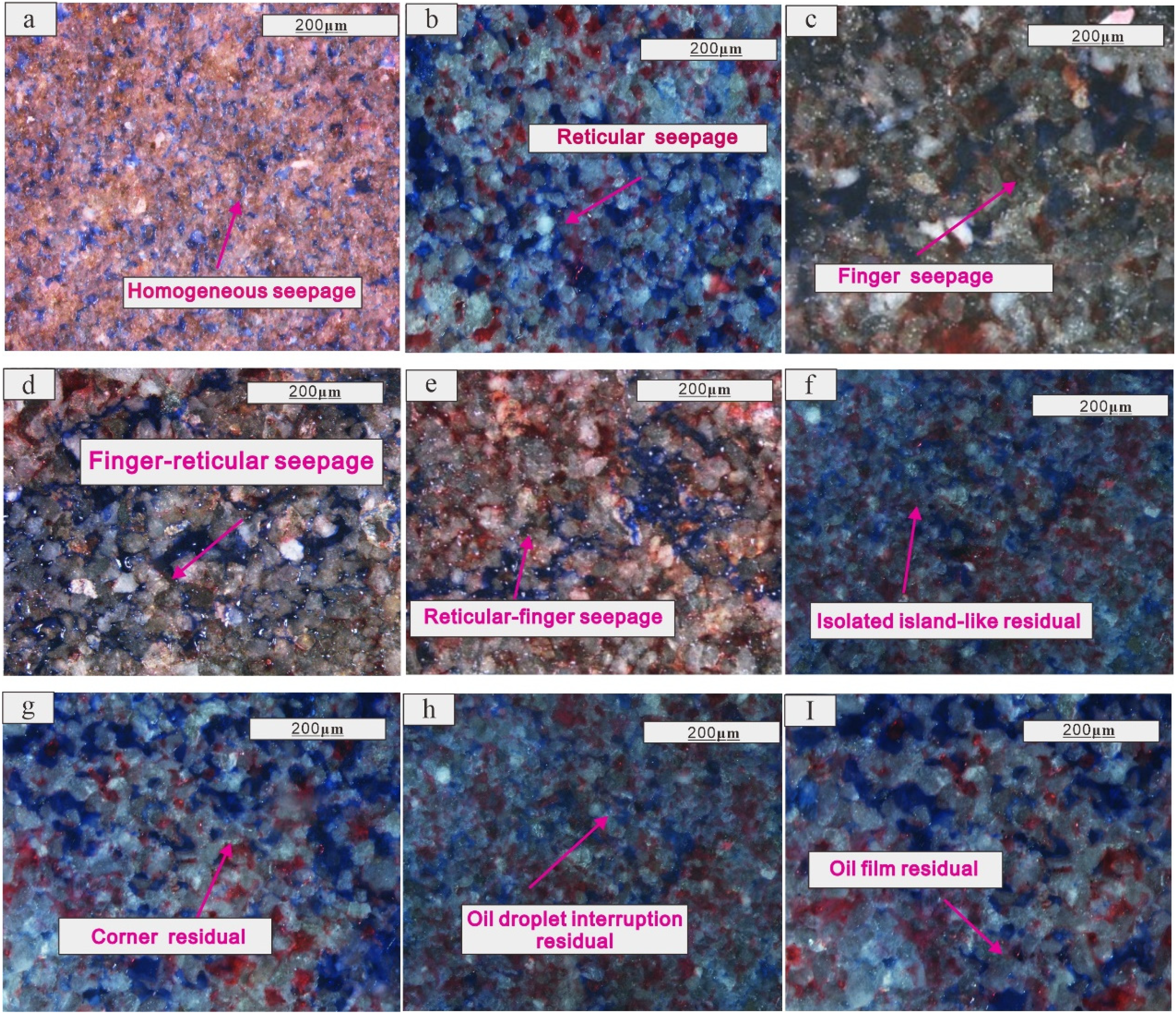
Water-flooding oil characteristics in the Chang 8 reservoir. (a) Homogeneous seepage, sample 1, 2491.78 m. (b) Reticular seepage, sample 2, 2418.02 m. (c) Finger seepage, sample 6, 2011.58 m. (d) Finger-reticular seepage, sample 7, 2437.7 m. (e) Reticular-finger seepage, sample 12, 2290.42 m. (f) Distribution of residual oil in isolated-island shape, sample 4, 2398.86 m. (g) Distribution of residual oil in corners, sample 3, 2661 m. (h) Distribution of residual oil in the form of interrupted droplets, sample 5, 2439.3 m. (i) Distribution of residual oil in the form of oil film, sample 8, 2551.2 m.
Dissolution-intergranular pores
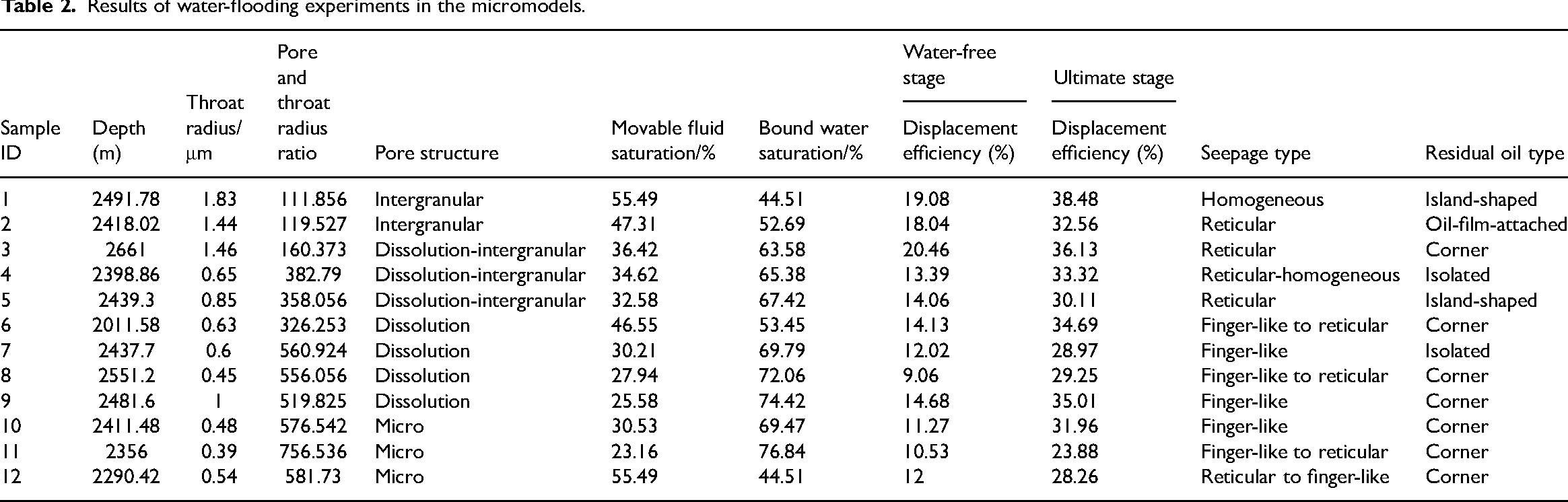
This pore structure featured good connectivity between remnant intergranular pores and dissolution pores. The pore-throat geometry, depicted in Table 2 and Figure 7, revealed an average mainstream throat radius of 1.458 μm, the largest among the four types of pores. This predominance of large throats facilitated oil and water flow. During displacement, injected water initially infiltrated the largest surface throats, subsequently permeating adjacent intergranular pores offering lower seepage resistance to displace oil. As the water-flooding front advanced, water accessed highly interconnected dissolution pore regions, enabling oil globules to dislodge from pore walls (Figure 8(b)). Upon incrementing the displacement pressure differential, water overcame heightened capillary resistance, infiltrating smaller pores to diversify water-flooding pathways. The pore and throat distribution in these samples was fairly uniform, with a high degree of connectivity and an average effective pore volume of 0.05 cm3. The water-flooding patterns were primarily reticular and homogeneous, resulting in minimal residual oil. The initial oil displacement efficiency, averaging 30.8%, was the highest among the four types of pores, with corresponding average displacement volumes of 0.010 and 0.016 cm3, respectively.
Results of water-flooding experiments in the micromodels.
Dissolution pores
Feldspar dissolution pores were the most prevalent, followed by lithic fragment dissolution pores. The water-flooding characteristics for these samples are elaborated in Table 2 and Figure 8. The average mainstream throat radius was 0.78 μm, dominated by medium-thin throats, resulting in suboptimal fluid seepage capacity compared to dissolution-intergranular pores. The dissolution pores exert a dual influence on reservoir properties: they enhance storage capabilities while complicating pore and throat distributions, thereby increasing water-flood path heterogeneity. During the water-flooding process, water primarily advanced along zones with dissolution pores exhibiting marginally better permeability, dislodging oil globules from their initial positions. Upon increasing water intrusion pressure differential, water infiltrated smaller, well-connected pore throats adjacent to the dissolution pores. Due to pronounced heterogeneity, water-flooding advanced in a finger-like pattern through individual seepage channels, culminating in a finger-network configuration (Figure 8(d)). Consequently, the water-flooded area was reduced, and more residual oil remained. The average effective pore volume for these samples was 0.044 cm3, and the oil displacement efficiencies in both the water-free (average 13.11%) and ultimate (average 31.19%) stages were inferior compared to dissolution-intergranular pore samples with better permeability. The average displacement volumes were 0.005 and 0.010 cm3, respectively.
Micropores
In the sandstone samples, micropores constituted the main seepage channels, with thin and ultra-thin throats predominating. This configuration resulted in poor fluid seepage capacity. Given the inherent ultra-low permeability of the reservoir, micro pores as principal flow conduits severely impede water penetration. The elevated resistance hampers water entry into adjacent seepage spaces, making oil displacement from micropores challenging. These samples exhibited limited original oil storage, compact lithology, and fine throats, leading to a singular, predominantly finger-like displacement pattern (Figure 8(c)). An extensive zone of residual oil was observed around the flow channels. The effective pore volume of these samples, averaging 0.038 cm3, was the smallest among the four types. The average oil displacement efficiencies in the water-free and ultimate stages were 10.78% and 29.82%, respectively, with corresponding average displacement volumes of 0.002 and 0.004 cm3.
A total of 12 representative samples from the study area were selected for fluid seepage experiments, with details presented in Table 2.
Discussion
The displacement process is influenced by multiple variables that contribute to variations in ultimate oil displacement efficiency. This study conducted a comprehensive examination of both reservoir microscale conditions (i.e. physical properties, pore structure, mobile fluid saturation, and seepage channels) and external parameters during water flooding (i.e. water-flooding volume and displacement pressure), placing particular emphasis on variables that exhibit significant disparities in seepage characteristics.
Reservoir properties
In water-flooding experiments, the oil displacement efficiency is determined by dividing the volume of oil displaced by water by the volume of oil occupying the pore spaces. Mathematically, it is calculated as the original oil saturation minus the residual oil saturation, divided by the original oil saturation.
Figures 8–10 reveal positive correlations between oil displacement efficiency and three key reservoir physical parameters. When contrasting the water-free period with the ultimate stage, the correlation between oil displacement efficiency and permeability intensifies. This suggests that during the water-free period, injected water primarily follows channels with larger pores and throats, limiting the number of seepage paths and minimizing the affected area. As permeability increases, the water infiltrates well-connected pore throats surrounding the main water-flooding channels, thereby expanding the water-flooding front and increasing the affected area. As indicated by the correlation coefficient (R2), permeability (R2 = 0.8165 for the water-free period, R2 = 0.6561 for the ultimate period) has a stronger correlation with oil displacement efficiency than porosity (R2 = 0.363 for the water-free period and 0.6602 for the ultimate period) (Figures 9 and 10).
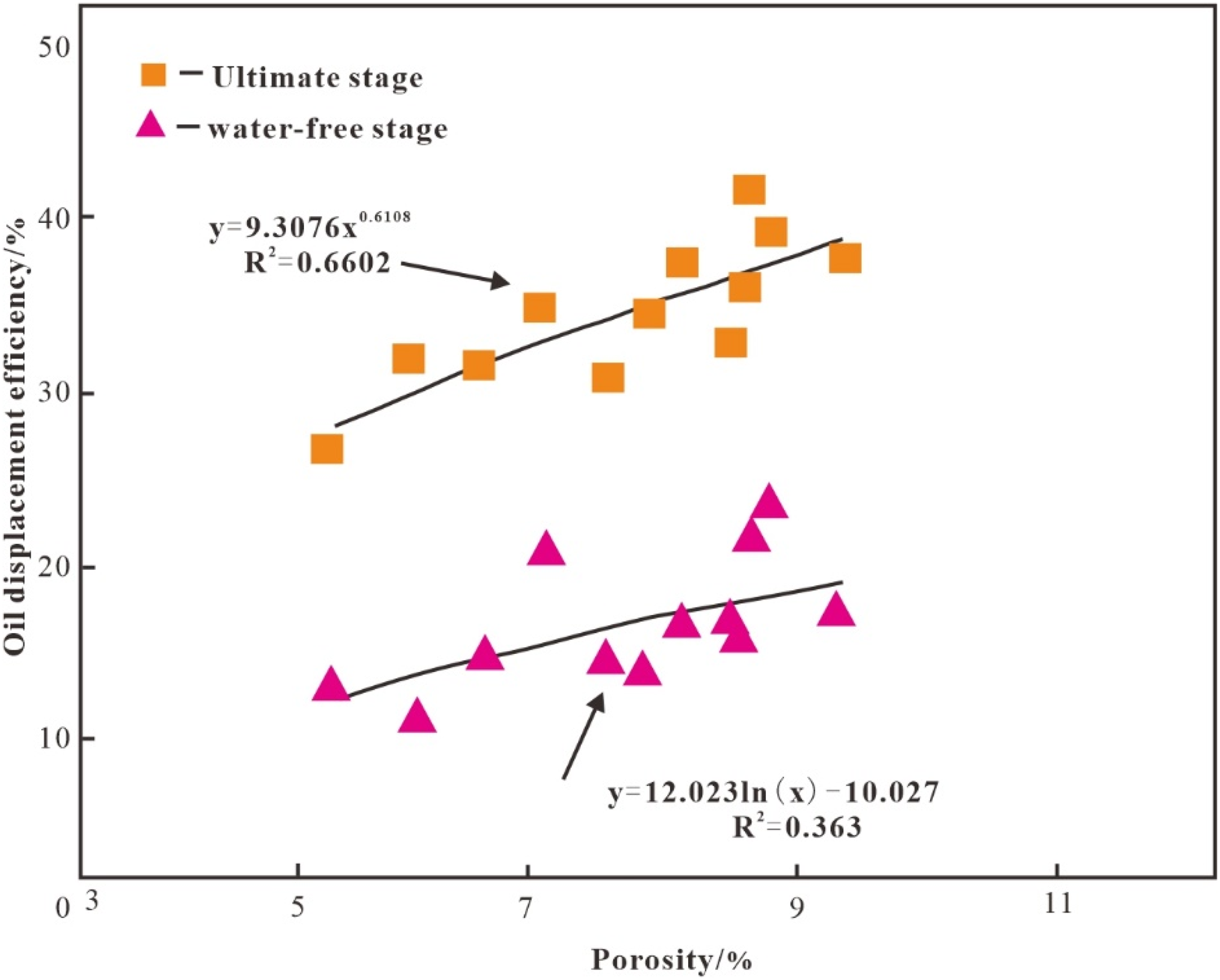
Relationship between porosity and oil displacement efficiency in the study area.
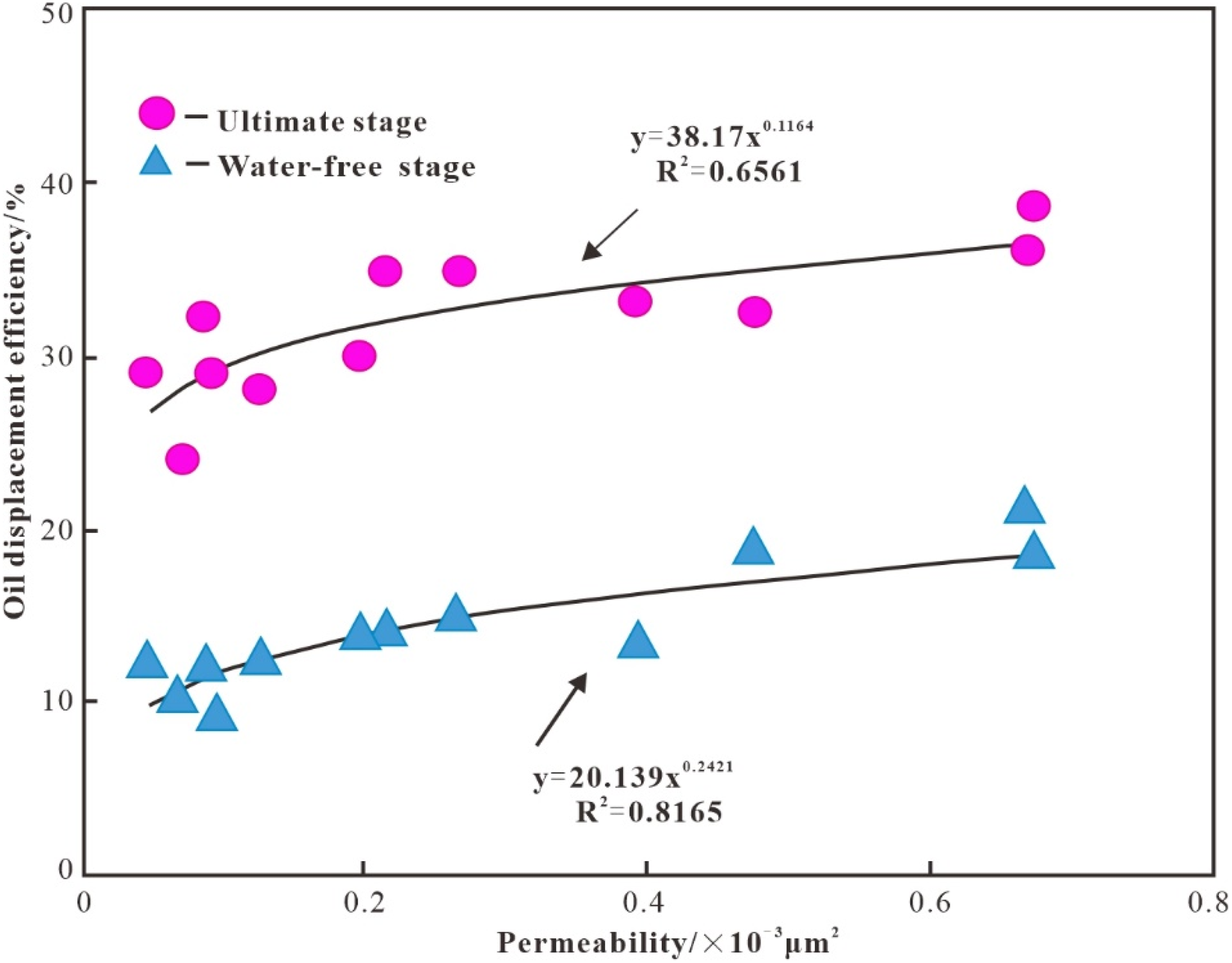
Relationship between permeability and oil displacement efficiency in the study area.
The Reservoir Quality Index (RQI) incorporates macroscopic parameters such as pore throat, pore size, and particle distribution, providing a more comprehensive reflection of the reservoir's pore structure quality: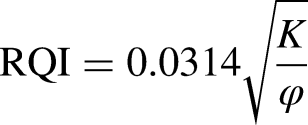
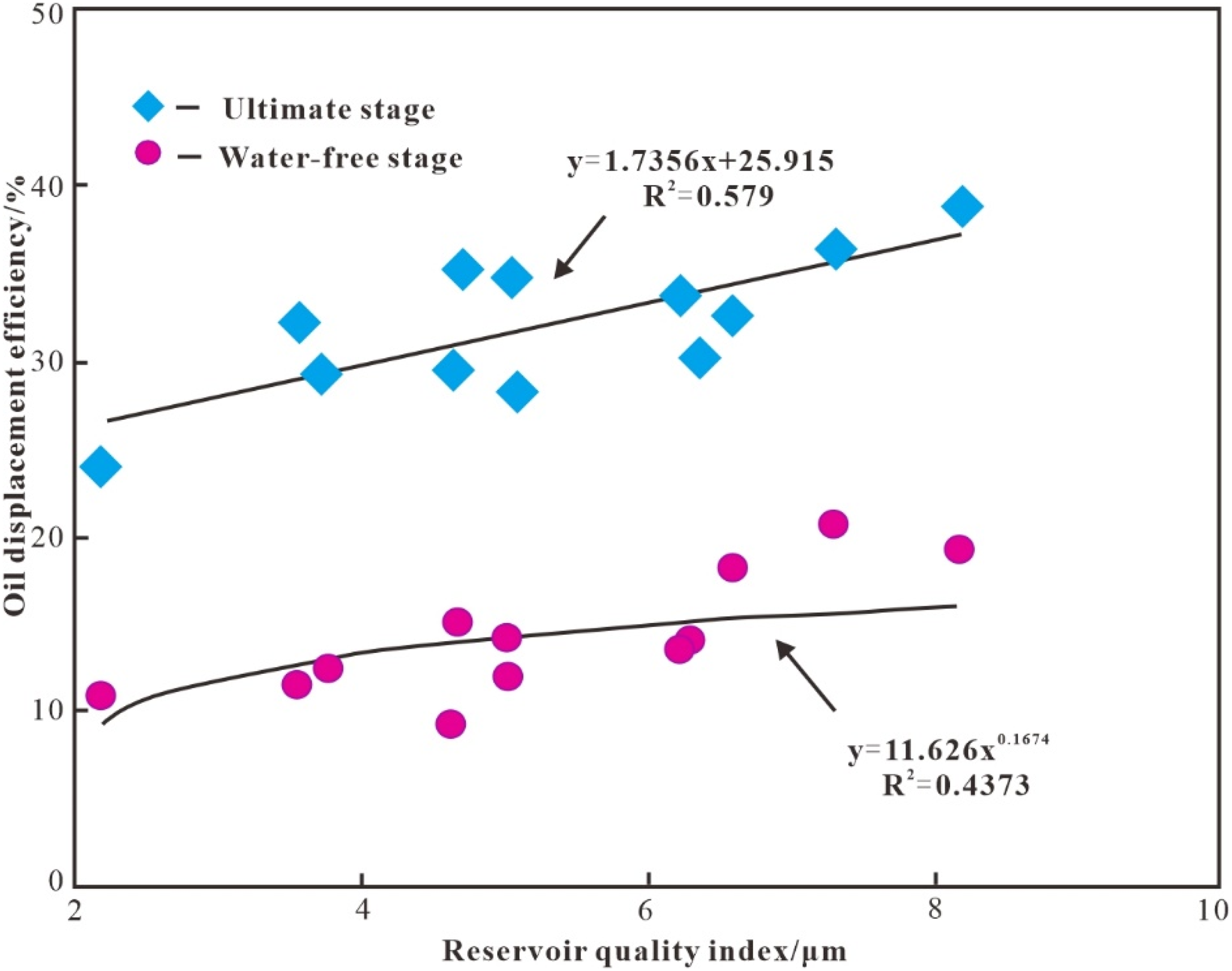
Relationship between reservoir quality index and oil displacement efficiency in the study area.
Pore structure
Pore structure is a crucial determinant in the effectiveness of oil displacement, as variations in this structure influence the conditions of two-phase oil–water flow and the uniformity of the displacement process.
Throat radius and mainstream throat radius
Based on the types of seepage channels, representative samples featuring intergranular pores, dissolution-intergranular pores, dissolution pores, and micropores were selected. The corresponding average throat radii were 1.492, 1.250, 0.779, and 0.289 μm, respectively. The throat radius distribution width and the throat radius corresponding to the peak of the frequency distribution decrease successively among the four types of samples. Among them, the dissolution-intergranular pore type sample has the widest distribution range for the throat radius, and its corresponding water-flooding uniformity is the highest. Figure 12 reveals a positive correlation between oil displacement efficiency—both in the water-free and ultimate stages—and the mainstream throat radius, with correlation coefficients of 0.905 and 0.6053, respectively. When the mainstream throat radius exceeds 0.505 μm, the upward trend of the fitting curve attenuates, suggesting that oil displacement efficiency during water flooding is influenced by the shape of the throat radius distribution curve as well as the mainstream throat radius. For samples with comparable mainstream throat radii, those with higher uniformity in throat radius distribution present more seepage paths, a greater swept area, and elevated oil displacement efficiency in the ultimate stage of the water-flooding process.
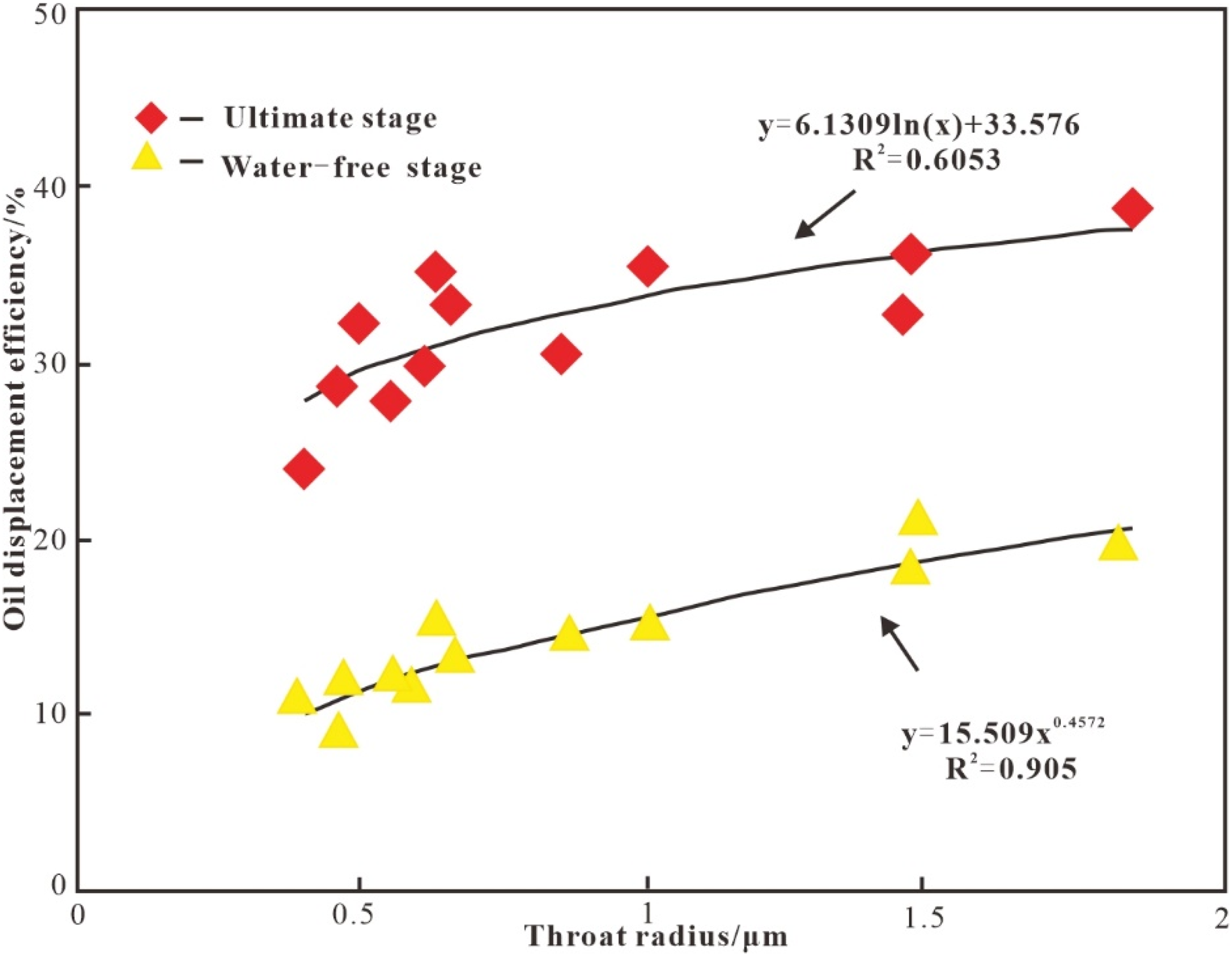
Relationship between throat radius and oil displacement efficiency.
Pore-throat radius ratio
Figure 13 shows that R2 values for the oil displacement efficiency fitting curves during the water-free and ultimate stages are 0.8299 and 0.6218, respectively. These values suggest that a smaller pore-throat radius ratio—corresponding to a larger throat radius—leads to higher uniformity in displacement and, consequently, more effective oil recovery. Conversely, a smaller throat radius results in substantial capillary resistance, impairing pore-throat connectivity, facilitating residual oil entrapment, and reducing the overall oil displacement efficiency. As such, the pore-throat radius ratio serves as a critical parameter for understanding the influence of pore-throat distribution on oil displacement effectiveness.
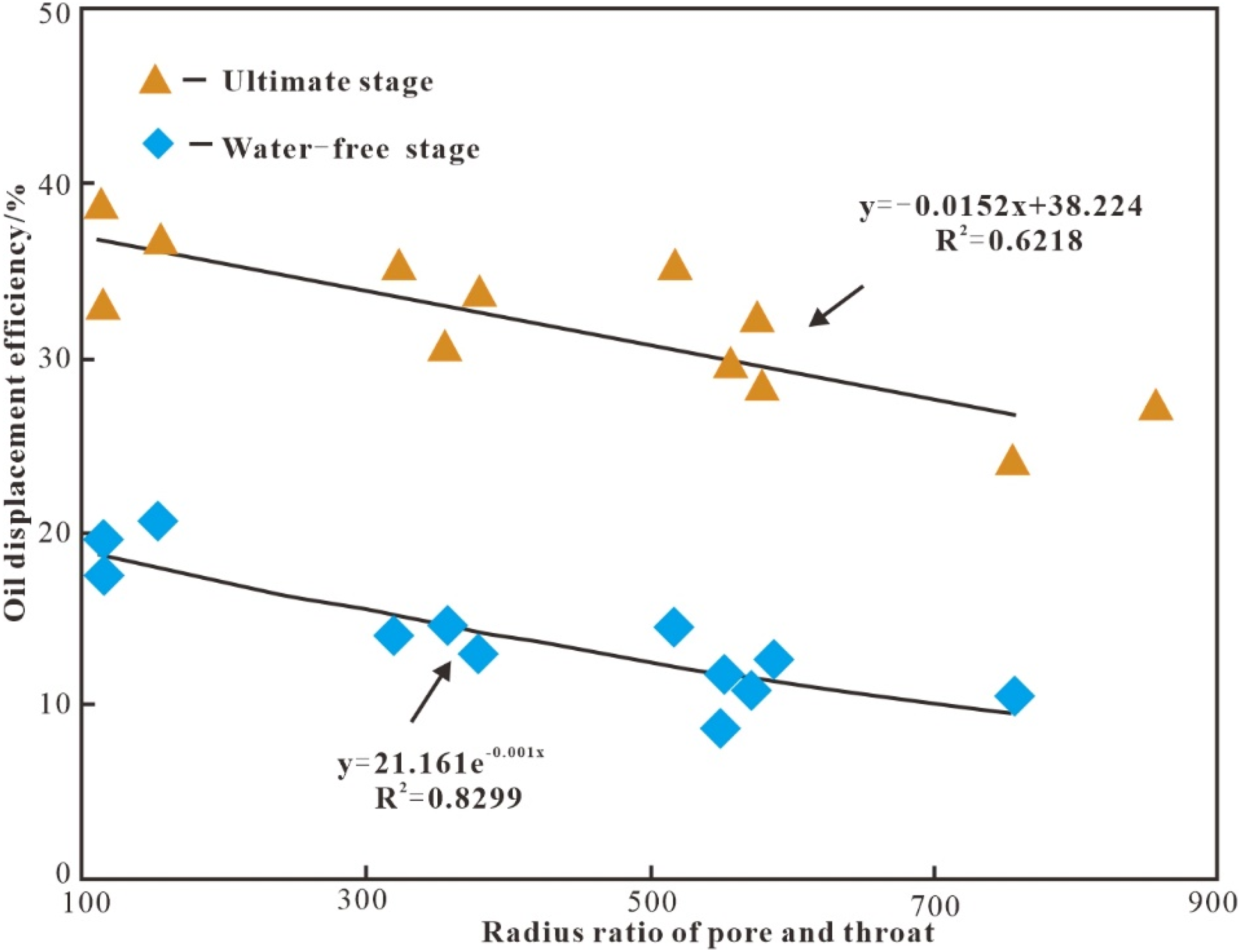
Relationship between pore throat radius and oil displacement efficiency.
Sorting coefficient
Figure 14 indicates that the correlation coefficients for the oil displacement efficiency fitting curves during the water-free and ultimate stages are 0.4868 and 0.5951, respectively. These data suggest that an increased sorting coefficient leads to a broader distribution range for the throat radius, along with a higher proportion of larger throats. This results in greater uniformity in the displacement pathway, a larger displacement volume, and enhanced ultimate displacement outcomes. For samples with similar sorting coefficients, those featuring larger mainstream throat radii and broader throat radius distribution ranges exhibit more homogeneous water-flooding paths and higher oil displacement efficiency.
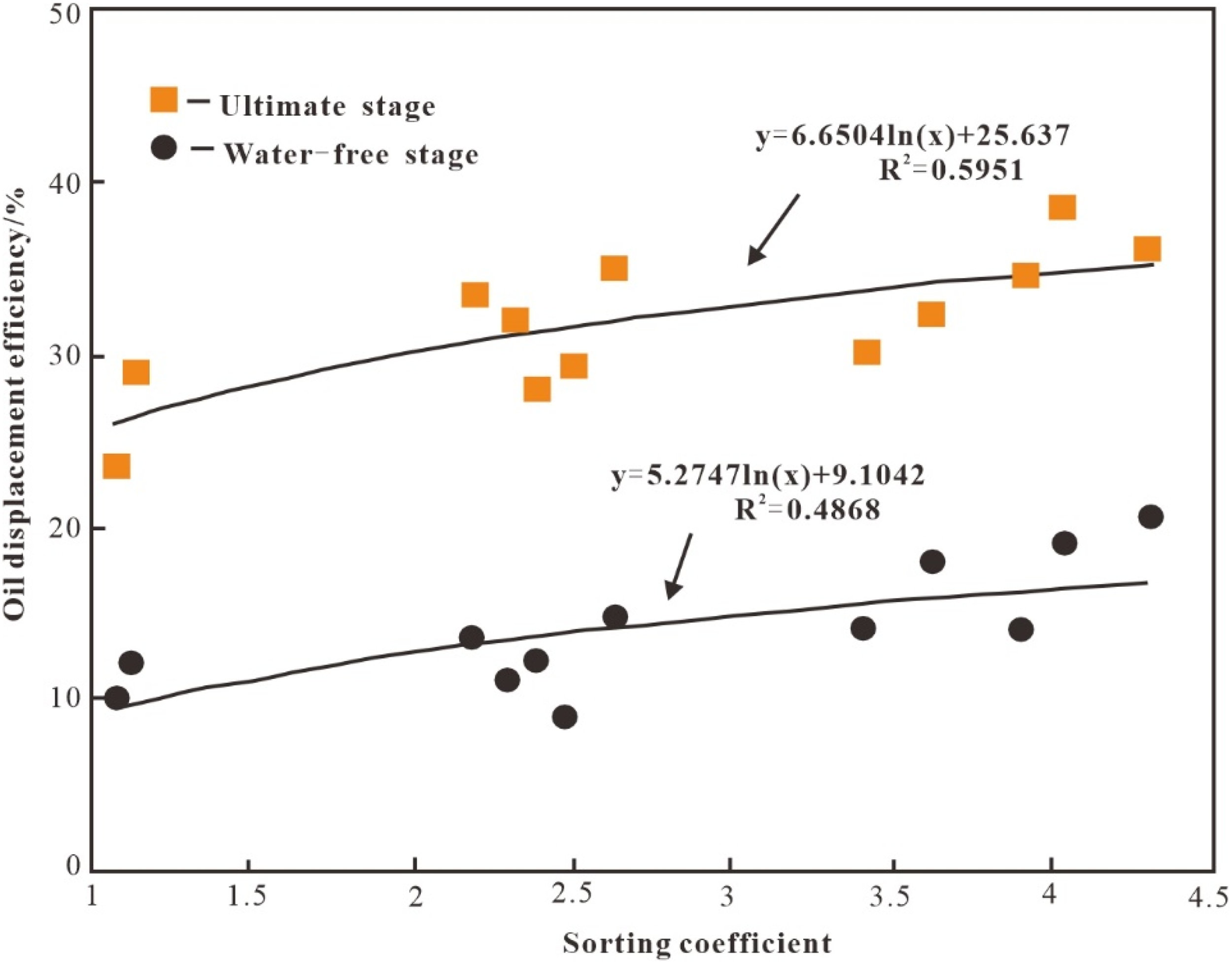
Relationship between sorting coefficient and oil displacement efficiency.
Movable fluid saturation
Movable fluid saturation serves as a critical parameter for delineating the microscopic flow behavior within reservoirs, holding significance for reservoir assessment, hydrocarbon reserve estimation, and other relevant applications. As illustrated in Figure 15, the correlation during the water-free phase is moderately positive (R2 = 0.6411), while the oil displacement efficiency in the ultimate stage exhibits a strong positive correlation (R2 = 0.6171). When the movable fluid saturation is <29%, the slope of the fitting curve is steep; it flattens as the movable fluid saturation exceeds 29%. These data suggest that higher levels of movable fluid saturation enhance pore-throat connectivity, facilitating the mobilization of oil droplets within the pore network. Higher values of this parameter are indicative of superior permeability characteristics and elevated end-stage water-flooding efficiencies.
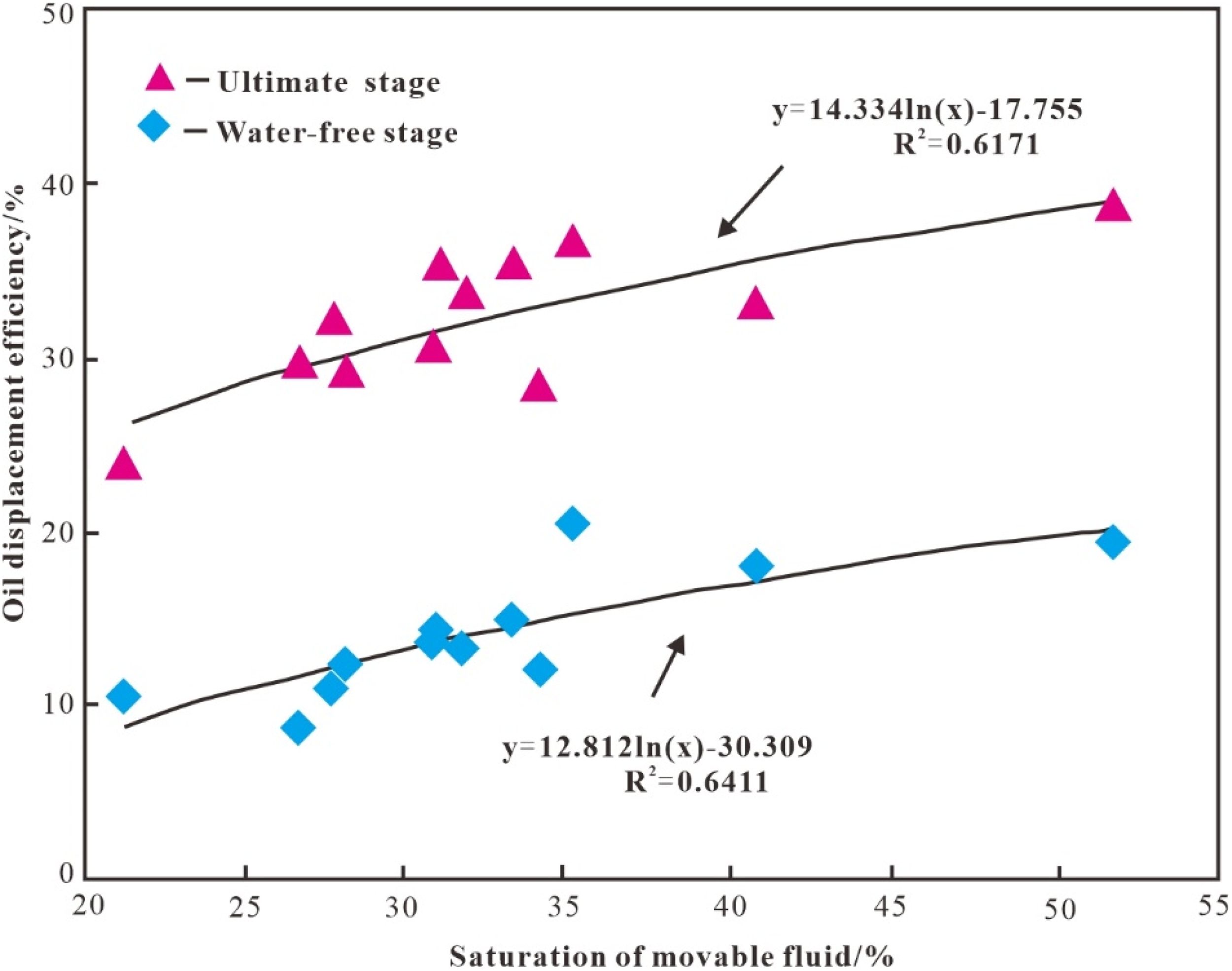
Relationship between movable fluid saturation and oil displacement efficiency.
Seepage channel type
The nature of the seepage channels significantly impacts the flow characteristics during water flooding. Comparative analysis on the mean oil displacement efficiency across different channel types reveals that samples characterized by dissolution-intergranular pore configurations markedly outperform those with only dissolution pores. Conversely, samples with micro pores yield the least satisfactory displacement results. The high degree of uniformity and connectivity in the pore-throat distribution of dissolution-intergranular pore samples allows for a more equitable distribution of injected water across multiple channels, leading to higher sweep efficiency and, consequently, superior oil displacement. In contrast, samples with micropores are hindered by poor pore-throat sorting, constricted flow paths, and challenging fluid mobility, culminating in suboptimal displacement outcomes. Accordingly, the average oil displacement efficiency for this category ranks lowest among the four examined types.
Injected water volume multiple
In the conducted displacement experiments, injected water volumes were systematically escalated under a specified intrusion pressure. Subsequently, residual oil quantities within the model were assessed at varying water volume multiples, enabling the calculation of corresponding oil displacement efficiencies. Upon increasing the water volume multiples from 1 to 2 PV, mean oil displacement efficiencies elevated to 20.33%, 21.83%, 22.08%, and 10.96% for samples with intergranular pores, dissolution-intergranular pores, dissolution pores, and micropores, respectively. When the water volume multiple further escalated from 2 to 3 PV, average enhancements in oil displacement efficiencies were 5.93%, 5.58%, 3.3%, and 3.64% for the four different types of pore structures. Beyond a 3 PV multiple, seepage pathways exhibited negligible extension, and oil displacement efficiencies plateaued. During water-flooding operations, the flushing capability of the displacing agent serves to mobilize residual oil, particularly that adhering in filmic forms within pores, and facilitate its forward transport. Elevated water injection extends the scouring duration, thereby reactivating pore throats initially obstructed by clay mineral particles. This action augments the original seepage channel radii, bolsters permeability, and diminishes residual oil volumes, thereby improving displacement efficacy. Conversely, sustained water flushing may induce clay particle migration, potentially occluding pore throats along the displacement route and thereby compromising fluid flow, leading to suboptimal displacement outcomes.
Consequently, variations in the water volume multiples exert both beneficial and detrimental impacts on reservoir development. In practical water-flooding operations, the water volume multiples should be judiciously selected in accordance with the reservoir's specific geological attributes.
Displacement pressure
This study investigates the influence of displacement pressure on oil–water flow attributes. Experimental results indicate that elevating displacement pressure facilitates the penetration of injected water into smaller pore throats adjacent to the initial seepage channel, thereby enlarging the swept zone and enhancing displacement efficacy. However, a threshold exists: once the average pressure increment surpasses 0.025 MPa, the growth in oil displacement efficiency asymptotically approaches a standstill. At this juncture, the seepage pathways largely remain constant; further pressure elevation fails to expand the displacement front, stabilizing oil displacement efficiency. During experimentation, increased water injection pressure led to a reduction in residual oil adhering in pore films. Additionally, the displacement front expanded laterally, water-flooding uniformity improved, and previously unswept residual oil proximal to the original seepage pathway became mobilized, thereby boosting displacement outcomes.
In summary, manipulating water injection pressure exerts a marked impact on displacement effectiveness and modifies oil displacement efficiency. Yet, the benefits wane once the water injection pressure crosses a critical threshold, yielding marginal changes in displacement performance and stabilization in ultimate oil displacement efficiency. Thus, precise control over water injection pressure differentials during actual water-flooding operations is pivotal for optimizing the extractive yield of reservoir resources.
Conclusions
The Triassic Chang 8 reservoir under study primarily features intergranular and feldspar dissolution pores. High-pressure mercury intrusion experiments have classified the reservoir's pore structures into four distinct types, namely types A to D. The reservoir's storage and flow properties deteriorate progressively across these types, with types B and C being the most prevalent in the study area. Constant-rate mercury intrusion experiments reveal that pore radii across samples exhibit minimal variations, generally ranging from 100 to 190 μm. The disparities in pore radius and distribution significantly influence reservoir permeability.
Samples with differing microscale seepage pathways exhibit substantial variations in flow properties. Specifically, samples with dissolution-intergranular pore structures demonstrate the most uniform displacement paths, highest mean oil displacement volumes, and maximal ultimate oil displacement efficiencies, rendering them the most effective in oil recovery. Among the reservoir's internal microscale factors, throat radius and its distribution wield significant influence on both the nature of fluid flow during water flooding and the efficacy of oil displacement. Movable fluid saturation, however, exerts a relatively minor impact on oil displacement efficiency while serving as an indicator of the reservoir's fluid flow capabilities. The volume multiple of the injected water and the displacement pressure are external variables affecting oil displacement efficiency. Both factors enhance oil recovery efficiency up to a certain threshold, beyond which further increases yield negligible improvements. Hence, in practical water-flooding operations, it is imperative to calibrate water injection pressure and injection volume multiples in accordance with the reservoir's specific geological and dynamic production characteristics.
Footnotes
Acknowledgement
The authors sincerely thank the Changqing Oilfield Company of PetroChina Co. Ltd for providing the cores for in this study.
Declaration of conflicting interests
The author(s) declared no potential conflicts of interest with respect to the research, authorship, and/or publication of this article.
Funding
The author(s) disclosed receipt of the following financial support for the research, authorship, and/or publication of this article: This work was supported by the Scientific Research Program Funded by Shaanxi Provincial Education Department (grant No: 23JY067).
