




Abstract
In coal mine gas extraction in China, the current hydraulic permeability enhancement measures generally have complex processes, low adaptability, long operation time, and high labor intensity. This makes it challenging to meet the requirements of coal mining enterprises for safe and efficient mining, and there is an urgent need to develop new technologies to enhance gas extraction and production. This paper proposed an integrated drilling and stamping technology to enhance gas extraction and production and integrates drilling, hydraulic jet fracturing, and hydraulic punching to enhance the permeability of coal seams. A field test was conducted using the specially-developed integrated drilling and stamping equipment to extract gas from the 16101 bottom pumping lane penetration hole in the Jiulishan Mine, Jiaozuo, Henan. The test results show that compared with the hydraulic punching technology previously used in the mine, the punching time of the soft coal seam was shortened by 66–75%, the coal output was increased by 1.7 times, and the punching hole aperture was increased by 1.3 times. Hydraulic injection fracturing was successfully performed to increase the permeability of the hard coal seams, and the fracturing formed a shot hole depth of 345–539 mm. After the integrated drilling and stamping of the drill holes, the coal output, gas extraction concentration, pure gas extraction volume, and coal seam permeability coefficient increased by 2.4, 2.2, 4, and 37.3 times, respectively. The gas flow decay coefficient of the drills holes was also further reduced, which significantly improved the extractionefficiency. Thus the integrated drilling and stamping technology can transform the process of gas extraction from regular extraction to quick, economic, pure, and clean extraction. Thus, this technology has large applicable value for underground gas management in coal mines.
Keywords
Introduction
Gas is a kind of mixed gas with methane as the main component, which is the first of five disasters affecting coal mine safety and efficient production. The management of gas disasters is a critical task in the operation of coal mines. Gas extraction is the most direct, effective, and realistic method to manage gas disasters (Hao et al., 2018; Zhao et al., 2019). However, the low permeability of some coal seams hinders gas extraction in underground, high-surge coal mines. The key to achieving efficient gas extraction from low-permeability coal seams is by effectively increasing the permeability of the coal seams.
Mining-induced pressure relief plays a significant role in increasing the permeability of coal seams and improving the effect of gas extraction. Protective coal seam mining (Yin et al., 2015; Yao et al., 2016), and gas extraction from high extraction roadways, mined-out areas, high-level drill holes, and surface mining are all based on the mining-induced pressure relief theory. However, mining-induced pressure relief still has some limitations and passiveness, and artificially forced pressure relief extraction measures can compensate for the lack of mining-induced pressure relief.
Since 2010, hydraulic fracturing (Deng et al., 2018; Huang et al., 2015) and hydraulic punching (Liu et al., 2021) have been applied as mature regional gas management technologies in high gas outbursts mines in Henan, Shanxi, Hebei, Chongqing, Guizhou, and Anhui. Underground hydraulic fracturing technology in coal mines refers to the injection of high-pressure fracturing fluid into coal and rock strata by drilling with a constant or gradually increasing displacement. (Zhang et al., 2018). It can form a set of radial tensile fractures, extending in the direction of the maximum primary stress opening in the direction of the minimum main stress, so that the coal seam permeability is increased (Brian et al., 2016). When hydraulic fracturing, hard coal (elastomer) due to a certain degree of transformation, fractures can be achieved to increase the permeability of coal seam. For soft coal (plastic body), hydraulic fracturing can only form swelling and puncture in coal seam, and can not make fractures. After hydraulic fracturing, the gas can be extracted efficiently without the need for high negative extraction pressure, and with the improved hole sealing technology, the gas extraction concentration can be increased effectively, and provide a stable gas source for gas power generation and even lead to comprehensive gas utilization (Wang et al., 2015). Hydraulic punching technology is an effective way to increase the permeability of soft coal, and large-diameter holes can be formed by high-pressure water jet cutting, breaking coal body and flushing slag, then, the energy is released from the coal seam itself, the coal is discharged, the pressure is relieved (Chang and Tian, 2018), and the capacity and permeability of the coal seam are increased significantly. This method promotes gas desorption and output and enhances the efficiency of gas extraction.
In recent years, with the increasing development of water jet technology (He et al., 2016; Li et al., 2019), research on hydraulic fracturing and hydraulic punching (Zhai et al., 2016; Zhou et al., 2017) technology has entered a new stage. New water jet coal seam permeability enhancement technologies, such as hydraulic jet fracturing, integrated drilling, punching, and expanding technology, and integrated punching or pressing technology, have emerged. Hydraulic jet fracturing is a new type of hydraulic fracturing technology was first proposed by Surjaatmadja in 1998 and followed Bernoulli's equation. It is a seam-making technology integrating hydraulic injection, hydraulic fracturing, and hydraulic sealing and has the advantages of an accurate selection of seam-making orientation, no mechanical sealing, reduced operation time, reduced operational risk. It is very suitable for increasing the permeability of low-permeability hard coal seams (Shaojie et al., 2020). The basic idea of integrated drilling, punching, and expansion technology is to enlarge the diameter of individual boreholes to effectively improve the slag removal ability of hydraulic punching, enhance the effective extraction range, and release the gas in the local coal seam. Integrated punching or pressing technology first uses high-pressure water jets to punch the holes and flush out the cinders to form large diameter holes, and then designs fracture holes near the punching holes for hydraulic fracturing.
Overall, in terms of gas control, although the above-mentioned hydraulic permeability enhancement technologies have been shown to increase the permeability of coal seams to a certain extent and achieve some gas pre-pumping effects, they involve numerous steps such as drilling, hydraulic permeability enhancement, networked extraction. After the holes are drilled, the drill needs to be retired. Then short sections of hydraulic penetration enhancement equipment are sent to the penetration enhancement location using ordinary drill pipes or continuous oil pipes. This is a complicated, labor-intensive process requiring adaptable conditions and long operation time. This makes it difficult to meet the higher requirements of coal mining enterprises for gas management work. Based on the above reasons, in 2018, the authors proposed an integrated drilling and stamping technology, This technology is a set of gas extraction and production enhancement technology proposed for underground gas extraction in coal mines. It can realize the integrated operations of drilling, hydraulic jet fracturing in hard coal seams (sections), and hydraulic punching in soft coal seams (sections) in gas extraction boreholes (Liu et al., 2017). This new technology avoids the tedious operation of fracturing or punching after the boreholes is formed, significantly reducing labor intensity and operation time and improving efficiency. Its technology and equipment can not be directly applied to the development of surface coalbed methane, but the research and development ideas can provide reference for the development of surface coalbed methane.
Given the lack of clarity on permeability enhancement principles and equipment and the increasing use of integrated drilling and stamping technology, this study aims:(1) to make a comprehensive analysis of the gas extraction and production enhancement process using integrated drilling and stamping technology;(2) to systematically elaborate on the integrated drilling and stamping equipment and the production enhancement process of gas extraction through layer boreholes;(3) to test the integrated drilling and stamping technologyby bottom extraction roadway through layer drilling in the 16101 Jiulishan coal mine, Henan Province. It is expected that this integrated drilling and stamping technology will serve as an effective method to hydrodynamically enhance the permeability of coal in coal mines to extract gas.
Integrated drilling and stamping technology to increase permeability
Gas production involves gas desorption, diffusion (Knudsen diffusion, transition diffusion, Fick diffusion), and seepage (low-speed nonlinear seepage and linear seepage). The diversity of such flow patterns is closely related to the characteristics of the coal seam and engineering modifications. To enhance gas extraction and production, corresponding measures to increase desorption, expansion, and permeability need to be taken to accelerate desorption of the adsorbed gas and shorten the diffusion path of free gas to a linear seepage flow. Integrated drilling and stamping technology is a new technology for increasing gas extraction and production. This technology integrates drilling, hydraulic jet fracturing, and hydraulic punching, increasing coal seam permeability. Static pressure water is used during drilling, and high-pressure water is switched directly during stamping. When a high-speed water jet from the nozzle impacts hard coal, a perforation hole is formed in hard coal, and cracks are produced in front of the perforation hole achieving hydraulic jet fracturing and increasing permeability. A large diameter hole is formed when impacting soft coal, and pressure relief is achieved by hydro-jetting to increase capacity and permeability. The difference from the previous technologies is that drilling, soft coal flushing and hard coal pressure are carried out in turn. This technology enhances permeability by creating fractures with hydraulic jet fracturing, relieving pressure, and increasing the capacity of the coal through hydraulic punching.
Principle of hydraulic injection fracturing to create fractures and increase the permeability
Water jet pressurization fracturing mechanism
The high-speed water jet from the nozzle impacts the stratum, forming a spindle-shaped injection borehole (Figure 1(a)). Subsequently, the high-speed water jet continues to act on the borehole, and the water jet flow velocity in the front of the borehole stagnates so that the pressure rises rapidly, forming a pressurization effect. At the same time, pumping fluid into the annulus increase the annulus pressure. The combination of pressurization and the annular pressure inside the borehole then exceeds the rupture pressure, causing the fracture of the stratum at the front of the borehole, producing cracks (Figure 1(b)). according to Bernoulli's equation (Eq. (1)), once the fracture is formed, it will form a low pressure at the entrance of the borehole due to the large flow velocity of the water jet from the nozzle, This low pressure at the entrance of the borehole is lower than the annular pressure, and, therefore, the annular fluid flows into the borehole under the pressure difference, driving the fracture forward. The hydrodynamic principle is used throughout the hydraulic injection fracturing process to achieve hydraulic self-sealing, and no other sealing measures are required.

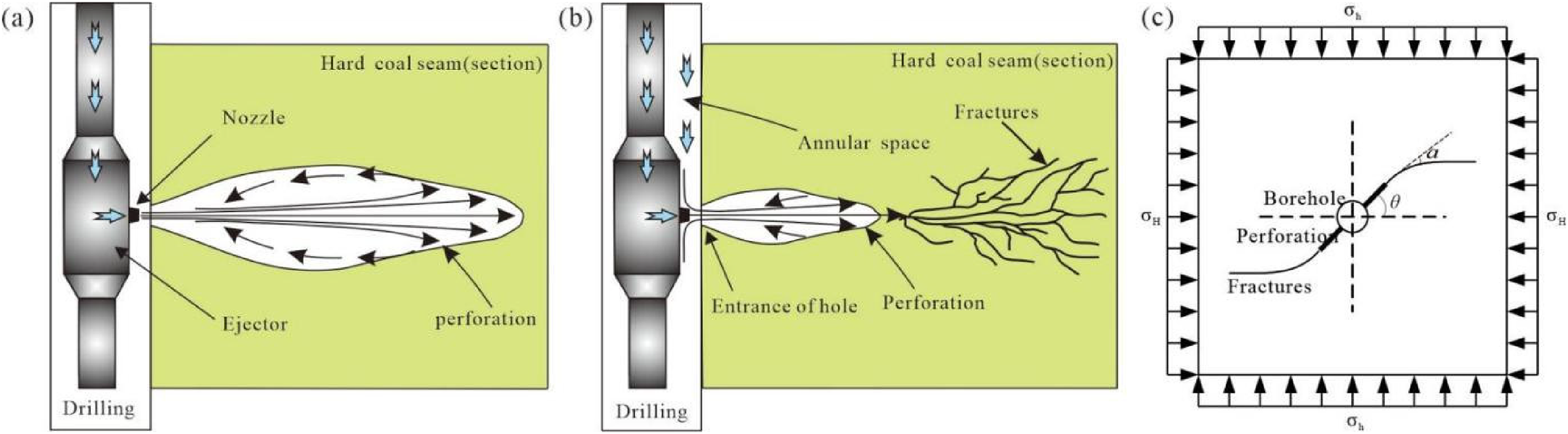
Water jet pressurization fracturing mechanism, (a) hydraulic injection stage, (b) hydraulic fracturing stage, (c) fracture initiation and extension.
There are two mechanisms at play when increasing permeability through hydraulic jet fracturing. The first is that, in the hydraulic injection stage, the formation of the spindle-shaped borehole must discharge part of the coal body, thus relieving pressure to increase penetration. The second is that, in the hydraulic fracturing stage, the combined effect of the internal pressurization of the borehole and the annular pressure causes fractures at the front of the borehole to form and propagate, thus creating seams that increase the permeability. Since the amount of coal produced by hydraulic injection is very limited, hydraulic fracturing creates fractures (Yang et al., 2020).
The conditions of coal fracture initiation in front of the borehole are:

The internal pressurization of the borehole pb can be expressed as:


The annular fracturing fluid frictional resistance pfa can be expressed as

The formation rupture pressure pf can be expressed as:

Suppose the perforation azimuth is inconsistent with the direction of the maximum horizontal principal stress (Figure 1(c)). In that case, the fracture will veer to one side, and the extension pressure will also change with the expansion of the cracks, which can be expressed as:

Hydroseal segmentation mechanism
During the hydraulic injection fracturing process, due to the internal pressure in the injection borehole and the negative pressure zone in the annulus, the annulus pressure will be lower than the formation fracture extension and lower than the formation fracture pressure at other locations. During this process, the already opened fractures will not reopen and will not open other fractures; the fluid will only enter the current fracture and drive the fracture forward (Figure 1(b)), thus achieving hydraulic dynamic sealing.
Since the injection tool, fracturing fluid, and kinetic energy can be concentrated at a specific location in the borehole and the borehole at that location can be plugged using hydrodynamic principles, hydro jet fracturing technology can form fractures precisely at the specified location and achieve fixed-point hydro jet fracturing. The fixed-point hydraulic injection fracturing method achieve segmental fracturing of coal seams (Figure 2), making the coal seams more uniformly permeable, maximizing the fracture extension, and significantly improving the gas extraction rate.
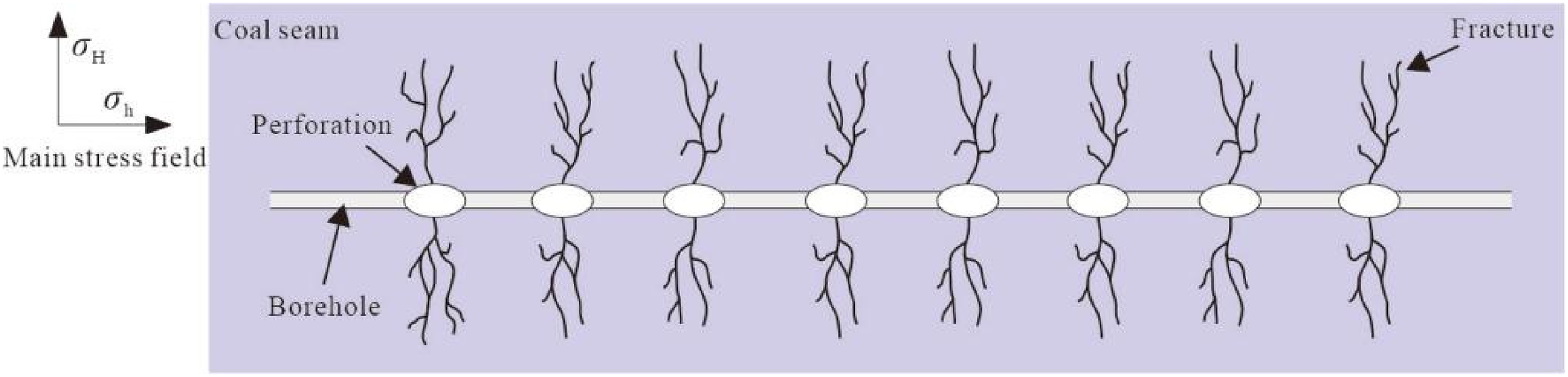
Schematic diagram of hydraulic jet staged fracturing.
Principle of pressure relief and capacity and permeability improvement by hydraulic punching discharge of coal
Mechanism of pressure relief and permeability enhancement of coal
To relieve pressure and increase permeability by hydraulic strengthening, a high-pressure water jet can be used to flush out certain parts of the coal body (Fan et al., 2018; Ye et al., 2017); this is the only way to increase the permeability of soft coal because hydraulic fracturing cannot be used to create seams in soft coal. During hydraulic punching, a high-pressure water jet cuts and crushes the coal body around the designated borehole location, and flushes out the cinders to form a large-diameter hole. The coal body around the borehole moves in the borehole direction under the joint action of crustal stress and gas pressure, causing expansion and deformation of the coal body and the phase displacement between the top and bottom plates. This results in the sequential formation of a fracture zone, plastic zone, and elastic zone around the borehole (Hao et al., 2016; He et al., 2021) (Figure 3(a)). After hydraulic punching, the fracture zone increases, and the stress distribution in the coal body around the borehole before and after punching, as shown in Figure 3(b). The Hoek-Brown criterion is used to demonstrate the relieving pressure and increasing coal permeability mechanisms through hydraulic punching.
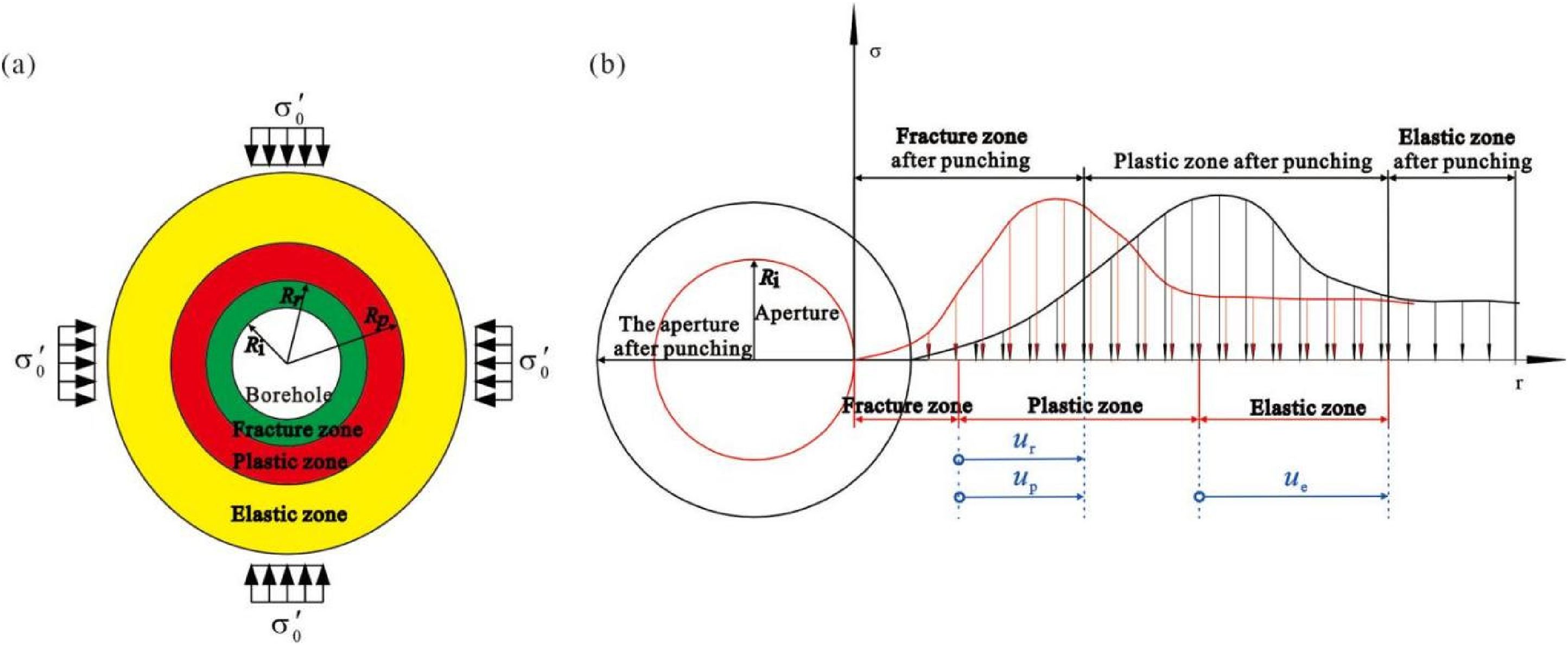
Hydraulic punching mechanism to relieve pressure and increase permeability, (a) plane strain model of the borehole, (b) stress distribution of the coal body around the borehole before and after punching. (Hao et al., 2016; He et al., 2021).
Displacement distribution of the stress field around the borehole after punching
The displacement of the elastic zone ue is expressed as:

The displacement up in the plastic zone is expressed as:

The displacement of the fracture zone ur is expressed as:

Radius of the plastic zone and the fracture zone after punching
The radius of the plastic zone Rp, is obtained by the expression:

The radius of the fracture zone, Rr, is expressed as:

After a part of the coal body is flushed out by hydraulic punching, the volume of the borehole increases, and it is seen from Eqs. (8), (9), and (10) that the coal body will be displaced in the direction of the borehole, which increases the porosity; at the same time, the wall of the borehole gets damaged and plastically deformed within a certain radius (Eqs. (11) and (12)), so that the stress is released. Thus, the purpose of unloading the coal and increasing the permeability is achieved (Zhang and Wang, 2017).
Mechanism of pore creation and capacity and permeability enhancement
Previous research on protective seam mining and pressure relief gas extraction technology, found that any slight expansion and deformation of the coal seam causes a dramatic increase in the permeability coefficient of the coal seam (Yin et al., 2015). Therefore, increasing a coal seam's permeability can be achieved by enlarging the permeable space of the coal seam. As shown in Figure 4(a), conventional hydraulic fracturing can form a set of radial fractures in hard coal seams extending along the maximum principal stress direction and opening in the minimum principal stress direction (Lu et al., 2020). However, there is no deformation of the top and bottom plates of the coal seams during the fracturing process and no expansion of the coal body. Therefore, the conventional hydraulic fracturing technique cannot increase the accommodation space of hard coal seams. As shown in Figure 4(b), conventional hydraulic fracturing cannot form fractures in soft coal seams, resulting in a small amount of squeezing and puncturing in the coal seam. Also, similar to hard coal seams, conventional hydraulic fracturing of soft coal seams does not deform the top and bottom plates of the coal seam, and the coal body does not expand. Therefore, conventional hydraulic fracturing technology cannot increase the capacious space in soft coal seams. Hydraulic punching technology cuts, crushes, and flushes out parts of the coal body around the designated location of the borehole through water jets, forming a large diameter hole. As shown in Figure 4(c), although the top and bottom plates of the coal seam are not deformed during the fracturing process, some parts of the coal in the soft coal seam are carried out of the borehole by the water jet, increasing the relative space inside the coal seam and causes the coal bodies to expand and deform. Thus, the increase in the capacity and permeability of the coal seam is achieved by making holes (Chen et al., 2019).
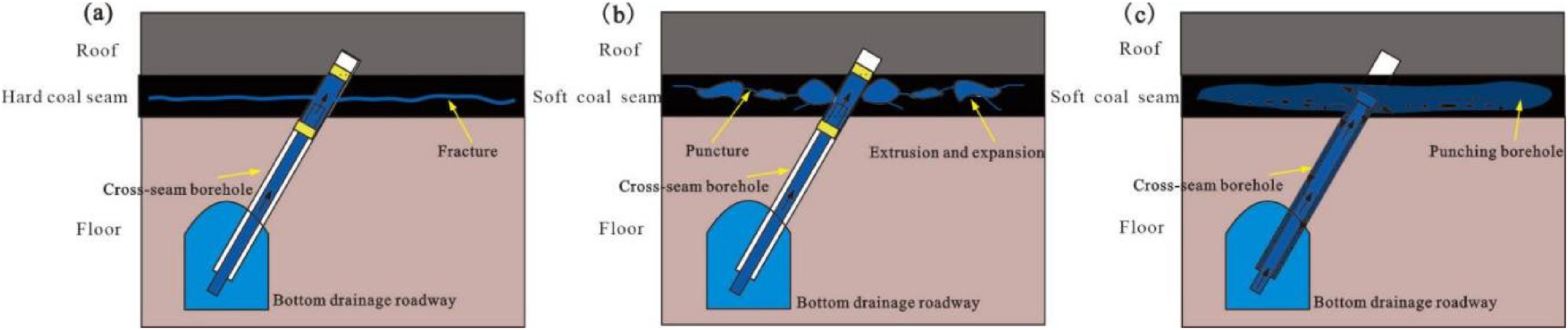
Mechanism of hydraulic punching to increase capacity and permeability, (a) hard coal fracturing to form radially induced tension fractures, (b) soft coal fracturing to form punctures and extrusion, (c) soft coal force punching out of coal to increase capacity.
In summary, there are two mechanisms to increase the permeability of coal through hydraulic perforation. One is to relieve pressure from the coal to increase permeability, the other is to create holes to increase the capacity to increase permeability. The two methods are complementary and are used together in the permeation enhancement mechanism of hydraulic perforation.
Integrated drilling and stamping equipment and drilling through a layer of gas to increase gas extraction and production
Integrated drilling and stamping equipment
The integrated drilling and stamping equipment consists of a conventional drilling rig, integrated drilling and stamping tools, a high-pressure water pump, a water supply line, and an anti-jet device, as shown in Figure 5. The integrated drilling and stamping tools include a high-pressure water braid, a high-pressure sealing drill pipe, an anti-blocking short joint, a stamping short joint, and a conventional drill bit. The stamping short joint consists of an internal cone thread joint, a stamping short joint body, and an external cone thread joint. The internal cone thread joint and the external cone thread joint connect to the anti-blocking short and the drill bit. The valve core combination includes a top cover set in the coaxial direction, a valve core sleeve, a pressure adjusting sleeve, a valve stem, a compression spring, and a slide lock. The back end of the valve stem is fixedly connected to the top cover, the valve stem is covered with a compression spring, the front end of the valve stem passes through the pressure adjusting sleeve from back to front, and the front end of the valve stem is set with an external thread and connected to the slide lock. When the high-pressure water acts on the top cover, the top cover drives the slide lock to slide forward, thus cutting off the connection between the drill stamping stub and the drill bit. The high-pressure water is diverted to the three nozzles on the body of the stamping stub to be sprayed out, and at this time, the compression spring is in a compressed state. There is a pressure relief hole on the stamping body, reducing the high-pressure water pressure on the slide lock. The pressure relief hole is driven by the compression spring to reset the slide lock, thus limiting the stroke of the slide lock to ensure flexible switching between the drilling and stamping states. The working principle of the integrated drilling and stamping equipment is as follows: the static water during the drilling is the same as conventional drilling, and it switches to high-pressure water during the drilling or retreating process. The stamping begins in the short connection to achieve the hydraulic punching of the soft coal section and the hydraulic injection fracturing of the hard coal section.
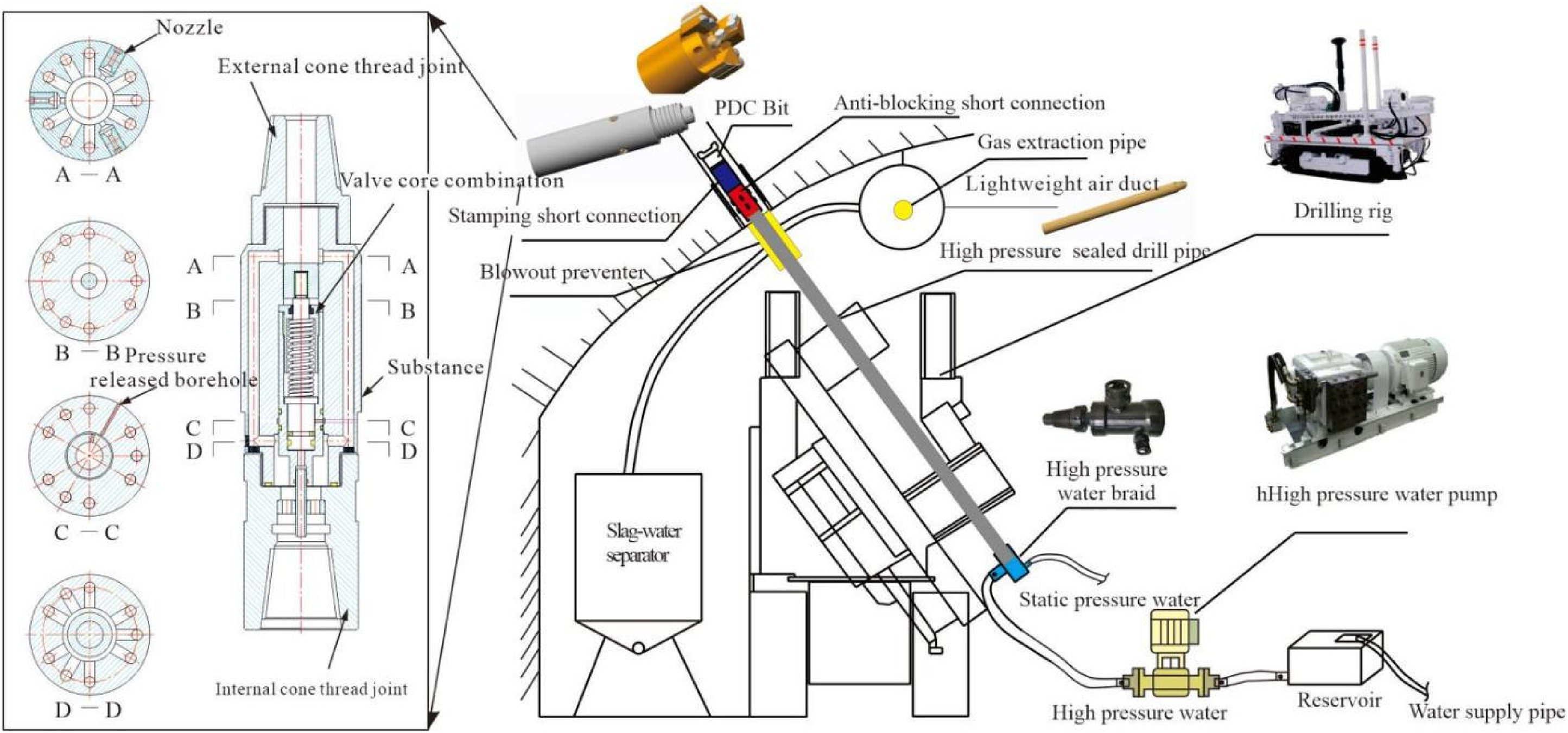
Integrated equipment schematic diagram for downhole integrated drilling and stamping.
Since the existing plunger pump used for hydraulic punching and fracturing of coal seams has insufficient displacement, the slag discharge is not smooth and easily leads to borehole holding, blocking, and other phenomena. Further, since the plunger pump pressure is low, it cannot guarantee the breaking of an adequate volume amount of coal, especially for hard coal, when the striking force is insufficient, and the permeability increase is poor. Therefore, a large displacement high-pressure plunger pump with rated pressure of not less than 45 MPa and a displacement of not less than 400 L/min was selected to provide high-pressure water for the integrated drilling and stamping equipment. Compared with the previous equipment, the performance is increased, a high-speed water jet is formed, and the slag removal and rock breaking capacity is significantly enhanced. Compared with the previous permeability-increasing technology, in the present technology, the drilling, soft coal punching, and hard coal pressing are performed sequentially, and the punching parameters are determined by the existing gas conditions and equipment capacity, realizing one side one policy.
Gas extraction and production enhancement process through layer drilling
Using the integrated drilling and stamping equipment, an increase in gas extraction and production through drilling through the seam, down the seam, and through underground holes instead of roadway drilling can be achieved (Chen et al., 2019). In addition, when using integrated equipment to enhance gas extraction and production through layer drilling, seam drilling with strips is preferred to eliminate protrusions. First, a large diameter (Φ133 mm or larger diameter) drill bit was used to drill several meters of boreholes. Then, a downward entry pipe and anti-jet device were installed, and the normal drill bit is replaced with hydrostatic water to drill the construction hole. During the drilling or returning process, the integrated drilling and stamping tools were used for high-pressure water-jet punching operations in the soft coal section to relieve, increase the coal's capacity, and perform hydraulic jet fracturing in the hard coal section to create fractures. There is no need to seal the holes throughout the process, preventing frequent breakage or punching after drilling in the past and greatly reducing the amount of labor required. The integrated drilling and stamping equipment for through-seam gas extraction and production can be implemented as a local outburst prevention measure with a wide range of applications, such as increasing the gas production from hard coal, soft and hard seam coal, and a combination of soft coal and surrounding rock. The through-seam gas extraction and production enhancement process using integrated drilling and stamping include: stamping while drilling and stamping while retiring in through-seam drilling.
Stamping process during drill-withdrawal
After drilling through 0.5 m of coal seam, the stamping operation is performed from the inside out while the drill is withdrawn according to the design, as shown in Figure 6. It is also possible to finish drilling and then retreat to the coal-rock intersection for the stamping operation from the outside to the inside. The soft and hard stratification needs to be determined based on the return slag during drilling. Also, it is required to determine whether to perform hydraulic injection fracturing in the hard coal section first or perform hydraulic punching in the soft coal section first If the drilling is mainly through soft coal, hydraulic punching should be performed in the soft coal section first, followed by hydraulic jet fracturing in the hard coal section, i.e., punching first and then pressing. If the drilling is mainly through hard coal, hydraulic jet fracturing should be performed in the hard coal section first, followed by punching in the soft coal section. If the soft and hard coal sections are interlayered, priority should be given to the hard coal section.
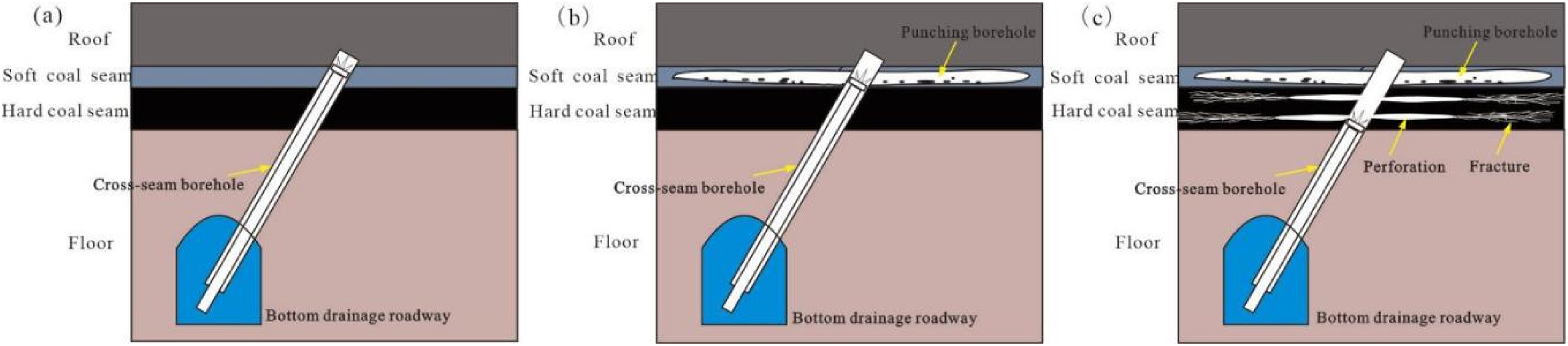
Diagram of the stamping process during drill withdrawal, (a) normal drilling, (b) soft coal hydraulic punching to relieve pressure and increase penetration, (c) hard coal hydraulic injection segmental fracturing to create joints and increase penetration.
Stamping process during drilling
During drill-withdrawal, the stamping process does not play a good role in relieving pressure. As shown in Figure 7, the punching operation during drilling, when drilling the coal-rock junction with hydrostatic water, hydraulic jet fracturing is performed on the hard coal to create fractures and seams and increase permeability. High-pressure water jet punching is performed on the soft coal strata to relieve pressure to increase permeability. The punching or pressing operation points are arranged according to the design spacing, and the “punching or pressing-drilling” sequence is executed cyclically until the hole is drilled 0.5 m into the top plate.
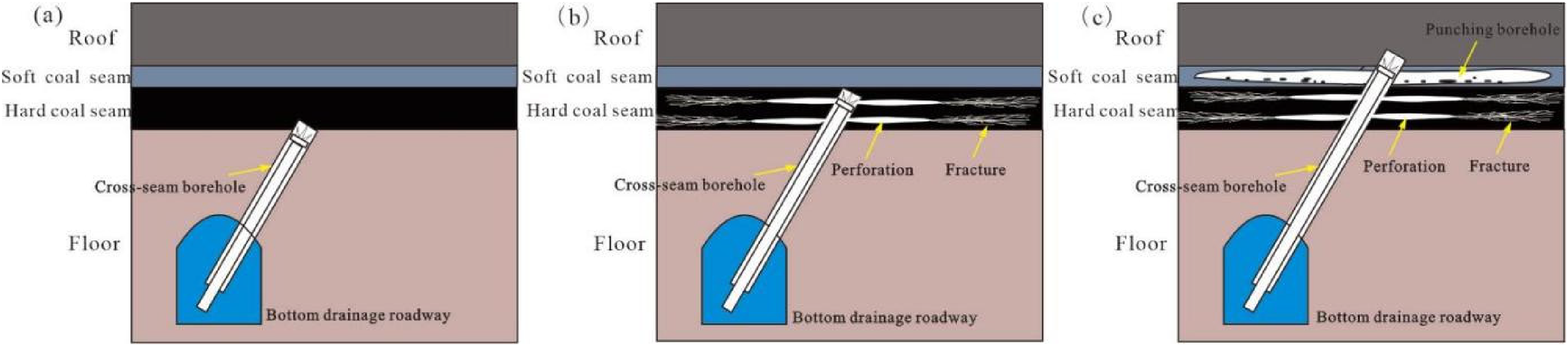
Diagram of the stamping process during drilling, (a) normal drilling, (b) hard coal hydro-jet segmental fracturing to create seams and increase penetration, (c) soft coal hydro-punching to relieve pressure and increase penetration.
Field engineering test and effect evaluation
In the Jiulishan Mine in Henan, Jiaozuo Mining mainly mines the Shanxi Formation II-1 coal seam, the single thick coal seam is difficult to extract and has poor coal seam permeability. Hydraulic punching technology was implemented in the bottom extraction lane to solve low permeability coal seam gas extraction. This was done through seam drilling with an orifice pressure of 8 MPa and a maximum displacement of 200 L/min using a 3 × Φ3 mm nozzle punching bit, a single hole punching time 1.5–2 h, an average coal output of 0.4 t/m, an average single hole coal output of 3 t, a coal seam permeability coefficient after hydraulic punching of 0.200–0.457 m2/(MPa2·d), and an attenuation coefficient of 0.0126–0.0389 d−1. Although this operation has been proved to increase the permeability of the coal, there was still much room for improvement (Yang et al., 2018; Zou et al., 2018). This is because the II-1 coal seam is mainly composed of hard coal with soft coal interlayers. Hydraulic punching alone cannot increase the permeability of the hard coal seam, resulting in low extraction efficiency and poor mining performance. To further improve the coal tunneling speed, we chose to test the integrated drilling and punching technology through the seam of the 16101 bottom extraction lane.
Overview of the test site
The 16101 bottom plate extraction lane is located in the west wing of the 16 mining area in Jiulishan Mine. The coal seam average thickness is about 6.3 m. Soft coal is present at 0.3–0.4 m above the coal seam bottom plate, 1 m below the coal seam top plate, and the rest is hard coal. The coal seam dip angle is 10°, and the coal seam is stable. The coal seam's measured original gas content at the uncovering point is 21.46 m³/t, the gas pressure is 1.62 MPa, the gas adsorption constants are a = 39.06 m3/t and b = 0.7531 MPa−1, and the volume weight of the coal is 1.48 t/m3. The 16101 bottom pumping lane consists mainly of sandstone with a hard rock quality. The 16101 bottom pumping lane has an average vertical distance of 10.5 m from the coal seam floor and a design length of 650 m. An anchor network spray supports the lane 4 m in width and a 3.2 m height. In this bottom rock lane, the lane is implemented through the seam. During the pre-pumping of coal seam gas in the coal lane strip of the return air lane of the 16101 working face, for safe and rapid digging, pre-drainage of the coal seam is performed through boreholes in the floor of the roadway.
Engineering test of the production enhancement process by drilling through layers
Test program
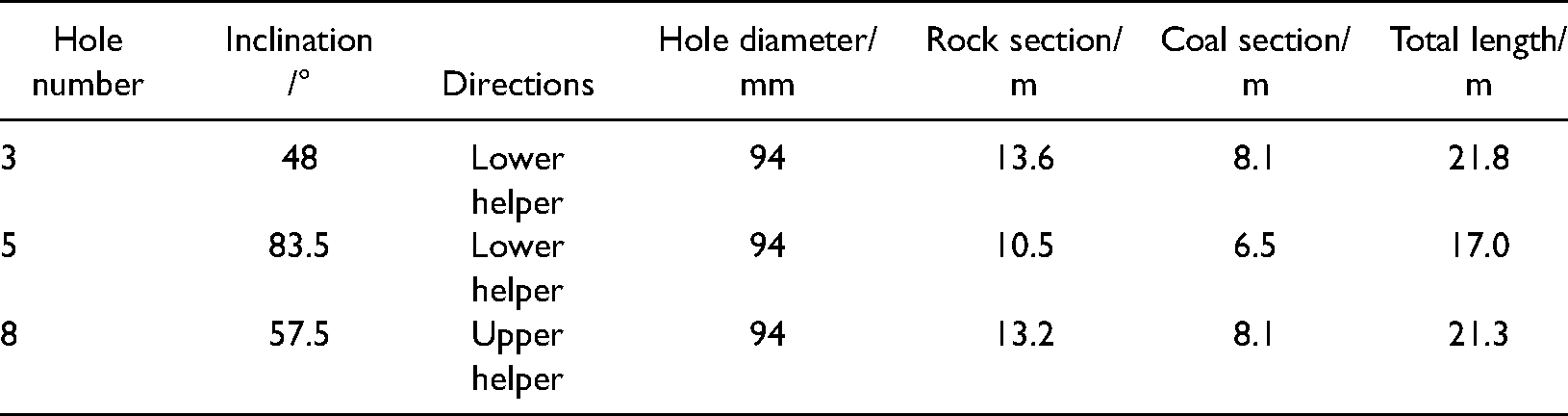
Based on the drill hole design through the 16101 bottom pumping lane layer in the Jiulishan Mine and to avoid the direct mutual disturbance of the hole groups, the 9, 10, and 11 drill sites with a drill site spacing of 6 m were selected as the investigation drill sites. To avoid mutual disturbance between the drill holes at the same drill site, drill holes 3, 5, and 8 were selected as the single investigation drill holes for the different construction holes, as shown in Figure 8. A 94 mm drill bit was selected for the drilling activity. The drilling parameters are shown in Table 1.
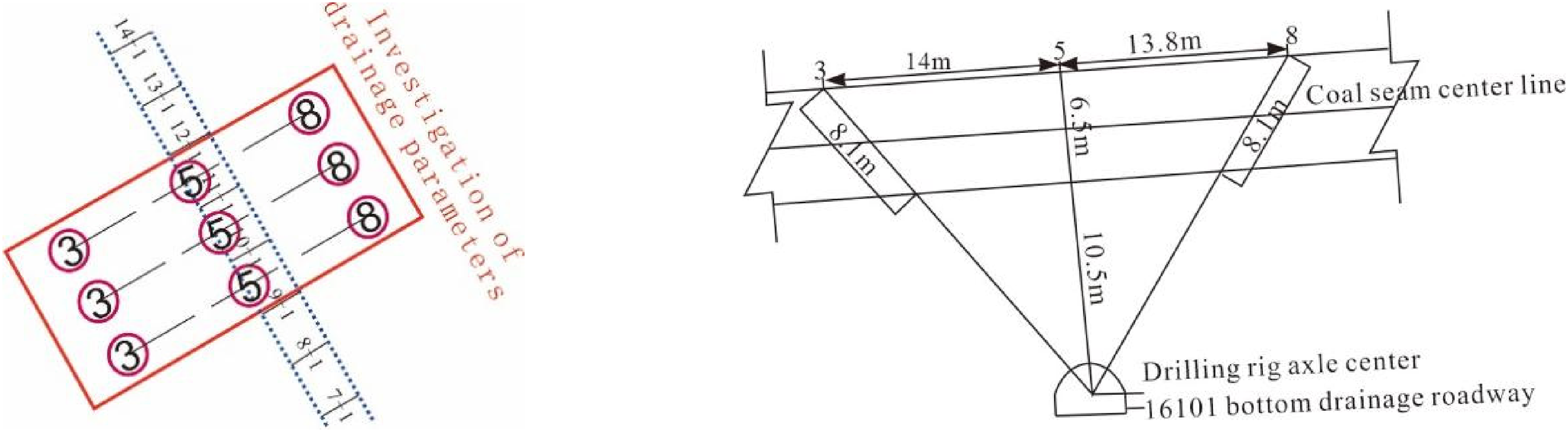
Diagram of the entire test arrangement of the 16101 bottom extraction road at the jiulishan mine.
Design parameters of the construction borehole.
Parameter design
Nozzle parameters selection
Since the II-1 coal seam is soft and hard, hydraulic punching is used in the soft coal section and hydraulic jet fracturing is used in the hard coal section. Therefore, the nozzles cannot be changed midway, and only one nozzle type can be used. The integrated drilling and punching tool provides two types of nozzles, a 3.6 mm diameter (6 mm outside diameter) nozzle and a 2.4 mm diameter (6 mm outside diameter) nozzle, respectively. There are four combination options of nozzle diameter and pump pressure and displacement rating, as shown in Table 2.
Nozzle parameters selection scheme.
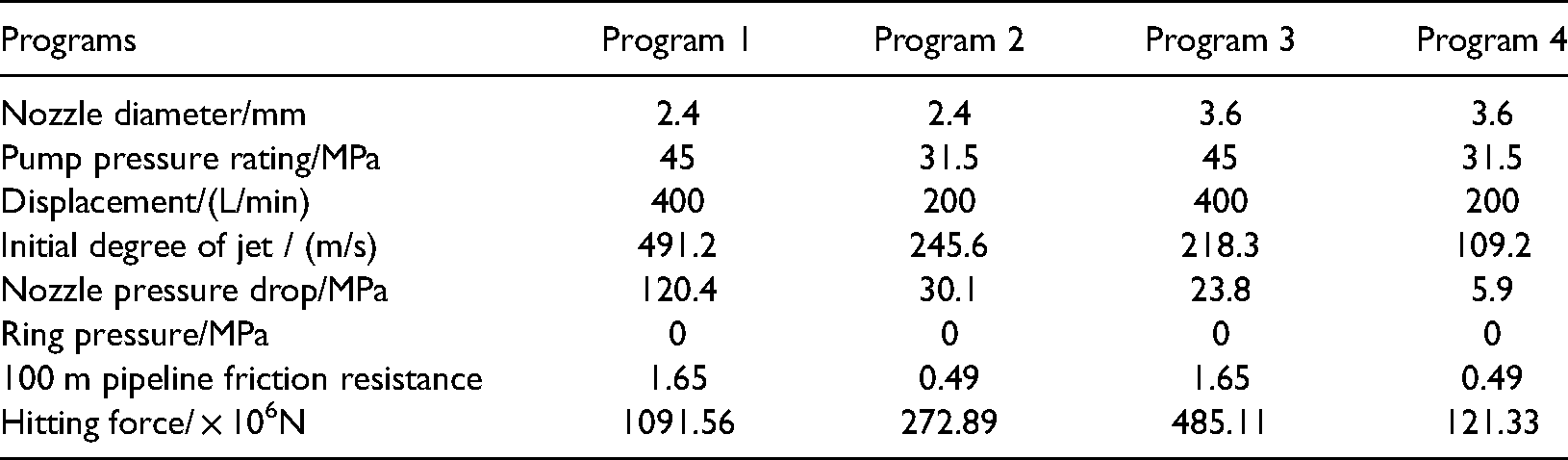
In the same rock specimen's perforation, the nozzle displacement increases, conducive to maintaining the fracture extension and slagging. The injection speed increases, conducive to a larger shot depth of the borehole (Nakao et al., 2021). Considering the conversion efficiency of the jet, it is generally reasonable to use nozzles with a 20–40 MPa pressure drop during hydraulic jet fracturing field construction. The comparison shows that the displacement of the option 3 nozzle is large, the jet velocity is greater than 200 m/s, and the pressure drop of the nozzle is in the range of 20–40 MPa, so the 3.6 mm (6 mm outside diameter) nozzle was selected and the hydro jet injection borehole diameter is about 14.4 mm-18.0 mm (Dai et al., 2019). The pressure in the borehole obtained from equation (3) is 11.92 −18.62 MPa. The II- 1 coal seam fracture pressure is 11.45 MPa and the fracture extension pressure is 11.03 MPa as calculated by Eqs. (6) and (7). The integrated drilling and stamping equipment satisfies the coal-breaking conditions according to Eq. (2).
Water injection estimation
When the jet reaches a certain depth, extending the injection time is pointless and uneconomical. According to the relationship between the hole depth and injection time (Figure 9), the optimal injection length for each punching or pressure operation point is 15 min. The punching or pressing operation points are arranged with a 1 m spacing, and the water amount required for injection in the target hole is estimated according to the coal section length in the target hole and its drilling tool displacement requirements (Table 3). If there is a broken top plate or rock layer in the roadway around the target hole, the water injection volume is reduced appropriately.
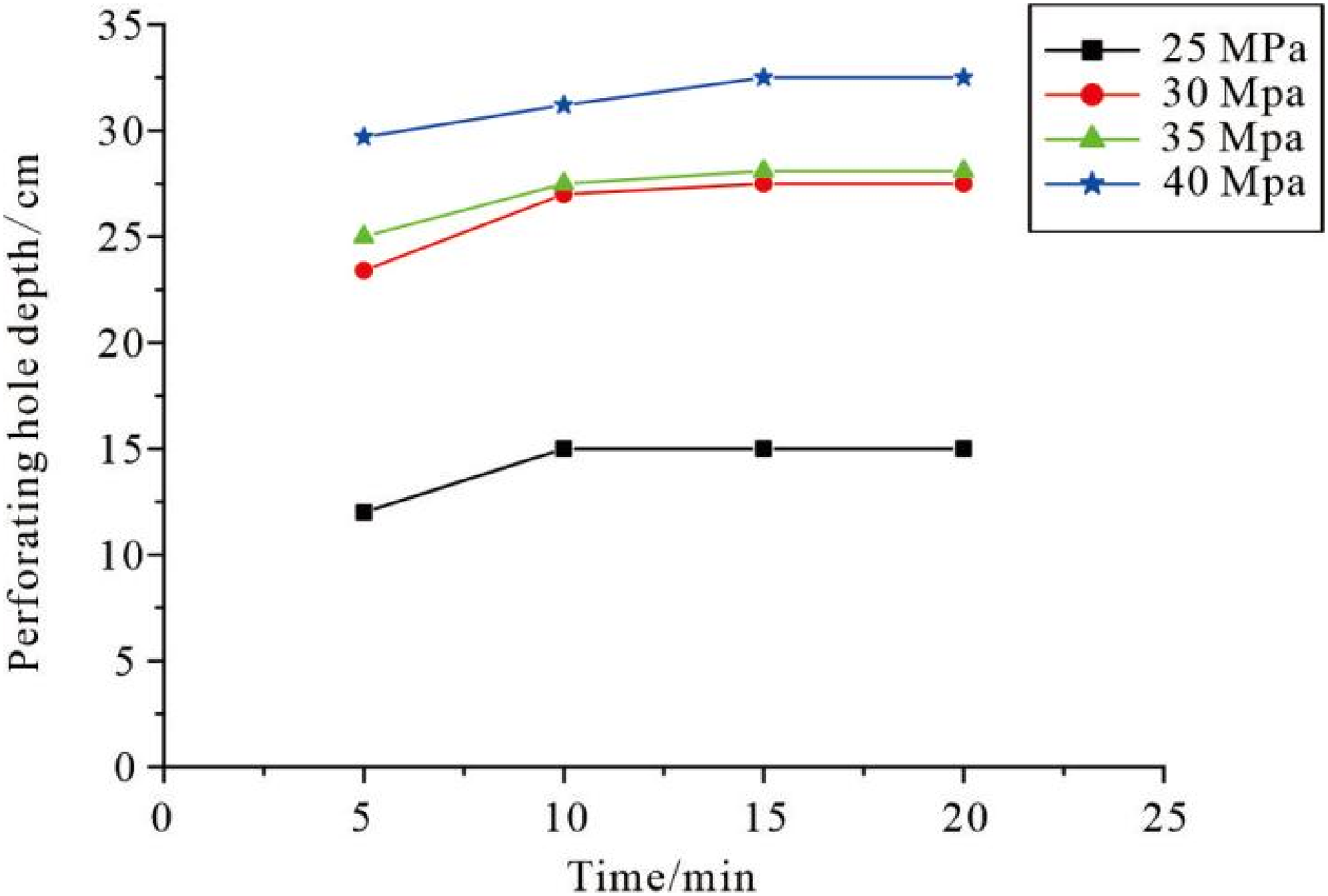
Relationship between perforating hole depth and injection time and pumping pressure (annular pressure = 0 MPa) (Zhao et al., 2020).
Estimation of target borehole water injection.

Test procedure
The stamping process was used to examine the integrated drilling and stamping technology effect on the penetration when retreating from drilling inside to outside after first drilling through 0.5 m of the coal seam. The examination was performed in three cases.
In the Group 9 drilling site, hydraulic injection segmental fracturing in the hard coal section and hydraulic punching in the soft coal section were performed. The coal seam in the test area is soft coal at 0.3–0.4 m above the bottom plate and about 1 m below the top plate; the rest is hard coal. Therefore, the pressure first and punching second strategy was implemented to drill the soft and hard seams with hard coal as the main part. In other words, hydraulic injection segmental fracturing was performed in the hard coal section first, and then the punching operation was performed in the soft coal section. The Group 10 drill site was only hydraulically perforated in the soft coal section, and the hard coal section was directly skipped to examine the integrating drilling and perforation permeability effect in the soft coal section. In the Group 11 drilling site, only hydraulic injection segmental fracturing in the hard coal section was performed, and the soft coal section was skipped to examine the effect of integrating drilling and pressure injection on increasing permeability in the hard coal section.
Test notes
To determine the distribution of the soft and hard coal seam layers, it is necessary to combine the returned slag during the drilling process. Then, these details can be filled in a coal body structure statistics table to provide a basis to select layers for fracturing and punching.
When performing flushing/pressure operations, we recorded in detail the construction pressure, operation time, counter slagging, and the amount of coal output from a single hole. We performed continuous seal hole pumping after retreating from drilling.
Evaluation of the experimental effects
Inspection of the coal output
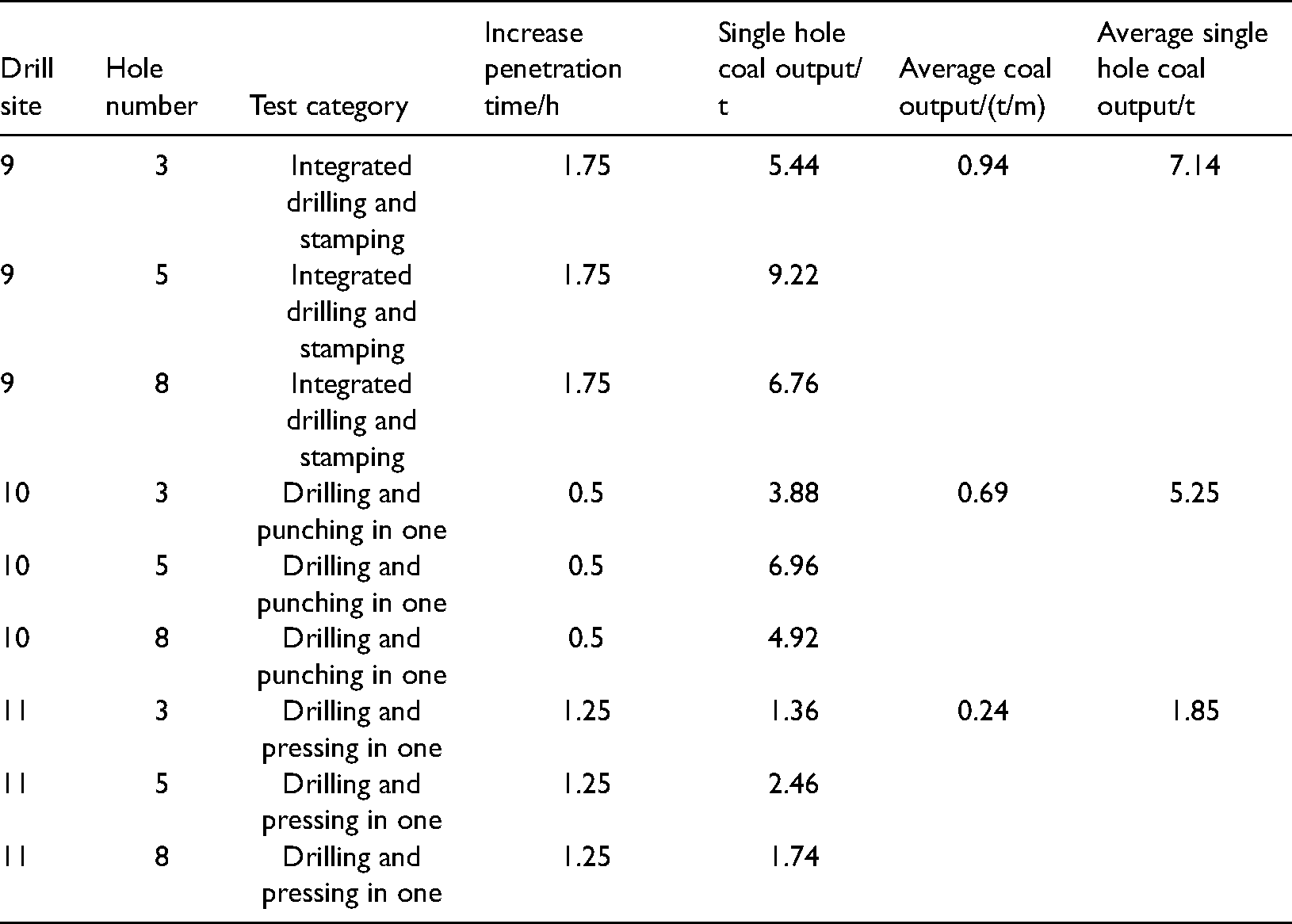
As shown in Table 4, the average coal output from the integrated drilling and stamping test hole is 0.94 t/m, 2.4 times that of traditional hydraulic punching technology. The average coal output of the integrated drill-punch test hole is 0.69 t/m, 1.7 times that of the traditional hydraulic punching technology. The average coal output from the integrated drill-press test hole is 0.24 t/m, which is 0.6 times that of the traditional hydraulic punching technology. The effective length of the coal output from the integrated drill-punch process is 1.3–1.8 m (soft stratification), and the average coal output from the single hole is 5.25 t, equivalent to a hole diameter increase from 94 mm before punching to 793.4–933.2 mm after punching. After integrated drilling and punching, the hole diameter is 1.3 times that of the traditional hydraulic punching technology, but the punching time is shortened by 66–75%. The hydraulic injection fracturing process fractures 14 locations (Table 3), forming 42 shot hole boreholes with an average single borehole output of 0.13 t. The shot hole boreholes formed by hydraulic jet fracturing are 345–539 mm deep.
Coal output statistics.
Examination of the coal seam permeability coefficient
The gas concentration, pure volume of gas extraction, and gas pressure changes over time in three drill holes (10–5, 11–5, and 9-5) were statistically analyzed and compared with the data from traditional hydraulic punching technology (6-5), as shown in Figure 10. The analysis shows that, compared with the traditional hydraulic punching technology, the gas extraction concentration increased by 2.12, 2.19, and 2.23 times, and the pure gas extraction volume increased by 2.15, 3.56, and 4.01 times, respectively, after integrated drilling and punching, integrated drilling and pressing, and integrated drilling and stamping of the boreholes, respectively, which effectively improves the gas extraction efficiency.
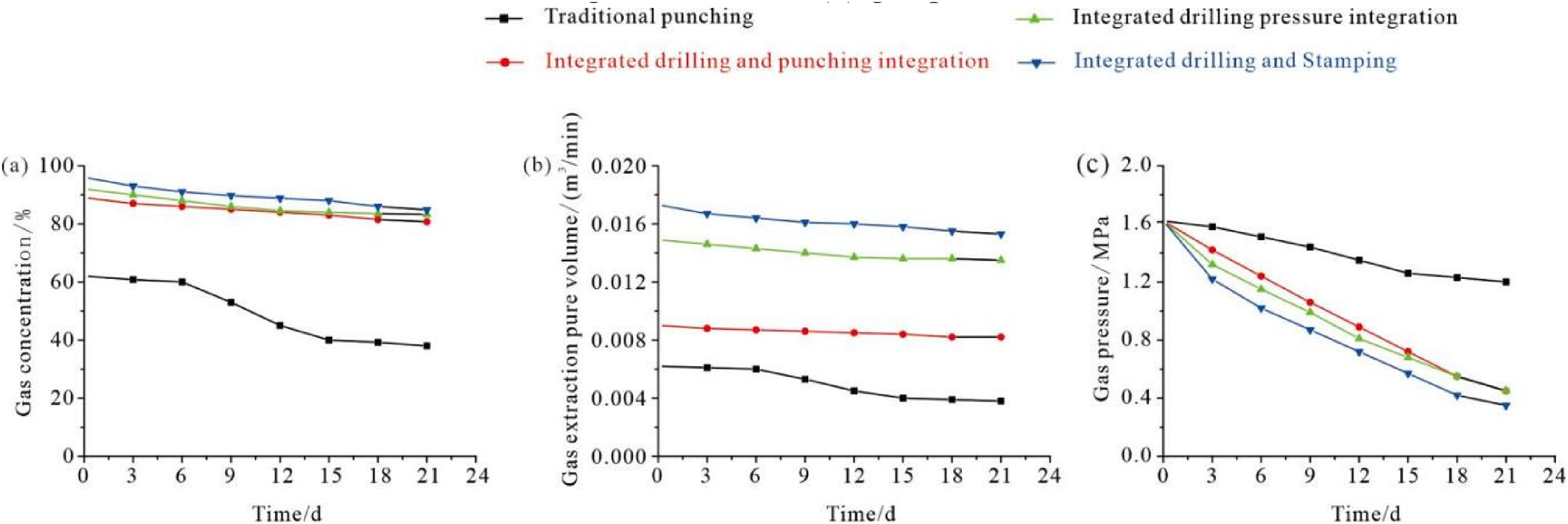
Decay curves of the gas extraction parameters in borehole 5 during the examination cycle, (a) gas concentration, (b) pure volume of gas extraction, (c) gas pressure.
According to the coal seam permeability coefficient formula, the coal seam permeability coefficients after conventional hydraulic punching, integrated drilling and punching, integrated drilling and pressing, and integrated drilling and stamping were calculated to be 0.22 m2/(MPa2·d), 2.02 m2/(MPa2·d), 3.91 m2/(MPa2·d), and 8.2 m2/(MPa2·d), respectively. i.e., the coal seam permeability is 0.006 × 10⁻³ μm2, 0.051 × 10⁻³ μm2, 0.098 × 10⁻³ μm2, and 0.205 × 10⁻³ μm2, respectively. The coal seam permeability coefficient (permeability) results show that, compared with the conventional hydraulic punching technology, the coal seam permeability coefficient (permeability) increased by 9.2, 17.8, and 37.3 times, respectively, after integrated drilling and punching, integrated drilling and pressing, and integrated drilling and punching, and the coal seam permeability increased significantly.
Examination of the gas flow decay coefficient of the borehole
According to the formula for calculating the decay coefficient of gas flow in boreholes, the decay coefficients of gas flow before and after traditional hydraulic punching, integrated drilling and punching, integrated drilling and pressing, and integrated drilling and stamping were calculated to be 2.33 × 10⁻² d−1, 8.72 × 10⁻³ d−1, 6.94 × 10⁻³ d−1, and 5.91 × 10⁻³ d−1, respectively. The results show that, compared with the traditional hydraulic punching technology, the extraction volume was relatively stable and decayed slowly after integrated drilling and punching, integrated drilling and pressing, and integrated drilling and stamping.
Conclusion
This paper systematically analyzes the mechanism of gas recovery enhancement through integrated drilling and stamping technology, and details the process of gas recovery and production enhancement in integrated drilling and stamping equipment and penetration wells. This study applied and tested the integrated drilling and stamping technology on penetration boreholes in the 16101 bottom pumping lane in the Jiulishan Mine, JiaoZuo, Henan. The main conclusions are:
Integrated drilling and stamping technology is a new technology for increasing gas extraction and production. This technology integrates drilling, hydraulic jet fracturing, and hydraulic punching, increasing coal seam permeability. Static pressure water is used during drilling, and high-pressure water is switched directly during stamping. When a high-speed water jet from the nozzle impacts hard coal, a perforation hole is formed in hard coal, and cracks are produced in front of the perforation hole achieving hydraulic jet fracturing and increasing permeability. A large diameter hole is formed when impacting soft coal, and pressure relief is achieved by hydro-jetting to increase capacity and permeability. The integrated drilling and stamping equipment consists of a conventional drilling rig, integrated drilling and stamping drilling tools, a high-pressure water pump, a water supply line, and an anti-jet device. The integrated drilling and stamping drilling tools include a high-pressure water braid, a high-pressure sealing drill pipe, an anti-blocking short joint, a drilling and stamping short joint, and a conventional drill bit. A successful engineering test of the integrated drilling and stamping technology in the 16101 bottom pumping lane of the Jiulishan Mine, Jiaozuo, Henan Province, China, significantly improved the extraction effect.
Footnotes
Declaration of conflicting interests
The author(s) declared no potential conflicts of interest with respect to the research, authorship, and/ or publication of this article.
Funding
This research is supported by National Natural Science Foundation of China (No. 41872176), Key scientific and technological projects of Henan Provincial Department of Science and Technology (NO. 212102310599); Doctor funding project of Henan Polytechnic University (No. B2018-10).
