




Abstract
The effective thermal conductivity (ETC) model of loose residual coal in goaf is a method to study the heat transfer law of spontaneous combustion in goaf. In order to study the effect of coal particle size and ambient temperature on heat transfer, coal samples of different sizes were taken from the FuSheng (FS) mine, and the void fraction, the thermal conductivity (TC) of the residual coal under different ambient temperature were tested. Additionally, four types of ETC models of loose residual coal in goaf were obtained and the average relative errors of the TC were analyzed. The results showed that the void fraction, the coal particle size and ambient temperature have different effects on the spontaneous combustion of the residual coal. The effect of coal sample size on the heat transfer is 100 times that of the ambient temperature. The changes in the ETC and average relative error of the different models were consistent. The heat transfer in the spontaneous combustion of residual coal has a direct relationship with the spatial distribution and heat transfer modes of the loose residual coal in the goaf.
Keywords
Introduction
After coal mining, residual coals with different particle sizes are distributed in goaf, forming a typical porosity–void dual-porous medium (Wei et al., 2016). As one of the main disasters threatening coal mine safety production, spontaneous combustion of residual coal in goaf is the result of the interaction between coal oxidation and heat transfer (Zheng et al., 2021). In the early stage of the coal–oxygen reaction, the intensity of the coal oxidation is lower than that of heat transfer, that is, the heat released by the coal–oxygen reaction is lower than that dissipated to the environment, resulting in the heat loss during the transfer process. As the reaction proceeds, the intensity of the coal oxidation strengthens, thus resulting in the gradually increase of heat release (Shi et al., 2021a). When the heat release is greater than the heat loss, the heat gradually gathers and further cause spontaneous combustion (Chen et al., 2015). As one of the thermophysical parameters characterizing the heat transfer ability of a research object (Deng et al., 2017a), the TC can well explain the heat transfer law in the process of spontaneous combustion of residual coal in goaf. Moreover, research on the TC of residual coal in goaf has an important theoretical significance to enrich the heat transfer theory of porous media. Therefore, it is necessary to conduct an in-depth research on this topic.
Currently, the research on TC of loose coal is mainly the experimental tests and their corresponding analyzes. Scholars have developed various experimental devices based on different experimental principles to test the TC of loose coal and analyze the heat transfer characteristics of the loose residual coal in goaf. The guarded parallel–plate technique has been employed for an accurate measurement of the TC of a black coal sample (Ada et al., 2018). The characteristic parameters of loose coal was tested by designed an integrated experiment system, and the experimental results confirmed the reliability of the test system (Yang et al., 2018). The TC measurements on coal slags was performed by using a nonstationary hot-wire method and analyzed the relationship between the microstructure and the TC of the coal slags (Wang et al., 2019). Based on the heat transfer model of an infinite large plate and an infinitely long cylinder, the temperature rise value was tested using a loose coal thermophysical property test system and the MATLAB programing software is employed to inversely calculate the thermophysical parameters of the loose coal (Qin et al., 2019). The variation law of the weathered coal TC on spontaneous combustion oxidation was studied by using the laser flash technique, and then combined the differential scanning calorimetry and microcalorimetry (C80) to study the thermal effect during the low-temperature oxidation of weathered coal (Song et al., 2021). From the above analysis, we found that the test principle of existing TC experimental devices is mostly based on 1D heat conduction, while the spontaneous combustion of the residual coal in goaf is the result of oxidation heat transmission in the 3D direction.
Another group of scholars tested the TC of loose coal and analyzed the relationship between the TC and different factors including the physical properties of the residual coal and external environments. First, the thermal physical properties of three coal samples with different metamorphic degrees at low temperatures were tested using an LFA457 TC instrument, and a gray correlation analysis between the different thermal physical parameters and the fixed carbon, volatile matter, ash, and moisture was conducted (Ren et al., 2019). The thermal properties of bituminous coal was tested by using the laser–flash apparatus LFA457 and found that the TC of the loose residual coal in goaf is affected by external environments such as the porosity, void fraction, temperature, particle size, and water (Wen et al., 2015). The meso-scale composition and structures in coal have different degrees of influence on their macro bulk ETC under various conditions, including the fluid (water and air) composition, face porosity and its quadrant anisotropy degree, surface morphology and face porosity, and mineral composition (species and content of mineral) of the solid skeleton or matrix (Chu et al., 2018). The TC expressions for loose coal was derived based on the simulation method of the thermal resistance and found that the change in the coal TC under specific conditions is mainly affected by the void fraction (Wang et al., 2010). The temperature and particle size of loose coal have an important impact on the heat transfer of coal (Meng et al., 2019). The TC presents a slow increment at first but then rapidly increases with the increase of temperature (Deng et al., 2017b). The increase in the temperature slightly improves the TC of coals with varying degrees in the temperature range of 30–150 °C, while water with a higher TC than air contributes to the TC of loose coal (Shi et al., 2020).The trend of the TC first increases and then decreases with the change of temperature, and introduced a modeling method for the thermal properties of coal and temperature (Deng et al., 2017a, 2018). Clearly, although many factors affect the TC of residual coal in goaf, there are few studies on the relationship between these influencing factors and the ETC model of porous medium. Moreover, the ETC of the loose residual coal in goaf cannot be simply determined by the combination of experimental conditions or the superposition of different factors.
At present, the main research methods on the ETC model of porous media are to reasonably determine the physical model based on the structural characteristics of porous materials, and further obtain the ETC model of porous media. Hence, The ETC models based on the constituent phases of porous media have been the important basic methods for studying the heat transfer law of porous media. The ETC of porous media is closely related to the TC, volume ratio, and distribution of each component (Zhang and Wang, 2017). Therefore, a multiphase media is often simplified into several typical phase to calculate its TC. Goaf is a porous medium composed of coal particles with different sizes (Onifade and Genc, 2020). However, there are few reports on the ETC model of porous residual coal in goaf. In addition, The particle size and void distribution in goaf are extremely complex and irregular (Zheng et al., 2021), which makes it difficult to determine the physical structure characteristics of goaf and thus further also limits the development and application of fractal theory in the ETC model of loose residual coal in goaf under existing experimental conditions (Wang et al., 2010). It is worth mentioning that the ETC model of porous media can effectively avoid this problem. However, It is necessary to further investigate and verify whether the models are suitable for solving the ETC of residual coal in goaf. Besides, compared with the blank research caused by the failure to establish the relationship between porous residual coal in goaf and ETC, the influence of model simplification can be ignored. Hence, it is feasible to establish the ETC model of porous residual coal in goaf according to the structural characteristics of goaf.
In our work, coal samples were collected from below the hydraulic support in the working faces of the FS mine. The void fraction of residual coal particles with different sizes and the TC of the residual coal with different particle sizes at different temperatures were tested to analyze the heat transfer characteristics of the residual coal in goaf. Moreover, four basic ETC models of the porous media (including series model, parallel model, ME model, and EMT model) are simplified based on the spatial distribution of goaf to obtain the different ETC models of the porous residual coal in goaf, then the ETC was further calculated. In addition, the average relative error was analyzed between the ETC calculated by different models and the TC tested by experiment, providing theoretical support for constructing the physical model and the ETC model of loose residual coal in the goaf.
Experimental coal samples, methods, and results
Preparation of coal sample
Coal samples from FS Mine Co., Ltd of Lu‘an Group in Shanxi Province were selected as the research object. The coal samples below the hydraulic support in the working faces of the FS mine were collected. Then, the coal samples’ weight of about 50 g were obtained by 10 mm and 13 mm filtration sieve to test the apparent relative density of coal. Besides, a sufficient amount (about 2,000 ml) of coal samples with different particle sizes were obtained by 1 mm, 3 mm, 6 mm, 8 mm, 10 mm, 25 mm, and 30 mm filter sieves for the experimental test of void fraction and TC. These sieved coal samples were closely packaged with a plastic woven bag and transported to the laboratory. Table 1 lists the basic parameters of the experimental coal sample.
Experimental coal sample parameters.

Experimental method and results
Test of void fraction
The void fraction of the coal samples with different particle sizes was tested in the laboratory. The test process is as follows: ① In accordance with GB/T6949–2010 standards, the FS coal sample was selected to test its apparent relative densities (ρARD) (Chinese Standard, 2010). ② Coal samples with particle size ranges of <1, 1–3, 3–6, 6–8, and 8–10 mm were prepared through 1, 3, 6, 8, and 10 mm sample screening, respectively. ③ The coal samples with different particle sizes were gradually placed into a beaker with a volume of 1,000 ml, respectively until the coal samples were in line with the bottle mouth. ④ The mass m of the coal samples in the beaker was weighed using an electronic balance. ⑤ The void fraction of coal samples with different particle sizes was calculated using equation (1). Table 2 lists the results.
Void fraction εw of residual coal in goaf.

Test of TC
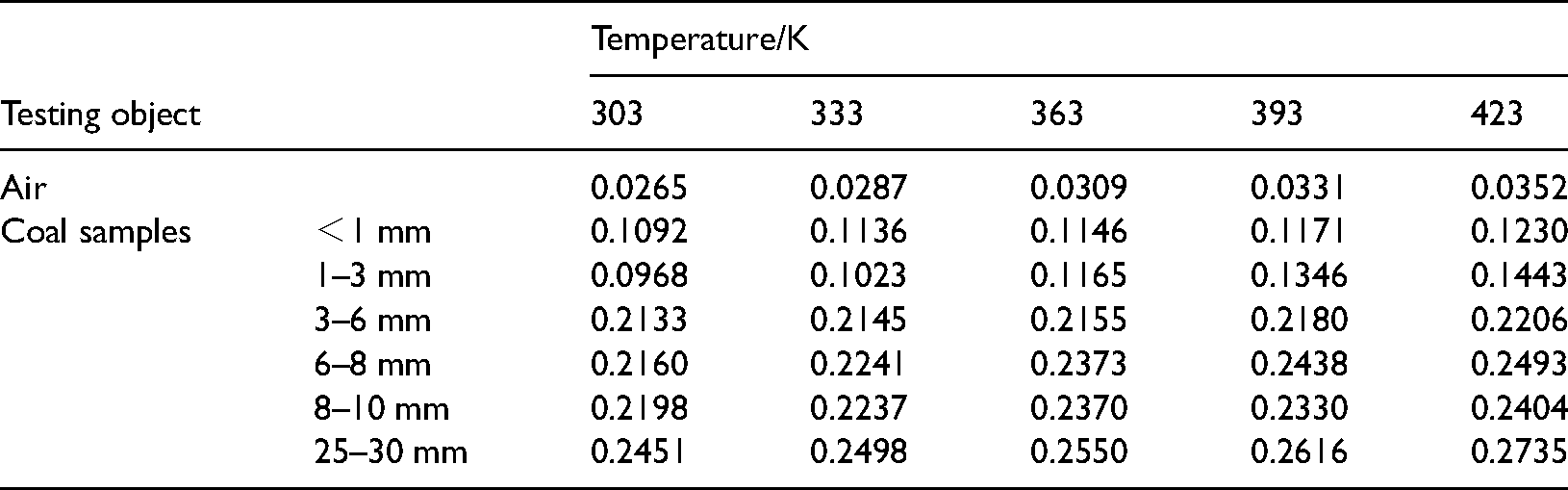
The experimental instrument was the TC3200 solid TC tester (Xi‘an Xiatech Electronics Co., Ltd). The specific experimental test steps are as follows (Figure 1): ① The coal samples with different particle sizes (<1, 1–3, 3–6, 6–8, 8–10, and 25–30 mm) prepared by screening were placed in the lower closed area of the sample box. When the particle size of the coal sample was >3 mm, the gap between the coal samples was filled with a thermally conductive silica gel to ensure the smoothness of the sample surface. ② The TC sensor and the upper sample box were installed, and the coal sample was filled synchronously until the sample box was filled. The metal block was placed to ensure a full contact between the coal sample and the sensor. ③ The instrument was connected to the computer, the test software was opened, and the temperature control program was adjusted until the temperature fluctuation was less than ± 1 °C. ④ The TC of the coal samples with different particle sizes was tested at 303, 333, 363, 393, and 423 K, and the data were collected and collated, as shown in Table 3.
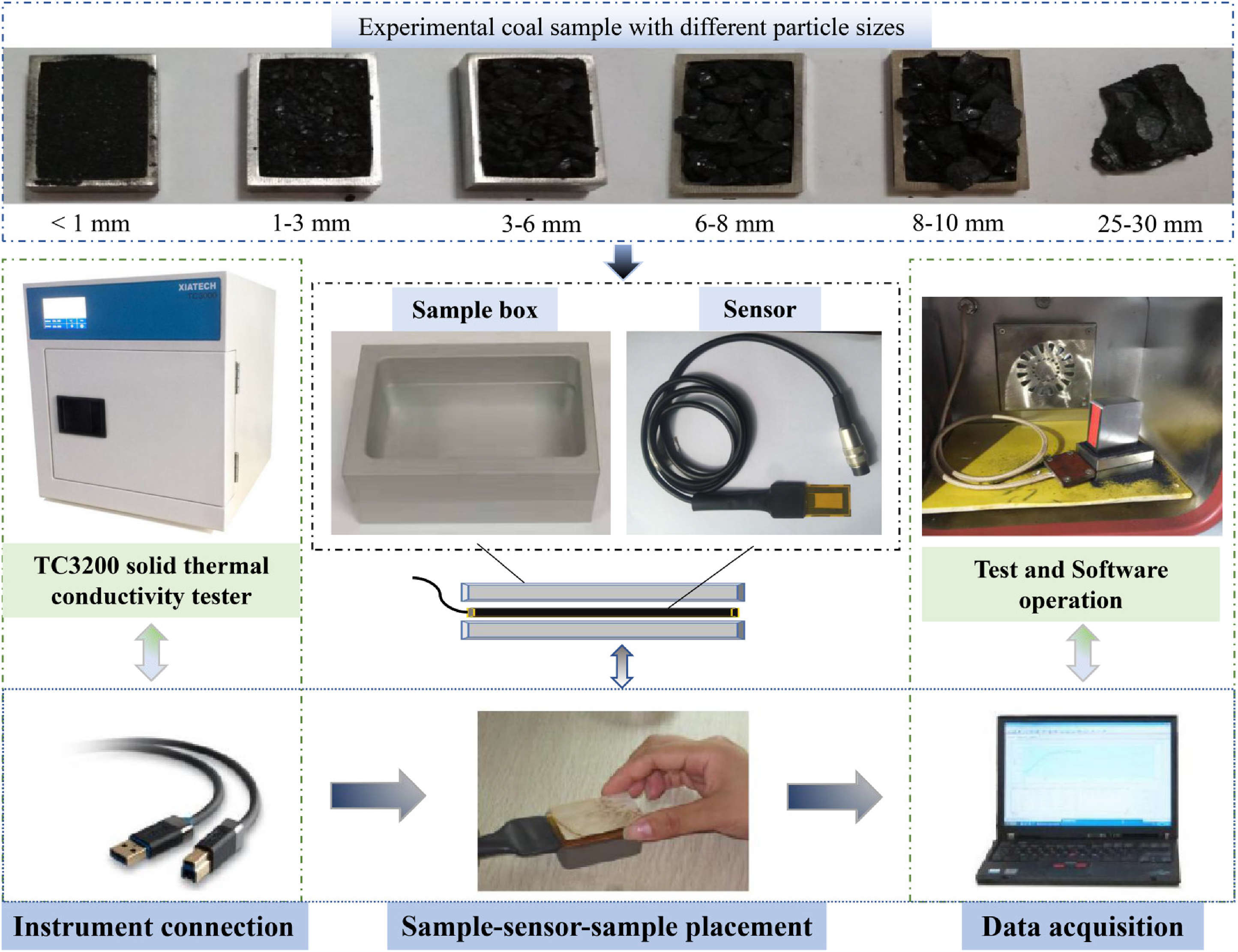
Measurement of TC of coal samples with different particle sizes.
Tc measurement results (W/(m·K)).
Experimental analysis
Analysis of single-factor heat transfer characteristics
(1) Heat transfer characteristics of residual coal with different particle sizes
To analyze the influence of coal particle size on the heat transfer of residual coal in goaf, the relationship between the TC of the coal sample with different particle sizes and ambient temperature are plotted and fitted, as shown in Figure 2.
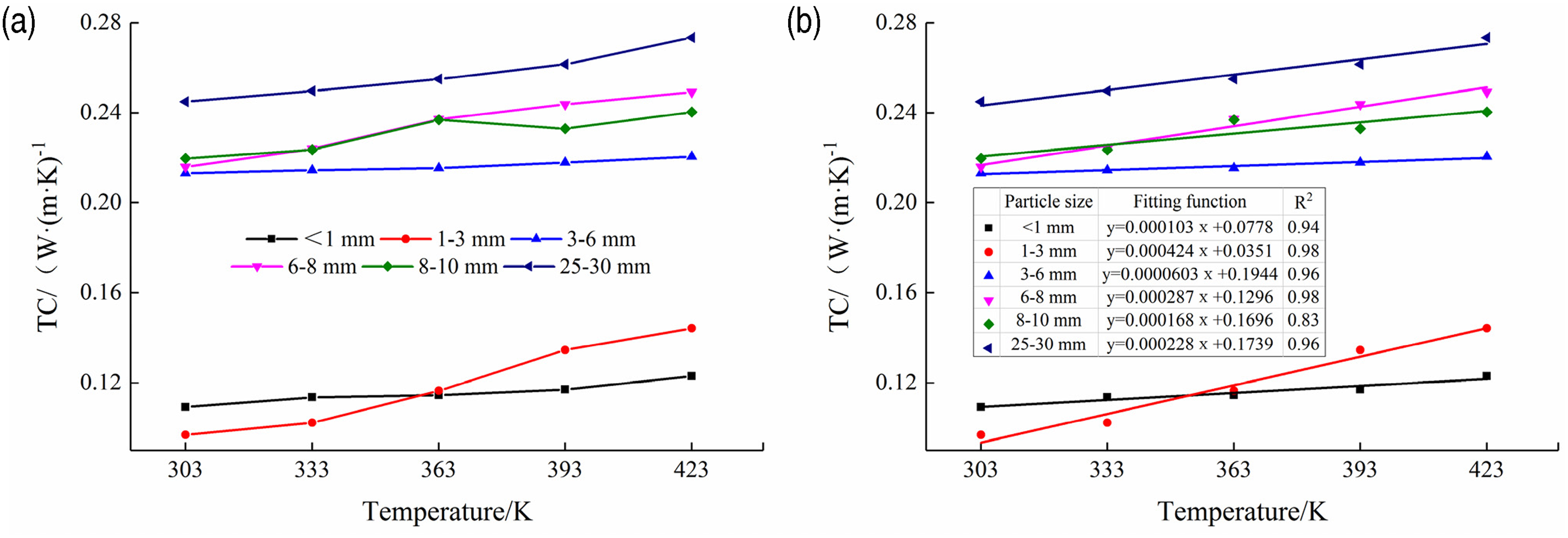
Relationship between TC of coal samples with different particle sizes and ambient temperature.
From Figure 2(a), we find that the TC of coal samples with different particle sizes increases linearly with the increase in the temperature; however, the overall growth rate is relatively low. Among the coal samples with different particle sizes, the increase in the TC of the coal samples within a particle size range of 3–6 mm is most evident, indicating that the 3–6 mm is the key particle size range of heat transfer in the spontaneous combustion of residual coal in goaf, and measures should be taken to control the production of it in the process of coal mining.
Figure 2(b) shows that the TC of the coal samples with different particle sizes has a good linear relationship with the ambient temperature, and the growth rate of the TC of coal samples with different particle sizes is the same. The TC of coal samples with a particle size range of 1–3 mm increases most rapidly, and its growth rate is 4.24 × 10⁻⁴, indicating that the heat transfer of coal samples with a particle size range of 1–3 mm is most significantly affected by the ambient temperature.
(2) Heat transfer characteristics of residual coal at different ambient temperatures
To analyze the influence of ambient temperature on the heat transfer characteristics of the residual coal in the goaf, the relationship between the TC of the coal sample at different temperatures and particle sizes are plotted and fitted, as shown in Figure 3.
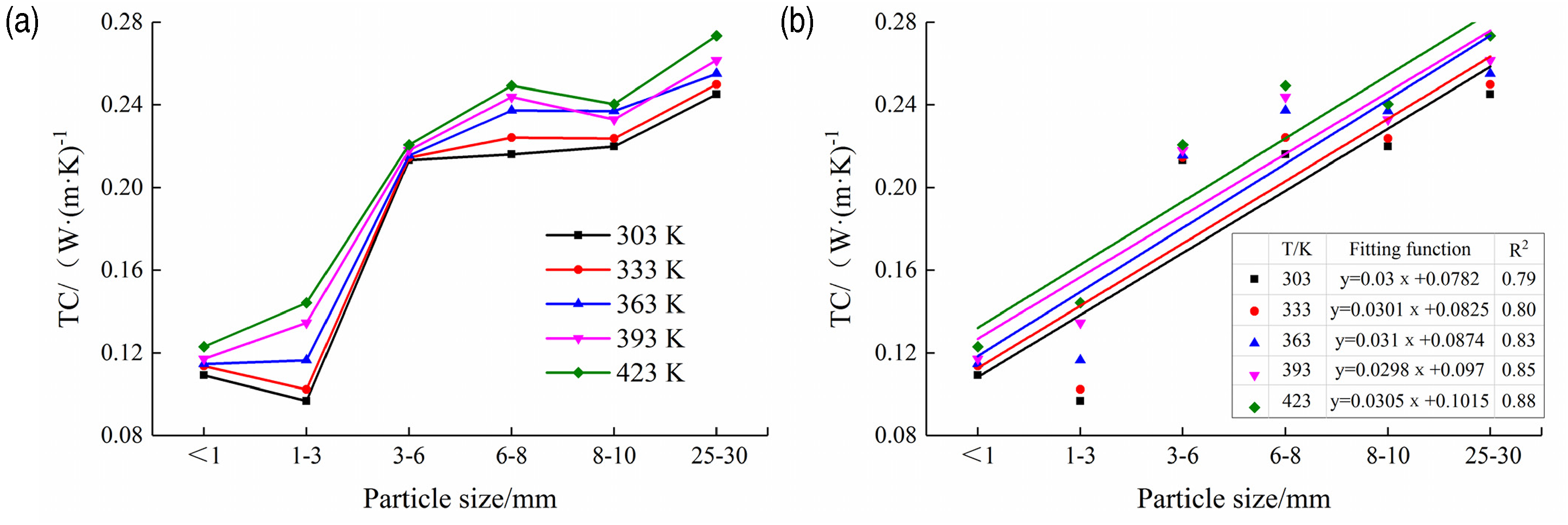
Relationship Between TC of coal samples at different temperatures and particle size.
From Figure 3(a), we find that the growth trends in the TC of coal samples at different ambient temperatures with the change of particle sizes are slightly different, and the comprehensive performed linear growth and the average slope of the fitting curve are 0.03 (Figure 3(b)). In other words, the growth rate of the TC of the coal samples at different ambient temperatures is the same, indicating that the influence of temperature on the TC of the coal samples is relatively limited, and the effect is the same.
However, the growth rate of the TC of the coal samples at different temperatures is evidently different in different particle size ranges (Figure 3(a)). The TC of the coal samples at different temperatures shows evident changes when the particle size is 3 mm as the boundary, indicating that coal samples with different particle sizes play different roles in the spontaneous combustion process. The TC of the coal samples with a particle size less than 3 mm is small, that is, the heat transfer rate of the coal samples is low, which is manifested as the accumulation of heat released by the coal–oxygen reaction. On the contrary, the TC of the coal samples with a particle size greater than 3 mm increased significantly, which represented the transfer and dissipation of heat released by coal-oxygen reaction.
From Figures 2(b) and 3(b), compared with the growth rate of the TC of coal samples at the different ambient temperature, the growth rate of the TC of coal samples with different particle sizes is more evident. The average growth rate of the coal samples TC with coal particle size is 3.028 × 10⁻². However, the average growth rate of the coal samples TC at ambient temperature is significantly reduced to 2.5406 × 10⁻⁴. A comparison shows that the growth rate of the TC with coal particle size is 100 times that of the ambient temperature.
Analysis of multiple-factor heat transfer characteristics
The coal particle size and ambient temperature have a combined influence on the heat transfer in the process of coal–oxygen reaction, which affects the spontaneous combustion of the residual coal in the goaf (Pan et al., 2020; Qin et al., 2020). Figure 4 shows the relationship between multiple-factor (including the coal particle size and the ambient temperature) and the TC of the residual coal.
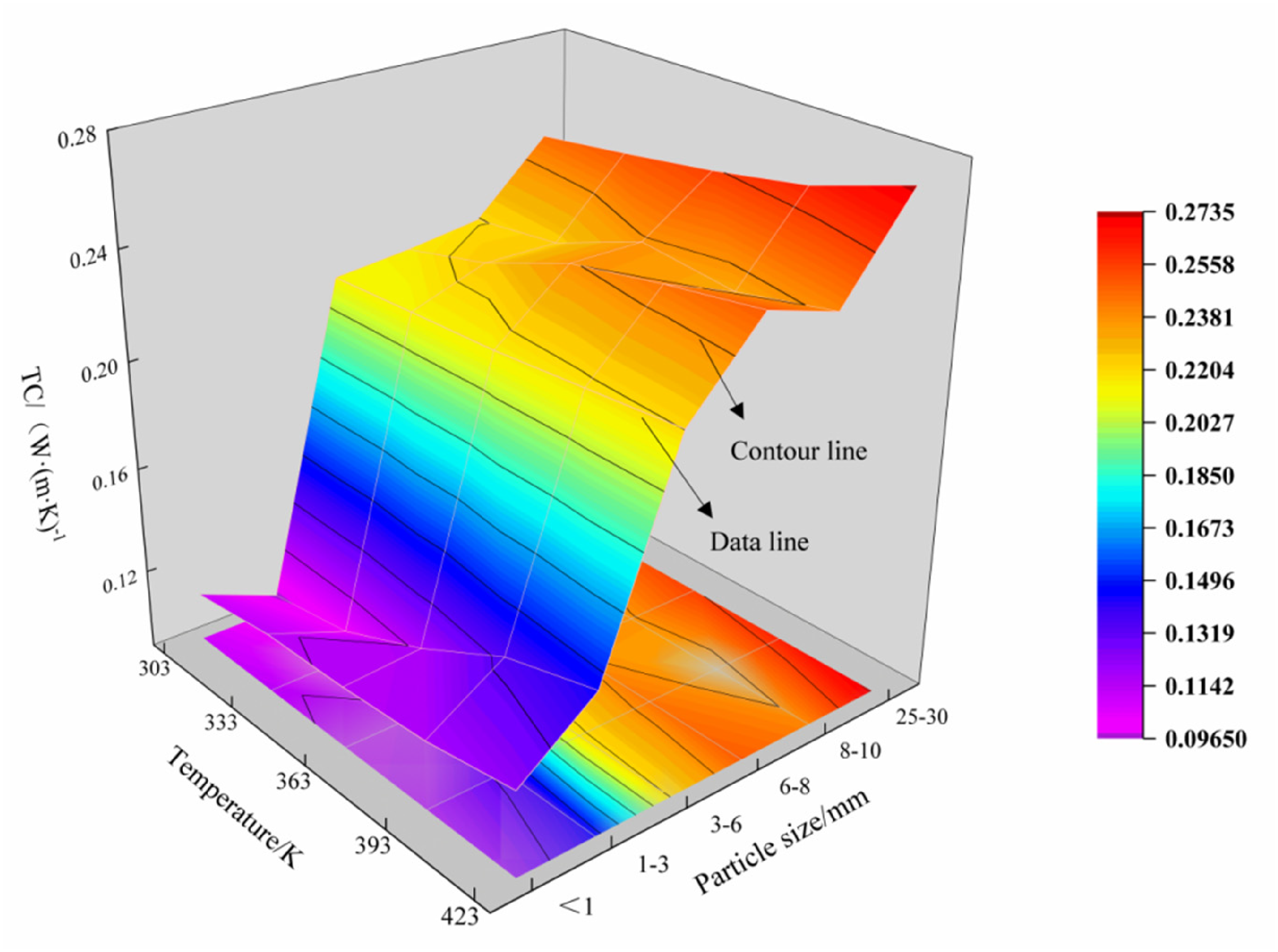
Relationship between the coal particle size-the ambient temperature and the TC of residual coal.
Figure 4 shows that with the increase in the coal particle size and ambient temperature, the overall change trend of TC of residual coal in goaf increases. Based on the slope of the surface, the growth rate of the TC of coal samples with different particle sizes is much greater than that of the coal samples at different temperatures.
Based on the TC data line shown in Figure 4, with the increase in the coal particle size, the TC of the coal samples at different temperatures shows an increasing trend, and the increase is most evident in the range of 3–6 mm. When the coal particle size is less than 3 mm, there was heat accumulation. The smaller coal particles ensure that the coal–oxygen reaction is fully conducted, and a lower TC ensures the accumulation of the heat released by the coal–oxygen reaction. When the particle size is greater than 3 mm, there is heat transfer. This is because of the presence of voids between the large particles. These voids not only provide channels for the coal–oxygen contact, but also increase the thermal convection of the air in the voids (Shi et al., 2021b), and the higher TC further promotes the heat transfer. This is consistent with the conclusion that the smaller the particle size of the coal sample, the higher the heat release rate of the coal–oxygen reaction, and the easier the spontaneous combustion of the residual coal in goaf.
Based on the TC contour line in Figure 4, with the increase in the ambient temperature, the TC of the coal samples with different particle sizes increases gradually, and the most evident increase is in the range of 1–3 mm. This shows that the influence of ambient temperature on the spontaneous combustion of the residual coal is to ensure the effective transfer of the heat released by the coal–oxygen reaction. The TC changes little with the ambient temperature, which reduces the loss in the heat transfer process and promotes the spontaneous combustion of the residual coal. This is consistent with the conclusion that the higher the temperature, the lower the heat loss rate, and the higher the chances of the spontaneous combustion of the residual coal in goaf.
Therefore, the coal particle size and ambient temperature have a combined influence on the heat transfer in the residual coal spontaneous combustion in goaf. However, the effect is opposition. The smaller the particle size, the higher the ambient temperature, which shows the heat accumulation in the process of coal spontaneous combustion. On the contrary, the larger the particle size of the coal sample, the lower the ambient temperature, which presents the heat loss in the process of the spontaneous combustion of coal.
Model calculation and error analysis of ETC
ETC model of loose residual coal in goaf
Series and parallel models
The research object of the series and parallel models of the loose residual coal in goaf is a heterogeneous model formed by the superposition of the residual coal particles with different sizes and voids with a layered structure. The difference between the two models is the way heat flows through the layered structure. The heat transfer of the series model is that the heat flow passes through each layer in turn, while the heat transfer of the parallel model is that the heat flow passes through different structures simultaneously (Zhang and Wang, 2017). Figure 5 shows the schematic of the series and parallel models of the loose residual coal in goaf.
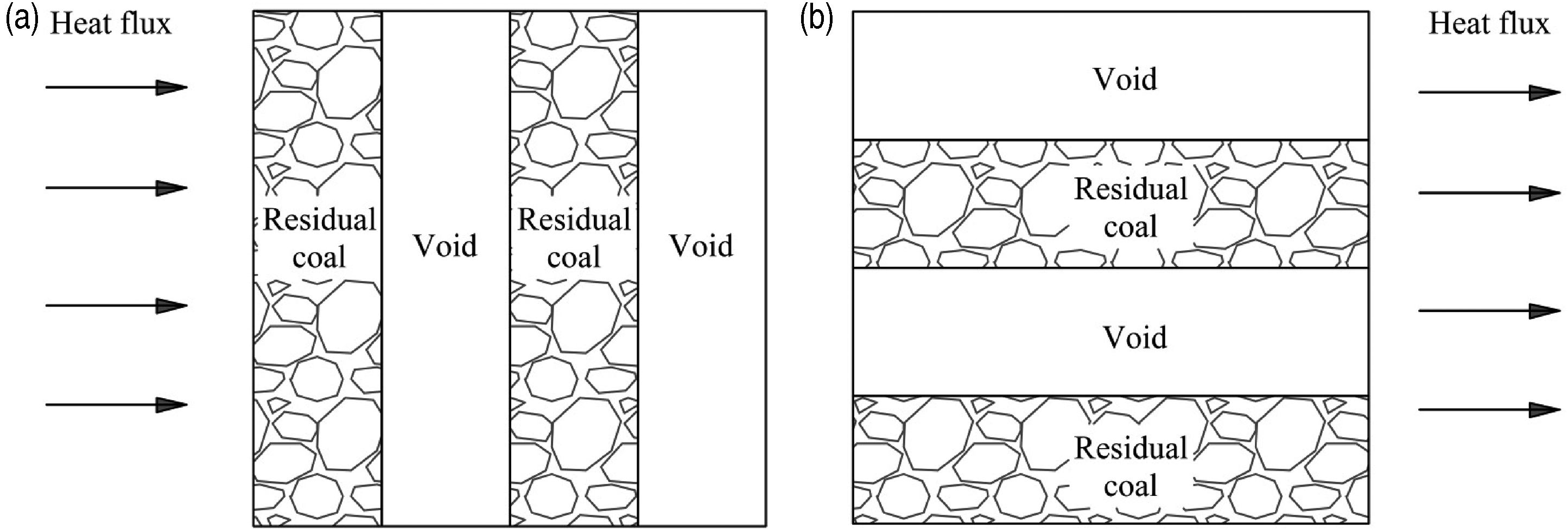
Series and parallel models of the loose residual coal in goaf.
The equations of the ETC series and parallel models of the loose residual coal in the goaf are (2) and (3), respectively.

Maxwell–Eucken model
The ME model of the loose residual coal in the goaf assumes that the residual coal with different sizes are homogeneous spheres and have no interaction, which are irregularly dispersed in the goaf. The model only considers the influence of the voids on the heat transfer of the residual coal spontaneous combustion in goaf. Figure 6 shows the schematic. Based on the TC of the dispersed and continuous phases, the ME model is divided into ME1 and ME2 models (Wang et al., 2017).
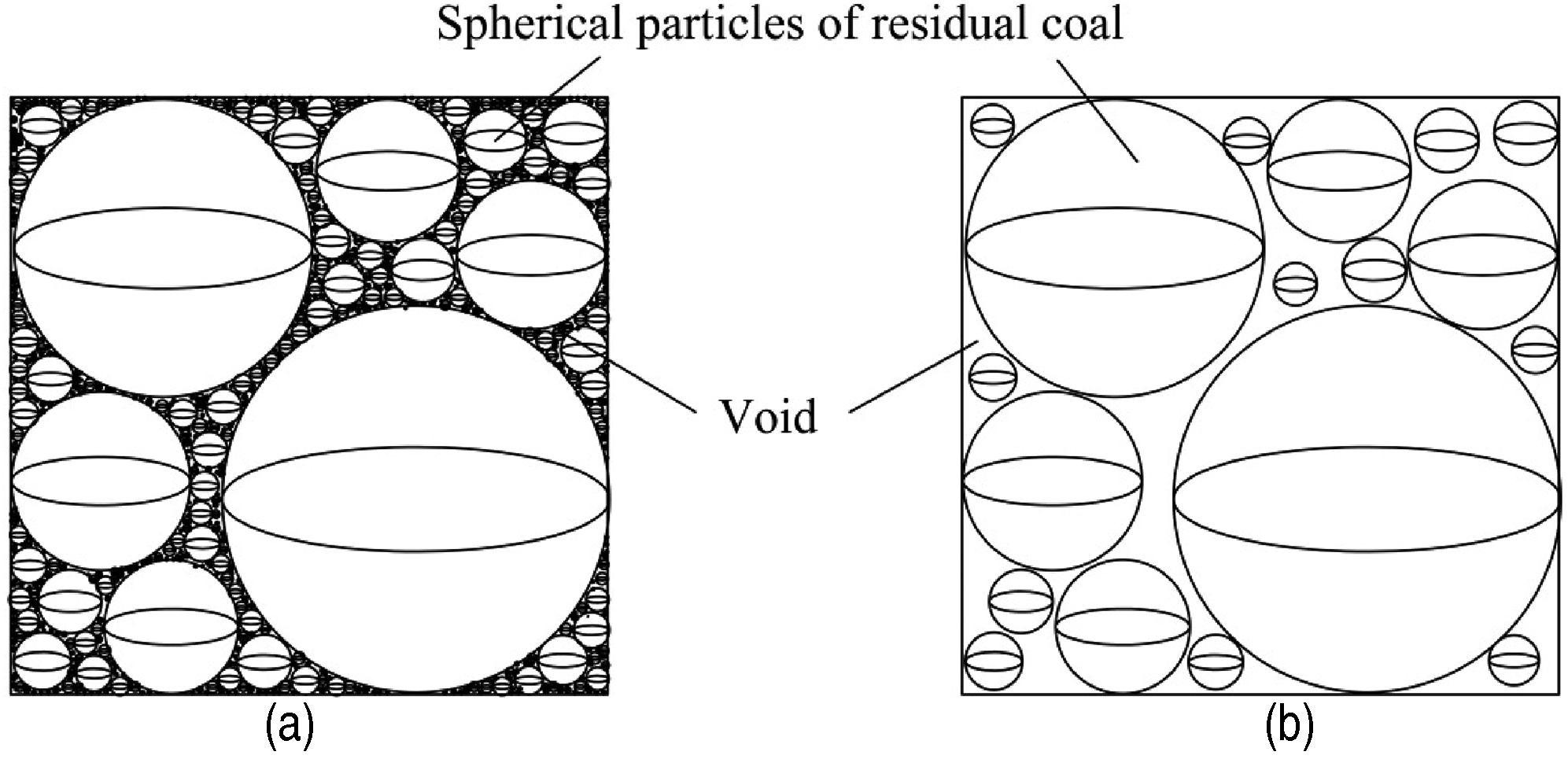
Me model of the loose residual coal in the goaf.
When the TC of the continuous phase is greater than that of the dispersed phase, the ME1 model is selected to calculate the ETC of the residual coal in goaf. For ME1 model, the residual coal particles in goaf is the continuous phase, and the air in the void is the dispersed phase.
According to equation (4), the ETC of the ME1 model of loose residual coal in goaf is obtained.
When the TC of the dispersed phase is greater than that of the continuous phase, the ME2 model is selected to calculate the ETC of the residual coal in the goaf. For ME2 model, the residual coal particles in goaf are the dispersed phases, and the air in the void the continuous phases.
According to equation (5), the ETC of the ME2 model of the loose residual coal in the goaf is obtained.
Effective medium theory (EMT) model
The EMT model (Gong et al., 2014) of the loose residual coal in goaf assumes that the residual coal and void are evenly distributed in the mined-out area, and each component is not necessarily continuous or dispersed, that is, there are no continuous or dispersed phases. The schematic of which is shown in Figure 7.
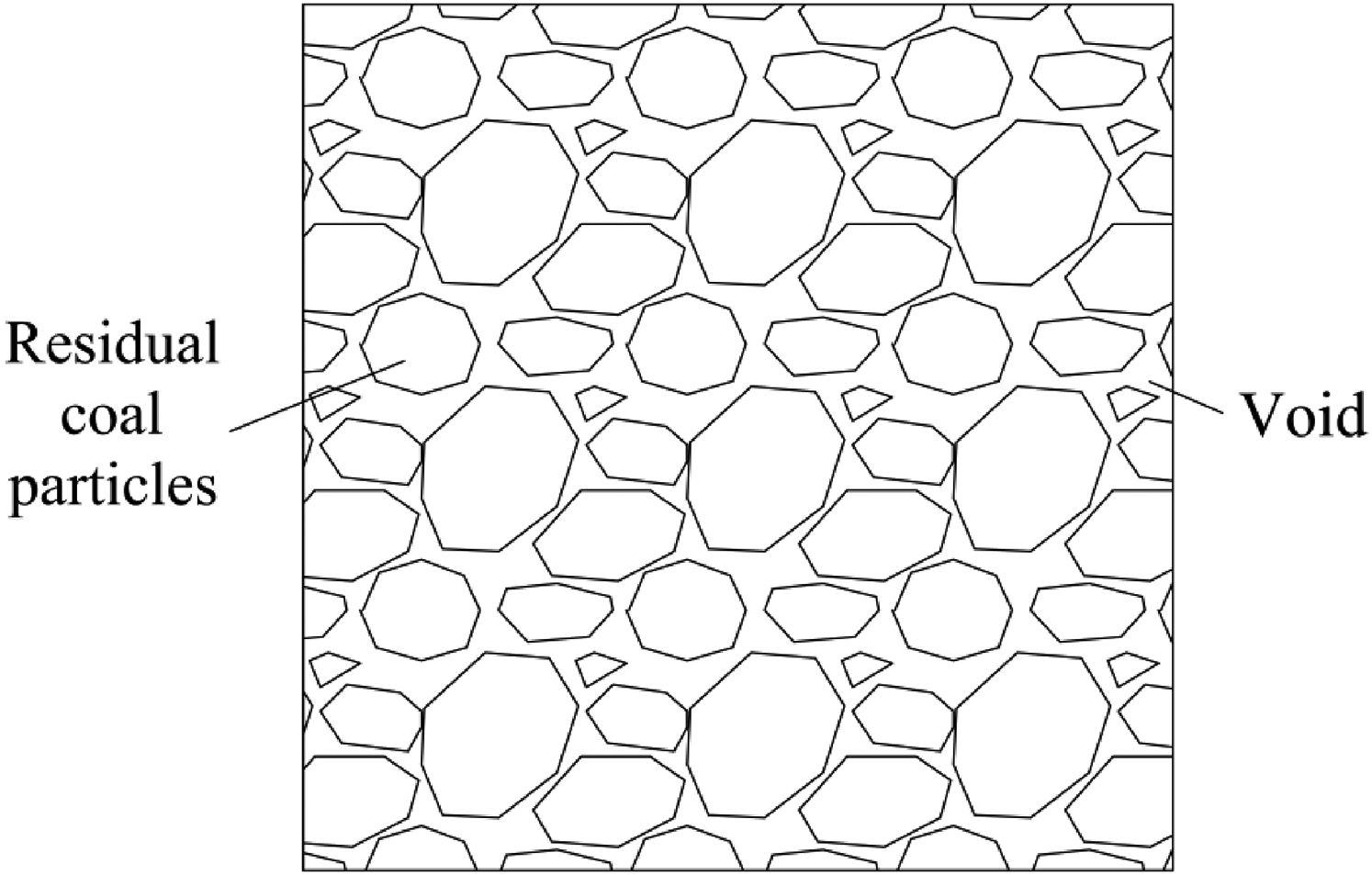
EMT model of the loose residual coal in goaf.
The ETC of the EMT model of the loose residual coal in goaf can be expressed as follows:
ETC of different models
The experimental parameters listed in Table 3 were substituted into the equations (2) to (6) to obtain the ETC and its change curves of the different models with the coal particle size or ambient temperature, as shown in Figure 8.
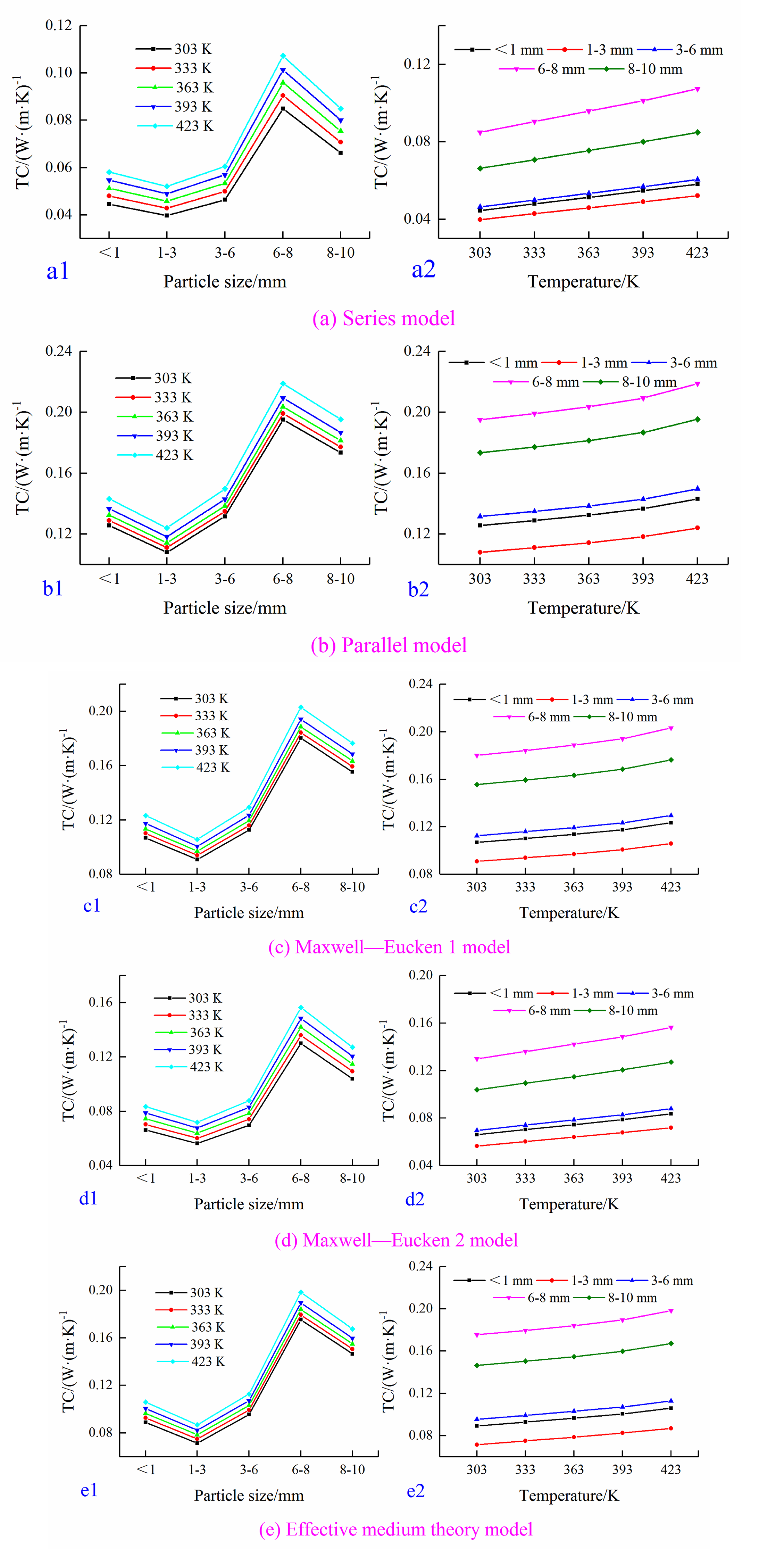
Relationship between the ETC of different models and coal particle size or ambient temperature.
Figure 8 shows that the various trends in the ETC of different models with the coal sample size or ambient temperature are the same. Moreover, the calculation results of the series and parallel models are the upper and lower limits of the ETC of the loose residual coal in goaf, respectively.
Figure 8(a1) to (e1) shows that the ETC of the coal samples at different ambient temperatures decreases linearly when the particle size of the coal samples is less than 3 mm. The ETC increases rapidly when the particle size is greater than 3 mm and reaching the maximum value at 6–8 mm and then decreasing. However, the fluctuation trends in the ETC of the different models are different. The extreme difference in the ETC of the coal samples at different temperatures was averaged, and then obtained the fluctuation order of ETC of different models, which was parallel model > EMT model > ME1 model > ME2 model > series model. Figure 8(a2) to (e2) shows that the ETC of coal samples with different sizes increases linearly with the increase of the ambient temperature. However, the growth rates of the ETC of different models are different. The average growth rates in the ETC of the coal samples with different particle sizes were taken to obtain the order in growth rates of the ETC of different models, which was parallel model > EMT model > ME1 model > ME2 model > series model.
Figure 8 shows that in different ETC models, compared with the change in the ETC of the coal samples at different ambient temperatures with the particle size, the ETC of coal samples with different particle sizes shows a good linear relationship with the ambient temperature, indicating that the ETC of the residual coal in goaf is more easily affected by the particle size of the coal samples. The composition in particle size of the residual coal in goaf is different, which caused the heat transfer ability in residual coal spontaneous combustion in goaf is different. Therefore, when constructing the physical model of the loose residual coal in goaf, the spatial distribution of the mined-out area should be focused, mainly including the particle size and void fraction of the residual coal. On the contrary, the ETC of the residual coal is less affected by the ambient temperature, and the relationship between them can be obtained by linear fitting function. The influence of ambient temperature on the heat transfer in the spontaneous combustion of residual coal is predictable. Hence, when constructing the ETC model, the temperature coefficient can be obtained by fitting the experimental data at different temperatures.
Comparing Figure 8(a1) to (e1) with Figure 3, there is a large deviation between the ETC of different models and the TC tested by the experiment in the ranges of different particle sizes. The comparison between Figure 8(a2) to (e2) and Figure 2 also shows that although the overall trend increases linearly, the ETC of the coal samples with different particle sizes also deviates from the TC tested by experiment in the ranges of different temperatures. Hence, it is necessary to further analyze the causes of errors.
Error analysis for ETC of different models
To comprehensively analyze the error sources of the different ETC models, the relative errors of the ETC of different models are calculated using equation (7). Subsequently, under the same particle size, the average relative error of the ETC of the coal samples at different ambient temperatures is taken, then obtained the relationship between the average relative error of the ETC of different models and the particle size, as shown in Figure 9(a). At the same conditions, the change in the average relative error of the ETC of the different models with ambient temperature is obtained, as shown in Figure 9(b).
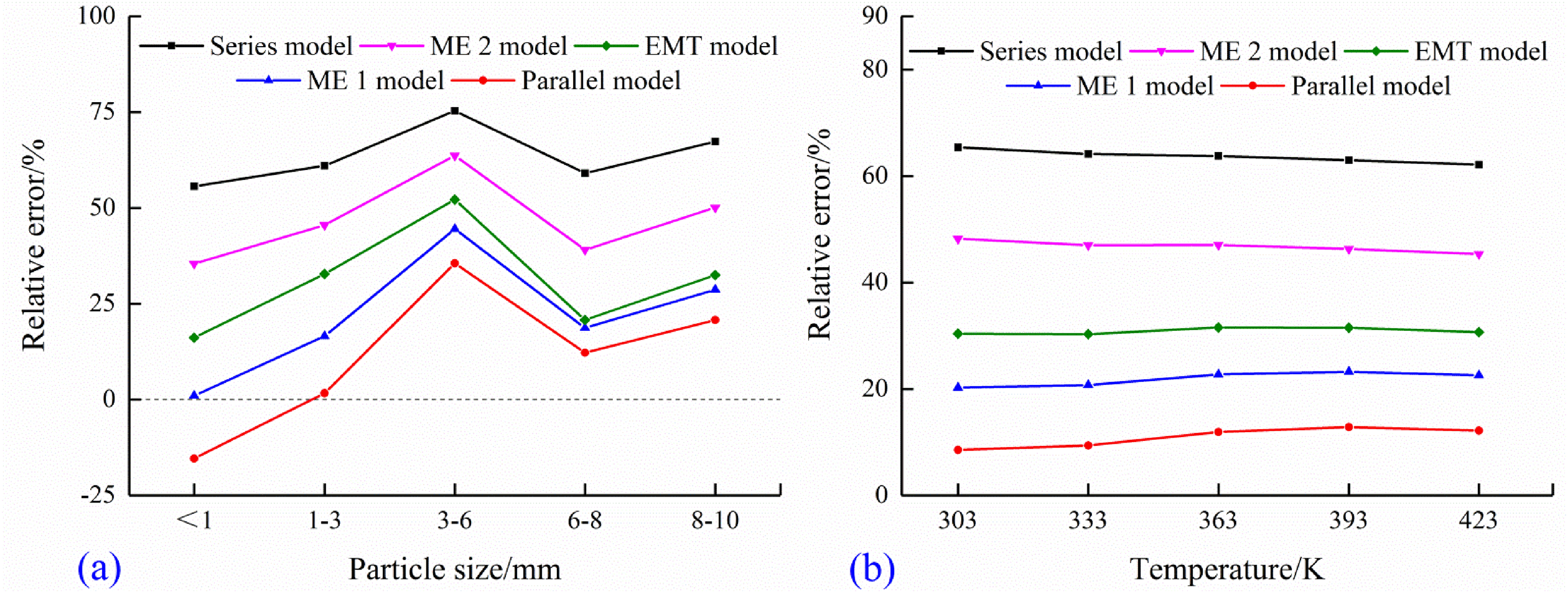
Relationship between the average relative error of the ETC of different models and coal particle size or ambient temperature.
Figure 9(a) shows that the change trend in the average relative errors of the ETC of different models with the coal particle size are the same. However, the average relative error of ETC of different models is significantly different in the ranges of different particle sizes. For the particle size of residual coal less than 1 mm, the average relative error of the ME1 model is the lowest, which is 1%, indicating that the residual coal in goaf with a particle size less than 1 mm can be approximated as a homogeneous sphere, and the residual coal particles are continuously distributed for heat transfer. In the particle size range of 1–3 mm, the average relative error of the parallel model is the lowest, which is 1.6%, showing that in the area where the particle size of the residual coal in goaf is mainly 1–3 mm, the heat released by coal oxidation reaction simultaneously flows through the residual coal and air (Shi et al., 2022), that is, the heat transfer path of coal–coal, air–air, and coal–air–coal are simultaneous, which is the risk area prone to spontaneous combustion in goaf. In the particle size range of 3–6 mm, the average relative error of the parallel model is the lowest, which is 35.6%. In the particle size range of 6–8 mm, the average relative errors of the ETC of the parallel model, ME1 model, and EMT model are 12.2%, 18.7%, and 20.7%, respectively. In the particle size range of 8–10 mm, the average relative error of the ETC of different models tends to be rise. The average relative errors of the parallel model, ME1 model, EMT model, ME2 model, and series model are 20.7%, 28.6%, 32.5%, 50.1%, and 67.3%, respectively. This indicates that with the increase in the coal sample size, the simplification and assumptions of the different ETC models have large errors with the actual situation of the goaf. Therefore, when constructing the ETC model of the loose residual coal in goaf, the influence of heat transfer pathway, particle size and its distribution, and void fraction of the residual coal should be focus on consideration.
Figure 9(a) shows that the overall order of the average relative error of the different models is as follows: series model > ME2 model > EMT model > ME1 model > parallel model. This indicates that the heat transfer path represented by the parallel model is closer to the heat transfer law of the residual coal spontaneous combustion in goaf. The ME model reflects the distribution of the residual coal particles and voids in goaf, that is, air is intermittently distributed between the continuous residual coal particles. With the increase in the coal particle size, the average relative error of the ETC of the ME model increases gradually, which also indirectly reflects the influence of residual coal particle size on the heat transfer. Therefore, when constructing the physical model of the residual coal in goaf, the coal sample particles smaller than 1 mm can be simplified as spherical, whereas for coal samples larger than 1 mm, the particle size of the residual coal particles should be considered. The EMT model shows that the residual coal particles and air are not uniformly distributed in the goaf, which further reflects that the heat transfer path of the residual coal in goaf is not a single coal–coal or air–air.
Figure 9(b) shows that change in the average relative errors of the different models with the ambient temperature are consistent. The overall change order is as follows: series model > ME2 model > EMT model > ME1 model > parallel model. The average relative error of the parallel model is the smallest, approximately 10.9%. This reflects that the existing ETC model does not consider the influence of temperature on the heat transfer during the spontaneous combustion of the residual coal in goaf.
Conclusions
The void fraction, coal particle size and ambient temperature play different roles in the spontaneous combustion of the residual coal in goaf. The void fraction play a role in the heat release by affecting the contact between coal and oxygen. The coal sample size and ambient temperature have opposite effects on the spontaneous combustion of the residual coal in goaf by affecting the heat transfer.
The influence of coal particle size on heat transfer of loose coal spontaneous combustion is 100 times that of the ambient temperature. The influence of ambient temperature on the TC is limited, and its effect is the same. The coal particles with different sizes play different roles in the process of spontaneous combustion. Particles with a size range of 1–3 mm is most significantly affected by the ambient temperature, and the particle size range of 3–6 mm is the key particle size affecting the heat transfer.
The changes in the ETC and average relative error of the different models were consistent. The overall order in the average relative errors of the different models is: series model > ME2 model > EMT model > ME1 model > parallel model.
The heat transfer in the spontaneous combustion of residual coal has a direct relationship with the spatial distribution and heat transfer modes of the residual coal in goaf. The overall average relative error of 10.9% for the parallel model indicates that the heat transfer law described by the parallel model is closer to the actual situation of heat transfer in the residual coal spontaneous combustion in goaf.
Footnotes
Acknowledgements

Declaration of conflicting interests
The author(s) declared no potential conflicts of interest with respect to the research, authorship, and/or publication of this article.
Funding
The author(s) disclosed receipt of the following financial support for the research, authorship, and/or publication of this article: This work was supported by the National Natural Science Foundation of China (grant number 51974149, 52074147).