




Abstract
Seepage and heat transfer in the carbonate reservoir under low-temperature tail water reinjection is a complex coupling process, which is an important basis for scientific and reasonable evaluation of geothermal resource sustainability. This study based on the tracer test of double-well reinjection for carbonate heat reservoir, a coupling model of seepage field and temperature field of fracture network is established by using the finite element software COMSOL. The uncertainty analysis is carried out to study the fluid-thermal coupling process of carbonate fracture under the condition of low-temperature tail water reinjection.The variation law of seepage field and temperature field of thermal reservoir under low-temperature geothermal tail water reinjection is revealed, The variation of measured temperature of thermal reservoir pumping side under different reinjection conditions is predicted. The results show that the dominant fracture channels between wells of the fractured heat reservoir in Xian county geothermal field play an important role in controlling the seepage heat transfer. Under the coupling action of the seepage field, pressure field and the temperature field of the heat reservoir, the low-temperature tail water reinjection forms a preferential flow along the dominant channels, which is one of the important factors to consider in the prediction of thermal breakthrough. Reinjection pressure, temperature and well spacing are the main factors for artificial control of geothermal production and reinjection system. In the pumping and reinjection system of Xian county geothermal field, under the conditions of 0.5 MPa reinjection pressure, 30 °C reinjection tail water temperature and 270 m spacing between pumping and reinjection wells, the heat reservoir temperature at the pumping side decreased by 1.5 °C in 100 years.
Keywords
Introduction
In recent years, countries all over the world have paid great attention to reduction of carbon emission . At the two sessions in 2021, China has included carbon peak and carbon neutrality in the government work report for the first time. As a new type of clean, environment-friendly and renewable energy, geothermal energy has been vigorously developed and utilized, and it is expected to play an important role in helping China achieve its carbon peak by 2030 and carbon neutrality by 2060 (Zheng and Dong, 2009; Zhou and Gong, 2014). Geothermal reinjection is playing a vital role in geothermal development, it can effectively treat the geothermal tail water and maintain the thermal storage pressure. However, the temperature of the reinjection tail water is often lower, which will be cause the reservoir temperature to drop, or even thermal breakthroughs (Liu, 2003; Stefansson, 1997; You et al., 2013).Geothermal development is based on double-well pumping and reinjection system. Low-temperature geothermal tail water flows from the reinjection well into the reservoir to the pumping well. This is a seepage and heat transfer process, which is influenced by the coupling of seepage and temperature fields. Therefore, the coupled process of seepage and heat transfer in the reservoir of double-well pumping and reinjection system is an essential foundation for the research on the efficient and sustainable development of geothermal energy (Kaya et al., 2011; Liu et al., 2019c; Zhao et al., 2017).
Generally, the thermal storage is buried deep underground, and it is difficult to get the relevant parameters directly. The tracer test of reinjection has become a recognized method. As the tracer test has been widely used, the comprehensive interpretation of geothermal tracer test data and subsequent modeling for management purposes (prediction of thermal breakthroughs in pumping well) has also been improved. It is generally recognized that numerical methods can consider complex underground structures and physical processes (Banks, 2009; Liu et al., 2017; O’Sullivan et al., 2000). Moreno and Neretnieks (1993) studied fluid flow and solute (particles) transport in inhomogeneous porous media. They found that for highly inhomogeneous media, the solute would pass through the media along the dominant seepage path (channel), and the channel effect becomes more obvious with the increase of standard deviation. Zhao et al. (2002) investigated the matrix-fractured media model of high-temperature rock mass. Its essence is to simplify the rock mass into the matrix and fracture medium, and perform three-dimensional numerical simulationusing the MFHDM100software to simulate the three-field coupling process of thermal-fluid-solid. Zhao et al. (2010) developed a thermal-hydraulic-mechanical three-dimensional coupling model based on the dual-medium hypothesis of continuum and discrete medium. Using the three dimensional finite element program (DTHM.for) to analyze the stress distribution and temperature field changes of the discontinuity. Recently, Sun et al. (2017) regarded the fractured rock mass as a dual medium of discrete fracture networks and matrix rock mass. The distribution of fractures in the rock is highly heterogeneous and anisotropic, The geothermal reservoirs are located more than hundreds or thousands of meters beneath the Earth's surface, so it is difficult to know the true distribution of fractures. Generalized the random fracture network model (Chen et al., 2014; Leung and Zimmerman, 2012) based on the transfer and exchange method betweenfracture and bedrock (Zhang and Woodbury, 2002), a governing equation describing the seepage and heat transfer process of the fractured rock mass is established by using one-dimensional element form. Through previous studies, rich experience has been gained in the study of seepage and heat transfer coupling process of heat storage under recharge condition. However, the coupling process of seepage and heat transfer of low-temperature tail water reinjection needs to be further studied.
The carbonate geothermal resources in North China are rich in reserves and high temperature, which has high development and utilization value. They are the main thermal reservoirs for the development of regional geothermal clean heat(Lin et al., 2013; Wang et al., 2017, 2018). Over the years, large-scale exploitation of geothermal water and unreasonable reinjection has caused problems such as continuous drop in water level and with the temperature falling in thermal reservoir. The current solution is to carry out scientific reinjection and establish a pumping and reinjection system. The first solution is the multi-field coupling problem of the seepage and the heat transfer process in deep fractured rock mass.
This article aim at theproblem of establishingthe seepage heat transfer model and two-dimensional fracture network model of carbonate rock fracture, on the basis of tracer test of the double-well reinjection in the geothermal field of Xian county, China (Liu et al., 2019b; Qin et al., 2019),based on the idea of discrete fracture network model, carry out the coupled numerical simulation and uncertainty analysis of seepage and heat transfer. It reveals the seepage and heat transfer law of carbonate thermal reservoir under the condition of reinjection and clarifies the mechanism of the influence of low-temperature geothermal tail water reinjection to the thermal reservoir on the seepage field and temperature field, which provides scientific support for geothermal pumping and reinjection engineering in North China and other similar geological conditions.
Experimental
Geological characteristics of the geothermal field
The investigated geothermal field is located in Xian county, Hebei province.It has crosses two grade III structural units, i.e. uplift in Cang county and a depression in central Hebei province. It is at the intersection of depression in Raoyang, uplift in Xian County, depression in Fucheng and uplift in Qing county as illustrate in Figure 1. The Xian County fault is the boundary fault of the aforementioned two grade III structural units (uplift in Cang county and depression in central Hebei) in the area, which has affected the deposition of strata, resulting in the absence of Guantao formation and lower tertiary deposits in the uplift area of Xian county, the depth of bedrock has approximately 1300 m to 1500 m. While in the depression in Raoyang, the depth reaches to more than 4000 m (Liu et al., 2019b; Wang et al., 2020). There are geothermal reservoirs in pore type and karst fractured type. Among them, the matrix rock thermal reservoir mainly belongs to Wumishan formation of Middle Proterozoic system in Ji county shown in Figure 2. Which the temperature is in the range of 80 °C to 107 °C, and the single well with the inflow rate of 120 m3/h. The buried depth and thickness of the reservoir are 1326 m and 2003 m, respectively. The lithology is mainly dolomite and chart banded dolomite (Li et al., 2020; Liu et al., 2019b).
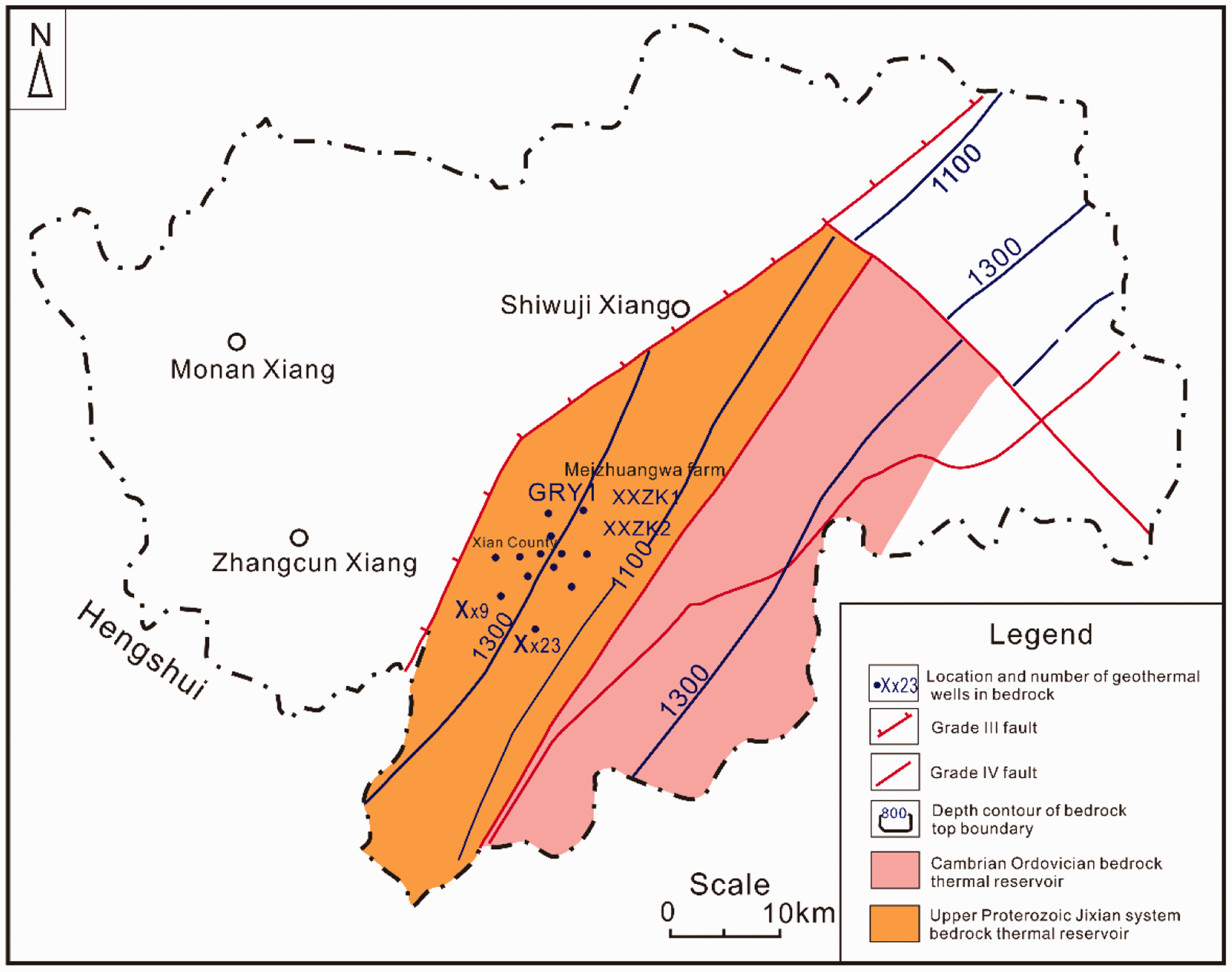
Distribution map of bedrock thermal reservoir in Xian County.
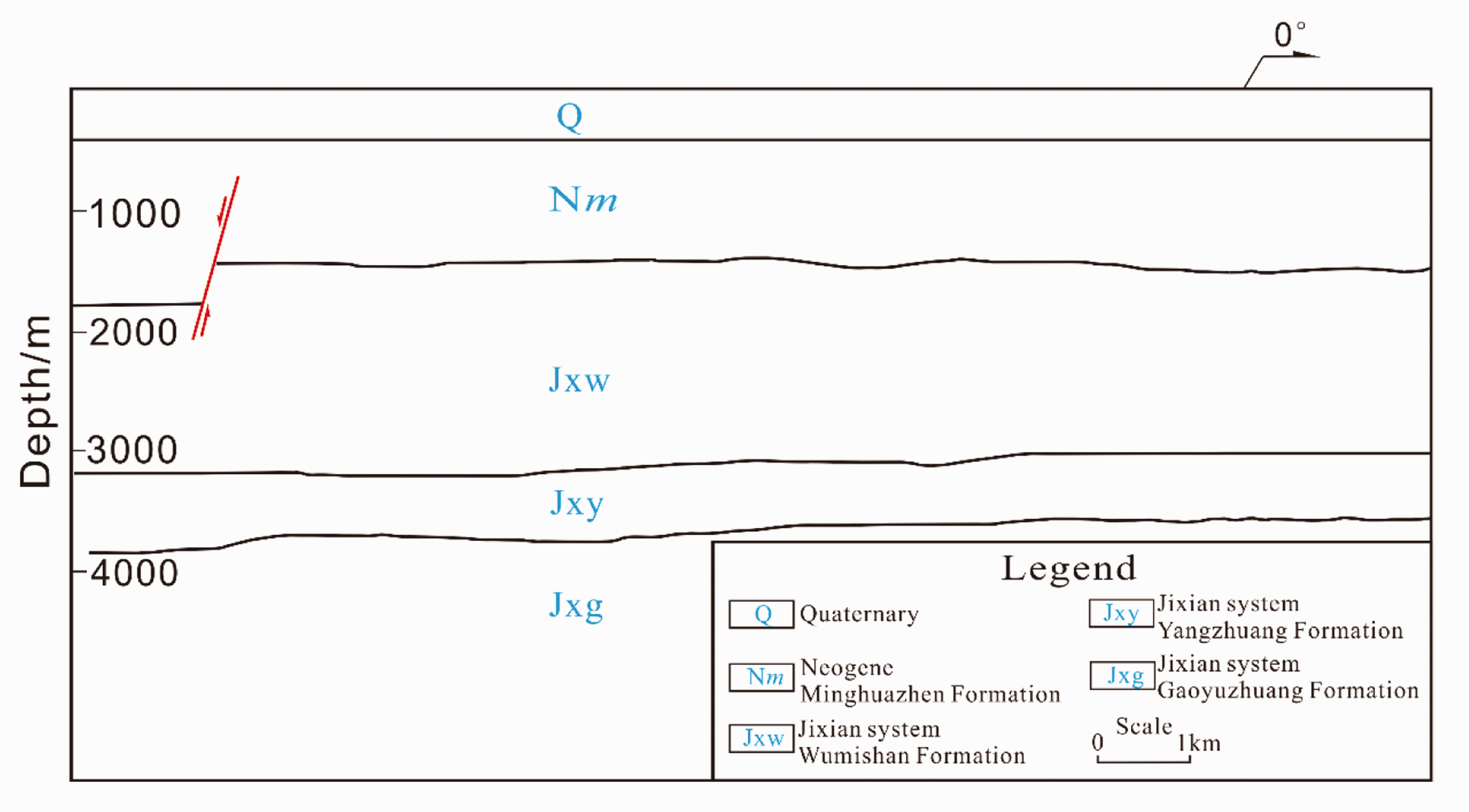
Geological profile in the study area.
Modeling
Seepage-heat transfer math model based on fracture element
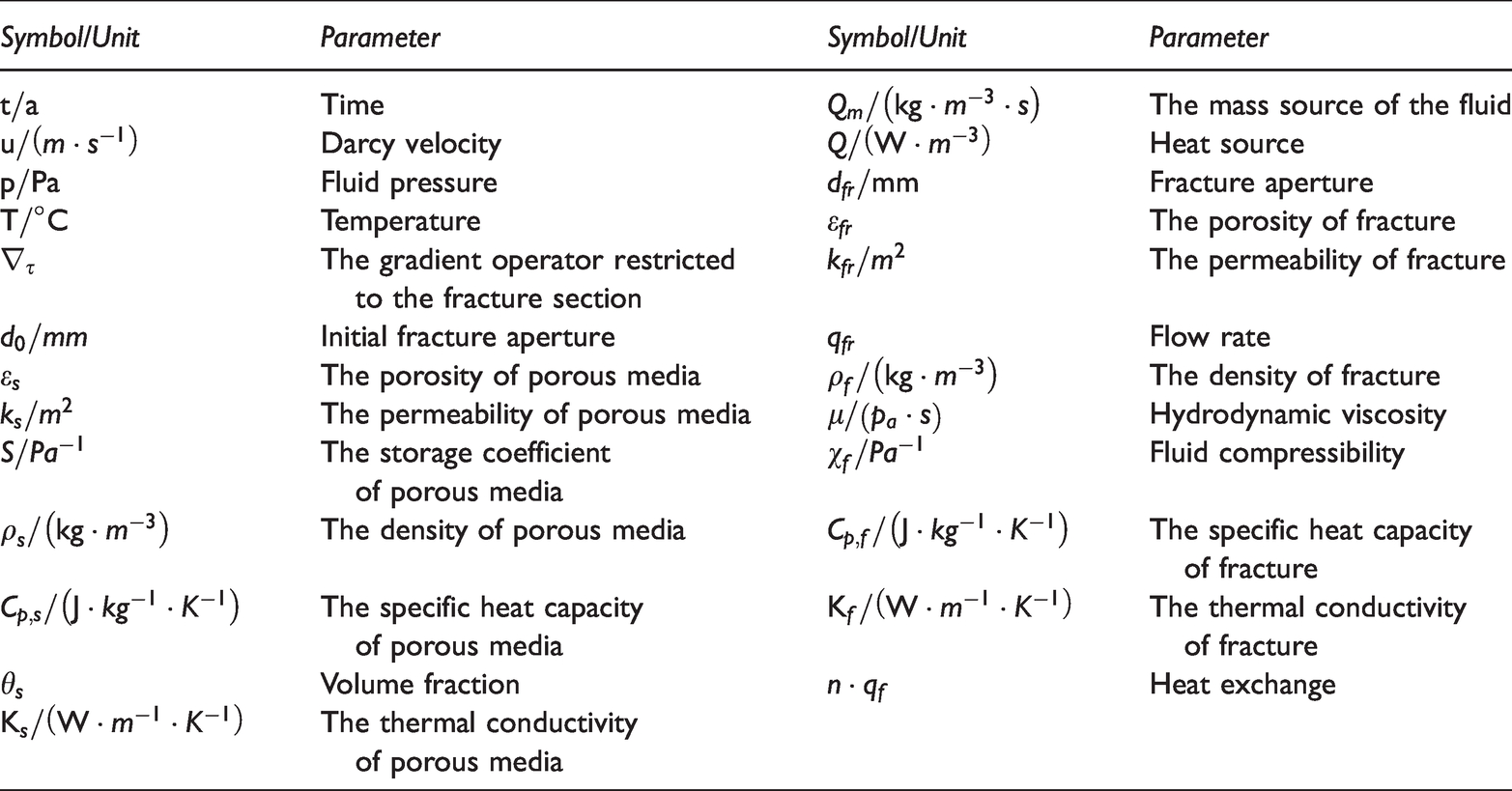
We have used the Darcy’s law to describe the seepage process, which can be used to simulate low speed flow with low permeability and porosity, in which pressure has the main driving force. The matrix rock mass has developed pores, it has equivalent to porous medium rock mass. Taking the fracture as another separate medium, giving different porosity and permeability and other parameters, not only considers the seepage in the fracture, but also takes the water and energy exchange between the bedrock and the fracture into consideration. The governing equations are as following, and the relevant parameters of governing equation as shown in Table 1.
Parameters related to the governing equation.
Governing equation of seepage field in porous media. Combining Darcy’s law with the continuity equation (Liu et al., 2019a; Sun et al., 2016, 2017; Wang et al., 2019; Xu et al., 2020):


Above the equations (1) and (2), the water storage model can be expressed as:


Combining the above equations (3) and (4), the governing equation could be obtain equation (5) as:

Governing equation of seepage field in discrete fracture network


Governing equation of temperature field in porous media. The convective diffusion equation described the heat transfer process in porous media, and the thermodynamic properties are averaged by volume to consider the solid matrix and pores fluid equations (Zhao et al., 2020):



In equations (8) to (10):
Governing equation of the temperature field in the discrete fracture network

In the equation: 
In the equation:
Numerical simulation of seepage and heat transfer based on fractured element
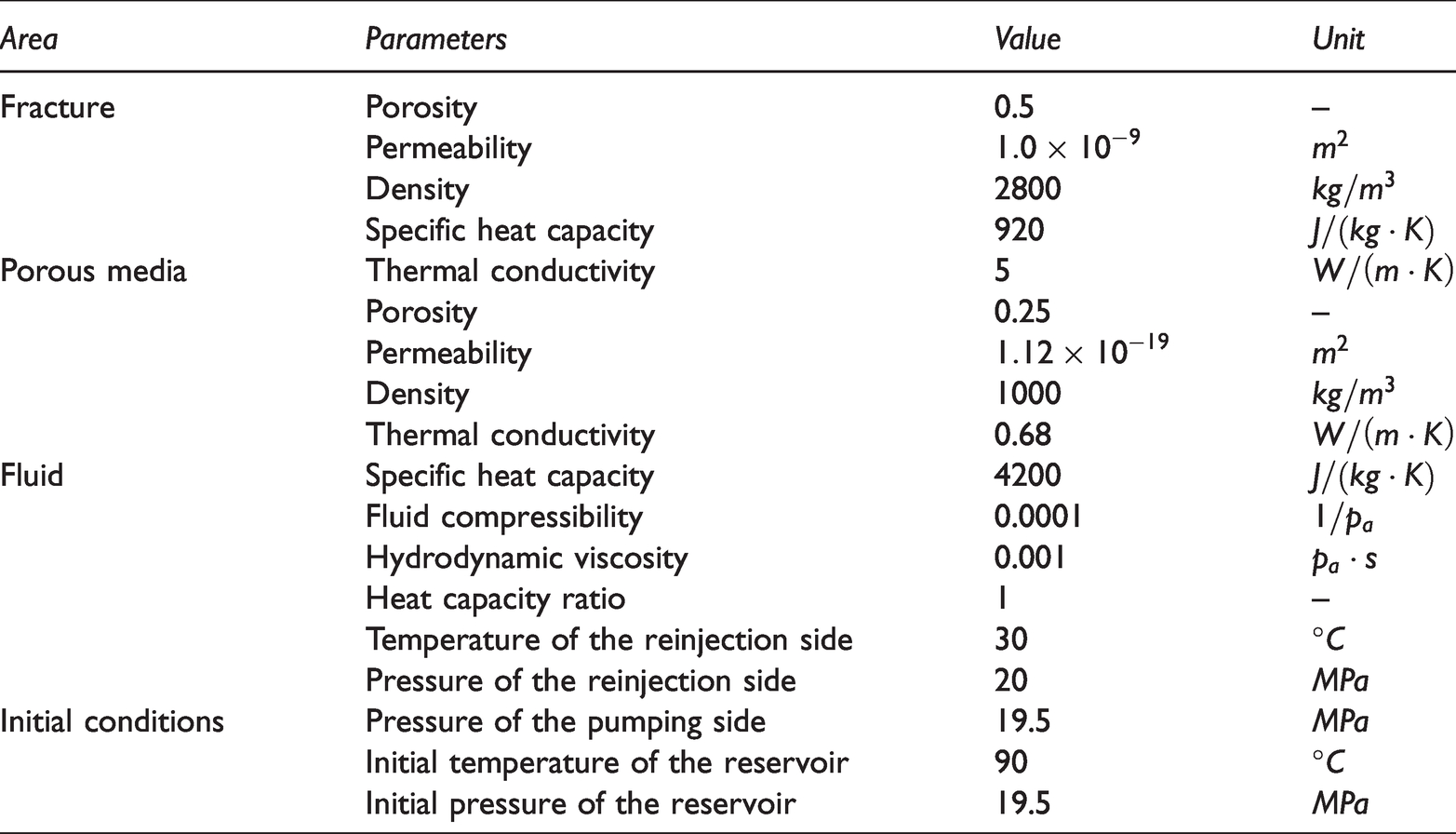
Establishment of two-dimensional fracture network model. According to the investigation, the reservoir of the Wumishan Formation of Jixian system is located between the 1326 m to 3329 m into underground with a thickness of 2003 m. The amount of analog computation in three-dimensional space will be extremely large, so in order to improve the calculation efficiency, a two-dimensional fissure network is established to represent the geothermal reservoir. The depth of reservoirs has relatively large and direct access to detailed fracture distribution data has been always a difficulty in the modeling of deep carbonate fractured reservoirs. Chen (2014) recently used the method of randomly generating fractures to generalize the fractured rock and received acceptable results. This article refers to this method to generalize the thermal storage fracture system in the study area. Karst fractures and pores are developed in the carbonate thermal reservoir. The matrix is equivalent to the porous medium. The random fracture network is generated by the APP developer of the COMSOL finite element software. At the same time, based on the actual investigation of the fracture characteristics of the thermal reservoir, the randomly generated fracture network is adjusted appropriately. In order to verify the accuracy of the model establishment, a fitting analysis was carried out with the results of the tracer test (Liu et al., 2019b). The basic geological parameters of this study area were obtained by ground outcrop fracture investigation, geothermal well hydraulic test,reinjection tracer test and statistical parameters of fractures from borehole core (Table 2). According to the actual situation of the double-well in the Xian county scientific research base, the horizontal distance of the double-well is 270 m, so the range of the model is 270 m × 270 m, and the fracture network is set through geological survey, borehole core fracture observation and references (Chen et al., 2014; Sun et al., 2017). There are two groups of fracture,the fracture angle of 30° and 110°, the average length of 50 m, the variance of 25 m, the density of 0.005 pieces/m2, and the aperture of 0.4 mm. The reservoir model is shown in the Figure 3.
Parameters of reservoir model.
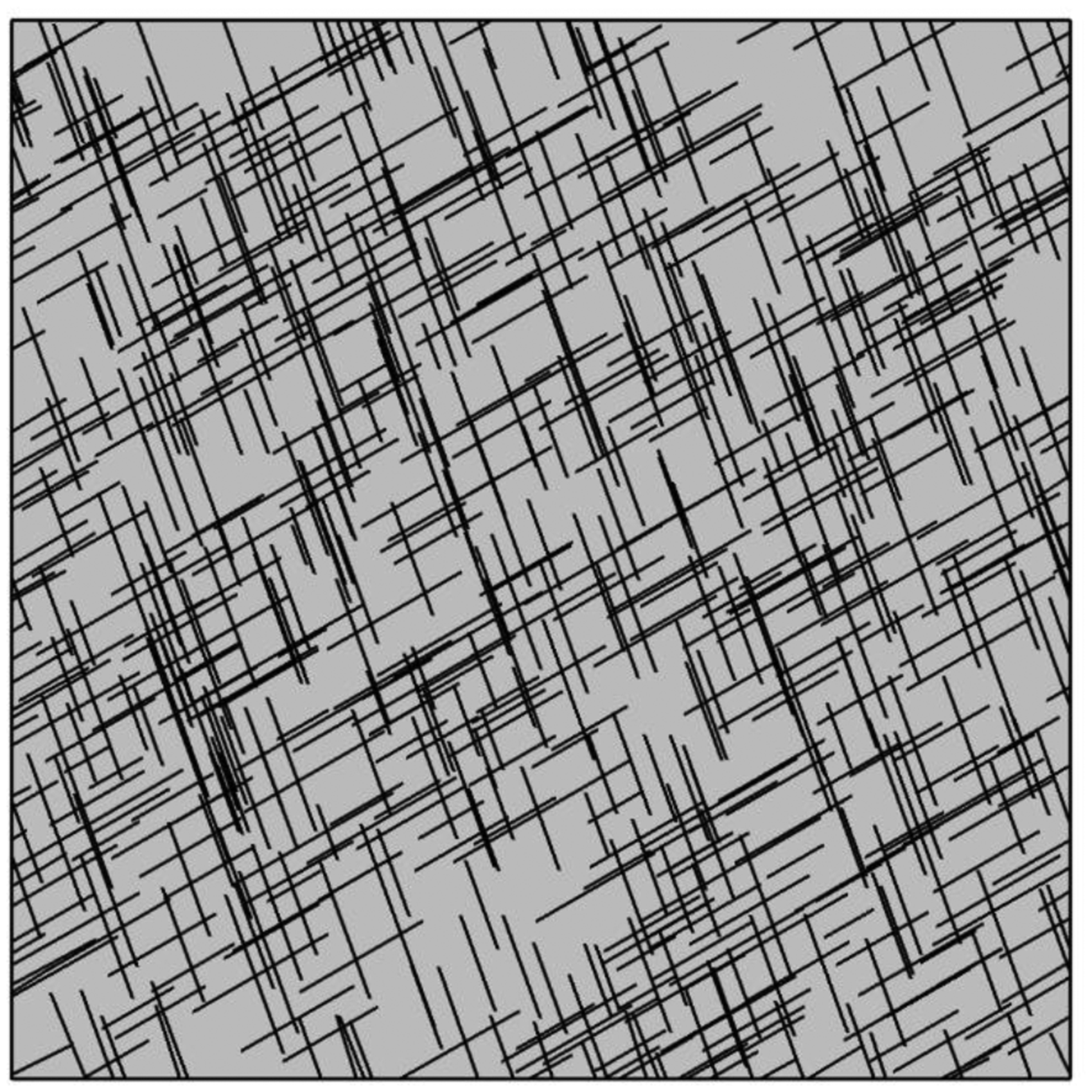
Schematically numerical model.
Calculating condition and meshing
In this study, the condition of the borehole-2 in the Xian county (XXZK2) with a final depth of 2000 m is taken as the initial condition. To ensure the smooth operation of the seepage system in the reservoir, a fixed pressure boundary condition has used (Zhao et al., 2015). The pressure difference between the pumping and reinjection, on the pumping side, on the reinjection side, and initial pressure of the reservoir were 0.5 MPa, 19.5 MPa, 20 MPa, and 19.5 MPa, respectively. The upper and lower boundaries are impermeable. For the temperature field, the reinjection temperature side is 30 °C, the reservoir temperature is 90 °C, the upper and lower boundaries are adiabatic, and parameters of reservoir model is shown in Table 2. Free triangular mesh is used for meshing, the pore size of mesh selection general, a total of 319,694 finite elements and 38707 boundary elements are generated.
Results and discussion
Characteristics of seepage and pressure field
Velocity is an important factor for convective heat transfer in geothermal reservoirs, and also the link between the seepage and temperature field in their coupling process. Many researchers studied the seepage process of low-temperature return water in the reservoir has of significance for the evolution of the reservoir temperature field and the sustainability of reservoir capacity (Sun et al., 2016). In certain reservoir fracture network space, the seepage and pressure fields are inseparable, and are controlled by both fracture network and pressure. It could be seen from Figure 4, that the reinjection water flow to the pumping side through the fracture channel under the pressure gradient, and fracture with better connectivity constitute the dominant channel for water conduction. The fluid pressure in the fractures were increased rapidly with the reinjection and gradually decreased, whilethe seepage distanceincreases. In combination with Figure 5, it can be seen that the pressure in the fractured channel changes significantly, and the matrix has little affected by the reinjection of tail water, almost unchanged. Indicating that the reinjected water is mainly flowing in the fracture network, which is consistent with the results of the reinjection tracer test (Liu et al., 2019b). The fracture has stronger capacity of water and pressure conducting, so the return water preferentially flow into the fracture, which will be increases the fracture pressure. However, due to low permeability and weak seepage capacity of matrix rock, the pressure is almost unchanged.
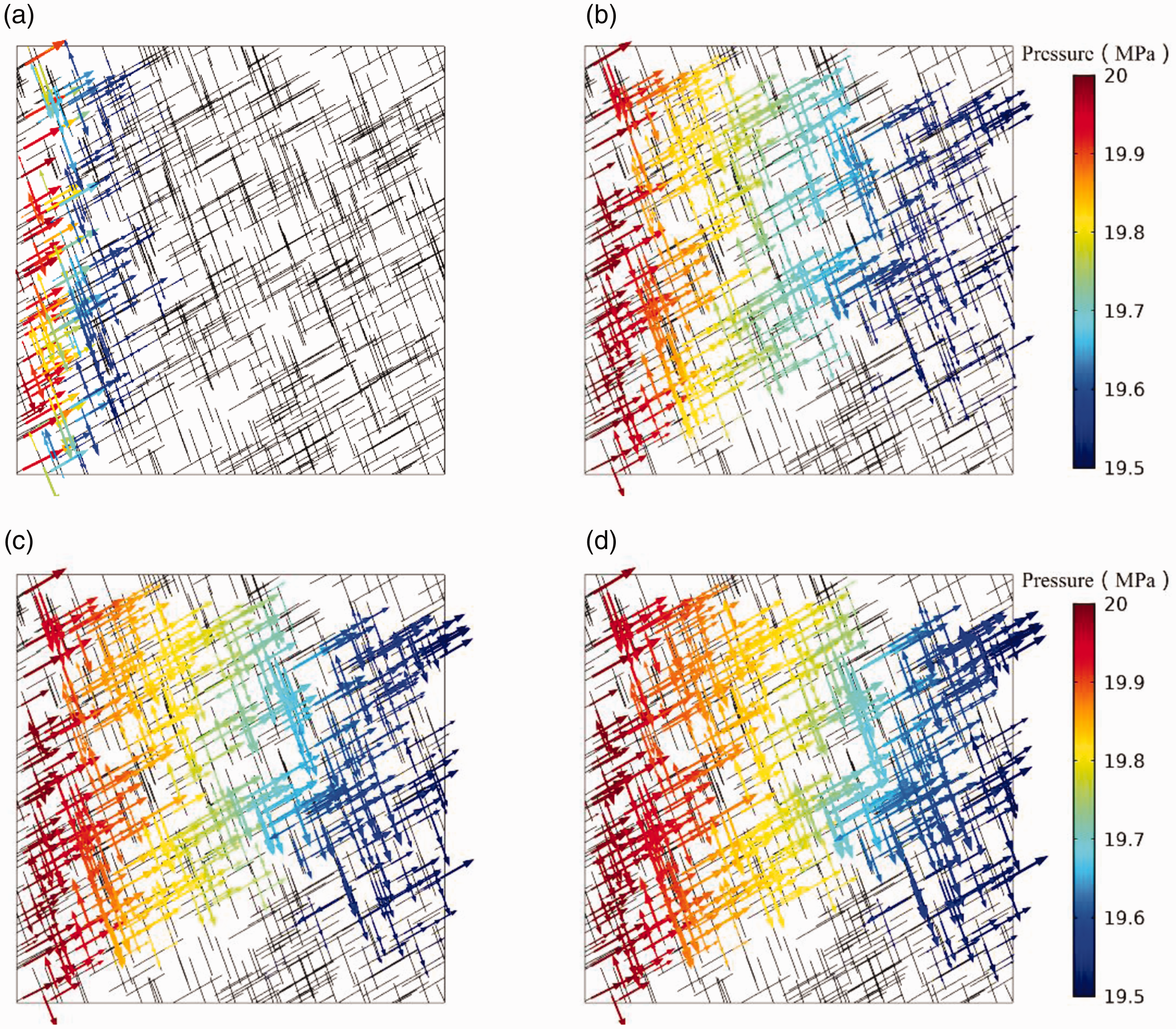
Fracture water velocity and fracture pressure at various times. (a) t = 1 a, (b) t = 30 a, (c) t = 50 a (d) t = 100 a.
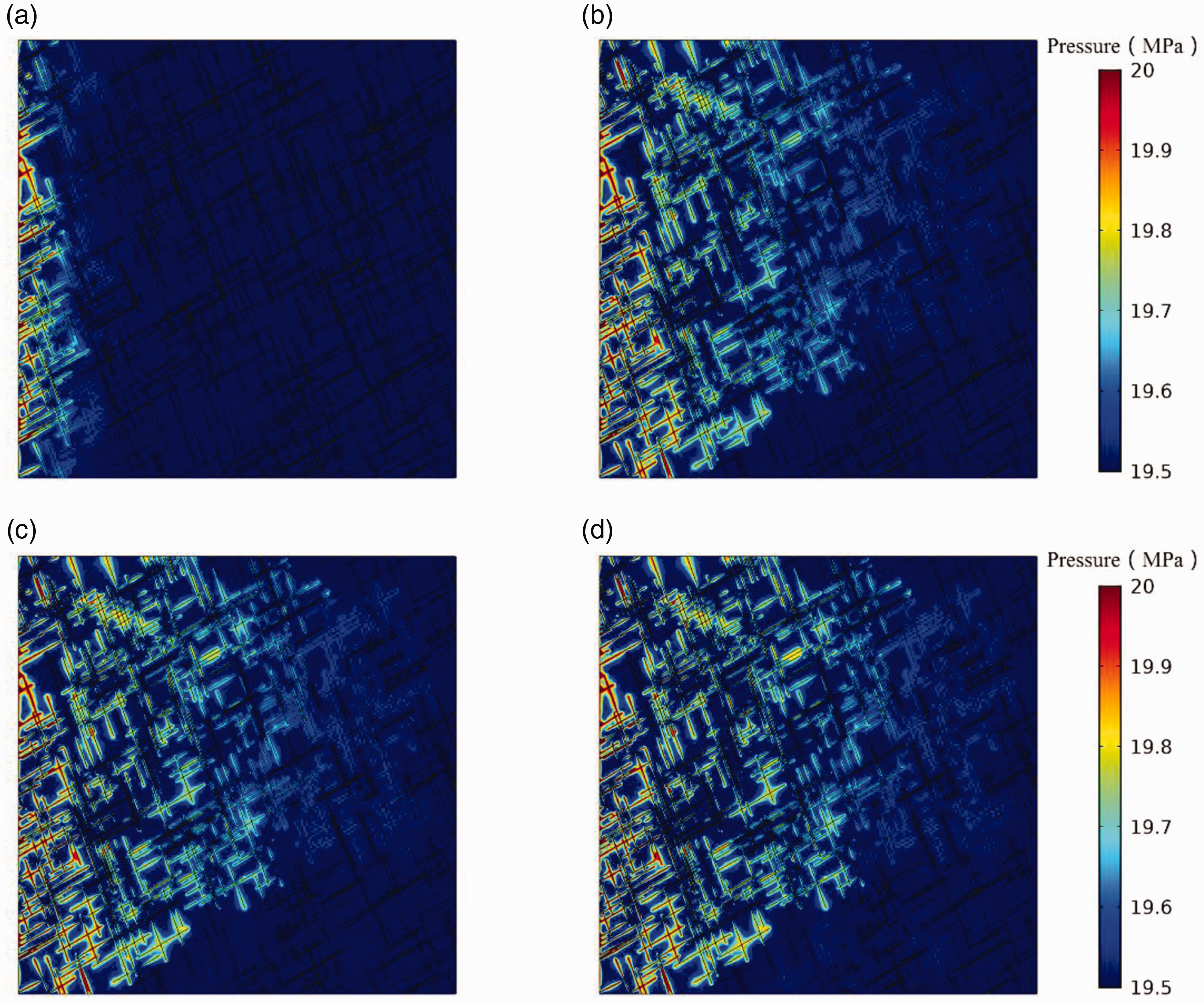
Pressure distribution of thermal storage at various times. (a) t = 1 a, (b) t = 30 a, (c) t = 50 a, (d) t = 100 a.
Characteristics of the temperature field
We have concluded from Figure 6, that when the low-temperature of tail water has reinjected for one year, a cold front has been formed on the reservoir of the reinjection side. The cold front was present an irregular shape with unevenness, and develops faster in the area with developed fracture network and good connectivity, forming a convex surface, otherwise concave. During the 100 years reinjection process, with the passage of reinjection time, the cold front developed and expanded from the reinjection side to the pumping side, which was consistent with the fluidflow direction.
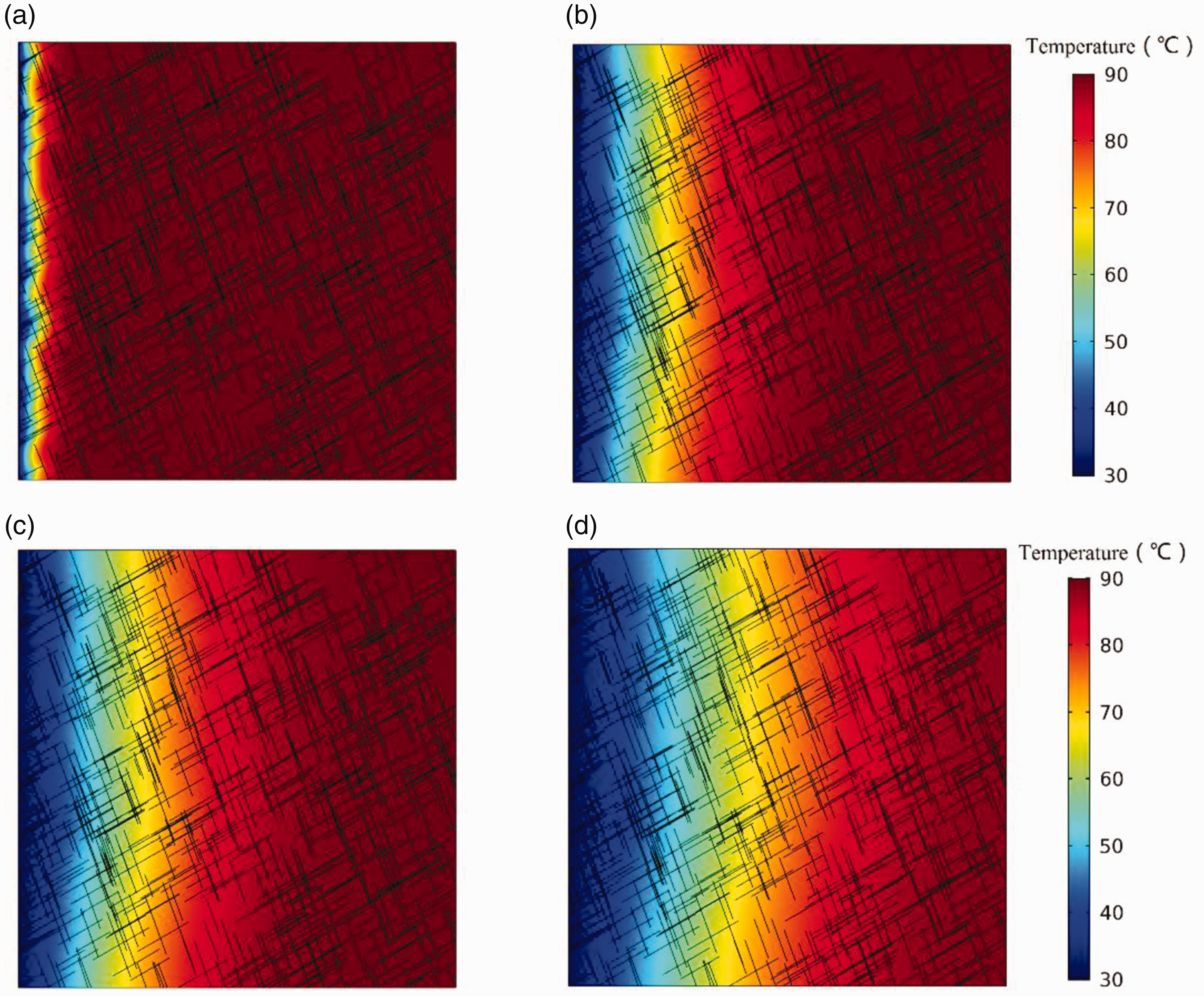
Temperature distribution of heat storage at various times. (a) t = 1 a, (b) t = 30 a, (c) t = 50 a, (d) t = 100 a.
The evolution of the cold front is closely related to the flow field. Comprehensive analysis of Figures 4 and 6 shows that the characteristics of the cold front of the reservoir have a positive correlation with the fluid flow velocity and flow rate. The convex area of the cold front is exactly the high-speed areas in the flow field where the fracture network is well connected. Through the correlation analysis, the positive correlation between the fluid velocity and the cold front temperature is further verified in Figure 7 and the correlation coefficient was 0.76. The low-temperature return water is injected into the fractures to exchange heat with the matrix rock, and the temperature of the matrix rock drops to form a low-temperature zone. The fluid absorbs heat makes the temperature rise, and the convective heat transfer is enhanced to take away a large amount of heat energy. At the same time, the heat exchange between the fluid and the bedrock forms a temperature gradient zone until the temperature is infinitely close to the surrounding rock. As time goes by, in the process of pumping and reinjection of 1 to 100 years, the flow rate continues to increase, and convective heat transfer is more dominant than conduction heat transfer. The heat carried by the fluid is greater than the heat conducted by the surrounding rock, and the cold front continues to expand in the flowdirection.
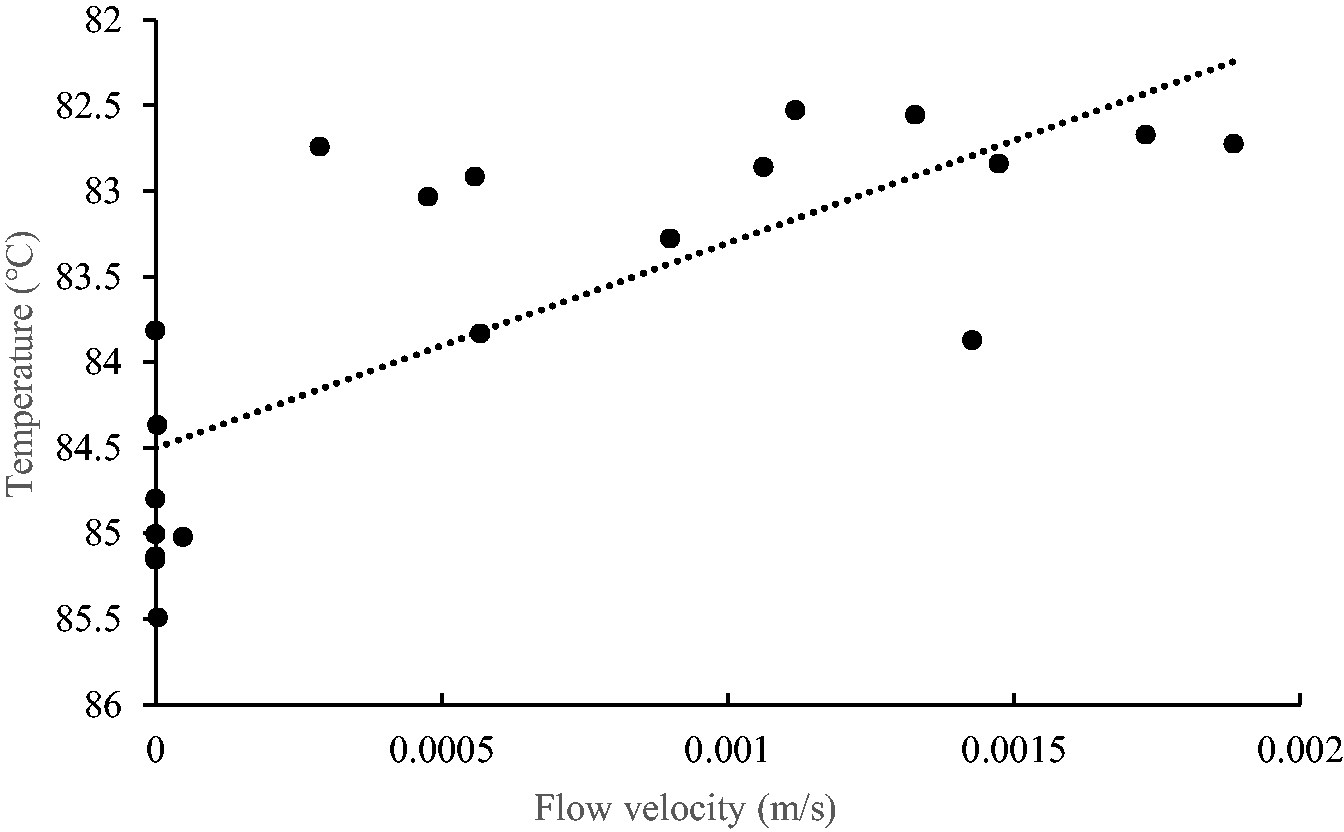
Analysis of the correlation of flow velocity and cold front temperature.
Geothermal reservoir temperature and its influence mechanism on the pumping side
The relatively constant temperature of the geothermal reservoir is one of the key element for sustainable development of geothermal energy, which is mainly manifested in the relatively constant temperature of the reservoirs on the pumping side. It is usually considered that the reservoir drops less temperature than 2 °C in 100 years of exploitation is not regarded as a geothermal break through, it is acceptable (Li et al., 2020; Liu et al., 2019b). This study simulates the operation of the pumping and reinjection system under multiple combined working conditions such as the reinjection water temperature, reinjection pressure and the distance between the pumping and reinjection wells, analyzes the evolution mechanism of the temperature on the pumping side of the carbonate reservoirs. The obtained results are as shown in Figure 8. The temperature of the reservoirs on the pumping side has dropped from 90 °C to 88.5 °C during 100 years of system operation, with a decreased of 1.5 °C. Therefore, the initial judgment is that under the current natural reinjection conditions set as: reinjection temperature of 30 °C and pressure of 0.5 MPa, the geothermal system will not have geothermal breakthrough during 100 years of operation, and it can reach the requirements of sustainable development and utilization.
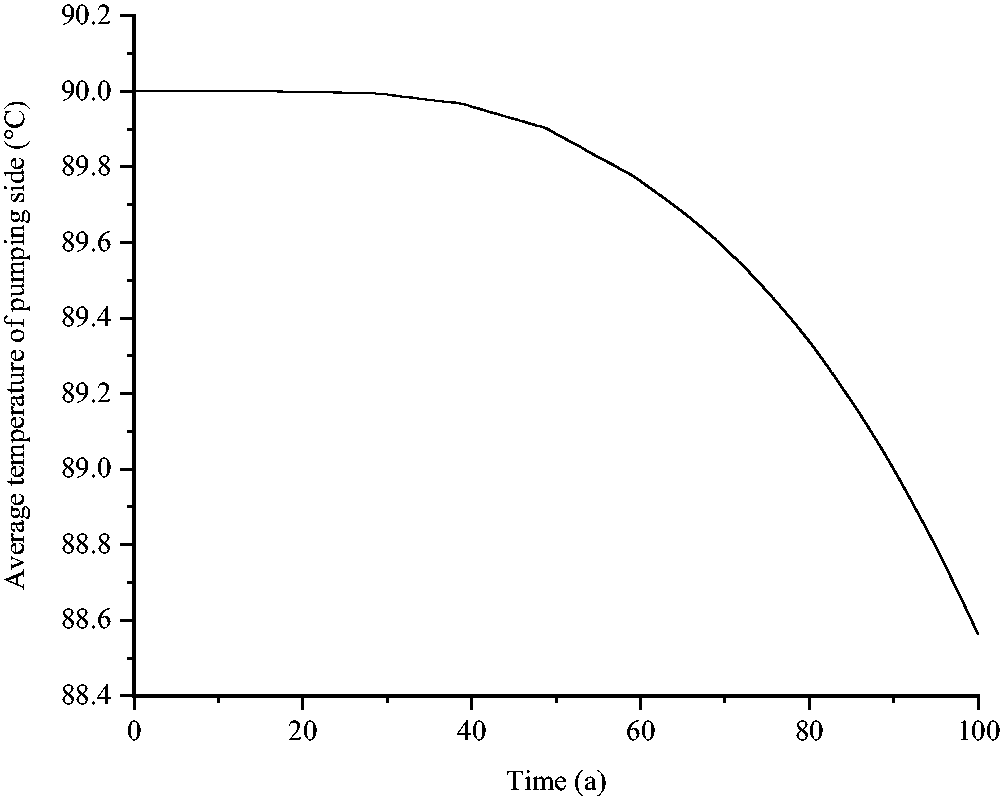
Mean value of pumping side reservoirs temperature at various times.
It can be seen from Figure 9, when the inlet temperature was increased in the reinjection side, the temperature of the reservoirs on the pumping side was increased significantly after 100 years of system operation. When the inlet temperature on the reinjection side was 40 °C and 50 °C, the temperature of the reservoir on the pumping side drops to 88.8 °C and 89.0 °C, respectively for 100 years of system operation. When the inlet temperature of the reinjection side was, the temperature of the reservoir on the pumping side drops to for 100 years of system operation. This was because after the temperature of the reinjection water increases, the heat consumed by the reservoirs of heat the reinjection water decreases, so the temperature of the reservoirs on the pumping side would not drop rapidly. This phenomenon becomes more and more obvious with the continuous reinjection of the water. Therefore, in actual project, numerical simulation should be combined to determine the appropriate reinjection temperature and prevent the temperature of the reservoir from falling too fast.
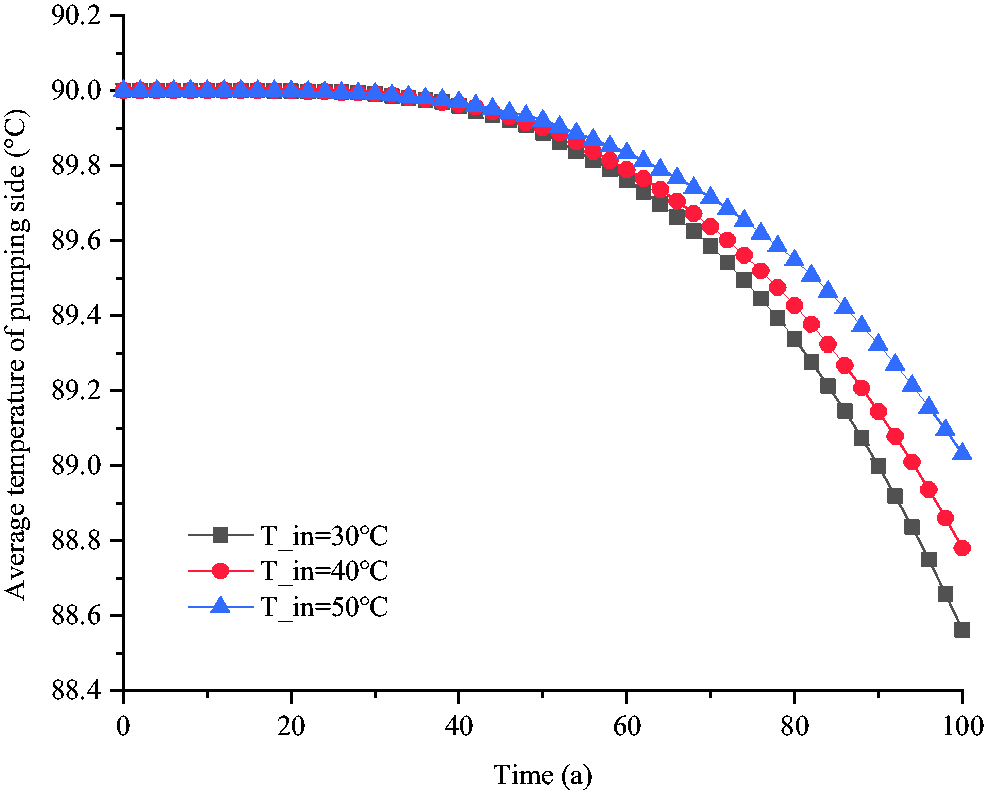
Mean value of pumping side reservoirs temperature at various reinjection temperatures.
It can be seen from Figure 10, that when the reservoir pressure on the reinjection side was 20 MPa, while the temperature of the reservoir on the pumping side drops less no more than 2 °C in 100 years, and when the reservoir pressure on the reinjection side was 21 MPa and 22 MPa, the temperature of the reservoir on the pumping side was 82.1 °C and 70.0 °C, respectively. Overall, when the reservoir pressure on the reinjection side is higher, while the temperature drops faster. This was because the flow rate of the reinjection water in the reservoirs directly affects the heat transfer process. When the reinjection pressure is greater, while the reinjection water flow in the reservoir is faster (Figure 11), and the stronger the heat convection will be obtained. Therefore, in actual project, numerical simulation methods can be used to determine the appropriate reinjection pressure to avoid the rapid drop in the reservoir’s temperature due to the excessively fast seepage flow rate.
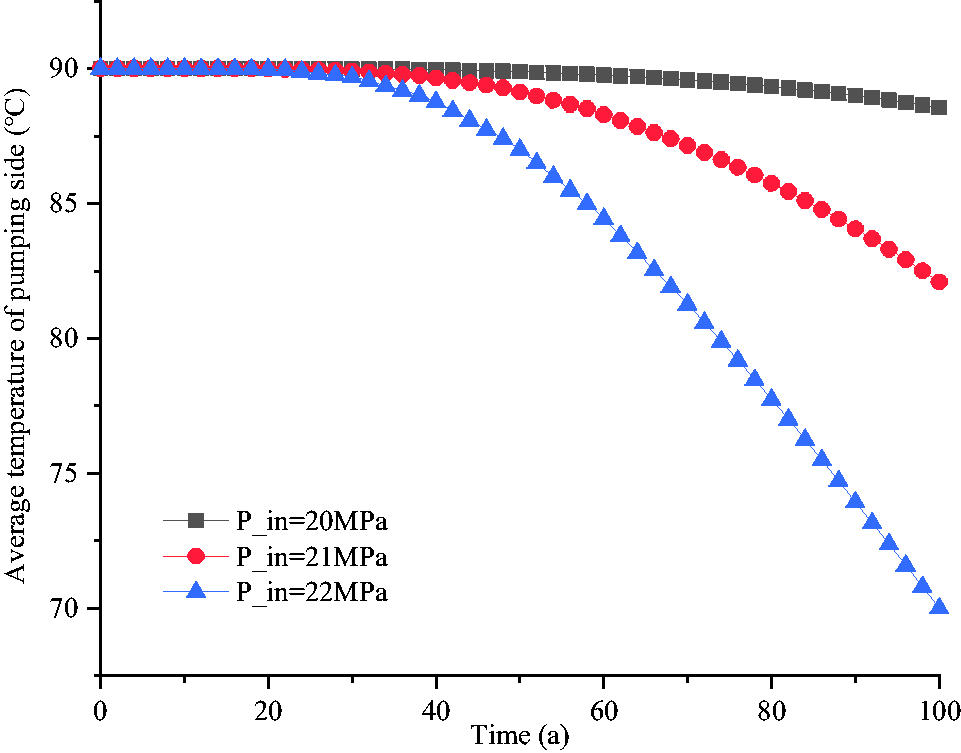
Mean value of pumping side reservoirs temperature at various reinjection pressure.
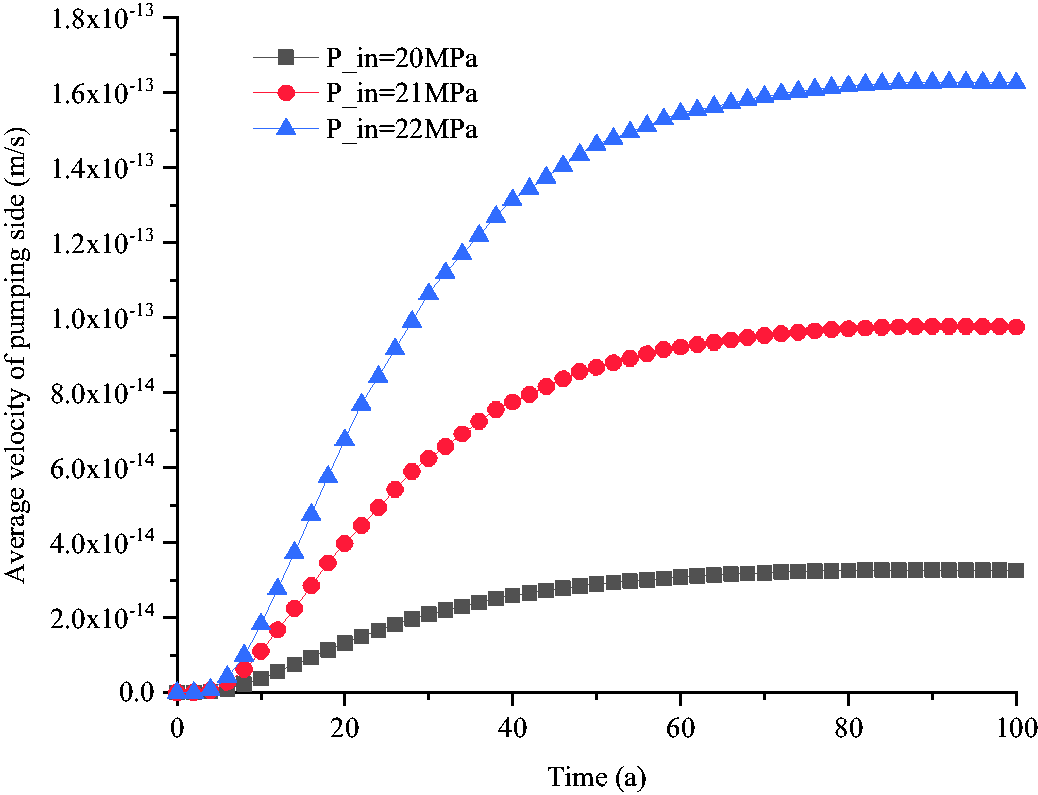
Mean value of reinjection water velocity in pumping side with various reinjection pressure.
It can be seen from Figure 12, that the larger the distance between the pumping and reinjection sides is, the higher the reservoirs temperature on the pumping side will be. When the distance between the pumping and reinjection sides was 370 m, the temperature of the reservoir on the pumping side will be 88.8 °C after 100 years of operation. When the distance between the pumping and reinjection sides was 470 m, the temperature of the reservoir on the pumping side remains unchanged. The increase in the distance between the pumping and reinjection sides allows sufficient time for the reinjected water to be exchange heat with the bedrock, which can effectively maintain heat production performance of carbonate reservoirs.
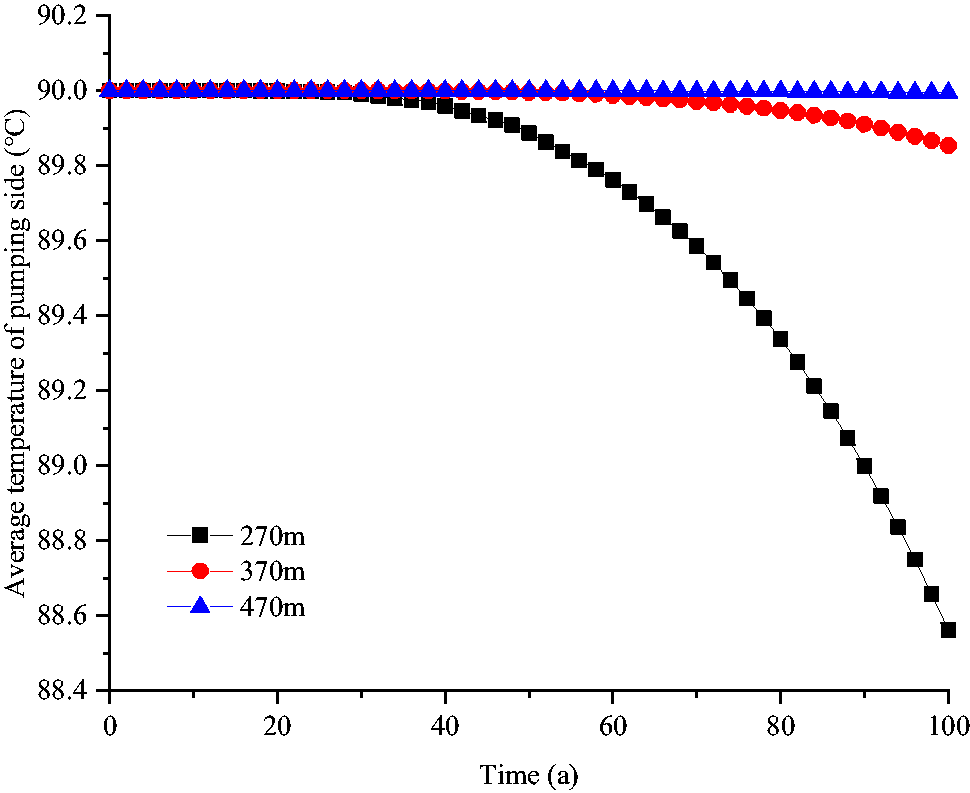
Mean value of pumping side reservoirs temperature at various spacing of pumping and reinjection.
Conclusion and suggestion
Based on the double-well reinjection tracing test, this study carried out the research on the coupling process of seepage and heat transfer in carbonate fractures in the Xian county geothermal field under the condition of low-temperature tail water reinjection, and analyzed the influence of injection pressure, temperature and well spacing on thermal reservoir temperature of the pumping side. The main conclusions are as following:
The temperature field distribution of fractures in carbonate reservoirs hasheterogeneity and anisotropy, and the fracture network constitutes a dominant channel for conducting water and heat conduction. The dominant fracture channels between wells play an important role in controlling the seepage heat transfer. Under the coupling action of the seepage field, pressure field and the temperature field of the heat reservoir, the low-temperature tail water reinjection forms a preferential flow along the dominant channels, which is one of the important factor to consider in the prediction of thermal breakthrough. Reinjection pressure, reinjection temperature and spacing between pumping and reinjection wells have great influence on reservoir temperature. The lower the reinjection temperature, while the greater the reinjection pressure, and the smaller the spacing between pumping and reinjection wells make the reservoir temperature drops faster. The stability of reservoir temperature can be effectively maintained by taking appropriate reinjection pressure, reinjection temperature, and spacing between pumping and reinjection wells. In the pumping and reinjection system of Xian county geothermal field, under the conditions of 0.5 MPa reinjection pressure, 30°C reinjection tail water temperature, and 270 m spacing between pumping and reinjection wells, the heat reservoir temperature at the pumping side decreased by 1.5°C in 100 years.
Based on the principle of gradual progress, this study has only coupled process of seepage and heat transfer of the heat reservoir. The injection of low-temperature tail water into the thermal reservoir often changes the temperature and stress conditions in the reservoir, leads to the deformation of reservoir rock mass and affects the process of seepage and heat transfer. It is suggested that further more comprehensive research should be carried out in the future to provide more precise scientific support for the optimization design of geothermal pumping and reinjection scheme.
Footnotes
Acknowledgements
The authors are grateful to the reviewers for their careful reviews and detailed comments.
Declaration of conflicting interests
The author(s) declared no potential conflicts of interest with respect to the research, authorship, and/or publication of this article.
Funding
The author(s) disclosed receipt of the following financial support for the research, authorship, and/or publication of this article: This study was supported by S&T Program of Hebei China (No.20374201D), Natural Science Foundation of Hebei province China (No.D2019330003), The National Key R&D Program of China (GrantNo.2018YFC0604300, 2018YFC0604306), National key research and development programs (No.2019YFB1504101), Chinese Academy of Geological Sciences Hydro-geological Environment Geology Institute Fund (No. SK202104), Geological survey project of China (No.DD20190128).
