




Abstract
Risk assessment is an effective method of accident prevention and is vital to actual production. To reduce the risk of mining accidents and realize green and sustainable coal mining, a coal and gas outburst risk assessment method based on the improved comprehensive weight and cloud theory is proposed. The proposed method can effectively solve problems of fuzziness and randomness, index weight deviation, and correlation between indexes in risk assessment, as well as improve the accuracy and rationality of assessment. Nine influencing factors that correspond to coal seam occurrence and geological characteristics, coal seam physical characteristics, and gas occurrence characteristics are selected to establish the risk assessment index system of coal and gas outburst. Using the improved group G1 method and improved CRITIC method to obtain the subjective and objective weights, the ideal point method is used to obtain the comprehensive weight. Using the normal cloud model of cloud theory and the comprehensive weight to assess engineering examples 1–2, the No. 3 coal seam of a mine in Shanxi, and the 21 coal seam of a mine in Henan, the risk grade of coal and gas outburst is determined and then compared with the assessment results obtained from the engineering examples and the actual situations of the above mentioned coal seams. The results show that the coal and gas outburst risks of engineering examples 1–2, No. 3 coal seam, and 21 coal seam are of grades IV, IV, II, and IV, respectively. The No. 3 coal seam and 21 coal seam belong to lower and higher risk categories, respectively. The assessment results are consistent with the actual situation of the coal seams, thereby confirming the rationality and accuracy of the proposed method. This study expands the methods of coal and gas outburst risk assessment and facilitates the formulation of effective preventive measures.
Keywords
Introduction
The Expeditious development of the mining industry has contributed significantly to the global economy; however, the mining industry is affected by some of the most difficult sustainability challenges (Bui et al., 2017; Jiskani et al., 2020). Achieving a green and sustainable development of the mining industry is one of the goals prioritized by China's energy industry. Previously, disasters caused by mining have resulted in the perception that mining presents significant risks to the environment and humans (Kapelus, 2002). Dubiński (2013) reported that the increasing demand for mineral resources not only increases the scale and complexity of mining operations, but also increases risks. Safety is the basis of green and sustainable development; therefore, risk assessment is vital to the mining industry. The purpose of risk assessment is to identify and quantify the potential risks involved in any project such that preventive measures can be devised in advance (DRET, 2008).
Coal and gas outburst is a complex dynamic phenomenon that directly jeopardizes the lives and safety of underground workers and damage underground facilities, and may induce gas explosions and other secondary disasters. Within 2019–2020, nine coal and gas outburst accidents occurred in China, resulting in 54 deaths, which constituted more than 10.2% of the total deaths in coal mine accidents in the previous two years. Currently, China houses 840 coal mines with a high gas outburst and 719 coal and gas outburst mines. Owing to the continuous increase in mining depth, some coal mines have evolved from low to high gas outburst mines, rendering it more difficult to prevent and control them. Therefore, improving the intelligent monitoring, prevention, and control of coal and gas outburst disaster level is important to enhance the risk assessment and prediction methods of coal and gas outburst.
Currently, experts and scholars have started to investigate the occurrence mechanism and influencing factors of coal and gas outburst; they have conducted extensive investigations pertaining to coal and gas outburst using different theoretical methods. Dong et al. (2011) investigated the main factors of coal and gas outburst and the classification standard of risk degree using the G-K evaluation method and rough decision theory. Ding et al. (2009) proposed a prediction method for coal and gas outburst based on gray correlation analysis and neural networks. Wang et al. (2017b) improved the neural network algorithm using the symmetric alpha stable distribution, and the model demonstrated its high prediction accuracy after it was applied to several mines. Nie et al. (2019) applied the GRA-SPA model combined with gray correlation analysis and set pair analysis to accurately predict the coal and gas outburst intensity grades of 25 locations in the No. 8 coal mine in the Pingdingshan mining area. Zhang et al. (2019) established a risk assessment model for tunnel gas outbursts using fuzzy analytic hierarchy process (FAHP)-attribute mathematical theory. Zhang and Lowndes (2010) investigated the influencing factors of gas content, gas pressure, and geological conditions in the Huaibei mining area, Anhui Province, and predicted the coal seam outburst tendency using an accident tree–neural network model. Zhu et al. (2020) predicted the risk degree of coal seam outbursts using the improved entropy weight gray target decision method. Xie et al. (2019) established a coal seam outburst risk assessment model based on entropy weight–matter element extension theory and evaluated the outburst risk of different coal seams in a coal mine in Guizhou. Xie et al. (2013) used the attributed measurement prediction model of the entropy value to accurately predict gas emission. Yin et al. (2018) investigated the decisive factors of coal and gas outburst induced by rock bursts in the Pingyu mining area and established a FAHP comprehensive evaluation model. Wang (2019) used the FAHP entropy fuzzy comprehensive model and a fuzzy number scale to evaluate the risk of coal and gas outburst Li et al. (2020) improved the prediction model of coal and gas outburst based on D-S theory. The fused prediction accurately reflected outburst hazards and afforded good compensation for false predictions. Guo et al. (2017) used the analytic hierarchy process (AHP) extension theory of the coal seam outburst risk prediction model as a basis and significantly improved the practical application of the Yuwu coal mine.
Although numerous studies regarding the risk assessment methods of coal and gas outburst have been conducted, the assessment methods and mathematical models proposed remain restricted. First, the weighting method is relatively simple, which renders it difficult to consider both subjectivity and objectivity. A reasonable index weight is key for determining the accuracy and reliability of assessment results. For example, the AHP for constructing a judgment matrix is complicated and affected by individual subjectivity. The results of indexes using the fuzzy-AHP model do not explicitly exhibit the actual condition, and the underlying indexes must be examined closely to determine their superiority or inferiority Jiskani et al. (2021a). The entropy weight method and gray theory disregard the correlation between index factors. Grey clustering involves the classification of observation indices or observation objects into definable classes using gray incidence matrices or gray whitenization weight functions, but the gray level boundaries are not distinct (Jiskani et al., 2021b). Second, coal and gas outbursts are the result of the interaction of multiple factors, and its complex mechanism causes the assessment process to exhibit high levels of randomness and fuzziness. The assessment methods proposed cannot easily solve the effects of randomness and fuzziness. For example, the membership function of the fuzzy comprehensive assessment model cannot be determined easily when multiple factors are involved; furthermore, the models disregard the randomness of the system. Neural network algorithms depend on sample data and exhibit a low convergence speed and low evaluation efficiency.
To solve the abovementioned problems and obtain reasonable and accurate assessment results, the improved group G1, improved CRITIC, and ideal point methods were adopted in this study to comprehensively account for the weight, fully consider the difference in personal experience, weaken the subjective influence, consider the size of the index information content and the correlation between indexes, and reduce the deviation of the index weight. Based on the complex mechanism of coal and gas outburst and the characteristics of multifactor interaction, the purpose of the normal cloud model of cloud theory is to achieve mutual transformation between qualitative and quantitative analyses, thereby overcoming randomness and fuzziness in the assessment process and, combined with the comprehensive weight, obtain the comprehensive membership degree of different risk grades; hence, the risk assessment grade of coal and gas outburst is determined. The method was applied to assess the risk of coal and gas outbursts in an actual coal seam to verify its effectiveness and rationality.
Cloud theory
Cloud model definition and numerical characteristics
Li et al. (1995) proposed the concept of the cloud model in the 1990s based on probability theory and the traditional fuzzy set theory. As the foundation and core of cloud theory, the cloud model enables the investigation of compound uncertainty, the conversion between qualitative concepts and quantitative analysis, the organic integration of randomness and fuzziness, and a complete reflection.
The basic definition of a cloud model is as follows (Li and Du, 2017): U is the quantitative domain represented by certain values and T is the qualitative concept located on U. The membership degree CT(x)∈[0,1] of element x(x∈X) to T is a random number with a stable tendency, and the cloud is the distribution of the mapping of concept T from the argument domain U to the interval [0,1] in the number domain space.
The three numerical characteristics of the cloud, namely, expectation Ex, entropy En, and hyperentropy He, can express the uncertainty concretely in mathematical language. The expected value expressed by the expectation (Ex) best represents the qualitative concept. Entropy (En) is the degree of uncertainty of the qualitative concept and can reflect the dispersion degree of cloud droplets. Entropy is positively correlated to fuzziness. Hyperentropy (He) is the entropy of entropy; it is determined by the randomness and fuzziness of entropy and can represent the dispersion degree of cloud droplets. A higher superentropy (He) corresponds to greater randomness in the membership degree of a certain point, a greater degree of cloud dispersion, and a thicker cloud.
Cloud model algorithm
Normal cloud model. The normal cloud model is one of the most widely used cloud models, and its generating principle is based on the normal distribution and normal membership function. The mathematical model of the normal cloud is as follows (Li and Du, 2017):

Forward cloud generator and algorithm. A cloud generator bridges the correlation conversion between the precise values and qualitative linguistic values. It expresses an uncertain transformation relationship through natural language, and the essence is the conversion between qualitative and quantitative expressions. Cloud generators generally include forward, reverse, and conditional cloud generators. The forward cloud generator generates many cloud droplets that conform to the normal distribution through a set of cloud characteristic numbers (Ex, En, and He) of qualitative concepts. Each cloud droplet represents the quantitative expression of the qualitative concepts of an index in the space of the theory domain, and it exhibits fuzziness and randomness (Li et al., 1995). The basic principle is shown in the dotted red box in Figure 1, and the algorithm steps are as follows:
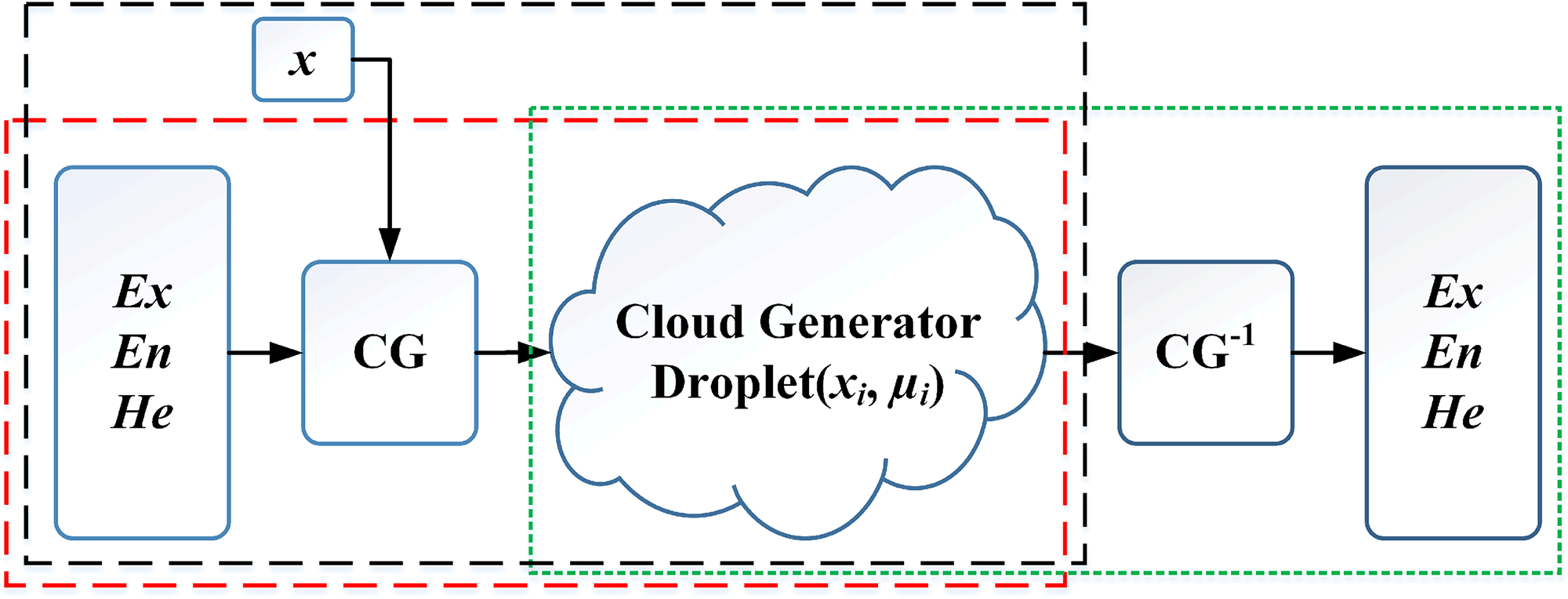
Basic principle of cloud generator.
Input: cloud numerical characteristics (Ex, En, and He); number of cloud droplets.
Output: normal random number En′; N cloud drops xi with membership degree of μ(xi).
Conditional cloud generator and algorithm. For a domain U, based on a set of cloud numerical characteristics (Ex, En, and He) and specific values x = x0, a forward cloud generator generates a membership degree μ(x0) under condition x0; this is known as an x condition generator. The basic principle is shown in the dotted black box presented in Figure 1.
The algorithm steps are as follows (Li and Du, 2017):
The numerical characteristic (Ex, En, and He) under condition x
=
x0 and the number of cloud droplets, N, are determined. The membership degree is calculated as follows: N cloud droplets are output and expressed as
Construction of coal and gas outburst risk assessment model
Process of assessment method
The following section describes the basic process of the risk assessment method for coal and gas outburst based on the improved comprehensive weighting and cloud theory. By analyzing the influencing factors of coal and gas outburst, the appropriate assessment index was selected to establish a coal and gas outburst risk assessment index system. The risk grade standard of each index was categorized, the corresponding cloud numerical characteristics were determined, and the membership degree cloud droplet figure of the outburst risk grade was generated using the normal cloud model. The comprehensive weight method was applied to obtain the weight of each index. The comprehensive membership degree was calculated using the weight matrix and membership degree matrix, and the risk grade of coal and gas outburst was determined based onto the principle of maximum membership degree. The assessment process is shown in Figure 2.
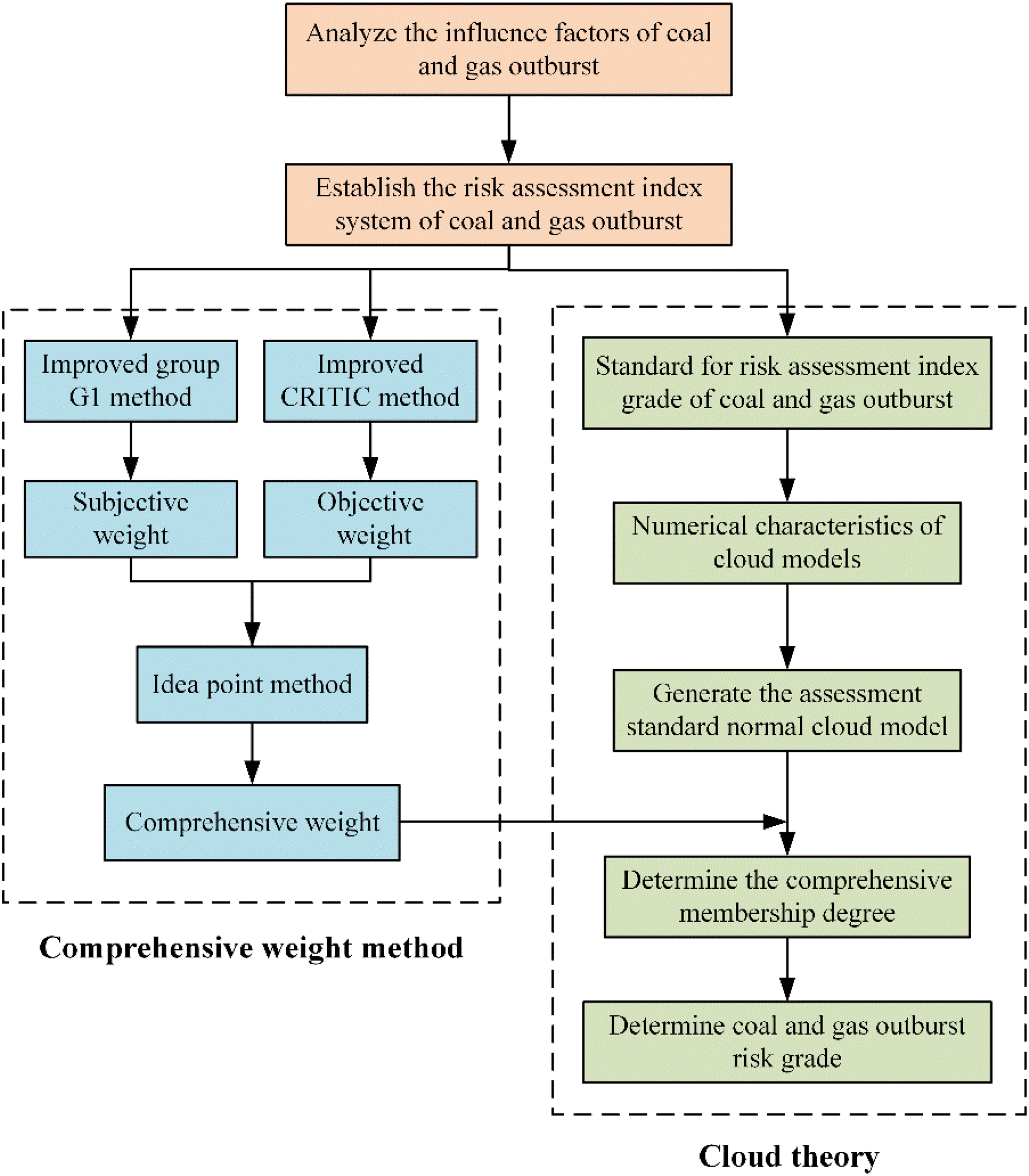
Flowchart of outburst risk assessment method based on improved comprehensive weighting cloud theory.
Assessment Index system and classification
Coal and gas outbursts have complex mechanisms and action principles. Hence, outburst risk assessment is a complex systematic engineering, where establishing a scientific and reasonable assessment index system is critical. The index system should be based on the five principles, i.e., objectivity, conciseness, feasibility, renewability, and generality (Zhou et al., 2020). In this study, an assessment index system was established based on relevant references and research results.
According to the theory of gas geology (Jia et al., 2017; Yan et al., 2013; Yuan, 1997), the geological structure controls the occurrence of coal seam gas, degree of coal destruction, thickness distribution, and outburst of coal and gas. Wang (2009) reported that gas, geology, coal quality, and other conditions significantly affected coal and gas outburst. Hu (2013) mentioned that owing to the advancement of deep mining, the related in situ stresses, gas pressures, and occurrence state of coal seams will likely change, thereby significantly increasing the risk of outburst. Coal and gas outburst is associated closely with geologic structures; outbursts occur only below a certain mining depth, and their severity increases with the mining depth (Cao et al., 2001).
In underground coal mining operations, coal seam gas content is one of the basic parameters for gas disaster prevention and gas utilization; furthermore, it is an important index for assessing the risk of coal and gas outburst (Wang et al., 2015; Xue and Yuan, 2017).
Gas pressure, which arises from the interaction among stress, gas content, and coal structure, is another essential factor to be considered when devising gas-control measures (Wang et al., 2017a). Gas pressure is the principal power in the first stage of coal and gas outbursts. The expansion energy for outburst increases with the gas pressure, resulting in a larger outburst scale (Wei et al., 2020).
According to the Coal and Gas Outburst Prevention Regulations (SAWS, 2009), when the characteristics of dynamic phenomena are ambiguous, the initial speed of methane diffusion, coal destruction type, coal firmness coefficient, and other indexes must be determined.
The risk prediction of dynamic disasters such as gas outbursts, rock bursts, and water inrush is associated closely with the permeability evolution of coal seams (He et al., 2020). Previous studies indicate that the permeability coefficient of a coal seam varies with time and the different positions in hard-soft composite coal seams (Wang et al., 2021).
Therefore, the influencing factors above can be categorized into coal seam occurrence, geological, coal seam physical, and gas occurrence characteristics. Factors that correspond to the coal seam occurrence and geological characteristics include the mining depth U1, geological structure U2, and coal seam thickness U3. Factors that correspond to the physical characteristics of the coal seam include the coal destruction type U4, coal firmness coefficient U5, and coal seam permeability coefficient U6. Factors that correspond to the gas occurrence conditions include the coal seam gas content U7, coal seam gas pressure U8, and initial speed of methane diffusion U9. Therefore, a risk assessment index system for coal and gas outbursts, as shown in Figure 3, was established.
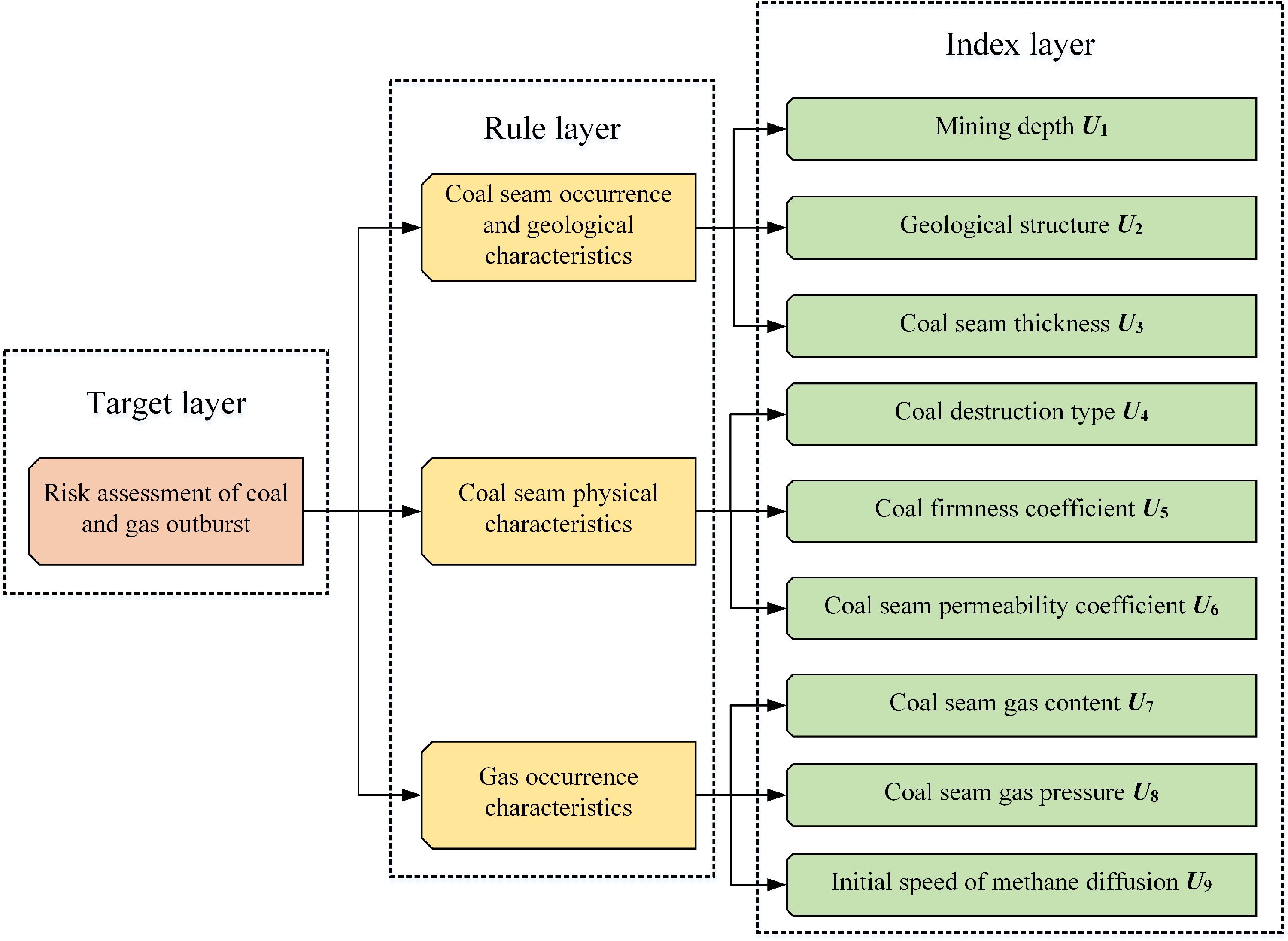
Risk assessment index system of coal and gas outburst.
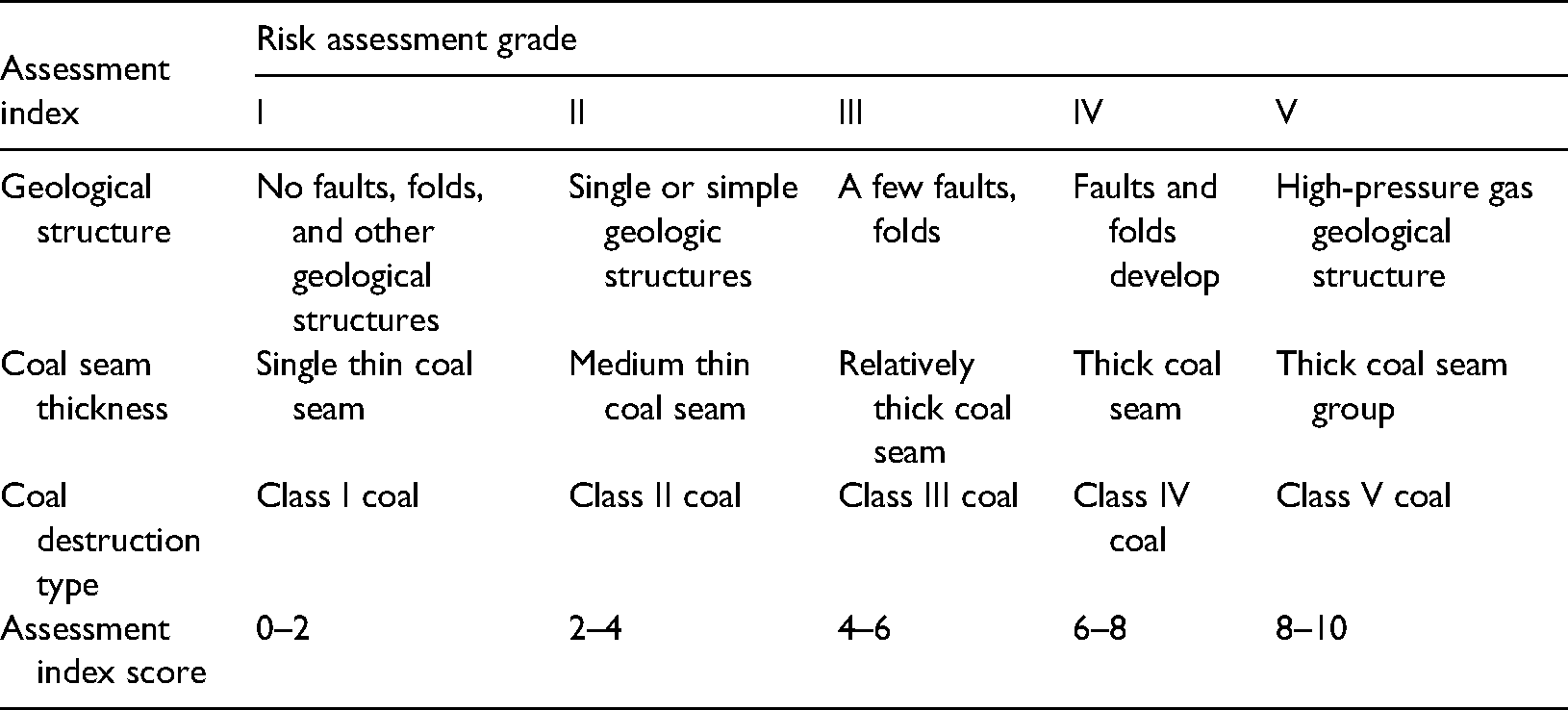
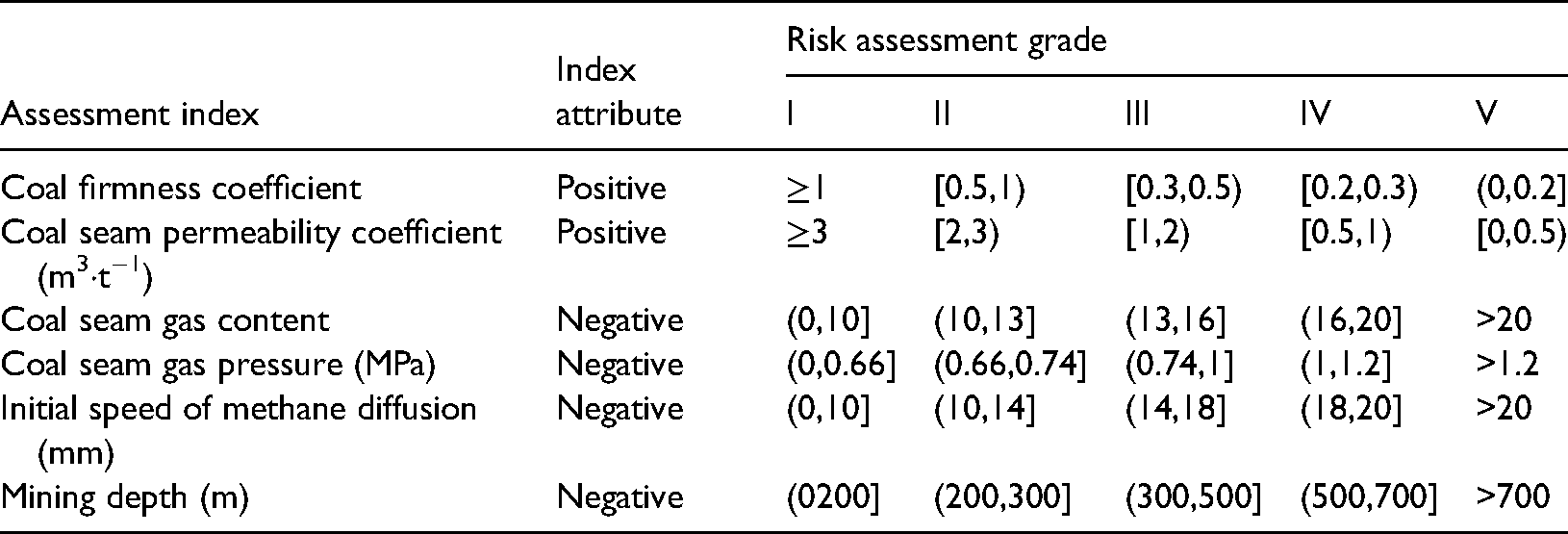
Assessment indexes are generally categorized into qualitative and quantitative indices (Chen et al., 2020). Notably, qualitative indexes are only used as the limit measure standard and present no numerical significance (Xing et al., 2021). Typically, they are graded based on experts’ experience and engineering practice. In this study, based on results presented in the Code for Identification of Coal and Gas Outburst Mines (SAWS, 2006) and those of (Xie et al., 2019), as well as the actual situation of coal seams, nine influencing factors of coal and gas outburst were classified into two categories based on the quantitative and qualitative indexes, and the risk assessment grade standard for coal and gas outburst was established, as shown in Tables 1 and 2. Risk assessment grades I, II, III, IV, and V correspond to five grades, i.e., very low risk, low risk, general risk, high risk, and very high risk, respectively.
Risk assessment grade standard of qualitative indexes affecting coal and gas outburst (SAWS, 2006; Xie et al., 2019).
Risk assessment grade standard of quantitative indexes affecting coal and gas outburst (SAWS, 2006; Xie et al., 2019).
Cloud numerical characteristics of coal and gas outburst assessment index
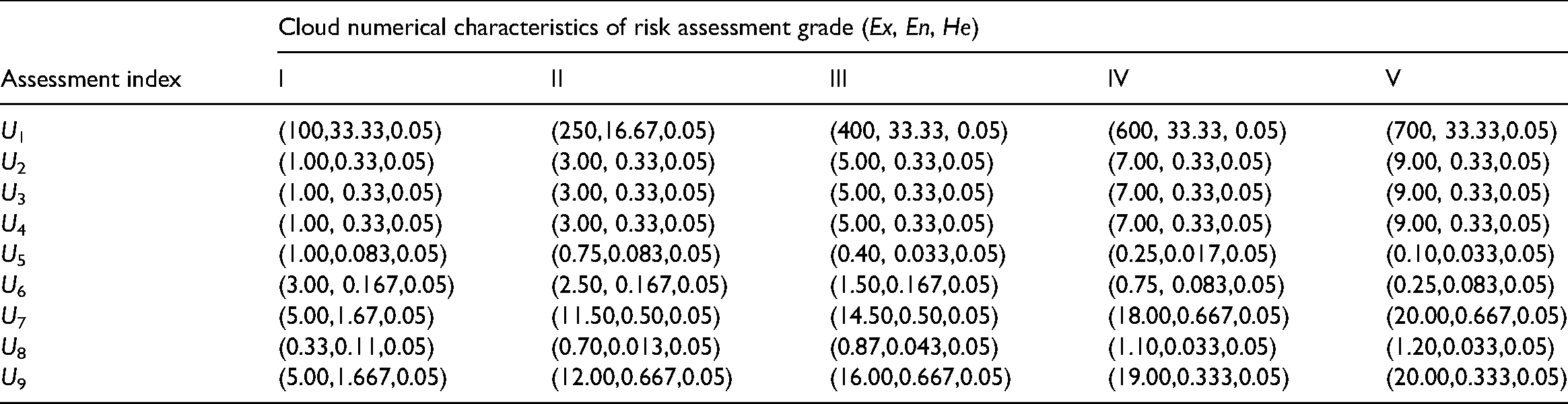
Base on the definition of the normal cloud model, the coal and gas outburst assessment indexes correspond to five groups of cloud numerical characteristics (Exi, Eni, and Hei) of different risk grade standards (i = 1, 2, …, 5). This index can be determined using the following formula (Guo et al., 2018):
Let 

Based on Equations (2) and (3), the risk assessment index system of coal and gas outbursts (shown in Figure 3), and the assessment grade standard (shown in Tables 1 and 2), the cloud numerical characteristics of coal and gas outburst assessment indexes were determined (as shown in Table 3).
Numerical characteristics of cloud model for risk assessment index of coal and gas outburst.
The normal cloud model code was written in MATLAB, the cloud numerical characteristics of each assessment index are shown in Table 3, and the number of cloud droplets was set as N = 2000. A forward cloud generator was used to generate the cloud droplets of the normal cloud model of five coal and gas outburst risk assessment grade standards (I, II, …, V) corresponding to each assessment index (U1, U2, …, U9), as shown in Figure 4.
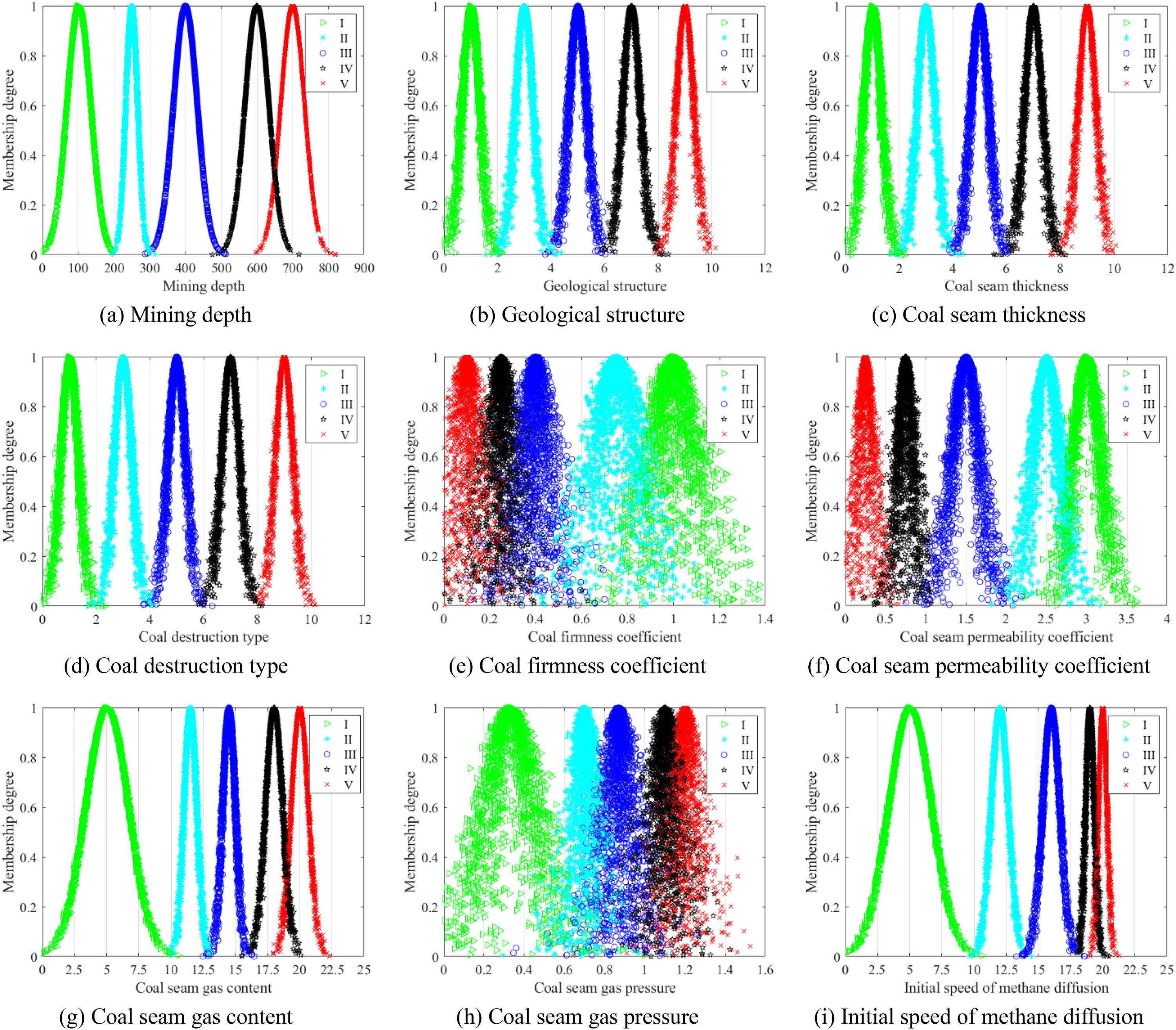
Cloud model of coal and gas outburst risk assessment index grade (a) mining depth (b) geological structure (c) coal seam thickness (d) coal destruction type (e) coal firmness coefficient (f) coal seam permeability coefficient (g) coal seam gas content (h) coal seam gas pressure (i) initial speed of methane diffusion.
The abscissa represents the value of the outburst risk assessment index, and the ordinate represents the membership degree corresponding to each assessment index. Figure 4(a)–(d), (g)–(i), from left to right, show the normal clouds of the risk grade of each assessment index from grades I to V, whereas (e) and (f) show those from grades I–V. In Figure 4, the intersection and aggregation of cloud droplets in the normal clouds with different risk grades of each index reflect the fuzziness and uncertainty at the boundary of adjacent assessment grades.
Comprehensive weighting of assessment indexes
Weight calculation based on improved group G1 method
The improved group G1 method is a subjective weighting method based on order relation; it does not require the construction of a complex judgment matrix and significantly reduces the calculation amount. The primary advantage of the improved method over the traditional G1 method is that it not only considers the different weights assigned by each expert to the same index, but also integrates the knowledge and experience of several experts and considers the difference in knowledge and experience among experts (Chi and Yan, 2012). The main steps of the improved group G1 method are as follows:
Calculate the expert weights. Set m experts to assess n coal and gas outburst indexes xk (k = 1,2,…,n). m sorting orders in order of importance exist, such as x1 > x2 > … > xn. Let rik be the rational assignment value of indexes xk − 1 and xk − 1 on the importance ratio of the two by expert I. For the rational assignment between indexes, refer to the literature (Guo, 2007). The traditional G1 method determines the weight base on the rik of the proportion assigned by experts but cannot fully reflect the difference in expert knowledge and experience. In general, differences exist because of the subjective experience among different experts, and the order relation of index importance differs as well. Therefore, a new rule for determining the weight of experts is introduced to reflect the differences in knowledge and experience among experts.
Step 1. The experts rank the assessment indexes base on their importance.
Step 2. The equivalent-order relations determined based the order relation principle are listed.
Step 3. A decision expert's order relation is selected as a reference, and each order relation is numbered. For example, the order relation of index x1>x2 is set as number 1, and that of x1 > x3 is set as number 2.
Step 4. The order relation of each expert is compared with the order relation determined in Step 3. An expert with the same order relation receives three points (e.g. both experts regard the order relation of index importance as x1 > x2.), and the expert with a different order relation receives one point. When all the experts agree upon a certain order relation, all experts receive two points.
Step 5. After all the ordered relationships are scored, the total score from the experts is defined as the similarity of the expert order relationships Pi, which reflects the credibility of the experts and their importance in the group (Zhang and Cao, 2020). Therefore, expert weight ai can be determined based on the rules above and Equation (4) (Chi and Yan, 2012). 2. Calculate index weights. The weight 
According to the calculation principle of G1 method, the weight 


Weight calculation based on improved CRITIC method
Traditional objective assessment methods, such as the entropy weight method, consider only the amount of information from indexes without considering the correlation between indexes. Therefore, weight deviation exists and the correlation between assessment indexes is not reflected accurately. Because coal and gas outbursts are caused by multiple factors, the CRITIC method was used in this study to calculate the objective weight. CRITIC, which is an objective weighting method proposed by Diakoulaki et al. (1995), uses contrast intensity and conflict characteristics to assess the information content and relevance of the assessment object. Its advantage is that it considers both the information content of the index and the correlation between the indexes of the assessment object. The basic principle of CRITIC is shown in Figure 5.
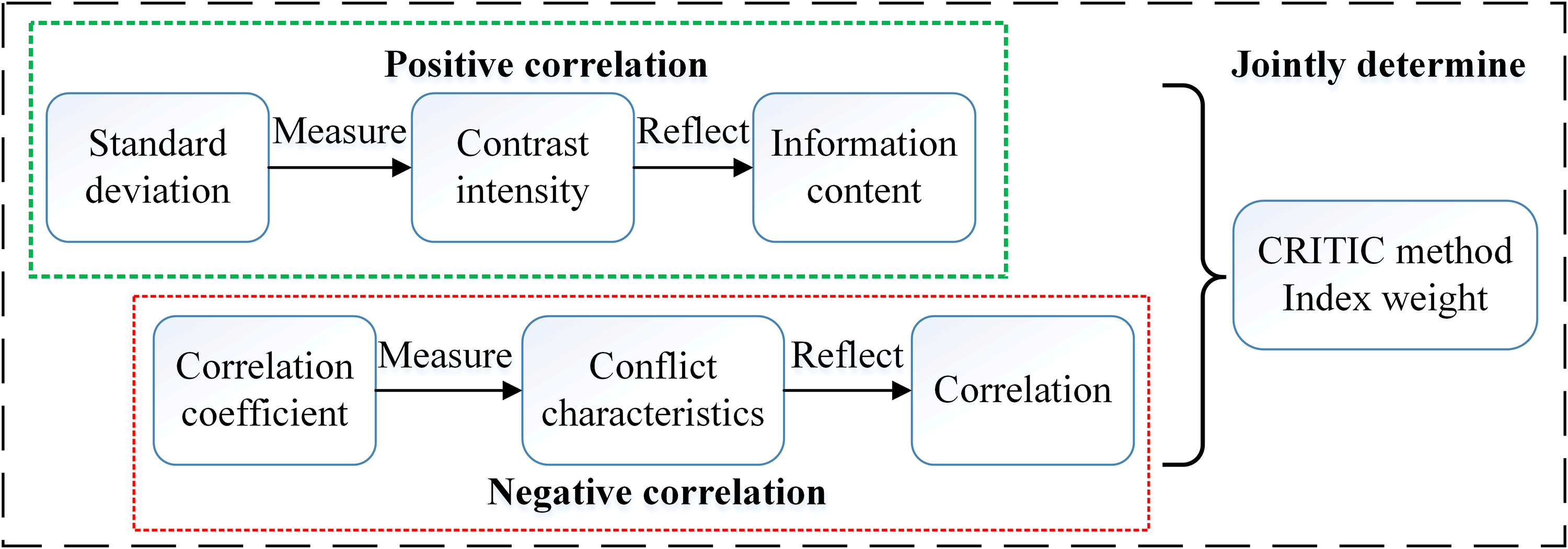
Basic principle of CRITIC method.
The traditional CRITIC method often uses the standard deviation to reflect the contrast intensity of indexes, rendering it difficult to avoid the effects of dimension and magnitude order.
Therefore, to account for the disadvantages of this method and the characteristics of coal and gas outburst risk assessment indexes, the variation coefficient, which can better reflect the absolute value of the data dispersion degree, was introduced to replace the standard deviation. The main steps of the improved CRITIC method are as follows (Guo et al., 2018):
m coal and gas outburst assessment samples and n outburst assessment indexes are used, and the value of the jth index of the ith sample constitutes the initial data matrix of the assessment index Dimensionless processing is performed on each index in the initial data matrix X. 3. The coefficient of variation of the jth index is calculated as follows: 4. The matrix after performing dimensionless processing (Step (2)) is used to determine the correlation coefficient matrix as follows: 5. The quantitative coefficient of the index information content Cj and the degree of independence between the indexes are determined as follows: 6. The index weight ωj is determined as follows:
In the formula, 


In the formula, 



Comprehensive weight calculation using ideal point method
To comprehensively consider the effects of the subjective experience of the improved group G1 method and the objective law of the improved CRITIC method, as well as reduce the limitation and weight error, the ideal point method was used in this study to determine the comprehensive weight by combining the subjective and objective weights (Shen, 2018). Assuming that an ideal value for the assessment index of coal and gas outburst exists, the basic principle of the ideal point method is to approximate the evaluated object to the ideal value as much as possible and obtain the approximate value of the optimal solution. Let, 


The Lagrange function is constructed using Equation (18) to solve the extreme value obtained yielded by Equation (17).


Comprehensive membership degree
The x conditional cloud generator based on the normal cloud model can generate the measured data x0 of the coal and gas outburst risk assessment index Uj (j = 1, 2, …, 9), which belongs to the membership degree 
Practical application of proposed method
To further solve practical engineering problems, two examples were selected from the literature (Xie et al., 2019). In particular, the measured data of the No. 3 coal seam in a Shanxi mine and the 21 coal seam in a Henan mine were selected to determine the risk grade of coal and gas outburst using the proposed assessment method. The assessment results of the two examples were compared with those of the assessment method presented in the original literature to confirm the rationality and effectiveness of the proposed assessment method. Subsequently, the risk of coal and gas outbursts in the No. 3 coal seam and 21 coal seam was assessed, thereby providing a basis for mine safety production.
As the main mining coal seam, the No. 3 coal seam exhibits a monoclinic structure with a northwest axial direction. Faults and folds of moderately complex geological structures are developed in the coal seam. Currently, the total mining depth of the coal seam exceeds 550 m, and the average thickness is 6.14 m (which implies a thick coal seam). The coal destruction type belongs to that of Class III, and the gas content of the coal seam is 13.4 m3/t. No outburst has occurred since the construction and operation of the coal mining well.
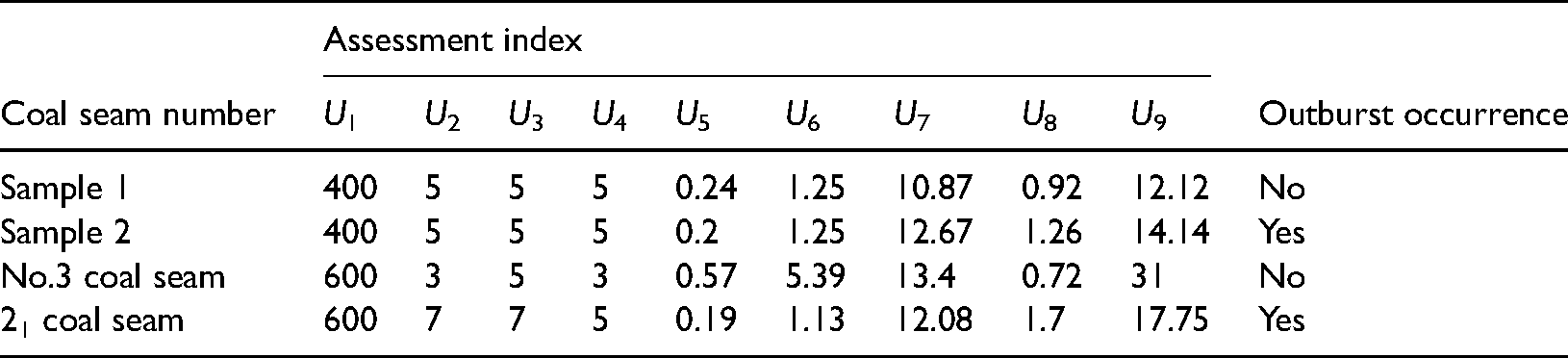
A dynamic gas phenomenon occurred in the 21 coal seam in 2003. The fault structure is dominated by normal faults. The average mining depth is ∼540 m, and the average thickness of the coal seam is 4.03 m; furthermore, the coal seam belongs to Class III coal. In the coal seam, the initial speed of methane diffusion was 16.5–19 mm, and the gas pressure was 1.7 MPa. If the measured data are within a certain range, then the mean value is used to ensure the accuracy of the assessment. Considering the variation in the mining depth, the average value of the risk grade interval to which the measured value of mining depth belongs was considered for calculation. Table 4 presents the measured data for each coal seam.
Measured data of coal and gas outburst assessment index.
Determination of index weights
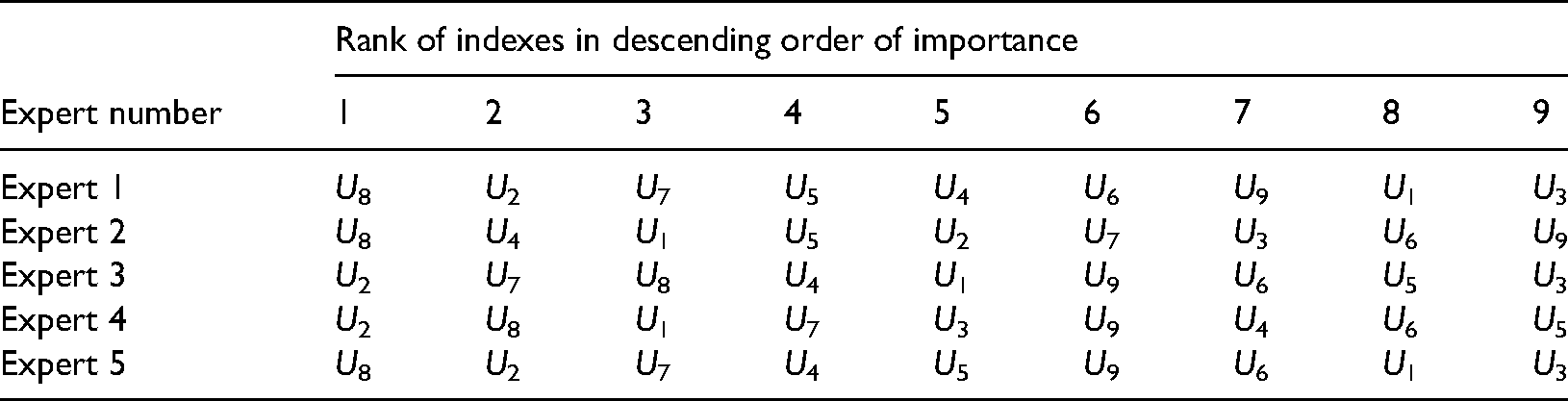
First, the subjective weight was determined using the improved group G1 method. To ensure the accuracy of the assessment, scholars from universities, engineers from scientific research institutions, and experts from the coal industry were invited to participate in the risk assessment. Five experts were asked to rank the order relationship among assessment indexes U1–U9 based on to their knowledge and experience, as well as to rank the importance of the assessment indexes. Subsequently, the subjective weight was calculated via procedures described in the abovementioned improved group G1 method.
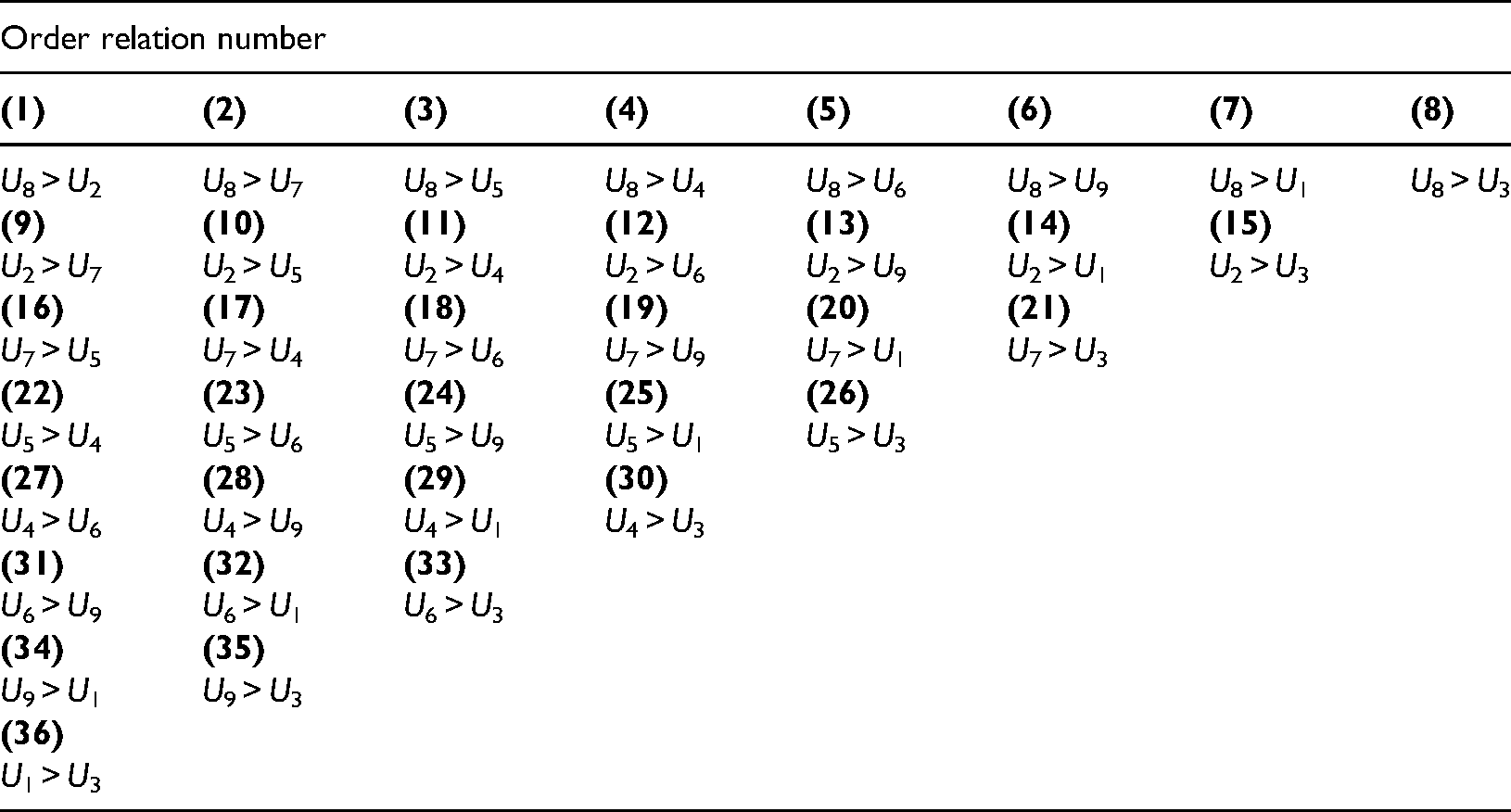
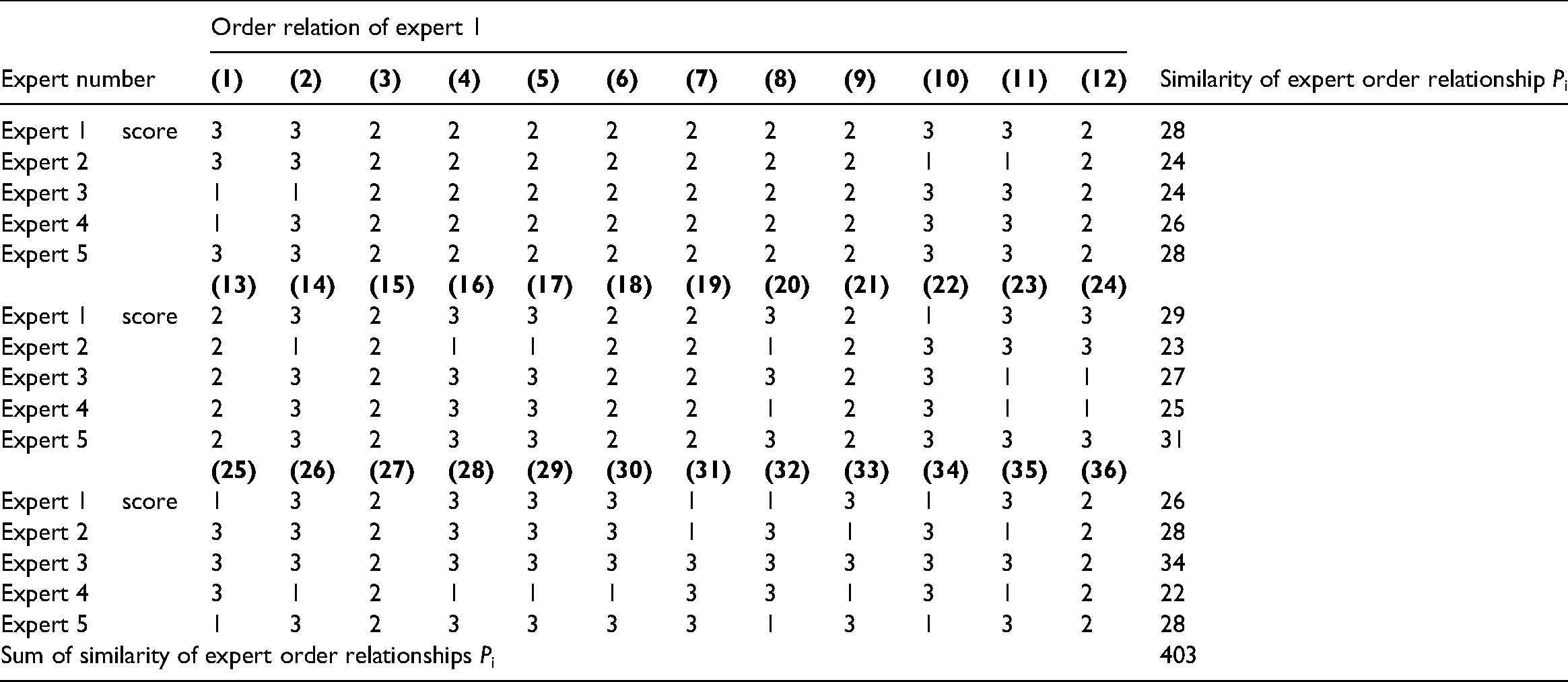
Table 5 shows the ranking of the index importance by the five experts. Using Expert 1 as an example, the index order relation arrangement determined by him was numbered to generate 36 order relations, as shown in Table 6. The similarity Pi of the five experts was determined based on the order relation of Expert 1, as shown in Table 7. For example, for the order relation (1) U8 > U2, Table 5 shows that Experts 1, 2, and 5 agree that index U8 is more important than U2, whereas Experts 3 and 4 believe that index U2 is more important than U8. Based on Step 4 of Section 3.4.1, Experts 1, 2, and 5 will receive 3 points, whereas Experts 3 and 4 will receive 1 point. Combining the similarity of expert order relationships Pi and Equation (4), the weight ai of the five experts was obtained as follows: 0.206, 0.186, 0.211, 0.181, and 0.216.
Index order relation arrangement.
Order relation of expert 1.
Similarity of expert order relationship Pi.
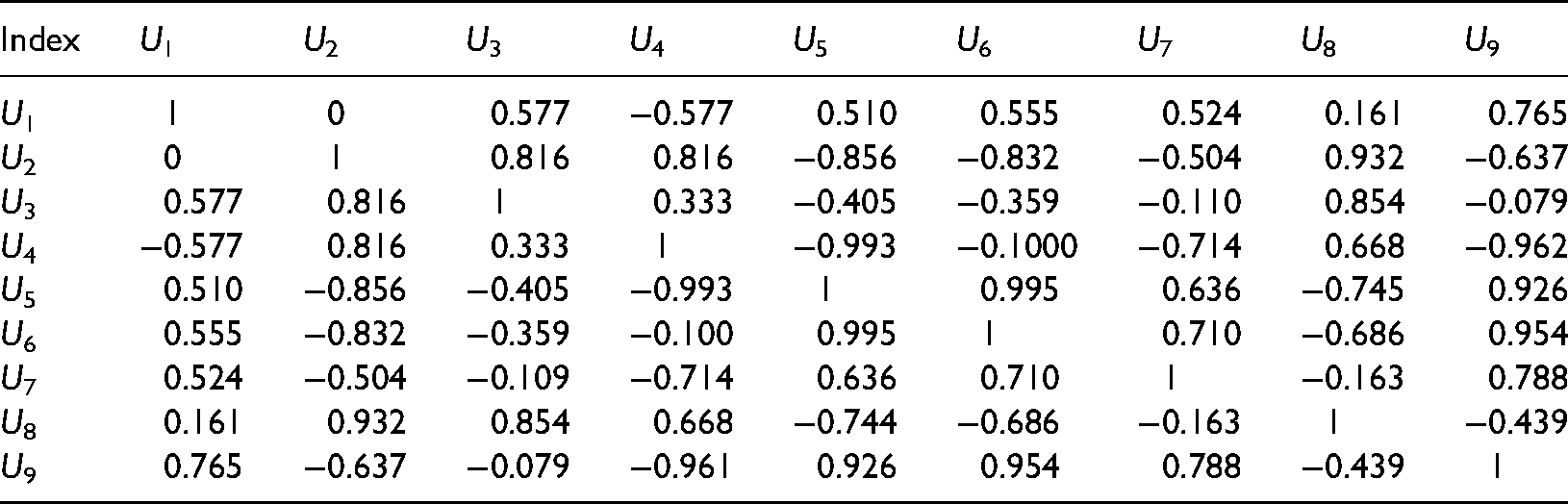
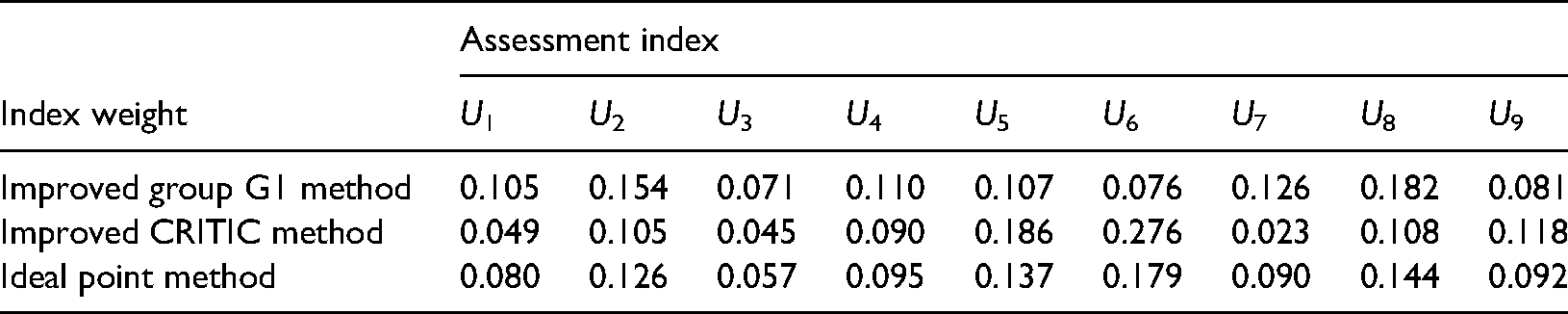
Subsequently, the objective weight was determined using the improved CRITIC method. The measured data for each example were processed in a dimensionless manner, and the variation coefficient, correlation coefficient matrix, and quantization coefficient of the risk assessment index of coal and gas outbursts were calculated using Equations (11)–(14). The objective weight was obtained, as shown in Table 9. The correlation coefficients of the assessment indexes are listed in Table 8. Finally, the comprehensive weight was solved using Equations (19) and (20), which were derived from the ideal point method. The subjective, objective, and comprehensive weights of the coal and gas outburst risk indexes are listed in Table 9.
Correlation coefficient of assessment index.
Coal and gas outburst risk assessment index weight.
Analysis of assessment results
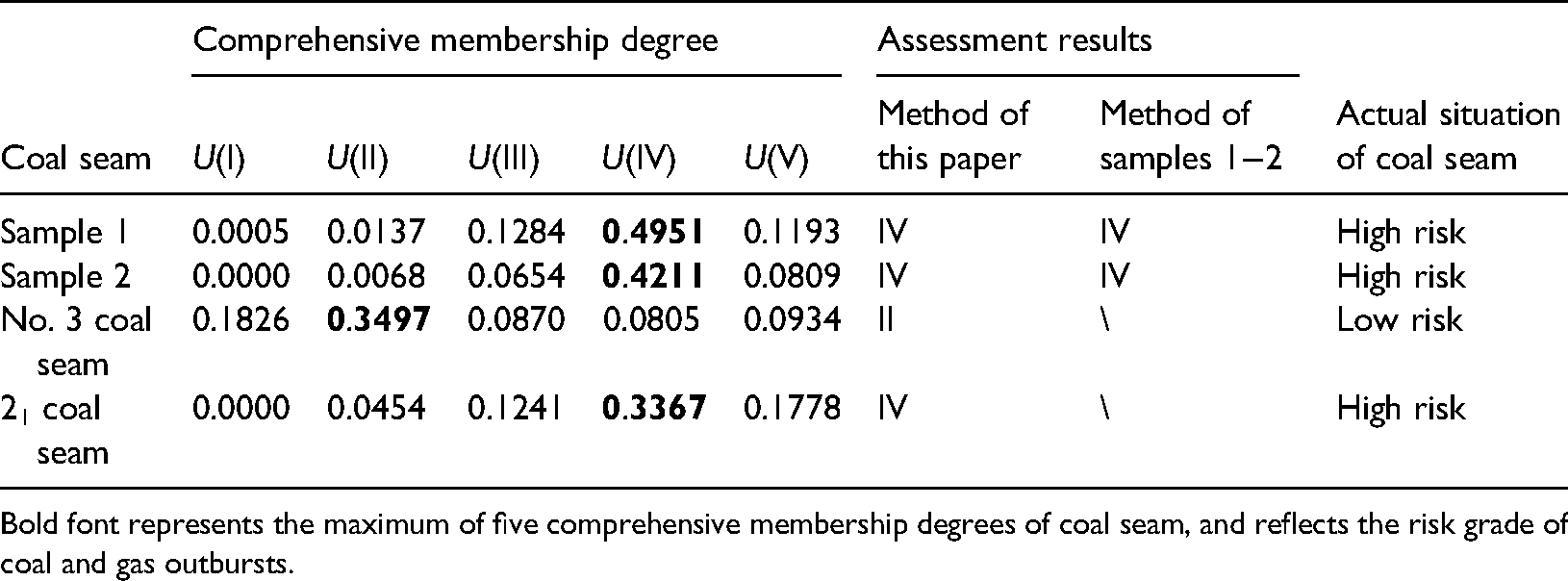
Based on the cloud numerical characteristics of coal and gas outburst risk assessment indexes shown in Table 3 and the x conditional cloud generator algorithm presented in Section 1.2, the measured values of the indexes were input to MATLAB, and it was generated that the assessment indexes of output samples 1–2, the No. 3 coal seam, and the 21 coal seam belonged to the membership degree of each risk grade. Combined with the comprehensive weight of indexes shown in Table 9, the comprehensive membership degree can be calculated using Equation (21). The risk grade of coal and gas outbursts was obtained based on the principle of maximum membership degree, and the assessment results obtained in this study were compared with the results of the extension method of entropy weight element (Xie et al., 2019) based on samples 1−2 and the actual seam situation. The comprehensive membership degree and comparison of the assessment results of samples 1−2, No. 3 coal seam, and 21 coal seam are shown in Table 10.
Assessment results and comparison of coal and gas outburst risk.
Bold font represents the maximum of five comprehensive membership degrees of coal seam, and reflects the risk grade of coal and gas outbursts.
As shown in Table 10, the assessment results of samples 1–2 were U(IV) = 0.4951 and U(IV) = 0.4211, respectively, which were obtained using the risk assessment method of coal and gas outburst based on the improved comprehensive weighting and cloud theory. According to the principle of maximum membership, these values are considered high risk and are consistent with the assessment results of the extension method of entropy weight matter element in the sample and the actual seam situation. This result confirms the validity and rationality of the proposed method.
Therefore, the method is feasible for the coal and gas outburst risk assessment of the No. 3 coal seam and 21 coal seam. The No. 3 coal seam and 21 coal seam belong to the comprehensive membership degree of risk grade U = (0.1826, 0.3497, 0.0870, 0.0805, 0.0934) and U = (0, 0.0454, 0.1241, 0.3367, 0.1778), respectively. According to the principle of maximum membership, for the No. 3 coal seam, its U(II) = 0.3497, which implies that it belongs to grade II (low risk). Meanwhile, for the 21 coal seam, its U(IV) = 0.3367, which implies that it belongs to grade IV (high risk). Furthermore, the assessment results are accompanied by a comprehensive membership degree associated with a particular risk grade, which provides more detailed information than a simple risk grade. For example, although the risk grades of samples 1–2 and the 21 coal seam are IV (high risk), the comprehensive membership degree of sample 1 (0.4951) is higher than that of sample 2 (0.4211) and 21 coal seam (0.3367), which demonstrates that the risk grade of sample 1 is more likely to be V. This further indicates that the coal and gas outburst risk for the 21 coal seam is lower than those of the other two coal seams with an identical risk grade. Notably, the risk grade of the No. 3 coal seam belongs to II, but the comprehensive membership degree U(I) = 0.1826 is higher than U(III) = 0.087, which indicates that it is in a relatively safe state currently, and that the possibility of coal and gas outburst is low. Moreover, 21 coal seam indicates U(V) = 0.1778, which implies it high possibility of belonging to grade V (very high risk) of the membership degree. This coal seam has experienced an outburst that must be prevented to ensure safe production in the future. In summary, the proposed assessment method yielded reasonable and accurate assessment results that are consistent with the actual situation of the coal seam.
The risk assessment method of coal and gas outbursts based on the improved comprehensive weighting and cloud theory uses the normal cloud model to convert the qualitative concept of assessment indexes into cloud numerical characteristics for quantitative analysis. The fuzziness and randomness associated with coal and gas outburst risk assessment are transformed into quantitative data of the membership degree, which directly reflects the risk grade of coal and gas outbursts and solves the uncertainty of the assessment process.
Considering the complex mechanism of coal and gas outbursts and the limitations of the traditional method assessment index, the improved group G1 method, improved CRITIC method, and ideal point method of the comprehensive weight method consider not only the index correlation between the amount of information and indices, but also the subjectiveness of expert assessment, thereby reducing the index weight deviation. Therefore, the proposed approach yields more accurate and reliable risk assessment results and is convenient for engineering applications.
Conclusions
A New risk assessment method for coal and gas outburst was proposed, and the improved group G1, improved CRITIC, and ideal point methods were used to calculate the comprehensive weight of nine assessment indexes, where the correlation between the indexes as well as experts’ subjective experiences and differences were fully considered. Compared with the traditional single-weight method, the proposed method yielded a smaller weight deviation and a more accurate index weight. The cloud numerical characteristics of the assessment indexes were determined using the normal cloud model, and the risk grade cloud models of nine coal and gas outburst risk assessment indexes were established. An x-condition cloud generator was used to generate the comprehensive membership degree of assessment objects belonging to different risk grades, where the risk assessment result converted from a qualitative concept to a quantitative analysis was depicted visually.
The assessment results of samples 1–2 obtained using the proposed method were consistent with the assessment results of the extension method of entropy weight–matter element, thereby verifying the effectiveness and rationality of the proposed method. The comprehensive membership degree of the outburst risk of the No. 3 coal seam and 21 coal seam was U(II) = 0.3497 and U(IV) = 0.3367, respectively, indicating their association with low risk and high risk, respectively. The assessment results were consistent with the actual situation of the coal seam; therefore, they can be used for the future risk assessment of coal and gas outbursts.
The risk assessment indexes that significantly affected coal and gas outbursts were primarily the coal seam permeability coefficient, gas pressure, coal firmness coefficient, and geological structure. However, no unified conclusion has been agreed upon in the academic community with regard to the mechanism of coal and gas outburst. During coal and gas outburst risk assessment, the selection of index factors, the classification standard of index risk degree, and the rationality of the index weight affected the assessment results. Therefore, follow-up studies regarding the risk assessment method of coal and gas outburst should focus on the abovementioned three aspects to further enhance the accuracy and rationality of the assessment results.
Footnotes
Acknowledgments
The authors acknowledge the National Natural Science Foundation of China (51974149, 52004117) for the support provided, members from the Liaoning Technical University and Ansteel Group for their assistance, and members from the Ningbo University of Technology for their meaningful advice. The authors would like to thank the reviewers and editors for their valuable and pertinent suggestions regarding this article.
Declaration of conflicting interests
The author declared no potential conflicts of interest with respect to the research, authorship, and/or publication of this article.
Funding
The author disclosed receipt of the following financial support for the research, authorship, and/or publication of this article: This work was supported by the National Natural Science Foundation of China (grant numbers 51974149, 52004117).
