




Abstract
Automatic mining technology is the ideal path and the inevitable way to improve production efficiency, reduce labour intensity and ensure safety for thin coal seam. Recently, while automatic mining technology is increasingly applied in China for thin seams, the corresponding automatic cutting technology has made new advances. Among them, mnemonic cutting technology has been fruitful industrial tested with suitable conditions. Simultaneously, another one called cutting trace pre-set technology of the shearer has been put forward. Using this method, the cutting trace in the area with coal thickness changed and geological structures can be preset. What's more, self-adaptive regulation strategy of cutting trace based on coal-rock recognition by monitoring current of cutting motor was discussed. Then, the main problems and development trends of automatic mining in China was also proposed.
Introduction
The reserves contained in thin coal seams (less than 1.3 m in thickness) are enormous in China. Among 95 national key coal enterprises, a total of more than 750 thin coal seams exist in 445 coal mines. The mineable reserves of thin seams are about 6.5 billion tons, approximately accounting for 20% of the total recoverable coal reserves (Li et al., 2012; Zhao et al., 2014). The statistical results of thin coal seam reserves in selected provinces in China are shown in Table 1 (Hai-peng, 2004; Liu and Liu, 2002; LV, 2009; Wang et al., 2012).
Statistics of thin coal seam mineable reserves in some provinces in China.

As the primary mineable coal resources, thick coal seams are depleted in some coal mines in recent years. In order to improve the mineable reserves and extend their service life, it is of great importance to excavate thin seams in many minefields, such as Huaibei, Huainan, Zibo, Yanzhou, Hancheng, Handan and Yulin. Currently, the intensity of excavating thin seams is increasing. However, these mines have been in a long-term difficult situation, including high labor intensity, low automation and safety level and poor economic performance. In the panel of thin seam, the height of the workspace is about 1.3 m. So the operators have to stoop down to operate the shearer or hydraulic supports, as shown in Figure 1.
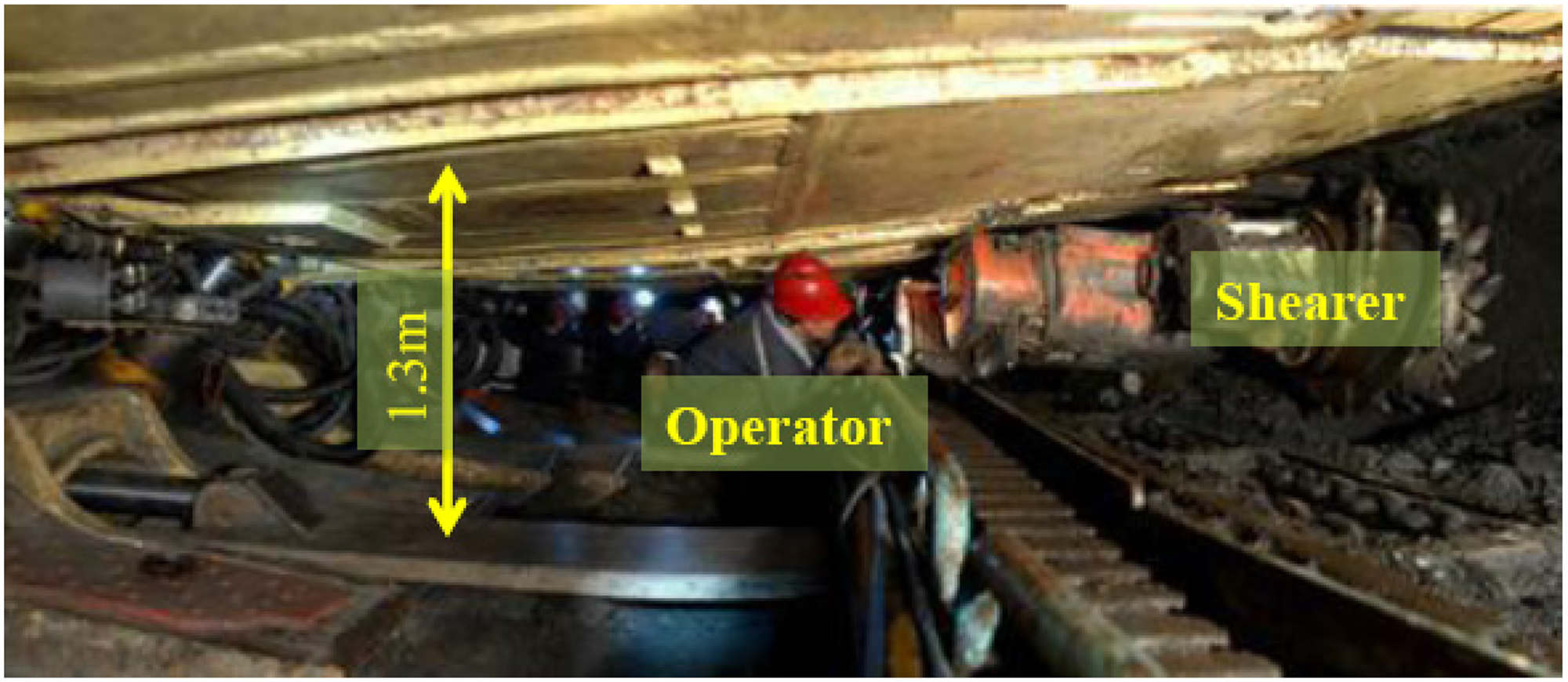
The operator is stooping to operate the shearer in the thin panel.
Limited by these detrimental factors, the production of thin seams takes merely 10.4% of the total coal production nationwide (Yuan, 2011). It is extremely inharmonious with respect to the recoverable reserves. Therefore, development of high efficient excavating techniques for thin seams has become the focus of government and society concern.
Currently, theoretical research and engineering practice about the mining technology and equipment for thin seams have been carried out at home and abroad (Fang et al., 2008; Guo, 2013; Liu, 2011; LV, 2009; Wang, 2009, 2016; Xu et al., 2012; Yuan, 2011). As a result, mechanized and automatic mining is the ideal path and the inevitable way to improve production efficiency and reduce labor intensity for thin seam (MAO et al., 2011; Wang and Tu, 2015; Yuan, 2017). However, automatic mining can be achieved only in suitable conditions, such as coal thickness changed very little or without geological structures. The degree of automatic mining is generally low because of the complexity and diversity of deposit characteristic in China.
Current situation of automatic mining technology in thin seams
There are two major automatic mining technologies for thin seams: one using a coal shearer and the other one a plough. Coal shearer has the advantages of high cutting efficiency, high ability of coal-rock breaking and good adaptability. It is the primary approach of mechanized excavation for thin seam in China. According to incomplete statistics, among the mechanized working faces for thin seam, those involving coal shearer takes 85%. Limited by poor ability of coal rock breaking, low stability and harsh requirements on geologic conditions, the promotion and application of plough in mechanized working face of thin seam in China is limited. Without explanation, automatic mining technology in the paper is the one involving a shearer.
In recent years, with more and more attention paid on automatic mining technology and equipments, the corresponding applications in thin seam working face have been made great progress in China, such as panel 44305 in Yujialiang Coal Mine, panel 4602 in Yangcun Coal Mine, panel 1001 in Huangling No.1 Coal Mine and panel 8812 in Tangshangou Coal Mine, etc. Among of them, fully mechanized mining equipments including shearer, hydraulic support and scraper conveyer in panel 44305 were imported. On the contrary, the equipments in panel 4602 and panel 8812 were completely made in China. The key equipments in automatic mining have been realized localization.
According to these applications in China, the geological conditions in these working faces involved were well adapted for automatic mining. The typical features of automatic mining are mostly based on mnemonic cutting technology with centralized control system, video surveillance system and electro hydraulic control system (Fan et al., 2012b; Tian, 2011; Wang, 2016; Wang and Huang, 2014).
Automatic cutting technology is the core of the automatic mining. Based on the current development, mnemonic cutting is the main technology with the auxiliary one cutting trace pre-set technology. The former is the most commonly applied and adapted to the panel with relatively simple geological conditions. The latter one is rarely used, which is suitable for the panel with relatively complex conditions, such as coal thickness changed greatly or geological structure. Aimed at automatic cutting, the corresponding key equipments consist of video surveillance system, shearer remote control system, as shown in Figure 2.
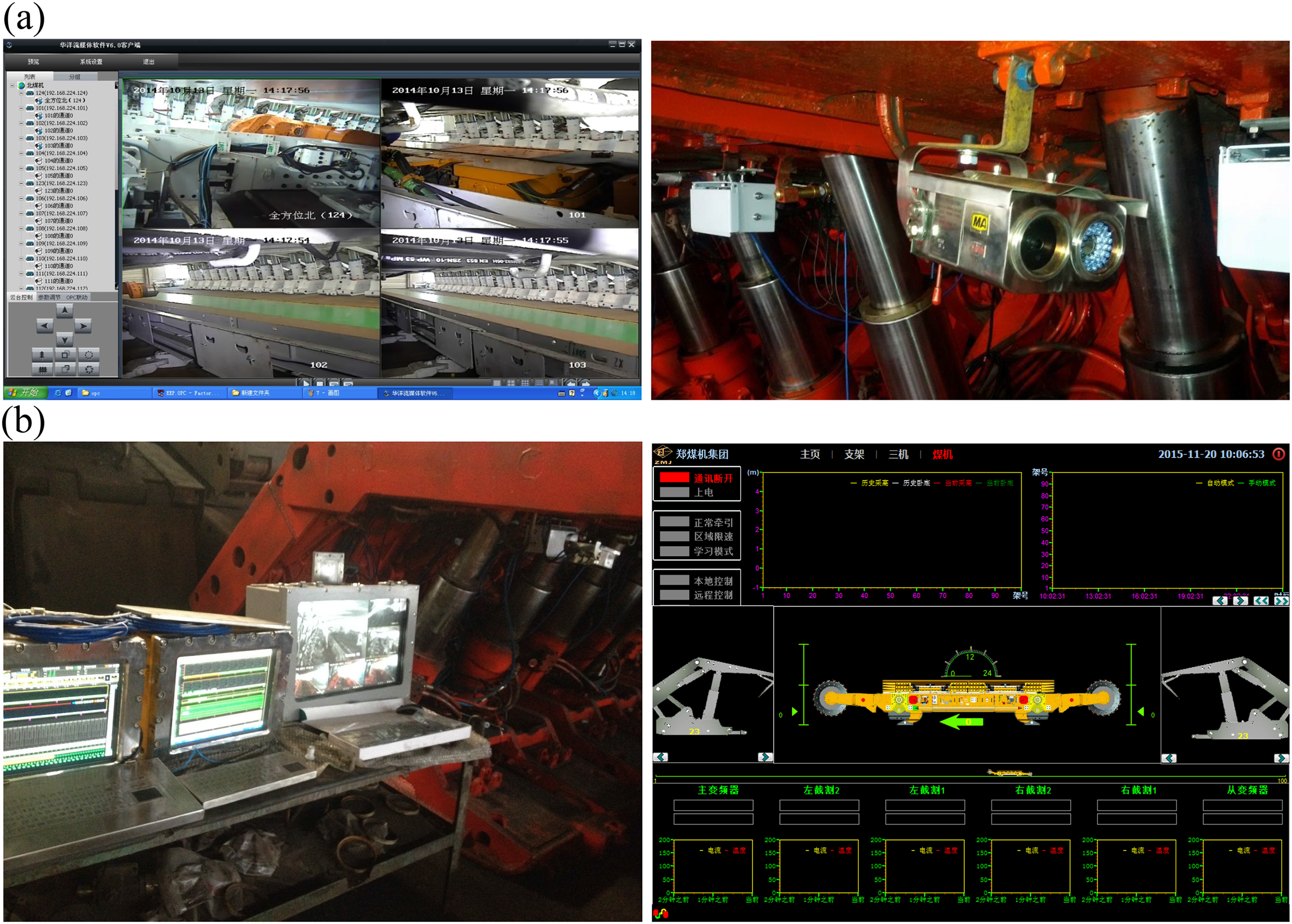
The key equipment in automatic cutting: (a) video surveillance system; (b) shearer remote control system.
Mnemonic cutting technology
Mnemonic cutting can be divided into three stages. Firstly, the sampling cut along the coal seam in the working face is carried out by manual control. In the stage, the location and state information of the shearer during the sampling cut is recorded and stored by the control center. Then, during the normal cutting process, the operating parameters of the shearer are automatically controlled according to the information revealed by the sampling cut. At last, when variation arises in coal-rock interface, the location and state parameters of the shearer should be timely corrected by the operator according to the feedbacks from video surveillance and electrohydraulic control system. The amended and corrected cutting cycle is used as a new sampling cut, as shown in Figure 3.
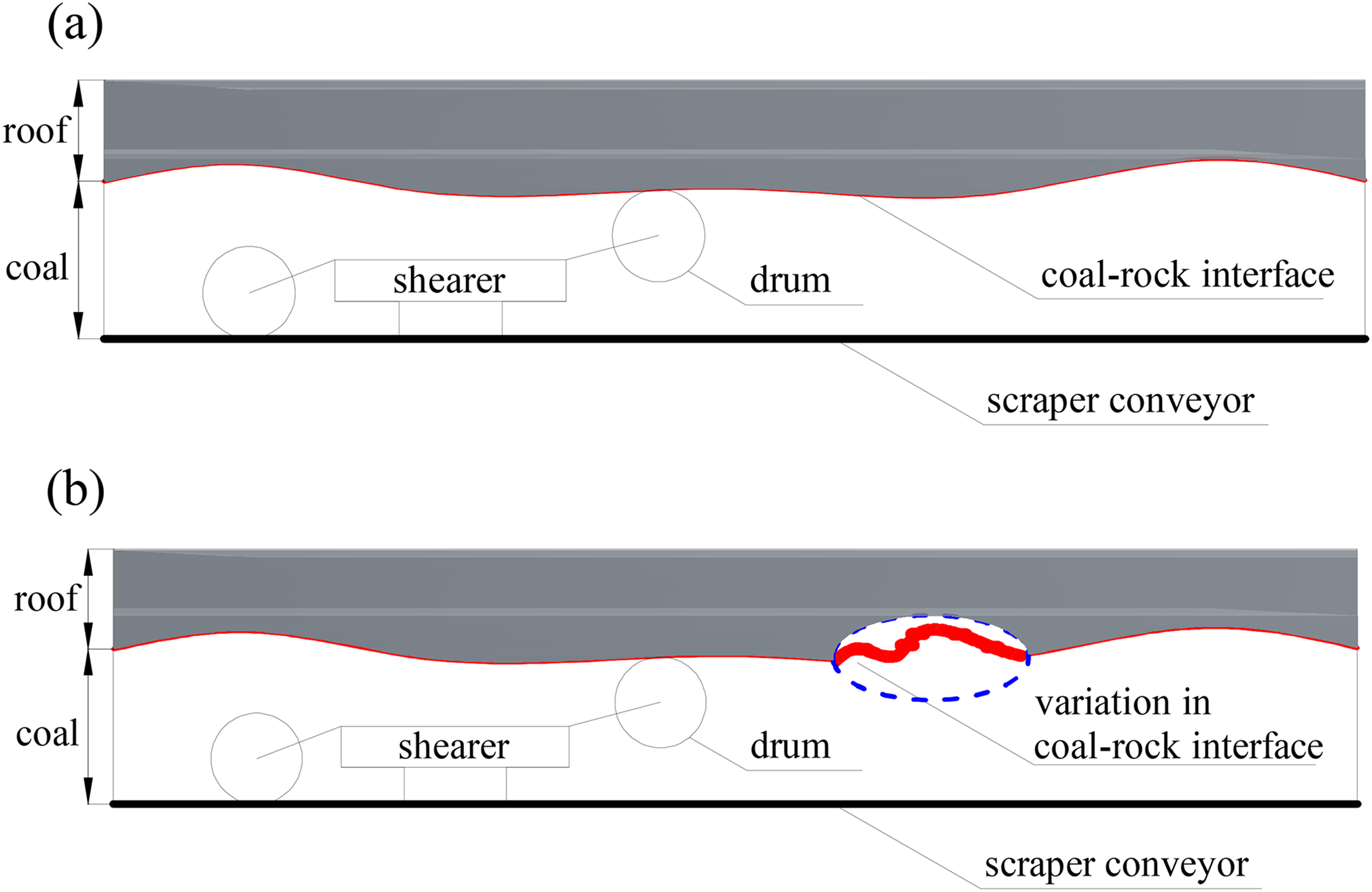
Schematic diagram of mnemonic cutting technology: (a) sampling cut; (b) cutting trajectory amended and corrected.
In mnemonic cutting, the parameters involved are obtained from the sampling cut. However, these parameters should be timely and frequently updated because of the complicated and variable geological conditions. Therefore, mnemonic cutting technology has poor adaptability to geological conditions changed greatly. It is applicable to the panel with leveling roof and floor and steady dip and thickness of seam.
Longwall panel 8812 is located in Tangshangou Coal Mine in China Coal Group. As the excavated coal seam, the 8# seam thickness is 1.0–1.8 m with an average of 1.4 m, and the dip angle is 3°–5°. The thickness and dip are relatively steady. No geological structures were exposed during tunneling and excavation. Moreover, the roof and floor in the panel are leveling and stable. Rely on the stable geological conditions, automatic mining technology with mnemonic cutting was applied in the panel. MG2×160/710-AWD shearer was used for coal breaking. During the normal cutting process, the operating parameters of the shearer were automatically controlled according to the sampling cut Figure 4.
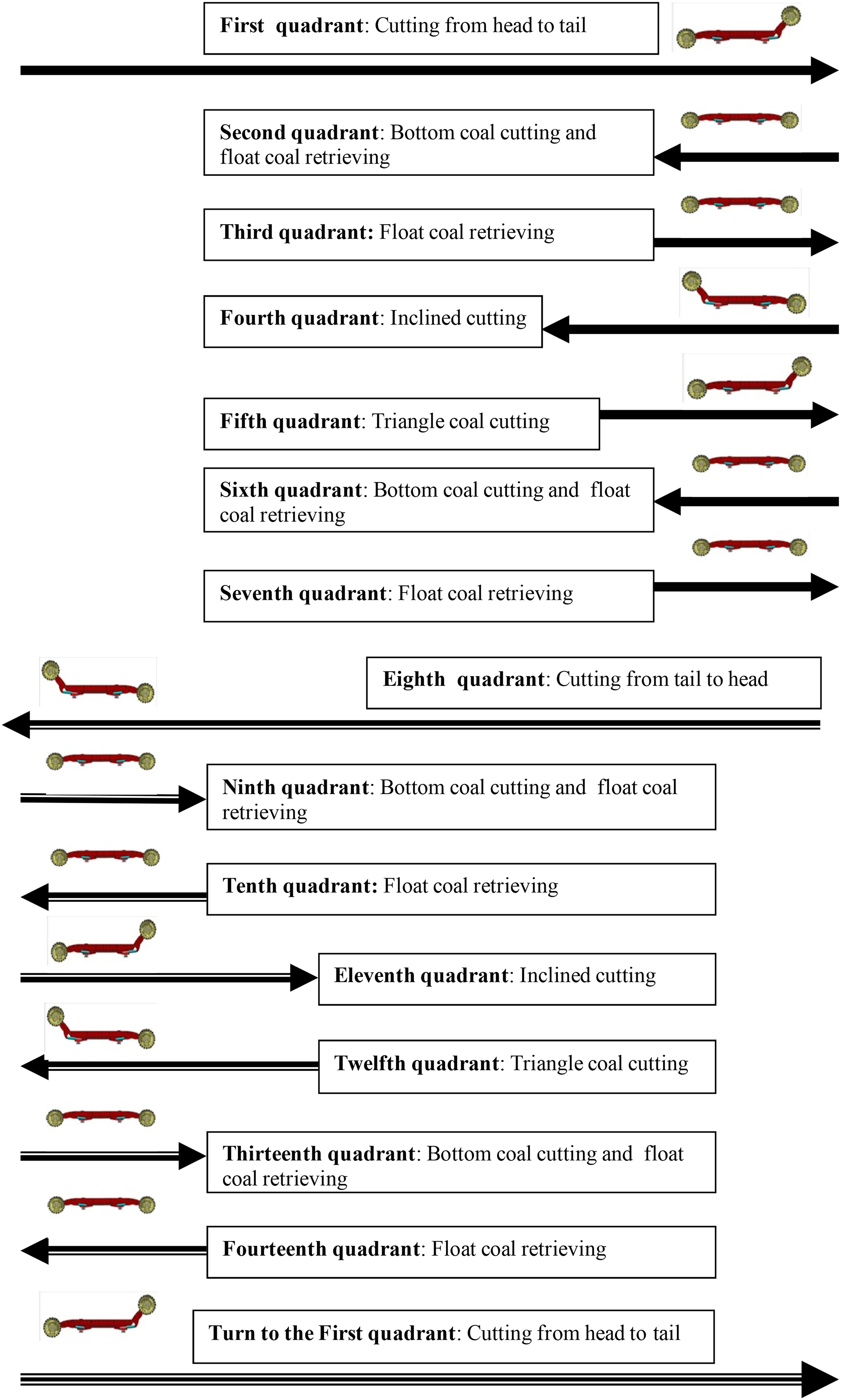
Flow chart of mnemonic cutting technology.
In the panel, the environment geological conditions were not immutable. According to the feedbacks of the conditions from video surveillance system and sensors, the corresponding parameters in the sampling cut should be timely amended by the shearer operator. Then, the shearer can be operated based on the parameters revised through shearer remote control system, as shown in Figure 5. The industrial field tests in the panel 8812 results showed that mnemonic cutting can be realized with the assistance of precise positioning, attitude determination technology and remote control. During mnemonic cutting, the shearer was operated smoothly and the faulty rate was controlled at around 3% to 5%.
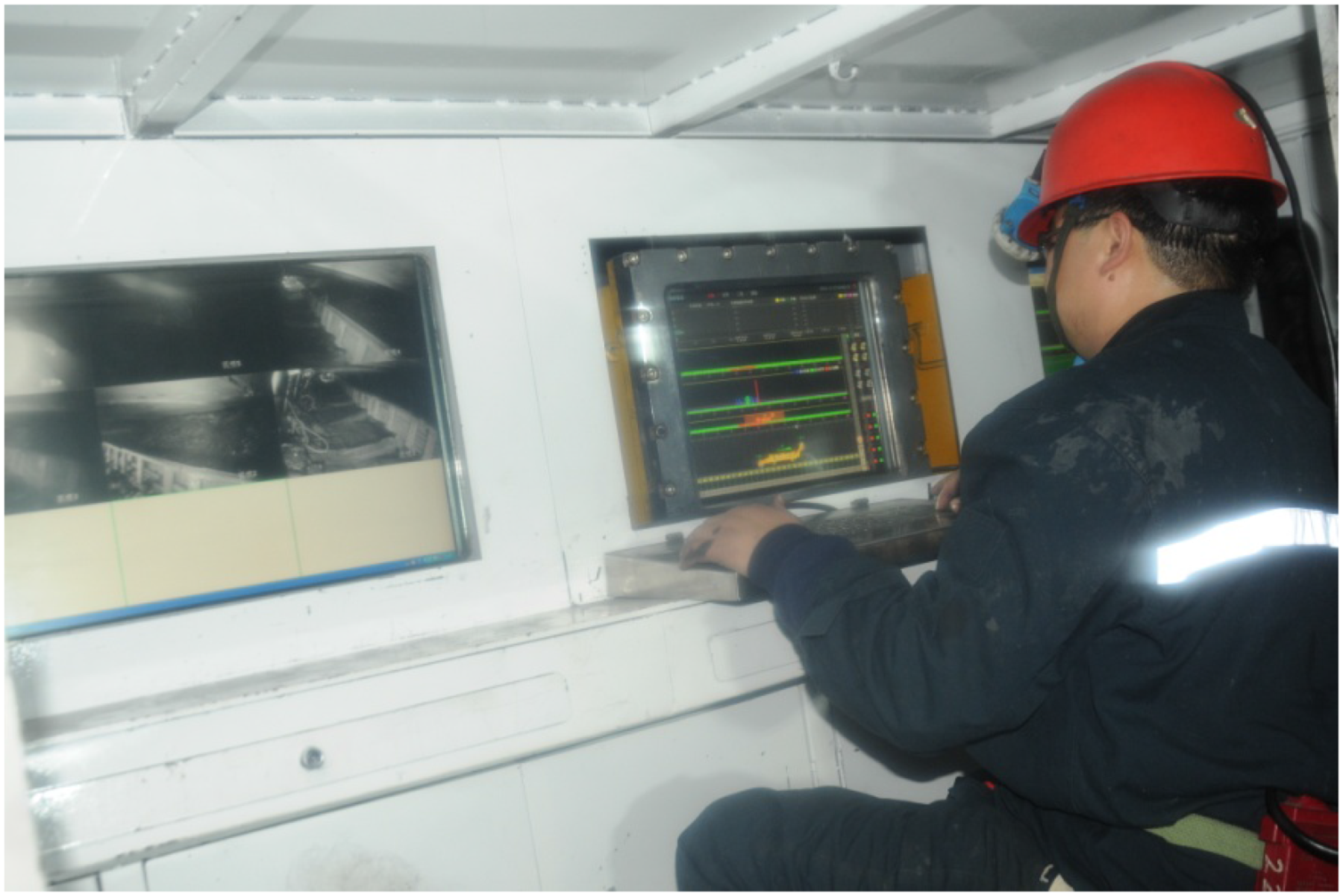
Shearer operation through remote control system.
Cutting trace pre-set technology
Compared with mnemonic cutting, cutting trace pre-set technology has better adaptability to geological conditions, such as coal thickness changed and geological structures.
Cutting trace pre-set technology in the panel with coal thickness changed
Based on advance exploration about the seam thickness, the distribution law of thickness is revealed in the panel. Cutting trace of the shearer in this area can be pre-set according to the law.
With respect to advance explorations about seam thickness, geophysical technology using seismic wave transmission is usually applied. Using this technology, 2# coal seam thickness distribution in panel 22204 in Guoerzhuang Coal Mine was obtained, as shown in Figure 6. The average seam thickness in the monitoring area is about 1.4 m.
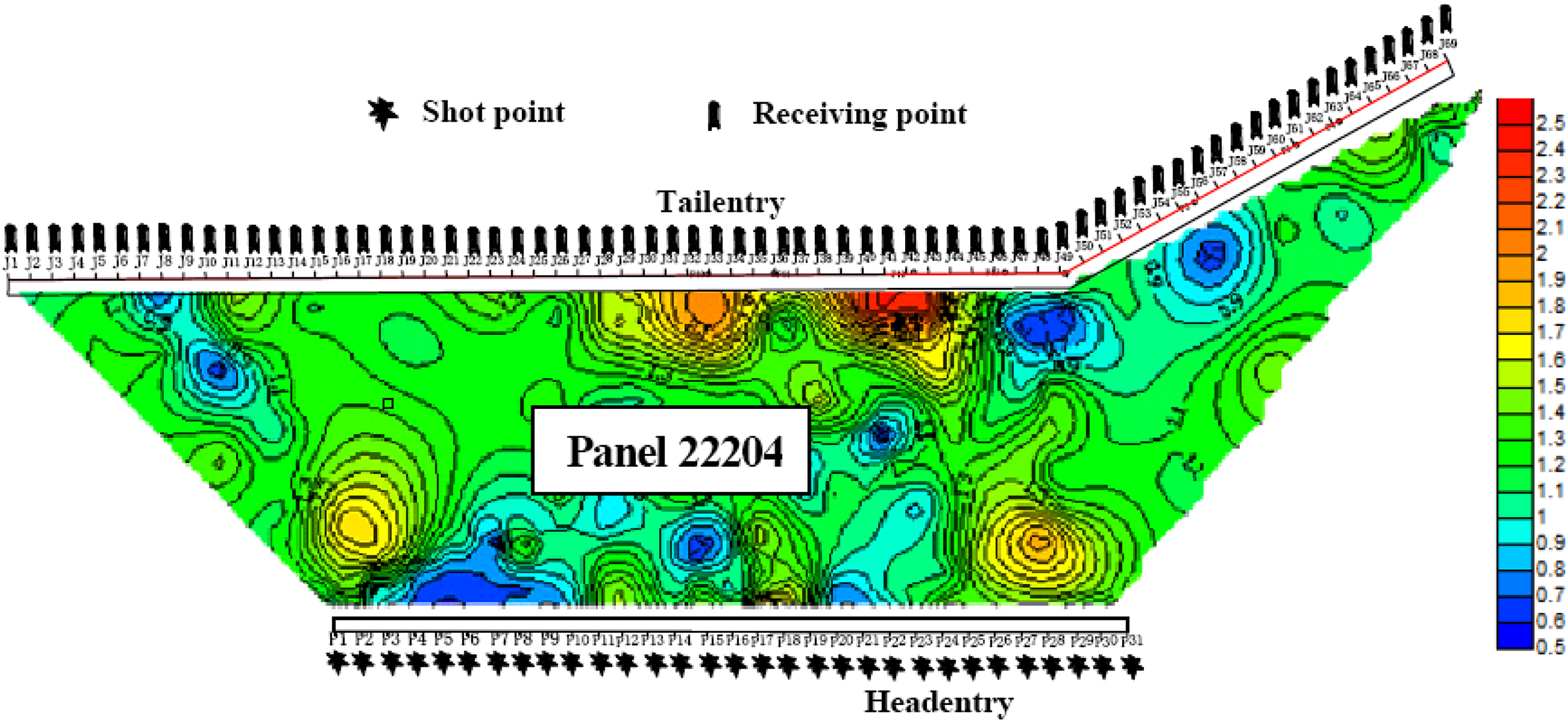
Coal thickness distribution in panel 22204.
According to the advance exploration results, the distribution function about the seam thickness was constructed. Then it was stored and introduced into the shearer cutting controller. Combined with the contour line of floor and roof, the graphic model about the mining height and the cutting trace in the panel was pre-built.
To achieve higher recovery, less refuse content in raw coal and better implementation effects, cutting trace pre-set technology called “floating mining height” (Wei, 2015) was put forward. In another word, mining height along dip and strike direction was pre-set according to the coal thickness distribution in the two directions, as illustrated in Figure 7.
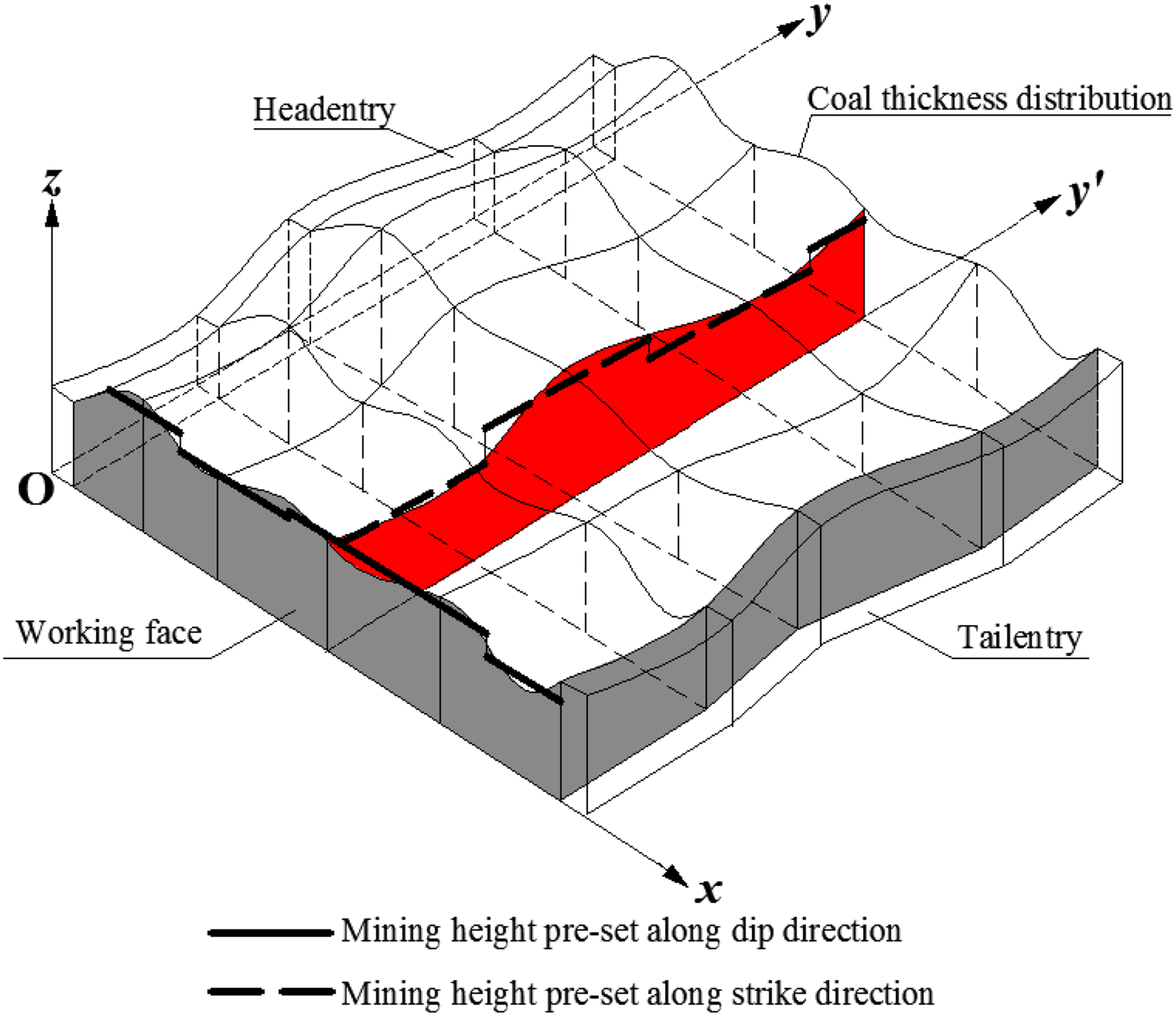
Cutting trace pre-set in changed area of coal thickness.
An industrial test was carried out in the panel Wu222120 in Pingyu No.6 Coal Mine in China. The seam thickness in the panel varied from 0.8 m to 1.8 m with an average of 1.3 m. MG200/456-WD shearer with mining height ranged from 1.1 m to 2.4 m was applied. In order to reduce the refuse rate and increase the degree of automation, “floating mining height” technology was adopted. The statistic refuse rate before and after the implementation was obtained, as illustrated in Figure 8.
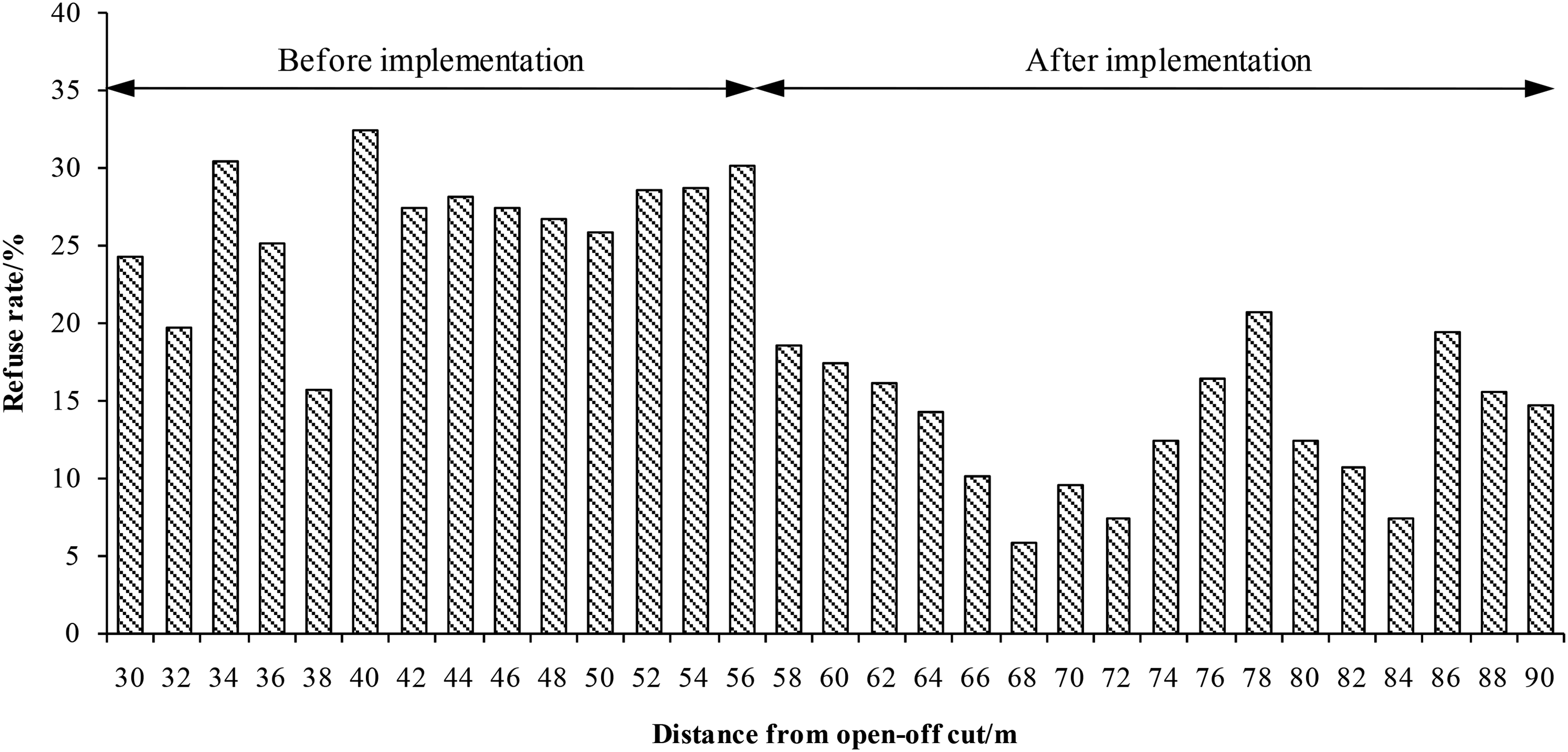
Refuse rate before and after “floating mining height” implementation.
As shown in field industrial test, the average refuse rate reduced from 26.5% to 13.5% by “floating mining height” implementation. According to an uncompleted statistics, the failure rate is about decreased by 20% simultaneously. Reliability and economy of automatic mining were improved significantly by “floating mining height”.
Cutting trace pre-set technology in the panel with geological structures
As the most common geological structures, faults and folds often exist in the working face.
Cutting trace pre-set principle while passing through fault
Using electromagnetic wave detection, occurrence parameters of a fault including drop, dip angle and range can be advanced revealed (Sun and Wang, 2015; Zhang et al., 2007; Zhang and Liu, 2006). Taking a normal fault as an example, a related model was constructed, as shown in Figure 9. As the cutting trace pre-set principle, engineering quantity of rock cutting is minimized while passing through the fault. According to the geometric relation, when the sum area of triangle ABC and EFG is minimized (Wang, 2016), the line BD and FH is the optimal cutting trace when passing through the fault. The formulas to calculate the two lines are following:

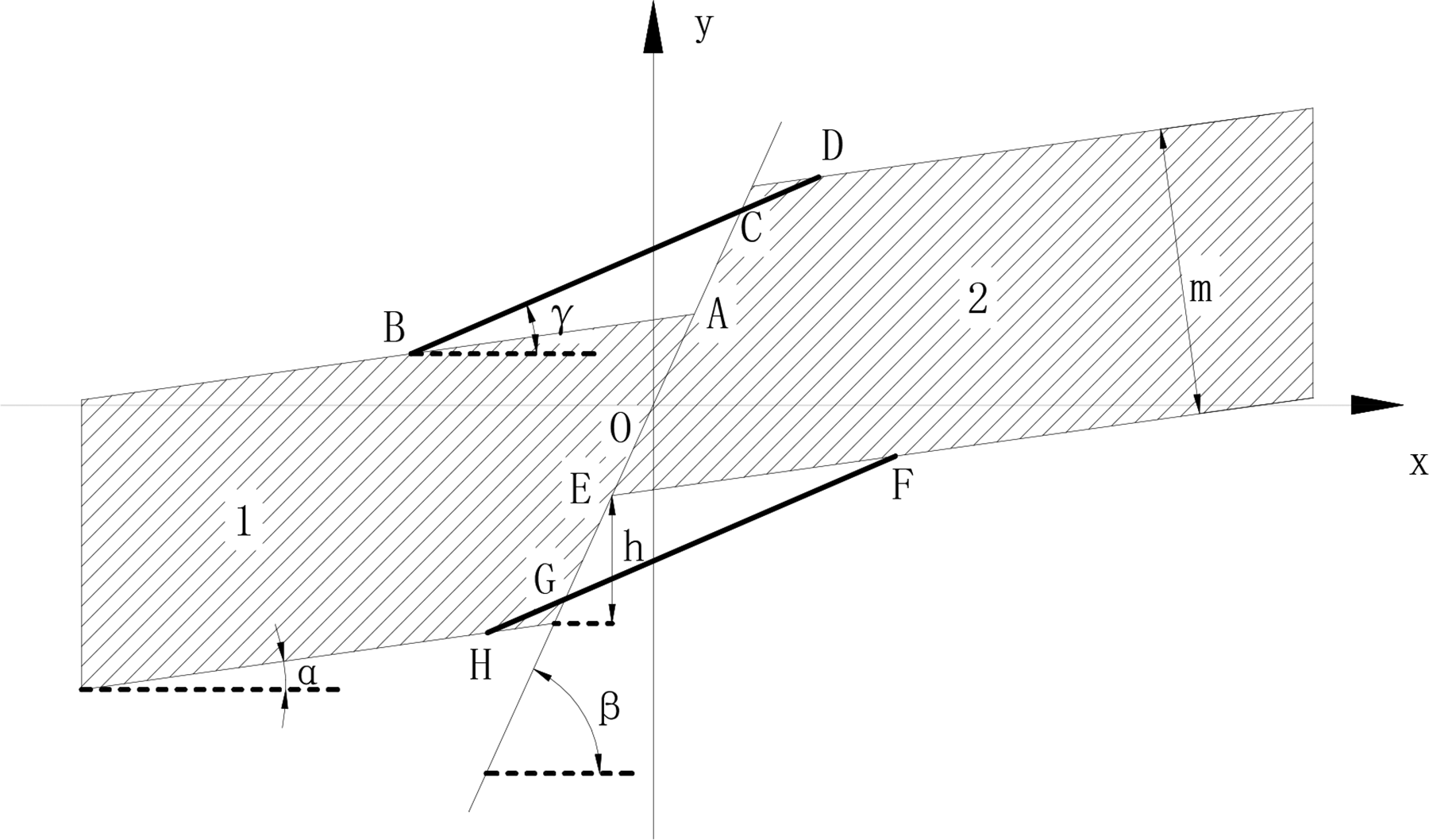
Cutting trace while passing through fault.
where
Cutting trace pre-set principle while passing through fold
Using in-seam seismic method, occurrence parameters of a fold including bottom radius, top radius, coal thickness, arc length, central angle, etc. can be detected. Same as the cutting trace pre-set principle while passing through the fault, engineering quantity of rock cutting is minimized while passing through the fold. Taking a circular fold as an example, a related model was constructed, as shown in Figure 10(a). According to the geometric relation, the formulas to calculate the trajectory are following (Wang, 2016):

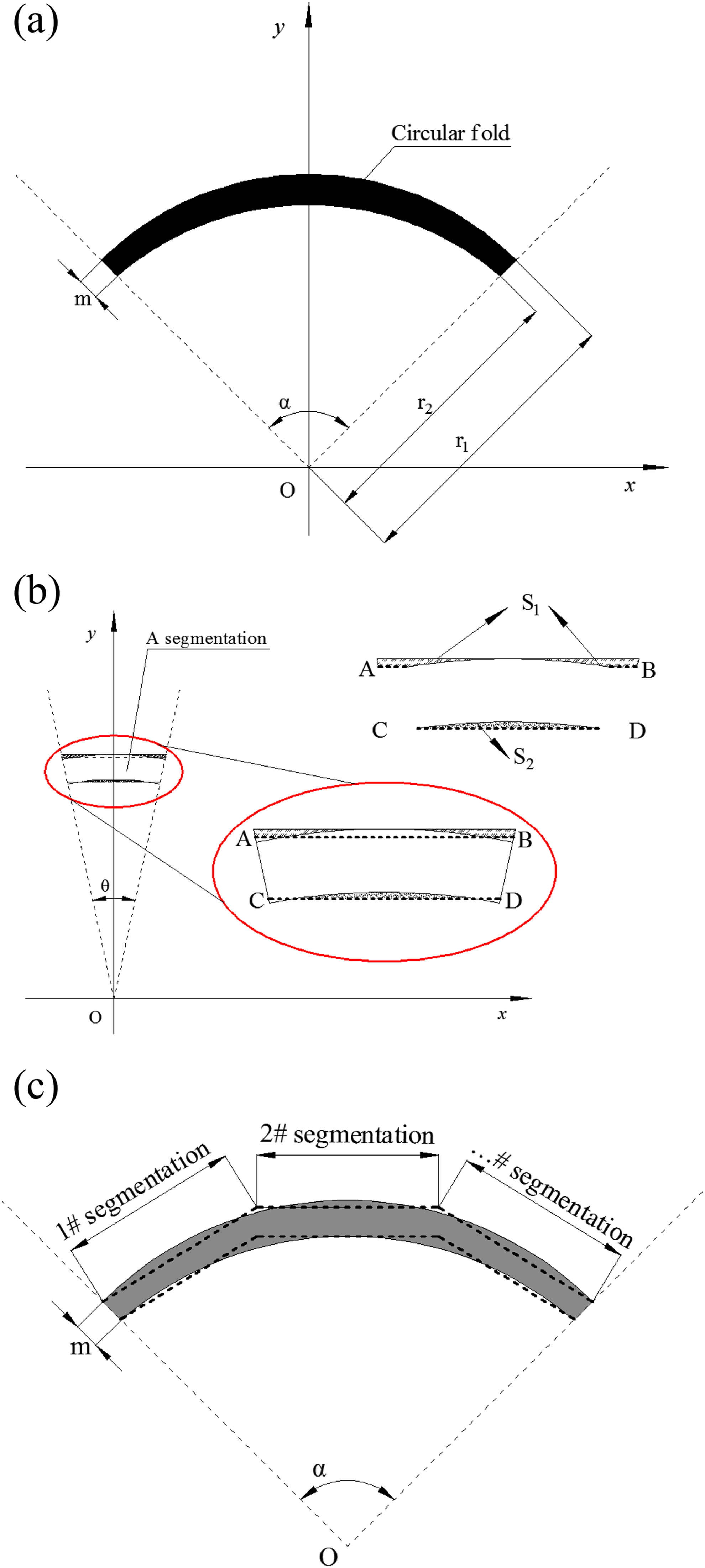
Cutting trace pre-set while passing through circular fold in segmentation: (a) model of a circular fold; (b) model of a segmentation in the circular fold; (c) cutting trace in segmentation.
where m is the coal seam thickness in the panel, m. a is a constant which can be calculated from the following: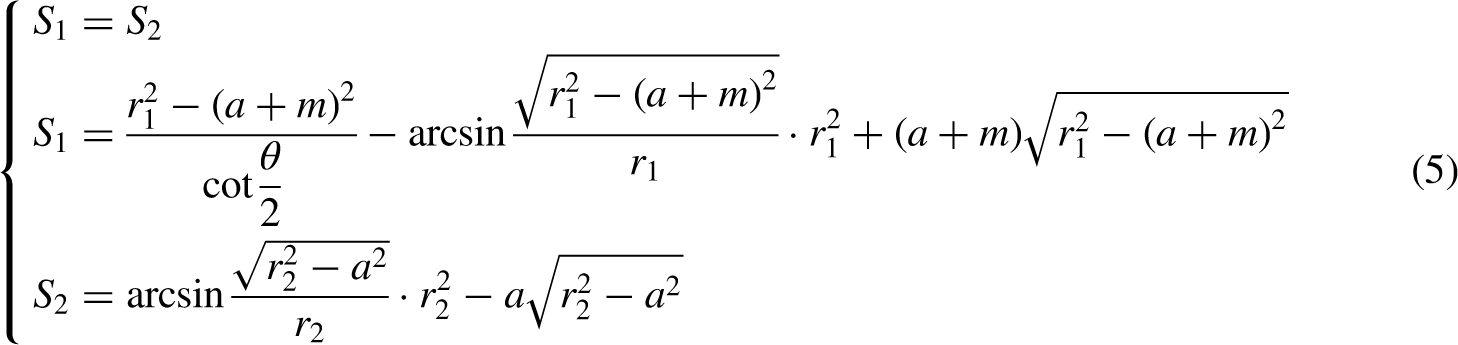
where S1, S2 is shown in Figure 10(b).
In the process of shearer cutting, the cutting force can be measured and controlled (Haber-Haber et al., 2007; Reid et al., 2014), so as to realize the adaptive adjustment of the cutting trace pre-set. What's more, directional hydraulic fracturing and roof cutting technology are usually applied when the cutting force increases rapidly (Fan et al., 2012a; He et al., 2017).
Using the cutting trace pre-set technology above, engineering quantity of rock cutting and cutting pick consumption were reduced while passing through the fault or fold. In fact, the cutting trace should be constantly optimized according to on-site environmental characteristics. In summary, the cutting trace pre-set technology provides a good technical reference when passing through geological structure automatically.
Coal and rock interface identification
Coal and rock interface identification can provide powerful technological support for above self-adaptive regulation strategy. Therefore, the cutting trace pre-set technology can be realized. At present, there are many technologies applied in coal and rock interface identification, such as radioactive detection, vibration monitoring, electromagnetic measurement, infrared detection, image recognition and electrical parameter monitoring.
Taking current monitoring as an example, the current of shearer will change greatly due to different hardness of coal and rock. Based on the principle, coal and rock interface can be identified by monitoring current of cutting motor.
In the first stage, the sampling cut is carried out in “coal-roof” by front roller, “coal-floor” by rear roller and coal by the two rollers of the shearer. Respectively, four cutting currents are monitored as I1s, I2s, I1c and I2c. During the mining process, two current sensors are installed in the two rollers respectively to monitor and feedback the cutting current, as shown in Figure 11.
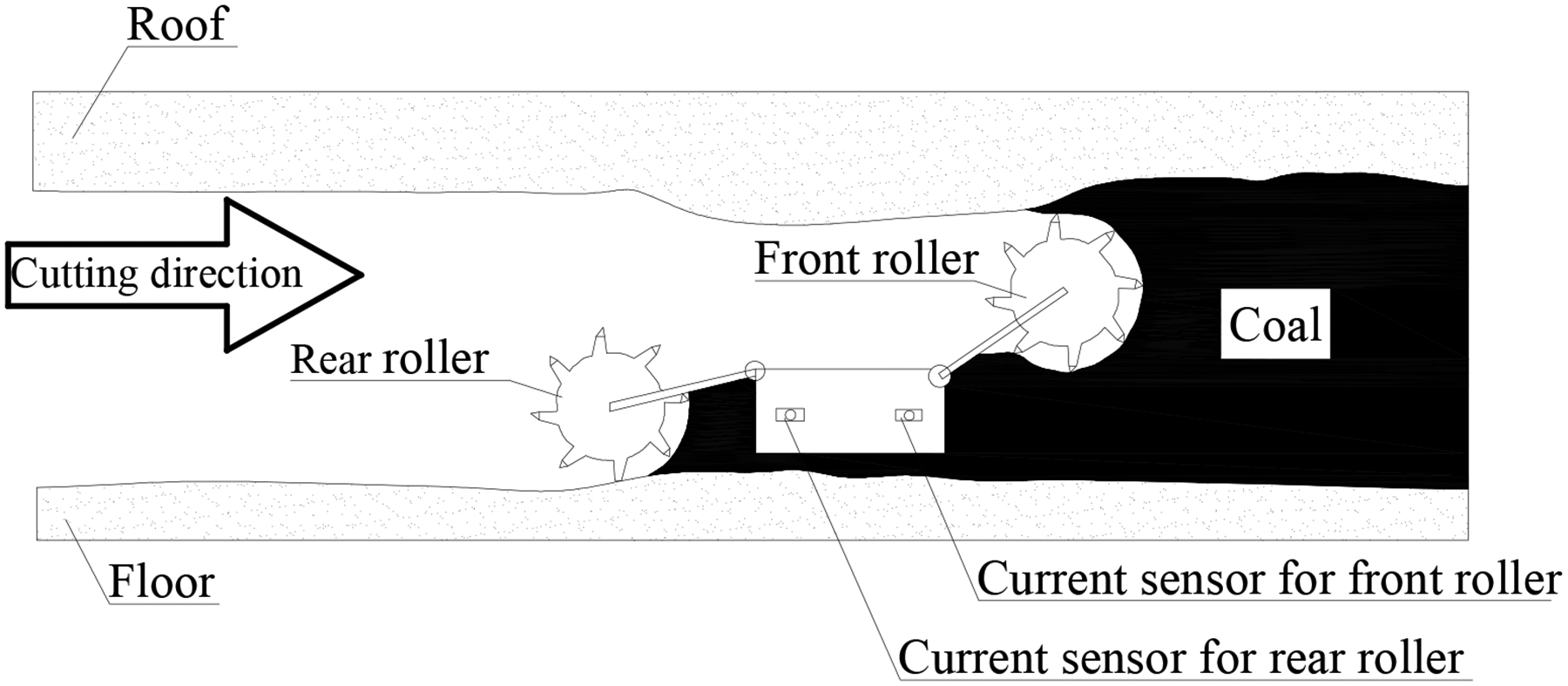
Cutting current monitor and feedback in the panel.
According to the cutting current monitored I1 and I2 of the front roller and rear roller respectively, the strategy to adjust the two rollers automatically based on coal and rock identification is shown in Table 2.
Self-adaptive regulation strategy to adjust the two rollers.
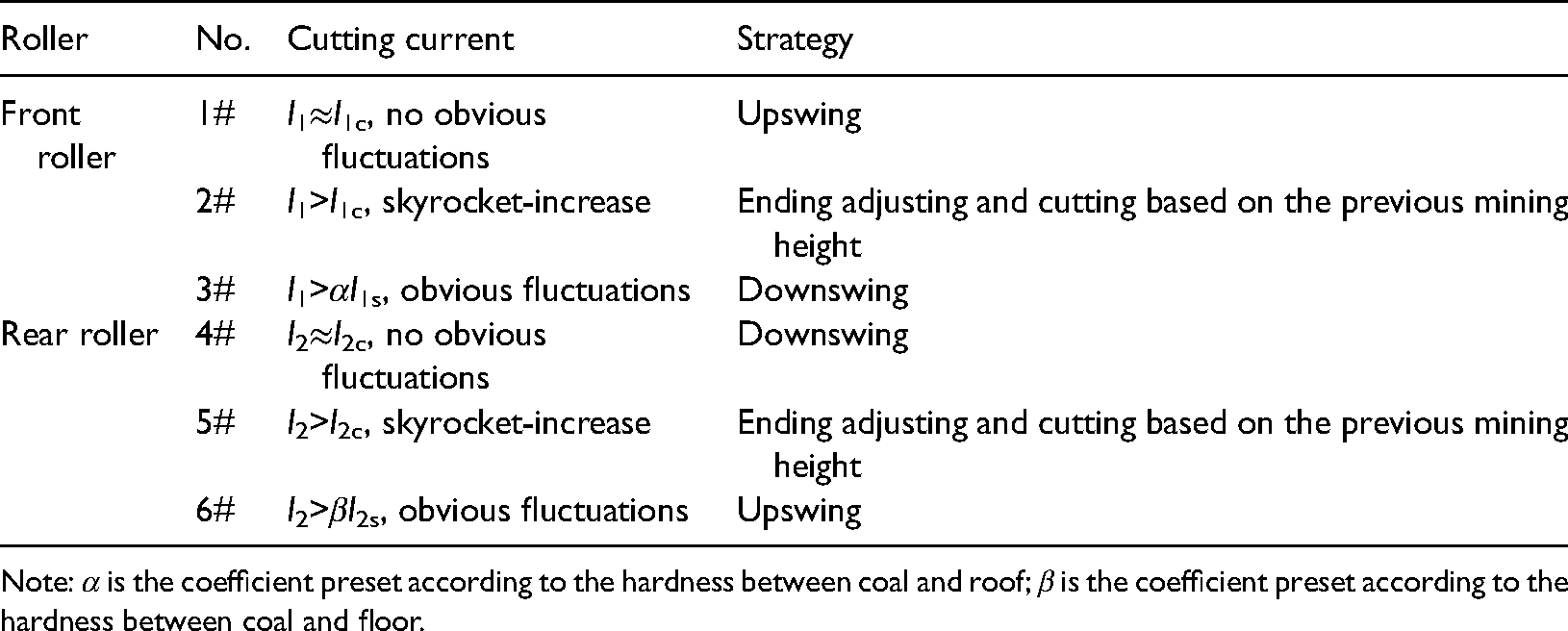
Note: α is the coefficient preset according to the hardness between coal and roof; β is the coefficient preset according to the hardness between coal and floor.
During the shearer selection, the safety factor of the cutting motor is larger, which leads to inaccurate identification of coal and rock interface based on current monitoring (Tian et al., 2016). Similarly, coal and rock interface identification can be realized by force monitoring to some extent. However, the different coal and rock properties of each working face lead to its limited application range (Huang and Liu, 2015).
There are many problems in coal and rock interface recognition technology, such as complex working face environment, single sensor data, complex data processing etc. Coal and rock interface identification technology should be the fusion of multi-sensor data network and a variety of technologies in the future. Coal and rock interface identification should be one of the priorities in the future research in automatic mining.
Main problems and prospects
Main problems
At present, automatic cutting technology for thin coal seam faces many problems in China, including the following:
Economic benefit is unfavorable in thin seam mining because of the relatively larger input-output ratio. Additionally, equipment for automatic cutting technology is a big investment. Promotion and application of automatic cutting in thin seam is more formidable. The adaptability of the equipment and technology for automatic cutting needs to be improved. Automatic control and fault diagnosis functions for shearer must be realized accurately in complicated geological conditions. The sharpness of video monitoring system in the narrow working space can't be guaranteed while automatic cutting in the panel. Besides, existing coal-rock identification is not yet implemented accurately. The trade-off between installed power, machine height and delivery coal space is still the main problem in automatic mining working face. High-power shearer and corresponding hydraulic supports with smaller machine height need to be developed urgently. Most of coal mines in China suffer from a lack of experienced and knowledgeable automatic mining workers and engineers.
Prospects
In China, it is a long journey to realize automatic mining in thin seams. Automatic cutting should be respected for continuous improvement. Simultaneously, further research should be undertaken.
For thin coal seam mining, geological conditions exploration and evaluation is an important foundation. The corresponding 3D geological model for mining should be definitely established. Coal seam thickness, seam inclination, structure, Protodyakonov coefficient, roof and floor conditions, faults and folds, gas outburst, and water inrush et al., should be exposed in the model. The goal of automatic cutting in thin seam is a totally man-free working face. Improving adaptability of the auxiliary equipment and technology is the trend in automatic cutting process. To realized man-free mining, advanced technology including artificial intelligence, Big data, Internet of things, mining management information system etc. can be recommended.
Conclusions
The typical features of automatic mining in China are mostly based on mnemonic cutting technology with centralized control system, video surveillance system and electro hydraulic control system. Mnemonic cutting technology is adapted to the panel with relatively simple geological conditions.
In the panel with relatively complex conditions, another automatic cutting technology called cutting trace pre-set is put forward. Cutting trace pre-set technology is suitable for the panel with coal thickness changed greatly or geological structures. Then, the process of cutting trace pre-set with coal thickness changed and geological structures is explained.
In addition, a thought of coal-rock interface identification by monitoring current of cutting motor is proposed.
Aimed at automatic cutting in China, the main development trends include developing high-power shearer and corresponding hydraulic supports with smaller machine height, establishing 3D geological model and improving adaptability of the equipment and technology.
Footnotes
Data availability
The data used to support the findings of this study are included within the article.
Declaration of conflicting interests
The author(s) declared no potential conflicts of interest with respect to the research, authorship, and/or publication of this article.
Funding
Financial support for this work was provided by National Natural Science Foundation of China (No.51904081), National Natural Science Foundation of China (No.51964008), National Natural Science Foundation of China (52174072), Guizhou Provincial Science and Technology Foundation (Qian Ke He Zhi Cheng [2020]4Y042), Guizhou Provincial Science and Technology Foundation (Qian Ke He Ji Chu-ZK[2021] Yiban 264), Guizhou Provincial Science and Technology Foundition (Qian Ke He Zhi Cheng[2021] Yiban 354). The authors gratefully acknowledge the financial support from the organizations mentioned above.
