




Abstract
To explore the structure evolution of overlying strata and pressure characteristics of coal mining with large dip angle, the basic roof mechanical model was established that based on the thin plate theory and the development characteristics of 1212 (3) working face of Panbei Mine. The formula was deduced that used for calculating the basic roof stress distribution in large dip angle coal seam. It revealed the mechanism evolution of mining stress and its influence on overburden deformation. Furthermore, it was also discussed that the effect of false roof on the failure of the basic roof. It showed that the false roof increases the differentiation of gangue’s filling rate in goaf and improves the evolution rate of basic roof fracture. It is the main influencing factor that the large dip angle leads to the “scoop” distribution of the stress and deformation in basic roof. It dominates the evolution of overburden fractures and the regional instability. The maximum deformation of the basic roof is located in the middle and upper part of the working face. This theoretical model is verified by means of numerical simulation and field monitoring.
Keywords
Introduction
With the increasing demand for coal resources, the shallow coal resources are gradually exhausted. It becomes the main body of resource mining that including the complicated thin coal seam, edge coal seam and large dip angle coal seam (Wang et al., 2019; Xie et al., 2009). The coal strata leads to the differentiation of strata movement. The thick and hard strata dominate the overlying strata movement, while thin strata plays the role of loading on goaf. It is the premise of coal mine safety that control well surrounding rock. Furthermore, the key to control well surrounding rock lies in the determination of overlying rock migration rules (Ye et al., 2018). Therefore, it is of great significance to carry out the research on the roof deformation and fracture criterion of large dip coal seam for the selection of working face support and the control of surrounding rock.
To explore the migration characteristics of overlying strata in stope, a large number of researchers have established a thin plate model based on elastic mechanics in recent years. It was derived and analyzed that the calculation formulas and distribution characteristics of stress and deflection of thin plate under different boundary support conditions. Furthermore, it was revealed that the movement and stress distribution characteristics of roof strata in working face. Qian et al. (2010) proposed the key layer theory and established the elastic plate model under different supporting conditions. The “O-X” fracture evolution rule of the basic roof was obtained in this theory. Based on the theory of small deflection of elastic thin plate. Tu et al. (2015) established the mechanical model of roof before its fracture and deduced the roof deformation calculation formula under the action of overburden rock load and backfill support. Based on the yield theory and energy method, Jiang et al. (2019) obtained the fracture mechanism of thick and hard rock strata under the condition of fixed support on three sides and simple support on one side. Based on the thin plate theory, Wang et al. (2015a, 2015b) established the mechanical model of roof in large dip mining area and analyzed the stress state of roof. The “V-Y” fracture mode of basic roof was proposed in large dip coal seam. Chai et al. (2019) using distributed optical fiber and three-dimensional optical digital speckle technology to analyze the roof failure rules and stress evolution characteristics of large dip angle coal seam mining. Luo et al. (2016) established a mechanical model of three-hinged arch in large dip angle coal seam.
With the development of information technology, researchers studied the deformation characteristics of roof strata by numerical simulation and physical model. Based on the engineering geological conditions of Changping Mine, Zhang et al. (2018) established FLAC numerical model to analyze the impact of protective layer mining on overburden fracture and stress evolution. Li et al. (2015) established a laboratory physical model to study the characteristics of acoustic emission signals during the fracture of hard roof, and inverted the failure forms of roof strata. Considering the deformation and failure effect of coal seam, Wu et al. (2018) studied the influence of thick and hard magmatic rocks, above the working face, on fracture development and bed separation rules in overburden strata by establishing similar simulation tests.
The above researches have established a large number of roof fracture models of fully mechanized mining. The basic roof fracture criterion is studied systematically, and it lays a foundation for the safe and mining efficiently. However, in the process of large dip coal seam mining, the structure of surrounding rock of the stope is complex and changeable, which affects the production efficiency and easily causes huge economic losses. Therefore, based on the 1212 (3) working face of Panbei Mine, the roof mechanical model of the large dip angle was established. The evolution characteristics of stress and deformation of surrounding rock was analyzed during the basic roof breaking. And the influence mechanism of false roof filling on roof fracture was discussed. Combined with numerical simulation and field measurement, the theoretical analysis was further verified, which provided theoretical basis for the prevention and control of open mining pressure in large dip coal seam and the selection of support equipment.
Project overview
Geological and geotechnical conditions
The Panbei Mine is located in Huainan city, Anhui province, China, about 50 kilometers northwest of the city center. The specific geographical location is shown in Figure 1.
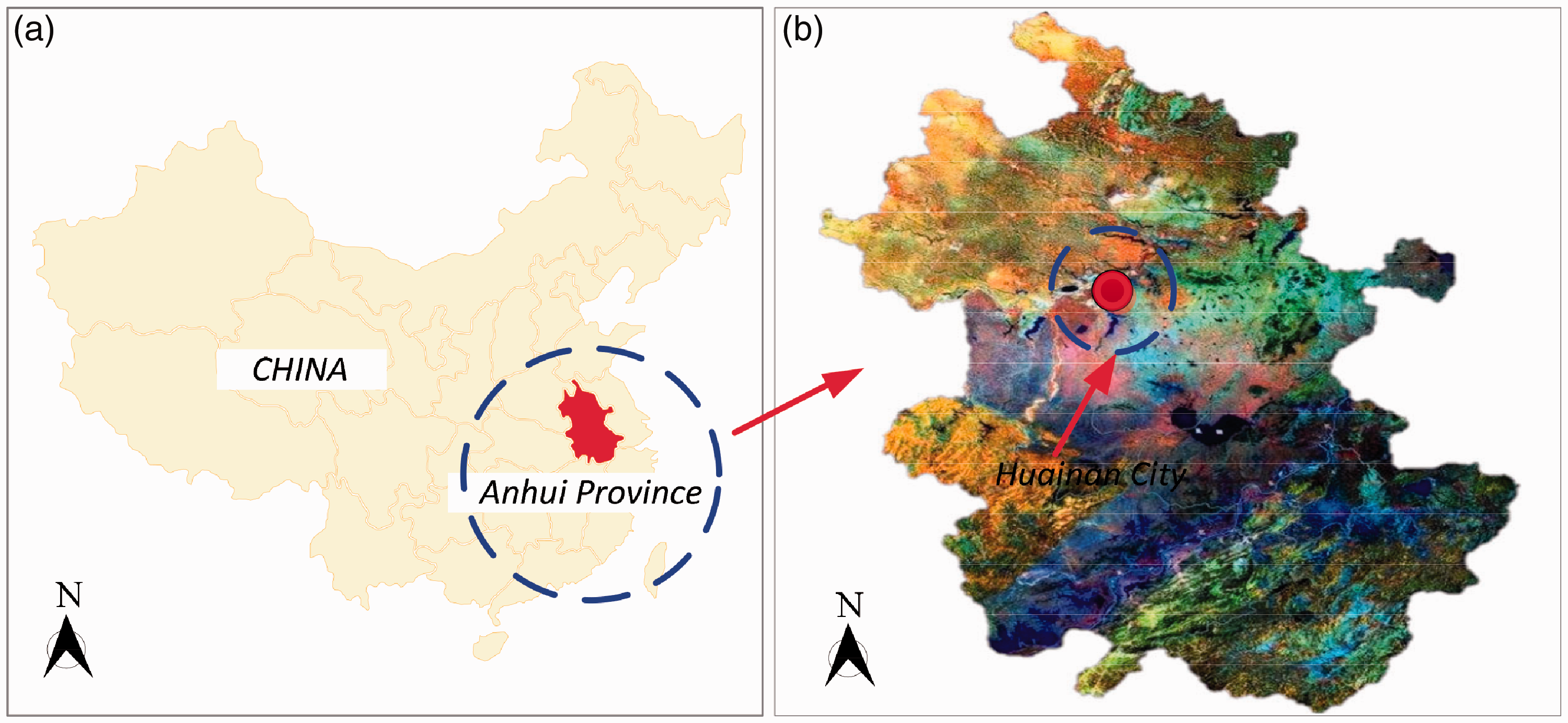
Geographical location of Panbei mine.
The 1212 (3) working face of Panbei Mine mainly mined 13–1 coal, with a strike length of 650 m, inclined length 135 m. The coal seam is stable, the structure is single, the dip angle of the coal seam is 35° ∼ 45°, the average dip angle is 40°, the platt coefficient of the coal seam is about 0.3∼0.5, the average compressive strength is 4.72 MPa. The thickness of coal seam is 2.0∼6.0 m, the average thickness is 4.2 m. The coal mining is managed by the strike longwall backsliding method and the whole caving method.
The coal seam is mostly soft and thick in Huainan mining area and the geological conditions are complex. The false roof of 1212 (3) working face is carbonaceous mudstone with an average thickness of 0.2 m and a low compressive strength. The immediate roof is mudstone, sandy mudstone and carbonaceous mudstone with an average thickness of 12.5 m and the average compressive strength is 28.2 MPa. The basic roof is fine sandstone with an average thickness of 5.6 m and an average compressive strength of 46.3 MPa. The floor is mudstone, sandstone and sandy mudstone with an average thickness of 7 m and an average compressive strength of 42.6 MPa. The coal seam geological histogram is showed in Figure 2.
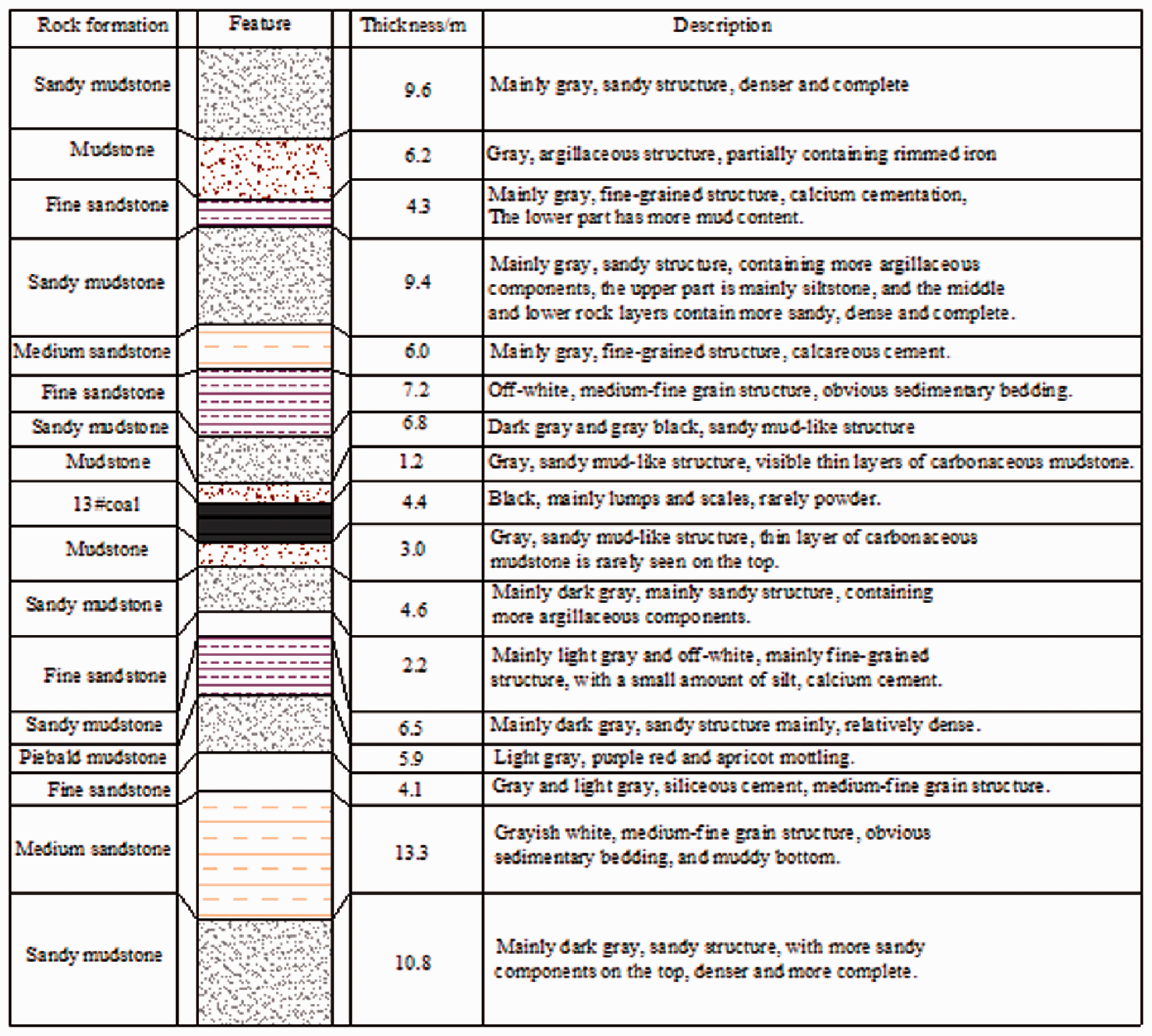
Coal seam geological histogram.
Mathematical and numerical modeling
Characteristic of false roof filling behind the working face
The false roof is a kind of thin rock layer which is mainly made up by mudstone and immediately located on the coal seam. In large dip coal seam, the failure of false roof appears along with the mining. Under the action of self-weight, the caving gangue slides down to the lower goaf, reducing the caving space of the roof. When the upper limit span of the basic roof greater than the suspended width, a pressure arch structure is formed between filling gangue, the upper coal pillar and the basic roof (Hu et al., 2017; Lv et al., 2019; Zhang et al., 2016). Therefore, the false roof caving gangue has a certain influence on the roof fracture evolution of large dip angle working face. Figure 3 shows the characteristics of false roof caving and filling in goaf of high-dip coal seam.
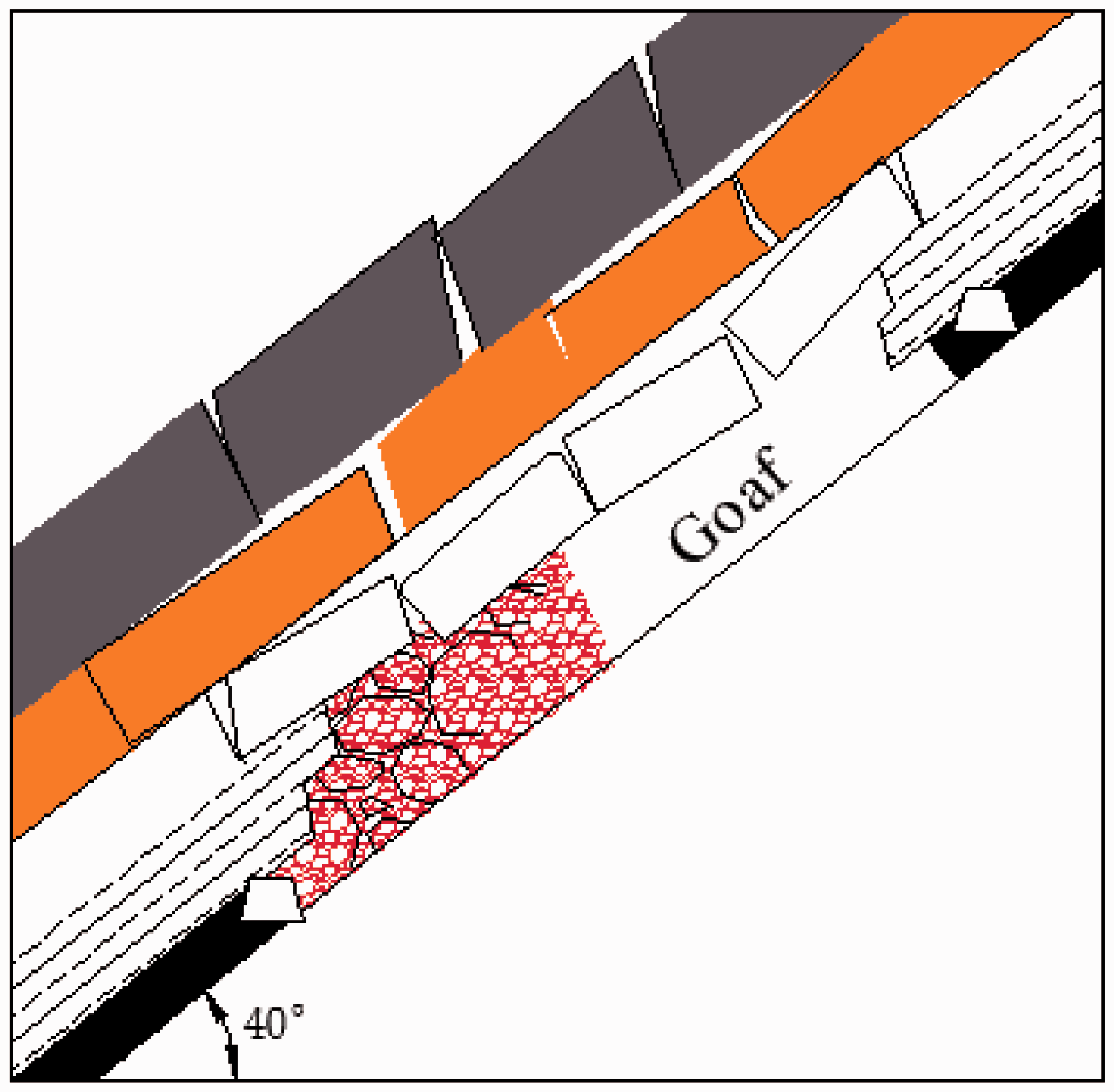
Characteristic of false roof filling behind the working face.
It is assumed that when the working face is stopped, the immediate roof remains intact and only the false roof fills the lower goaf.

Where, L is the filling length of working face, h1 is the thickness of false roof, M is the mining height, k1 is the crushing swelling coefficient of caving gangue, and takes 1.2.
The relation diagram among filling length, mining height and false roof thickness is showed in Figure 4. It can be known that under a certain mining height, the filling length increases with the increase of false roof thickness, while under a certain false roof, the filling length decreases with the increase of mining height. The length of 1212 (3) working face b = 135 m, the mining height M = 4.2 m and the false roof thickness h1 = 0.2 m, then the filling length of false roof gangue can be calculated as L = 7.36 m.
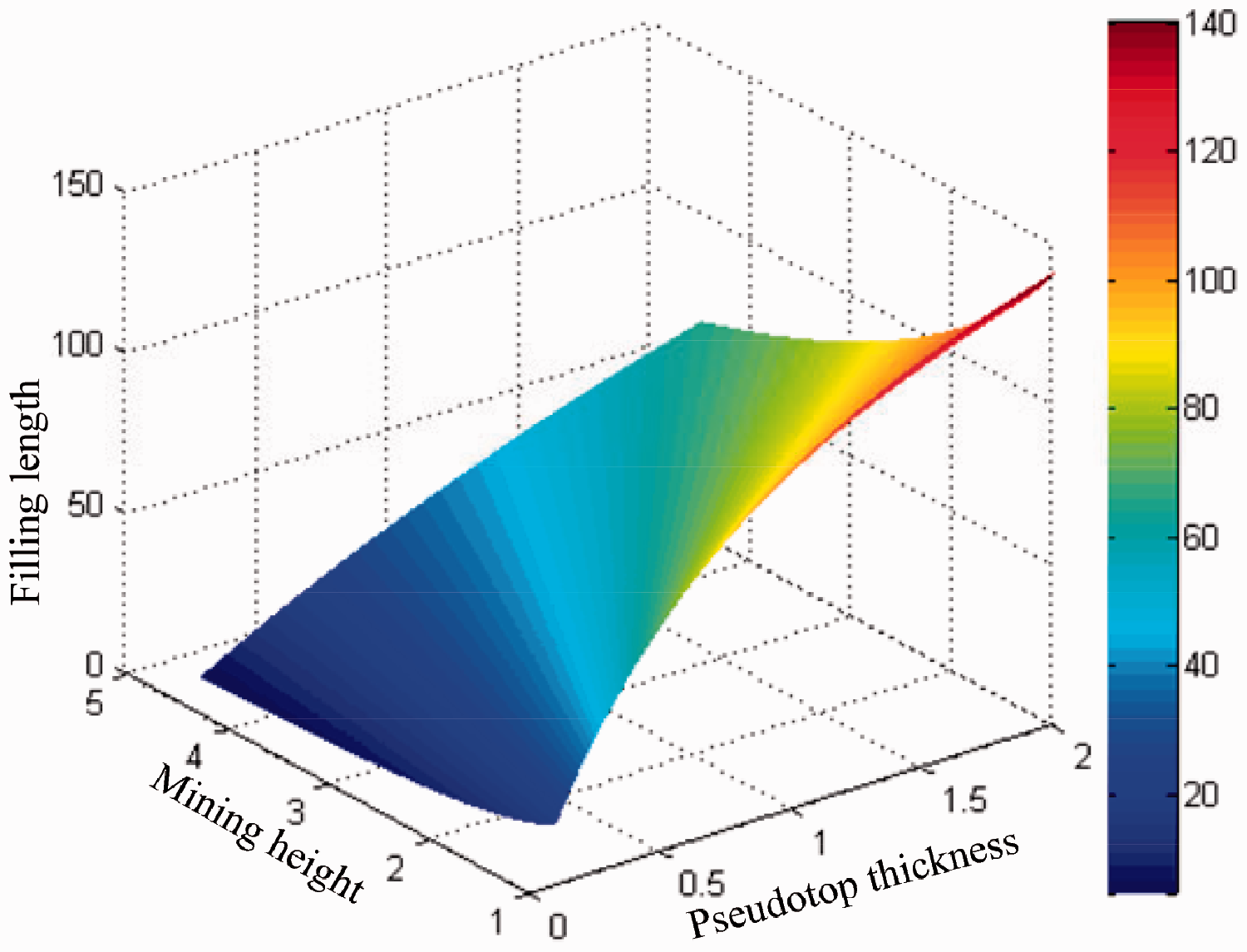
Meteorite filling relationship.
The filling effects of false roof makes the lower strata lag caving. Under the action of mine pressure, cracks in roof strata gradually develop to the middle and upper part, and the development of dip fracture shows the characteristics of the largest, smallest and second largest in the middle and upper part. If the filling effect of the immediate roof is considered, the filling length of the lower goaf can be obtained:

Where, the parameters have the same meaning as equation (1). h2 is the immediate roof thickness of gangue prone to outburst, h2 =6.25 m (half of the immediate roof thickness), and the filling length of gangue is calculated to be 87.8 m.
Therefore, the false roof caving gangue slides down to the lower area of goaf and forms non-uniform filling.
Basic roof mechanics model
Abnormal stress and deformation occur in the face of large dip angle coal seam. When the angle of the working face is greater than the natural resting angle, the caving gangue will tend to slide downward along the working face under the action of its own gravity. And the goaf will be fill and presenting non-uniform filling characteristics (Deng and Wang, 2014; Wang et al., 2018). In elastic mechanics, when the ratio of the thickness of the slab to the smallest dimension in the slab is between and, it is called a thin slab. According to the engineering site geological parameters, it can be known that the top of the working face basically meets the thin slab condition. To study the influence of roof stress changes on overburden failure, the following assumptions were made before the primary fracture of rock strata: local gangue supports in goaf, and the roof of inclined working face was simplified into elastic plates with fixed supports on four sides (Xu, 2006). The mechanics model of basic roof was established, as shown in Figure 5. The coordinate origin of the elastic plate model is located at the lower part of the long side (y axis), and the working face advances in the x direction and the length is a. The direction of y is the working face tendency and the length is b. The direction of z is perpendicular to the roof and downward.
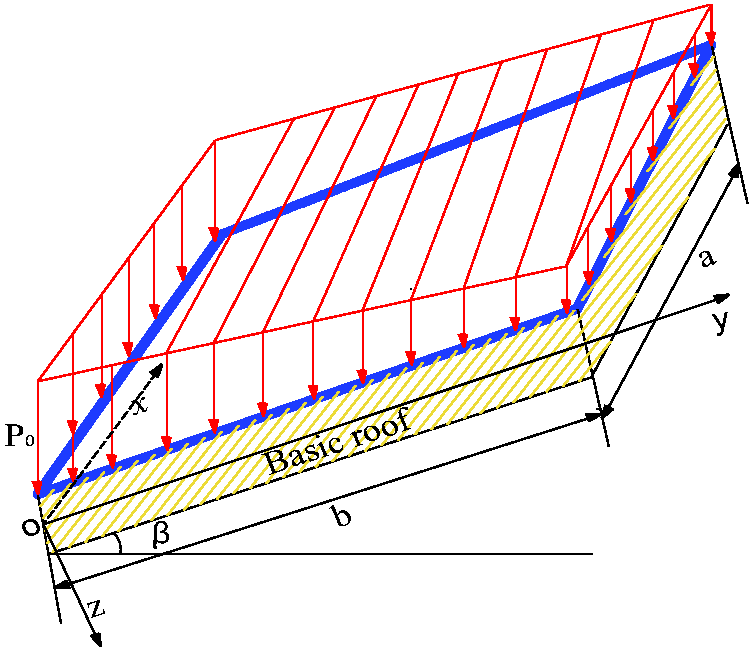
Basic roof mechanical model of large dip angle coal seam.
The load of overlying strata on the roof can be simplified into the load Py that changes linearly along the inclination direction (along the positive direction of the y axis):

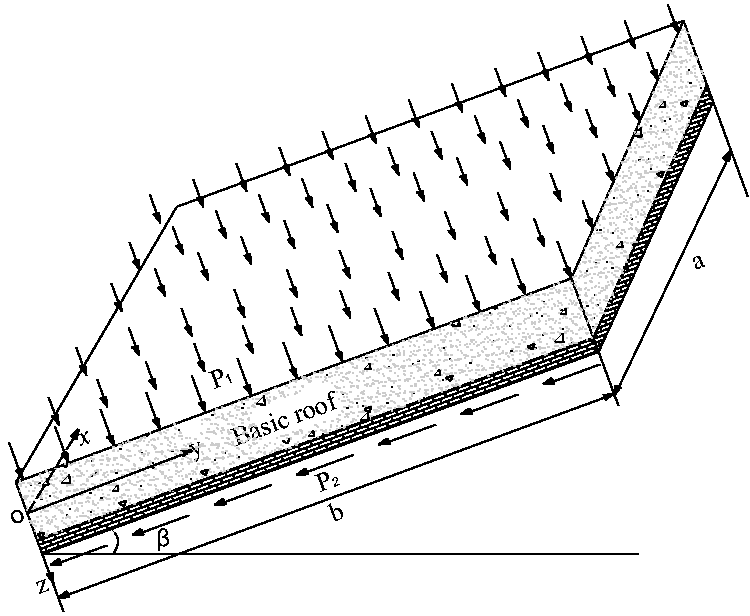
Basic roof simplified thin plate model.
According to the thin plate theory, the deflection differential equation of elastic thin plate is


D is defined as bending stiffness of thin plate; ω is the bending deflection of thin plate; E is the basic elastic modulus; h3 is the basic top thickness, and µ is the basic top poisson ratio.
Through a large number of gangue backfill experiments, it was found that when gangue fills goaf, its stress state presents non-uniform distribution along the inclined direction. When the deflection of thin plate is relatively small, the Winkle hypothesis can be adopted. It means that the reaction force of elastic foundation per unit area is proportional to the deflection (Tu et al., 2014). Therefore; the supporting force of gangue backfill to overburden can be expressed as follows:

Due to sliding gangue fill local goaf in the large dip coal seam, it results in an asymmetry of the basic roof deflection in the tilt direction. Suppose the deflection function of the initial mining is ω(x, y):

Obviously, the deflection function is set to satisfy the boundary conditions of the plate with four sides fixed.

According to the principle of minimum potential energy, the coefficient of deflection function (

By substituting it into equation (7), the approximate function of deflection deformation of elastic thin plate can be obtained:

Numerical simulation model
The FLAC (Fast Lagrangian Analysis of Continua) is used to establish the numerical simulation model in this paper. It is a three-dimensional analysis software based on finite difference, which can better simulate the mechanical behavior of failure or plastic flow when geological materials reach the strength limit or yield limit. And it can effectively solve the problem of progressive failure, instability and large deformation of materials.
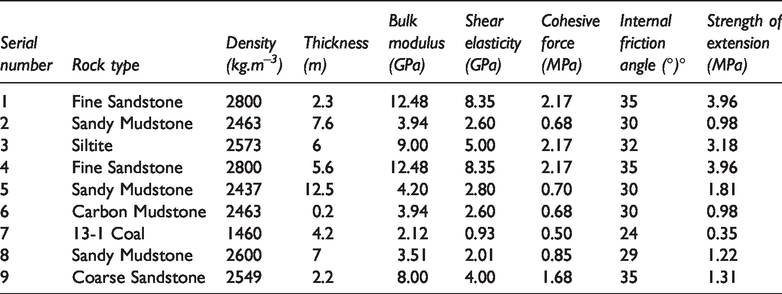
According to the characteristics of coal strata, a three-dimensional numerical calculation model with a length of 290 m, a width of 200 m and a height of 250 m was established, as shown in Figure 7. Displacement boundary conditions were applied at the bottom and surrounding of the model, while free boundary conditions were applied at the top. And it was applied to simulate the overburden rock layers with 12.5 MPa loading. The height of the simulated 13–1coal seam is 4.2 m, the inclination angle is 40°, and the working face is pushed along the strike (y axial direction). The average bulk density of the overburden is 25 KN/m3, and the Mohr-Coulomb yield criterion is adopted. Physical and mechanical parameters of coal strata used in the three-dimensional numerical model are shown in Table 1.
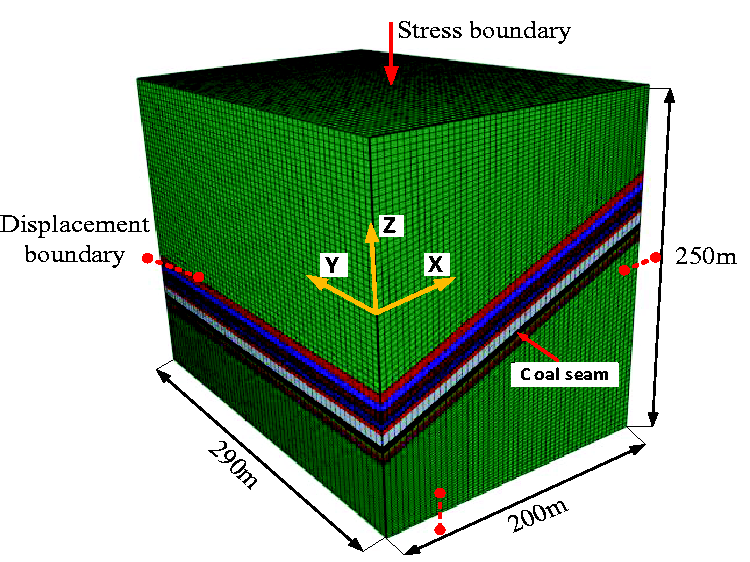
The numerical model.
Physical and mechanical parameters of coal and rock layers.
Numerical simulation scheme
According to the mining situation at the project site, in order to make the simulation more in line with the actual project, as shown in Figure 8, the three-dimensional numerical model leaves a 30 m protective coal pillar, on the other side is 85 m solid coal, and the roadway width is 5.4 m.
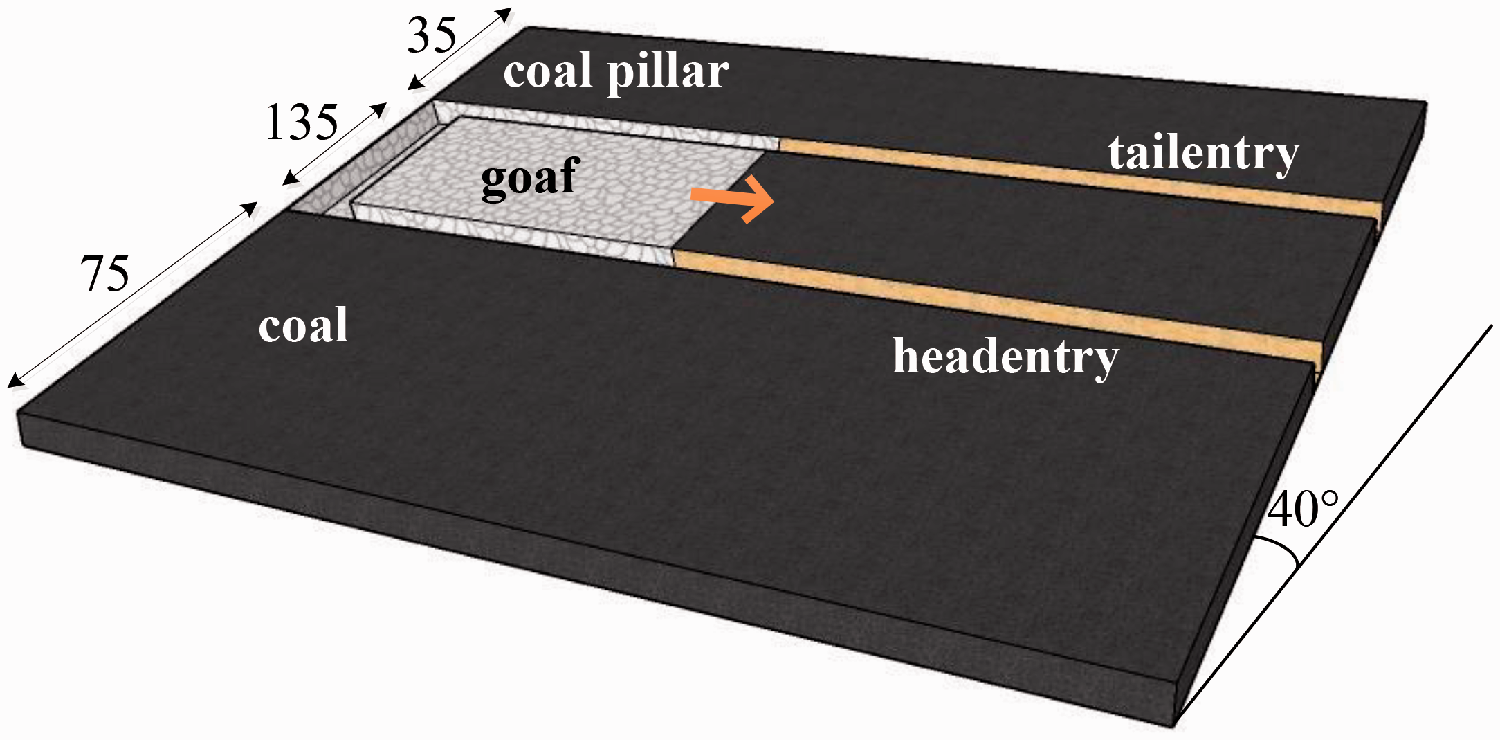
Schematic diagram of numerical calculation.
Firstly, the stopping roadway and cutting hole were excavated, and the working face was excavated after the calculation balance. Secondly, the three-dimensional numerical model is excavated every 10 m, the goaf was filled with a 20 m lag of weakened material. Then, analyze the change characteristics of surrounding rock stress and displacement during coal mining. The stress distribution of surrounding rock was affected by mining. And it leaded to the stress evolution in front of working face (Liu et al., 2018; Yang et al., 2018). The stress characteristics the 1212 (3) working face were analyzed by the established numerical model. And the internal mechanism of zonal pressure was revealed.
Results and analysis
The stress distribution characteristics of basic
Without considering other influencing factors, the relationship between coal seam dip angle and basic roof deflection was analyzed by controlling variable method. According to equation (10), the basic roof flexural deformation (
To illustrate the deformation characteristics of the main roof and lay a foundation for further analysis of its fracture rule, the calculation parameters are follows. The basic roof thickness is 5.6 m, the poisson’s ratio is 0.2, the elastic modulus is 22.5 GPa, the length of working face is 135 m (shown in Figure 9), and the span is 60 m (shown in Figure 9). It can be seen from Figure 9 that the deformation of the basic roof strike is symmetrical, and the deformation is the largest in the middle of the thin plate. The dip deformation is asymmetric, and the deformation is the largest in the upper part of the inclined. The basic three-dimensional deformation of the top space is similar to the “spoon shape”, which shows the three-dimensional deformation characteristics of “wide on the top and narrow on the bottom”. The dip angle and caving gangue lead to the expansion and development of roof crack to the middle and upper area, and finally the masonry beam bearing structure is formed. When the ultimate span of rock strata is reached, the basic roof breaks or the masonry structure loses stability (He et al., 2015).
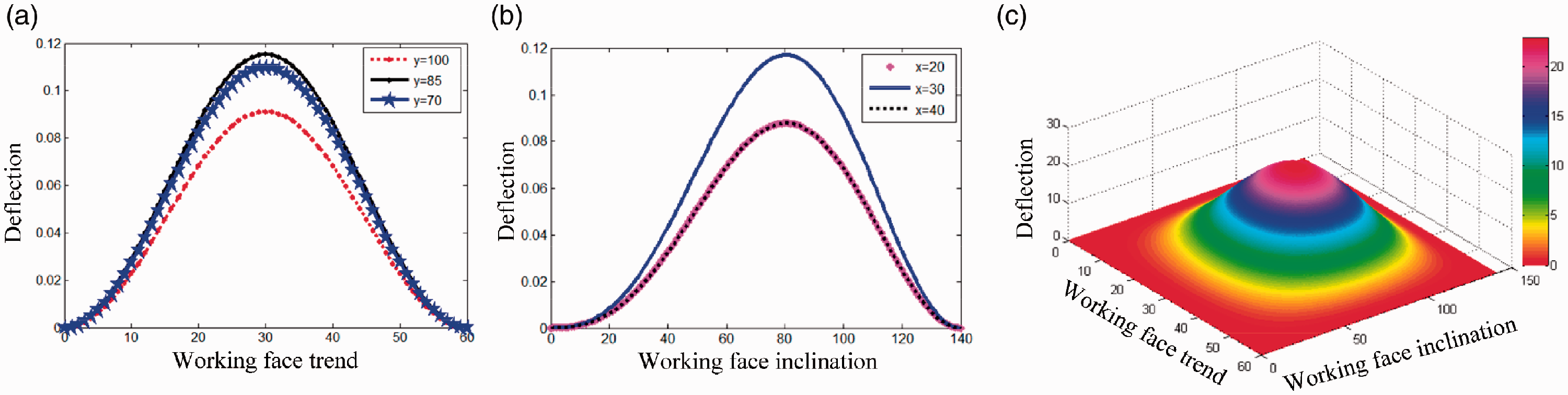
Basic roof flexural deformation characteristics: (a) working face trend; (b) working face inclination; (c) the three dimensional deflection.
By substituting the flexural function (ω(x,y)) into the deflection and the stress function of the elastic plate (Xu, 2006), the stress (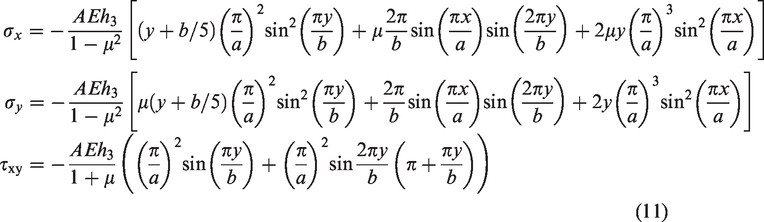
Failure criterion of basic roof
Substitute the basic roof stress expression (11) into the main stress solution formula, and obtain the main stress expression at any point of the thin plate.

Due to 
Assumed that when the basic roof occurred tensile failure, the coordinate was
Due to the influence of inclined angle and gangue filling, the first roof strata fracture migrates to the upper and middle working face. And when the working face continues to advance, it leads to periodic fracture (Yin et al., 2018). Due to non-uniform filling of inclined gangue, the height of the roof collapse is differentiated. And then, the height of the largest collapse occurs in the upper region, the secondary height occurs in the middle region and the minimum height occurs in the lower region. The tensile strength of the rock is the minimum than other strength and the elastic plate breaks first at the place with the greatest tensile stress in the inclined direction. Generally, roof fracture is accompanied by obvious stress release, so it is unnecessary to describe other failure forms.
Stress distribution characteristics of surrounding rock
The original stress field is destroyed during coal mining, the mining stress will also be redistributed. The stress is transferred to the front of the coal wall along the working face and a stress concentration zone is formed in the front of the coal wall. Along the working face, inclined roof stress will be transferred to the coal pillar side of the section, and the stress concentration area will be formed above the coal pillar of the section adjacent to the upper and lower roadway.
Due to the action of inclined angle and false roof filling, roof collapse in the upper area is sufficient, and the range of the stress release is large, and the roof stress distribution is upward offset. Furthermore, the bottom plate is prone to slip failure in the lower area of working face, and the range of the stress release is large, and the bottom plate stress distribution is downward offset, as shown in Figure 10(a). In the direction of working face, symmetrical arch stress occurs on both roof and floor, and the range of the roof stress release is larger than floor, as shown in Figure 10(b). Due to the transfer of overburden load and the inclined angle, the force on inclined roof is not uniform, and the three-dimensional space of the stope gradually evolves to form the stress distribution of “upper width and lower width”. It means that the peak stress appears in the middle and upper part of the working face, as shown in Figure 10(c).
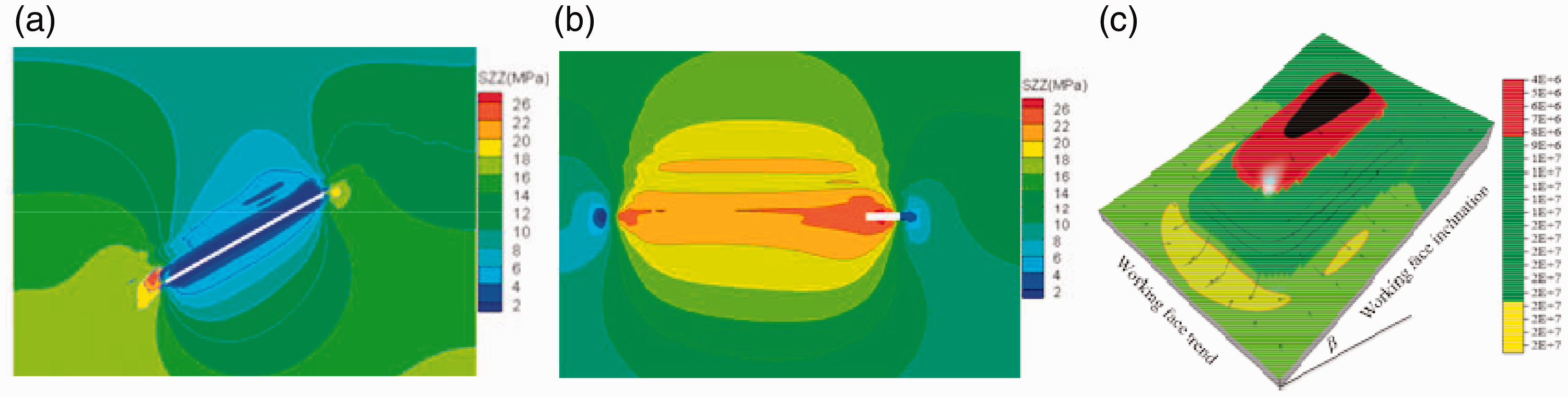
Stress distribution of surrounding rock in stope: (a) Stress-prone; (b) Strike stress; (c) three-dimensional stress.
It is the main source of surrounding rock and basic roof fracture that the stress induced by mining. When the mining induced stress increases beyond the bearing capacity of rock strata, the original fractures of coal and rock masses expand and connect with each other to form fractures, which are manifested as fracture of rock strata (Luo et al., 2016a, 2016b; Wang et al., 2015a, 2015b; Xiong et al., 2015; Zhang et al., 2015). As shown in Figure 10, the maximum stress of the tailentry at the working face is 21 MPa, the stress concentration factor is 1.75, the maximum stress of the hendentry is 25 MPa, and the stress concentration factor is 2.08. The stress of the hendentry is greater than that of the tailentry, which is mainly affected by the buried depth. In addition, the section coal pillar bears part of the overlying rock pressure, the mining stress of the tailentry is relatively small. The strike mining stress is symmetrically distributed, and the stress concentration factor in the central region is about 1.91. In general, a large amount of elastic energy gathered in roof strata during coal mining. When rock strata break and lose stability, it was released and was prone to rock burst. On site, it should be done well the dynamic pressure control measures during roof fracture to ensure safe mining (Das et al., 2017; Jiang et al., 2016; Yang et al., 2018).
Field application analysis
To verify the deformation and instability characteristics of the roof with large dip angle, it was carried out that the field measurement of support resistance variation of the 1212 (3) working face in Panbei Mine. During the mining period of the working face, a total of 10 YHY60 mining electronic pressure gauges were installed on the supports with No. 3, 10, 20, 30, 40, 50, 60, 70, 80, 87. The data were collected automatically every 5 minutes. The on-site technicians read the stored data regularly every day. According to the collected field data, the daily maximum working resistance diagram of the support is drawn as shown in Figure 11. Mine pressure monitoring on site shows that the average initial pressure step distance of the basic roof is 30.2 m, the periodic pressure step distance is 14.8 m, and the pressure lasts for 2∼3 days.
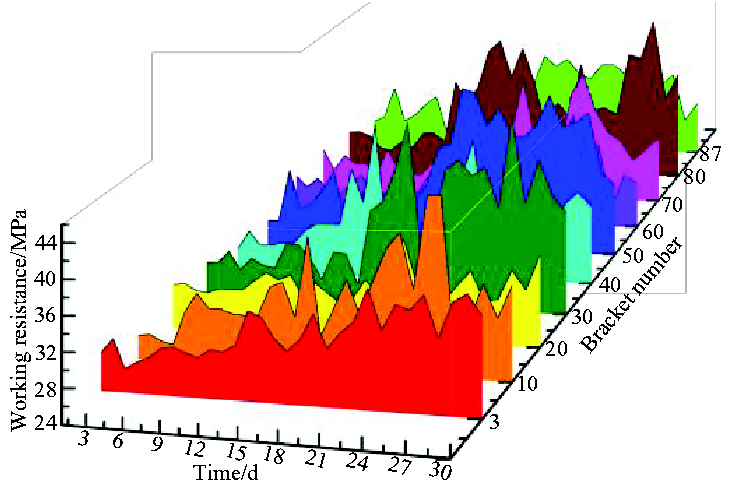
1212(3) working surface bracket resistance change.
To clearly reflect the zonal characteristics of large inclined angle coal seam, the 10#, 40#, 70# and 87# supports are selected to represent the mining pressure characteristics in the lower, middle, middle and upper regions of the stope respectively. The field support data (the working face advances 83.45 m) are plotted in Figure 12. The pressure shows obvious periodic characteristics in the strike of working face, and it shows obvious zoning characteristics in the direction of working face. It shows that the first pressing time of the basic roof is different, and the pressing order is central, upper, middle and lower successively. It means the basic roof fracture has temporal sequence of spatial fracture. At the same time, the load of front and back columns is balanced during the non-pressure period, which indicates that the basic roof is not destroyed. During the period pressure, the load on the front and back columns is uneven which indicates that the basic roof are unstable and broken. And the support load changes greatly in the middle and upper region, which easily leads to the failure of the “stent-surrounding rock” coupling system (Ma et al., 2015).
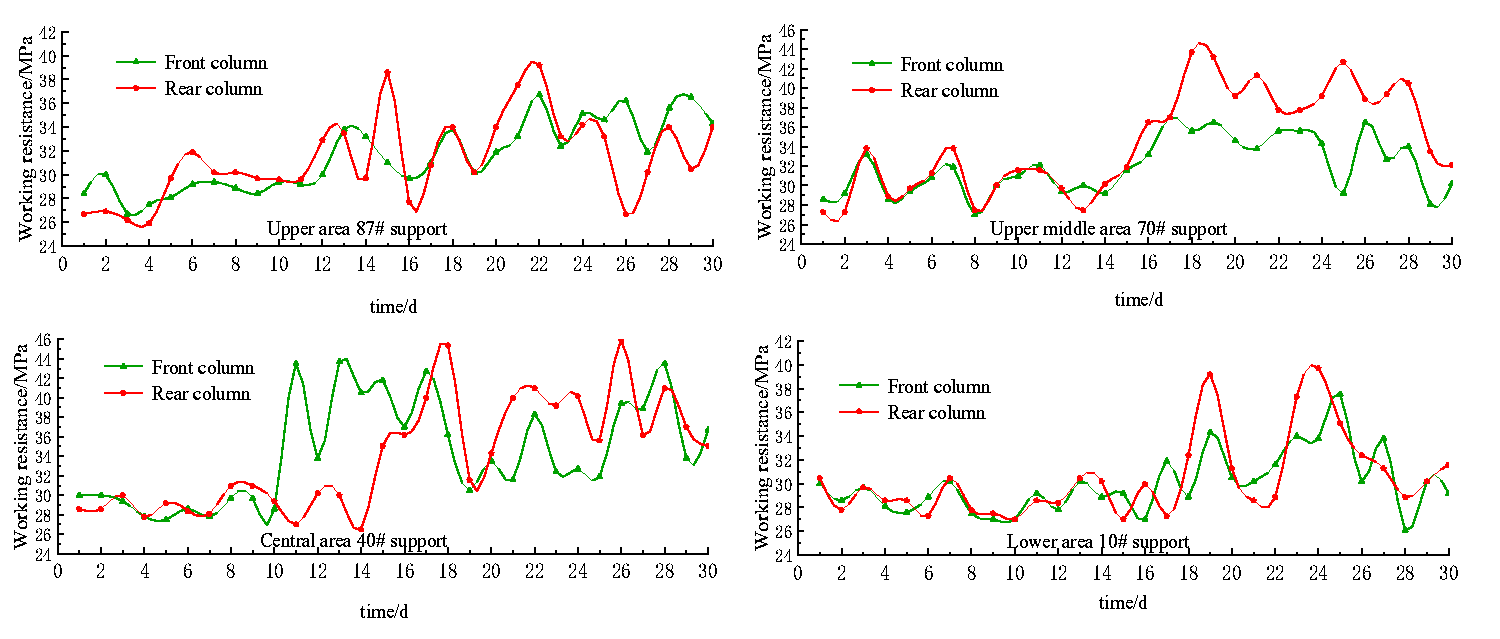
Working surface sub-area support resistance characteristics.
The arithmetic mean value of working resistance of supports in different areas can be obtained from the field measured data, as shown in Figure 13. It can be known that the working resistance is the largest in the middle, followed by the upper part and the lowest part. After the mining of large-dip angle coal seam, the primary fracture has spatial sequence. With the advance of the working surface, the basic roof first breaks in the middle, followed by the upper basic roof, and finally the lower basic roof. This indicates that the “scoop shape” deformation characteristics of the roof are basically consistent with the theoretical analysis and numerical calculation results.
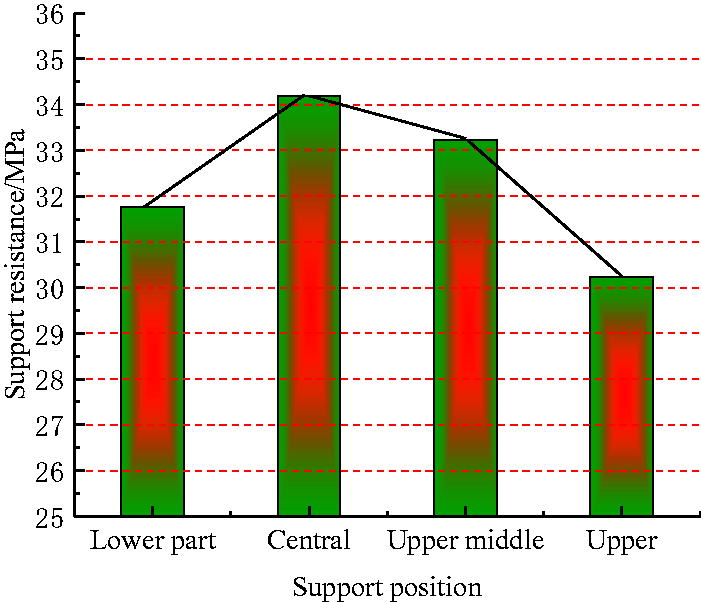
Working area partition support arithmetic mean.
When it refers to the basic roof fracture instability of fully mechanized mining, the previous studies mostly focus on the basic roof fracture condition and the final fracture form, but few studies on the basic roof internal stress distribution before the primary fracture along with the advance of the working face. Before the first pressure coming to the working face, the law of basic roof breaking is studied in this paper. By theoretical analysis and numerical simulation, it is found that the stress and deformation of basic roof with large inclined angle is symmetrical in the strike direction, while it is asymmetric in the inclined direction. The false roof, mainly with mudstone, increases the filling rate of goaf, accelerates the development of basic roof fracture in the upward region, and shows the temporal and space characteristics. It should be pointed out that the maximum tensile stress criterion is adopted as the basic roof fracture criterion in this paper. However, the failure criteria of rock materials are complex and diverse, and it needs to be further studied about the differentiation of basic roof fracture characteristics under different failure criteria.
Discussion
The fracture characteristics and stress distribution of overlying strata in large inclined seam mining are asymmetric. In the process of coal mining, the main active area of overburden strata damaged by mining face moves upward along the working face. With the increase of coal seam dip angle, the collapsed gangue slides down along the working face, and the non-uniform filling characteristics of gangue are gradually enhanced. After the overlying strata under the working face are broken, the movement space in the goaf decreases, and the constraint characteristics of gangue on the overlying strata are also more obvious. After the overlying strata fractured along the dip, the hinged rock beam structure formed above the lower edge of the goaf is an important reason for the increase of working resistance of the lower support of the working face. The working resistance distribution of the working face support is that the working resistance of the upper support is smaller than that of the lower support.
With the mining of coal seam, the vertical stress in the lower part of the overlying strata is released, and the rock mass is destroyed first. At this time, there is no gangue filling in the lower part of the working face, and the failure area of the overlying strata moves upward along the working face. The lower part of the working face begins to be filled with gangue, and the ascending rate of the failure depth of the overlying strata slows down, and the rock mass at the upper part of the working face loses the support of gangue Therefore, the rising rate of failure depth becomes faster, which leads to the asymmetric collapse structure of overlying strata.
Conclusions
The elastic thin plate theory is used to establish the mechanical model of basic roof with large dip angle. The stress distribution and fracture criterion of the basic roof is deduced under the condition of fixed support on four sides. And it is systematically analyzed the deformation and fracture characteristics of the basic roof . The deflection function is verified by numerical simulation. It shows the “ladle-shaped” distribution of the basic roof stress and deformation with large dip angle. The results show that the stress and deformation are distributed symmetrically in the strike direction, and the maximum deflection is distributed asymmetrically in the middle and upper part of the working face. Finally, the stress and deformation appear the characteristic of “wide at the roof and narrow at the bottom”. The large dip angle dominates non-uniform filling in goaf, which leads to the basic roof crack gradually to the upper part of working face. This shows the spatial sequence of the basic roof fracture. It means that the central part is the first tensile fracture, the upper part is the second, and the lower part is the last.
Footnotes
Data availability
The data used for conducting classifications are available from the corresponding author authors upon request.
Acknowledgements
All authors contributed to this paper. Zhen Wei prepared and edited the manuscript, and provided technical guidance for the field. Ke Yang supports the funds needed for the publication of articles. Xiaolou Chi revised and reviewed the manuscript and processed the results of numerical simulation during the research process. Gao Ansen conducted data analysis, Fu Qiang did numerical simulation analysis. We would like to thank Editage (<seurld> </seurld>) for English language editing.
Declaration of conflicting interests
The author(s) declared no potential conflicts of interest with respect to the research, authorship, and/or publication of this article.
Funding
The author(s) disclosed receipt of the following financial support for the research, authorship and/or publication of this article: We acknowledge the financial support for this work, provided by the National Natural Science Foundation of China (grant no. 51634007) and the Graduate Innovation Fund Project of Anhui University of Science and Technology of China (2019CX1003).