




Abstract
The Mahu Sag in the Junggar Basin, China, is a hydrocarbon-rich sag. Abundant hydrocarbon source rocks were developed in the late Paleozoic there across the Carboniferous–Permian boundary. However, studies of the source rocks have focused mainly on the lower Permian Fengcheng Formation. Here we compare the Fengcheng Formation with other Carboniferous rocks and those of the lower Permian Jiamuhe and middle Permian Lower-Wuerhe formations. Based on organic petrological and geochemical data, the organic matter precursors, sedimentary facies, and resource potential of these source rocks were investigated. The bio-precursors of Carboniferous, Jiamuhe, and Lower-Wuerhe Formations were dominantly estuarine higher plants, Nematothallus -higher plants, and spores, respectively. The bio-precursors of Fengcheng Formation were mainly bacteria and algae, and the organic matter is abundant, with a high hydrocarbon-generating capacity and significant shale oil potential. In contrast, the other three formations contain poor-quality source rocks, although the Lower-Wuerhe Formation has a higher organic matter abundance than the Jiamuhe Formation. The Carboniferous organic matter contains mainly type II kerogen, whereas the Jiamuhe and Lower-Wuerhe formations contain type III kerogen. The thermal maturities determined from Tmax values is larger than those indicated by biomarkers. The biomarkers show that the three studied formations contain a mixture of terrestrial higher plants and bacteria–algae, with the contribution of green algae being higher than that of bacteria in most samples. However, the ratio of algae to bacteria is lower than that of the Fengcheng Formation. The Fengcheng Formation was deposited in a strongly reducing, high-salinity, and water-stratified sedimentary environment. The other three formations were deposited in an oxidizing–reducing, low-salinity, and water-unstratified environment. They are characterized by the predominance of mudstone over carbonate rocks and the descending distribution type of tricyclic terpenes. Our results provide a basis for research on upper Paleozoic source rocks in western China, and useful information for oil and gas exploration in the Mahu Sag.
Keywords
Introduction
The Junggar Basin is a large, superimposed, petroliferous basin in northwest China, and the Mahu Sag is a hydrocarbon-rich structure. Abundant source rocks were deposited in this region during the Permian and Carboniferous, including the lower Permian Fengcheng Formation (Cao et al., 2005, 2015; Kuang et al., 2012; Wang et al., 2013). In the 1950s, the first large oil field (i.e. the Karamay Oilfield) was discovered in the Ke–Wu fault zone (Wang et al., 2002). Recently, the Lower Triassic Baikouquan Formation in the slope area of the Mahu Sag has been the site of further large hydrocarbon discoveries. A new base for the production of the Xinjiang Oilfield oil and gas reserves is under construction (Kuang et al., 2012). Given the hydrocarbon resources in the Mahu Sag, study of the source rocks in the sag is an important area of research, with implications for oil and gas exploration in other complex superimposed basins.
It is widely accepted that the Mahu Sag contains Carboniferous, lower Permian (or upper Carboniferous–lower Permian) Jiamuhe Formation, lower Permian (or upper Carboniferous–lower Permian) Fengcheng Formation, and middle Permian Lower-Wuerhe Formation source rocks (Cao et al., 2005; Chen et al., 2016). However, studies of the source rocks have mainly focused on the Fengcheng Formation (Cao et al., 2020; Qin et al., 2016; Tao et al., 2019; Wang et al., 2018; Xia et al., 2019, 2021; Zhi et al., 2016). For example, Cao et al. (2015) showed that the Fengcheng Formation source rocks are high-quality and were deposited in a high-salinity alkaline lake. Evidence for this includes N isotope data that indicate a water pH of >9.25, the presence of wegscheiderite, abundant spherical bacteria fossils, a low clay mineral content, and geochemical features indicative of a high-salinity, strongly reducing environment that was affected by hydrothermal fluids (Cao et al., 2020; Qin et al., 2016; Xia et al., 2020a, 2020b). Zhi et al. (2016) and Wang et al. (2018) showed that the Fengcheng Formation source rocks are voluminous, contain good kerogen types, and have a high hydrocarbon generation potential. Therefore, these rocks produce mostly (light) oil. Shale oil also occurs in the Fengcheng Formation. The shale oil reserves are interbedded with the source rocks (Kuang et al., 2012; Zhi et al., 2019, 2021).
A few preliminary studies have investigated other upper Paleozoic source rocks in the Mahu Sag, including Carboniferous, Jiamuhe Formation, and Lower-Wuerhe Formation source rocks. These source rocks are considered poor quality and have generated natural gas (Chen et al., 2016; Li et al., 2019). However, these source rocks require more detailed investigation.
We undertook an organic petrological and geochemical study of the Carboniferous, Jiamuhe Formation, and Lower-Wuerhe Formation source rocks in the Mahu Sag, and compared these with those of the Fengcheng Formation. Based on our data, we determined the organic matter precursors, sedimentary facies of source rock deposition, and resource potential of these source rocks. This study provides new insights into upper Paleozoic source rocks in western China and has implications for oil and gas exploration in the Mahu Sag.
Geological setting
The Junggar Basin is located in the northern Xinjiang Uygur Autonomous Region of China and is surrounded by mountain ranges. The northwestern part of the basin is adjacent to the Zhayier and Hala’alat mountains; the northeastern part of the basin is adjacent to the Qinggelidi and Karamay mountains; and the southern part of the basin is adjacent to the Ilinheibiergen and Bogeda mountains. The basin is nearly triangular in shape, and wide in the south and narrow in the north. It is an important, large, superimposed petroliferous sedimentary basin in western China. The basin is divided into 6 tectonic units and 34 sub-tectonic units (Figure 1; Carroll, 1998; Yang et al., 2004). The Wulungu Depression, Luliang Uplift, Central Depression, Western Uplift, North Tianshan Piedmont Thrust Belt, and Eastern Uplift are the tectonic units. The Mahu Sag is located near the northwestern margin of the basin and the northern part of the Central Depression. In the western part of the sag, the Wuxia fault zone, Kebai fault zone, and Zhongguai Uplift occur from north to south. In the eastern part of the sag, the Shiyingtan Uplift, Yingxi Sag, Sangequan Uplift, Xiayan Uplift, and Dabasong Uplift occur from north to south (Figure 1; Wang et al., 2013; Yang et al., 2004; Zhi et al., 2021).
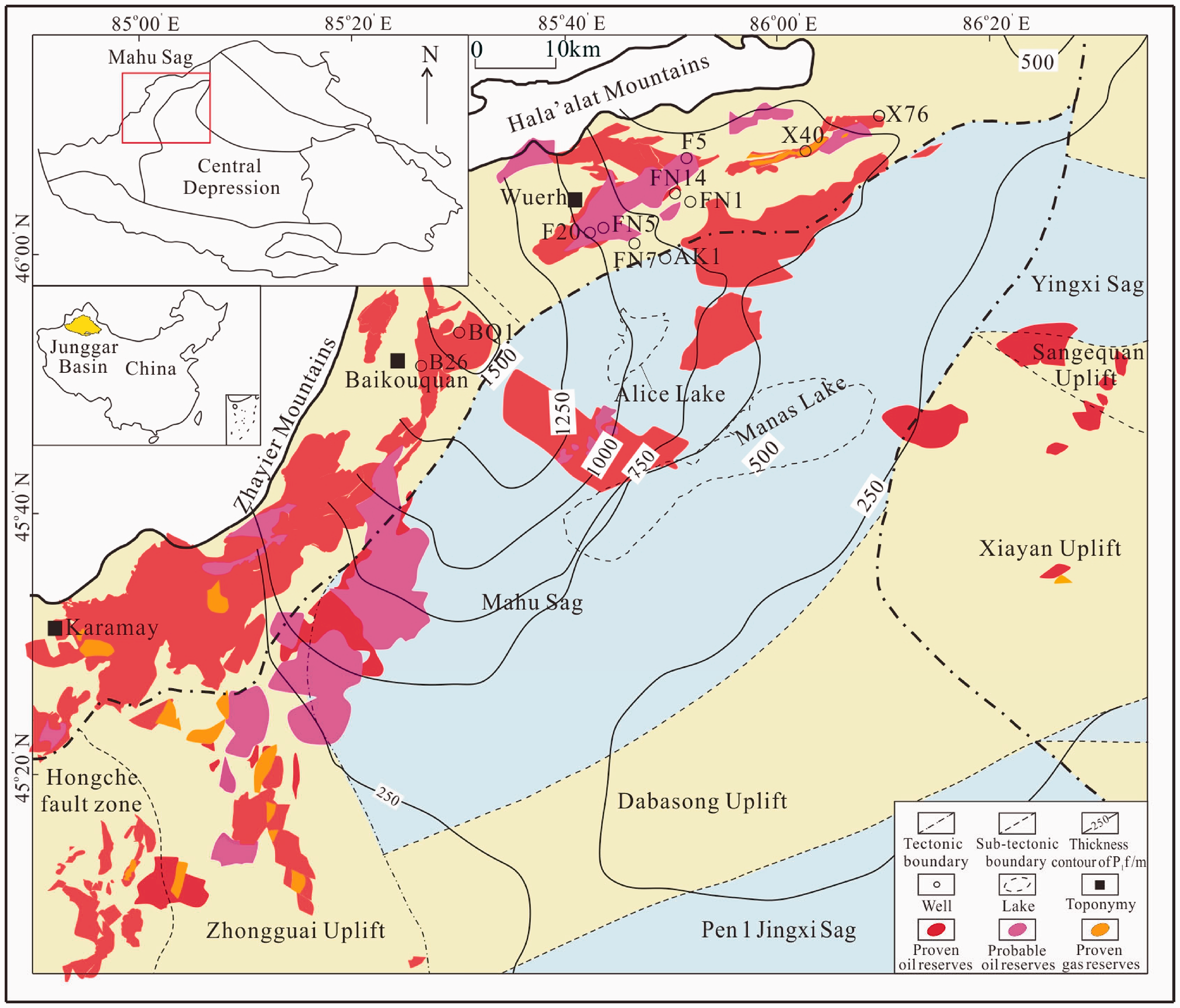
Structural setting and distribution of petroleum resources in the Mahu Sag, northwestern Junggar Basin (Xia et al., 2020b).
During the Carboniferous, the Junggar Basin was a marine foreland basin in the northwest, in which coastal–shallow marine sediments, marine–terrestrial mudstone, and carbonaceous mudstone were deposited, and volcanic rocks were emplaced (Figure 2; Chen et al., 2016; Zhi et al., 2019). From the end-Carboniferous to the Permian, the Mahu Sag entered a continental stage. By the Triassic, the Junggar Basin had evolved into an intracratonic basin (Wang et al., 2013). The Jiamuhe Formation is mainly exposed in the Wuerhe area, which is in the northern Mahu Sag. This formation consists of marine–terrestrial, grayish yellow to grayish green conglomerates, sandstones, and volcanic rocks, with a maximum thickness of ∼4000 m (Figure 2; Zhi et al., 2019). The upper part of the Jiamuhe Formation consists mainly of gray, grayish green, and grayish black sandstones interbedded with mudstones, with interlayers of volcanic rocks (andesite and basalt). The middle and lower parts of the formation are dominated by volcanic and tuffaceous rocks (andesite and basalt). The Fengcheng Formation is divided into first, second, and third members from base to top. The first member consists mainly of dark gray tuff and welded rhyolitic breccia. The second member comprises mainly thin, dark gray layers of muddy dolomites interbedded with dolomitic mudstones and locally developed siltstones. The third member consists mainly of dark gray to dark brown mudstones, sandy mudstones, and argillaceous sandstones of variable thickness (Cao et al., 2020; Wang et al., 2020). The Lower-Wuerhe Formation is 500–1600 m thick and comprises lacustrine, grayish green to gray conglomerates and sandy mudstones, and black mudstones. The upper part comprises thick brown mudstones; the upper–middle part consists of brown to grayish green conglomerates; and the middle–lower part comprises interbedded argillaceous siltstones, sandy conglomerates, and gravelly sandstones (Figure 2; Chen et al., 2016; Zhi et al., 2019).
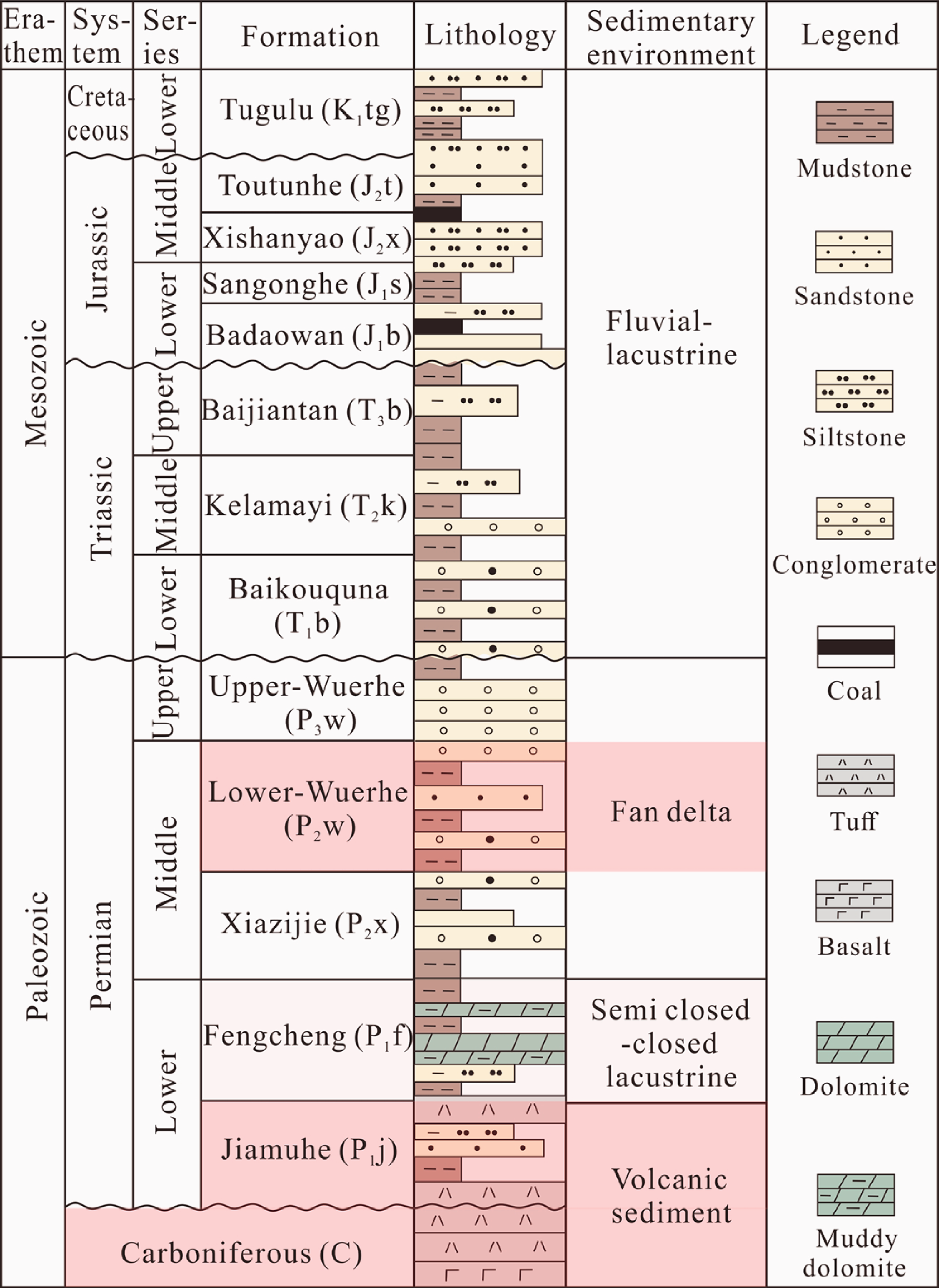
General stratigraphy of the Mahu Sag, northwestern Junggar Basin (Cao et al., 2005; Xia et al., 2020b).
Samples and methods
Samples
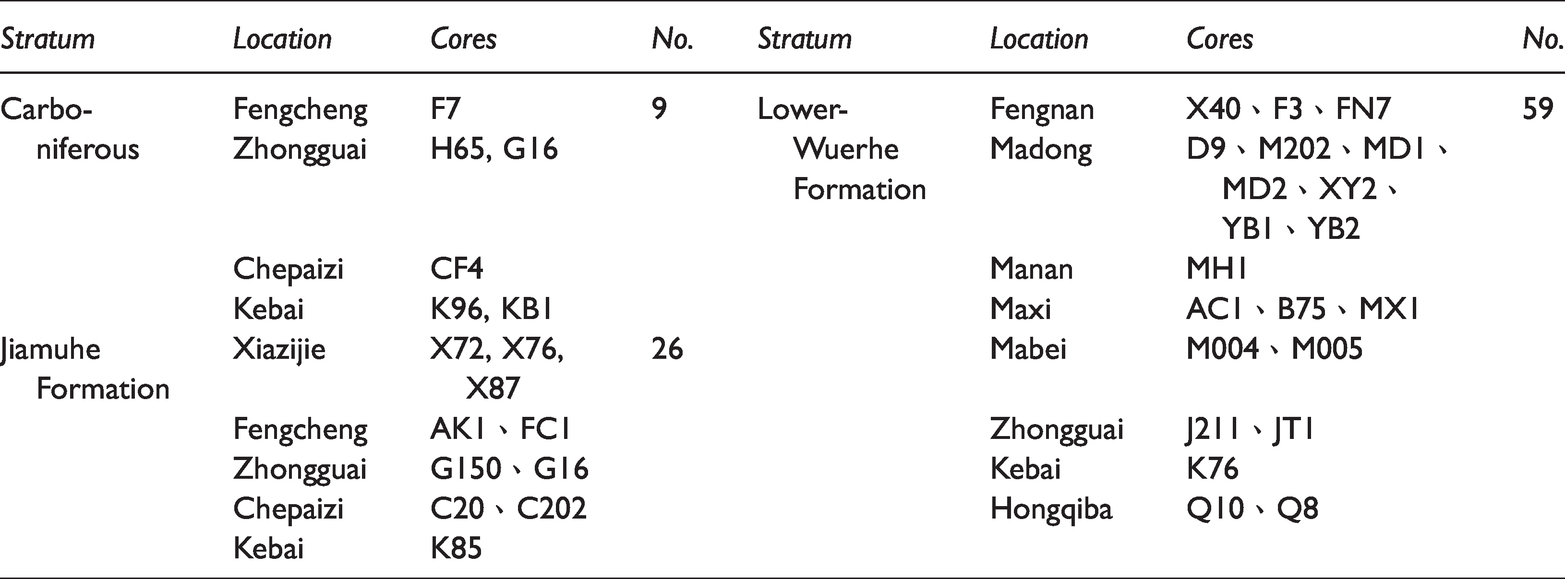
We collected 93 samples of Permian–Carboniferous source rocks in the Mahu Sag, northwestern Junggar Basin (Table 1). The Carboniferous samples were collected from the Fengcheng, Zhongguai, Chepaizi, and Kebai areas. The Jiamuhe Formation samples were collected from the Xiazijie, Fengcheng, Zhongguai, Chepaizi, and Kebai areas. The Lower-Wuerhe Formation samples were collected from the Fengnan, Madong, Manan, Maxi, Mabei, Zhongguai, Kebai, and Hongqiba areas. The number of samples from the different areas and intervals reflects the availability of drill cores. The number of samples from each set of source rocks is as follows: Lower-Wuerhe Formation = 59 samples; Carboniferous source rocks = 9 samples; Jiamuhe Formation = 26 samples.
Distribution of Permian–Carboniferous source rocks in the Mahu Sag, northwestern Junggar Basin.
Methods
We carried out systematic organic petrological and geochemical analyses of the collected samples. The organic petrology was mainly conducted by optical microscopy. For the optical microscopy, the rock samples were sectioned, embedded in a mixture of Buehler epoxy resin and hardener (ratio of 5:1), and polished. The resulting thin-sections were examined under plane-polarized, cross-polarized, reflected, and blue light using a Nikon optical microscope.
Organic geochemical analyses included determination of total organic carbon (TOC) contents, pyrolysis compounds, chloroform asphalt contents, organic C isotopes, and biomarker compounds. Prior to TOC analysis, the samples were powdered to <100 mesh. The powder was treated with dilute HCl acid at 60°C, and then centrifuged at 50°C and dried to remove the inorganic C. The TOC analyses were undertaken using a LECO-CS-200 C–S analyzer.
Prior to the pyrolysis analyses, the samples were powdered to <100 mesh, and were then heated and analyzed using a Rock–Eval VI pyrolysis instrument to measure S1, S2, S3 and Tmax values. The samples were heated at 300°C for 3 min to obtain the free hydrocarbon content (S1, mg HC/g rock), and then heated to 600°C to determine the cracked hydrocarbon content (S2, mg HC/g rock). S3 is the amount of CO2 produced during the analysis (mg CO2/g rock), and Tmax is the temperature at which the maximum S2 yield. The hydrogen index (HI) and oxygen index (OI) ware calculated as HI = S2/TOC × 100 and OI= S3/TOC × 100, respectively.
Before the chloroform bitumen content analyses, the sample powders were reacted with concentrated HCl and heated in HCl–HF to remove carbonate and silicate phases. The residue was then centrifuged and cleaned. The soluble organic matter was extracted using chloroform to obtain chloroform bitumen. The δ13C values of chloroform bitumen (i.e., the organic C isotopes) were determined using a MAT-253 mass spectrometer to an accuracy better than 0.1‰. The δ13C values were normalized to V-PDB.
Biomarker compound analyses were carried out on the saturated hydrocarbon components of chloroform bitumen, including gas chromatography (GC) and GC mass spectrometry (GC–MS) analysis. The GC analysis was conducted using an HP-6890 gas chromatograph, with an HP-5 elastic silica capillary column with a 0.25 μm fixed phase film thickness. The carrier gas was He. The GC oven was initially set at 80°C for 5 min, increased to 290°C at 4°C/min, and then held at 290°C for 30 min. The GC–MS analysis was undertaken using an Agilent 5973 N instrument, with He as the carrier gas. The initial GC oven temperature was held at 60°C for 5 min, increased to 120°C at 8°C/min, and finally increased to 290°C at 2°C/min. The final temperature was maintained for 30 min.
Results and discussion
Organic petrology
The organic matter in the Fengcheng Formation source rocks was mainly derived from bacteria and algae, with only a limited contribution from higher plants. The microorganism abundance was directly related to the alkalinity of the sedimentary environment. A higher alkalinity led to lower algae and higher amorphous organic matter contents (Cao et al., 2015; Wang et al., 2018). Cao et al. (2020) identified some unusual organic matter precursors by optical and scanning electron microscopy, including cyanobacteria, carbon–silicate bacteria, ribbed pollen with double air sacs, and unknown S-utilizing organisms.
The organic matter precursors of the Carboniferous source rocks in the study area are complex. We observed the shapes, sizes, accumulation forms, and fluorescence characteristics of the different organic matter precursors. The main organic matter precursors include cells and fragments of higher plants, sporopollen, and estuarine plants (Figure 3(a) and (b)). We observed higher plant fragments with marginal pores. Some fragments appear to be firm and have structural algae characteristics (i.e. small pores), which may be transitional between higher plants and algae. Various types of spores and suspected source organisms were observed.
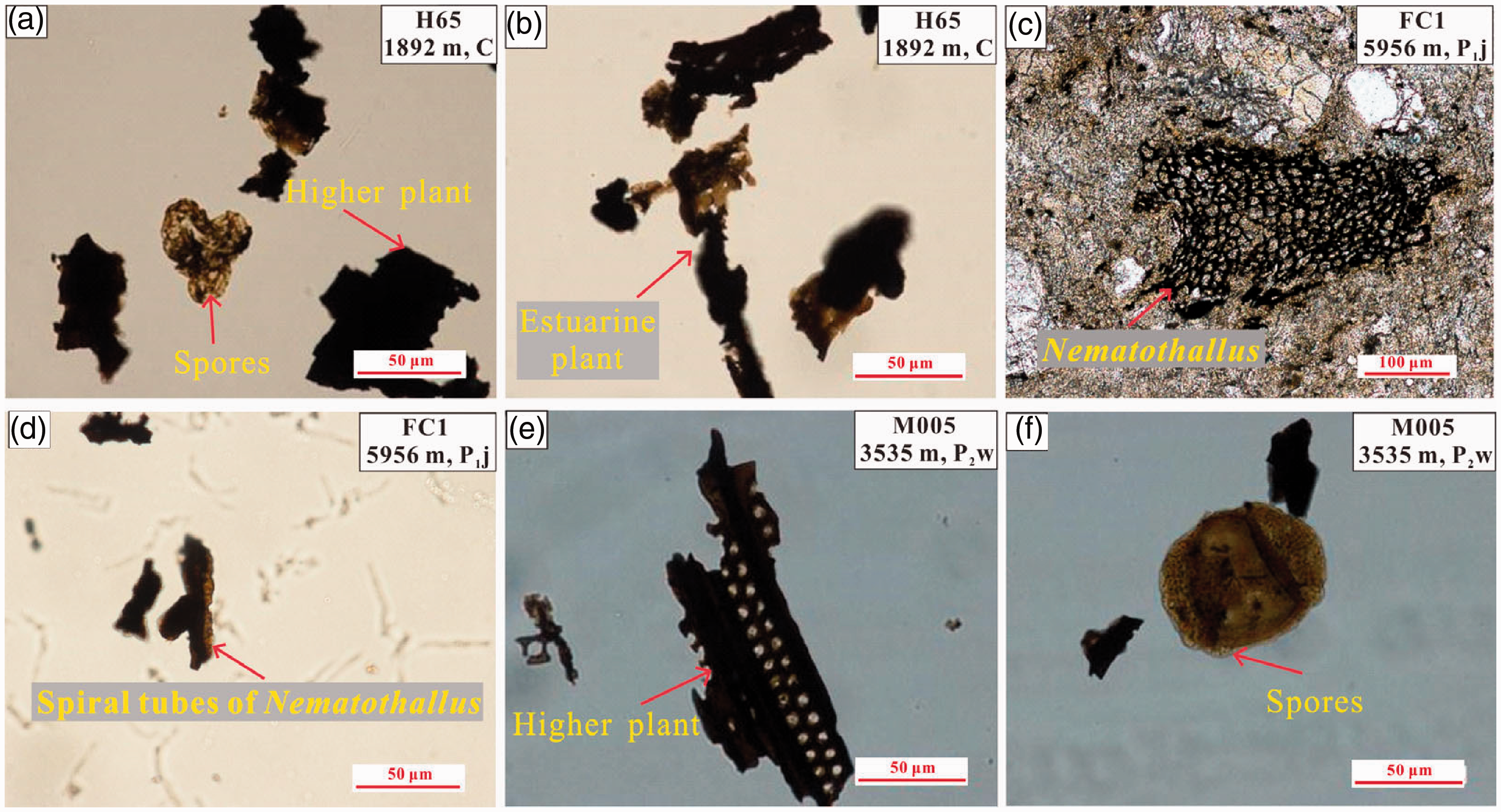
Late Paleozoic organic matter precursors identified by organic petrology in the Mahu Sag samples. (a) Carboniferous higher plant fragments and sporopollen under plane-polarized light. (b) Carboniferous estuarine plant fragments under plane-polarized light. (c) Nematothallus from the Jiamuhe Formation (photomicrograph of a thin-section under plane-polarized light). (d) Spiral tubes of Nematothallus from the Jiamuhe Formation under plane-polarized light. (e) Higher plant fragments from the Lower-Wuerhe Formation under plane-polarized light. (f) Spores and pollens from the Lower-Wuerhe Formation under plane-polarized light.
The organic matter precursors of the Jiamuhe Formation were mainly estuarine plants and, in particular, Nematothallus (Figure 3(c) and (d)). A large number of plant fragments were observed under the microscope, and their multicellular structure was obvious. We observed higher plant pores and algae network structures. Combined with the thin-section observations, these appear to be Nematothallus with spiral tubes. Fluorescence was weak or not observed under blue light.
The organic matter precursors of the Lower-Wuerhe Formation were mainly higher plants and various types of sporopollen, and the algae content was low. Microscopic examination of kerogen revealed abundant higher plant fragments with marginal pores (Figure 3(e) and (f)), obvious multicellular structures, and weak or no fluorescence under blue light. The various spores and pollens have clear structures (e.g. spines and air sacs), and exhibited bright yellow fluorescence under blue light.
In general, the organic matter precursors of the Fengcheng Formation source rocks were mainly bacteria and algae, but the aquatic bacteria and algae contents in the three studied formations are low. The organic matter precursors of the Carboniferous source rocks are dominated by higher plants and estuarine plants. The organic matter precursors of the Jiamuhe Formation were Nematothallus. The organic matter precursors of the Lower-Wuerhe Formation were higher plants and various types of sporopollen.
Source rock geochemistry
Organic matter abundance
A high organic matter abundance is necessary for hydrocarbon generation in source rocks, and is important for evaluating source rock quality and resource potential (Maier et al., 2011; Pei et al., 2016; Zhang et al., 2002). In this study, the TOC content, hydrocarbon generation potential (PG = S1 + S2), and chloroform bitumen content were used to evaluate the organic matter abundance of the studied samples and for the comparison with the Fengcheng Formation source rocks.
Based on these parameters, most of the Carboniferous, Jiamuhe Formation, and Lower-Wuerhe Formation samples are poor–good-quality source rocks, and only a few samples are very good–high-quality (Figure 4). Most of the Fengcheng Formation samples are medium–very good-quality (based on the classification of Peters and Cassa, 1994). In detail, the TOC contents of the Carboniferous samples vary from 0.3 to 4.3 wt.%, with an average of 2.0 wt.%. The TOC contents of the Jiamuhe Formation samples range from 0.1 to 2.5 wt.%, with an average of 1.0 wt.%. The TOC contents of the Lower-Wuerhe Formation samples are 0.03–6.1 wt.%, with an average of 1.3 wt.%. The TOC contents of the three formations have a trend of Carboniferous source rocks > Lower-Wuerhe Formation > Jiamuhe Formation (Figure 4).
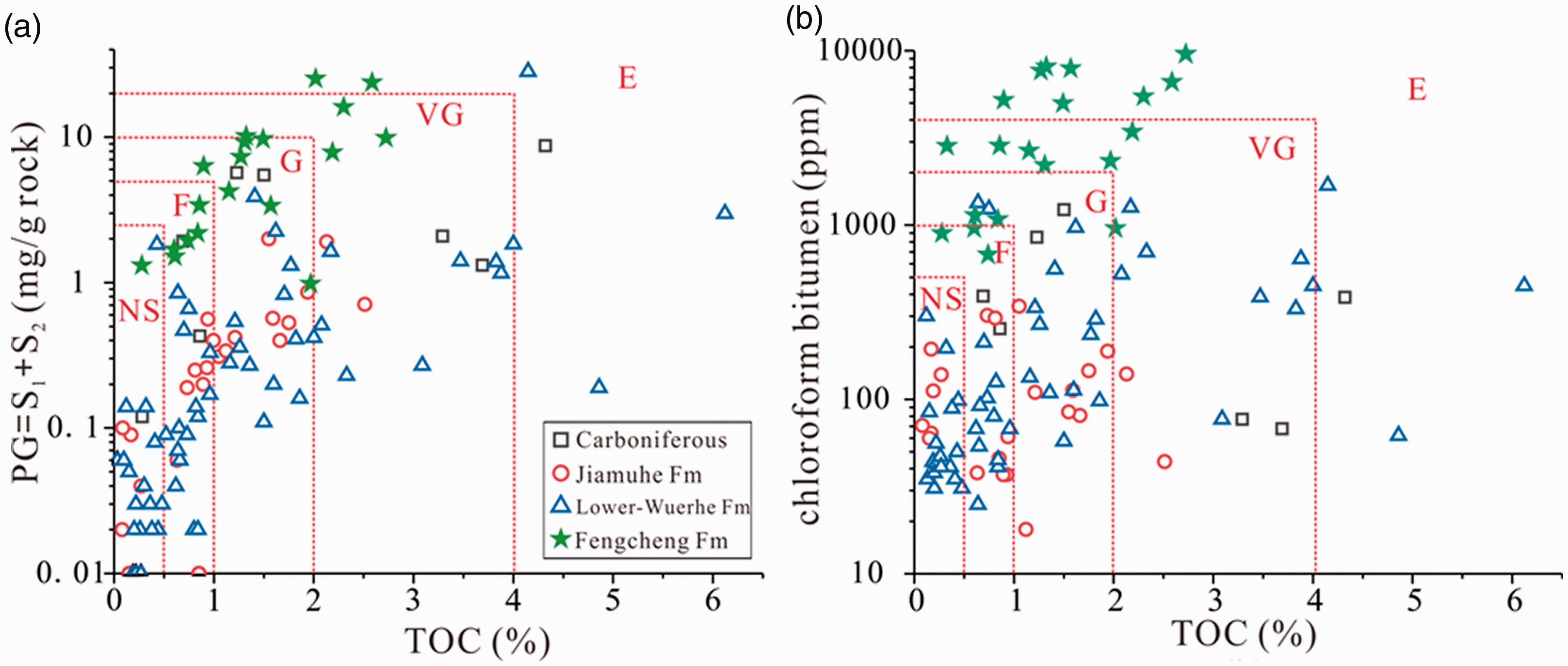
Organic matter abundances of upper Paleozoic source rocks in the Mahu Sag. (a) Hydrocarbon generation potential (PG = S1 + S2) vs. TOC contents; (b) chloroform bitumen contents vs. TOC contents.
The PG values of the Carboniferous, Jiamuhe Formation, and Lower-Wuerhe Formation samples are 0.1–8.7 mg/g (average = 3.2 mg/g), 0.01–2.0 mg/g (average = 0.4 mg/g), and 0.01–28.2 mg/g (average = 1.0 mg/g), respectively. The chloroform bitumen contents are 68–1226 ppm (average = 465 ppm), 0–343 ppm (average = 109 ppm), and 0–1692 ppm (average = 246 ppm), respectively. The PG values and chloroform bitumen contents show the same trends as the TOC contents (Figure 4).
The TOC contents of the Fengcheng Formation are higher than those of the Jiamuhe Formation, but lower than those of the Carboniferous and Lower-Wuerhe Formation source rocks. The PG values and chloroform bitumen contents of the Fengcheng Formation are significantly higher than those of the studied source rocks (Figure 4). In general, the organic matter abundances in the Carboniferous, Jiamuhe Formation, and Lower-Wuerhe Formation samples are significantly lower than those in the Fengcheng Formation. Although a few samples are good–high-quality source rocks, most are poor–good-quality. The organic matter abundance in the Lower-Wuerhe Formation is slightly higher than that in the Jiamuhe Formation. However, only a few Carboniferous samples were analyzed, although there is substantial published data for these rocks.
Organic matter types
Whether source rocks generate oil or gas depends on the organic matter type (Cheng et al., 2008; Kostyreva and Sotnich, 2017; Makeen et al., 2015). Geochemical parameters used to infer the organic matter types of source rocks include kerogen δ13C values and HI–Tmax and HI–OI plots. Figure 5 shows that the organic matter in the Carboniferous and Fengcheng Formation samples is type II kerogen, whereas that in the Jiamuhe Formation and Lower-Wuerhe Formation samples is largely type III, although a few samples contain type II (classification based on Espitalié et al., 1977). The oil-prone type of organic matter of Carboniferous samples may be attributed to the bio-precursors that have algal properties (i.e. small pores), which may be transitional between higher plants and algae (as observed in Section ‘Organic petrology’).
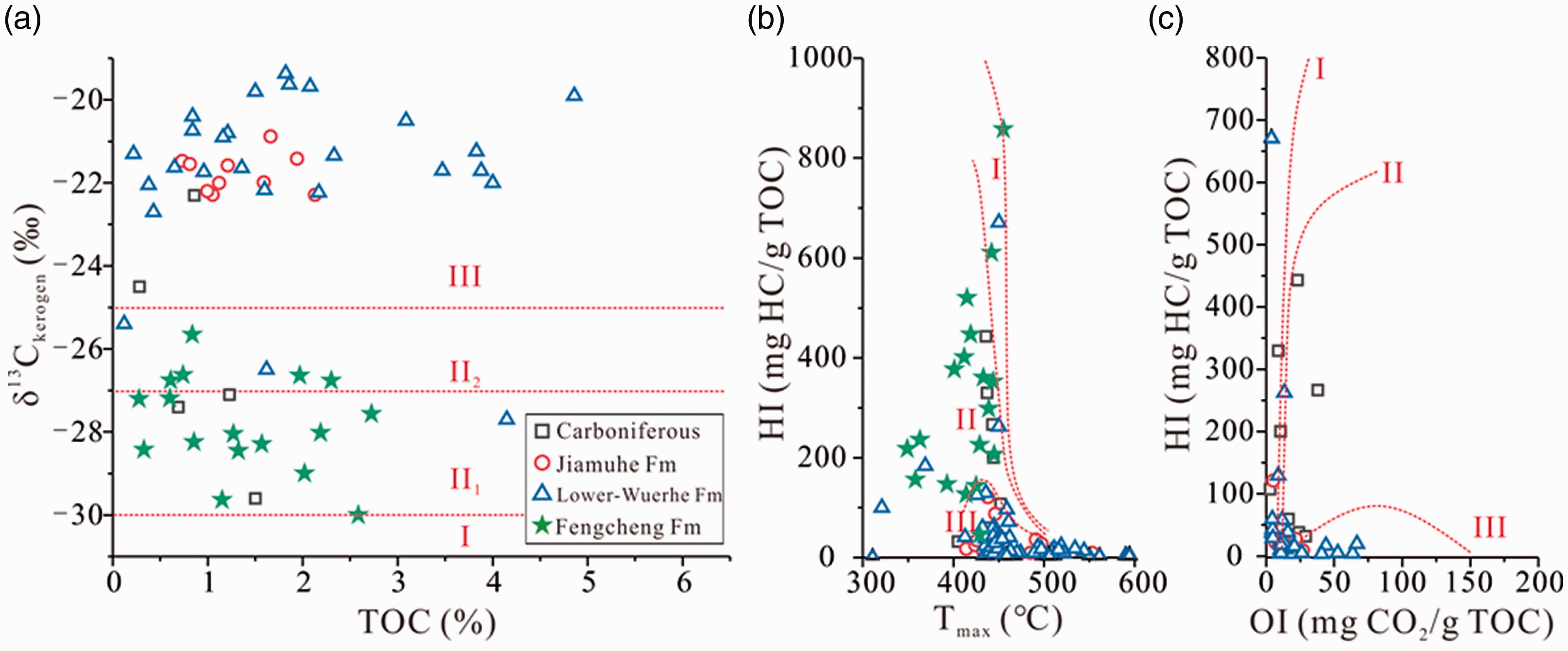
Organic matter types in the upper Paleozoic source rocks of the Mahu Sag. (a) δ13Ckerogen vs. TOC contents; (b) Tmax vs. HI; (c) OI vs. HI.
The δ13Ckerogen values of the Carboniferous samples range from −29.6‰ to −22.3‰ (average = −25.8‰; Figure 5(a)), indicating that the organic matter type varies from type II1 to III kerogens. This suggests that the sources of organic matter are relatively complex, and could generate oil and gas. The HI–OI and HI–Tmax plots indicate that the organic matter type in the Carboniferous samples is type II kerogen (or types I–II), while a small number of samples contain type III kerogen (Figure 5(b) and (c)).
δ13Ckerogen values of the Jiamuhe Formation samples vary from –22.3‰ to –20.9‰ (average = –21.8‰), indicating that the organic matter type is mainly type III kerogen (Figure 5(a)). The source of the organic matter is higher plants, which would generate gas. The HI–OI and HI–Tmax plots indicate that the organic matter type in the Jiamuhe Formation samples is type III kerogen, although a few samples contain type II kerogen (Figure 5(b) and (c)).
δ13Ckerogen values of the Lower-Wuerhe Formation samples vary from –27.7‰ to –19.4‰ (average = –24.9‰; Figure 5(a)). These values indicate that the organic matter is mainly type III kerogen, although a few samples contain type II1–II2 kerogens. The organic matter was derived from higher plants, and would mainly produce gas. The HI–OI and HI–Tmax plots show that the organic matter type is mainly type III kerogen, although a few samples contain type II or I–II kerogens (Figure 5(b) and (c)).
In general, the organic matter type in the Carboniferous samples is similar to that of the Fengcheng Formation (i.e. type II). The organic matter sources of the Carboniferous samples are relatively complex, and could generate oil and gas. The organic matter type in the Jiamuhe and Lower-Wuerhe formations is type III kerogen, but some samples contain type II kerogen. This is indicative of a higher plant input, which would favor gas generation, and is also consistent with the petrological observations.
Organic matter maturity
Whether source rocks with a high organic matter abundance and good organic matter type can produce large amounts of hydrocarbons depends on the organic matter maturity. Only when the maturity reaches a certain range can the source rocks generate hydrocarbons (Harouna et al., 2017; Li and Jin, 2000; Wang et al., 2003). The Carboniferous, Jiamuhe Formation, and Lower-Wuerhe Formation samples do not contain significant amounts of vitrinite (Wang et al., 2013). Therefore, vitrinite reflectance cannot be used to assess the organic matter maturity and, as such, we used Tmax, C29 sterane ααα20S/(20R + 20S), C29 sterane αββ/(ααα + αββ), CPI, OEP, C31 hopane 22S/(22R + 22S), and Ts/(Ts+Tm) values to assess the maturity (Peters et al., 2005).
The Tmax values indicate that the Carboniferous, Jiamuhe Formation, and Lower-Wuerhe Formation source rocks are immature to over-mature. Some of the Jiamuhe Formation and Lower-Wuerhe Formation samples have Tmax values of 500°C–600°C (Figure 5(b)). The Tmax values of the Carboniferous samples range from 435°C to 450°C, indicating they are in the low-mature–mature stages. The Tmax values of the Jiamuhe Formation and Lower-Wuerhe Formation samples vary from 400°C to 550°C, indicating they are in the immature–over-mature stages. However, Tmax values of the Fengcheng Formation are 350°C–450°C, which are indicative of the immature–mature stages.
The biomarker maturity indexes show similar characteristics for each parameter (Figure 6). According to the thermal maturity classification established by Peters et al. (2005), C29 sterane ααα20S/(20R + 20S) and C29 sterane αββ/(ααα + αββ) values are positively correlated. This indicates that most of the Carboniferous, Jiamuhe Formation, and Lower-Wuerhe Formation samples, and the Fengcheng Formation are mature (>0.4), although a few samples are of low maturity (0.2–0.4; Figure 6(a)). No C29 sterane ααα20S/(20R + 20S) values are ≥0.55, and C29 sterane αββ/(ααα + αββ) values of two Lower-Wuerhe Formation samples are almost 0.70, indicating that only a few samples of the Lower-Wuerhe Formation are of high maturity. The ααα20S/(20R + 20S) values of a small number of Fengcheng Formation samples are ∼0.55, indicating these samples are of high maturity.
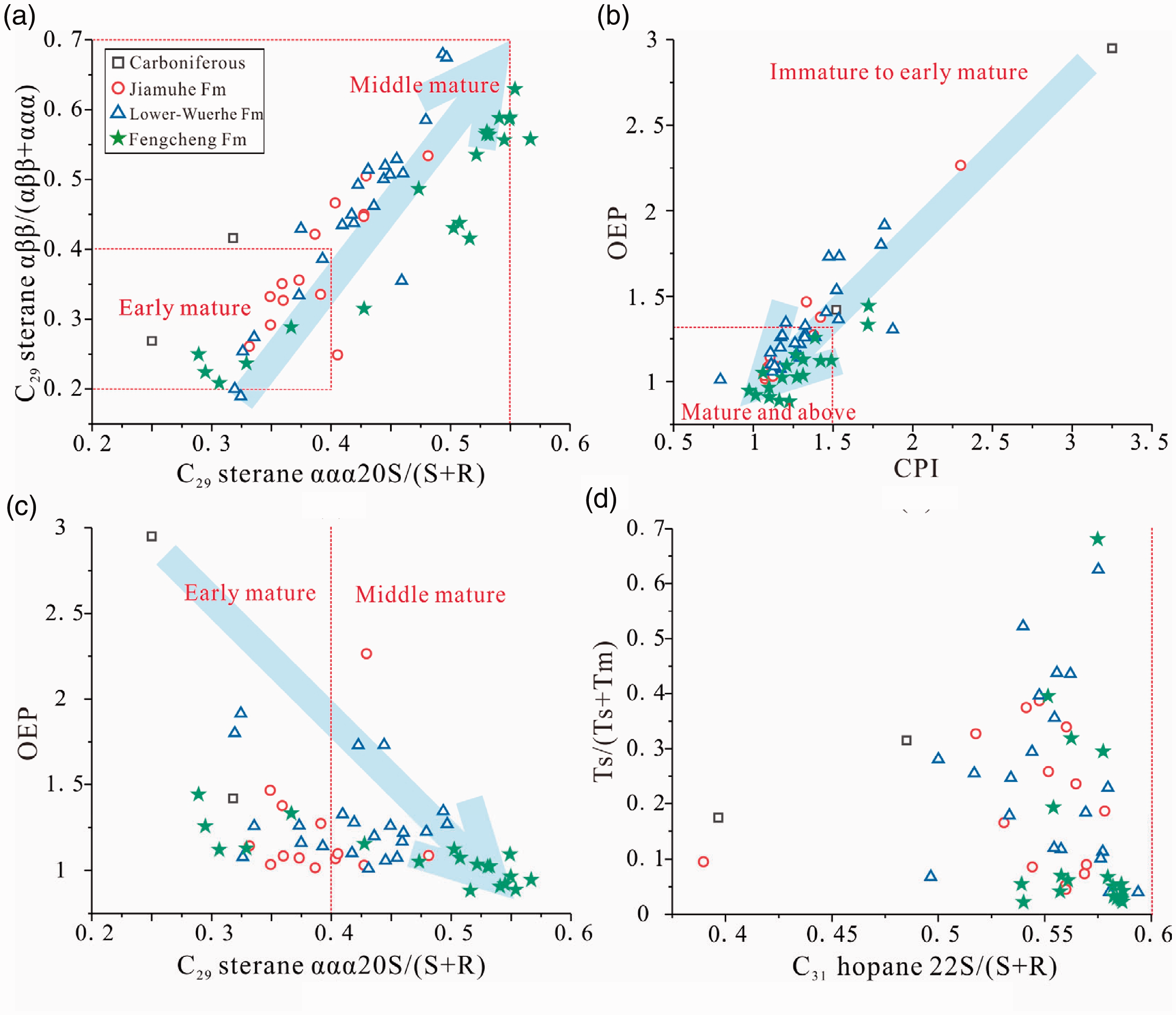
Maturity of upper Paleozoic source rocks in the Mahu Sag. (a) C29 sterane ααα20S/(20R + 20S) vs. C29 sterane αββ/(ααα + αββ); (b) CPI vs. OEP; (c) C29 sterane ααα20S/(20R + 20S) vs. OEP; (d) C31 hopane 22S/(22R + 22S) vs. Ts/(Ts+Tm). The classification of organic matter types is from Peters et al. (2005). CPI = [(C25+C27+C29+C31+C33)/(C24+C26+C28+C30+C32)+(C25+C27+C29+C31+C33)/(C26+C28+C30+C32+C34)]/2 (Bray and Evans, 1961); OEP = [(Ci+6Ci+2+Ci+4)/(4 Ci+1+4Ci+4)](–1)i+1, where i + 1 is the peak of n-alkanes (Scalan and Smith, 1970).
There is also a significant positive correlation between CPI and OEP values, which decrease to 1.0 with increasing maturity (Figure 6(b)). We found that the CPI and OEP values of most samples vary from 0.5 to 1.5, although the CPI values of a small number of samples are >1.5. This indicates that most of the samples are of high maturity, although a few samples are of low maturity. This is consistent with the C29 sterane parameters. C29 sterane ααα20S/(20R + 20S) values exhibit a negative correlation with OEP values, and C29 sterane ααα20S/(20R + 20S) values gradually increase and OEP values decrease to 1.0 with increasing maturity (Figure 6(c)).
With increasing maturity, C31 hopane 22S/(22R + 22S) and Ts/(Ts+Tm) values gradually increase. Tm is all converted into Ts in the late oil generation window, and the Ts/(Ts+Tm) ratio is close to 1.0 (Farrimond et al., 2004). The Ts/(Ts+Tm) ratios of the studied samples are not close to 1.0 (Figure 6(d)), indicating that none of the samples are over-mature. Moreover, the argillaceous nature of the source rocks excludes the possibility that a low clay mineral content has inhibited the transformation of Tm to Ts (McKirdy et al., 1984). For the reason why the thermal maturity indicated by biomarkers of the Carboniferous source rocks is lower than that of the Permian source rocks, we attribute it to the property of studied Carboniferous samples (Figure 6). The two biomarker data of Carboniferous source rocks are both from well CF4 with depth around 1420 m, which were collected from structural highs, such that the Carboniferous source rocks shown in Figure 6 have relatively lower thermal maturity.
In summary, Tmax values indicate that the Carboniferous source rocks are in the low-maturity–mature stages. The Jiamuhe Formation and Lower-Wuerhe Formation source rocks are in the immature–over-mature stages. The Fengcheng Formation source rocks are in the immature–mature stages. The biomarker indexes indicate that the thermal maturity of the studied samples is similar to that of the Fengcheng Formation, which is in the low mature–mature stages. Only a small number of Lower-Wuerhe Formation and Fengcheng Formation samples are highly mature. None of the source rocks are over-mature. Therefore, the maturity indicated by the Tmax values is higher than that suggested by the biomarker indexes. It is likely that the high chloroform bitumen contents are responsible for the low Tmax values, and adsorption of hydrocarbons onto minerals has resulted in high Tmax values in source rocks with low TOC contents (Zhang et al., 2006).
Hydrocarbon generation capacity
The hydrocarbon generation capacity depends on the quantity and quality of organic matter in the source rocks. The quantity of organic matter is mainly controlled by the abundance of organic matter and, to some extent, is affected by the thermal maturity. The quality of organic matter depends on the type of organic matter and its precursors (Erik et al., 2005; Hakimi and Abdullah, 2013; Tissot and Welte, 1984). In this study, we use PG values and the ratio of chloroform bitumen to TOC to assess the hydrocarbon generation capacity. The hydrocarbon generation capacity of the Carboniferous, Jiamuhe Formation, and Lower-Wuerhe Formation samples is lower than that of the Fengcheng Formation (Figure 7). The Fengcheng Formation has a high hydrocarbon generation capacity. PG/TOC and chloroform bitumen/TOC ratios of almost all the samples are >100 mg/g TOC (Figure 7(a)). The hydrocarbon generation capacity of the Carboniferous samples is medium–high. The PG/TOC ratios of 50% of the samples are >100 mg/g TOC and the chloroform bitumen/TOC ratios of all the samples are <100 mg/g TOC (Figure 7(a)). The hydrocarbon generation capacities of the Jiamuhe Formation and Lower-Wuerhe Formation samples are not high. The PG/TOC and chloroform bitumen/TOC ratios of most samples are <100 mg/g TOC, and the hydrocarbon generation capacity of the Lower-Wuerhe Formation samples is higher than that of the Jiamuhe Formation samples (Figure 7(a)).
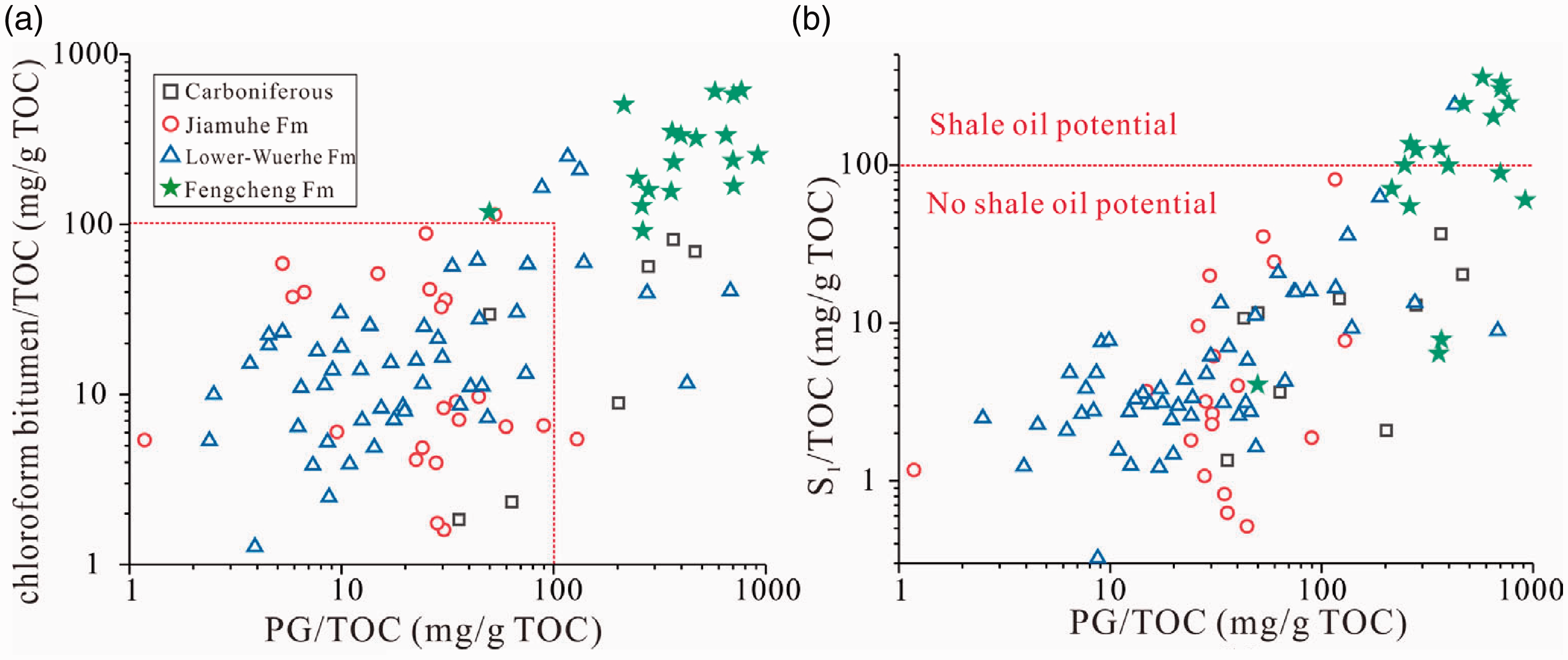
Hydrocarbon generation capacity of the upper Paleozoic source rocks in the Mahu Sag. (a) PG/TOC vs. chloroform bitumen/TOC; (b) PG/TOC vs. S1/TOC.
Shale oil is liquid petroleum trapped in shale after hydrocarbon generation and expulsion (Clarkson and Pedersen, 2010; Lu et al., 2012; Sonnenberg and Pramudito, 2009). Shale oil exploration has become important in China (Jin et al., 2019; Zhao et al., 2020; Zou et al., 2014). Oil shale index (OSI) values (S1/TOC) can be used to infer whether source rocks have shale oil potential. When OSI > 100, the source rocks have shale oil potential. When OSI < 100, the source rocks have no shale oil potential (Jarvie, 2012). In the Mahu Sag, the Fengcheng Formation source rocks are rich in shale oil (Kuang et al., 2012; Zhi et al., 2021). The Carboniferous, Jiamuhe Formation, and Lower-Wuerhe Formation source rocks have OSI < 100 and no shale oil potential (Figure 7(b)).
In general, the hydrocarbon generation capacity of the Carboniferous, Jiamuhe Formation, and Lower-Wuerhe Formation source rocks is not high, and is much lower than that of the Fengcheng Formation (up to 1000 mg/g TOC; Cao et al., 2015; Wang et al., 2018; Zhi et al., 2016). In detail, the hydrocarbon generation capacity decreases in the order Carboniferous (but for a small number samples) > Lower-Wuerhe Formation > Jiamuhe Formation. The source rocks have no shale oil potential and the OSI values are much lower than those for the Fengcheng Formation.
Organic matter sources indicated by biomarkers
The n-alkane distribution can be used to assess the organic matter source (Figure 8). However, it is affected by the degree of thermal evolution and needs to be considered in combination with other indicators (Peters et al., 2005). The n-C21–/n-C22+ and Tar [(C27+C29+C31)/(C15+C17+C19)] ratios can be used to determine the ratio of terrestrial higher plants to aquatic bacteria and algae in source rocks. Low n-C21–/n-C22+ and high TAR reflect a greater contribution from terrestrial higher plants (Bourbonniere and Meyers, 1996; Peters et al., 2005). There is a negative correlation between n-C21–/n-C22+ and Tar ratios for the Carboniferous, Jiamuhe Formation, and Lower-Wuerhe Formation samples, and the ratios vary widely (Figure 9(a)), indicating that the organic matter source was a mixture of higher plants and bacteria–algae.
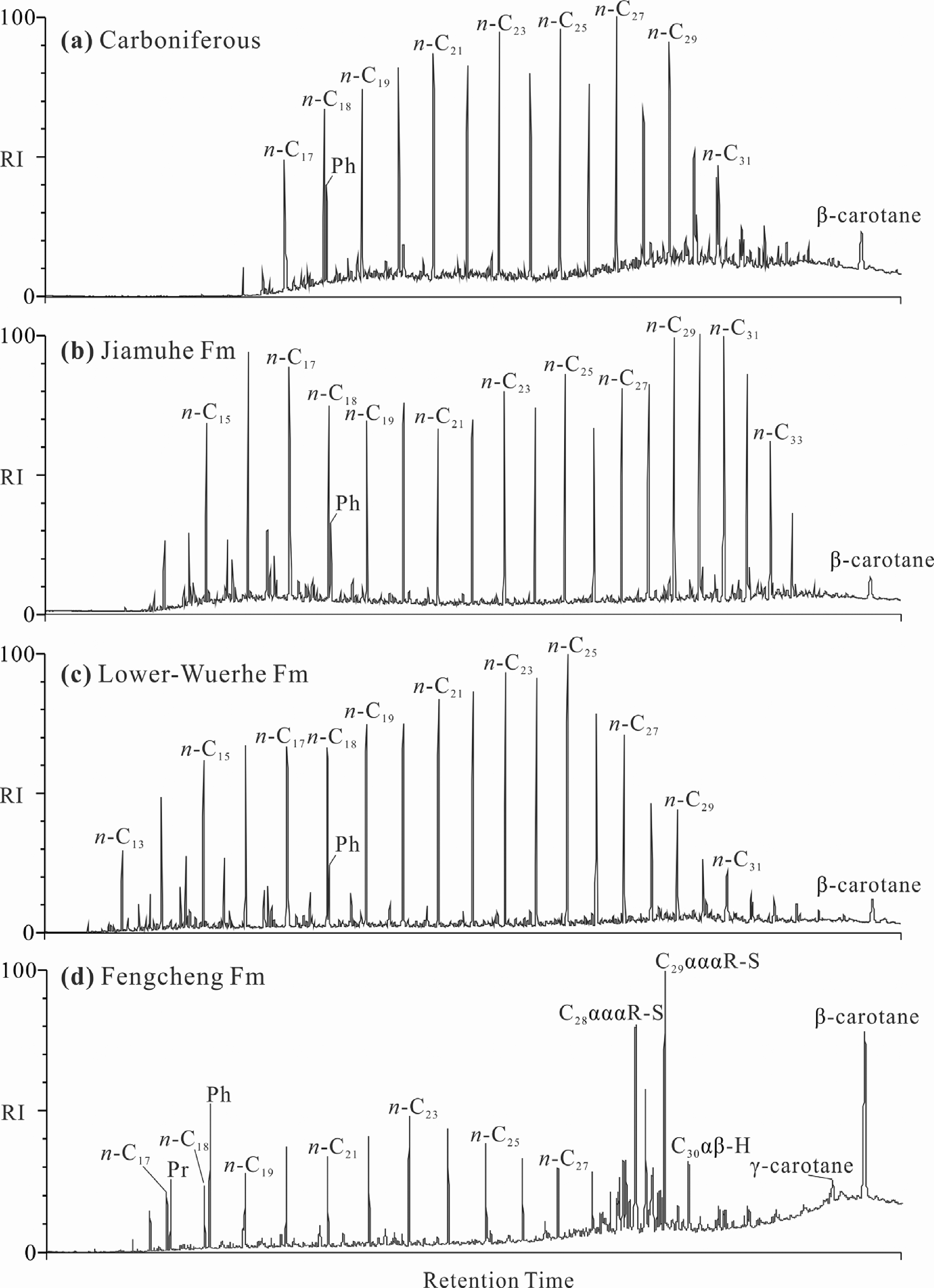
Typical distribution of saturated hydrocarbon distributions from source rocks of the Mahu Sag, Junggar Basin (a) Total ion current (TIC) of the saturated hydrocarbon fraction of the Carboniferous (Well CF4, 1425.4 m); (b) TIC of the saturated hydrocarbon fraction of the Jiamuhe Formation (Well C202, 2361 m); (c) TIC of the saturated hydrocarbon fraction of the Lower-Wuerhe Formation (Well JT1, 4656.7 m); (d) TIC of the saturated hydrocarbon fraction of the Fengcheng Formation (Well F20, 3248 m).
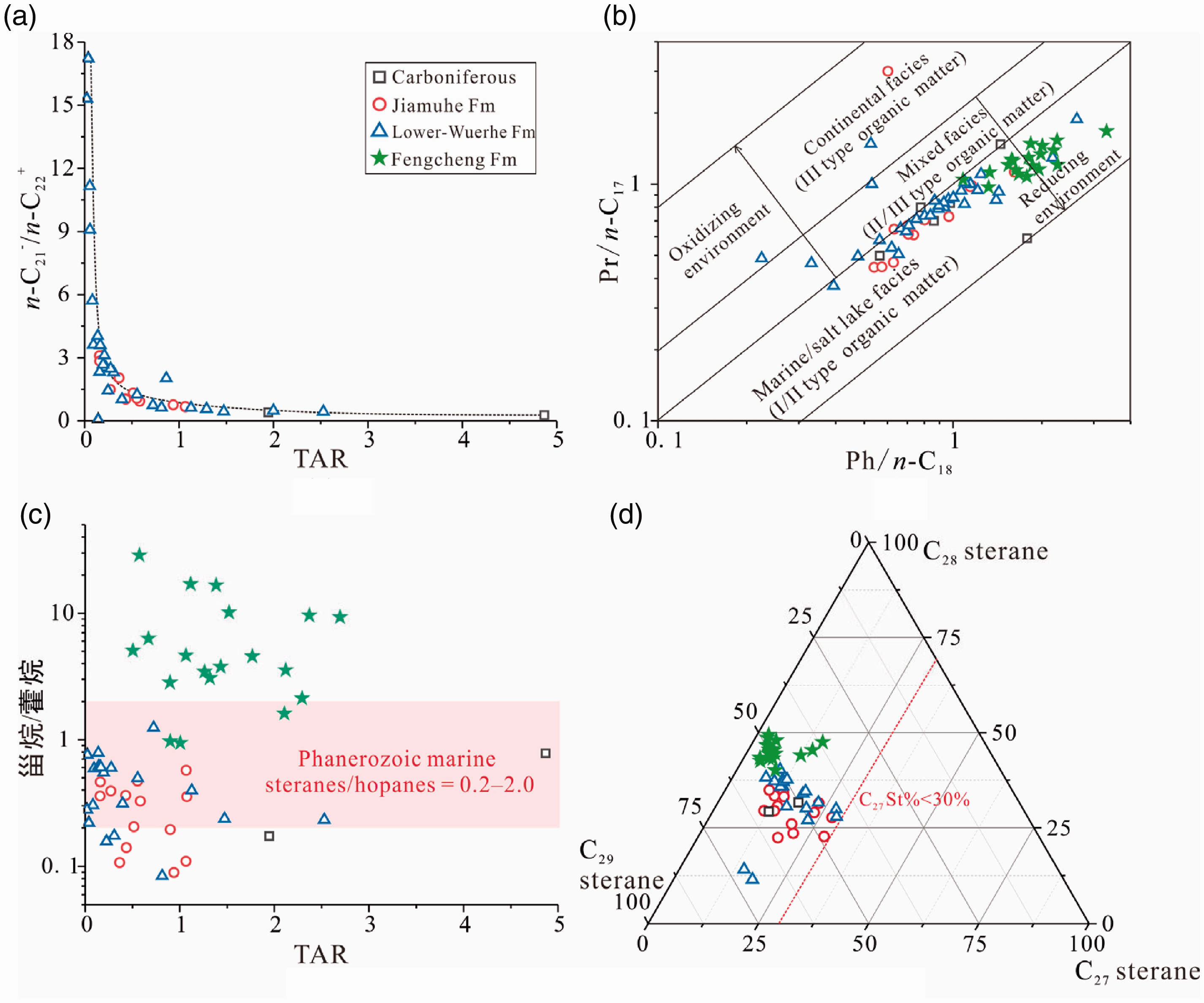
Biomarker characteristics related to the organic matter sources of the upper Paleozoic source rocks in the Mahu Sag. (a) TAR vs. n-C21–/n-C22+; (b) Ph/n-C18 vs. Pr/n-C17; (c) TAR vs. sterane/hopane; (d) C27–C28–C29 regular sterane ternary diagram.
A plot of Pr/n-C17 vs. Ph/n-C18 can be used to determine the redox water conditions and organic matter source (Shanmugam, 1985). The Carboniferous samples plot in the mixed marine organic matter field. The Jiamuhe Formation and Lower-Wuerhe Formation samples plot in the terrestrial, mixed, and marine/saline lacustrine organic matter fields (Figure 9(b)). This is consistent with the n-C21–/n-C22+ and Tar ratios, which showed that the organic matter is a mixture of higher plants and bacteria–algae. The organic matter source of the Carboniferous samples was similar to that of the Fengcheng Formation (Figure 9(b)). The Jiamuhe and Lower-Wuerhe formations had a greater input of terrestrial organic matter.
Sterane is mainly derived from algae and other eukaryotes, whereas hopane is mainly derived from aerobic bacteria, including cyanobacteria (Rohmer et al., 1984; Volkman, 2003). Sterane/hopane ratios reflect the contribution of eukaryotes (mainly algae) to prokaryotes (mainly bacteria) in source rocks, and can also be used to estimate the algae/cyanobacteria ratio (Bobrovskiy et al., 2020; Peters et al., 2005; Rohrssen et al., 2013). In Phanerozoic sediments where algae were the main primary producer are compared with bacteria, the sterane/hopane ratios of ∼70% of samples is 0.2–2.0 (Bobrovskiy et al., 2020; Brocks et al., 2017). The sterane/hopane ratios of most Fengcheng Formation samples are >2.0. The sterane/hopane ratios of the Carboniferous, Jiamuhe Formation, and Lower-Wuerhe Formation samples are 0.2–2.0 or even <0.2 (Figure 9(c)). This shows that the algae/cyanobacteria ratios of these source rocks was lower than that of the Fengcheng Formation, which was dominated by algae (Xia et al., 2020a). The sterane/hopane ratios of the Carboniferous, Jiamuhe Formation, and Lower-Wuerhe Formation samples are 0.2–0.8 (average = 0.5), 0.1–0.6 (average = 0.3), and 0.1–1.2 (average = 0.5), respectively (Figure 9(c)). The sterane/hopane ratios are typical of Phanerozoic sediments, indicating that algae was more important than bacteria. However, in a few samples, bacteria were the dominant source.
The relative contents of the regular steranes C27–C29 can be used to infer the source of organic matter precursors. It is generally thought that C27 sterane represents a lower algae input and C29 sterane represents a higher plant or green algae input. To some extent, this reflects the organic matter source (Kodner et al., 2008; Peters et al., 2005; Volkman, 2003). The relative content of C28 sterane is a function of age. Prior to the Triassic, C28 sterane was mainly derived from specific green algae. After the Triassic, C28 sterane was derived from chlorophyll a + c algae, including dinoflagellates, diatoms, and coccolithophores (Falkowski et al., 2004; Kodner et al., 2008; Schwark and Empt, 2006). Therefore, the C28 sterane in the Carboniferous, Jiamuhe Formation, Fengcheng Formation, and Lower-Wuerhe Formation samples was derived from green algae rather than chlorophyll a + c algae. Almost all the studied samples have C29 > C28 > C27 regular steranes and C27 sterane/regular sterane < 30% (Figure 9(d)), indicating the samples had inputs from green algae or a mixture of green algae and higher plants. The C28/C29 ratios of regular steranes in the Carboniferous, Jiamuhe Formation, and Lower-Wuerhe Formation samples are significantly lower than those of the Fengcheng Formation. The C27 sterane/regular sterane ratios are slightly higher than those of the Fengcheng Formation. This indicates that the organic matter source of the Fengcheng Formation was different from that of the Carboniferous, Jiamuhe Formation, and Lower-Wuerhe Formation source rocks.
In summary, the organic matter in the Carboniferous, Jiamuhe Formation, and Lower-Wuerhe Formation source rocks was derived from higher plants or a mixture of terrestrial higher plants and aquatic bacteria–algae. The higher plant input was greater than for the Fengcheng Formation. The Jiamuhe Formation had the largest higher plant input, whereas the Carboniferous source rocks had more input from aquatic lower organisms than did the Jiamuhe and Lower-Wuerhe formations. Algal input was greater than bacterial input for most samples. The algae/bacteria ratio is lower than that of the Fengcheng Formation, in which bacteria were dominant. The difference in organic matter sources between the Jiamuhe and Lower-Wuerhe formations is not substantial.
Sedimentary environment indicated by biomarkers
Many biomarkers are affected by the sedimentary environment. We now consider the Pr/Ph ratio, β-carotane index [(β-+λ-carotane)/n-Cmain peak], gammacerane index (gammacerane/C30 hopane), C35S/C34S hopane vs. C29αβ/C30αβ hopane plot, and tricyclic terpane distribution.
In general, Pr/Ph ratios of <1 and >1 indicate anoxic and oxidizing environments, respectively (Didyk et al., 1978; Peters et al., 2005). The Pr/Ph ratios of the Carboniferous, Jiamuhe Formation, and Lower-Wuerhe Formation samples vary widely, and are different from the Pr/Ph ratios (<1.0) of the Fengcheng Formation samples, which reflect a reducing sedimentary environment (Figure 10(a); Cao et al., 2020). The Pr/Ph ratios of the studied source rocks are 0.2–1.9 (average = 1.0), 0.4–4.0 (average = 1.2), and 0.4–2.6 (average = 1.3), respectively, indicating deposition in oxidizing–reducing environments (Figure 10(a)). The Carboniferous, Jiamuhe Formation, and Lower-Wuerhe Formation source rocks were deposited in increasingly less reducing conditions. Based on the Pr/n-C17 vs. Ph/n-C18 diagram (Shanmugam, 1985), we determined the sedimentary depositional environment of the organic matter (Figure 9(b)). The Carboniferous source rocks had a marine and mixed sedimentary environment; the Jiamuhe Formation source rocks had a mixed sedimentary environment; and the Lower-Wuerhe Formation source rocks had a saline lacustrine to terrestrial sedimentary environment.
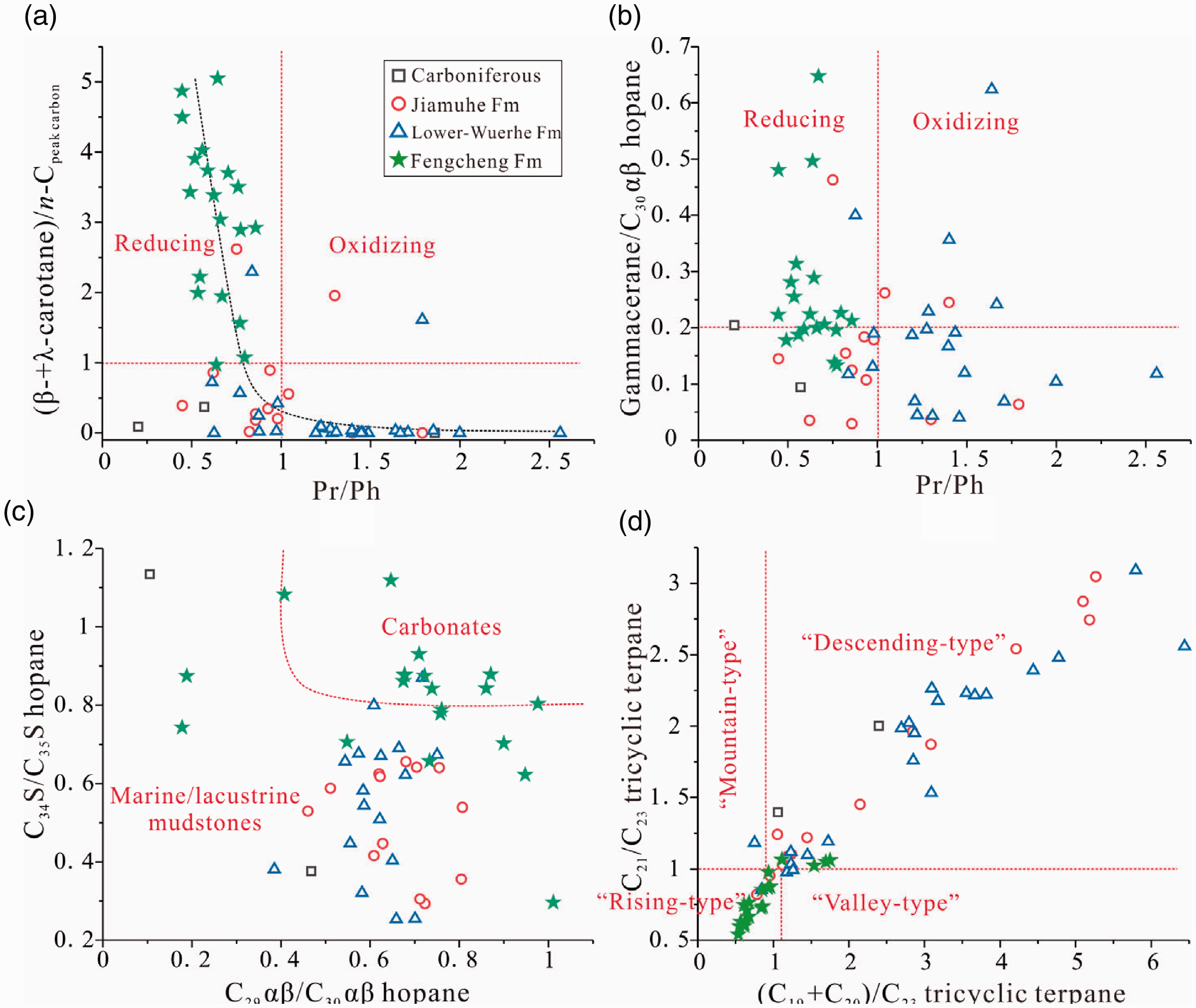
Biomarker characteristics related to the sedimentary depositional environment of the upper Paleozoic source rocks in the Mahu Sag. (a) Pr/Ph vs. (β-+λ-carotane)/n-Cmain peak; (b) Pr/Ph vs. gammacerane/C30αβ hopane; (c) C35S/C34S hopane vs. C29αβ/C30αβ hopane; (d) (C19+C20)/C23 tricyclic terpane vs. C21/C23 tricyclic terpane.
A high β-carotane index reflects a reducing and high-salinity environment because salt-resistant photosynthetic organisms (e.g. Dunaliella) can accumulate β-carotane to >14% of their dry cell weight, and adapt to a high-salinity environment (Ding et al., 2020; Francavilla et al., 2010; Tao et al., 2019). Unlike the Fengcheng Formation, in which the β-carotane index is >1.0 (Figure 10(a); Xia et al., 2020a), the β-carotane index values of most Carboniferous, Jiamuhe Formation, and Lower-Wuerhe Formation samples are <1.0. This indicates that the water salinity was lower than for the Fengcheng Formation (Figure 10(a)). This may also be related to the less reducing conditions, as β-carotane is readily decomposed in an oxidizing environment (Peters et al., 2005). Gammacerane is considered the diagenetic product of tetrahymanol. The latter is produced by protozoan cillates living at the reduction–oxidation interface in a stratified water body. As such, the gammacerane index is used to identify water stratification (Sinninghe Damsté et al., 1995). The gammacerane index values of most Fengcheng Formation samples are >0.2, while those of the Carboniferous, Jiamuhe Formation, and Lower-Wuerhe Formation samples are <0.2 (Figure 10(b)). This means the studied source rocks were not deposited in a stratified water body, which is consistent with the β-carotane data.
We used the C35S/C34S hopane vs. C29αβ/C30αβ hopane diagram to distinguish whether the crude oils were derived from carbonate rocks or mudstones (Peters et al., 2005; Tao et al., 2019). Most Carboniferous, Jiamuhe Formation, and Lower-Wuerhe Formation samples plot in the marine/lacustrine mudstone field, and only one sample plots in the carbonate rock field (Figure 10(c)). Some Fengcheng Formation samples plot in the marine/lacustrine mudstone field, and some plot in the carbonate rock field. This indicates the Carboniferous, Jiamuhe Formation, and Lower-Wuerhe Formation source rocks were deposited in a weakly evaporatic environment, without the necessary salinity to form carbonate rocks. This is consistent with the β-carotane and gammacerane index data, indicating a freshwater to slightly saline water environment.
The C21/C23 tricyclic terpane vs. (C19+C20)/C23 tricyclic terpane diagram indicates the distribution of tricyclic terpanes and organic matter precursors (Peters et al., 2005; Tao et al., 2019). The tricyclic terpane distribution of most Carboniferous, Jiamuhe Formation, and Lower-Wuerhe Formation samples is “descending-type” (Figure 10(d)). A few Jiamuhe Formation and Lower-Wuerhe Formation samples exhibit “rising-” and “mountain-type” distributions. These are distinct from the “rising-type” distributions of the Fengcheng Formation samples (Cao et al., 2015). As such, the sedimentary environments and organic matter sources of the Carboniferous, Jiamuhe Formation, and Lower-Wuerhe Formation source rocks were different from those of the Fengcheng Formation.
In summary, the sedimentary depositional environment of the Carboniferous, Jiamuhe Formation, and Lower-Wuerhe Formation source rocks was different from that of the Fengcheng Formation, with the latter being strongly reducing, high-salinity, and water-stratified (Cao et al., 2015, 2020). The three sets of studied source rocks were deposited in oxidizing–reducing, low-salinity, and unstratified water environments. The conditions became less reducing from the Carboniferous source rocks to the Jiamuhe Formation and to the Lower-Wuerhe Formation. The Carboniferous source rocks were deposited in a marine and mixed sedimentary environment; the Jiamuhe Formation source rocks were deposited in a mixed sedimentary environment; and the Lower-Wuerhe Formation source rocks were deposited in a saline lacustrine to terrestrial sedimentary environment, which became oxidizing. The relatively few Carboniferous samples that were analyzed may mean the data for these samples are not representative of these rocks.
Conclusions
We conducted an organic petrological and geochemical study of Carboniferous, Jiamuhe Formation, and Lower-Wuerhe Formation source rocks in the Mahu Sag, Junggar Basin by comparing with source rocks of the Fengcheng Formation.
The organic matter in the Carboniferous, Jiamuhe Formation, and Lower-Wuerhe Formation source rocks is a mixture of terrestrial higher plants and aquatic bacteria–algae. The higher plant input was greater than that in the Fengcheng Formation. The algal input was greater than the bacterial input, but the algae/bacteria ratio is lower than that of the Fengcheng Formation, which was dominated by algae. The studied source rocks all contain contributions from green algae or a mixture of green algae and higher plants.
The studied source rocks were deposited in an oxidizing–reducing, low-salinity, and unstratified water environment, where the deposited rocks generally have a high mudstone/carbonate ratio and a decreasing tricyclic terpane distribution. In contrast, the Fengcheng Formation was deposited in a strongly reducing, high-salinity, and stratified water environment, where the deposited rocks have a high carbonate/mudstone ratio and an increasing tricyclic terpane distribution.
The organic matter in the Fengcheng Formation is abundant, suitable for oil generation, and has shale oil potential. In contrast, the studied source rocks are poor–high-quality. None of the studied source rocks has a high hydrocarbon generation capacity and good shale oil potential.
Footnotes
Acknowledgements
We thank editors and anonymous reviewers for constructive comments and suggestions in improving the manuscript. We would like to express our sincere thanks to PetroChina Xinjiang Oilfield Company for providing core samples and data.
Author's Note
Kelai Xi is now affiliated with School of Geosciences, China University of Petroleum (East China), Qingdao, Shandong, China.
Declaration of conflicting interests
The authors declared no potential conflicts of interest with respect to the research, authorship, and/or publication of this article.
Funding
The author(s) disclosed receipt of the following financial support for the research, authorship, and/or publication of this article: This work was funded by PetroChina Science and Technology Major Project (Grant Nos. 2017E-0401 and 2019E-2602).