




Abstract
To clarify the characteristics and enrichment rules of Paleogene tight sandstone reservoirs inside the rifted-basin of Eastern China, the third member of Shahejie Formation (abbreviated as Es3) in Wendong area of Dongpu Depression is selected as the research object. It not only clarified the geochemical characteristics of oil and natural gas in the Es3 of Wendong area through testing and analysis of crude oil biomarkers, natural gas components and carbon isotopes, etc.; but also compared and explained the types and geneses of oil and gas reservoirs in slope zone and sub-sag zone by matching relationship between the porosity evolution of tight reservoirs and the charging process of hydrocarbons. Significant differences have been found between the properties and the enrichment rules of hydrocarbon reservoirs in different structural areas in Wendong area. The study shows that the Paleogene hydrocarbon resources are quasi-continuous distribution in Wendong area. The late kerogen pyrolysis gas, light crude oil, medium crude oil, oil-cracked gas and the early kerogen pyrolysis gas are distributed in a semicircle successively, from the center of sub-sag zone to the uplift belt, that is the result of two discontinuous hydrocarbon charging. Among them, the slope zone is dominated by early conventional filling of oil-gas mixture (at the late deposition period of Dongying Formation, about 31–27 Ma ago), while the reservoirs are gradually densified in the late stage without large-scale hydrocarbon charging (since the deposition stage of Minghuazhen Formation, about 6–0 Ma). In contrast, the sub-sag zone is lack of oil reservoirs, but a lot of late kerogen pyrolysis gas reservoirs are enriched, and the reservoir densification and hydrocarbon filling occur in both early and late stages.
Keywords
Introduction
The efficient exploration and development of tight oil and gas resources in the 21st century has transformed the structure of the global energy (Zou et al., 2012; Wang et al., 2016). Tight sandstone reservoirs in North America dominated by “marine to marine-continental transitional facies”, leading the exploration and exploitation of unconventional tight oil and gas in the North Sea, North Africa, the Middle East and many other regions around the world (Dong et al., 2007; Law, 2002; Li and Zhu, 2020; Monika and Wojciech, 2020).
In recent years, driven by market demand and increasingly improved technologies, China has made considerable progress in development techniques, such as large cluster horizontal well engineering, fracturing technology and intelligent engineering, etc. Multiple “marine-continental transitional to continental facies” tight sandstone reservoirs have been discovered in Yanchang Formation of Ordos Basin, Xujiahe Formation of Sichuan Basin, and Ahe Formation of Tarim Basin and so on (Dai et al., 2012; Sun et al., 2019; Wang et al., 2016; Zou et al., 2012). Among them, the Dongpu Depression covers about 5300 km2, which has attracted extensive attention from academia for being a typical representative of low- permeability sandstone oil and gas enrichment of rift basins in East China (Figure 1(a) and (b)). Its internal structure is controlled by basement rifts, forming an east-west zoning structure, including the western slope zone, the western sag zone, the central uplift zone, the eastern sag zone and the Lanliao fault terrace zone (Figure 1(c)).
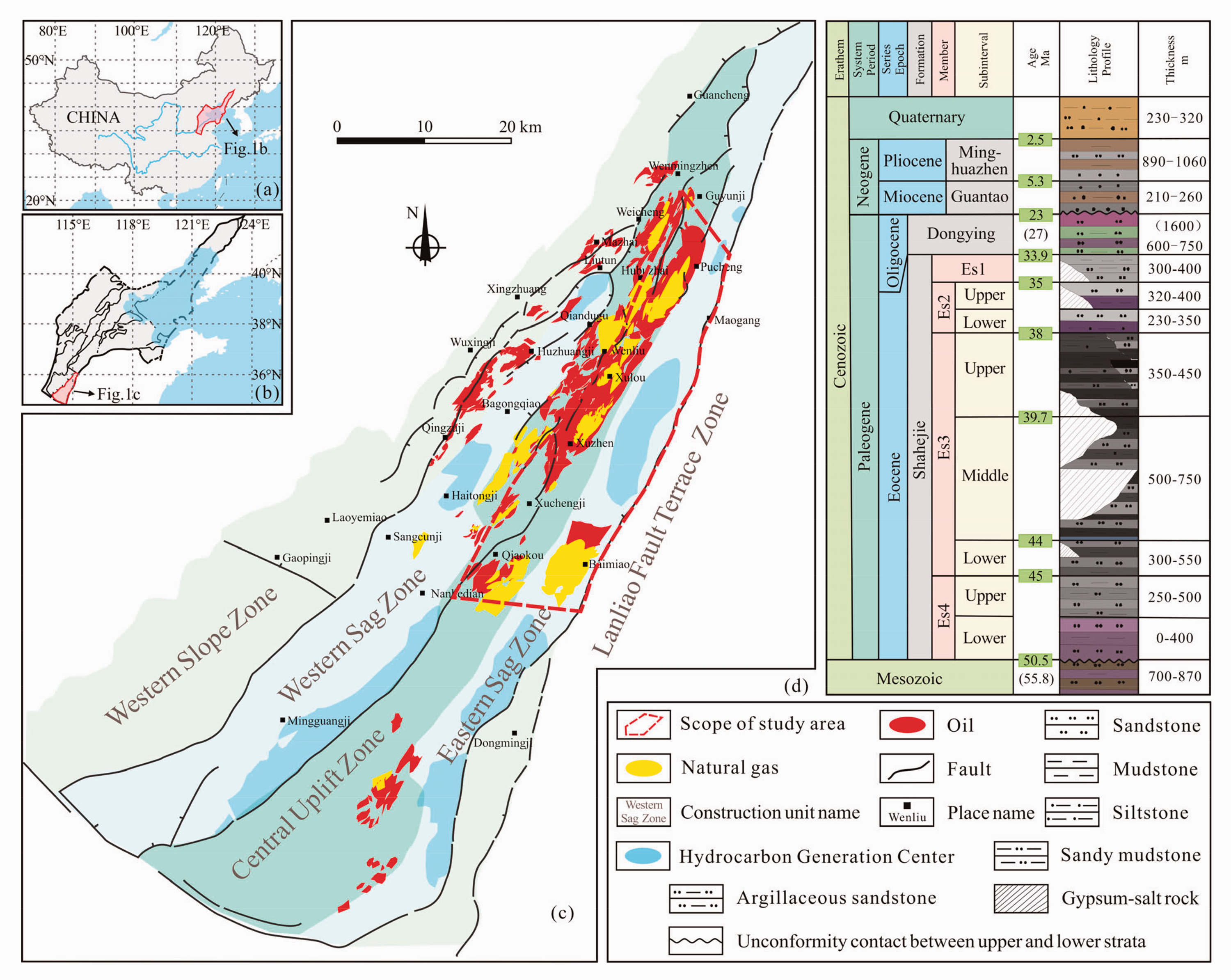
(a, b) Location of Dongpu Depression in Bohai Bay Basin, China; (c) tectonic units division of Dongpu Depression; (d) the stratigraphic distribution table of the Cenozoic in Dongpu Depression, and the mid-lower subsection of Es3 is the key research object.
After unremitting exploration and development in recent years, tight oil and gas resources with industrial scale have been discovered in the Shahejie Formation of Paleogene in Dongpu Depression (Jiang et al., 2020; Liu et al., 2017), among which the Wendong area is the most typical one. It is worth mentioning that Wendong area is unique. Affected by faults cutting and deep deposition, the Shahejie Formation of Paleogene in Wendong area can be buried at a depth over 5500 m (Figure 1(d)), and has a relatively complete sequence of oil-gas phase evolution, that is not available in other petroliferous depressions in China. The oil and gas reservoirs in Wendong area are mainly distributed in the mid-lower subsection of Es3 deeper than 3500 m (Zhang et al., 2016). In most previous studies on Paleogene hydrocarbon reservoirs of Dongpu Depression, the macroscopic characteristics of oil and gas reservoirs have been emphasized with attention being given to the basin structure, the characteristics of salty sedimentary, the evolution of pressure systems, the geochemical characteristics and thermal evolutions of source rocks, and the reservoir characteristics (Chen et al., 2007; Fan et al., 2010; Lu et al., 2007; Xu et al., 2019; Zhang et al., 2016), etc. Although We have gained great progress in these fields, there is still no clear advancement has so far been seen in the study of the process and the law of hydrocarbon accumulation.
In order to solve this problem and make up for the deficiency of the current research, this paper takes Es3 in Wendong area as the research object, and compares the enrichment processes as well as laws of tight hydrocarbon accumulations in different structural zones of rifted-basin in eastern China. Firstly, the spatial distribution and geochemical characteristics of oil and gas resources in Es3 are introduced. Secondly, combined with the temperature measurement of inclusions and basin simulation results, the hydrocarbon accumulation period is analyzed. Finally, combined with the change process of reservoir porosity, the differential charging processes of hydrocarbons in different structural zones (sub-sag zone and slope zones) in Wendong area are discussed, and the hydrocarbon accumulation models are proposed.
Experiments and methods
Organic geochemical test of crude oil
Crude oil samples were collected from production wellheads, and saturated hydrocarbon biomarkers were tested at the Petroleum Geologic Test center, Institute of Geological Sciences, Sinopec Co., Ltd.
The experimental procedure we performed can be briefly described as follows. Firstly, Crude oil sample (15–20 g) was mixed with isooctane (1 mL) to prepare a crude oil detection solution. Subsequently, the mixed detection solution was added into sample bottles and oscillated fully in an ultrasonic cleaner for 15 min. Next, put the sample bottles in a centrifuge for 10 min at 4000 rpm. Finally, the centrifuged crude oil detection solutions were analysed by GC/MS (Agilent 7890 A). The GC/MS gas chromatography-mass spectrometer had an inlet temperature of 300°C, and an ion source was adopted by electron bombardment of 70 eV. During the heating process, the initial temperature of the chromatographic column (HP-5, 30 m × 0.25 mm × 0.25 μm) was 80°C, which should be maintained for 2 min. Then the temperature was increased to 310°C at 5°C/min, and maintained for 18 min. High-purity helium (He) flowing at a line velocity of 27 cm/s was used as a carrier gas. It is important to note that the detector temperature must always be kept at 320°C when using SCAN/SIM for sample collection.
Organic geochemical testing of natural gas
The natural gas samples were collected from the mid-lower subintervals of Es3 at gas pipeline mouths by indirect sampling, which were transferred to the Experimental Research Centre, Exploration and Production Research Institute, Sinopec Co. for composition and stable carbon isotope tests.
The experiment roughly goes through the following steps. Firstly, the natural gas samples were processed by decompressing, drying and filtering, then being poured into steel cylinders with pistons. Immediately afterwards, the diluted dry air was filled into the steel cylinders as a standard gas. Next, depression valves were installed at the outlets of two groups of steel cylinders and a 3-mm diameter pipeline was connected to an element analysis-stable isotope proportional mass spectrometer (Delta XL Plus EA-IRMS). The following step, the easiest to ignore, was to switch on the power and preheat the equipment for 1 h to create a vacuum environment in the spectrometer to ensure stable operation of the equipment. After preheating process was done, the procedure to perform the instrument operation was to switch on the gas source and set the output pressure to 5.5 bar. Later, the double-flow sampling system and MS analysis system were combined to test the stable carbon isotope value in the CO2. The carbon isotope values of monomer organic compounds in natural gas samples were tested by a combination of GC, oxidizing furnace and MC analysis systems; i.e. GCCMS. Finally, the tested δ13CSA-ST values were calibrated to the δ13CVPDB (‰) values.
Method of restoring the sandstone porosity evolution
Based on observations of casting thin sections by a digital polarizing microscope (Axio Imager D1m, Zeiss) and scanning electron microscope (SEM), the diagenetic evolution sequences of reservoir strata were determined by analyzing mineral intersections and the mineralization environment. Subsequently, quantitative statistics on surface porosity, such as residual primary porosity, intergranular porosity, intragranular dissolved porosity and cements in different periods, were obtained by microscope observations combined with Axio Vision Software Rel imaging analysis and human assistance. Then, variations in porosity under different diagenetic environments were calculated according to the modelled relationship between the surface porosity estimated by microscope observation and the corresponding measured porosity. This experiment was conducted at the Key Laboratory of Shandong Oil Reservoir Geology, China University of Petroleum.
Observations and tests of hydrocarbon inclusions
Information on hydrocarbons and associated fluids captured in the process of inclusion formation can be used to restore the formation periods and times of the oil-gas reservoirs (Su et al., 1991; Yu et al., 2017; Zuo et al., 2017). Some 18 core samples were collected from 18 coring wells in the mid-lower subintervals of Es3 in eastern Dongpu Depression to prepare thin sections of inclusions.
The typical observation and testing process of inclusion is roughly divided into three steps: morphological analysis, fluorescence characteristic observation and homogenization temperature measurement. Firstly, the mineral types and characteristics of the prepared inclusion sheets were performed using a digital partial-fluorescence microscope (Axio Imager D1m, Zeiss) under transmitted light and fluorescence conditions. Then the diagenetic evolution sequence of reservoir was determined through the analysis of mineral intersection relationship and mineralization environment. Next, the formation sequence of host minerals was determined by combining with the petrographic observation of inclusions, so as to classify the formation stages of inclusions. After completing the above steps, homogenization temperature tests were applied to the observed hydrocarbons and hydrocarbon-associated saline inclusions using a Linkam THMS600 cold and hot platform. Finally, the key historical moments of different hydrocarbon accumulation stages were determined by combining the burial history of reservoir strata and the thermal evolution history of source rocks. The whole experiment was conducted at the Key Laboratory of Shandong Oil Reservoir Geology, China University of Petroleum.
Results and analysis
Types and distributions of oil-gas reservoirs
The crude oil of the Paleogene Shahejie Formation in eastern Dongpu Depression is mainly light oil and medium oil, characterized by low density, low viscosity, low sulfur content and high solidification point. The properties of crude oil are similar, but the maturity of crude oil varies greatly (Tang et al., 2020). Thus, it can be divided into two types: type A (mixed hydrocarbon supply from Es2 and Es3) and type B (mixed hydrocarbon supply from mid-lower subsections of Es3) (Table 1).
Geochemical characteristics of crude oil of Shahejie Formation in the eastern sub-sag zone (“L”, “M” and “U” are the abbreviations of “Lower”, “Middle” and “Upper” respectively).
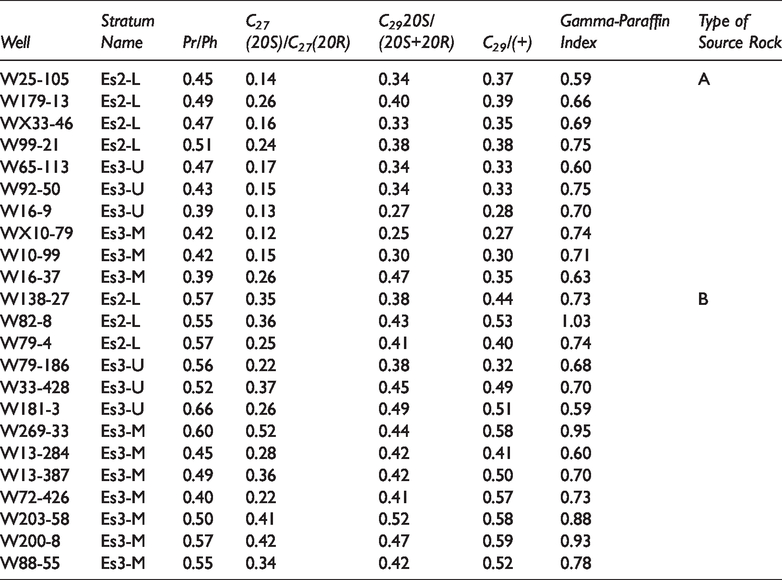
Table 1 presents the resulting data provided by the experiment on organic geochemistry tests for crude oil of Es2 and Es3 in Wendong area. It is not difficult to see that type A crude oil has low maturity and is mainly distributed in Es2 and the upper subsection of Es3 in slope area, which is supplied by mixed source rocks with multiple sets of dark mudstones inside Es2 and Es3 members. The ratios of Pr to Ph range from 0.39 to 0.51. The ratios of C27 rearranged steranes to C27 regular steranes are between 0.10 and 0.27. The ratios of C29 cholestane 20S to (20S + 20R) are between 0.23 and 0.47. The C29 cholestane ββ/(ββ + αα) ratios range from 0.26 to 0.45. The Gammacerane/C30H ratios are between 0.59 and 0.75. Type B crude oil has extensive distribution in the mid-lower subintervals of Es3 in the slope zones, and is supplied by the mixture of mid-lower subsections of Es3 in the eastern sub-sag zone. Its Pr/Ph ratios range from 0.40 to 0.66. The C27 rearranged sterane/C27 regular sterane ratios range from 0.22 to 0.52. The C29 cholestane 20S/(20S + 20R) ratios are within 0.38 − 0.52. The C29 cholestane ββ/(ββ + αα) ratios are between 0.32 and 0.59, and Gammacerane/C30H ratios range from 0.59 to 1.03.
The gaseous hydrocarbons are mainly wet gases (drying coefficient < 0.95) in the deep Paleogene. The range values of δ13C1 and δ13C2 for natural gas are −44.3‰ to −28.1‰ and −30.9‰ to −23.3% respectively. According to the natural gas identification standards proposed by Dai et al. (2005), the δ13C1 values of natural gas in mid-lower subsections of Es3 in the eastern sub-sag zone are lower than −30‰, but the δ13C2 values as well as δ13C3 values are generally less than −25.0‰, which conforms to the characteristics of oil-type gas and mixed gas, except for Baimiao and Hubuzhai that are dominated by coal-derived gas (Figure 2(a)). Different from the characteristics of Es3, the natural gas of Es4 is mainly composed of mixed gas and coal-derived gas.
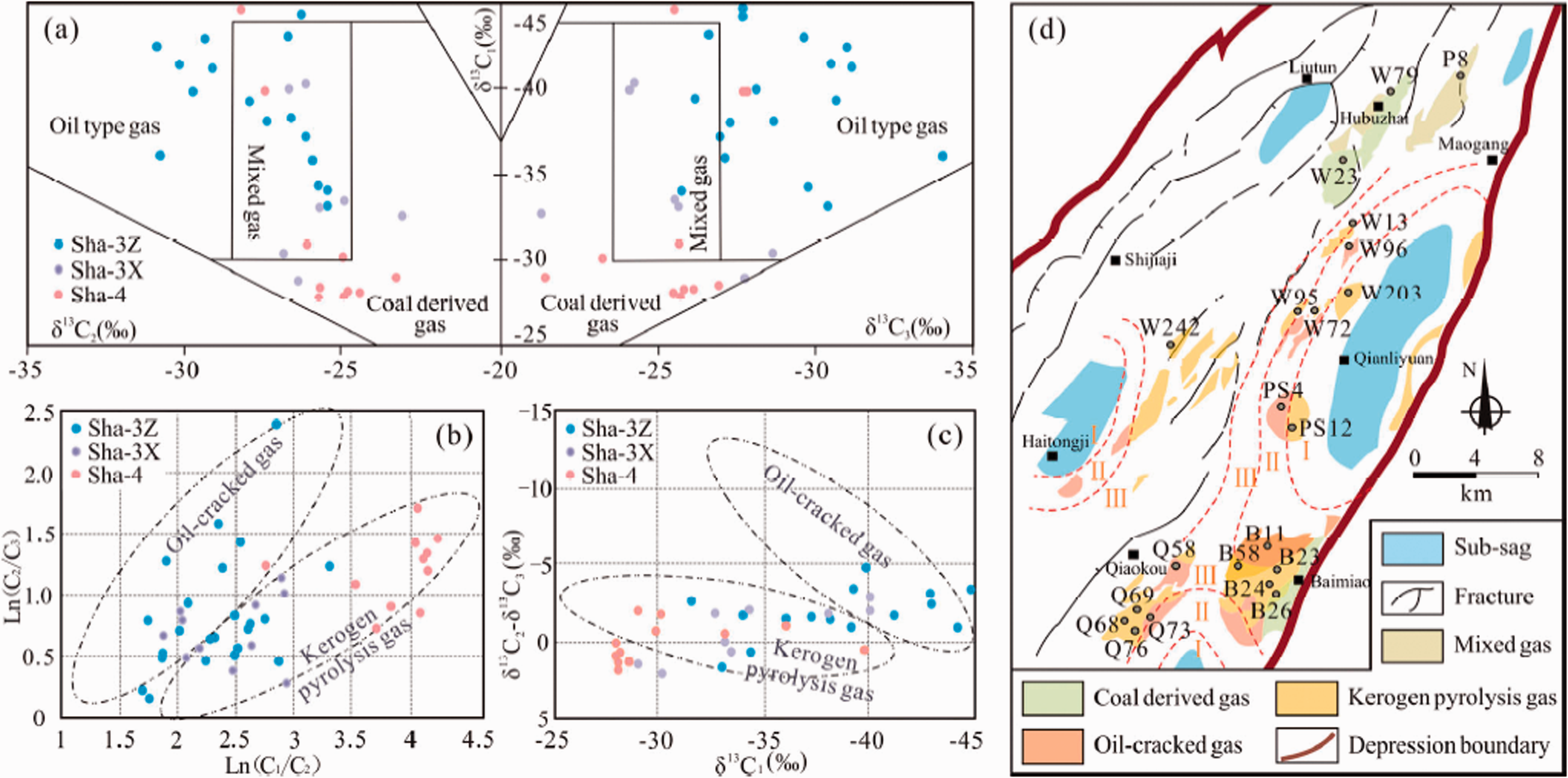
Identification of genetic types of deep Paleogene natural gas in northern Dongpu Depression: (a–c) the templates of photos (a–c) are provided by Dai et al. (2005), Prinzhofer and Huc (1995), and Liu et al. (2017), respectively; (d) Natural gas distribution of different genetic types in the mid-lower subintervals of Es3.
On this basis, the oil/mixed type gases are further divided into kerogen pyrolysis gas and oil-cracked gas by the relation diagrams of Ln(C1/C2)−Ln(C2/C3) and δ13C1−(δ13C2−δ13C3). According to the distribution features of Ln(C1/C2)−Ln(C2/C3) scattering points of natural gas in different tectonic zones, as shown in Figure 2(b), the Ln(C2/C3) values of natural gas in the slope zone risen sharply with the increase of the numerical values of Ln(C1/C2), that is consistent with the Prinzhofer and Huc’s(1995) description of oil-cracked gas characteristics. However, the Ln(C2/C3) values of the sub-sag zone increased slightly and fluctuated within a large range, showing the characteristics of kerogen pyrolysis gas. These conclusions are consistent with the analysis obtained by δ13C1−(δ13C2−δ13C3) scatter plot (Figure 2(c)).
In summary, affected by the influence of sample differences, the specific data results of this experimental test are different from those of the previous ones (Liu et al., 2017; Zhang et al., 2016), but the overall numerical distribution interval and distribution regularity are consistent. The deep Paleogene oil-gas resources in Dongpu Depression are mainly composed of light crude oil, medium crude oil and oil-type natural gas, and their spatial distributions are uneven. Oil reservoirs and a small amount of kerogen pyrolysis gas reservoirs are mainly concentrated in the slope zone, which are enriched in Es2 and the upper subintervals of Es3 in the depth range of 3500 m to 4000 m. Gas reservoirs are mainly distributed in Es4 and the mid-lower subintervals of Es3, with vertical depth greater than 4000 m. Specifically, oil-cracked gases are mainly distributed in the slope zone, while kerogen pyrolysis gases are concentrated in and around the sub-sag zone. On the whole, natural gases present the semi-annular distribution characteristic of late kerogen cracking gas I), crude oil cracking gas II) and early kerogen cracking gas III), from the sub-sag zone to the slope zone successively (Figure 2(d)).
Formation timing of hydrocarbon reservoirs
Due to differences in the abundance and composition of organic matter, hydrocarbon substances exhibit different colors and fluorescence intensities under UV light, which can be used to judge the hydrocarbon reservoir formation period (Jiang et al., 2020; Yu et al., 2019). According to the fluorescence observation results of residual organic matter, the reservoirs of Es3 in the slope zone are mainly asphaltic asphalts, oily-colloid asphalts and carbonaceous asphalts, indicating the existence of early oil-gas charging process and the crude oil cracking later (Figure 3(a) and (b)). However, the strata in the sub-sag zone mainly contains oily-colloidal asphalts, reflecting the two-phase hydrocarbon charging processes (Figure 3(c) to (f)). Among them, most of the early hydrocarbons were oily asphalts when they were just filled. Then accompanied by stratigraphic uplifting, oil and gas reservoirs became shallower, and even exposed to relatively open environments which were oxidized, degraded, and washed. At the same time, tectonic uplifting reduced the formation pressure and the solubility of hydrocarbon components, so the heavy constituents of hydrocarbons precipitated and formed colloid asphalts, asphaltic asphalts and carbonaceous asphalts. However, the properties of high-mature hydrocarbons charged in the late stage have not changed and mostly of them exist in the form of oily asphalt.
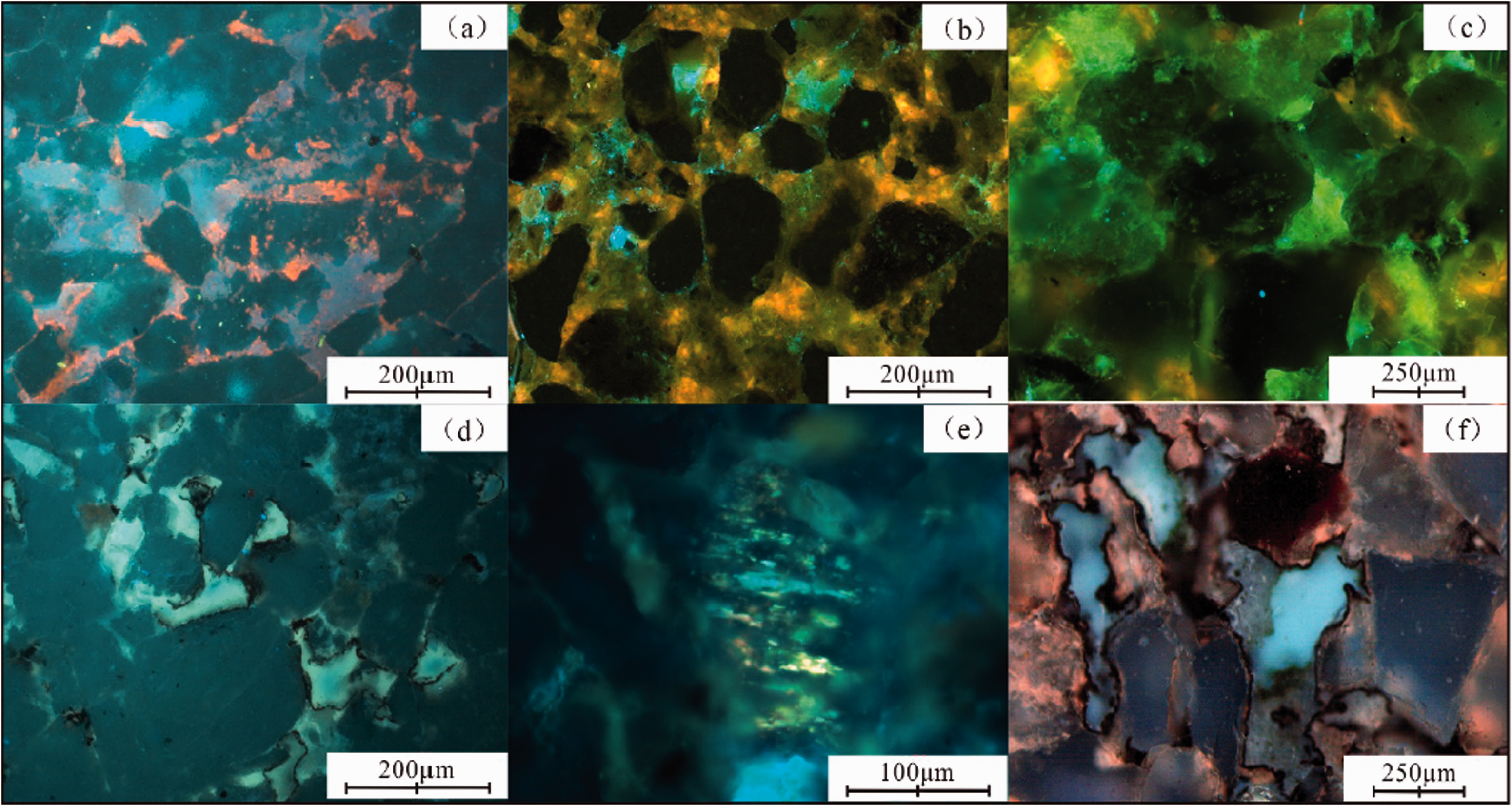
Fluorescence characteristics of residual organic matter in deep Paleogene oil-bearing sandstones: (a) Well Q58, 3885.42 m, colloidal asphalts distribute around the particles and emit orangish-red fluorescence (×20); (b) Well PS21, 4766.31 m, colloid asphalts have orange fluorescence, and the asphaltene asphalts emit brown fluorescence with a planar shape (×20); (c) Well W203, 4300.05 m, early residual colloid asphalts and the late residual oily asphalt emit orange and yellowish-green fluorescence respectively (×25); (d) Well PS12, 4542.62 m, residual asphaltene asphalts are distributed along the grain boundary, showing tan fluorescence; and the oily asphalts are distributed in the secondary pores, showing bluish-white fluorescence (×20); (e) Well PS4, 4349.4 m, feldspar dissolution fracture contains oily-colloidal asphalts (×50); (f) Well W95, 3360.5 m, asphaltene asphalts are distributed along the edge of the particles, with tan fluorescence (×25).
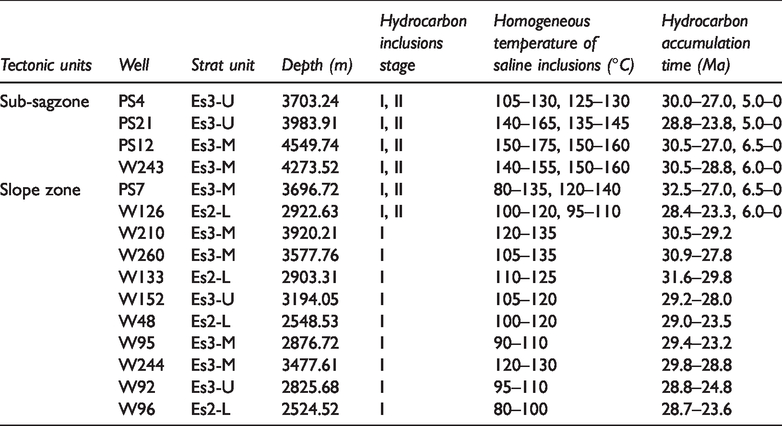
According to inclusion test analysis, the deep Paleogene oil-gas reservoirs in Wendong area experienced two reservoir-forming terms (Table 2). Hydrocarbon inclusions in reservoirs of the slope zone are mainly distributed in the carbonate cements and cracks inside the particles, and most of them are isolated or clustered, showing yellow and yellowish-green fluorescence (Figure 4(a) and (d)). The homogenization temperatures of coeval aqueous inclusions are generally 110–140°C, indicating that the early low-mature to mature oil and gas filling occurred about 30–27 Ma ago (equivalent to the mid-late deposition stage of the Dongying Formation). Different from the slope zone, reservoirs in the sub-sag zone contain two phases of inclusions. The homogenization temperatures of the aqueous inclusions associated with the first phase of hydrocarbon inclusions are generally within the range of 105–130°C, corresponding to the reservoir-forming period of 31–27 Ma ago. The hydrocarbon inclusions in the second period are mainly distributed in the healing fractures that run through particles, most of which are in beads or groups, showing turquoise and bluish-white fluorescence (Figure 4(b), (c), (e) and (f)). The homogenization temperatures of coeval aqueous inclusions are between 125 and 130°C, reflecting the high-maturity oil and gas filling in the late period since 6 Ma (equivalent to the period from the late-deposition stage of the Minghuazhen Formation to the present) (Figure 5). These results are consistent with the fluorescence analysis of residual hydrocarbon.
Statistical table of homogenization temperatures of coeval aqueous inclusions of Es3 in different tectonic areas.
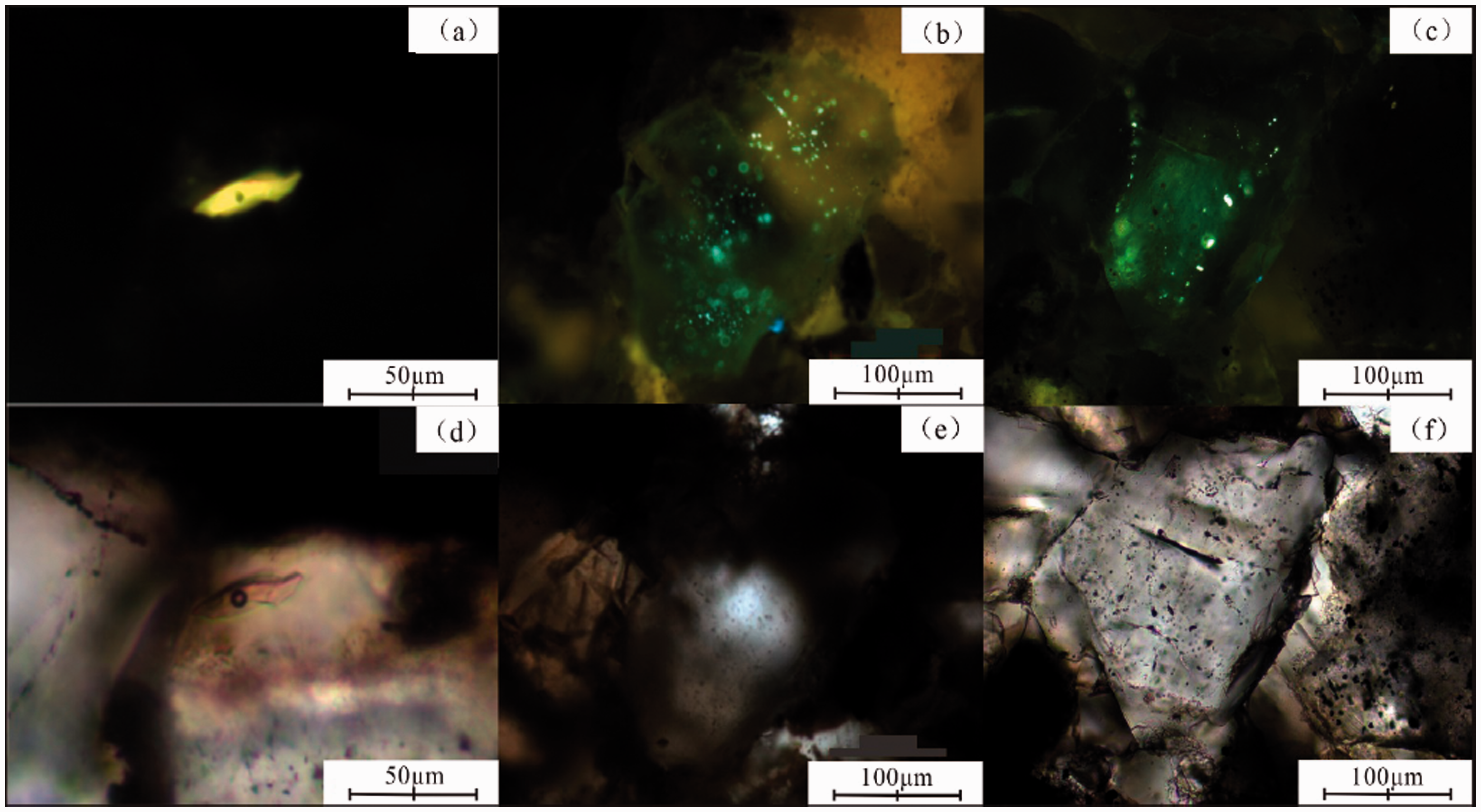
Characteristics of hydrocarbon inclusions in deep Paleogene tight sandstone reservoirs: (a,d) Well PS4, 3789.54 m, liquid hydrocarbon inclusion is independently distributed and emits yellow fluorescence (×100); (b,e) Well W210, 3789.76 m, liquid hydrocarbon inclusions are distributed in groups with yellowish-green fluorescence (×50); (c,f) Well PS12, 4549.74 m, liquid hydrocarbon inclusions are distributed along the healing fractures on the surface of quartz grains and emit bluish-white fluorescence (×50). Among them, photos a, b and c were taken under fluorescent conditions, while photos d, e and f were taken under transmitted light conditions.
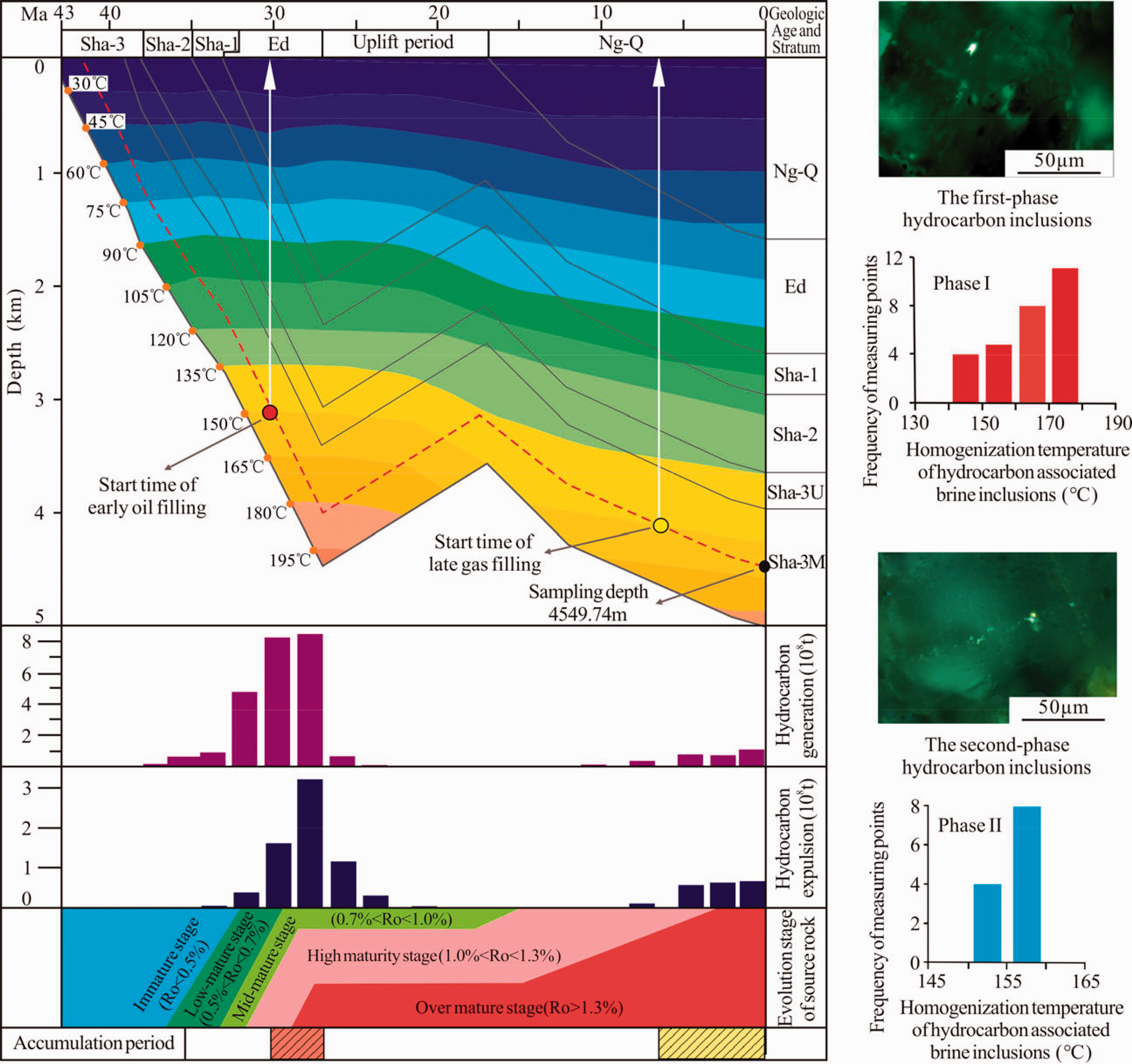
Determination of hydrocarbons filling periods by homogenization temperatures of inclusions and burial history of strata, taking the sample analysis of well PS12 at 4549.74 m as an example.
Physical properties and evolutions of sandstone reservoirs
Characteristics of sandstone reservoirs
There are extensive developments of 0.5–2.5 m thin sandstones in the middle and lower subintervals of Es3, and the rock types are mainly feldspathic-lithic quartz sandstones and lithic arkose sandstones (Figure 6). Porosities of the sub-sag zone are mainly distributed between 2% and 8%, and most permeabilities are less than 0.1 mD, which are classified as a tight reservoir with ultralow porosity and extra-low permeability, referring to the physical property standards of tight sandstone defined by the Federal Energy Regulatory Commission of the United States (FERC) in 1980 and Zou of China in 2010. However, the porosities of the slope zone are mainly within 8–12%, with a wide range of permeabilities (Figure 7). It is classified as a sandstone reservoir of low porosity and low permeability. In addition, due to the dissolution and reconstruction of micro-cracks, there are still some local high porosity and high permeability points in sandstone reservoirs.
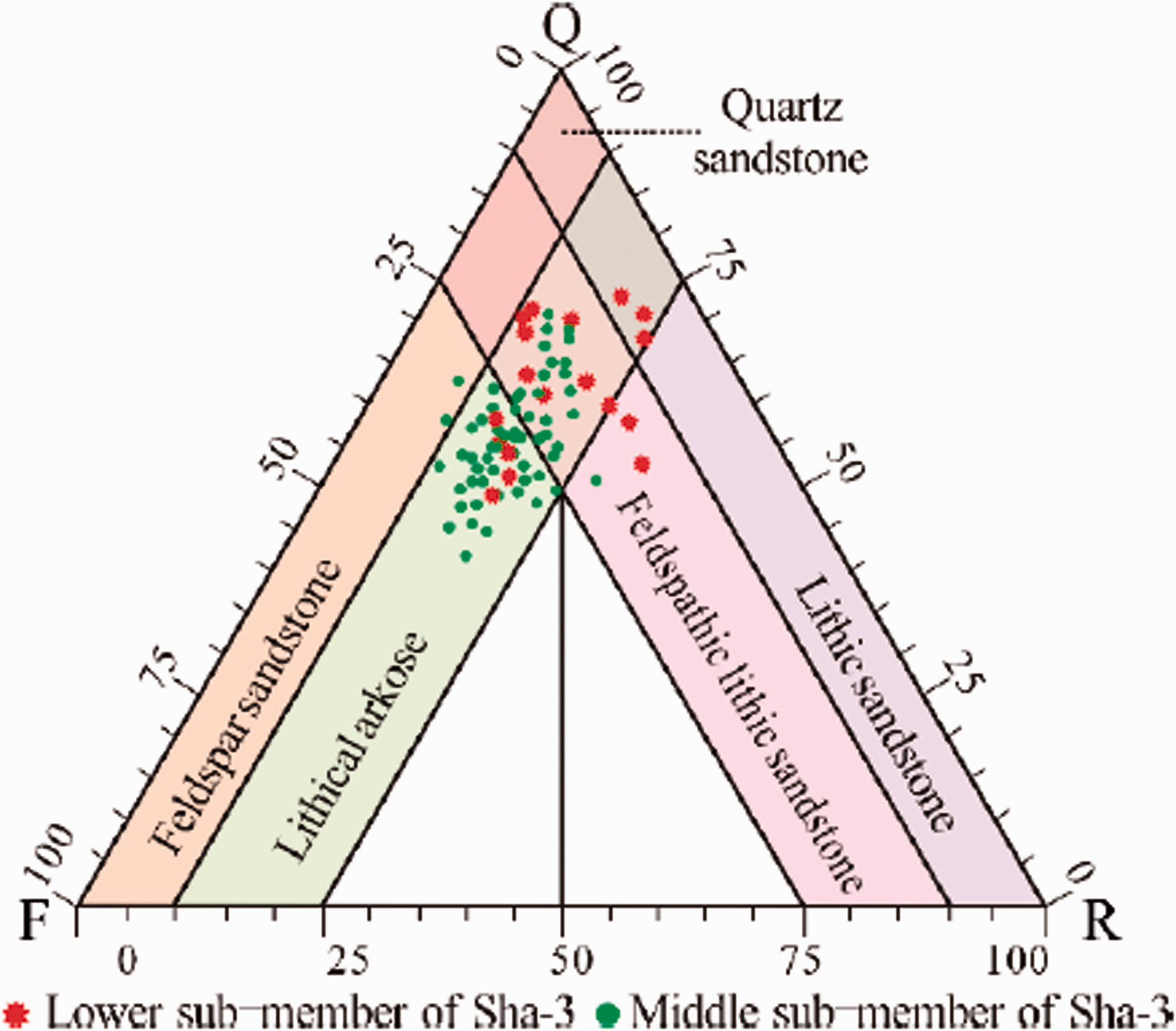
Triangular diagram of Es3 sandstone types (“F”, “Q” and “R” represent quartz, feldspar and rock debris respectively).
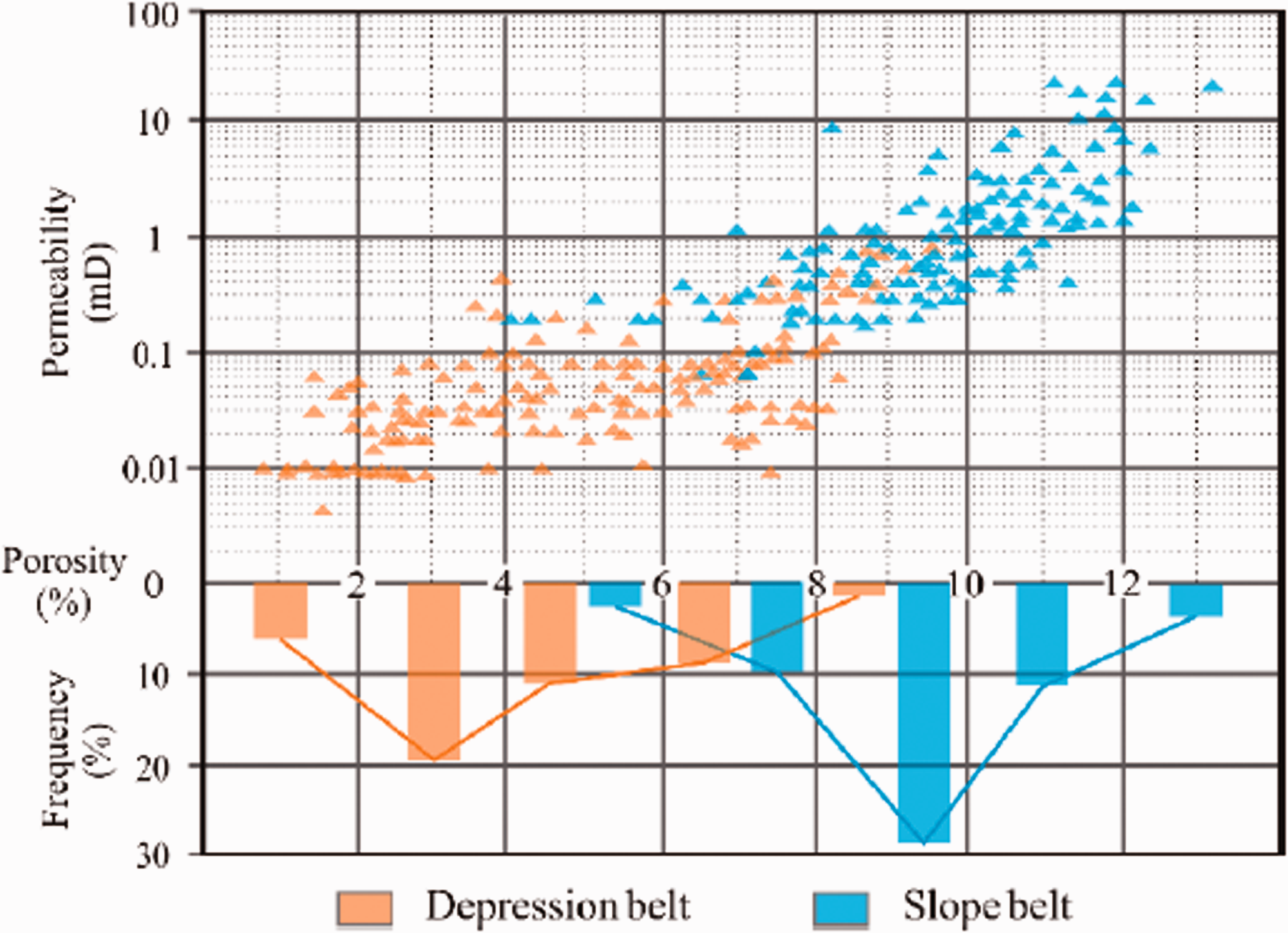
Physical characteristics of sandstones in mid-lower subsections of Es3.
Diagenesis and porosity evolution of reservoirs
The diagenesis that affects the development of the deep Paleogene reservoirs in Wendong areas mainly includes compaction (Figure 8(a)), cementation (Figure 8(b) to (e)) and dissolution (Figure 8(f) and (g)). The compaction effect is most significant when the buried depth of the sandstone reservoir is less than 1500 m, and the porosity of the sandstone reservoir decline quickly with the increases of buried depth. Cementation is the key to densification of Paleogene sandstone reservoirs in Dongpu Depression. Carbonate cements are widely developed, including calcite, dolomite, ferrocalcite and ankerite. Early cements were mainly calcite and dolomite, which occupied most of the intergranular pores and caused great damage to the reservoir pores. Nevertheless, the formation of early carbonate cements not only has a positive effect on reducing compaction, but also improves the physical properties of deep reservoirs through late dissolution. The ferrocalcite and ankerite cements were formed later, that are either distributed in the form of blocks or schistose structures filling the secondary dissolved pores, or produced metasomatism to the early carbonate cements and clastic particles, reducing the storage capacity of deep reservoirs. Moreover, the scattered distribution of clay minerals (e.g. illite and chlorite), residual asphalts, calcareous cements and siliceous cements also has certain destruction effect on intergranular space.
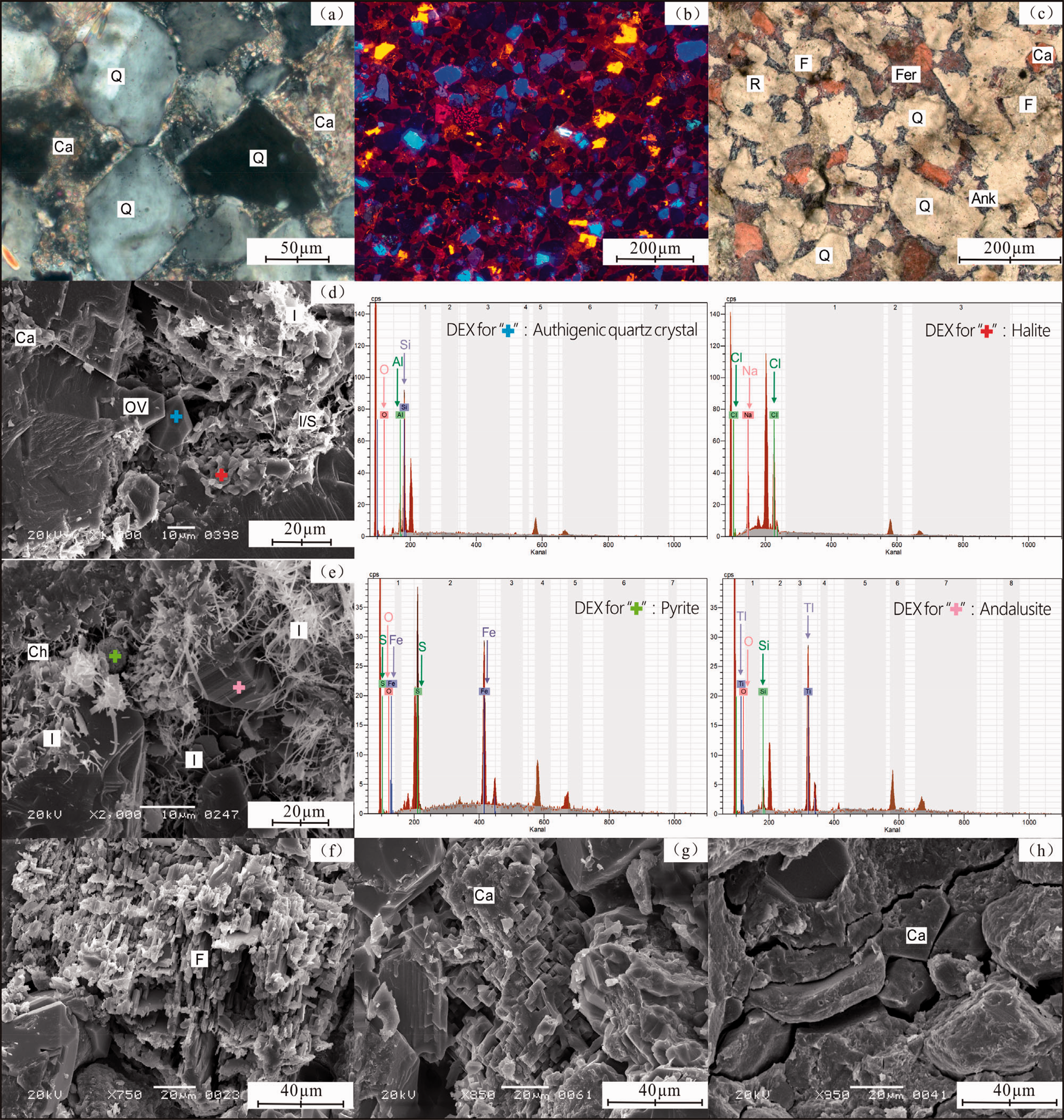
Diagenesis types and characteristics of the mid-lower subsections of Es3 reservoirs: (a) Well PS12, 4549.74 m, intense compaction transforms the plastic minerals into matrixes (PLM); (b) Well PS4, 5325.96 m, according to the specific values of Mn2+/Fe2+ from low to high, calcareous cements present dark orangish-red, orangish-yellow and bright yellow fluorescence in turn (CLM); (c) well PS7, 4553.31 m, cementation and metasomatism of early calcite and late ferrocalcite (PLM); (d) well PS21, 4416.6 m, pores are filled with authigenic quartz crystal, halite and clay minerals (×1000, SEM); (e) well PS7, 4017.60 m, pores are filled with clay minerals, andalusite and pyrite (×2000, SEM); (f) well W203, 4560.32 m, feldspar is dissolved along the joints, formatting secondary dissolved micropores (×7500, SEM); (g) well B11, 4673.10 m, calcium cements formed in the early stage are dissolved, creating secondary pores (×850, SEM); (h) well PS12, 4811.70 m, calcareous cements are dissolved, forming secondary pores (×950, SEM).
The reservoirs in the mid-lower subintervals of Es3 in Wendong area experienced a similar diagenesis process, and the main diagenetic evolution sequence is as follows: mechanical compaction → chlorite cladding → enlargement of siliceous minerals → cementation of early micrite calcite → dissolution of early carbonates, feldspars and detritus → cementation of authigenic quartz and authigenic kaolinite; development of secondary pores → sparry calcite cementation → cementation of ferrocalcite and ankerite → precipitation of authigenic clay minerals such as chlorite and illite → feldspar and detritus were dissolved in large amount → cementation and metasomatism of ferrocalcite and ankerite → formation of microcracks (Figure 8(h)). But it is worth noting that the diagenetic intensities are various in different structural. Compared with the slope zone, the burial depths and formation temperatures of Es3 in the sub-sag zone were greater during the burial process (Tang et al., 2017), which led to stronger carbonate cementation and fewer primary pores. Organic acids in formation water are the main influencing factors for reservoir dissolution. However, due to the thermal evolution of hydrocarbon source rocks and the preservation ability of organic acids, the high value areas of organic acids are mainly distributed in the depth of 1500–3500 m in the eastern oil-bearing basins of China (Jin et al., 2018). Therefore, according to the thermal evolution histories of organic matters, source rocks in the sub-sag zone released more organic acids, causing in greater dissolution of clastic particles and early carbonate cements than slope zone during the early diagenesis. However, after the tectonic uplifting at the end of Dongying period, the strata were buried again and overcompensated. At the same time, a large number of organic acids are continuously released from the hydrocarbon source rocks in the slope zone, which may be significantly higher than the production of sub-sag zone in the late stage. It led to stronger dissolution of carbonates and clastic particles, and formed more intergranular and intragranular dissolution pores.
According to the reversed evolutionary history of porosity (Figure 9), the initial porosities of mid-lower subintervals of Es3 reservoirs in the sub-sag zone and slope zone of Dongpu Depression are close (according to statistics, the sorting coefficient of sandstone of the mid-lower subintervals of Es3 in the sub-sag zone and slope belt is 1.43 and 1.33, respectively. And then the initial porosity calculated by Scherer’s formula is 36.98% and 38.13%, respectively). After strong mechanical compaction and early cementation of carbonates such as calcite and dolomite, the porosities were changed to 9.68% and 12.21%, respectively (the porosities were converted from the surface porosities of early calcareous cements. The specific calculation process was detailed in the literature (Zhang et al., 2016) for reference). With the thermal evolution of organic matter in source rocks, organic acids were generated continuously and partial dissolution occurred in early carbonate cements and clastic particles. At the deposition stage of Dongying Formation (before the first oil-gas filling), the reservoir porosities in the sub-sag zone and slope zone changed to 10.03% and 14.65%, respectively. At this moment, the reservoir in the sub-sag zone became a tight sandstone reservoir. Subsequently, there was tectonic uplifting and re-settling of strata in the study area. Due to the leaching of meteoric freshwater and the generation of secondary hydrocarbons, carbonate cements and clastic particles were dissolved strongly, and the reservoir porosity in the sub-sag zone and the slope zone decreased to 19.32% and 22.61%, respectively. With the increase of burial depth, late cementation of carbonates occurred in Wendong area, including ferrocalcite and ankerite. The porosity of these two zones changed to 6.13% and 11.13% respectively in the middle deposition stage of Minghuazhen Formation (before secondary oil-gas filling), which were included in the scope of tight sandstone reservoir. Since the late deposition stage of Minghuazhen Formation, the formation temperature is generally higher than 150°C, and even reaches 200°C in some areas (Hao et al., 2004), which is higher than the temperature of petroleum cracking. As a result, crude oil cracked products filled some of the pores in the slope zone. At the same time, a large amount of kerogen pyrolysis gas was generated and a large-scale filling occurred in the sub-sag zone, forming overpressure crevices in the reservoirs. Consequently, the porosity of sub-sag zone and slope zone reached 6.23% and 9.62% of the current values respectively.
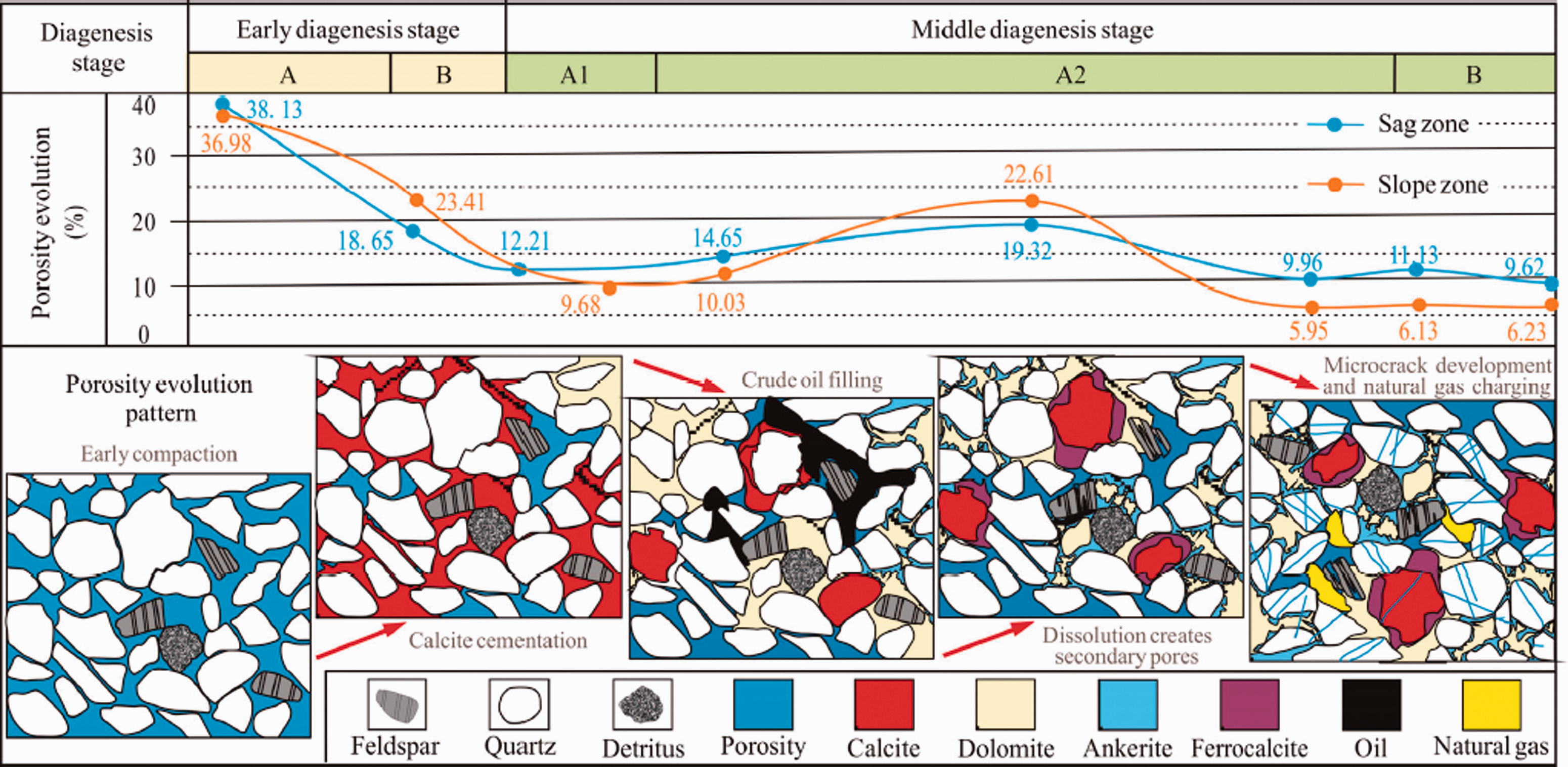
The average porosity and pore space evolution history of the mid-lower submembers of Es3 reservoirs.
Discussion
Genetic types of oil-gas reservoirs and filling processes
According to the genesis of natural gas, the reservoir densification process and the matching relationship between reservoir compaction and hydrocarbon accumulation, the deep Paleogene oil-gas reservoirs in Dongpu Depression can be divided into three types: (1) a “reservoir-forming then densification” type of early oil reservoirs and early kerogen cracking gas reservoirs, (2) a “simultaneous densification and reservoir-forming” type of late-stage oil-cracked gas reservoirs, and (3) a “reservoir densification precedes hydrocarbon accumulation” type of late-stage kerogen cracking gas reservoirs. The specific reservoir forming processes are analyzed as follows.
In the mid-late sedimentation stages of Dongying Formation (early tectonic uplifting stage), liquid hydrocarbons were generated from the source rocks in the mid-lower subintervals of Es3 in the eastern depression. At this time, the reservoir in the slope zone has not been densified, which was conducive to the large-scale filling of crude oil. Therefore, a large amount of crude oil migrated and accumulated along the active faults to the sandstone reservoirs of Es2 and upper subsection of Es3 in the shallow strata of slope zone, forming the early lithologic reservoirs. However, the reservoirs in the sub-sag zone have become dense and crude oils generated in the sub-sag zone only formed locally small-scale oil reservoirs with high porosity and permeability. Since then, the strata have continued to settle again.
From the late sedimentary period of Minghuazhen Formation to the Quaternary period, burial depth and formation temperature increased quickly. Accompanied by the progresses of reservoir densification, the second charging phase of oil and gas became very difficult. At this time, the crude oil began to crack and produce natural gases, forming the late “simultaneous densification and reservoir-forming” type of oil-cracked gas reservoirs in slope zone. Influenced by significant increase of burial depth and formation temperature, both early crude oil and late kerogen cracked into gases, forming the “densification then reservoir-forming” type of late-stage kerogen cracking gas reservoirs in the sub-sag zone.
Formation pattern of oil-gas reservoirs
The early low-mature to mature oil and gas filling in deep Paleogene Dongpu Depression occurred in the late deposition stage of Dongying Formation (about 31–27 Ma ago). During this period the porosity of sandstone in the slope zone was higher than the lower limit of the charging condition. In this period, the fault activity was intense and the formation pressure decreased sharply. Oil and gas gathered at the positions with high tectonic structures, forming conventional oil-gas reservoirs (Figure 10(a)). At this moment, under the influence of early calcite cementation, the sandstones in the sub-sag zone became increasingly densified, forming the “simultaneous densification and reservoir-forming” type of inchoate tight sandstone reservoirs.
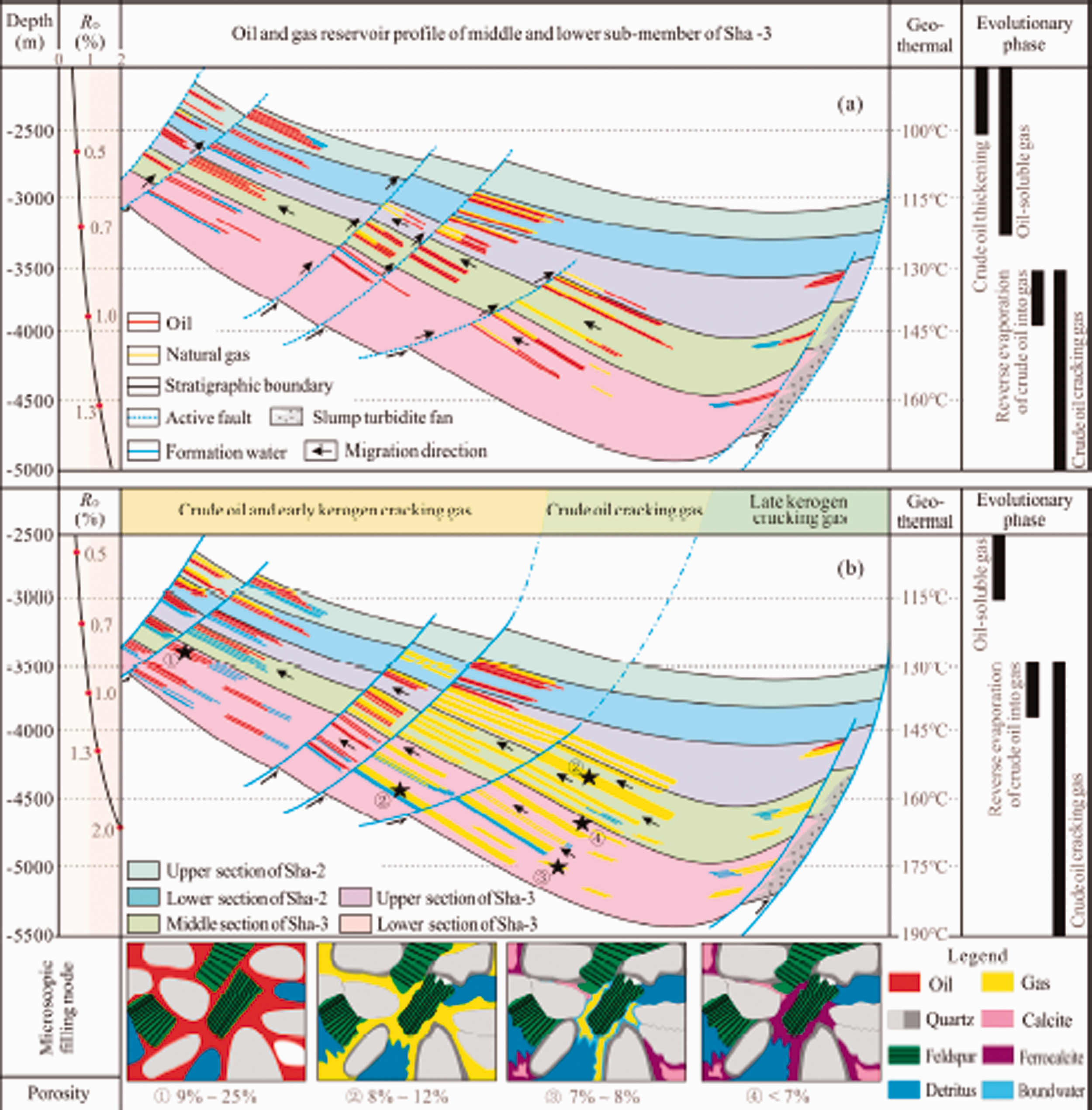
Formation model of tight sandstone reservoirs of deep Paleogene in Dongpu Depression: at telophase of Dongying Formation deposition (a) and at the present period (b).
The late oil-gas filling occurred in the late sedimentary period of Minghuazhen Formation (about 6 Ma ago), and the sandstone reservoirs in the slope zone had low porosity and permeability, while the sub-sag zone developed classic ultra-tight sandstone reservoirs. Due to the overcompensated sedimentation of the deep Paleogene in Wendong area, not only the high temperature and overpressure environment was formed, but also the secondary hydrocarbon generation of source rocks occurred. Because of this, the pyrolysis of deep Paleogene crude oil occurred in the slope zone, accompanied by a small amount of oil and gas escaped upward adjustment, forming a “simultaneous densification and reservoir-forming” type of oil and gas reservoir. However, in the sub-sag zone, a large amount of kerogen cracked into gases, developing the typical “densification then reservoir-forming” type of tight sandstone gas reservoirs (Figure 10(b)).
Conclusion
The genesis of tight oil and gas in rifted-basins in eastern China is complex and diverse. As far as the deep Paleogene in Wendong area of the Dongpu Depression is concerned, the crude oil is mainly light oil and medium oil, which can be divided into Types A and B according to their maturity, and primarily distributed in the slope zone of 3500–4000 m in Es2 and the upper subsection of Es3; the natural gas is dominated by oil-type gas, which can be subdivided into late kerogen pyrolysis gas (distributed in the mid-lower sub-members of Es3 in the sub-sag zone), crude oil cracked gas (distributed in the mid-lower sub-members of Es3 in the slope zone), and early kerogen pyrolysis gas (distributed in the Es2 and the upper subsection of Es3 in the slope zone). These hydrocarbons are distributed in an orderly manner from the center of the depression to the upper part of the slope zone, showing a semicircular distribution characteristic.
The deep Paleogene in Wendong area experienced two accumulation periods. The first stage occurred in the late depositional period of Dongying Formation, forming the early conventional tectonic-lithologic reservoirs. The second period has been going on since the late deposition stage of Minghuazhen Formation, during which the late kerogen pyrolysis gas reservoirs (“reservoir densification precedes hydrocarbon accumulation” type), oil-cracked gas reservoirs (“reservoir-forming then densification” type), and mixed oil-gas reservoirs (“simultaneous densification and reservoir- forming” type) were formed. Among them, the slope zone is dominated by the first stage of mature oil charging, while the sub-sag zone generally has two stages of accumulation events, and the second stage of high-mature to over-mature hydrocarbon accumulation is the key to the formation of oil-gas reservoirs in the sub-sag zone.
Footnotes
Declaration of conflicting interest
The author(s) declared no potential conflicts of interest with respect to the research, authorship, and/or publication of this article.
Funding
The author(s) disclosed receipt of the following financial support for the research, authorship, and/or publication of this article: The research was funded by the National Natural Science Foundation of China (No. 41672131) and the National Science and Technology Major Special Funding (No. 2016ZX05006).
