




Abstract
In the Yangtze River zone of China, the heating operation in buildings is mainly part-time and part-space, which could affect the indoor thermal comfort while making the thermal process of building envelope different. This paper proposed to integrate phase change material (PCM) to building walls to increase the indoor thermal comfort and attenuate the temperature fluctuations during intermittent heating. The aim of this study is to investigate the influence of this kind of composite phase change wall (composite-PCW) on the indoor thermal environment and energy consumption of intermittent heating, and further develop an optimization strategy of intermittent heating operation by using EnergyPlus simulation. Results show that the indoor air temperature of the building with the composite-PCW was 2–3°C higher than the building with the reference wall (normal foamed concrete wall) during the heating-off process. Moreover, the indoor air temperature was higher than 18°C and the mean radiation temperature was above 20°C in the first 1 h after stopping heating. Under the optimized operation condition of turning off the heating device 1 h in advance, the heat release process of the composite-PCW to the indoor environment could maintain the indoor thermal environment within the comfortable range effectively. The composite-PCW could decrease 4.74% of the yearly heating energy consumption compared with the reference wall. The optimization described can provide useful information and guidance for the energy saving of intermittently heated buildings.
Keywords
Introduction
The Yangtze River zone of China mainly belongs to the Hot Summer and Cold Winter (HSCW) zone. The winter in this area is humid and cold. The average temperature of the coldest month is 0–10°C and the number of days that the average daily temperature which is less than or equal to 5°C is 0–90 (GB 50736–2012, 2012). Due to historical reason, this area does not have central heating in winter (Xu et al., 2013). However, the occupants’ requirements of thermal comfort are growing with the thriving economy and increasing incomes, so that the heating energy consumption increases year by year. In recent years, the problem of winter heating in this area has gradually attracted attention (Wang et al., 2019; Yuan et al., 2017). One of the characteristics of heating in the HSCW zone is the intermittent operation of heating devices, indicating that the heating runs part time and part space. Many studies have shown that intermittent heating could reduce building energy consumption compared with continuous heating. Xu et al. (2017) analyzed a typical office building in Beijing and found that intermittent heating could saving the energy consumption about 20% compared with continuous heating. Through modelling study, Wang et al. (2015) found that the heating energy consumption of the intermittent heating systems could be saved around 5% compared with the continuous heating systems. Deng et al. (2019) concluded that the ideal heating and cooling loads of the studied apartment in the part time pattern were reduced by 25.3–31.8% compared with those in the full time pattern.
During intermittent heating, the on-off control of heating devices cause the dynamic change of indoor thermal environment, so that the inside thermal comfort could be decreased. Therefore, the key point of intermittent heating is reducing energy consumption without jeopardizing the thermal comfort of the occupants’ heating demand time. The dynamic variations of the indoor thermal environment are closely related to the thermal comfort of the people inside. Xu et al. (2010) found that when the fan coil in an office building restarted after 1 h of lunchtime, the time of Predictive Mean Vote (PMV) returned to +0.5 only needed 3.9–4.4 min, which was shorter than the recovery time of indoor air temperature. This indicated that the intermittent operation of air conditioning would not affect the indoor thermal comfort. Kim et al. (2010) studied the intermittent heating of school classrooms and found that the PMV ranges were –0.1 to +2.0 and –0.3 to +0.2 for their proposed on-off control. For the buildings with lightweight building envelope, the PMV changed to –0.8 in about 0.5 h after turning on the radiator when the heating system operated intermittently (Lechowska and Guzik, 2014). During the intermittent heating process, different heating devices have great impacts on the variation of the indoor thermal environment. Usually, the heating system in ordinary buildings with fan coils as heating devices had faster indoor thermal response than those in energy-efficient buildings with radiators (Xu et al., 2017). Wang et al. (2018) built a dynamic heat transfer model to compare convective and radiative heating systems for intermittent heating. The results showed that the indoor air temperature of the convective heating system raised more rapidly than the radiative heating system, which indicated that convective heating was more comfortable than the radiative heating system.
After heating, the building envelope inside store heat with the increasing indoor air temperature. This heat storage process will slow down the indoor thermal response and thereby increasing the preheating load. Zhang et al. (2013) established a heat transfer model of lightweight floor heating system (LFHS) to study its heat transfer capacity, temperature distribution and thermal comfort. Results showed that the room was preheated completely after 3 h of heating operation, and both PMV and Predicted Percentage Dissatisfied (PPD) reached the recommended values in ISO7730. Moreover, the indoor air temperature gradually decreased after stopping heating, and the building envelope released heat to the indoor environment. Through experiments and calculations, Yan et al. (2015) found that the phase change hot water plate could release a certain heat flow to the indoor environment after stopping heating so that the indoor air temperature fluctuation was reduced and the indoor comfort was improved. Deng et al. (2019) found that high thermal mass did not help to reduce ideal building loads in the residential buildings in HSCW zone, but it would improve indoor thermal comfort in real engineering compared to low thermal mass. During intermittent heating, the thermal inertia of building envelopes was closely related to the indoor thermal environment variations (Peeters et al., 2008; Wang et al., 2015). The building envelope absorbed and stored heat during heating and released heat at a later period of lower temperature when the heating was stopped. Therefore, the high thermal mass could improve indoor thermal comfort and avoid overheating during the whole operation process.
However, the sensible heat storage capacity of traditional building envelopes is limited. One solution for further increasing the heat storage capacity was to use phase change material (PCM) which could offer an appreciable energy storage density within a narrow temperature span (Ascione et al., 2014; Diaconu and Cruceru, 2010; Gao et al., 2018; Kuznik et al., 2011; Liu et al., 2005; Shah, 2018; Zhu et al., 2016). The PCM integrated in wall boards could increase the time constant and heating energy flexibility of houses (Costanzo et al., 2018; Johra et al., 2019). In this paper, we proposed a new sandwich-type composite phase change wall (composite-PCW). The PCM was integrated to the wall inside which contributed to increasing the indoor thermal comfort and attenuating the indoor temperature fluctuations. Previous studies found that the indoor thermal environment could be maintained by the heat storage and release processes of this composite-PCW, leading to heating time and energy consumption reductions (Li et al., 2018, 2019a). In order to utilize the heat storage and release processes of the composite-PCW to optimize the intermittent heating operation and saving energy consumption, EnergyPlus software were used for analysis in this study. We choose a representative residential building using split air conditioning for intermittent heating to analyze the influence of the composite-PCW on the indoor thermal environment and heating energy consumption. The optimization strategy was further studied to provide guidance for improving energy-efficiency as well as thermal comfort.
Heat storage and release laws of building envelopes
During intermittent heating, the indoor air temperature changes significantly. The surface temperature of the building envelope changed with the variation of indoor air temperature, resulting in heat storage and release. Due to the heat storage of the building envelope after heating, the heat input of the heating device will be greater than the room heating load under the design conditions, that is, the preheating load. After stopping heating, most of the heat stored by the building envelope will be used to improve the indoor thermal environment, rather than the additional heat loss mentioned in Reference (Wang et al., 2018). Figure 1 presents a general scenario of the heat storage and release processes of the building envelope during intermittent heating. The heating process is divided into a preheat period and a heat storage period. The preheat period refers to the process of indoor air temperature returning to the comfortable range after turning on the heating device. Before heating, the indoor and outdoor air temperature is low, so that the building envelope will store a certain amount of cold. In the preheating period, the heat input is mainly used to increase the indoor air temperature to the setpoint and remove the cold storage of the building envelope (Pupeikis et al., 2010). When the indoor air temperature rises to the comfortable range and becomes stable, the heating process changes into the heat storage period. The heat inputs contain the heating load for operation and heat storage of the building envelope to increase its temperature. Therefore, a large amount of heat is stored in the building envelope. When the heating is off, most of the heat storage will be released to the indoor environment through the interior surface of the building envelope to maintain the indoor thermal environment stable in the comfortable range (Li et al., 2019b). The heating demand time can conclude the preheating period, the heat storage period and the heat release period. Therefore, the reasonable use of the heat release process of the composite-PCW could reduce the heating time by taking off the heating device in advance and save heating energy consumption without affecting the thermal comfort of occupants.
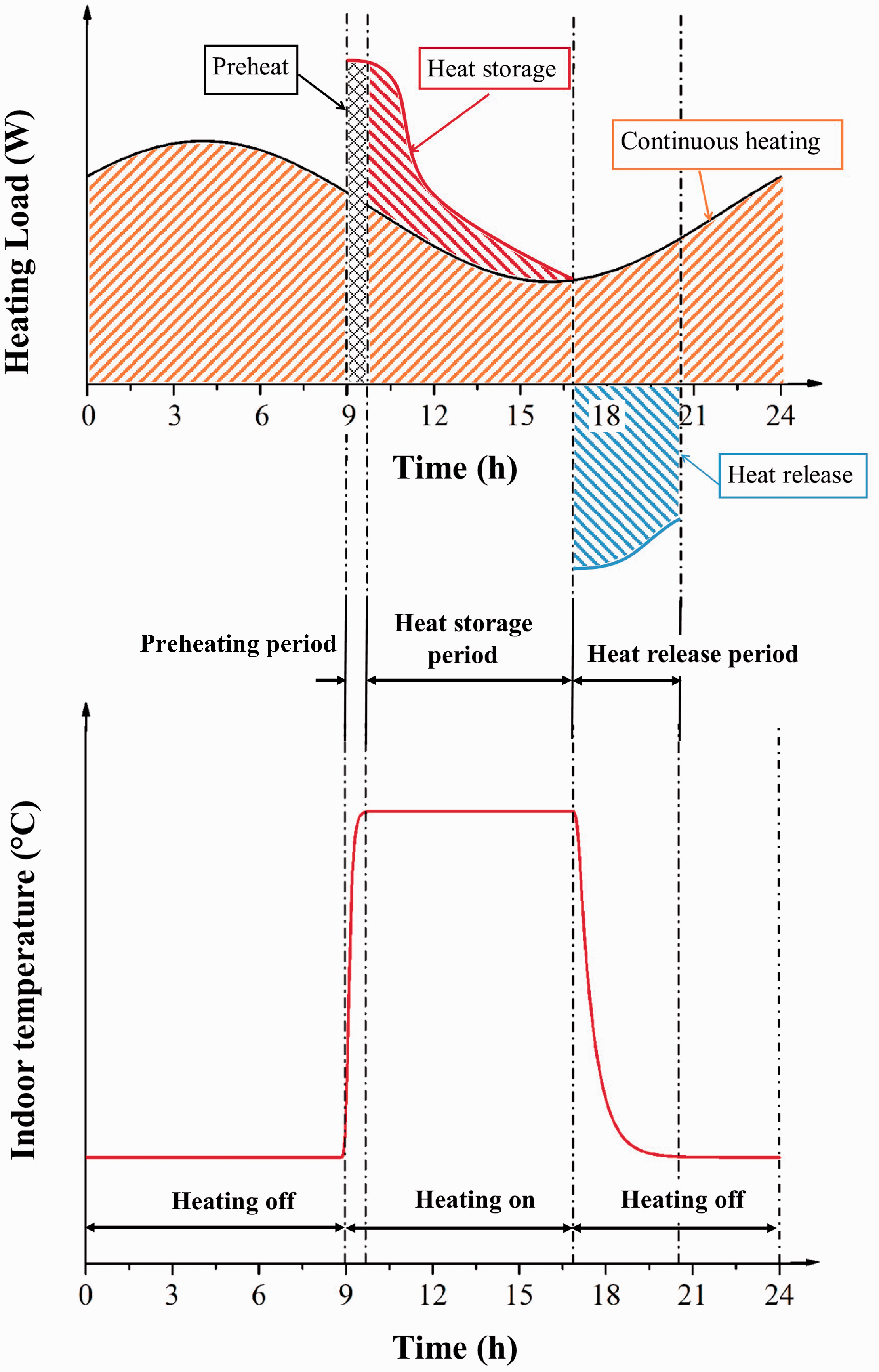
Schematic diagram of the heat storage and release processes of the building envelope during intermittent heating.
Methodology
Building description
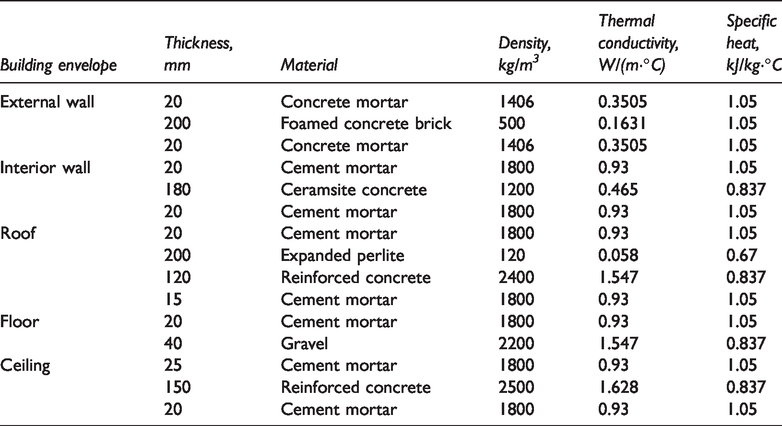
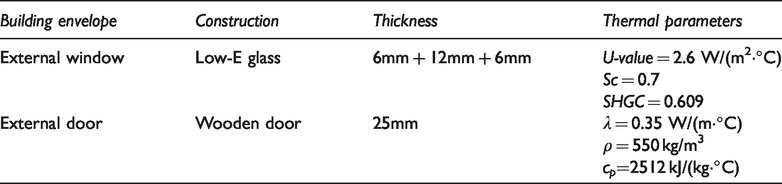
This paper selected a representative residential building in the HSCW zone to study the energy-saving effect of the composite-PCW under the typical intermittent conditions (Li et al., 2018). The determination of the geographical and morphological characteristics of the representative residential building in HSCW zone was based on a detailed analysis of this zone’s building stock. The influence of the heat storage and release processes of the composite-PCW on the building energy consumption during the heating season was comparatively investigated. The simulated building was a four-story residential building with area of 788 m2 and story height of 3 m, which was referencing actual design drawings collected from the residential estate market in HSCW zone. Figure 2 depicts the sketch map of the simulated building and its standard floor. The building envelope details and those thermal performances of the benchmark condition were given in Tables 1 and 2 (data collected from Li, 2019). The composite-PCW with 10 mm PCM integrated to the external wall inside (shown in Figure 3), which was the optimized result to adapt the intermittent heating in our earlier study (Li et al., 2020), was comparatively studied with the benchmark reference wall in the simulation. The phase-transition temperature was 19–20°C, the phase change latent heat was 220 kJ/kg, and the thermal conductivity was 0.4 W/(m·°C) at liquid states and 0.8 W/(m·°C) at solid states.
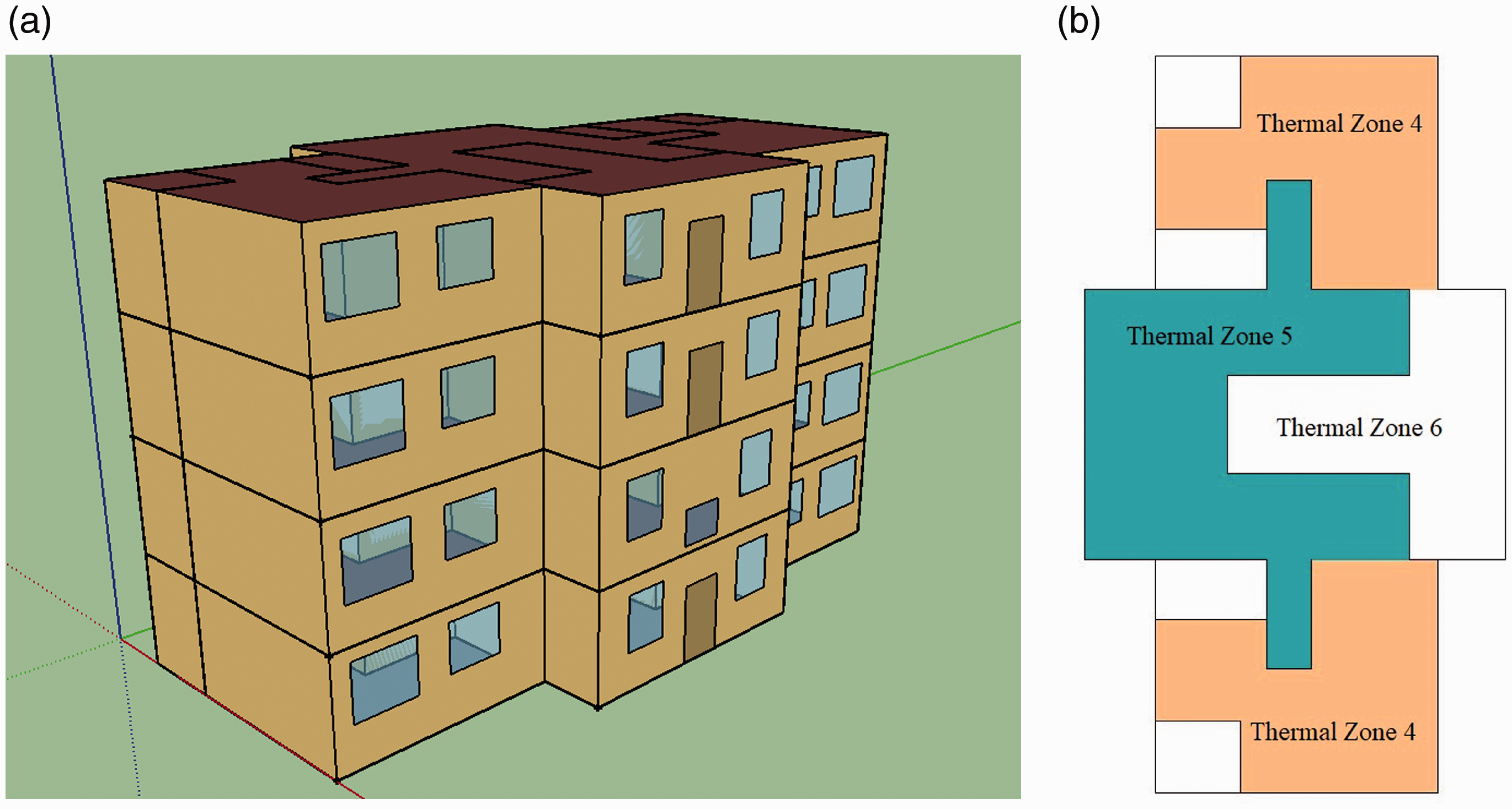
The simulated building and its standard floor: (a) sketch map of building model; (b) the thermal zones of the standard floor.
Building envelope components of the benchmark condition (from inside to outside).
Thermal parameters of the external window and door.
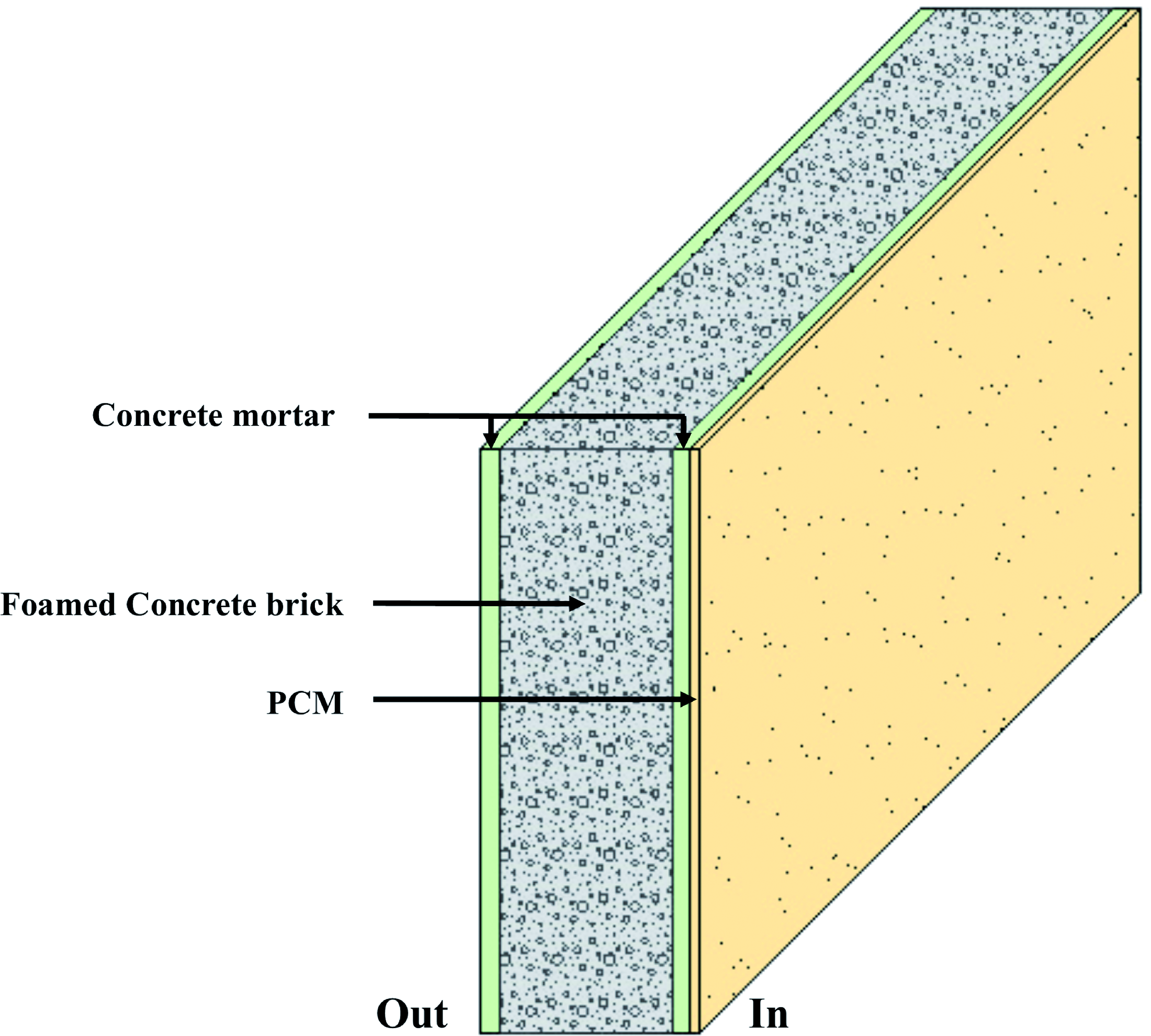
The composite-PCW.
In order to correctly define realistic heating loads, the area with the same heating operation conditions in the building were created as a thermal zone. Each floor had three thermal zones, and Figure 2(b) presents the thermal zones of the standard floor. Details of the thermal zones of the simulated building were shown in Table 3.
Thermal zones of the simulated building.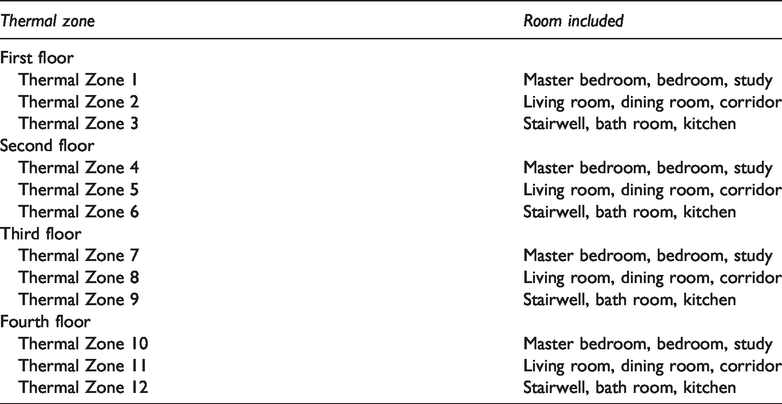
The doors inside the building were ignored.
The heat dissipation of indoor equipment and personnel were ignored.
Simulation details
EnergyPlus software, which was a well-recognized building energy analysis tool (Fumo et al., 2010), was used for simulation in this paper. The “IdealLoadSystem” of EnergyPlus was considered. Because the “IdealLoadAirSystem” returns exactly the energy that must be provided to heat the room, a constant COP of 3 was assumed to convert such value into electrical energy (Alam et al., 2014). The thermoset setting was adjusted to 26°C in the heating period based on the survey of occupants’ behaviour on indoor air conditioned environment in the HSCW zone (Yan et al., 2020). Table 4 shows the operating schedule for the simulation. The weather data used in the simulation were the Chinese standard weather data (CSWD). Chengdu, a representative city in the HSCW zone, was selected as the study site. The indoor thermal environment and energy consumption of the building were simulated and analyzed during the heating season which was from December 3rd to March 13th of the next year in Chengdu according to reference (Wang et al., 2015).
Operating schedule.

A one-dimensional conduction finite difference (CondFD) with the fully-implicit scheme shown in equation (1) was used to solve the PCM model in EnergyPlus.

Equation (2) were used to discretize the CondFD algorithm, and the time step of 3 min were set for the calculation.

The EnergyPlus PCM model had been verified through experiments in our former works (Li et al., 2018). Hence, EnergyPlus software can be used to study the indoor thermal environment and energy consumption of buildings with PCM integration.
Results
Indoor thermal environment
The Thermal Zone 7 and Thermal Zone 8 were selected to analyze the indoor thermal environment because the layout of each floor in the simulated building was the same. This study analyzed the variation of indoor air temperature, mean radiant temperature (MRT) and external wall surface temperature of different thermal zones in two representative days (the average outdoor air temperature of 5.27°C and the temperature fluctuation of 10°C) during the heating season.
Figure 4 presents the indoor air temperature variation during the representative days. For buildings with different exterior walls (the composite-PCW and the reference wall), the indoor air temperature could increase to the setpoint within 0.5 h after heating. For Thermal Zone 7, Figure 4(a) shows that the wall stored a large amount of heat during 9 h heating. The indoor air temperature was still higher than 18°C when the heating was off for 1 h. For the simulated building with the composite-PCW, the PCMs in the 6 external walls in Thermal Zone 7 fully stored heat while changing phase. Therefore, the composite-PCW could release more heat to the indoor environment than the reference wall after stopping heating, resulting in that the indoor air temperature of the Thermal Zone 7 with the composite-PCW was 2–3°C higher than that with the reference wall after stopping heating. However, for Thermal Zone 8 with only 4 h heating-on time, Figure 4(b) depicts that different kinds of external walls had little effect on indoor air temperature variation. The reason is that the heat transferred into the PCM layer could just raise the temperature to the phase transition temperature (Li et al., 2020). Therefore, the PCM in the only one external wall in Thermal Zone 8 failed to change phase effectively because of the short heating time during the intermittent heating process.
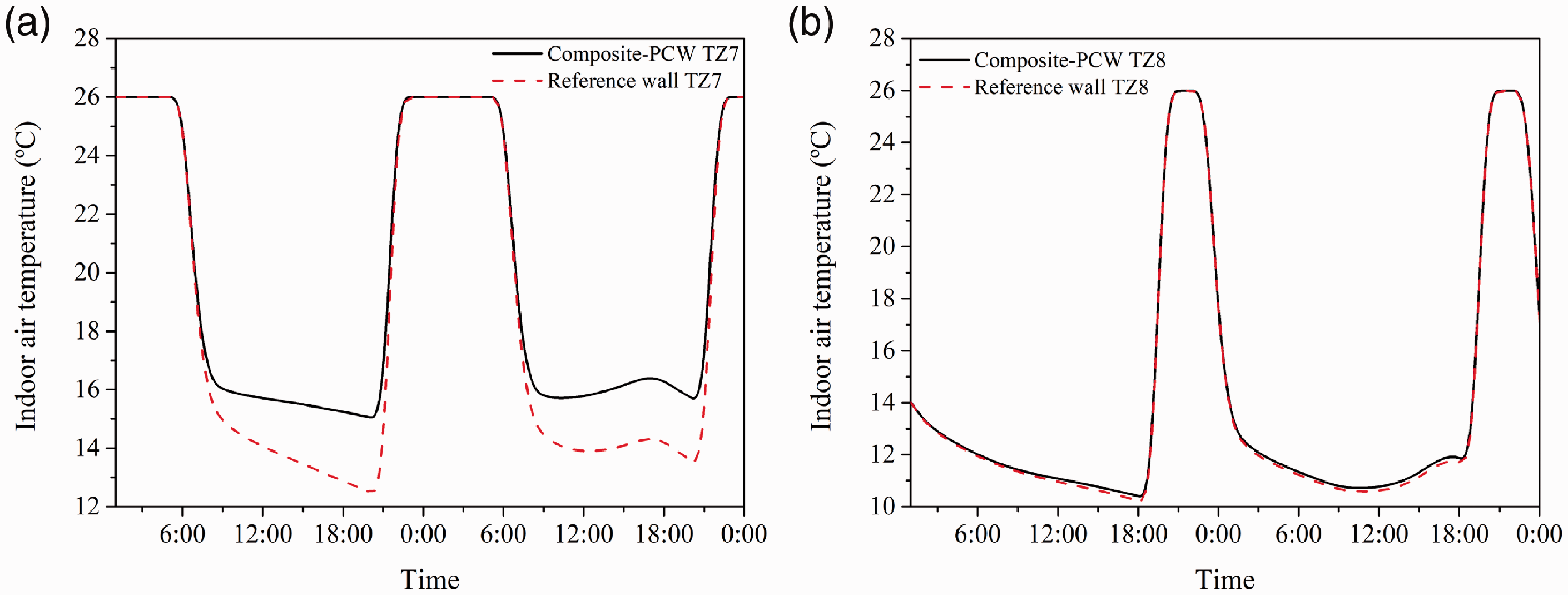
The indoor air temperature variations: (a) Thermal Zone 7; (b) Thermal Zone 8.
Figure 5 shows the interior surface temperature variations during the representative days. The north external wall in Thermal Zone 7 and west external wall in Thermal Zone 8 were chosen. For Thermal Zone 7, Figure 5(a) presents that the interior surface temperature of the composite-PCW was little affected by the indoor air temperature variation because of the PCM. During the whole cycle of intermittent heating, the temperature fluctuation of the interior surface was only 1.2°C. Besides, the interior surface temperature of the reference wall changed greatly with the variation of indoor air temperature and decreased to 13.78°C during the heating-off period. The fluctuation range during the whole cycle of intermittent heating could reach 6.79°C. Moreover, the interior surface temperature of the reference wall was relatively low, and the highest temperature was only 20.57°C after heating. The interior surface temperature of the composite-PCW was always higher than that of the reference wall. The interior surface temperature variation of the west external wall in Thermal Zone 8 was given in Figure 5(b). The difference between the interior surface temperatures of the composite-PCW and the reference wall was little because the PCM did not have an effective phase changing process. However, the PCM increased the thermal capacity of the wall, so that the interior surface temperature fluctuation of the composite-PCW was small and only 5.69°C during the whole cycle of intermittent heating process in Thermal Zone 8, while the fluctuation of the reference wall was 7.10°C. Otherwise, due to the large thermal inertia, the thermal response rate of the interior surface temperature of the composite-PCW was slower than that of the reference wall.
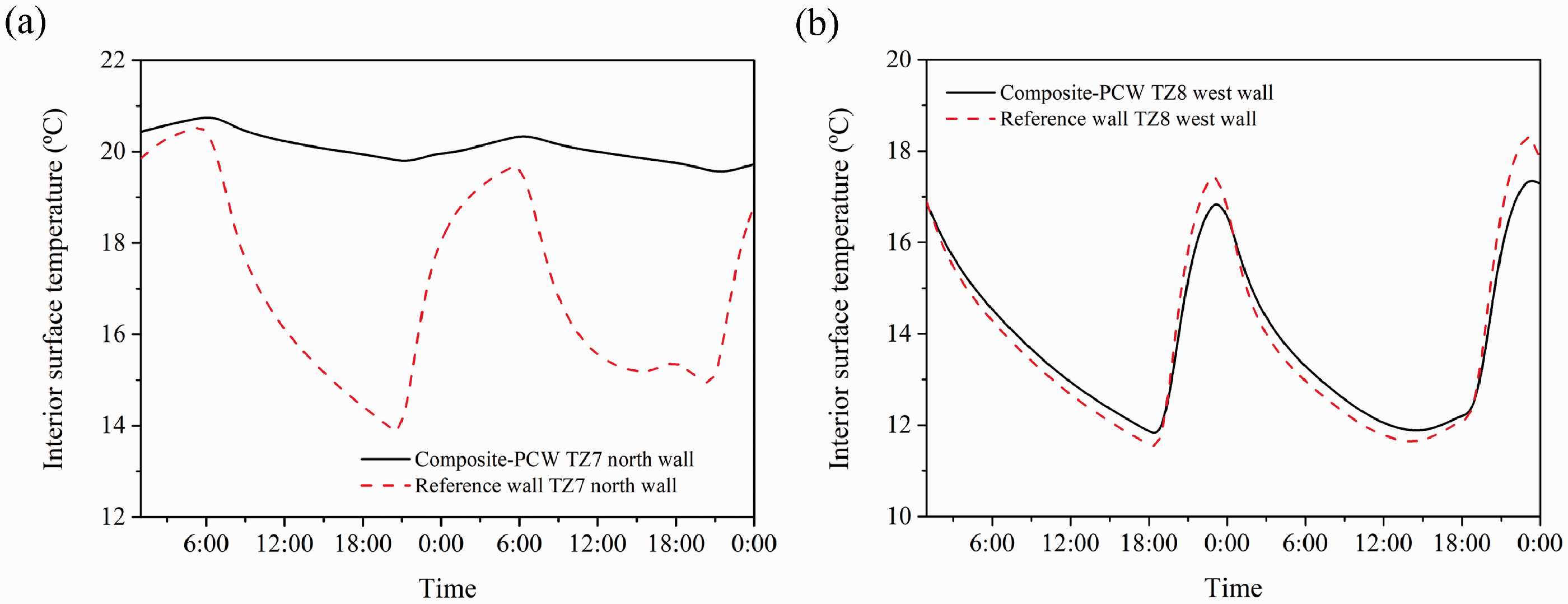
The interior surface temperature variations: (a) Thermal Zone 7; (b) Thermal Zone 8.
Figure 6 depicts the MRT variation of Thermal Zone 7 in the representative days. The MRT increased after heating and decreased after stopping heating. Since the interior surface temperature of the composite-PCW was stable due to the latent heat storage and release process of the PCM, the MRT fluctuation was significantly lower than that of the building with the reference wall, which was only 3.10°C during the whole cycle of the intermittent heating. The MRT of the building with the composite-PCW was higher than that of the building with the reference wall and was still higher than 20°C after stopping heating for 1 h. Moreover, the MRT of the simulated building with the composite-PCW was always higher than 18°C during the heating-off period, indicating that the heat release process of the composite-PCW was beneficial to maintaining the indoor thermal environment. However, for the simulated building with the reference wall, the MRT decreased rapidly after stopping heating, which would bring an undesired cool feeling to the residents.
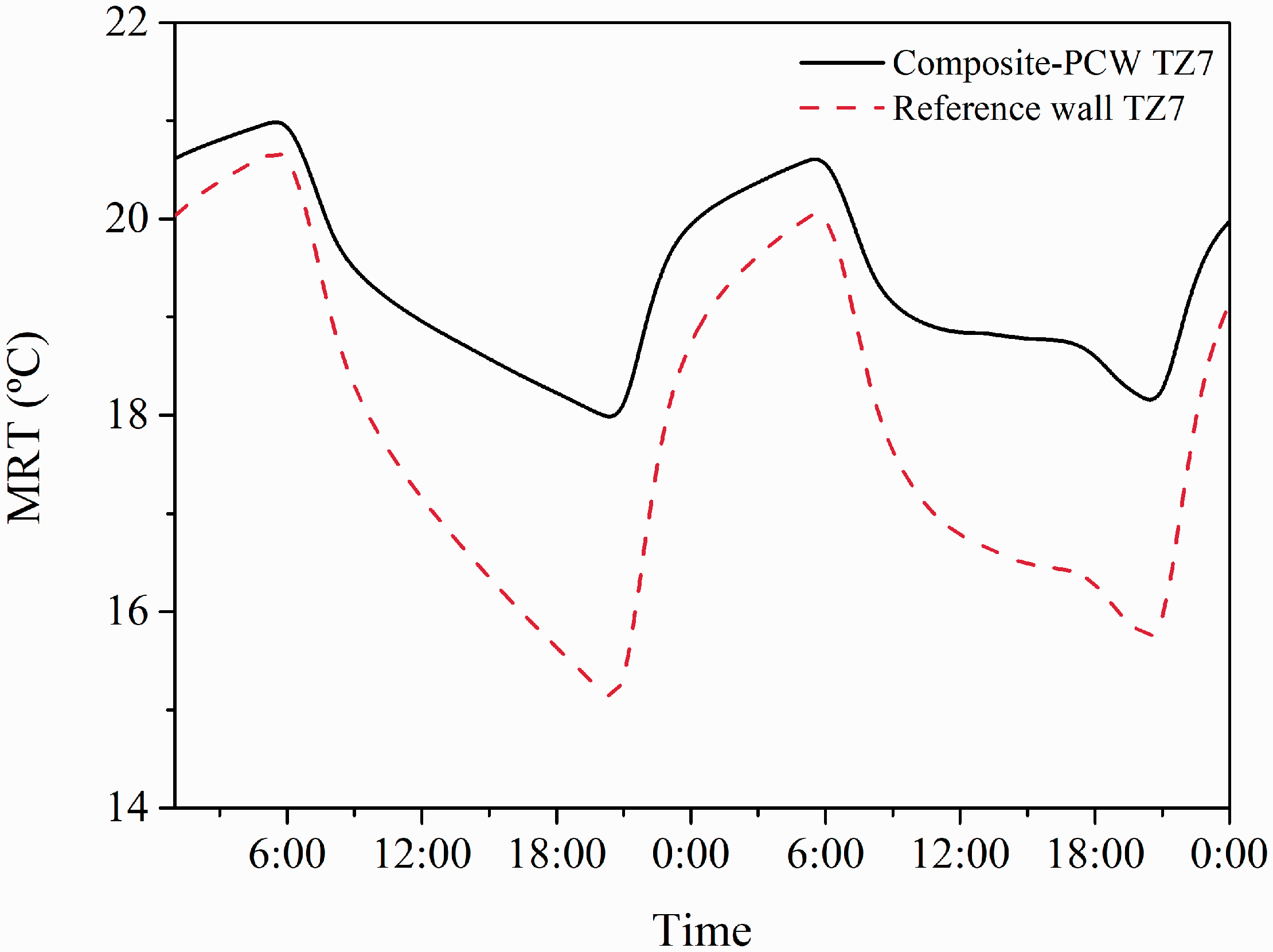
The MRT variations of Thermal Zone 7.
Heating energy consumption
In order to study the influence of the composite-PCW on the intermittent heating energy consumption, the energy consumptions of the simulated building with different external walls during the heating season of Chengdu were calculated in Table 5. The heating energy consumption of Thermal Zone 1/4/7/10 in the simulated building with the composite-PCW was 7.60 × 10⁷ kJ, which is 3.25% less than the simulated building with the reference wall. The reason is that the latent heat storage and release process of the PCM maintained the interior surface temperature of the wall stable. The heat stored in the composite-PCW released to the indoor environment during the heating-off period. Therefore, the heat supplied by the heating device could be fully utilized, and the heat loss of the external wall was effectively reduced. For the areas heated under condition 1, the heating time was only 4 h during the intermittent cycle, and the PCM in the external wall had no effective phase change processes. For the simulated building with the composite-PCW, the thermal capacity of the building envelopes in Thermal Zone 2/5/8/11 was large, so that the thermal response rates of the building envelopes and indoor thermal environment were small after starting and stopping heating. The heat transferred into the walls increased, resulting in the increasing of the room preheating load (Wang et al., 2015). Thus, the PCM in the external wall would increase the energy consumption of the intermittent heating. The heating energy consumption of the simulated building with the composite-PCW was 1.23 × 10⁸ kJ, and the composite-PCW could saving 1.51% of the heating energy consumption compared with the reference wall.
Influence of the composite-PCW on intermittent heating energy consumption.

Optimal strategy based on the composite-PCW
Optimization of heating operation time
The purpose of using the heat storage and release processes of the composite-PCW to adjust the indoor thermal environment is to extend the time of the indoor thermal environment within the comfortable range after stopping heating, while not affecting the thermal response of the indoor air after heating. For Thermal Zone 1/4/7/10 with the composite-PCW, the simulated results showed that the differences in the thermal response of indoor air between the building with the composite-PCW and the building with the reference wall were little. The reason was that the PCM in the external wall could fully change phase during the intermittent heating. After stopping heating, the indoor air temperature and the MRT of the building with the composite-PCW were significantly higher than those of the building with the reference wall. The indoor air temperature could be effectively maintained in the comfortable range (over 18°C) for more than 1 h. The split air conditioning, which heated the indoor air by convection heat transfer, was mainly used for intermittent heating in residential buildings in the HSCW zone in China (Yan, 2016). Our simulated results showed that the indoor air temperature rose to the setpoint in a short period after heating, which was consistent with the conclusion that most respondents in the questionnaire felt comfortable 15 min after heating (Yan, 2016). Therefore, turning on the heating device in advance was not necessary for intermittent heating. The heating demand time of residents was the same as the operation time of heating devices, which was 21:00 to 6:00 of the next day. Therefore, the area with the composite-PCW which was intermittently heated under condition 2 could stop heating in advance without affecting the comfortable indoor thermal environment. We proposed a new heating schedule which is 21:00 to 5:00 the next day to optimize the heating period of Thermal Zone 1/4/7/10. The optimization of time procedure was shown in Figure 7. Moreover, the indoor thermal environment variation and heating energy consumption of the building intermittently heated under the condition 1 and the optimized condition 2 were calculated.
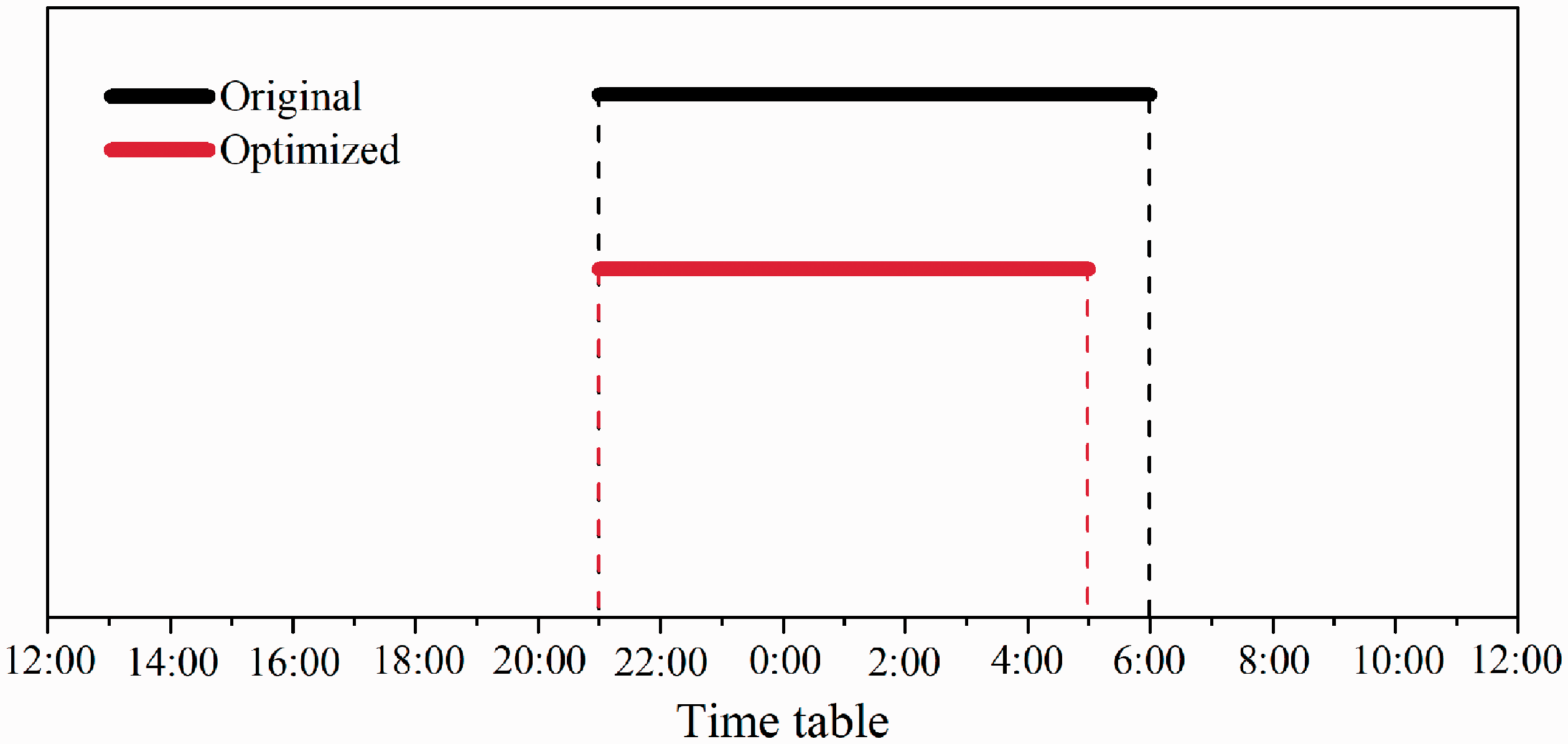
The optimization of time procedure.
Results of the optimal strategy
Figure 8(a) presents the indoor air temperate variation of Thermal Zone 7 intermittently heated under the optimized condition 2 in the representative days. Although the heating period was 21:00–5:00, stopping heating 1 h earlier than the heating demand time, the indoor air temperature was always within the comfortable range (18–26°C). Figure 8(b) presents the variation of the MRT. Because the latent heat release of the PCM maintained the wall interior surface temperature stable, the reductions of the MRT in two cycles were only 0.61°C and 1.14°C 1 h after stopping heating (5:00–6:00). Moreover, the MRT of Thermal Zone 7 was higher than 18°C in that period, indicating that the MRT was less affected by stopping heating in advance and the heat release process of the composite-PCW could maintain the indoor thermal environment stable effectively.
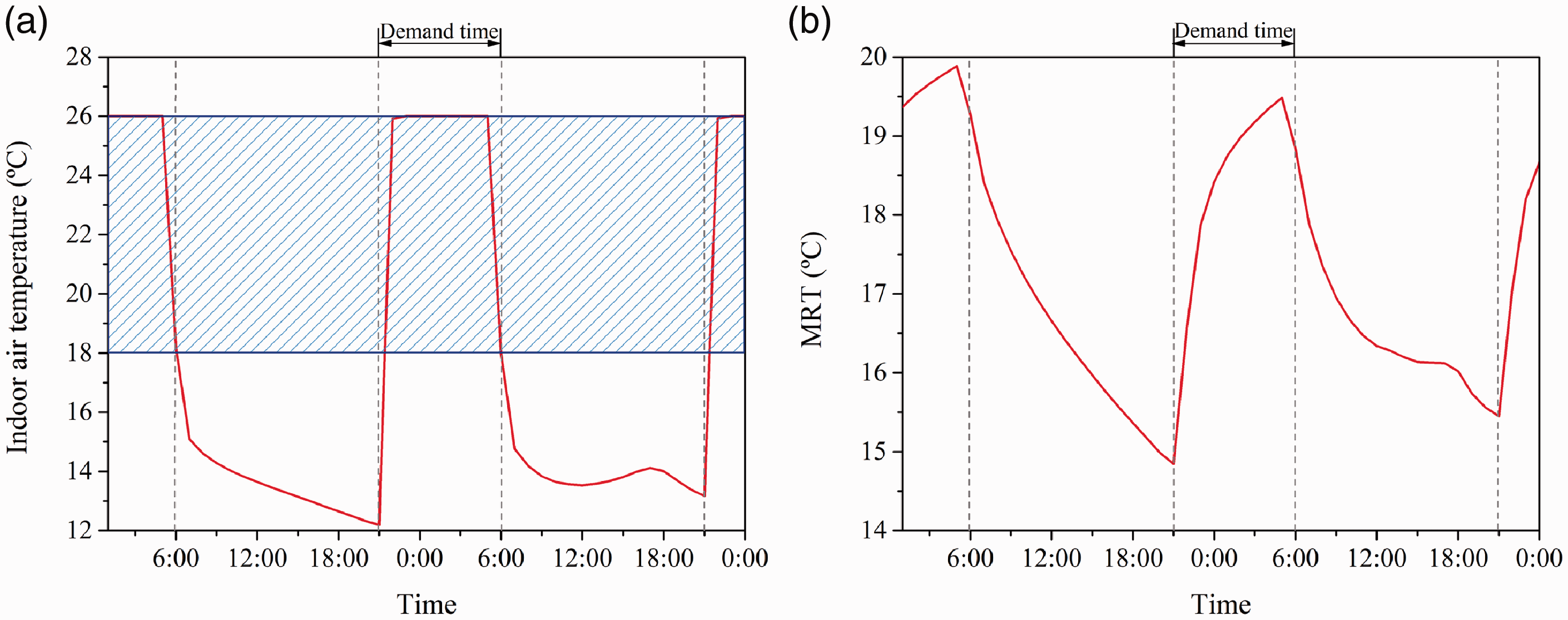
The indoor thermal environment variation of Thermal Zone 7 intermittently heated under the optimized condition 2 (a) indoor air temperature; (b) the MRT.
The heat exchange between indoor residents and the surrounding environment was the result of combined effects of convection and radiation heat transfers, so that the operative temperature variation of Thermal Zone 7 was further calculated by equation (3).

For the residential clothing thermal resistance of 1 clo and the relative humidity of 40%–60%, the acceptable range of operating temperature was 20–24°C (ASHRAE Standard 55–2013, 2013). Figure 9 shows the operative temperature variation of Thermal Zone 7 intermittently heated under the optimized condition 2. After heating, the operative temperature increased to above 20°C in about 0.5 h, reaching the comfortable range. After stopping heating at 5:00, the operative temperature started to decrease and was always in the comfortable range in the first 0.5 h after turning off the heating device. Although the operative temperature reduced to below 20°C after 0.5 h of heating-off, it was higher than 18°C by 6:00. Residents in the HSCW zone had a wide range of thermal comfort in winter, and 80% of the people satisfied with the indoor thermal environment even with low indoor air temperature (Li et al., 2008). Therefore, for the bedroom area in the residential building with intermittent heating, the indoor thermal comfort would not be affected when heating-off 1 h in advance because of making full use of the heat storage and release processes of the composite-PCW.
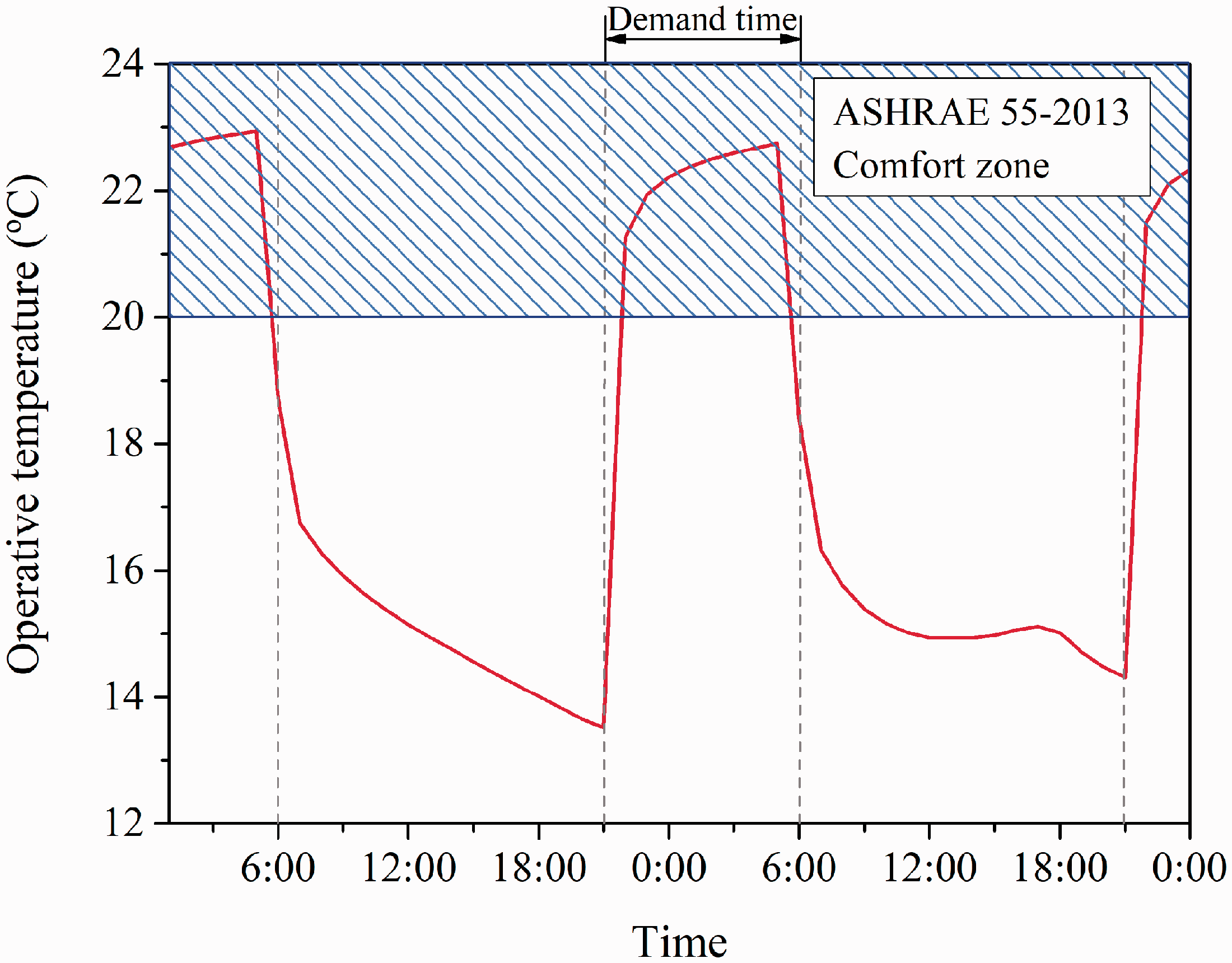
The operating temperature variation of Thermal Zone 7 intermittently heated under the optimized condition 2.
Table 6 shows the heating energy consumption of the building with the composite-PCW intermittently heated under the optimized conditions. Because the heating time was reduced by the rational use of the heat storage and release processes of the composite-PCW, the heating energy consumption of the bedroom area was reduced to 7.17 × 10⁷ kJ. The heating energy saving was 4.3 × 10⁶ kJ compared with the building with the composite-PCW intermittently heated under the original conditions. The energy-saving rate was 8.72% compared with the building with the reference wall intermittently heated under the original conditions. For the entire building, after optimization, the composite-PCW could still save the heating energy consumption 4.74% compared with the building with reference wall heated under the original conditions.
The energy saving of the optimal strategy.

Conclusions
This paper used EnergyPlus software to study the influence of the composite-PCW on the indoor thermal environment and energy consumption of intermittent heating under the weather condition of Chengdu, and provided an optimization strategy for heating operation time. The following conclusions were obtained:
The PCM in the external wall of the bedroom area could change phase and store heat while heating, so that the composite-PCW could release more heat than the reference wall after stopping heating. The indoor air temperature of bedroom areas with composite-PCW was 2–3°C higher than that with the reference wall. In the first 1 h after stopping heating, the indoor air temperature and the MRT of bedroom areas with composite-PCW were higher than 18°C and 20°C respectively. The heating energy consumption of the area with the composite-PCW heated under condition 2 was 7.60 × 10⁷ kJ, which is 3.25% less than that of the reference wall. However, the thermal response rates of the indoor air temperature and the building envelopes of the area heated under condition l was low, which would increase the preheating load. The composite-PCW would increase the heating energy consumption of this area. For the optimized condition 2 (heating-on time: 21:00–5:00), the heating device was turned off 1 h in advance. The heat release from the composite-PCW to the indoor environment could maintain the indoor thermal environment within the comfortable range effectively after stopping heating. For the area intermittently heated under the optimized condition 2, the energy saving of the composite-PCW was 8.72% compared with the area with the reference wall heated under the original condition 2. For the entire building, the composite-PCW could decrease 4.74% of the heating energy consumption compared with the reference wall.
The developed optimization strategy for intermittent heating in this paper can be applied to many other buildings with PCM integration, and provides guidance for the most energy-efficient intermittent heating operation strategies. However, the personnel activities inside the building and local weather data in other cities in HSCW zone would affect the optimization strategy, which will be addressed in our future research.
Footnotes
Declaration of conflicting interests
The author(s) declared no potential conflicts of interest with respect to the research, author-ship, and/or publication of this article.
Funding
The author(s) disclosed receipt of the following financial support for the research, author-ship, and/or publication of this article: The authors gratefully acknowledge the financial support from the National Key R&D Program of China (No. 2016YFC0700400), the National Natural Science Foundation of China (No. 51778382), and the Beijing Key Laboratory of Megaregions Sustainable Development Modelling, Capital University of Economics and Business (No. MCR2019QN07).
