




Abstract
Macrolithotypes control the pore-fracture distribution heterogeneity in coal, which impacts stimulation via hydrofracturing and coalbed methane (CBM) production in the reservoir. Here, the hydraulic fracture was evaluated using the microseismic signal behavior for each macrolithotype with microfracture imaging technology, and the impact of the macrolithotype on hydraulic fracture initiation and propagation was investigated systematically. The result showed that the propagation types of hydraulic fractures are controlled by the macrolithotype. Due to the well-developed natural fracture network, the fracture in the bright coal is more likely to form the “complex fracture network”, and the “simple” case often happens in the dull coal. The hydraulic fracture differences are likely to impact the permeability pathways and the well productivity appears to vary when developing different coal macrolithtypes. Thus, considering the difference of hydraulic fracture and permeability, the CBM productivity characteristics controlled by coal petrology were simulated by numerical simulation software, and the rationality of well pattern optimization factors for each coal macrolithotype was demonstrated. The results showed the square well pattern is more suitable for dull coal and semi-dull coal with undeveloped natural fractures, while diamond and rectangular well pattern is more suitable for semi-bright coal and bright coal with more developed natural fractures and more complex fracturing fracture network; the optimum wells spacing of bright coal and semi-bright coal is 300 m and 250 m, while that of semi-dull coal and dull coal is just 200 m.
Keywords
Introduction
During the production, the optimal arrangement and post-adjustment of the well pattern are crucial to the efficient development of CBM resources (Crosdale et al., 1998; Li, 2005; Zhang and Liu, 2008). The adaptability of well pattern arrangement should be considered first and the adaptability between well pattern and coal reservoir is conducive to the rapid realization of interwell interference between wells and expand the range of depressurization (Day et al., 2008; Ely et al., 1990; Feng, 2008). Compared with conventional reservoirs, coal have a unique cleat system, and the density and continuity of cleats are key factors in controlling the permeability of coal reservoirs (Liu et al., 2018a; Lyu et al., 2019; Pan et al., 2010; Shi et al., 2019; Zhao et al., 2016). The researches show that the reservoir with a higher density and better continuity of cleats has greater permeability (Handin et al., 1963; Huang et al., 2018). Therefore, the differential development of cleats in the reservoir will lead to the heterogeneity of permeability (Wei and Zhang, 2010; Wu et al., 2017; Zheng et al., 2018). Meanwhile, the difference in the development of the butt and face cleat is also an important factor leading to permeability anisotropy (Crank, 1995; Liu et al., 2016; Tang et al., 2010 ). The triaxial permeability of coal reservoir shows that there is a significant difference in permeability between different cleat directions in both high and medium rank coal, and the ratio of permeability in face cleat and butt cleat is generally 3:1∼10:1 (Cleary et al., 1983; Gan et al., 1972; Tao et al., 2012). For coal reservoirs, the vertical well fracturing is usually used to form artificial fractures for effective mining (Harpalani and Schraufnagel, 1990; Li et al., 2009; Tan et al., 2017; Zhang et al., 2016). The more cleavage system developed in the reservoir, the more obvious the anisotropy of reservoir. When fracturing the heterogeneous reservoir, the artificial fracture is easier to communicate with natural fracture system, forming crisscross fracture network and improving the reservoir permeability (Blanton, 1982; Fan et al., 2014; Jeffrey et al., 2009; Liu et al., 2019; Valko and Economides, 1994). Therefore, when formulating a CBM well network deployment plan, the well network arrangement should be carried out based on the degree of permeability coal anisotropy as combined with the distribution of artificial fractures (Agarwal et al., 1998; Chaianansutcharit et al., 2001; Salehi and Nygaard, 2015; Xu et al., 2014).
The gas in coal reservoirs is mainly seepage in the natural fracture system, and the hydraulic fracturing has the function of communicating the cleavage systems, and modifying the reservoir permeability (Adachi et al., 2007; Li et al., 2009; Tan et al., 2017). The researchers determined that the geometry of fractures is complicated and the initiation and propagation behaviors are mainly controlled by the cleavage system (Beugelsdijk et al., 2000; Close, 1993; Dean and Schmidt, 2009; Liu et al., 2019). The CT tomographic scans show that the bright coal has the most developed pore-fracture system, and only a few filamentous micron-scale cracks develop in dull coal. Meanwhile, visible fracture systems that including exogenetic fractures, gas-expanding fractures, and cleats are also distribution diversity from the coal macrolithotype (Lyu et al., 2020; Zhao et al., 2019). Field tests and laboratory-scale experiments have shown that, the bright and semi-bright coals generally developed multigroup of open and shear gas-expanding fractures with large length-width ratio and good connectivity. The semi-dull coal could be found several isolated open fractures. To the dull coal, there are few exo-fractures and if the view is magnified further (Zhao et al., 2017). Compared to the exo-microfracture, the cleats occur almost exclusively in bright coal and semi bright coal, which usually do not develop in semi-dull and dull coal because the certain macerals usually have an important influence on the endo-microfracture formation at the stage of coalification (Chalmers and Bustin, 2007; Zhao et al., 2016). Due to the influence of coal reservoir heterogeneity, there are obvious differences in the propagation rules of hydraulic fractures in all aspects, resulting in strong anisotropy of permeability, and affects the determination of the well pattern and spacing (Diamond and Oyler, 1987; Jeffrey et al., 2009; Xu et al., 2014; Zhang and Liu, 2008).Thus, when developing the coal reservoirs, the completion technologies and production measures should adapt to different types of coal reservoirs, the adjustment and optimization of the pre-production and post-well wells should also be tailored to local conditions (Karacan and Mitchell, 2003; Li et al., 2017; Pan et al., 2014). However, the well network optimization and adjustment researches traditionally disregard this diversity imparted by the coal petrology, and there is currently no quantitative research system. Therefore, clarifying the orientation and geometry of fractures formed by fracturing, analyzing the fracture propagation of hydraulic fractures in different coal macrolithoytpes, and carrying out development plans under local conditions are of great significance for the refined development of CBM resources.
In this work, the geometry behavior of hydraulic fracture was evaluated for each macrolithotype with microseismic monitoring technology, and the impact of the macrolithotype on hydraulic fracture initiation and propagation was investigated systematically. Furthermore, based on the characteristics of hydraulic fracture under the control of coal petrology, the relationship between well pattern, well pattern density and different coal macrolithotypes were analyzed according to the characteristics of gas pressure transmission in different coal macrolithotype, and the model of well pattern optimization and adjustment under the control of coal petrology was established.
Methods
Microseismic monitoring model
To capture the fracturing fractures orientation and geometric size of coal reservoir, microseism monitoring of wells that located on the eastern margin of the Ordos Basin in the Shaanxi province, China (Figure 1) were carried out by PetroChina Eastern Geophysics Company. On this basis, the relationship between fracture complexity and gas well productivity was analyzed by combining field capacity data.
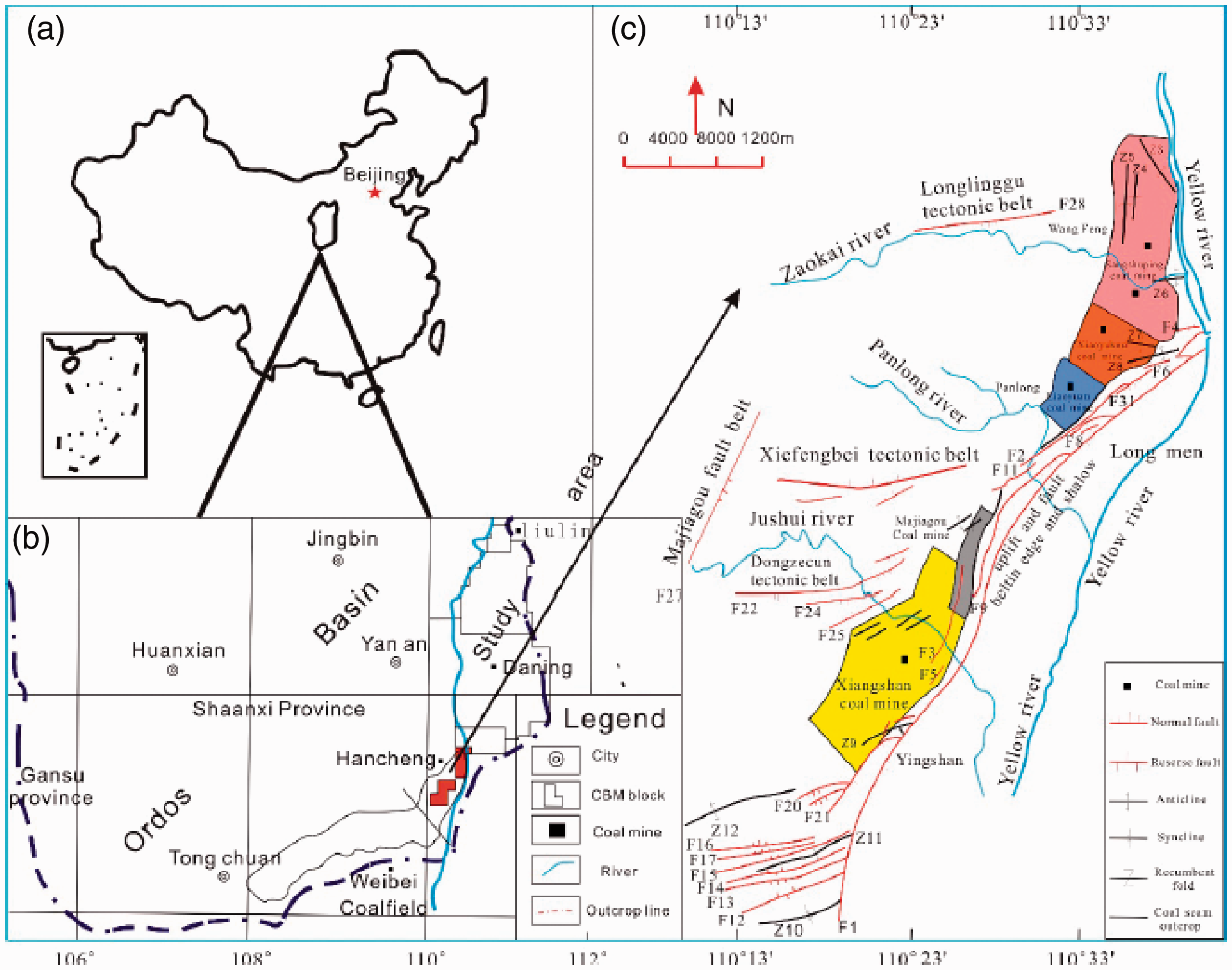
Study area location and structure outline (Liu et al., 2018a).
Wells information and platform deployment
To capture the characteristics of fracturing fractures in different coal macrolithotypes, the CNPC company selected fracturing wells with similar burial depth and in-situ stress for microseismic monitoring. Before fracturing, geophones were installed within 2 km around the well, and microseismic signals generated by fracturing were monitored and collected on the ground, and observation data were processed and analyzed using micro-fracture imaging technology. For the layout principle of the seismic network: (1) surrounding the projected points on the fracturing section, covering the target area uniformly and randomly; (2) minimizing background noise, that is, avoiding fracturing car groups, personnel vehicles, high-voltage lines, production wells, etc.; (3) ensure that the instrument can work reliably and continuously under the permitted environmental conditions; 13 seismometers were deployed at points around the monitoring well.
Fracture energy scanning
Before implementing vector scan superposition, the seismic wave velocity model of the well area must be obtained, which is the basis for the application of scanning technology. Based on the existing sonic logging data of the well, the exploration experience data of the surface loess layer, and the characteristics of the local surface topography, the 909.7 m altitude of HC-01 is defined as the 0-point vertical depth of the scanning model. The topographic map used for the created velocity model and the P-wave velocity model is shown in Figures 2 and 3.
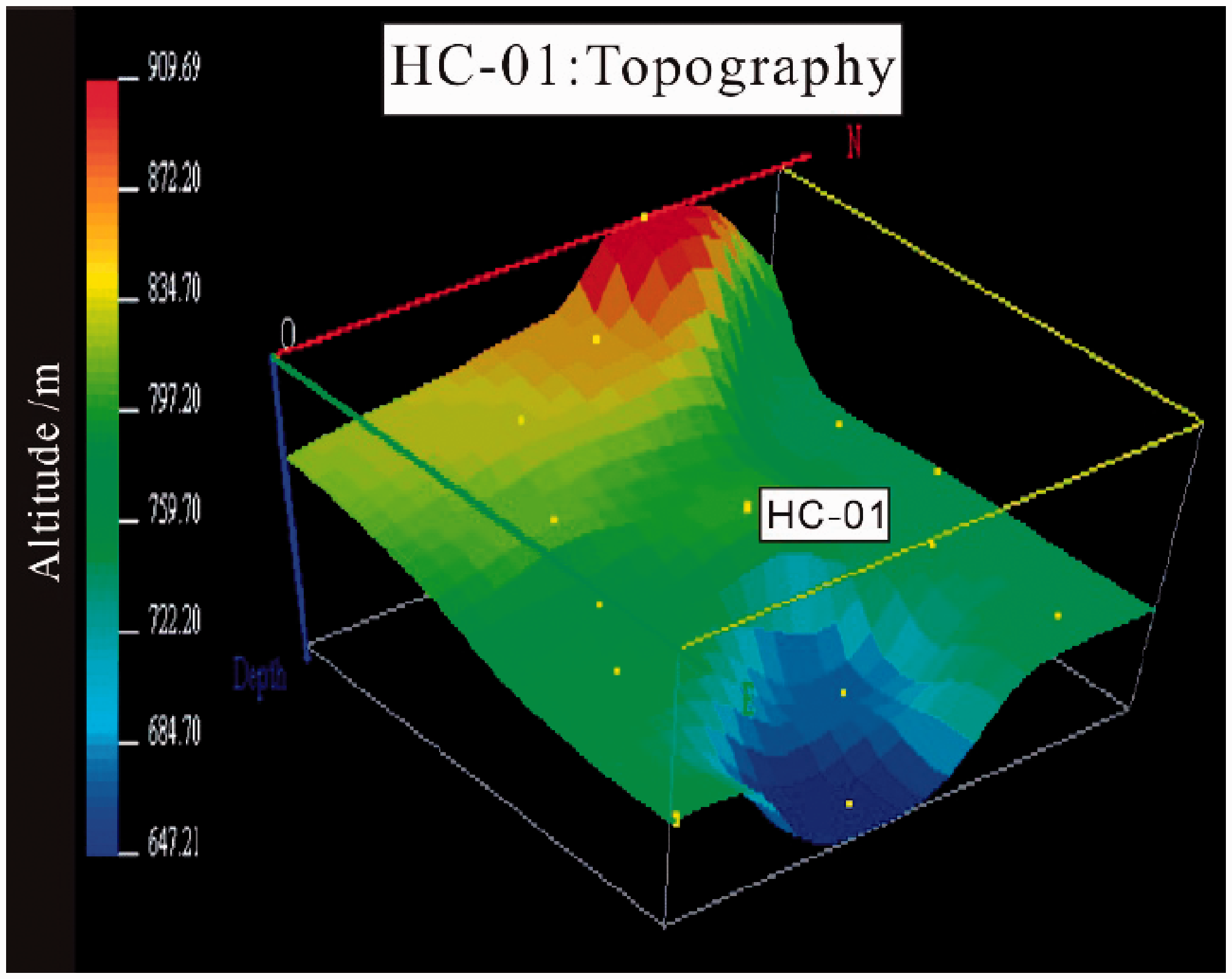
The topographic map used for the created velocity model.
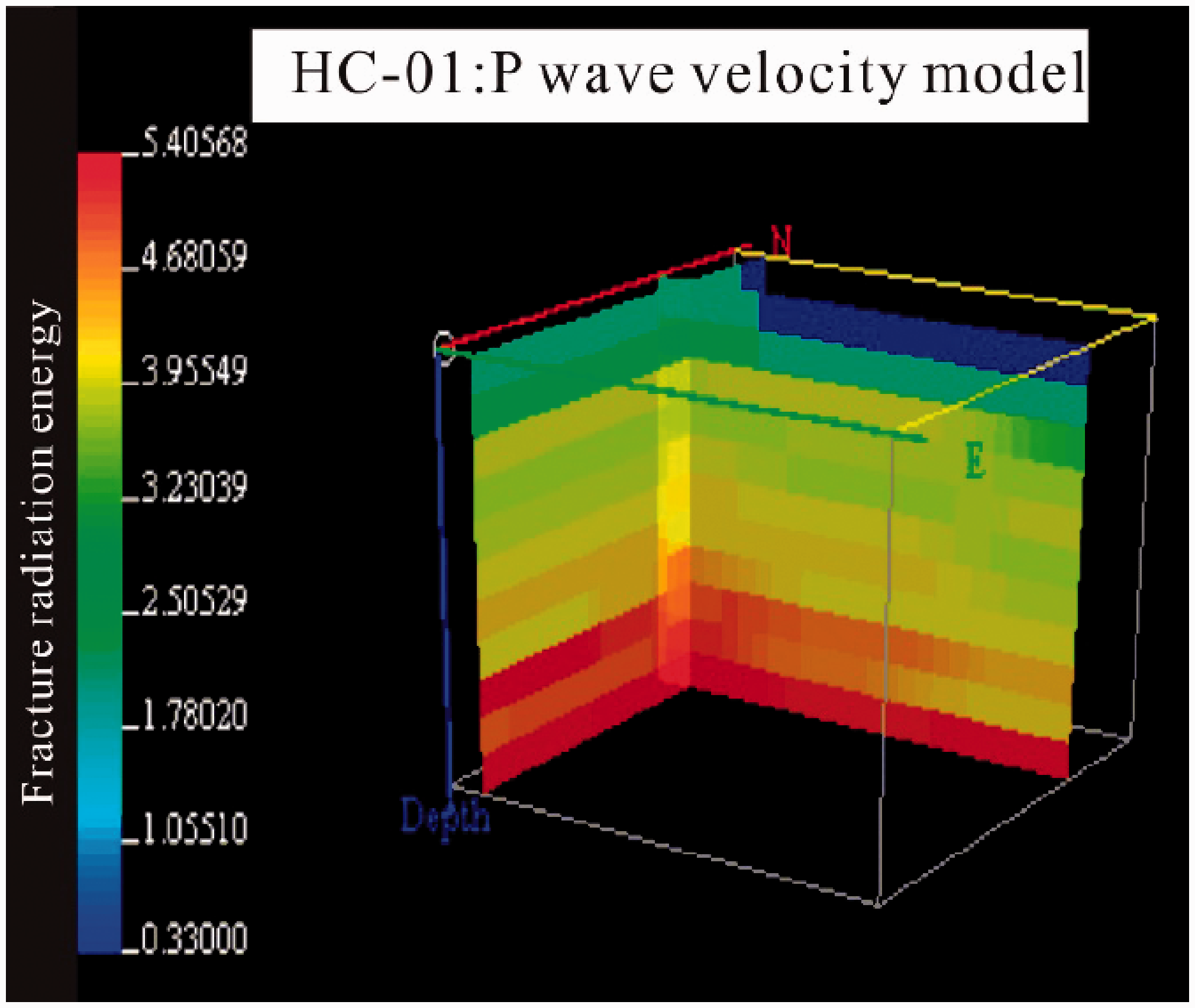
The model used for the used for P-waves.
P-wave velocity is obtained by sonic logging. Since the large amplitude of S-wave, the fracture is likely controlled by the tectonic principal stress field after it is slightly away from the well site, and the S-wave velocity model is used. After forming the P-wave model, divide by 1.732 to obtain the S-wave velocity model (Figure 3).
Based on the velocity model, a coarser grid, and a time interval of 100 m and 10 minutes were used to calculate the fracture scans, and the approximate range of the main fracture was estimated. Then, the finer grids and time intervals of 12.5 m and 2.5 minutes were used to scan the higher energy periods. Based on this, the temporal and spatial distribution of fracturing fractures was described, analyzed, and explained. In this calculation process, the data recording per unit time is not counted as data preprocessing, and it takes about 4–20 times the CPU time.
Well pattern optimization method
For coal reservoirs, vertical well fracturing to form artificial fractures is currently used for effective mining. In general, the more developed of the cleaving system, the more obvious the anisotropy of the permeability (Li et al., 2012). When fracturing this heterogeneous reservoir, the artificial fracture is easier to communicate with the natural fracture system, forming a crisscross fracture network. Thus, for considering the influence of coal macrolithotype on reservoir anisotropy (KX/Ky), the method of well pattern optimization that under the control of coal petrology is proposed by the Eclipse numerical simulation software.
Based on the production data, the influence of different well patterns (including diamond-shaped, square-shaped and rectangular-shaped well pattern) on the gas production that under different permeability anisotropy levels (KX=Ky, KX=5Ky, KX=10Ky and KX=15Ky) was simulated by numerical simulation software (Figure 4).
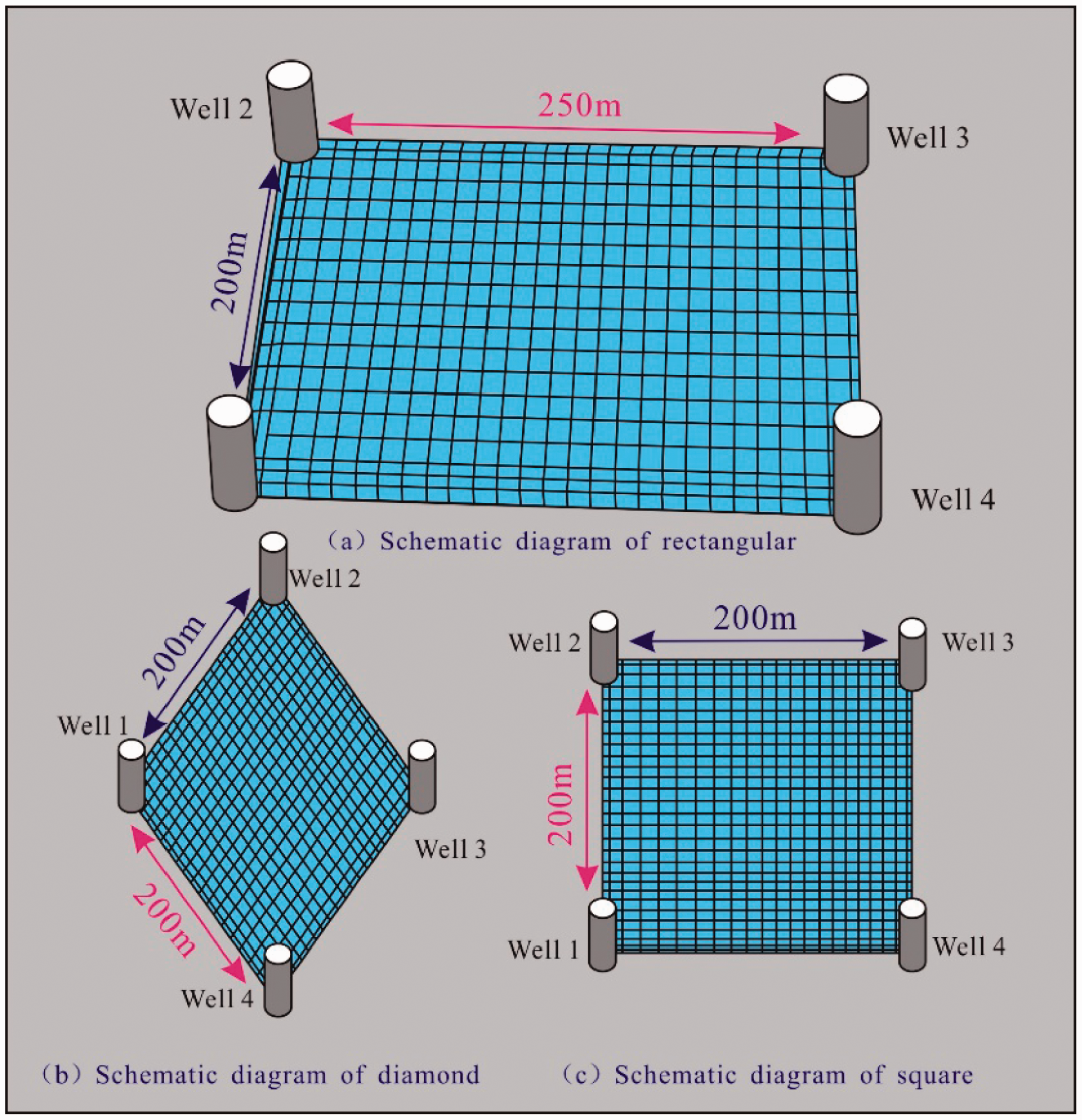
Numerical model of different well pattern.
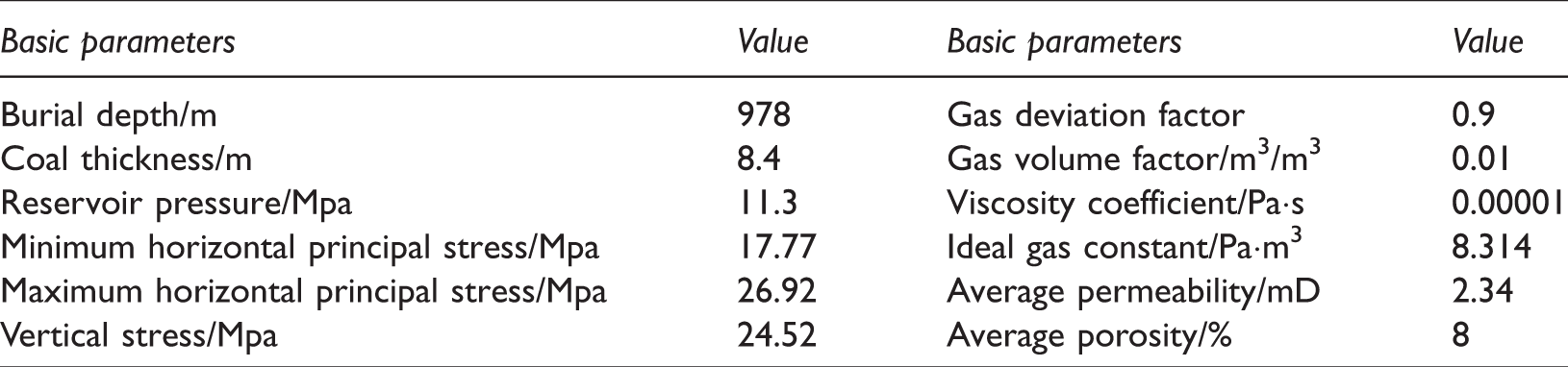
To capture the impact of natural fractures on the well pattern optimization in anisotropic coal reservoirs, the natural fractures according to the micro-resistivity scanning logging are set in the different coal macrolithotypes. The natural fracture density in bright coal and semi-bright coal is 24/10 cm and 18/10 cm, while that of semi-dull coal and dull coal is just 5/10 cm and 3/10 cm. The natural fractures in the model are mainly gas-expanding fractures and cleats, and the length is in the range of 1 cm ∼1 m. Additionally, combined with the characteristics of coal reservoirs in Hancheng area, the buried depth and thickness of coal seams were selected as numerical simulation parameters, and the wells were analyzed by COMET3 numerical simulation software. By fitting the 10-year cumulative production of wells, the geological parameters were corrected (Table 1). Figure 5 shows the fitting curve of gas production history of well HC-01. Through continuous adjustment of parameters for historical fitting, the productivity prediction model under the current well pattern and development conditions was obtained. From the results, the fitting degree is high, which meets the accuracy requirements.
Main parameters required for geological model.
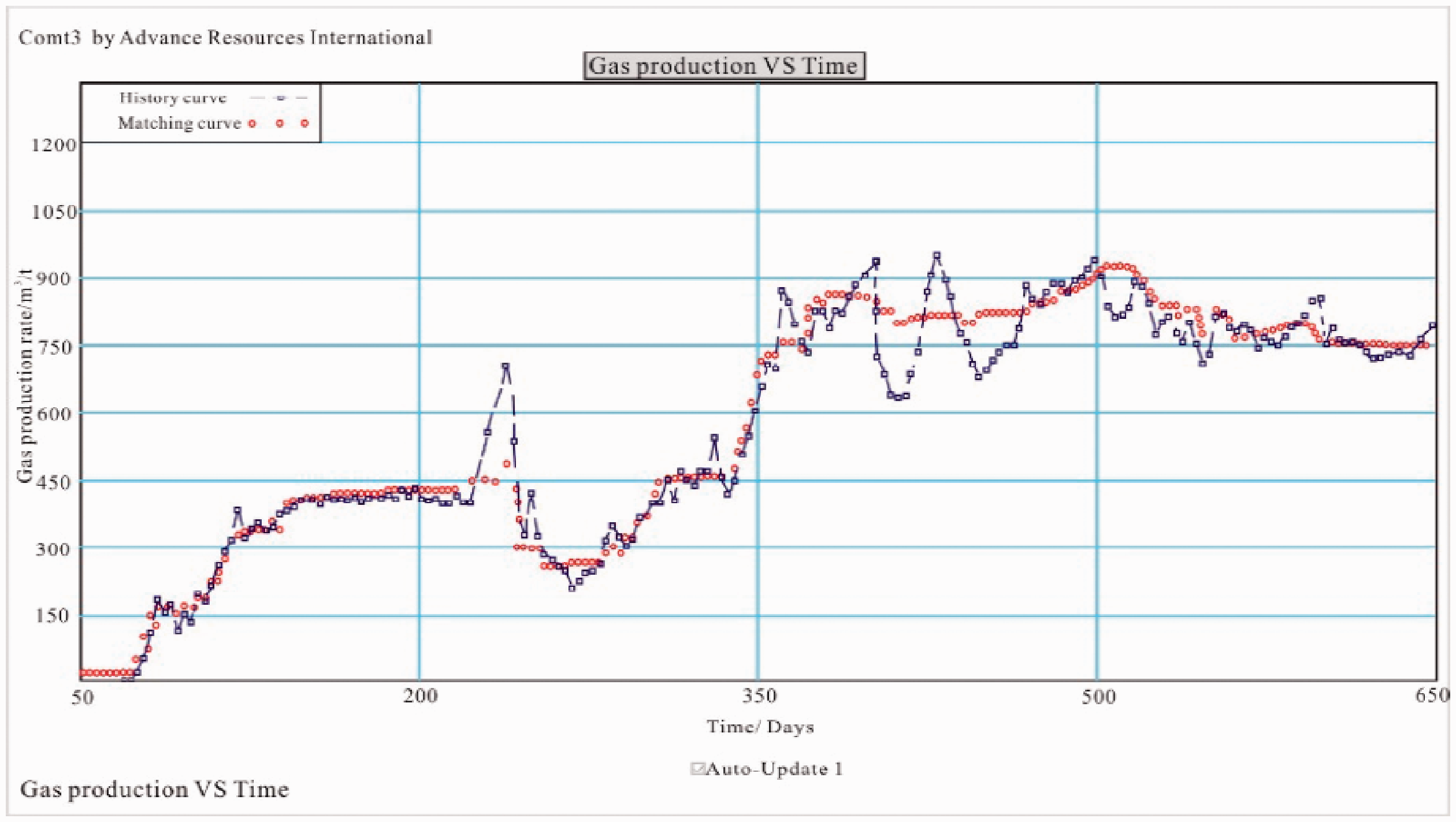
Fitting curve of gas production history of well HC-01.
Results and discussion
The impact of macrolithotype on hydraulic fracture
The 2/3 D distribution with periods of higher fracture energy is integrated and listed in Figure 6. Based on this, the spatial distribution of the main fracture is analyzed. Field logging data show that the HC-01 is dominated by the bright coal, when fracturing this reservoir, the hydraulic fracturing can modify the cleat system that widely developed in bright coal, hydraulic fracturing and dendritic crack are easier to propagate in all directions, and the artificial fractures with the cleats and structural fractures are easily form a “complex fracture network” (Liu et al., 2018b).
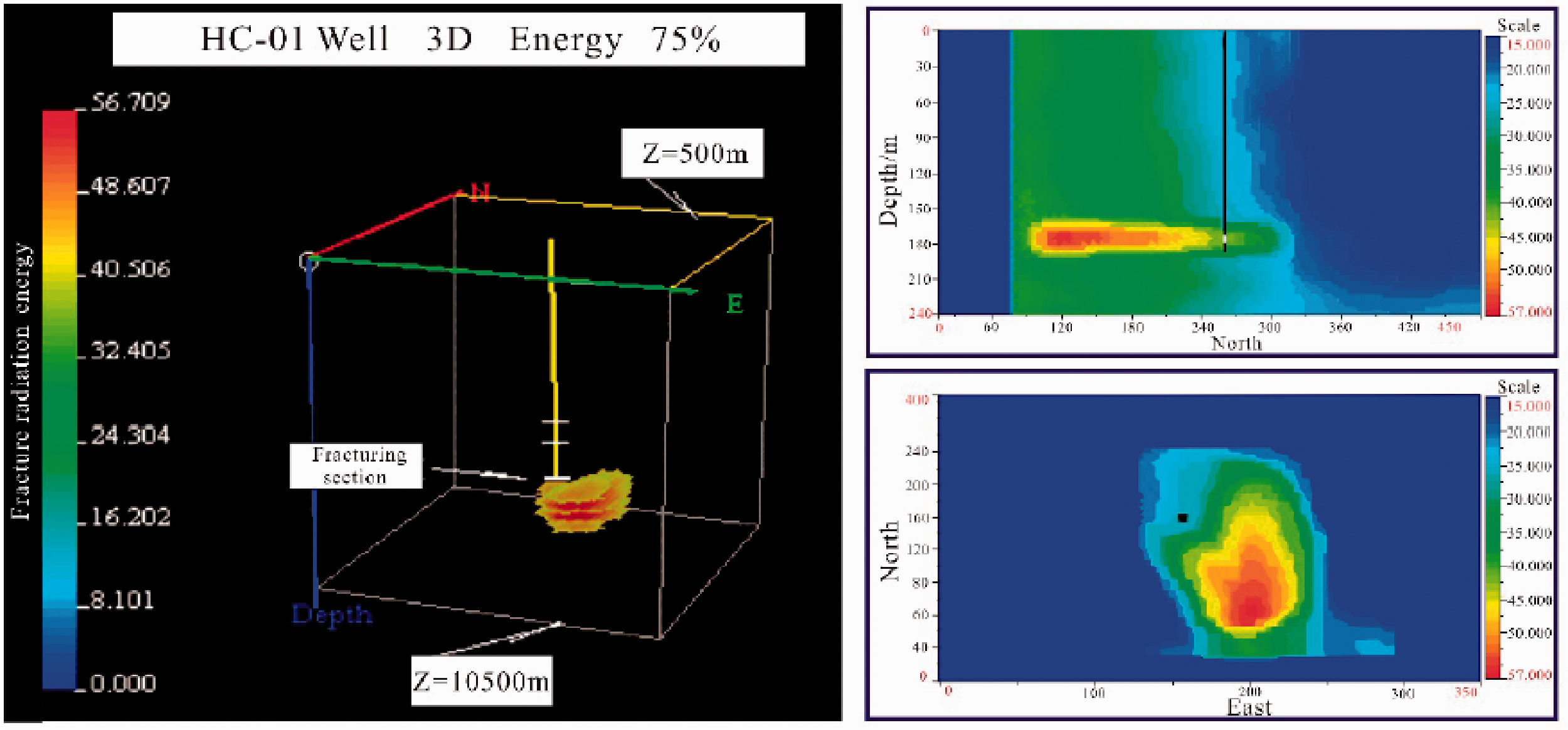
The geometry of hydraulic fracturing in HC-01 well using microseismic monitoring.
The semi-dull and dull coals have fewer fractures, and which with serious mineral filling phenomena (Zhao et al., 2017). Therefore, it is hard to connect the cleat system and contribute to a transverse fractures network structure that centered on hydraulic fractures. On the other hand, compared with bright coal, the elastic modulus of dull coal is larger (Liu al et al., 2018b), and the fracturing fractures are easy to form long and narrow fractures, and it is difficult to form a larger fracturing scale (Figure 7).
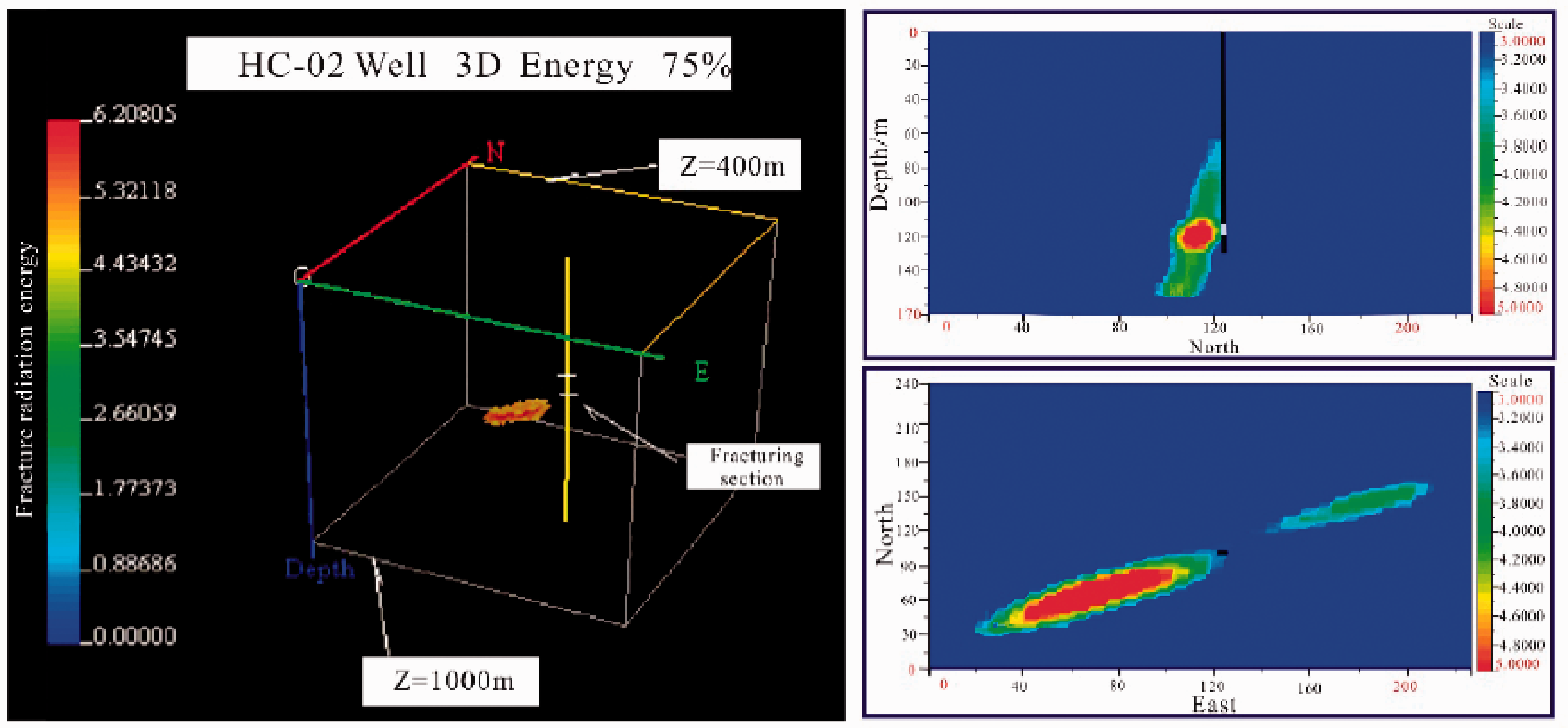
The geometry of hydraulic fracturing in HC-02 well using microseismic monitoring.
The microseismic monitoring results show that the hydraulic fracture in HC-02 well is mainly isolated, with a length of 172 m. Compare with the well of HC-02, the HC-01 well is mainly composed of reticular fractures as the fractures can communicate with the natural fractures near the wellbore. The range of fracturing in HC-01 well is wide, but the length of the main fracture is only 97.5 m (Table 2). By analyzing the productivity data of the two wells, it is found that the HC-01 well with better gas production. The highest daily gas production is 2300 m3/d, and the accumulated gas is 800×l04 m3. Although the main fracture length of HC-02 well is higher, the daily and cumulative gas production of gas wells is only 750 m3/d and 430×l04 m3, indicating that the complexity of fracturing fracture has a greater impact on the productivity characteristics of gas wells.
The fracture distribution by microseismic monitoring.
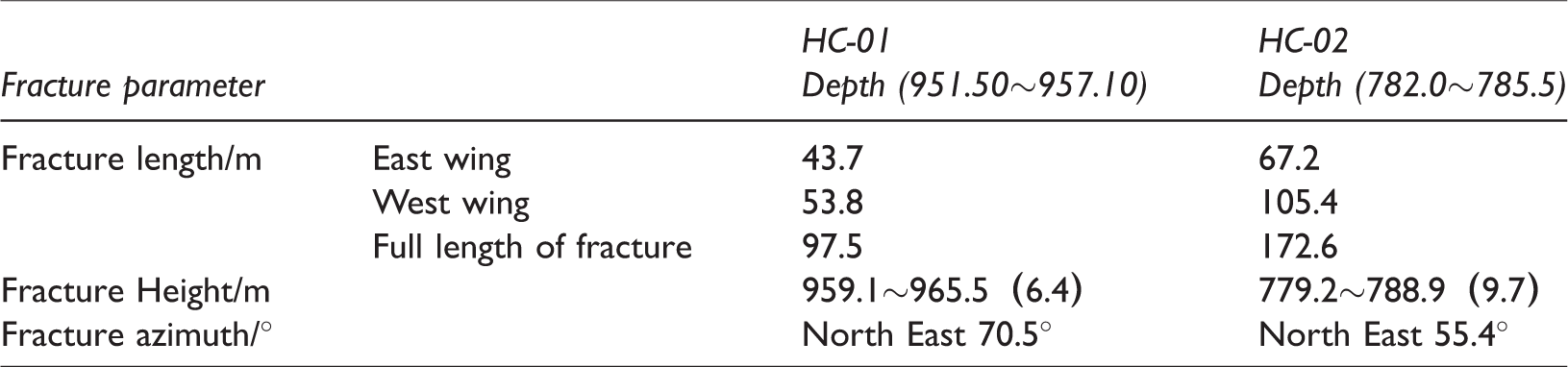
This result seems to be contrary to the previous conclusions, but in fact, leading to such results mainly due to the characteristics of coal reservoirs. Although the propagation of the main fracture in the bright coal is short, the fracture can communicate with the cleavages and natural fractures, leading to the formation of fracture networks around the main fracture. The permeability of this area is improved, which is conducive to the permeability of the area and enhance the flow velocity, facilitating the formation of area pressure drop. Owing to the tight reservoir, the fracture network of dull coal is mainly an isolated distribution, and the permeability near the main fracture does not change much. Since there are few branch fractures, the pressure drops of gas wells appear mainly as flat ellipsis, and it is difficult to form an effective pressure drop of a large area near the circle (Figure 8).
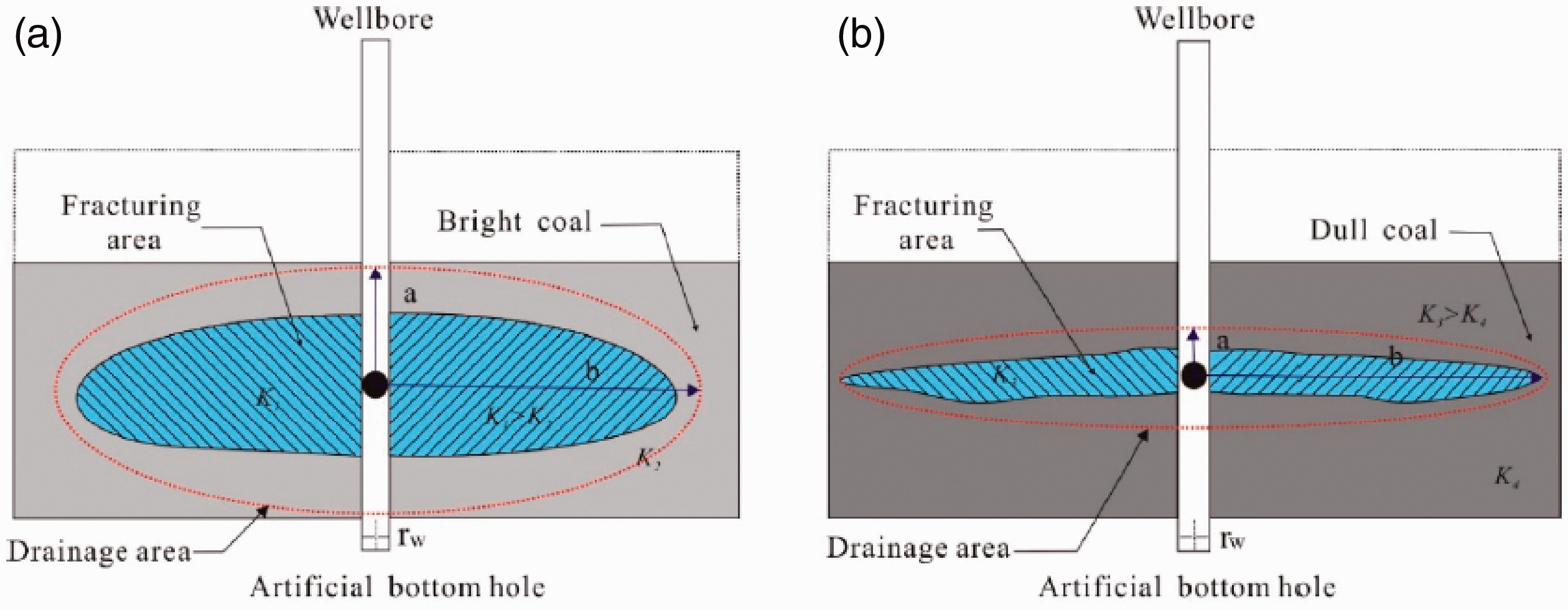
The relationship between fracturing fractures and drainage area of coal macrolithotypes.
The underground excavation and observation of fracturing wells in Hancheng mining area show that the distribution range of the proppant injected is generally 25–40 m near the wellbore (Wu, 2010). This illustrates the effective fracturing reconstruction of the gas well is limited to about 25–40 m near the wellbore at present, and the excessively long fracturing fractures have little significance for increasing the scope of transformation. However, the formation of long fractures to expose more coal seams is still the main goal of coal fracturing (Fan et al., 2014; Jeffrey et al., 2009). If network fractures are to be formed to increase the production of single wells, it is necessary to continue to increase the scale of fracturing and the network fractures on the current basis (Beugelsdijk et al., 2000; Dean and Schmidt, 2009).
Macrolithotypes impart a fracture distribution, which further impacts the hydrofracture stimulation and subsequent discharge radius and coalbed methane production. As the fracture conductivity of the fracture is the same, the drainage radius of the gas well will gradually increase with the length of the main fracture. In the actual fracturing of gas wells, the complexity of fractures often determines the productivity characteristics of gas wells. Generally, the more developed the reservoir fractures, the easier it is to form mesh fractures after fracturing, thereby increasing the corresponding drainage radius and improving the capacity.
Well pattern characteristics controlled by coal petrology
Research on optimization method of well pattern
Figure 9 is the recovery degree curves under the different well pattern types. As the reservoir with lower heterogeneity, the production of square-shaped is the highest, the rectangular-shaped is lowest and followed by the diamond-shaped well pattern. However, as the permeability anisotropy increases, the difference in recovering efficiency of the three well patterns gradually decreases. When the permeability anisotropy is KX=10Ky, the recovery efficiency of the square well pattern is slightly higher than that of the diamond-shaped and rectangular-shaped at the initial stage of productivity. However, with the drainage proceeding, the recovery degree of the diamond-shaped is the highest, followed by the rectangular-shaped, and the square-shaped is the lowest. As the degree of reservoir anisotropy is KX=15Ky, the rectangular-shaped is obviously higher than the diamond-shaped and the square-shaped well pattern.
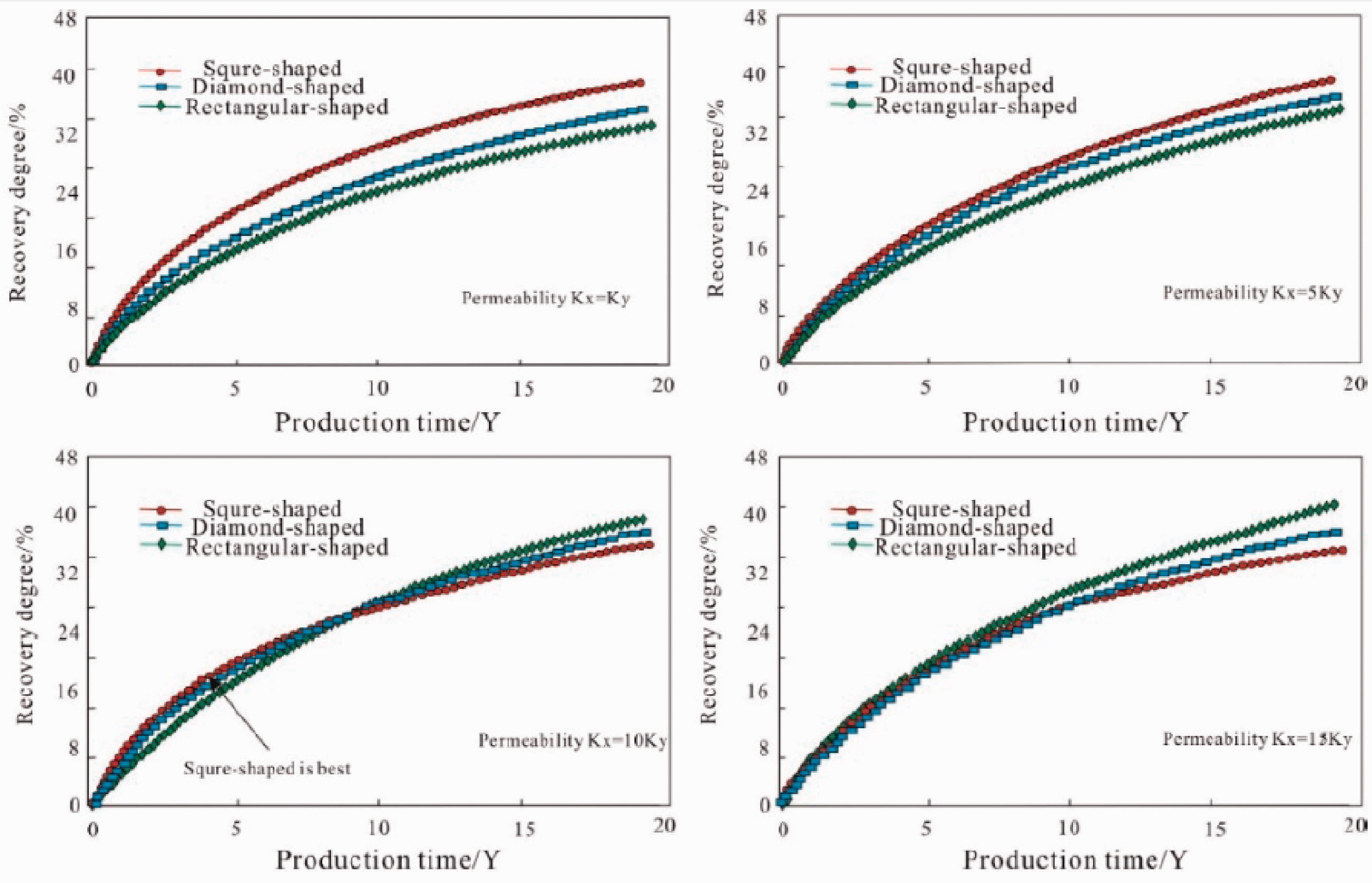
The curves of gas recovery degree under different well pattern types (Kx/Ky).
Optimized deployment of well pattern
Affected by the cleats and propagation of fracturing fractures, the permeability of coal reservoirs in different directions is anisotropic, resulting in higher propagation velocity of pressure in the high permeability zone than the low (Jeffrey et al., 2009; Zhang and Liu, 2008). In order to achieve the goal of balancing depressurization and optimizing CBM production, well spacing can be increased in the direction of higher permeability, while it should be reduced appropriately in the direction of lower permeability (Zhang and Liu, 2008). In the design of diamond-shaped and rectangular-shaped well pattern, they were required to deploy them in the form of different well spacing according to permeability orientation (Zuber and Kuuskr, 1990; Zulkarnain, 2005). Therefore, these types are more suitable for coal with high permeability anisotropy. The square-shaped is suitable for reservoirs with a weak cleat system and heterogeneity (Figure 10). These reservoir permeabilities are almost indistinguishable in the plane and vertical, and the pressure propagates almost equally across the coal seam during drainage and depressurization.
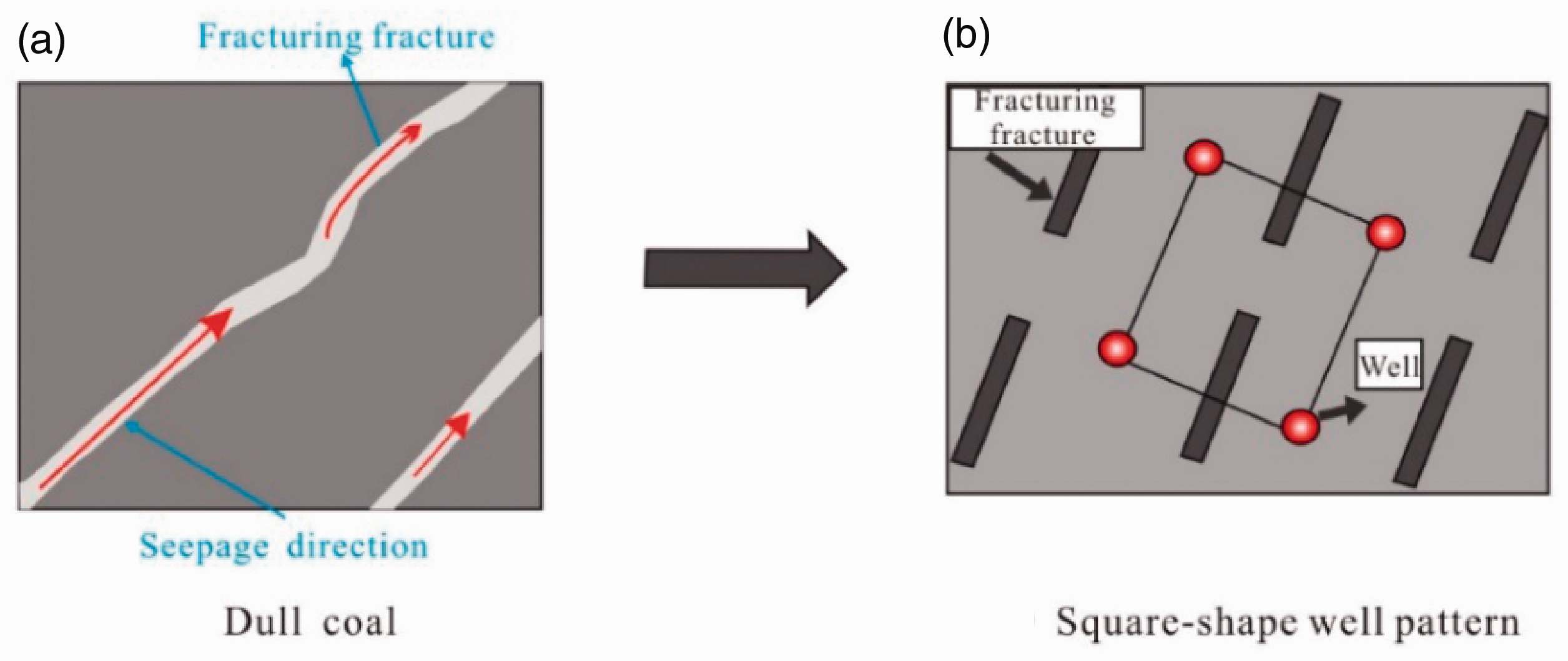
Diagram of fracture system and well pattern deployment in dull coal.
Thus, the square-shaped is more suitable for the dull and semi-dull coal in which the natural fractures are not developed or underdeveloped. For this, is not only can take the advantage of its early gas production speed but also help optimize well pattern deployment and improve development results (Figure 10). Compared with the square-shaped, the well pattern of diamond-shaped is more suitable for the semi-bright coal and bright coal reservoirs that with more complex natural fractures and fracturing fracture network (Figure 11). In addition, the results show that the rectangular-shaped in bright coal reservoirs with well-developed natural fractures and strong reservoir permeability is most conducive to improving the adaptability of well pattern and improving gas production.
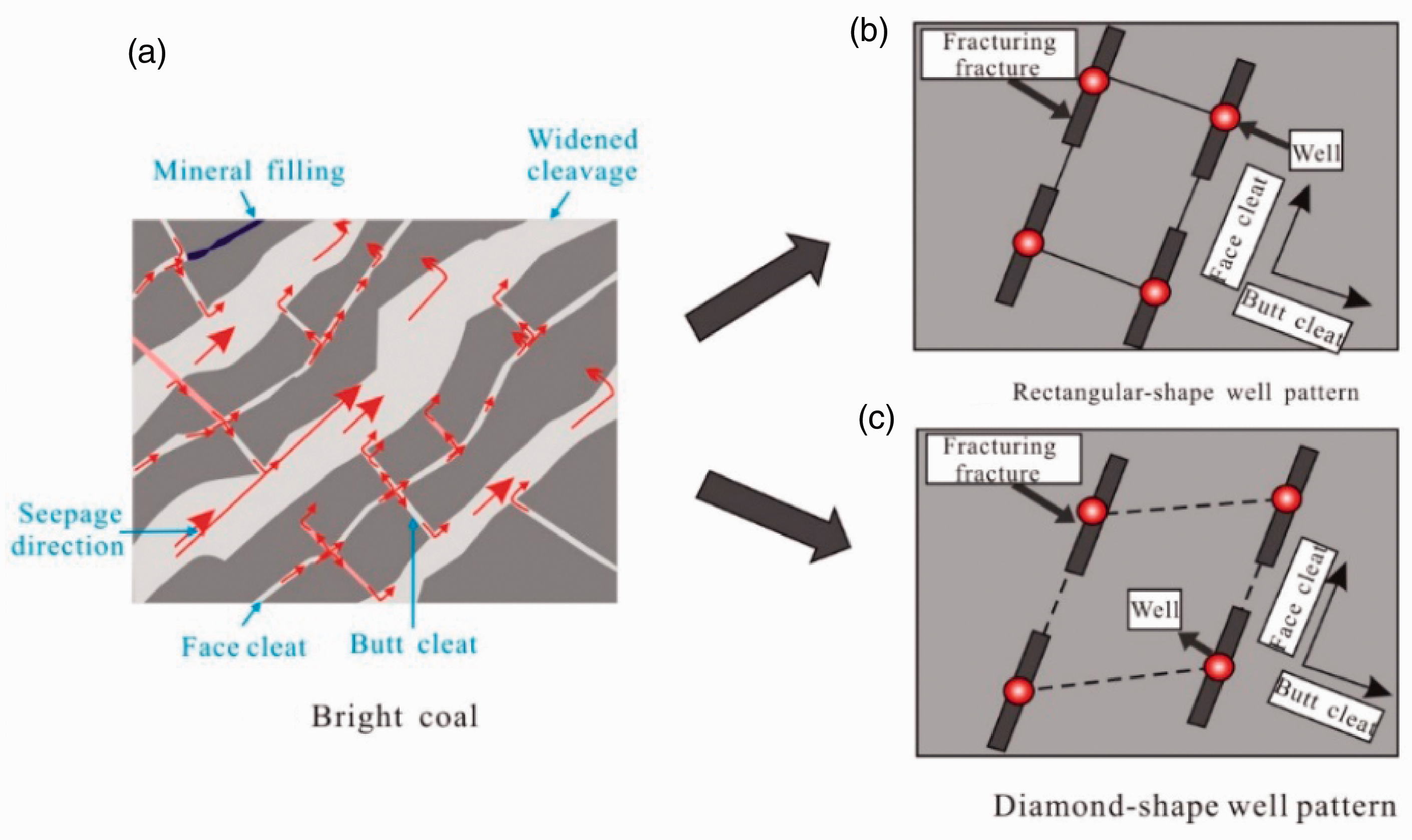
Diagram of fracture system and well pattern deployment in bright and semi-bright coal.
Density optimization of CBM well pattern
The results show that the square well pattern is more suitable for dull coal and semi-dull coal with undeveloped natural fractures, while the diamond and rectangular well pattern is more suitable for semi-bright coal and bright coal with more developed natural fractures and more complex fracturing fracture network. Thus, 102 single-well geological models with different well patterns and well spacings under different coal macrolithotype were established. Combined with the actual well spacing of the mine, 18 well spacing schemes were designed, as showed in Table 3.
Result of numerical simulation optimization index for coalbed methane.
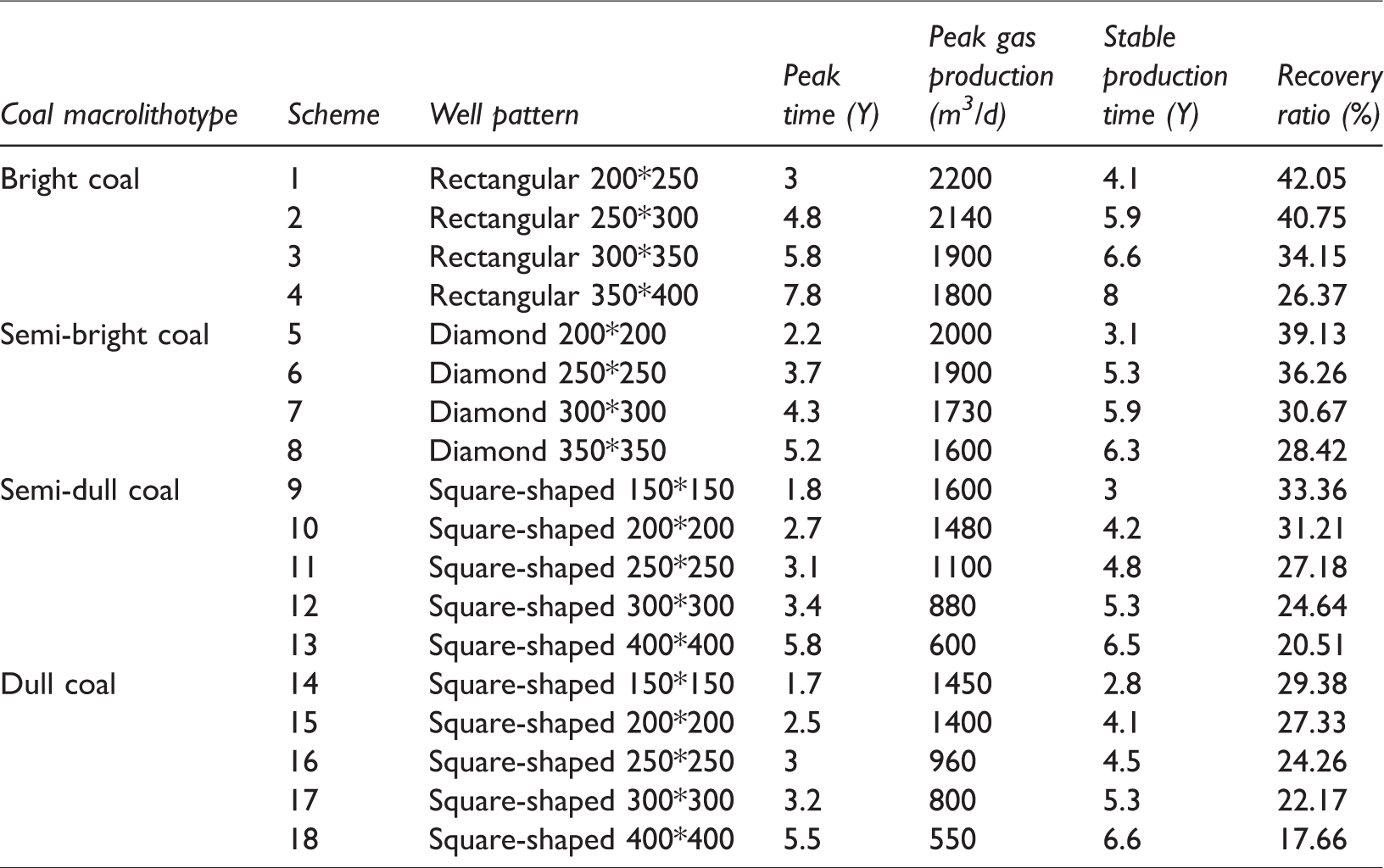
Based on the history fitting, COMET3 software was used to optimize the productivity indexes of the above 18 schemes (Table 3). The result demonstrates that the recovery degree increases with the density of well pattern, whether it is bright, semi-bright, or semi-dull and dull coal (Figure 12). However, as the spacing is too small, the interwell interference will form earlier, and the gas production peak will form accordingly and resulting in the stable production and high production time shorter. However, as the well spacing increases, it is difficult to form the well interference, and the gas production peak period is difficult to reach.
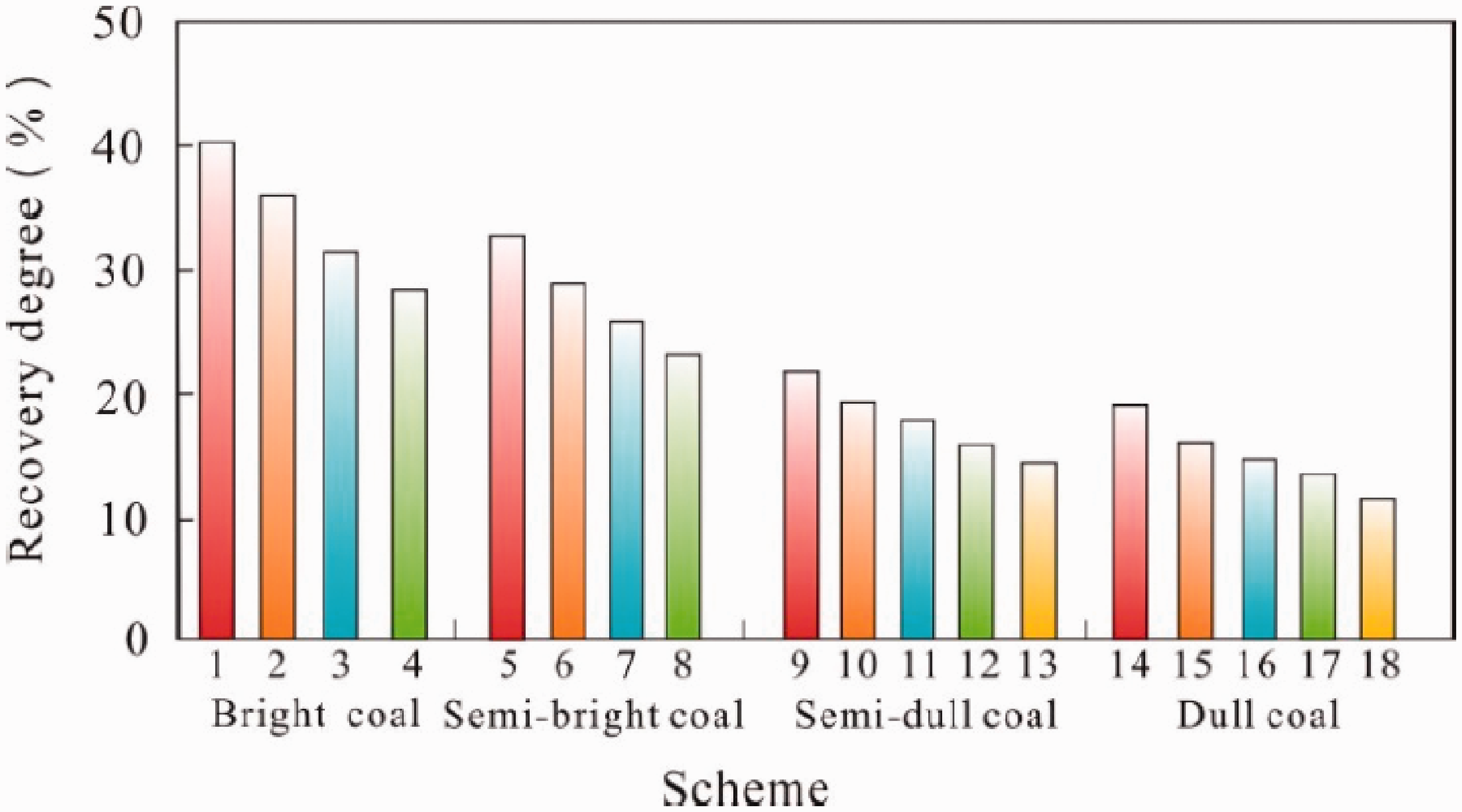
Histogram of recovery layer corresponding to different well spacing.
The ideal capacity trend can be formed only when the compatibility between well spacing density and reservoir is well (Zulkarnain, 2005). That is, after 2 to 4 years of production, pressure drop superimposition can be formed. Therefore, comparing the cumulative gas production, stable production time, recovery degree and peak time of single well in different coal macrolithotype, and the optimum wells spacing of bright coal and semi-bright coal is 350 × 300 m and 250 × 250 m, while that of semi-dull coal and dull coal is 200 × 200 m.
Optimization and adjustment of well pattern
To quantitatively evaluate the effect of well pattern adjustment and development index of reservoir, the pilot test area was selected to optimize well pattern spacing in the study area. Meanwhile, based on the numerical simulation technology, the pressure drop effect and production index after well pattern adjustment were evaluated quantitatively.
Comprehensive evaluation of well pattern infill feasibility
The original development plan of Hancheng is to deploy a set of diamond-shaped wells in the reservoirs with good reservoir properties and high gas content, and the average well spacing is about 300 m. However, due to the strong heterogeneity of coal reservoirs, well pattern arrangement in a single form is less adaptable to some coal macrolithotype reservoirs. Besides, non-uniform well spacing is adopted in the development process according to reservoir physical properties and gas-bearing. Up to now, the basic pattern in the Hancheng is dominated by the irregular well pattern, and most of the wells are concentrated in the superiority reservoirs such as bright and semi-bright coal. In bright coal reservoir, the well spacing is 12.5/km2, and the average well spacing is 275 m. The well density in the semi-bright coal is 10.65/km2, and the average well spacing is 305 m. The density of semi-dull coal and dull coal wells is 9.84∼8.51/km2, and the well spacing is 313 m∼341 m (Table 4).
Statistics of average well spacing corresponding to coal macrolithotype.

According to the existing well pattern, the reserves utility of bright coal is relatively high, and the drainage radius superposition is larger than the average well spacing, indicating that the interwell interference has been formed, and there is little room for infilling the well pattern. For the dull and semi-dull coal, the current average well spacing has approached or exceeded the economic and technical limits, but due to the poor reservoir properties, the interwell interference has not yet been realized. Thus, considering the economic factors, the types of these reservoirs do not have the economic conditions of well pattern infilling under the current gas price and production technology. Therefore, comparing the relationship between the gas drainage radius and the limit values of economy and technology, the study area has lost the condition of integral infilling, and the semi-bright coal may still have infilling potential.
Optimal adjustment scheme of well pattern
Hancheng branch has deployed four infill wells in the Han 3 well group with semi-bright coal as the main production layer in recent years. The distribution of infill wells is shown in Figure 13. The Han 3 well group has deployed 28 production wells, the well spacing of which 16 are greater than 300 m, 12 are less than 300 m, and the minimum is 251 m; the density of the well pattern after encryption is 7.3/km2 to 8.65/km2. The well spacing is also reduced from 358 m to 275 m. After infilling adjustment, the well pattern of the pilot test area is gradually improved.
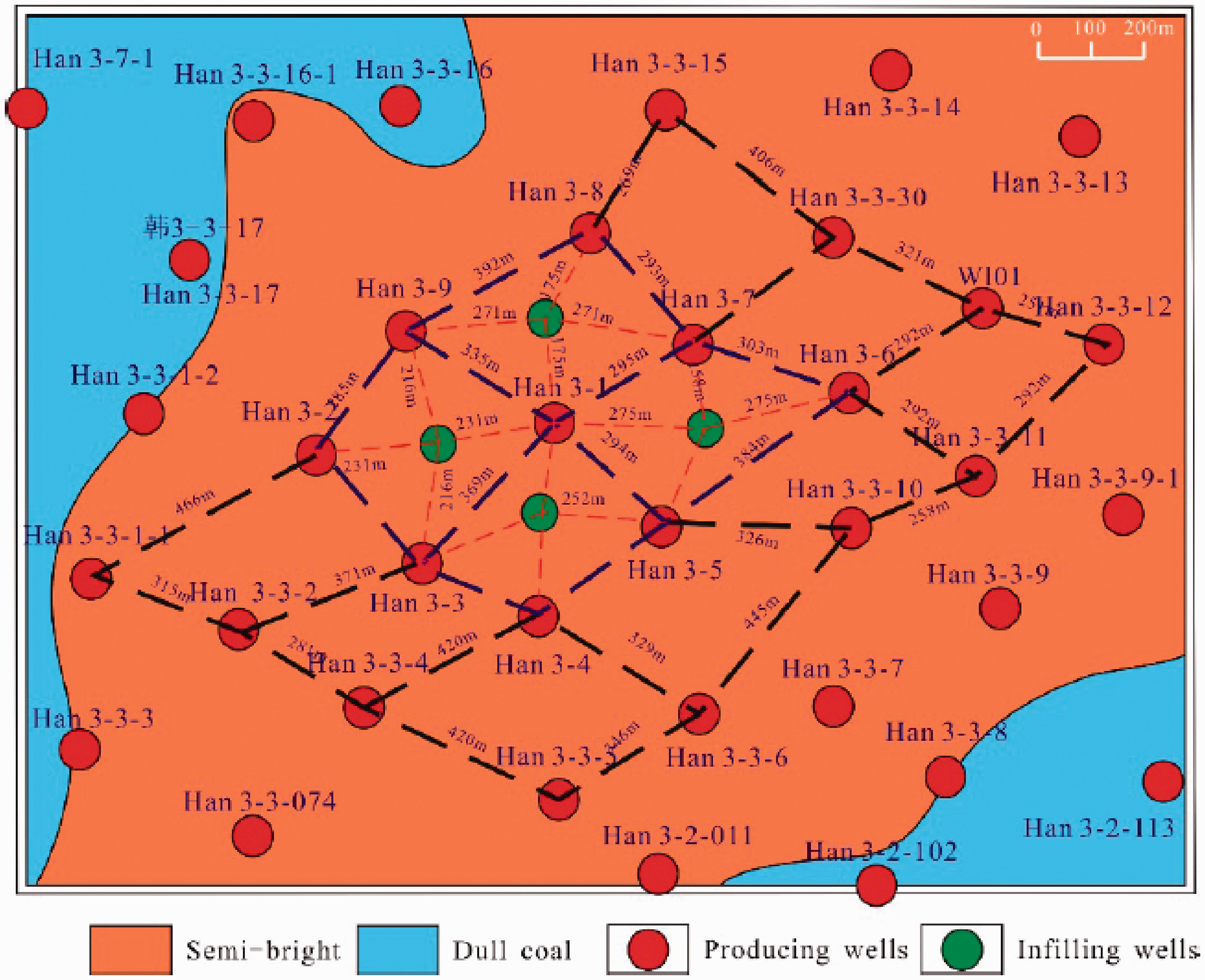
Distribution of well pattern encryption for Han 3 in Hancheng mining area.
Combining the economic and technical limits well spacing, numerical simulation of infilled Han 3 well group is carried out. On the basis of historical fitting, the pressure drop effect and productivity characteristics of the infilled reservoir is predicted respectively. From the pressure distribution of Han 3 test well group, the production of old wells is greatly affected after infilling. The areas with obvious pressure reduction are concentrated around the wells of Han 3–2, Han 3–3, Han 3–5, and Han 3–7, and the effect of pressure reduction in the infilling area is obvious (Figure 14).
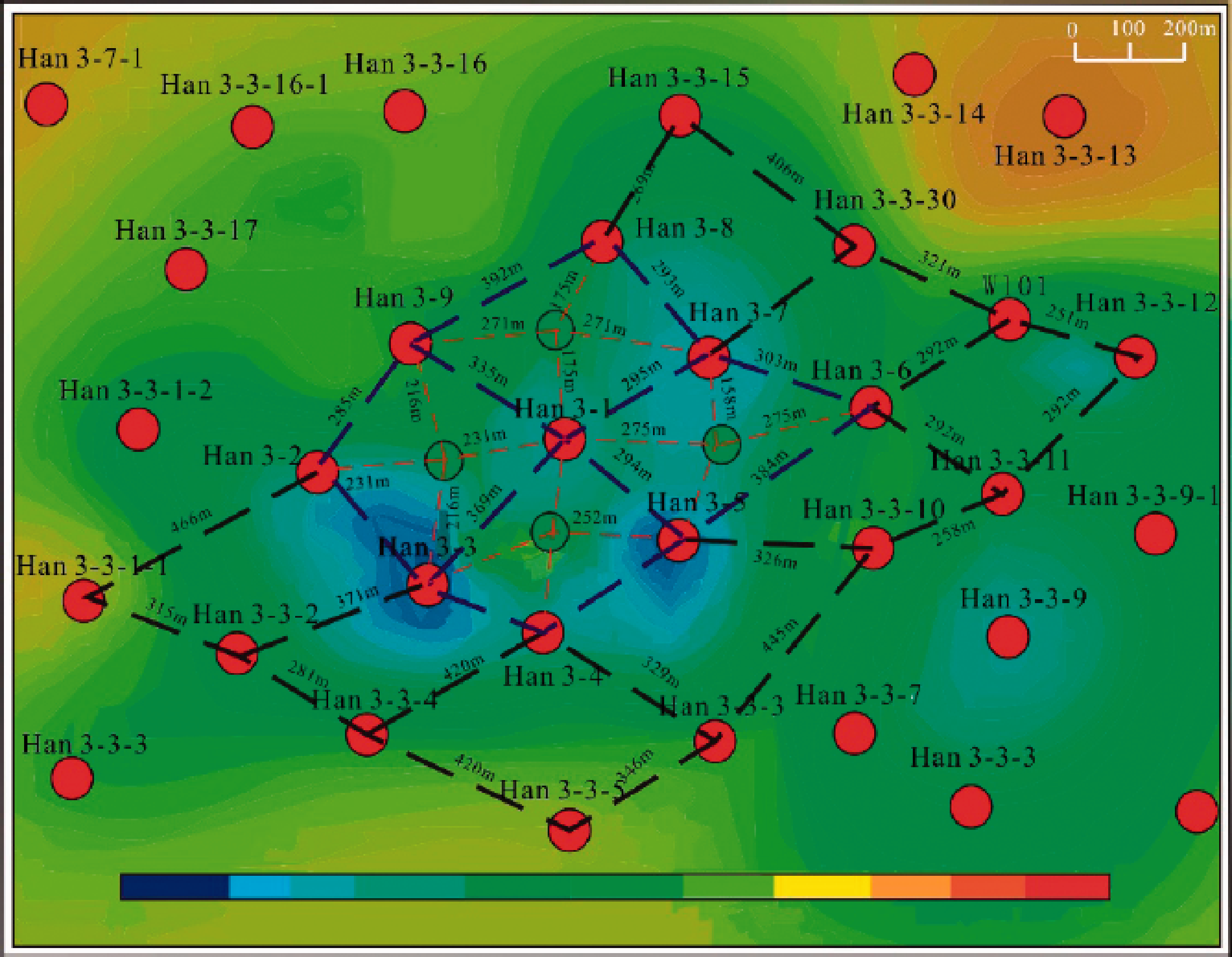
Pressure distribution of Han 3 test well group.
Before infilling, the diamond-shaped well pattern has been formed in the test well group. However, due to the late commissioning time of the diamond-shaped, the interwell interference has not yet been formed. For example, 8 wells centered on the Han 3–1 well are Han 3–1 well, Han 3–2 well, Han 3–3 well, Han 3–4 well, Han 3–5 well, Han 3–7, Han 3–8 well and Han 3–9 well. Among them, except well Han 3–8, because of its large fluid production, the gas production is low, the daily production of other wells is around 800–1000 m3. The cumulative gas production of well Han3–1 is stable before infilling. However, since four infilling wells put into operation, the cumulative gas production of well Han 3–1 increases linearly, and the other 7 wells show the same trend (Figure 15). The actual drainage and production data show that the average daily gas production of 8 wells centered on Well Han 3–1 after infilling is significantly higher than that before infilling, which indicates that there is obvious interwell interference among wells of Han 3 after infilling (Figure 14), and the recoverable reserves of reservoirs are further utilized.
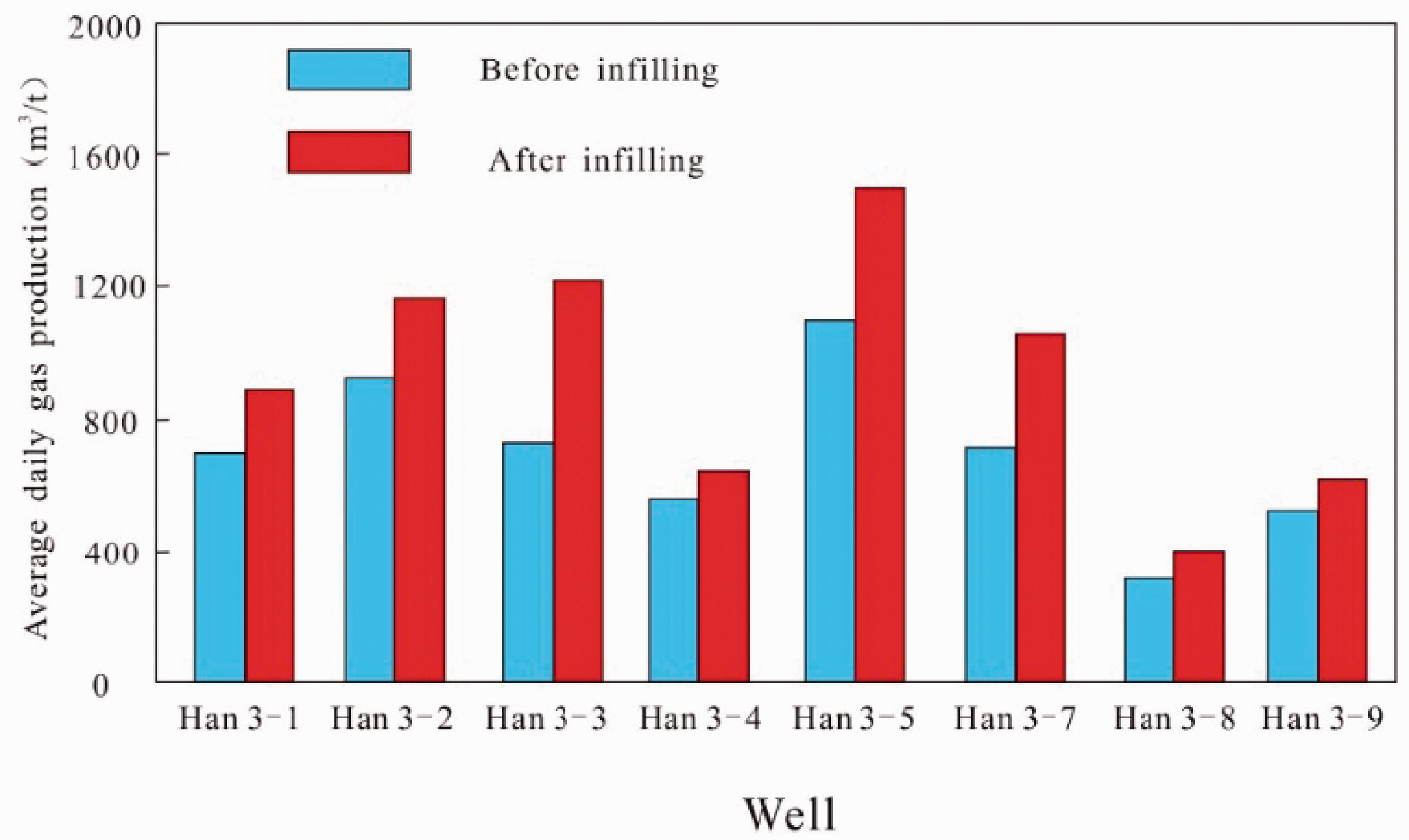
Average daily gas production before and after well infilling.
Conclusion
The hydraulic fracture differences will modify the permeability pathways and the well productivity seems to be different when developing different macrolithotype reservoirs. The microseismic monitoring results show that the fractures are controlled by the macrolithotype, and fractures propagate in bright coal also dominated by the complicated fracturing fracture networks as the cleat-systems is widely developed, and the “simple” case often happens in the coal that the dull-lithotype is rich. Considering the difference of hydraulic fracture and permeability, the CBM productivity characteristics controlled by coal petrology were simulated. The results show the square-shaped is more suitable for the dull and semi-dull coal, while the diamond-shaped and rectangular-shaped well pattern is more suitable for the semi-bright and bright coal reservoirs that with more complex natural fractures and fracturing fracture network. The spacing of 350 m×300 m for bright coal is more conducive to realize investment recovery and further rolling development as soon as possible. The optimum wells spacing of semi-bright coal is 250 m, while the semi-dull and dull coal is only 200 m. Based on the principle of well-infilling adjustment and deployment, four wells infilling were deployed in Han 3 well group with semi-bright coal as the main production layer. After infilling, Han 3 well group formed obvious inter-well interference and further exploited recoverable reserves. The actual drainage and production data show that the average daily gas production of eight wells centered on Han 3-1 well are significantly higher than before infilling, and the development well pattern in this area became more perfect after infilling adjustment.
Footnotes
Acknowledgements
We thank the anonymous reviewers for their careful reviews and detailed comments.
Declaration of conflicting interests
The author(s) declare that there is no conflict of interest with respect to the research, authorship, and/or publication of this article.
Funding
The author(s) disclosed receipt of the following financial support for the research, authorship, and/or publication of this article: This work was funded by the Key Project of the National Science & Technology (Grant No. 2016ZX05042-002), and the China Postdoctoral Science Foundation (Grant No. 2020M670853).
