




Abstract
To achieve zero-energy building target, both China and the US have planned pathway by formulating guidelines and standards. China has published National China technical standard for nearly zero energy building (CTS-NZEB), which defines detailed principles of zero-energy building. The US LEED zero energy evaluation system has been released based on LEED rating system. Defined target and scope have been introduced in this evaluation system; however, there are no technical and detailed approaches in the rating system. To support future projects achieving the LEED Zero Energy certification in China, accessible applications have been analyzed in perspectives of technology and economy in this article. The comparison and analysis results show that the strategies and technical index of CTS-NZEB can be adopted comprehensively in LEED Zero Energy rating system for Chinese buildings except for renewable energy resources because air source or ground source heat pump system, which are extensively used in China but not acceptable in LEED Zero Energy rating system. High-performance strategies, including low U-value envelope, exterior shading devices, high air tightness envelope, high-efficiency heating, ventilation, and air-conditioning system, and low thermal bridge impact, can be applied to pursue LEED Zero Energy rating system. The incremental costs of NZEBs in China are also supported by government through market and financial policies. This would make significant impacts on Chinese buildings to achieve the LEED Zero Energy target.
Keywords
Introduction
With the development of global economy and an increasing number of environmental problems caused by human activities, global building energy consumption has been sharply increased over past decades. As a result, the construction-related CO2 emission has surged to 45% since 1990, which led to the climate change globally (IEA, 2017). Facing this issue, the Intergovernmental Panel on Climate Change reported that the global warming will bring about a higher temperature of 1.5–2
Green buildings have been implemented worldwide to balance the relationship among human activities, economy, and environment in the past 30 years (Awadh, 2017). Building Research Establishment Environmental Assessment Method (BREEAM), the world’s first leading green building sustainability assessment system, has been established for nearly three decades (Kubba, 2016). Developed by the United States Green Building Council (USGBC), Leadership in Energy and Environmental Design (LEED) has become the most popular and commercially successful rating system (USGBC, 2013). China, with the second largest LEED-certified building floor area, has developed its Green Building Labelling (GBL) System, and more than 0.7 billion m2 area has adopted the GBL system by the end of 2016 (IEA, 2017; Ma, 2016; Ye et al., 2013).
Buildings have consumed 20% of energy worldwide in 2015, which will remain the same tendency in 2040 (EIA, 2017). In China and the US, building energy demands account for 40% and 30% of total energy demands (Liu et al., 2019b). Nevertheless, there is a huge opportunity to save energy by implementing various building energy efficient technologies and formulating related sustainable policies (Liu et al., 2019d). In next decades, zero-energy building (ZEB) will become the ultimate goal to fight against global warming and cope with increasing building energy consumption (Belussi et al., 2019; Cao et al., 2016).
European Union set the ambitious goal on achieving nearly zero energy building (NZEB) in the 2002 Energy Performance of Building Directive (EPBD), which demanded that all new buildings should be NZEBs by 31 December 2020 (Al-Addous and Albatayneh, 2019; D’Agostino, 2015). The US Department of Energy (DOE), required by Energy Independence and Security Act of 2007, has set the target that half new commercial buildings by 2040 and all new commercial building by 2050 should be net-zero energy construction (Crawley et al., 2009; Sissine, 2009). Upon accomplishing its three steps “30%-50%-60%” plan of building energy efficiency from 1980 to 2016 (Yang et al., 2019), China advocated on high-energy efficiency building performance, ultra-low energy building (ULEB), NZEB, and ZEB were developed (Liu et al., 2019d).
In China, measurements such as building energy saving regulations, tax reduction policies, and relevant subsidies have been implemented to decline the building energy consumption (Yu and Liu, 2018). A new “30%-30%-30%” roadmap indicates that 30% of new buildings to be built, 30% of existing buildings to be renovated into nearly zero energy ones, and 30% of energy consumption will become renewable energy by 2030 (Xu and Zhang, 2018d). Government subsidies, ranging from 100 to 1000 CNY/m2, have been implemented to support high-performance building (Liu et al., 2019d). China technical standard for nearly zero energy buildings (CTS-NZEB) was released in 2019 by Ministry of Housing and Urban-Rural Development of the People’s Republic of China (MOHURD) (MOHURD, 2019), which set a milestone in China’s building energy efficiency history, and China became the first country to promote ZEB by setting it as national standard. Specific energy target and recommended technical approaches were set in a whole process (including early plan, design, construction, and operational process) in this standard.
In 2019, the USGBC issued “LEED Zero Program Guide” (including LEED Zero Carbon, LEED Zero Energy (LZE), LEED Zero Water, and LEED Zero Waste) that proposed the net-zero energy target and evaluating methods. The guide was to drive projects aiming for higher performance and to reduce greenhouse gas emissions (USGBC, 2018). However, there were no technical approaches in this guide and very few projects have achieved LEED Zero Certification worldwide.
This paper intents to discuss the possibilities and applications of sustainable development of ZEBs based on CTS-NZEB in LZE rating system from technical and economic perspectives. After discussing the two definitions, it introduces the technical approaches from NZEB best practices. Necessary comparisons such as evaluating methods, energy usage boundary, passive, and active strategies are analyzed with the backdrop of LZE and CTS-NZEB, respectively. Finally, the application of Chinese ZEB technologies are analyzed and summarized in the aspect of technology and economy.
LZE and CTS-NZEB
CTS-NZEB and LZE have set zero-energy goal in recent years (Figure 1; ASHRAE, 2016; MOHURD, 2019). ASHRAE 90.1–2016 standard, a primary source of LZE, developed its versions from 1970 to 2016 with energy efficiency rate reduced from 14% to 52% compared with the baseline (DOE, 2016, 2017). Zero-Energy Design Guides were developed for small and medium office buildings and K-12 schools (K-12 is the term of describing the publicly supported school grades prior to college in the US) by ASHRAE, USGBC, DOE, etc., in 2019 (ASHRAE et al., 2019). Recommended strategies and cases were shown in this guide, but recommendations were voluntary and not designed to be code enforceable. China’s energy efficiency codes for public building GB 50189 developed from 1980 to 2015, with the energy efficiency rate up to 65% compared with the baseline (Hong et al., 2015). By imposing CTS-NZEB, China has established the strictest evaluation system and detailed strategies to guide the projects at design, construction, and operation stages.
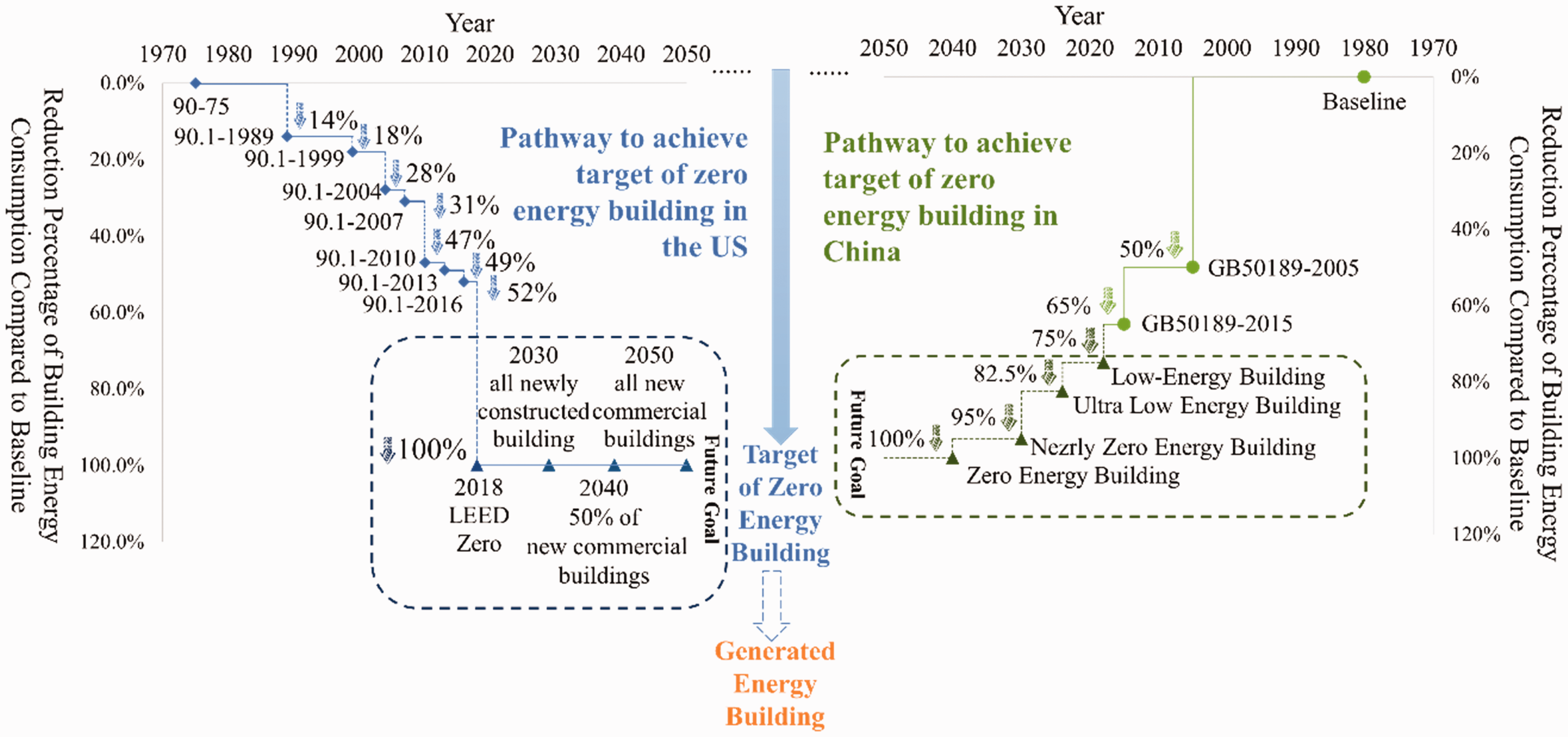
Roadmap of zero-energy building in China and the US.
LZE rating system
To obtain LZE certification, the following two prerequisites should be met:
Energy data for consecutive 12 months should be provided. The project building should be registered or certified under LEED Building Design and Construction (LEED BD+C) rating system or LEED Existing Building Operation and Management (LEED O+M) rating system.
The LZE project must achieve zero energy use balance during the above reporting period. LZE balance is based on the energy consumed and generated by the project. Source energy balance is given by the following formula

Figure 2 shows the total energy consumption categories, including heating, ventilation, and air-conditioning (HVAC), lighting, plug-ins, domestic hot water, elevators, and other energy consumption in the building. The total energy generated includes renewable energy generated on site and used for electric grid or offsite renewable energy. When calculating the total energy consumed and generated, the same source energy conversion factors should be used.
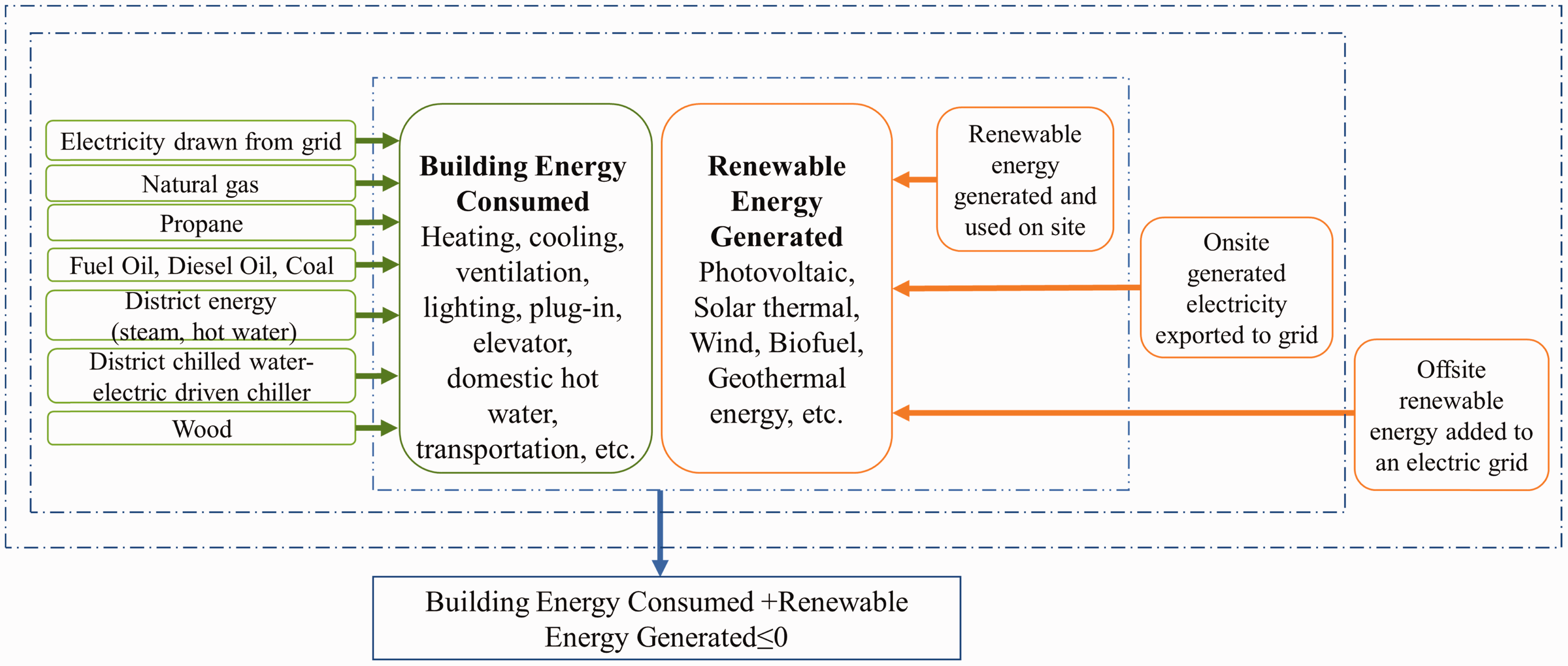
Illustration of LEED zero energy source energy balance.
CTS-NZEB
With the advancement of building energy efficiency in China, CTS-NZEB, the future building code, focuses on building energy efficiency, and indoor environmental quality. CTS-NZEB is not only a standard for the NZEB, it defines concept and sets energy efficiency goal of total three buildings: ULEB, NZEB, and ZEB (Xu et al., 2018b). The main difference among them is the energy reduction rate as shown in Table 1. Compared to baseline models, the energy reduction rate of ULEB, NZEB, and ZEB is 82.5%, 95%, and 100%, respectively, as shown in Figure 2. In CTS-NZEB, the energy reduction rate of ULEB, NZEB, and ZEB is 50% and 60%–75% and 100%, respectively, referring to standards in effect in 2015 (MOHURD, 2019).
The definition of ULEB, NZEB, and ZEB.
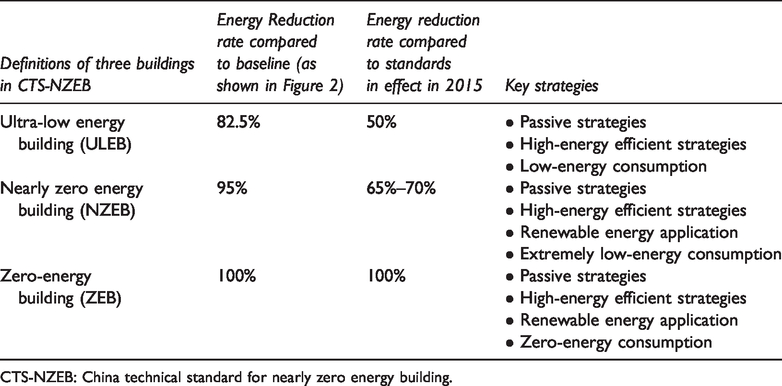
CTS-NZEB: China technical standard for nearly zero energy building.
The key technologies of these three buildings are similar, including of adopting passive strategies, high-energy efficient systems and renewable energy applications. The renewable energy is encouraged to apply in NZEB and ZEB to minimize energy demands to varying degrees. In order to achieve zero energy, the energy generated should be no less than consumed.
Providing holistic approaches at each building stage, CTS-NZEB aims to achieve high performance of buildings that meet the requirements of indoor environmental parameters, energy efficient index, and technical index that suits building envelop, HVAC system, and renewable energy (Xu et al., 2018c). Furthermore, building energy saving strategies, active energy-efficient strategies, renewable energy applications are also recommended in CTS-NZEB, as shown in Figure 3.
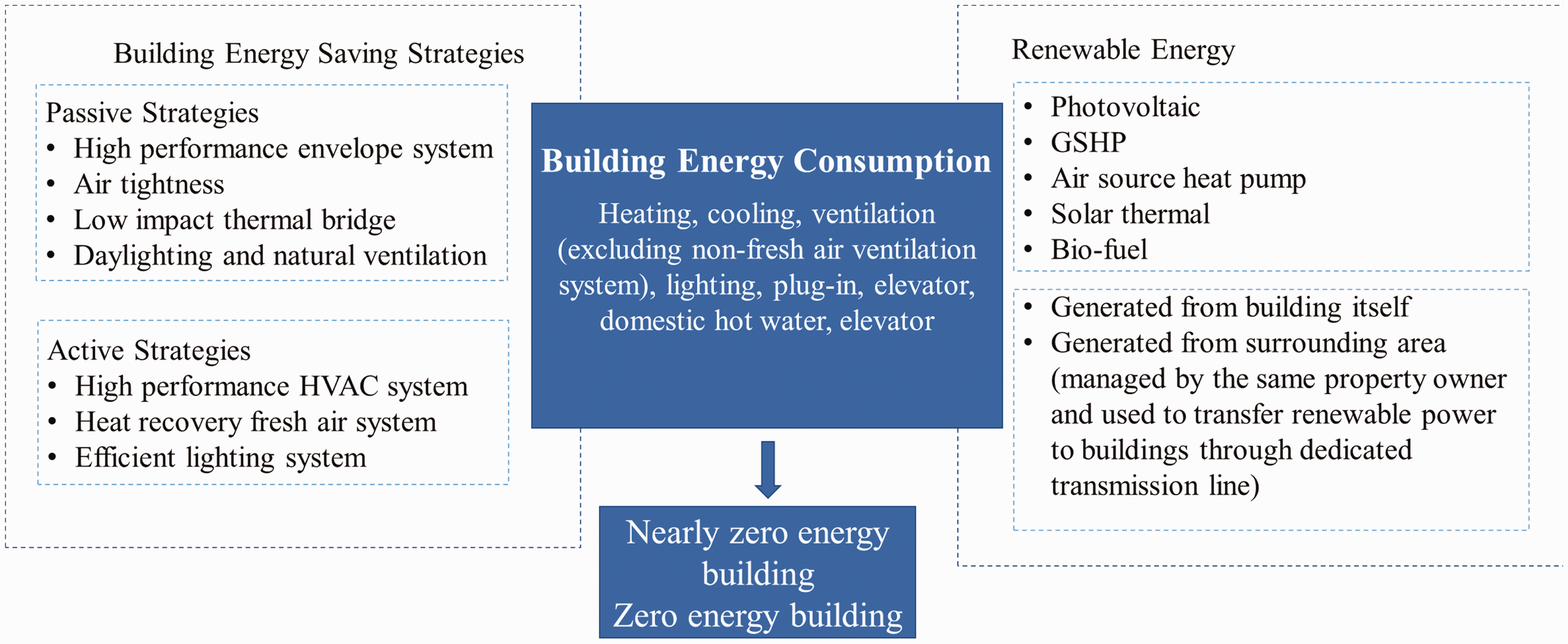
Concept of China technical standard for nearly zero energy building.
Although LZE has set the goal of ZEB, there are no technical measures in the system. Next section showcases the key approaches of CTS-NZEB and the way to apply LZE.
Key technologies
As China has wide regional differences in terms of climate conditions, living habitats and economic levels, the key technologies of ZEB are proposed accordingly. The key technologies can be categorized into three groups: passive technologies, active technologies, and renewable energy. The suitable 25 NZEB cases and 15 LEED buildings are collected to analyze the use ratio of different technologies, which are shown in Figure 4. The 25 NZEBs were selected from the casebook Best Practices of Ultra-Low/Nearly-ZEB in China, which is completed by China Passive Building Alliance (CPBA, 2017). The detailed project information was shown, such as descriptive information, building strategies, and energy consumption data. The 15 LEED projects were selected from LEED project directory (USGBC, 2019), which displays project overview, including involved building strategies.
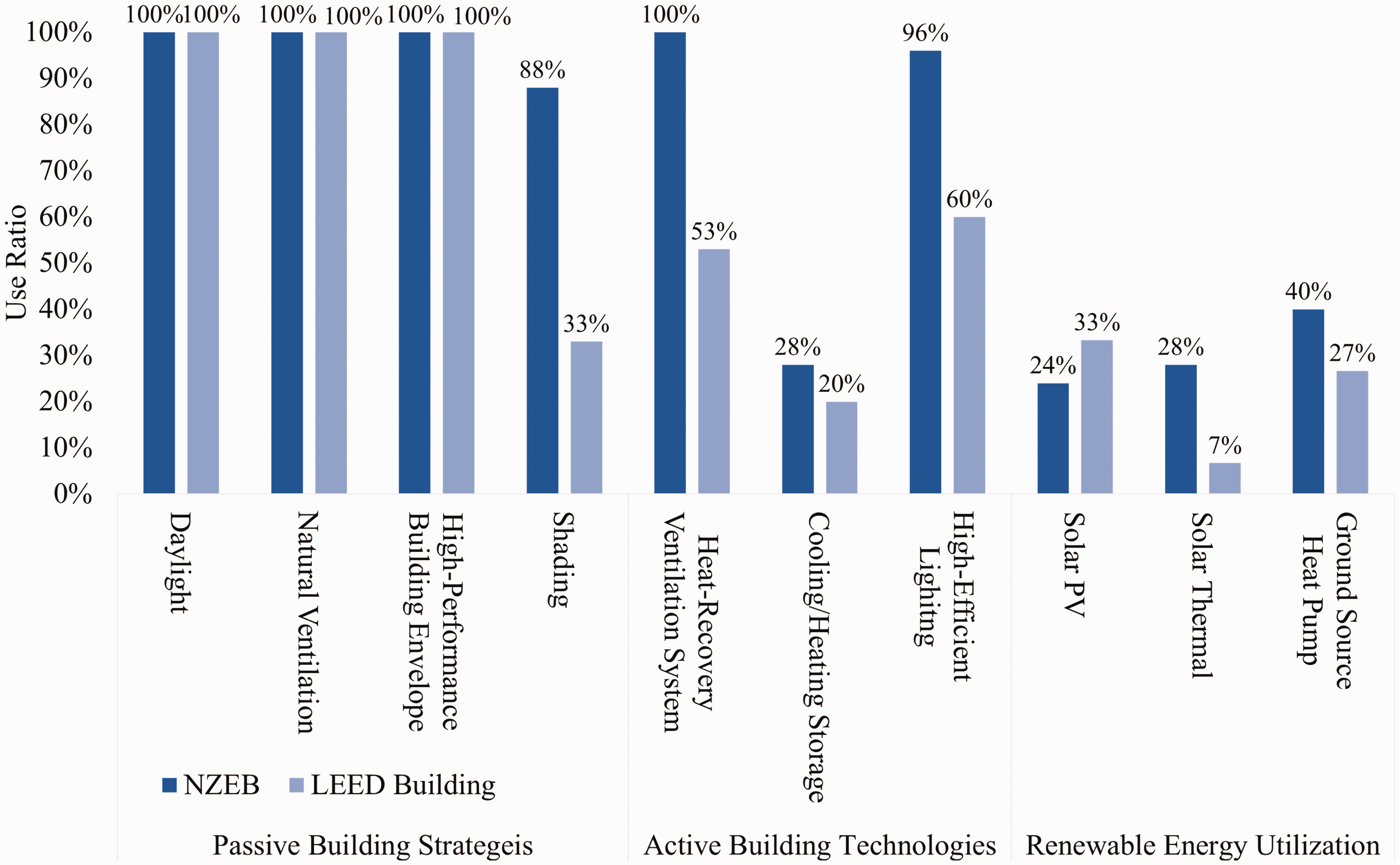
The use ratio of NZEB cases and LEED buildings technologies.
For passive strategies, daylighting and natural ventilation are used in all case buildings. High-performance building envelope is widely adopted; however, NZEBs employ more shading system with 88% of the use ratio. In terms of active technologies, almost all NZEBs applied energy recovery ventilator (ERV) system and high-efficient lighting, with 100% and 96% of use ratio, respectively, while less than 50% of LEED buildings use such technologies. The use ratio of renewable energy of NZEBs and LEED buildings is no more than 40%. Ground source heat pump (GSHP) and solar photovoltaic (PV) system are extensively used in NZEB and LEED buildings. Renewable energy utilization is essential to achieve the nearly zero or zero-energy target.
Passive building strategies
In planning stage of the project building, optimizing the layout and orientation of building by fully considering the local climate condition can create a comfortable building environment (Brembilla et al., 2019). The maximum utilization of daylight and natural ventilation in building layout can reduce the lighting and fresh air load.
Wall and roof
Passive strategies, including building envelope insulation, exterior shading devices, and high-performance windows and doors, are the fundamental ways to improve building energy efficiency in CTS-NZBE. Many projects have proven that thermal transmittance (U-value) and solar heat gain coefficient (SHGC) of building components have significant influences on heat gains and losses, including walls, fenestration, and roofs (Feng et al., 2019). The U-value of a building component is the term to describe the heat transfer rate through a building structure. The lower U-value represents higher thermal insulation. SHGC is the fraction of solar radiation admitted through fenestration, as a result of releasing heat inside rooms. Huo et al. (2017) indicated that the energy saving rate is nearly 70%–90% when the strategies are applied to the baseline model in China. In heating-dominant regions, heating loads reduce by minimizing U-value of the building envelope. In warmer regions, cooling loads reduce by minimizing SHGC as cooling dominates the energy consumption.
CTS-NZEB has strict U-value requirement for NZEBs; however, LZE buildings only prove its energy improvement with ASHRAE 90.1–2016. Figures 5 and 6 show the limits or recommended U-value for walls and roofs of NZEB cases. CTS-NZEB makes a stricter requirement for walls than that of ASHRAE 90.1–2016. There are no such discrepancies for roof.
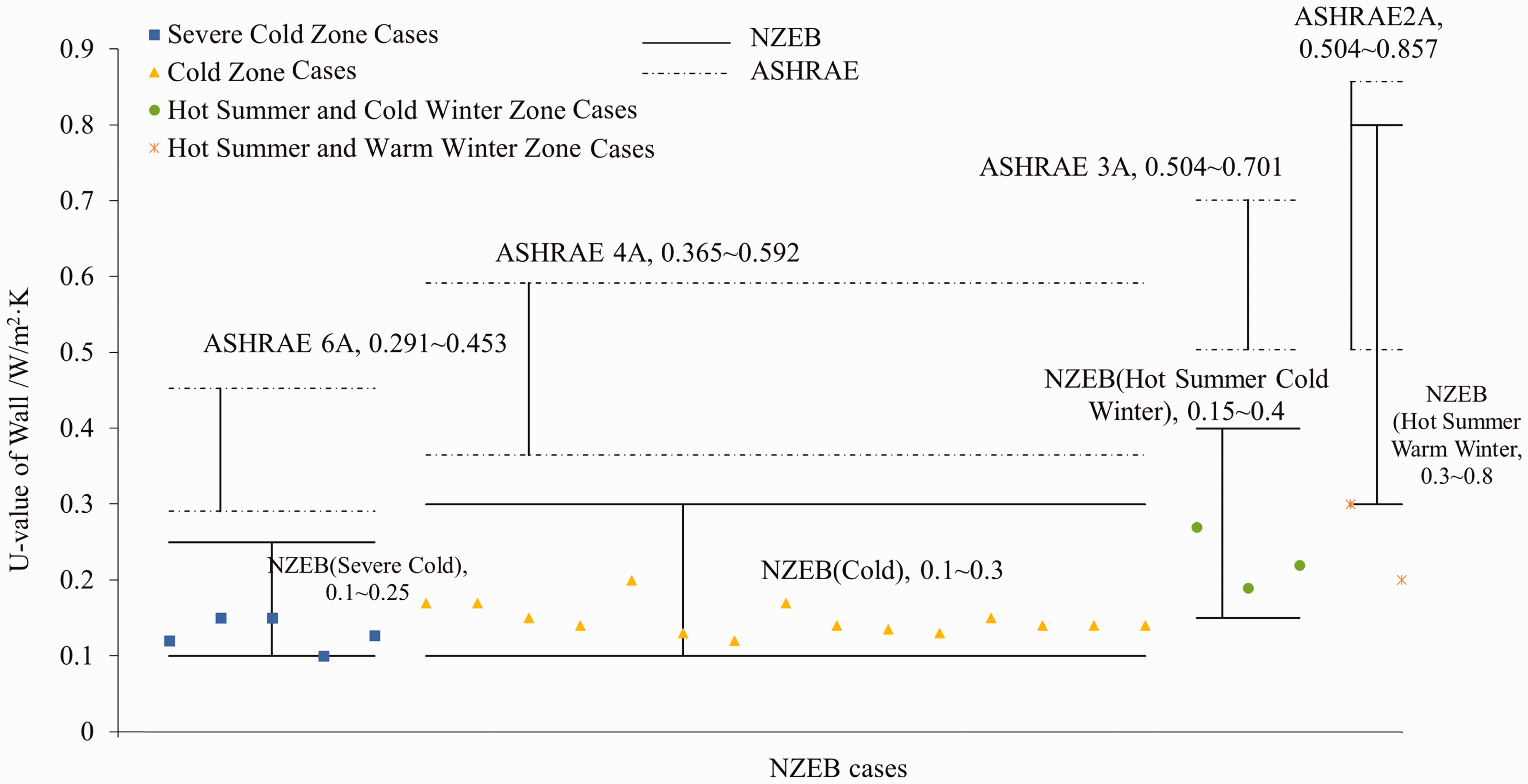
U-value of wall for NZEB cases against CTS-NZEB and ASHRAE 90.1–2016.
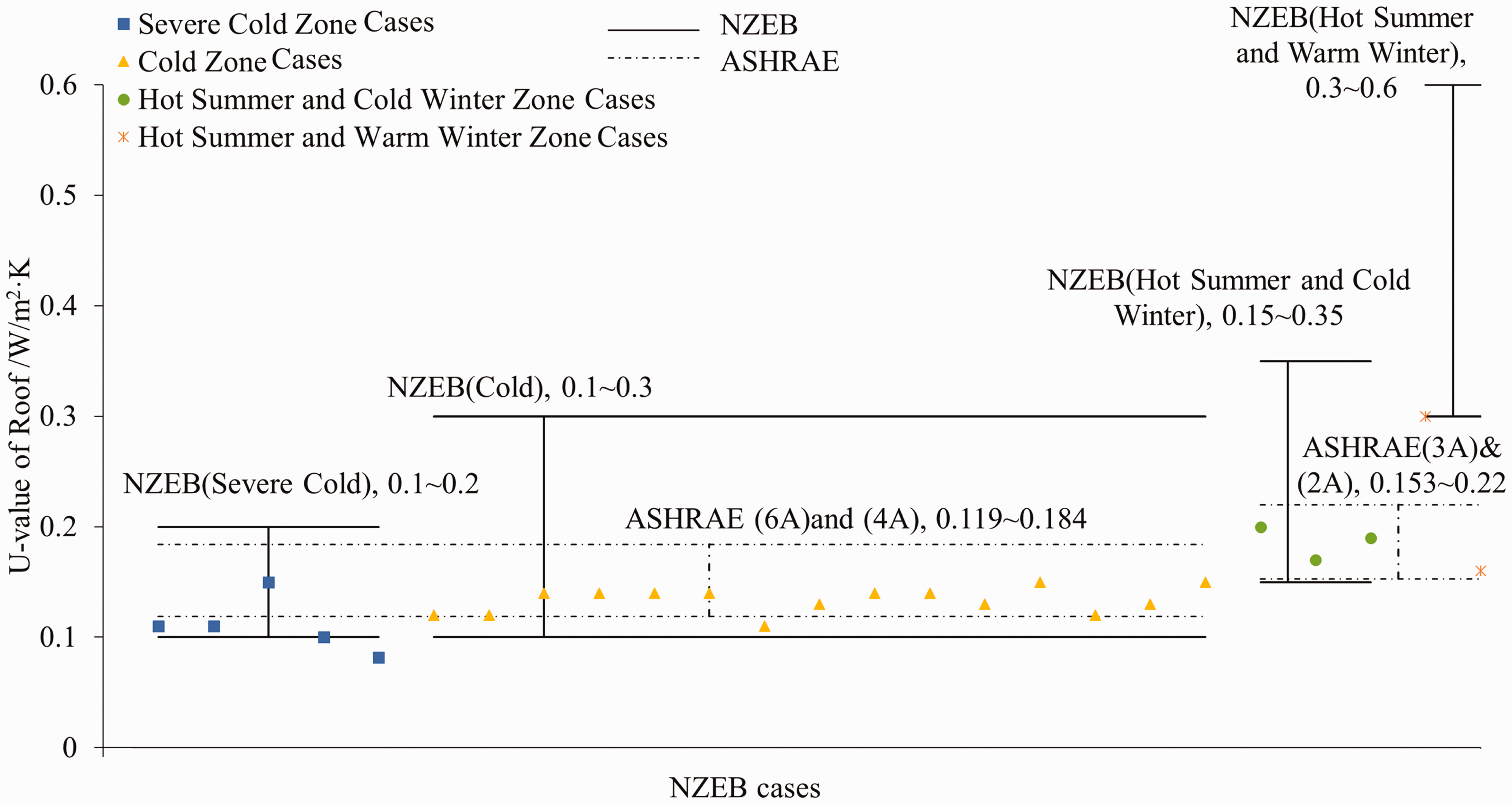
U-value of Roof for NZEB cases against CTS-NZEB and ASHRAE 90.1–2016.
Window and shading
U-value and SHGC are the key factors in window component (Grynning et al., 2013). In heating-dominating areas, glasses with low U-value are recommended to minimize heat losses in winter. While in warmer regions, shading system can reduce heat gains in summer with small SHGC value. Energy consumption of HVAC drops considerably under certain climatic condition and building orientation (Tzempelikos and Athienitis, 2007).
Figure 7 shows U-values of the case project window against CTS-NZEB and ASHRAE 90.1–2016 values in each climate zone. The average U-value of NZEB cases is about 0.9 W/m2·K, much lower than that of ASHRAE 90.1–2016 standards with improvement of 67% in cold regions and 72% in warm regions. Figure 8 shows SHGC values for NZEB cases against CTS-NZEB and ASHRAE 90.1–2016. CTS-NZEB has stricter requirements than that of ASHARE 90.1–2016 in each climate zone.
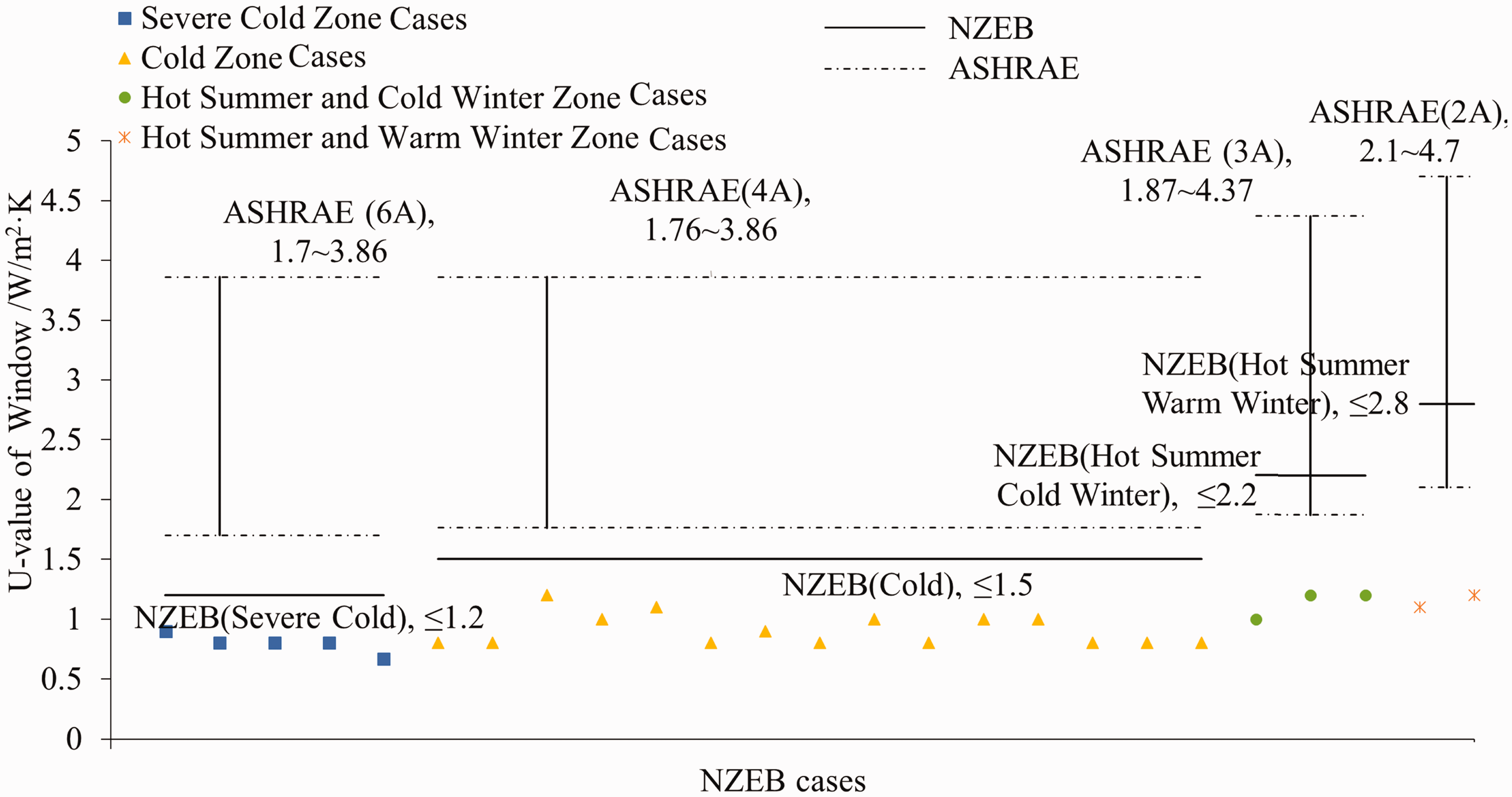
U-Values of Window for NZEB cases against CTS-NZEB and ASHRAE 90.1–2016.
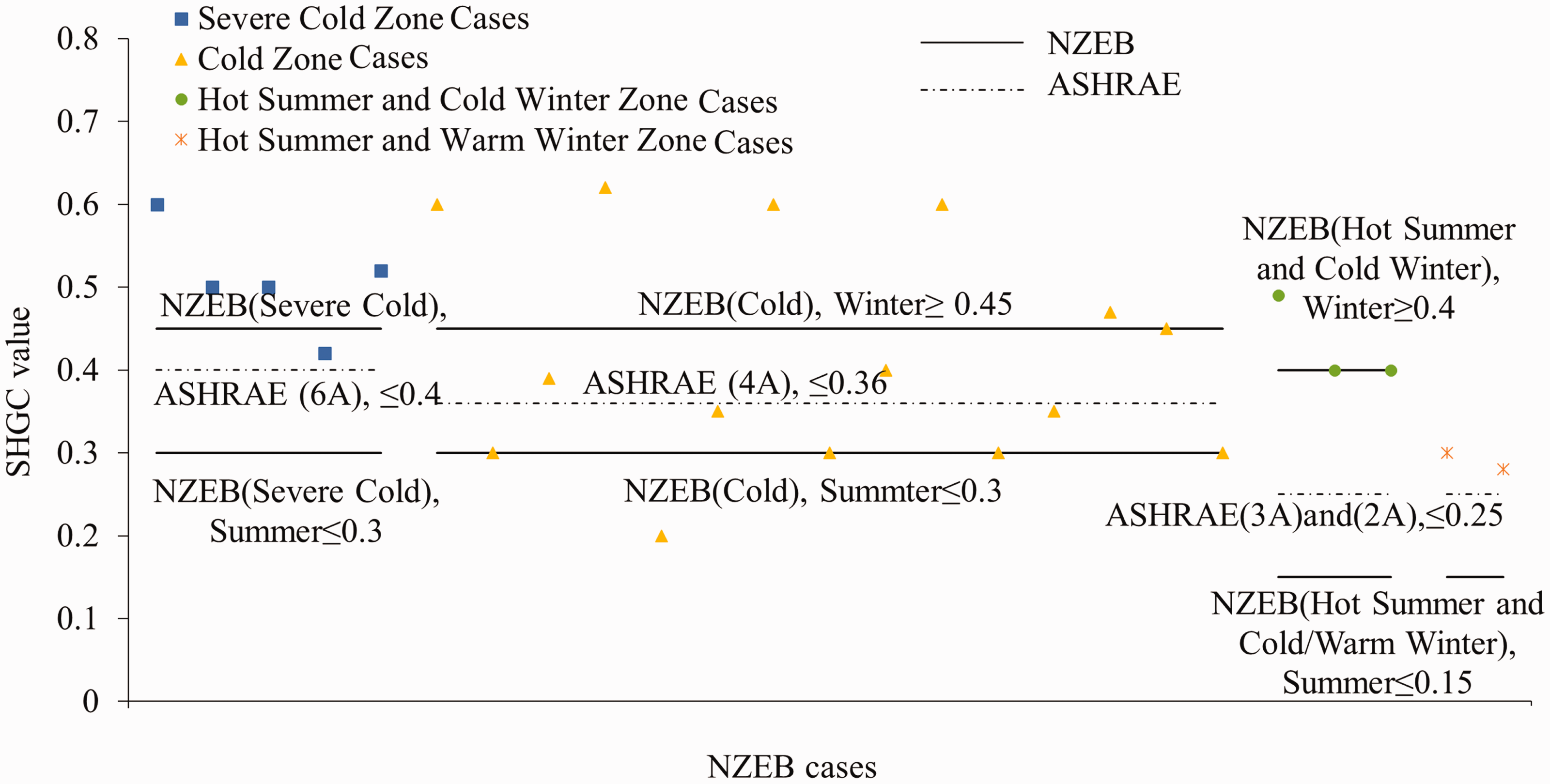
SHGC value of window for NZEB cases against CTS-NZEB and ASHRAE 90.1–2016.
With the advancement of window products in China, high-performance windows are also developed towards lower U-value and higher air tightness. This would be definitely beneficial for the projects to pursue LZE certification by considering applying CTS-NZEB at design stage in China.
Active strategies
Efficiency of HVAC system
HVAC system consumes approximately 45%–50% of building energy in developed countries (Pérez-Lombard et al., 2008). DOE (2106) found that improving HVAC energy efficiency can achieve 35% of the energy saving costs. CTS-NZEB sets recommended efficiency for different HVAC equipment and applies the same to LZE by ASHRAE 90.1–2016, as shown in Figure 9 and Table 2. Taking the boiler as an example, the minimum efficiency in CTS-NZEB is 92%, which is higher than that of 79%–82% stated in AHSREA 90.1–2016. In general, the requirements of CTS-NZEB are more stringent than ASHRAE 90.1–2016. The strict index of CTS-NZEB can be considered when selecting chiller and boiler for the project buildings pursuing LZE certification.
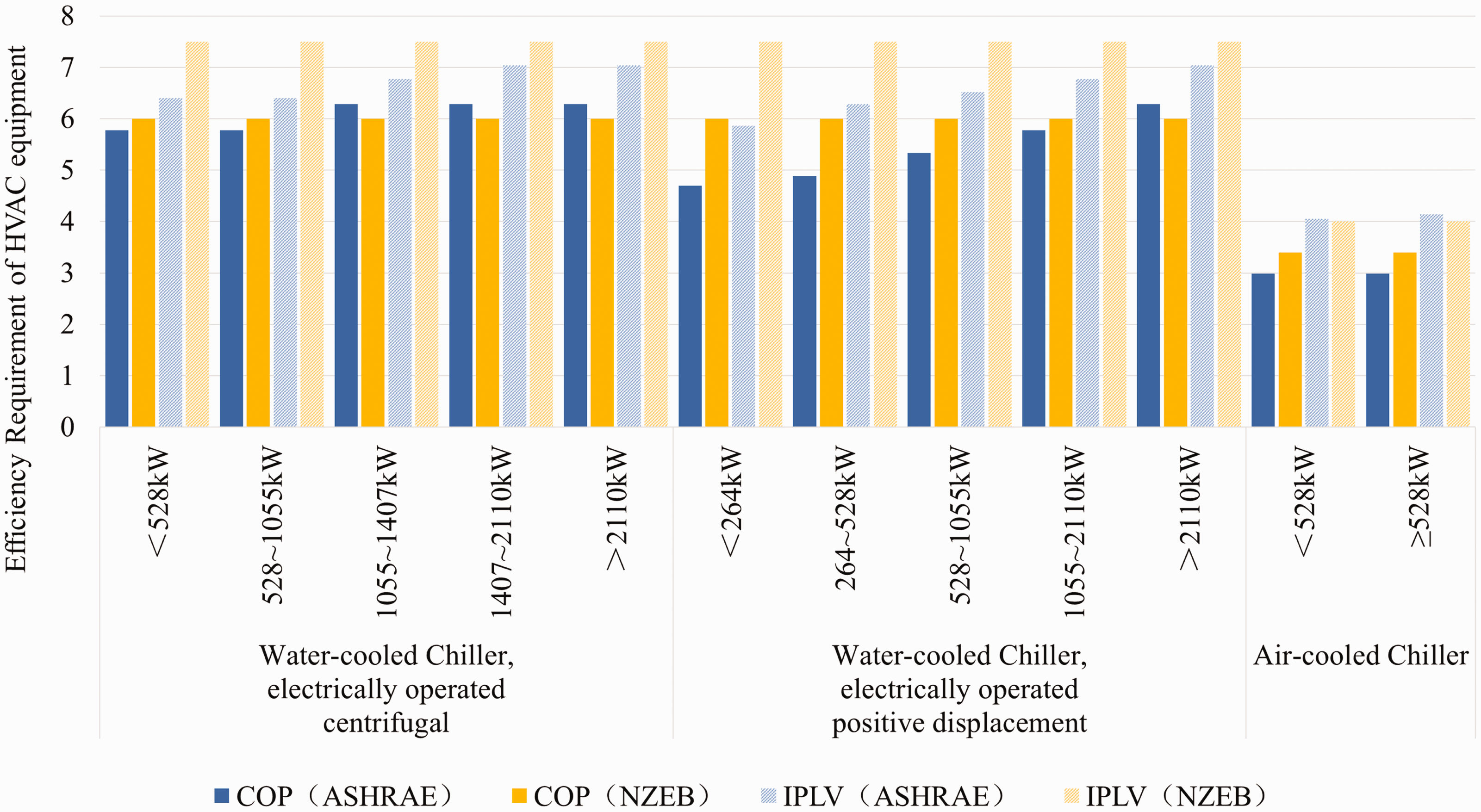
Efficiency requirement of chiller in CTS-NZEB and ASHRAE 90.1–2016.
Efficiency requirement of HVAC equipment in CTS-NZEB and ASHRAE 90.1.
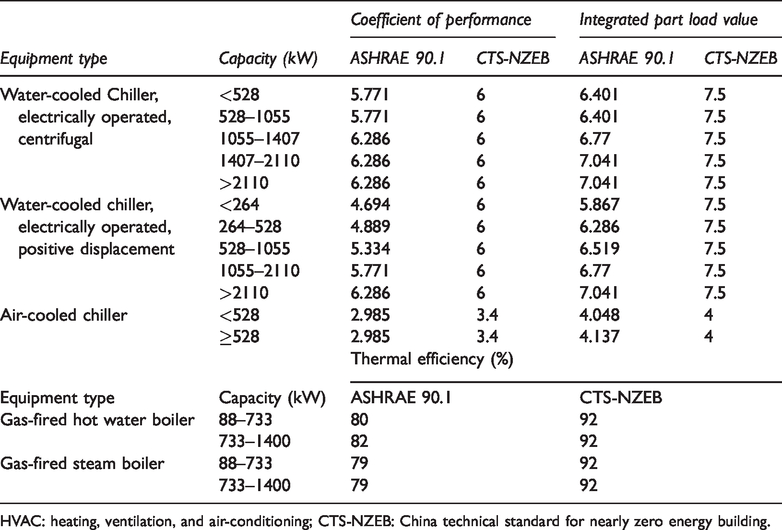
HVAC: heating, ventilation, and air-conditioning; CTS-NZEB: China technical standard for nearly zero energy building.
Energy recovery ventilator
People spend about 90% of their time indoors (IWBI, 2018). Without sufficient ventilation, NZEBs’ higher building airtightness can induce the accumulation of polluted air and the growth of mold (Al Horr et al., 2016; Xu et al., 2018a; Zhang and Yi, 2017). The ERV provides fresh air, at the same time, mitigates the heating or cooling load of ventilation by recovering the return air energy in NZEBs (Frontczak and Wargocki, 2011). CTS-NZEB sets the requirements of the minimal fresh air ventilation rates and energy recovery efficiency (MOHURD, 2019).
In general, ERV is more effective, both technically and economically, in severe cold and cold climate regions than warmer areas. CTS-NZEB sets the minimum energy efficiency of ERV unit. There are no specific guidelines in LZE for ERV system, nor in LEED rating systems. Therefore, the adaptability of ERV system in CTS-NZEB should be properly evaluated in LZE.
Air tightness
People have paid more attention to the research of building air tightness due to better indoor environment quality and less energy consumption (Jordon et al., 1963; Motuziene and Juodis, 2010; Silberstein and Hens, 1996; Younes et al., 2012).
Because of the low-energy nature of NZEBs, the building airtightness has a greater impact on its energy consumption from infiltration compared with the traditional building. ERV usually provides fresh air for occupants, and it is necessary to set limits on its fan efficiency to balance the total energy consumption. Equivalent COP of mechanical ventilation has been introduced to represent the overall energy consumption level for NZEBs in different climate zones (Liu et al., 2019c). Overall, good building airtightness can reduce energy consumption of ventilation system in different climate zones.
CTS-NZEB requires that airtightness of residential buildings in severe cold and cold regions is 0.6 ACH under pressure difference of ±50 Pascal (N50), while the airtightness of public buildings is no more than 1.0 ACH (MOHURD, 2019). For buildings located in warmer regions, the airtightness level is 1.0 ACH. There is no index requirement of building airtightness in LZE rating system, while building envelope commissioning (BECx) is needed in LEED BD+C to achieve better building airtightness(NIBS, 2012). In the US project buildings, pressurization testing of the whole-building is conducted in accordance with American Society for Testing and Materials (ASTM) E779 or ASTM E1827 (ASTM International, 2010, 2017).
Thermal bridge
When the indoor temperature is lower than moisture condensation temperature, the moisture condensation may appear on the surface of envelope in weak thermal bridge area, which is associated with allergic reactions and lung diseases such as asthma (IWBI, 2018). Asdrubali et al. (2012) found that nearly 10% of heat loss was affected by thermal bridge in wintertime, and Theodosiou and Papadopoulos (2008) found that more than 30% of the heat loss was resulted from thermal bridge in Greek.
In NZEBs, thermal bridges can be classified and summarized into two types, one is created by structural components within the building envelope and the other is created by the connectors such as connections between external walls and roofs, foundations and floors, balconies, etc. In the research, simulation methods are effectively used and compared to analyze the impact of thermal bridge on building energy consumption (Ge and Baba, 2015).
In CTS-NZEB, it demonstrates the basic principles and recommended drawing nodes of avoiding thermal bridge. In LZE rating system, there are no clear requirements for thermal bridge, but relevant issues are proposed in BECx. The thermal bridges should be minimized to the greatest extent during design and construction stage (NIBS, 2012; USGBC, 2013). In this case, CTS-NZEB adopts low-impact thermal bridge to reduce the cooling and heating load of buildings, which is applicable to the LZE rating system.
Renewable energy
The renewable energy can minimize the use of tradition energy sources, and it plays a critical role in reducing primary energy consumption. To achieve the ZEB target, it has great potential to develop renewable energy.
Boundary of renewable energy
The renewable energy boundary of LZE rating system is similar to that of CTS-NZEB, but there are still certain differences, as shown in Figure 10.
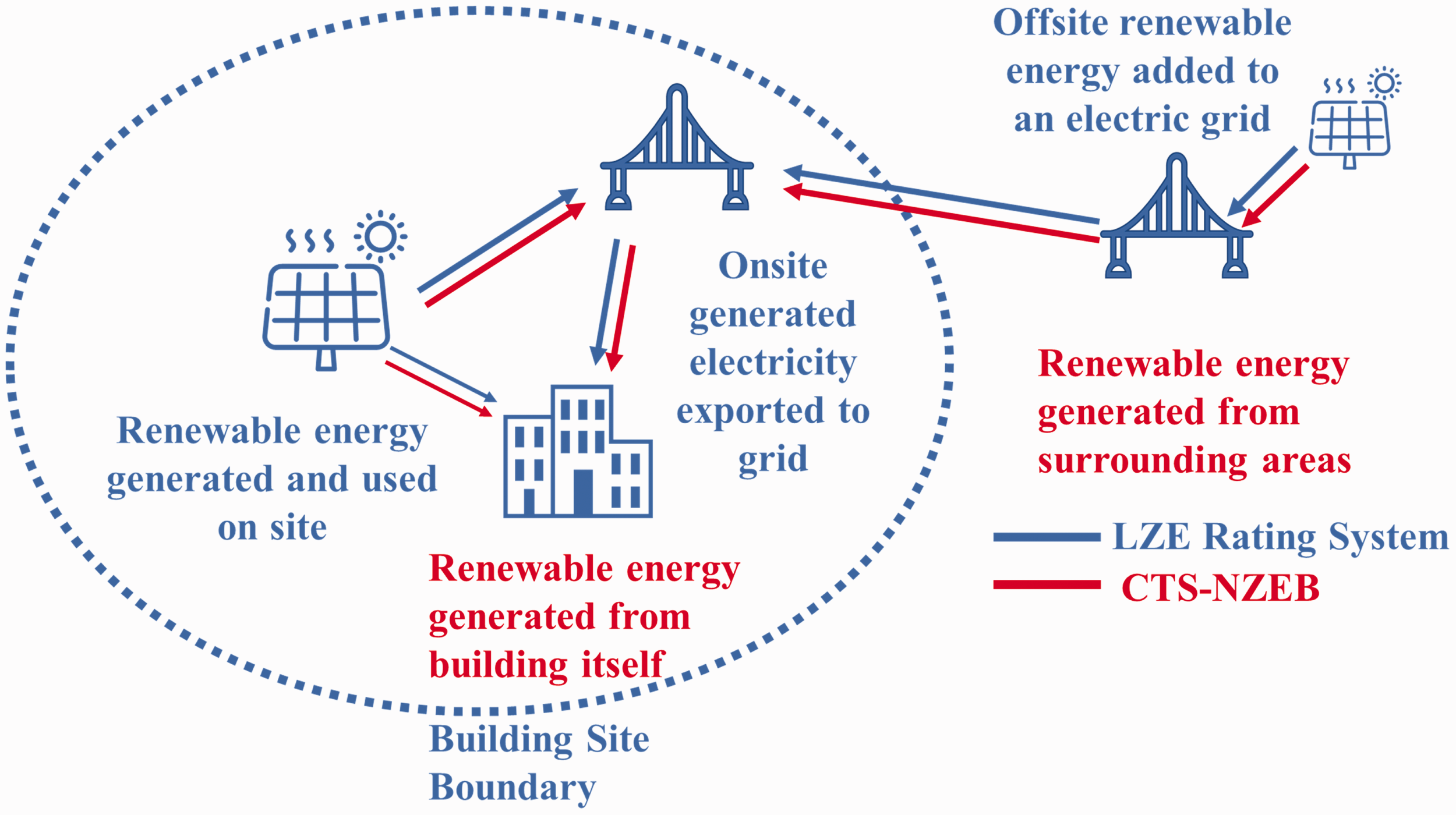
Renewable energy boundary of LZE rating system and CTS-NZEB.
In LZE rating system, renewable energy can be in the form of on-site renewable energy generation and off-site renewable energy procurement. In CTS-NZEB, other than above, renewable energy can be obtained from surrounding area, provided that it is managed by the same owner and the generated renewable power is delivered to buildings through dedicated transmission lines.
Renewable energy
In Figure 4, both LEED buildings and NZEBs adopt renewable energy. The proportion of solar PV, solar thermal, and GSHP systems is 24%, 28%, and 40%, respectively. In CTS-NZEB, the production requirement for renewable energy is no less than 10%. Applicable renewable energy source in CTS-NZEB includes solar thermal system, PV system, GSHP, air source heat pump (ASHP), bio-fuel, and wind power, and the first four sources are extensively utilized in NZEBs (Liu et al., 2019a). However, PV is the ultimate source in terms of net-zero energy.
For PV applications, improving production efficiency, reducing cost and energy storage are the major factors to be considered in the future (Gul et al., 2016).
Other renewable energy, for example, wind and tidal energies, can be adopted in NZEBs in certain area to reduce electricity consumption and costs (Heo et al., 2016). However, it is not emphasized in this paper due to its weak applicability in China.
LZE rating system does not specify requirements of renewable energy production rate but restrict the renewable energy sources, including PV, solar thermal, wind, biofuel, geothermal, and low-impact hydroelectricity. The ground source or air source energy combined with vapor compression cycles is not acceptable in LZE rating system. Hence, buildings equipped with GSHP or ASHP are not applicable for LZE rating system.
Application analysis
This chapter summarizes the applications of “LZE and CTS-NZEB” and “Key Technologies” in terms of definition, applicable scope, prerequisite, key technologies by case studies, and key technical index analysis. Moreover, from the perspective of economic analysis, the incremental costs of input will be balanced with local finical subsidies and building material development.
Technical analysis
Table 3 summarizes the key technologies mentioned in “LZE and CTS-NZEB” and “Key Technologies”, and then compares CTS-NZEB and LZE rating system of ZEBs . CTS-NZEB provides detailed guidelines and index requirements for NZEB and ZEB at design, construction, and operation phase. LZE rating system requires 12 consecutive months of operational data to prove that the project must be LEED certified or registered under LEED BD+C or LEED O + M rating system. Second, CTS-NZEB and LZE rating system define the calculation scope, evaluation basis, boundary, and renewable energy sources, but there are differences among them. Third, the scope of building energy consumption in CTS-NZEB is smaller than that of LZE rating system. However, the acceptable renewable energy resources scope in CTS-NZEB is wider than that of LEZ rating system. ASHP and GSHP are not considered as renewable energy in LEZ rating system.
Comparison of CTS-NZEB and LZE rating system.
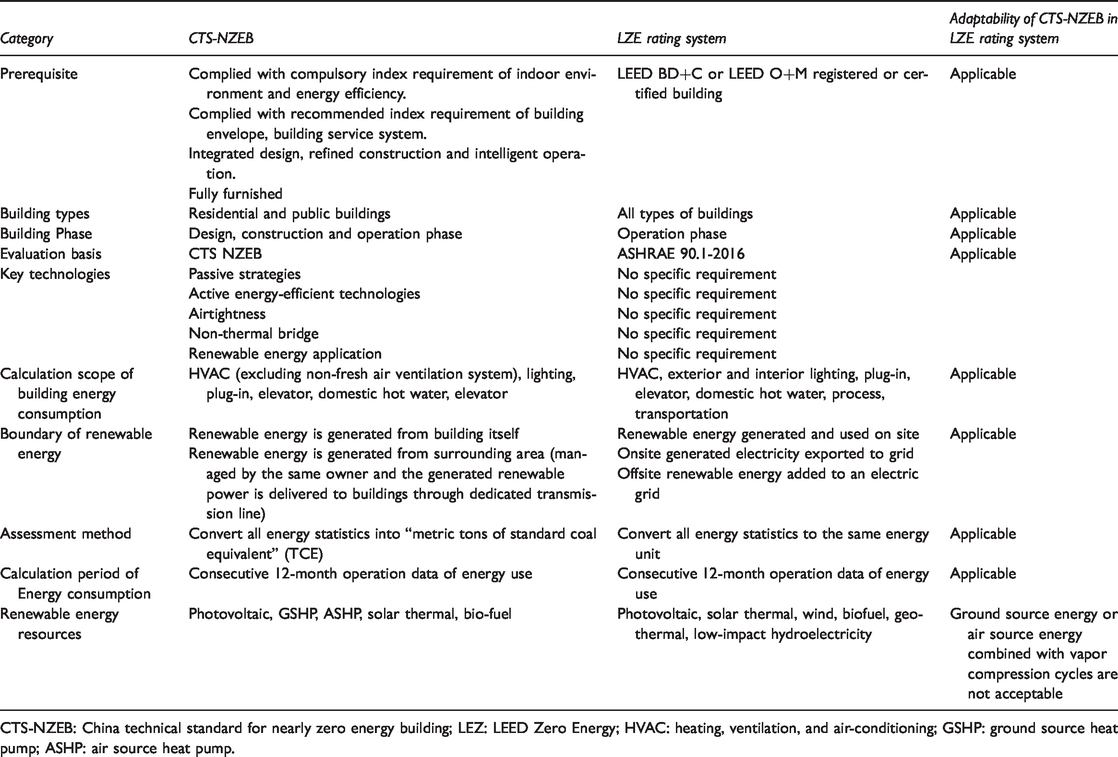
CTS-NZEB: China technical standard for nearly zero energy building; LEZ: LEED Zero Energy; HVAC: heating, ventilation, and air-conditioning; GSHP: ground source heat pump; ASHP: air source heat pump.
Economic analysis
It is obvious that the energy performance of NZEBs have made great improvement compared with traditional buildings of the basic energy saving standard. In this case, the relationship between incremental costs and energy performance should be balanced (Zhu et al., 2009).
Figures 11 and 12 show the investigations on incremental costs of 13 NZEBs for residential and commercial buildings in different climate zones of China. The major factors of incremental costs include passive windows, insulation of wall and roof, exterior shading, ERV system, renewable energy utilizations, air tightness, and low thermal bridge approaches. As shown in the following two figures, the incremental costs are compared by the local energy saving policies and CTS-NZEB requirements. NZEBs indicate that the incremental costs are 450–1304 CNY/m2, and the passive strategies costs take up nearly two-thirds of the total costs, of which the costs of windows account for the highest percentage of 35.5%, 267 CNY/m2. With the development of building material market, the incremental costs can be changed.
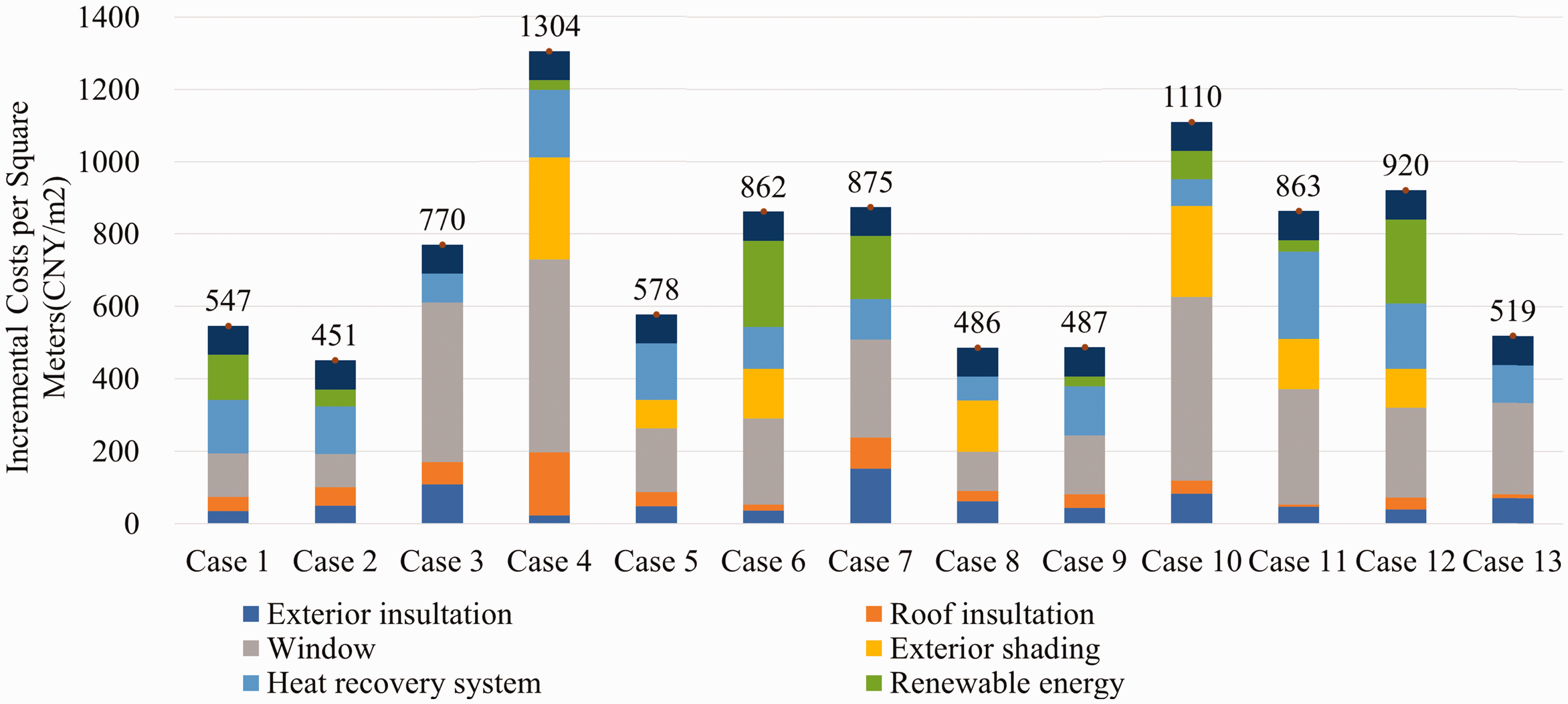
Incremental costs of 13 NZEBs in China.
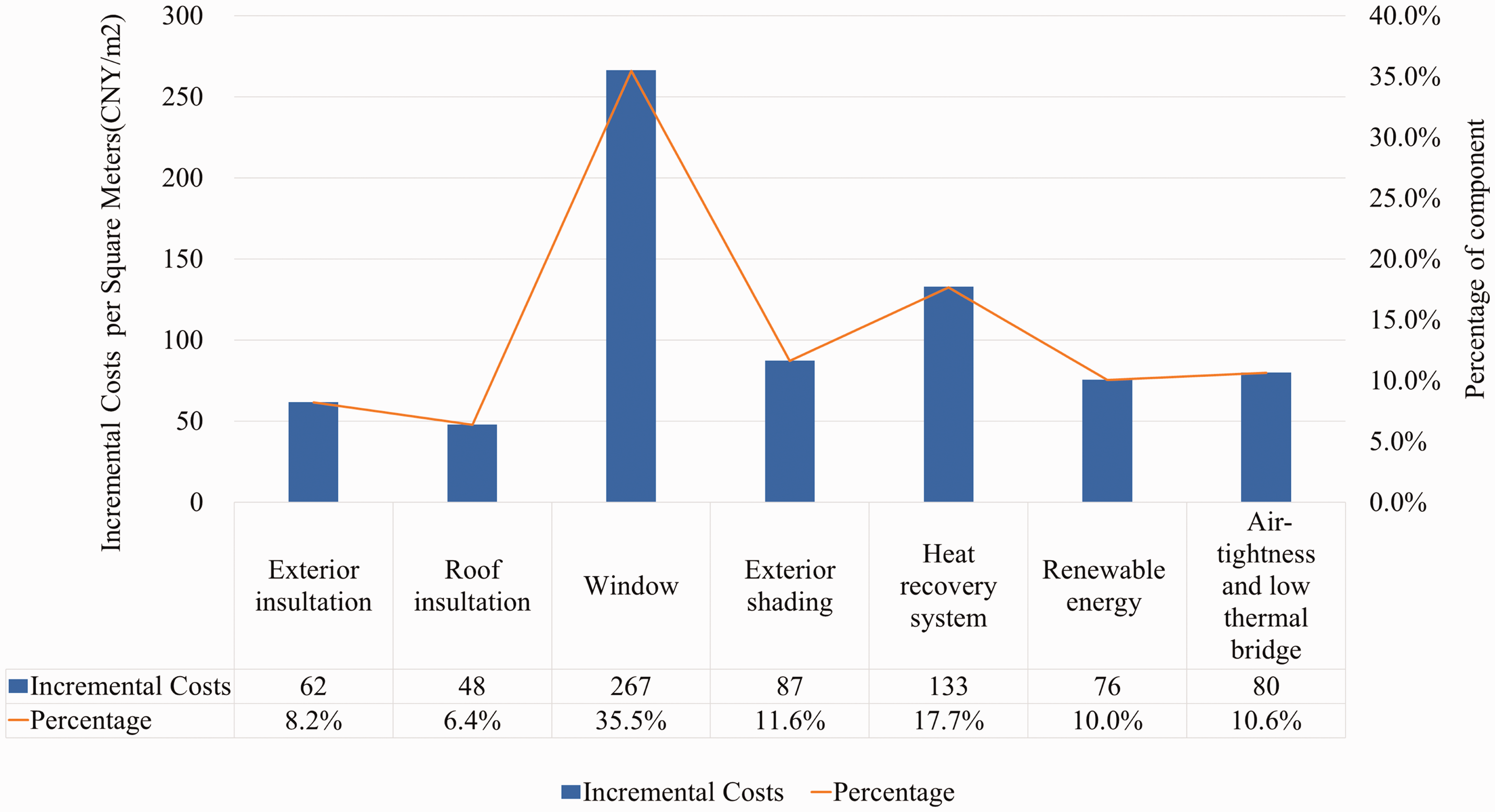
Percentages of component incremental costs of NZEBs in China.
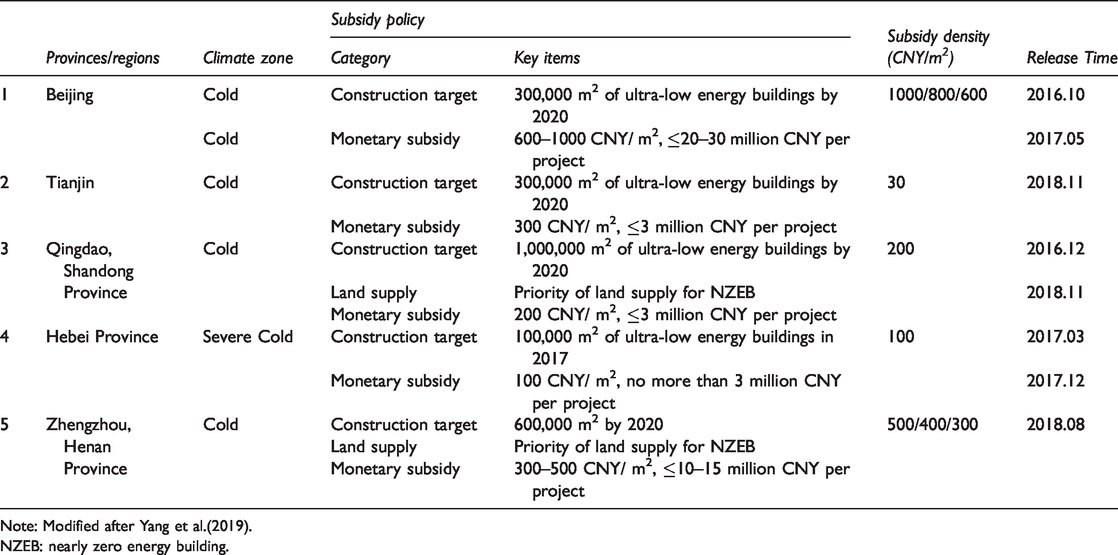
To cope with the global climate change, Chinese government not only adopted a series of incentives but also introduced subsidy policies to support the real-estate developers of NZEB (Liu et al., 2019d). Table 4 summarizes the policies and financial subsidies in China.
Policies and Subsidies of NZEBs in China.
Note: Modified after Yang et al.(2019).
NZEB: nearly zero energy building.
Compared with the average incremental cost of 752 RMB/m2, the subsidies of 100–1000 CNY/m2 will help to improve market confidence and attract investors. With the development of building markets, the cost gap between NZEBs and traditional buildings can be narrowed.
For LZE projects in China that also meet CTS-NZEB in the future, the financial policies are beneficial to the investors and developers. The incremental costs of input can be balanced by local finical subsidies and building material development. China will accelerate the progress of ZEBs through NZEB technologies and financial subsidies.
Discussion and conclusion
At present, both China and the US have planned the pathway to achieve target of ZEB in the future by formulating and implementing ZEB standards and guides. The US has released LZE rating system, which is developed based on LEED rating system. China has established CTS-NZEB, which is a further step of building energy efficiency in China and gives definition, index requirement, and strategies for ZEB. In order to explore the possibilities of LZE for Chinese buildings, the adaptability of key technologies in CTS-NZEB to LZE buildings are analyzed from comparisons of standards and NZEBs cases.
The adaptability of key strategies can be concluded as followings:
In the passive strategies, the utilization of natural ventilation and daylight are extensively applied in both Chinese NZEBs and LEED buildings to energy demands at early planning stage. The low U-value insulation system of wall and roof, exterior shading, high-performance window, air tightness, and low-impact thermal bridge are adopted in NZEBs. Compared with ASHRAE 90.1-2016, CTS-NZEB is stricter in the index of U-value, SHGC value of building envelop system, which can ensure the enhanced thermal insulation. Through the research on the relationship between air tightness and energy consumption of HVAC system, good air tightness plays an important role in reducing energy consumption. Low-impact thermal bridge is also widely used in structural and components and connectors. The passive strategies mentioned above can be considered as a priority to reduce building energy consumption. High-performance HVAC system and ERV system are the major effective strategies in NZEBs. Compared with ASHRAE 90.1-2016, project buildings pursuing LZE certification consider the strict index of equipment energy efficiency of CTS-NZEB while choosing chillers and boilers, which can reduce operating consumption and costs. CTS-NZEB also suggests that ERV system should be equipped with the sensible heat recovery rate of 75% and total heat recovery rate of 70%. The adaptability of heat recovery ventilation system in different climate zones should be evaluated properly in LZE rating system, as the research results show that ERV unit is more effective in severe cold and cold climate regions than warmer areas. Renewable energy plays the key role in achieving ZEB goal. CTS-NZEB and LZE rating system, renewable energy can be in the form of on-site renewable energy generation and off-site renewable energy procurement. By comparing renewable energy requirement of CTS-NZEB and LZE rating system, the latter one has more restrictions on renewable energy and cannot accept the ground source or air source energy combined with vapor compression cycles. Hence, buildings equipped with GSHP or ASHP are not applicable for LZE rating system.
The LZE rating system and CTS-NZEB are compared in terms of prerequisite, renewable energy resources, application of building phases, etc. Basically, both CTS-NZEB and LZE rating system propose prerequisites that CTS-NZEB has compulsory index requirement of energy efficiency and indoor environment quality and LZE buildings must be registered or certified under LEED BD+C or LEED O + M rating system. The CTS-NZEB can be applied at design, construction, and operation stages; however, LZE only focuses on operation phase. Furthermore, the accepted renewable energy resources in LZE is less than that of CTS-NZEB, among which the ASHP and GSHP are not considered as renewable energy in LZE rating system. Although differences exist between CTS-NZEB and LZE rating system, the CTS-NZEB provides detailed guidelines and strategies for ZEB. The strategies and technical index of CTS-NZEB can be adopted comprehensively in LZE rating system for Chinese buildings except for renewable energy resources.
From the view of economic application, the incremental costs are analyzed through NZEB cases qualitatively and quantitatively with the average incremental cost of 752 CNY/m2. In recent years, financial subsidies and policies are implemented to support the development of NZEBs. With the development of economy and society, markets of building materials can be changed. NZEBs will be properly applied in LZE rating system, and it will be supported through local finical policies.
The USGBC will have a vigorous development in China based on LEED-certified buildings. To further adopt zero-energy consumption, LZE should establish the detailed and integrated system based on the current guide step by step and specify the recommended strategies. The CTS-NZEB can provide a detailed and appropriate guideline for Chinese buildings that would like to purse LZE certification so far. With the accelerated progress of ZEB in China, the construction of NZEBs and ZEBs are promoted and more and more Chinese managerial experience is accumulated under the guidelines of CTS-NZEB. The integrated process and strict index requirements in CTS-NZEB can ensure better implementation of ZEB in the future. For LZE rating system, rigorous requirements need to be clearly stated, and the existing and rural buildings renovation should be strengthened. At present, most of technologies and standards focus on new constructions, but there is still a huge amount of existing and rural buildings in China. Overall, CTS-NZEB specifies practicable measures for buildings pursing LZE certification and guarantees a better implementation to realize ZEB target.
Footnotes
Declaration of conflicting interests
The author(s) declared no potential conflicts of interest with respect to the research, authorship, and/or publication of this article.
Funding
The author(s) disclosed receipt of the following financial support for the research, authorship, and/or publication of this article: This work was funded by the National Plan 13th Five of Research of Commercial Building Technology and Demonstration in China (Grant No. 2017YFC0702610).
