




Abstract
With the principal aim of understanding the element variations in Carboniferous coal from eastern Yunnan province of China, the concentration of 48 elements in 16 coal samples were determined. It was found that, (1) Se (0.76–5.13 mg/kg), Mo (0.29–46.71 mg/kg), As (0.96–25.38 mg/kg), Cr (3.89–1152 mg/kg), Li (2.92–109.00 mg/kg), and U (0.09–39.23 mg/kg) in the studied coal samples are 2–43 times more than those of the upper continental crust (UCC). (2) Arithmetic mean of Cr, Sc, Mo, As, Ga, U, V, and Cu are higher than those in China coals average, while Na, P, Al, Ti, Ba, Bi, Tl, and Sr are lower. The average content of Cr in the studied coals is 352 mg/kg, which is 22.49, 20.37, and 23.09 times higher than that of China coals average, World hard coals and USA coals average, respectively. (3) In terms of the correlation between element concentration and ash yield, all the elements were accordingly divided into five groups. In addition, three coal samples (No. KM50, KM64 and LM61) were found to have relatively high Cr concentration as 1055, 1072, and 1152, respectively. Analysis of these three coal samples shows an M-type REE enrichment pattern (UCC normalized), with positive Eu abnormlies of 2.96, 2.52, and 3.96, respectively. This pattern is similar to that in Carboniferous ophiolite and primitive mantle, suggesting that they may have the same source of matter. High Cr coal has a potential harmful impact on the environment and human beings during the coal combustion and utilization. Besides, Se and Mo are 2.12 and 8.65 mg/kg on average, respectively, which are 7.31 and 5.08 times more than those in Chinese soil average, thus Carboniferous coal with low Cr-As but high Se-Mo should be considered as potential fertilizer for local crops.
Introduction
Before comprehensive evaluation and utilization of coal resources, understanding the concentration and enrichment patterns of various elements in coal is a prerequisite, which not only can create more effective ways for reasonable utilization and by-products recovery, but also provide basic data for environmental impacts evaluation (Hatch and Swanson, 1977; Singh et al., 2016). Eastern Yunnan and western Guizhou province are both important coal bases in South China (Figure 1(a) and (b)), and the vast majority of the coal resources in this area are Late Permian coal, with only minor of Carboniferous coal and Neogene lignite (Xu, 2003). Compared with Carboniferous coal, Late Permian coal and Neogene lignite have attracted more attention (Cheng et al., 2013, 2014, 2018; Dai et al., 2012; Hu et al., 2009; Long et al., 2018; Luo and Zhang, 2013; Ren et al., 2006; Sun et al., 2010, 2014; Yang et al., 2016), due to much more minable coal seams, and resources reserves. Actually, the Lower Carboniferous coal-bearing strata in South China plate is relatively poor, with only one thin minable coal seam in the area of Zhaotong-Daguan (eastern Yunnan province), Weining (Guizhou province) and nearby areas (Xu, 2003). The local residents still use these Carboniferous coal for heating and for cooking. In fact, these areas of South China are located in a typical karst mountainous area, where the ecology is fragile but the groundwater system is widely developed, thus clean and efficient use of coal resources is especially important (Jiang et al., 2006; Zhang et al., 1999). Still, it is rare report about concentration and enrichment patterns of element in these Carboniferous coal.
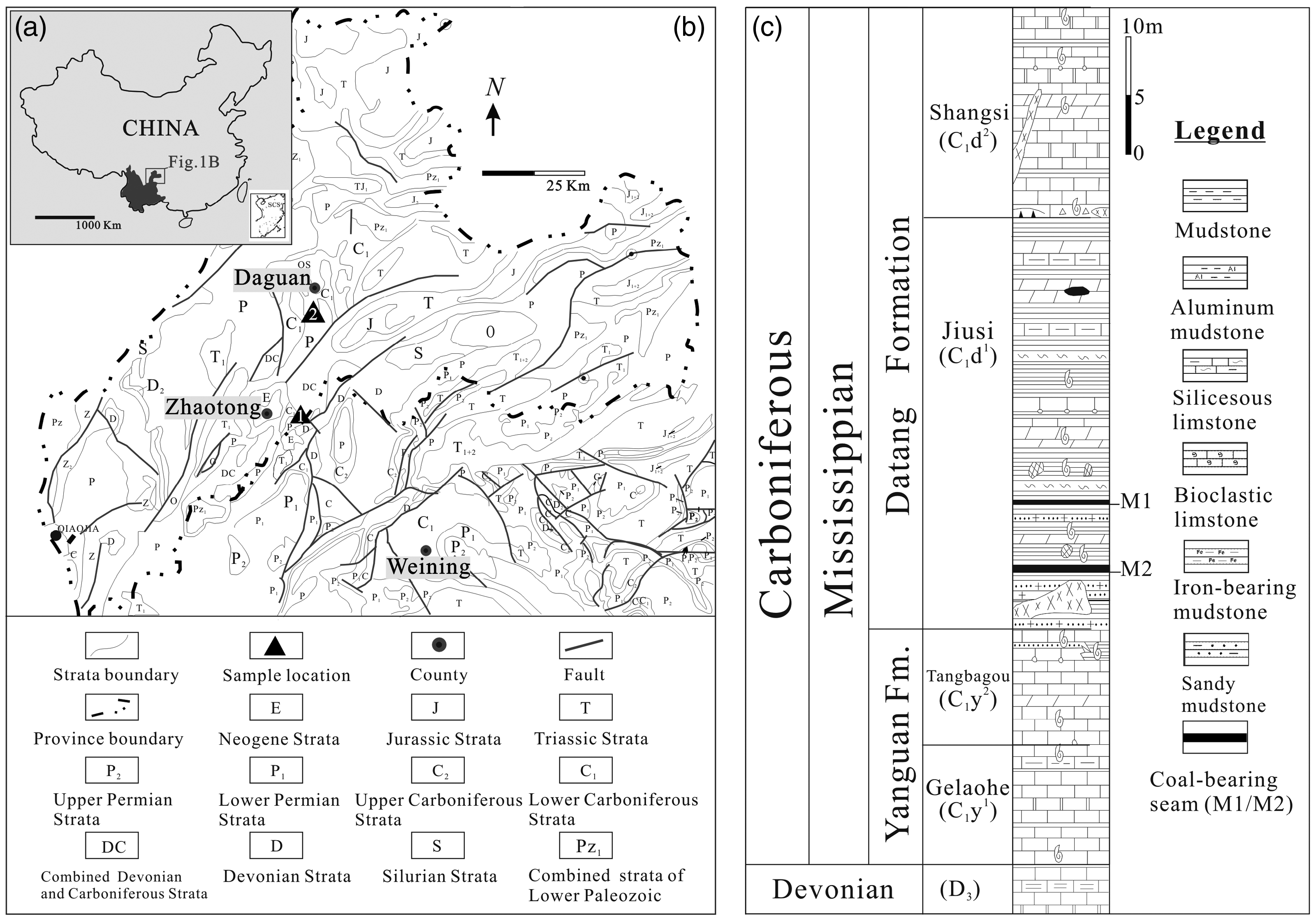
(a) Location of the Yunnan province within China. SCS: South China Sea. 1 and 2 in the black triangle indicate the sample location from Aduoluo coalfield (Yuwan Town, Daguan County) and Shuijin coalfield (Zhaoyang District, Zhaotong County) of eastern Yunnan Province, South China. (b) Simplified geologic map of eastern Yunnan and western Guizhou province, modified from Guizhou (1972). (c) Stratigraphy sequence of lower Carboniferous of eastern Yunnan province, South China, and the location of the coal-bearing seam.
As has been revealed by a number of previous literatures, eastern Yunnan province is a typical region where endemic diseases caused by elements such as arsenic and fluorine have been raging for many years (Figure 1(a); Li et al., 2015; Lyth, 1946; Zhao et al., 1998). Since this region is affected by subtropical climate of warm plateau monsoon with an average annual temperature of 11–18°C (Cheng and Xie, 2008), in harvest season local residents have to use Carboniferous coal as a cheap fuel to roast and dehydrate a large amount of freshly harvested foodstuffs, including chili and corn (Li et al., 2015). The roasted foodstuffs’ pollution has significant impact on fluorosis (Li et al., 2015; Luo et al., 2011). However, during the coal consumption and utilization, it is not clear about whether the concentration of other elements is harmful to human being or not.
Thus, Lower Carboniferous coal samples were collected from eastern Yunnan province, and the concentration of 48 elements of these samples was determined. Based on the test data, this study analyzed the average abundance and enrichment of these trace elements in coal, and revealed hazardous elements that may be harmful to the environment, as well as useful elements with potential use value. Furthermore, the geological origins and controlling factors of these elements in coal were analyzed based on the elemental geochemical properties and the paleogeographic conditions during coal formation.
Geological settings, materials, and methods
Geological background
The Carboniferous coal-bearing seam, known as the Jiusi Bed of Datang Formation, is distributed in the southern and western Guizhou and eastern Yunnan Province, China (Figure 1(b); Luo and Xie, 2017). In eastern Yunnan province, the Datang Formation can be divided into Shangsi Bed (C1d2) and Jiusi Bed (C1d1; Guizhou BoGaMro, 1972). The Jiusi Bed comprises the upper and the lower part according to the lithological characteristics, in which, (1) the upper part, with over 70 m, is composed of dark-gray sandy limestone, argillaceous limestone and black shale interbedded with siliceous rock and siliceous limestone; (2) the lower is dominated by black shale, coal interbedded with fine grain quartz sandstone, siliceous rock and argillaceous limestone (Figure 1(c)).
The M1 and M2 coal-bearing seams are located at the lower part of Jiusi Bed (C1d1; Guizhou BoGaMro, 1972), with the thickness of 0.1–0.43 m and 0.7–1.95 m, respectively (Luo and Xie, 2017). In addition, 89-m thick diabase paralleled to the rock formation was found at the bottom of Jiusi Formation (Guizhou BoGaMro, 1972; Xu, 2003). In general, the coal-bearing nature of the Carboniferous strata in western Guizhou and eastern Yunnan is relatively poor, with only one minable coal seam (M2 coal-bearing seam) in the area of Weining, Daguan and Zhaotong County.
Sample collection and description
Sixteen samples of Carboniferous M2 coal-bearing seam including coal, coal slime, and coal containing-pyrite were taken and collected from Aduoluo coalfield (Yuwan Town, Daguan County) and Shuijin coalfield (Zhaoyang District, Zhaotong County) of eastern Yunnan Province, South China. The detailed descriptions for these samples were listed in Supplementary data. In addition, photographs and photomicrographs of hand specimen samples (No. KM 50 and No. HK 59) were shown in Figure 4. Veined quartz and clastic silicate were observed from Carboniferous coal (No. KM 50), as well as several veined calcites. Sulfide and fine-grains pyrite were also observed on the surface of No. HK 59 coal sample and well preserved and undeformed pyrite (Py) was scattered into this sample’s matrix.
Analytical methods
Abbreviation: inductively coupled plasma optical emission spectrometer (ICP-MS), inductively coupled plasma mass spectrometry (ICP-OES), and hydride generation atomic fluorescence spectrometer (HG-AFS).
The detailed process for dissolution and calibration of coal samples have been documented by Luo (2011) and Ni et al. (2016). GBW11103J, GBW 11112, and GBW11115 of the China coal reference standards were used in analyzing the sample, as well as two groups of parallel samples. In addition, repeated measurements and blank experiment were also conducted at the same time, which make sure that both precisions and accuracies were better than 5%. Concentrations of major and trace element (excluding Se & As) were analyzed by using both ICP-MS and ICP-OES. Se and As were tested by HG-AFS (Beijing Haiguang Instruments Co. Ltd). All samples were analyzed at Laboratory of Analytical and Testing Center (LATC) of the Institute of Geographic Sciences and Natural Resources Research (IGSNRR), Chinese Academy of Sciences (CAS), Beijing, China.
Standard size of thin sections is 2.5 cm × 3.5 cm × 0.03 cm (length ×width ×thickness). Area of one thin section is approximately 8.75 cm2. An Olympus BX51 microscope, with 5×, 10×, 20×, 50× and 100× objectives, not using immersion oil, and a CCD camera were used to map petrographic features in thin sections.
Results and discussion
Element enrichment patterns
Original dataset, including element concentration and information, are listed in Supplementary data. The major, trace, and rare earth elements’ average contents and variation ranges are shown in Tables 1 and 2, respectively. Concentration coefficient (CC), which is calculated by using the upper continental crust (UCC; Taylor and Mclennan, 1985), the World hard coals’ average (Ketris and Yudovich, 2009), the China coals average (Dai et al., 2012) and USA coals average (Finkelman, 1993) as references are shown in Figure 2. Based on the enrichment classification (Dai et al., 2011), the CC of the elements in coal can be classified into six categories: (1) abnormal enrichment (CC > 100), (2) significant enrichment (100 > CC > 10), (3) strong enrichment (10 > CC > 5), (4) slight enrichment (5 > CC > 2), (5) normal (2 > CC > 0.5), and (6) depletion (0.5 > CC).
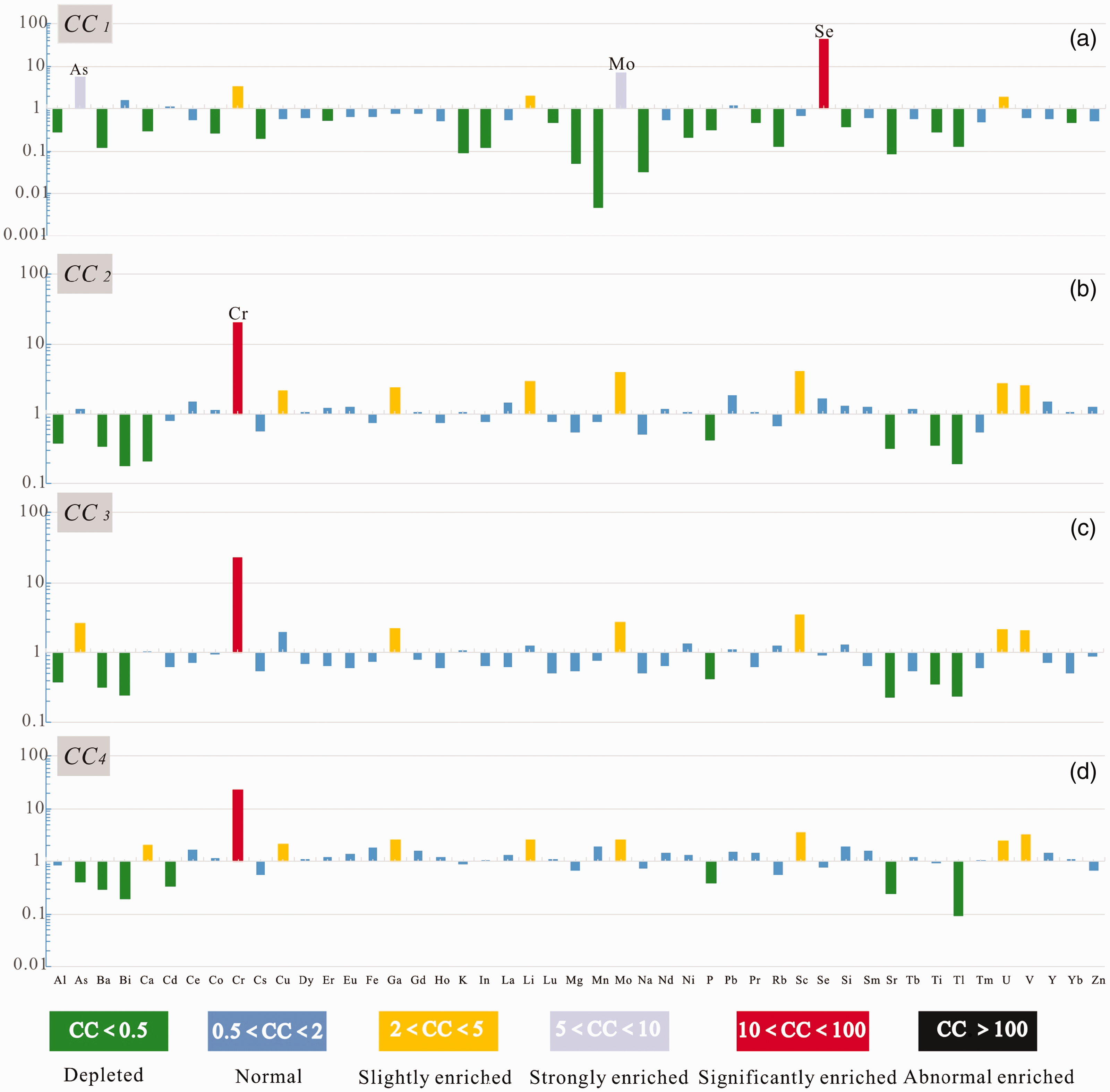
Enrichment patterns of elements in Carboniferous coal from eastern Yunnna Province, South China.
Average contents of major and trace elements in Carboniferous coal from eastern Yunnan province, South China (mg/kg).
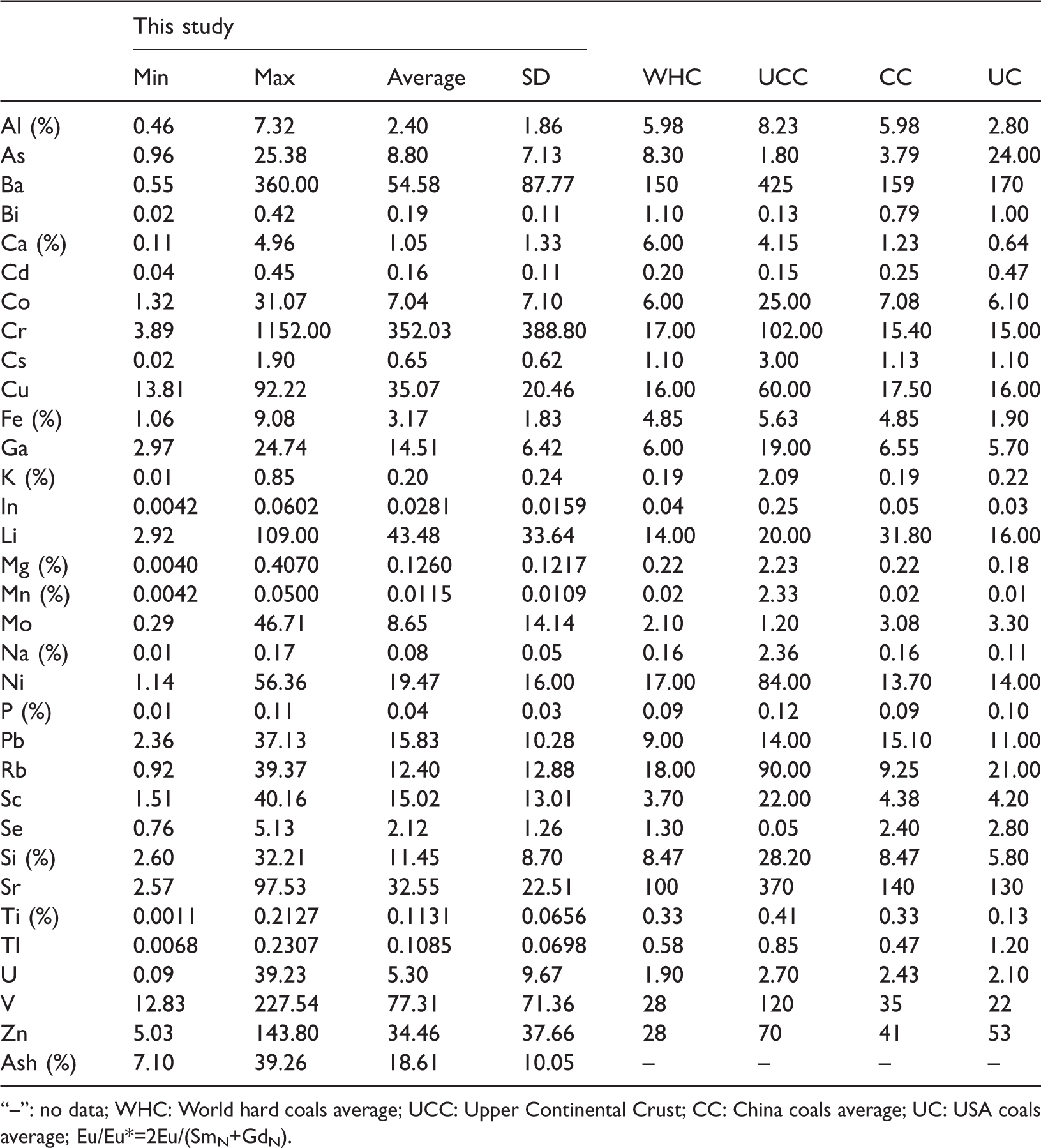
“–”: no data; WHC: World hard coals average; UCC: Upper Continental Crust; CC: China coals average; UC: USA coals average; Eu/Eu*=2Eu/(SmN+GdN).
Average contents of rare earth elements in Carboniferous coal from eastern Yunnan province, South China (mg/kg).
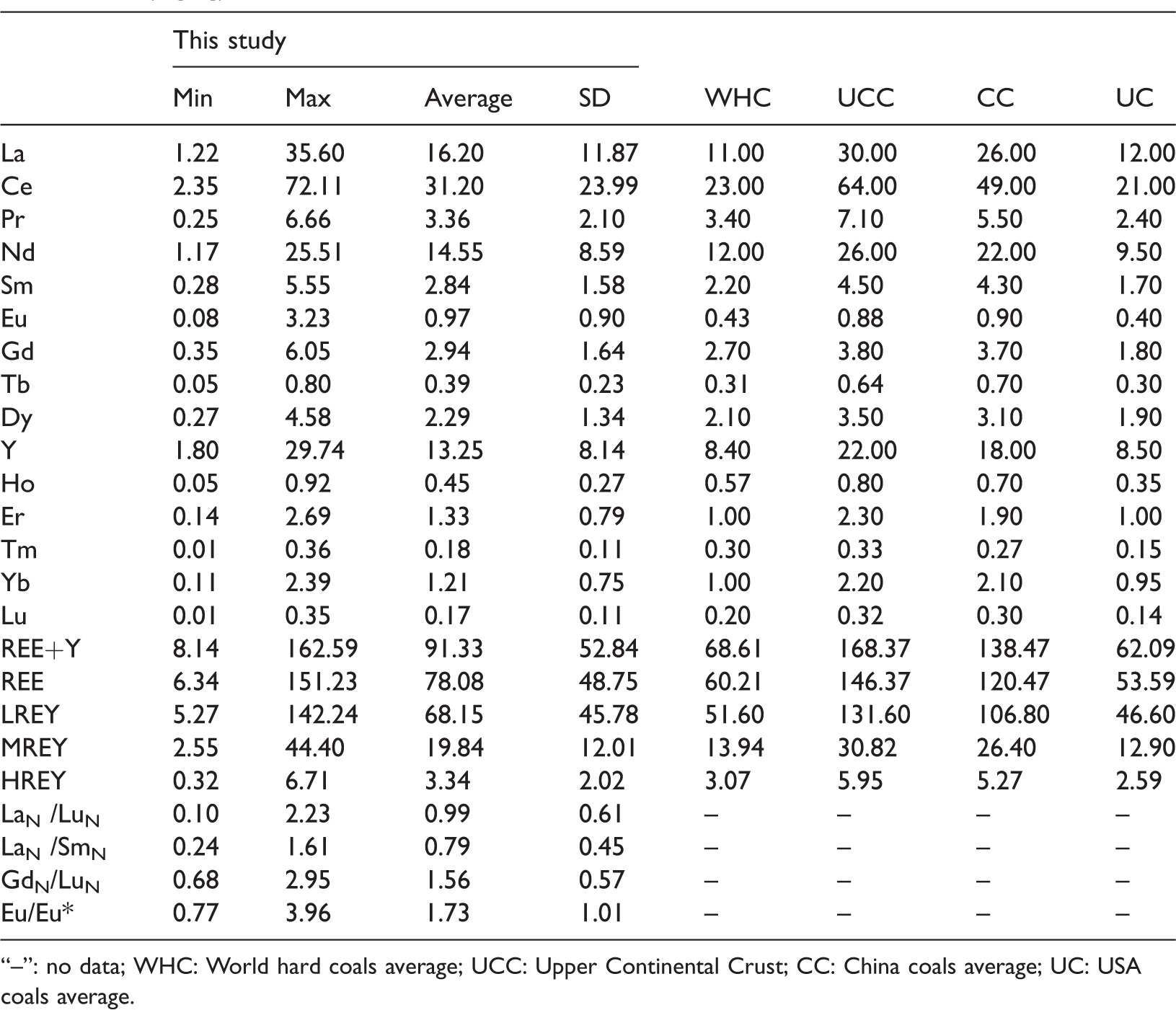
“–”: no data; WHC: World hard coals average; UCC: Upper Continental Crust; CC: China coals average; UC: USA coals average.
Compared with the UCC, enrichment patterns of elements of the studied Carboniferous coal are orderly followed: Se > Mo > As > Cr > Li > U > Bi > Pb > Cd > Gd> Ga > Sc > Fe > Eu > Sm > Dy>V > Tb > Cu > Y > Ce > La > Nd > Er>Ho > Zn > Tm > Pr > Yb > Lu > Si > P > Ca > Ti > Al > Co > Ni > Cs > Tl > Rb > Ba > In > K > Sr > Mg > Na > Mn. Indeed, Se (CC1 = 43.32) is significantly enriched, followed by Mo (CC1 = 6.98), As (CC1 = 5.46), Cr (CC1 = 3.40), Li (CC1 = 2.02), U (CC1 = 1.91, CC1 = element concentration in studied coal samples vs. UCC). The rest of the elements’ concentrations are close to or lower than those in the UCC (Tables 1, 2 and Figure 2(a)).
As shown in Figure 2(b) and Table 1, the Carboniferous coal from eastern Yunnan Province is rich in Cr (average = 1152 mg/kg), Sc (15.02 mg/kg), Mo (8.65 mg/kg), Li (43.48 mg/kg), U (5.30 mg/kg), V (77.31 mg/kg), Ga (14.51 mg/kg), Cu (35.07 mg/kg), as compared with the World hard coals, while Na (0.08%), P (0.04%), Al (2.40%), Ti (0.11%), Ba (54.58 mg/kg), Sr (32.55 mg/kg), Ca (1.05%), Tl (0.11 mg/kg), and Bi (0.19 mg/kg) are in depletion. In addition, the average CC of the resting elements is closer to (2 > CC2 > 0.5) the World hard coals (CC2 = element concentration vs. World hard coals’).
Silicon oxide is rich in Carboniferous coal from the studied area (average 11.14%, range from 2.60% to 32.21%), compared with that of the China coals average. The average CaO, K2O, MnO, Fe2O3, and MgO of the studied Carboniferous coal are 1.05%, 0.20%, 0.01%, 3.17%, and 0.13%, respectively, which are close to those in the China coals (Table 3). The rest oxides are lower (Table 3). Also, average Cr concentration of Carboniferous coal from eastern Yunnan Province is 22.49 times higher than that of the China coals average, while in the case of Sc, Mo, As, Ga, U, V, and Cu, the ratios are 1.97–3.39. The CC3 of Ni, Rb, Li, Pb, Co, Se, Zn, Gd, Ce, Y, Dy, Sm, Er, In, Nd, Pr, Cd, La, Eu, Tm, Ho, Cs, Tb, Lu, and Yb are between 0.5 and 2 (CC3 = element concentration in studied coal samples vs. world hard coals’; Tables 1 and 2 and Figure 2(c)).
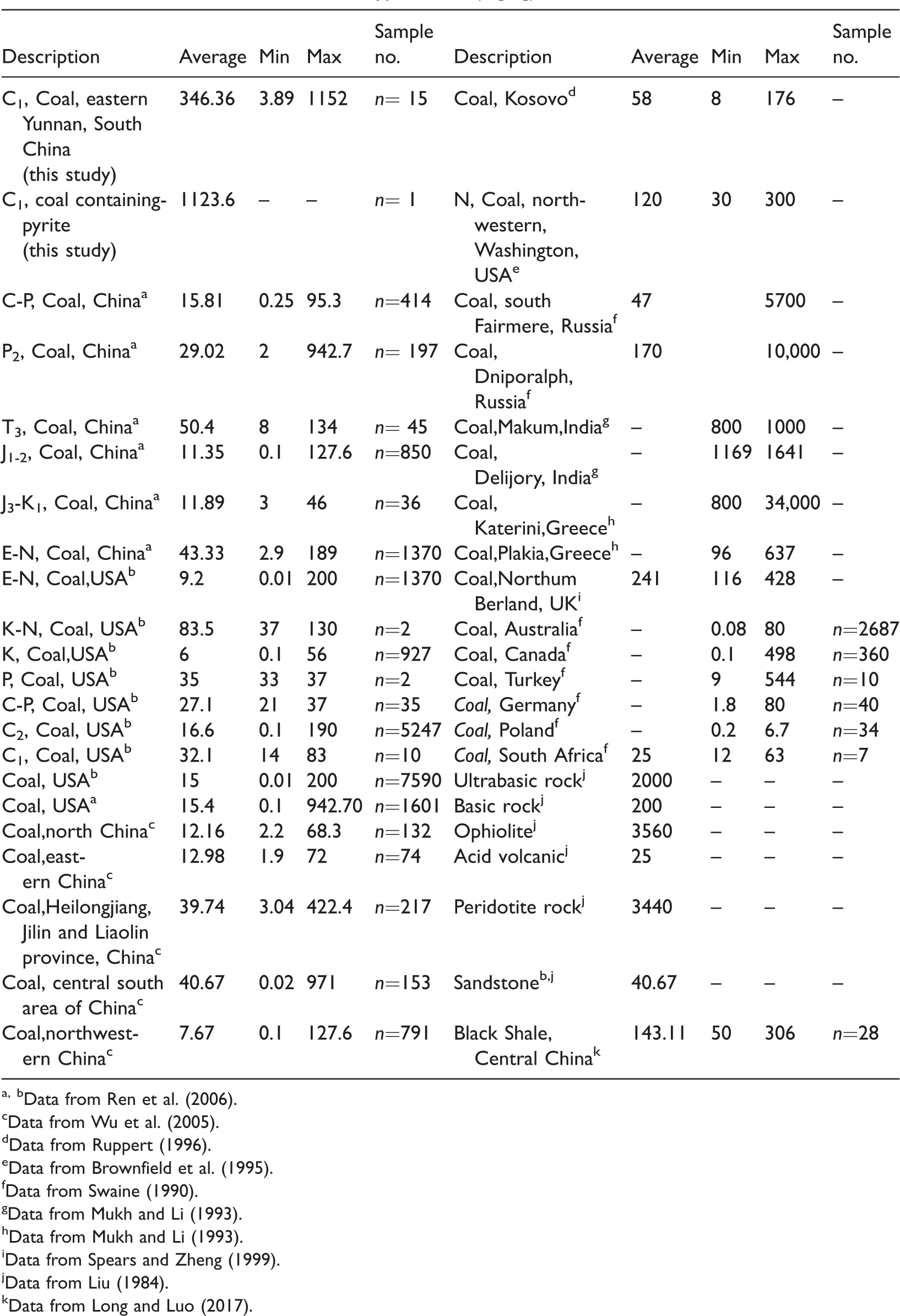
Concentration of Cr in coal and typical rock (mg/kg) in China.a
a, bData from Ren et al. (2006).
cData from Wu et al. (2005).
dData from Ruppert (1996).
eData from Brownfield et al. (1995).
fData from Swaine (1990).
gData from Mukh and Li (1993).
hData from Mukh and Li (1993).
iData from Spears and Zheng (1999).
jData from Liu (1984).
kData from Long and Luo (2017).
As shown in Figure 2(d), Cr is significantly enriched and its arithmetic mean is 346 mg/kg (3.89–1152 mg/kg), and it is 23.09 times more than the USA coals average. The elements Sc, V, Mo, Li, Ga, U, Cu, and Ca are slightly enriched when compared with the studied Carboniferous coal, with CC4 of 2–5. Elements including Si, Mn, Fe, Ce, Sm, Gd, Pb, Y, Nd, Pr, Eu, La, Ni, Tb, Er, Ho, Co, Dy, Yb, Lu, Tm, In, Ti, K, Al, Se, Na, Zn, Mg, Rb, and Cs are normal (2 > CC4 > 0.5). Other elements are lower than the average values of USA coals (Tables 1 and 2 and Figure 2(d)).
In addition, the concentration of total REE (ΣREE, excluding yttrium) in the studied coal samples varies from 6.34 to 151.23 mg/kg, with arithmetic mean of 78.08 mg/kg which is 1.29 and 1.46 times more than the World hard coals (60.21 mg/kg) and the USA coals average (53.59 mg/kg), but is 0.67 times lower than the China coals (120.47 mg/kg). Three coal samples have obviously lower ΣREE concentration and reach to 6.34 mg/kg (No. SM51), 32.85 (No. KM76) mg/kg, and 24.71 (No. LM61) mg/kg, respectively. REE include light-REE (LREE-La, Ce, Pr, Nd, and Sm), medium-REE (M-REE-Eu, Gd, Tb, and Dy, plus Y), and heavy-REE (HREE-Ho, Er, Tm, Yb, and Lu). Normalized from concentrations of UCC (Taylor and McLennan, 1985), Seredin and Dai (2012) identified three enrichment patterns: (1) L-type (LaN/LuN > 1), (2) M-type (LaN/SmN < 1, GdN/LuN > 1), and (3) H-type (LaN/LuN < 1; Table 2). Most of the studied samples have an L-type enrichment pattern, excluding M-type enrichment pattern of KM50, LM61, and KM64, with positive Eu abnormlies of 2.96, 3.96 and 2.52, respectively (Supplementary data).
Element association
Cluster analysis as a convenient and simple method is used to understand the dependence relationship and modes of occurrence on trace element in coal (Dai et al., 2012; Fan and Fan, 2000; Singh et al., 2015b). As shown in Figure 3, elements in the Carboniferous coal can be clustered into seven groups.
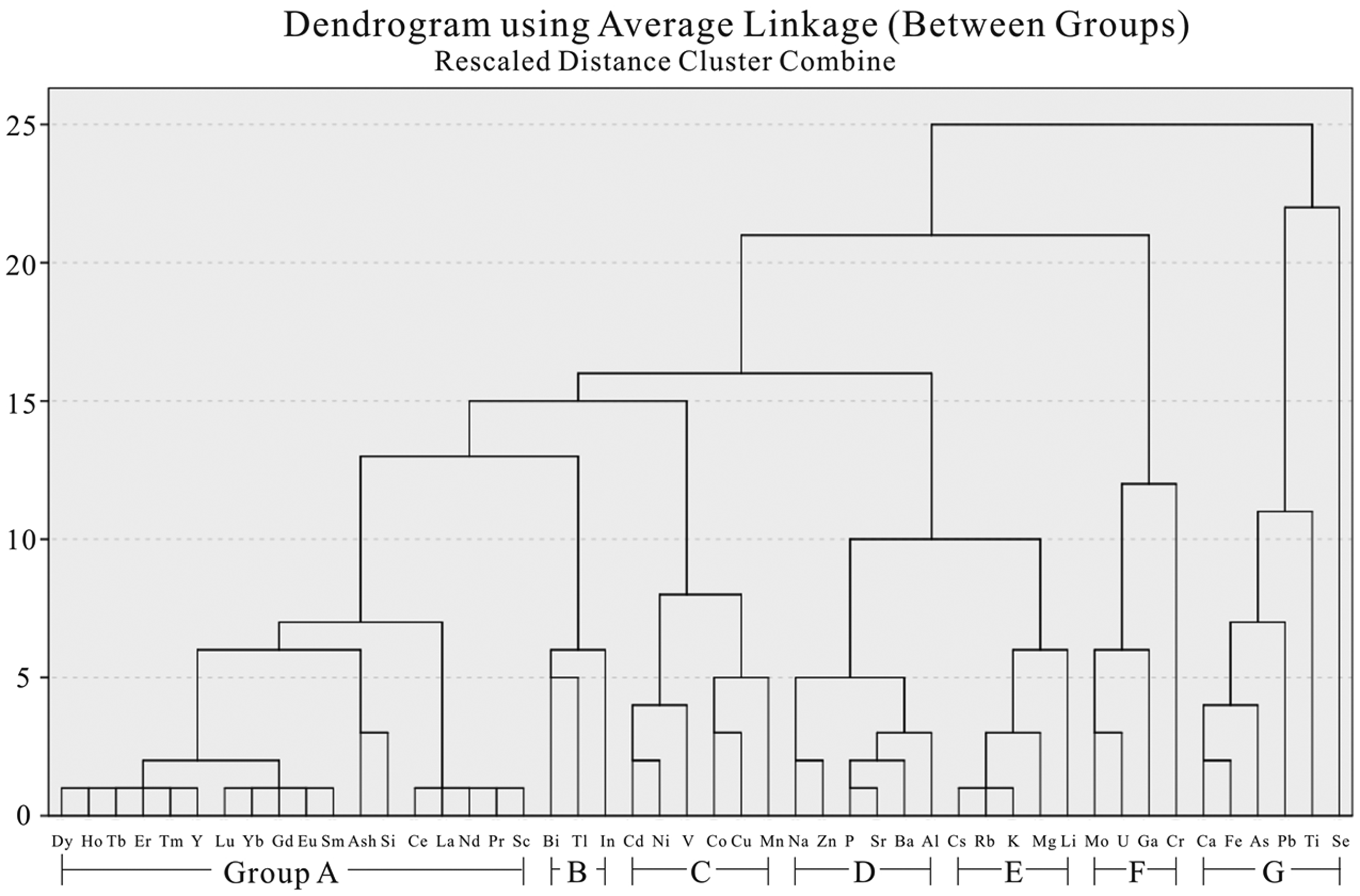
Dendrogram produced by hierarchical cluster analysis of samples (cluster method, centroid clustering; interval, Pearson correlation; transform values, maximum magnitude of 1), r0 = ±0.20.
Group A includes Dysprosium, Ho, Tb, Er, Y, Lu, Yb, Gd, Eu, Sm, Si, Ce, La, Nd, Pr, and Sc. In this group, the correlation coefficient analysis between element concentration and ash yield showed that, the highest correlation coefficients are 0.91 (rash-Si), followed by 0.79 (rash-Sc), and two-tailed symbol (**) indicate that correlation is significant at the 0.01 level. The correlations of Sm, Nd, Gd, Eu, Lu, Pr, Yb, Tm, Ce, and La with ash yield (0.72*–0.83*) are significant at 0.05 level (1-tailed). With the ash yield, the positive correlation coefficient of Erbium, Tb, Ho, Dy, and Y are lower, and these correlation values vary from 0.63 to 0.70 (Figure 3 and Table 4).
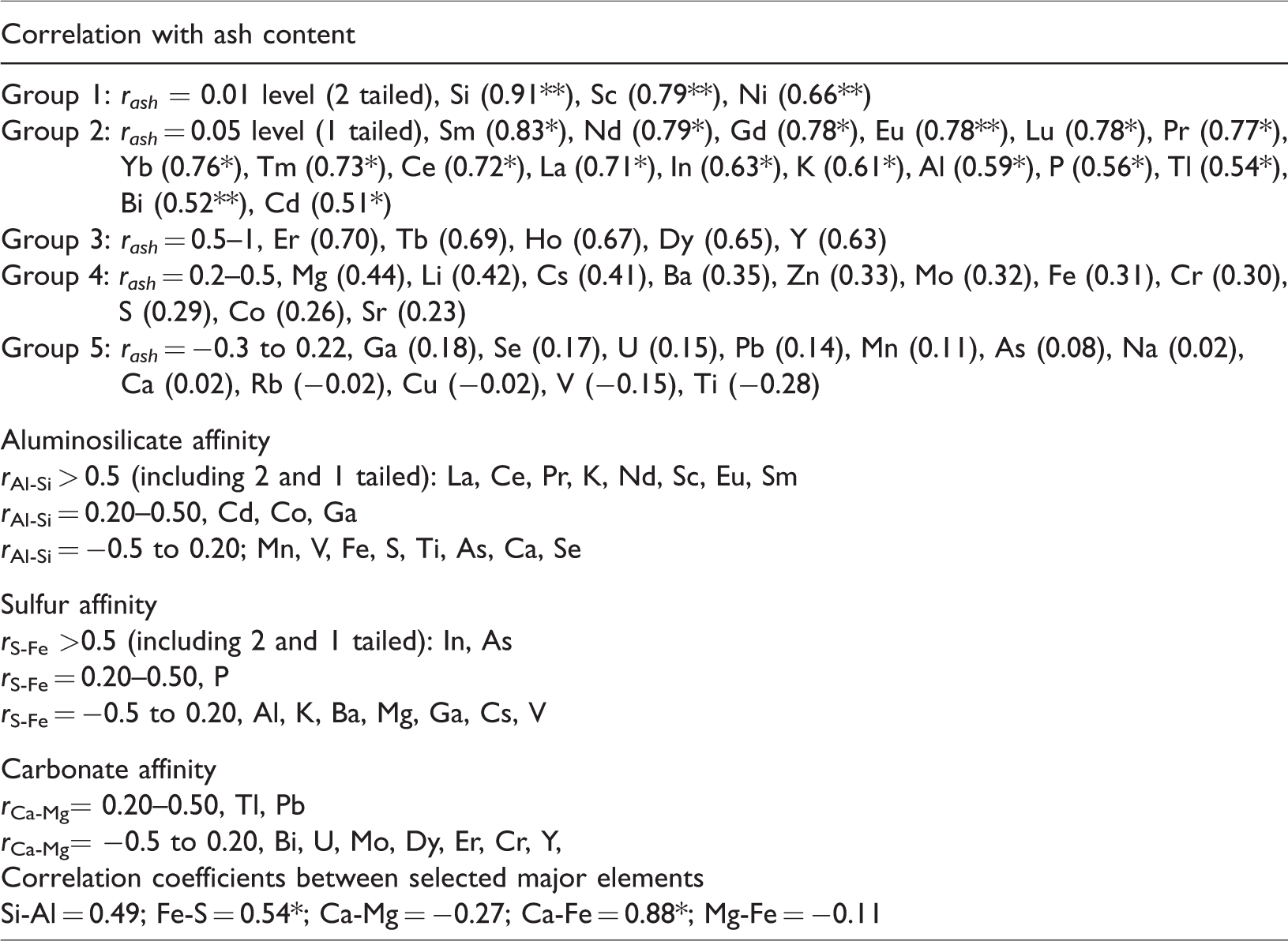
Element affinities of element contents between the studied Carboniferous coal and ash yield deduced from the calculation of Pearson’s correlation coefficients.
Group B: Bi–Tl–In association, and respectively their correlation coefficients are 0.77* (rBi-In), 0.58* (rBi-Tl), and 0.54* (rTl-In). Cadmium, Ni, V, Co, Cu, and Mn are categorized into group C, and their correlations range from 0.20 to 0.81**. The highest correlation is 0.81 between Mn and Co (Figure 3 and Table 4).
Group D: Na-Zn-P-Sr-Ba-Al. The correlation coefficients of these elements with ash yield range from 0.02 to 0.59*. In group E, the correlations of Cr, Rb, K, Mg, and Li range from −0.36 to 0.94, with the highest value of 0.94 between K and Mg (Figure 3 and Table 4).
The rest two groups are Mo–U–Ga–Cr (Figure 3, group F), and Ca, Fe, As, Pb, Ti, and Se are produced into group G. In final two associations, elements do not show a positive correlation with the ash yield (Figure 3 and Table 4).
Element affinity
The correlation between the concentrations of element in coal with its ash yield provides preliminary information on inorganic or organic affinity of a coal (Kortenski and Sotirov, 2002, Singh et al., 2015a, 2015b). On the basis of the correlation between elements with ash yield, the elements were divided into five groups (Table 4).
The first group has relatively high positive correlation coefficient with the ash yield (rash-Si= 0.91**, rash-Sc= 0.79**, rash-Ni= 0.66**), suggesting high inorganic affinity. The highest correlation coefficient between silicon and ash yield is probably influenced by veined quartz and clastic silicate (Table 4), which is also supported by photographs and photomicrographs of hand specimen samples (Figure 4(a) and (b)).
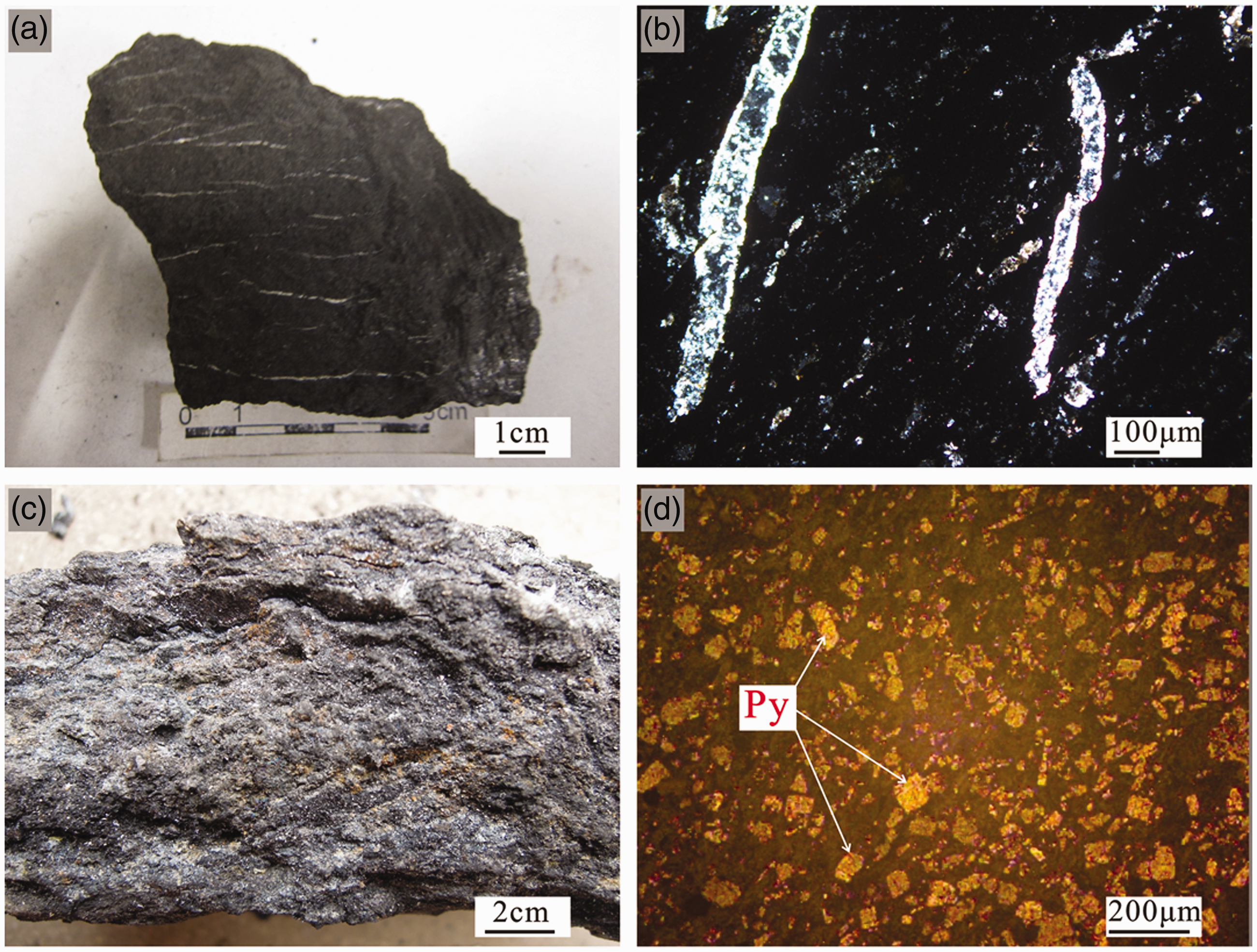
Photographs and photomicrographs of hand specimen samples. Veined quartz (a) and scattered clastic silicate (b) from Carboniferous coal (No. KM 50) as well as several veined calcite. Bar scale is 1 cm and 100 μm, respectively. (c) Sulfide and fine grains of pyrite were observed on the surface of No. HK 59 coal sample and (d) well preserved and underformed pyrite (Py) was scattered into the matrix.
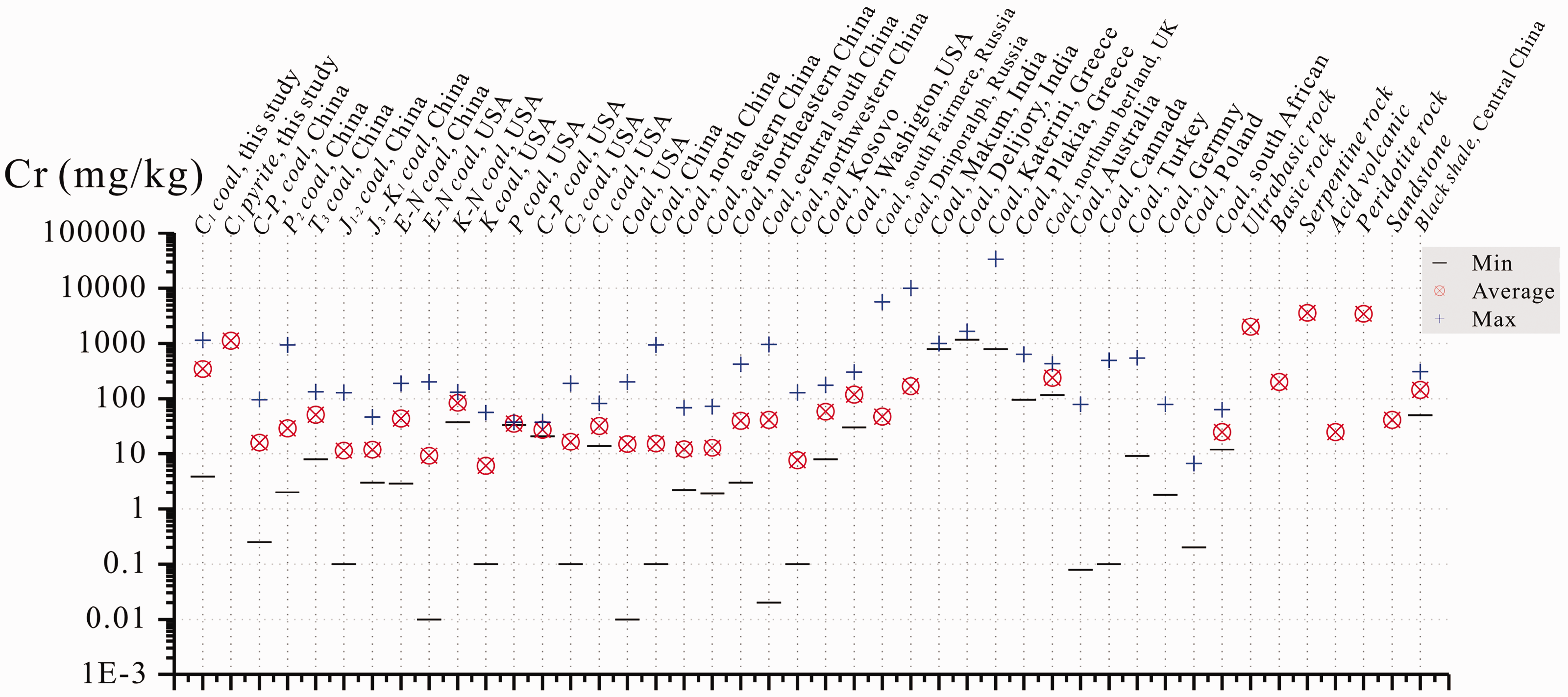
Cr concentration in coal and typical rocks.
The correlation between 17 elements and ash yields from the second group is significant at 0.05 level with one tailed and vary from 0.51* to 0.83. Part of REEs (including La, Ce, Pr, Nd, Sc, Eu, Sm) and K show obvious aluminosilicate feature (rAl-Si > 0.5, including 2 and 1 tailed). Other REEs, in the third group, show a positive correlation level with the ash yield, and the correlation coefficient of Pearson range 0.6–0.7, including Er (0.70), Tb (0.69), Ho (0.67), Dy (0.65), and Y (0.63; Table 4).
The rest group includes elements with correlation level to less than low the statistically significant value (−0.3 to 0.5 without one or two tailed), which probably indicate intermediate fraction. Besides, Arsenic have a feature with sulfide affinity (rAs-S = 0.53* and rAs-Fe = 0.82**), suggesting that in Carboniferous coal from eastern Yunnan province, South China, as primarily exist into sulfide (Table 4).
Abundance of chromium in coal and its significance and origin
Abundance
Table 3 and Figure 5 provide brief descriptions, Chromium (Cr) concentration from (1) coal of different geological period from China and USA, (2) coal of the different Country of the world, (3) coal of different tectonic area of China, and (4) different types of rocks.
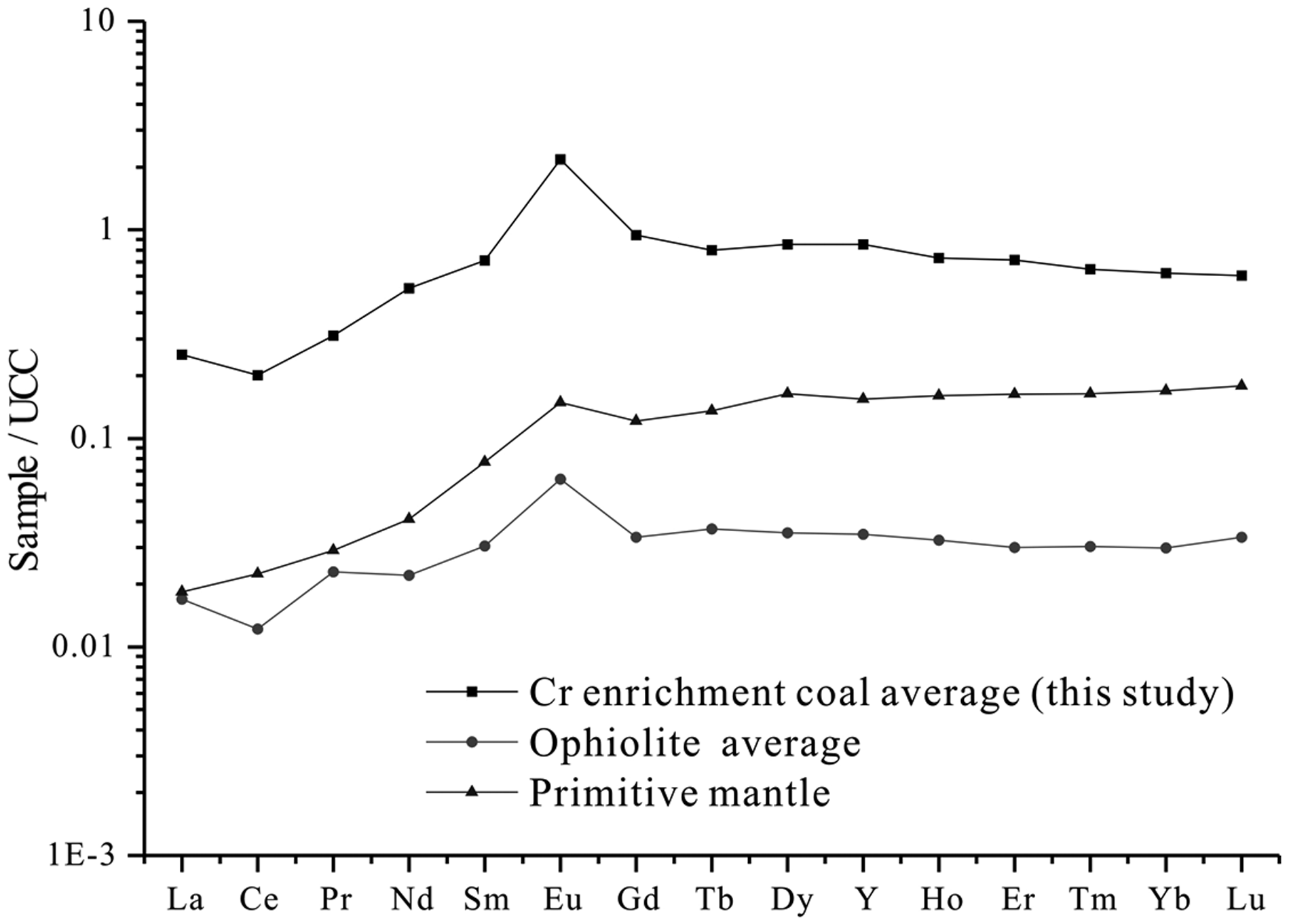
REE average of three Cr-enrichment Carboniferous coal of studied area, four Carboniferous opiolite rock (Li, 2003), and primitive mantle (Taylor and Mclennan, 1985) are normalized to the upper continental crust.
The arithmetic average of Cr in Carboniferous coal from eastern Yunnan province is 352 mg/kg, which is 7.99, 29.13, 30.52, 6.87, 11.94, and 21.91 times more than Cr average in E-N (Paleogene to Neogene) coal, J3-K1 (upper Jurassic to lower Cretaceous) coal, J1-2 (lower-middle Jurassic) coal, T3 (upper Triassic) coal, P2 (upper Permian) coal, and C-P (Carboniferous to Permian) coal of China (Liu et al., 2017; Ren et al., 2006; Xu, 1998; Table 3 and Figure 5).
High Cr concentration in several coal deposits of the world was reported, including Kosovo (58 mg/kg; Ruppert, 1996), northwestern Washington of USA (120 mg/kg; Brownfield et al., 1995), south Fairmere of Russia (47 mg/kg; Swaine, 1990), Dniporalph of Russia (170 mg/kg; Swaine, 1990), Makum of India (800–1000 mg/kg; Mukh and Li, 1993), Delijory of India (1169–1641 mg/kg; Mukh and Li, 1993), Katerini of Greece (800–3400 mg/kg; Gentzis et al., 1996), Plakia of Greece (96–637 mg/kg; Gentzis et al., 1996), Northumberland of UK (241 mg/kg; Spears and Zheng, 1999), Australian (0.08–80 mg/kg) and Canada (0.1–498 mg/kg; Swaine, 1990). In general, Cr concentration of studied Carboniferous coal ranges from 129.70 to 1152 mg/kg, excluding 3.89, 4.51, 35.12, and 58.21 mg/kg. Also, Cr in pyrite of Carboniferous coal-bearing seam of Aduoluo coal mine reach 1123.6 mg/kg, which is close to Cr in ultrabasic rock (2000 mg/kg, Table 3).
In addition, Cr average contents in different area of China are orderly following as: South China (352 mg/kg, this study area) > Central south of China (40.67 mg/kg) > Northeastern China (39.74 mg/kg) > North China (12.16 mg/kg) > northwest China (7.67 mg/kg; Wu et al., 2005).
Significance
Cr3+ is designated as an integral nutrient part of carbohydrate level, insulin level, and lipid metabolism in humans, but Cr6+ is considered as toxic and carcinogenic (Liu, 1984; Michael et al., 1999).
In Carboniferous coal from eastern Yunnan Province, the arithmetic mean of Cr is 352 (3.89–1152) mg/kg, which is 5.31 and 1.15 times more than Cr average in soil of Yunnan Province (65.2 mg/kg) and environmental quality standards of China (300 mg/kg; GB15618-2008, 2008), respectively. Cr is significantly enriched in three coal samples (No. KM50, KM64 and LM61) and one coal containing-pyrite (No. HK59), and Cr concentration is 1055, 1072, 1152, and 1123 mg/kg, respectively, with an average of 1100.5 mg/kg which is 16.9, 10, and 3.67 times higher than Cr average in the soil of Yunnan Province the UCC, and the environmental quality standards of China. These abnormally high Cr in coal or in the related-bearing strata throw a risk to the environment in nearby area, for example, it may contaminate local water and soil. Abandoned Cr production sites often require environmental cleanup. More importantly, the local families which are dependent on the Carboniferous coal for heating and cooking might suffer from health threats.
In addition, Arsenic (As) is enriched in Carboniferous coal of the studied area and its arithmetic average is 9.84 mg/kg that changes from 0.96 to 25.38 mg/kg. Especially for three coal samples (KM 76, SJM2, SM65) and one coal containing-pyrite (No. HK59), the As contents of these three samples are 25.38, 22.78, and 67.89 mg/kg, which are 10, 14.10, 12.66, and 37.71 times higher than As in the UCC.
Thus, Cr and As in the Carboniferous coal could be released into the environments during the coal utilization and would cause harmful impact on the environment and human beings.
However, the average concentrations of Se (0.76–5.13 mg/kg) and Mo (0.29–46.71 mg/kg) are 2.12 and 8.65 mg/kg, respectively, which are 7.31 and 5.08 times more than Se (0.29 mg/kg) and Mo (1.7 mg/kg) of the Chinese soil average (China NEPAo, 1990). Although excessive Se is poisonous to all animals, trace amounts of Se are essential to cellular function of many organisms (Böck et al., 1991). Mo is considered as an important part of the active sites of metalloenzymes (Tallkvist and Oskarsson, 2015). The micronutrient elements such as Se and Mo are critical for today’s life activities and most of the organisms (Böck, 2013; Tallkvist and Oskarsson, 2015). Thus, relatively high Se and Mo but lower As and Cr in the Carboniferous coal make it possible for using the coal as a type of Se or Mo-enriched fertilizer for agriculture.
Provenance
Average concentration of Cr in Earth’s crust is 102 mg/kg (Liu, 1984), and its background concentrations are <10 ng/m3 (atmosphere), <10 μg/L (freshwater), <1 μg/L (seawater), <0.5 mg/kg (vegetation), <500 mg/kg (soil), and <80 mg/kg (sediment) in the system of environmental medium (Rieuwerts, 2015). Relatively high Cr concentration in sediment may be resulted from anoxic environment, Cr-enrichment plant or underground water, as it ranges only from several tens of mg/kg to hundred mg/kg (Brownfield et al., 1995; Liu et al., 2001; Liu and Yang, 1999; Wu et al., 2005; Xu, 1998). However, in the studied area, Cr concentration of three Carboniferous coal samples and one coal containing-pyrite ranges from 1055 to 1152 mg/kg, which can be completely attributed to the anoxic basins, Cr-enrichment plant, and underground water. In addition, Cr concentrations in basic rock and acid volcanic rock are 200 and 25 mg/kg (Table 3), which also could not provide a large amount of Cr for the studied area’s coal during the Datang period (Mississippian) of early Carboniferous time.
It is noted that Cr tends to enrich toward the primitive mantle of Earth (approximately 3000 mg/kg; Liu, 1984; Taylor and Mclennan, 1985), for instance, Cr of ultrabasic rock, ophiolite, and peridotite rock is 2000, 3560, and 3440 mg/kg, respectively (Liu, 1984). Carboniferous Nujinshan ophiolite mélange is situated in southwestern Yunnan Province, and continuous outcrop of the ophiolite mélange is more than 100 km in length, ranging from 0.2 to 2 km in width. Cr contents of four ophiolite samples from southwestern Yunnan Province are 2871, 10051, 2221, and 2254 mg/kg (Li, 2003).
In addition, three coal samples have relatively low ΣREE concentration and reach 6.34 mg/kg (No. SM51), 32.85 (No. KM76) mg/kg, and 24.71 (No. LM61) mg/kg, respectively, as well as M-type enrichment pattern (LaN/SmN <1, GdN/LuN >1) and obviously positive Eu abnormlies of 2.96, 3.96 and 2.52, respectively (Supplementary data). As shown in Figure 6, UCC-normalized REE patterns of these three Cr-enrichment Carboniferous coal samples show an apparent enrichment in LREE relative to HREE, as well as obvious positive Eu anomalies and weak or no negative Ce anomalies, which are similar to those of Carboniferous ophiolite (southwestern Yunnan Province; Li, 2003) and Primitive mantle (Taylor and Mclennan, 1985), which indicates that they might have a similar origin (Brownfield et al., 1995; Ruppert, 1996).
Conclusion
Se (0.76–5.13 mg/kg), Mo (0.29–46.71 mg/kg), As (0.96–25.38 mg/kg), Cr (3.89–1152 mg/kg), Li (2.92–109.00 mg/kg), and U (0.09–39.23 mg/kg) average of the studied Carboniferous coal are 2–43 times more than those of the UCC. Compared with the China coals, the elemental enrichment characteristics of the Carboniferous coal from eastern Yunnan Province are listed in the descending order as: Cr > Sc > Mo > As > Ga > U > V > Cu > Ni > Si > Rb > Li > Pb > Ca > K > Co > Se>Zn > Gd> Mn > Fe >Ce > Y > Dy > Sm > Er > In > Nd > Pr > Cd > La > Eu > Tm > Ho > Cs > Mg > Tb > Lu > Yb > Na > P > Al > Ti > Ba > Bi > Tl > Sr. Chromium is significantly enriched, with the average content of 352 mg/kg in studied Carboniferous coal, which is 22.49, 20.37, and 23.09 times higher that Cr in China coals, World hard coals and USA coals average.
The elements in the Carboniferous coal have been classified into five groups: (1) Si-Sc-Ni, (2) Sm-Nd-Gd-Eu-Lu-Pr-Yb-Tm-Ce-La-In-K-Al-P-Tl-Bi-Cd, (3) Er-Tb-Ho-Dy-Y, (4) Mg-Li-Cs-Ba-Zn-Mo-Fe-Cr-S-Co-Sr, and (5) Ga-Se-U-Pb-Mn-As-Na-Ca-Rb-Cu-V-Ti. The coefficients between the concentrations of various elements and corresponding ash yields were calculated and found that the coefficients of the elements from the first, the second, and the third groups are positive.
High Cr concentration in three studied Carboniferous coal samples (No. KM50, KM64 and LM61) are 1055, 1072, and 1152, respectively, which show a similar origin with contemporaneous Carboniferous ophiolite and primitive mantle. High Cr coal has a potential harmful impact on the environment and human beings during the coal combustion. However, low Cr-As but high Se-Mo Carboniferous coal should be considered as fertilizer for local crops.
Supplemental Material
Supplemental material for Element concentration and enrichment patterns in Carboniferous coal from coal-burning endemic area, Yunnan province
Supplemental Material for Element concentration and enrichment patterns in Carboniferous coal from coal-burning endemic area, Yunnan province by Jie Long, Shixi Zhang and Kunli Luo in Energy Exploration & Exploitation
Footnotes
Acknowledgments
The authors are grateful to Dr Wei Cheng from Guizhou University for his efforts in English editing.
Declaration of conflicting interests
The author(s) declared no potential conflicts of interest with respect to the research, authorship, and/or publication of this article.
Funding
The author(s) disclosed receipt of the following financial support for the research, authorship, and/or publication of this article: Science and Technology Major Project of Guangxi (AA17202026-1); The National Natural Sciences Foundation (41877299 and 41472322); The National Basic Research Program of China (2014CB238906) fellowship supported this study.
Supplemental material
Supplemental material for this article is available online.
References
Supplementary Material
Please find the following supplemental material available below.
For Open Access articles published under a Creative Commons License, all supplemental material carries the same license as the article it is associated with.
For non-Open Access articles published, all supplemental material carries a non-exclusive license, and permission requests for re-use of supplemental material or any part of supplemental material shall be sent directly to the copyright owner as specified in the copyright notice associated with the article.
