




Abstract
Solar water heating is a technology of capturing the energy from the sun's radiation for the purpose of raising the temperature of water from water supply temperature to the desired higher temperature depending on the use. There are many views and discussions on the questions of thermal efficiency of solar water heaters and their associated cost, especially different customers/users want to replace their existing conventional water heating energy by solar water heating systems. In this present paper, a deep investigation has been accomplished to determine thermal efficiency and cost analysis of solar water heater made in Rwanda. During manufacturing of solar water heater, the collector was the main part to emphasize on. The high efficiency of the system was achieved by replacing galvanized iron sheet by aluminum sheet slotted and black painted as an absorber plate. The ambient temperature and average solar radiation of the three sites where solar water heaters are installed were investigated. The used materials, specifications and sizing were discussed in this paper.
Introduction
Background
Solar water heating system is a technology of capturing the energy from the sun’s radiation for the purposes of raising the temperature of air or water to be used for domestic, commercial or industrial purposes by using solar collectors and concentrators. Solar water heating system is a renewable energy technology that is free for use with high potential and is available all over the world. Solar water heating systems are mostly used in a wider scale because they provide an environmental favorable heat for various areas such as household water heating, swimming pools heating and other areas where hot water is needed. This system collects the energy from the sun to use it for heating air or water.
There are two types of solar collector: evacuated tube and flat plate solar collector and evacuated tube solar collector have been proven to have lower heat loss coefficient, high performance and reliability (Liu et al., 2016). In recent years, many group of researcher focus on theoretical and experimental research for improving and measuring heat transfer losses in evacuated tube and flat collector using different approaches and methods (Liu et al., 2016, 2017; Yang et al., 2014). Some literature points out a high effectiveness and environment friendliness of solar water heater (Kalogirou, 2009) while others still questioning on the initial cost and maintenance cost of solar water heaters. Alberto and Ferrer (2017) investigated the economic point of view of solar water heaters installed in chosen municipalities in South Africa, the shortest and longest payback period have calculated, he found that the average payback period of 8 years exceeds the warranty period of solar water heater in South Africa which is 3 years.
Solar energy is an alternative to replace conventional water heating energy for different applications and is an attractive source of energy to be focused on in the future due to increasing demand of energy with rising cost of fossil fuels (Sunil et al., 2005).
Analysis of different literatures and quotations from different manufacturers of solar water heaters shows that the cost of solar water heaters became cheaper in last ten years. At present, the prices range from 800$ to 10,000$ depending on the types and capacity. From 2010, Tumba College of Technology (Rwanda) started a project of solar water heater manufacturing in the unit of research and development. The first solar water heater fabricated was a flat type with double collectors, later the improvement was done to improve its capacity, efficiency, smartness and cost effectiveness. At present, many solar water heaters of different capacities are sold to different customers but no researches have been conducted in order to know and confirm their efficiency and the associated payback period. The aim of this paper is to investigate the efficiency and cost analysis of solar water heater made in Rwanda and to present the methods used to increase the efficiency of solar water heater during its manufacturing.
During onsite experiment for installed solar water heater (Figure 1) in three areas, measurement shows that a solar water heater with a surface of 2.77 m2 (1.385 × 2) is able to heat 200 L of water heated from 17°C to 68°C in average. This is due to high efficiency of collector achieved during its construction and high solar radiation in the country which is around 5 kWh/m2/day. Solar water heaters are used in Rwanda mainly for providing hot water in households, hotels, hospitals and schools and the installed units are still at lower level according to the country vision.
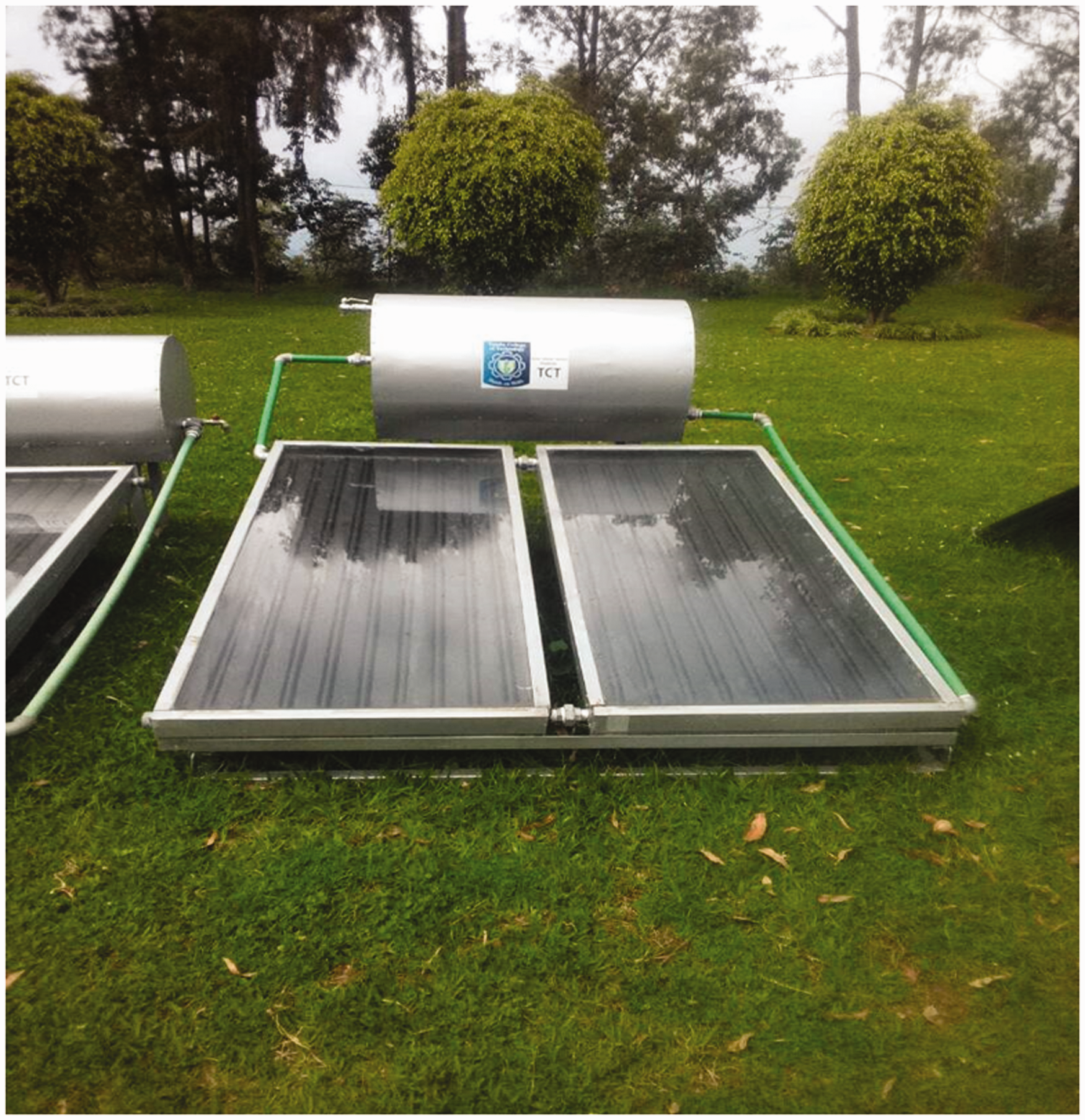
Solar water heating experimental apparatus.
The initial cost of solar water heater is much depending on the size of collector, the size of collector is also much depending on the solar radiation available in the area and collector efficiency; now, there is less or no research done on the issue of matching the area of collector and available solar radiation; only assumptions are made by manufacturing companies. This makes solar water heaters to be more expensive and ineffective because the same collector area is installed in different areas with a large difference of solar radiation. High solar radiation and less collector area are considered with the assumption that other parameters remain the same.
Solar water heaters, generally called domestic-hot water systems, are good systems to be invested in because they are cost effective even though their initial cost is somehow high but they have an advantage of using free sunshine (free solar radiations); regardless the present climate, this is a crucial advantage comparing with other conventional water heaters using electricity or other type of fuel (USA Department of Energy, 2003).
Main parts of solar water heater
As shown in Figure 2, solar water heater systems are made up of solar collector, storage tanks and piping systems.
Solar collector: Solar collector receives and transfers the solar radiation energy into thermal energy in the working fluid usually water. System of working fluid channel or pipe: This is the connection between collector and storage tank.
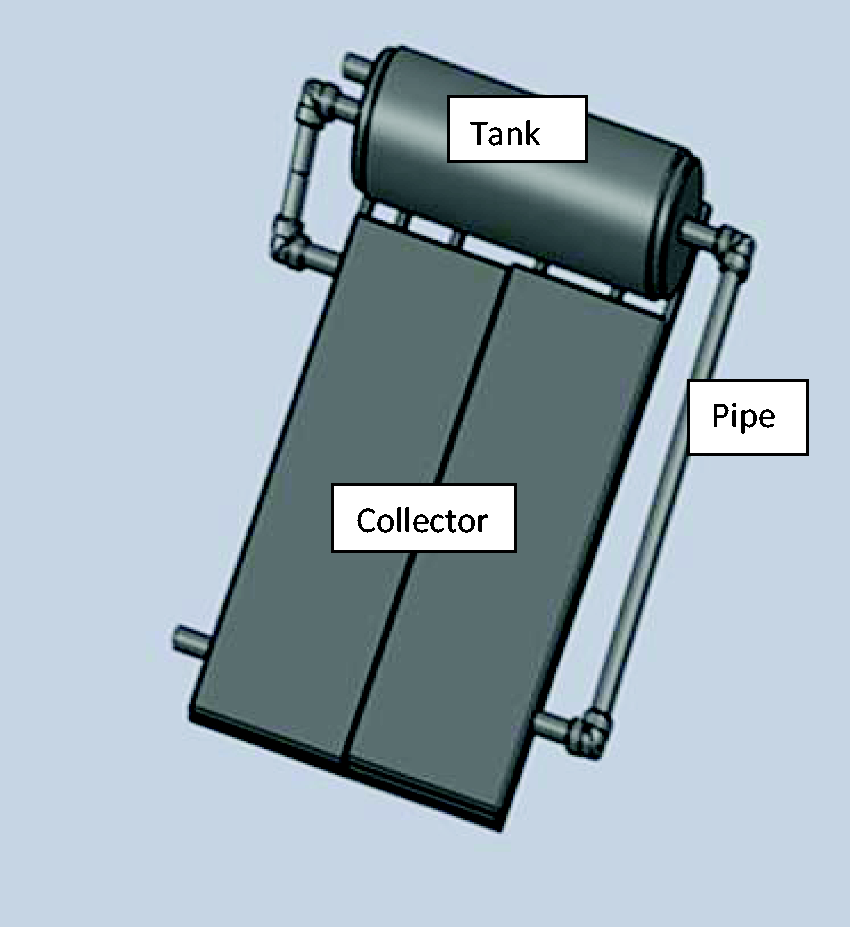
Main parts of solar water heater.
Hot water tank: This is used to store and maintain hot water. The hottest water on the top and water temperature increase from the bottom to the top of the tank due to thermosiphon effect. Based on the shape, desired hot water temperature can be obtained by using three types of collectors: flat-plate, evacuated-tube, and concentrating. In contrary, for water heating systems of swimming pools the pool itself is the storage and the pool’s pump circulates the water through the collector. There exist two systems, the first one is the active system where pumps act for controlling water and making it circulate within the system. The second system is passive system where water circulates by itself without any addition of equipment.
There exists three types of solar collector
Flat plate collector: Glazed flat plate collectors are essentially insulated and are the most common used type of collector in the world. It comprising weatherproofed boxes which contain a black absorber plate under one more glass or plastic (polymer) covers.
Integral collector-storage systems: This system is also known as ‘batch system’ made of one or more black tubes or tanks in an insulated glazed box. When cold water enters in the tank, the water is heated by the sun radiation collected by the collector, after being preheated this water continues to the conventional backup water heater. This system is reliable, accessible and affordable. However, they should be installed only in mild-freed climate because the outdoor pipe could freeze in severely cold weather unless a storage tank is provided.
Evacuated-tube solar collector: This type of collector comprises parallel rows of transparent glass tubes where each one contains a glass outer tube and a metal absorber tube attached on the fin (USA Department of Energy, 2003). The choice of system depends on heat requirement, weather conditions, annual solar radiation, etc. The SHW systems are economical, pollution free and easy for operation especially in warm countries.
Efficiency of collector
For evaluation of performance of solar water heater, we need to calculate its efficiency. Collector efficiency is the ratio between the rates of useful heat (QU) transferred by solar radiation on the cover plate. Efficiency can be shown in the equation as follows:


Equation (2) shows that the heat is extracted from the collector at a rate which can be measured by means of amount of heat transmitted to the fluid passed inside the collector.


Heat removal factor
Heat removal factor (Fr) is the ratio of useful energy calculated using (Ti – Ta) to that calculated using (Tpm – Ta).
The average absorber surface temperature, can be replaced by the temperature of the fluid entering the collector (Ti) if the useful energy is divided by a ‘heat removal factor’ (Fr). The heat removal factor is a function of the flow rate of the heat transfer fluid (Struckmann, 2008).

The maximum possible available energy gain in a solar collector occurs when the whole collector is at the inlet fluid temperature. The actual useful energy gain (Qu) is found by using collector heat removal factor (FR) to obtain maximum possible useful energy gain. Equation (2) is rewritten as follows:

Equation (6) is the most used relationship to calculate the energy gain in collector with consideration of flow rate of heat transfer fluid.


Ta: ambient air temperature.
Literature review
As a green and renewable energy, solar energy becomes important to develop and there is a good and promising progress in the field of solar energy particularly in solar thermal. This is because of its simple structure and its low to zero running cost in general. Many designs and improvements on existing designs have been done by different researchers to increase the efficiency of solar water heaters. Design of solar water heater in glass evacuated tube with high heat collection rate by high throughput screening (HTS) method based on machine learning becomes more important and promising method to increase the heat collection rate (Li et al., 2018; Liu et al., 2017). Another study on design of solar water heater using HTS method was conducted by Li et al. (2017) and this method was proved to provide first and precise prediction method for performance of solar water heater. Computational fluid dynamic (CFD) was used to conduct a numerical study and to predict water temperature at the outlet of collector (Alfaro-ayala et al., 2015). Numerical analysis and some software have been used to study and design the thermal efficiency solar water heaters using U-type evacuated tube solar collector and the results showed that this solar collector should provide 40.5% of the total consumed energy in the year (Li et al., 2015). Research on solar water heater using concentrating solar collector evidenced that the maximum temperature of 69.5°C should be obtained and efficiency up to 51% is possible (Ikpakwu et al., 2017). At present, different designs of building integrated photo-thermal (BIPT) have been developed and used in China to meet people’s requirement in production and living (Yang et al., 2014).
All solar systems which utilize the solar energy depend upon the efficiency of solar collectors. Some of the collectors are flat-plate, compound parabolic, evacuated tube and parabolic trough. The solar collectors are used for domestic, commercial and industrial purposes. They are used in various kinds of heating and cooking purposes; such as solar water heating, which comprises thermosiphon, integrated collector storage, direct and indirect systems, air systems, space heating, cooling and service hot water. Industrial process heat comprises air, water systems and steam generation systems (Kalogirou, 2004).
Samara et al. (2009) presented the alternative method of solar water heating system. This alternative method uses automated system that would allow the user to get hot water from the solar water heater as long as the solar water heater can supply hot water above a set temperature. If it happens for the solar water heater to become unable to supply water above the required temperature, only the electric water heater will come into action to support the solar energy. This method is efficient because controller ensures that the solar water heater is used to supply hot water to certain percentage like 80% of the time, and the rest 20% will be supplied by the electric water heater. This system is cheap due to the fact that it runs on solar energy which is available in large quantity and free. It uses very small amount of electricity and therefore reduces the expenses for the user.
Prasad et al. (2010) presented analysis of experiment for flat plate collector and comparison of performance with tracking collector. He conducted experiments for a period of one week during which the atmospheric conditions were almost uniform and he collected data both for fixed and tracked conditions of the flat plate collector. He instrumented a flat plate solar water heater which is commercially available with a capacity of 100 L/day and developed into a test-rig to conduct the experimental work. The results were tabulated and he found out that there is an average increase of 40°C in the outlet temperature. He calculated the efficiency of both the conditions and the comparison showed that there was an increase of about 21% in the percentage of efficiency. Optimum fins sizing used in heat exchanger in solar heating system have been proved to increase the efficiency of solar system about 7% when they are designed and used with an optimum sizing (Mustafa et al., 2006).
The size of solar water heating system depends on availability of solar radiations, temperature needed by customers, geographical location and arrangement of solar system. Therefore, its design should focus on the above parameters especially on solar radiation available (Patel et al., 2012). Vikram et al. (2006) made a study on storing solar heating energy using phase change materials (PCMs) and utilizing the stored energy to heat water for domestic purposes during night. The storage unit utilizes a small cylinders made in aluminum with paraffin wax inside as a heat storage medium. He found that the system is a commercially viable option for solar heating energy storage. Series connection of more than one thermosiphons solar water heater should increase the efficiency of solar water heater up to 55% and series – parallel combination of thermosiphons would perform better for industrial applications (Yi Mei Liu et al., 2012).
The rotation of solar collector as the sun’s position is changing has been examined and showed that it increases the solar energy absorbed and increases its efficiency (Hosni and Mulaweh, 2012). Solar water heating using thermosiphon is attractive as it eliminates the cost of pump. Collector efficiency should be improved by attaching internal fins on a tube wall and the optimal operating condition to improve collector efficiency is always associated with a small increase of hydraulic dissipated energy (Ho and Chen, 2007). Enhancing collector efficiency can bring down the cost of solar water heaters (Sunil et al., 2012).
Materials and methods
Data collection
To collect data, the three solar water heaters were manufactured and installed in three different areas. All measurement was performed in the same condition and in the same season, using portable instruments (thermometers and pyranometers). Tested solar water heaters were made and installed by Tumba College of Technology. During manufacturing of these solar water heaters, the collector was a main part to emphasize on. To increase the heat collection rate on absorber plate, a galvanized iron was replaced by aluminum sheet because of its high thermal conductivity. Aluminum sheet of 960 mm × 1300 × 0.6 mm was used for absorber plate. The equal spaced slots were designed and performed on aluminum sheet to accommodate more than a half of a perimeter of pipe as shown in Figures 3 and 4 and black painted (Figure 5), the base of collector was properly insulated to avoid heat losses (Figure 6). The constructed system was made up with tank of 200 L, two solar plate collectors of 1.385 m2 each and piping system as shown in Figure 1.
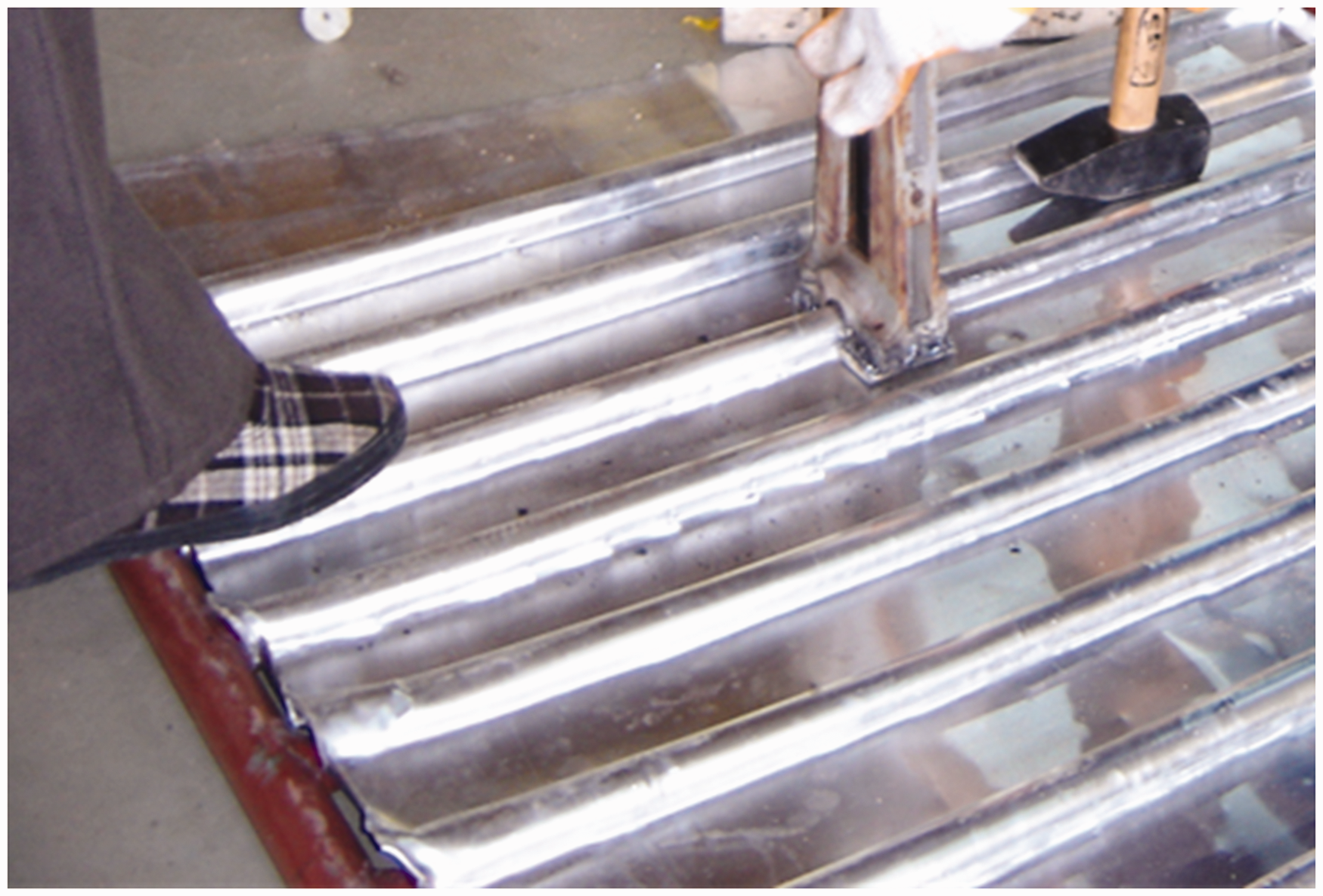
Slots creation on aluminum plate.
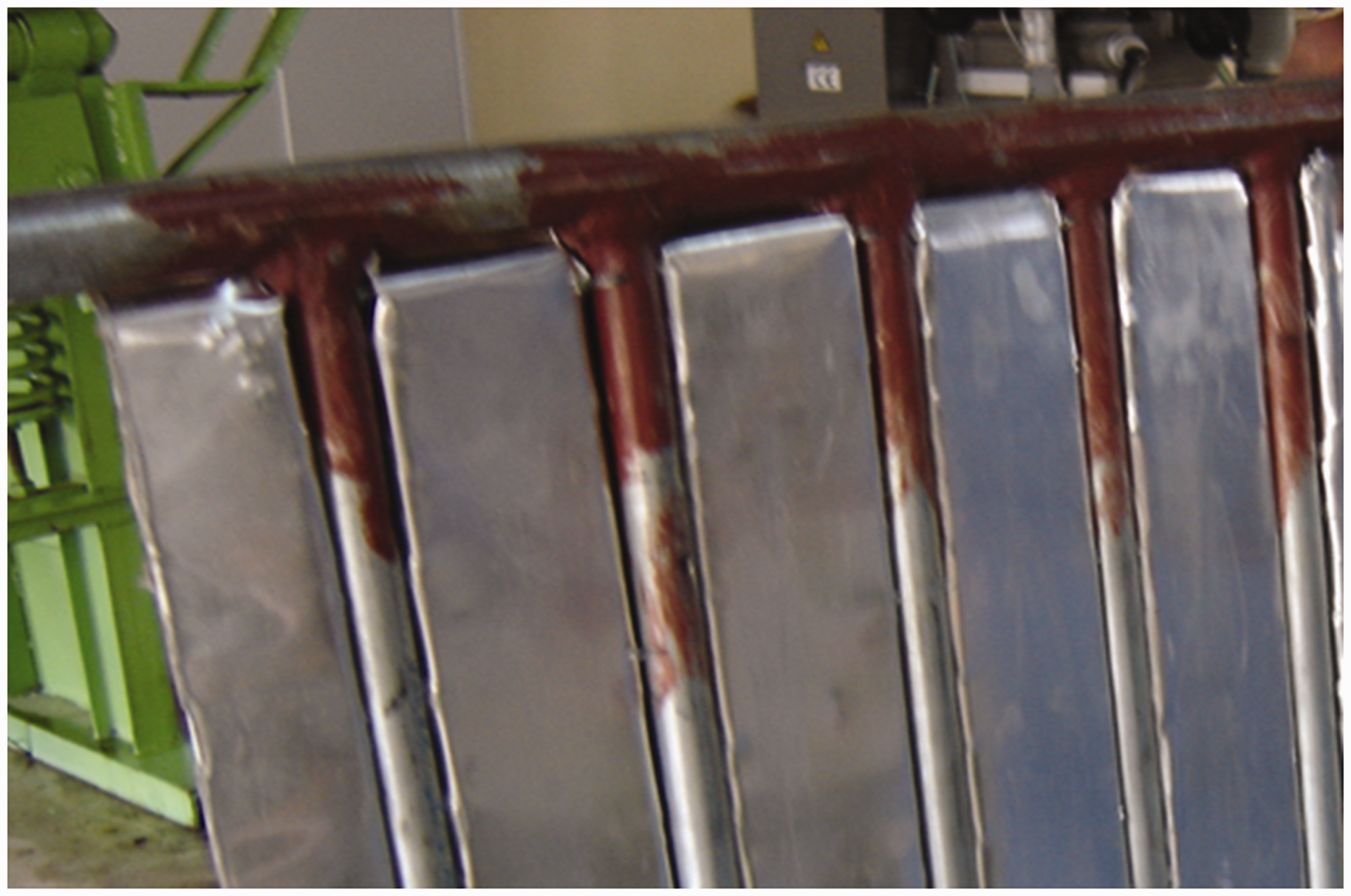
Pipes in the slots.
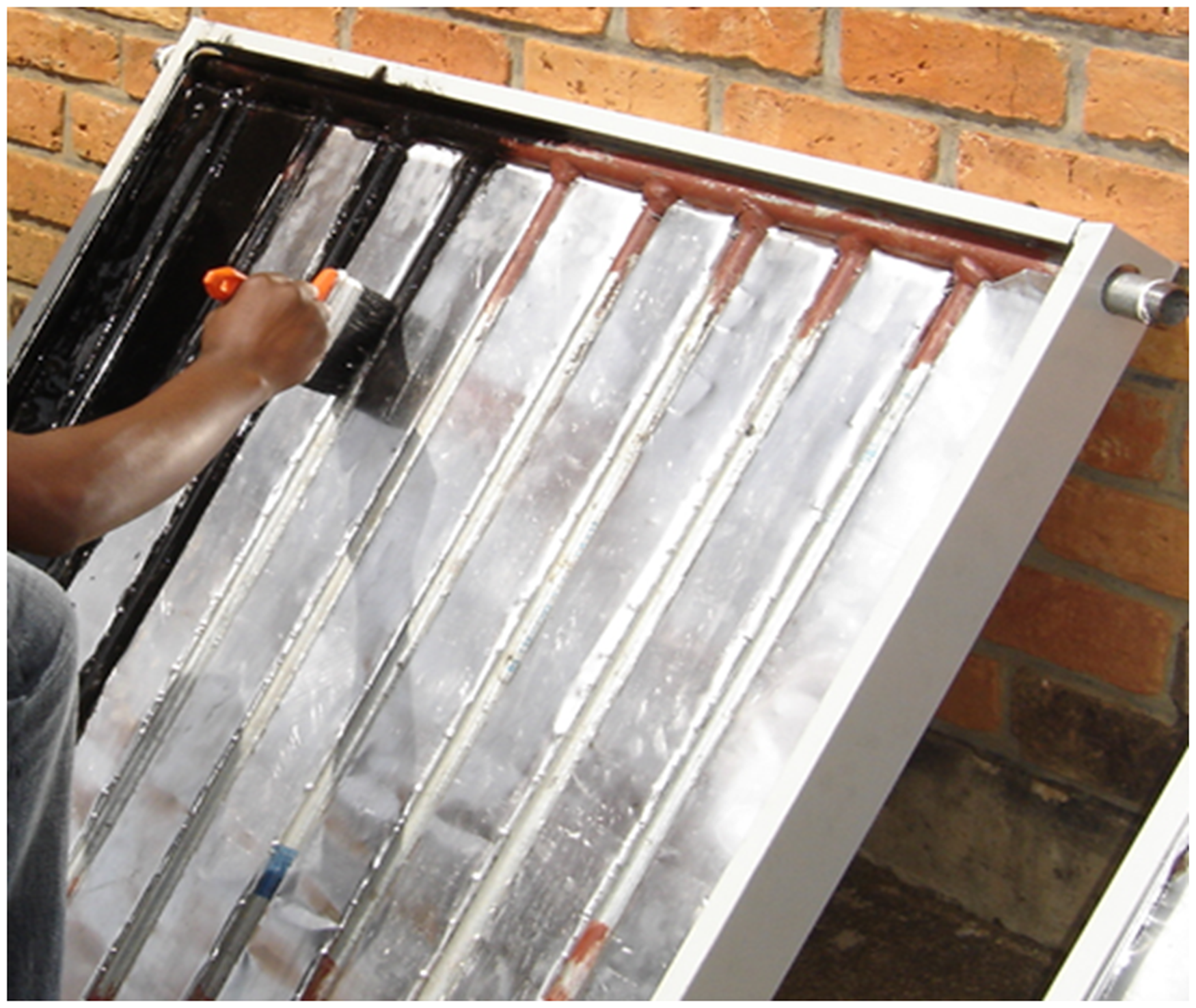
Painting absorber plate and pipe.
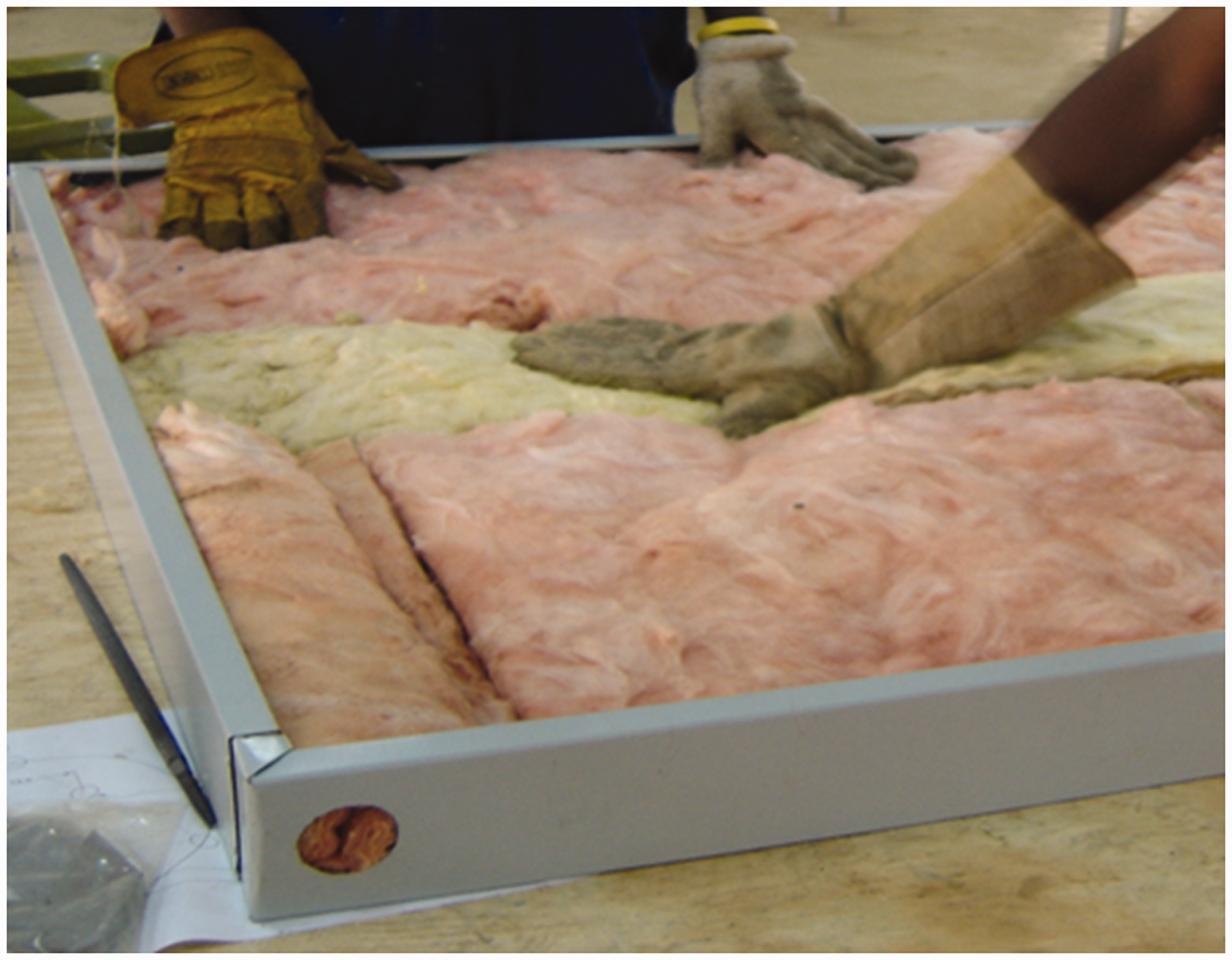
Insulating base of collector.
After manufacturing, solar collectors and tanks were tested, transported and installed to the different three areas namely Kinigi (cold area of Rwanda), Tumba (area with an average temperature) and Kigali (hot area of Rwanda). After installation, experiments and measurement of temperatures were done to determine the efficiency of collector and tank. Figures 7 and 8 show temperature and solar radiation records in experimental areas, respectively.
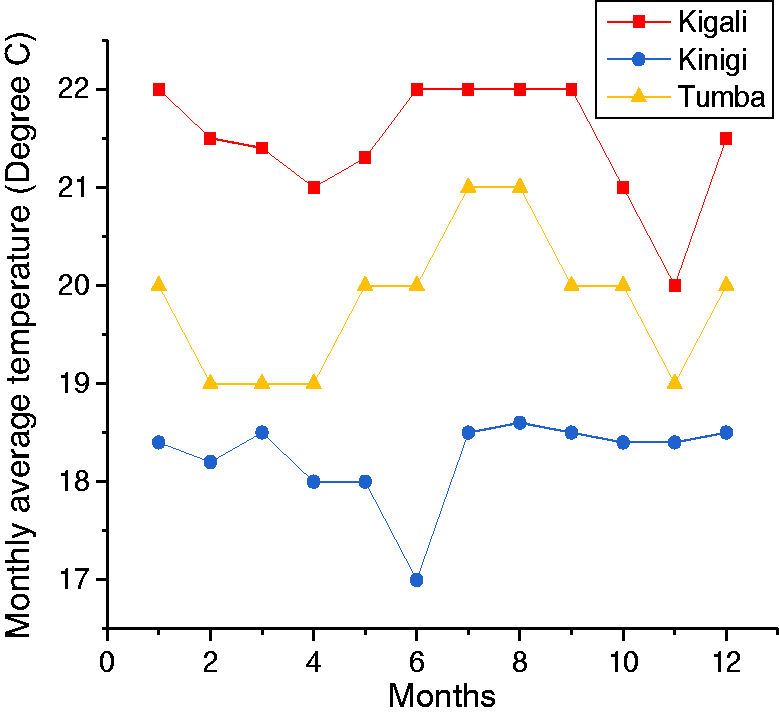
Temperature distribution in degree Celsius in three areas.
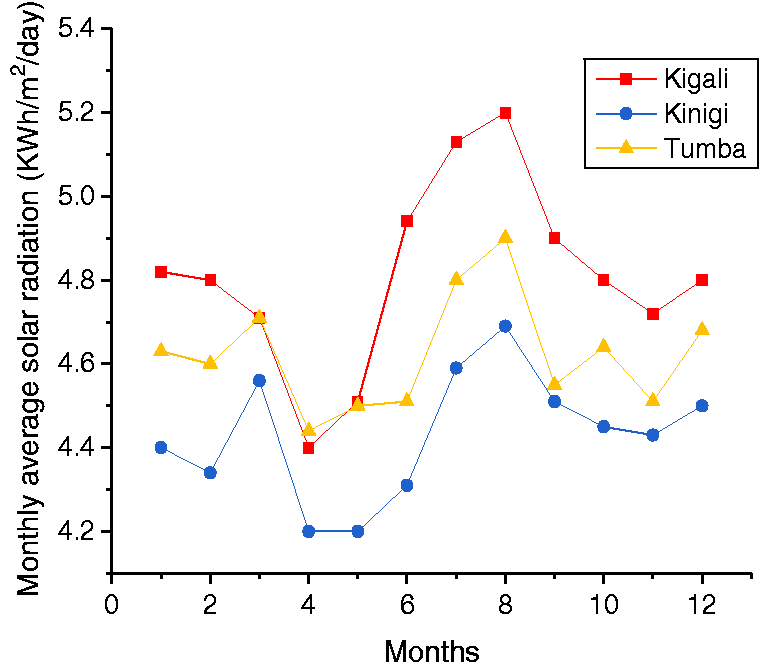
Solar radiation in three areas in kW/m2/day.
Results and discussion
Record of temperature in three regions of Rwanda
Kigali: minimum ambient temperature is 16°C while the maximum temperature is 29°C Musanze (Kinigi): minimum ambient temperature is 11°C while the maximum temperature is 24°C Rulindo (Tumba): minimum ambient temperature is 13°C while the maximum temperature is 26°C 22–75°C from SWH installed at Kigali (hot region) 17–68°C from SWH installed at Tumba 15–62°C from SWH installed at Kinigi (coldest region)
Temperature of hot water from solar water heater tested:
The efficiency evaluation
The following formula is used for determining the efficiency of solar collector:
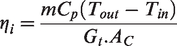
Efficiency of solar water heater installed at Kigali site
Data:
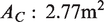
Peak sun hours;
Solar radiation in Kigali is
Converting solar radiation into
Efficiency of the collector is given by:

Efficiency of water tank
Efficiency of water tank: It is the capacity of tank of keeping hot water. For calculation of efficiency of water tank, we have considered the water temperature recorded at the sun set and temperature recorded at sun rise in the morning.
Tcout: outlet temperature from collector: 75
Ttout: outlet temperature from water tank in the morning: 59°C
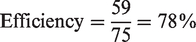
Efficiency of solar water heater installer at Tumba site.
Data:
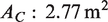
Peak sun hours;
Solar radiation in Tumba is
Converting solar radiation into

Efficiency of the collector is given by:

Efficiency of tank
Tcout: outlet temperature from collector: 68°C
Ttout: outlet temperature from water tank in the morning: 52°C
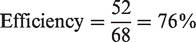
Efficiency of solar water heater installed in Kinigi site.
Data:
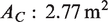
Peak sun hours;
Solar radiation in Kinigi is
Converting solar radiation into

Efficiency of the collector is given by:

Tcout: outlet temperature from collector: 62°C
Ttout: outlet temperature from water tank in the morning: 44°C
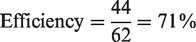
Based on the calculations from three different sites where Tumba College of Technology installed solar water heaters, we find that the collector efficiencies are in range of 78.5% and 81.7% and tank efficiencies are in range of 71% and 78%.
The high efficiency of this solar water heater was achieved during manufacturing, the change of absorber plate material and its design with equal spacing slots is the important part to achieve high efficiency.
From the calculation, there is slight difference in efficiency of Kinigi, Tumba and Kigali. This is due to the variation in Temperature of an area where by Kigali is the hottest among the three sites and Kinigi is the coldest one.
It has noticed that there is a strong relationship between daily insolation and thermal efficiency (Figure 9) where there is high daily insolation, high thermal efficiency is obtained. Following these results, we can suggest that, insulation material should be increased in terms of thickness, this will make the heat inside the tank to remain constant and decrease the heat loss of the tank, there should be also the insulation of outlet pipe to avoid any heat loss in piping system. Welding and plumbing system should be done properly and with a lot of care to avoid any leakage and bursting due to inside pressure of the tank and collector.
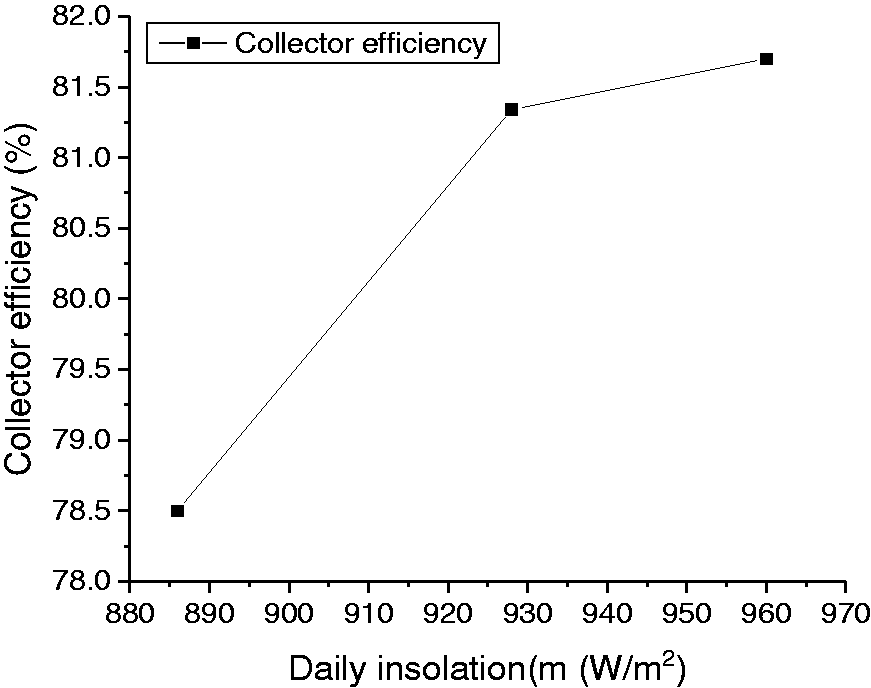
Daily insolation vs. collector efficiency.
Cost and payback period
The payback period is the length of time needed (in years) to recover the initial investment. In this section, we compare the cost of solar water heater made in Rwanda and the cost of heating water using electricity. The cost of solar water heater made in Rwanda by Tumba College of Technology is $900 with 2.77 m2 and 200 L of tank capacity. This solar water heating system is sufficient per day for a family of four members. The cost of electricity in Rwanda is $0.15 per kwh.



CE: the cost of electricity per kwh
Qload: the quantity of electricity needed per day.
(Thot-Tcold): difference of final and initial temperature of heated water = 35°C
Gw: daily quantity of water needed= 200 L= 200 kg/day
Cw: specific heat of water= 4.18 kJ/kg°C
Qload= 200 × 4.18 × 35 = 29,260 kJ/day or 8.13 kWh/day
From the above data, annual saving cost is calculated:
Annual saving cost = 365 × 0.15 × 8.13=$445

When compared, this payback period is less than the payback period in different literature which is 2.5–3.5 years (Kalogirou, 2009). This high payback period is due to the installation of oversized solar water heater without considering solar radiation available which impaired financial returns. The payback period of two years is relatively low due to the design with considering the solar data of where the system will be installed.
Conclusion
The results show that the efficiency of solar collector is highly depending on design and material of absorber plate. The absorber plate performance is also depending on thermal conductivity of absorber plate material. It has been seen that the regions where the sun radiation is high, the performance of both collector and tank is also good.
For coldest region, the performance of solar water heater falls a bit due to the insufficient solar radiation. Solar water heaters manufactured in Rwanda at Tumba College of Technology have efficiencies ranging between 60% and 76%.
The payback period of 2 years is lower compared to those in other literature (2.5–3.5 years); this is because of its high efficiency and design which eliminate the oversizing of the system. It has been noticed that for coldest region the thickness of the insulating materials should be increased so that the tank of the solar water heater can keep hot water for a good period of time.
Footnotes
Declaration of conflicting interests
The author(s) declared no potential conflicts of interest with respect to the research, authorship, and/or publication of this article.
Funding
The author(s) received no financial support for the research, authorship, and/or publication of this article.