




Abstract
The Proterozoic–Lower Paleozoic marine facies successions are developed in more than 20 basins with low exploration degree in the world. Some large-scale carbonate oil and gas fields have been found in the oldest succession in the Tarim Basin, Ordos Basin, Sichuan Basin, Permian Basin, Williston Basin, Michigan Basin, East Siberia Basin, and the Oman Basin. In order to reveal the hydrocarbon enrichment roles in the oldest succession, basin formation and evolution, hydrocarbon accumulation elements, and processes in the eight major basins are studied comparatively. The Williston Basin and Michigan Basin remained as stable cratonic basins after formation in the early Paleozoic, while the others developed into superimposed basins undergone multistage tectonic movements. The eight basins were mainly carbonate deposits in the Proterozoic–early Paleozoic having different sizes, frequent uplift, and subsidence leading to several regional unconformities. The main source rock is shale with total organic carbon content of generally greater than 1% and type I/II organic matters. Various types of reservoirs, such as karst reservoir, dolomite reservoir, reef-beach body reservoirs are developed. The reservoir spaces are mainly intergranular pore, intercrystalline pore, dissolved pore, and fracture. The reservoirs are highly heterogeneous with physical property changing greatly and consist mainly of gypsum-salt and shale cap rocks. The trap types can be divided into structural, stratigraphic, lithological, and complex types. The oil and gas reservoir types are classified according to trap types where the structural reservoirs are mostly developed. Many sets of source rocks are developed in these basins and experienced multistage hydrocarbon generation and expulsion processes. In different basins, the hydrocarbon accumulation processes are different and can be classified into two types, one is the process through multistage hydrocarbon accumulation with multistage adjustment and the other is the process through early hydrocarbon accumulation and late preservation.
Keywords
Introduction
Carbonate rock has rich oil and gas resources. Although it only accounts for 20% of the total sedimentary rocks area of the world, its reserve of oil and gas accounts for 52% of the world’s total reserves, and accounts for about 60% of world oil and gas output (Jiang et al., 2008; Roehl and Choquette, 1985). But their distribution is not balanced: the oil reserves in the Middle East region account for about two-thirds of the world’s oil reserves, among them three-quarters are concentrated in the Jurassic, Cretaceous, and Neogene carbonate reservoir layers (Alsharhan and Nairn, 1998). The natural gas reserves in the Middle East, the United States, and the former Soviet Union account for about two-thirds of the world’s natural gas reserves, of which two-thirds are concentrated in the Carboniferous and Permian carbonate reservoir layers (Wilson, 1980a, 1980b). In contrast, little oil and gas resources have been found in the Proterozoic–Lower Paleozoic marine carbonate succession because of the deep reservoirs and less exploration. What have been found are mainly located in North America, the Middle East, Central Asia–Russia, and Asia Pacific–China hydrocarbon bearing areas. Some of the important oldest marine carbonate basins are the Tarim Basin, Ordos Basin, and Sichuan Basin in China; the Permian Basin, Williston Basin, and Michigan Basin in North America; the Russia’s East Siberia Basin; and the Oman Basin in the Middle East (Figure 1). In these basins, oil and gas fields have been found in the Proterozoic-Lower Paleozoic succession (Bai, 2006; Halbouty, 2003; Sun, 2015). In order to improve oil and gas exploration and exploitation in the oldest carbonate succession, the characteristics and differences of hydrocarbon accumulation in the oldest carbonate strata in the eight basins are analyzed in this paper, based on their tectonic and sedimentary characteristics, hydrocarbon accumulation elements, and processes.
Distribution of the eight major basins with oil and gas fields in the Proterozoic–Lower Paleozoic succession in the world. (a) Ordos Basin, (b) Tarim Basin, (c) Sichuan Basin, (d) Permian Basin, (e) Williston Basin, (f) Michigan Basin, (g) East Siberian Basin, and (h) Oman Basin.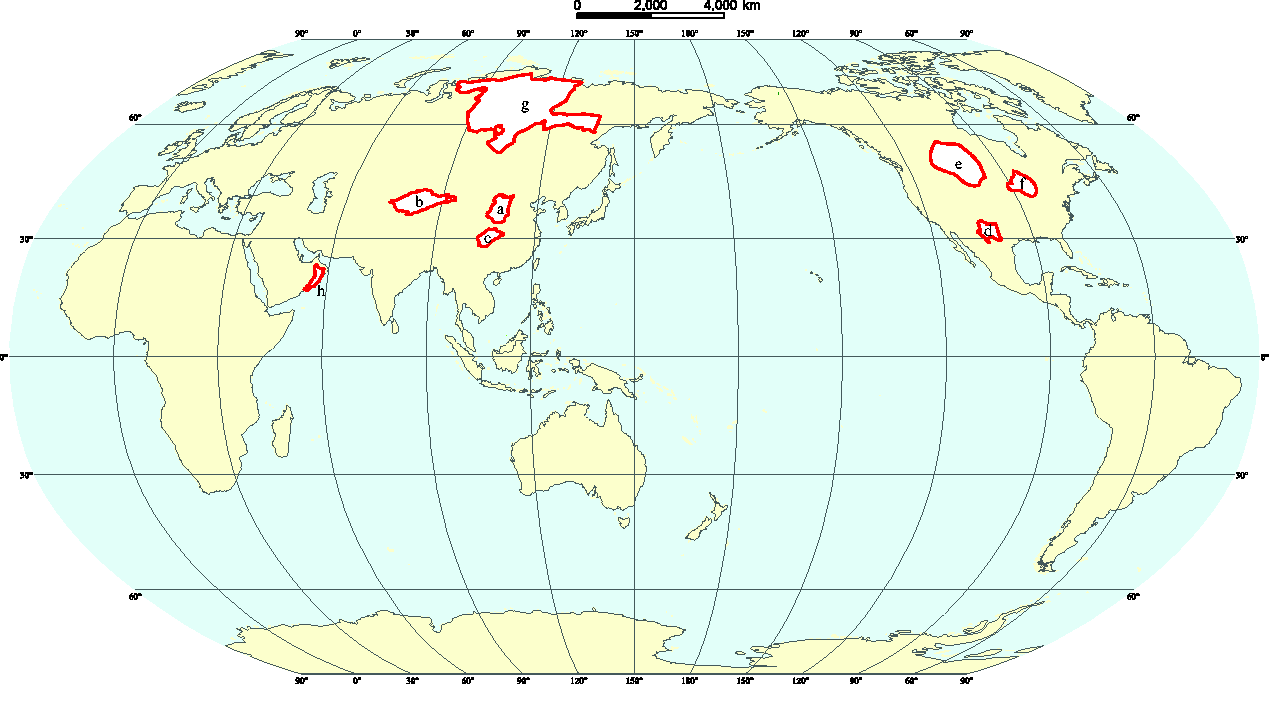
Tectonic and sedimentary characteristics
Basin tectonic evolution
Information of the tectonic and sedimentary characteristics of the eight major basins.
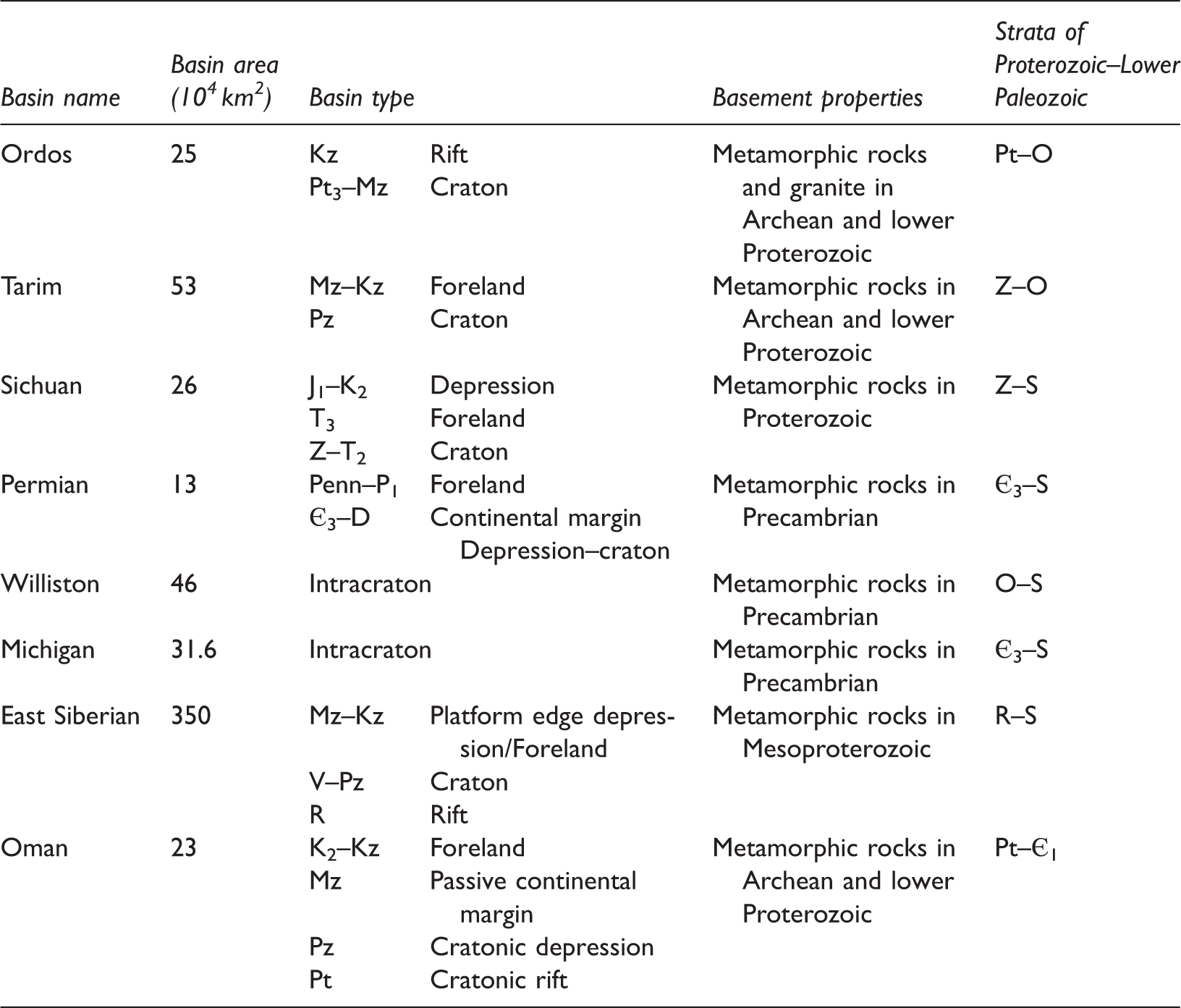
Each basin has its own evolution characteristics. The Ordos Basin is located in southwest part of the North China platform on the basement of Archean and early Proterozoic granite and metamorphic rocks and has experienced the multistage structure evolutions (Figure 2(a)) (Liu et al., 2009; Zhao et al., 2012); the Tarim Basin is in the Tarim platform on the basement of Precambrian crystal metamorphic rocks. It is a large multicycle superimposed basin consisting of stably developed Paleozoic marine cratonic basin and Mesozoic–Cenozoic foreland basin developed from thrust structures and has experienced multistage tectonic disturbances and depositional superimpositions (Figure 2(b)) (He et al., 2005; Jia and Wei, 2002; Zhang et al., 2007); the Sichuan Basin is located northwest of the Yangtze tectonic plate. It is on the Proterozoic crystalline basement, resulting from superimpositions of cratonic basin between the Sinian and middle Triassic, foreland basin in later Triassic, and depression basin between the early Jurassic to middle Cretaceous (Figure 2(c)) (He et al., 2011; Li et al., 2015; Liu et al., 2011; Zeng and Guo, 2015). The Permian Basin is located on the south edge of the North America platform and is a Paleozoic cratonic basin formed on Precambrian crystalline basement. In early Paleozoic, it was neritic shelf carbonate sediment slightly inclining southeast. The basin experienced the multistage tectonic events and consists of mainly the Central basin platform, the Delaware basin, the Midland basin, and the Val Verde basin (Figure 2(d)) (Mckee et al., 1967; Yang and Dorobek, 1995). The Williston Basin is located between the Rocky Mountain area and Canadian Shield. It is deposited on the Precambrian metamorphic basement with simple internal structure and is a cratonic basin (Figure 2(e)) (Gerhard et al., 1982; Tao et al., 2013). The Michigan Basin is located east of the North America platform and is a relatively stable craton basin formed on the Precambrian crystalline basement (Figure 2(f)) (Catacosinos et al., 1990; Charpentier, 1987).
Geological profiles of the eight major basins. (a) Ordos Basin, (b) Tarim Basin, (c) Sichuan Basin, (d) Permian Basin, (e) Williston Basin, (f) Michigan Basin, (g) East Siberian Basin, and (h) Oman Basin.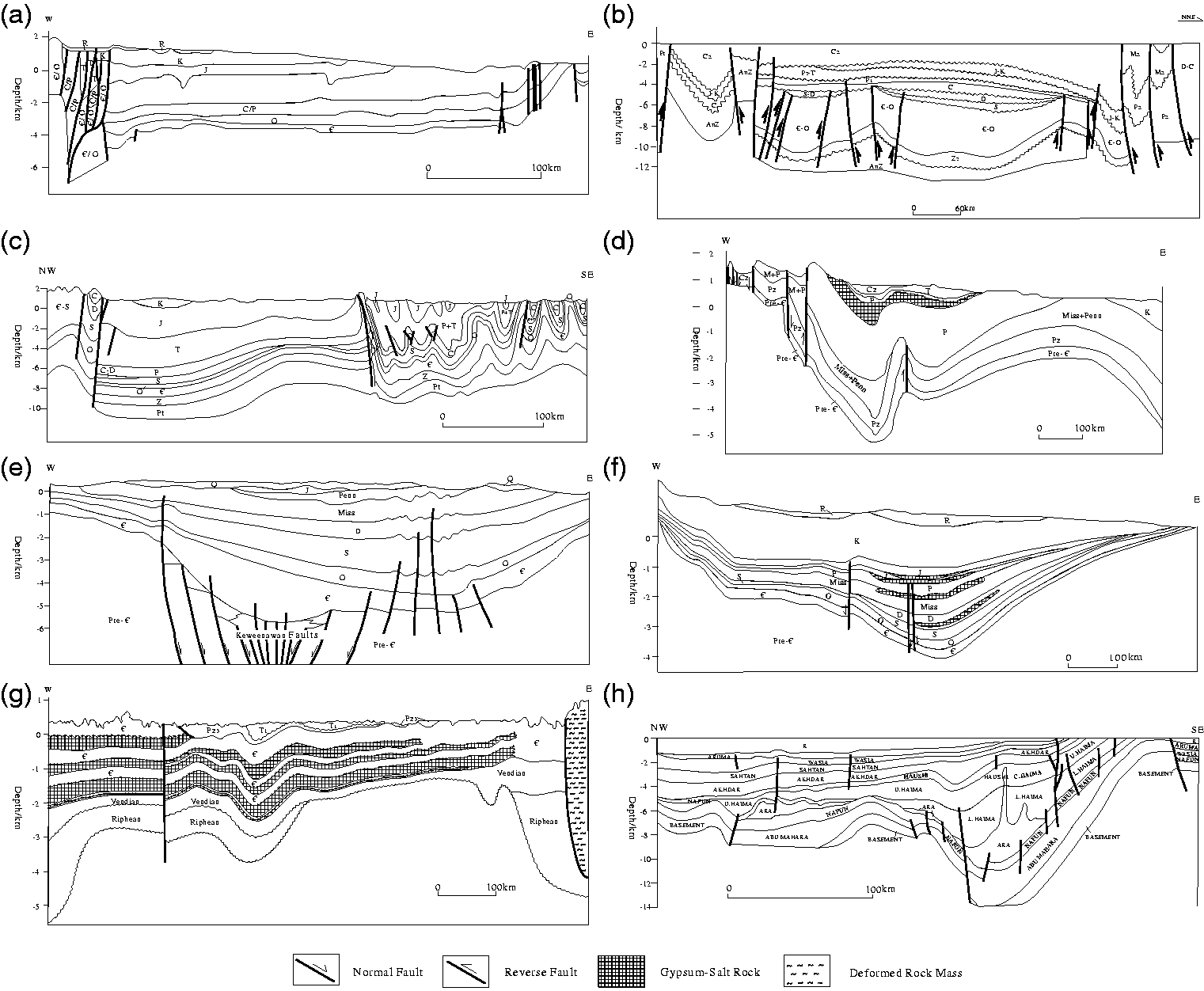
The East Siberia Basin was developed on the Siberia platform on Archean and Proterozoic metamorphic basement. After multistage tectonic movements, it forms nowadays the structure framework of alternating uplifts and depressions with Mesozoic–Cenozoic foreland basins well developed in basin edge (Figure 2(g)) (Du et al., 2013; Nikishin et al., 2010; Zhu et al., 2012). The Oman Basin is located southeast of the Arabic tectonic plate and also is a large-scale superimposed basin. It was developed on Precambrian crystalline basement evolved from Proterozoic cratonic rift to Paleozoic inland depression with multistage tectonic events (Filbrandt et al., 2006; Loosveld et al., 1996; Zhu et al., 2014) (Figure 2(h)).
Basin sedimentary characteristics
In the Proterozoic–early Paleozoic, the eight basins were mainly marine carbonate deposits, which contain a wealth of oil and gas resources and are important layers for exploration. In the early Paleozoic, the Ordos Basin was shallow-epicontinental sea sedimentary environments and later experienced three major sedimentary evolution stages from epicontinental sea carbonate ramp to carbonate platform to eroded ancient land. Most of the sediments are carbonate rocks (Li, 2009; Wei et al., 1997). The Tarim Basin was marine stratum from the Sinian to late Permian with clastic rocks interbedded with carbonate rocks in the lower layers, carbonate rocks in the middle layers, and clastic rocks interbedded with carbonate rocks in the upper layers. The Cambrian and Ordovician carbonate rocks were well developed (Jia and Wei, 2002; Xiao et al., 2011); the Sichuan Basin was a cratonic basin deposited with marine carbonate rocks in the Sinian–middle Triassic (He et al., 2011); the Permian Basin had experienced the Paleozoic marine and middle Cenozoic continental facies since the end of the Cambrian and its Paleozoic strata were carbonate rocks with several unconformities (Hills, 1984); the Williston Basin was mainly carbonate rocks and evaporite rocks in the Paleozoic (Burrus et al., 1996; Gerhard et al., 1982; Tao et al., 2013); the Michigan Basin was deposited with a set of transgressive sandstone and sandy dolomites in the Cambrian, which were in unconformable contact with the Ordovician marine carbonate rocks, shale, and sandstone. During the Silurian, the carbonate rocks, the organic reef, and the evaporite rocks were deposited alternatively and were in unconformable contact with the Devonian system (Catacosinos et al., 1990; Fisher et al., 1988). The sedimentary strata in East Siberia Basin started from the Proterozoic Riphean. The main residual strata in the basin were the Riphean, Vendian, Cambrian, Ordovician, and Silurian series, whose rocks were mainly carbonate rocks except the lower part of Vendian and Silurian series, which were terrigenous clastic rocks (Du et al., 2013; Zhu et al., 2012). The marine carbonate strata in Oman Basin were mainly early Proterozoic–Cambrian Huqf group, which were formed during the transformation of early rift to depression basin and were deposited in shallow water, intermittent sea, and intertidal–supratidal zone depositional environment (Allen, 2007; Filbrandt et al., 2006; Gorin et al., 1982; Zhu et al., 2014) (Figure 3).
Stratigraphic columns of Proterozoic–Lower Paleozoic succession in the eight major basins showing hydrocarbon accumulation elements.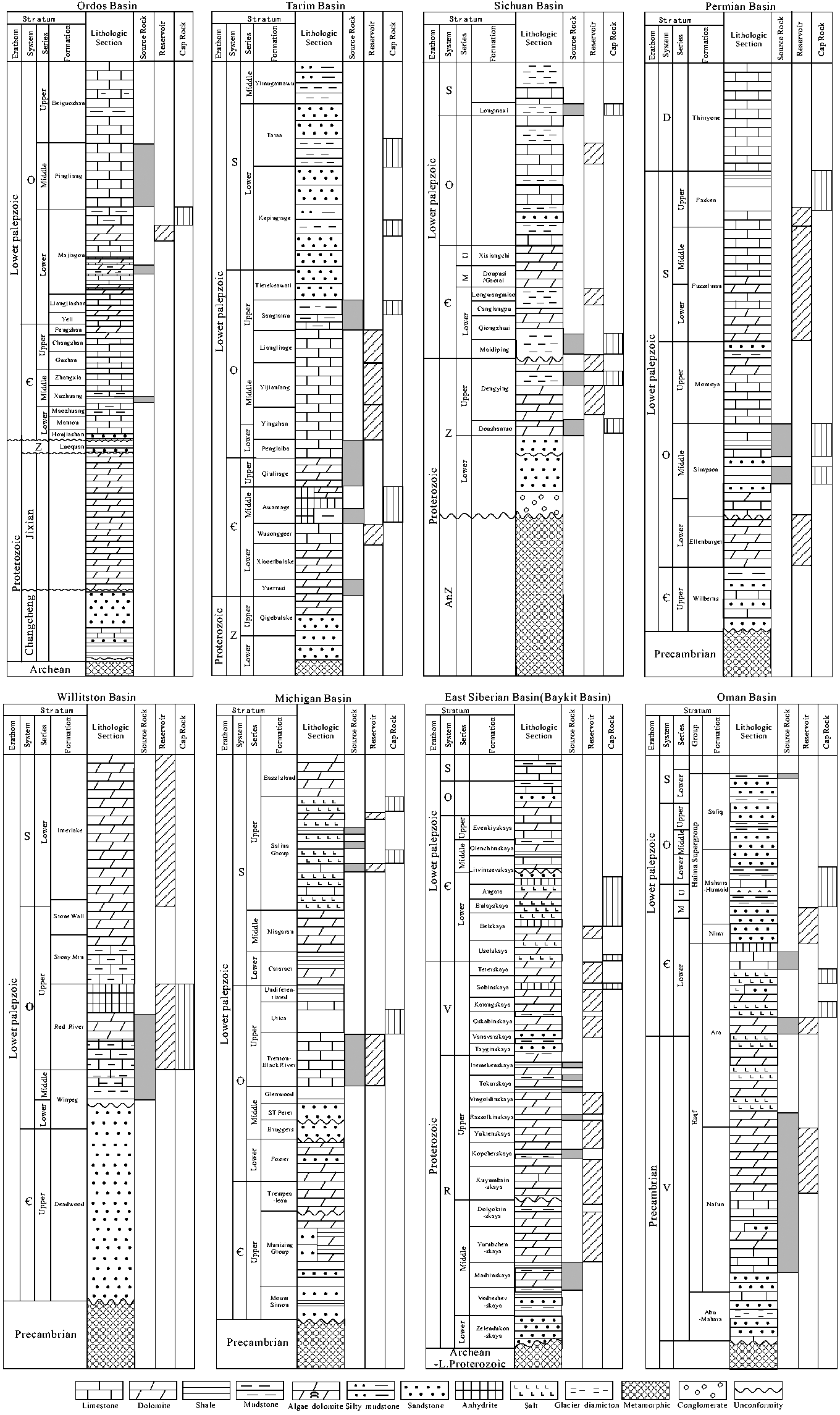
Hydrocarbon accumulation elements
Source rocks
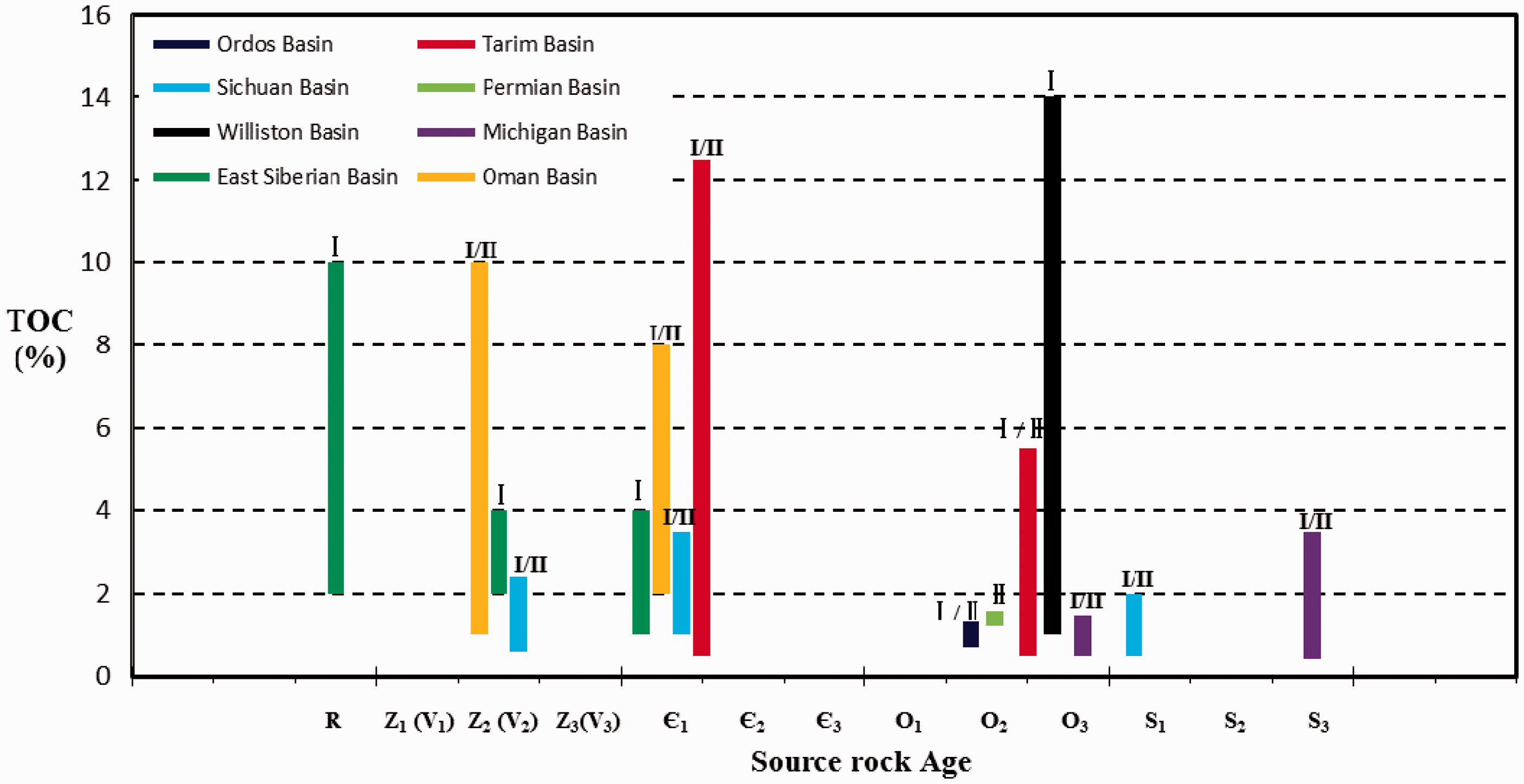
Source rocks are the material foundation for hydrocarbon. In the eight basins, multiple sets of source rocks were developed in Proterozoic–early Paleozoic, particularly in the Ordovician (Figure 4). The lithology of source rocks consists mainly of shale, followed by argillaceous dolomite and argillaceous limestone. The source rocks were very thick with the thickness of up to 600 m; the total organic carbon (TOC) content varied greatly (Figure 5), which might be related to the lithology of source rocks. As the source rock, shale has higher TOC than carbonate rocks do (Table 2) (Jarvie, 1991; Peng et al., 2008; Peters, 1986). It is generally believed that when the TOC is greater than or equal to 0.5%, both shale and carbonate rocks can be effective source rocks (Chen et al., 2012; Zhang et al., 2002). The TOC of the source rocks of Proterozoic–Lower Paleozoic succession developed in the eight basins is generally greater than 1%, meeting the basic requirement of being effective source rock. Organic matter types are mainly type I and type II, containing mainly planktonic algae and benthic algae (Chen et al., 2012). The source rocks have high thermal maturity with the majority of being matured or over matured (Cercone, 1984; Meng et al., 2012; Qiu et al., 2012; Visser, 1991; Zhao et al., 2012).
Lithology of the main source rocks developed in the Proterozoic–Lower Paleozoic in the eight major basins. Histogram of TOC and organic matter types of major source rocks in the Proterozoic–Lower Paleozoic succession in the eight major basins. TOC: total organic carbon. Parameters of main source rocks in the Proterozoic–Lower Paleozoic succession in the eight major basins. TOC: total organic carbon.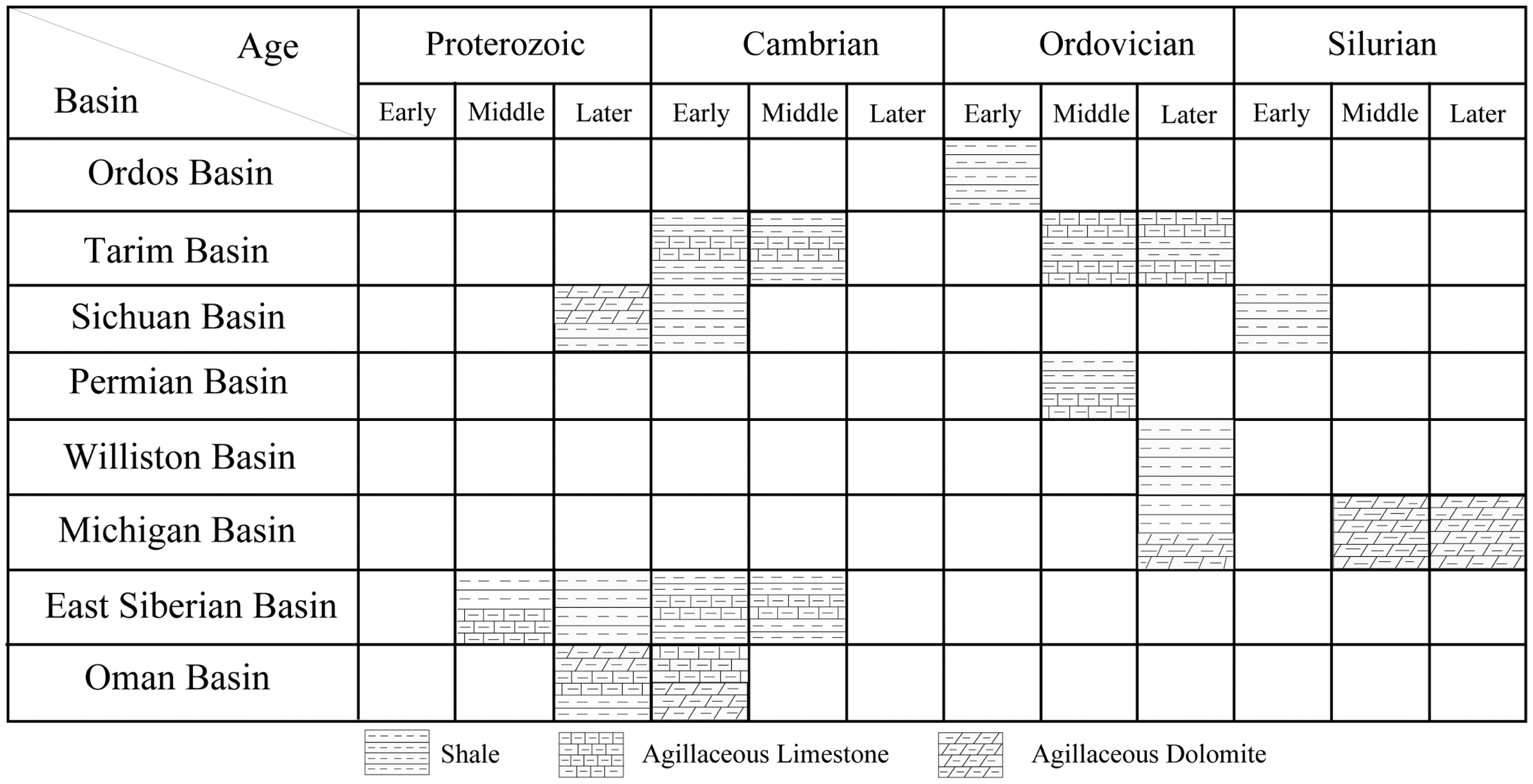
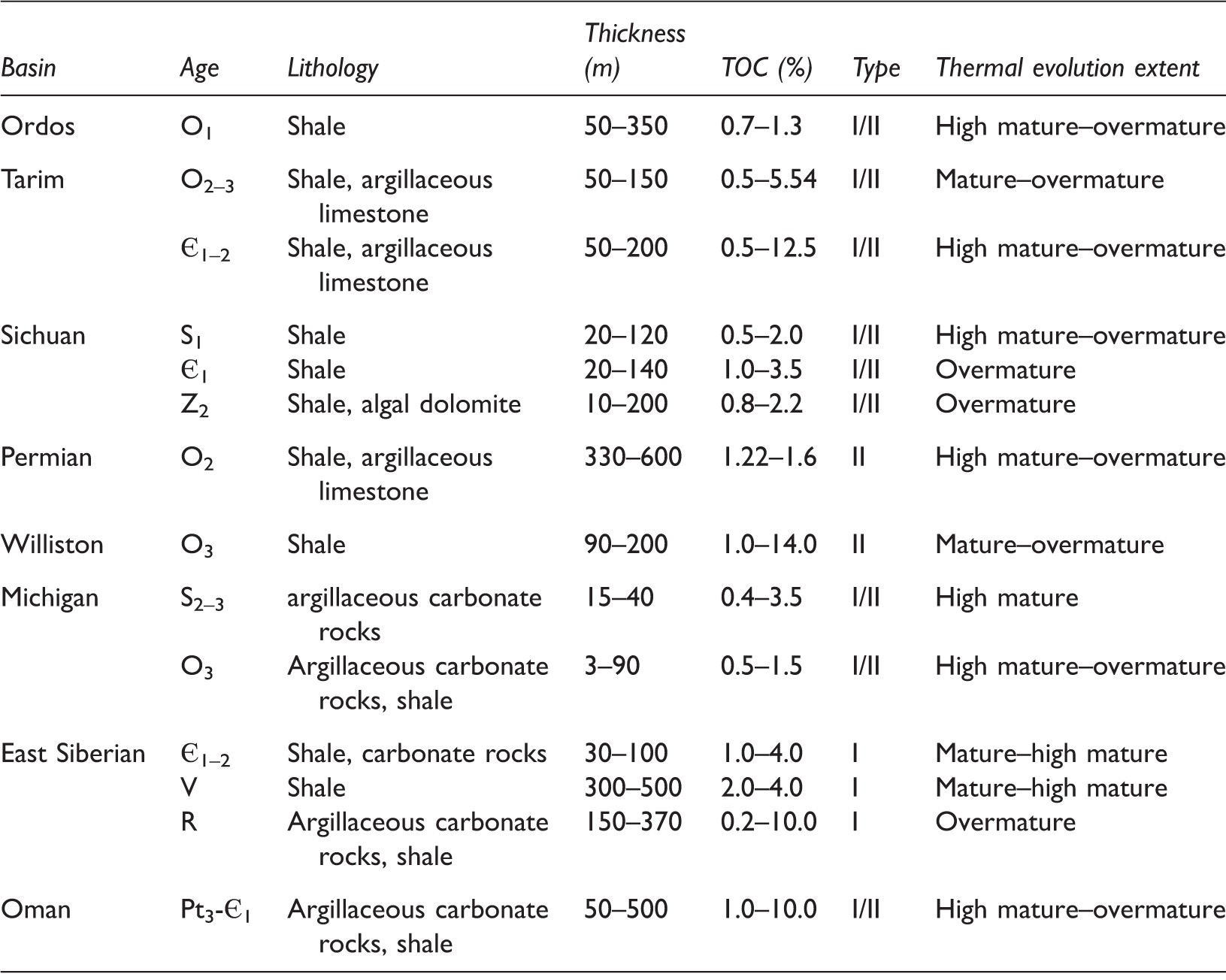
The source rocks of Proterozoic–Lower Paleozoic succession in the eight basins were formed long time ago and had experienced multistage tectonic events. The source rocks were buried at very different depths in different parts of the basins, resulting in complex hydrocarbon generation and expulsion processes (Jin et al., 2012). Analysis showed that the main source rocks developed in the Tarim Basin, Sichuan Basin, and East Siberia Basin had multistage hydrocarbon generation and expulsion. In the Tarim Basin, there were Cambrian–Lower Ordovician and Middle–Upper Ordovician source rocks. The Cambrian source rocks entered hydrocarbon-generating peak in Caledonian and early Hercynian periods. In the late Hercynian period, they entered generation stage for condensated oil and wet gas, and in the Himalaya period, entered generating stage for dry gas (Zhang et al., 2007; Zhao et al., 2008). The Cambrian source rocks in Sichuan Basin entered the mature stage before the Caledonian movement and stopped hydrocarbon generation after the Caledonian uplift. They reached peak hydrocarbon expulsion in Permian–Triassic, which ended at early Cretaceous (Liu et al., 2009; Sun et al., 2010). The Riphean source rocks in Baykit Subbasin of East Siberia Basin had strong hydrocarbon generation and expulsion in middle Late Riphean, and in late Late Riphean, there were folding and uplift movements in the Baykit Subbasin, which resulted in the end of hydrocarbon generation and expulsion. In Vendian and Cambrian, the Riphean source rock generated and expulsed hydrocarbon again. Several uplift and denudations occurred in Silurian–Devonian and early Permian–late Triassic, resulting in weakening or stopping of hydrocarbon generation. By early Triassic, the Riphean hydrocarbon source rock had ended hydrocarbon generation (Li et al., 2000). However, in Ordos Basin, Permian Basin, Williston Basin, Michigan Basin, and Oman Basin, hydrocarbon generation and expulsion were mainly continuous. The Ordovician source rocks in the Ordos Basin entered in the threshold of hydrocarbon generation in late Carboniferous and reached the peak of oil generation in late Triassic which ended in early Cretaceous. The peak of gas generation arrived slightly later than the peak of oil generation, reaching the peak around early Jurassic with two hydrocarbon expulsion peaks in early Jurassic and early Cretaceous (Liu and Hao, 1996). The Ordovician source rocks in Permian Basin generated oil after late Permian, which reached the peak in Triassic and ended at Tertiary. The Ordovician source rocks in Williston Basin began hydrocarbon generation from Cretaceous and continued until now. Hydrocarbon generation and expulsion in the Silurian source rocks in the Michigan Basin were mainly in Devonian and Carboniferous (Cercone, 1984). The source rocks in Huqf group in Oman Basin generated and expulsed hydrocarbon mainly in late Permian–Tertiary (Terken and Frewin, 2000; Terken et al., 2001).
Reservoir rocks
Reservoirs as the accumulation rocks are the determinant of richness of hydrocarbon. The lithology of reservoir rocks in the Proterozoic–Lower Paleozoic succession in the eight basins consists mainly of dolomite, limestone, and dolomitized limestone (Table 3, Figure 6). The types of reservoir lithofacies include karst reservoir, dolomite reservoir, and reef-beach body reservoir. The Silurian Niagaran reef reservoir in the Michigan Basin, the Lianglitage reef-beach body reservoir in the TZ1 slope-break belt in Tarim Basin, and Cambrian Longwangmiao reef-beach body reservoir in Sichuan Basin were influenced by late diagenesis and tectonic movements and had developed dissolved pores and fractures (Gill, 1979; Zou et al., 2014). The rest of the reservoirs were mostly related to weathering crust and karst fracture-vug. The karst reservoirs were mainly moldic pores and dissolved pores, such as the Majiagou formation in Ordovician series in Ordos Basin and the Kuymba formation in Riphean in anticline of Baykit platform in East Siberia Basin, where dissolved pores were developed (Ulmishek, 2001). It is found that karst reservoirs were well developed in the eight basins, where dissolved pores and fractures functioned as storage space, such as those in the Trenton and Black River formation in Ordovician in Michigan Basin and Yingshan formation in Ordovician in Tarim Basin (Hurley and Swager, 1989). In addition, dolomite reservoirs were well developed in these oldest marine carbonate basins, such as Sinian Dengying formation of Sichuan Basin, Ordovician Ellenburger formation of Permian Basin, Ordovician Red River formation of Williston Basin, and Ara intrasalt dolomite strings of South Oman Salt Basin (Al-Abry, 2005; Kerans, 1988; Schröder et al., 2005).
Lithology of the main reservoirs developed in the Proterozoic–Lower Paleozoic in the eight major basins. Parameters of main reservoirs in the Proterozoic–Lower Paleozoic succession in the eight major basins.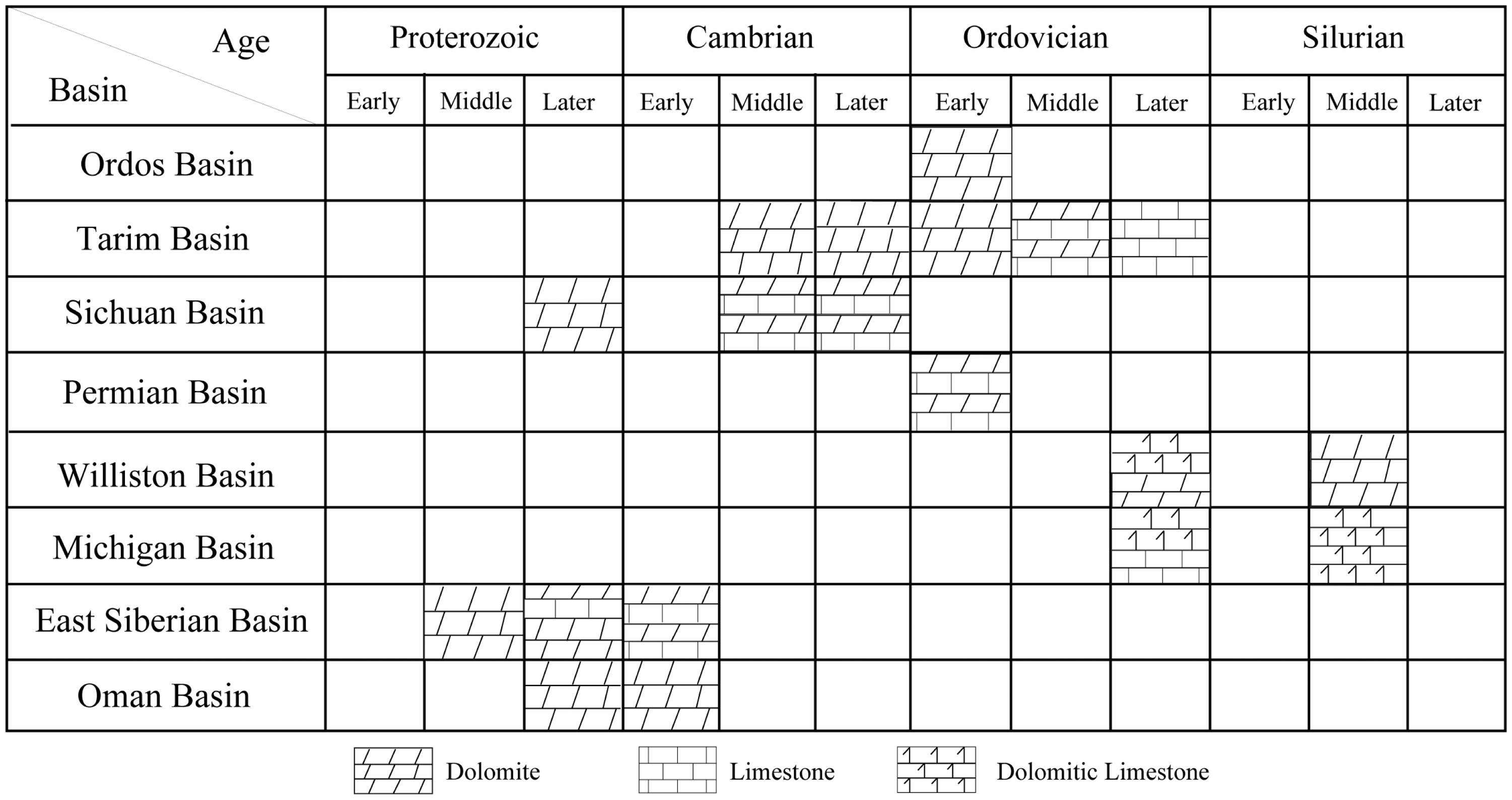
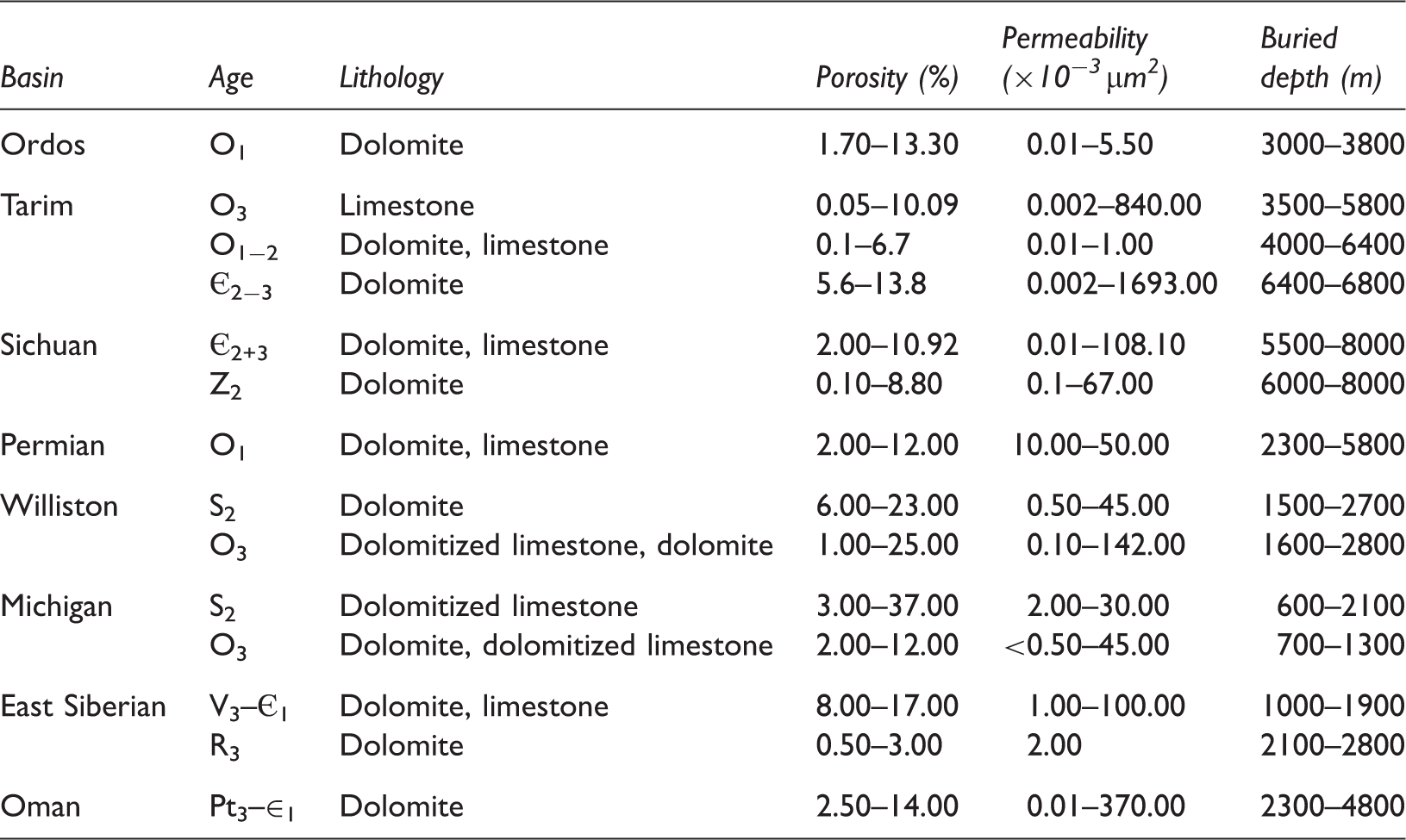
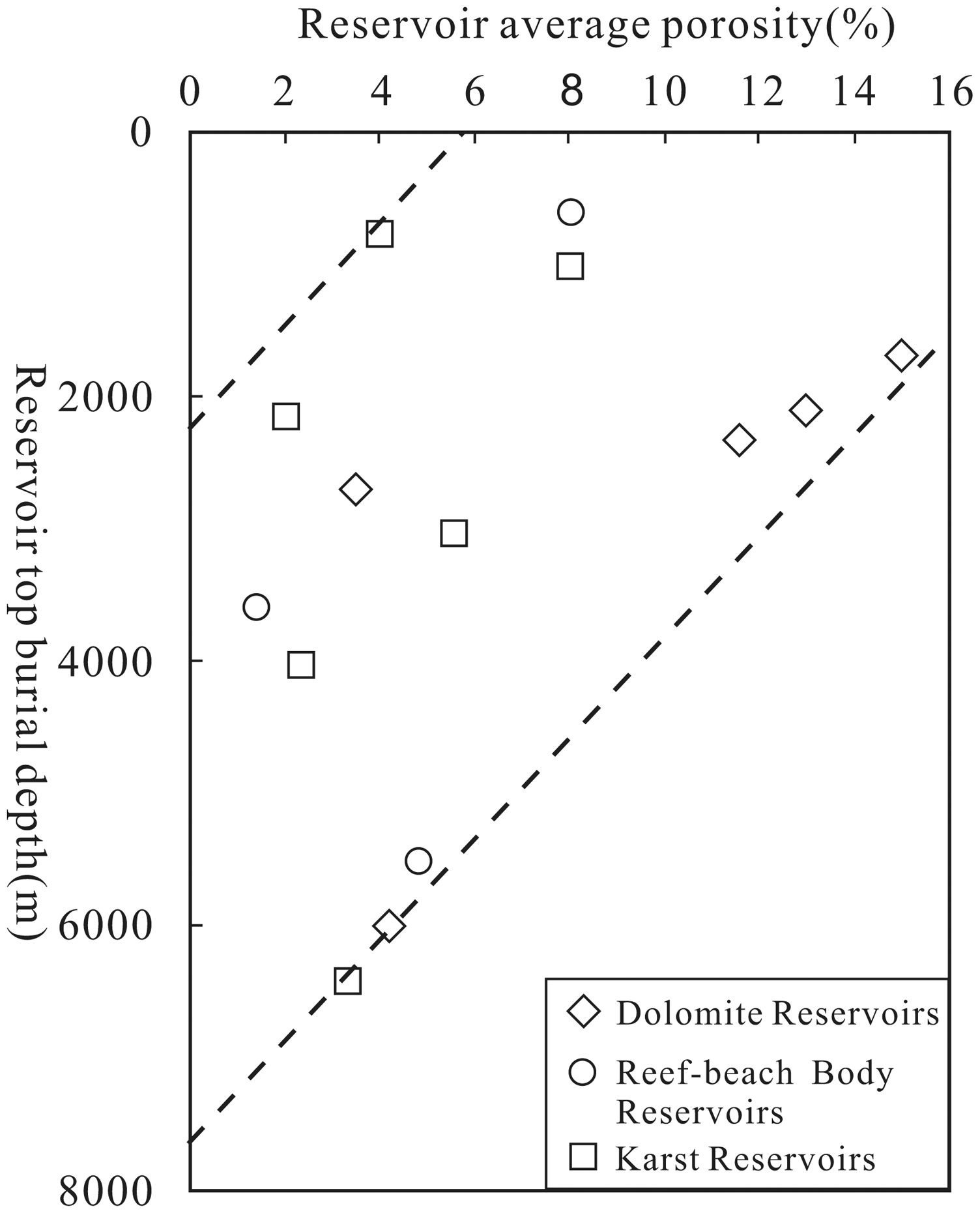
The physical properties of the reservoirs varied greatly with the average matrix porosity of less than 10% (Figure 7). The porosity is somehow negatively related to the burial depth (Figure 8), that is as the burial depth increases, the porosity reduces. In comparison with several other basins, the reservoir depth in Ordos Basin, Tarim Basin, and Sichuan Basin in China is more than 3000 m and their porosity is significantly smaller than that of other shallow basins. The matrix permeability is between 0.001 and 100 × 10−3 µm2. Due to high heterogeneity of carbonate rocks, the fracture had marked impact on the permeability. In the areas with well-developed fractures, the permeability increased exponentially. For example, the matrix permeability is 0.045–1.13 × 10⁻³ µm2 in Weiyuan gas field, while in the fracture zone it is 1–38 × 10−3 µm2.
Porosity of the main reservoirs in the Proterozoic–Lower Paleozoic succession in the eight major basins. The relation between porosity and depth of the main reservoirs in the Proterozoic–Lower Paleozoic succession in the eight major basins.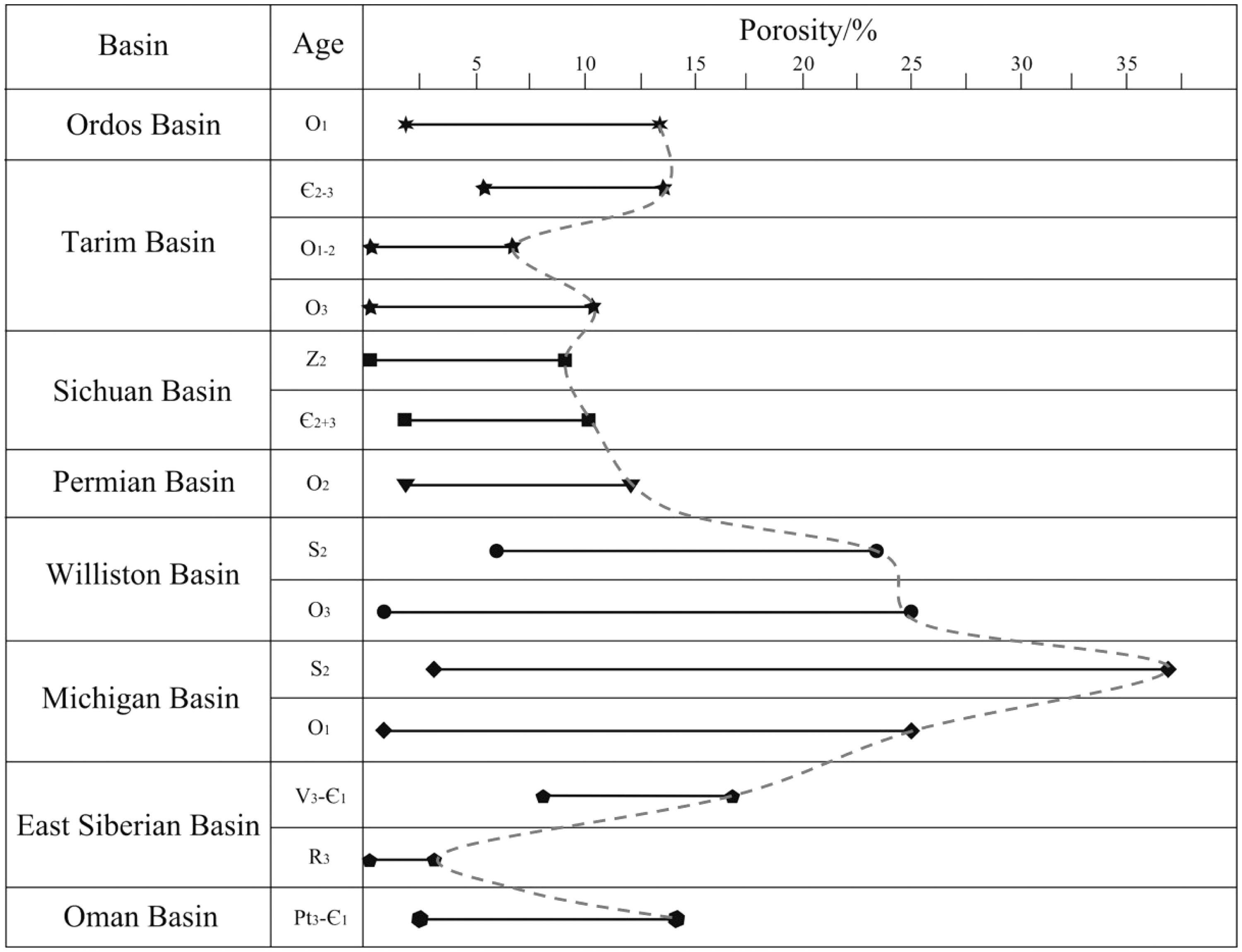
Cap rocks
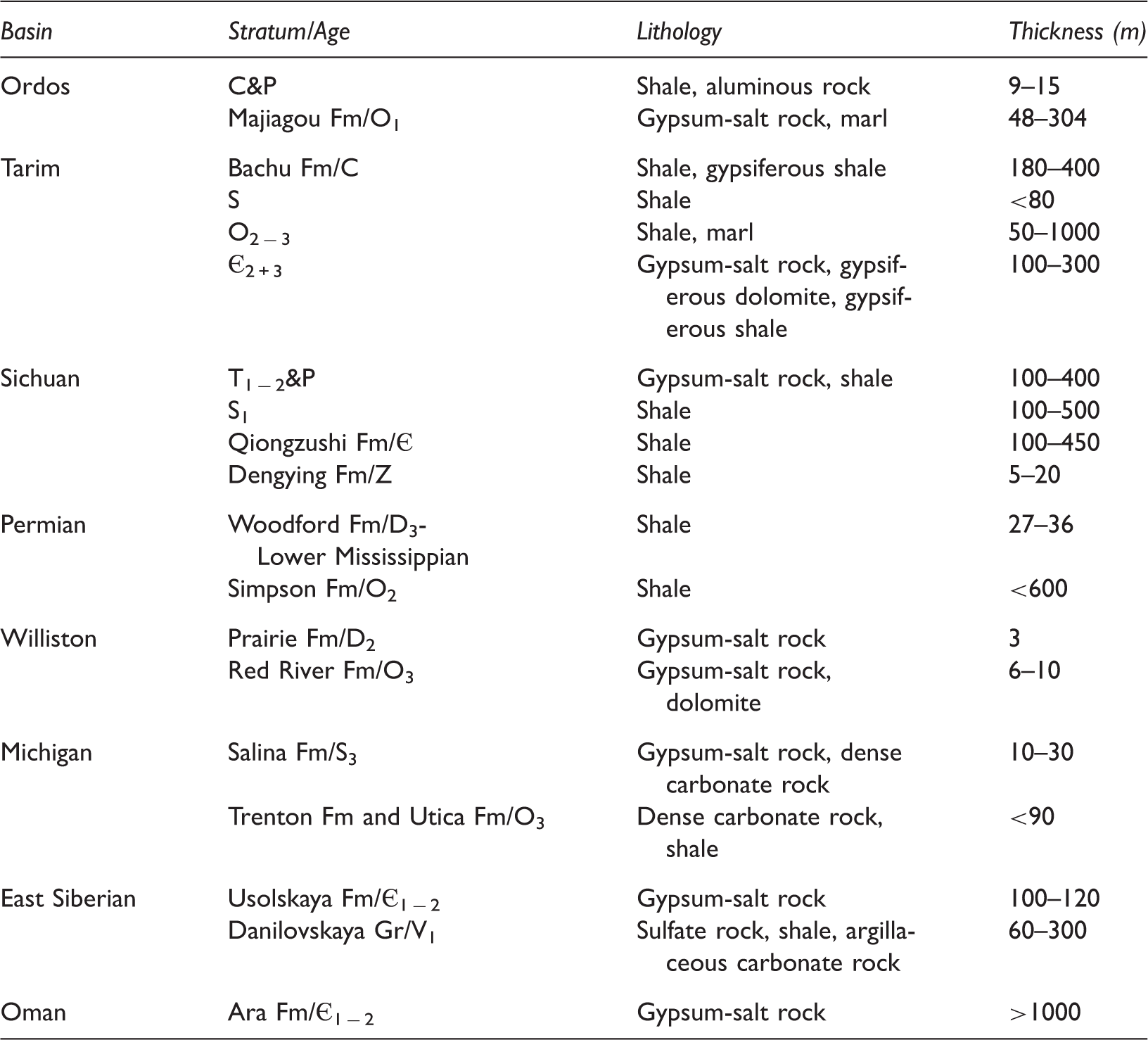
The Cap rock can prevent the loss of hydrocarbon and is an indispensable part in the formation of oil and gas reservoir. The oil and gas reservoirs in the Proterozoic–Lower Paleozoic succession formed very early and then generally experienced multistage tectonic events. Therefore, the cap rocks need stronger sealing capacity. Gypsum-salt rock, shale, and dense carbonate rocks are the main lithology of cap rocks in the eight basins (Figure 9). Compared with the shale and dense limestone, the gypsum-salt rock is highly plastic and has a higher breakthrough pressure (Hildenbrand and Urai, 2003; Jin et al., 2010; Popp et al., 2001). It can be more effective to keep the oil and gas reservoir. Gypsum-salt rocks are commonly developed in the Proterozoic–Lower Paleozoic succession in the eight basins. In Cambrian of Tarim Basin, middle-low Cambrian of Sichuan Basin, upper Ordovician of Williston Basin, Silurian of Michigan Basin, lower Cambrian of East Siberia Basin, and Cambrian of Oman Basin, gypsum-salt cap rocks were developed in evaporitic environment. In addition, although the sealing ability of shale is not as strong as the gypsum-salt rock, if the shale is thick enough, it would have good sealing ability. For example, in the shale profile of Ordovician Sangtamu formation in Tarim Basin, except the areas in uplifted highlands, the residual thickness varied from a hundreds to over a thousand meters, forming a very good regional cap rock (Jin et al., 2010) (Table 4).
Lithology of the main cap rocks in the Proterozoic–Lower Paleozoic succession in the eight major basins. Parameters of main cap rocks in the Proterozoic–Lower Paleozoic succession in the eight major basins.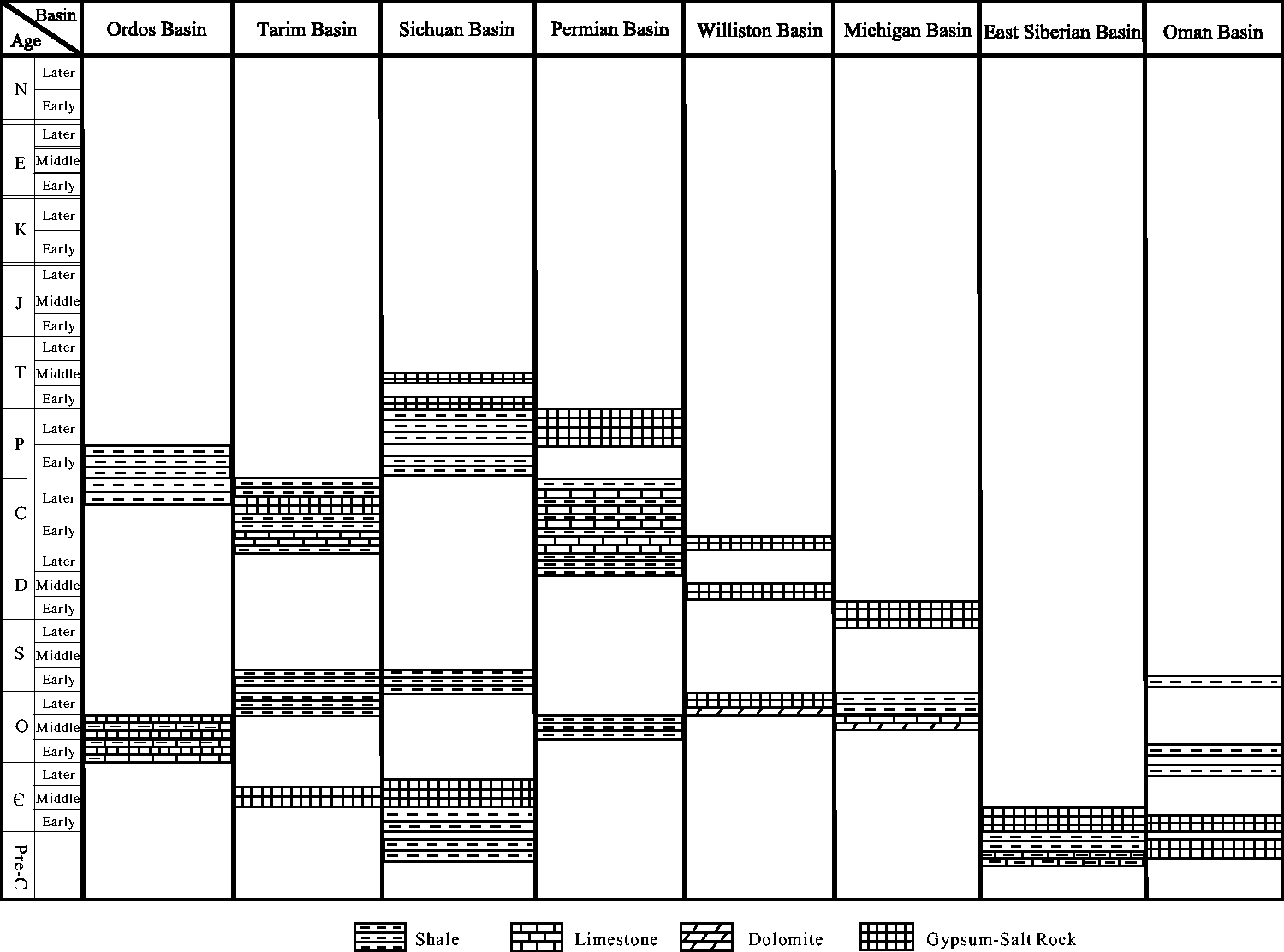
Trap and oil-gas reservoir types
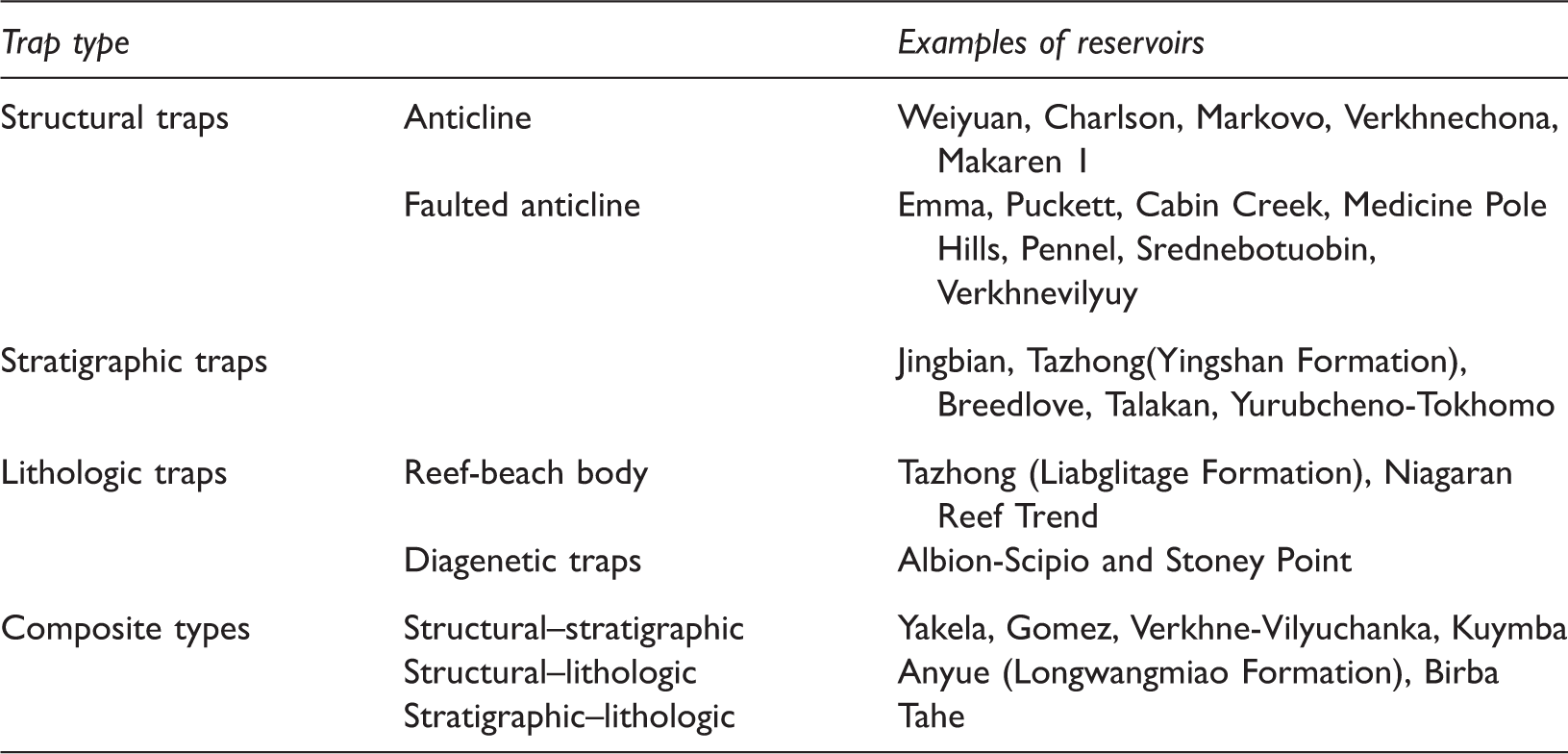
The carbonate sedimentary formation is affected by a number of factors related to sedimentation, tectonics, diagenesis, and reformation after diagenesis. These processes lead to high heterogeneity of the reservoir rocks. Carbonate reservoir rocks in the Proterozoic–Lower Paleozoic succession had been subjected to many rounds of dissolution and fracturing, resulting in diversified pore types and complex pore structures with unique spatial distributions (Du et al., 2011). Therefore, it is necessary to consider the trap type and the characteristics of reservoir rocks to better classify the oil and gas reservoirs in the oldest marine carbonate basins (Wang et al., 2013). The traps in the Proterozoic–Lower Paleozoic succession in the eight basins can be divided into structural, stratigraphic, lithologic, and composite types (Table 5). There are many trap types, mainly being anticline and faulted anticline traps. Weathering crust reservoirs were well developed under the unconformity surface in the Ordos Basin, Tarim Basin, East Siberia Basin, and the Permian Basin. In the Michigan Basin, reef and lithologic traps were dominant, which might be related to sedimentary environment (Figure 10).
Examples of oil and gas reservoir types in the Proterozoic–Lower Paleozoic succession in the eight major basins. (a) Anticline reservoir, Weiyuan Gas Field in Sichuan Basin; (b) faulted anticline reservoir, Vermejo/Moore-Hooper Gas Field in Permian Basin; (c) unconformity of lateral barrier reservoir, Jingbian Gas Field in Ordos Basin; (d) buried hill reservoir, Yurubcheno-Tokhomskoye Oil and Gas Field in East Siberian Basin; (e) reef reservoir, Niagaran Reef Trend Oil and Gas Field in Michigan Basin; (f) diagenetic reservoir, Albion Scipio and Stoney Point Oil and Gas Field in Michigan Basin; (g) structural–stratigraphic composite reservoir, Kuymba Oil and Gas Field in East Siberian Basin; (h) structural-lithologic composite reservoir, Birba Oil and Gas Field in Oman Basin; and (i) stratigraphic–lithologic composite reservoir, Tahe Oil and Gas Field in Tarim Basin. Trap and oil-gas reservoir types in the Proterozoic–Lower Paleozoic succession in the eight major basins.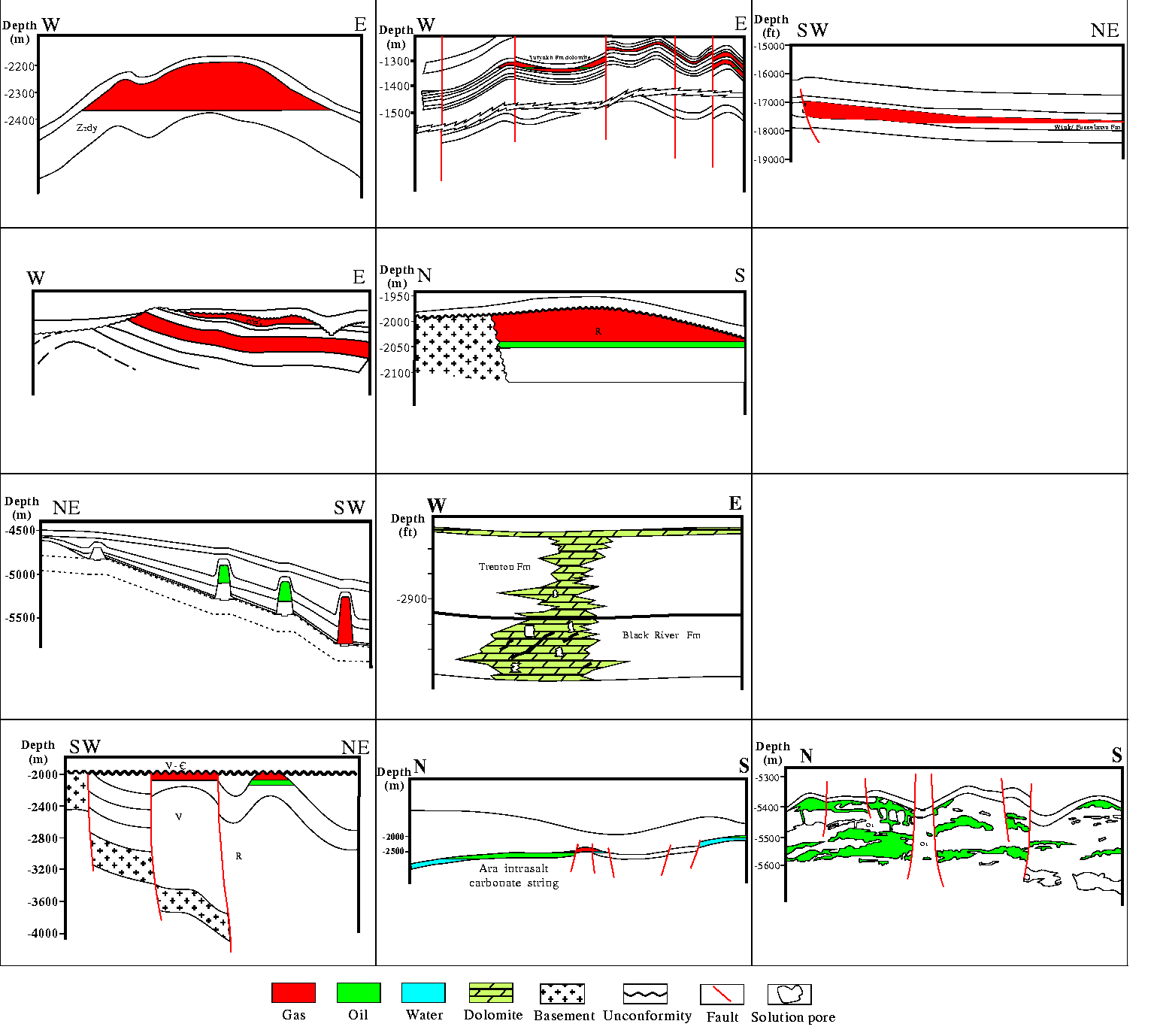
Hydrocarbon accumulation processes
The Proterozoic–Lower Paleozoic succession in the eight basins had generally developed many sets of source rocks, which later experienced multistage tectonic movements, so each basin has different characteristics of hydrocarbon generation and expulsion, and different hydrocarbon accumulation processes. The hydrocarbon accumulation processes in the eight basins can be classified into two types, one is the process through multistage hydrocarbon accumulation and multistage adjustment and the other is the process through early hydrocarbon accumulation and late preservation. In the Ordos Basin, Tarim Basin, Sichuan Basin, and the East Siberia Basin, the hydrocarbon accumulation processes are the first type, where the original reservoirs were destroyed, adjusted, and reformed due to the late tectonic movements, while in the Williston Basin, Permian Basin, Michigan Basin, and the Oman Basin, the early original reservoirs also experienced a series of tectonic movements, but they were not massively damaged, resulting in the latter type of hydrocarbon accumulation process.
For the basins with multistage hydrocarbon accumulation and adjustment processes, the late tectonic movements were very strong, leading to obvious reformation to the basins and resulting in the multistage accumulation. The reservoirs in the Proterozoic–Lower Paleozoic succession in Ordos Basin, Tarim Basin, Sichuan Basin, and East Siberia Basin have experienced multistage accumulations but there are some differences in the process of reservoir formation among them. The Ordos Basin was uplifted as a whole under the Caledonian movement, the central uplift area and East suffered strong weathering and denudation for long time in upper Ordovician–Devonian, forming lower Ordovician Majiagou Formation weathering crust reservoir. The Ordovician source rocks began to enter oil generation window in Triassic, and the oil generated migrated to uplifted higher part along the lower Ordovician unconformity surface and stored in the weathering crusts to form reservoirs. By middle Jurassic–early Cretaceous, due to the increase in burial depth, the oil stored in the ancient reservoir was transformed into natural gas. In the late Cretaceous–Paleogene, Yishan slope formed. The central paleo uplift became a part of the large slope and was located in the low position of the slope, and the oil and gas accumulated in the Central paleo uplift migrated northeast in a regional way. This finally resulted in reservoir formation in the Ordovician Majiagou Formation weathering crust in the middle of basins (Liu et al., 2012; Sun et al., 2009; Wang et al., 2009). In Tarim Basin, in late Caledonian–early Hercynian, Cambrian and lower Ordovician source rocks began generating and expulsing hydrocarbon massively. The Ordovician reservoirs formed in Tazhong and Tabei in late Caledonian were destroyed in early Hercynian. In this stage, the tectonic activity played a destructive role against the reservoirs. In the late Hercynian, middle Ordovician source rocks in west Manjiaer depression began generating and expulsing hydrocarbon massively, which migrated laterally along the unconformity over long distance thus accumulating into reservoirs in Tazhong and Tabei carbonate rocks. In this stage, large amounts of ancient oil reservoirs were formed and preserved. In Himalaya period, the liquid hydrocarbon formed early cracked to gas and migrated upward along the fault. It had very strong impact on the Ordovician reservoir transformation, forming widely distributed unique condensated oil and gas reservoirs. Meanwhile, middle and upper Ordovician source rocks in Tazhong, Tabei uplift entered the peak generation period of oil, which accumulated nearby (Pang et al., 2008; Zhang et al., 2007, 2011). Cambrian source rocks in Weiyuan area of Sichuan Basin were mature before the Triassic and began hydrocarbon generation and expulsion, which were accumulated in Ziyang area to form paleo reservoirs. Affected by the Caledonian movement, Cambrian source rocks had the characteristics of secondary hydrocarbon generation. During early to middle Yanshan period, paleo oil began thermal cracking into natural gas, turning the paleo oil reservoirs into paleo gas reservoirs. In late Cretaceous–Himalayan period, due to the influence of tectonic uplift, Weiyuan area raised more than Ziyang area did, resulting in trap readjustment, destruction, and redistribution of ancient gas reservoirs. When the natural gas was released from groundwater, gas field was formed (Liu et al., 2009; Sun et al., 2010; Zhu et al., 2015). Riphean source rocks in Baykit Subbasin in Eastern Siberia Basin began to generate large amount of hydrocarbon in the middle of late Riphean, which migrated to paleo uplift from paleo depression and stored to form reservoirs. By the late Riphean, strong folding and uplifting occurred in Baykit Subbasin that stopped hydrocarbon generation and expulsion, and destroyed or transformed the early original oil and gas reservoirs. In the Vendian and Cambrian-Permian, Riphean and Vendian source rocks began to generate and expulse hydrocarbon again. Meanwhile, the differential vibratory movements within the basin changed the tectonic patterns, where oil and gas generated in the depression were accumulating in large local uplifts which are favorable for oil and gas to form reservoirs. By the late Permian and early Triassic, accompanied by basic magma intrusion, thermal events promoted hydrocarbon generation from the source rocks. After Triassic, Baykit Subbasin was uplift as a whole, which destroyed the reservoirs already formed to some extent. Meanwhile, due to temperature and pressure reduction, a large amount of hydrocarbon desolventizing provided supplementary oil and gas for already existing reservoirs (Li et al., 2000).
For the basins with the process through early hydrocarbon accumulation and late preservation, their hydrocarbon accumulation processes are relatively simple but not the same. Dolomite in Ordovician Ellenburger formation in Permian Basin suffered weathering and denudation to form good reservoir and the overlying Simpson shale was both cap rock and source rock. In the late Pennsylvanian, the basin tectonic differentiation formed several minor tectonic units and in the central platform anticline traps were formed. In the late Permian, Ordovician source rocks began hydrocarbon generation and expulsion till the end of Tertiary and formed reservoirs in anticline traps. The Michigan Basin and the Williston Basin remained to be the intracratonic basins. The two basins had simple tectonic movements. In the Williston Basin, only a series of low amplitude anticline structures were developed as main oil and gas producing belt. The Ordovician source rocks began hydrocarbon generation and expulsion in the Cretaceous, which were accumulated in the traps related to the anticline structures. In Michigan Basin, lithologic oil and gas reservoirs were mainly formed in Ordovician and reef oil and gas reservoirs in Silurian. The early oil and gas reservoirs within the two basins did not suffer significant modification or destruction. Furthermore, regionally distributed evaporates were developed in the basins, which provided very good preservation for oil and gas. In the carbonate rock strings in the Ara salt of South Oman Basin, oil and gas generated by Huqf group source rocks were accumulated (Schröder et al., 2000). Due to late salt movement and fault activity, trap may be formed in the Silurian. In the three basins, the source rocks in the Proterozoic–Lower Paleozoic succession began hydrocarbon generation and expulsion after the formation of traps (Gerhard et al., 1991; Haynes et al., 2008). Moreover, the late tectonic movements reformed and destructed these traps very weakly, where oil and gas were accumulated and preserved.
Conclusions
Except Michigan Basin and Williston Basins which remain as stable cratonic basin, other six basins were superimposed basin evolved from the Proterozoic–Paleozoic stable cratonic basins through multistage tectonic movements. The basin scales vary greatly with frequent uplifting and depression activities and regional unconformities developed. The source rocks in the Proterozoic–Lower Paleozoic succession in the eight basins are mainly shale and argillaceous carbonate rocks with organic carbon content of generally greater than 1%, organic matter types being mainly type I/II. The source rocks are highly thermally evolved with complex hydrocarbon generation and expulsion processes. The carbonate reservoir rocks are well developed with high heterogeneity in physical properties. Karst reservoir, dolomite reservoir, and reef-beach body reservoir are the main types of reservoir lithofacies. The cap rocks are mainly gypsum-salt rock and shale. Gypsum-salt rock has stronger sealing capacity even if it is relatively thin, while shale cap rock is generally thick. The traps and reservoirs in the Proterozoic–Lower Paleozoic succession in the eight basins can be divided into structural, stratigraphic, lithologic, and composite types. The oil and gas reservoir types are classified according to trap types and the structural reservoirs are mostly developed. The hydrocarbon accumulation processes in the Proterozoic–Lower Paleozoic succession in the eight basins can be classified into two types, one is the process through multistage hydrocarbon accumulation and multistage adjustment and the other is the process through early hydrocarbon accumulation and late preservation.
Footnotes
Declaration of conflicting interests
The author(s) declared no potential conflicts of interest with respect to the research, authorship, and/or publication of this article.
Funding
The author(s) disclosed receipt of the following financial support for the research, authorship, and/or publication of this article: This study was financially supported by the National Basic Research Program of China (No. 2012CB214806) and by the National Natural Science Foundation of China (No. 41372144).