



Abstract
The maritime industry faces increasing pressure to decarbonize ocean-going vessels to meet the International Maritime Organization’s emissions targets. This study evaluates the regulatory compliance of three alternative marine fuels, liquified natural gas (LNG), liquified petroleum gas (LPG) and methanol, through evaluating the Energy Efficiency Existing Ship Index (EEXI) and Carbon Intensity Indicator (CII) for three vessel types: a container ship, bulk carrier, and tanker. Using a structured regulatory framework, attained EEXI and CII values under each fuel scenario were calculated and compared to IMO requirements. The results indicate a clear performance hierarchy; LNG dual-fuel engines achieved full compliance across both regulatory metrics, reducing attained EEXI by 17%–25% compared to conventional fuels and maintaining A or B ratings for CII through 2025–2030. LPG fulfilled the EEXI requirement only for the bulk carrier and showed marginal CII compliance due to its high carbon conversion factor. Methanol failed to meet EEXI limits in all three cases, exceeding requirements by 2%–41% and yielded the lowest CII ratings compared to other fuels, primarily due to its low energy density. LNG emerges as the most viable short-term compliance solution among the fuels considered.
Introduction
Maritime transport facilitates approximately 80% of global trade by volume, positioning shipping as both a critical economic enabler and a significant contributor to global emissions. 1 While historical regulatory focus addressed local air pollutants such as sulfur oxide (SOx), and nitrogen oxide (NOx) through regulations like MARPOL Annex VI, 2 the sector now faces urgent pressure to decarbonize in alignment with the Paris Agreement goals 3 and the International Maritime Organization’s (IMO) revised 2023 strategy 4 targeting net-zero greenhouse gas (GHG) emissions by or around 2050. 5 This regulatory evolution reflects a necessary shift from mitigating local air quality impacts to addressing shipping’s substantial contribution to climate change, which accounted for approximately 2.9% of global anthropogenic carbon dioxide (CO2) emissions in recent assessments.
For almost a century, ships have been propelled by conventional marine fuels, including heavy fuel oil (HFO), marine diesel oil (MDO), and marine gasoline oil (MGO). 6 While these fuels have enabled global trade expansion, their combustion releases significant emissions: HFO, with its high viscosity and sulfur content, produces substantial SOx emissions, while all petroleum-based marine fuels generate CO2 as an inherent product of combustion. 7 Over the past two decades, regulatory pressure on SOx and NOx has driven initial adoption of lower-sulfur alternatives and non-conventional fuels like liquefied natural gas (LNG), liquefied petroleum gas (LPG), and methanol (MeOH). 8
The transition toward decarbonized shipping is gaining momentum but remains at an early stage. According to statistics, 1.8% of the in-service fleet runs on alternative fuels, which are distributed as seen in Figure 1, 9 compared to 98.2% of the fleet that runs on conventional fuel. Nevertheless, on-order ships using alternative fuels reach 26.2% of the whole fleet compared with 73.8% for conventional fuel. Additionally, Figure 2 9 displays the fleet distribution of alternative fuels by ship type, both operational and ordered.
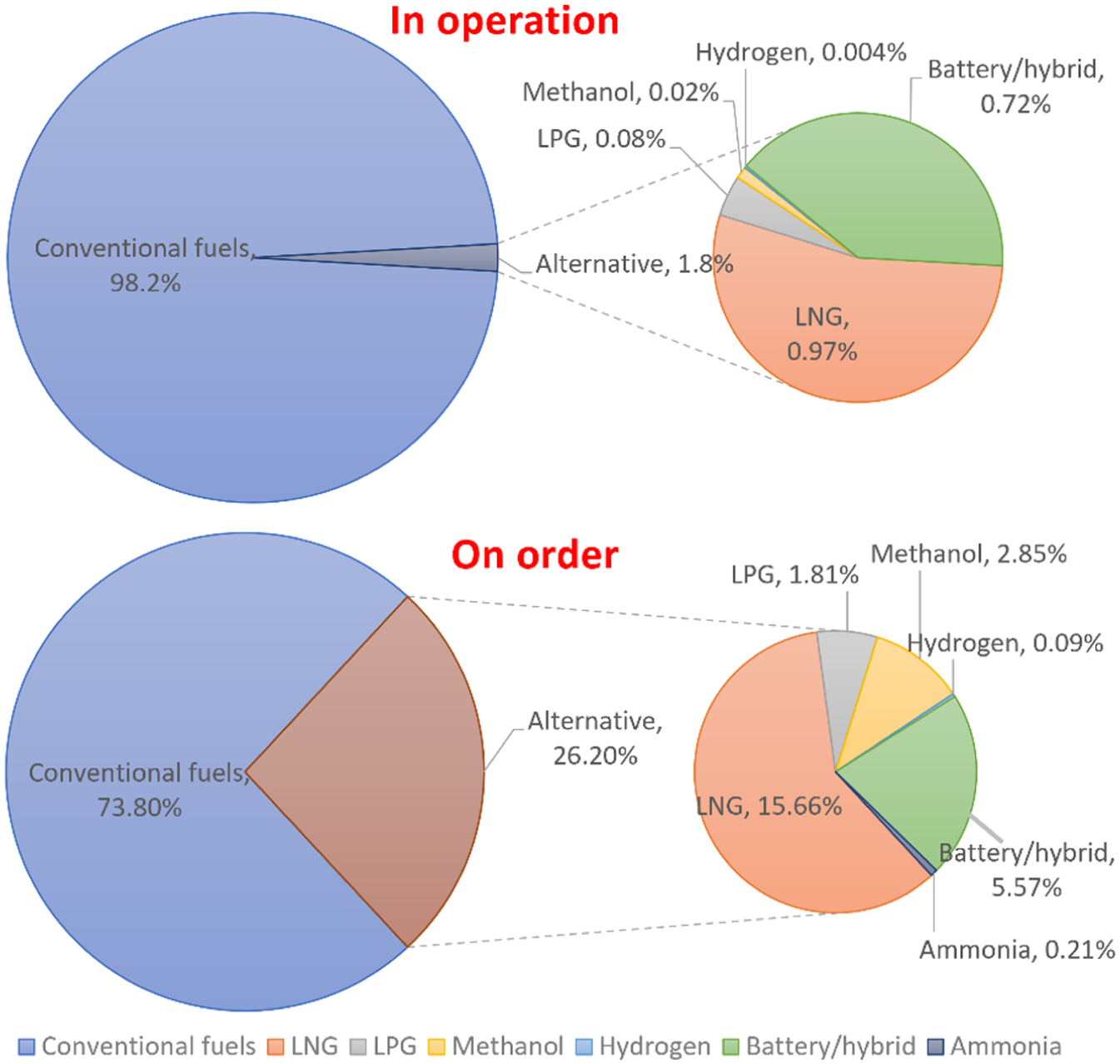
Percentage of the fleet that is ordered and running on conventional fuel as opposed to alternative fuels.
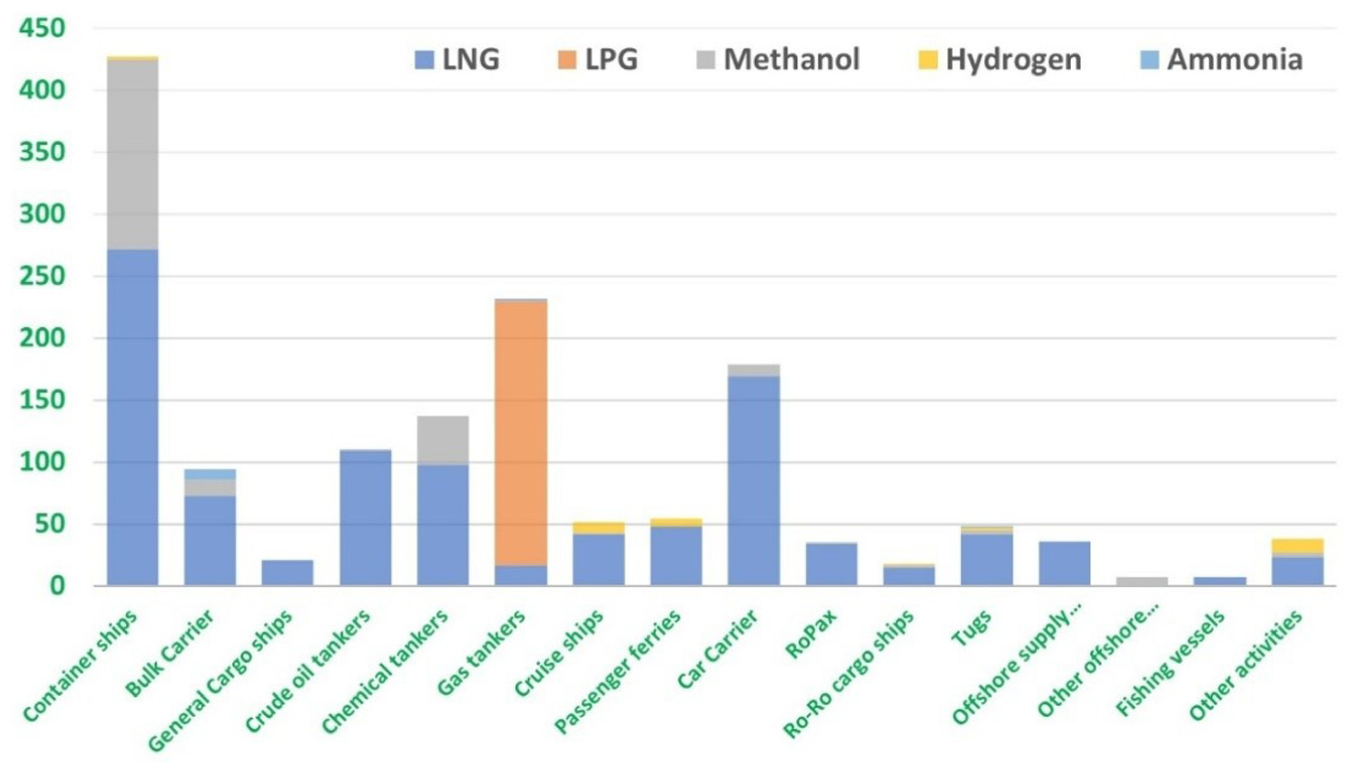
Number of ships fueled by alternative fuels for each ship type (in operation and on order).
Based on the UNCTAD review, 1 the carbon dioxide from different ship types has increased over the last 10 years. The main ship types that contribute to over 85% of total emissions are tankers, bulk carriers, and container ships. This disparity underscores the compliance challenge facing existing vessels, which must meet increasingly stringent carbon intensity requirements while balancing operational continuity. 10
The IMO has introduced two key regulatory measures to address this challenge: the Energy Efficiency Existing Index (EEXI) as a technical measure applied since November 2022 to ships ≥400 GT, 11 and the Carbon Intensity Indicator (CII) as an operational measure implemented since January 2023 for ships ≥5000 GT. 12 Unlike previous regulations targeting specific pollutants, EEXI and CII directly address carbon intensity, creating new compliance imperatives that alternative marine fuels must satisfy holistically, not only for local emission reductions but crucially for CO2 mitigation.
While the existing literature provides valuable insights into alternative marine fuels, several distinct research approaches have emerged. The majority of studies have focused primarily on techno-economic assessments, evaluating fuel costs, infrastructure requirements, and total cost of ownership.13,14 Other research streams emphasize technical feasibility through engine performance, energy density comparisons, and storage requirements, 15 or environmental lifecycle assessments examining well-to-wake emissions and broader ecological impacts.6,16,17
The use of electricity, methanol, LNG, hydrogen, ammonia, and biodiesel as alternative fuels on three distinct vessels (cargo ship, dredger, and passenger ship) has been evaluated by Perčić et al. 18 The passenger ship that runs on electricity has reduced carbon emissions the most. However, the cargo ship that runs on methanol is the most economical. Ampah et al. 19 employed a bibliometric analysis for about 583 research studies that were published over two decades to gain a deeper understanding of the research on less polluting alternative marine fuels. The analysis results found that LNG is the hottest source of energy in maritime transport over this period with significant attention to hydrogen, ammonia, and methanol in recent years.
Also, a subset of recent studies has addressed the regulatory implications of alternative fuels, though with varying focus and scope. Several investigations examine specific regulatory aspects, such as the analysis conducted by Czermański et al. 20 that considered compliance costs using alternative fuels, and the research of Bayraktar and Yuksel 21 that analyzed methanol’s EEXI and CII performance for container ships. Other research, including that of De Oliveira et al., 22 evaluates different mitigation measures to meet decarbonization goals and adhere to CII and EEXI requirements, identifying alternative fuels as favorable options despite implementation barriers.
A fleet of bulk carriers has been examined in the research of,23,24 and the study results concluded that 15% of the fleet’s older ships still adhere to the former IMO regulations, whereas the bulk of ships built in the last 10 years do. Out of all the ships, only one complied with the EEXI standard, and none of the ships were suitable to meet the current EEDI requirement. According to Ouyang et al., 25 when natural gas is used as a source of energy, the obtained EEXI value of a general ocean-going vessel decreases to 9.32 gCO2/ton.nm. Additionally, by including a waste heat recovery system in the updated system, the obtained EEXI value was lowered to 8.21 gCO2/ton.nm, effectively meeting the required EEXI value of 13.88 gCO2/ton.nm. In their review study, Barreiro et al. 26 make clear that there are several crucial approaches to achieving increased energy efficiency, including CII and EEXI.
However, critical limitations persist in the current regulatory-focused literature. First, most studies analyze individual fuels in isolation rather than conducting systematic comparative assessments across multiple alternatives. Second, existing evaluations often focus on single regulatory metrics (typically EEDI, EEXI or CII) rather than the integrated compliance picture required for real-world operations. Third, there is a tendency to examine specific vessel types or operational scenarios without comprehensive cross-comparison across the major emitting ship categories. Finally, many regulatory analyses remain secondary to techno-economic evaluations, treating compliance as an outcome rather than the primary selection criterion.
To address these gaps, this study conducts a comprehensive regulatory analysis of three market-ready alternative fuels: LNG, LPG, and MeOH. These fuels were selected due to their growing market availability and existing commercially available marine engines. While ammonia and hydrogen represent promising pathways for zero-carbon shipping in the longer term, 27 particularly for newbuild vessels, their current technological immaturity, safety challenges, and significant infrastructural gaps render them less suitable for immediate regulatory compliance assessment of existing vessels under the 2023–2030 EEXI and CII implementation timeline.28–30 Specifically, LNG is supported by engines such as the Everllence B&W ME-GI 31 and WinGD X-DF 32 ; methanol by the Everllence B&W ME-LGIM 33 and Wärtsilä’s methanol engines 34 ; and LPG by the Everllence B&W ME-LGIP. 35 This established technological foundation enables a realistic evaluation of near-term compliance potential for existing vessels.
Accordingly, this study provides a dedicated, systematic regulatory performance assessment that:
Compares LNG, LPG, and MeOH against conventional MDO using identical methodology.
Integrates both EEXI and CII evaluations to provide complete regulatory compliance profiles.
Applies consistent analysis across three dominant vessel types (container ships, bulk carriers, tankers) which collectively represent over 85% of shipping emissions.
Prioritizes regulatory metrics as primary evaluation criteria, with compliance thresholds driving the assessment framework
By adopting this approach, the paper bridges the gap between technical fuel properties and practical regulatory requirements to accelerate the decarbonization of ocean-going vessels and support the achievement of the IMO’s 2030 and 2050 emissions reduction targets.
Research methodology and analytical framework
Methodological overview
This study employs a structured methodology (Figure 3) to assess the regulatory performance of marine alternative fuels, LNG, LPG, and MeOH, in comparison to conventional MDO. The methodology is designed to evaluate the impact of these alternative fuels on energy efficiency, focusing on compliance with the IMO EEXI and CII requirements.
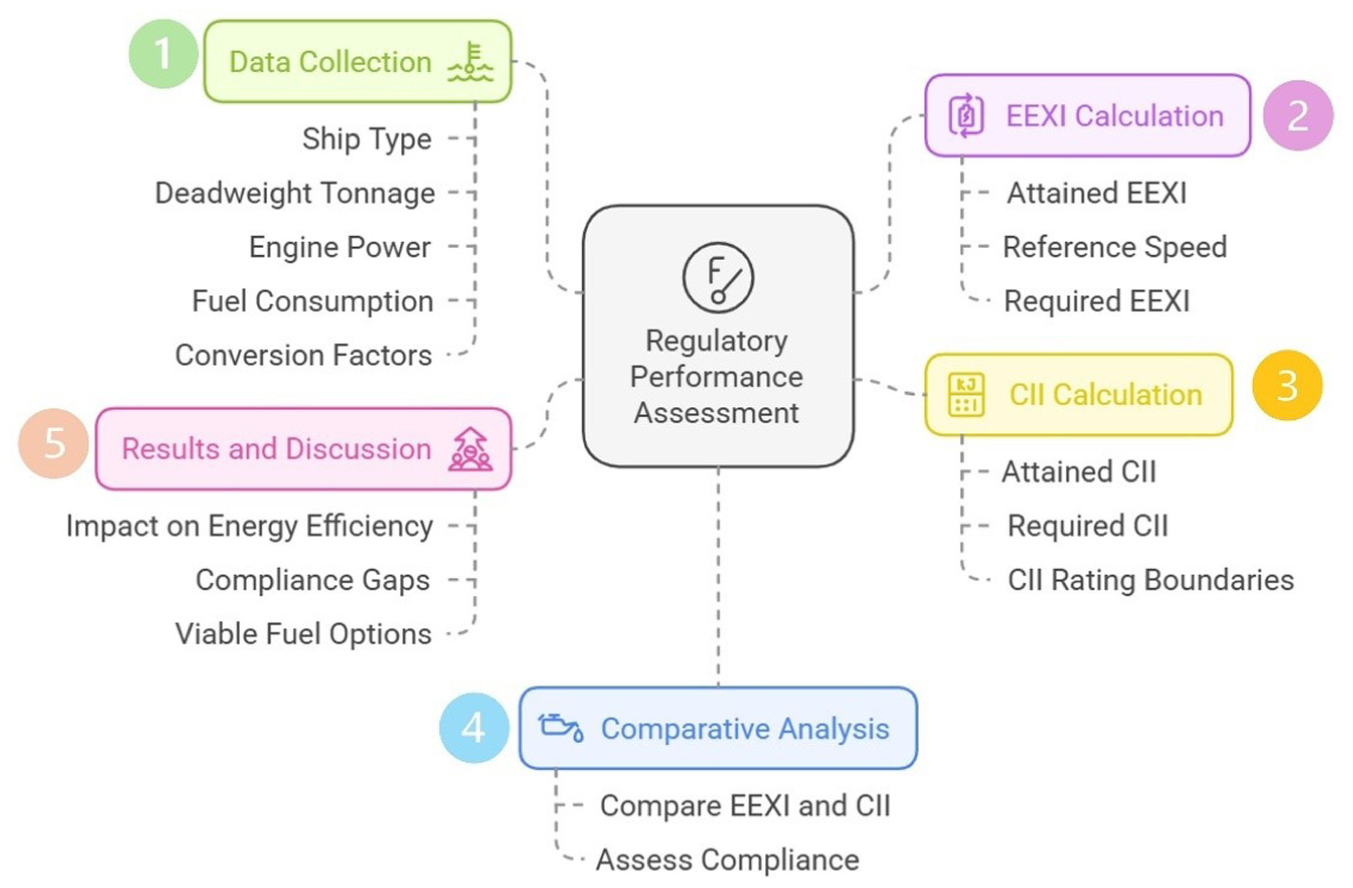
The flowchart for regulatory performance assessment.
The approach is divided into five key phases, each addressing specific aspects of the analysis to ensure a comprehensive evaluation of the fuels’ regulatory and operational performance. The first phase, data collection, involves gathering ship-specific data, including ship type (container ships, bulk carriers, and tankers), deadweight tonnage (DWT), main and auxiliary engine power (PME, PAE), fuel consumption data (specific fuel consumption, SFC), and conversion factors (CF) for CO2 emissions. This phase also includes determining the reference speed (Vref) and ship capacity, which are critical for subsequent calculations.
The second phase, EEXI compliance calculation, focuses on computing the attained EEXI, which incorporates the power of main and auxiliary engines, fuel consumption, and carbon conversion factors. The attained EEXI is then compared to the required EEXI to assess compliance with IMO regulations. The third phase, CII compliance calculation, centers on calculating the attained CII, which considers the total CO2 emissions, deadweight tonnage, and distance traveled. This phase assesses the operational energy efficiency of the ships under investigation.
The fourth phase, comparative analysis, involves a detailed comparison of the EEXI and CII results for LNG, LPG, and MeOH against MDO. This phase evaluates the compliance of each fuel with IMO regulations and identifies the most viable options for different ship types, highlighting the strengths and limitations of each fuel in meeting regulatory requirements. Finally, the fifth phase, results and discussion, synthesizes the findings from the previous phases, providing a detailed discussion of the impact of alternative fuels on energy efficiency. It identifies regulatory compliance gaps and explores opportunities for improvement. By following this structured methodology, the study aims to provide a robust framework for evaluating the regulatory performance of alternative marine fuels and their potential to decarbonize ocean-going vessels, ensuring a systematic and comprehensive analysis that enables informed decision-making for the maritime industry.
Data collection: Vessel specifications
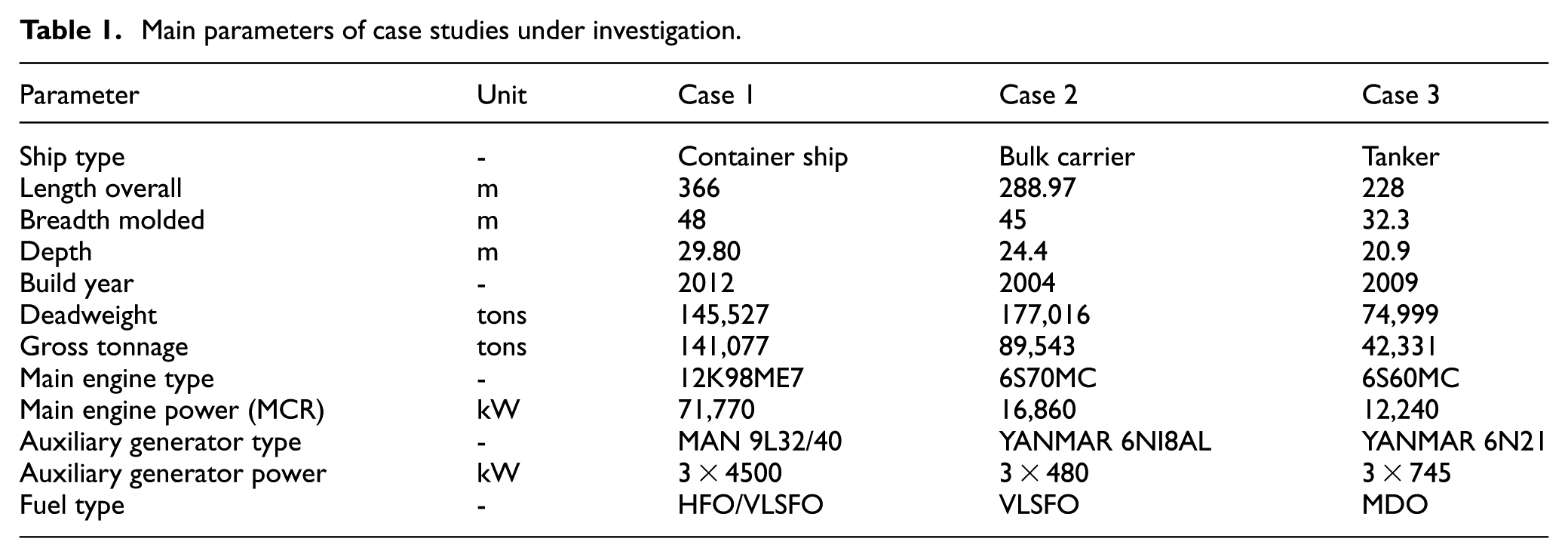
Three representative ocean-going vessels were selected to evaluate the regulatory performance of alternative fuels under IMO EEXI and CII criteria: a VLCS container ship, a Capesize bulk carrier, and a Panamax tanker. These vessels were chosen because their size categories dominate global emissions and because complete engine, operational, and design data were available for analysis. These ship types are also widely used as reference segments in IMO regulatory assessments, 36 making them suitable benchmarks for evaluating the implications of alternative fuels on EEXI and CII performance.
Table 1 summarizes the principal technical specifications, including deadweight, installed power, and engine configuration, which form the basis for the EEXI and CII calculations.
Main parameters of case studies under investigation.
In addition to the technical specifications summarized in Table 1, the regulatory assessment requires knowledge of each vessel’s actual operational performance. Accordingly, Table 2 presents the annual traveled distance and reported CO2 emissions for the container ship, bulk carrier, and tanker over the 2019–2024 period. These data were obtained directly from the operators’ verified ship-performance reports and reflect tank-to-wake CO2 mass emissions derived from recorded fuel consumption.
Annual CO2 emissions and distance traveled for the case-study vessels (2019–2024).
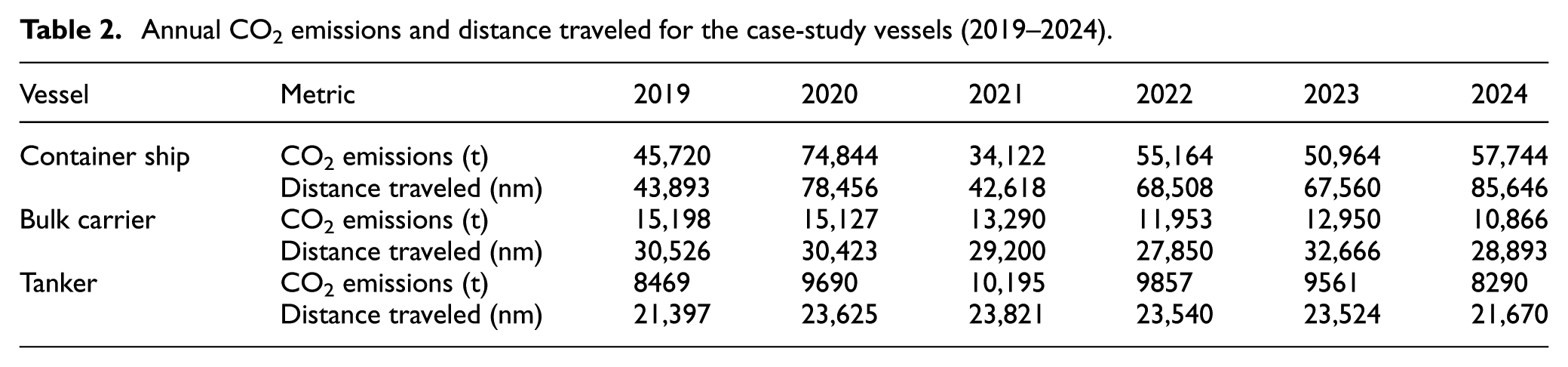
The dataset forms the basis for calculating the attained CII values for the historical period (2019–2023) and provides the operational baseline used in Section 2.4 to project attained CII over the 2024–2030 period under a fixed operational-profile assumption. Incorporating these real-world records ensures that the CII analysis reflects the vessels’ actual operational behavior rather than averaged or theoretical profiles.
EEXI compliance calculation approach
This section applies the IMO EEXI calculation methodology 11 to the comparative assessment of alternative fuels. The attained EEXI represents a ship’s energy efficiency in grams of CO2 per ton-mile, calculated at a reference design point. Following IMO Resolution MEPC.350(78), 11 the attained EEXI is determined as shown in equation (1).

Where parameters are defined in accordance with IMO guidelines 11 : P ME and P AE represent main and auxiliary engine power (calculated per MEPC.350(78) 11 ); Vref is the reference speed corresponding to 75% of MCR; SFC and CF are specific fuel consumption and carbon conversion factors, respectively, both dependent on fuel type. In case the model test results of the ship are available at the design draught and the operational sea conditions, the reference speed (Vref) can be calculated as shown in equation (2). 11

Where

Where SGC and SPOC are specific consumption values for the main gas fuel and pilot oil, respectively. The attained EEXI must be equal to or lower than the required EEXI of the same ship type and size to comply with the IMO requirements and achieve the minimum energy efficiency standards. The required EEXI can be calculated by using the reference line of EEDI and the reduction factor, as shown in equation (4), the definition of different parameters is summarized in Table 3. 38

EEXI reference line parameters and reduction factor for case studies under investigation. 38
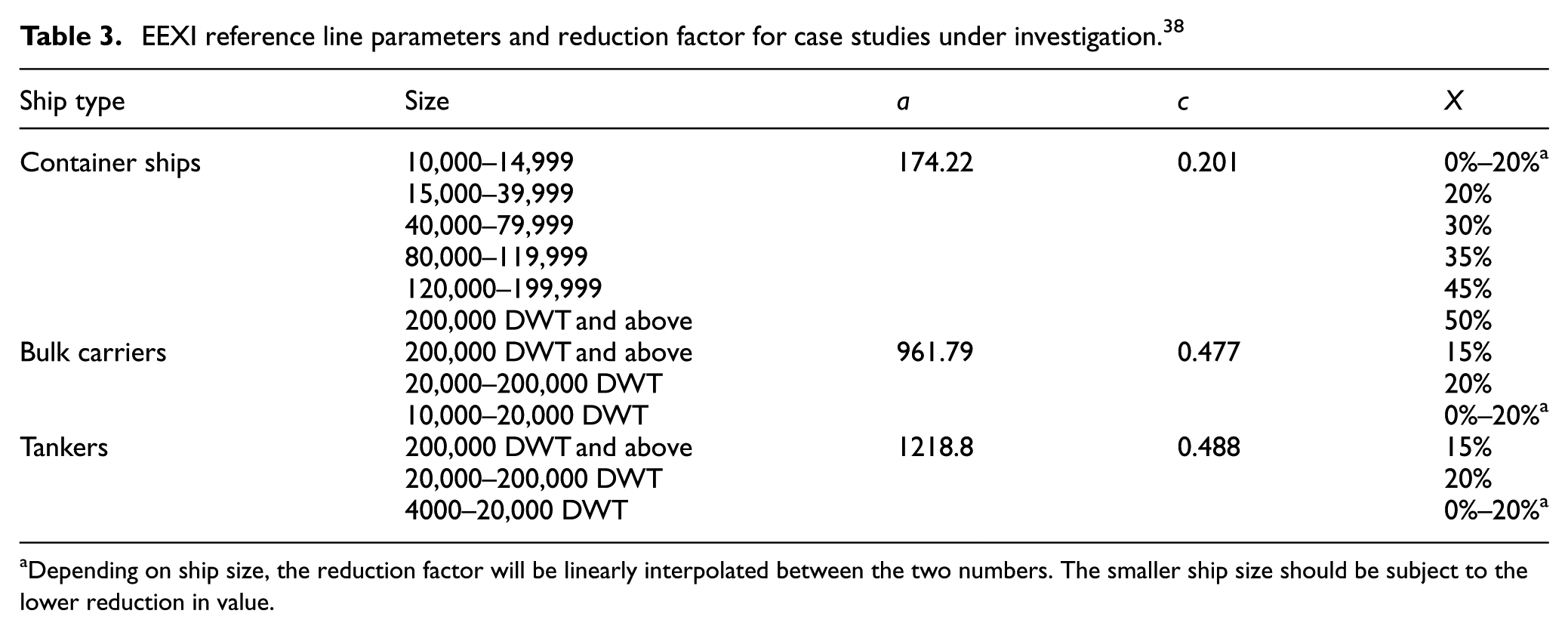
Depending on ship size, the reduction factor will be linearly interpolated between the two numbers. The smaller ship size should be subject to the lower reduction in value.
CII compliance calculation approach
This section applies the IMO Carbon Intensity Indicator (CII) framework 12 to evaluate the operational performance of alternative fuels. The attained CII represents annual operational efficiency in grams of CO2 per ton-mile. Following IMO Resolution MEPC.336(76), 12 the attained CII is calculated as shown in equation (5).

Where CO2 emissions are determined from annual fuel consumption and carbon conversion factors (C F ), and transport work is the product of deadweight tonnage (DWT), and distance traveled (D t ). A ship’s rating (A through E) is determined by comparing the attained CII to the required CII, which is calculated following MEPC.353(78) 39 as shown in equation (6).

Reference line parameters (b, d) for different ship types are specified in the IMO guidelines 39 (Table 4).
CII reference line parameters for ship types under investigation. 39
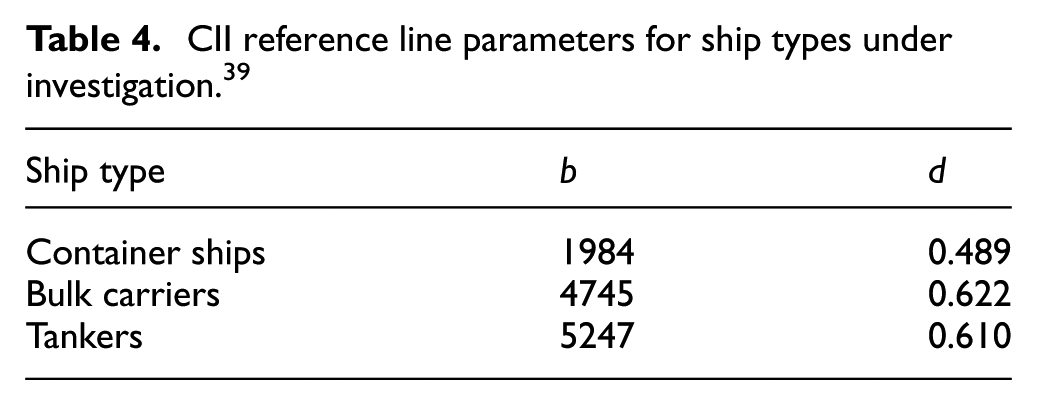
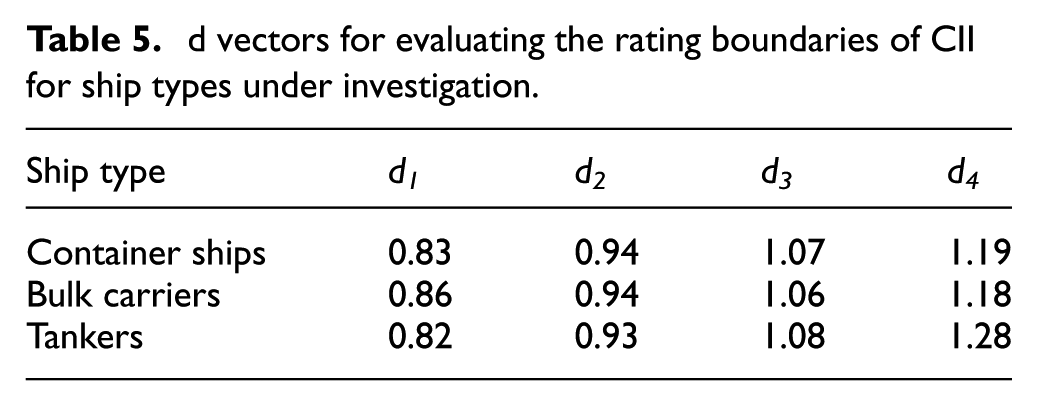
Annual reduction factors (Z) follow the trajectory defined in MEPC.338(76), 40 with increasingly stringent requirements from 2023 to 2030. The reduction factor for the reference line corresponding to years 2023, 2024, 2025, and 2026 is 5%, 7%, 9% and 11%, respectively. 40 Rating boundaries are determined using the d-vector method specified in MEPC.354(78), 41 with boundaries illustrated in Figure 4 and values provided in Table 5.
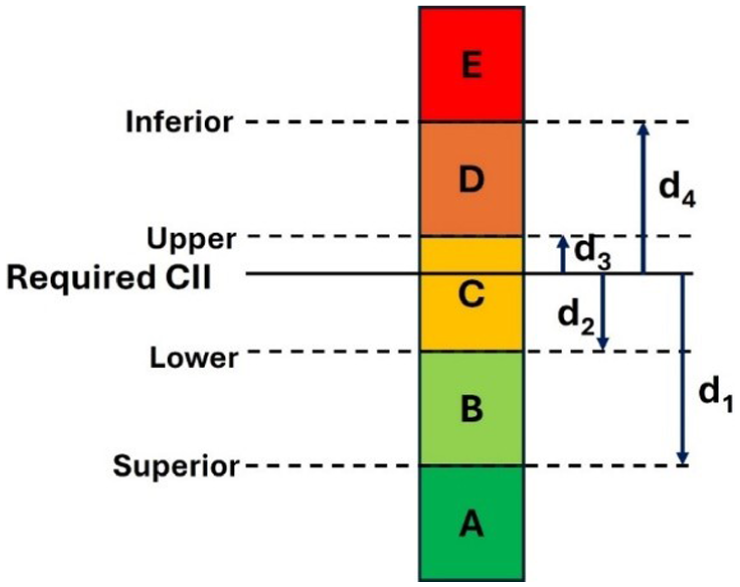
The CII rating boundaries.
d vectors for evaluating the rating boundaries of CII for ship types under investigation.
Key assumptions and limitations
This comparative analysis employs several key assumptions to enable systematic evaluation of alternative fuels under consistent conditions:
For projection years beyond 2024 (i.e. 2025–2030), the attained CII values are held constant by assuming that each ship maintains the same annual operational profile—namely, identical fuel consumption and distance traveled—as reported for the 2024 fiscal year. This assumption isolates the regulatory effect of tightening CII thresholds from variations in operational behavior, enabling a consistent comparison between fuel scenarios.
Reference speeds (Vref) for EEXI calculations are based on design conditions and remain unchanged across fuel scenarios. This allows comparison of fuel efficiency independent of speed optimization strategies.
Carbon conversion factors (CF) for each fuel are based on IMO default values 42 and remain constant across all calculations. The conversion factors for HFO, VLSFO, MDO, LNG, LPG, and MeOH are 3.114, 3.151, 3.206, 2.75, 3, and 1.375 gCO2/g-fuel, respectively.37,42
Engine-specific fuel-consumption data used in the dual-fuel scenarios are provided in the Supplemental Material S1 (Supplemental Figures S1–S3), including specific gas consumption (SGC) and specific pilot oil consumption (SPOC) for LNG, LPG, and MeOH dual-fuel engines for each ship case. All dual-fuel engine scenarios use MDO as the pilot fuel, consistent with typical dual-fuel operating practice and the selected engines from Everllence. 43
All ship characteristics (DWT, capacity, engine power) remain identical across fuel scenarios, isolating the effect of fuel substitution without vessel modifications.
The analysis uses tank-to-wake CO2 conversion factors. Methane slip from LNG engines, which affects CO2-eq7 emissions, is not included as current EEXI/CII frameworks do not incorporate methane emissions.
These assumptions enable controlled comparison of fuel performance under standardized conditions but represent limitations when applying results to specific operational contexts. For transparency and verification purposes, detailed sample calculations for EEXI and CII using actual values from a container ship case study are provided in Supplemental Material S2.
Results and discussions
The regulatory analysis of alternative fuels implementation instead of conventional fuels has been assessed using technical and operational measures, as elaborated in Section 2. The current section will report the main findings with the required discussion for each case study.
Regulatory performance of container ship
The container ship, with a deadweight (DWT) of 145,527 tons, was assessed for compliance with the IMO’s EEXI (technical) and CII (operational) regulations under conventional fuel (HFO) and alternative fuels (LNG, LPG, methanol) scenarios.
EEXI compliance requires meeting a specific CO2 efficiency target. For this vessel, falling within the 120–199 k DWT range, the reference EEXI of 15.97 gCO2/ton·nm was reduced by 45%, setting a required EEXI of 8.78 gCO2/ton·nm as shown in Figure 5. The attained EEXI using HFO was 13.36 gCO2/ton·nm, exceeding the required limit by 52.1% and confirming non-compliance with the EEXI regulations (Figure 5).
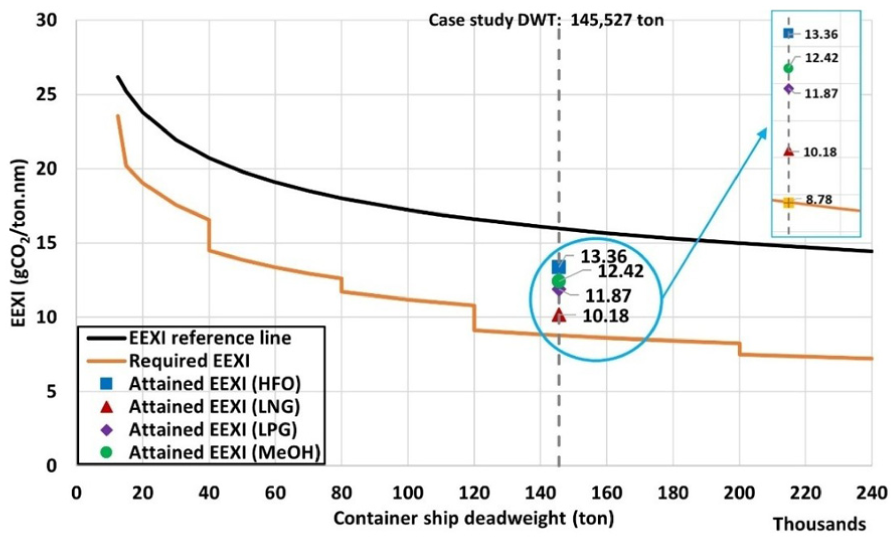
The EEXI values of the investigated container ship under different scenarios.
Transitioning to alternative fuels improved efficiency but yielded varying levels of compliance. As summarized in Table 6, the LNG-dual fuel engine achieved an attained EEXI of 10.18 gCO2/ton·nm, representing a significant 23.8% reduction from the HFO baseline. However, it remained 15.9% above the required EEXI, failing to meet the regulatory threshold. The LPG and methanol dual-fuel scenarios performed less favorably, with attained EEXI values of 11.87 and 12.42 gCO2/ton·nm, respectively. This outcome is directly attributable to the fuels’ inherent properties: LPG’s high carbon conversion factor (3.00 gCO2/g-fuel) and methanol’s low energy density (19.9 MJ/kg), which elevates its consumption to deliver equivalent power. Detailed calculations showing how these values were derived are provided in Supplemental Material S2.
Comparison between attained EEXI at different fuel scenarios and the IMO requirement for the container ship case study.

The analysis of operational efficiency via CII revealed a more promising pathway to compliance. The required CII, calculated from a 2019 baseline of 5.93 gCO2/ton·nm, is projected to decline annually, reaching 4.62 gCO2/ton·nm by 2030 (Figure 6).
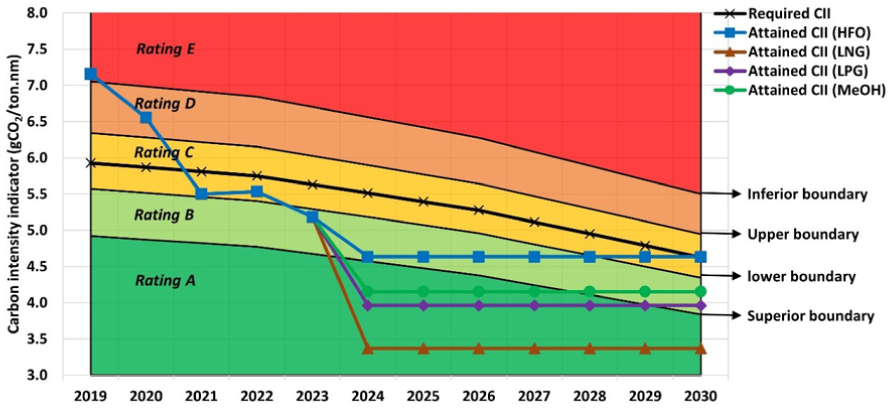
The CII rating schemes of the container ship at different operational years, and the calculated attained values.
The ship’s attained CII with HFO baseline scenario improved from 7.16 in 2019 to 4.63 gCO2/ton·nm in 2024. If this HFO-based performance is projected forward, the vessel would maintain a C rating from 2028 to 2030, demonstrating marginal compliance.
Adopting alternative fuels substantially enhanced the CII outlook. By converting the 2024 energy demand to dual-fuel operation, the attained CII improved across all alternatives. Most notably, the LNG-dual fuel scenario secured an A rating throughout the 2024–2030 period, ensuring full compliance with the progressively stringent annual limits. Similarly, LPG and methanol dual-fuel configurations maintained ratings within the A–B range, comfortably below the compliance threshold.
In summary, for the container ship case study, no single alternative fuel scenario achieved full EEXI compliance under the current tank-to-wake CO2 calculation, highlighting the stringency of this design index. However, all three alternative fuels—especially LNG—ensured robust operational compliance with the CII framework, with LNG enabling the highest (A) efficiency rating. This divergence underscores a critical regulatory insight: a fuel that offers limited gains in a one-time design assessment (EEXI) can provide decisive advantages in continuous operational scoring (CII), where its lower carbon intensity per unit energy is fully realized.
Regulatory performance of bulk carrier
The bulk carrier, with a deadweight of 177,016 tons, was evaluated under the IMO’s EEXI and CII frameworks using conventional (VLSFO) and alternative (LNG, LPG, methanol) fuel scenarios.
For EEXI compliance, the vessel’s required limit was calculated by applying a 20% reduction factor to its reference line (3.02 gCO2/ton·nm), resulting in a required EEXI of 2.41 gCO2/ton·nm. The attained EEXI on VLSFO case was 2.67 gCO2/ton·nm, which exceeds the requirement by 10.4% and confirms the need for efficiency improvements (Figure 7).
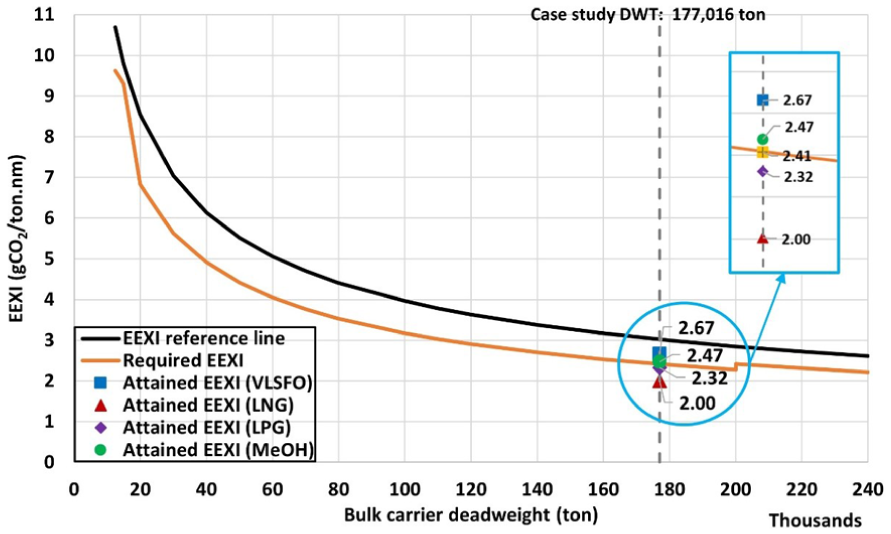
The EEXI values of the investigated bulk carrier under different scenarios.
Adoption of alternative fuels yielded distinct outcomes, summarized in Table 7. The LNG-dual fuel configuration achieved an attained EEXI of 2.00 gCO2/ton·nm, representing a 24.8% reduction from the VLSFO baseline and placing it 17.0% below the required limit—thus fully satisfying the EEXI regulation.
Comparison of the IMO requirement and the attained EEXI under various fuel scenarios for the bulk carrier case study.

The LPG-dual fuel engine also attained compliance, with an EEXI of 2.32 gCO2/ton·nm, which is 3.8% below the requirement. In contrast, the methanol-dual fuel option resulted in an EEXI of 2.47 gCO2/ton·nm, remaining 2.4% above the required threshold despite offering a 7.2% improvement over the VLSFO baseline. This shortfall is again primarily due to methanol’s lower energy density, which increases fuel consumption per unit of energy delivered.
The operational CII assessment revealed how each fuel influences the vessel’s annual carbon rating. The required CII tightens annually from a 2019 baseline of 2.58–2.01 gCO2/ton·nm in 2030 (Figure 8). Based on reported operational data, the attained CII with VLSFO improved from 2.81 (D rating) in 2019 to 2.12 gCO2/ton·nm (B rating) in 2024. Assuming a fixed operational profile, this performance would maintain a B rating until 2026, after which the vessel would drop to a C rating through 2027–2030.
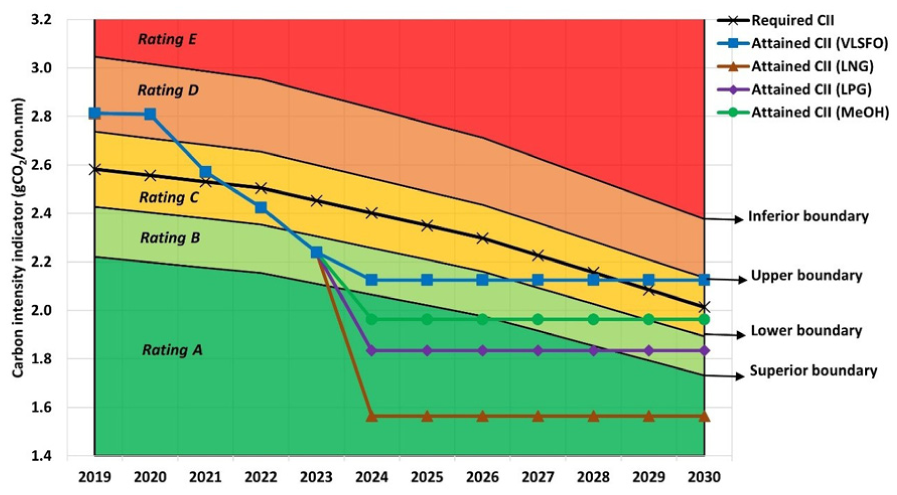
The CII rating schemes of the bulk carrier at different operational years and the calculated attained values.
Alternative fuels considerably enhanced the operational CII. The LNG-dual fuel scenario ensured the vessel sustained an A rating across the entire 2025–2030 period. Similarly, the LPG-dual fuel scenario maintained ratings within the A–B range. The methanol-dual fuel option, while compliant, offered less improvement, with the vessel reaching a C rating by 2029.
In synthesis, the bulk carrier analysis demonstrates that LNG and LPG can achieve full compliance with both EEXI and CII regulations, with LNG providing the greatest regulatory margin. Methanol reduces emissions compared to VLSFO but remains insufficient to meet the EEXI standard under current tank-to-wake CO2 accounting. This reaffirms that fuel carbon intensity and energy density are critical determinants of regulatory performance, and that fuel choice must be aligned with specific vessel characteristics and compliance timelines.
Regulatory performance of tanker vessel
The tanker, with a deadweight of 74,999 tons, was assessed under the same EEXI and CII regulatory analysis using the conventional fuel (MDO) and alternative fuel (LNG, LPG, methanol) scenarios.
Regarding EEXI compliance, the vessel’s required limit was determined by applying a 20% reduction to its reference EEXI of 5.09 gCO2/ton·nm, resulting in a required EEXI of 4.07 gCO2/ton·nm. The attained EEXI using MDO was 5.14 gCO2/ton·nm, which is higher than the required EEEXI by 26.1%, indicating a significant compliance gap that necessitates intervention (Figure 9).
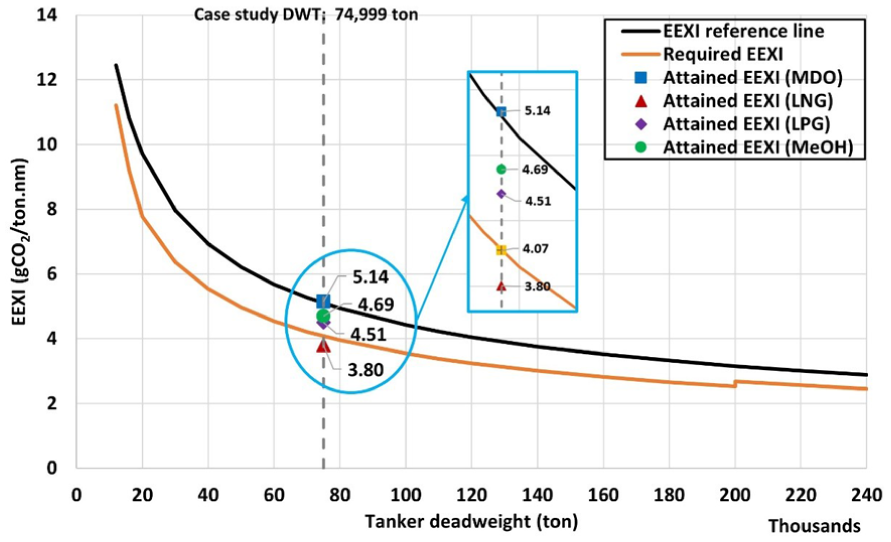
The EEXI values of the investigated tanker under different scenarios.
The implementation of alternative fuels produced a graduated response in EEXI performance, as detailed in Table 8. The LNG-dual fuel configuration achieved an attained EEXI of 3.80 gCO2/ton·nm, marking a 25.9% reduction from the MDO baseline and positioning it 6.6% below the required limit, thereby achieving full compliance. In contrast, the LPG-dual fuel engine attained an EEXI of 4.51 gCO2/ton·nm, which remains 10.6% above the required threshold despite offering a 12.3% improvement over the MDO scenario. The methanol-dual fuel option resulted in an EEXI of 4.69 gCO2/ton·nm, still 15.2% above the requirement and only 8.6% lower than the MDO baseline.
Comparison of the IMO requirement and the attained EEXI under various fuel scenarios for the tanker case study.

In the operational CII assessment, the required CII is set to decrease from a 2019 baseline of 5.57–4.35 gCO2/ton·nm by 2030 (Figure 10). The attained CII with MDO improved marginally from 5.28 (C rating) in 2019 to 5.10 gCO2/ton·nm (C rating) in 2024. Projecting this 2024 performance forward under a fixed operational profile suggests the vessel would maintain a C−D rating through 2030, failing to meet the tightening annual requirements and highlighting a need for enhanced efficiency.
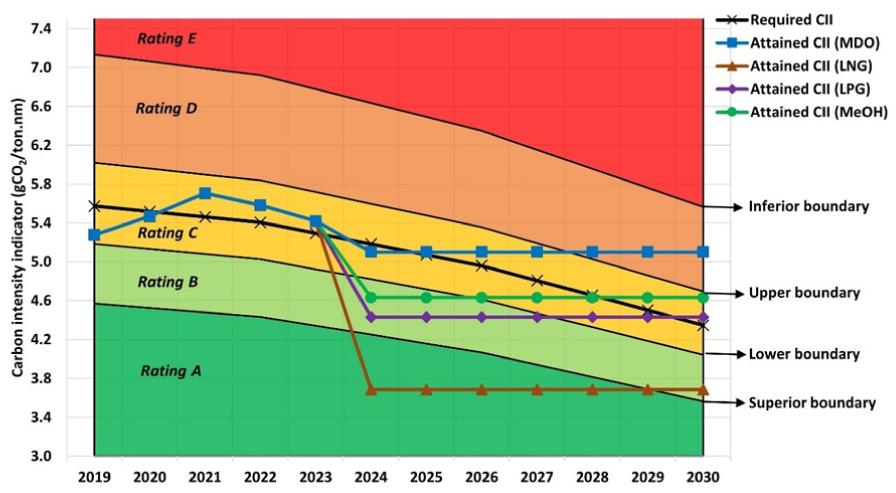
The CII rating schemes of the tanker at different operational years and the calculated attained values.
Alternative fuels are expected to improve this CII performance. The LNG-dual fuel scenario elevated the tanker to an A rating for most of the 2025–2030 period, only reverting to a B rating in 2030. The LPG-dual fuel engine maintained a B rating until 2027, after which it dropped to a C rating. The methanol-dual fuel configuration provided the least benefit, with the tanker remaining in the C rating band from 2026 onward.
In summary, for the tanker case, LNG is the only alternative fuel that achieves compliance with both the EEXI and CII regulations. LPG and methanol, while reducing emissions relative to MDO, are insufficient to meet the EEXI requirement under the current regulatory framework. This reinforces the conclusion that fuel selection is critical for vessels with higher baseline carbon intensity, and that LNG currently offers the most robust pathway to full regulatory compliance across both design and operational indexes.
Analysis of fuel-specific challenges and future considerations
While the comparative regulatory analysis demonstrates clear performance differences among LNG, LPG, and methanol, several fuel-specific challenges warrant consideration for a comprehensive decarbonization assessment. These considerations, while not captured in current EEXI and CII metrics, are essential for understanding long-term viability and practical implementation.
While LNG demonstrates strong performance under the current IMO EEXI and CII frameworks, its role as a ‘transition fuel’ remains debated in contemporary literature. It is important to acknowledge that these regulatory metrics are based solely on tank-to-wake CO2 emissions and currently exclude methane slip. Methane slip refers to unburned methane released during combustion, and because methane has a substantially higher global warming potential (GWP) than CO2, even small slip rates can reduce the climate benefit of LNG. 44
Literature reports methane-slip values of approximately 0.2–0.28 g CH4//kWh for high-pressure direct-injection dual-fuel engines. 45 whereas low-pressure Otto-cycle or older DF designs are associated with substantially higher slip, often several g CH4/kWh and modeled worst-case values exceeding 5–10 g CH4/kWh under some conditions. 46 These differences imply that the regulatory advantage of LNG depends strongly on engine technology.
Recent advancements in high-pressure ME-GI 31 and second-generation X-DF 2 engines 32 significantly reduce methane slip through optimized combustion and exhaust-gas recirculation systems, 47 thereby mitigating much of the concern raised in earlier studies. If future IMO revisions adopt well-to-wake or GHG-eq8 metrics, methane slip will become a critical determinant of LNG’s ranking among transitional alternative fuels. Therefore, while LNG remains the strongest performer under current EEXI and CII calculation rules that are currently based on tank-to-wake CO2 metrics, its long-term decarbonization potential (by considering methane slip and well-to-wake emissions) must be evaluated in parallel with continued technological improvements and evolving regulatory boundaries.
LPG occupies an intermediate position in the regulatory performance hierarchy, offering better energy density than methanol (46 MJ/kg) but higher carbon intensity than LNG (3.00 vs 2.75 gCO2/g-fuel).37,42 Its borderline compliance status suggests that operational measures—such as speed optimization, route planning, or auxiliary power management—could be decisive for CII ratings. The availability of LPG bunkering infrastructure, while more developed than for methanol, remains less comprehensive than LNG’s global network, potentially affecting operational flexibility. 48
LPG’s compatibility with existing engine technology and infrastructure makes operational adjustments a more immediate and cost-effective compliance strategy compared to full fuel system retrofits, particularly for vessels with remaining operational life within the 2023–2030 compliance horizon. 49
Methanol’s underperformance in regulatory compliance stems fundamentally from its low energy density (19.9 vs MDO’s 42.7 and LNG’s 50 MJ/kg48,50), requiring approximately 2.2–2.5 times the storage volume for equivalent energy delivery of MDO and LNG, respectively. This affects both EEXI compliance through higher effective fuel consumption (g/kWh) and practical vessel design through space constraints.
Technological improvements could partially mitigate these limitations: advanced injection systems (high-pressure direct injection), optimized combustion strategies (increased compression ratios), and methanol-specific engine designs could improve efficiency by 5%–15%.33,51 Additionally, methanol’s favorable combustion characteristics (high octane number, low particulate emissions) enable waste heat recovery optimization and combined cycle configurations. However, such modifications require substantial capital investment and may not be feasible for existing vessel retrofits within the 2023–2030 compliance timeframe, though they hold promise for newbuild vessels and longer-term decarbonization strategies.
The comparative performance hierarchy (LNG > LPG > MeOH) reflects fundamental trade-offs between energy density, carbon intensity, and technology maturity. Methanol’s potential as a carbon-neutral fuel (when produced from renewable sources) and its lower NOx/SOx emissions position it favorably for future regulatory frameworks that incorporate lifecycle emissions. Similarly, bio-LNG and synthetic LNG could enhance LNG’s long-term sustainability profile. These considerations suggest that while current regulatory compliance favors LNG, fuel selection for long-term decarbonization requires a multi-criteria assessment beyond immediate EEXI/CII requirements.
Conclusions
This study presented a comprehensive regulatory performance assessment of three alternative marine fuels, liquefied natural gas (LNG), liquefied petroleum gas (LPG), and methanol, against the International Maritime Organization’s Energy Efficiency Existing Ship Index (EEXI) and Carbon Intensity Indicator (CII). The analysis is applied for three vessel types: container ship, bulk carrier, and tanker.
LNG dual-fuel engines demonstrated the optimum performance under the current EEXI and CII requirements, consistently achieving compliance across all vessel types. For EEXI, LNG dual-fuel engine exceeded requirements by margins of 6%–17% (except for the container ship, it couldn’t fulfill the required EEXI), while in CII assessments, it secured A or B ratings through 2030. This regulatory advantage is attributed to LNG’s favorable carbon intensity (2.75 gCO2/g-fuel) and high energy density, coupled with mature dual-fuel engine technology. However, this assessment is based on current tank-to-wake emissions accounting and does not incorporate methane slip or lifecycle emissions, which represent important considerations for comprehensive environmental evaluation.
LPG occupied an intermediate compliance position. While it satisfied EEXI requirements for the bulk carrier and offered improvement over conventional fuels for the tanker, its higher carbon conversion factor (3.00 gCO2/g-fuel) resulted in non-compliance with the requirements in the case of container ship and tanker. From the operational CII perspective, the LPG dual-fuel engine has a borderline performance with achieving a B-C rating. Therefore, it is recommended to be integrated with supplemental operational measures such as speed optimization or voyage planning.
Methanol faced the greatest compliance challenges under the current regulatory structure. Due to its low energy density (19.9 MJ/kg), methanol failed to meet EEXI requirements in all three vessel cases and provided only limited CII improvement, often resulting in C ratings by 2030. While combustion and engine-technology advancements could partially mitigate these limitations, methanol’s near-term regulatory performance remains constrained within the existing EEXI/CII calculation boundaries.
The comparative analysis underscores a critical regulatory insight: a fuel that may not achieve one-time design compliance (EEXI) can still ensure operational compliance (CII) due to its lower carbon intensity per unit of delivered energy. This distinction is particularly relevant for operators weighing retrofit investments against evolving annual CII targets.
From a practical perspective, vessel-specific compliance strategies must integrate both EEXI and CII timelines. LNG emerges as the most robust solution for vessels with long operational horizons, whereas LPG may suit fleets where operational adjustments are feasible. Methanol, while currently limited in regulatory performance, holds potential as a carbon-neutral fuel in future well-to-wake frameworks.
This study focuses on current regulatory metrics using standardized parameters, excluding comprehensive lifecycle analysis and specific operational variations. Future research should address these limitations through well-to-wake emissions assessments, integrated techno-economic-environmental modeling, and investigation of hybrid compliance strategies combining fuel switching with operational and technological measures. As the maritime industry navigates its decarbonization transition, this analysis provides stakeholders with evidence-based insights to inform compliance decisions while highlighting critical areas for continued research and regulatory development.
Supplemental Material
sj-docx-1-pim-10.1177_14750902261423889 – Supplemental material for Regulatory performance assessment of alternative marine fuels to decarbonize ocean-going vessels
Supplemental material, sj-docx-1-pim-10.1177_14750902261423889 for Regulatory performance assessment of alternative marine fuels to decarbonize ocean-going vessels by Saleh M. Ghonaim, Hassan M. Attar, Majid A. Almas, Mohammad E. Gommosani and Ahmed G. Elkafas in Proceedings of the Institution of Mechanical Engineers, Part M: Journal of Engineering for the Maritime Environment
Footnotes

Funding
The authors received no financial support for the research, authorship, and/or publication of this article.
Declaration of conflicting interests
The authors declared no potential conflicts of interest with respect to the research, authorship, and/or publication of this article.
Declaration of generative AI and AI-assisted technologies
During the preparation of this work, the authors used Grammarly to improve the readability of the text. However, all scientific content, analysis, conclusions, and writing were produced entirely by the authors and take full responsibility for the content of the published article.
Data availability statement
The datasets used and analyzed during the current study are available from the corresponding author on reasonable request.
Supplemental material
Supplemental material for this article is available online.