




Abstract
To evaluate the heterogeneity of the No. 3 coal reservoir fracture permeability of Zhengzhuang area in the southern Qinshui Basin, several fracture models were reviewed and their applicability to coal reservoirs was discussed. Fourteen coalbed methane exploration wells with well test data were used to perform an optimization of the fracture parameter models. The results showed that fracture porosity presents a strong correlation with the well test permeability. Fracture porosity was calculated by the dual laterolog iterative method, in which the fracture distortion coefficient Kr was introduced. Based on this correlation, the F-S fracture permeability calculation model was adopted to acquire the fracture permeability of coalbed methane wells in the Zhengzhuang area. The predicted fracture permeability is generally low in the Zhengzhuang area, ranging from 0.01 to 0.37 mD, with an average of 0.07 mD. The planar permeability is strongly heterogeneous. The permeability of the No. 3 coal reservoir is relatively low close to the Shitou and Houchengyao normal faults in the southern Zhengzhuang area, but high in the midwestern Zhengzhuang area, with an average of 0.21 mD. The fracture permeability of the coal reservoir in the vertical direction is in the range of 0.005 to 0.680 mD, decreasing significantly with increasing burial depth. The regional distribution of permeability is mainly controlled by burial depth and in situ stresses. The permeability is high in the shallow area and in the minor concomitant fault zone, but low in the folding area and near major faults. The heterogeneity of the coal reservoir has an important effect on the permeability in the vertical direction. The best prospective target area for coalbed methane production is predicted by the minimum requirements of gas content and thus permeability in this area. The prediction result has a good corresponding relation with the current production capacity of coalbed methane wells.
Introduction
Coalbed methane (CBM) is considered to be a type of high quality, clean gaseous fuel. CBM exploration and development are favorable for energy, environmental protection, and mining safety issues (Cai et al., 2011; Karacan et al., 2011). Thus, CBM has become a hot research topic in recent years. Previous research has focused on the physical properties of coal reservoirs or the controlling factors of the gas content and production to locate favorable areas for CBM exploration and development (Cai et al., 2014; Chatterjee and Paul, 2013; Li et al., 2013; Liu et al., 2009; Meng et al., 2014; Tao et al., 2014). Reservoir permeability is a key factor for evaluating CBM production. Previous research on permeability mainly emphasized the simulation and evaluation of the primary permeability of coal reservoirs (Fu et al., 2009; Pan et al., 2010; Yao et al., 2010; Zhou and Yao, 2014), the geological effects on the dynamic permeability (Connell et al., 2010; Gentzis et al., 2009; Li et al., 2015; Liu et al., 2014; Pan et al., 2010) and the relative gas/water permeability during gas production (Clarkson et al., 2011; Zheng et al., 2012; Zhou, 2012).
Coal reservoir permeability is mainly obtained through laboratory tests, historical simulation using production data, injection/falloff well tests, numerical simulation, and geophysical logging methods (Chatterjee and Paul, 2013; Mitra et al., 2012; Zheng et al., 2012; Zhou, 2012). Geophysical logging is an economic and convenient method to acquire the coal permeability in the arbitrary sites of a coal reservoir around the borehole compared with other methods, but it requires a reliable permeability estimation model to accurately use the geophysical logging data (Hou et al., 2014; Li et al., 2011; Saboorian et al., 2015; Zhou and Yao, 2014). Therefore, previous research established multiple calculation models of coal permeability using the well logging data of resistivity, density, gamma and acoustic time (Chatterjee and Pal, 2010; Chatterjee and Paul, 2013; Fu et al., 2009; Li et al., 2011; Saboorian et al., 2015; Yang et al., 2006; Zhou and Yao, 2014). Coal is defined as a typical dual porous material, including matrix pores and fractures. Fracture performance determines the initial coal reservoir permeability. Generally, coal matrix permeability is lower than fracture permeability by ∼4−5 orders of magnitude, which cannot be accurately calculated; thus, only fracture permeability is considered in coal reservoir permeability (Connell et al., 2010; Li et al., 2011; Yan et al., 2015). In this article, the coal reservoir permeability is equal to the fracture permeability. Fracture permeability correlates with compensated density logging, shallow lateral resistivity logging (LLS), deep lateral resistivity logging (LLD), microsphere focusing logging data (MSFL), and the conductivity difference values of MSFL-LLD, MSFL-LLS, and LLS-LLD with the use of cluster and correlation analysis (Yan et al., 2015). Among these methods, dual laterolog resistivity logging (Chatterjee and Pal, 2010; Hou et al., 2014; Li et al., 2011; Saboorian et al., 2015; Yang et al., 2006) is the most frequently used method to acquire fracture permeability.
Comprehensive table of the fracture parameter models.

Kf: fracture permeability (mD); W: fracture width (µm); ϕf: fracture porosity (%); RLLDRLLS: deep\shallow lateral resistivity (Ω·m); Rb: is bedrock resistivity (Ω·m); Rw: is formation water resistivity (Ω·m);
This article tries to evaluate the reliability of these models and make a preferred model for predicting permeability. Furthermore, the relationship between predicted permeability and well testing permeability was established. The dual laterolog iteration with the fracture distortion coefficient and the F-S fracture permeability model were selected to predict the vertical and planar permeability of the No. 3 coal seam in the Zhengzhuang area. Finally, the planar permeability and gas content were superimposed to predict high gas production region.
Fracture models review
Previous research (Chatterjee and Pal, 2010; Yang et al., 2006; Yang, 2010) has established multiple fracture models, including fracture permeability, porosity, and fracture width models, which are summarized in Table 1. Coal reservoir fracture porosity and fracture width were first acquired by geophysical logging data to obtain the fracture permeability. This is the most commonly used quantitative evaluation method to acquire fracture permeability.
Fracture permeability model of coal reservoirs
Sibbit and Faivre (1985) proposed a different coefficient factor to semi-quantitatively estimate the fracture permeability of CBM reservoirs according to the relation between fracture porosity and experimental permeability. Reiss (1980) summarized three ideal models to simulate a fractured reservoir, including a collection of sheets, a bundle of matchsticks and a collection of cubes. Considering that fracture permeability changed with different fracture occurrences, Hou (2000) derived three coal reservoir permeability models on the basis of Reiss (1980). A sheet-like fracture model refers to matrix “sheets” separated by parallel fracture planes; a matchstick-like fracture model refers to “matchsticks” separated by two orthogonal fracture planes; and a cube-like fracture model refers to “cubes” separated by three orthogonal fracture planes. The cube-like and matchstick-like fracture permeability models of the Hou model are suitable for coal reservoirs with highly symmetric fracture networks. Normally the fracture networks of coal reservoirs are not homogeneous. Face cleats are much more continuous than that of butt cleats, which are the dominant channels of fluids. In addition, the endogenous fractures (face cleats and butt cleats) developed in the coal seams may be sealed in the high rank coals (Ro,m > 2.5%) by the compressive stress from overlying strata, which makes coal seams less conducive to fluids (Harpalani and Chen, 1997). Therefore, Li et al. (2011) proposed a sheet-like fracture permeability model to acquire the reservoir’s permeability. However, the fracture spacing was not considered by the sheet-like model.
Fracture porosity models of coal reservoirs
Deep/shallow lateral resistivity models considering the relationship between the resistivity and porosity were established, respectively (Boyeldieu and Winchester, 1982). Based on these lateral resistivity models, a fracture porosity model was derived. However, the fracture porosity index (mf) is difficult to select in an actual case. Aguilera (1994) proposed that fracture porosity can be calculated by an iterative method considering the linkage effect between the formation factor (F) and fracture cementation index (mf) of the porosity. This method is constrained to the mesh fracture section of a coal reservoir. Therefore, Sima (2009) increased the applicability of the model by introducing a fracture distortion coefficient (Kr) to the above model. Li et al. (1997) established the conductivity forward model of a fractured reservoir using the 3D finite element method. Fracture occurrences, including low angle fractures, inclined fractures, and high angle fractures, were proposed, and then, the fracture porosity models were deduced for these three types of fractures. Fracture dip, based on the dual laterolog response characteristics of fractured formation, was also derived. The dual laterolog numerical simulation was executed on a coal reservoir (Yang, 2010). A fracture porosity calculation model and the fracture dip judgment criteria of a coal reservoir were acquired on the basis of the above research. Philippe and Roger (1990) introduced a fracture porosity evaluation model to calculate nearly horizontal and vertical fractures on the basis of the group formation of uniformly spaced parallel fractures equivalent to a macroscopic homogeneous anisotropic medium. Yang et al. (2006) used the ratio of the microsphere focusing on logging resistivity after the correction of the Schlumberger chart. Furthermore, mud resistivity can be used to calculate the resistivity formation factor of a coal reservoir. A fracture porosity model for the fractured coal reservoir was deduced, and the power function of the formation factor (F, its power is the reciprocal of porosity index m) was established (Yang et al., 2006). The range of m should be less than the value of conventional oil and gas exploration. Based on this, Chatterjee and Pal (2010) introduced a model to calculate the fracture porosity of a coal reservoir with the hypothesis of
Fracture width models of coal reservoirs
Sibbit and Faivre (1985) from the Schlumberger Company proposed a vertical and horizontal fracture width model based on dense carbonate formation using a finite element simulation of the dual laterolog response characteristics in natural fractures, which was then applied to the fracture porosity calculation of the coal reservoir (Hoyer, 1991). A new fracture width calculation formula for an ideal single fracture model considering the effective detection depth of logging was deduced by using the Archie formula (Li et al., 2011). Luo (1990) analyzed the dual lateral conductivity differences between the low angle and inclined fractures as well as high angle fractures and established an apparent dip fracture width model. The contact relation between fractures and wellbores using the elliptic integral based on dense carbonate formation was considered in a new fracture width model.
Geological setting of the research area
The Qinshui basin, one of the most prospective CBM development districts in China, is a large synclinorium basin surrounded by the Taihang Mountains in the east, the Huo Mountains in the west, the Zhongtiao Mountains in the south, and the Wutai Mountains in the north (Cai et al., 2011). The Zhengzhuang area is located in the southern Qinshui basin. Structures in this area are relatively simple with a few internal secondary folds and small-scale normal faults (Li et al., 2011).
The main minable No. 3 coal seam of the Lower Permian Shanxi formation is the CBM target, which has a relatively stable structure. The No. 3 coal seam was deposited in swamp environments between distributary channels in a delta plain (Li et al., 2011). The maximum vitrinite reflectance (Ro, m) ranges from 3.51 to 3.69%, which belong to anthracites. The thickness of the No. 3 coal seam ranges from 5.50 to 6.15 m. The coal thickness is laterally stable and generally becomes thick from southwest to northeast. The burial depth of the No. 3 coal seam is moderate, ranging from 386.0 to 1245.0 m, with an average of 880.8 m (Figure 1). The internal part is shallow, and the edges are deep. Most undeformed, cataclastic coals and less granulated coals in the research area (Teng et al., 2015) are mainly comprised of bright and semi-bright coals, which were composed of 34.2–94.5% vitrinite, 5.5–65.8% inertinite, as well as some minerals. Coals in the research area have a Poisson ratio of 0.32–0.22, Young modulus of 15–5.8 GPa and tensile strength of 0.24–1.84 MPa with an average value of 0.50 MPa. In-place gas content (obtained from core drills and tests with direct methods) of No. 3 coal in the Zhengzhuang area are generally high ranging from 3.28 to 31.44 m3/t with an average of 20.30 m3/t. There are two areas in the central and northern central parts of Zhengzhuang that have relatively high gas content (>22 m3/t). In the northern central region and in the southwest and northeast margins of the area, the No. 3 coals have a relatively low gas content (<20 m3/t) due to the low burial depth and destructive faults (Figure 1).
The contour map of burial depth of the No. 3 coal seam in the Zhengzhuang area with gas content (modified from Teng et al., 2015).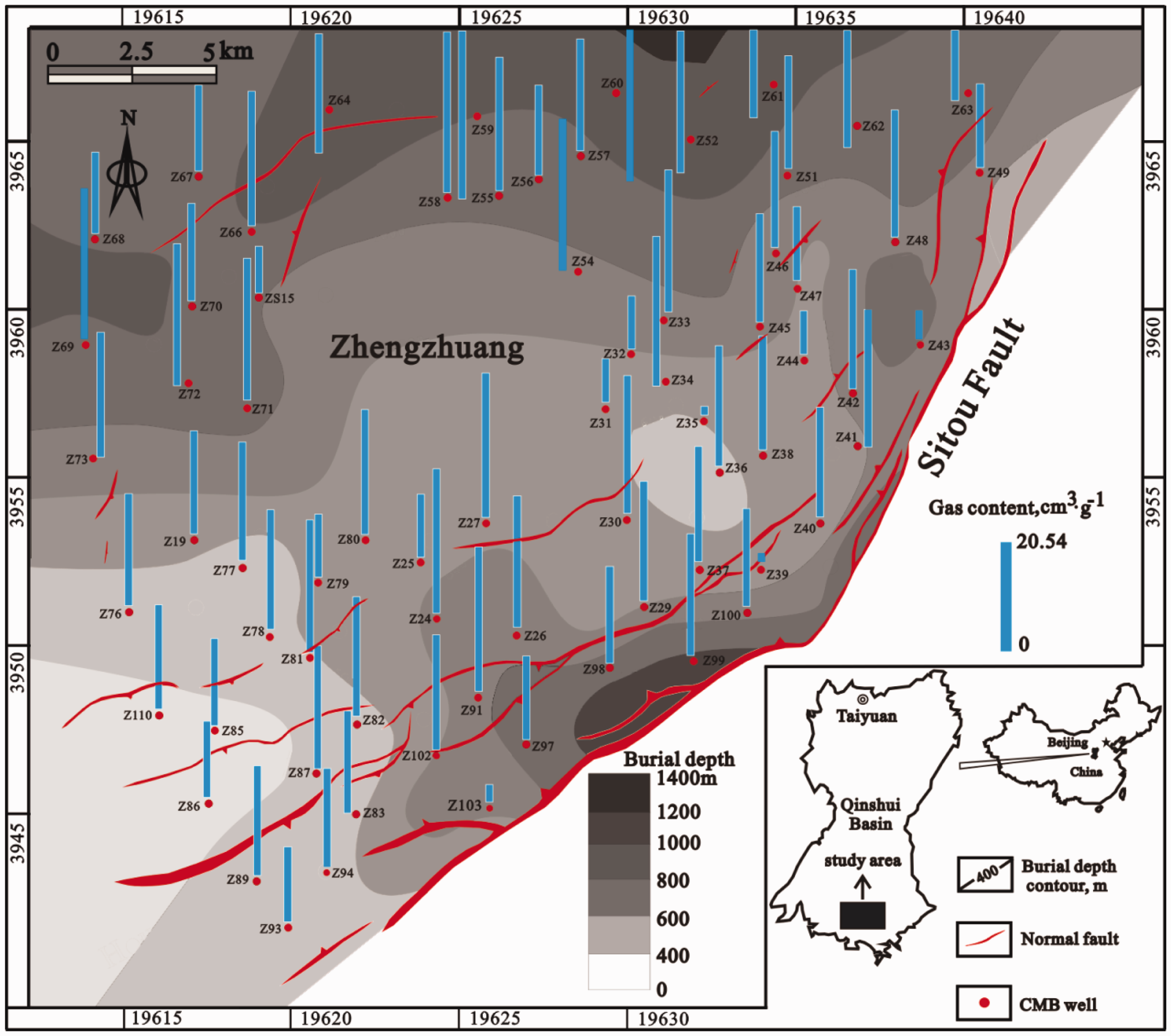
The macroscopic fractures of the No. 3 coal seam from the coal cores generally develop two sets, which are nearly perpendicular to each other. Their connectivity is generally poor, with a size of 0.3–7.0 cm in length and 0.2–11.0 cm in height. The fracture density is in the range of 2.5 to 26.0 per 5 cm; the secondary fracture is nearly rectangular to the main fracture, and its length is controlled by the main fracture, ranging from 0.1 to 6.0 cm. The scanning electron microscope analysis shows that microfractures are generally filled with carbonate minerals. The connectivity of microfractures is relatively good. The main microfractures have a width of 1–200 µm, length of 0.05–4.00 cm, and a density of 1.5–23.0 per cm. The size of the secondary microfractures is 1–550 µm wide and 0.05–3.70 cm long (Figure 2).
SEM photos of No. 3 coal seam in the Zhengzhuang area. (a) Parallel microfractures, fracture aperture varies from 1 to 2 µm with partial mineral filling; Well ZS30 core, 642.58 m; (b) microfracture, fracture aperture is approximately 3 µm with partial mineral filling; Well ZS64 core, 1247.81 m; (c) two groups of microfractures; partial mineral filling; Well ZS78 core, 708.08 m; (d) microfracture, fracture aperture varies from 2 to 3 µm; Well ZS82 core, 709.00 m; (e) intersected microfracture; fracture aperture is approximately 3 µm; Well ZS80 core, 759.80 m; (f) microfracture, vermicular clay mineral filling; Well ZS89 core, 526.50 m.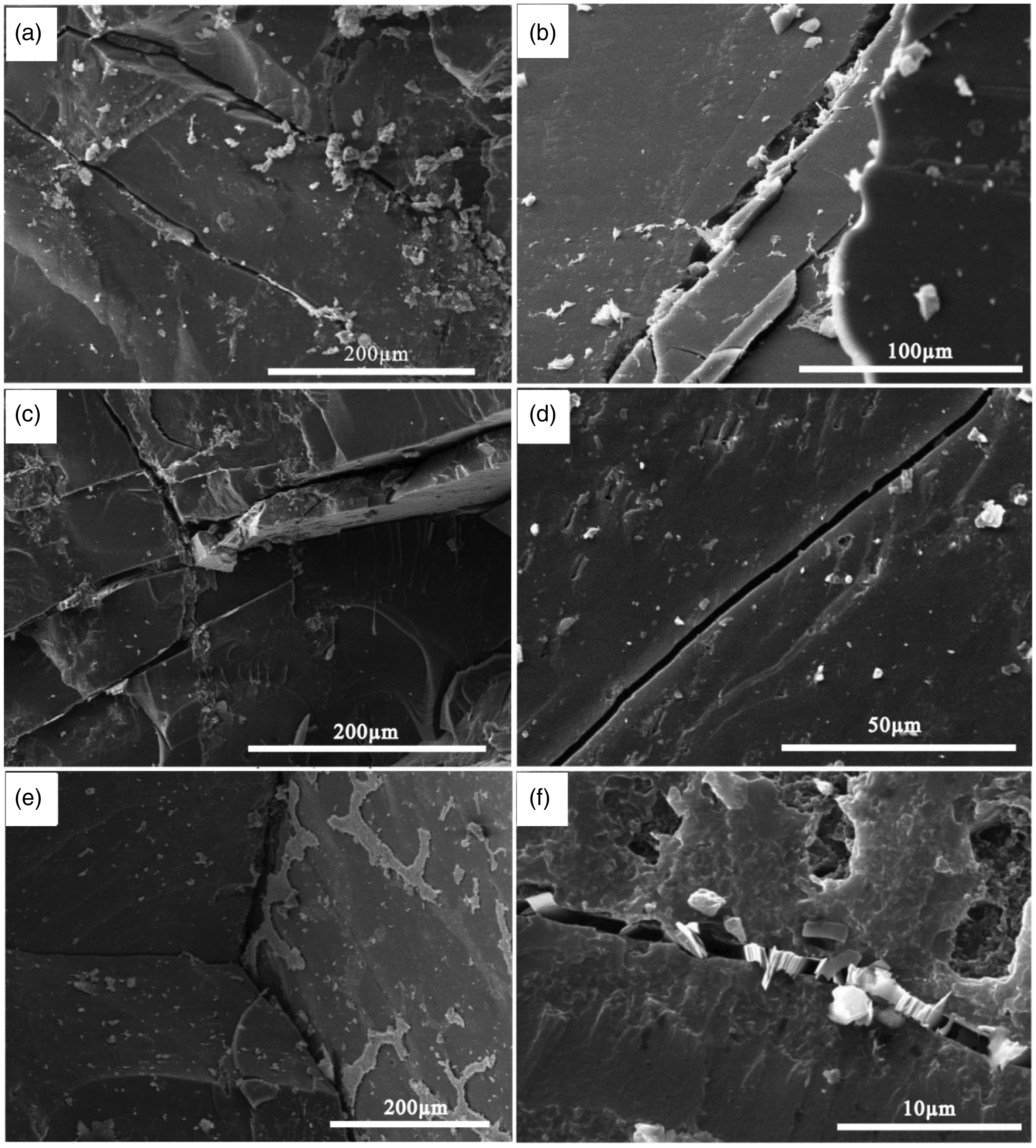
Results and discussion
Factors including argillaceous fillings, high salinity water formation, mineral formation, and pore-fractures can lead to a decrease in resistivity (Boyeldieu and Winchester, 1982; Sima, 2009). The difference in resistivity between the formation and the tight surrounding rock is believed to be the main factor. In terms of the dual laterolog response characteristics of the No. 3 coal reservoir in the Zhengzhuang area, the dual lateral resistivity curve is significantly different because of the discrepancy of the dual lateral resistivity at the detecting depth. The deep lateral resistivity value is always greater than the shallow lateral resistivity at the high angle fracture of a coal reservoir. There is a slightly positive or negative separation in the inclined/low angle fracture of the coal reservoir (Figure 3). Obviously, the amplitude difference of the dual laterolog value is related to the fracture angle.
Dual laterolog response characteristic of No. 3 coal reservoir in the Zhengzhuang area: (a–d) high angle fracture; (e–g) inclined fracture; (h) low angle fracture.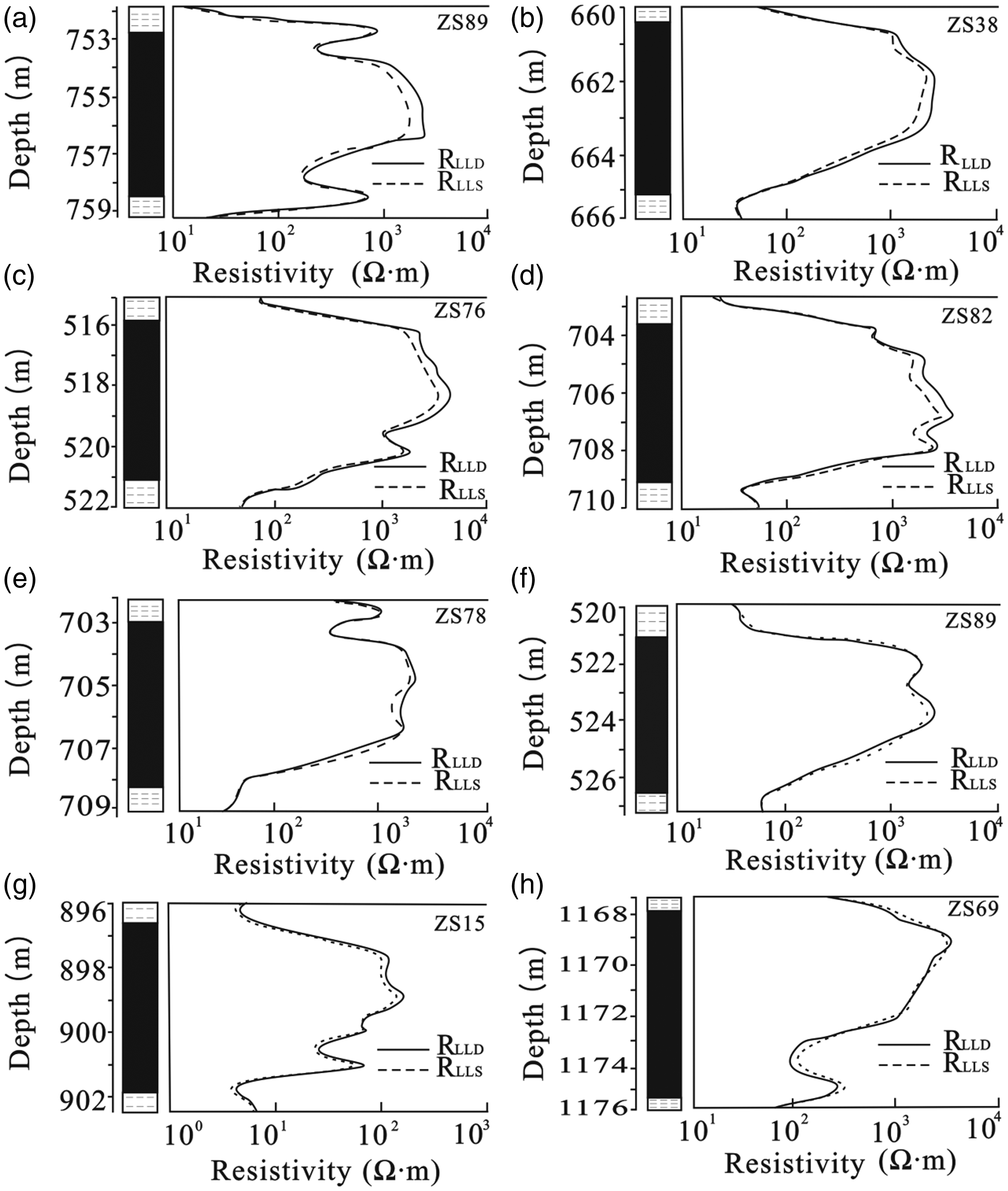

Calculated fracture parameters of the No. 3 coal reservoir in the Zhengzhuang block.
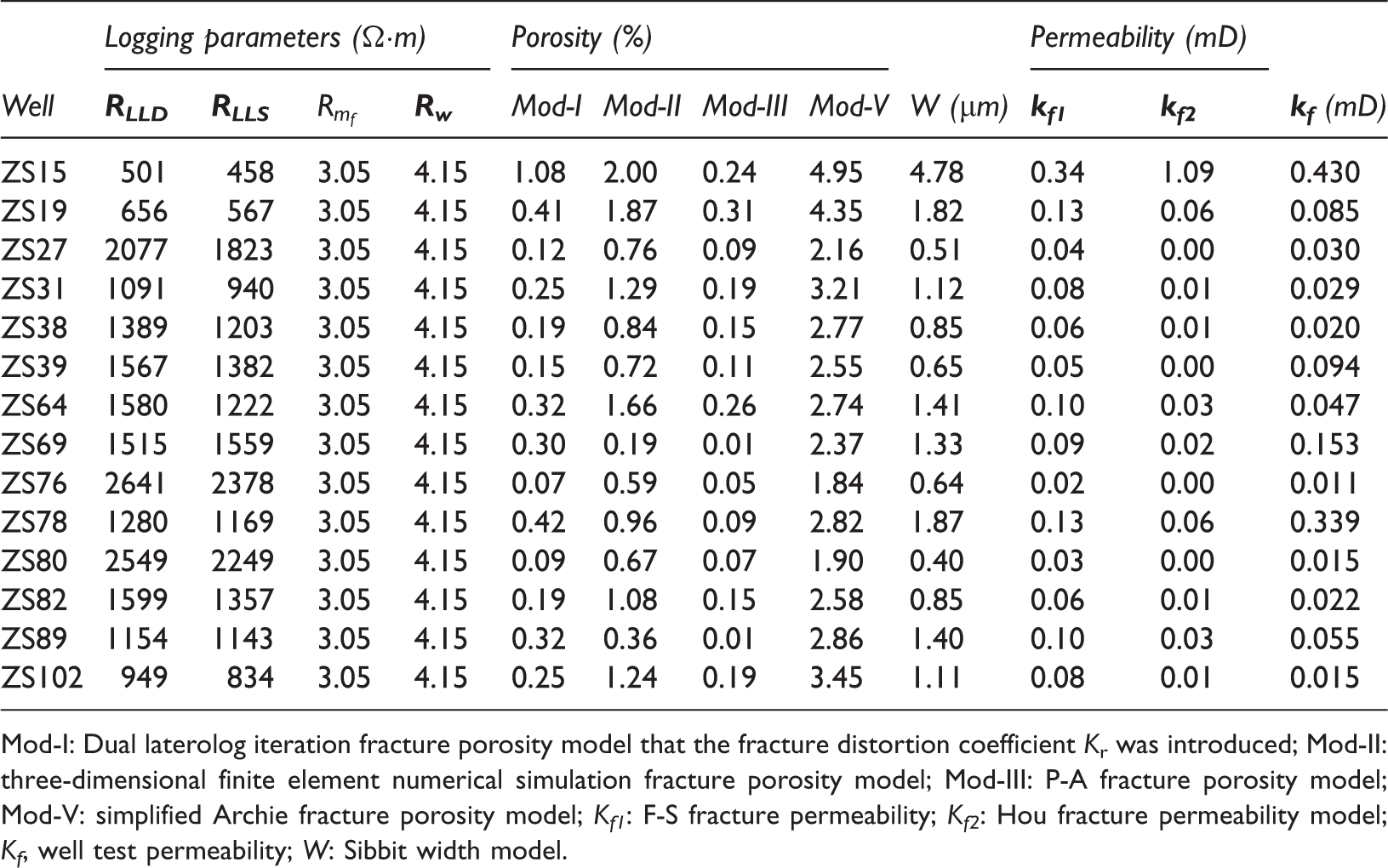
Mod-I: Dual laterolog iteration fracture porosity model that the fracture distortion coefficient Kr was introduced; Mod-II: three-dimensional finite element numerical simulation fracture porosity model; Mod-III: P-A fracture porosity model; Mod-V: simplified Archie fracture porosity model; Kf1: F-S fracture permeability; Kf2: Hou fracture permeability model; Kf, well test permeability; W: Sibbit width model.
Y < 0, horizontal fracture; 0 < Y < 0.1, inclined fracture/mesh fracture; Y > 0.1, vertical fracture.
Fracture porosity
Basically, the quantitative evaluation of fracture parameters is quite difficult due to the limitation and applicability of each model (Luo, 1990; Saboorian et al., 2015; Yan et al., 2015; Zhou and Yao, 2014). The dual laterolog iteration method is only suitable for the mesh fractures of the coal reservoir without the fracture distortion coefficient, Kr; the 3D finite element numerical simulation method can be employed to calculate the porosity of a single fracture of any occurrence and can be a judgment method for fracture occurrence. It has strong applicability. Although the P-A model is applicable to the porosity evaluation for the nearly horizontal/vertical fracture, the actual formation is dominated by the incline/high angle fracture (Figure 3). Therefore, the model applicability is restricted and has low precision in coal reservoirs with inclined/high angle fractures. The deviation of the simplified Archie estimation formula could be relatively large because the effect of fracture occurrence on the resistivity was neglected.
There is a significant difference in the absolute value of the fracture porosity that ranges from 4.71 to 0.02, with an average of 1.52. The P-A fracture porosity is the minimum, followed by the fracture porosity calculated by the three-dimensional finite element numerical simulation method and the dual laterolog iteration method with the fracture distortion coefficient, Kr. The fracture porosity estimated by the simplified Archie formula has the largest porosity (Table 2). Only the calculated fracture porosity of the dual laterolog iterative method with the introduced fracture distortion coefficient Kr shows good correlation with the well test permeability (Figure 4); therefore, this fracture porosity model was used to calculate the reservoir permeability of the No. 3 coal seam in the Zhengzhuang area.
The correlation between fracture porosity calculated by different fracture models and well test permeability: (a) The linear relationship between Dual laterolog iteration fracture porosity and Well test permeability; (b) the linear relationship between Simplified Archie formula fracture porosity and Well test permeability; (c) the linear relationship between Numerical simulation fracture porosity and Well test permeability; (d) the linear relationship between P-A fracture porosity and Well test permeability.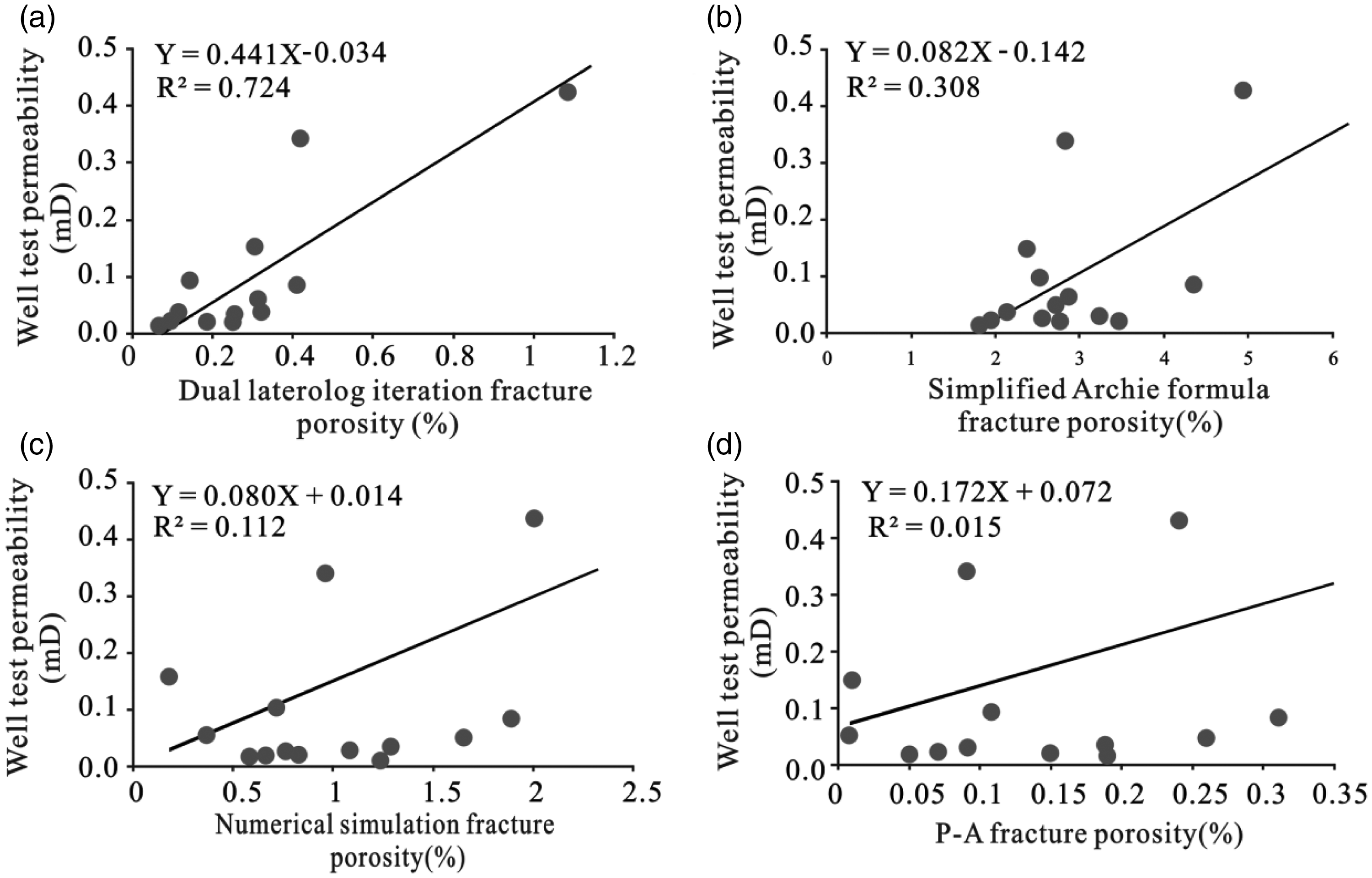
The porosity calculated by P-A/Simplified Archie model and well test permeability present no clear correlation may be due to the neglection of fracture occurrence and the Simplified Archie model designated the porosity index (mf) of 1.6. The slight correlation between the 3D finite element numerical simulation porosity and well test permeability is against our expectation, which may be because the drilling fluid resistivity was designated as a constant of 3.05 (average value of existing data).
Fracture width
The fracture width models show a range of applicability in coal reservoirs. Previous research demonstrated that the Sibbit width model cannot be applied to calculate the width of an inclined fracture. The Luo width model (Luo, 1990) can acquire the width of any apparent dip fracture. The model could be relatively accurate if the data of the apparent dip fracture were available. However, apparent dip fractures are difficult to determine without core and imaging data. The Sibbit fracture width model is the only way to calculate the fracture width due to the lack of core and imaging data in the research area. The Sibbit width model is feasible in the Zhengzhuang area because the calculated fracture width is consistent with the fracture width observed by the scanning electron microscope (Figure 2).
Fracture permeability
Fracture permeability can be obtained by both the F-S model (Cf of the Zhengzhuang area is 3.8 × 10⁻⁸ obtained from the relative order of magnitude relationship between of well testing permeability and permeability) and the Hou model (Hou, 2000). The matchstick-like model was widely used in the coal seam in previous studies that reported the consistency between the permeability estimated by the modeled and laboratory permeability (Chatterjee and Pal, 2010; Chatterjee and Paul, 2013; Zhou and Yao, 2014). Thus, the matchstick-like model was chosen to calculate the reservoir permeability of anthracites in the Zhengzhuang area of the southern Qinshui Basin.
The fracture permeability calculated by the Hou model has a large discrepancy with the well test permeability (Table 2), whereas the fracture permeability obtained by the F-S formula shows a stronger correlation (Figure 5(a) and (b)). Therefore, the F-S fracture permeability model was used to acquire the reservoir permeability of the No. 3 coal seam in the Zhengzhuang area.
The correlation between fracture width/fracture permeability calculated by fracture models and well test permeability: (a) The linear relationship between Hou fracture permeability and Well test permeability; (b) the linear relationship between F-S fracture permeability and Well test permeability.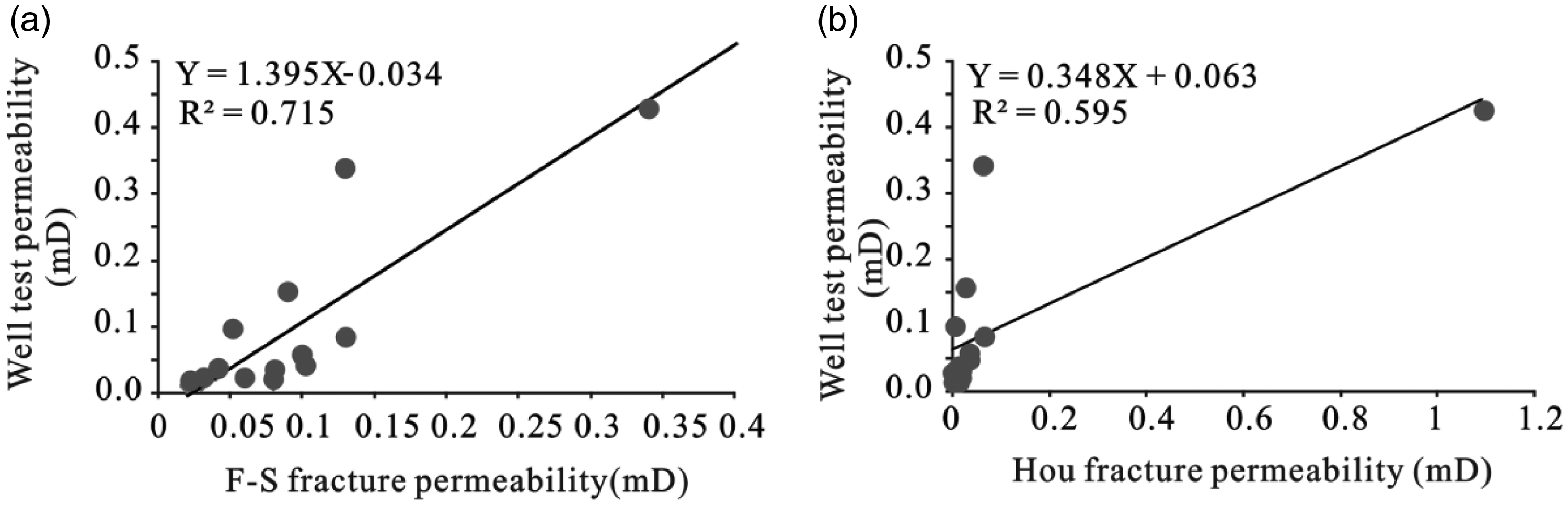
Permeability of the No. 3 coal seam in the Zhengzhuang area
To evaluate the No. 3 coal reservoir fracture permeability distribution characteristics of Zhengzhuang block in the Southern Qinshui basin, 61 well completions’ data were collected in the region and the F-S fracture permeability calculation model was used to calculate the fracture permeability of the 61 wells. Assuming that coal seam thickness is “h” m and there are “n” sampling points within the “h” m coal seam, the average value of dual lateral resistivity of “n” sampling points was used to analyze the plane permeability heterogeneity. Furthermore, difference values of dual lateral resistivity of “n” sampling points were analyzed to characterize the vertical permeability heterogeneity.
The calculated results from the F-S fracture permeability model show that the fracture permeability is generally low in the Zhengzhuang area, ranging from 0.01 to 0.37 mD, with an average of 0.07 mD. The planar permeability distribution in the Zhengzhuang area is strongly heterogeneous. The permeability of the No. 3 coal seam along the Shitou and Houchengyao normal fault in the Zhengzhuang area is the lowest (generally lower than 0.06 mD). The permeability is highest in the midwestern part of the Zhengzhuang area, generally above 0.1 mD, which is beneficial for CBM development (Figure 6).
The No. 3 coal seam fracture permeability distribution characteristics in plane of Zhengzhuang area.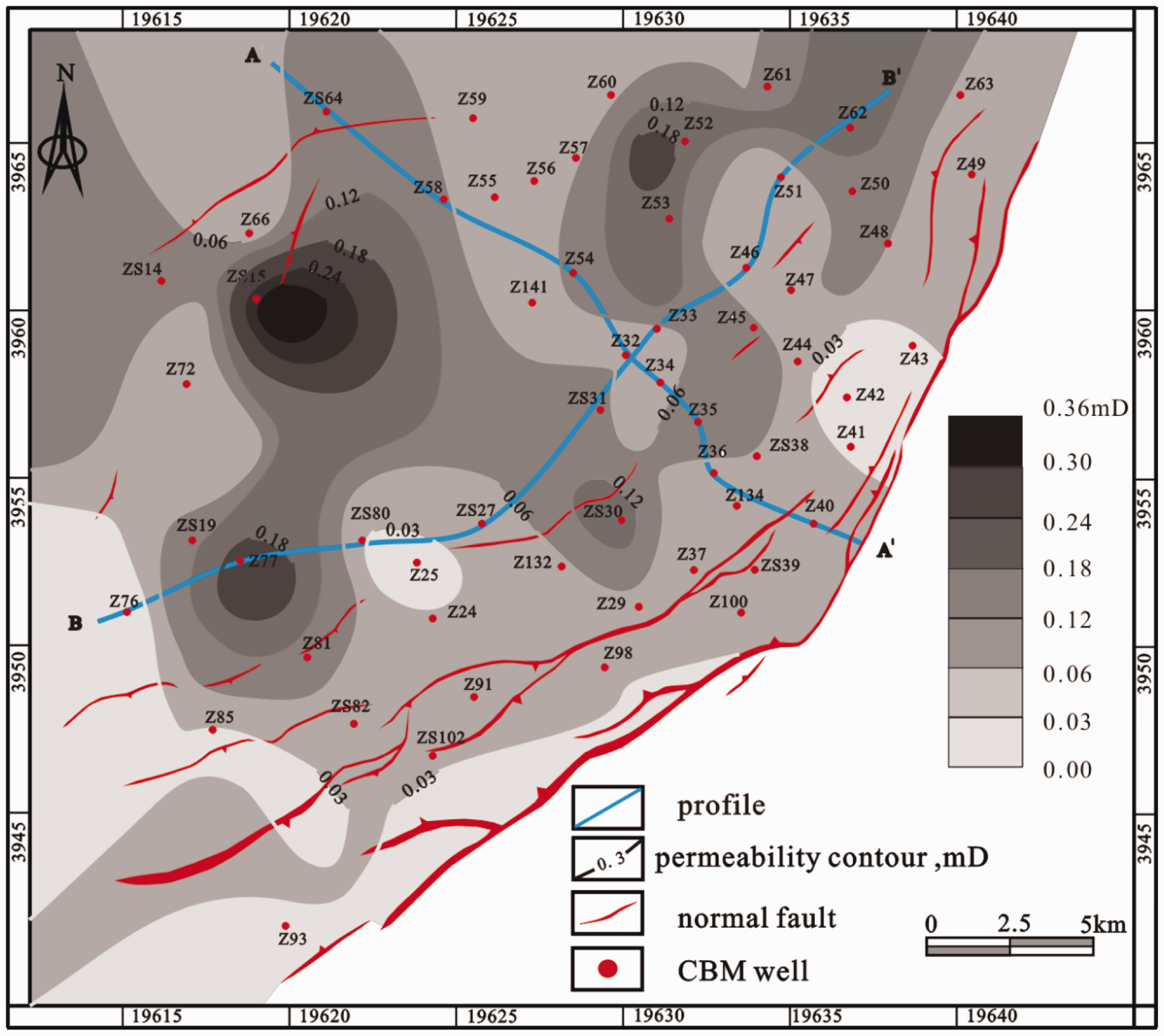
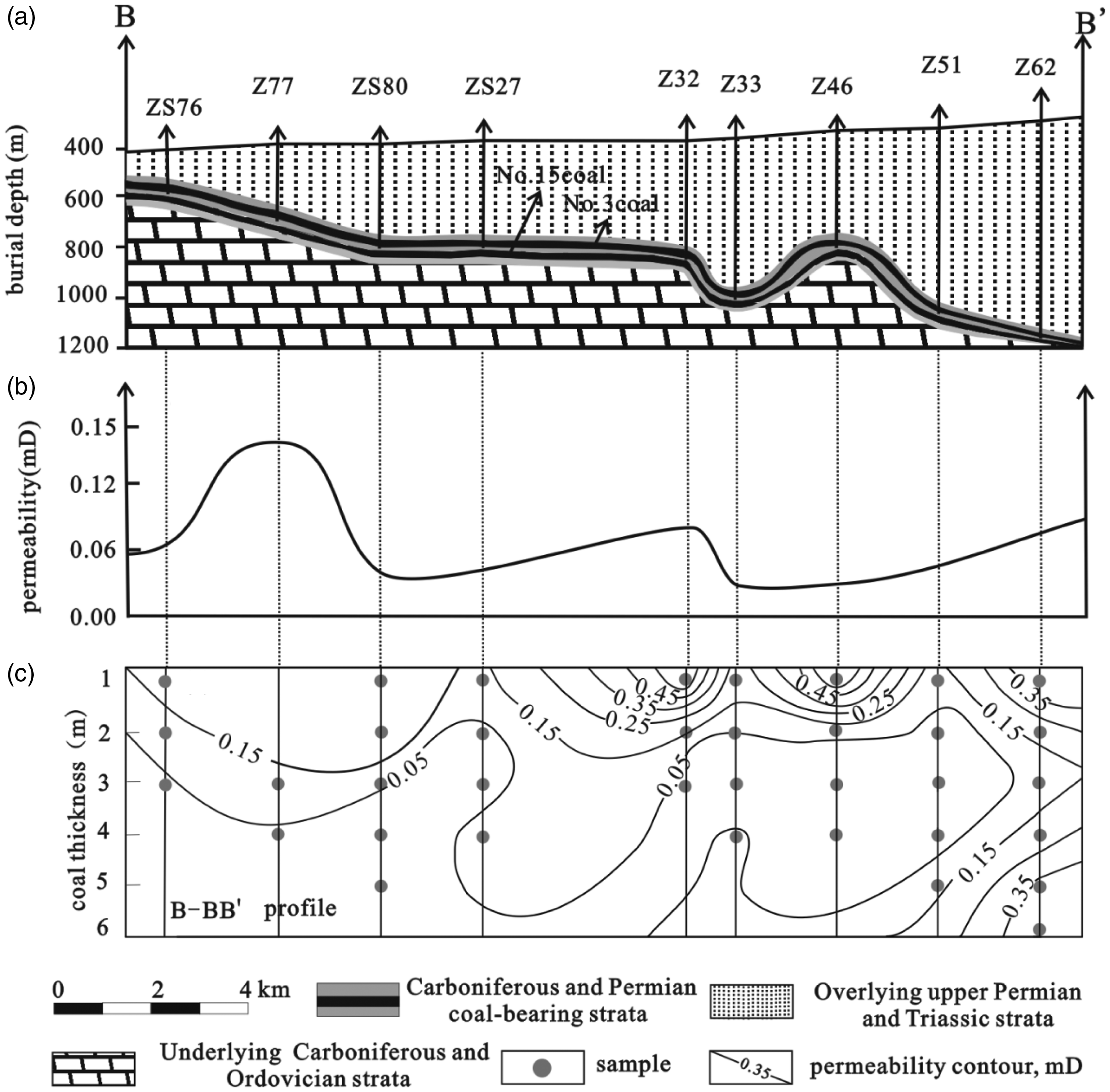
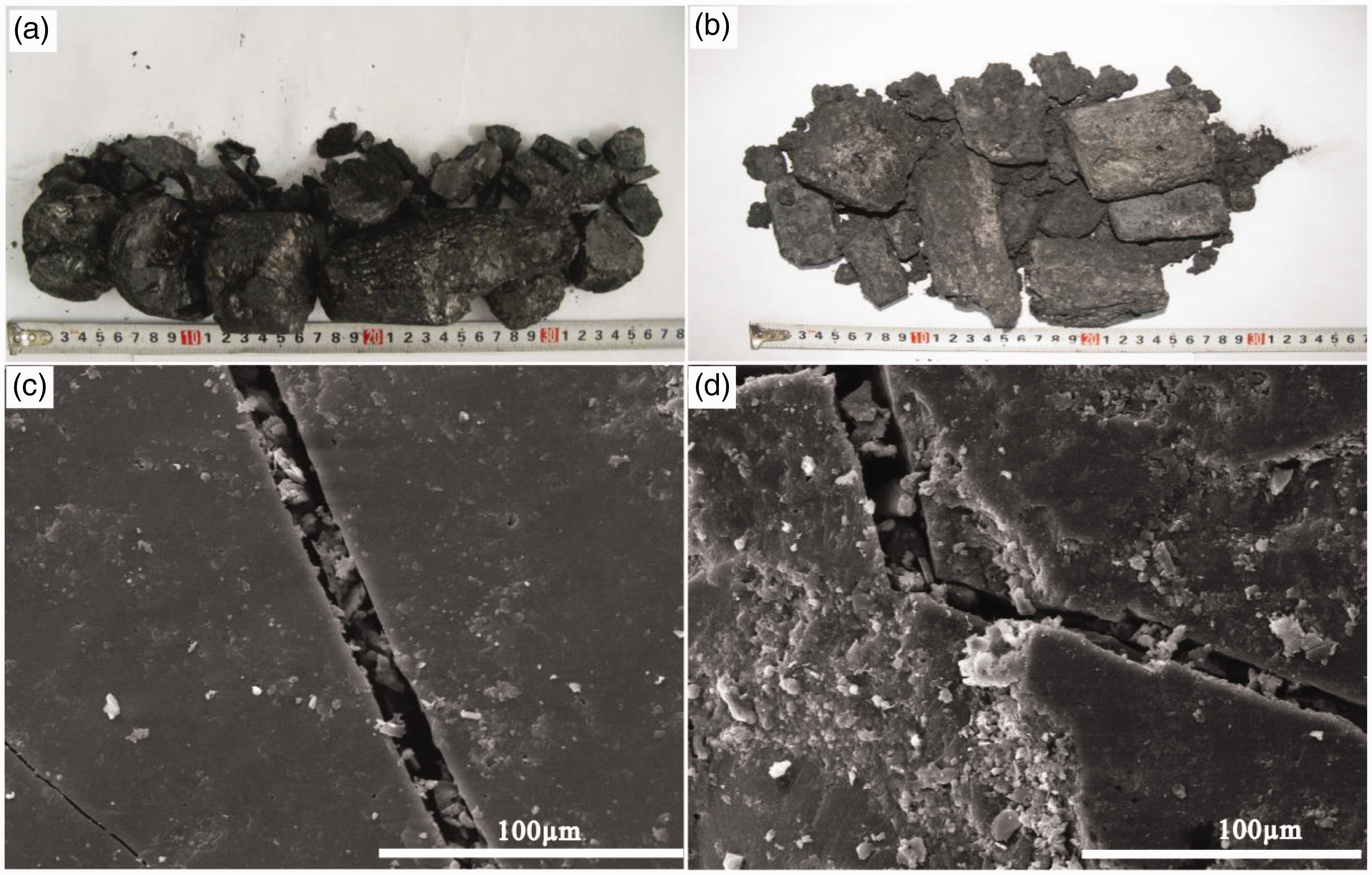
Coal reservoir permeability is influenced by many factors, e.g. geological structure, crustal stress, burial depth, coal seam structure, coalification, synsedimentary and post depositional processes, and natural fractures (Fu et al., 2009; Li et al., 2011; Meng et al., 2014; Yan et al., 2015). Tectonic movement is a major factor for secondary fractures generation, which has a significant effect on CBM migration and preservation (Cai et al., 2011). In situ stress concentrated areas often exhibit low permeability, which includes the tectonic compression area and the thrust nappe belt. In situ stress relaxation area normally shows high permeability. In the first structural cross section (A–A’, its south–north section), the relationship between depth and permeability is not apparent, which is mainly affected by the structure. As shown in Figure 7(a) and (b), the permeability is high in wells ZS64 to Z54 due to the influence of the normal fault, even though the burial depth is deeper. Although the burial depth at the axis of the anticlinal nose in wells Z54 to Z36 is very shallow, the permeability is lower. According to Yan et al. (2015) and Fu et al. (2009), the abrupt change of coal seam structure generally indicates that a change in geo-stress direction happened, which will destruct the coal structure. And thus permeability in the anticlinal zone is relatively lower that in the homocline zone. Permeability near well Z40 is the lowest, which is affected by sets of faults and deep burial depth. The scale of the faults has an important influence on the reservoir permeability. The coal reservoir permeability is relatively high with maximum values approaching 0.1 mD around minor faults, which induces slight coal deformation and plays an active role for CBM exploitation. In particular, the mylonitization coal caused by strong deformation has low permeability. For example, the area close to Shitou normal fault has extremely low permeability. The Shitou normal fault is the biggest fault in this area. The second structural cross section (B–B’) is a southwest–northeast section (Figure 8(a)) in which permeability generally decreases from west to east with increasing depth (Figure 8(b)); however, permeability obviously decreases near the axis of the anticlinal nose. Therefore, tectonic stress is the main control factors of permeability, burial depth follows. Multi-periodic structural activities modified the Sitou fault from earlier extensional into compressive stresses, and the coal reservoir produces plastic deformation and even mylonitization along the faults (Teng et al., 2015; Wei et al., 2007). Simultaneously, some brittle broken particles may accumulate in fractures, reducing the fracture connectivity in the coal reservoir (Figure 9). Reservoir permeability along the Shitou and Houchengyao normal fault significantly declines for the above reasons. Tectonics in other parts of the Zhengzhuang district is relatively simple, and permeability of coal reservoir is mainly controlled by burial depth. The reservoir permeability is lower in the northwestern part of the study area because the coal in this area has a deep burial depth and high in situ stress, which can result in fracture closure. The permeability in the middle part of the study area is the highest, which is the most favorable area for CBM development with moderate burial depth and in situ stress. According to Teng et al. (2015), cataclastic coal is very well-developed in the middle part of this region. The laboratory observation results from Xue et al. (2012) show that fractures in cataclastic coal are very well-developed and are commonly interconnected, which are favorable conditions for gas permeability. The permeability of the coal seam in the northeastern part of the study area is better because of the precondition that the fractures are not filled by minerals.
The change of permeability in the A-A’ profile line: (a) A–A’ structural cross section, whose location is shown in Figure 6; (b) the effects of tectonics on the No. 3 coal reservoir permeability; (c) the change of permeability in the No. 3 coal reservoir. The change of permeability in the A-A’ profile line: (a) B–B’ structural cross section, the location of which is shown in Figure 6; (b) the effects of tectonics on the No. 3 coal reservoir permeability; (c) the change of permeability in the No. 3 coal reservoir. Typical macroscopic and microscopic characteristics of the coal textures: (a, b) cataclastic coal; (c, d) granulated coal, grain filling in the fracture.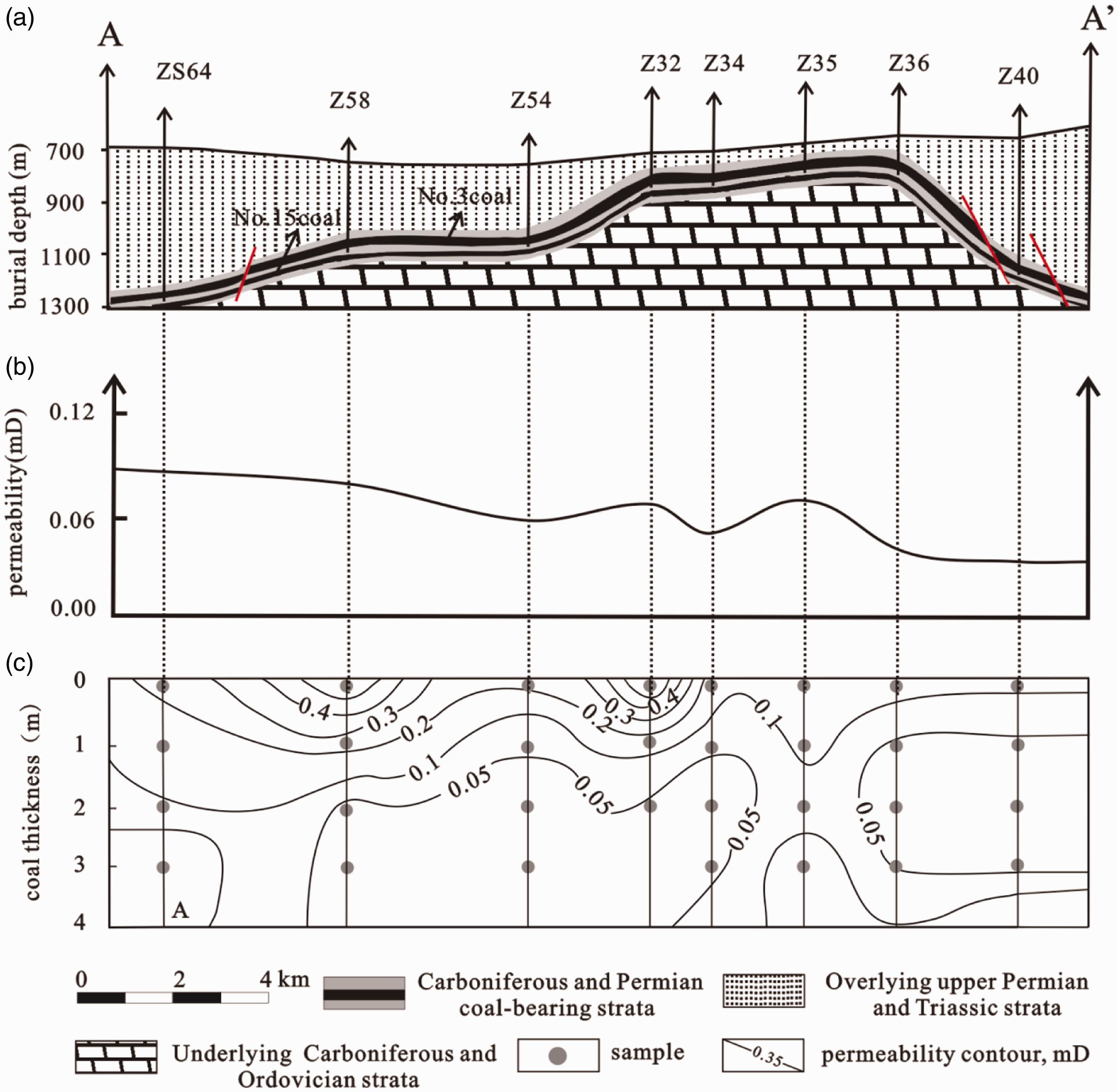
Fracture permeability in the vertical direction of the coal reservoir is in the range of 0.005 to 0.680 mD. Fracture permeability decreases significantly with increasing burial depth in most of CBM wells. However, in part of CBM wells, the fracture permeability first decreased and then increased with the increasing depth, such as wells Z36, Z40, Z62, and Z51. Permeability is higher at the top and the bottom of the coal reservoir than that at the middle (Figures 7(c) and 8(c)) of the coal reservoir. Obviously, the heterogeneity of the coal reservoir has an effect on the fracture permeability in the vertical direction. First, this is because the effective stress significantly increases with the increased depth, and the permeability decreases with the increase of effective stress. Coal has strong plasticity, different from the conventional reservoir. The fractures are sensitive to effective stress. The fracture width decreases with increasing effective stress, reducing the reservoir permeability (Cai et al., 2014; Pan et al., 2010). Permeability generally decreases with burial depth, but it also depends on the coal lithology, cleat network, and interconnection of pore spaces, structural and tectonic history of the basin (Chatterjee and Pal, 2010). The coal texture and macerals in the vertical direction may also cause permeability to change (e.g. cataclastic coal (Fu et al., 2009; Teng et al., 2015; Yao et al., 2011)), and the macroscopic pores in telinite and fusinite can improve the permeability of the coal reservoir. Wells Z36, Z40, Z62, and Z51 are distributed in high in situ stress area, which have the permeability of 0.03, 0.04, 0.02, and 0.09 mD, respectively. Although the buried depth is shallow for Well Z36, it shows an extremely low permeability due to the coal reservoir in a strong tectonic compression area. Burial depth should not be the dominant factor for reservoir permeability (normally lower than 0.05 mD) in the wells of Z40, Z62, and Z51, which are presented in depths greater than 1000 m. In the vertical direction of coal reservoir, the vitrinite content has a positive relationship with the reservoir permeability (Figure 10), which could be related to the fragile property of vitrinite. Therefore, vitrinite has an important effect on permeability.
The change of maceral composition of the No. 3 coal reservoir in the vertical direction. (a–d) represents well #36, 40, 51, and 62, respectively.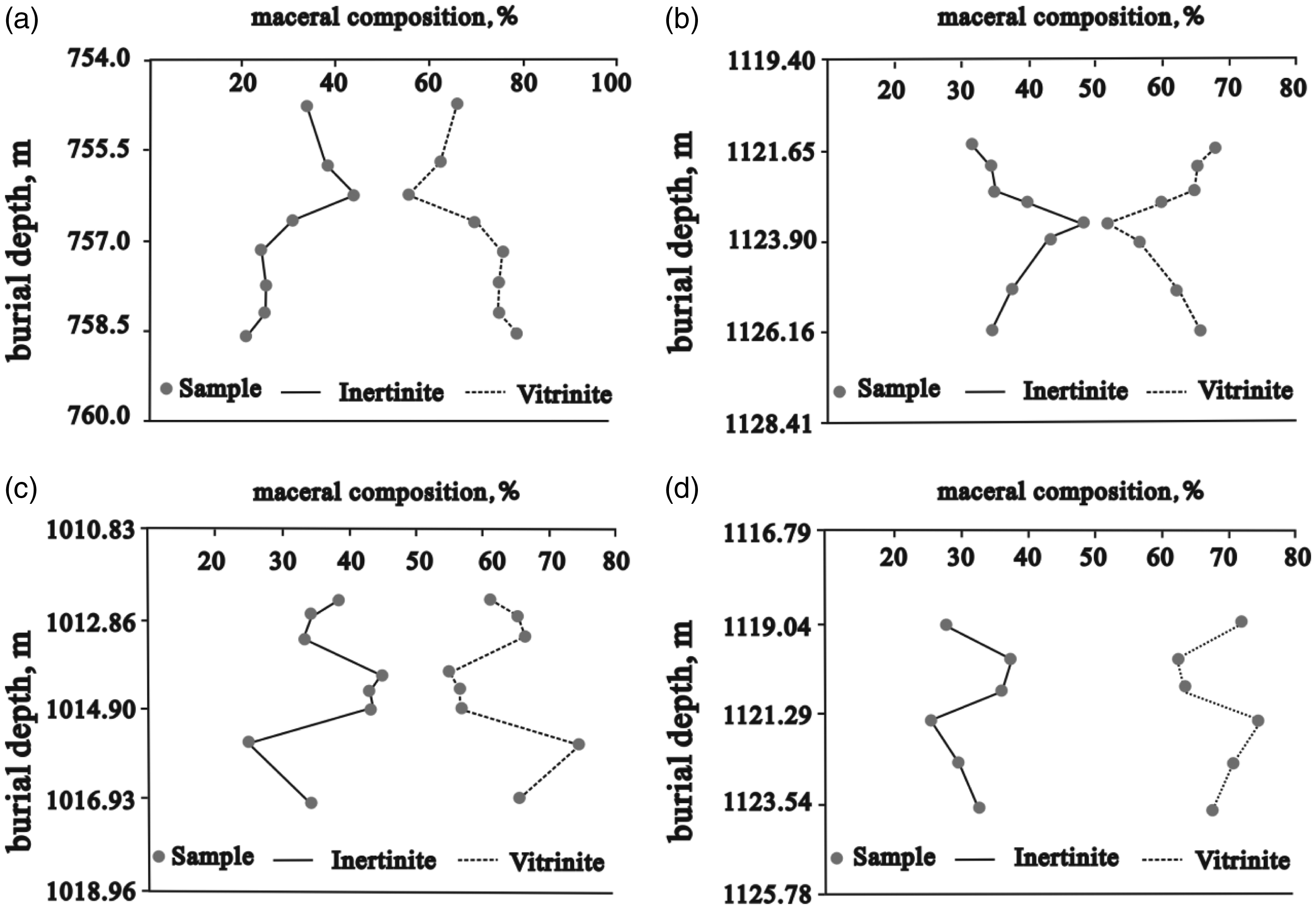
Relationship between permeability/gas content with CBM production in the Zhengzhuang area
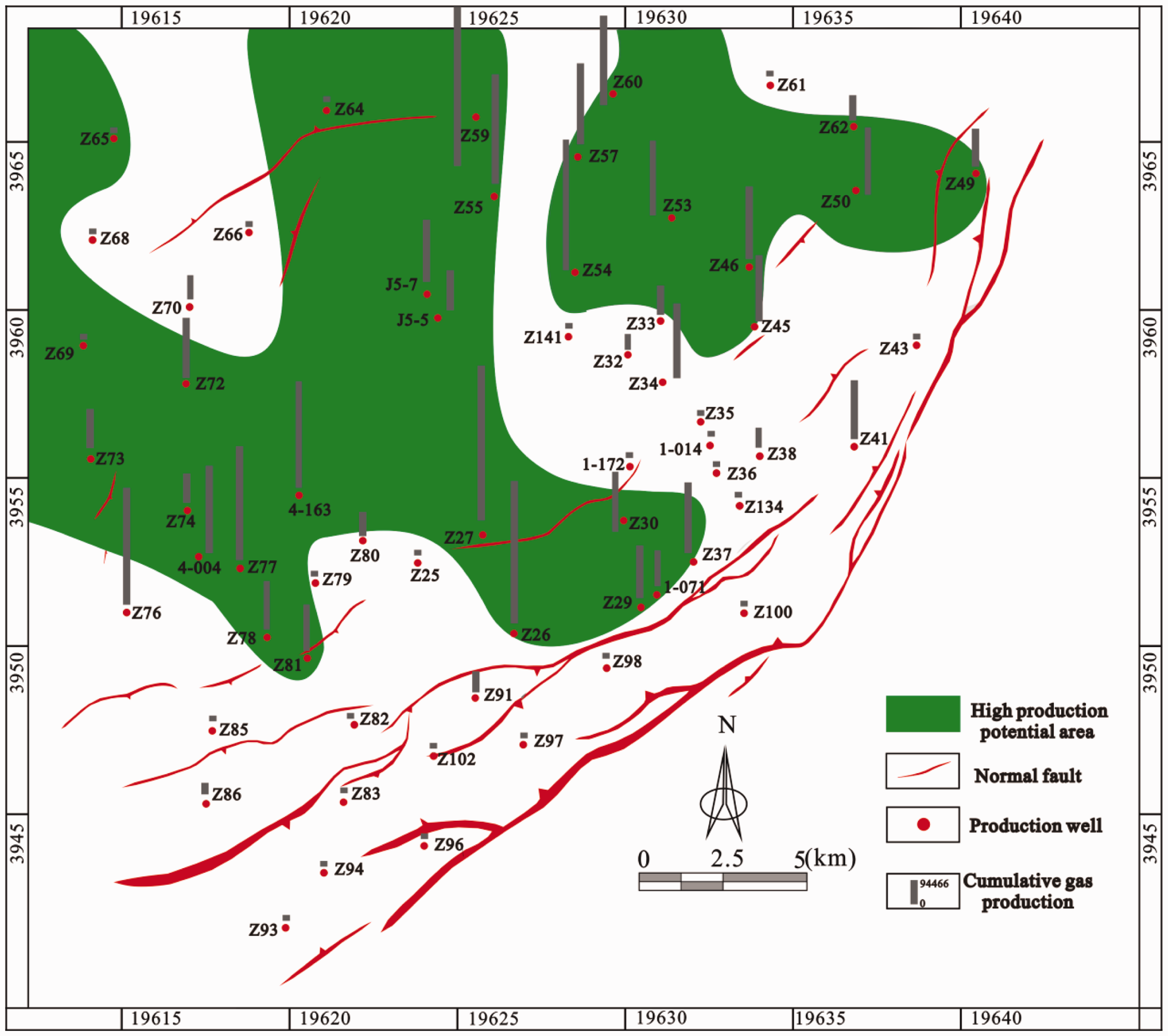
The Qinshui coalfield is one of the most prospective CBM development districts in China. In Zhengzhuang area, more than 1000 wells have been drilled. However, average daily production of most CBM wells is lower than 3000 m3/day, which belongs to the moderate- to low-gas yield class according to Tao (2014). A series of geological and engineering factors controlled the average daily productivity of individual wells, which includes gas content, permeability, porosity, seam thickness, seam depth, and adsorption (Cai et al., 2011; Meng et al., 2014; Tao et al., 2014). Among them, the gas content and permeability are the two major parameters for evaluation of CBM production potential (Fu et al., 2009; Tao et al., 2014). Gas content reflects the gas holding capacity, which directly affects the gas production of wells (Figure 11(a)). Permeability is a key transport property of coal reservoir, which plays an important role in CBM recovery and gas production. The coal reservoir permeability is generally less than 0.5 mD. From the perspective of permeability, the favorable areas of the coal reservoir are located in the lower regions of the Zhengzhuang block; therefore, they only have a minor effect on gas production due to the low gas content (Figure 11(b)). Based on the statistic result, all high-gas yield wells (here refers to the wells of average daily production over 1000 m3/day) in the coal seams have gas contents more than 20 m3/t with permeability exceeding 0.04 mD (Figure 11). Thus, the minimum requirements of the gas content and permeability of high-yielding CBM wells should be 20 m3/t and 0.04 mD in the Zhengzhuang district, respectively. Results from gas content and permeability are superimposed to predict the high gas yield zones. The prediction result presents a good relation with the cumulative gas production of the CBM wells in this area (Figure 12). There are 30 relatively high-gas yield wells from the collected 61 wells, and 26 of the 30 wells were located in predicted favorable areas. The other four high-gas yield wells were not located in the predicted favorable areas, which may be related to the logging parameters errors and the relatively sparse reservoir data and engineering factors. Nonetheless, the data and information presented in this article can provide first-order guidance for further CBM exploration and development in the Zhengzhuang area. The evaluation of CBM potential indicates that the best prospective target area for CBM production is predicted to be located in the mid-west and northeast part of the Zhengzhuang area.
Relations between gas content (a), permeability (b), and gas productivity for the No. 3 coal seam in the Zhengzhuang area. Predicted favorable CBM production potential areas in the Zhengzhuang area.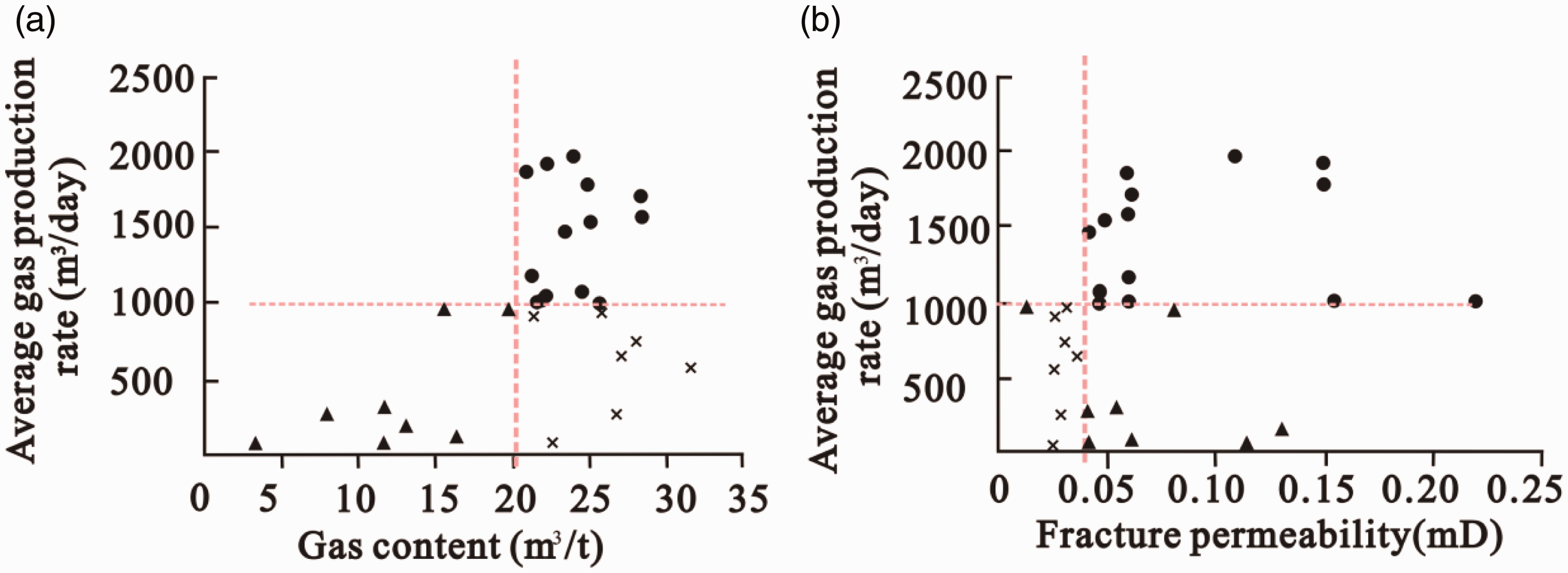
Conclusions
This article reviewed and discussed the applicability of seven commonly used fracture models based on dual laterolog resistivity logging. A set of fracture models was selected to predict the vertical and planar permeability of the No. 3 coal seam in the Zhengzhuang area, southern Qinshui basin. The results show that the fracture porosity calculated by the dual laterolog iterative method with a fracture distortion coefficient, Kr, has a strong correlation with the well test permeability. The F-S fracture permeability model was used to acquire the fracture permeability. The predicted reservoir permeability of the Zhengzhuang area is generally low, ranging from 0.01 to 0.37 mD, with an average of 0.07 mD. The fracture permeability in the vertical direction of the No. 3 coal reservoir ranges from 0.005 to 0.680 mD, decreasing significantly with increasing burial depth. The regional reservoir permeability is mainly controlled by the burial depth and in situ stresses. The permeability is high in the shallow area and minor fault zone, but low in the fold area and major faults. The heterogeneity of the coal reservoir has an important effect on the permeability. The minimum requirements of the gas content and permeability of high-yielding CBM wells, respectively, are 20 m3/t, 0.04 mD in this area. The evaluation of CBM potential by the conclusion indicates that the best prospective target area for CBM production is predicted to be located in the midwest and northeast part of the Zhengzhuang area.
Footnotes
Acknowledgments
The authors gratefully acknowledge the PetroChina Huabei Oilfield Branch Company for supplying literature information and the basic logging data of CBM wells in the Zhengzhuang area of the southern Qinshui Basin.
Declaration of conflicting interests
The author(s) declared no potential conflicts of interest with respect to the research, authorship, and/or publication of this article.
Funding
This research was funded by National Natural Science Foundation of China (U1262104), a Foundation for the Author of National Excellent Doctoral Dissertation of PR China (201253), and the Program for New Century Excellent Talents in University (NCET-11-0721).