




Abstract
The study explored the effectiveness of Rational Emotive Behavior Therapy (REBT) in reducing mathematics anxiety among secondary school students in Nigeria. Sixty Senior Secondary Class One students from schools in Isoko North LGA, Delta State, were randomly assigned to either the REBT intervention group (n = 30; M_age = 15.60 years, SD = 1.04; 14 males, 16 females) or a control group (n = 30; M_age = 15.20 years, SD = 0.93; 16 males, 14 females). Mathematics anxiety levels were evaluated using the Mathematics Anxiety Scale. The experimental group received REBT treatment, while the control group received conventional counseling (general sessions on study habits, exam strategies, anxiety management, and time management). Both interventions spanned six weeks, consisting of six sessions lasting 90 min each. The findings revealed that students who received REBT experienced a significant decline in mathematics anxiety from pretest to posttest, with these improvements sustained at follow-up, in contrast to the control group. The study suggests that mathematics teachers should collaborate closely with school counselors and psychologists to identify and support students facing psychological challenges related to mathematics anxiety.
Keywords
Introduction
Mathematics is a must for all basic and secondary education students. In both primary and secondary schools, passing mathematics is one of the requirements for advancement to the next level of study. The bottom line is that mathematics is crucial for all Nigerian students. Mathematics instruction is essential for improving numerical skills (Federal Republic of Nigeria, 2013). Students’ understanding of and proficiency in handling numbers can support their capacity for logical reasoning, quantitative analysis, and spatial reasoning. It is important to remember that a country that is serious about expanding its technological foundation must take its responsibility to teach mathematics seriously (Egara et al., 2021; Osakwe et al., 2023a, 2023b). Without a foundation of understanding mathematics, no country can grow in science (Okeke et al., 2023a, 2023b). The widespread consensus is that mathematical proficiency is critical for one's academic skill set and for opening prospective job alternatives for young people (Uchechi & Onukwufor, 2018).
Despite the relevance of mathematics, many students in Nigeria still do not perform well in the subject (Inweregbuh et al., 2020; Nzeadibe et al., 2023; Okeke et al., 2022a, 2022b). Examination bodies like the West African Examinations Council have consistently reported low student performance in mathematics in the West African Senior School Certificate Examinations, as reflected in the Chief Examiners’ Reports from 2018 to 2022. The percentage of students with credit passes in mathematics in 2018, 2019, 2020, 2021, and 2022 were 49.98%, 35.10%, 39.82%, 30.11%, and 23.99%, respectively (WAEC, 2018–2022). The mathematics achievement of students who passed the subject has been below 50% for five years, which means over 50% of students have been performing poorly in mathematics.
Mathematics educators have identified various factors responsible for students’ poor achievement in mathematics. Several interrelated factors have been linked to students’ underachievement in mathematics, including inadequate foundational knowledge, overcrowded classrooms, limited access to up-to-date teaching materials (Evans et al., 2019), elevated levels of mathematics-related anxiety (Sarfo et al., 2020, 2022; Sule, 2017), and rigid or unsupportive instructional approaches by some mathematics teachers (Jameel & Ali, 2016; Nzeadibe et al., 2019); a lack of student engagement and motivation, which may stem from uninteresting instructional approaches, prior negative experiences, or limited support systems (Kumah et al., 2016); negative attitude exhibited by students toward mathematics, lack of mathematics teaching and learning materials (Egara & Mosimege, 2023a, 2023b; Mosimege & Egara, 2022); and poor attitude toward mathematics by teachers and students (Nzeadibe et al., 2020; Wachira, 2016). Out of the factors listed as responsible for students’ poor mathematics achievement, the study's focus is anxiety around mathematics. The reason for focusing on mathematics anxiety is its negative effect on many students’ well-being and academic prowess worldwide (Sarfo et al., 2020).
Mathematics anxiety is a multifaceted psychological phenomenon characterized by feelings of low confidence, perceived threats to one's competence, and diminished self-esteem when engaging with mathematical tasks. Research has highlighted mathematics anxiety as a key contributor to students’ difficulties in achieving success in mathematics at the secondary level (Sarfo et al., 2020; Terry et al., 2023). It is commonly understood as a psychological response that plays a significant role in shaping students’ experiences and challenges with mathematics learning (Alam & Halder, 2018). As conceptualized in this study, mathematics anxiety is a form of anxiety characterized by panic, helplessness, worry, and tension when a learner engages in mathematical calculations or activities. When students engage in mathematics activities and face these feelings, they may disengage from learning (Hogbin, 2021). Potential causes of mathematics anxiety include teachers’ negative attitudes, poor teaching methods, negative classroom experiences of students, failure to grasp the importance of mathematics in daily life, fear of answering a question wrongly, parents’ unrealistic expectations, and high-stakes test pressure (Caglar & Senol, 2021; Mollah, 2017).
Anxiety toward mathematics is a problem for many students across the globe (Luttenberger et al., 2018). Mathematics anxiety can be triggered not only by challenging learning experiences but also by simply anticipating or thinking about engaging with the subject (Egara, 2021). To address such anxiety, various psychological interventions have been developed, including approaches such as systematic desensitization, stress inoculation training, rational emotive behavior therapy (REBT), cognitive behavioral therapy, and mindfulness-based cognitive techniques (Egara, 2021; Eifediyi, 2015). The present study focuses on the application of REBT. The rationale for selecting REBT lies in its capacity to challenge erroneous beliefs held by students, particularly those pertaining to their perceived inability to succeed in mathematics, which often results in heightened anxiety. This study aims to address and amend these misconceptions using REBT techniques. While REBT has been shown to be effective in alleviating various forms of anxiety in prior research, its application specifically for secondary school students’ mathematics anxiety remains relatively unexplored.
Rational emotive behavior therapy is a psychotherapy that was created by Albert Ellis in 1955. The REBT has been an effective intervention for numerous psychological issues such as anxiety, depression, and stress (Onuigbo et al., 2019). The REBT approach is based on the idea that individuals’ thoughts influence their emotions and behaviors. The REBT approach also aims to help individuals modify the way they think to reduce negative symptoms inherent in them and improve their lifestyle qualitatively (Albert Ellis Institute, 2014; Timothy, 2018). According to Mohammad et al. (2015), the primary goal of REBT is to reduce the risks of self-destruction by developing realistic thoughts through a more liberal life philosophy. Therefore, in a school setting, REBT can be used in group therapy led by a school counselor or psychologist to help students dispute and challenge their irrational beliefs and substitute them with more helpful and sensible rational thoughts using A-B-C-D-E theory.
The A-B-C-D-E theory propounded by Ellis involves a five-step process to conquering irrational beliefs. The “A” represents an Activating Event that causes worry, stress, or change in emotion (Roberts, 2019). The activating event is the circumstance that triggers an individual to form or develop an irrational thought. An example is a case where one failed a mathematics examination. This is the first step in creating or developing irrational thoughts, which are formed to deal with the event. The “B” represents Beliefs that could be irrational or rational (Axelrod, 2016). An irrational belief is formed due to the activating event and is used to manage the event.
An example is when one proclaims a negative statement such as “I don’t think I will be able to do well in mathematics.” The “C” represents Consequences (Mahoney, 2019). The consequences are the results of the irrational belief formed. The consequences of irrational beliefs are, at times, emotional, behavioral, or both emotional and behavioral. In this circumstance, consequences might involve losing self-confidence or feeling miserable (emotional) about mathematics and refusing to study mathematics (behavioral). The “D” represents Disputation (Roberts, 2019). There are times when an individual recognizes an accommodated irrational belief that is posing problems. The individual may notice that self-confidence is lost in mathematics or maybe negative feelings and thoughts about mathematics are high. Suppose a therapist is helping the individual; the therapist will assist the individual in developing strong positive arguments against the belief and helping the individual come up with evidence against the negative thoughts, such as “I am not incompetent, which means I can make progress in mathematics.” The “E” represents New Effect (Ackerman, 2017). The new effect is experienced when the individual has successfully disputed and countered the irrational belief. These effects might be increased confidence in mathematics, studying hard in mathematics, and feeling good about everything that pertains to mathematics (Ackerman, 2017). Therefore, clients can only reach the last step of the model if they have successfully strengthened their belief system by upholding more rational beliefs and abandoning their irrational beliefs (Ellis et al., 2012).
The theory of REBT assumes that reducing irrational beliefs leads to reducing negative emotions, such as depression, anxiety, anger, and guilt (Ellis, 1992, 1993). Consequently, since irrational beliefs in mathematics are associated with mathematics anxiety among students (Bester & Kufakunesu, 2021), a reduction in students’ irrational beliefs around mathematics would lead to a reduction in students’ mathematics anxiety. Therefore, in this study, REBT addressed the symptoms of mathematics anxiety among students through the ABCDE model proposed by Ellis, which may help students change their irrational thoughts to more functional and rational beliefs.
Related studies
Numerous studies have investigated the effectiveness of REBT in addressing various psychological challenges among students. Globally, REBT has been shown to be effective in alleviating depression (Mangayarkarasi & Sellakumar, 2017; Onuigbo et al., 2019; Zhaleh et al., 2014), stress (Ogbuanya et al., 2017; Ugwoke et al., 2018), social anxiety (Aurooj & Ijaz, 2018; Ntamu, 2017), as well as examination and test anxiety (Badejo & Anyanwu, 2016; Eifediyi et al., 2018). While these studies affirm REBT's psychological benefits, most did not specifically address mathematics anxiety, nor were they conducted in African contexts.
Internationally, studies such as Yazdizadeh et al. (2023) and Keyvan and Vaziri (2022) demonstrated that REBT could improve academic engagement and reduce symptoms of anxiety and depression among Iranian high school students. Misdeni et al. (2019) demonstrated REBT's effectiveness in reducing examination anxiety among Indonesian students, while Noormohamadi et al. (2022) found that REBT enhanced resilience in Iranian university students. A recent systematic review by King et al. (2024), which examined 162 REBT intervention studies, indicated that REBT significantly reduced irrational beliefs and improved mental health outcomes, especially when delivered by trained professionals following the ABC model. However, most of these studies were conducted in non-African settings and rarely focused on subject-specific anxieties such as mathematics anxiety.
Within the Nigerian context, only a few studies have applied REBT specifically to mathematics anxiety. For instance, Okoiye et al. (2013) examined the effects of REBT on secondary school students in Imo State and found that it reduced mathematics anxiety and improved performance. Similarly, Adigun et al. (2023) reported that REBT significantly alleviated mathematics anxiety among deaf learners in Oyo State. Both studies employed quasi-experimental designs and used a sample size of 60 students. While they provided promising evidence, several methodological limitations were noted, including the absence of long-term follow-up assessments, unspecified intervals between pre- and posttests, and limited clarity on sample derivation. Additionally, in both studies, the REBT intervention was administered by the researchers themselves rather than by trained professional counselors, potentially compromising intervention fidelity.
These limitations highlight a significant research gap in the culturally relevant and methodologically rigorous application of REBT for mathematics anxiety within the Nigerian secondary school context. Our study addressed these gaps through a randomized controlled trial, professional counselor-administered intervention, and systematic data collection at three time points (i.e., pretest, posttest, and follow-up). The REBT intervention consisted of six weekly sessions, with data collected one week before the intervention, immediately after, and eight weeks postintervention.
From our review of existing research, this study is the first to implement REBT as an intervention for reducing mathematics anxiety among secondary school students in Delta State, Nigeria. We hypothesized that students who received the REBT intervention would exhibit significantly lower levels of mathematics anxiety at both the postintervention and follow-up stages compared to those in the control group who received standard counseling. Specifically, we aimed to compare the mean mathematics anxiety scores between the experimental and control groups at both time points, expecting the REBT group to show a statistically significant reduction in anxiety levels.
Method
Participants
Two public secondary schools were purposively selected from the 19 secondary schools in Isoko North LGA of Delta State (Post Primary Education Board, 2023). The researchers purposely chose the schools because they are the only schools with professional guidance counselors with REBT training. Recruitment of participants for the study involved collaboration with school heads and guidance counselors, who advertised the study through announcements in their various schools’ newsletters and bulletin boards. A total of 164 senior secondary class one (SS1) students in the selected schools were notified of the opportunity to participate. However, only 129 students (aged 15–16) expressed interest in participating in the study. Using G*Power 3.1 software (Faul et al., 2007), the required sample size for this study was determined with an effect size of f = 0.25, a significance level of α = .05, and a desired power of 0.80. The calculation, based on a repeated measures ANOVA with between-subject factors, indicated that at least 56 participants were needed. Out of 129 students who expressed interest in the study, only 60 met the eligibility criteria and were selected to participate. Inclusion criteria required that participants (1) be students in SS1 attending schools within the Isoko North Local Government Area of Delta State, Nigeria, and (2) demonstrate elevated levels of mathematics anxiety, defined by a score of ≥50 on the Mathematics Anxiety Scale (MAS). All 129 students completed the MAS, which was administered as a pretest by guidance counselors. Students who did not meet the eligibility requirements were excluded from participation.
Using Saghaei's (2004) random allocation software, a computer-generated simple randomization process was employed to assign 60 eligible students into two groups: 30 to the experimental group and 30 to the control group, as illustrated in Figure 1. Students in the control group were later offered the opportunity to receive the REBT intervention. The mean age of students in the experimental group was 15.60 years (SD = 1.04), while that of the control group was 15.20 years (SD = 0.93), with no statistically significant age difference between groups, t(58) = 1.125, p = .293. Further demographic information is provided in Table 1.
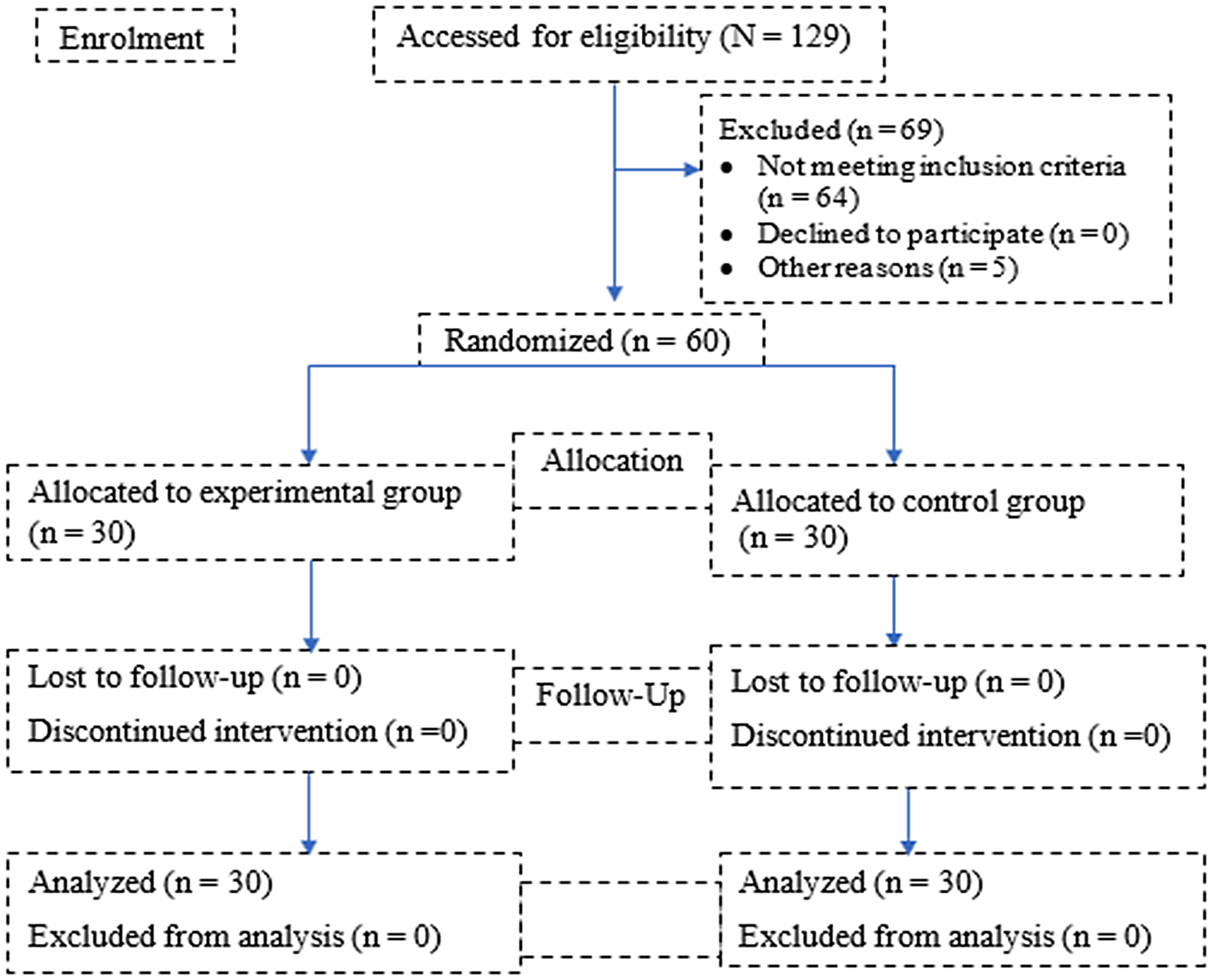
Flowchart showing participant eligibility criteria and sampling distribution for the study.
Demographic characteristics of the students (within-group analysis).
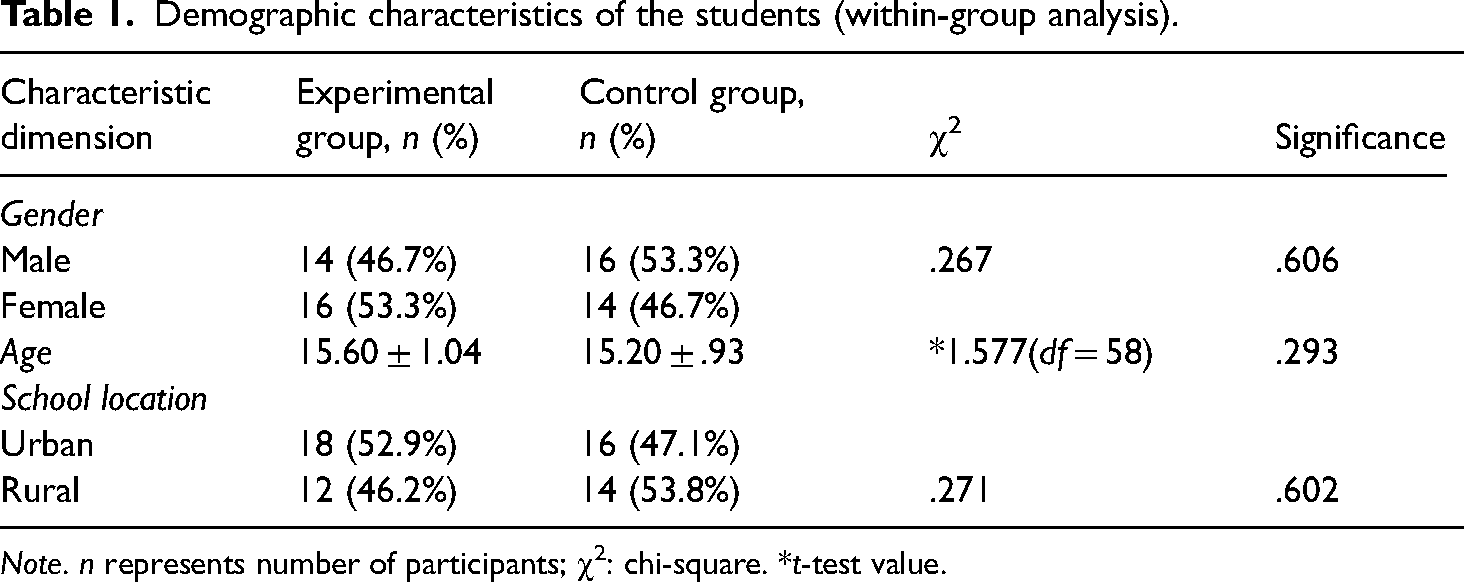
Note. n represents number of participants; χ2: chi-square. *t-test value.
Measures
Mathematics Anxiety Scale—The MAS employed in this study was adapted from Zakariya's (2018) original 20-item instrument. Respondents rated each item on a four-point scale: Strongly Agree, Agree, Disagree, and Strongly Disagree. For this research, a cutoff score of 50 was established using the Angoff method, which calculates the average score (Sarkın & Gülleroğlu, 2019). Participants with scores of 50 or higher were classified as exhibiting elevated mathematics anxiety. The MAS demonstrated good reliability in this study, with a Cronbach's alpha of 0.83.
Experimental procedure
During the pretest phase (Time 1), 60 students who scored ≥50 on the MAS were randomly assigned to either the experimental or control groups from the initial 129 students who expressed interest in participating. The researchers informed participants in both groups about the purpose of the program, to help manage their mathematics anxiety, and encouraged them to ask any questions they might have. One week after the REBT intervention concluded, the posttest (Time 2) was administered to both groups. Participants completed the same MAS used at the pretest stage, but with the item sequence altered to resemble a parallel version of the original. The MAS was then administered once more as a follow-up, 12 weeks after the posttest (Time 2), for participants in both groups.
Group intervention
The experimental and control groups completed six sessions of 90 min each of the therapy sessions for six weeks. Attendance at all sessions was closely monitored by professional guidance counselors employed in the study to ensure full participation. All participants completed the intervention with no attrition recorded throughout the study. Prior to the intervention, the researchers briefed participants in both groups on the purpose of the program, the session guidelines, and encouraged them to feel comfortable with the therapists and to ask any questions or raise concerns as needed.
Experimental group
Participants in this group received the REBT treatment. The intervention was delivered after school hours (weekends) by a team of professional counselors holding master's degrees in guidance and counseling, who had received specialized training in REBT prior to the study. Before commencement, these counselors participated in training workshops and planning meetings to ensure fidelity to the intervention protocol. The counselors brought over 15 years of combined experience working with adolescent students. The REBT treatment was guided by a validated manual adapted from Wilde (2011) and implemented through a series of lectures and meetings. Participants were organized into smaller subgroups of six students to facilitate engagement and personalized attention. Table 2 summarizes the REBT intervention program.
Summary description of the REBT protocol used with the experimental group.
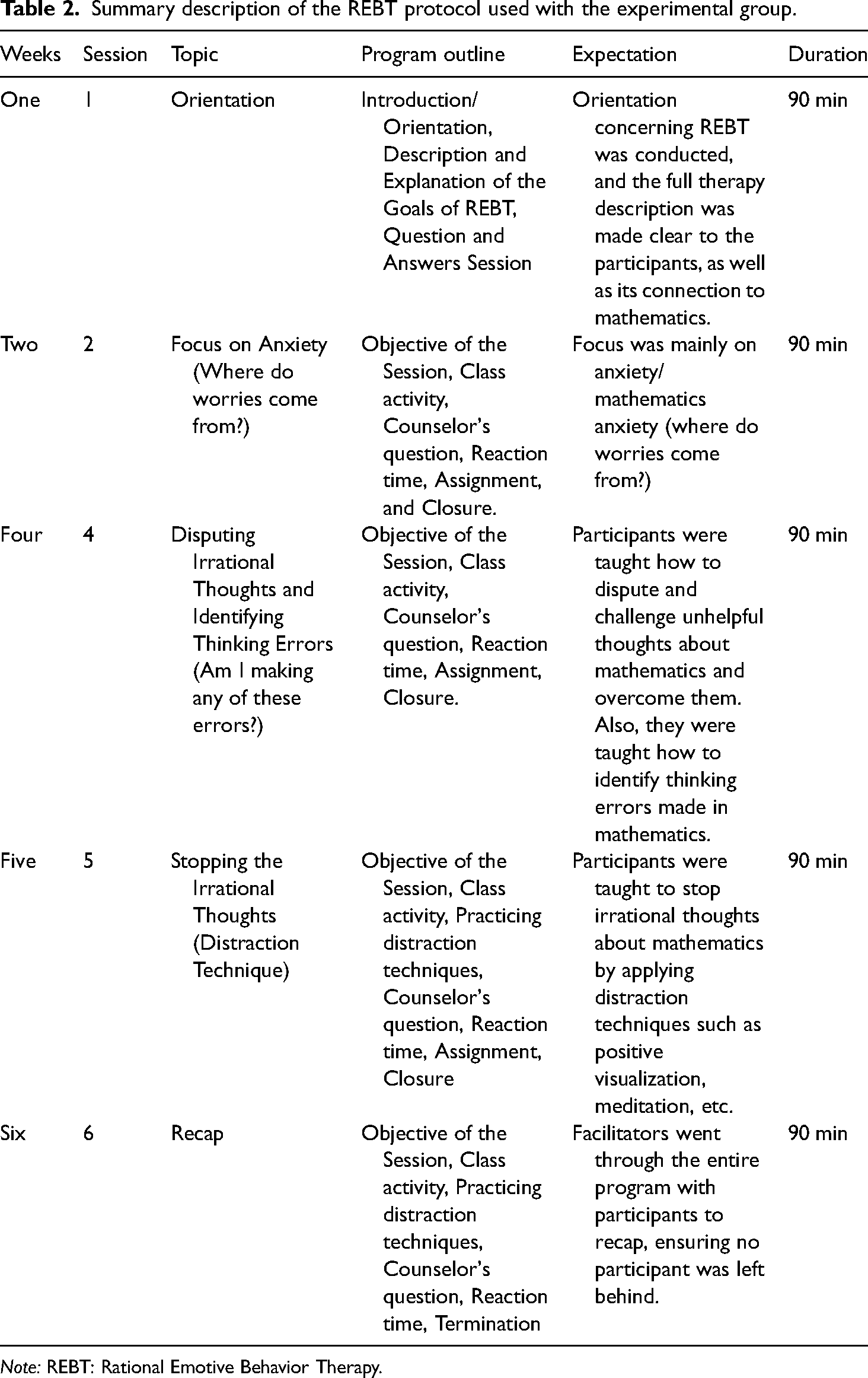
Note: REBT: Rational Emotive Behavior Therapy.
Control group
Participants in the control group received conventional counseling sessions focusing on (a) orientation on study habits, (b) individual learning, teamwork-based study, and interactive discussions, (c) exam question strategies, (d) understanding mathematics anxiety, (e) anxiety management techniques before tests, and (f) time management during exams. These sessions were conducted by professional guidance counselors employed in the study, which did not deliver the REBT intervention but also participated in preparatory meetings to ensure quality delivery tailored to the control condition.
Data analyses
Data analysis was carried out using SPSS (version 28). To assess whether the assumption of sphericity was satisfied, Mauchly's test was applied. The effectiveness of the REBT intervention was examined using a mixed-design ANOVA, which incorporated both between-subjects (Group: Experimental vs. Control) and within-subjects (Time: pretest, posttest, follow-up) factors in a 2 × 3 factorial structure. Effect sizes were reported using partial eta squared (η²), with benchmarks for interpretation based on Cohen (1988): values above 0.01 were considered small, above 0.06 medium, and above 0.14 large. The average effect size (Cohen's d) in this study is d = 0.4, aligning with established conventions where 0.2, 0.4, and 0.6, respectively, denote small, medium, and large effects (Cumming & Calin-Jageman, 2017).
Result
Table 3 summarizes the mean scores and standard deviations for the pretest, posttest, and follow-up evaluations of both the experimental (REBT) and control groups, along with the repeated measures ANOVA results. At baseline, the REBT group had a mean score of 61.40 (SD = 11.86), closely matched by the control group's mean of 61.70 (SD = 13.54), showing a negligible difference of 0.3. Following the intervention, the REBT group demonstrated a significant decline in mathematics anxiety, with posttest and follow-up means of 39.57 (SD = 10.92) and 30.67 (SD = 11.40), respectively. Conversely, the control group's scores remained relatively consistent, with posttest and follow-up means of 59.33 (SD = 11.25) and 59.10 (SD = 16.66). The mean score differences between the REBT and control groups at posttest and follow-up were 19.76 and 28.43, respectively, highlighting a pronounced reduction in anxiety within the REBT group.
Descriptive statistics and results of repeated measures ANOVA for the study outcomes (effects of group, time, and time by group interaction).
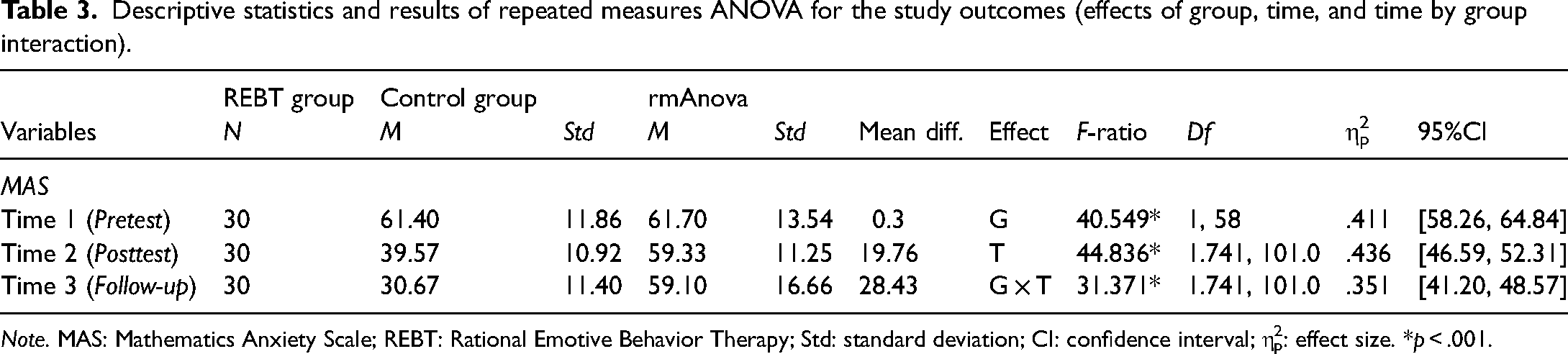
Note. MAS: Mathematics Anxiety Scale; REBT: Rational Emotive Behavior Therapy; Std: standard deviation; CI: confidence interval; ηp2: effect size. *p < .001.
The repeated measures ANOVA, adjusted with the Greenhouse–Geisser correction, demonstrated a significant main effect of group (G) [F(1, 58) = 40.549, p < .001, partial η² = .411], indicating that students in the REBT group had notably lower mathematics anxiety compared to those in the control group. A significant main effect of time (T) was also found [F(1.741, 101.0) = 44.836, p < .001, partial η² = .436], reflecting changes in anxiety levels across both groups over the duration of the study. Additionally, a significant interaction between group and time (G × T) emerged [F(1.741, 101.0) = 31.371, p < .001, partial η² = .351], suggesting differing trajectories of anxiety reduction between the REBT and control groups. This interaction is illustrated in Figure 2, highlighting the distinct patterns of change in anxiety over time for each group. Follow-up analyses confirmed the sustained impact of the REBT intervention on reducing mathematics anxiety within the treatment group [F(1, 57) = 63.141, p < .001, partial η² = .526, partial η² = .530].
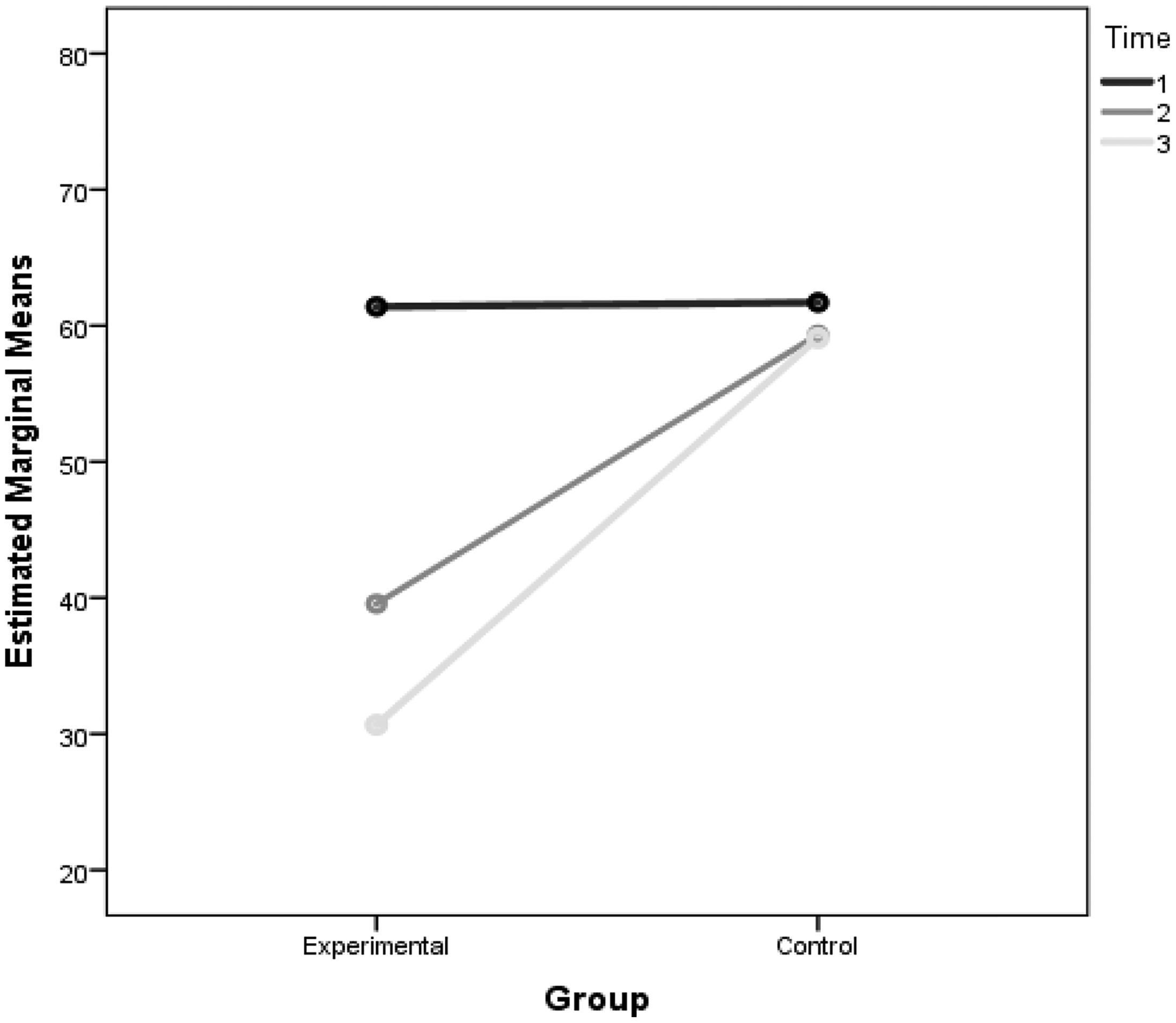
Graph showing the time × group interaction effect for mathematics anxiety.
Table 4 displays the results of pairwise comparisons. Pairwise comparisons were adjusted using the Sidak correction, which controls the familywise error rate and offers slightly more statistical power than the Bonferroni method due to being less conservative. This approach was selected to reduce the likelihood of Type I errors across multiple comparisons while maintaining appropriate sensitivity in detecting group differences (Field, 2018). Table 4 presents pairwise comparisons for the main effect of time, revealing a significant decline in mathematics anxiety scores among secondary school students from pretest (Time 1) to posttest (mean difference = −12.100, SE = 1.475, p < .001, 95% CI = [−15.727, −8.473]) and from pretest to follow-up (mean difference = −16.667, SE = 2.094, p < .001, 95% CI = [−21.814, −11.519]). Furthermore, a consistent and statistically significant reduction was observed between posttest (Time 2) and follow-up (Time 3) (mean difference = −4.567, SE = 1.835, p < .001, 95% CI = [−9.078, −0.056]). Effect sizes, measured by Cohen's d, were calculated to evaluate the magnitude of these changes over time. The decrease from Time 1 to Time 2 corresponded to a large effect size (Cohen's d = −0.966), indicating a notable reduction in anxiety. An even greater effect size (Cohen's d = −1.33) was found for the comparison between Time 1 and Time 3, reflecting sustained and significant improvement. By contrast, the effect size for the change between Time 2 and Time 3 was smaller (Cohen's d = −0.365), suggesting a more moderate but still meaningful decline in anxiety during the follow-up period.
Pairwise comparisons (Sidak) on the main effect of time and group on students' mathematics anxiety.
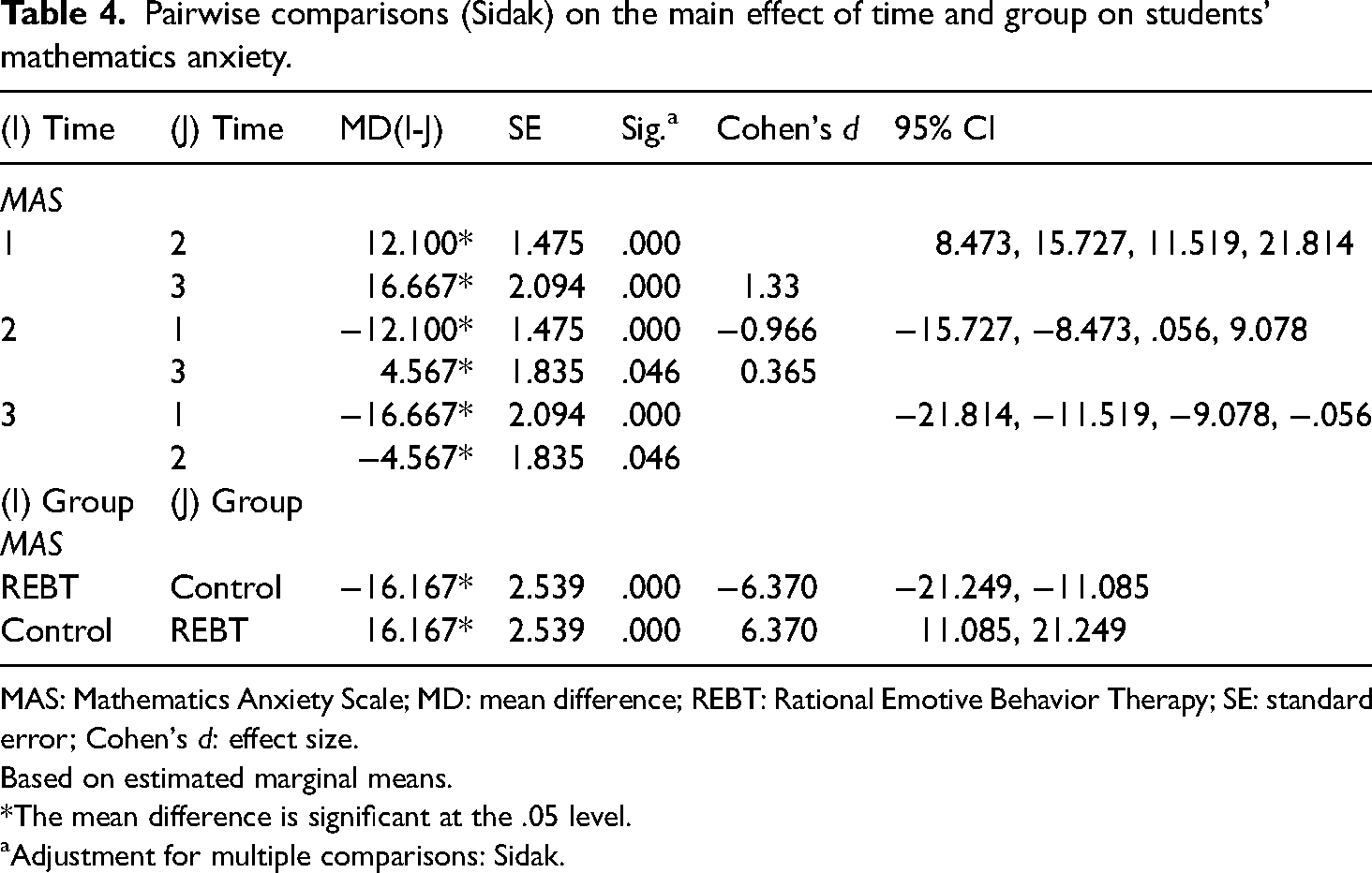
MAS: Mathematics Anxiety Scale; MD: mean difference; REBT: Rational Emotive Behavior Therapy; SE: standard error; Cohen's d: effect size.
Based on estimated marginal means.
*The mean difference is significant at the .05 level.
Adjustment for multiple comparisons: Sidak.
Pairwise comparisons (Sidak corrected) for the main effect of group demonstrated that secondary school students in the REBT group had significantly lower mathematics anxiety levels than those in the control group (mean difference = −16.167, SE = 2.539, p < .001, 95% CI = [−21.249, −11.085]). Cohen's d was calculated to quantify the magnitude of this difference, revealing a large effect size (Cohen's d = −6.370), indicative of a substantial reduction in anxiety within the REBT group. From the control group's perspective (Control vs. REBT), a similarly large effect size was observed (Cohen's d = 6.370), highlighting the pronounced difference between groups. These large effect sizes emphasize the strong effectiveness of the REBT intervention in decreasing mathematics anxiety among secondary school students.
Discussion
We hypothesized that students receiving the REBT intervention would demonstrate lower mathematics anxiety levels at both posttreatment and follow-up assessments compared to those in the control group who underwent conventional counseling. The findings confirmed this hypothesis, revealing a significant reduction in mathematics anxiety among secondary school students in the REBT group. Notably, participants in the experimental group reported markedly lower anxiety scores than those in the control group. These findings indicate that six sessions of REBT were effective in alleviating mathematics anxiety by targeting and reducing irrational thought patterns, tension, and worry related to mathematics. Consequently, students who develop more rational and functional beliefs about mathematics are better equipped to cope with anxiety-provoking mathematical situations.
Our findings align with those of Okoiye et al. (2013), who reported that REBT was effective in reducing mathematics anxiety among secondary school students when compared to learners in the control group. Similarly, our results support the findings of Adigun et al. (2023), who demonstrated that REBT significantly reduced mathematics anxiety in learners within the experimental group compared to the control group. Combined with previous research from Imo and Oyo States, our findings from Delta State reinforce that REBT is a viable and effective method for reducing mathematics anxiety in secondary school students.
Beyond the promising outcomes observed in Nigeria, it is essential to consider how REBT might function across diverse educational systems and cultural contexts. While REBT is founded on universal cognitive-behavioral principles, the structure and delivery of mathematics education vary widely across regions. In Nigeria, for instance, instruction is shaped by a centralized national curriculum, large class sizes, and a strong emphasis on high-stakes examinations (Nzeadibe et al., 2023; Okeke et al., 2025)—conditions that may intensify mathematics anxiety and, in turn, heighten the observable benefits of REBT interventions. By contrast, educational systems in more resourced regions, such as parts of Europe, North America, or East Asia, often feature smaller class sizes, individualized learning pathways, and greater integration of psychological support services within schools. These contextual differences can shape how students perceive and engage with REBT, even though its underlying mechanisms for reducing anxiety remain broadly applicable. International research (e.g., King et al., 2024; Misdeni et al., 2019; Yazdizadeh et al., 2023) supports the cross-cultural efficacy of REBT, demonstrating its adaptability in varied instructional environments. Nevertheless, effective implementation in different cultural settings may require thoughtful modifications to align with local pedagogical practices, institutional capacities, and cultural expectations.
Limitations
Although the randomized controlled design represents a key strength of this study, there are some limitations to consider. First, the sample was restricted to students in SS1, limiting the ability to generalize findings across other secondary year levels. Future research should explore the effectiveness of REBT in reducing mathematics anxiety among students in different grades to determine the broader applicability of these results. Additionally, fidelity checks were not conducted to evaluate the consistency and quality of intervention delivery. While such assessments are valuable for ensuring treatment integrity, logistical constraints prevented their inclusion in the current study. This limitation should be acknowledged, as it may affect both the generalizability of the findings and the interpretation of intervention efficacy. Future studies are encouraged to incorporate fidelity monitoring to strengthen the rigor and validity of intervention outcomes.
Educational implications
The findings of this study hold important implications for key stakeholders in education, including mathematics teachers, school counselors, and policymakers. By demonstrating the effectiveness of REBT in reducing mathematics anxiety among secondary school students, this research provides valuable insights that can inform strategies to improve student well-being and academic achievement.
Implications for mathematics teachers
Mathematics teachers play a critical role in identifying and supporting students struggling with mathematics anxiety. In addition to observing behavioral signs, such as avoidance of tasks, excessive nervousness, or emotional outbursts during math lessons, teachers could use brief screening tools like the MAS or work in collaboration with school counselors to administer more formal assessments. Teachers can also refer students who exhibit consistent math-related difficulties, especially when performance issues seem out of proportion to their general academic ability, to trained counselors or psychologists for further evaluation. Embedding short, informal reflection exercises or discussions about students’ feelings toward math during lessons may also help uncover anxiety-related issues. These approaches help ensure that challenges linked specifically to anxiety are identified and not mistaken solely for academic difficulty.
Implications for school counselors
Professional school counselors are essential in addressing students’ mathematics anxiety. This study highlights the effectiveness of integrating REBT techniques, providing a promising strategy to alleviate mathematics anxiety and create a conducive learning atmosphere. School counselors and psychologists should receive specialized training in REBT to address mathematics anxiety among secondary school students effectively. Professional development opportunities, such as seminars, workshops, and conferences, should be provided to equip counselors with the necessary skills and knowledge to implementing REBT interventions confidently. Additionally, collaboration between mathematics teachers and school counselors should also be actively promoted to facilitate early intervention and tailored support. Counselors can facilitate workshops and training sessions to empower mathematics teachers with the essential skills of REBT, enabling them to support students effectively.
Implications for policymakers
Effective collaboration between educational institutions and governmental agencies is vital for implementing evidence-based interventions, particularly that targeting mathematics anxiety. By developing comprehensive training programs and workshops, educational stakeholders can equip mathematics teachers and counselors with the necessary tools to integrate REBT techniques into their practices. Partnerships with nongovernmental organizations can further facilitate the dissemination and implementation of these interventions, amplifying their reach and impact in addressing mathematics anxiety among students.
Conclusion and recommendations
This study examined the effectiveness of REBT in reducing mathematics anxiety among secondary school students. The results showed that students who received REBT exhibited significantly lower anxiety levels compared to those who received conventional counseling, with the effects sustained at follow-up. These findings affirm that REBT is a promising intervention for addressing mathematics-related psychological challenges in school settings. The REBT is a cognitive-behavioral approach that assists individuals in recognizing and disputing irrational beliefs, thereby fostering more rational and constructive thinking patterns. When applied in educational contexts, REBT can support students in managing the negative emotions and cognitive distortions that often underlie mathematics anxiety, ultimately enhancing their confidence and performance.
Schools should consider integrating REBT into their student support services to address mathematics anxiety and related academic stress. In particular, strong collaboration between mathematics teachers and school counselors will be essential for identifying at-risk students early and implement REBT interventions effectively. Moreover, targeted professional development in REBT should be offered to school counselors and educators to ensure competent delivery of the intervention.
Finally, given REBT's theoretical universality, future research should explore its adaptation and implementation across diverse educational and cultural settings to ensure contextual relevance and effectiveness. Notably, although this study was conducted in a Nigerian context, REBT is grounded in universal cognitive-behavioral theory and holds potential for cross-cultural adaptation. Localized tailoring that considers cultural norms, educational values, and delivery methods can enhance the effectiveness of REBT interventions across diverse educational systems.
Footnotes
Acknowledgments
The authors would like to thank all those who contributed positively toward this study's success, especially the participants, for their precious time. The authors also appreciate the authors whose works were cited in the study.
Availability of data and material
Data are available upon request from the corresponding author.
Declaration of conflicting interests
The author(s) declared no potential conflicts of interest with respect to the research, authorship, and/or publication of this article.
Funding
The author(s) received no financial support for the research, authorship, and/or publication of this article.
