




Abstract
For applied psychologists, the goal is to promote positive outcomes among the individuals and groups they serve. Psychological practice takes place within a real-world context, including societal conditions that both harm and support children. Within school and counseling psychology, growing recognition of the impact of society on children has led to efforts to identify social justice as a key framework and set of strategies. Despite the obvious impact of public policy on the lives of children, there is very limited research on pathways and experiences of counseling and school psychologists who are involved in public policy efforts in their capacity as psychologists. This study addresses this gap, interviewing eighteen individuals across the United Kingdom and United States. Key findings include the importance of cultural responsiveness, professional development opportunities, and building and sustaining relationships. Several implications for future research and practice are provided, highlighting the need for multidisciplinary collaboration among those engaged in public policy and social justice efforts.
Keywords
Social justice has been increasingly considered a core value in both school and counseling psychology across both the United Kingdom (UK) and the United States (US; Cutts, 2013; DeBlaere et al., 2019; Shriberg et al., 2021). Social justice is a value that incorporates a commitment to action challenging injustice at all levels of practice (micro, meso, and macro; Tribe & Bell, 2018; Schulze et al., 2017). Micro-level social justice action focuses on individual relationships (e.g., those between psychologist and student or teacher and student); meso-level social justice action relates predominantly to work in local communities and social networks (e.g., within schools), and macro-level social justice action relates to work with local authorities or districts or national/international development and change (Fitzgibbon & Winter, 2021). Movements towards social justice have perhaps been accelerated in the US by the impact of the Black Lives Matter movement, numerous mass shootings, and general political instability. Globally, forces such as the devastation wrought by COVID-19 and on-going genocides, along with movements toward authoritarian regimes, have likely impacted how counseling and school psychology as fields have prioritized social justice efforts.
School psychology and counseling psychology are two of the primary professions that focus on the well-being of children. A significant body of research literature has documented the social justice practices of school and counseling psychologists, and much of this is situated within the UK and US to date (e.g., Biddanda et al., 2019; Jenkins et al., 2018; Winter & Hanley, 2015). However, most of the findings from this work highlight social justice practice focused on the micro- and meso-levels (e.g., Fisher, 2020; Naser et al., 2020). Public policy advocacy, defined as “the attempt to influence practice, policy and legislation through education, lobbying and communication with legislators and elected officials,” is one way that psychologists engage in macro-level social justice action (Heinowitz et al., 2012, p. 373). However, what public policy work in counseling and school psychology looks like has been given significantly less attention in academic literatures. Here, we present an analysis from an exploratory research study that aimed to address this, focusing on how school and counseling psychologists working with children and young people across both the UK and US describe their engagement with and contribution to public policy. Though we acknowledge that school and counseling psychologists may have some differences in their positionalities, our interest was in the (often multidisciplinary) social justice public policy contributions of psychologists seeking to improve conditions for children and young people. We were interested in hearing from school and counseling psychologists working in a range of settings in connection with this. Our focus in this paper is on how participants’ began work in public policy in their roles as psychologists and what they perceived to be barriers and facilitators to integrating public policy work with the role of a school or counseling psychologist.
Psychologists and public policy: theory and professional guidance
Authors have suggested for a long time that psychologists might play a useful role in contributing to public policy debates (Reiff, 1970) because of their professional experience and evidence-based knowledge. This has included specific reference to the importance of engaging with policy relating to children (Ramey, 1974). More recently, arguments have been made for the relevance of psychologists’ skills and knowledge of research to influence social and policy debates, with Frost and Oullette (2004, p. 224) arguing, for example, that psychologists “speaking as psychologists” can influence public policy. Parris et al. (2020) have presented the various ways in which pediatric psychologists might go beyond individual work to influence policy change on local and national levels. Beyond this, Glassgold and Wolff (2020) have outlined several ways in which psychology training might be expanded to enhance the provision of training related to public policy engagement. Authors have noted the importance of psychologists engaging with policymakers, particularly around children and young people, given the importance of policy to wellbeing and the influence of early wellbeing on later life (Nelson & Mann, 2011). The argument that psychologists should influence public policy is not without critics however (similar to when considering whether social justice work should be a part of the psychologist or psychotherapist role). Some, for example, may suggest that psychologists should remain apolitical in their work and therefore distinct from such political and legal systems, and others have suggested that psychologists are not equipped with the correct language or paradigmatic frameworks to engage in public policy debates (Kitzinger & Wilkinson, 2004). Walker et al. (2018, p. 2) argue that psychologists need to ensure that policy work is truly about engagement and working with others, examining the broader context and questioning how we “should (or should not) contribute to policy,” rather than about naively aiming (or claiming) to influence broader policy from single research projects or papers.
If we look to the professional bodies representing school and counseling psychology in both the UK and the US, the picture is quite mixed on the advised or required level of engagement with public policy. The British Psychological Society (BPS), American Psychological Association (APA) and the National Association of School Psychologists (NASP) all contribute to work informing national level public policy via relevant sections, working groups, and directorates. Nevertheless, the Health and Care Professions Council (HCPC), who regulate the professional work of both educational and counseling psychologists in the UK, do not include any roles or responsibilities connected to influencing public policy in their “Standards of Proficiency” (HCPC, 2015). Public policy also does not feature heavily within the 2020 NASP Practice Model (NASP, 2020).
There are, however, more subtle references across both professions to work which might include macro-level social justice work or public policy engagement. For example, the BPS (2019a) training competencies for counseling psychologists do not refer to contributing to national or local policy debates, instead suggesting that practitioners must “understand the organisational policies and contextual and legal frameworks within which they practice” (p. 18, emphasis added) rather than influence or engage with them. Equivalent training standards for educational psychologists in England, Northern Ireland and Wales ask that practitioners “develop and apply effective interventions to promote psychological wellbeing…supporting policy development and managing organisational change” (BPS, 2019b, p. 14) and “demonstrate knowledge of theoretical and research perspectives on organisations, systems and the process of organisational analysis and change, and work in collaboration with fellow professionals to bring about change, through policy and systems development” (p. 19), which might imply a stronger directive to engage with policy as part of one's role. The NASP Ethical Code includes a standard relating to “participation in public discourse,” however the emphasis here is on school psychologists acting as “individual citizens” rather than psychological professionals (NASP, 2020), perhaps highlighting the complexity in this area.
Psychologists and public policy: real-life practice
In contrast to the theoretical writing in this area, there is less empirical evidence that considers the real-life practice of applied psychologists who integrate social justice, psychology, and public policy in their roles. In a small-scale study examining counseling psychologists’ understanding of and engagement with social justice, six members of the UK counseling psychology profession described their involvement in social justice action, and none referred to influencing social policy as part of their roles (Winter & Hanley, 2015). Similarly, whilst UK-based educational psychologists described the importance of policy in relation to social justice as well as the impact of austerity policies on their practice, participants did not describe examples of influencing or working on social policy as part of their roles (Schulze et al., 2018). Work with veteran school psychologists in the US, however, did indicate that school psychologists might work with people to try to change district policy (Biddanda et al., 2019; Shriberg et al., 2021).
In an allied field, Browne et al. (2020) conducted a qualitative study with 37 clinical psychologists based in the UK who were sampled purposively for having been actively involved in macro-level policy work. Their findings suggested that moving from individual work to policy work was a gradual process, typically preceded by early involvement in ideas from critical psychology or activism. Policy work was described as involving many core clinical psychology skills such as building relationships and collaboration (both also core to educational and counseling psychology, as well as policy-specific skills focused on systems-change and strategy. In the US, Heinowitz et al. (2012) surveyed a sample of mostly graduate psychology students and found several barriers to engaging with public policy, including a disinterest in advocacy, uncertainty, and unawareness. Their sample included a wide range of experience of and engagement with public policy, and one of their conclusions included “those who advocate, advocate” (p. 375) perhaps due to their own personal characteristics. Taken together, both studies indicate some existing skill sets that psychologists might possess to engage in policy work as well as multiple barriers and personal differences. Neither study, however, was specific to counseling or school psychologists working with children and young people.
Rationale and research questions
As detailed above, previous research indicates that social justice is a focus for both school psychologists and counseling psychologists, to some extent, within their roles. However, it is also clear that school and counseling psychologists experience some barriers and difficulties translating social justice values into action, particularly in areas of practice which extend beyond micro- or meso-level work. Building on the limited previous work in this area, it is important to speak with school and counseling psychologists with experience to share good practice and inform the developing field of policy engagement in social justice practice. Thus, the overarching aim of the project was to understand how school and counseling psychologists who work with children and young people and who have experience engaging with public policy in their professional roles describe their work integrating psychology, social justice, and public policy.
Specifically, we focus on two main research questions within this area:
What are some of the reasons why participants chose to integrate psychology, social justice, and public policy? What have been the facilitators and barriers to engaging in policy-related work?
Methods
Participants
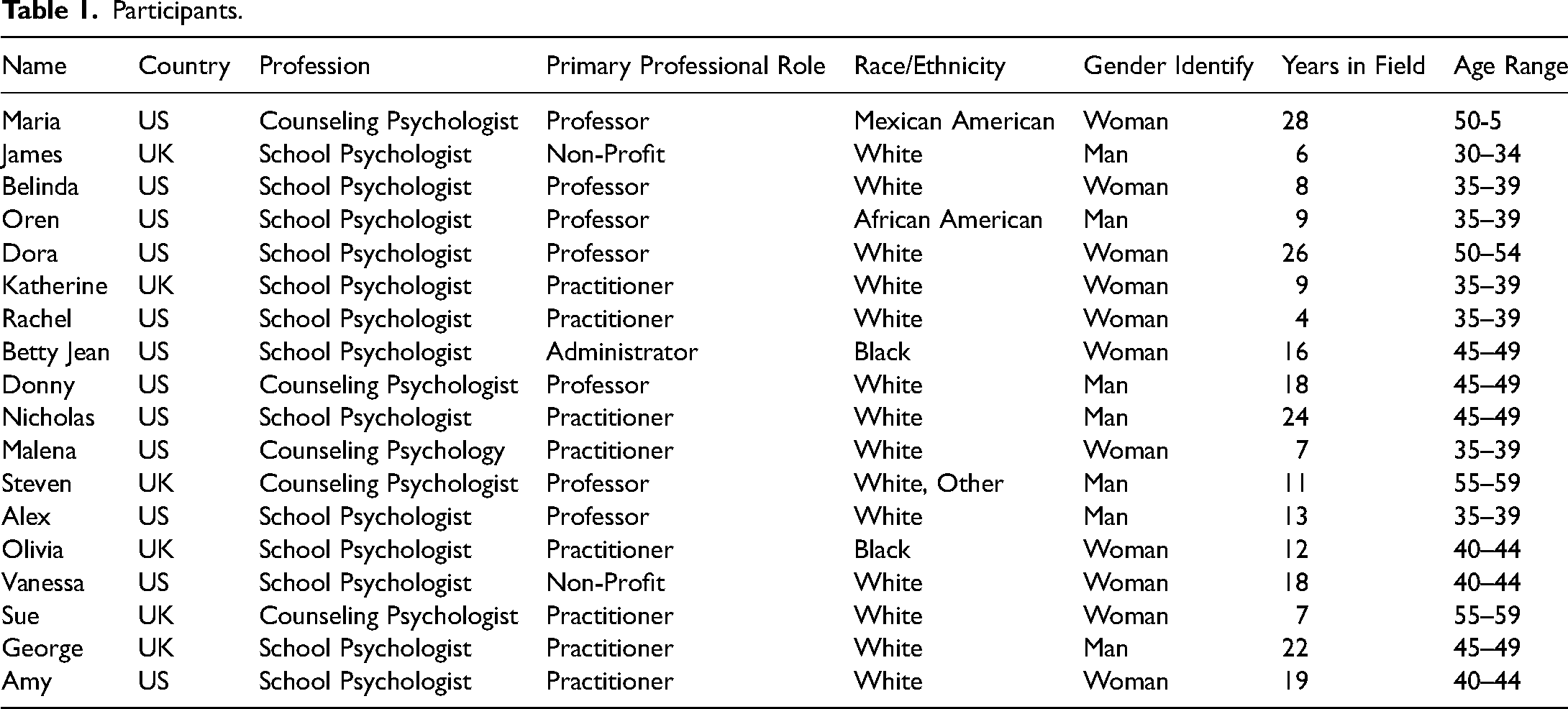
The sample included 18 participants. Eleven identified as women and seven as men. Six participants were based in the UK and 12 in the US. The ages of participants ranged from 33 to 58, with a mean of 43.7 years. Three participants identified as Black or African American, one identified as Mexican American, 13 identified as white, and one identified as white/other. Professionally, five participants came from counseling psychology backgrounds and 13 from school psychology, and their primary places of work included a range of settings, such as schools, community organisations, and academic settings. Participants had been working in their field from 4 to 28 years with a mean of 14.3 years. Table 1 provides demographic information for each participant, including their primary job roles.
Participants.
Data generation
Upon obtaining appropriate ethical approvals from the universities involved in this project, study participants were recruited in a variety of ways. Participants were recruited via social media, with a dedicated research account created for the purposes of the study. Researchers also reached out to select individuals (members of NASP's Social Justice and Public Policy committees, individuals known to be involved in social justice and public policy efforts in the US, and members of the BPS Division of Educational and Child Psychology and Division of Counseling Psychology in the UK) to see if they met study criteria and ask them for other recommendations. Selection criteria stipulated that participants should (a) be qualified, professionally registered school or counseling (with a particular focus on children and young people) in the UK or US (“educational psychologists’” in the UK); (b) self-identify as a psychologist with an active interest in public policy work as part of their role; and (c) have experience in contributing to policy at a national level. Exclusion criteria included, for example, trainee psychologists, those with no experience in working to influence public policy, and counseling psychologists whose speciality was not working with children and young people.
All participants took part in a single semi-structured interview and were asked the questions shown in Appendix. This interview protocol was designed to reflect the core research questions in this study. Questions were developed by all members of the research team following an initial draft by the first and third authors of this paper. They were open and approached flexibly with participants, as per semi-structured interview good practice (Kvale & Brinkmann, 2018). We focused on the core areas of interest in the study, including experiences of engaging in public policy work, background and beginnings of this work, facilitators and barriers, and thoughts on future steps in relation to public policy and psychological practice.
Data analysis
Data were analyzed using a deductive Consensual Qualitative Research process (Hill & Knox, 2021). First, all interviews were transcribed. These transcriptions were then reviewed for responses that reflected one or more of the core research questions. This text was highlighted. The coding team consisted of four school psychology graduate students and one faculty member. Three of these students (two Latinx, one white, all women in their 20s) did the transcript coding. These three coders first reviewed two transcripts selected at random. In order to ensure trustworthiness, they applied an iterative process wherein data were reviewed independently and then domain decisions were shared and refined as a group. In this study, the three coders first separately reviewed these two transcripts and devised an initial domain list. These three domain lists were compared and refined and then utilized for coding the remaining 16 transcripts, with each transcript reviewed independently by two of the coders. The three coders then met several times to compare and refine their domain list and the definitions utilized for each domain.
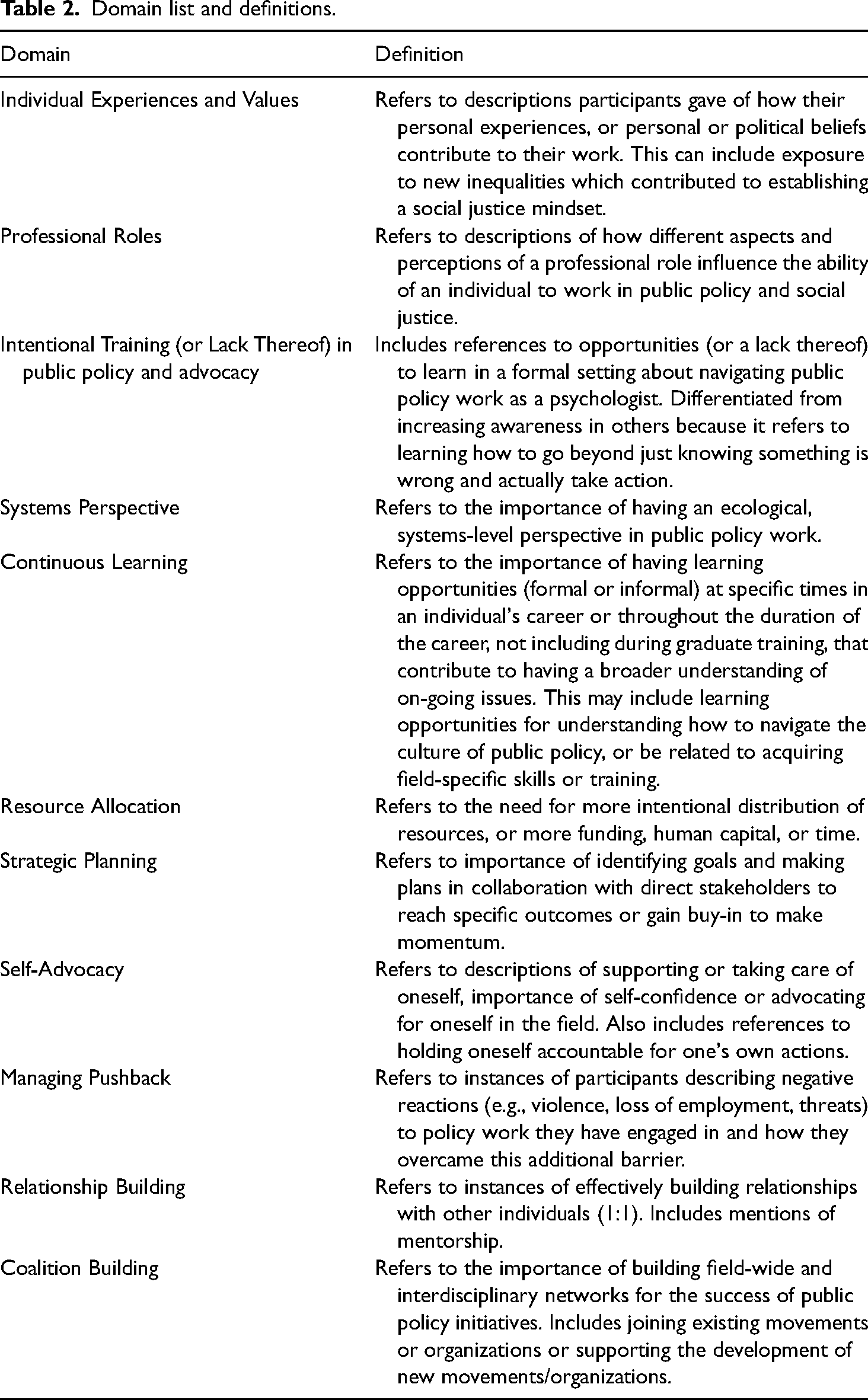
Once this group reached consensus on all domains, domain definitions, and how each highlighted transcript response was coded, two auditors (one a Black graduate student in her 20s, the other a white male faculty member in his 40s) who had not been involved in the coding process prior reviewed all transcripts, codes, the domain list, and the domain definitions. These auditors then presented a few minor suggestions to the coding group including the first author, with all of these suggestions (these were minor coding changes to individual quotes) being adopted. The final domain list and definitions are presented in Table 2.
Domain list and definitions.
Reflexivity statement
Underpinning our analytic approach was an understanding that although we were looking for consensus from the team, we were not presenting the singular truth separate from our social and political contexts. We therefore present here brief information on the authors of this paper to provide context on our identities and ground our analysis for readers. The first author is a counseling psychologist based in the Northwest of England in the UK. She identifies as a white, middle-class, currently able-bodied and heterosexual woman and therefore is afforded many socially structured advantages in society. She has written widely about social justice in both counseling and school psychology and has an active interest in how we might extend micro-level efforts to engage with social justice practice in our roles as psychologists. The second author is a student in a school psychology PhD program in the US. She holds many identities which hold inherent privilege and power including being white and cisgender. She initially engaged in this project with limited knowledge of how public policy change is achieved but was curious about the role of systems-change in better supporting the needs of individuals. The third author is a school psychologist based in the Midwest of the US. He identifies as a Jewish, middle to upper class, invisibly disabled, heterosexual man. In addition to being in privileged categories based on gender, class, and sexual orientation, his ability to pass for “white” (as long as he does not visibly display his Judaism) affords him great unearned advantage. He has long been interested in ways that a commitment to social justice principles might impact school psychology practice and is committed to personal reflection and growth in his own practice.
Findings
Research question #1: What are some of the reasons why participants chose to integrate psychology, social justice, and public policy?
While many domains were referenced, two domains recurred—(1) Individual Experiences and Values and (2) Professional Roles. Often one led into another as participants tended to speak first to their personal values and/or experiences—often as related to developing their social justice orientation—and then to work experiences that expanded their professional toolbox to encompass public policy work.
As one example, Katherine (UK, SP)
1
stated: I was interested in…the way that systems and public policy systems impact on young people that kind of grew from the beginning of my training….I felt really strongly about saying we need to have a system which works for everybody in the country it needs to work for kids from the least affluent backgrounds, we need to have a system that means that everybody's needs can be identified and understood and address and that there isn’t a kind of hierarchy in understanding or addressing them. My understanding of social justice is very much informed by where I live, where I grew up, where I was working with clients that I saw really coming up and knocking heads with systems that were very powerful systems that made it very difficult for them thrive and have high quality of life, so that was where a lot of my social justice is very kind of locally informed, and it was impossible for me to ignore.
Others, exclusively white participants, had more limited experiences and/or spoke to expanding their knowledge with time and professional experience. For example, Vanessa (US, SP) stated that she started with a strong personal disability rights orientation, but then as part of getting involved in public policy work professionally she became increasingly aware of other groups that are being marginalized. She spoke about coming out of the “bubble” of the community where she worked. She stated, Once I started looking at things from beyond just what was happening in the community that I worked with, certainly the disability piece is still there but I think it took a radical shift in looking at, oh my god there are so many other groups that are marginalized.
I think as a school psychologist we are trained to have a specific orientation that a child is best served ecologically, throughout a systems, right? So sometimes that system is a family, a community, a school, a district, a state, a state, and then of course policy, and that's kind of here I’ve extended my work into and something that I’m most interested in. And so it's really I think inextricably tied to your work as a school psychologist to engage in public policy.
Research question #2: What have been the facilitators and barriers to engaging in policy-related work?
Coding and analysis of this research question yielded nine unique domains that encompass barriers and facilitators described by the participants. These include: (1) Intentional Training in Public Policy or Advocacy, (2) Systems Perspective, (3) Continuous Learning, (4) Resource Allocation, (5) Strategic Planning, (6) Self-Advocacy, (7) Managing Pushback, (8) Relationship Building, and (9) Coalition Building.
Intentional training in public policy or advocacy
In response to questions about how graduate training contributed to their ability to engage in policy work, the majority of participants indicated that graduate training did not focus or discuss policy work. In fact, every participant described the impact of intentional training on being involved in and effective at public policy work. The most common recommendation suggested graduate programs include active training opportunities for students during graduate school. Maria (US, CP) stated, I feel like our training, there should be those opportunities for people who want to do it, I think they should be mandatory, but I don't think that most people would agree with me. So, at this point, I would just like to see them be optional, but I don't think that they really exist in sufficient numbers. I think we should be equipping all, I’ll talk about educational psychologists. I think we should be equipping all educational psychologists with an understanding of what policy is, how it works in the UK, it's very complex in terms of like the parliamentary system, for example.
Systems perspective
The domain “Systems Perspective” was used to code comments that described the importance of understanding how different processes or systems interacted when navigating policy work. For example, Oren (US, SP) described emphasizing this perspective to their students, “[G]etting to think about how different systems might impact the work that we're doing right from a positive standpoint, as well as from a negative standpoint, so that's often what I do.”
Rachel (US, SP) described a systems perspective as a facilitator to making systems-change stating, I think looking outside of school psychology is really important. Looking at sociology and medicine and public policy and all of that is so important to just give yourself that kind of broader perspective and view of how did we get there, and how do we change or make this better for the people who are having to go through these different systems and maneuver through.
Continuous learning
“Continuous Learning” was used to capture participant sentiments about the important, but sometimes challenging, work of remaining engaged in learning opportunities. For participants who identified as holding privileged identities or belonging to a majority group, this learning was in part centered around learning about cultures and identities other than their own. For example, Rachel (US, SP) described, […] constantly educating myself…on…, what, what it means to be a person of privilege with regards to color and how I can then give people of color who are minoritized a place at the table and a voice, so raising the voices of others.
Additionally, Amy (US, SP) stated, We’re focusing on a small segment of minoritized populations rather than helping people to understand and address and how to work with minoritized populations in general with the dignity that they deserve. So I realized my own lack of preparation and set out to do something about it.
Learning opportunities were recognized as one area professional agencies can support. For example, Alex (US, SP) cited that in addition to pre-service training, ensuring practicing psychologists have access to professional development will make a difference in getting more individuals thinking about systems-change.
Resource allocation
Resource Allocation was described as an important consideration for policy work. For instance, advocacy in regard to how funding is spent was noted as an important component of policy work. Betty Jean (US, SP) stated Oftentimes what happens is that funding is spent somewhere else and I'm like well but is that what the data's telling us needed right now? And that's the frustration. So, I'll be the one to speak up and say well here's what our data is showing us about what our needs are. […] there are going to be points in time where others that you work with on a regular basis will either disagree or not see in totality what you're really trying to accomplish. I think that, while they understand equity, oftentimes there's a disconnect and what that really looks like from a district-level perspective in terms of resources and how we how we go about decision making around the use of resources and where they should be applied. My other advice is usually that people try to take on too much, and so we have this model of advocacy that has, I don't know 12 boxes in it? or something like that and I always tell people like pick your box and focusing on that, like quality over quantity.
In response to a question asking about barriers to doing this work, Belinda (US, SP) stated I think that whether you're a practitioner or a trainer, you are pulled in so many different directions. For example, I had a student who was going to spend the day doing the exposure project (Author's note: this is a project involving exposing high school and college students to the field of school psychology), and there was a school shooting and she was pulled in for a crisis response. We just, we do so much, and so the time I think can feel really overwhelming.
Strategic planning
The domain of “Strategic Planning” was used to represent comments from participants about how goals and planning need to be done in specific ways to achieve change. The language of strategic goals was used by participants to reference how professional agencies identify public policy targets. For instance, Vanessa (US, SP) commented about how once a goal becomes part of a “strategic plan” it becomes easier to integrate this work into their regular practice.
Participants also made more indirect comments that highlight the need for thought and intentional action in setting policy agendas. James (UK, SP) provided a guiding question they use to frame how they engage in public policy, “where in my life, in my local life and my local community might I be able to influence what essentially is public policy?” Alex (US, SP) indicated that one's own values and the voices of diverse groups need to be considered when determining what to advocate for. Nicholas (US, SP) described the variety of pathways to consider when wanting to engage in policy work, highlighting the importance of membership in a professional organization as important for ensuring there are many brains working to address important public policy goals. Additionally, Olivia (UK, SP) indicated that connecting policy work directly to working with children and families as well as emphasizing practical benefits are strategic ways to make realistic and achievable goals. Collectively, participants indicated that the ways in which goals are set and action plans are made contribute to the efficacy of public policy work.
Self-advocacy
Self-Advocacy was used to capture participant responses referring to descriptions of supporting or taking care of oneself, the importance of self-confidence, or advocating for oneself in the field. This domain also includes references to holding oneself accountable for one's own actions. George (UK, SP) described the need for confidence and courage to speak up or challenge the way existing systems of policies work. He conveyed that psychologists have the existing knowledge and evidence to make things better for children and can remind themselves of this when seeking to enact change. Additionally, Belinda (US, SP) recommended self-care and prioritizing personal needs as important burnout prevention. She described public policy work as stressful and the establishment of personal priorities as integral to effectively navigating this stress. Other examples of how this domain was used include participants describing being advised by mentors to make their voice/needs heard or citing the Yiddish word “chutzpah” (described by Alex [US, SP] as a cheekier version of courage) as a vital skill for policy work. Overall, the participant comments described self-advocacy as important for overcoming feelings of self-doubt and doing what one needs to do in order to be successful.
Managing pushback
The next domain identified descriptions of resistance to making change. This domain was defined as instances of negative reactions or resistance to policy work and/or how participants overcome this additional barrier. Relative to other domains, this was used least often, with only seven participants making statements describing negative reactions to their work. One participant (Katherine (UK, SP)) described how coming up against resistance led her to question the work, saying However, because often by definition we're trying to change systems and people working in their systems are often very resistant to that so when you come up against challenges it is a barrier to think do, I really mean this? Am I sure? Why do I think this?
Belinda (US, SP) described the pushback she received as one of the more challenging aspects of this type of work and how it contributes to feelings of disappointment and hesitancy in continuing to engage in public policy advocacy. She stated, [the institution was] totally okay having like a statement on a website, but when it came to like, really actually doing it in their classrooms or dedicating space programmatically or within the state organization itself, it just really got a lot of pushback in terms of ‘we don't want to be political’ or you know ‘you're going too fast’. So I was just very you know, in all honesty, very disappointed in white women, was I think my biggest disappointment.
Relationship building
Relationship building was identified unanimously across participants as an important facilitator to effective public policy work. This domain was defined as “instances of effectively building relationships with other individuals (1:1) and includes mentions of mentorship.” Relationship building skills were identified by most of the participants when discussing how their training benefitted their work in public policy. One participant (Steven [UK, CP]) cited this skill as useful for engaging with people with different viewpoints in more constructive ways. Alex (US, SP) called policy work a “relationship business.”
Relationship building and mentoring opportunities were described as important for filling gaps in knowledge or training or for connecting with others with shared identities and experiences. For instance, Betty Jean (US, SP) shared how the close mentoring from an individual in a leadership position in a professional organization contributed to her success in this arena. Another participant (Malena [US, CP]) shared how she tries to encourage the interns she supervises to seek out mentorship opportunities because of how valuable she thinks they are. This was particularly emphasized for graduate students and early career professionals, and individuals who hold marginalized identities to gain support that best meets their needs.
Coalition building
Although similar in nature to the relationship building domain, “coalition building” is differentiated in that focused on the importance of building connections with organizations and groups beyond individual relationships to support policy work. This domain is defined as “the importance of building field-wide and interdisciplinary networks for the success of public policy initiatives. It includes joining already existing movements or organizations and/or supporting the development of new movements/organizations.”
Sue (UK, CP) provided a summative comment about the value of building change through small actions. She stated, I’ve increasingly come to believe and feel that it's lots of people making small contributions that make the difference. It's not one person making a huge effort and a huge change. It's lots of people giving their voice, giving their little bit. That's what brings change around. I think there's a way in which developing relationships is important, with power brokers and policymakers… I think that's the way in which you get heard and develop relationships and share expertise over time and then I think there's a way, particularly for academics that there's a way to learn and speak and talk and engage outside of academic spaces, that I think is important.
Collectively, these nine domains highlight the wide variety of challenges faced by individuals who engage in public policy work ranging from their own individual experiences, knowledge, and training to how systemic barriers contribute to frustration and limit progress. The data suggest our participants have identified ways to overcome these barriers to some degree and rely on intentionality, big picture thinking, and connection to enact change.
Discussion
While participants’ professional and societal contexts varied, there did not appear to be notable differences in themes by profession or nation. Accordingly, the interpretation of findings is based on study participants as a whole.
Overall, there seemed to be no clear or singular pathway to public policy work. Some participants had mentors who guided them toward public policy initiatives, some were encouraged to join public policy committees, and others came to public policy work largely on their own initiative. Similarly, a commitment to social justice, however defined by participants, did not typically come from formal professional preparation but rather from personal values and professional vision. This last finding is quite consistent with other studies on social justice and school psychology (e.g., Biddanda et al., 2019), in which participants noted that addressing systemic barriers was not in their formal job descriptions but that they made it their job to think and act this way, with the motivation to do so typically coming from personal experiences and/or beliefs.
While all participants spoke to being culturally responsive, white participants often spoke of gaps in their own knowledge and/or cultural awareness. We are in a time where there is increasing awareness of the potential impact of white privilege (e.g., Schumacher-Martinez & Proctor, 2020), among other factors that harm minoritized children and families. Public policy has major consequences, and psychologists potentially can be a major positive force in advocating for policies that support social justice and materially improve the lives of children; however, white psychologists can also cause harm if they are not aware of their own privilege and limitations. White participants in this study seemed aware of these limitations, displaying a sense of cultural humility. In professions that are largely white, it is imperative that advocacy efforts be rooted in cultural responsiveness, as advised by the participants in this study. Our analysis speaks to the crucial need for more formalized training not only on public policy but also on topics such as combatting oppression and addressing one's biases.
Similar to Browne et al.'s (2020) study of clinical psychologists involved in macro-level public policy efforts, another recurring theme was the importance of relationship building with potential fellow advocates or politicians to support a particular effort. Relationship building is a core psychology practice domain, particularly as relates to effective consultation practices. Indeed, there are decades of evidence in the consultation research that speaks to the “art” of consultation (e.g., Newman & Rosenfield, 2019; Song et al., 2019) and the importance of process variables such as collaboration, building consensus, and displaying humility. These attributes are important not only at the micro-level of individual interactions but also at the systems-level (Castillo, 2020). Forming culturally responsive relationships and thinking systemically are themes that recur in the social justice literature as well (e.g., Biddanda et al., 2019; Shriberg et al., 2021), and study participants consistently spoke to the importance of training in these areas.
Implications and limitations
There is no shortage of areas related to children's mental health and social justice in which school and counseling psychologists can make a positive impact, should their professions choose to prioritize policy. Indeed, there are numerous individual psychologists who have done so or are seeking to do so presently, including the 18 participants in this study. In a political world that is not organized around children's mental health, it is not enough—and at times may be counter-productive—for individual psychologists to seek to make policy impact (Walker et al., 2018). This study has two important implications: (a) the need for clearer pathways for psychologists to be trained in engaging with and potentially influencing public policy; and (b) the need for interdisciplinary collaboration efforts, both to maximize potential impact and provide appropriate support and supervision for those working in this area.
This study of course has limitations. While the sampling process was purposeful, given the large expanse of practice in the US and UK, there are likely many potential participants who were not aware of this study. In particular, there was a skew toward individuals involved in professional organizations such as the National Association of School Psychologists and the British Psychological Society. Moreover, much like the membership of these organizations, our sample was largely white. Furthermore, we did not seek to examine the potential impact of participants’ work. While their descriptions typically indicated their engagement in significant advocacy efforts, the extent to which this translated to tangible policy changes was not measured.
Conclusion
As school and counseling psychology organizations in both the US and the UK increasingly emphasize social justice, there remains a gap in knowledge around public policy advocacy as part of psychologists’ roles. Our analysis suggests that public policy work connected to individuals’ views on social justice is both challenging and rewarding. Although their work often began somewhat incidentally, participants spoke to the need for increasing professional development and mentorship opportunities as well as to the need to think systemically and build relationships in order to achieve long-term success in the public policy realm. Future research should focus on the potential impact of such work as well as ways that social justice competency areas may better reflect public policy actions. Public policy could potentially be the ‘next frontier’ of coordinated social justice efforts in school and counseling psychology, and this study highlights the complexities of this work and the need for relevant training and support structures.
Footnotes
Acknowledgements
The authors wish to acknowledge the contributions of Jazlyn Rowan, Maria Ruiz, Jaylin Soto, and Ciara Thomas. Collectively they contributed to different portions of this study, ranging from helping to think through the study design, conducting one of the interviews, and transcribing and coding data. We thank you all for making this study stronger.
Declaration of conflicting interests
The authors declared no potential conflicts of interest with respect to the research, authorship, and/or publication of this article.
Funding
The authors received no financial support for the research, authorship, and/or publication of this article.
