




Abstract
In Norway, it is common for children to switch between their local dialect and a Central Eastern Norwegian variety in role-play to signal role characters. This article examines how the use of Central Eastern Norwegian variants in the role-play register develops across 11 Southwestern Norwegian children and in individual children. The group-level analysis shows generally positive age-related trends, with significant increases for two properties—the present tense of
Introduction
Linguistic registers refer to variations in speech styles that reflect social contexts, relationships, social status, and identity. Some aspects of register development start early (Wagner et al., 2014). For instance, by the age of one, children are able to differentiate between voices appropriate for indoor and outdoor settings (Weeks, 1971). By the age of two, children can modify the content and coherence of their conversations according to their conversation partner, whether it is an adult or an older sibling, and the situational context, such as during reading sessions or mealtimes (Hoff, 2010). Another context in which children employ a distinct register is during play, especially in role-play (Sutton-Smith, 1997). Switching between different languages or dialects is one of the linguistic strategies that can be used to signal the role-play register (RPR). The switching serves a performative function, indicating that the children are assuming roles other than themselves (Sophocleous & Ioannidou, 2020). This phenomenon is common worldwide and is observed either between different languages in bi-/multilingual populations (García-Sánchez, 2010; Guldal, 1997; Halmari & Smith, 1994; Kleemann, 2015; Mirvahedi & Hosseini, 2023; Paugh, 2005) or between local dialects and standard varieties (Kaiser, 2022; Katerbow, 2013; Sophocleous & Ioannidou, 2020).
In Norway, many children specifically switch between their local dialects and a Central Eastern Norwegian variety in role-play (Steindal Romarheim, 2025a, 2025b; Røyneland, 2009; Strand, 2020; Vangsnes et al., 2017). The excerpt below is taken from a play situation where two of the girls, Sophie and Lisa, are engaged in family play with two dolls as babies (forms that are distinct in the two dialects are marked in bold):
‘I’m the mum, you’re the big sister’
Kan
‘Can we pretend one is a girl and one is a boy’
‘A baby [. . .] that big girl baby was really naughty, and her name is Silje’
***
Kan du hjelpe
‘Can you help me a little with the baby?’
Ja
‘Yeah, I can put the pants on’
‘I’ll fold the clothes while I make it nice’
Det
It’s a lot of work having a baby, but it’s also a bit fun, right?
Ja
‘Yes, we can feed them’
Det
‘It’s kind of fun too’
In the first part of the excerpt, the children are in the planning phase and use only their local Southwestern Norwegian dialect (LD). In the latter part, when they take on the roles of a mother and an older sister, elements from a Central Eastern Norwegian variety appear alongside LD. Although these varieties share substantial structural overlap, 1 there are differences. For instance, in the first part, the pronoun ‘I’ appears as eg in LD, whereas in the latter part it is jæi in Central Eastern Norwegian. Similarly, the word ‘baby’ is realised as beibi (with a diphthong) in LD in the first part, but as bebi (with a monophthong) in Central Eastern Norwegian in the latter part.
The Central Eastern Norwegian variety closely resembles the majority written standard, Bokmål, 2 and is primarily centred in and around the area of the capital. Given these similarities, Strand (2020) refers to the variety used by children in role-play as Standard East Norwegian (SEN). This is not a standardised variety, as the Norwegian speech community lacks an official spoken norm. Typically, children grow up learning the local dialect particular to their region, and these dialects are used in most contexts, including official ones (Røyneland & Lanza, 2020). Children across the country are nevertheless exposed to the variety found in and around the capital—both in spoken and written form (Vangsnes et al., 2017). This widespread exposure, together with the fact that the variety is spoken by a large number of Norwegians, contributes to its high sociolinguistic status (Røyneland, 2009; Sandøy, 2009).
For children who do not speak SEN as their native dialect, exposure to the variety typically comes from cultural media offerings—such as TV programmes and games—and from preschool activities like songs and read-aloud sessions, which are often performed in a speech style similar to SEN (see Bjørhusdal et al., 2024; Juuhl, 2017; Vadstein & Bjørhusdal, 2020), providing some of the broader exposure they receive outside the home. In addition to this, role-play is the main context where non-native SEN speakers use this variety, making it both a context of use and a source of input. Its repeated use in role-play suggests that SEN is reinforced through play itself, possibly as a conventionalised practice transmitted across generations (Strand, 2022). This practice likely interacts with children’s exposure to SEN through media and preschool activities, where the sociolinguistic prestige of SEN in the wider community is indirectly reflected. The fact that SEN use occurs primarily in role-play contrasts with patterns in other countries, where children draw on an already acquired second language or a spoken standard to signal role-play expressions. Furthermore, there is no prerequisite for a native speaker of SEN to be present in the children’s immediate environment for them to use the variety in RPR, which makes the context for acquiring RPR unusual (Strand, 2022). This raises pertinent questions about the acquisition of this register-specific variety observed in the Norwegian role-play context, whether it is sporadic use of a few highly salient features, or if the children consistently improve in their use of the variety.
In Norway, studies have investigated morphological features (Steindal Romarheim, 2025a; Strand, 2020) as well as phonological and lexical aspects (Steindal Romarheim, 2025b; Strand, 2023) of SEN in the RPR of preschool children from different parts of Norway. Strand (2020) finds a significant increase in the use of frequent SEN variants over time, suggesting that the children may be adopting (at least some variants of) the variety as a coherent target variety. Yet, as Strand (2020) underscores, further research is required to substantiate these findings, something this study aims to contribute to. More specifically, the study provides insights into the developmental trajectories of morphological, phonological, and lexical properties from SEN in the RPR across a group of preschool children from Southwestern Norway. The study aims to deepen our understanding of children’s bidialectal competence and register acquisition. The paper addresses the following research questions:
Register and Register Variation in Play
A linguistic register can be linked to indexicality, meaning that linguistic forms can be associated with social meaning (Eckert, 2012; van Ommeren, 2016). According to Wagner et al. (2014), a register indexes ‘[. . .] properties of the speaker’s social identity and social situation’ (p. 300). DeStefano (1971) also emphasises that registers are distinguished by the social circumstances of its use. In other words, context significantly influences the use of different types of registers, and a register shift may involve differences in phonology, syntax, lexicon, and paralinguistic features (DeStefano, 1971). In the early years of life, caretakers are the primary sources of linguistic input for children, but as the social radius of children expands, input from peers and other sources of influence becomes more significant (Blom et al., 2025; Bugge, 2016).
Play is, as discussed, a context where children use a distinctive register. Focusing on registers in play, Strand and Johnsen (2024) find that children as young as three use pitch and paralinguistic features to create aesthetic and social dimensions in role-play, for example, coarse voices for size or masculinity. Similarly, Andersen (1992) reports that children aged 5 to 6 adjust their speech for puppet characters, for example, deeper voices for fathers and more imperatives for doctors.
In research on children’s switching between varieties, Paugh (2005) finds that children in the Dominican Republic use Patwa (a French-based creole) during role-play, even though it is discouraged at home and in school because children are expected to learn English for education and social mobility. Adults still use Patwa with children for affectively marked purposes, such as lullabies and scolding. Children rarely respond in Patwa to adults, but they actively use it in peer role-play, which provides a space for practice and reveals how they acquire both linguistic forms and social meanings despite formal restrictions.
Kaiser (2022), who investigates the local dialect–standard repertoire of Austrian children in various contexts, observes that children use standard forms in RPR to indicate role characters, even children who do not come from standard-speaking homes. However, the results show that the use of standard forms varies among children, but almost all children accommodate to a certain degree to the conversational peer. With age, children’s standard repertoire expands substantially (Kaiser, 2022).
In the Norwegian context, Strand (2020) observes that Northern Norwegian children use SEN elements in role-play as early as age 3, some even younger. Similar to the Austrian children studied in Kaiser (2022), these children exhibit individual variation in both the frequency and selection of standard variants. This variation is also reflected in a group of Southwestern Norwegian preschool children aged 3 to 6, who participate in the current study (Steindal Romarheim, 2025a, 2025b). Strand (2023) further notes that the Northern Norwegian children accurately replicate SEN tonal accents in single words, yet they struggle with compound words, potentially due to limited input available (Strand, 2023).
The Role-Play Variety
Swann et al. (2004) describe a variety as a system used by a particular group of speakers or within specific social contexts, which means that languages, dialects, sociolects, and standard languages can all be considered varieties. Referring to it as ‘a system’ implies internal coherence within the variety; Sandøy (1996) argues that when specific variants of different properties align, they collectively form a variety. He also notes that there is stylistic consistency among these sets of variants within a variety. In the Norwegian context, SEN and LD serve as examples of distinct varieties: both are coherent systems characterised by specific variants and stylistic consistencies, each predominantly found within their respective geographical regions.
Research on switching between varieties within the same language in role-play has primarily focused on the transition between local/regional dialects and standard spoken languages (Kaiser, 2022; Katerbow, 2013; Sophocleous & Ioannidou, 2020). The switching between SEN and local dialects in Norwegian children’s role-play matches the patterns identified in existing studies, specifically in that SEN/standard varieties are used to signal in character utterances. Although Norwegian children do not acquire a standard spoken language, it is clear that they use linguistic forms from a variety that is not their LD, and this variety has a high sociolinguistic status. As there is considerable overlap between SEN and LD, the children seem to demonstrate a form of bidialectal competence by using both varieties in role-play (Strand, 2020).
The fact that the children in this study learn/use SEN without being raised in the geographic area where the variety is predominantly spoken makes the acquisition of SEN different from typical dialect acquisition, where the geographic component is central. In this sense, the acquisition of SEN may have more in common with the acquisition of a standard spoken language. Norway has no standard spoken variety, but whether SEN functions as an unofficial standard is a debated topic, which this study does not address (for different viewpoints, see Hårstad & Opsahl, 2013; Heide, 2020; Mæhlum, 2009; Sandøy, 2009). However, the term bidialectism seems appropriate for the switching observed in RPR, as the term is used in the literature both about individuals who use two non-standard varieties and in contexts where people use both local varieties and standard spoken languages (cf. Papapavlou & Pavlou, 2005; Ross & Melinger, 2017; Siegel, 2010; van Ommeren, 2016).
Regarding the bidialectal competence demonstrated in role-play, Strand (2022) questions whether children merely adopt a few highly salient properties from SEN to indicate a role character, or if there is an age-related development where children progressively become more proficient in the SEN variety. Siegel (2010), who focuses on the acquisition of a second dialect (D2), emphasises that linguistic knowledge of a variety may develop gradually. Such a gradual development may be reflected in more frequent and consistent use over time. However, this does not mean that the outcome of this development is always the same within a group of speakers. Research on heritage language (HL) acquisition has shown that developmental trajectories and ultimate attainment in first language acquisition may be variable (Benmamoun et al., 2013; Gharibi & Boers, 2017; Montrul, 2006). Montrul (2006) points out that factors like the quantity/quality of input, language use, and socio-affective elements such as motivation likely influence the final level of attainment. Even though HL acquirers in some cases end up with a different version of the full grammar, it is nevertheless considered a complete and coherent system in its own right (Polinsky, 2008). In other words, varieties and their developmental trends can manifest in different ways. Nonetheless, in relation to SEN in RPR, it remains valuable to examine its development. An increase in the use of SEN properties could indicate the existence of a system/variety that is available to the children, as they progressively gain mastery over it.
Concerning potential scenarios for how the development of SEN might progress, Strand (2022) suggests that while some level of development seems likely, it may not follow a linear path. Instead, as children interact and communicate, they may continuously adapt linguistic structures in the register based on the play context and participants, leading to variability without a clear direction. Alternatively, he suggests that children might consistently use a limited range of highly salient properties, such as the SEN variant jæi (‘I’), throughout childhood, without adopting the variety as a whole and without any development taking place. However, Strand (2020) finds a significant positive developmental pattern for the two most frequent SEN variants,
A question that arises is how the relationship between SEN and the local dialect functions within the bidialectal mind as the children who master the use of SEN in RPR also do so in the presence of a large amount of general overlap between the two varieties. Strand (2022) argues that it is unlikely that the varieties are organised separately, as SEN and local dialect variants are both used in the RPR. At the same time, there must be some form of separation. For children to mark ‘otherhood’ with RPR, they must be able to identify and distinguish between linguistic properties that belong to SEN and their local dialect. Such ‘cognitive indexing’, as Strand (2020, p. 292) calls it, of variants into a functional subsystem is a clear indicator that the children’s local dialect and SEN in RPR are two separate subsystems, at least functionally, in the children’s language competence (see Strand, 2020, pp. 291–292 for a more comprehensive discussion). Furthermore, Strand (2020) finds that the use of SEN and local dialect variants in RPR initially overlap, but diverge over time, suggesting that a new variety is emerging. Recent research on bidialectal representation and processing indeed shows that dialect processing is a proper sub-case of bilingualism and that bidialectal individuals ‘[. . .] develop distinct grammatical representations for contrasting grammatical features in distinct L1 varieties with which they have sufficient engagement and exposure’ (Sandstedt et al., 2025, p. 1). There is no lower typological threshold; even subtle linguistic differences can be acquired and used differently with sufficient engagement and exposure in bidialectal contexts (Kubota et al., 2024; Sandstedt et al., 2025).
Methods
The empirical basis 3 of this study consists of audiovisual recordings made at a preschool in Southwestern Norway. Data were collected over a 10-month period, from September 2022 to June 2023. To ensure compliance with privacy regulations regarding personal data, the study was reported to the Norwegian Agency for Shared Services in Education and Research, with approval received in June 2022.
Twelve children aged 3 to 6 years, all with parental consent, participated in play sessions. The children had a Southwestern Norwegian dialect. The pedagogical leaders (a term used within Norwegian Early Childhood Education and Care, ECEC) assisted in identifying children who spoke a Southwestern Norwegian dialect and were between 3 and 6 years old. The researcher then conducted a linguistic assessment of the children’s spontaneous speech during everyday interactions, focusing on salient phonological, morphological, and lexical features distinguishing LD from SEN. Based on this assessment, one child was excluded because their variety overlapped substantially with SEN.
A total of 37 recordings were analysed. Each session lasted 30 to 50 min, resulting in approximately 24 hr of recorded material. Additionally, a brief survey collected information about the parents’ dialect backgrounds. The language background survey revealed that none of the parents used a dialect similar to SEN at home.
The children played in a designated area with toys, that is, play kitchen, fire station, dinosaurs, and occasionally dolls. Data were collected in two rooms at different times: a playroom connected to one of the preschool units (September–December) and another room, slightly away from the children’s usual area but arranged for play (January–June). The researcher supervised the play sessions to ensure safety, remaining largely passive and only responding when directly addressed. Most interaction occurred outside the play activity, in a Western Norwegian dialect similar to the children’s LD, which likely minimised any influence on their linguistic behaviour during play. To foster a positive environment, children who were observed by staff to play well together were grouped in pairs or trios, which also allowed all the children to partake in the same activities. This also enhanced the data quality, that is, facilitating transcription by minimising simultaneous speech (cf. Strand, 2020).
Transcription Methods and Data Coding
Phonetic transcription based on Norwegian orthography was employed in the transcriptions for words/parts of words that exhibited pronunciation differences between SEN and LD (e.g. ‘me’ is transcribed as mæi in SEN, orthography meg, and meg in LD, orthography meg), whereas words with the same pronunciation were noted orthographically (e.g. ‘and’ is represented as og and ‘that’ is represented as det, even though this does not directly reflect their pronunciation). To accurately represent speech, repetitions of words and segments within an utterance were included. Two assistants were recruited to assist with transcription and coding. The researcher reviewed all transcripts several times to ensure the highest possible consistency.
Children’s utterances were coded by level of pretence. For this paper, role-play utterances (RPR), in which children use SEN to varying degrees, are the utterances relevant for analysis. An utterance was coded as a role-play utterance if it met at least one of a set of criteria introduced in Strand (2020, p. 297):
(1) refers to something not happening in real life (e.g. ‘There’s a fire!’).
(2) uttered with creative manipulation of voice quality or intonation to indicate a role.
(3) uttered while holding and animating a doll or toy.
(4) uttered in response to or in a conversation with an utterance having characteristics 1 to 3.
When there was uncertainty about the coding (i.e. if parts of the utterance were unclear), the utterance was classified as undecided and omitted from further analysis.
Participants
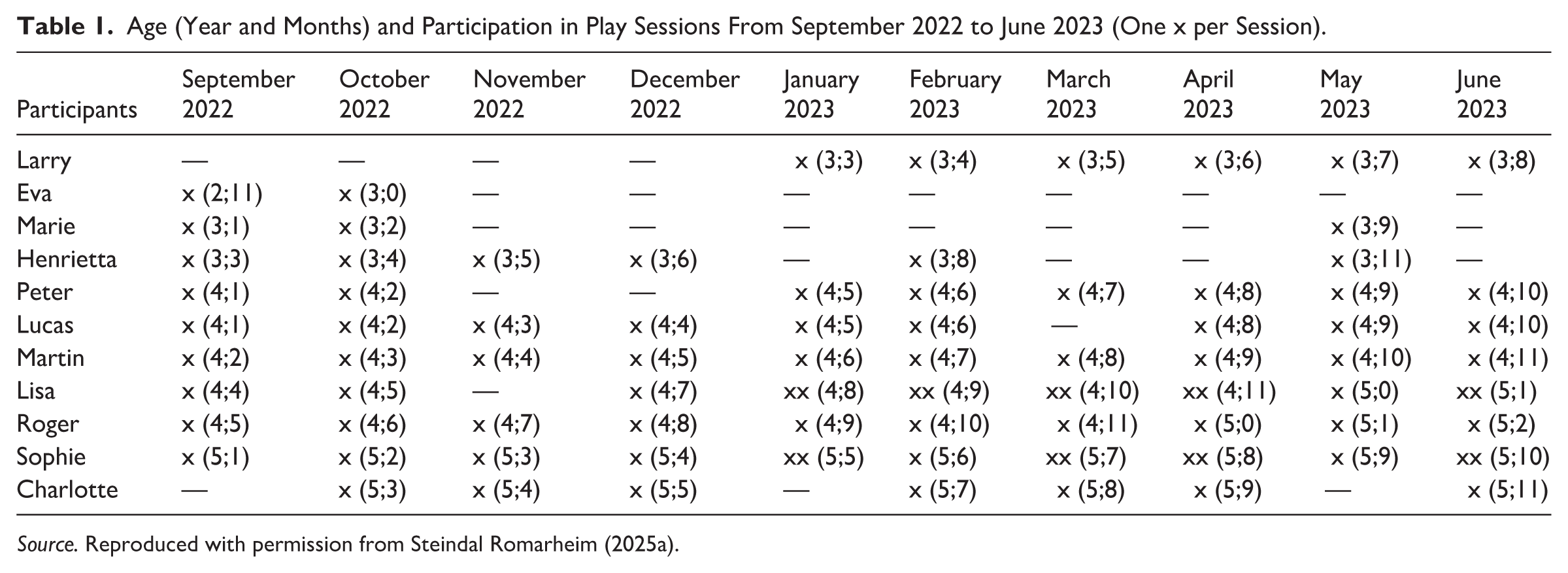
Table 1 displays the ages of the children along with the number of play sessions they participated in. The names of the participants have been changed. The 11 children attended play sessions to varying extents.
Age (Year and Months) and Participation in Play Sessions From September 2022 to June 2023 (One x per Session).
Source. Reproduced with permission from Steindal Romarheim (2025a).
Data Analysis
To address the research question of whether there is a development in the use of SEN forms within the RPR, specific properties have been selected. 4 The morphological and phonological/lexical properties were selected for investigation because they differ in SEN and LD and occur frequently in the data (Table 2). The morphological properties are similar to the ones analysed by Strand (2020), allowing for comparison.
Properties Investigated.
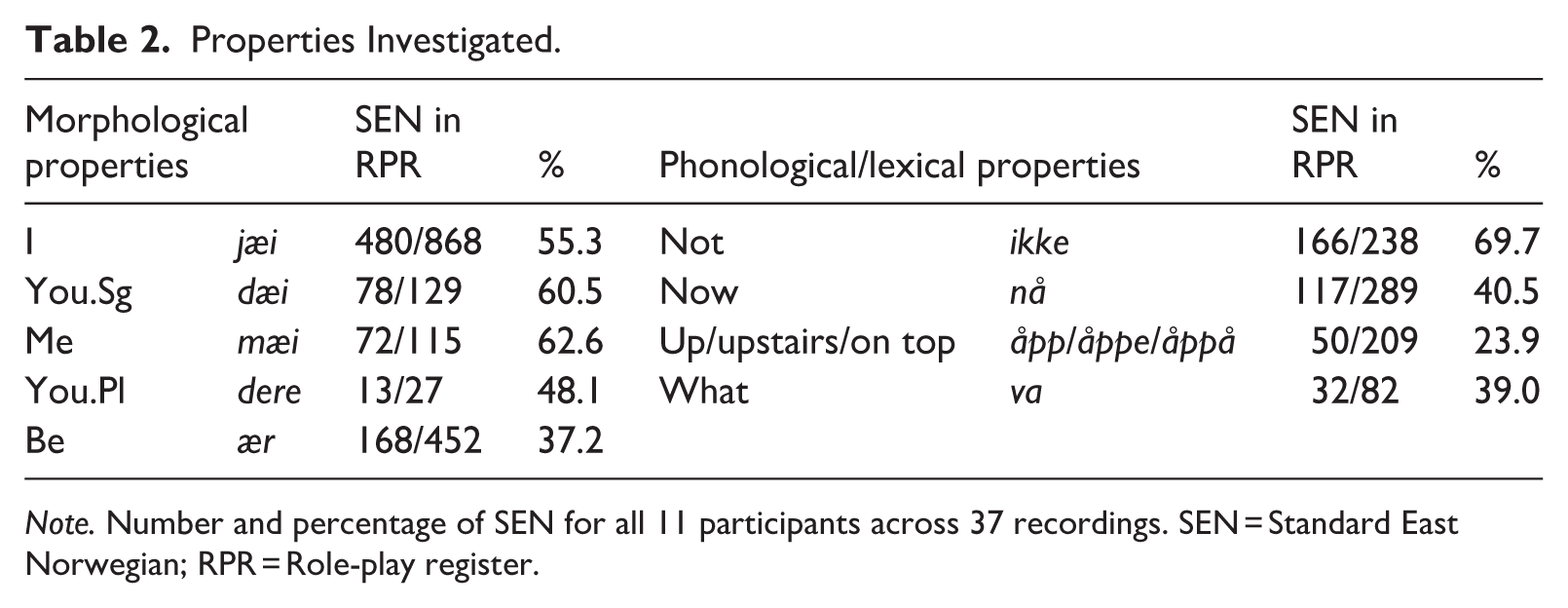
Note. Number and percentage of SEN for all 11 participants across 37 recordings. SEN = Standard East Norwegian; RPR = Role-play register.
All analyses were conducted using R Statistical Software (R Core Team, 2024). Plots illustrating SEN variant usage by age (in months) were created. The proportion of SEN in RPR is calculated based on a count of the SEN variants and the corresponding LD variants of the properties making up the total number of occurrences together. Two mixed effects logistic regression models, using the lme4 package (Bates et al., 2015), addressed RQ1: How does the use of SEN variants in RPR develop with age across the participant group of children engaged in role-play, considering all properties collectively and separately? Model 1 assessed age effects on all properties collectively, model included by-participant random intercepts and random slopes for age. Model 2 evaluated the interaction between age and each property individually, enabling specific property-age analysis, including random intercepts by-participant and by-property and random slopes for age.
A modelling approach was also applied to individual children to address RQ2: How does the use of SEN variants in RPR develop with age in individual children, considering all properties collectively and separately? Model 3 was a generalised logistic regression model predicting SEN usage based on all properties, age, and interaction effects for collective assessment. Model 4 examined property-specific age effects, with random intercepts and age slopes for each child’s development. Models 3 and 4 did not include by-participant random effects as they only included data from one participant.
Results
To answer RQ1 about the development of SEN variants across the 11 children, we examine how the use of these properties changes over time. This is shown in Figure 1 for all the properties included in the analysis (
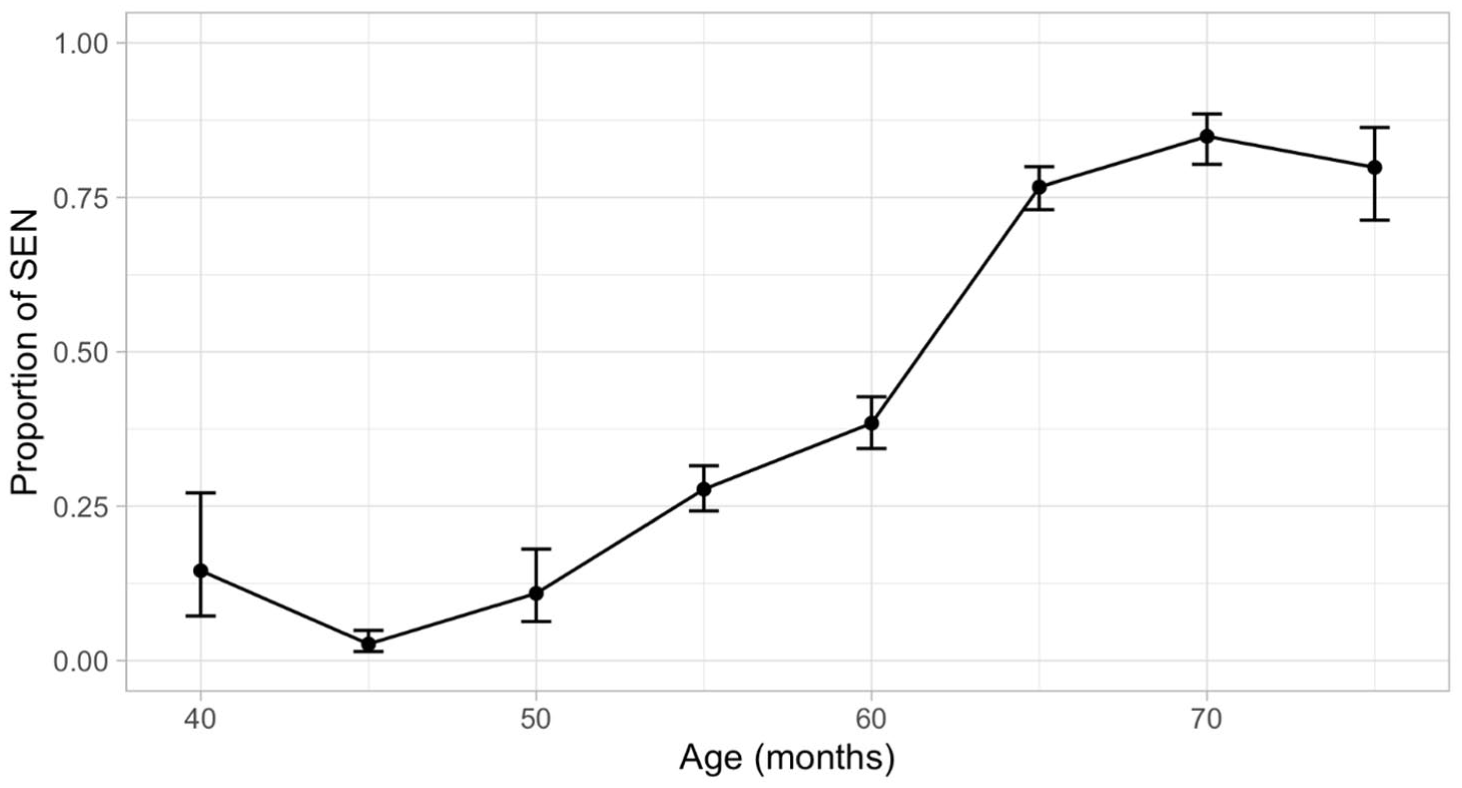
Development in the use of SEN properties in RPR based on all participants (n = 11).
Before turning to the model results, note that model outputs are reported using log-odds (β), standard errors (SE), z- and p-values, as well as odds ratios (OR) and 95% confidence intervals (CI). OR values above 1 indicate increased odds of using SEN with age, whereas OR values below 1 indicate decreased odds. Effects are considered statistically significant when the CI does not include 1.
Model 1 shows a negative intercept (β = −1.74, SE = 1.00, z = −1.75, p = .081), indicating a low baseline probability of SEN use. The age coefficient (β = .12, SE = 0.08, z = 1.50, p = .134) suggests a positive trend, although this effect is not statistically significant. Expressed as an odds ratio, the age effect is OR = 1.13, 95% CI [0.96, 1.36], indicating that the odds of SEN use increase by about 13% per month, although the CI includes 1 (see Table 3 for full model).
Model 1: Fixed Effects Summary.
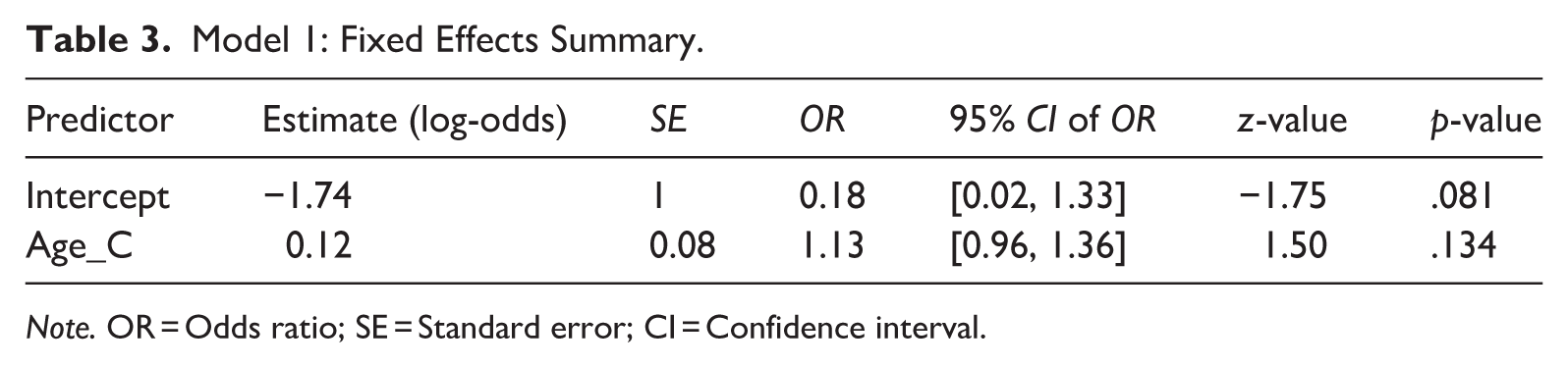
Note. OR = Odds ratio; SE = Standard error; CI = Confidence interval.
Next, we consider individual properties for all children combined. Figure 2 shows trajectories for each property, with varying degrees of uncertainty. Overall, most properties display an upward trend.
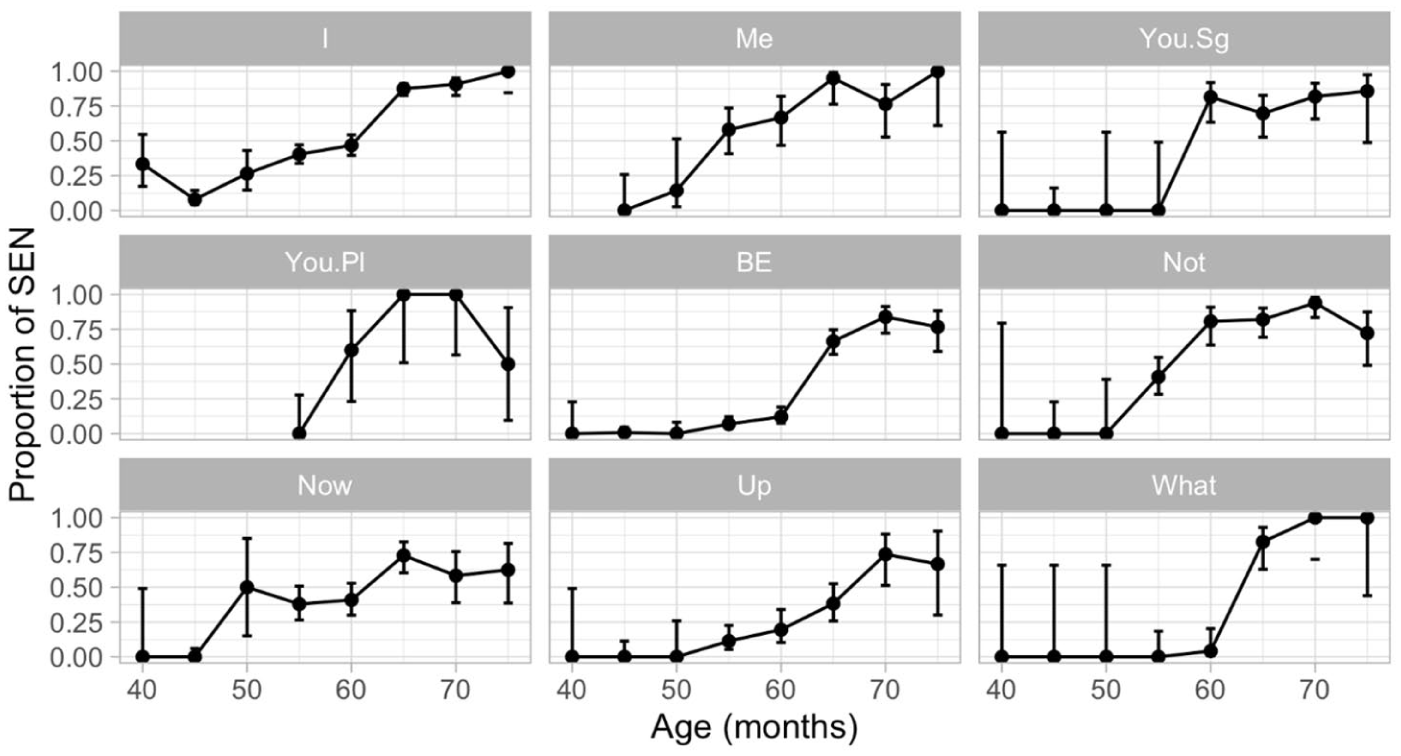
Development in the use of SEN properties in RPR based on all participants (n = 11), properties separately.
Model 2 indicates significant age effects for two properties:
Model 2: Marginal Effects of Age by Property for all Participants.
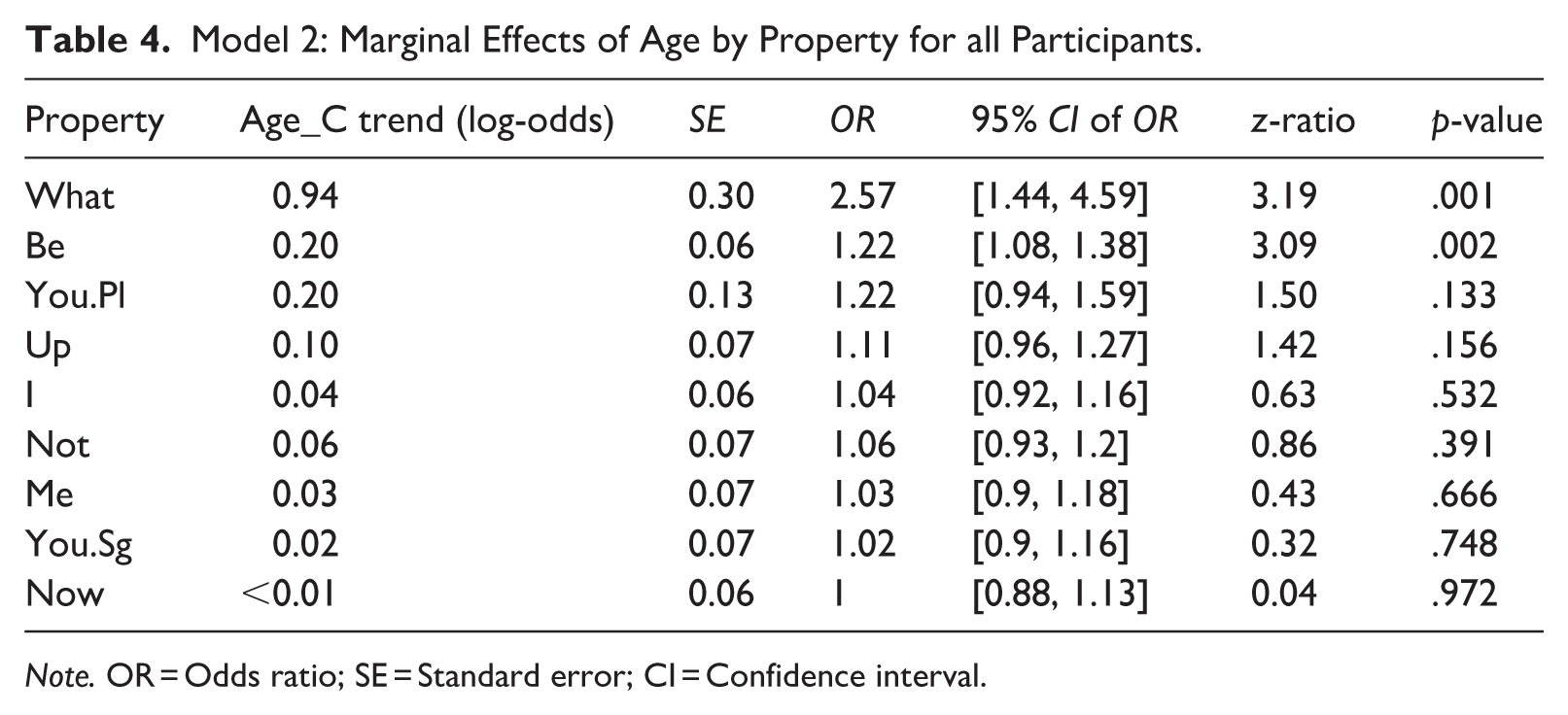
Note. OR = Odds ratio; SE = Standard error; CI = Confidence interval.
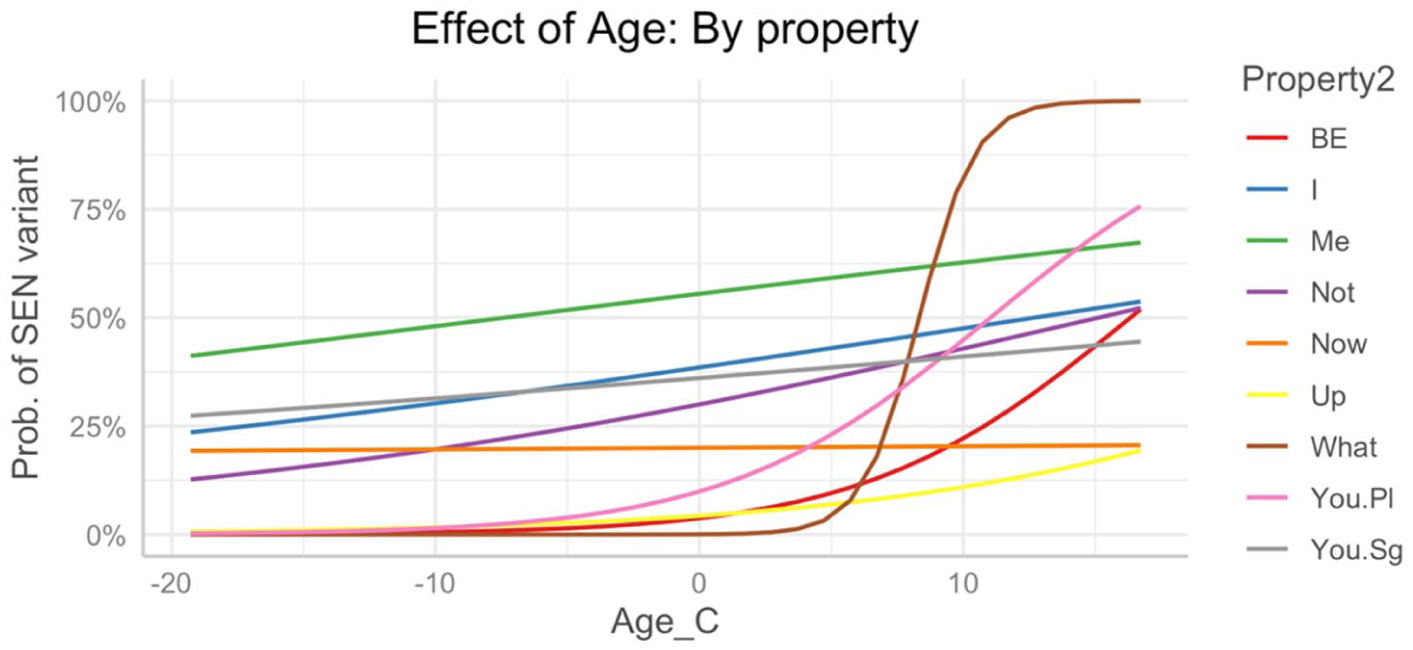
Predicted probability of SEN variant use by Age (centred) for each property.
The analysis thus far encompasses all 11 participants. Figure 4 depicts the relative frequency of SEN forms used by the individual participants, calculated across all properties included in the current study. The figure shows substantial variation in SEN use across participants. Two children (Eva and Martin) never use SEN. Larry and Henrietta show minimal use (<5%; n = 9 and 4, respectively 6 ). Roger (n = 28), Marie (n = 2), and Lucas (n = 38) remain below 20%, and Peter reaches 24.14% (n = 14). Charlotte, Lisa, and Sophie use SEN most frequently, with 50.85% (n = 30), 55.81% (n = 346), and 77.05% (n = 685), respectively. Despite Charlotte’s high percentage, her raw count is low compared to Lisa and Sophie. To address RQ2—how developmental patterns can be observed in individual children—we therefore focus on Sophie and Lisa, who provide the most extensive data for examining trends.
Figure 5 illustrates Sophie’s use of SEN across all properties over time. The figure shows that Sophie’s SEN usage is relatively stable, with a slight downward trend. Model 3 reveals a positive intercept (β = 2.64, SE = 0.71, z = 3.70, p < .001), indicating a high baseline probability. The age coefficient (β = −.07, OR = 0.93, 95% CI [0.83, 1.03], p = .125) suggests a slightly negative, but non-significant, trend.
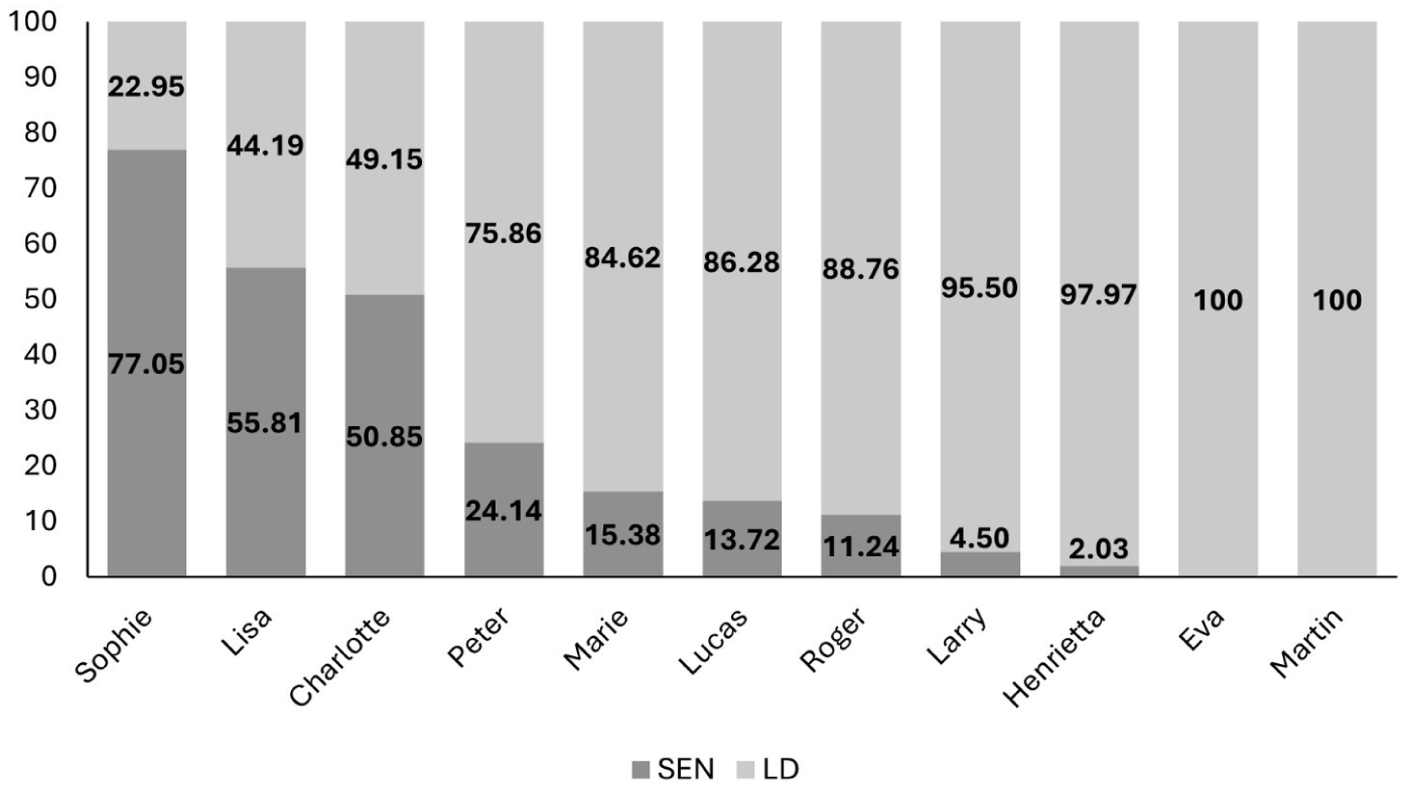
The proportion of SEN forms in the RPR of all 11 participants.
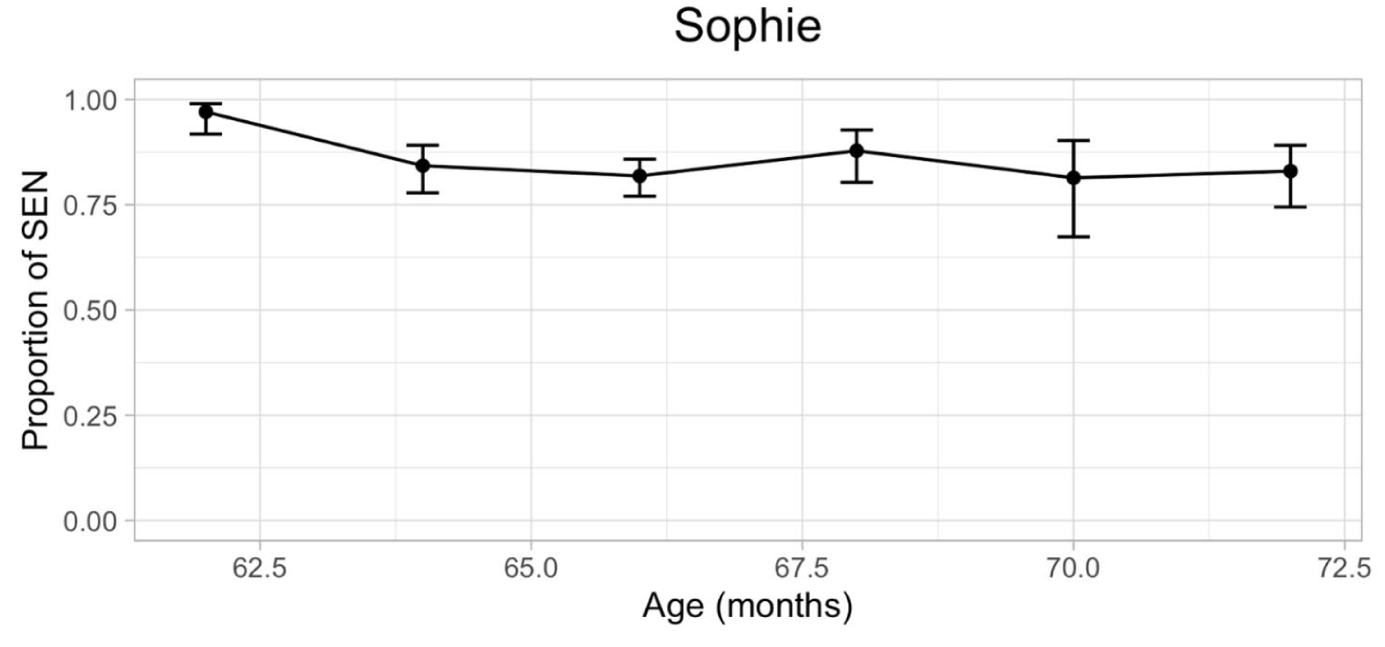
Development in the use of SEN properties in Sophie’s RPR, all properties combined.
Lisa’s SEN use across all properties is relatively stable, with a slight initial increase followed by a small decline (Figure 6). Model 3 shows a positive intercept (β = .32, SE = 0.45, z = 0.71, p = .477), indicating a higher baseline probability. The age effect is minimal (β = .01, OR = 1.01, 95% CI [0.93, 1.12], SE = 0.04, z = 0.26, p = .796), suggesting no meaningful change with age and considerable uncertainty.
When examining the trajectories for each property individually, we observe this development for Sophie (Figure 7): Based on the graphs, most properties show relatively stable usage. However,
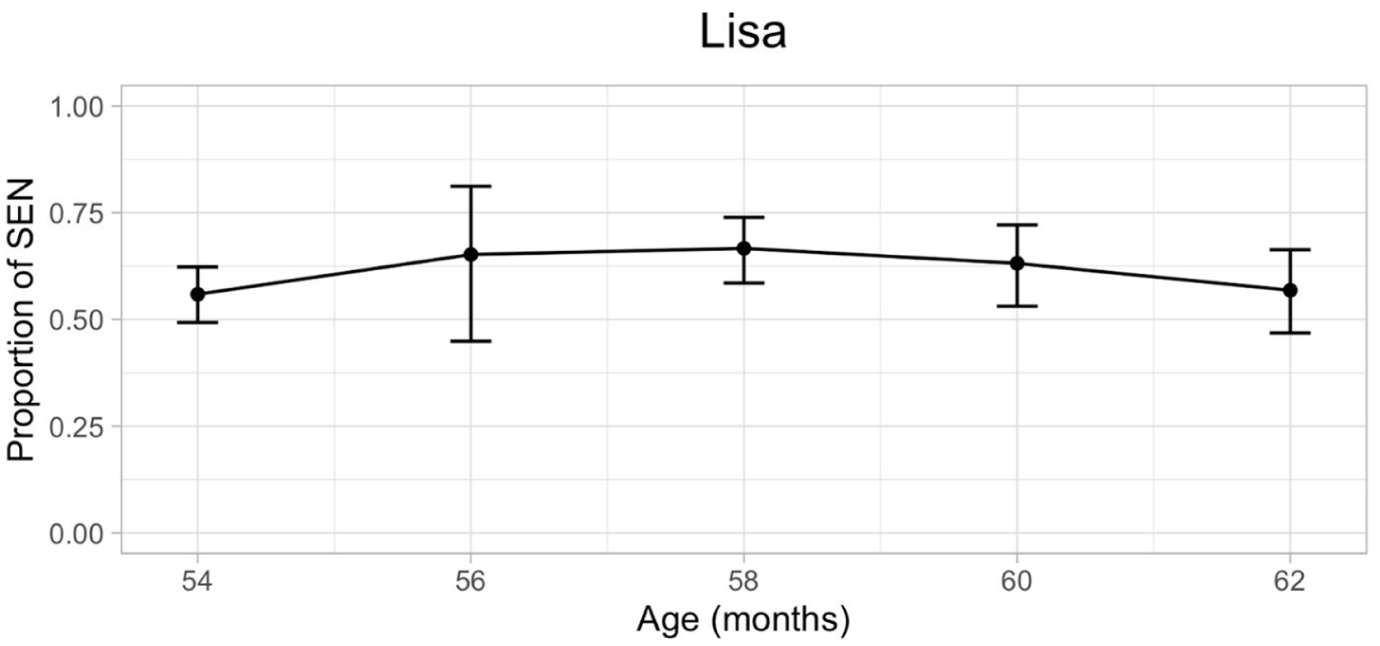
Development in the use of SEN properties in Lisa’s RPR, all properties combined.
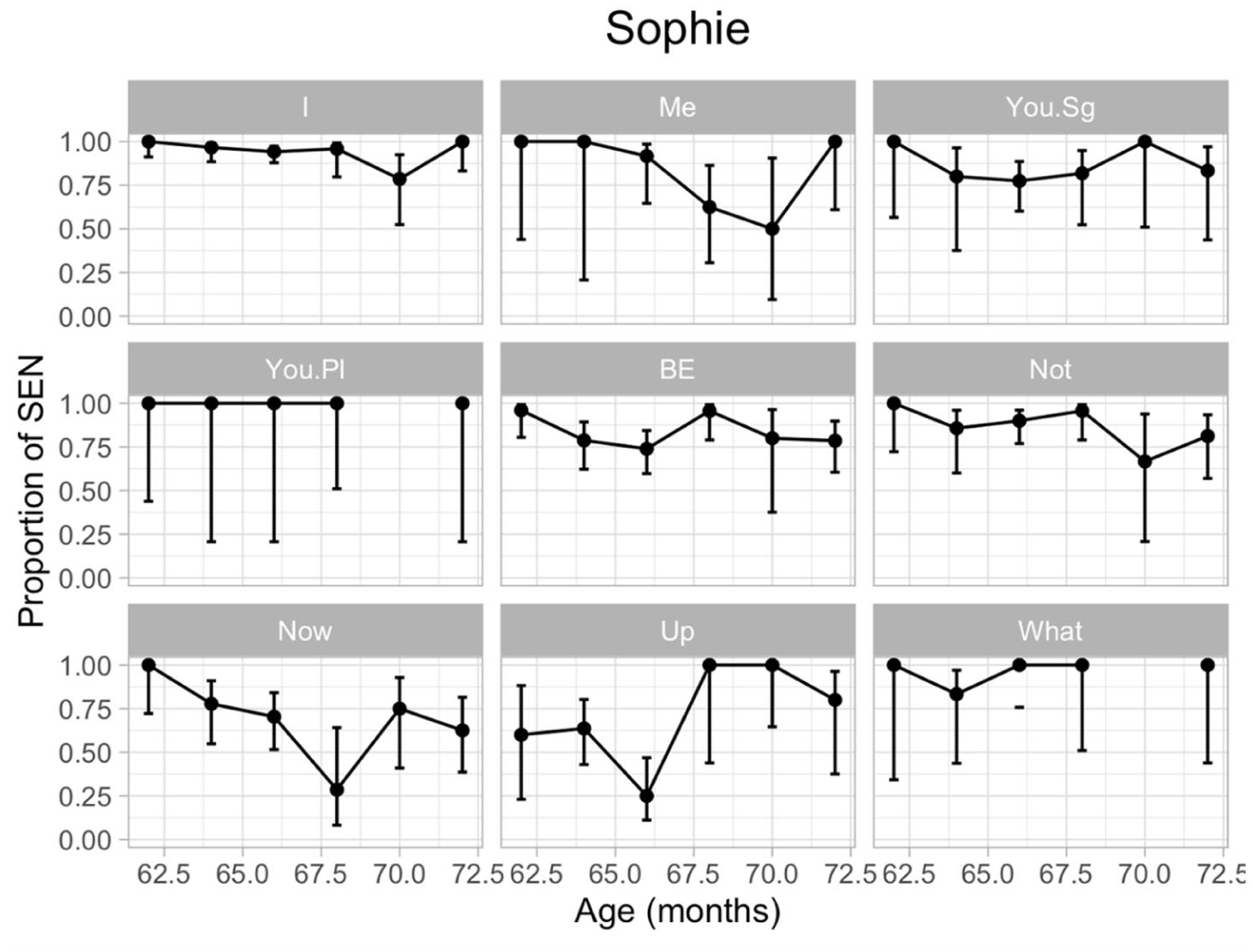
Development in the use of SEN properties in Sophie’s RPR, properties separately.
Model 4: Marginal Effects of Age by Property for Sophie.
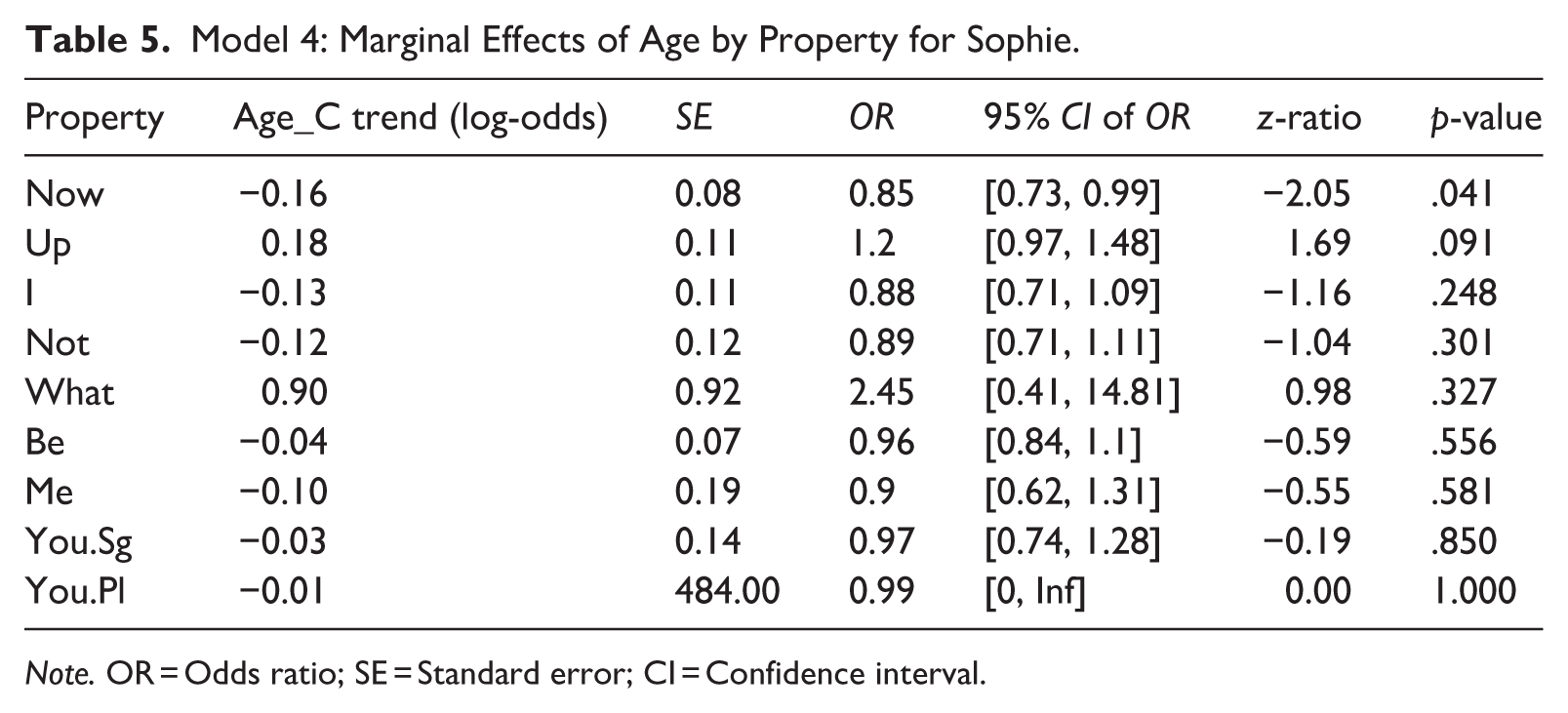
Note. OR = Odds ratio; SE = Standard error; CI = Confidence interval.
When examining the graphs of the properties individually for Lisa, we observe much greater variation in the use and extent of SEN compared to Sophie (Figure 8). SEN proportions for
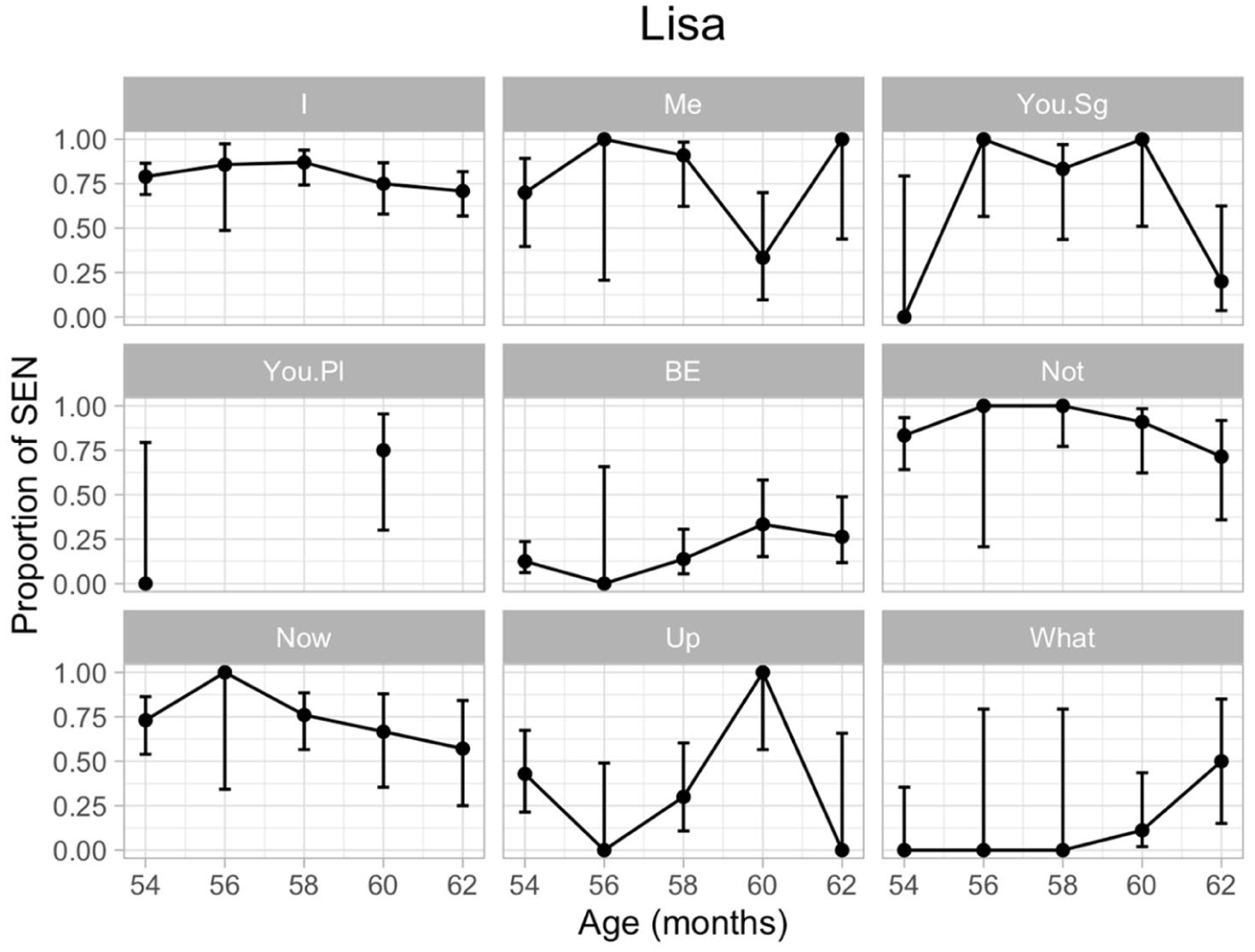
Development in the use of SEN properties in Lisa’s RPR, properties separately.
Model 4: Marginal Effects of Age by Property for Lisa.
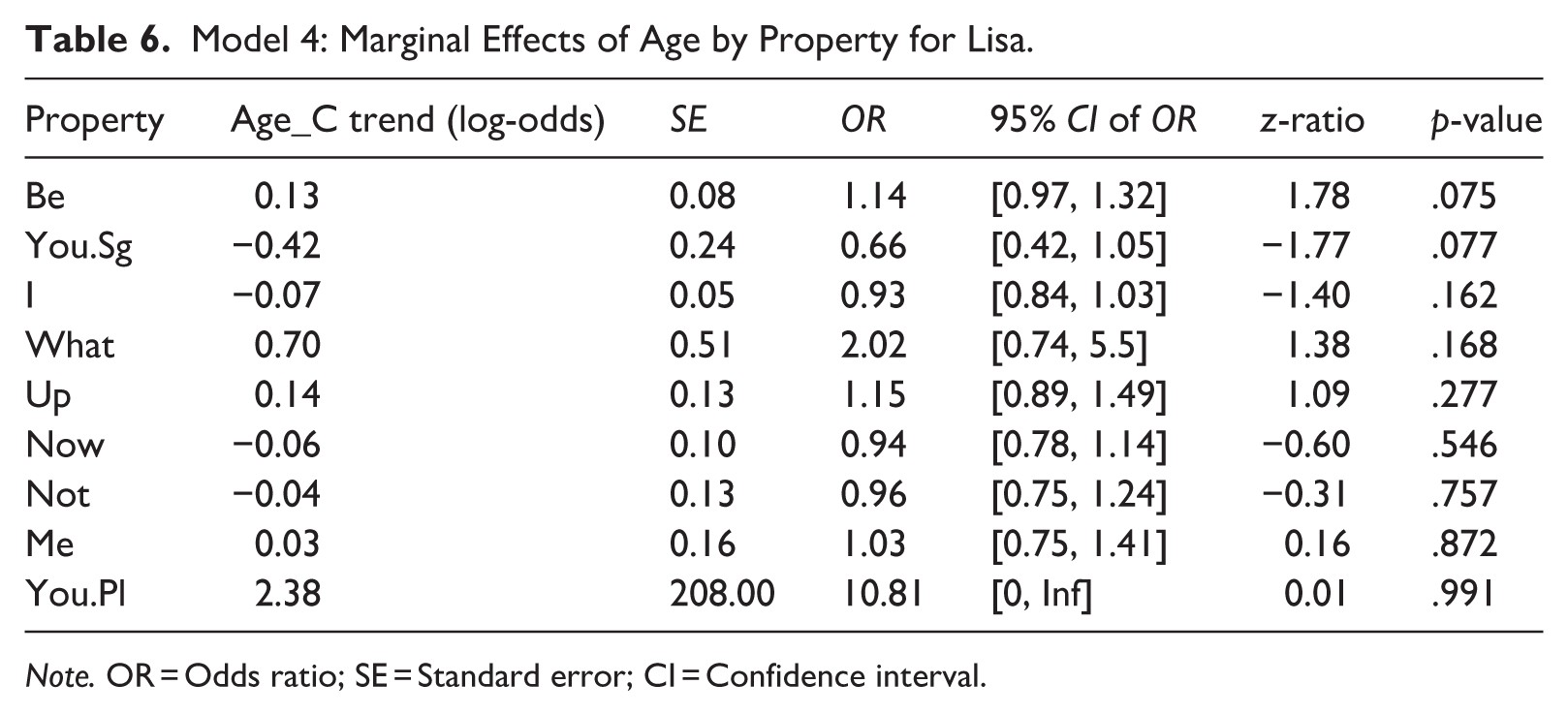
Note. OR = Odds ratio; SE = Standard error; CI = Confidence interval.
Discussion
This section will discuss the results, aiming to enhance our understanding of how some of the most common SEN variants in the children’s RPR develop, and what this reveals about the process of acquiring SEN. First, the overall development of SEN properties across the children in the study is discussed (RQ1), followed by the individual development of the two girls who use SEN most extensively (RQ2).
For the group of Southwestern Norwegian children, there is a positive trend in development when considering all properties collectively. Even though this trend is not statistically significant (p = .134), it does suggest that the use of the SEN properties increases with age (Figure 1). When examining individual properties separately, a clear and significant relationship between age and the use of SEN variants of
While only
Nonetheless, there is considerable variation in the use of SEN among the children, with two not using SEN variants at all (see Figure 4). Such variation suggests that SEN may not function as a target variety for all children. A factor that might have influenced SEN use is the composition of children in the groups. As children grow older, peers become more crucial sources of input and influence than parents (Blom et al., 2025; Bugge, 2016). The two girls who used the most SEN were in the same play group and may have influenced each other. In other play groups where SEN usage was lower, there were several instances in which one child used SEN without much follow-up from their playmates. The occasional use of SEN variants by the children suggests that they have some knowledge of this variety. However, it seems that a significant culture for using SEN may not have been established in several of the playgroups. From previous research, we know that accommodation to conversational partners can play a role (cf. Kaiser, 2022).
Upon closer examination of the development of SEN usage in the two girls who predominantly use SEN, few significant age-related effects are observed. For Sophie, there was actually a negative developmental trend over time across all properties, although it was not significant (p = .125). In Lisa’s case, there was a marginal positive developmental trend, but it was also not significant (p = .796). When examining the properties individually, Sophie showed a significant negative effect for
To examine this further, a closer investigation of the role-play was conducted, focusing on the development of utterance types related to the play (Figure 9). Figure 9 shows a decline in the girls’ use of RPR over time, while utterances related to planning and discussing the play increase, suggesting no decrease in overall role-play activity. As children mature and their language skills improve, they tend to devote more time to activities like identifying props, defining roles, and describing scenarios (Bodrova & Leong, 2007). One consequence of this transition is that it may result in reduced input in the play language—or SEN—as the children grow older. Such changes might explain the stagnation seen in Lisa’s language development or the slight decline observed with Sophie when considering all properties. Like Paugh (2005) emphasises the importance of role-play for Patwa acquisition, these findings might suggest that role-play is an important source of input and a platform for acquiring SEN. Since SEN is first and foremost used in role-play, input from these activities could potentially play some role in its acquisition (cf. Strand, 2022).
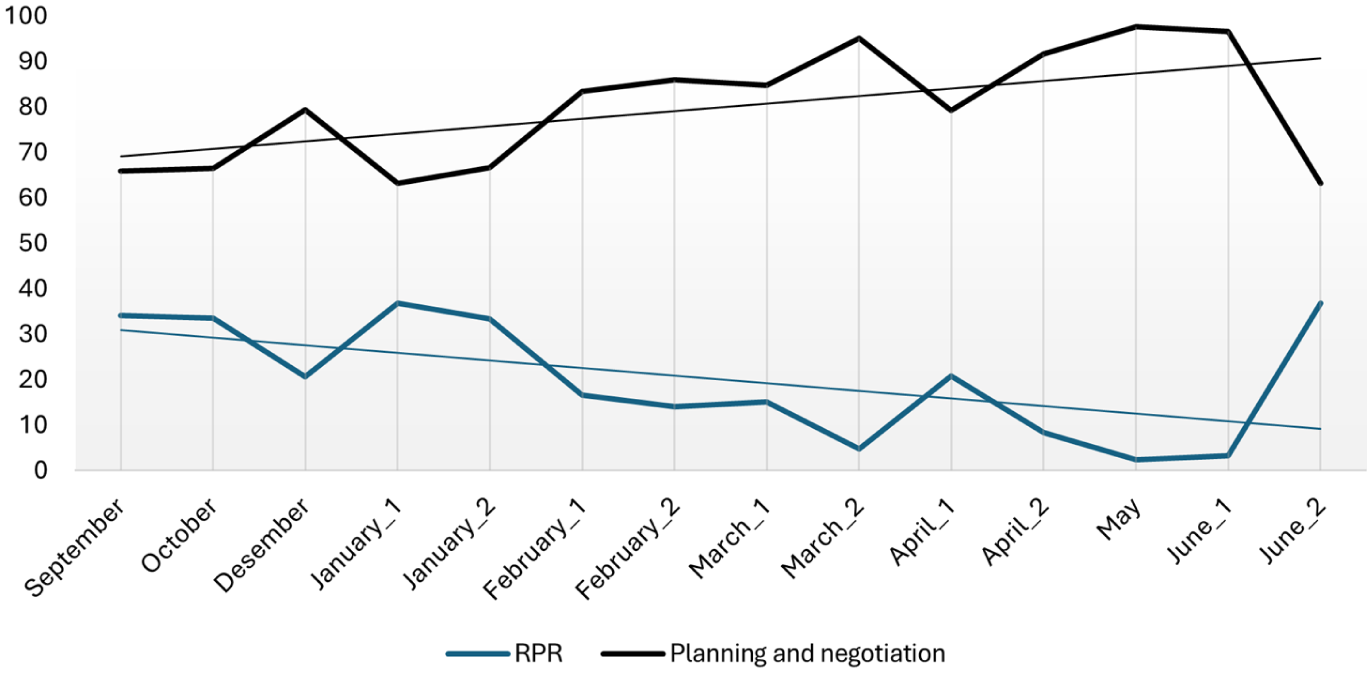
Development of utterances related to the RPR and utterances related to planning and negotiation for Sophie and Lisa.
In addition to age-related changes in play, the decline in RPR utterances may also be connected to the types of play and the props available during the sessions. After Christmas, there was extensive play involving firefighters and dinosaurs, as these were the toys available in the recording room. Although the overall pattern shows reduced RPR and increased planning across sessions (Figure 9), the June_2 session deviates from this: RPR increases, while planning utterances decline. In this final session, dolls were reintroduced, and the girls immediately engaged in family play. This raises the question of whether different types of play require varying degrees of planning and organisation. Although research has rarely addressed how planning demands differ across play scenarios, it is clear that role-play varies in complexity (Harris, 2000; Nicolopoulou, 2018). This makes it plausible that the type of play may shape the amount of planning involved and, in turn, language use. Although family play was a common theme even with dinosaurs, it might be less relatable to everyday life, thus potentially requiring more planning. The reintroduction of toys may also have renewed the girls’ engagement, which could in turn have motivated greater use of RPR—and thus SEN—and potentially shaped the developmental patterns observed. Although the contexts differ, this interpretation aligns with broader insights from language-development research showing that socio-affective factors, including motivation, can influence how linguistic systems develop (cf. Montrul, 2006). In the case of RPR and SEN, children’s motivation to stay in character or engage deeply in specific play scenarios may therefore affect how frequently and consistently they use SEN variants. Although these are speculations, they represent interesting avenues for further investigation.
Limitations
Several factors may have influenced the findings of this study. One limitation concerns the organisation of playgroups, which resulted in uneven session attendance among participants (Table 1). Consequently, some children contributed substantially more data than others, influencing the analytical outcomes. In addition, the small number of participants makes it difficult to generalise the findings to broader Norwegian preschool contexts, similar age groups, and preschools in other regions of Norway. Finally, the study focuses on the development of SEN use and does not include data on children’s broader exposure to SEN in everyday life. Although SEN is widely accessible in Norwegian society, differences in the amount and quality of input may influence language development and could be explored in future research.
Conclusion
This article investigates the development of SEN properties in the RPR of a group of Southwestern Norwegian children who speak and use their local dialect (LD) in contexts other than role-play. Logistic regression models were employed to assess how this development evolves with age, applied both to the entire group and individually to the two children who most frequently used SEN in RPR.
For the group, even though significant results are limited, the analysis indicates positive trends in SEN usage across all properties and individually for each property. The properties
This study faces challenges regarding the number of participants and the scope of the language output data, which necessitate caution in interpreting the results and warrant further research to better understand the dynamics of SEN acquisition in Norwegian bidialectal contexts. Despite these challenges, the positive trends for some SEN properties indicate that a target variety is being acquired, at least by some children. These findings illustrate how bidialectal competence and register acquisition are closely intertwined in children’s language development.
Footnotes
Acknowledgements
The author wishes to thank Merete Brendeford Anderssen, Elma Blom, Jorunn Simonsen Thingnes, Eli Bjørhusdal, and Øystein Vangsnes for insightful discussions and valuable feedback on the work. Sergey Minor deserves special thanks for assistance with the analysis.

Ethical Considerations
The observational study was approved by the Norwegian Agency for Shared Services in Education and Research (SIKT) on June 29, 2022.
Consent to Participate
Parental written consent was obtained before the recording sessions began.
Author Contributions
Funding
The authors disclosed receipt of the following financial support for the research, authorship, and/or publication of this article: This study is part of the project Multilectal Literacy in Education supported by the Research Council of Norway (grant number 301700; PI: Øystein A. Vangsnes).
Declaration of Conflicting Interests
The authors declared no potential conflicts of interest with respect to the research, authorship, and/or publication of this article.
Data Availability Statement
The data supporting this study’s findings are not publicly available due to ethical and legal constraints.