




Abstract
For children, Object Relative (OR) clauses can be late acquired across a number of languages (e.g., this is the goat that the cows are pushing), and production of non-standard ORs that include resumption is often attested (e.g., Italian; French; English). In addition, starting at age 6, children start adopting passive subject relatives (SRs) (e.g., this is the goat that is being pushed by the cows) when an OR is expected. In the present study, we designed an elicitation task to explore the effects of syntactic priming on the production of ORs and passive SRs in Italian-speaking children aged 4;4–6;0. The syntactic priming experiment took place in two sessions, 1 week apart, to explore immediate and cumulative effects of priming. The results revealed significant effects of immediate and cumulative priming, with a significant increase in the production of passive SRs and ORs with a gap in session 2 compared to session 1, in line with implicit learning accounts of syntactic priming. In addition, the results show that exposure to ORs with a gap can decrease the production of ORs with resumption in younger children (52–64 months). The results are discussed in relation to implicit learning accounts of syntactic priming, experience-based and capacity theories of processing.
Introduction
A large body of research in child language acquisition has shown that typically developing children produce and comprehend subject relative (SR) clauses, as in (1a), starting from age 2 to 3 (e.g., Labelle, 1990). However, OR clauses with two noun phrases that share similar animacy features, as in (1b), appear later and children comprehend them at chance level until age 4 to 5 across a number of languages (Italian: Adani, 2011; Adani et al., 2010, Contemori & Belletti, 2014; English: Contemori & Marinis, 2014; Pérez-Leroux, 1995; French: Labelle, 1990; Greek: Varlokosta & Armon-Lotem, 1998).
(1a) This is the goat that is pushing the cow
(1b) This is the goat that the cow is pushing
Studies on the online comprehension of relative clauses in adults have shown that OR clauses are associated with more processing difficulty than SR clauses across languages (e.g., Lau & Tanaka, 2021 for a review). When reading an OR like (1b), adult comprehenders commit to an SR analysis upon encountering the first noun phrase ‘the goat’, and they need to reanalyze this interpretation once the noun phrase ‘the cow’ is encountered. While adults quickly override this processing preference, children take significantly longer to revise an agent-first interpretation, showing an overall difficulty for comprehending ORs and other patient-first structures (Atkinson et al., 2018; Contemori & Belletti, 2014; Contemori et al., 2017). In addition, ORs require the construction of a long dependency between the head of the relative clause (i.e., the goat) and the position in which the noun phrase is interpreted (i.e., complement of the verb ‘pushing’ in 1b), which may be particularly taxing for children.
Capacity theories and experience-based theories make claims about the processing of long-distance dependencies, like ORs. The two theoretical approaches are non-mutually exclusive, predicting that constraints on working memory and distributional information may contribute to the processing of ORs. Under capacity theories, the difficulties associated with interpreting ORs are explained according to the demands that ORs exert on working memory (e.g., Lewis et al., 2006). The long-distance dependency requires memory capacity to actively maintain and retrieve information about the object noun, with an increasing possibility of retrieval interference due to the number of intervening words (e.g., Lewis et al., 2006). On the other hand, experience-based theories propose that the amount of experience an individual has with language explains differences in processing difficulty across sentences (Gennari & MacDonald, 2009; MacDonald & Christiansen, 2002). For instance, MacDonald and Christiansen (2002) have proposed that patient-first structures like ORs are more difficult to process and more sensitive to the effects of previous experience than the processing of SRs because they are more infrequent than SRs.
We focus here on reviewing existing evidence on the acquisition of ORs in Italian, the language under investigation in the present study. Previous research that has tested children’s comprehension using off-line and on-line tasks has demonstrated that Italian-speaking children can comprehend SR clauses like (1a) by age 3. On the other hand, above-chance comprehension of OR clauses in Italian-speaking children was found at around age 4 (Adani, 2011). Among the types of ORs tested in previous studies, it has been demonstrated that children are more accurate at comprehending ORs where the two noun phrases differ in number features, as shown in (2a) and (2b) (Adani et al., 2010).
(2a) Questa é la capra che le mucche spingono
This-fem is the-fem goat that the-fem cows push
This is the goat that the cows are pushing
(2b) Queste sono le capre che la mucca spinge
These-fem are the-fem goats that the-fem cow pushes
These are the goats that the cow is pushing
Previous production research has shown that Italian-speaking children produce ORs below chance or at chance-level from age 3 to 8 (25%–50%; Contemori & Belletti, 2014). By using various elicitation techniques, Contemori and Belletti (2014) observed that 3 to 8 years old children produce a number of alternative structures when an OR is expected (e.g., declarative sentences, SR clauses where the noun phrases’ thematic roles are reversed). In addition, Contemori and Belletti (2014) found that among the ORs produced by 3 to 8-year-old children, only a minority of target responses include a gap (20%–30% of the ORs produced), as exemplified in (2b). The majority of ORs produced include either a resumptive clitic pronoun or a resumptive noun phrase, as illustrated in (3a) and (3b) (Guasti & Cardinaletti, 2003). While resumption with a clitic pronoun (3a) is possible in colloquial/informal Italian, resumption with a noun phrase (3b) is ungrammatical in standard and non-standard Italian. Notice that resumption in ORs has been observed consistently in studies using different elicitation techniques, both in languages where it constitutes a grammatical option and in languages where it is non-standard or ungrammatical (e.g., French: Labelle, 1990; English: Pérez-Leroux, 1995; Greek: Varlokosta & Armon-Lotem, 1998).
(3a) ?Questa é la capra che le mucche la spingono
This-fem is the-fem goat that the-fem cows her-clitic push
This is the goat that the cows are pushing her
(3b) *Questa é la capra che le mucche spingono la capra
This-fem is the-fem goat that the-fem cows push the-fem goat
This is the goat that the cows are pushing the goat
It has been suggested that resumption may be a strategy used by adults and children to ease the processing cost involved in long-distance dependencies (for children: Lau, 2016; for adults: Alexopoulou & Keller, 2007; Fadlon et al., 2019). More specifically, when processing a long-distance dependency like an OR, the parser may use a resumptive pronoun as a marker of the relativized position, which in turn may decrease the cost associated with maintaining a filler active in working memory until the dependency is completed (e.g., Alexopoulou & Keller, 2007; Fadlon et al., 2019). In line with this approach, Contemori and Belletti (2014) have shown that 6 to 8-year-old Italian-speaking children comprehend ORs with a resumptive clitic significantly more accurately than ORs with a gap (see also Lau, 2016 for Cantonese). According to previous research, at age 6 to 8, Italian-speaking children continue to produce ORs that include resumption and simultaneously start producing SRs with a passive verb, as shown in (4) (Contemori & Belletti, 2014). A passive SR is also the preferred structure when similar elicitation tasks are used with Italian-speaking adults (about 90% of the times; Belletti & Chesi, 2014). Passive SRs can be considered a type of long-distance dependency because intervening elements separate the subject and patient in the sentence from its verb. In addition, the passive morphology and the (optional) by-phrase provide the disambiguation between an active and a passive SR. The morphological complexity and less predictable order of information in passive sentences require more cognitive resources, making them more challenging to process than active sentences (Contemori & Belletti, 2014; Marinis, 2007; Marinis & Saddy, 2013).
(4) Questa é la capra che viene spinta dalle mucche
This-fem is the-fem goat that is pushed by the-fem cows
This is the goat that is being pushed by the cows
Passive SRs and ORs serve a similar discourse function because they both emphasize the patient (e.g., Vernice et al., 2012); therefore, they are similar in terms of functional relations and thematic roles (Contemori & Belletti, 2014; Manetti & Contemori, 2019). While the production of passive SRs in Italian is not attested in 3 to 5 year-old children, 1 the first instances of the structure are produced at around age 6, increasing steadily with age. Furthermore, SRs with passives are comprehended more easily compared to ORs by children 6 and older, suggesting that passive SRs may be syntactically less complex and easier to process than ORs (Contemori & Belletti, 2014). To our knowledge, no evidence is available on the comprehension of passive SRs in 4 to 6-year-old children. We note that in a corpus study, Belletti & Chesi (2014) found that passive SRs and ORs account respectively for 11% and 26% of the relative clauses produced by caregivers in the Italian section of the CHILDES corpus (Antelmi, Calambrone, and Matteini corpora). Thus, we can assume that passive SRs and ORs are relatively infrequent in Italian child-directed speech. In the present study, we designed a new task that implements the syntactic priming technique, a method that has been used to investigate the processing of complex syntactic structures in child language development (e.g., Ambridge & Rowland, 2013). Our study is the first to examine if repeated exposure to standard ORs through priming can increase their use in Italian-speaking children aged 4 to 6. The results will shed light on whether difficulties with the production of ORs in Italian reflect limitations in abstract grammar or challenges in activating and accessing underlying abstract representations. In addition to ORs, passive SRs were included in the priming task. Passive SRs were chosen because they are relative clauses like ORs, and they include a syntactically complex structure that does not emerge in elicited production until age 6 (see Contemori & Belletti, 2014, for Italian). By testing if children younger than 6 can produce passives SRs after repeated exposure, we aim to understand how input frequency, structural complexity, and processing capacity interact in the acquisition of syntax. In the following section, we summarize previous research looking at the immediate and cumulative effects of syntactic priming in children.
Syntactic priming
Psycholinguistic studies have shown that exposure to a sentence with a particular syntactic construction can affect the processing and production of the same sentence structure, a phenomenon known as syntactic or structural priming (e.g., Bock, 1989). For example, in a study by Bock (1989), a group of adult English speakers were more likely to produce a double object construction with di-transitive verbs (the boy gave the girl the milk) when the previous sentence contained a similar structure, in comparison to encountering a prepositional object construction (the boy gave the milk to the girl). According to previous research, syntactic priming effects originate from the activation of abstract representations for the primed structure, determining a high likelihood for the same structure to be reused (e.g., Branigan, 2007; see Ambridge, 2020 for an account of syntactic priming that challenges the activation of abstract representations). For example, Pickering and Branigan (1998)’s residual activation model emphasizes the role of shared syntactic representations between speakers and listeners and how these representations become more accessible due to activation during language use. This leads to eased processing capacity, where the speaker can access and use these familiar structures more efficiently (Corley & Scheepers, 2002; Smith & Wheeldon, 2001). After the structure is used, it persists or residually activates for a short period, lowering the cognitive effort needed to access the same structure for reuse.
Syntactic priming has been used to test the abstractness of sentence representations of young and older children (from age 2), for a number of syntactic structures (e.g., passive/active sentences; Belletti & Manetti, 2019; Bencini & Valian, 2008; direct object/prepositional object constructions; Thothathiri & Snedeker, 2008). Most of the existing research has shown significant priming effects in comprehension and in production, demonstrating that even young children have a knowledge of more complex syntactic structures that is abstract (Contemori, 2022, for a review). To our knowledge, only one published study has looked at the priming of ORs in children (Brandt et al., 2017). Brandt et al. examined the priming of patient-first interpretations for ambiguous relatives that in German can be interpreted as either subject or object relative (OR) clauses. The results revealed no comprehension priming effect in 6-year-old German-speaking children, and a robust priming effect in 9-year-olds. While the significant effect of comprehension priming in the older group demonstrated that 9-year-olds can activate abstract representations for ORs, the absence of priming in the younger group was interpreted as a delayed development of OR representations in 6-year-olds. Differently than Brandt et al., in the present study, we investigate if priming of ORs can be observed in production, by designing a new comprehension-to-production priming task. Our study explores the immediate and cumulative effects of priming with 4;4- to 6-year-old Italian-speaking children, measured by administering two production-priming tasks in separate sessions, conducted one week apart.
Implicit learning accounts propose that syntactic priming involves syntactic learning (Chang et al., 2006; Jaeger & Snider, 2013). For example, according to Chang et al. (2006), when an individual encounters an infrequent syntactic structure in the input (e.g., an OR), an error is detected in the underlying representational system where a more frequent structure was initially predicted (e.g., an SR). Chang et al. (2006) hypothesize that the detection of the error creates an adjustment in the underlying system, which is determined by a function of speakers’ previous experience with a structure and their learning rate. When exposure to an infrequent structure through priming determines error detection and a system readjustment, immediate syntactic choices are affected (i.e., an immediate effect of priming). Furthermore, the effect can persist cumulatively after multiple exposures (i.e., a cumulative effect of priming), and ultimately change the speaker’s underlying statistics for the infrequent structure, that is, the baseline frequency of a given syntactic structure encoded by speakers prior to exposure. Jaeger and Snider (2013) proposed that speakers adapt their syntactic knowledge to prior language experience and experience within a given context. By observing that the error detection and system readjustment resulting from priming is sensitive to both prior and recent experience within an experiment, Jaeger and Snider propose that syntactic priming is a consequence of expectation adaptation (see also Fine & Jaeger, 2013; Fine et al., 2013). Thus, using all the information available (i.e., recent experience with syntactic structures and prior knowledge), speakers create expectations about the structures that are more likely to occur.
In line with implicit learning accounts of syntactic priming, existing research has shown that exposure to the same syntactic structure over a period of time can lead to robust effects of cumulative priming with children (e.g., Branigan & Messenger, 2016; Branigan & McLean, 2016; Savage et al., 2006; Vasilyeva et al., 2006; but see Kidd, 2012). For example, in a study with English-speaking children, Branigan and Messenger (2016) showed that immediate priming of the passive is associated with higher production of the passive in a second session conducted a week later. In addition, Savage et al. (2006) have shown that cumulative priming effects can be observed with 4-year-old children 1 week and 1 month after exposure. Inconsistently with Savage et al. (2006) and Branigan and Messenger (2016), Kidd (2012) tested the production of active and passive sentences with children aged 4;5–6;11, but did not find significant effects of priming 1 week after the initial priming task was administered. Cumulative priming has also been observed within one experimental session (Branigan & McLean, 2016). For example, in Branigan and McLean (2016), active and passive structures were primed with 3- and 4-year-old English-speaking children using items that included no lexical overlap and items that included lexical overlap between the prime and the target. The results of the study demonstrated that over the course of one session, the lexically based priming (i.e., lexical boost) disappeared after two intervening utterances, while the priming that did not include lexical overlap was more persistent. Under implicit learning accounts, when children are exposed to infrequent syntactic structures, the detection of the error determining immediate and cumulative effects of priming should be greater in younger children due to lower experience with the target structure. In addition, the magnitude of immediate priming should decrease with age, as children receive more exposure to the infrequent syntactic structure and its underlying representation becomes more stable. However, there is currently mixed evidence concerning the effect of age on immediate and cumulative syntactic priming in children. For instance, studies looking at the priming of sentences with double object and prepositional object datives with children aged 3 to 6 have shown stronger abstract priming with younger than older children, as predicted by implicit learning accounts (e.g., German: Kholodova et al., 2023; English: Peter et al., 2015; Rowland et al., 2012). However, Kidd (2012) did not find any effects of age on the priming of passives with children aged 4;5–6;11. Thus, the role of age on the strength of syntactic priming in different age groups has not been confirmed across the board.
In the present study, we investigate immediate and cumulative priming of ORs in their standard form (ORs with a gap) and passive SRs, two structures that have not been tested in previous production priming research. The goal is to observe if immediate and repeated exposure through priming can increase the production of two structures that are late acquired by children, in line with implicit learning accounts of syntactic priming (e.g., Chang et al., 2006). Additionally, by recruiting children aged 4;4–6;0, we test if priming is stronger at a younger age, when children have not yet accumulated a lot of experience with infrequent syntactic structures, as predicted by implicit learning accounts.
The present study
In the present study, we designed a novel task where children received primes either in the form of ORs, like (2a), or passive SRs, like (4). The study addresses the following research questions: (a) can ORs be successfully primed in production (i.e., immediate and cumulative priming)? (b) Can passive SRs be successfully primed (i.e., immediate and cumulative priming)? (c) Will children produce more ORs with a gap over two sessions, and fewer resumptive ORs as a result of exposure to the standard syntactic constructions? (d) Does age have an effect on the priming of ORs and passive SRs?
For research question (a), by examining if repeated exposure through priming improves production of ORs, we will test the hypothesis that children’s challenges are influenced by factors related to performance and processing limitations rather than deficits in grammatical knowledge. A significant effect of priming for ORs is observed if children produce more ORs after hearing an OR prime in comparison to hearing a passive SR prime (i.e., an immediate effect of priming). The results will shed light on whether children’s difficulty producing ORs is due to processing constraints (such as limited working memory) and insufficient experience with the structure or lack of mastery of the abstract syntactic representations required for ORs (i.e., a representational issue). Concerning research question (b), investigating whether children younger than 6 can produce passive SRs after repeated exposure will allow us to test the interplay between capacity-based and experience-based theories. While passive SRs are syntactically less complex than ORs with a gap (Contemori & Belletti, 2014), the two structures are comparably frequent in child-directed speech in Italian (Belletti & Chesi, 2014). If children successfully produce rare but less complex structures like passive SRs after exposure, it would show that children have the capacity to produce passive SRs, but their activation requires repeated exposure for accessibility in production. In addition, for questions (a) and (b), in line with previous studies looking at cumulative syntactic priming in children, we expect that children will produce significantly more ORs with gap and passive SRs in session 2 than in session 1. A significant effect of cumulative priming for ORs and passive SRs would support implicit learning models of syntactic priming (Chang et al., 2006; Jaeger & Snider, 2013), proposing that priming implicates long-term changes to speakers’ underlying syntactic system.
To address research question (c), we will analyze the ORs with resumption produced by children in session 1 and session 2. While ORs with resumption are the preferred type of ORs produced until age 8, repeated exposure to ORs with a gap might increase the production of ORs in their standard form, due to error detection and underlying system readjustment (Chang et al., 2006; Jaeger & Snider, 2013). Thus, children may be more likely to increase their production of (dis-preferred) ORs with a gap in session 2 compared to session 1, showing that repeated exposure may help children internalize the abstract representation for standard ORs, making the gapped structure more frequent. Finally, to address research question (d), age will be included as a continuous measure in the analysis of the priming results. Under implicit learning accounts of syntactic priming (e.g., Chang et al., 2006), we expect to observe a larger effect of immediate and cumulative priming in younger children compared to older children, due to the lower experience with ORs and passive SRs at an earlier age. In addition, we expect that age may have an effect on the type of ORs produced by 4;4- to 6;0-year-old children. More specifically, a decrease in the production of resumptive ORs may be more robust in older children. As older children have increased memory abilities in comparison to younger children, priming may be more effective at reinforcing their underlying representations for the highly complex standard ORs with a gap.
Participants
Thirty Italian-speaking children were recruited at public schools in Firenze and Perugia, in Central Italy (age range = 4;4–6;0 mean age = 5;4; SD = 0.5). Children did not have a history of language delay or impairment, and Italian was the only language spoken in the family. Participation in the study was voluntary and with parental written consent. The ethical approval for the study was given by the Ethics Committee for Research in the Human and Social Sciences.
Method
Materials and procedure
A syntactic priming task was designed as a picture description task, where each item consisted of a prime picture associated with a prime sentence, and a target picture described by the child. For each prime sentence, two types of structures were created, an OR and a passive SR, as illustrated in (5a) and (5b).
(5a) OR prime:
Questa é la capra che le mucche spingono
This-fem is the-fem goat that the-fem cows push
This is the goat that the cows are pushing
(5b) Passive SR prime:
Questa é la capra che viene spinta dalle mucche
This-fem is the-fem goat that is pushed by the-fem cows
This is the goat that is being pushed by the cows
Thirty-six sentences were created for each prime type. Prime and target pictures included two scenes presented on the same page, one at the top and one at the bottom, as shown in Figures 1 and 2. In one scene, two animals were carrying out an action on another animal, and in the other scene, the same action and characters were depicted with the agent-patient roles reversed. The two scenes were included in each picture to make the use of relative clauses felicitous during the picture description (e.g., Hamburger & Crain, 1982). The position of the agent-patient in the scenes (top vs. bottom) was counterbalanced across items. In each prime picture and its target picture, no lexical overlap was present either for the action or for the characters.
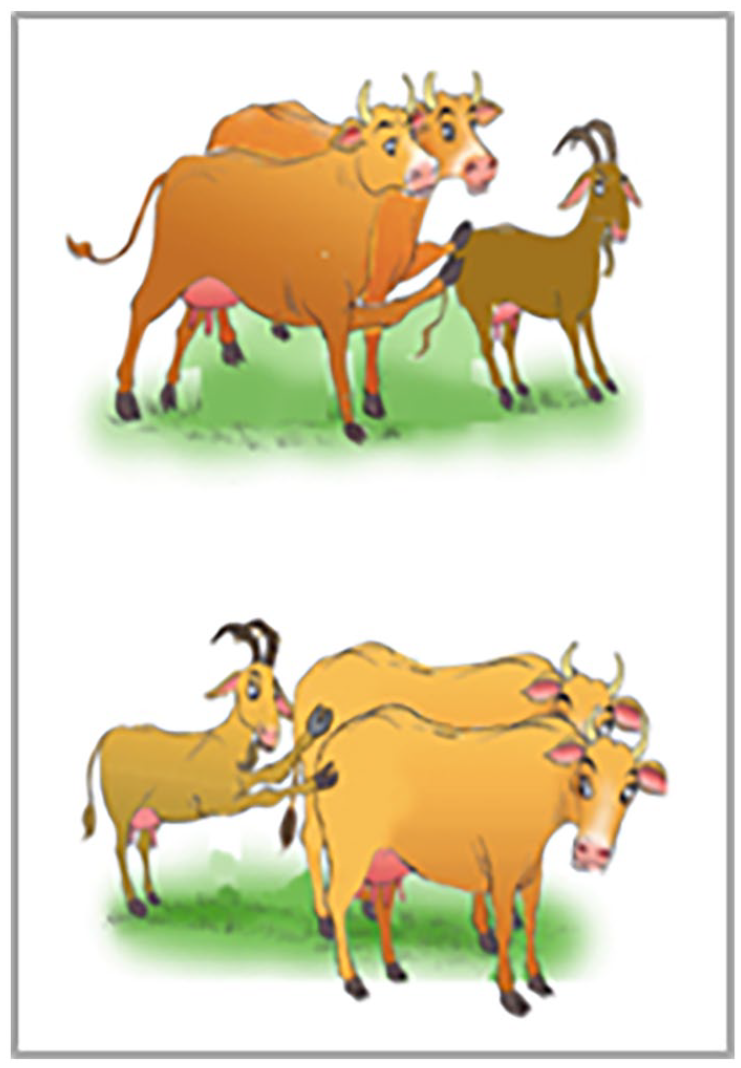
Example of the two scenes included in a prime picture.
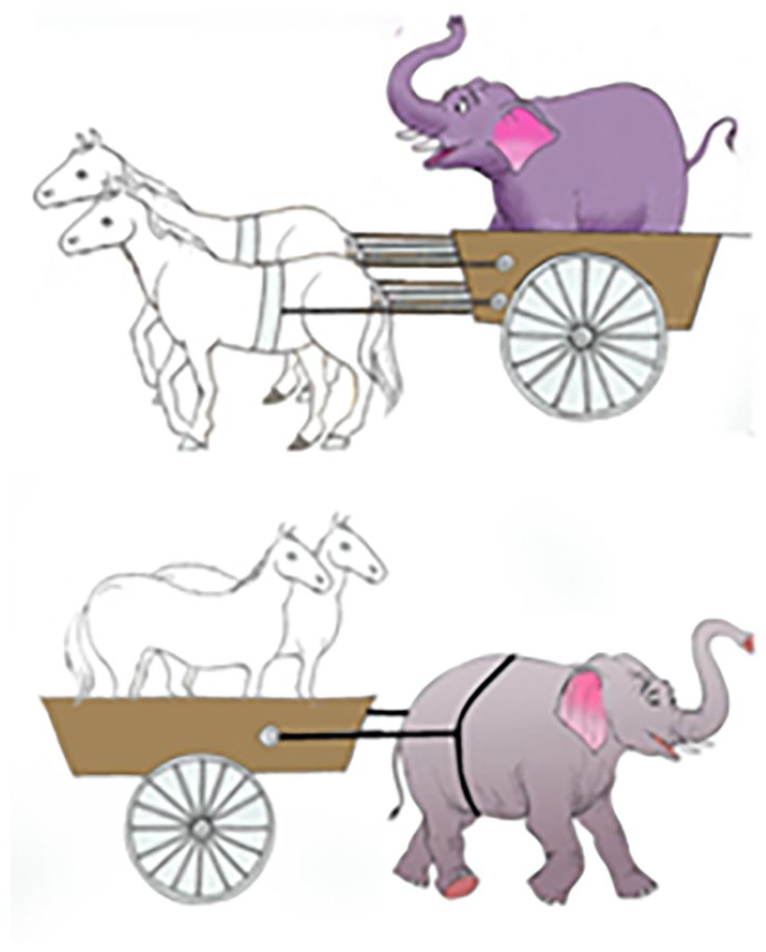
Example of the two scenes included in a target picture.
The thirty-six prime-target pairs were divided across two sessions, eighteen prime target pairs in session 1, and eighteen prime target pairs in session 2. In each session, children received eighteen prime sentences (nine ORs and nine passive SRs), presented in individually randomized order. Session 2 was administered 1 week after session 1 to investigate possible effects of cumulative priming. In each session, two practice prime-target trials were included (one with an OR prime and one with a passive SR prime).
In each of the two sessions, the experimenter showed the child the prime picture and described the scene where the two animals carry out an action on another animal using one of the prime structures. For example, for the picture shown in Figure 1, the experimenter pointed to the top scene, uttering either the OR in (5a) or the passive SR in (5b). Then, the experimenter pointed to the singular patient in the target picture (e.g., the elephant in the top scene in Figure 2), prompting the child to describe the scene starting with: ‘This is. . .’. The prompt in each target item aimed at eliciting a relative clause where the singular patient is the head (e.g., the elephant). We expected that the plural agent acting (e.g., the horses) in children’s responses would either be the subject within the relative clause (an OR: The elephant that the horses are carrying) or the object of a ‘by’ preposition (a passive SR: ‘the elephant that is being carried by the horses’). We expected that, among the target responses, children would produce a higher amount of ORs after an OR prime than after a passive SR prime. Conversely, we expected that children would produce significantly more passive SRs after a passive SR prime than after an OR prime. In Italian, if a singular object noun phrase and a singular postverbal subject are used in an OR clause, the sentence is ambiguous between an SR and an OR interpretation, as shown in (6). To avoid any ambiguity in children’s target responses, the subject and object noun phrases in the prime and target items always mismatched in number (e.g., the cow and the goats in Figure 1; the elephant and the horses in Figure 2) (Contemori & Belletti, 2014).
(6) Questo é l’ elefante (subj/obj) che porta il cavallo (subj/obj)
This-masc is the-masc elephant that carries the-masc horse
This is the elephant that the horse is carrying/This is the elephant that is carrying the horse
Coding
Children’s responses were recorded and transcribed. The productions were then checked and coded by the authors. There was agreement on the coding of 98% of the data. Disagreement was resolved by discussion until 100% agreement was reached. For ORs, we considered productions according to two criteria: ORs with a gap and resumptive ORs. In the coding of ORs with a gap, only ORs with a gap were coded as correct, as exemplified in (7a). ORs with a gap scored as correct included (a) the patient of the action as head of the relative clause, (b) a complementizer, (c) a transitive verb. In the coding of resumptive ORs, we counted as correct ORs with a resumptive clitic, as in (7b), and ORs with a resumptive noun phrase, as in (7c). The resumptive ORs scored as correct included (a) the patient of the action as head of the relative clause, (b) a complementizer, (c) a transitive or intransitive verb, (d) a resumptive clitic or a resumptive noun phrase in object position. In Italian, the subject within the relative clause can be optionally pre-verbal, post-verbal or unexpressed.
(7a) OR with gap:
(Questo é) l’ elefante che (i cavalli) portano (i cavalli)
(This-masc is) the-masc elephant that (the-masc horses) carry (the-masc horses)
(This is) the elephant that the horses are carrying
(7b) OR with a resumptive clitic:
(Questo é) l’ elefante che (i cavalli) lo portano (i cavalli)
(This-masc is) the-masc elephant that (the-masc horses) him-clitic carry (the-masc horses)
(This is) the elephant that the horses are carrying him
(7c) OR with a resumptive noun phrase:
(Questo é) l’ elefante che (i cavalli) portano l’ elefante
(This-masc is) the-masc elephant that (the-masc horses) carry the-masc elephant
(This is) the elephant that the horses are carrying the elephant
Notice that in the case of productions that contain a ditransitive verb within the relative clause, an OR with resumption is the only possible option for children younger than 10, as shown in (8). While in standard Italian, sentence (8) should include a relative pronoun introduced by a preposition (e.g., L’elefante a cui i cavalli danno un passaggio/The elephant to whom the horses are giving a ride), children do not acquire these relativizers until age 10, after receiving explicit teaching in school (Guasti & Cardinaletti, 2003). When children produced ORs with a ditransitive verb and an indirect object resumptive clitic, the sentences were coded as correct in the coding of ORs with resumption.
(8) OR with a resumptive clitic and a ditransitive verb:
Questo é l’ elefante che i cavalli gli danno un passaggio
This-masc is the-masc elephant that the-masc horses to him-clitic give a ride
This is the elephant that the horses are giving him a ride
For passive SRs, we counted as correct SRs that included (a) the patient of the action as head of the relative clause, (b) a complementizer, (c) a passive verb, (d) an optional by phrase, as exemplifies in (9a). In Italian either the auxiliaries essere (to be) or venire (to come) can be used with the past participle. Among children’s productions, only ORs and passive SRs can be considered accurate in response to the experimenter’s prompt. Active SRs where the thematic roles are reversed (9b), declaratives (9c) and fragment sentences (9d) were excluded from the analyses.
(9a) Passive SR
(Questo é) l’ elefante che viene/é portato (dai cavalli)
(This-masc is) the-masc elephant that is carried-masc (by the-masc horses)
(This is) the elephant that is being carried (by the horses)
(9b) Active SR:
(Questi sono) i cavalli che tirano l’ elefante
(These-masc are) the-masc horses that pull the-masc elephant
(These are) the horses that are pulling the elephant
(9c) Declarative sentence:
Questo é l’ elephante
This-masc is the-masc elephant
This is the elephant
(9d) Fragment:
Portano
Carry
They are carrying
Results
Table 1 illustrates children’s productions in the syntactic priming task in the two sessions, including ORs with a gap, resumptive ORs, passive SRs, active SRs and declaratives. The category ‘other’ includes fragments, unintelligible productions and no responses.
Proportion of ORs, passive SRs, active SRs, declarative sentences and other responses produced by children in sessions 1 and 2 (SD).
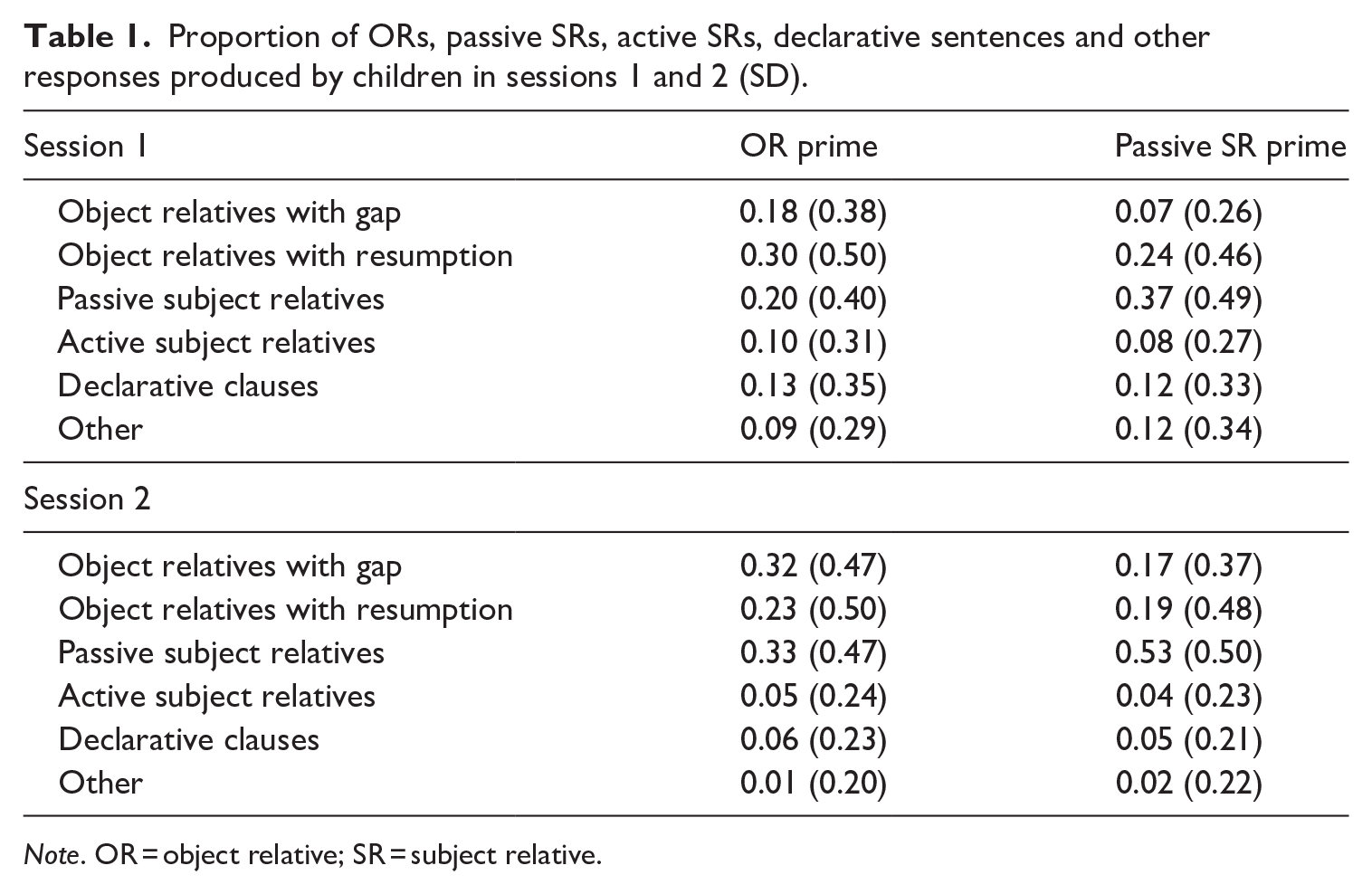
Note. OR = object relative; SR = subject relative.
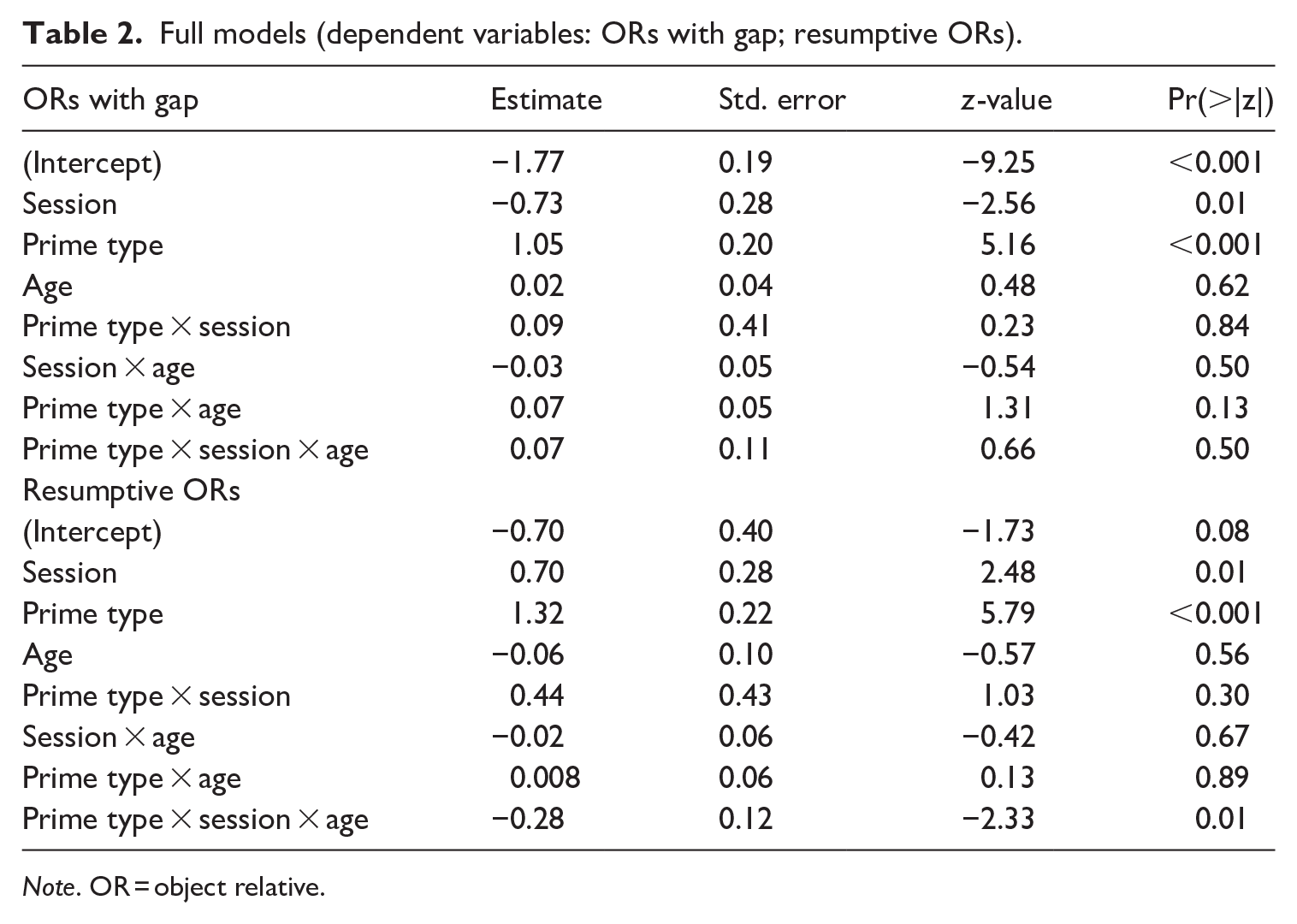
Mixed-effects logistic regression was used in the statistical analysis (Jaeger, 2008). Two analyses were conducted for ORs produced by children, using glmer (lme4 library; Bates & Sarkar, 2007). In one model, ORs with a gap were used as dependent variable (coded as 1; passive SRs coded as 0). In a second model, resumptive ORs were used as dependent variable (coded as 1 per each subject and item; ORs with gap coded as 0). In the two models, the fixed factors are Prime Type (OR prime vs. Passive SR prime, coded as 0.5 and −0.5, respectively; Barr et al., 2013), Session (session 1 vs. session 2, coded as 0.5 and −0.5, respectively) and Age in months as a continuous variable. In each model, the maximal random effect structure leading to convergence includes by subject and item random intercepts and by subject random slope. Table 2 illustrates the results of the two models.
Full models (dependent variables: ORs with gap; resumptive ORs).
Note. OR = object relative.
The analysis of ORs with a gap revealed significant main effects of Prime Type and Session. The main effect of Prime Type indicates that children produced more ORs with a gap after an OR prime than after a passive SR prime in sessions 1 and 2. The main effect of Session further shows that children produced more ORs with a gap in session 2 than in session 1. No other main effect or interaction was significant.
The analysis of resumptive ORs revealed significant main effects of Session and Prime Type, showing that children produced significantly more ORs with resumption after an OR prime than after a passive SR prime, and significantly fewer ORs with resumption in session 2 than in session 1. In addition, the analysis revealed a significant interaction between Session, Age and Prime Type. We conducted posthoc analyses by using a median-split and dividing the group into two sub-groups based on age (younger children: 52–64 months; older children: 65–76 months), using the Bonferroni correction. First, we used Mixed-effects logistic regression with the fixed factor Age Group to compare the results of the two age groups in each session by Prime Type. Secondly, we used the fixed factor Session, to compare the results of the two sessions in each age group by prime type. Third, we used the main factor Prime Type, to compare the resumptive ORs produced after OR primes vs. passive SR primes in each session in each age group separately. The models revealed main effects of Prime Type for younger and older children, suggesting that in the first session, younger children produced more ORs with resumption after a OR prime than after a passive SR prime (ß = −1.84, SE = 0.47, t = −3.878, p < .0008; Intercept: ß = .009, SE = 0.55, t = 0.017, p = .9), while the effect was significant for older children in the second session (ß = −1.50, SE = 0.48, t = −3.101, p < .008; Intercept: ß = −1.23, SE = 0.58, t = −2.114, p < .03). In addition, a main effect of Session was significant for younger children after the OR prime (ß = 1.79, SE = 0.67, t = 2.666, p < .04; Intercept: ß = .41, SE = 0.18, t = 2.212, p < .02), suggesting that younger children produced significantly fewer ORs with resumption in session 2 compared to session 1 after an OR prime. Figure 3 illustrates the results by age group.

Proportion of resumptive ORs produced in the two sessions by age group and prime type (ORs with a gap vs. passive SRs).
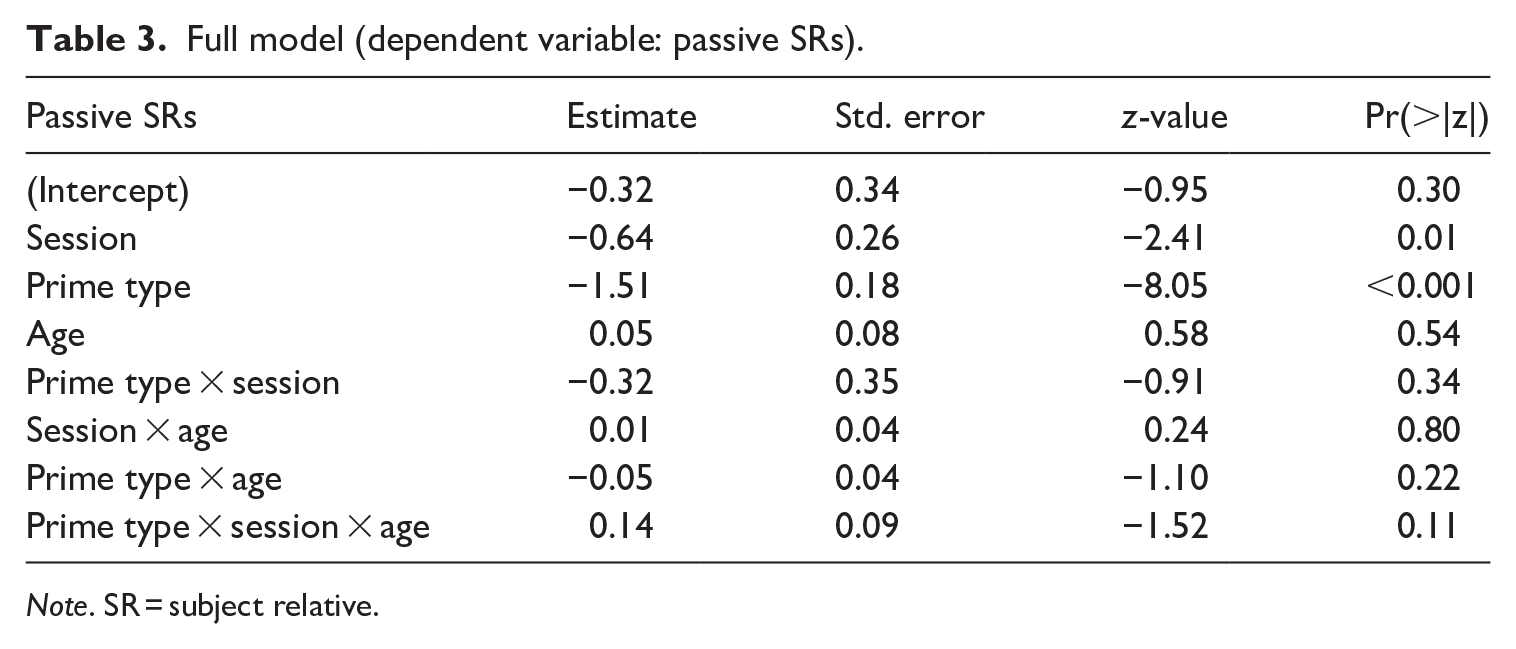
In the analysis of passive SRs produced by children, passive SRs were used as a dependent variable (coded as 1 per each subject and item; ORs with gap and resumptive ORs coded as 0). The fixed factors were Prime Type (OR prime vs. Passive SR prime, coded as 0.5 and −0.5, respectively), Session (session 1 vs. session 2 coded as 0.5 and −0.5, respectively) and Age in months as a continuous variable. The maximal random effect structure leading to convergence includes subject and item random intercepts and subject random slopes. Table 3 illustrates the results of the model.
Full model (dependent variable: passive SRs).
Note. SR = subject relative.
The analysis of passive SRs revealed a significant main effect of Prime Type and a significant main effect of Session. The main effect of Prime Type shows that children produced significantly more passive SRs after a passive SR prime than after an OR prime. The main effect of Session suggests that children produced significantly more passive SRs in session 2 than in session 1. No other main effect or interaction was significant.
Discussion
In the present study, we recruited a group of 4;4- to 6;0- year-old children, and we administered two production-priming tasks in separate sessions, taking place one week apart. The task aimed at testing if the effects of immediate and cumulative priming can be observed for the production of ORs and passive SRs, two late-acquired structures in Italian. The priming manipulation aimed to increase the number of ORs with a gap and passive SRs produced by children after repeated exposure. In addition, by including age as a continuous measure, we aimed to observe whether age influences the effects of immediate and cumulative priming.
The first analysis focused on the ORs with a gap produced by children and revealed a significant effect of immediate priming (main effect of Prime Type), showing that children produced significantly more standard ORs after an OR prime than after a passive SR prime in both sessions. In addition, we found that children produced significantly more ORs with a gap in session 2 compared to session 1, regardless of the type of prime received (main effect of Session), demonstrating a significant effect of cumulative priming for standard ORs. Our results further showed that age was not a significant factor in the analysis. Similar findings emerged from the analysis of passive SRs. First, we found that children produced significantly more passive SRs after a passive SR prime than after an OR prime in both sessions (main effect of Prime Type). Second, the analysis revealed that significantly more passive SRs were produced in session 2 compared to session 1 (main effect of Session). Age was not a significant factor in the model, suggesting that all children experienced similar effects of immediate and cumulative priming for passive SRs. Our study is the first to demonstrate that exposure can increase children’s production of ORs with a gap and passive SRs. This result is in line with previous syntactic priming studies, suggesting that by age 4, children can be primed to produce several types of syntactic structures (e.g., passive/active; Bencini & Valian, 2008; direct object/prepositional object constructions; Thothathiri & Snedeker, 2008). The immediate effect of priming for ORs is not in line with the study by Brandt et al. (2017) which did not show a comprehension priming effect for ORs in 6-year-old children. However, while we examined comprehension-to-production priming, Brandt et al. tested comprehension-to-comprehension priming using a different task and different materials. Thus, our results are not directly comparable to Brandt et al.’s findings on German-speaking children. The significant effect of priming for ORs that emerged in our study (increased OR production after hearing an OR prime compared to a passive SR prime) supports the hypothesis that children’s difficulties with OR production are performance/processing-related rather than representational. Increased production following repeated exposure indicates that processing and familiarity with the structure play a crucial role in reducing children’s difficulties. This result aligns with experience-based theories and capacity-based theories, which argue that exposure and practice can mitigate processing limitations (e.g., Gennari & MacDonald, 2009; Lewis et al., 2006). The effect of priming for passive SRs addresses how input frequency, structural complexity, and processing capacity interact in child syntactic production. Our results show that the production of rare structures with lower complexity, like passive SRs, can increase after repeated exposure through priming. This suggests that not only input frequency but also accessibility of the abstract representation is an important factor in syntactic production. For example, as proposed by Pickering and Branigan (1998)’s residual activation model, when a specific syntactic structure is processed, the corresponding representation is activated in the speaker/listener’s system. This activation temporarily increases the accessibility of the representation, making it more likely to be reused in subsequent language processing tasks (Tables A1 and A2).
An effect of Age did not reach significance in the analysis of ORs with a gap and passive SRs. This result is in line with the study by Kidd (2012) that tested the priming of active and passive sentences with English-speaking children aged 4;5–6;11. The lack of a significant effect of age in our study is not predicted by implicit learning models of syntactic priming (e.g., Chang et al., 2006; see Peter et al., 2015 for results showing an effect of age on verb bias priming), where it is expected that the magnitude of immediate and cumulative priming should decrease with age, because older children should have accumulated more experience with the target structures. However, the null result in the analysis of ORs with a gap and passive SRs should be taken cautiously, and future research should be conducted with a larger group of participants. Furthermore, an interaction between Session and Prime Type failed to reach significance in the analysis of ORs with a gap and in the analysis of passive SRs. The lack of interaction indicates that the effect of prime did not differ between sessions. This result is in line with the study by Branigan and Messenger (2016), where children produced significantly more passive sentences after a passive prime than after an active prime, and significantly more passive sentences in session 2 than in session 1, taking place one week apart. Similarly to our study, in Branigan and Messenger, the interaction between prime type and session did not reach significance. The significant effects of cumulative priming for ORs and passive SRs that emerged in our study directly address error-based implicit learning models. More specifically, the findings confirm that exposure to ORs with a gap and passive SRs can determine a cumulative readjustment that reflects the input statistics for structures that are infrequent in adult speech (for Italian: Belletti & Chesi 2014).
The analysis of resumptive ORs revealed main effects of Prime Type and Session, indicating immediate and cumulative effects of priming. The main effects were qualified by a three-way interaction between Session, Age and Prime Type. Posthoc analyses on the interaction revealed that in session 1, younger children produced significantly more resumptive ORs after an OR prime than after a passive SR prime, while the same effect was observed with older children in session 2. This result seems to suggest that the effect of immediate priming on the production of resumptive ORs was more robust for younger children in session 1, and for older children in session 2. The analysis of resumptive ORs further revealed a significant decrease in the production of resumptive ORs in session 2 compared to session 1 in younger children. These results demonstrate that exposure to ORs with a gap through priming can decrease the production of resumptive ORs over two sessions. In addition, as pointed out by an anonymous Reviewer, exposure to passive SRs through priming may also contribute to a numerical decrease in the production of resumptive ORs over the two sessions, and increase the production of ORs with a gap. Based on these findings, we propose that repeated exposure to ORs with a gap and passive SRs can decrease the production of ORs with resumption over two sessions. That is, children’s syntactic knowledge is sensitive to recent linguistic input and with structured, repeated exposure, children can incorporate even less frequent, complex structures into their language use, showing that priming can shape their syntactic preferences. However, one question that remains open is why the reduction in the production of resumptive ORs in session 2 compared to session 1 is limited to younger children. While the results of the present study cannot address this point, we leave this question open for future research.
To conclude, our results have theoretical implications for theories of priming (Chang et al., 2006; Jaeger & Snider, 2013) and for theories on the acquisition and processing of complex syntactic structures (e.g., Lewis et al., 2006; Gennari & MacDonald, 2009). Concerning theories of syntactic priming, our results contribute to a growing body of research demonstrating that the cumulative effects of experience lead to long-term changes in the underlying syntactic system, as predicted by implicit learning accounts of syntactic priming (Chang et al., 2006; Jaeger & Snider, 2013). Concerning theories on the acquisition and processing of complex syntactic structures, ORs and passive SRs may be acquired late because they include long-distance dependencies that are taxing for children’s limited working memory capacity, as predicted by capacity theories (e.g., Lewis et al., 2006). Alternatively, according to experience-based theories, children may have difficulties comprehending and producing long-distance dependencies because they are relatively infrequent (e.g., Gennari & MacDonald, 2009; MacDonald & Christiansen, 2002). These two approaches can complement each other in explaining how children comprehended and produced ORs and passive SRs in our study. We argue that if a child has frequently encountered ORs and passive SRs through priming, they might more efficiently activate the underlying abstract representations and possibly allocate memory resources to those structures, reducing the cognitive load needed during syntactic processing. We propose that, as a result, the experiences provided in the form of priming can help shape the capacity available for processing complex syntactic structures.
Footnotes
Appendix A
Proportions of ORs with resumption including a clitic or a NP (out of the total number of resumptive ORs).
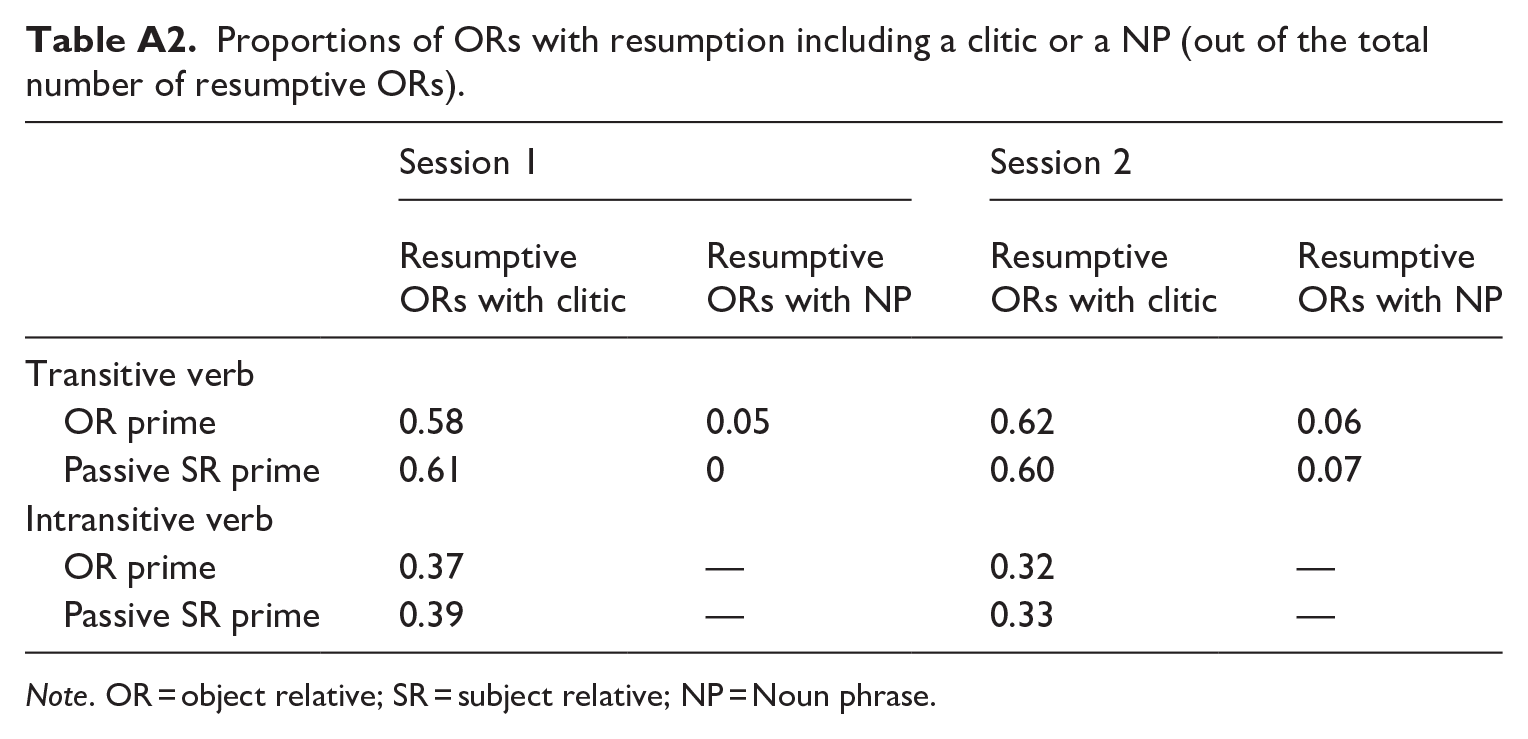
| Session 1 | Session 2 | |||
|---|---|---|---|---|
| Resumptive ORs with clitic | Resumptive ORs with NP | Resumptive ORs with clitic | Resumptive ORs with NP | |
| Transitive verb | ||||
| OR prime | 0.58 | 0.05 | 0.62 | 0.06 |
| Passive SR prime | 0.61 | 0 | 0.60 | 0.07 |
| Intransitive verb | ||||
| OR prime | 0.37 | — | 0.32 | — |
| Passive SR prime | 0.39 | — | 0.33 | — |
Note. OR = object relative; SR = subject relative; NP = Noun phrase.
Author contributions
Funding
The author(s) received no financial support for the research, authorship, and/or publication of this article.
