




Abstract
This article focuses on anti-immigrant attitudes in the three largest receivers of immigrants in Southeast Asia—Malaysia, Singapore, and Thailand. We found that the two dimensions of attitudes we analyzed—attitudes toward immigrants and immigration—have differing predictive power in the three countries, suggesting that they are rooted in distinct local concerns. Overall, the study found that people’s concerns regarding competition for jobs generate negative attitudes. These worries can be traced in each of the three countries, yet they do not always translate into social animosities, something that complicates findings from earlier studies on resentments in the region.
Introduction
This article explores public responses to international migration in selected countries in Asia. International migrations are especially widespread in South and Southeast Asia, with most of the countries being large sources of emigration. Part of these emigrations is directed to the countries outside the region, to destinations in the Global North and the Middle East, while another part is funneled to receiving countries in Southeast Asia (Capaldi, 2023; International Labour Organization (ILO), 2020, 2022), the latter being the focus of this article. 1
In this study, we explore sentiments towards immigrants in the three largest Southeast Asian receiving countries: Thailand, Malaysia, and Singapore. These three countries host a total of more than 10 million migrants, primarily from South and Southeast Asia. 2 Thailand is the largest receiving country in the region in nominal numbers, followed by Singapore and Malaysia. However, Singapore is by far the largest receiver in relative numbers as the foreign-born make up more than 40% of the country’s population. 3
The migrations in Southeast Asia have attracted considerable attention from researchers (Kawasaki and Ikeda, 2020; Yang, 2018; Yeoh and Lam, 2016). A large number of studies focus on migration, integration, and marginalization experiences of migrants in the region, and on public sentiments, and political responses to immigration (Chantavanich and Jayagupta, 2009; Gomes, 2014; Hoffstaedter, 2017; Sunpuwan and Niyomsilpa, 2012; Zhan et al., 2022). Several of these studies have indicated that public attitudes towards immigrants have worsened in recent years (Dirksmeier, 2020; Gomes, 2014; ILO, 2020; Rashid and Saidin, 2023; Yang, 2018; Yang et al., 2017; Yeoh and Lam, 2016). However, it is also acknowledged that there are relatively few comparative quantitative studies that focus on public responses to immigrants and immigration in the receiving countries in the region (Dirksmeier, 2020; ILO, 2020; Kawasaki and Ikeda, 2020).
This study contributes to filling this gap, relying on a statistically representative sample, conducted between 2018 and 2020 as part of the seventh wave of the World Value Survey (WVS). Relying on the WVS, we explore and compare public attitudes towards immigrants in the above-mentioned countries, as well as the predictors of anti-immigrant resentment and xenophobia.
Building on previous studies (Barceló, 2016; Dirksmeier, 2020; Kawasaki and Ikeda, 2020; Tunon and Baruah, 2012) and drawing from more general contributions and relevant theories on anti-immigrant attitudes (Allport, 1954; Bogardus, 1925; Stephan et al., 2016), we assume there to be different attitudes related to immigrants as an outgroup and immigration as a phenomenon. This is because individuals can develop threat perceptions and prejudice at both the group and individual levels (Stephan et al., 2016; Tajfel, 1982). As such, a person may be friendly and positive toward an individual immigrant while still perceiving immigration as a threat to their native group, and may therefore support stricter immigration policies (Tajfel, 1982). To explore this hypothesis, we analyzed two related dimensions in this study: Negative attitudes toward immigration and negative attitudes toward immigrants as a group. To the best of our knowledge, this distinction has not been examined in comparative studies on public attitudes in the region.
Review of related literature
There are two categories of studies that are relevant for this article. The first category includes more general contributions on discussions about attitude and prejudice formation towards immigrants (Allport, 1954; Stephan et al., 2016). The second category includes studies on public attitudes in Southeast Asia, especially those based on surveys in the three countries that we focus on in this article (Dirksmeier, 2020; ILO, 2020; Kawasaki and Ikeda, 2020; Mathews et al., 2021; Tunon and Baruah, 2012).
Among the general contributions to our understanding of attitude formation are studies on intergroup contact and group threat (Allport, 1954; Pettigrew and Tropp, 2006; Semyonov et al., 2008; Stephan et al., 2016). Intergroup contact theory is of relevance for our analysis as it posits that increased contact with minority groups may, under certain conditions, result in a reduction in negative attitudes (Allport, 1954; Pettigrew and Tropp, 2006). This effect is found to be fairly consistent across time periods, groups of people, and social domains such as neighborhoods, schools, and workplaces (see Berg, 2024). This also seems to be the case in Malaysia, Thailand, and Singapore, where previous research has highlighted how individuals who have greater interaction with immigrants also have more positive attitudes towards them (ILO, 2020).
Another pertinent set of theories is intergroup threat theories, which suggest that anti-immigrant sentiments may be linked to different dimensions of threat or concerns (Semyonov et al., 2008; Stephan et al., 2016). The basic premise is that the native majority believes they have a proprietary claim to different aspects of society. Minority groups, such as immigrants, are then perceived as a threat to the majority population’s claim to these privileges, which in turn would develop a sense of prejudice among majority groups towards these minorities (Blumer, 1958). Here, scholars often distinguish between different threat perceptions that are related to immigrants and immigration, such as economic threats, security threats, and cultural threats (Stephan et al., 2016).
Economic threats are often framed as immigrants jeopardizing individuals’ personal economic security (Semyonov et al., 2008; Stephan et al., 2016). However, objective macro measures of economic insecurity are less relevant for attitude formation towards immigrants than how individuals perceive their own economic circumstances (Bell et al., 2023; Semyonov et al., 2008). These trends in attitude formation are also found in Southeast Asia. Dirksmeier (2020), for example, highlighted that Singaporeans’ own perceptions of scarce job opportunities seem to be translated into more prejudice towards immigrants in Singapore, as they may be perceived as economic competitors to the native majority.
Based on threat theory, we therefore hypothesize that individuals in more economically precarious situations—whether subjectively or objectively experienced—will exhibit more negative attitudes toward immigrants and support more restrictive immigration policies, as immigrants may be perceived as economic competitors (Blumer, 1958; Stephan et al., 2016). At this point, it should be mentioned that theoretical discussions on attitudes towards immigrants have traditionally been dominated by studies conducted in Western Europe and North America. These studies explore prevailing determinants of anti-immigrant attitudes, showing, inter alia, that men, elderly people and people with lower education often tend to be more negative towards immigrants than women, younger and more educated individuals (Gorodzeisky and Semyonov, 2009; Scheepers et al., 2002). However, they also indicate significant cross-country variations in the predictive power of these determinants (Bell et al., 2023). It is also important to note that existing theories and debates on migration attitude formation are predominantly based in Western Europe and North America. However, previous research has underscored that findings from these regions may not be directly transferable to other contexts (Bell and Valenta, 2024; Gonnot et al., 2020; Kawasaki and Ikeda, 2020). Expanding the scope of research to include Southeast Asia is therefore a central contribution of this study.
In addition to general theoretical contributions on attitudes towards immigrants, there are several pertinent studies on the attitudes in Southeast Asia, such as Kawasaki and Ikeda’s study (2020), which shows that attitudes towards immigrants are also partly mediated by religion (Kawasaki and Ikeda, 2020). Religion is also in focus in several qualitative studies on the positive role of shared Islamic identity on social relations between immigrants and locals in Malaysia (Hoffstaedter, 2017; Maksum, 2022). 4 This dynamic may mitigate perceptions of symbolic threat toward immigrants in Malaysia, indicating that higher levels of religiosity are associated with greater openness to Muslim immigrants, who constitute the majority of immigration flows to the country (Hoffstaedter, 2017). By contrast, in Singapore, migrant populations are more religiously diverse and often differ from the majority religion of the native-born populations (Liu and Huang, 2022). It can therefore be assumed that religiously devout individuals in the country are more likely to perceive religious outgroups as posing a symbolic threat. This study aims to empirically investigate this hypothesis within a comparative Southeast Asian context, as the relationship between religiosity and in-group or out-group attitude formation in the region is not straightforward (ILO, 2020; Kawasaki and Ikeda, 2020; Mathews et al., 2021).
The surveys conducted in the region by the International Labour Organisation (ILO) also show that overall support for migrant workers has declined in the three countries in the period between 2010 and 2019 (ILO, 2020; Tunon and Baruah, 2012). As already noted, it has also been indicated that the local population who have greater interaction with immigrants have more positive attitudes towards them. Yet, despite the overall levels of contact between locals and immigrants remaining stable in the above-mentioned period, support for immigrant workers has declined (ILO, 2020).
We build on the above-mentioned perspectives and studies, showing that several of the outlined concerns, correlations and trends can be traced in each of the three countries. However, applying our methodological and analytical approach, we also indicate that some of the above-mentioned factors influence attitudes in incongruent and opposite ways than expected, something that complicates findings from earlier studies on resentments in the region.
Methods
This study utilized data from the seventh wave (2017 to 2022) of the World Value Survey (WVS). 5 WVS is a cross-national survey devoted to the academic study of values across the world. The data is a representative comparative social survey which is conducted globally every five years and is considered one of the most authoritative and widely used cross-national surveys within the social sciences.
There are several previous studies on public attitudes towards immigrants in Southeast Asia, which have also relied on the WVS (Barceló, 2016; Dirksmeier, 2020; Kawasaki and Ikeda, 2020). However, only a few studies have distinguished between anti-immigrant attitudes and attitudes toward migration policies, indicating that these attitudes differ (Barceló, 2016; Dirksmeier, 2020). Yet, the possible links between them, as well as the drivers of these differences, remain unclear. Our study contributes to this debate by providing a cross-country analysis of attitudes toward immigrants and immigration in the three largest recipients of labor migrants in Southeast Asia. The WVS data for these three countries consist of approximately 3,800 responses collected as part of the survey’s seventh wave: 1,298 in Malaysia (2018), 1,297 in Singapore (2019–2020), and 1,278 in Thailand (2017–2018). We apply survey weights throughout and foreign-born individuals are excluded from the analysis.
We believe that focused cross-country analysis offers a comparative approach that allows for deeper insights into the concerns underlying anti-immigrant sentiments and attitudes toward immigration policies within specific national contexts. A more focused approach was also used by several other studies in the region (ILO, 2020; Mathews et al., 2021). However, unlike our study, these contributions relied entirely on descriptive statistics in their cross-country comparisons (ILO, 2020) or restricted the more complex and advanced approaches solely to the investigation of determinants of attitudes in Singapore (Dirksmeier, 2020).
We expect it to be a complex difference in attitude formation related to immigrants as an outgroup and immigration as a phenomenon (Allport, 1954; Bogardus, 1925; Stephan et al., 2016). Therefore, we conducted advanced analytical methods in our cross-country analysis, constructing separate logistic regression models that distinguish between anti-immigrant and anti-immigration attitudes. As we are interested in both these attitudes, we apply two different dependent variables. For capturing the societal aspect of anti-immigrant attitudes in the first dependent variable, we used a widely applied social distance question, which explores which outgroups the respondents do not wish to have as neighbors. The respondents are asked the question: “On this list are various groups of people. Could you please mention any that you would not like to have as neighbors?” The respondent is then given a list of different types of outgroups where immigrants or foreign workers are among the groups. 6 The responses were coded so that those who mentioned immigrants or foreign workers were given the value of one, while those who did not mention immigrants or foreign workers were given the value of zero. The question is based on the social distance scale developed by Bogardus (1925) and has often been used to explore attitudes towards immigrants (Dirksmeier, 2020; Hövermann and Messner, 2019). The variable is also used as an independent variable in our analyses on immigration policy preference, as we expect that anti-immigrant individuals would also be likely to want a stricter immigration policy.
The second dependent variable, measuring the immigration policy preference is based on a question that asks the respondents, “How about people from other countries coming here to work. Which one of the following do you think the government should do?” The respondent is then given four different categories to choose between: (1) let anyone come who wants to, (2) let people come as long as there are jobs available, (3) place strict limits on the number of foreigners who can come here, and (4) prohibit people from coming here from other countries. Distribution of these four categories is provided in Figure 1. Thereafter, we recode the variable so that categories one and two indicate preference for an open immigration policy and are given the value of 0. Categories three and four were regarded as indicating a preference for a strict immigration policy and are given the value of 1. There are several reasons for such coding. The first, and probably most important reason, is that to be able to compare attitudes towards immigration with anti-immigrant attitudes, the two variables should be operationalized in the same manner. As our measure of anti-immigrant attitude is dichotomous in the original dataset, we dichotomize our measure of immigration policy preference as well. In addition, the migration policy variable is suitable for dichotomization as two of the categories clearly indicate a more open stance, while two others clearly indicate a more restrictive attitude. Both our dependent variables are therefore treated as dichotomous, and we conduct logistic regression across the three countries.
To get a better understanding of what affects anti-immigrant attitudes and immigration policy preferences, we apply a nested approach, beginning with a bivariate analysis of the relationship between anti-immigrant and immigration policy preferences, before adding socio-demographic variables. The main purpose here is to explore the relationship between our two measures of attitudes toward immigrants and immigration policy. Thereafter, we introduce variables related to threat perceptions, and lastly, we add different cultural and religious variables.
For the regression analyses, odds ratios are applied as coefficients. To get a descriptive overview of the attitudes towards immigrants and immigration, we also use several variables measuring different aspects of migration attitudes. The respondents are given different statements regarding immigration that they may agree with or disagree with. Those who agree with the statements are given the value of 1, while those respondents who disagree or are hard to say are given the value of 0. The four statements we apply to view immigration attitudes are based on whether the respondents agree or disagree with immigration in their country, leading to (1) social conflict, (2) increased unemployment, (3) increased risk of terrorism, and (4) increased crime rates.
Our independent variables used in this study are a combination of commonly used variables within anti-immigrant attitudes and variables that may be particularly relevant within the country contexts. Gender (female = 1, male = 0), age (in years), education (lower, middle, higher), satisfaction with income (1 = dissatisfied, 10 = satisfied), national pride (1 = not at all proud, 4 = very proud) and Rural (0 = Urban, 1 = Rural) are all variables which have previously been found to influence attitudes towards both immigrants and immigration (Dražanová, 2022). As Singapore is a city-state, the residence variable is omitted from the analysis.
We also include two additional scales to measure economic anxiety. While we can hypothesize that individuals who perceived themselves to be at greater economic risk may hold stricter anti-immigrant attitudes, previous research has highlighted how there is often a difference between individuals’ subjective perception to economic conditions and the objective reality of the economic conditions (Heizmann et al., 2018; Kuntz et al., 2017), and how these affect attitudes towards immigrants, we build a scale measuring a more objective reality of the individuals’ economic situation as well as a scale that measures more subjective anxiety about future economic concern.
The objective measure of economic deprivation is a scale we refer to as poverty (1 = living comfortably, 4 = very poor), composed of five variables measuring if the respondent or their family has in the last 12 months: (1) gone without enough food, (2) felt unsafe from crime in your own home, which may indicate whether they live in a deprived neighborhood, (3) gone without needed medicine or treatment, (4) gone without cash income, and (5) gone without a safe shelter. 7 The second scale captures subjective anxiety about future events, asking respondents how concerned they are about the future (1 = not at all worried, 4 = very worried). The scale is made up of two variables asking the respondent how worried they are about (1) not being able to give their future child a good education, and (2) losing their job or not finding a job. 8 We also include a variable measuring if the respondents are worried about a terrorist attack (1 = not worried at all, 4 = very much). All of these variables can be said to measure some form of anxiety and vulnerability for external threats and therefore indirectly explore theoretically induced assumptions that more (economically or security) threatened individuals will also be more sceptical of immigrants and immigration (Blumer, 1958; Stephan et al., 2016).
We also include variables measuring immigration-related concerns as an independent variable for our analysis on immigration policy attitudes. These variables measure if the respondent supports employers giving priority to natives when jobs are scarce (1 = strongly disagree, 5 = strongly agree). This variable examines the hypothesis that perceived economic threats to the native population—such as concerns about labor market competition with migrants—are key drivers of stronger support for more restrictive immigration policies. According to this hypothesis, individuals who strongly agree with prioritizing native-born workers are more likely to support stricter immigration policies. 9
While findings on the effects of religion and religiosity on immigration attitudes remain mixed, we previously highlighted their potential significance within the Southeast Asian context. We therefore have two measures of religion. The first asks the respondents how important God is in their lives (1 = not at all important, 10 = very important), while the latter asks the respondents if the only acceptable religion is their own (1 = strongly disagree, 4 = strongly agree). Although the second measure does not directly assess the respondent’s religiosity, it is relevant to our study as it captures religious exclusivity, which may influence the respondents’ attitudes towards immigrants who are affiliated with other religions. 10
Last but not least, it is important to acknowledge that, as with most studies on attitudes toward immigrants and immigration, the results may be influenced by social desirability bias—that is, respondents may conceal their true attitudes and instead provide responses they believe are socially acceptable. This potential limitation should be carefully considered when interpreting the findings.
Results
Public attitudes in Thailand, Singapore and Malaysia: Descriptive statistics
We commence our analysis by outlining sentiments toward immigration in Thailand, Singapore, and Malaysia. Data presented in Figure 1 show generally restrictive attitudes toward immigration in the three countries, with the majority of respondents favoring strict immigration policies. The differences between the countries seem to be rather small, with respondents from Thailand exhibiting a bit more permissive attitude than respondents from Singapore and Malaysia. In general, very few respondents support either completely free immigration or a complete ban on it (except for almost 15% of Thai respondents supporting free immigration). Sentiments towards immigration.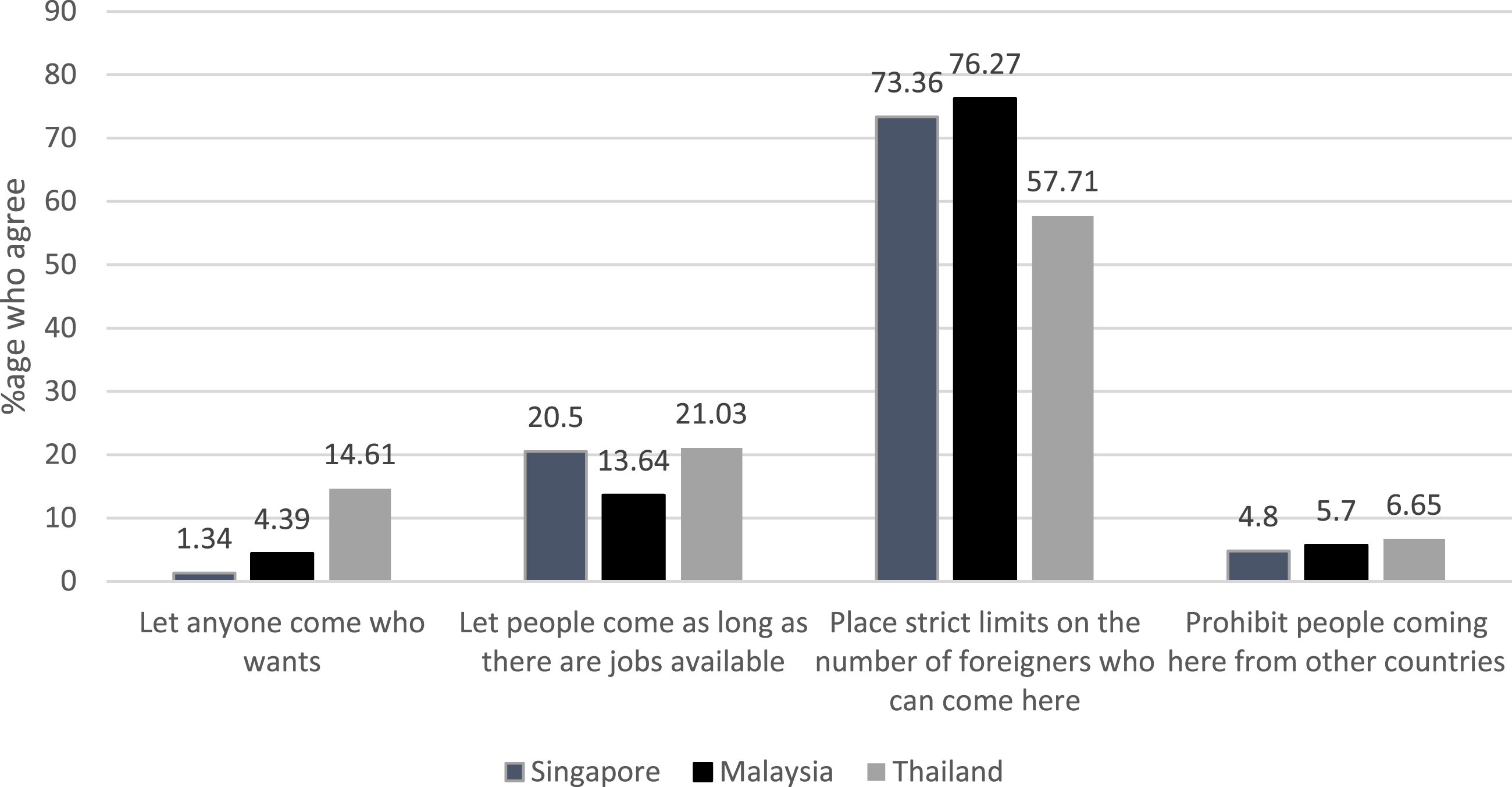
It is relevant for us to investigate the underlying sentiments that trigger the prevailing attitudes to restrict immigration, and the previous research and theories instruct us that they may be related to a social realm, economic concerns, or various perceptions of threat (ILO, 2020; Kunovich, 2017). As we may see in Figure 2, although the vast majority of Singaporeans wish to place a strong limit on immigration, they seem to be the least sceptical about having immigrants as neighbors, compared to the respondents in the two other countries. Malaysians appear as the most concerned with the negative consequences of immigration, and anti-immigrant scepticism seems indeed to be most widespread in Malaysia. Nevertheless, it seems that the attitudes among populations in the three countries are built on different concerns and perceptions of threat, which confirms trends found in some previous studies (ILO, 2020; Mathews et al., 2021). A large proportion of the population in Malaysia seems to perceive migration as a threat at several levels as they agree that immigration increases social conflict and unemployment, and that it leads to increased risk of terrorism and especially crime. We may observe similar concerns in Thailand, although less widespread, and even less in Singapore. Migration leads to social conflict, unemployment, terrorism and crime.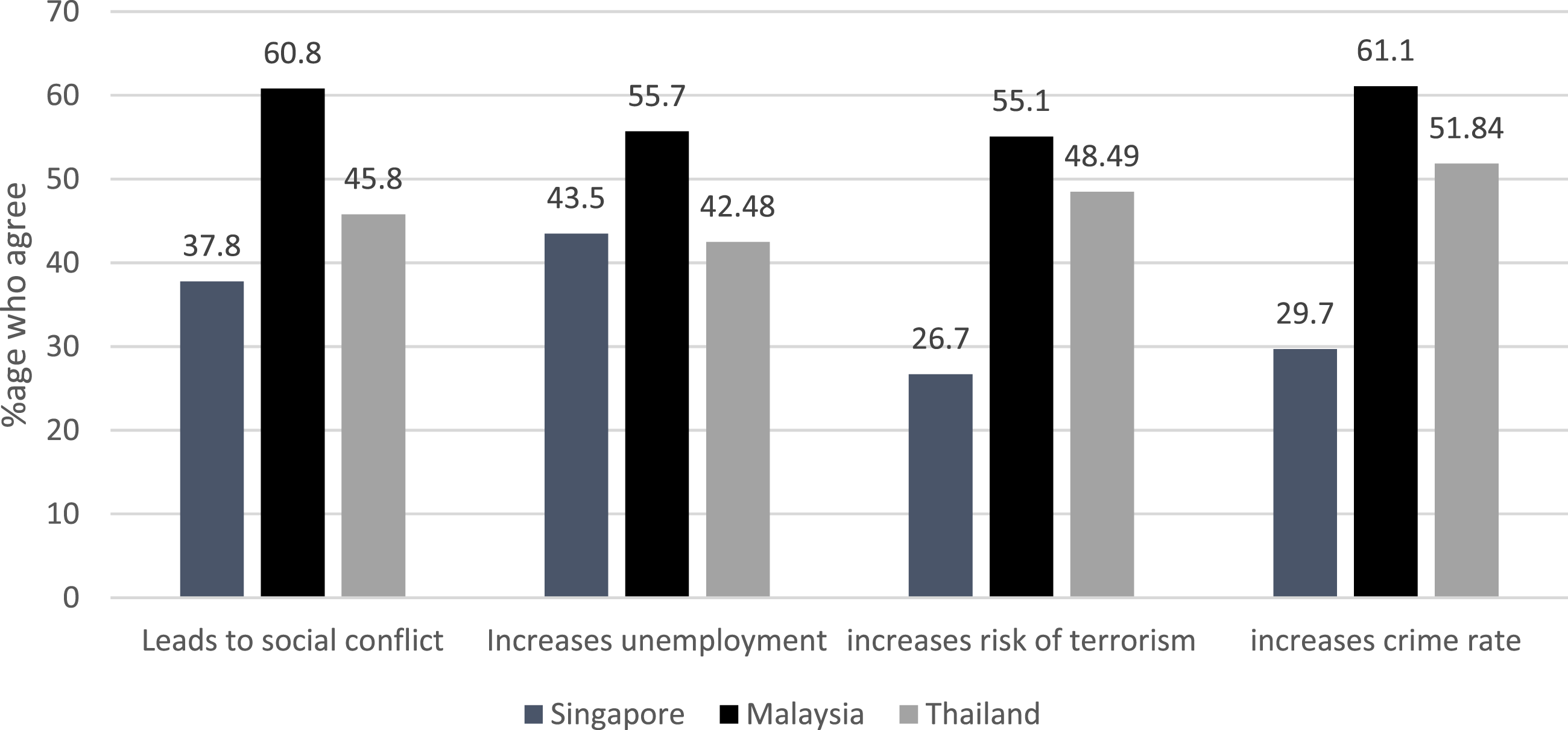
As we may see from Figure 2, the immigration concerns related to increased conflicts, terrorism, and crime are the least widespread among Singaporeans.
11
Singaporeans seem to be primarily preoccupied with economic concerns such as the increase in unemployment and social conflict. We turn now to the social distance-related attitudes and how they reflect on the attitudes towards having various outgroups as neighbors. These are presented in Figure 3. The attitudes related to the social realm differ a lot, yet there are also some similarities we may trace across the three countries. On the one hand, the most widespread is the scepticism towards immigrants in all three countries compared with other comparable outgroups such as people of different races, religions, and languages. On the other hand, we see large differences regarding how widespread the negative attitudes are towards having immigrant neighbors. Sentiments towards immigrants: Who do you not want as neighbors?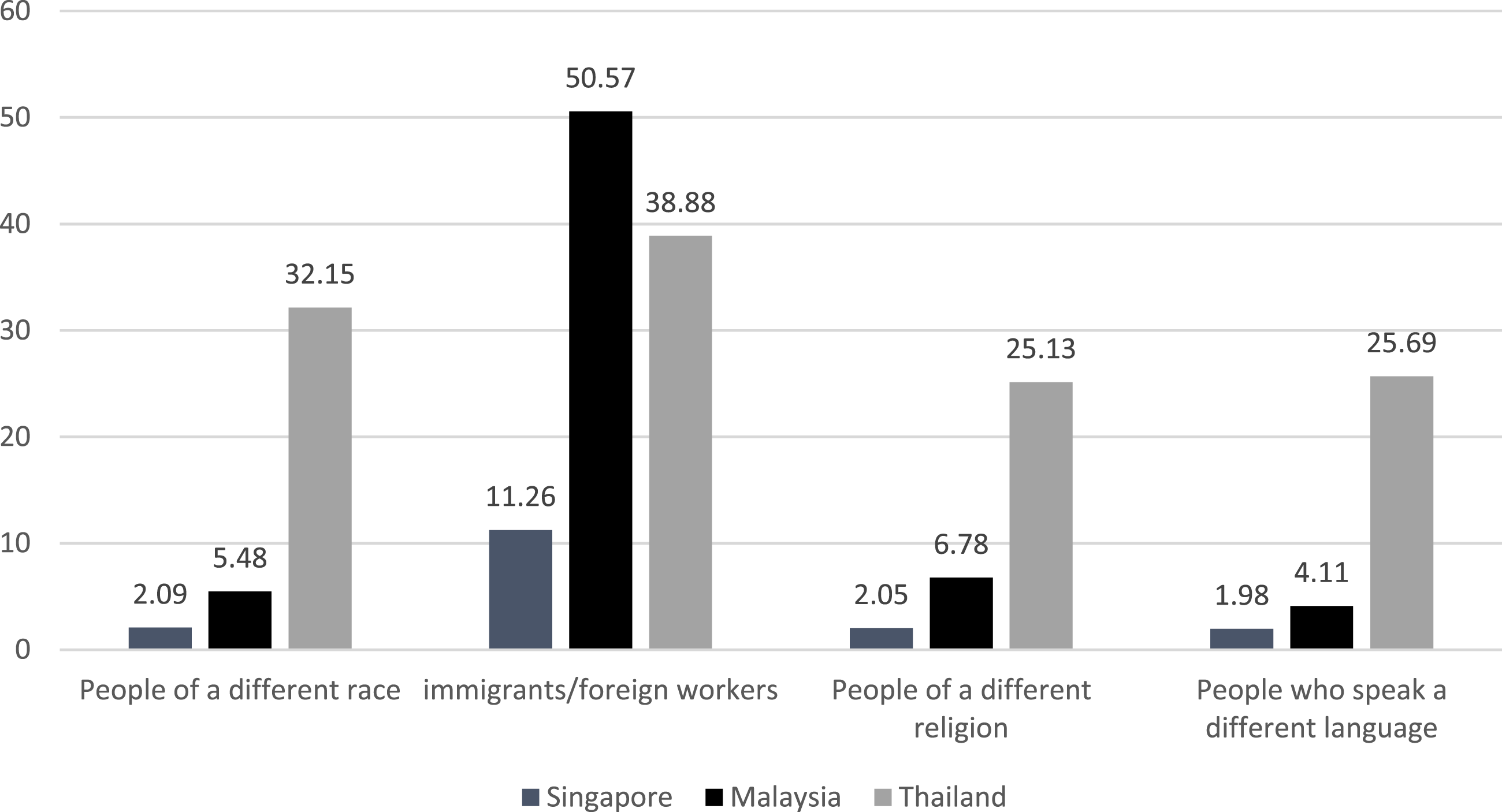
As we may see in Figure 3, the people in Malaysia are clearly the most negative about having immigrants as neighbors. Immigrant neighbors are the least desirable also in Singapore and Thailand, compared to all other groups in the figure. We may also observe that there is relatively widespread scepticism in Thailand, also towards other racial, religious, and linguistic groups, while in Singapore and Malaysia, scepticism towards other minority groups is limited to a few percentage points.
Singapore stands out as the country where the skepticism towards immigrant neighbors is least widespread. However, it seems that such anti-immigrant attitudes were much more widespread in Singapore earlier. Dirksmeier (2020), who based his analysis on an earlier wave of WVS, conducted in 2012, found that about 38% of Singaporean residents did not accept immigrants as neighbors. As we may see from Figure 3, such attitudes have in recent years shrunken to 11%. 12
To summarize, the majority of respondents from all three countries support restrictive immigration policies (as shown in Figure 1), with Thai respondents being somewhat less restrictive than respondents from Malaysia and Singapore. From Figure 2, we saw that significant proportions of respondents view immigration as a source of social, economic, and security threats. Here, respondents from Singapore tend to be least concerned about these threats. Finally, Figure 3 demonstrates that immigrants are clearly the least accepted minority group in all three countries, but there are large differences between the countries. More than 50% of Malay, almost 40% of Thai, but only about 11% of Singaporean respondents expressed anti-immigrant attitudes.
Multiple structural and historical factors may influence the observed variations, including cross-country differences in migration and inclusion regimes (Noor and Leong, 2013; Rahman and Kiong, 2013). For example, in Singapore’s highly stratified migration system, temporary low-skilled migrants often reside in dormitories or in neighborhoods segregated from local communities (Liu and Huang, 2022). In contrast, skilled and highly skilled expatriates—who also make up a significant portion of the migrant population—tend to reside in affluent local neighborhoods, becoming long-term neighbors to Singaporean citizens. On the one hand, this combination of ethno-class segregation and class-based geographical integration may positively influence locals’ attitudes toward potential immigrant neighbors. On the other hand, while highly skilled migrants may be welcomed as neighbors, they are also often perceived as strong competitors in the labor market (Yeoh and Lam, 2016). This dual perception may help explain the consistently high level of public support for strict migration policies in the country. These and other structural and systemic differences between the three countries will be explored in greater depth later in the article. Before turning to that discussion, however, we proceed with our analysis. In the next section, the analysis examines in more detail the general impressions regarding the above-outlined variations in attitudes.
Regression analysis of determinants of anti-immigrant and anti-immigration attitudes
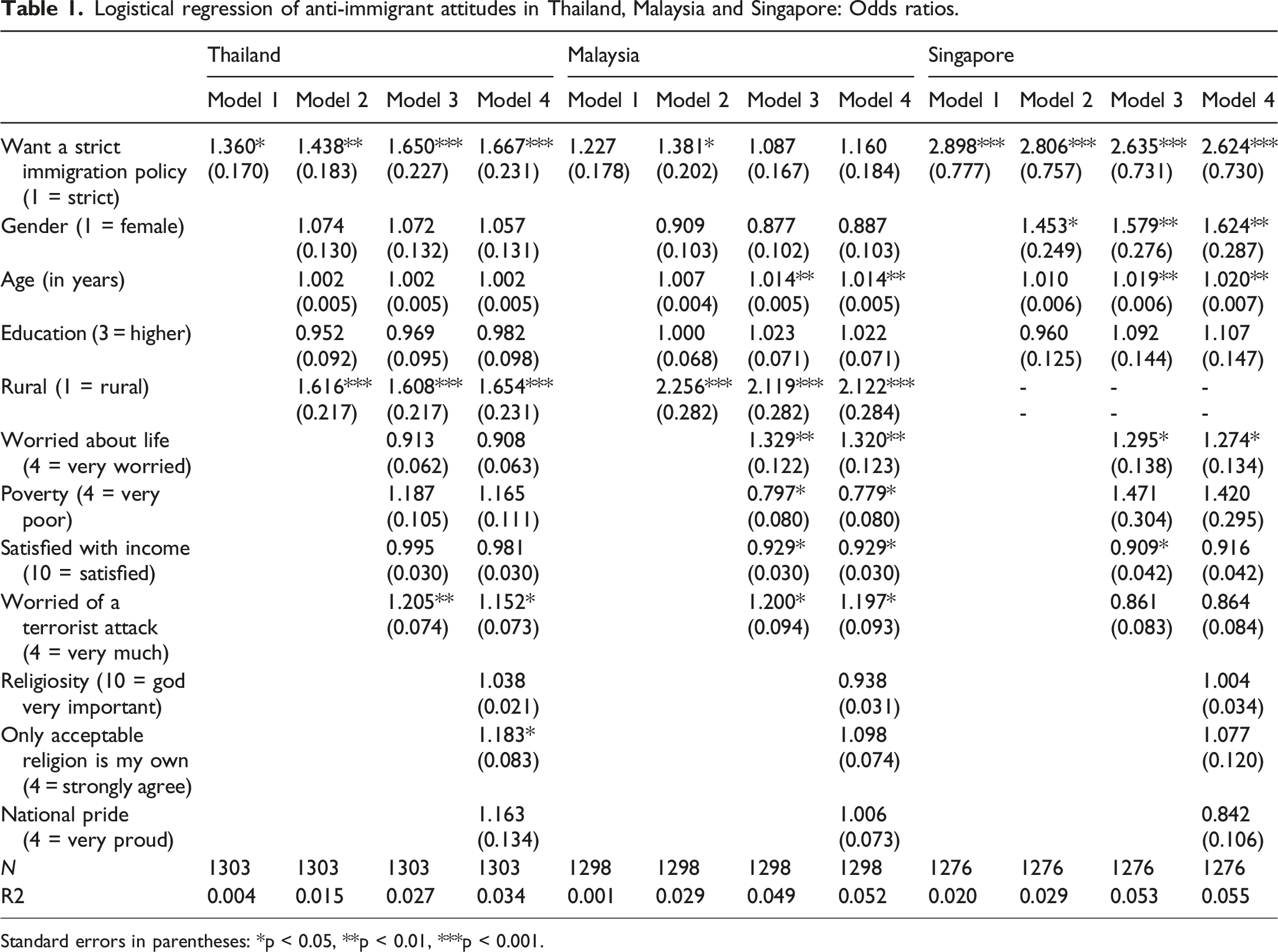
Logistical regression of anti-immigrant attitudes in Thailand, Malaysia and Singapore: Odds ratios.
Standard errors in parentheses: *p < 0.05, **p < 0.01, ***p < 0.001.
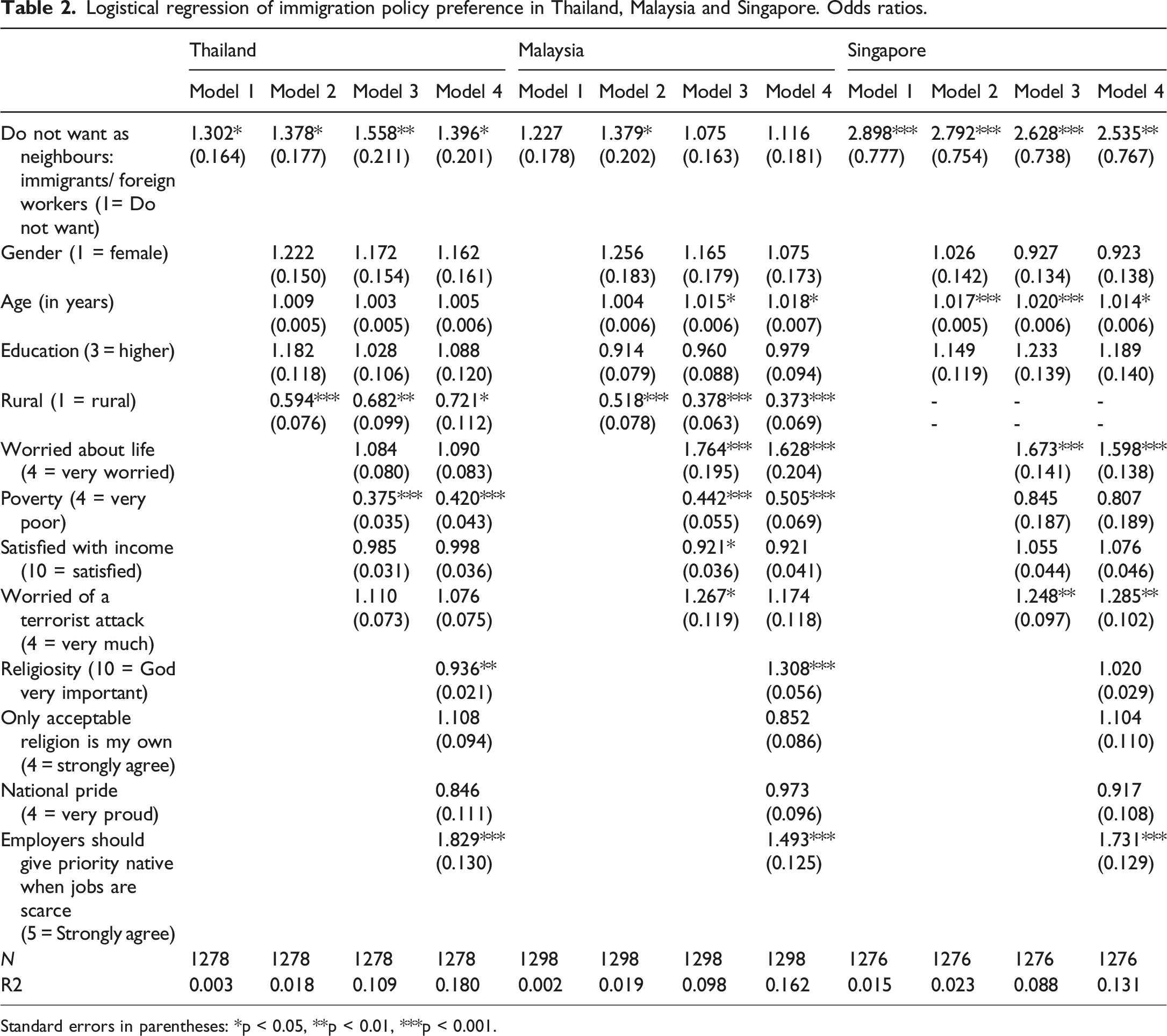
Logistical regression of immigration policy preference in Thailand, Malaysia and Singapore. Odds ratios.
Standard errors in parentheses: *p < 0.05, **p < 0.01, ***p < 0.001.
In Table 1, we included the statement “Employers should give priority to native people when jobs are scarce” as an independent variable to explore a potential correlation between economic concerns—specifically competition in the labor market—and anti-immigrant sentiments. In Table 2, we added the variable “Do not want immigrants or foreign workers as neighbors” as an independent variable to explore possible links between social animosities and inclination towards strict immigration policies. The variable “Employers should give priority to native people when jobs are scarce” is omitted in Table 2, as we found that it correlated suspiciously strongly with the dependent variable “Strict immigration policy.” However, the effects of economic concerns on anti-immigrant attitudes are also explored in Table 2 via the poverty variable and the variable on worries about life, which includes the anxiety regarding job loss.
As can be seen from the regression analyses (see Tables 1 and 2), several of the background variables that usually have predictive power in Europe are not significant determinants in our models, or even have an opposite effect from those we find in Europe. Results for Table 1 show that it is not men, but women who are more negative towards having immigrant neighbors in Singapore, while gender does not have any effect on such anti-immigrant sentiments in Thailand and Malaysia. Furthermore, the regression results presented in Table 2 indicate that gender does not have a statistically significant effect on attitudes toward strict immigration policies in any of the three East Asian countries. Similarly, the regression analyses across the tables suggest that educational attainment does not significantly influence anti-immigrant attitudes or anti-immigration sentiments in these countries. Our models also show that negative attitudes are more widespread among older individuals in Singapore and Malaysia than among younger people. Age does not affect anti-immigrant attitudes and anti-immigration sentiments in Thailand.
The ILO’s survey showed that 58% of respondents in Thailand, 68% in Malaysia, and 53% in Singapore believe that immigrants threaten their culture and heritage (ILO, 2020: 26). This prompted us to investigate closely related value variables such as the sense of national pride and religiosity. Interestingly, national pride does not affect attitudes towards immigrants and immigration in any of the three countries, while religiosity has strong effects in Thailand and Malaysia. These effects may be linked to concerns related to their culture and heritage, thereby confirming findings from the ILO’s survey in a way (ILO, 2020). However, a closer scrutiny of the effects of religiosity confirms that these attitudes have more complex effects (See also Kawasaki and Ikeda, 2020). Table 1 indicates that religious people in Malaysia have a more positive inclination towards having immigrant neighbors, while religious people in Thailand are sceptical towards immigrant neighbors.
Most immigrants in Malaysia are Muslims, and Malaysia is predominantly a Muslim country. On one hand, these findings from Malaysia seem to confirm findings from previous qualitative studies, which discuss the positive role of sharing the same religion on relations towards immigrants in the country (Maksum, 2022). On the other hand, the rejection of having immigrant neighbors is most widespread in Malaysia (recall Figure 3). Furthermore, when it comes to attitudes towards strict immigration, the effect of religiosity is even opposite, as the most religious people in Malaysia are actually strong proponents of strict immigration policies.
In Thailand, scepticism towards having neighbors of a different religion is more widespread than in Malaysia and Singapore (recall Figure 3). Furthermore, the religious exclusivity variable has no significant effect on anti-immigrant and anti-immigration attitudes, except for its influence on attitudes towards immigrant neighbors in Thailand. Interestingly, religious people in Thailand are sceptical towards immigrant neighbors, but they are against strict immigration policies, which adds to the complexity of religiosity as an incongruous determinant of the aforementioned attitudes.
Our analysis also shows incongruences regarding other determinants of anti-immigrant and anti-immigration attitudes in Tables 1 and 2, among others, the disparities in sentiments among the rural and urban populations. There are no real rural areas in Singapore, which is a city-state, while in Thailand and Malaysia, we find interesting disparities in effects. On one hand, Table 1 indicates that people in rural parts of Thailand and Malaysia are more sceptical about having immigrants as neighbors than the urban population. On the other hand, Table 2, on immigration policies, shows that the urban population is more inclined towards curbing immigration than the rural population in the two countries.
Aligning with previous research (ILO, 2020; International Organization for Migration [IOM], 2023; Pholphirul and Rukumnuaykit, 2010), one may relate the above-mentioned findings to probable differences in possibilities for intergroup contact, as well as different concerns regarding competition with migrants in urban and rural settings. Arguably, resentment related to competition for jobs, services, overcrowding and housing in urban settings (Gomes, 2014; Tunon and Baruah, 2012) is opposed here to more general, social distance-related scepticism as well as the increased dependence on foreign labor in rural areas. Previous studies show that the largest part of immigration to Thailand and Malaysia is directed to urban areas, yet there is also substantial immigration to rural areas (ILO, 2022; IOM, 2023). Rural parts of the two countries absorb large numbers of low-skilled labor migrants, as there is a high dependency on low-skilled, and often irregular foreign workers in sugarcane, maize (corn), rubber and palm oil plantations and other labor-intensive parts of the agricultural sector (ILO, 2022; Pholphirul and Rukumnuaykit, 2010). While the rural population does not want immigrants as neighbors, it nevertheless seems that they recognize that a stricter migration policy will curtail access to cheap foreign labor, which, according to several sources, local rural communities largely depend on (ILO, 2021; IOM, 2023).
Exploration of the economic determinants of public attitudes also indicates that we should distinguish between attitudes towards immigrants and immigration policies. It seems that severe poverty does not hurt attitudes towards having immigrant neighbors in Malaysia and Thailand, but it has strong predictive power regarding the inclination towards strict immigration policies. In Singapore, poverty does not have any effect on anti-immigrant and anti-immigration attitudes, while in Malaysia, poor people are actually more positive towards having immigrant neighbors. Previous research on social closure in Malaysia identifies strong forces that have maintained the spatial separation of lower classes and migrants from wealthier parts of the Malaysian population (Tedong et al., 2014a). Arguably, the poorest population in Malaysia is, due to segregation in the same areas, more likely to have immigrant neighbors. Building on contact theory, we may assume that contacts with them would contribute to reducing anti-immigrant attitudes and fear of foreigners, otherwise found in Malaysian society (Tedong et al., 2014b). Some sources imply that such factors may indeed be at play, particularly in cases of interaction with immigrants who are perceived as culturally and religiously close compared to those seen as culturally distant and allegedly involved in immoral activities (Lim, 2020; Maksum, 2022).
We have also explored worries about life, which, as mentioned earlier, include respondents’ anxiety regarding losing a job and their children’s education. These worries have strong effects on anti-immigrant attitudes and anti-immigration sentiments in Singapore and Malaysia. However, in Malaysia and Thailand, anti-immigrant attitudes also seem to be linked to economic and security concerns, where people who worry about terrorist attacks and competition with migrants for jobs are more likely to hold anti-immigrant attitudes regarding immigrant neighbors. We do not find any such links between economic and security concerns and worries and anti-immigrant attitudes in Singapore. A closer analysis of developments in the attitudes in Singapore shows that public sentiments regarding employers giving priority to natives when jobs are scarce have increased in Singapore in the period 2012-2020. However, as already noted, the share of people in Singapore who do not want migrants as neighbors has plummeted in the same period, which may strengthen the argument that anti-immigration attitudes are not generated by social animosities, but by other, competition-related concerns.
The general impression in this study is that perceptions of threat seem to be more pronounced regarding inclinations toward strict immigration policies than rejection of neighbors. This is especially the case in Singapore, where there are no links between worries regarding terrorism and rejection of neighbors, while such concerns predict inclination towards strict immigration policies. 13 Furthermore, as we may see in Table 2, worries about jobs become a stronger predictor of anti-immigration sentiments than in the first model. Overall, the regression analyses imply that Singaporeans who harbor anti-immigration attitudes do not necessarily build them on anti-immigrant attitudes. Their anti-immigration sentiments may be rather linked to their job competition concerns and security concerns. As we may see in Table 2, individuals who have negative attitudes towards immigrants in Singapore are also more prone to be for strict immigration policies. On the other hand, Table 1 indicates that Singaporeans who are for strict migration policies do not necessarily harbor negative social attitudes towards immigrants. Still, we should note how in our model, across all the countries in both tables, the R2 is remarkably low. This suggests that policy preference alone accounts for very little of the variance in anti-immigrant attitudes, and vice versa. Instead, it appears the threat perceptions and cultural variables play a more substantial role in shaping both anti-immigrant and preferences for immigration policy.
Further exploration of the explanatory power of our regression analyses, represented by R2 indicates that the variables in the models are better at explaining preferences for immigration policies, rather than anti-immigrant attitudes in the three countries. This is not in itself that surprising, as other studies have also highlighted low explanatory power regarding predictors of anti-immigrant attitudes outside of Western European studies (Gonnot et al., 2020; Kawasaki and Ikeda, 2020). Nevertheless, it is also acknowledged that there is a need for further, more detailed studies on predictors of anti-immigrant attitudes in the region.
Discussion and conclusion
Several countries in Southeast Asia have become significant receivers of immigrants from South and Southeast Asia as their economies are highly dependent on immigration to mitigate shortages in the labor force. However, few quantitative studies explore public attitudes towards immigrants in the region. To fill this gap, we have explored in this study the attitudes toward immigrants and immigration in the three largest recipients of immigrants in Southeast Asia: Singapore, Thailand, and Malaysia. Investigation of the general trend in these attitudes indicates that Singaporeans seem to be the least sceptical towards immigrants, and Malaysians the most xenophobic. Thailand is somewhere in between. Singaporeans are clearly the least xenophobic within the social realm, where only a minority rejects immigrant neighbors. However, the majority of Singaporeans wish to place a strong limit on immigration, and such sentiments are stronger in Singapore than they are in Thailand, but they are less widespread than in Malaysia. We have also found that people in Malaysia and Thailand hold strong scepticism both towards immigrants and immigration, linking them to a variety of economic, criminality and terrorism-related concerns, while in Singapore, the scepticism is mostly related to immigration policies.
The aforementioned findings are consistent with prior research that has utilized different methodologies to investigate attitudes toward immigrants in Asia. However, by employing a distinct set of variables to assess negative attitudes, this study further contributes to refining and expanding earlier debates on public sentiment. In particular, it reveals that variables frequently identified as significant predictors of anti-immigrant attitudes in European contexts—such as gender, age, and, most notably, education—do not consistently demonstrate the same predictive strength within the Asian context (Kawasaki and Ikeda, 2020). We found that their effects, as in the case of gender effects in Singapore, may even be opposite to the effects we usually find in European studies on attitudes towards migration (Gorodzeisky and Semyonov, 2009; Scheepers et al., 2002). The study is also confirming that the attitudes in the region are mediated by religion (Hoffstaedter, 2017; Kawasaki and Ikeda, 2020; Maksum, 2022). Yet, our findings contribute to complicate the debate, showing that religiosity strongly affects anti-immigrant and anti-immigration attitudes in Thailand and Malaysia, but in complex, opposite and incongruent ways. Furthermore, it is maintained that public attitudes toward immigrants and immigration differ significantly in rural and urban parts of the countries.
With regard to the rural-urban divide in public sentiment, it should be noted that Singapore is a city-state, but we may trace such variations in the anti-immigrant and anti-immigration sentiments in Thailand and Malaysia. We found that people in rural parts of these two countries are more sceptical towards immigrant neighbors than their urban population. However, people in rural areas are less inclined towards curbing immigration than the city population. It seems that the rural population recognizes that their communities’ livelihoods depend on immigration to meet labor shortages in labor-intensive agriculture and farming, which, according to previous research, do not attract locals, being stigmatized and poorly paid (ILO, 2021; IOM, 2023).
Overall, this study supports arguments from earlier studies in the region that people’s concerns regarding competition and worries for jobs generate negative attitudes. They may be traced in each of the countries. Yet, it seems that these concerns do not always translate into social animosities, which contributes to discussions on resentments in the region (Dirksmeier, 2020; Lynn-Ee and Kathiravelu, 2022; Mathews et al., 2021; Zhan et al., 2022). This is prevalent in Singapore, where Singaporeans worry about competition for jobs with immigrants, which is producing worries and inclinations towards strict migration policies. 14 On the other hand, we have found that Singaporeans who want a strict immigration policy do not necessarily harbor strong anti-immigrant sentiments.
On a more general note, this study also seems to confirm, at least indirectly, that contact matters (Allport, 1954; Pettigrew and Tropp, 2006; Sunpuwan and Niyomsilpa, 2012), as we may observe that there are the most positive attitudes towards immigrants in Singapore, the country with by far the largest proportion of immigrants in its total population. In Thailand and Malaysia, the migrant stocks consist of millions of foreign-born people, but these migrants still only make up less than 10% of the countries’ total population (Capaldi, 2023; Harkins, 2019; ILO, 2020, 2022). In comparison, almost half of Singapore’s population is foreign-born, living close to the native-born neighbors in a densely populated city-state. It is not difficult to picture that in such a context, there would be a higher opportunity for dense social contacts and the development of social relations between the locals and immigrants than in the two other countries. Nonetheless, it is important to emphasize that broader contextual factors also shape public attitudes, particularly the legal status of migrants (Barber and Sciortino, 2024; Chin, 2017). For instance, people tend to be more sceptical of undocumented migrants, and widespread irregular migration often fuels public concern and political debate. In this regard, Singapore’s migration regime differs significantly from those of Thailand and Malaysia. Migration to Singapore is sizable, but tightly regulated and predominantly legal. The system is highly stratified, distinguishing between large inflows of high-skilled migrants—who may be eligible for permanent settlement—and low-skilled temporary labor migrants, who are granted only limited rights and mobility (Dirksmeier, 2020; Liu and Huang, 2022; Noor and Leong, 2013; Rahman and Kiong, 2013). By contrast, both Malaysia and Thailand experience substantial inflows of irregular low-skilled migrants from neighboring countries. These flows are often managed through ad hoc regularization programs, which have contributed to public debates about the perceived mismanagement of migration and the view that migration is out of control, posing a potential security threat (Barber and Sciortino, 2024; Chin, 2017; Sunpuwan and Niyomsilpa, 2012).
We should also consider the specificities in the historical and political contexts of the three countries, among others, their differences in the management of racial, religious, linguistic, and cultural diversity. In Thailand and Malaysia, the management of cultural and ethnic diversity was either not on the political agenda or was being addressed, focusing on the politics of ethnic, linguistic and religious difference (Noor and Leong, 2013; Yoko, 2006). In contrast, being a more ethnically, racially, and religiously heterogeneous country, Singapore’s version of multiculturalism is indeed distinct, being based, as Noor and Leong (2013) point out, on “the firm belief that a tolerant and inclusive society can be fostered without incurring the racial rhetoric seen in its northern neighbor” (Noor and Leong, 2013: 717). Indeed, since its inception, it has been stressed by political elites in Singapore that social inclusion, multiculturalism, and diversity policies are of the highest importance for a prosperous and stable state (Liu and Huang, 2022; Noor and Leong, 2013). Although there are growing concerns about immigration policies and economic competition, this still seems to contribute to a more favorable context for societal reception, as well as the attitudes towards immigrants that we have observed in this study.
Footnotes
Funding
The authors received no financial support for the research, authorship, and/or publication of this article.
Declaration of conflicting interests
The authors declared no potential conflicts of interest with respect to the research, authorship, and/or publication of this article.