




Abstract
The COVID-19 pandemic significantly affected the world and work in particular, but its effects on the labor market were not evenly distributed. Seafarers, who are essential workers engaging in international maritime transport, encountered exacerbated challenges to labor conditions at sea during the pandemic. Notably, the inability to conduct crew changes violated their right to rest, increasing the risk of fatigue-related safety accidents at sea. Additionally, the precarious nature of maritime employment relationships delayed seafarers waiting to enlist on the vessels, creating extended financial hardship ashore. Socio-legal analysis revealed how the pandemic, related public health measures and precarious employment heightened the vulnerability of seafarers during the pandemic. Applying the Pressure, Disorganization and Regulatory Failure model and supported by qualitative data collected through a policy review, media coverage analysis and semi-structured interviews, we identified how seafarers’ health and safety rights were significantly compromised during the pandemic. Even though various initiatives were raised by international governmental and non-governmental organizations to address the “humanitarian crisis” at sea, maritime labor regulatory failures were not effectively addressed throughout the multiple waves of the pandemic.
Keywords
Introduction
The implementation of administrative controls in response to the COVID-19 pandemic restricted human mobility to impede the transmission of the disease (Oh et al., 2021; Ren et al., 2020). Essential workers in health care services, transportation sectors, and food and agriculture sectors confronted psychosocial hazards arising from restrictions that included lockdowns, quarantine and uncertain access to COVID-19 testing (Côté et al., 2021; Hammonds et al., 2020). Greater risks of morbidity and mortality attributed to COVID-19 infections were further encountered by many essential workers (McNamara et al., 2021). Insecure employment standards, namely, precarious employment, added a layer of vulnerability experienced by the many essential workers globally represented by a migrant labor force. 1 Precariously employed migrant workers were particularly vulnerable to burdens associated with the pandemic due to unpredictable contract durations, lack of social support, inequitable access to health support at home and abroad, and fragmented employment relationships (Kalleberg, 2018; Nanda, 2020; Ori and Sargeant, 2013; Ornstein, 2021). Mental health deterioration was also linked to the declined rates of employment security associated with the pandemic 2 (ILO, 2022a; McNamara et al., 2021).
Under pre-pandemic circumstances, invisibility and employment insecurity together contributed to the under-protection of migrant workers’ health and safety rights. Migrant workers also encountered diminished health and safety protection such as the lack of sanitary housing conditions, unavailable personal protective equipment (PPE), limited communications regarding the COVID-19 virus and restricted access to health care (Alahmad et al., 2020; Côté et al., 2021; Koh et al., 2020; Tutor Marcom et al., 2020). The shipping industry, a recognized essential service, also heavily relies on transnational migrant workers employed through both regulated and unregulated recruitment agencies (Borovnik, 2004; McNamara et al., 2021; Sampson, 2003). Seafarers, central to the logistical operations that support international trade, reported severe and involuntary personal and health sacrifices throughout the pandemic (UNCTAD, 2021). However, few studies have systematically analyzed how pandemic responses have compromised the rights of precariously employed migrant workers, particularly those of seafarers who were largely invisible to public scrutiny.
The pandemic has exerted an overarching and additive impact on the economic and reward pressures influencing occupational health and safety (OHS) globally. Moreover, the power differential attributed to the hierarchical organizational structure in the shipping industry and the precarious employment relationships of migrant workers warrants scrutiny. Quinlan and Bohle (2009) constructed the Pressure, Disorganization and Regulatory Failure (PDR) model, a multi-dimensional theoretical framework, to illustrate how economic pressures, workplace disorganization and limited regulatory enforcement have contributed to the poor health and safety outcomes reported among precariously employed workers (Quinlan and Bohle, 2004, 2009; Underhill and Quinlan, 2011). This study aims to analyze if and how precarious maritime employment relationships obstructed the effective protection of seafarers during the pandemic, and how the implementation of public health measures, including travel restrictions and quarantine requirements, created additional obstacles for seafarers to exercise their OHS rights. The in-depth critique of precarious employment relationships interpreted the OHS challenges experienced by seafarers during the COVID-19 pandemic through the PDR model and explained how the factors of pressure, disorganization and regulatory failures left seafarers in an unprecedented OHS crisis.
This paper is divided into the following sections: A brief background on occupational hazards at sea, and seafarers’ health and safety crisis during the pandemic; how the PDR model illustrates poor OHS outcomes within global shipping that arise from precarious employment relationships; the methods adopted in this research; the findings from the analysis of international policy directed at maritime health and safety challenges during the pandemic; findings from the semi-structured interviews and media analysis, including the poor OHS outcomes suffered by international seafarers arising from precarious employment; and lastly, the discussion of findings and conclusion.
Occupational hazards at sea, and seafarers’ health and safety crisis during the COVID-19 pandemic
The shipping industry is a key pillar of global supply chains, distributing roughly 80 percent of global commodities (UNCTAD, 2021). Crewing agencies and ship operators coordinate the transnational employment of roughly 1.9 million seafarers (ICS, 2022) who work on international fleets (BIMCO and ICS, 2021; Walters and Bailey, 2013). Despite the application of the Maritime Labour Convention (MLC) (MLC, 2006) to advocate for welfare facilities and to address seafarers’ rights to health and safety, the industry continues to report high injury and fatality incidence rates (ILO, 2022a, 2022b). These include environmental hazards at sea, dangerous and poorly maintained machinery, prolonged periods of isolation, prolonged absence from home, psychosocial abuse, long working hours and confined spaces (IIOSH et al., 2000; Lefkowitz, 2013; Shan, 2022; Shan and Neis, 2020). Maximized efficiency and economic yield in the shipping industry have normalized the intensive shift rotations that often involve occupational activities seven days a week and minimal rest between shifts with little consideration of the subsequent fatigue manifesting as physical and psychosocial occupational hazards (Shan and Neis, 2020; Zhao et al., 2023). Seafarers, furthermore, lack global recognition as essential workers, being disregarded as a labor supply chain issue rather than as an occupational cohort vulnerable to a humanitarian crisis (Borovnik, 2024).
Predictably, OHS challenges linked to equipment or engineering operations were minimally affected by the pandemic, but OHS standards linked to onboard labor processes and commuting to and from the vessel were severely impacted. Public health restrictions imposed by port States in response to the pandemic and varying managerial responses by shipowners or crewing agencies directly impacted compliance with the MLC standards, including access to shore leave, in-person medical assistance, crew change and access to airports for repatriation (Banta and Pratt, 2023; Brooks and Greenberg, 2022; Lucas et al., 2021; Shan, 2022; Slišković, 2020). The above studies further illustrated the impact of COVID-19 and related policies on risk of onboard infection, discrimination, mental health and workplace tensions.
Multiple maritime States—broadly defined as the labor supply State, port State and flag State 3 —disjointedly coordinated seafarer welfare and OHS provisions during the pandemic. Travel restrictions imposed by labor supply States restricted the re-entry of its own citizens and the mobilization of replacement seafarers who were left without wages (ICS 2020; UN News, 2021). Additionally, inequitable distribution of PPE and vaccines limited the mobilization of health-protective tools among migrant workers, increasing the risk of infection and further hindering travel easements. Timely repatriation, as stipulated by the MLC, is just one example of regulatory standards neglected by the responsible port and flag States, resulting in hundreds of thousands of seafarers stranded on vessels or at home during the crescendo of the crew change crisis (ILO, 2021a; IMO, 2022a, 2022b). The effects of prolonged contracts, such as exhaustion, fatigue, anxiety, depression and mental distress on the safety of seafarers and safe vessel operations were repeatedly flagged by the International Maritime Organization (IMO) and International Labour Organization (ILO) (IMO, 2022a), and the complexity of OHS challenges with broadly reported adverse health outcomes, together point to a need to address the disorganization within the shipping industry and the regulatory failures that impact the vulnerability of seafarers.
Poor OHS outcomes arising from precarious employment relationships: The PDR model
The pressure, disorganization and regulatory failure model
Risk factors associated with the PDR model.
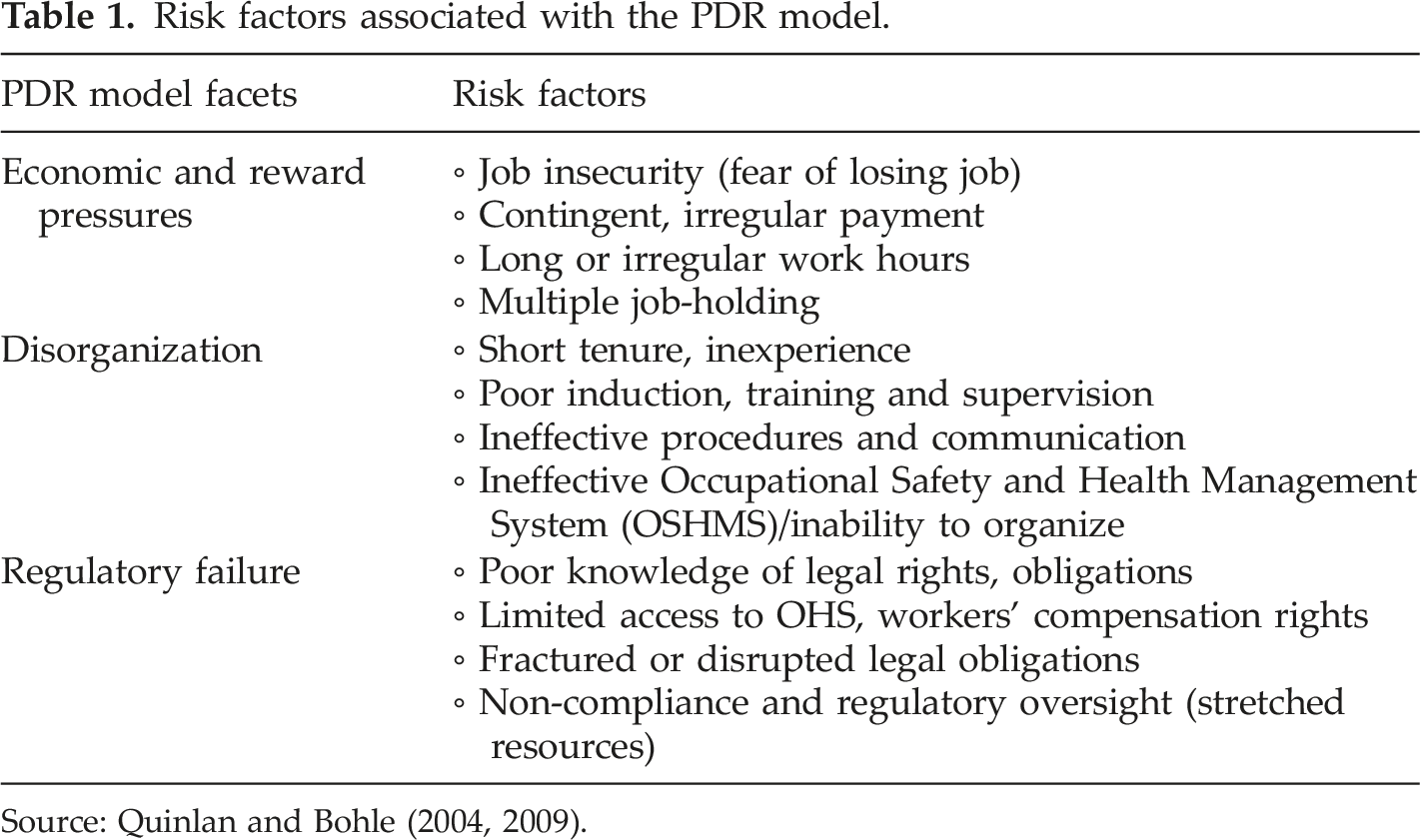
Source: Quinlan and Bohle (2004, 2009).
The PDR model and maritime occupational health and safety
The shipping industry has normalized transnational third-party employment (Shan and Zhang, 2021; 4 Cariou and Wolff, 2011). Most seafarers are recruited from low- and middle-income countries (LMICs), 5 with the Philippines, China, Indonesia, the Russian Federation and Ukraine primarily being labor supply States (ICS, 2022). Labor supply States enjoy a reduced unemployment rate and increases in remittances, while shipowners reduce wages by utilizing low-cost training programs to “mass produce” seafarers in LMICs. However, seafarers from LMICs encounter fierce job market competition, accept insecure single-voyage contracts and rely on personal savings during employment gaps (Thomas et al., 2003).
Seafarers are usually employed through crewing agencies, an indirect employment relationship that substantially reduces the employers’ liabilities to ensure seafarers’ OHS (Shan and Zhang, 2021). Seafarers employed by flag States classified as high-income countries (HICs) also report “precarious conditions” linked to manipulated contractual agreements, yet these troublesome issues are less severe when compared to the abomination to human rights encountered by most migrant workers from LMICs (Devereux and Wadsworth, 2021: 234-235).
Pandemic-related health challenges and restrictions further perpetuated the safety challenges associated with the shipping industry’s dependence on unstable employment strategies. The socio-economic and health inequalities seafarers typically encounter, particularly those from labor supply States designated as LMICs, already require collective and multi-lateral resolutions supported by an industry striving to expand and strengthen the OHS and human rights afforded to its workforce. The spread of the COVID-19 virus, however, created unprecedented OHS challenges for workers at sea. The inequitable distribution of PPE, varying shore leave rules, disrupted crew changes, seafarer or vessel abandonment by shipowners, and vaccination program failures (Banta and Pratt, 2023; Lucas et al., 2021; Shan, 2022; Slišković, 2020) are among examples of disorganization that directly impact seafarer OHS addressed in this paper. COVID-19 regulations and restrictions, often contrary to the World Health Organization (WHO) recommendations (WHO, 2020), strengthened managerial prerogative that left seafarers vulnerable to the decisions of shipowners, operators and masters, under the guise, misguided or not, of health-protective measures.
Methods
This study undertook a policy review and media coverage analysis to summarize the pandemic response guidance provided by international agencies and the responses by port States. A thematic analysis was performed on the primary sources of information regarding the COVID-19 pandemic of the WHO, ILO and IMO. Subsequently, the impacts of the evolving public health-mandated regulations and port State restrictions in practice were gathered using semi-structured interviews.
The semi-structured interview schedules were structured into three sections to address (1) the pressures encountered by seafarers associated with the pandemic, (2) the impacts of evolving health regulations and restrictions on seafarer rights’ such as shore leave and predictable crew changes, and (3) how the aforementioned factors exacerbated existing OHS challenges.
All interview schedules, recruitment and standards were reviewed and approved by Memorial University’s Interdisciplinary Committee on Ethics in Human Research (File No. 20210581). Confidentiality was assured through agreements between researchers and participants, and pseudonyms were used to conceal the identity of research participants.
Selected characteristics of the interview participants.
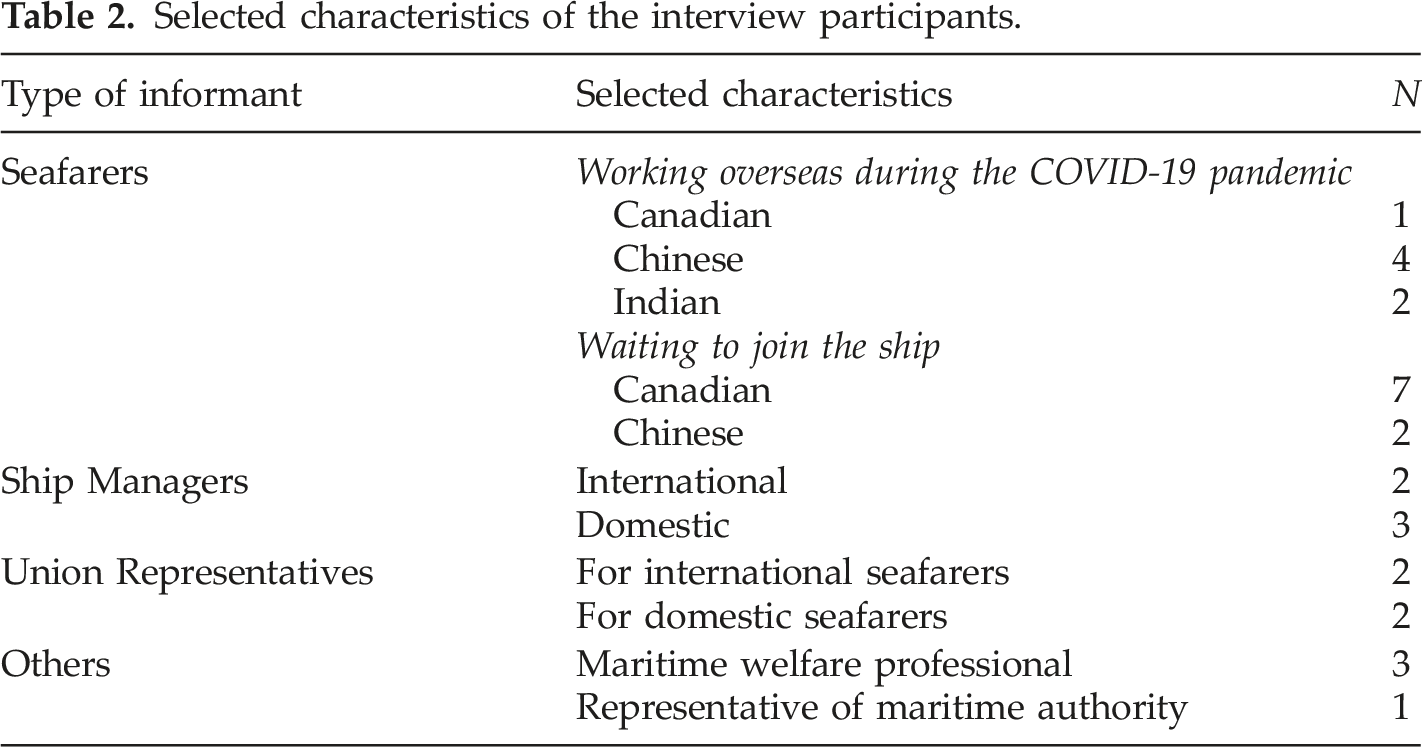
International policy efforts to address maritime health and safety challenges during the COVID-19 pandemic
During the COVID-19 pandemic, WHO, IMO, ILO and United Nations Conference on Trade and Development (UNCTAD) continuously addressed the OHS challenges faced by seafarers (ILO et al., 2022), and the MLC serves as a pillar of seafarers’ OHS. MLC provided the standards and guidelines that address minimum employment requirements, health protection, social protection, and employment and living conditions, which was ratified by 101 countries as of April 2022 (ILO, 2022b). The pandemic, however, revealed convention shortcomings, leading to ILO memoranda that stressed the need for a strengthened tripartite partnership between the ILO, WHO and IMO to address the adverse impacts of public health restrictions on established seafarers’ rights.
The WHO released seven statements based on the meetings of the 2005 International Health Regulations (IHR) emergency committee between January 2020 and May 2021 (WHO, 2022). In the first two statements, the committee stated that no travel or trade restrictions were recommended (WHO, 2022). The third to the sixth statements included recommendations to enable essential travel for activities, such as cargo operation, to avoid unnecessary interference with international travel, and the use of coherent and risk-based approaches when international traffic is interrupted (WHO, 2022). The seventh statement, issued on April 2021, recommended enabling repatriation, allowing for the movement of goods and prioritizing seafarers and aircrew for COVID-19 vaccination (WHO, 2022). Overall, the 2005 IHR recommendations were consistent in promoting strategies that prevent the spread of a virus without disrupting traffic and trade.
The IMO issued 41 circular letters between 31 January 2020 and 17 May 2021 about the COVID-19 pandemic (IMO, 2022b). The first three circulars focused on minimizing risks to seafarers and passengers on board ships. In the succeeding months, the circulars guided the protection of seafarers’ health and the facilitation of maritime trade. The IMO also partnered with several international entities such as the ILO, WHO, UNCTAD, World Customs Organization (WCO), International Civil Aviation Organization (ICAO) and the United Nations World Tourism Organization (UNWTO) to address specific topics such as supply chain integrity, medical certificates of seafarers, key workers designation, keeping ports open, eliminating obstacles to crew changes and prioritization of COVID-19 vaccination (IMO, 2022b). The central message of these circulars was clear: The safe movement of essential personnel is needed to enable international traffic and trade. IMO also provided a framework of protocols, issued on 05 October 2020, to ensure safe crew changes and travel, which was updated on 22 April 2021 (IMO, 2022b). The framework restated the dangers of extended work on the crew’s well-being and provided further recommendations for governments and relevant national authorities. The recommendations included the designation as key workers, exemptions for movement restrictions to allow crew changes and repatriation, acceptance of inter alia identity documents and employer documents to facilitate crew changes, and prioritization of vaccination programs (IMO, 2022b).
The ILO most often addressed issues such as the extension of seafarers’ employment agreement, minimum manning, abandonment, welfare facilities, informed consent and responsibilities of other entities such as flag States, port States and labor-supplying States. The ILO’s main policy efforts regarding COVID-19 and seafarers’ health were three resolutions, namely, a statement (ILO, 2020), an information note (ILO, 2021a) and a sectoral brief (ILO, 2021b). The messages in these documents resonated with those circulated by the IMO and WHO, and asked member States to (1) designate seafarers as key workers, (2) facilitate crew changes and repatriation, (3) facilitate the delivery of supplies, (4) accept existing documentation and (5) provide access to health care.
On 28 February 2022, the ILO, IMO, UNCTAD and WHO issued a joint statement calling for continued global collaboration to address the crew change crisis resulting from public health and travel restrictions implemented during the pandemic. In this statement, the four organizations urged governments, the shipping industry and other stakeholders to provide seafarers access to medical care, facilitate maritime crew changes, prioritize the vaccination of seafarers, undertake collaborative efforts to keep seafarers safe and limit the disruption to supply chains (ILO et al., 2022).
Although international organizations urged governments, the industry and other stakeholders to safeguard seafarers’ OHS, frontline seafarers continued to suffer severe health and safety challenges. The precarious nature of their employment left seafarers poorly equipped to cope with the challenges (Devereux and Wadsworth, 2021, 2022). The UN General Assembly noted “with concern” the inequitable challenges encountered by seafarers due to pandemic-related restrictions and called upon shipping industry actors and stakeholders to (1) designate seafarers as essential workers, (2) support multilateral and coordinated responses to facilitate crew changes, and (3) ensure access to medical care (IMO, 2020).
Pressures, disorganization and regulatory failures in the shipping sector during the COVID-19 pandemic
This section presents the results of the semi-structured interviews during the first year of the pandemic. The analysis applies the PDR model to frame how existing pressures, disorganization and regulatory failures make seafarers, as an occupational cohort, particularly vulnerable to adverse outcomes linked to pandemic health challenges and restrictions.
Pressures: Poorer OHS outcomes arising from pressures during the COVID-19 pandemic
From the onset of the pandemic in early 2020, tremendous pressures were imposed on seafarers. First, the maritime transportation market was impacted by the sudden drop of the demand for oil tankers (Gharib et al., 2021; March et al., 2021). After an employment crash, subsequent market fluctuations led to increased workloads and job stress among active seafarers. Second, the increased costs of crew changes and quarantine requirements led to a unilateral extension of services on board, which elevated the risk of fatigue and mental health problems (Lucas et al., 2021). Third, seafarers from developing countries experienced extended unemployment due to the forced extension of duty encountered by active seafarers. Due to the fear of job loss, many seafarers suffered in silence (Ipsos, 2022).
Pressures from the maritime transportation market change
The onset of the pandemic was anticipated to lead to an economic depression in global shipping due to border closures, lockdowns and low market value of oil. As such, investors hired oil tankers for storage until the inevitable economic recovery (Gharib et al., 2021; March et al., 2021). Furthermore, the government-sponsored economic stimuli that supported the shipping industry as an essential service and the increase in online retail demand resulted in the continuous operation of clean tankers and dry bulk vessels (Michail and Melas, 2020). Financial pressures encountered by ship owners and operators due to the volatility in the shipping industry, however, were transferred to seafarers stranded on the tankers while waiting for the recovery of the oil market. Some of the owners which were financially challenged during [that] time… [due to] the amount of tonnage available in the market… For example, in the month of May and June [2020] […] the price of crude oil prices had come down quite drastically, and you were able to pick up crude oil at quite a premium and put them in storage for sale later. And at those times the charter rate for tankers had gone up seriously very high and then we did want all these tanker ships to be at, you know, maximum speed, proceeding to ports, loading their cargo safely, and getting out and becoming storage tankers. But the crew saw it otherwise, and they knew that if they became a storage tanker, there would be no chance they could get out of the ship […]. (Frank, quality, health and safety manager in an international shipping company) At the same time, we had the bulk carrier, and the rates in the bulk carrier and bulk rates were going down drastically because there was practically no demand. The factories were shut down. (Frank, quality, health and safety manager in an international shipping company)
Pressures arising from the increased costs of crew change and quarantine requirement
Once the industry stabilized from the initial market shock resulting from the pandemic, variable lockdowns, travel restrictions, imposed quarantines and exceptional obstacles that interfered with crew changes, an estimated 400,000 seafarers were left in operational roles on board vessels beyond their contract periods and an equal number unemployed at home (ICS, 2020; UN News, 2021). Public health policies compounded on pressures that impeded the repatriation of seafarers, including companies’ efforts to consolidate liquidity under the threat of bankruptcy and the drastic drops in available airline tickets and their exorbitant cost (Radic et al., 2020). To avoid punitive action, delays and denial of port entry to ships in response to symptoms or COVID-19 positive test results among crew members, quarantine periods before and after contract services were required, again reflecting the transfer of pressures to their employees. Housing seafarers in quarantine, naturally, further increased costs. For example, in China, all returning Chinese seafarers had to stay in a government-appointed quarantine hotel for two weeks in most cities and four weeks in the case of Zhoushan port (Ji, 2021; Kulisch, 2021). The absence of consistent requirements for shipowners to cover quarantine costs allowed bad actors to transfer the financial burden to some seafarers. As a seafarer complained: Crew exchange is affected a lot by the quarantine requirement. There are two issues: One is the port State policy, and the other is the cost. Many ports do not want to take risks, so they ban all crew exchanges in their ports. Some ports allow crew exchange, but the quarantine hotel stay was too expensive […]. No salaries were paid to me for these 14 days, and the shipowner only promised to cover half of the quarantine cost. We wrote a Twitter [post] on this issue to make a complaint. The shipowner and crew agency started to discipline us, criticizing that our Twitter post was affecting the reputation of the shipowner […]. (Justin, a Chinese third officer)
At times, seafarers were continuously granted one-month contract extensions without a reasonable repatriation timeline. The uncertainty encountered by seafarers due to disruptions to crew changes and repatriation delays were linked to troubling accounts of seafarer health, particularly the mental health of international seafarers, as a union representative commented: Their mental health is suffering. It’s amazing how resilient they are. It shows you how subservient they are. Suicide rates are going up. These guys just keep going and going. It’s sad though. I don’t think they’re thinking right. I think they’re becoming dehumanized on ships. These people work long hours. It’s a cruel industry. It’s a dangerous industry. The injury rates are high. (Kim, representative of a union for international seafarers)
Seafarers from labor supply States with minimal support were particularly vulnerable to reprisal by employers, power imbalances or to having shipping companies make stakes in their personal lives, creating an optimal opportunity for exploitation. Another union representative talked about how precarious employment contracts can be used to oppress seafarers: Seafarers never complain. They, quite frankly, will never tell you there is anything wrong verbally. […] They’re constantly under fear of being blacklisted and never working. They can’t really be open. A lot of times you might hear from their wives. […] As the contract is extended, companies are reducing wages by eliminating fixed overtime. […] Renewed contracts—technically they’re living up to their contracts, but wages are cut because of the cut in overtime. (Han, representative of a union for international seafarers)
Pressures from precarious employment and unemployment
The inherent pressures from precarious employment weakened safety management systems, as illustrated by reports from Filipino seafarers who crew roughly 20-25 percent of the global fleet (Marine Charts, 2022). Unemployed Filipino seafarers reported that the social assistance offered by the government to overseas employees—a one-time aid—heightened their financial insecurity due to delayed transactions and disqualification from unemployment benefits (Dela Cruz, 2020). Despite media reports of suicides and deteriorating mental health linked to extended service at sea, late wages and the financial burden of paying quarantine costs early in the pandemic, seafarers expressed reluctance to complain or to engage in strike action in fear of their jeopardizing their employment opportunities (Dela Cruz, 2020). The hierarchy and inequality systemic to the shipping industry that present psychosocial risks were captured: [Seafarers] have a very strong guilt complex we feel is professional pride. So even if we [are] asked to work 16 hours, we never say no […]. [W]e think that this is part of the job. And now I realize I'm starting to understand labor laws now after 30 years. So now I know that I was exploited for 30 years, but most of us don’t understand it because we join at a young age at 18 to 20. So, it is internalized. (Henry, health and safety manager in an international shipping company)
The shipping industry is complicit to the adverse mental health impacts linked to the precarious employment of seafarers, particularly those from LMICs, rife with unaddressed socio-economic inequalities. To support global supply and demand, shipowners, flag States, port States and labor supply States each contributed, advertently or otherwise, to the exploitation of seafarers, enabled by the inherent pressures encountered by this occupational cohort.
Disorganization: Poor OHS management at the workplace during the pandemic
The potential severity of health outcomes associated with COVID-19 infections exerted substantial stress on precariously employed seafarers, particularly during the initial peaks of COVID-19 infections. The interviews revealed three overarching challenges: First, viral transmission created a high risk of onboard exposures and outbreaks due to the inability to engage in social distancing practices, inadequate ventilation and, in extreme circumstances, the expectation to physically care for infected passengers. Second, the precarious employment standards equipped seafarers with limited leverage to influence the implementation and practice of strengthened safety training, OHS policy or communications. Third, as transnational workers, seafarers encountered higher psychosocial and health impacts associated with a confirmed infection including stigmatization, lack of ready access to health care and treatments, and risk of withdrawn rights such as access to shore leave, repatriation or isolation within the vessel.
Disorganization in controlling virus transmission on board
During the onset of the pandemic, the shipping industry was not immune to the global shortage of PPE. A seafarer from an HIC expressed frustration towards the inability to procure PPE, particularly when tasked with safely preparing and distributing food: We were having issues on the new vessel I was on. After lay-up, shipments of PPE didn’t come. There was one box of nitrile gloves for everyone who was there. I think there were some masks. It took a while for the shipment to come in, the sanitizer. (Ian, a cook in Canada)
The inequities in the global distribution of PPE also undermined the efforts of seafarers to reduce the risk of exposure to COVID-19. Maritime support workers in some of the active ports were unable to access PPE due to supply chain challenges or inflated prices. Seafarers engaged in shore-based activities were thus confronted with a dilemma with two negative outcomes: (1) to continue shore-based activities in the absence of health-protective mechanisms and heighten the risk of exposure or (2) to exercise the right to refuse unsafe work and jeopardize their job security while burdening crewmates with increased responsibilities. Every ship has a very clear list [of guidelines] […]. No shaking hands with any stevedore… avoid being close to them when you’re speaking to them […]. In Indonesia, there are about 5,200 ships loading simultaneously and anchorage from barges, which means every ship has about a 100 stevedores on board at any time […]. In Indonesia, even getting a mask is difficult. (Henry, health and safety manager in an international shipping company) So that becomes a very big challenge for the seafarer because at that time he has to [make] a judgment call, shall I stop cargo work and make an issue of this and I don’t know who is going to support me and who will not, or shall I just find some way and let's do it and then pray to God that nothing happens. (Henry, health and safety manager in an international shipping company)
Limited resources for seafarers to defend their health and safety rights
Securing and enforcing seafarers’ right to access shore leaves were convoluted by rapid policy changes throughout the pandemic, with the biggest impacts noted during the first year. Disorganization in communications between port State jurisdictions, ship owners, ship manning agents and shipmasters resulted in the limited access to routine health care among domestic seafarers and compromised access to emergency services among all seafarers. As Captain Zheng, described: I reminded our crew to be extremely cautious with health and safety. During the pandemic, there is no hope to access to medical care in port. (Zheng, a Chinese shipmaster)
The denial of primary medical care is not only a challenge for transnational seafarers; Canadian domestic seafarers also face similar challenges in their home States. As explained by two union representatives, Lee and Han: The problem is with shore leave. Some people request shore leave to be able to go and see their doctor, and they are being denied that right. With one company, they [had] to go through a third-party triage […] [to] assess whether they are sick enough to get off the vessel […]. We had one individual who had an appointment to go for a flu shot, and the company refused to let him go to his appointment. (Lee, representative of a union for domestic seafarers in Canada) One seafarer wanted to seek medical attention. His request was never granted until we got involved and the port got involved. (Han, representative of a union for international seafarers)
International seafarers’ access to vaccines in port States reflected the lack of proper coordination. On 16 June 2022, Transport Canada issued a Ship Safety Bulletin, which allowed foreign seafarers to obtain a COVID-19 vaccine (Transport Canada, 2022). According to maritime welfare organizations, the coordination of vaccine resources for international seafarers required significant effort to find clinics or doctors willing to vaccinate seafarers without Canadian provincial health care cards. Eventually, Maria, a maritime welfare representative in Canada, recruited the port-based vaccination services from a clinic that managed to bypass the provincial health care bureaucracy when vaccinating homeless people.
Systematic deprivation of seafarers’ rights became business practices
Baltic and International Maritime Council (2021) emphasized the importance of crew changes to optimize the safe operational performances of the crew. In response to border and airport closures that inhibited crew change efforts, BIMCO introduced the COVID-19 crew change clause to strengthen the shipowners’ prerogative to deviate travel to enable crew changes. 6 A number of charterers, as the clients hiring ships, evaded financial obligations to support imminent crew-change requirements and countered with a “no crew change” clause. This prioritization of cost-savings over seafarer OHS was again enabled by the limited ability of transnational seafarers to decline contracts with these charterers (Meade et al., 2021).
Under the business pressure imposed by charterers, shipowners had limited chances to arrange essential crew changes for their seafarers. Seafarers onboard suffered accumulated fatigue risks due to the market pressure imposed by the charterers. On ships where BIMCO COVID-19 crew change clauses apply, some shipmasters deviated the ship to waters close to the seafarers’ country, often off of India, Sri Lanka and the Philippines, where crew change could be facilitated and the seafarer could be repatriated with relative ease. However, the isolated working conditions experienced by seafarers transferred the highly individualistic and difficult decision-making responsibilities to each shipmaster. Most shipowners, charterers and operators tended to dissuade their shipmasters from taking such action to avoid normalizing the practice in consideration of the associated costs and charter deviation claims.
Regulatory failures
During the pandemic, the emergency public health policy was informed primarily by regional perspectives reflecting anticipated impacts on political constituents while ignoring migrant workers’ rights, leading to regulatory failures. The hierarchical and inconsistent administration of the emergency policy frustrated established seafarer health and welfare standards. Additionally, the lack of bilateral agreements between jurisdictions to open travel corridors for mobile and migrant workers during unprecedented events further increased the vulnerability of these workers to emergency policy. The interviews suggest that at the organizational level, coordination failures pointed to the unwillingness of many employers to strategically deflect the impact of public health policy on seafarers’ rights. Second, political failures, stemming from a lack of consultation with maritime stakeholders and characterized by its non-uniform hierarchical administration, eroded the application of MLC provisions. Third, the erosion of MLC provisions during the pandemic points to OHS governance failures that suggest insufficient consultation and collaboration between labor, public health and transportation administrations.
Coordination failures
Crisis governance varies across countries, such as through deterministic and hierarchical approaches, which inevitably increased the risk of regulatory failures. Containment approaches to managing the pandemic led to regional or country-wide lockdowns throughout the globe. The shift towards softer containment measures (localized or voluntary responses) and standard precautions with advanced treatments and viral mutation lessened the institutional pressures on the maritime industry as the pandemic progressed. Regardless of the logistical challenges that slowed crew changes and repatriation efforts, International Transport Workers’ Federation (ITF) inspectors, government regulators, and company health and safety managers pointed to the conditions of employment regulations pursuant to the MLC. It becomes a logistical exercise of convincing the employer it is the right thing to do. Maybe you have to spend a little more money on the flights, maybe you have to spend a little more money on the hotels and the logistics of it all. But it’s the seafarer’s right. He has fulfilled his obligation to you as an employer. He has worked his contract […]. It says he is entitled to repatriation. It is very clear. The employers have to do what they have to do to get their employees home. But governments have to step up and understand […] that these guys are keeping us going […]. We need to prioritize these guys. (Han, representative of a union for international seafarers)
Political failures
Divergence in top-down administrative controls to address the health crisis further hindered the uniform policy practice derived from OHS standards. International seafarers’ health and safety rights are advocated by the ITF in Canada, an organization that continuously advances efforts to ensure international seafarers’ right to take shore leave, conduct crew change and access medical care in Canadian ports. However, uncertainty surrounding public health measures was a driver of banned shore leave opportunities by port State policy support, shipping companies and shipmasters. A participant reported that shore leave opportunities for seafarers were either banned or only sporadically permitted in Canadian ports up until August 2022 (Susan, a maritime welfare professional in Canada).
Denied shore leaves were linked to the exploitation of seafarers’ rights. Termination of direct communication with union representatives, port State authorities and seafarer welfare agencies hindered seafarers from accessing guidance and support when confronted with violations of contract terms and conditions. Seafarer welfare professionals encountered situations where seafarers were guided by their employers to extend their contracts, thus affording employer extensions between crew changes. We have had seafarers far over contracts. We informed them that with ITF and TC (Transport Canada), they can get signed off. Sometimes the company will tell the crew there is no crew change in Canada, so you have to sign a one- to two-month extension, so the crew complies. We advise them not to sign another extension. (Richard, a maritime welfare professional in Canada)
The delayed crew changes and the increased risk of seafarer abandonment in shipping during the pandemic revealed the flag States’ willingness to ignore the exploitation of precariously employed seafarers for extended contracts as long as the work terms marginally fit into the limitations outlined in the MLC, and pursuant national labor standards and regulations. I fundamentally don’t think that the majority of seafarers are properly treated by their employers, and I don’t think we regulate that element well enough. Generally, you will find the most senior crew work six to eight months a year. When you reach the intermediate level, they work about 10 months a year and get about two months [time off]. They have been working basically non-stop for those 10 months. Once you get to the most junior crew, they will be working for 11 or 11.5 months a year and will get a handful of time back home and will sign on for nearly another year of working seven days a week, long hours. I think that is abusive. I think that is unfair. I think that is dangerous. (Jack, from the Maritime Administration Authority, Canada)
OHS Governance design failures
The robustness of OHS governance on ships is steered by the influences of international conventions, governed by federal regulatory authorities and enforced by ITF inspectors and port authorities. The documentation and development of onboard safety committees showed an understanding of safety culture theory, rules and guidelines, but the validity of these reports can neither be confirmed nor denied. The shortcomings of OHS policy-to-practice may be attributed, at least in part, to the knowledge and training of the administrators tasked with policy design or policy enforcement. The problematic disconnection between the enforcement of transportation safety and OHS administration was recognized by maritime professionals in Canada: I think the Labour Program has a better understanding of these things than [the transportation administration authority]. They need a better-integrated department that has the resources in place and the knowledge to deal with things that happen on a vessel […]. they need to stop diverging the two as two separate things. Something that is overlooked is that [transportation administration] looks at Marine Safety, but I don’t understand how you can judge a vessel to be safe if the people on board running the vessel are not being afforded the regulations that are in place to protect them. If someone is fatigued, stressed, or not able to take shore leave and experiencing a mental crisis, then that person is not fit to work and that is a marine safety issue as well […]. The provisions of the Canada Labour Code [should] apply to seafarers. The companies go to these meetings and oppose everything in place, and the Labour Program put out these program guidelines that exempt a whole sector. (Kim, representative of a union for international seafarers)
Despite being party to MLC obligations since 2013, cruise liners’ COVID-19 policies isolated crew members and denied access to crew gyms and bars (Radic et al., 2020). At least seven cruise ship crew members who died of suicide between early April and July 2020 were reported in media, and this was a bleak indication of the mental health implications of isolation and uncertainty.
Flags of convenience
7
continue to attract shipping companies with tax reductions and opportunities for dual ship registry. However, there was mounting frustration, highlighted by the pandemic, that flags of convenience upset the uniform implementation of international maritime law. Flags of convenience offered negligible social benefits to their crew and lax safety requirements for vessels, amplifying the exploitation of labor supply from LMICs, and again aggravating the precarious conditions and compromised OHS experienced by seafarers. Port States [since the 1980s] have to protect themselves from flag States and maritime disasters. Flag States hurt crew members […] to start inspecting […] you can’t leave it to shipowners and flag States to govern themselves; port States have to govern them to protect themselves from the disgraceful way these individuals [operate.] (Kim, representative of a union for international migrants)
The pandemic revealed the regulatory failures to implement and enforce uniform maritime OHS law internationally. Divergent public health strategies and sporadic regional COVID-19 outbreaks disrupted the uniform practice of seafarer OHS policy across jurisdictions and highlighted the marginalization of labor rights afforded by migrant workers in precarious conditions. Involuntary contract extensions, denied access to shore leave and health care, and the crew change crisis exemplified the failures to enforce seafarers’ rights while navigating evolving public health regulations. The subsequent humanitarian crisis experienced by seafarers during the pandemic, particularly those employed by ship operators registered under flags of convenience, points to a pattern of exploitation of seafarers enabled by job insecurity and the invisibility of the job sector. The transnationality and complexity of the industry operations, furthermore, impeded effective labor and vessel inspections and enforcement. As labor organizations highlighted, vessel safety superseded the health, safety and well-being of crew.
Discussion and conclusion
Internationally, a low percentage of seafarers are employed as permanent workers—including most seafarers from high-income countries, such as the United Kingdom (UK) and Canada. For seafarers from LMICs, single-voyage contracts are also a norm of their employment relationships. The precarious nature of maritime employment relationships, even before the COVID-19 pandemic, has created considerable OHS concerns, such as lack of safety training and limited access to workers’ compensation, pressures arising from job insecurity, disorganized OHS management, and regulatory failure due to fragmented obligations between employers and agencies.
The study findings revealed the fundamental challenges associated with precarious employment and its impact on OHS policy-practice tensions within the global shipping industry. The increased demand for maritime transport services, lockdowns and travel restrictions during the pandemic further compromised international seafarers’ OHS rights to crew change, shore leaves and medical care. Subsequently, seafarers suffered increased fatigue and mental health challenges, injuries and illnesses without access to medical care. Additionally, with limited negotiating power as precarious migrant workers, their challenges, needs and voices are rarely heard by port States. In some cases, seafarers who complained through social media were even punished with compulsory quarantine costs and disciplinary punishment. In Canada, seafarers are already supported by a strong ITF representation of international seafarers, designation as essential workers, and shore leave and crew change rights in Canadian ports, yet they still experienced diminished rights due to the restrictions from shipowners and managers.
The socio-legal analysis applied in this study illustrated how the pandemic, related public health measures due to the pandemic and precarious employment increased the vulnerability of seafarers. Through applying the PDR model and drawing upon qualitative data collected through policy review, media coverage analysis and semi-structured interviews, we found that seafarers’ health and safety rights were significantly compromised during the pandemic. Although various initiatives raised by international governmental and non-governmental organizations highlight the “humanitarian crisis” at sea, maritime labor regulatory failures were ineffectively addressed through multiple waves of the pandemic.
In the domain of pressure during the pandemic, seafarers not only experienced pressures arising from job insecurity but they also faced pressures from market volatility, lockdowns and travel restrictions. Their physical and mental health were compromised by these intersecting pressures.
The disorganization characterizing OHS management during the pandemic—including limited access to PPE, medical care ashore and vaccine resources—diminished the OHS protection available to seafarers. In this particularly challenging situation, some ship charterers refused to share the responsibility of respecting seafarer rights by introducing “no crew change” clauses into charter parties, which further restricted the shipowners’ ability to solve the crew change crisis. The pandemic further revealed that the disorganized OHS management is only partially attributed to the precarious employment relationships between shipowners and seafarers; furthermore, it points to an abuse of power exerted by upstream bad actors with advantageous positions in the market that enable the transfer of pressures to maritime transportation service providers and seafarers.
The humanitarian crisis experienced by seafarers during the pandemic was an inevitable result of institutionalized fragmented maritime governance among flag States, port States and labor supply States, as well as the high prevalence of precariously employed seafarers—factors that contributed to regulatory failures. The inherent weakness of the fragmented governance of maritime OHS was exposed by emerging and evolving public health regulations that exacerbated the marginalization of labor rights afforded by precarious migrant workers. While States utilized infectious disease containment measures and shipowners attempted to control costs in the unpredictable COVID-19 market, seafarers were forced to sacrifice their mandated crew change clauses and access to shore leave, medical care and vaccines. Devereux and Wadsworth (2022) highlighted how even the precariously employed seafarers in HICs were manipulated during the pandemic with rescinded employment opportunities later offered at salaries reduced by 50 percent. Furthermore, in Canada, the stunted processing of permanent residency applications left temporary workers vulnerable to employer control, prolonging precarious employment with impacts felt by families across the globe (Banta and Pratt, 2023). Marginalized by OHS governance of any sovereign state, seafarers became invisible essential workers, their human rights hidden from public health policymakers, and their life, health and rights being sacrificed silently.
To address the humanitarian crisis at sea and the systematic exploitation of international seafarers, a strong, coordinated maritime health governance is required among flag States, port States and labor supply States. Port States, the beneficiaries of international shipping, have the responsibility to integrate international seafarers’ OHS into their public health policies. During the pandemic, and in compliance with the MLC, Canada established the National Seafarers’ Welfare Board (Transport Canada, 2021), availing seafarers with a formal channel to address their health, safety and welfare needs. Board members (representing shipowners, seafarers, and regulatory and enforcement agencies), seafarer welfare organizations and union representatives enabled multi-level strategic discourse to address seafarer needs more efficiently. As of 18 February 2023, the Canadian National Seafarers’ Welfare Board convened on 16 occasions since its establishment. Meetings in 2021 and 2022 addressed urgent health, safety and welfare challenges triggered by the imposition of public health restrictions stimulated the Board’s prioritized action to (1) improve enforcement of seafarer rights (shore leaves, crew change, health protection) and (2) coordinate seafarers’ access to COVID-19 vaccines, largely due to the extensive efforts of individual seafarer welfare organizations, port authorities and the ITF (Transport Canada, 2023). Deviating from pandemic-related topics, the Board continues to address potential impacts of proposed regulatory changes on seafarers, seafarer welfare gaps in Canada and enforcement requirements to address changes to international guidelines. The increased visibility of seafarers through a national maritime welfare board is instrumental to preventing further marginalization of precarious migrant workers in policy development.
Drawing upon the PDR model, this research has contributed empirical findings of seafarers’ extremely poor OHS outcomes during the pandemic, which also enriches the PDR model theory with the practices of global shipping industry. Recommendations from this analysis align with those of recent and forthcoming publications that have highlighted the need for safety systems managers to evaluate and mitigate the possible adverse impacts of new policy on key workers (Borovnik, 2024; Zhao et al., 2023). At the policy level, through the efforts made by Canadian union representatives and maritime welfare professionals, the diminished OHS protection encountered by international seafarers is not unresolvable, but it can be improved through a collective partnership between port State governments, maritime welfare organizations, unions, responsible shipowners and port authorities. Most of our interviews were conducted in 2020 and 2021, and restrictions, such as travel restrictions, since then have eased or have been lifted in some countries. However, these empirical data are highly valuable to extrapolate the lessons learned from the seafarers’ health and safety crisis during the pandemic with the aim of preventing a similar crisis among precariously employed migrant workers.
Footnotes
Declaration of conflicting interests
The author(s) declared no potential conflicts of interest with respect to the research authorship and/or publication of this article.
Funding
The author(s) disclosed receipt of the following financial support for the research authorship and/or publication of this article: This research is funded by the Canadian Institutes of Health Research, through Operating Grant: Emerging COVID-19 Research Gaps and Priorities – Differential Impact of COVID-19 on Historically Excluded or Underserved Populations (Funding Reference Number: EG2-179434); and the Memorial University of Newfoundland through the Seed, Bridge, and Multidisciplinary Fund, and Policy and Practice in Return-to-work after Work Injury Partnership Grant funded by Canadian Institutes of Health Research and Social Science and Humanities Research Council (PWP-159064). This work is also supported by a project granted by the National Social Science Fund of China (22AZD108).
