



Abstract
This paper examines the mental health and psychosocial support (MHPSS) interventions provided to Filipino international merchant seafarers during the COVID-19 pandemic. Given the significant labor participation in seafaring of Filipinos, examining the MHPSS provided to them during a crisis is necessary because these services remain unexplored. Using an online survey, this paper raises two questions: (1) what MHPSS was provided to Filipino seafarers during the pandemic and (2) how did the seafarers perceive the importance of MHPSS interventions? Twenty-two MHPSS interventions are presented and analyzed, and policy recommendations for various Philippine-based stakeholders are offered.
Introduction
More and more research shows the various negative effects of the COVID-19 pandemic on merchant seafarers’ mental health. During the height of the pandemic, industry reports showed that seafarers faced a variety of psychological problems, such as mental fatigue, depression (Qin et al., 2021), anxiety, panic attacks and suicide (Clayton, 2021a, 2021b), and many turned to support hotlines catered to these problems (Bush, 2021; Clayton, 2021b). The existing literature has demonstrated that these negative mental health effects are associated with a confluence of factors, such as the intrinsic occupational stressors in seafaring, global crew change crisis (De Beukelaer, 2021; IMO, 2020), war in Ukraine (Smith, 2022), lack of shore leaves or longer than average work on board (Hebbar and Mukesh, 2020), crew abandonment (Meade, 2022), no job contracts for extended period for those who were ashore (Banta and Pratt, 2023), and risk of being infected with COVID (Galam, 2020). These stressors arguably have varying effects on the mental health of seafarers. While the negative effects of COVID-19 on mental health were unfolding, it was unclear what key maritime stakeholders (e.g., the Philippine government, shipping companies and crewing agencies) were to provide mental health and psychosocial support (MHPSS) for Filipino international merchant seafarers.
Filipinos have established a labor niche in international seafaring in the last 40 to 50 years (McKay, 2007; Markkula, 2021). Multi-year estimates covering at least the last two decades suggest that the participation of Filipinos in the international merchant seafaring labor market has been relatively stable. These estimates set the Filipinos’ labor participation between 20 percent and 25 percent of about 1.89 million seafarers (BIMCO and ICS, 2021; BIMCO and ISF, 2010). About a third of the 250,000 global workforce in the cruise ship industry are Filipinos working in the hotel and restaurant sections (Fernandez et al., 2020; CrewCenter, 2017). Given the significant labor participation in seafaring of Filipinos, nationality-specific research examining the MHPSS provided to seafarers during the pandemic is necessary and urgent because mental health services offered to seafarers from developing countries remain unexplored. Most national welfare systems in developed countries have mental health care systems in place. However, in less developed countries where a significant number of seafarers comes from, reliable mental health care systems are not yet well-established. In line with these realities, this research primarily intends to identify and examine the MHPSS interventions provided to and/or accessed by Filipino seafarers during the pandemic.
Drawing from the survey results of a much wider pilot study (Abila et al., 2022), this paper raises two questions: (1) what MHPSS was provided to Filipino international merchant seafarers during the COVID-19 pandemic and (2) how did the seafarers perceive the importance of the MHPSS interventions?
Two crisis events and their impacts on the mental health of Filipino seafarers: Background for MHPSS for seafarers
Two crisis events are presented as examples of the psychological and mental health services provided to Filipino seafarers: The maritime piracy from 2008 to 2012 and the COVID-19 pandemic in 2020. These two events show various types of MHPSS provided to seafarers during a crisis, and this paper hopes to identify gaps in MHPSS services extended to seafarers, particularly Filipinos, in periods of crisis. In this study, MHPSS are framed conceptually as mental health promotion strategies, which are health interventions meant to protect, enhance or improve health, including mental health (WHO, 2005). This framework offers a lens to understand the mental health and psychosocial support strategies available to Filipino seafarers, where these interventions come from and how these MHPSS are perceived to be effective in improving seafarers’ mental health and well-being.
MHPSS for Filipino seafarers during two crises (Maritime piracy and COVID-19)
From 2009 to 2016, maritime piracy in East and West Africa constituted a humanitarian crisis at sea, where more than 6,000 seafarers of various nationalities and their ships were taken as hostages for ransom by pirates around the Horn of Africa (Seyle et al., 2018). These hostage-for-ransom modi have taken the lives of seafarers and pirates alike, and have caused serious mental health-related problems, among other things, for seafarers and their families (Seyle et al., 2018). Consequently, the piracy crisis has led to a body of mental health research on Filipino seafarers focused mainly on the negative effects of maritime piracy (Abila and Acejo, 2021; Fernandez et al., 2018; Seyle et al., 2018; Abila and Tang, 2014). Abila and Acejo (2021) reviewed mental health-related studies on Filipino seafarers for the period 2000 to 2020, and found that most of these publications were about their experiences of the maritime piracy crisis between 2009 and 2012 (Seyle et al., 2018; Fernandez et al., 2018; Simon and Fernandez, 2016; Abila and Tang, 2014). In the work of Seyle et al. (2018), the 31 Filipino seafarers held hostages by pirates had higher risks of having post-traumatic stress syndrome (PTSD) compared to seafarers who were exposed to pirates but not held as hostages. Overall, according to the same study, former hostages had poorer physical well-being, although three of the four hostages recovered without long-term problems (Seyle et al., 2018). Simon and Fernandez (2016) also found long-term psychological conditions of subjective fear, distress and loss of control over their lives among Filipino seafarers. Clearly, there were short- and long-term mental health concerns before the pandemic, already addressed by various stakeholders during that period.
During the piracy crisis, various governments, the international maritime industry and NGOs came together and provided different types of support to seafarers who were exposed to piracy through a concerted effort under the now defunct Maritime Piracy Humanitarian Response Programme (Dimitrevich and Torskiy, 2014). Filipino seafarers who were held as hostages by pirates reported to have been supported by companies with a 100 percent increase in their pay, and medical and psychological assistance, as well as counseling and debriefing support. These abovementioned types of support (i.e., financial, medical and psychological) came from either companies, NGOs or government agencies (Abila and Tang, 2014). The Philippine government, in collaboration with private companies, also instituted a pre-departure orientation seminar on piracy for seafarers, which aimed to psychologically prepare seafarers (Seyle et al., 2018) for piracy to help seafarers manage its effects on their psychological and mental health should they encounter pirates or experience an attack.
Prior to the pandemic and outside of the context of piracy, there were various strategies recommended to promote or protect seafarers’ mental health (Sampson and Ellis, 2021; Blackburn, 2020; Lefkowitz and Slade, 2019). Recommendations were primarily intended for companies and/or onboard ship officers, covering a wide range of concerns, from anti-bullying and anti-harassment procedures to the promotion of a healthy lifestyle aboard ships for seafarers. These strategies cover physical exercise, improving seafarers’ rest quality, diet and nutrition, and institutionalizing practices that promote team spirit and camaraderie, especially among multi-nationally crewed ships (Sampson and Ellis, 2021; Blackburn, 2020; Lefkowitz and Slade, 2019)
Similar to the piracy crisis, the COVID-19 pandemic unsurprisingly affected the mental health of seafarers in various ways. Studies of Pauksztat et al. (2022a) and Pauksztat et al. (2022b) showed that the pandemic increased mental health problems and chronic fatigue among seafarers of various nationalities. These are consistent with both qualitative studies (Kaptan and Olgun Kaptan, 2021; Slišković, 2020) and a quantitative survey (Baygi et al., 2021), which associated the pandemic with seafarers’ mental and physical fatigue, anxiety, depression or suicidal ideation.
Banta and Pratt (2023) documented and discussed the ironic immobility of Filipino seafarers during the pandemic despite the characteristic mobility of merchant ships between ports. Seafarers were “immobile” because they could not disembark from ships when berthed in foreign ports due to quarantine restrictions, and thus could not enjoy their shore leaves. Extended working contracts of Filipino seafarers led to physical and mental exhaustion, while Filipino seafarers who could not go back aboard to work were either in debt or lost income opportunities (Banta and Pratt, 2023). In other words, the pandemic might have caused seafarers to worry about providing for their families, which may have resulted in mental health problems for these workers, such as anxiety or depression.
Despite these mental health problems during the pandemic, it remains unclear what MHPSS services were provided to Filipino seafarers during the crisis. Responding to this gap in the research literature, this study is part of three related publications based on a pilot study on the psychosocial support provided to international merchant seafarers during the COVID-19 pandemic. The first two publications are a research report (Abila et al., 2022) and the second is a journal article (Tang et al., 2022), which were both published in 2022. These two studies reported 22 different types of MHPSS for seafarers’ mental health during the pandemic (Abila et al., 2022; Tang et al., 2022). These were classified by who provided the MHPSS: By the employing companies or by other stakeholders, such as governments, families of seafarers, charities or NGOs (Abila et al., 2022; Tang et al., 2022). The two papers showed that 11 MHPSS types came from companies, and the remaining 11 were provided by the other stakeholders (Abila et al., 2022; Tang et al., 2022). Though these support measures for seafarers’ mental health were well-examined in these two publications, these were offered to various seafaring nationalities that participated in the pilot study. Hence, the analyses of these two studies were not really focused on how Filipino seafarers experienced and viewed these different types of MHPSS. For example, Tang et al. (2022) presented that of the 11 supportive measures offered by companies, only three were experienced by half of the study’s total respondents (n = 817). Of these three, two were related to crew change or the replacement of crew members after their employment contract, which was extremely difficult during the first 10 months of the pandemic (March to December 2020). Understandably, seafarers wanted to disembark and go home, but crew change was very difficult due to international border closures (IMO, 2020). Furthermore, seafarers saw that disembarking (i.e., resting after completion of employment contract) and going home (i.e., relationship to family) were important factors for their mental health. However, there is little evidence in the academic literature on pandemic-specific research focusing on the various psychosocial interventions provided to Filipino seafarers during the crisis, considering that the pandemic was a novel global event.
At the onset of the pandemic, provision for mental health services for Filipino seafarers was explicitly absent in the statement by the Philippines’ Maritime Industry Authority (MARINA) regarding the support they offered to seafarers, which identified only the documentation of seafarers, their repatriation and the receipt of necessary assistance for seafarers as the three broad strategies provided by the Philippine government (MARINA, 2020). On the other hand, the international maritime community, especially NGOs, provided helplines for seafarers with various concerns including mental health issues (ISWAN, 2020). Both of these examples are non-compliant to the Philippine Mental Health Law, which obliges various stakeholders—such as the Overseas Workers’ Welfare Administration, MARINA and the Department of Health—to develop and implement policies, programs and activities related to establishing a MHPSS system for OFWs including seafarers (Republic Act No. 11036, 2018). However, this law is yet to be fully implemented and realized. For example, all essential workers should be given priority in vaccinations during the pandemic. However, despite the government classifying seafarers as essential workers, their vaccination was only prioritized more than a year after the World Health Organization (WHO) declared the pandemic on March 2020 (WHO, n.d.). Furthermore, it can be argued that the Philippine government only prioritized the vaccination of seafarers as a response to pressure from the international maritime community, as shipping companies have provided vaccines to Filipino seafarers before they were given priority in the government’s vaccination program (Shen, 2021). That is, shipping companies found it necessary to provide vaccines to their seafarers themselves rather than wait for the Philippine government to vaccinate them.
Relatedly, the link between being vaccinated and mental health might come from associating being infected with the virus to fear, anxiety or potentially being not allowed to work as unvaccinated workers (Tang et al., 2022). Thus, prioritizing the vaccination of seafarers during the early phase of the pandemic was viewed as means not only to be protected from the virus but also to allay the psychological fears and anxiety of seafarers from being infected with the virus (Tang et al., 2022). This view is consistent with MHPSS being any intervention, such as vaccination, that promote the psychological well-being of an individual.
MHPSS as mental health promotion strategies
Overall, there is a need to improve seafarers’ mental health and empower seafarers through awareness and education strategies on the importance of mental health to their lives and careers (Abila et al., 2023). The increased awareness and evidence on the mental health problems of seafarers during the pandemic lends urgency to what the WHO (2005) refers to as mental health promotion strategies. WHO’s mental health promotion refers to a network of strategies provided by various stakeholders and intended to improve mental health (WHO, 2005). Using this framework, this study views the different MHPSS provided to seafarers during the pandemic as mental health promotion strategies to protect, enhance or improve mental health.
The concept of MHPSS comes from crisis intervention literature where MHPSS refers to any local or outside measure or strategy intended to protect or address psychosocial concern, enhance overall well-being especially mental health and/or prevent or treat mental disorder (IASC, 2011). Various MHPSS have been adopted by different stakeholders, such as clinical mental health programs of governments, peer counseling, family support system, company based MHPSS and the like (IASC, 2011), including those adopted in the maritime sector during the pandemic (Stannard, 2020). For this study, anchoring MHPSS to WHO’s mental health promotion is necessary. That is, WHO’s Health Promotion Framework (2005) serves as explanatory model for this study by emphasizing the active role of seafarers in initiating and maintaining health-promoting behavior onboard ships. As cited in WHO literature, health promotion strategies are shared responsibilities of various stakeholders (WHO, 2005).
The 2018 Philippine Mental Health Law is an important milestone in promoting mental health because it requires mental health-related programs, policies and activities of various stakeholders (Republic Act No. 11036, 2018). The law obliges public and private organizations, such as maritime schools and maritime employers, to develop and implement mental health policies and programs for cadets and workers, respectively (Republic Act No. 11036, 2018). For the Filipino seafaring sector, these developments are lifelines, since seafaring is one of the most attractive employment options for young Filipinos despite being one of the most dangerous and precarious occupations (Galam, 2020). Hence, investigating and drawing insights on what MHPSS interventions might be effective in protecting or enhancing seafarers’ mental health might be necessary in developing and implementing mental health policies or programs for Filipino seafarers, especially in times of a crisis.
Methodology
This paper draws and analyzes survey data from a wider and pilot research examining the psychosocial interventions provided to international seafarers of various nationalities during the COVID-19 pandemic (Abila et al., 2022). This pilot study was a collaboration between researchers based in three countries: The Philippines, England and Sweden (Abila et al., 2022). One of the proponents of the study was from the World Maritime University (WMU), and WMU’s research ethics committee granted the ethics clearance (No. REC-21-03) for the study (Abila et al., 2022). Informed consent, anonymity of participants and confidentiality of data were observed during the conduct of study (Abila et al., 2022).
The pilot study used qualitative and quantitative methods, and data collection consisted of two phases (Abila et al., 2022). The first phase used qualitative in-depth interviews conducted between March and June 2021. The in-depth interviews were designed to identify and examine the available MHPSS provided to seafarers during the pandemic, particularly from March 2020 to June 2021. Based on a stakeholder approach, interviews with various key stakeholders were conducted by researchers based in different locations (i.e., Philippines, United Kingdom (UK) and Sweden). The researchers have existing research networks in the maritime sector, which afforded them to recruit a sample of 26 participants for the interviews, including 14 seafarers of various ranks, five ship or crewing managers, two maritime school trainers, two port chaplains, two seafarers’ wives and one maritime authority official. They were from eight different countries: The Philippines (10), China (9), Japan (2), Brazil (1), Jamaica (1), Nigeria (1), India (1) and UK (1). The participants were recruited using convenience sampling and snowballing techniques. As the study was conducted during the pandemic, the majority of the interviews (22) were conducted remotely, with only four of them being in-person. A combination of in-person and remote interviews (i.e., by phone, Internet call, email or Facebook Messenger) were used in this stage of data collection. The interviews were thematically analyzed with the intent to identify MHPSS provided to or used by seafarers. The qualitative findings indicated 22 MHPSS. From these findings, an online survey questionnaire was developed for the second phase of the pilot study.
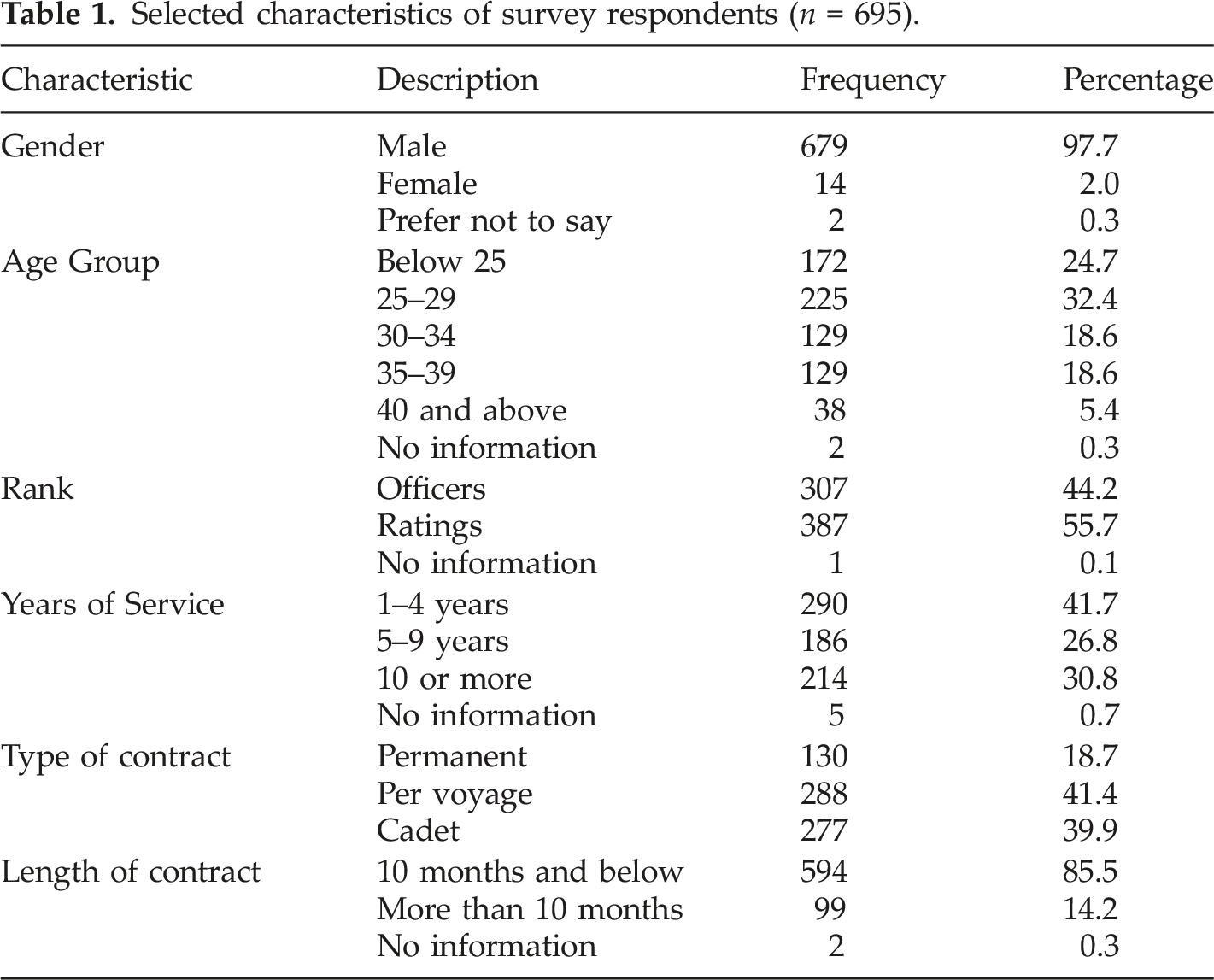
In the second phase of the pilot study, an online survey was carried out from July to mid-September 2021 with seafarers of various nationalities and who self-reported as “active seafarers” (i.e., have worked aboard ships or have actively sought sea-based employment during the pandemic). A total of 877 seafarers responded, of which 695 were Filipinos. The survey asked for socio-demographic data and had questions about the identified MHPSS from the first phase of the study. The participants were asked if they experienced any or all of the 22 MHPSS, whether these measures were helpful or not, and to what extent were they helpful.
The questionnaire used in this research was developed from the Filipino interview and survey respondents. The questionnaire was available in English and Filipino, and was hosted online using a paid licensed version of a web-based software. The survey was not designed to collect data on the mental health concerns of seafarers because there are other studies looking at these concerns, as presented in the literature review section. The survey was promoted in various Philippine maritime schools, training centers, seafarer unions, crewing agencies and other organizations (e.g., NGOs). Recruitment of participants was done through informal and formal networks of the researchers, as well as through social media platforms (e.g., Facebook, Facebook Messenger and Twitter).
Data analysis
A Likert-scale questionnaire was created to measure the Filipino seafarers’ perception on how much help does each MHPSS provided would bring in terms of improving their mental health. Each question has a Likert-scale responses to which number scales were assigned as: (1) not helpful, (2) a little helpful, (3) moderately helpful and (4) very helpful. In each MHPSS intervention, the weighted mean was computed by multiplying the number scale in each category with the number of respondents. The total scores were obtained and divided by the total number of respondents. The obtained weighted mean was compared to the mean range per scale and the corresponding verbal interpretation. The scale range was computed and interpreted as follows: 1.00
Experts’ opinion were used to assess the content of the survey questionnaire for clarity and relevance to the study objectives. Pre-testing of the questionnaire was conducted to determine the problems with questions or response wordings to ensure that the respondents understand the questions as the study intended. The questionnaire was not evaluated statistically to determine the internal validity and consistency reliability since the data used in the analysis is part of the pilot study conducted during the pandemic. All data were encoded to Microsoft Excel, and cross-checking and data analysis were performed using STATA SE version 12.
Profile of the respondents
Selected characteristics of survey respondents (n = 695).
Limitations of the study
The use of online web-based platforms in conducting interviews favored respondents who are knowledgeable on the use of computers or smartphones. As such, participation in the survey was probably limited to those capable to using devices with access to the internet. Furthermore, the results were prone to recall bias since the data was collected more than a year after the COVID-19 pandemic had started (July-September 2021). Just as importantly, the respondents’ perceptions and experiences with the MHPSS could have changed during the pandemic. Lastly, the results cannot be generalized to a larger population of seafarers due to its small sample and use of convenience sampling design.
Results and discussion
The 22 MHPSS
Our findings identified 22 MHPSS, which are classified as either internal and external interventions (see Figure 1). The 22 MHPSS are consistent with the other two published studies, which the current paper is associated (see, Abila et al., 2022; Tang et al., 2022). Seventeen of these were classified as internal because they were either provided by or viewed as responsibilities of the employers (i.e., companies) of seafarers, obligations of seafarers arising from their professional responsibilities or responsibilities of larger public organizations (e.g., governments or maritime administrations) charged with care of seafarers, especially during the pandemic. The best example for the latter is the COVID-19 vaccination rolled out by governments during the pandemic. The 17 internal MHPSS drawn from survey data are: (1) onboard audio-visual materials for mental health; (2) colleague counseling and support; (3) group recreational activities supported by companies; (4) increase in food allowance; (5) increase in recreational allowance; and (6) increase in Wi-Fi data allowance; (7) outsourced professional counseling services; (8) overtime pay; (9) positive and collegial work environment; (10) prioritizing seafarers for COVID-19 vaccination; (11) provision for anti-COVID-19 vaccination (or COVID-19 vaccination status); (12) updates or information on COVID-19; (13) provision of sufficient and high-quality personal protective equipment (PPE); (14) reduced overtime hours; (15) physical exercise; (16) timely crew change; and (17) communicating with the family. Proportions of Filipino international merchant seafarers who experienced MPHSS interventions during the COVID-19 Pandemic (n = 695).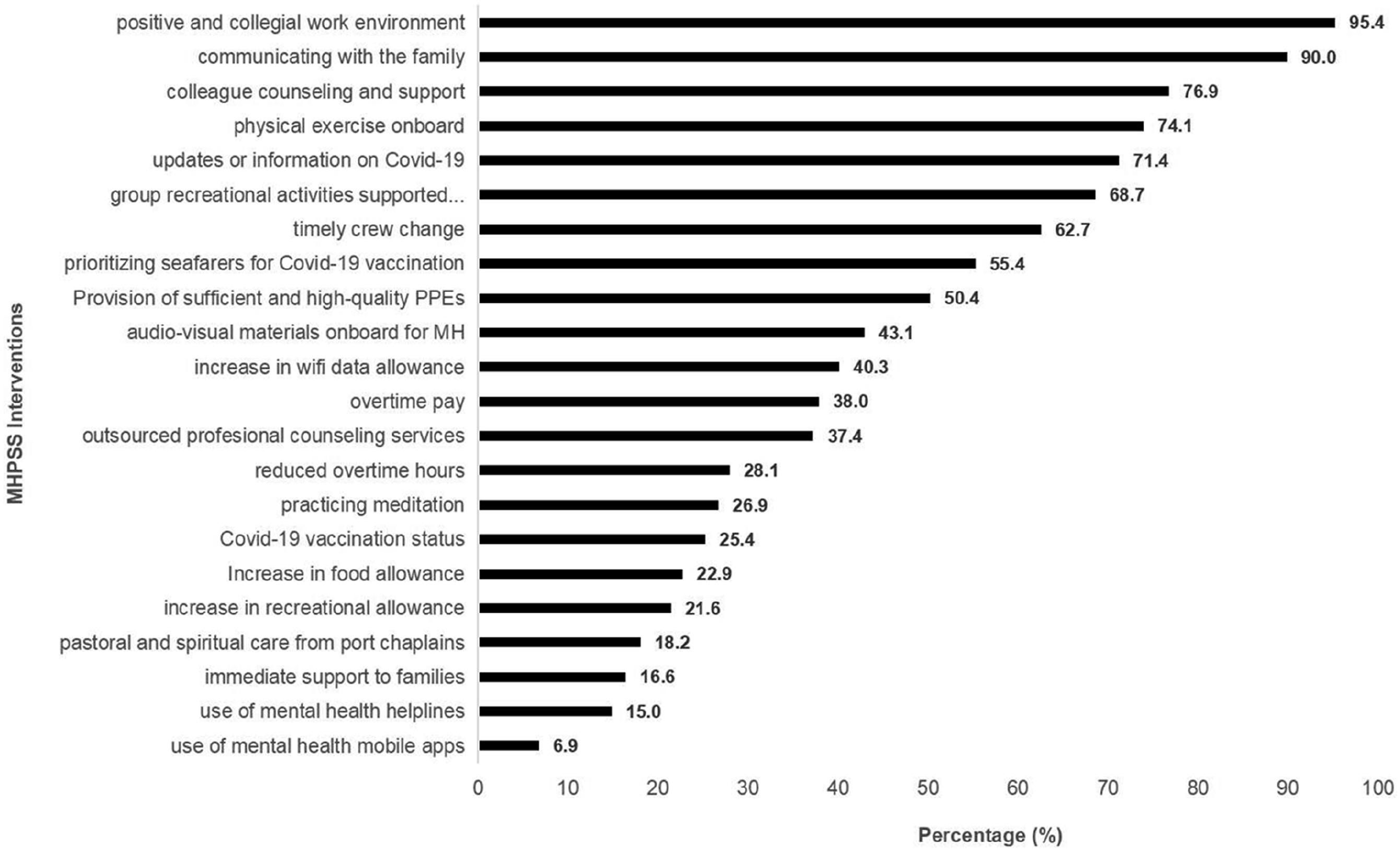
Although physical exercise and communications are personal discretions of the seafarer, these are viewed as internal to seafaring because companies encourage seafarers to maintain a healthy lifestyle aboard vessels through regular physical exercise and communication with their families (see, Tang et al., 2022). Since these MHPSS are viewed in relation to a global crisis, a number of these interventions were associated with health and safety, particularly the priority given by the Philippine government for actual COVID-19 vaccination of seafarers to protect them in order to perform their jobs.
Our data also illustrate that there are five external interventions provided or used by seafarers. External interventions are those that come from stakeholders who are not parties to the employment of seafarers such as NGOs, chaplains or their families. These external interventions include: (1) the use of mental health helplines; (2) the use of mental health mobile applications; (3) practicing meditation; (4) immediate support to the family coming from the seafarers’ companies, Philippine government or other stakeholders (e.g., NGOs); and (5) pastoral and spiritual care from port chaplains. In this study, meditation is considered as a psychological or mental practice focusing on experiences occurring in the present moment to let go of negativity, or about mindfulness. Though it is primarily a private spiritual or religious practice, meditation is viewed in this study as an external intervention because it might depend on the influence of the religious culture of the seafarer. However, the Filipino context of meditation is culturally religious, a belief in God, as it is a widely known fact that a significant portion of the Filipino population are Roman Catholics.
Experiences and perceived usefulness of MHPSS
Out of the 22 MHPSS, only eight were experienced by mostly all to more than half of the participants. Notably, all eight are internal MHPSS interventions: Positive and collegial work atmosphere (95.4 percent), communicating with the family (90.0 percent), colleagues’ counseling and support (76.9 percent), physical exercise onboard (74.1 percent), updates on COVID-19 (71.4 percent), recreational activities onboard (68.7 percent), timely crew change (62.7 percent) and priority for COVID-19 vaccine (55.4 percent). On the other hand, the least experienced MHPSS are all external: Practice of meditation (26.9 percent), pastoral and spiritual care from port chaplains (18.2 percent), immediate support to the family (16.6 percent), the use of mental health helplines (15.0 percent) and the use of mental health mobile apps (6.9 percent).
In order to make sense of these results, this section attempts to interpret these in relation to commonly ascribed aspects of Filipino culture, such as being family-oriented and being heavily influenced by Catholicism and Western colonialism (Rafael, 2000). Without promising to unpack the complexity of contemporary Filipino culture in this section, we believe that seafarers are viewed as reproducing these commonly ascribed aspects of their culture in their lives as seafarers. Hence, this might justify an analysis of why some MHPSS are more effective for Filipino seafarers compared to others (Rafael, 2000).
With the development of information and communication technologies and new social media platforms (i.e., Facebook and Instagram), Filipino families used these technological developments to communicate regularly. Our data shows that almost all Filipino participants communicated with their families at least once a month. That is, the majority of more than 97 percent of the participants communicated either once a week, twice a week or daily. These findings suggest the importance of family in Filipino culture and support other studies on how communication contributes to the importance of family relations for Filipino seafarers. For example, Galam (2012) examined how wives of Filipino seafarers began using mobile phones to reproduce a sense of family intimacy despite the physical distance. While not specific to the Filipino context, Sampson and Ellis (2019) reported that 85.7 percent of the seafarers in their study combat loneliness and anxiety while on board by contacting their families and friends through the internet. Also, Tang et al. (2022) reported the importance of the family as an effective psychological support during the pandemic. About 98 percent of our respondents were happy texting or communicating with their families using various online platforms. Unsurprisingly, communicating with one’s family is perceived as the most (89.7 percent) effective MHPSS among Filipinos (see Figure 2). Conversely, Brooks and Greenberg (2022) demonstrated that loneliness and long separation from family were factors for depression, stress and fatigue among seafarers. Perceptions of Filipino international merchant seafarers on the importance of MHPSS interventions during the COVID-19 pandemic.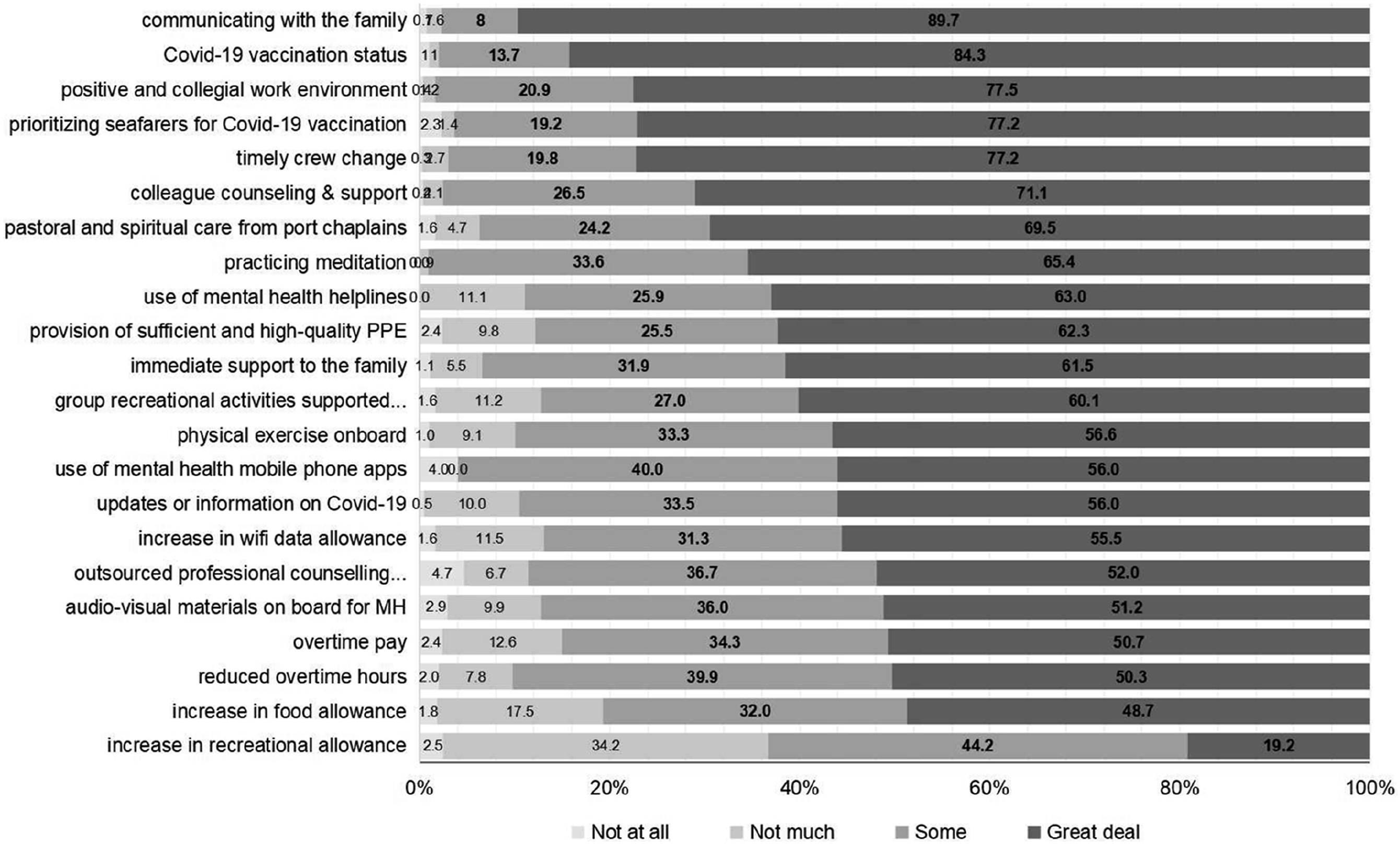
The survey results further showed the importance of other aspects of Filipino culture, which are sharing and helping others. Majority of the respondents reported positive and collegial work environment (95.4 percent), and counseling support from fellow crew members (76.9 percent) as useful support strategies during the pandemic. Bayanihan, which roughly translates to “community spirit,” refers to empathy and sharing of one’s resources especially during a crisis. This is associated with either religion or local culture, and seafarers are known to reproduce these values on board ships (Tordillo, 2007). A report also showed that interpersonal interaction among seafarers and participation in social activities improve psychological well-being (ISWAN, 2021), and any type of peer support such as informal counseling has been reported to reduce acute fatigue, stress or burnout (Andrei et al., 2020). Sampson and Ellis (2021) reported that seafarers find friendship as a source of happiness, while the lack of peer support, discrimination and falling out with superiors and colleagues were associated with unhappiness and depression.
During the pandemic, many felt they were trapped on board, and stranded seafarers experienced severe anxiety, mental distress (Wong, 2021), burnout, fatigue and loneliness (Hebbar and Mukesh, 2020). The longer a seafarer is exposed to fatigue, the more likely mental problems might develop (Hebbar and Mukesh, 2020; Wong 2021). A majority of the respondents (77.2 percent) also perceived the timely crew change as an important MHPSS (see Figure 2), and only six of 10 Filipinos experienced timely crew change (see Figure 1). Since companies facilitate crew change, seafarers do not have full control over this intervention. However, it is worth noting that only 62.7 percent of respondents experienced timely crew change, which meant 38.3 percent (or four in every 10 seafarers) had to stay on board longer than their original contracts of employment (see Figure 1).
More than half of the respondents (55.4 percent) experienced being prioritized for the COVID-19 vaccination (see Figure 1) but, only about a quarter (25.4 percent) were vaccinated during the survey period (July to September 2021). Being prioritized for the COVID-19 vaccination means they are on top of the government’s list of groups to be vaccinated. In effect, there was a gap between the proportion of seafarers being prioritized for vaccination and the proportion of already vaccinated seafarers. This gap might be due to the refusal of seafarers to get vaccinated, logistical problems with vaccine delivery, inadequate information on vaccines and vaccination programs for seafarers, and/or lack of education campaigns on vaccines. However, most Filipino seafarers perceived vaccination (84.3 percent) and being prioritized for vaccination (77.2 percent) as helpful in improving their psychosocial well-being. Pauksztat, Grech and Kitada (2022) reported that seafarers were highly aware of the risk of COVID-19 infections and the benefits of being vaccinated. As mentioned earlier, the Philippine government approved the inclusion of seafarers on the priority list in the national COVID-19 vaccination program only in April 2021, more than a year after WHO’s declaration of a pandemic (Shen, 2021). This might have been in response to the call of various maritime organizations and the WHO for governments to consider seafarers as essential workers, the availability of vaccines or the combination of these. The inclusion, however, was considered late, which was supposed to be at the start of the pandemic (WHO, 2021). Due to this delay, some shipping companies provided vaccines for seafarers and were seen to be more pro-active compared to the Philippine government in providing vaccines. Previous studies suggested seafarers to be considered “essential workers” since the global economy and recovery from the economic effects of the pandemic partly depend on them (Doumbia-Henry, 2020), and being vaccinated allows them to work freely and sustain the dynamic global chain (WHO, 2021).
Internet access on board was not included in the list of internal interventions since the questions on experience and perception did not follow the standard questions. Survey data showed that 86 percent of Filipinos on board had internet connectivity (see Figure 2). Sampson and Ellis (2021) identified free internet access as the most significant contributor to the improvement of seafarers’ mental well-being. In other studies, it is not the availability of internet connection that mitigates the impact of the pandemic but the speed and stability of the internet (Pauksztat et al., 2022b). It is worth mentioning the value of this intervention, since recent reports have shown that free, fast and stable internet connection, and the use of mobile apps and helplines significantly impact seafarers’ mental health and facilitate access to various external MHPSS (Pauksztat et al., 2022b).
Chaplaincy counseling happens when the vessel is docked in ports. Although 69.5 percent of the Filipinos perceived port chaplaincy to have a great deal of importance in improving their mental health and psychological well-being (see Figure 1), their usage was low at only 18.2 percent (see Figure 2). On average, nearly three of 10 Filipinos practiced meditation on board during the pandemic (see Figure 1). The busy schedule of seafarers while on port, the availability of the chaplains or the strict COVID-19 port protocols that did not allow outsiders (like chaplains) to interact physically with the seafarers could be reasons for the low usage.
The incidence of reporting medical and psychological symptoms significantly increased during the pandemic (Pauksztat et al., 2022b). Compared to before the pandemic, access to outsourced professional telemedical counseling in the maritime sector was observed to have increased (Sagaro and Amenta, 2020). Hence, it is assumed that more seafarers might access telemedical counseling. That is, telemedical counseling was potentially helpful in minimizing the negative impacts of COVID-19, especially for those stranded at sea (Mittal et al., 2020). In this study, however, only a few of the respondents reported having experienced professional tele-counseling (37.4 percent), mental health helplines (15.0 percent) and mental health mobile apps (6.9 percent) (see Figure 1). One of the reasons was the low awareness of Filipinos on mental health mobile apps where only eight percent of the respondents reported using these apps (see Figure 3). Another was that the use of technology and web-based interventions require knowledge of the use of smartphones or computers, plus the availability of fast and reliable internet connection. From these findings, we surmise that not all seafarers might be comfortable with the use of new communications technology, or they might not be culturally and psychologically ready to share their psychological problems with strangers. Hence, these strategies may not have been effective for the Filipino seafarers in this study. Comparison between MHPSS interventions experienced and its perceived importance among Filipino seafarers during COVID-19 crisis.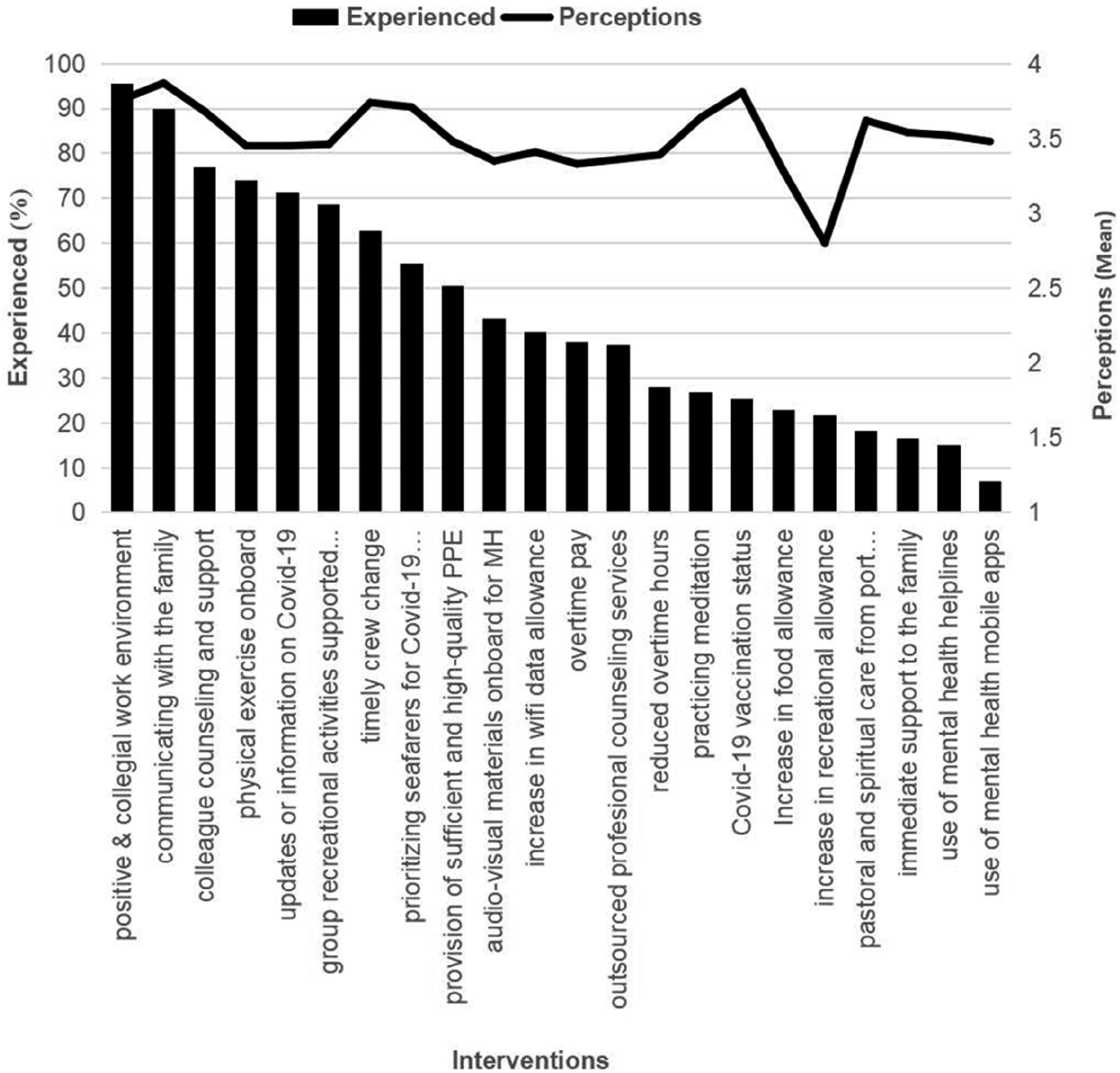
WHO promoted using quality PPE to minimize the risk of infections among the front liners, including the seafarers (WHO, 2021). Previous studies have shown that high-quality PPEs helped minimize the spread of COVID-19, and substandard PPEs posed a risk for the spread of infections (Sagaro et al., 2020). Although all respondents were provided PPEs, 49.6 percent reported receiving low-quality PPEs (see Figure 1).
According to Sampson and Ellis (2021), seafarers experience a reduction in stress, depression and anxiety when their companies provide more recreation, food and internet connection. In the case of our respondents, as shown in Figure 1, only a few claimed that they received increased allowances for food (22.9 percent), recreation (21.6 percent), and Wi-Fi data (40.3 percent) and overtime pay (38.0 percent). In addition, the seafarers worried about the health and financial situation of their families during the pandemic. Since many of them have reported that they did not receive their overtime pay and other forms of allowances, any immediate assistance to their families from their employers would have eased the anxiety and other adverse effects of the pandemic on mental health.
Figure 3 shows the proportions of seafarers who experienced the MHPSS and their perceptions of how much help each intervention brought to their mental and psychological well-being. The results showed that all interventions obtained a mean score of above 3.26, except for an increase in recreational allowance with a mean score of 2.80. This means that the respondents perceived all interventions as a “great help” in improving their psychosocial well-being, while an increase in recreational allowance as “some help.” Despite the high recognition of their importance, only eight interventions (mostly internal interventions) have been experienced by at least half of the respondents. The interventions which were highly perceived as important but least experienced by the seafarers include using mental health mobile apps, mental health helplines, immediate support of employers to families, port chaplaincy and counseling, and increased recreational and food allowances.
Summary and conclusion
Overall, Filipino seafarer participants were very appreciative of the usefulness of all the MHPSS. However, the results showed only eight of the 22 MHPSS interventions were experienced by the majority of the Filipino survey participants during the COVID-19 pandemic. These interventions were (1) positive and collegial work environment; (2) communicating with the family; (3) colleague counseling and support; (4) physical exercise onboard; (5) updates on COVID-19; (6) group recreational activities supported by companies; (7) timely crew change; and (8) prioritizing seafarers for vaccination. These were all internal interventions provided by or are responsibilities of companies or the governments, or responsibilities of seafarers arising from their professional responsibilities. All external MHPSS interventions were not experienced by most of the respondents, probably because of the highly restricted physical movements of seafarers and stakeholders who provided these interventions (e.g., port chaplains) or the poor quality of facilities (e.g., no access to or poor quality of internet) required to use these interventions (e.g., mental health mobile apps). These least used external interventions were (1) mental health helplines, (2) mental health mobile apps, (3) practicing meditation and (4) pastoral care from port chaplains. The same can be said of the immediate support provided to the family from external sources.
In terms of perceptions of the usefulness of these MHPSS to seafarers’ mental health, all interventions were found very useful. That is, all obtained a weighted mean score of above 3.26 (“a great deal of help”), except for increased recreational allowance with a mean score of 2.8 (“some help”). Thus, Filipino seafarers highly perceived the importance of all identified MHPSS that might have mitigated the adverse effects of the pandemic on their mental health and well-being. Lastly, the interventions that seafarers found highly useful and effective were either culturally acceptable to them or had facilities that allowed them to reproduce culturally acceptable practices. These were communicating with their families, immediate health strategies (e.g., being vaccinated), and low-cost and commonly practiced social strategies (e.g., counseling and supporting each other while at work and especially in times of crisis).
Recommendations
Based on these findings and discussion, culturally sensitive policies are needed when supporting the mental health and overall well-being of Filipino seafarers. Given this view, the authors recommend these broad policies for the government, shipping companies or crewing agencies: For the government, to prioritize seafarers for anti-COVID-19 vaccinations, including booster shots; for both government and companies, to develop mental health-related policies and programs, such as psychological resilience training, counseling among seafarers, and other education and training strategies compliant with the Philippine Mental Health Act of 2018 (Abila, 2022); for companies, to improve the access to and quality of shipboard internet facilities for seafarers; for both companies and the government, to develop training materials that are culturally and gender-sensitive, easily accessible and based on theoretically-sound and commonly practiced counseling strategies. Training materials can be used by seafarers to support their crewmates while at work, especially in times of crisis.
Footnotes
Acknowledgments
The authors are very grateful to the critical and helpful comments of the anonymous reviewers and the editors.
Declaration of conflicting interests
The author(s) declared no potential conflicts of interest with respect to the research authorship and/or publication of this article.
Funding
The author(s) disclosed receipt of the following financial support for the research authorship and/or publication of this article: The authors wishes to thank the Lloyd’s Register Foundation for funding the pilot study (Grant No. Sg2\100046) from which this paper is based.

Data availability statement
The data and survey questionnaire used for this study are available from the corresponding author upon reasonable request.