




Abstract
There are approximately 1,440 tons of highly enriched uranium (HEU) in the world today. Because this material might be stolen by terrorists seeking to build a nuclear weapon, efforts are underway to reduce, secure, and consolidate stocks of HEU. But simply minimizing the use of HEU is no longer sufficient to the risk nuclear terrorism poses. Low-enriched uranium (LEU) has proved acceptable for virtually all civilian applications, and LEU has been substituted for HEU in 63 reactors and facilities to date. There are few remaining technical impediments to the elimination of HEU use in civil and military naval nuclear facilities. The process of HEU elimination must begin with enhanced transparency and stronger international standards for HEU inventory declarations. The international community must also find ways to incentivize conversion from highly enriched to low-enriched uranium and continue to fund research and development for HEU alternatives. Ultimately, however, eliminating HEU use will require that all stakeholders reach a consensus and commit to an irreversible policy in favor of low-enriched uranium.
It might have been the opening scene to a future spy novel—if it hadn’t been real. Seven people were reportedly in the Moldovan capital of Chisinau offering a small sample of highly enriched uranium (HEU) for sale to a shadowy North African buyer. The sample transaction was to be an initial step toward a payment of some $30 million for 9 kilograms of HEU—roughly one-third of the amount needed to make the kind of crude nuclear weapon that Al Qaeda and other terrorist groups have long sought.
But before the sale could be consummated, a second buyer appeared on the scene, moving quickly to acquire the uranium sample. The buyer was not a terrorist but an undercover security agent working a sting operation for Moldova’s Ministry of Internal Affairs. Six people—four Moldovans, a Russian, and a resident of the disputed, breakaway area of Moldova known as Transnistria—were arrested. But even if the operation was generally considered a success, several details of the June 2011 sting were worrying, including the location of the remaining HEU that the smugglers claimed to have in their possession and the escapes of two central figures: the alleged ringleader of the smuggling operation, who fled to Russia, and the potential North African buyer (US Senate, 2011: 1–2).
Globally, most highly enriched uranium is used in nuclear weapons, but significant amounts of it remain in civilian programs, and is sometimes still poorly secured. It isn’t outside the realm of possibility that this civilian material could be redirected to non-peaceful purposes: Four terrorist groups have expressed interest in a nuclear weapon, five terrorist groups are estimated to have the capability of acquiring and using a nuclear weapon, and two groups are known to have tried to buy nuclear material on the black market (Allison, 2010).
What makes highly enriched uranium a likely material of choice for a nuclear terrorist? It is suitable for a “gun-type” fission weapon, a simple design that does not require sophisticated detonation equipment. Also, HEU is hard to detect, emitting only faint radiation signals, which makes it easy to smuggle. And because HEU is less radioactive than plutonium—the other fissile material used to construct an improvised nuclear device—it is safer to handle. Even a simple HEU device would be more destructive than the largest conventional bomb, not to mention the radioactive consequences of such a blast. To put it starkly: Even a primitive HEU weapon could destroy or make uninhabitable a large area of Manhattan in seconds.
Around the world, militaries and the nuclear industry have about 1,440 tons of highly enriched uranium. Though many nations have responsibly identified ways to secure, consolidate, and minimize this material, these efforts are not sufficient to the task of preventing nuclear terrorism. Low-enriched uranium (LEU) has proved to be an acceptable substitute for HEU in virtually all civilian applications, and there are few technical impediments to conversion of the rest. The focus of international dialogue should now shift from the minimization of HEU use to its elimination from civil and naval applications, beginning with enhanced transparency and stronger international standards on disclosing HEU inventories.
State of the international dialogue and action
In recent years, countries around the world have made noticeable strides in diminishing highly enriched uranium stocks: 19 countries have removed their HEU fuel from research reactors and critical assemblies since the first HEU clean-out operation was completed in Colombia in 1996, and 10 countries have removed more than 400 kilograms of HEU from civilian sites to the United States or Russia for storage and, ultimately, final disposal since 2010, the year of the first Nuclear Security Summit.
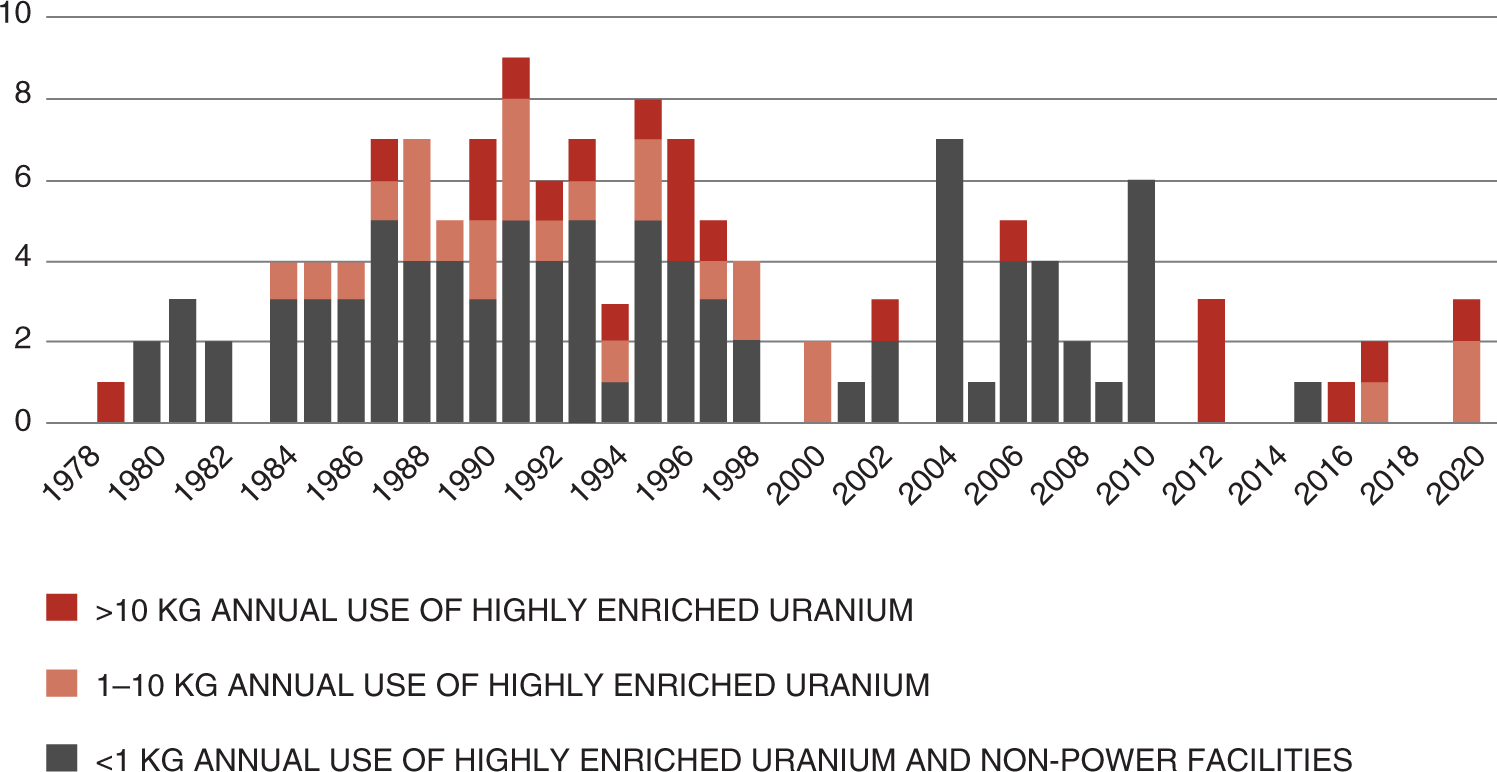
Though these efforts are commendable, they did not represent a new approach to international security. In 1978, an initiative to create low-enriched uranium fuels that could replace highly enriched uranium in some nuclear facilities was started under the Reduced Enrichment for Research and Test Reactors program. Since then, 62 HEU-fueled research reactors have been converted to use LEU fuel, and 17 reactors have been shut down in 36 countries (see Figure 1 and Figure 2).
1
Converted HEU-fueled research facilities, 1978–2020. Closed HEU-fueled research facilities, 1978–2020.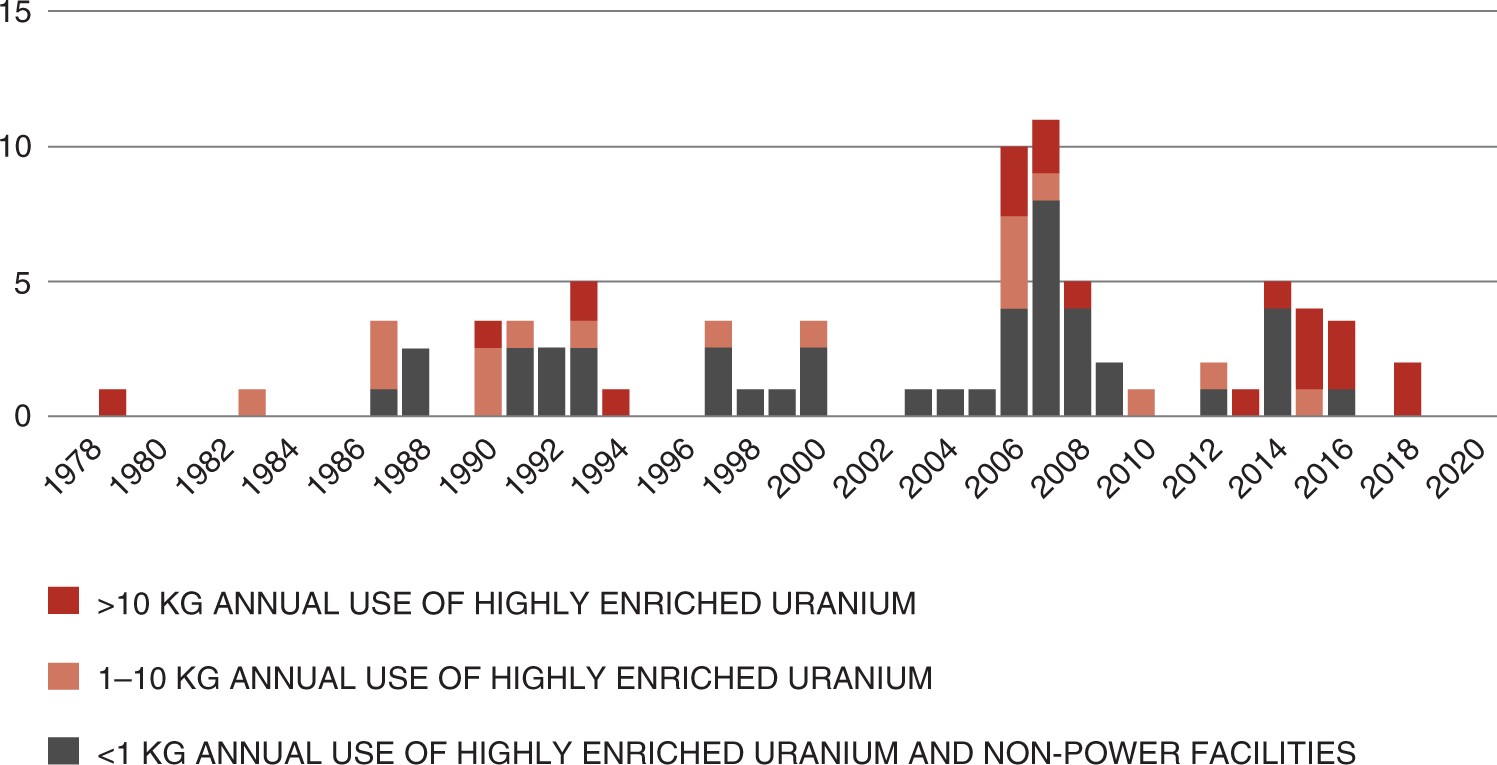
Through the megatons-to-megawatts agreement inked by the United States and Russia in 1993, Russia agreed to downblend 500 tons of excess highly enriched uranium from its nuclear weapons program and sell the resulting low-enriched fuel to the United States for use in its commercial power reactors. So far, almost 450 tons of HEU have been converted—that’s comparable to 18,000 weapons—and now generate 10 percent of the United States’ electricity.
There has also been progress in the medical-isotope industry, where research reactors that produce medical isotopes traditionally have run on HEU fuel, and highly enriched uranium is also used as the “targets” that are inserted into these reactors. Just a few research reactors around the world produce molybdenum 99, a radioactive isotope that is generated into technetium 99m for more than 20 million diagnostic imaging procedures worldwide. Most of the world’s molybdenum 99 comes from five countries—Canada, the Netherlands, Belgium, France, and South Africa. Canadian producer AECL plans to shut down its business entirely, and in December 2010, South Africa became the first large-scale producer to supply molybdenum 99 using low-enriched uranium. The other producers have pledged to convert their reactors and targets to use LEU by 2016. 2 At the Nuclear Security Summit in Seoul this year, Belgium, France, and the Netherlands reaffirmed their support for conversion of existing HEU-fueled facilities by 2014 and for dealing with accumulated HEU through recycling or other disposal efforts (White House, 2012). This leaves Russia’s JCS Isotope as the only company with plans to use HEU in the medium-term future.
Despite these trends, the Norwegian Radiation Protection Authority’s Styrkaar Hustveit and Ole Reistad, who is one of this paper’s co-authors, estimate that more than 700 kilograms of highly enriched uranium—around 52 percent of the world’s consumption—is used annually in civilian research reactors, and 40 to 50 kilograms is used for civilian isotope production (Reistad and Hustveit, 2008: 269).
Progress toward commitment
HEU-reduction efforts have not always come easily over the years: Experts have argued that the issue does not warrant international deliberations; they have also charged that restricting uses of highly enriched uranium unfairly disadvantages developing nations in their efforts to grow their infrastructures. These arguments have gone beyond intellectual tussling within academic circles and become part of a vigorous debate at international meetings, including the Non-Proliferation Treaty Review Conference. And the arguments have had an impact on international efforts to reduce civilian HEU. 3
In 2004, after global HEU-minimization efforts had stalled, the National Nuclear Security Administration (NNSA) created the Global Threat Reduction Initiative to identify, secure, and reduce the amount of nuclear and radiological materials and facilities worldwide. But, while implementing this program, the United States hit roadblocks: Some countries were concerned that their scientific and technical development would be constrained if they gave up highly enriched uranium or HEU-fueled facilities. The United States, among other partners, ultimately prevailed in convincing many countries to minimize HEU use by offering new fuel, new facilities, and technical upgrades to existing facilities to ensure their scientific bases were protected.
By 2006, within the first two years of the Global Threat Reduction Initiative’s launch, six research reactors in the Netherlands, Czech Republic, and the United States had been converted to LEU, and hundreds of kilograms of US- and Russian-origin HEU had been removed (NNSA, 2006). Today, 22 research reactors worldwide have been converted, seven of which are research reactors at US universities and laboratories (NNSA, 2011). Kyrgyzstan endorsed these measures and called for HEU security improvement, consolidation, reduction, and eventual elimination at the 2005 Non-Proliferation Treaty Review Conference, spurring action by Iceland, Lithuania, Norway, and Sweden. 4
Though there is growing political consensus on LEU conversion, there is still not a universal consensus on HEU minimization, much less elimination from the civil sector. It is important, therefore, for the international community to continue to consolidate gains in this area and establish an irreversible norm.
Progress in technology
On the technical side, the conceptualization and deployment of new technologies that had been in development for years—and in some cases decades—show that reactor fuel can be made and medical isotopes produced using low-enriched uranium. Led by efforts in the United States, Russia, and Europe, technical assistance and cooperation have resulted in tremendous progress in implementing the necessary requirements for real threat reduction.
But technical progress can only be made when there is political commitment. The Nuclear Security Summits have been a successful and encouraging start. This was reflected in the language of the 2010 Nuclear Security Summit communiqué, in which nearly 50 heads of state pledged to “encourage the conversion of reactors from highly enriched to low-enriched uranium fuel and minimization of use of highly enriched uranium, where technically and economically feasible” (White House, 2010). This commitment was followed up with pledges from individual countries to either reduce or eliminate their HEU holdings. At the 2012 Summit in Seoul, the participants agreed to announce “voluntary specific actions” intended to minimize the use of highly enriched uranium by the end of 2013 (Nuclear Security Summit, 2012: 3).
Remaining challenges
Despite the important technical and policy progress that has been made on the agenda to reduce civilian HEU use, significant challenges remain. Officials in some countries simply are not convinced of the urgency to remove or eliminate HEU stockpiles or the importance of their role in such efforts.
Although all non-nuclear weapons states provide confidential reporting on HEU stocks under their International Atomic Energy Agency (IAEA) safeguards agreements, there is no mandatory transparency regime or regular public declarations regarding civil HEU stockpiles. It is therefore difficult for policy makers and analysts to fully understand the scope of the HEU problem. 5
Highly enriched uranium is still used by facilities—critical assemblies and pulsed reactors, in particular—that are not included in existing international cooperative programs and, therefore, do not have conversion or shut-down paths. The reactors that have yet to be converted are probably the most technically challenging: That is, almost all of the low-hanging fruit of HEU-reduction efforts has already been picked. In addition, some HEU materials are in forms not currently targeted for safe disposal by US programs, including liquids and graphites.
The largest inventories of civil highly enriched uranium remain in Russia (see Figure 3). Though it has played a significant role in removing HEU from other countries, Russia has done little to convert or shut down its own facilities. For the Russians, this is a matter of setting priorities: They have argued that their facilities and material stockpiles, though vast, are well-secured, so it is wiser to spend the effort and resources cleaning out less-controlled operations.
New HEU-fueled research facilities, 1978–2020.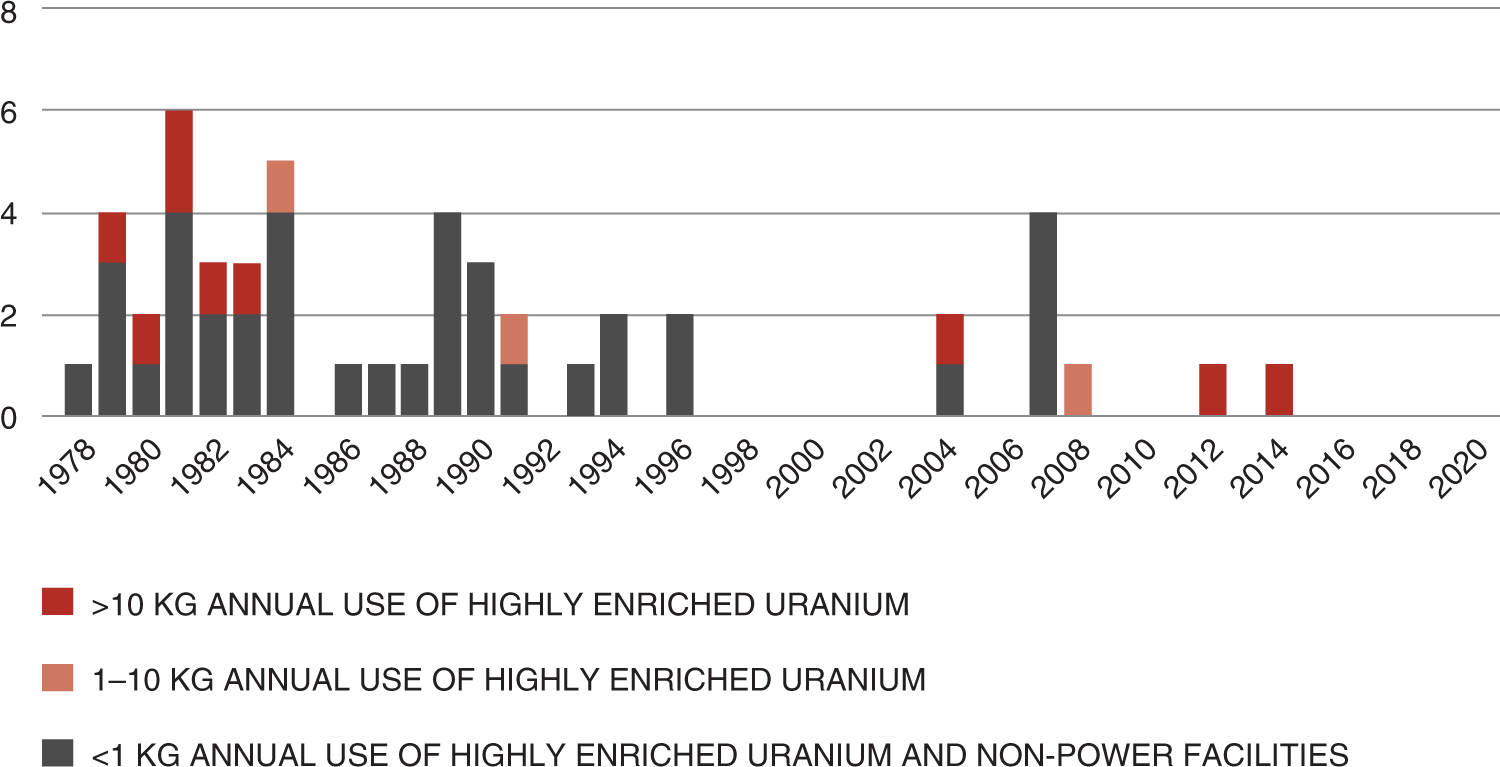
There has been a clear trend in removing highly enriched uranium from research reactors around the world (see Figure 4). Of the 117 reactors still in use for research, in isotope production, or as prototypes, approximately 70 are Russian and have no clear conversion or shutdown path (see Figure 4), and Russia will even open a new HEU-fueled reactor in 2012.
6
This vast Russian HEU empire ensures that substantial amounts of this dangerous substance will continue to circulate through fuel fabrication and reprocessing facilities as well as fresh- and spent-fuel storage sites.
HEU-fueled research facilities, Russia and the world, 1978–2020.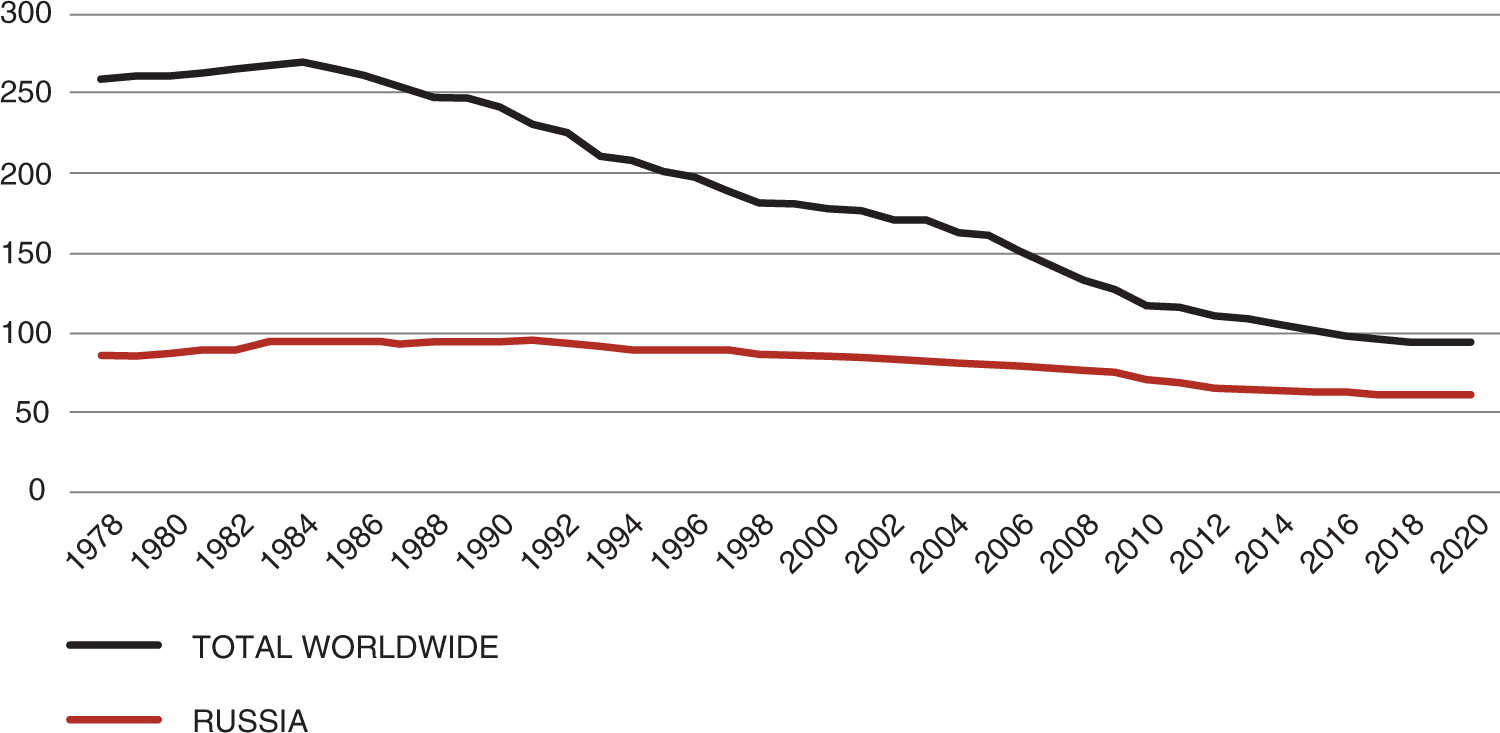
Following a presidential-level agreement to cooperate on research reactor conversion, US Deputy Energy Secretary Daniel Poneman and Russia’s Rosatom director general, Sergey Kirienko, identified six reactors as possible conversion targets and commissioned feasibility studies (US Energy Department, 2010). This agreement marks an important first step in conversion from highly enriched uranium to low-enriched fuel in Russia. Even so, Russia will soon have the majority of the world’s HEU-fueled research reactors; it already has two-thirds of the world’s pulse reactors; and—bucking the global trend—is scaling up HEU-based isotope production for medical purposes (Bunn, 2012).
Short of a broader HEU-minimization commitment, it would be valuable if Russia were to develop a strategic plan on science and technology needs that determines how many research reactors and critical assemblies are actually needed to enable the state’s overall scientific mission. This could help ensure that HEU-minimization programs have forward momentum and are sustainable.
HEU in the military
Historically, highly enriched uranium used in naval reactors that power aircraft carriers and submarines for the United States and Russia have not been included in HEU-minimization discussions. As a result, this severely limits the international effort to reduce all HEU use outside of weapons programs.
France completed the conversion of its small submarine fleet to low-enriched uranium in 2008 (Ward, 2011: 10), but technical obstacles and operational priorities have constrained the United States and Russia from making commitments to convert or even publicly assess the feasibility of using LEU for future generations of naval reactors. The scope of this problem is huge. The International Panel on Fissile Materials (IPFM) estimates that the US Navy requires approximately two tons of highly enriched uranium each year, the Russian navy one ton, and the United Kingdom’s navy 200 kilograms. The Indian navy is also HEU-fueled (Harvey, 2010). The US Navy has a 128-ton HEU reserve. The size of the Russian reserve is not known, but it can be reasonably assumed that it is large, given their fleet requirements. The United Kingdom has stated that none of its military HEU stocks will be declared excess, as the material has been set aside for the submarine program. Because they claim this material for future naval use, these countries won’t downblend or eliminate these large quantities of HEU any time soon.
The US Navy is reviewing the research, development, manufacturing, and deployment paths for the next generation of its nuclear submarines, but it has so far indicated no interest or willingness to evaluate an LEU-based reactor for the new boats—a stance that has profound implications for HEU minimization. The US Navy currently has enough HEU in reserve to fuel its submarine fleet for 65 years beyond what has already been fabricated into fuel assemblies (IPFM, 2010: 32; Reistad and Hustveit, 2008: 275, 279–280). The navy, understandably, wants to use technology that has a safe and reliable track record, and it has little incentive to re-think its mission requirements and consider whether LEU—or at least a lower enrichment level of HEU—would unacceptably constrain its operations.
Naval HEU minimization is one area in which Russia may actually be able to set an example. It has designed a next-generation LEU-fueled reactor (RHTYM-200) for its icebreaker fleet that could, technically, be used to power its nuclear submarines and fuel the barge-mounted power plants that Russia hopes to sell commercially (Egnatuk, 2011: 13, 24). Streamlining of this sort would result in significant life-cycle cost savings due to economies of scale. 7 Russian officials have not expressed an interest in this approach to date; indeed, there is evidence to suggest the Russian navy intends to increase enrichment levels to extend core life and reduce refueling outages of its submarine fleet (Primachenko, 2011: 2).
Russia has an enormous opportunity to take the lead internationally on a key nonproliferation objective—and this could pose a fundamental challenge to the United States to do the same.
Setting a policy and technical agenda
To ensure there is no return to HEU use in civil activities and to address the most significant roadblocks to further progress, the international community should consider policy changes in six areas:
International commitments
To create the political climate necessary for highly enriched uranium to be steadily phased out, the international community should work toward one goal: the establishment of a global norm that calls for low-enriched uranium to be used in any new facility, process, or vessel under development, design, or construction, including new applications such as space reactors. Once this norm is established, more ambitious steps—such as the establishment of regional fissile-material-free zones— might also be considered. In addition, although the challenges are significant, it is time to begin a conversation on assessing inventory needs for the ongoing use of HEU in military vessels and conduct feasibility studies of possible LEU-based vessels for future generations of submarines and aircraft carriers.
Security requirements
To encourage decisions that favor the use of low-enriched uranium, countries should agree to adopt security requirements that correspond to material types and link LEU-conversion to lower security costs. This policy shift is particularly relevant to Russia, where physical protection regulations include significant disincentives to HEU minimization. Those regulations effectively require the same security measures for LEU as for HEU, giving facilities little incentive to champion a potentially costly conversion to low-enriched fuel (Bunn, 2008: 144). Additionally, in Russia, salary is often linked to the type of material used at a nuclear facility, so conversion to LEU would actually result in lower pay for operators (Civins, 2011: 14–15). This actively discourages conversion decisions by facility operators.
Regulatory support
Nuclear and medical regulatory regimes must support attempts to import and use materials made from LEU in place of HEU-based isotopes. Predictable regulatory regimes should encourage use of LEU-based, molybdenum-99 production methods to prevent existing, subsidized HEU processes from pricing LEU alternatives out of the market. Additionally, countries should be prepared to facilitate the timely licensing of both LEU-based production processes and the medical isotopes they produce so that reliable supplies can be ensured.
Transparency efforts
States should expand consultations on the development of HEU transparency guidelines, like those that already exist for plutonium used in civilian facilities. Until there are agreed-upon guidelines, the international community should encourage voluntary declarations of HEU holdings. Transparency efforts should also include military non-explosive stockpiles, with countries encouraged to declare inventories of material resulting from nuclear disarmament, material declared excess to defense needs, and material in active and reserve stockpiles for military and naval propulsion. To build a broad constituency of support for HEU-minimization efforts, the international community should work to increase understanding in the media and general public about the nature of nuclear facilities and the fuel stocks needed to run them.
International cooperation
Too many facilities and inventories of highly enriched uranium remain outside the scope of existing HEU-minimization programs; these facilities do not have viable conversion or shut-down paths. Though challenges remain for some facilities—particularly high-flux reactors and reactors with unique fuel designs—conversion is possible in almost all instances, provided that the fuel in development is proved safe and effective. In the near term, the miniature neutron source-reactor (MNSR) conversion process led by the IAEA in partnership with China, which exported these small reactors, should be completed. The MNSRs are located in politically difficult locations—such as Syria, Iran, and Pakistan—making such activities both challenging and necessary. The US Energy Department should evaluate what would be required to continue to expand its programmatic scope, allowing for the take-back of HEU in liquid, graphite, thorium fuel, and other forms and compositions not currently targeted. Continued research and development is needed to explore innovative and alternative ways of minimizing HEU use, particularly in regard to developing new reactor designs. 8 It will also be important for the international community to establish a program to examine options for the management of spent fuel from newly developed LEU fuel types resulting from conversion efforts.
Naval conversion
Why should the rest of the world move from HEU to low-enriched uranium when the biggest consumers—the navies of the world’s major powers—exhibit no interest in even considering the feasibility of doing the same? In addition to seriously assessing the feasibility of developing LEU fleets, the US and Russian navies should make a near-term commitment to consolidating activities like fuel fabrication and fresh- and spent-fuel storage, thereby reducing risks.
Fight terrorism: Change the uranium equation
The focus of international dialogue needs to shift from HEU minimization to the elimination of all uses of highly enriched uranium in civil and naval programs. It is the responsibility of stakeholders to seize the moment, broaden the consensus, and make commitments irreversible.
The minimization of highly enriched uranium use is an important nonproliferation goal to advance international cooperation on the peaceful uses of nuclear energy and to support nuclear disarmament. But even more fundamental, the move to lower enrichment levels in the civilian and naval sectors is a zero-sum game: The less HEU that exists, the less opportunity for a terrorist group to acquire the amount needed to build and use a nuclear bomb. The consequences of a terrorist use of a nuclear weapon—to life, to the environment, to the world economy—would be enormous. Access to highly enriched uranium is the piece of the terrorist puzzle that is most within our control. Now is the time to make fundamental commitments to change the uranium equation in our favor.
Footnotes
Funding
This research received no specific grant from any funding agency in the public, commercial, or not-for-profit sectors.
Acknowledgements
The assessment of trends is based on the database on highly enriched uranium in nuclear installations established by Ole Reistad and Styrkaar Hustveit and maintained in cooperation with the International Panel on Fissile Materials ( ) in annual reports. Matthew Bunn, Alexander Glaser, Frank von Hippel, and Pavel Podvig have provided vital input to the facility and material statistics. The authors also wish to thank Kelsey Hartigan at the Nuclear Threat Initiative for her contributions to this article.
Notes
Editor’s note
This article draws from the Second International Symposium on HEU Minimization held in Vienna, Austria, in January 2012. The symposium was co-hosted by the Nuclear Threat Initiative and the governments of Norway and Austria, in cooperation with the International Atomic Energy Agency. All the materials from the symposium are available at: .