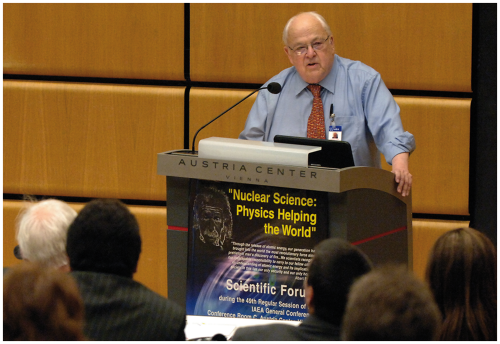
In this interview, Stanford University physicist and Nobel laureate Burton Richter describes his strategy for gaining broader public and political agreement on how to change US energy policy. He recommends approaching the energy debate from three different perspectives—economic, national security, and environmental—and focusing less narrowly on climate change. Richter presents himself as a pragmatic moderate, trailblazing a path between climate “deniers” and “exaggerators.” He advocates replacing all coal-burning power plants with natural gas, adopting stricter fuel-efficiency standards, electrifying vehicles, building grid-scale storage for renewable energy, instituting a revenue-neutral carbon tax, and expanding nuclear power— all measures on which he sees potential for widespread agreement across political lines in the United States. Richter discusses ways to make nuclear power safer in countries that are new to it, such as requiring these countries to hire expert operators from more experienced countries for the first few years. He also shares his concerns about regulatory shortcomings in some countries. Richter remains optimistic about solving the challenges of climate change and recommends limiting future climate talks to a smaller group of nations as a way of making faster progress.
Burton Richter is best known for smashing atoms. But in his most recent research, the 81-year-old Stanford University physicist is trying to piece together something much bigger: three different ways of seeing America’s energy problems.
Richter calls his multipronged approach “energy in three dimensions,” and he believes it is the key to building political and public support for a successful US energy policy. Too much of the energy debate in recent years has focused on environmental concerns, specifically climate change, and that has been a turnoff to many policy makers and citizens, Richter says. He advocates a broader view of energy policy that includes economic and national security concerns as major drivers of change.
As a professor at Stanford, Richter led a team that built a particle accelerator and used it to discover a new subatomic particle—work for which he won the Nobel Prize and the E. O. Lawrence Medal of the Department of Energy in 1976. He was director of the Stanford Linear Accelerator Center from 1984 to 1999 and is now the center’s director emeritus as well as the Paul Pigott Professor in the Physical Sciences emeritus. In January of this year, he was awarded the Presidential Enrico Fermi Award.
High-energy physics may seem worlds apart from energy policy, but to Richter they are simply two sides of the same coin. He has been studying climate science since 1978, and has staked out the vast middle ground between climate “deniers” and “exaggerators,” as he calls them. His prescriptions for reducing carbon emissions include increased reliance on nuclear power and natural gas. He also views renewable energy as part of the solution to climate change, although he takes a much more critical view of solar and wind power than most environmentalists do.
Richter received the 2011 Phi Beta Kappa Book Award in Science for his book Beyond Smoke and Mirrors: Climate Change and Energy in the 21st Century (Cambridge University Press, 2010). The book’s title is a reference not only to the smoke from power plants and the mirrors used to generate solar power, but also to the metaphorical smoke and mirrors used by climate deniers and exaggerators alike. The Bulletin spoke with him about his book and his pragmatic approach to climate change.
BAS: When experts talk about changing a country’s energy mix, they tend to focus on climate change. You’ve been talking instead about “energy in three dimensions.” What do you mean by that?
Richter: I’m talking about an economic dimension, a national security dimension, and an environmental dimension that is broader than just climate change. If you look at more than one dimension, perhaps you can get things done that you can’t get done if you focus too narrowly. For example: The Environmental Protection Agency and the auto industry are very close to agreement on raising the fuel-efficiency standard to 54 miles per gallon. If you go to 54 miles per gallon, you’re going to cut gasoline use in the light-vehicle fleet by a factor of two. You’re going to cut oil imports. You’re going to cut the balance-of-trade deficit. And you’re going to reduce carbon dioxide emissions. You haven’t heard Senator [James] Inhofe rail against 54 miles per gallon. If you dwell on what it would do for climate change, he would say, “I don’t believe in climate change. It’s not a good reason to do it.” But if you say, “Look, it’s going to help with energy independence,” suddenly you get him to agree with you. Another example: If you shut down all the coal power plants and change them all to natural gas, electricity prices would go down, hospital admissions for emphysema and all sorts of lung diseases would go down, and greenhouse gas emissions would go down. A broader look at energy policy gives you a chance to explain yourself to a wider audience.
BAS: You sound pretty bullish on natural gas.
Richter: You get twice as much energy, per unit of carbon dioxide emitted, from gas as you get from coal. On top of that, gas-fired power plants are much more efficient than coal-fired power plants. The new gas plants run 60 percent efficient, whereas the best of the new generation of coal plants is a little under 40 percent efficient. I would shut coal down tomorrow if I could. The gas people would love it. The environmental people ought to love it, but there’s a group of environmentalists who think that you have to go for the perfect, not for the practical. The coal people are going to hate it, but so what? Coal-industry jobs are going away anyway. Compared with 30 years ago, we produce more coal today with half as many miners as were employed in the industry back then. There are now almost as many people working in the US wind industry as in coal mining.
BAS: You have said that that there are a lot of things we can do about climate change immediately that don’t cost much. What’s at the top of your list?
Richter: Besides shutting down coal-fired power plants and adopting new miles-per-gallon regulations, I would electrify the light-vehicle fleet. I’d also build up our nuclear power. I don’t think that we’ll get all the way there without introducing cost-effective renewable energy, which we don’t have now. People who claim renewable energy is already cost-competitive can’t count. Everybody talks about a dollar-per-watt-capacity for solar being a wonderful goal, but the sun doesn’t shine all the time, and if you look at the actual output in the southwestern United States, the dollar-per-capacity-watt translates to $5 for an average watt. At that price, I can build a nuclear power plant that runs 24 hours a day. For certain applications, solar is becoming competitive. For example, California has time-of-use charges for electricity, so in the daytime during the summer electricity costs a lot and you’ll actually make money if you put a photovoltaic panel on your roof. But the real costs are hidden from the consumer. In California, the public utilities commission will not allow the cost of a purchase agreement between a utility and a solar power supplier to be made public. The state and federal subsidies are something on the order of 40 or 50 percent of the capital costs, but I have no idea what the utilities actually pay because I’m not allowed to know that.
BAS: What needs to happen to make renewable energy a bigger part of the energy mix?
Richter: There’s a study from the National Renewable Energy Laboratory that looked at the cost of producing solar panels in the United States, China, and Malaysia; their conclusion was that the cost is very close to the same. But in the United States we give our subsidies to the purchasers of solar panels. In China, the subsidies go to the producers. So it is not a big surprise that Chinese solar panels undersell ours. Also, there is a missing technology for solar and wind: grid-scale energy storage. By grid-scale storage, I mean gigawatt-days, not megawatt-hours. Since we don’t have that, you can’t expand wind and solar too much without making the whole system unstable or expensive or subject to blackouts. In the United States, the typical output of a wind farm is a third of its capacity, and when the wind is not blowing at one wind farm, it’s generally not blowing at other wind farms either.
BAS: Your book has been praised for its straightforward presentation of the facts about climate change and energy sources. Is a just-the-facts approach up to the task of transforming our energy systems, at a time when mere facts don’t seem to carry the weight they once did?
Richter: In my book, along with the facts, I also said what I thought of various approaches. There is a nice table—which got me in a little trouble— of my “winners,” “losers,” and “maybes.” Corn ethanol is a loser. Brazilian sugarcane ethanol is a winner. Ocean thermal systems are a loser. Solar is a winner, for distributed use in rich countries. Nuclear is a winner. If I were to write a new edition, I would put more into the loser column. My approach in that book was to say, “Here’s what we know, here’s how we know it, here’s what we can do about it, here are the things that work best, and here are a few policy issues that we’ve got to iron out.” The policy part is perfectly honest, but I would write it differently now. I would be much firmer on what I think is the right direction, rather than taking a balanced approach between a carbon tax and cap-and-trade.
BAS: Which camp are you in now?
Richter: When I wrote the book, I said they’re equivalent. But they’re not equivalent politically. Given the example that we’ve had in the United States, cap-and-trade is not a good way to go. When the Waxman-Markey bill finally got passed in the House, it was full of loopholes. It would be simpler to start with a revenue-neutral carbon tax, because I can find respected Republican economists who say that a revenue-neutral carbon tax is the right way to internalize an externality: using the atmosphere as a dumping ground. British Columbia has a revenue-neutral carbon tax. I talked to the woman who was the finance minister when they put it in, and she said something that stuck in my mind, which is that there can be no exceptions. She said the hospitals came to her and said, “You’re going to run up the cost of medical care,” and the truck drivers came to her and said, “You’re going to run up the costs of transporting everything,” and the farmers said, “You’re going to run up the costs of food.” But if she made an exception for any one of them, then somebody else would come along, and it would be impossible to draw a line. That’s what happened to Waxman-Markey. In Canada, the revenue-neutral carbon tax was put in place by a conservative provincial government, not by liberals. The Canadians distributed the revenue three ways: Businesses got a reduction in the provincial income tax; upper-income citizens got a reduction in their income taxes; and lower-income citizens got a cash rebate from the government. Everybody was happy.
BAS: Why did you pick nuclear power as one of your winners?
Richter: Nuclear has extremely low lifetime emissions. It’s about the same as wind for lifetime emissions per kilowatt-hour. Its costs are going to be high initially, because we haven’t built a power plant in a long time. One of the things you’ll find in the book is an analysis that was done on years of human life lost per terawatt-hour of electricity generation. The lowest, of course, is hydro. The next two are wind and nuclear. The analysis says that, even with the three accidents—Three Mile Island, Chernobyl, and now Fukushima—nuclear power plants are much safer than coal or gas or photovoltaics. The problem is that when something goes wrong with nuclear, it happens big and it’s scary. People fear most the things that they have no control over. One of the examples I like to give is from transportation, where the scariest thing is an airplane crash. Everybody’s worried about that, but, per kilometer traveled, airplanes are the safest thing going. Motorcycles are the worst, but the second worst is walking. People feel that they are in control when they’re walking or driving, and so that doesn’t worry them as much as the airplane does.
BAS: Your book was written before the Fukushima accident. Are you more concerned about nuclear safety now?
Richter: When I did the winners and losers, I took the public health impacts from an analysis done in Germany. They looked not only at years of life lost per unit of electricity generated, but also at hospital admissions. Is Fukushima a bad accident? You bet. Was it preventable? You bet. Is there something major that needs fixing? Absolutely. The Japanese regulators had no independence from the promoters of nuclear power, and they had a much too cozy relationship with the industry. And Tepco had had problems before. So one of the things the Japanese have done—it took them many months to do it—is to make their regulators independent. India made theirs independent two weeks after Fukushima. Ours have been independent since 1974. Most other places don’t have independent regulators at all.
BAS: Is there anything that can be done to make nuclear power safer in those countries?
Richter: The United Arab Emirates are going to have their reactor built by the Koreans, and the Koreans are going to run the plant for the first five years and train the operating crew that’s going to take over. I would like to see something similar for all countries new to nuclear: They buy their nuclear power plant, and they also start off by buying the operation of it. The big thing that worries me here is the regulation. Some countries that are talking about nuclear have significant corruption in their government. Can you trust those people to regulate things, when even the Japanese didn’t regulate things well?
BAS: Do you have any concerns that expanding the use of nuclear power could raise proliferation risks?
Richter: I think that’s got to be taken care of separately. North Korea, which is not an example of the most technologically sophisticated country, built their own reactor and made their own bomb. So preventing the spread of nuclear weapons doesn’t depend on restricting power reactors; it depends on whether you can control the ambition of countries eager to increase their influence by becoming the possessors of nuclear weapons. Even if the United States were to do what Germany is doing and get out of the nuclear business, that would not affect the North Koreans or the Iranians.
BAS: Did you see any good news coming out of the climate talks in Durban?
Richter: Yes, because I’m an optimist. The thing that was good about Durban is that both China and India agreed to control emissions, although they’re not going to do it until 2020. The whole notion of a legally binding agreement on emissions is silly. If I ask my diplomat friends: “Who enforces the limit? Who fines you if you don’t obey? Who collects the money? Who decides what to do with it?” The answer is nobody. Compare that with the Montreal Protocol: It started with the countries that were the biggest producers of chlorofluorocarbons. It didn’t start with the 196 nations in the United Nations; it started with five or six. They made agreements to do things, and gradually it expanded to the whole world. The top 15 emitters in the world for greenhouse gases emit more than 80 percent of the greenhouse gases. If I just took those top 15 and started negotiating, I’d have a much less noisy environment than I have with the UN framework on climate change, and I might actually get something done. Most of the countries in the Kyoto Protocol are just trying to get the developed countries to pay them money, and they’re not there to reduce their own emissions. They are just a drag on getting anything done.
BAS: China has recently discovered shale gas. What impact might that have on China’s carbon emissions?
Richter: They’re going to start switching to shale gas as fast as they can. They have an absolutely terrible pollution problem. I’ve been to China every two years, starting in 1981. The air is very bad, and they know it. Burning coal will go on for some time, because their shale gas is just getting developed, the Chinese economy is continuing to grow, and they need more electricity. They are importing liquefied natural gas, and they are building a lot of nuclear power plants. This is an issue of how long it takes to change a country’s energy system. You can’t do it in a few years, and to pretend you can is nonsense.
BAS: North America is experiencing an energy boom in fossil fuels: shale gas, tar sands, new offshore oil drilling. Does that make the challenge of climate change harder?
Richter: Some of it is going to make it easier. If the United States could switch from coal to natural gas for electricity generation with the snap of a finger, our greenhouse gas emissions would go down 25 percent. In the transportation sector, even at 54 miles per gallon, we’re still going to need fossil fuels for some time. The National Academy’s recent report on renewable transportation fuels said we don’t have enough biofuels, and we can’t replace all the oil we’re using in the transportation sector with biofuels. We have to make more efficient transportation, we have to switch to electricity, and we need better biofuels.
BAS: As you point out in your book, people often make energy decisions that don’t make good economic sense. Programs that try to educate people about energy efficiency—for example, putting energy cost savings on price tags for new appliances—seem to have limited effectiveness. How would you change that?
Richter: I chaired a group for the American Physical Society that produced a report on energy efficiency in 2008. For the first time, a bunch of physical scientists said that it’s time to bring the social sciences into this question of energy efficiency: Why don’t people do what will save them money? I can give you examples: A compact fluorescent light bulb, over its 8,000-hour lifetime, will save you about $70 compared with using 100-watt incandescent light bulbs that last only 800 hours. You may have much lower capital costs with incandescent bulbs, but you’ve got much higher electricity costs. People don’t know that. There are other places where you have to promote efficiency through regulation. For example, “vampire” electronic devices eat up electricity because they’re always on; regulation could make them more efficient. One of the things we suggested in that efficiency report was energy audits for houses. In California, you can’t sell a house without a termite inspection. Maybe you should have an energy audit that tells the buyer how much it’s going to cost to run his house.
BAS: You’re a member of Jason, an independent and secretive group of scientists that advises the government on major policy questions. Has the White House asked Jason about climate change?
Richter: In 1979, Jason did one of the first climate models, and it didn’t differ dramatically from what the current models do: It said we were going to have big problems.
BAS: You recently told a reporter that the United States could make progress on climate change after the presidential election, no matter who wins. How would progress happen if the next president doesn’t believe that humans are changing the climate or if the president and Congress cannot come to any agreement?
Richter: I’m optimistic because the poisonous atmosphere of the race will be over, and whoever wins has to be prepared to jump right in. I think nuclear is an important piece; so do the Republicans. I’ve told you that substituting natural gas for coal is an important piece; so think the Democrats. I’ve told you that reducing the amount of oil we use for our transportation is important; so think both parties. There are areas of agreement, and there are areas of different emphasis, but I think we should be able to start something serious after this election. In our country today, you can’t find industry, with a few exceptions, doing anything that won’t lead to a product in five years. That’s very different from what it used to be, and the government doesn’t get credit for what it has done to promote longer-term approaches. This whole technology for horizontal drilling and fracking was funded by the Department of Energy.
BAS: You write a lot about uncertainties and the importance of acknowledging them. What are the most important remaining uncertainties about climate change?
Richter: If we look at the IPCC [Intergovernmental Panel on Climate Change] scenario called A1FI (the FI stands for fossil intensive), that’s the closest thing to business-as-usual that we’ve got, and it projects a temperature rise between 2.5 degrees Centigrade and 6.5 degrees Centigrade by 2100. If we’re heading toward the lower end of the range, then we’ve got more time to do things. If we’re heading toward the higher end, then things are more urgent. We would like to narrow the uncertainties. That’s going to take more investment in satellites to monitor things, more equipment on the ground—for example, to measure methane emissions from melting permafrost—and more effort in modeling. We ought to be doing it on a larger scale than we’re doing now. We’d have a better handle on how fast things are going to get bad—and how bad they’re going to get. There’s another reason why we have to change: If we simply scale up the present energy system as the economy of the world grows, what’s going to happen is that we’re going to use up all the cheap energy sources. So the prices are going to go up, which means more economic impacts along with the climate impacts. One of the things that the environmental community doesn’t really understand, or doesn’t want to acknowledge, is how big the energy component of the world’s economy is and how slow it’s going to be to get it all changed. What I’d like to see are things that can happen fast and that have a big impact, even if they’re not the perfect things that you’re going to want 100 years from now.