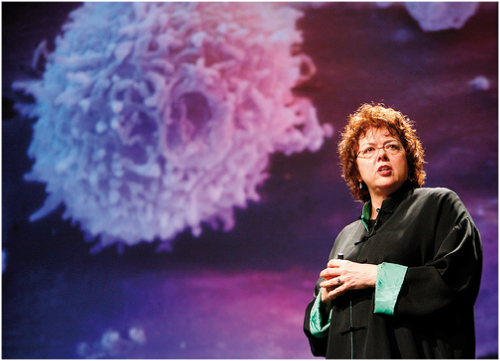
Award-winning radio and newspaper reporter Laurie Garrett, now a senior fellow for global health at the Council on Foreign Relations, describes the mistakes and misjudgments made by government officials in response to the anthrax attacks of 2001 and provides recommendations for what should be done now. Garrett says it is important to view 9/11 and the anthrax mailings as connected events in any evaluation of the government response. She criticizes the emphasis placed on a smallpox vaccine, which diverted attention from other health issues. She lists circumstantial evidence that points toward Al Qaeda, rather than bioweapons scientist Bruce Ivins, as the anthrax culprit. Garrett assesses the mistakes made in response to the anthrax mailings based on what turned out to be incorrect assumptions. She calls for a thorough investigation of the attacks, comparable to The 9/11 Commission Report, to understand what went wrong. And she explains why transparency, within and among government agencies, as well as in communications with the public, is essential in the future.
Laurie Garrett is the only writer to have won all three of the big Ps of journalism: the Peabody Award in broadcast journalism for her “Science Story” series on KPFA-FM in Northern California; the Polk Award for her reporting on the collapse of global public health and the rise of HIV, tuberculosis, diphtheria, and other diseases in the former Soviet countries; and the Pulitzer Prize for her coverage of the Ebola virus epidemic in Zaire.
Garrett became a radio reporter in the 1970s after studying immunology in graduate school. In 1979, she began reporting overseas, covering the SALT-II nuclear disarmament negotiations, the World Food Summit, and civil war and disease outbreaks in sub-Saharan Africa. In the 1980s, she returned to California, where she covered the unfolding HIV/AIDS epidemic for National Public Radio. And in 1988, she joined the science and foreign desks of Newsday, then the third-largest daily newspaper in the United States. There, she wrote about the spread of HIV, Chernobyl radiation illness in Ukraine, plague in India, SARS in Beijing, and a variety of other health issues.
Garrett wrote her first best-selling book, The Coming Plague: Newly Emerging Diseases in a World out of Balance, while splitting her time between Newsday and the Harvard School of Public Health, where she was a fellow working closely with the emerging-diseases group. A few years later, she wrote another popular book, Betrayal of Trust: The Collapse of Global Public Health, about disease outbreaks and epidemics in Zaire, India, most of the former Soviet countries, Eastern Europe, and the United States.
In 2004, Garrett joined the staff of the Council on Foreign Relations, where she now runs the Council’s Global Health Program and serves as the senior fellow for global health. She continues to write reports and articles about HIV, other health issues, and health policy.
In 2011, Garrett published her third book, I Heard the Sirens Scream: How Americans Responded to the 9/11 and Anthrax Attacks, as an e-book.1 Based on more than seven years of research and writing, it takes a much more personal approach than her earlier books. Garrett’s hometown is New York City, and she watched the events of 9/11 unfold before her eyes. A month later, when people began falling ill from the inhalation of anthrax spores, she received a phone call from a top federal official warning her that her writings could make her a target and advising her to stop opening her mail.
The first part of Garrett’s new book describes, through personal diary entries, the events that unfolded in the fall and winter of 2001 and 2002. The second part details how government institutions responded to the terrorist attacks. Garrett reveals the errors and bad calls made by public health officials, evidence that Al Qaeda may have been behind the anthrax mailings that killed five people and terrorized Congress, and the implications of labeling the anthrax found in the letters as “weapons-grade.”
The US government blamed bioweapons scientist Bruce Ivins for the anthrax attacks, but never charged him before his suicide in 2008. Justice Department attorneys recently claimed, in court filings defending the government against a wrongful-death suit, that Ivins’s lab did not have the specialized equipment necessary to turn liquid anthrax into powder. And a February 2011 report from the National Academy of Sciences raised doubts about the genetic analysis that linked the anthrax mailings to a flask of anthrax stored in Ivins’s office. A decade after the attacks, the Bulletin spoke with Garrett about the latest revelations and the lessons learned.
BAS: Most experts have viewed 9/11 and the anthrax attacks as entirely separate episodes. Why do you see them as connected?
Garrett: The paramount historical and policy mistake, looking back on the fall of 2001, is this perception that we’re looking at two completely separate events that just happened to occur within roughly 30 days of one another. By looking at it as a single day—September 11—we missed the real story of what happened. There was an arc of terror and of fear-driven policy that started on 9/11 and continued out all the way past New Year’s in 2002. Even before we knew that there was anthrax in the United States mail, we already had thousands of hoaxes called in, not just in the target cities of Washington and New York, but all over the world. There were bomb scares, allegations of mystery packages on subway trains, and airports being shut down right and left. So before we learned that Robert K. Stevens, a photo editor for The Sun tabloid, owned by American Media, was sick with anthrax poisoning in Florida, we already were a deeply agitated people, and we already had had mad scrambles of emergency responders. It seemed to Americans, and to a lot of people elsewhere in the world who were experiencing alerts, that there was an all-fronts terrorist attack underway. If you step back to the 50,000-foot level and look at this blip in history, you see an arc of collective emotional response that goes from absolutely synchronous, shared horror and grief, to unbelievably disparate, divided, individualistic response—with a heavy dose of skepticism about science, scientific authorities, and government.
BAS: What did you learn about the anthrax attacks when you viewed them in conjunction with 9/11?
Garrett: By the time anthrax was recognized to be in circulation, most of the public health authorities and first responders in law enforcement in the targeted cities had already been burning the midnight oil for 30 days and were utterly exhausted. On 9/11, there was already a decision by health authorities in New York to assume that there was a biological attack that was a companion to the hijacked commercial-jets attack. All public health authorities in the greater New York area were on 24/7 full alert and had set up surveillance for all of the hospitals. So by the time Robert K. Stevens died, a lot of public health folks—in Atlanta, in New York, in Washington—were sleep deprived and stressed.
Most people don’t know that Rudolph Giuliani received a tip from the White House just two days after 9/11 that there was a likely bioterrorist assault planned for New York City. He called a secret meeting and summoned the commissioners of the fire department, the health department, the police department, a few of his inner staff, and a top team of scientists led by Nobel laureate Joshua Lederberg. At that meeting, the mayor asked the scientists to advise the police commissioner and fire commissioner what to look for, what kind of defenses should be purchased, and what should be stockpiled. The commissioners were told to watch for everything, to listen to every single doctor in the city, and that, no, there weren’t a lot of things you could stockpile. This was not the kind of response they wanted, and it was very disturbing. So the city officials that were responsible for watching for bioterrorism were completely exhausted by the time there actually was bioterrorism.
BAS: In retrospect, which mistakes did you find the most surprising or outrageous?
Garrett: Just about every community of expertise that would be engaged in dealing with bioterrorism has to look back with a certain amount of chagrin on the events of 2001. It’s very clear that almost every single assumption that had previously been made about anthrax and its various toxins—the appropriate way to detect it, the necessary dose of exposure, the best courses of treatment—all turned out to be wrong. Huge mistakes were made in the epidemiology, the prevention, and the treatment because of incorrect assumptions. Most of those assumptions came from the old biological warfare program back in the 1960s and ’70s in the United States, and largely monkey studies performed at USAMRIID [the United States Army Medical Research Institute of Infectious Diseases] and a few other military sites in the United States, as well as information derived from the old Soviet program. In retrospect, this whole notion that any infectious agent had a special threshold, so that you could quantify exactly how many germs needed to be in the human body to reach an infectious dose, looks unbelievably naïve if not foolhardy. And yet it was a guiding principle of the entire response.
BAS: Now that the government has invested more than $2 trillion on homeland security, has all of that spending and restructuring left the United States better prepared for bioterrorism?
Garrett: It’s a mixed bag. The weakest piece of the puzzle, and the piece that is the most dangerously positioned right now, is public health infrastructure. We’re watching public health get cut at local, state, and federal levels right and left—and now, for the first time, severely cut at the international level. Some localities—and in worse cases, some entire states—responded to the influx of federal bioterrorism money during the post-2001 period by basically saying, “Wow, if the feds are sending in, let’s say, $200 million for our health department, I guess we can cut by $200 million our spending on health.” It skewed everything. For a lot of places, what it meant was that they pulled staff off traditional public health issues and put them on bioterrorism issues with only a modest or zero net change in the overall budget for health programs. You saw a similar thing at the hospital level, where physicians were pulled out of regular hospital duties to go through smallpox drills. Smallpox-preparedness consumed an inordinate amount of time for police officials, fire officials, all sorts of folks, all the way down to very small towns across America.
BAS: What connection did you find between the anthrax attacks and smallpox-vaccination efforts?
Garrett: When anthrax happened, it was less than 90 days after an exercise called “Dark Winter” had been carried out. This role-playing exercise— organized by D. A. Henderson and his group, which was then based at Johns Hopkins but now is at the University of Pittsburgh—imagined that terrorists had infected themselves with smallpox and started an epidemic that quickly became a pandemic. The response to it by the role-playing federal officials—all of whom were either seated officials playing themselves or officials who formerly had such roles—reflected, almost immediately, tremendous competition and political anger regarding which countries and individuals were going to get access to dwindling supplies of smallpox vaccines. Dark Winter showed more than a million people dead in a relatively short period of time, and an out-of-control political and pharmaceutical situation. It came to the attention of Vice President Cheney, and he was very moved by it. Even before anthrax happened, the vice president’s office was already putting pressure on Tommy Thompson as secretary of health and human services to speed up vaccine production, who was then putting pressure further down the pipeline to the Centers for Disease Control and Prevention [CDC].
BAS: Anthrax is in the news again, with three scientists writing in the Journal of Bioterrorism & Biodefense that the presence of tin in the 2001 anthrax mailings suggests that special processing and expertise were required. Will that lead to formation of a national commission to reopen the case?
Garrett: No. I think there’s a lot of skepticism about that tin report. The more likely incentive to speed up the previously called-for investigations at the congressional level and at the Government Accountability Office are the revelations that have come out of the joint investigative reporting effort by ProPublica, the McClatchy newspaper chain, and “Frontline,” which show absolutely enormous flaws previously unrecognized or underappreciated in the FBI investigation of Ivins. The 9/11 Commission Report remains one of the great landmark reports of its kind ever done by a US government advisory agency in our nation’s history. There has never been any equivalent done for anthrax. The only thing we’ve had that comes close is the National Academy of Sciences analysis of the FBI investigation and its use of microbial forensics. That’s a very teeny subcomponent of what happened, and it is focused on a single agency.
BAS: What do you see as the most convincing evidence that Al Qaeda, rather than Ivins, was behind the anthrax mailings?
Garrett: Most of the evidence regarding Ivins has to be viewed as circumstantial. The sum total of that circumstantial evidence is weaker than the sum total of circumstantial evidence pointing at Al Qaeda. And that evidence includes the following: Flight 93 crashed in Pennsylvania, and unbeknownst to most of the public, the investigators were able to identify the bodies of the hijackers and test them for anthrax, and at least one of them came up positive. That individual is the same one who went to an emergency room in Florida, when they were all down there for flight training, seeking help for a black sore on his hand. Retrospectively, the physician concluded that it could very well have been cutaneous anthrax. Two other individuals involved in the Florida training group sought pharmaceutical assistance for pain on their hands and skin rashes. And Mohamed Atta attempted to purchase a custom-made crop duster with all but the pilot’s seat removed for a double-size tank. Fortunately, he was not able to obtain a bank loan to purchase this custom-made plane. There was an individual who appears to have been connected with the group in New Jersey and had an online greeting-card company; through his office, he ordered a giant spore lyophilizer [freeze dryer]. I interviewed folks, who spoke to me off the record, who had been involved in the Special Forces team that tried to capture Osama bin Laden in December 2001. They captured a complex of caves in Tora Bora, one of which was described as a laboratory. Back in 2002, my source in that team told me this was a real lab and that—if I had seen it—I would have been astonished. It was scoured and swabbed for spores on four occasions: twice by an unnamed agency, but I believe it to be the Special Forces team and the CIA, in 2001 and 2002; and then several years later, on two occasions, by the FBI. The first two scourings of this cave came up positive not only for anthrax but for the Ames strain, which would be highly unlikely as a natural occurrence in Afghanistan. The second two scourings by the FBI came up negative.
BAS: In your book, you say that there was no weapons-grade anthrax found in the letters. What implication does that have for public policy?
Garrett: It makes a huge difference, because if you believed that this was weaponized anthrax, and you also believed that only an established military laboratory could make weaponized anthrax, then it lent strong support to: “We need to go to war with Iraq.” As somebody who was in the middle of this as it was all unfolding, I came to the feeling that this whole notion of what constituted weaponized anthrax was as bogus as the notion that a level of 10,000 spores was necessary to cause an infection. It was all based on hocus-pocus, old-fashioned science from the days of the biowarfare programs, when many of the scientists had been trained before the discovery of the DNA theory.
The other thing that was apparent from the get-go was that CDC had been in the American Media building in Florida and had seen what those spores looked like. CDC civilian investigators, who took the lead when the first anthrax cases appeared in Florida and New York, had recovered one set of spores in New York, and they were seeing something that was sort of damp, chunky, and gray. But USAMRIID, the Pentagon-controlled lab that analyzed the materials subsequently seized in Washington, was claiming that everything they saw was white, fluffy, flew all over the place, and seemed to be deliberately made to cause maximum-possible contamination. Never, during the course of the fall of 2001, did the CDC get to actually handle the samples USAMRIID had, because the FBI refused to allow them to see it. Everything was shrouded in so much secrecy and secondhand information that turned out to be wrong that, frankly, every reporter on the beat reached a point where we just had no idea who to trust.
BAS: In your earlier books, The Coming Plague: Newly Emerging Diseases in a World Out of Balance and Betrayal of Trust: The Collapse of Global Public Health, you wrote about emerging diseases as well as bioterrorism. What improvements, if any, have you seen since then in public health institutions around the world?
Garrett: The biggest improvement is an attitudinal one: The combination of concerns about bioterrorism, general pandemics, and outbreaks shook most leading agencies around the world out of the complacency that they were in as a result of achievements in infectious-disease reductions in the wealthy world. And that’s a big breakthrough. We have had great improvements in laboratory skill sets for disease surveillance and diagnosis. It was really fortunate that the lead physician brought in to diagnose Robert K. Stevens, and then the lab pathologist he sent the samples to, had both undergone training within the previous few months by the CDC for bioterrorism. Today, we have larger numbers out there that have undergone such training, and that’s true not only in the United States but elsewhere, and that’s good news.
But I think we have far too many BSL-4 labs now in the world, and probably too many BSL-3 labs.2 It’s really hard to keep track of who has what pathogens and what they’re working on, and who’s trying to do the genetic analysis that could result in manipulation of a microbe in dangerous ways, intended or unintended. We’ve had far too many leaks from laboratories, infections within laboratories, even individuals who have died as a result. We’ve had far too many incidents of incorrect pathogens mailed for lab research. If you look at it the way you would if it were on the nuclear side, you would say, The more countries that have nuclear weapons, the harder it is to keep track of proliferation. The proliferation creates its own problem set. I feel like we’re going the same way with bioterrorism by creating so many high-security labs loaded with so many dangerous toxins and microbes. All you need is one crackpot in one such lab. If you believe that Bruce Ivins did it, and that he was a guy who went nuts in a BSL-4 lab, it’s amazing that the response to an incident of that scale was to create more BSL-4 labs with more guys that could go nuts.
BAS: Is there an emerging disease today that keeps you up at night? Do you have any idea where the next threat will come from?
Garrett: Like everybody else, I continue to be worried about a virulent influenza. The other thing that’s really disturbing to me is the increase in highly resistant, virulent plant pathogens. I have nightmares imagining famine on a massive scale resulting from widespread circulation of a specific microbe. I’m especially worried about that because more and more of the world is going to monoculture for agricultural production. You’ll have miles and miles of a virtually genetically identical crop. Not just all wheat, but the same strain of wheat or corn or whatever. It almost is begging the microbes to select for the ability to overcome resistance in that crop strain. To use a nuclear analogy: If every single missile silo were designed exactly the same—had the same protection systems, the same buttons, the same physical structure—then it wouldn’t be a tough problem for someone to come up with an engineering way to take them all out at once. We’re essentially doing that with agricultural production.
BAS: Did you ever worry that publishing what you knew about anthrax or other biosecurity risks could make the general public more frightened or could jeopardize national security?
Garrett: All my professional life I’ve worried about it, and at certain points I have not published things that I knew. On the other hand, we’re now at a point with basic biology research where, thanks to all the online publications and the connectedness among biologists around the world, details of a genetic discovery can be communicated almost instantly. You have to assume the information is out there. You have to stop imagining that censorship is going to get you safety. You have to stop imagining that you can stuff genies back in bottles. And instead shift your policy, your counterterrorism, everything, to the assumption that the information is there.
But how do you tell if someone’s doing something bad with it? And what do you do in response if an event occurs? It’s sort of like the massive change our military has gone through as it shifted out of a Cold War mentality. What did the military have to rethink when they stopped imagining mutual assured destruction and shifted to “guy puts plastique in his shoes and gets on a civilian aircraft”? We have to rethink where we put our money, our infrastructure, our attitude, and our policy when we recognize that anybody who really is motivated to do so can make a genetically modified organism right now—and we’re not going to find out that they made it or where they made it. If our whole system is geared toward this notion of trying to block publication and information, and stop the flow of findings and ideas between scientists, then all we’re going to do is hurt science and have no net impact on the activities of a nefarious individual or group.
BAS: Having seen how badly the response to the anthrax mailings was handled, what changes would you recommend for responding to a bioterrorism threat in the future?
Garrett: In the future, we have to be far more forthcoming with information to the public. And if we don’t know something, we have to say we don’t know. We still have not had the whole story of exactly who moved this smallpox agenda to the forefront, and it’s in the scientific community’s interest to go back and figure out how we got so far off track on this smallpox scare.
The other big lesson is: We don’t know how to do a bioterrorism law-enforcement investigation. We still don’t have a good tool kit. We still don’t have irrefutable microbial forensics that could hold up in a court of law. We don’t have a rapid way to walk into a bioterrorism crime scene or public health scene and quickly determine the best course of action. I was recently in a meeting with former White House officials from the Bush administration in which they said, “The lead in any outbreak should be law enforcement, because the best way to save lives is to catch the perpetrator.” But the cases in which we’ve been able to irrefutably prove whodunit have involved incompetent perpetrators. Even figuring out whodunit didn’t limit how many people got exposed, got sick, or died, because whodunit comes after the sickness and death.
We remain completely unresolved on jurisdictional issues, and we still have no idea what the answer is when you ask: “Who’s in charge?” I document in my book numerous turf battles that occurred between public health and law enforcement, and within law enforcement between various agencies and sub-agencies, and of course between USAMRIID and CDC. The problem with unresolved jurisdiction is not only that lives can be lost if a public health intervention isn’t done because law enforcement declares the site a crime scene—or if samples are seized by rival agencies and they don’t cross-check their samples. Those are disastrous messes, but it’s also that every aspect of public hysteria is affected by whether or not there’s clarity in the chain of command. There was not transparency between agencies, and there still isn’t. There is still stuff the FBI knows that they’ve never shared with any other agency. There’s still stuff the CIA knows, the National Security Agency knows. If you want to learn lessons about how to make government work right, how to make the scientific community work right, how to make public health work right, you need to really know what went wrong. And we don’t.