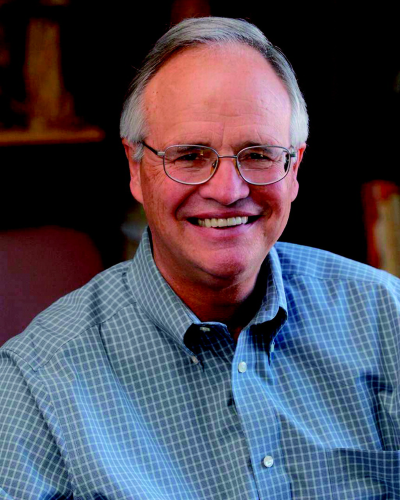
Once described as “the consummate environmental insider,” Gus Speth, co-founder of the Natural Resources Defense Council, says that green organizations, politicians, and the media are failing to address the root causes of climate change and other environmental problems. He points the finger at what he calls the “economic growth imperative”—the incessant quest for wealth by corporations, governments, and individuals—and argues for decoupling job growth from economic growth. Speth envisions a post-growth society in which renewable energy plays an important role, but the emphasis is on improved efficiency: an energy-sipping, rather than an energy-guzzling, society. He reflects on the politicization and polarization that destroyed a national consensus for action on climate change. Speth urges environmental groups not to settle for meager progress in Washington, but rather to challenge the political system and to build broad coalitions with groups working for social justice and political reform.
For more than four decades, Gus Speth has been a major figure in the modern environmental movement—a movement that he now says is failing. He has worked within nonprofit activist organizations, government bureaucracies, and academia, and moves easily between these realms. In 1970, as a newly minted environmental attorney, he cofounded the Natural Resources Defense Council, which today has a staff of more than 300 lawyers, scientists, and policy experts. In 1982, he founded the World Resources Institute, an environmental think tank. His work as a government insider began during the Carter administration, when he chaired the US Council on Environmental Quality and oversaw The Global 2000 Report to the President—a landmark study that accurately forecast the twenty-first-century problems of global warming, energy scarcity, loss of biodiversity, and a global economic system at odds with finite natural resources (Council on Environmental Quality and Department of State, 1980). Speth later served as a senior adviser to President-elect Clinton’s transition team, heading a group that focused on natural resources, energy, and environmental issues. From 1993 to 1999, he was Administrator of the United Nations Development Programme and chair of the UN Development Group. Speth has also worked in academia, where he remains today. He was a professor of law at Georgetown University in the early 1980s, the dean of the Yale School of Forestry and Environmental Studies for a decade, and is now a professor at the Vermont Law School. He is the author, co-author or editor of six books, most recently The Bridge at the Edge of the World: Capitalism, the Environment, and Crossing from Crisis to Sustainability (Yale University Press, 2009). He spoke to the Bulletin about why environmentalists and scientists have been unable to win public support for tackling issues such as climate change and about the fundamental political and economic changes he now advocates.
BAS:What would you consider the most serious threat to human and environmental health in 2011?
Speth:Climate change is the biggest issue today, and it may be the biggest issue we’ve ever faced. But there’s something deeper and bigger going on in our society. To single out a bunch of factors that are specific to climate is almost misleading, because if you look at any of the large-scale environmental challenges that we face, almost without exception we’re still losing ground 30 years after The Global 2000 Report was published. Many of the dire predictions in there, of what would happen if we didn’t act to correct the problems, have come true. Maybe most of them.
Even the United States, the world’s wealthiest country, has been losing ground on a host of international indicators—not just environmental indicators such as carbon dioxide emissions and water consumption but also quality-of-life indicators such as life expectancy and poverty rates and economic inequality. The problems run deeper than environmental neglect. The United States is neglecting just about everything that is truly important, and as a result the country is at or near the bottom in 30 major areas among its 20 peer OECD [Organisation for Economic Cooperation and Development] countries.
BAS:Scientists have been warning about climate change for decades now. Why doesn’t the message seem to be getting through?
Speth:One reason is that these are not backyard issues for people, like the issues of the 1970s. Today’s issues are not slapping people in the face, for the most part. They tend to be remote in time and space from the everyday lives of people, unlike the issues of the 1970s: air pollution and water pollution.
Another big factor, of course, is that issues such as climate change are a lot more complicated than some of the more acute issues of the 1970s, but we surmounted these difficulties once. We had a significant period around the time of Al Gore’s “Inconvenient Truth,” during which almost anybody would tell you that action on climate change had become virtually inevitable. Climate change was on the cover of almost every national magazine, and things really looked quite hopeful. Both President Barack Obama and Secretary Hillary Clinton campaigned in 2008 with bold plans, and indeed the House of Representatives actually passed a climate bill that was well worth having.1 At the end of a 30-year period of doing nothing, we finally had a national consensus for action.
BAS:So what happened?
Speth:A reaction was manufactured, in my judgment. The reaction consisted of building up a lot of fear that action on climate was going to create huge government; that it was going to drive up energy prices further; and that it was going to make recovering from the recession far more difficult. This was a well-financed disinformation campaign that has continued and escalated. Anxiety about acting on climate change was successfully injected into the Tea Party movement; and, as a result, a large percentage of the Republicans who came into office after the 2010 election were people who were on the record as climate deniers, and now the Congress is full of these people.
BAS:How should the Obama administration have responded to climate deniers?
Speth:The administration handled it very poorly, and that was a big reason for the success of the denial campaign. The president had advisers around him who weren’t enthusiastic about taking on this issue, and they mishandled the political process in the Congress. They dropped the whole idea that there was a climate issue. The president did not try to speak with the American public about climate science or how the rest of the world feels about this issue. It became entirely an energy and jobs issue.
BAS:Looking back on the challenges that legislators and environmentalists faced in the 1970s, and the progress that was made then, what has changed?
Speth:American politics since, say, 1980, has gone seriously downhill. The level of public discourse on issues has deteriorated; the willingness of politicians to take up tough issues has deteriorated; and it’s just a very different scene today in our country.
In the 1970s we passed a host of environmental measures, almost always with serious bipartisan support. There wasn’t really a polarization on environmental issues between the two parties, certainly not like what we have today. Politics was far more civil, and it was far more bipartisan. For example, Senator Edmund Muskie, a Democrat, was a champion of the Clean Air and Clean Water Acts, but that legislation was also made possible by people like John Sherman Cooper, a Republican, and Howard Baker, also a Republican, and others. I think we’ve lost a lot of ground politically since that time.
BAS:What about the extreme weather events that we’ve seen during the last few years? Are they making climate change a little more real to people?
Speth:Well, they should be. There has been a lot of news reporting lately on the extraordinary drought in Texas, and indeed the whole Southwest, and there are major articles in scientific journals pointing out that the Southwest could well be the first climate-change casualty in the US. And we also have flooding in Pakistan, fires in Russia, and huge forest die-offs in the Pacific Northwest and southwestern Canada, where bark beetles and borers are surviving through the milder winters.
But the problem is that the news media, when they report these events, aren’t taking the time to talk to climate scientists about what’s going on. The most they do is ask a meteorologist to comment, rather than digging in to get the real story. There’s a lot of “global weirding”2 going on, and the media should be trying to bring these messages home to the public. The coverage of these issues in Europe and Japan is much better, but the US mainstream media won’t get into it. I think they’re scared of losing viewers, frankly.
BAS:You served as an adviser to both Carter and Clinton. If you were advising Obama about what he should be doing today, what would you tell him?
Speth:I think that he has got to find a way of using the scientific community, and the extraordinary strength of American and international science on climate change, to go to the public and talk about it. He’s got to bring out what has happened in terms of this denial syndrome and expose it. And others have got to move on that front as well, and give up the attitude that “we can’t get anything major done now.” We’ve got to go back and start talking about what’s going on and how little time we actually have, and put some sense of urgency behind the issue.
BAS:What are the climate policies that you would advise Obama to press for? Is cap-and-trade the best approach?
Speth:We should establish a declining cap on the carbon entering the economy, sell the allowances for the carbon that does enter, and rebate the proceeds to the American public on a per capita basis. Send a check to every family every six months rather than hiding the revenue in a tax reduction.
BAS:How much time do we have?
Speth:If you look at some of the things the scientists are telling us, we don’t have any time. You look at the projections for what should happen by 2020 or 2030, globally, in terms of greenhouse gas emission reductions, and the numbers are huge. For example, global emissions from the well-to-do nations should be about 40 percent lower than 1990 levels by the year 2020 to keep global warming below a 2-degree Celsius rise. The rates of reduction that would have to be achieved to get there are very high, and are getting higher with each passing year. Most of the scientists who have done these analyses have become quite skeptical that it’s going to be possible to cap the warming at 2 degrees Celsius or less, and 2 degrees is too lax. We have an unbelievable problem on our hands, and we are quite literally ruining the planet. Every year that goes by without action is making the possibility of a halfway-safe landing more remote.
BAS:You’re a lawyer. Tell me what the law can do to address climate change.
Speth:I think we need to re-conceptualize environmental law because it’s fine so far as it goes, but it’s not going very far. Environmental law has to embrace things like tax law; it has to embrace things having to do with all the laws that buttress and promote our consumerism. We need to have a greening of corporate law and other areas of law. Right now we’re confined in this silo called environmental law, in a few departments and agencies in Washington and their analogs at the state level; those are fine programs as far as they go, but there’s a real problem with their limitations.
BAS:Environmental groups have grown in strength and numbers over the last few decades, and you have been part of that success. Yet you now say that the US environmental movement is failing. Why?
Speth:The main environmental groups have become very attached to the political process, to what is possible, and to the goal of being effective in Washington today. This inside-the-Beltway approach means that you aim for only incremental advances, and you settle for what you can get. What that means in Washington today is fighting to prevent retreats. Environmentalists tend to take the system and the politicians as they find them, and do the best they can with these meager offerings. Somebody’s got to do it, but it won’t get us very far.
Another problem is that the environmental community has failed to communicate effectively with the public. Very sophisticated, detailed proposals have come out of this community, but environmentalists have not sought the high moral ground—and have lost touch with how to talk to the public. Environmentalists have not been very engaged in electoral politics, or in building up a powerful political force—a grassroots constituency—in the country.
BAS:Like a Green Party, for example?
Speth:That’s one option, but there are others. We saw with the Tea Party movement that you don’t have to have a party to be effective; you just have to have a political force, and enough of an organization to make a difference in elections. The environmentalists don’t have that. By a similar token, they have not done much, if anything, to build alliances with other progressive communities. The vast economic inequity in the United States is profoundly an environmental issue, but environmental groups have ignored it, and have failed to form broad coalitions with social justice groups.
BAS:You have written a lot recently about “the economic growth imperative.” What do you mean by that?
Speth:Economic growth is the most widely sought objective in America, the most robust cause. But if you look at the data, we already are too big. We’re going to have to “de-grow” a lot of things to live within the planetary boundaries.
This imperative that we grow is not only the core of the environmental problem, but it’s also what politically empowers those who can deliver growth. Economic growth is an imperative for businesses; it’s an imperative for our government; and it’s fueled by our extraordinary lust to consume. We are endlessly susceptible to novelty and advertising, and getting and spending … we lay waste our powers.
BAS:But don’t we need economic growth to create jobs?
Speth:We certainly have to create a lot of jobs. The truth is that there has been a lot of jobless growth in the past, and there’s a lot of jobless growth today. Profits are soaring at many companies that are still not re-hiring. It’s a fool’s errand to think that we’re going to solve our job problems by priming the pump of aggregate GDP growth. We need to de-couple job growth from economic growth, and I think that there are lots of ways to do that—including stimulus programs and federal incentives and even a lot of direct government employment. We knew all this at the time of the Depression, and we did it. But now we can’t even save the unemployment programs that we have. Instead, we’re laying off teachers.
BAS:What about the energy needs of a post-growth society? Does nuclear power or “clean” coal have a role to play in that society?
Speth:The big priority, the big wedge, is to become dramatically more efficient in the use of energy—to really force more and more service out of each energy input. And in a society that is as wasteful as ours, in terms of current levels of energy use, that’s a huge thing. Renewables only really work if you have an energy-sipping, rather than an energy-guzzling, society.
But I think wind power is taking off, and the prices and options for photovoltaics are becoming more attractive. If we really had anything like real-cost energy pricing, the more benevolent alternatives would look quite attractive economically. So I think it’s a huge blunder to go into areas like tar sands and coal liquefaction. And on nuclear, I think some of us, before the Japanese disasters, were drifting back to the notion that “maybe there’s some way to do this safely,” but, you know, the Japanese are careful people. Even if we were to make nuclear power more fail-safe in some respects, I doubt whether it would really take off.
With natural gas, the problem is not just fracking. We have to confirm that, if you look at the whole fuel cycle over a 20- or 30-year period, it really is a lot better than coal and oil from a total-greenhouse-gas perspective. All the fossil fuels are really troubling, as is nuclear. The big answer, the golden door, is efficiency gains: energy-sipping technology and energy-sipping people.
BAS:Many of our energy “solutions” seem to create unanticipated problems: Hydropower can alter river ecosystems, geothermal energy exploration may trigger earthquakes, and so on. Is it a mistake to look to technology for answers to climate change?
Speth:We have to really sort out the difference between big problems and problems that we’re going to have to live with. We’ve got people fighting wind machines up in these hills where I am now in Vermont, but as much as I enjoy a pristine landscape, that’s a small price to pay compared with the impacts of fossil fuels. We should be investing heavily in the right kinds of energy R&D and developing all kinds of renewable technologies, but nothing is going to be perfect.
Footnotes
1
H.R. 2454, the American Clean Energy and Security Act of 2009, called for a cap-and-trade system to curb greenhouse gas emissions, and mandated that 15 percent of the nation’s electricity come from renewable energy sources.
2
A variation on the term “global warming,” the phrase “global weirding” is a reference to the severe or unusual weather impacts that may result from a rise in average global temperature.
References
1.
Council on Environmental Quality and Department of State (1980) The Global 2000 Report to the President: Entering the Twenty-First CenturyWashington, DC: US Government Printing Office.