



Abstract
Starting near the close of the nineteenth century, the construction of permanent, covered markets in Cyprus represented a substantial shift away from the traditional open-air street marketplace or bazaar. Market life in Cyprus had long been influenced by the prevailing civilizations, as the island lies at the crossroads of historic trade routes in the Eastern Mediterranean. However, the definitive form of the marketplace emerged with the modern governance and urban reforms introduced during British colonial rule (1878-1960). This new form was the Municipal Market Hall (MMH), where occidental and oriental retail codes of conduct, ethics, and traditions intermingled. The coexistence of Medieval, Ottoman, and British colonial elements in retail spaces and practices gave rise to a distinctive urban form and served as evidence of a multifaceted public life shaped by the dominant forces of the modern era. Thus, MMHs became key artifacts associated with colonial modernity in Cyprus.
Introduction
Marketplaces have always served as hubs of commercial, social, and political life within the communities they supported. As loci of culture and economic exchange, they contributed to the formation of the urban and architectural character of settlements—ranging from the agora and forum of antiquity to medieval markets and the enclosed, figural market halls of the twentieth century. 1 In medieval towns and early modern European cities, the development of urban market spaces adjacent to town halls, guild houses, churches, or other civic institutions was regarded as a key driver of urban growth, economic prosperity, social cohesion, and modernity. 2 By the mid-nineteenth century, in many leading European cities, the market hall emerged as a significant and innovative adaptation of traditional marketplaces. These halls enclosed open-air markets under a single roof to better meet the needs of the community for order, hygiene, and regulation. 3 Building upon historical patterns established in the Middle Ages, and in line with expanding municipal efforts to create safe, controlled, and sanitary public spaces, market halls emerged as a modern archetype in cities across Europe and in more distant locales. In this context, one of the most notable aspects of the market hall is its pivotal role in the dissemination of modernity, particularly within colonized geographies. As a distinct articulation of the universalizing discourse of modernity in the colonial context, the market hall came to symbolize the spatial and ideological presence of colonial modernity.
At the turn of the twentieth century, the Municipal Market Hall (MMH) in Cyprus came to symbolize multiple, intersecting identities: British colonial authority, the local identities of the island’s two major ethnic communities—Turkish and Greek Cypriots—and their respective engagements with modernity. As a modernizing public institution, the MMH represented a peripheral iteration of the British market hall, adapted to the local context of Cyprus and ultimately generating a distinct, hybrid form. Much like the British Indian model, the MMH in Cyprus functioned both as a civic amenity and as a spatial expression of layered binaries—colonial and indigenous, foreign and local, modern and traditional. While continuing to serve the fundamental role of the traditional marketplace, the MMH also embodied the ideals of modern regulation, sanitation, and civic order. It became a mediating institution between Turkish and Greek Cypriot communities and the British colonial administration. Notably, MMHs in Cyprus presented a modern architectural form and an urban spectacle of modern life—preceding the widespread development of similar structures in the post-Ottoman nation-states of Turkey and Greece.
By the early 1930s, municipal councils in Cyprus began to actively support the construction of new market halls and to improve hygienic conditions in both market spaces and the daily life of expanding urban centers through the implementation of regulatory measures. 4 These developments aligned with broader urban reforms and contributed to the MMH becoming not only an architectural innovation but also a symbol of urban prestige, civic pride, and a key instrument in ensuring the safe distribution of food. As in many European towns, the emergence of market halls reflected the growing importance of collaboration between local and central authorities in shaping municipal market systems and practices. Through the municipalization of markets, their administration was institutionalized—shifting from individually managed operations to formally structured municipal corporations. This transformation significantly enhanced municipal revenues and reinforced the role of the market hall as a civic institution. 5 In this context, MMHs in Cyprus became an integral responsibility of local governments throughout the colonial, and even postcolonial periods.
The MMH in Cyprus is widely regarded as an emblem of modernity—a space where the imperial embodiment of civic governance and local expressions of civic pride coexisted. For decades, MMHs held a prominent place in both the built environment and the cultural life of Cypriot communities, becoming significant markers in the island’s modern history. From the mid-1920s to the mid-1960s, these halls emerged as some of the most influential civic structures, dominating the urban fabric and silhouettes of Cypriot towns—second in visual and symbolic importance only to religious buildings. However, for many Cypriots, MMHs represented more than architectural or administrative infrastructure; they occupied a special place in urban memory and the cultural history of the island. Their emergence and central role in everyday life after World War I reflected broader improvements in social and economic conditions, as well as the urbanization and municipal modernization efforts undertaken under British colonial rule—paralleling similar developments in British India. Despite initial resistance, including compulsory use and strict colonial regulations, the modern environment of these markets gradually gained acceptance. Over time, Turkish and Greek Cypriots—as well as other ethnic groups—came to embrace the MMHs as integral to their urban culture. Until 1958, MMHs remained among the most common and inclusive public spaces across Cyprus. However, the Greek Cypriot uprising against British colonial rule, coupled with rising intercommunal tensions between Greek and Turkish Cypriots, disrupted the shared use of these civic institutions. This period marked the beginning of socio-economic fragmentation, as municipal administrations and market halls were eventually separated along ethnic lines—signaling the early spatial and administrative division of the island into northern (Turkish Cypriot) and southern (Greek Cypriot) sectors. 6
During the postcolonial period, the enduring vitality of the MMH positioned it as a fundamental urban asset well into the rise of supermarkets in the 1980s—outlasting comparable institutions in many European towns, where traditional markets steadily declined. In Cyprus, MMHs not only maintained a physical presence but also continued to function as spaces of social order and civic interaction, where Turkish and Greek Cypriots engaged with one another—even after the re-opening of border crossings between the North and the South in 2003. Following the re-opening of these gates, the postcolonial socio-economic and political climate once again brought Turkish and Greek Cypriots together in the shared spaces of the market, echoing patterns of coexistence that had existed prior to the island’s division. In this context, the surviving and revitalized MMHs—particularly in North Cyprus—emerged as vibrant commercial and social hubs, becoming among the most popular sites for shopping and cross-community engagement. The joy and pride associated with a shared past remain salient in the collective memory of both communities. In this sense, the lived experiences and cultural narratives embedded in MMHs represent an important resource. Preserving and conveying these shared histories to future generations may contribute meaningfully to fostering long-term reconciliation and sustaining peace in Cyprus.
Recent research suggests that the commercial settings in and around MMHs—as commemorative sites embedded with shared stakes and memory dynamics—have a positive impact on the development of shared and enduring cultural heritage values in Cyprus. 7 However, prior studies on MMHs have largely overlooked issues of civic pride and cultural heritage, including the politics of heritage and conflict, processes of mourning and reconciliation, nationalism and ethnicity, intergenerational memory, and the mediated re-enactments of the island’s contested past. There remains a limited understanding of how space and social practice were experienced in urban and retail life during the British Colonial Period (1878-1960), and of the broader significance of MMHs in shaping modern urban environments and society. To date, there is insufficient and inconclusive evidence on whether the MMH in Cyprus functioned as an artifact of early modern European elite and intellectual culture, or how it may have intertwined with local cultural traditions. This article, therefore, positions municipal MMHs as key representations of colonial modernity, offering an account of the intersecting traditions and the dynamics of Modernism in the easternmost corner of the Mediterranean. As hybrid forms and unique artifacts that reflect the convergence of tradition and modernity across nearly a century of Cyprus’s recent history, MMHs are shown to have played a central role in the formation of modern urban space and civic society.
Evidence drawn from local authorities, the state archives of Cyprus, and the oral histories of the last surviving users and vendors of the markets constitutes a valuable record of the urban condition in Cyprus around the turn of the twentieth century. Archival research, including the examination of issues of the Cyprus Gazette and letters to colonial secretary—both official publications of the British colonial administration—illuminates the legislative framework and regulatory amendments that shaped market practices during the colonial period (1878-1960). In parallel, oral history accounts provide a vivid depiction of daily life within Cyprus’s MMHs. Semi-structured interviews were conducted to collect firsthand recollections from the last generation to regularly engage with the markets during their heyday. These interviews, conducted between 2010 and 2011, involved eighty individuals aged between forty and eighty who frequented the markets until the mid-1980s. Participants included former vendors, butchers, inspectors, and, predominantly, regular customers who experienced MMHs during both the colonial and postcolonial periods. Through the synthesis of archival documentation and oral testimony, the research identified a total of twenty-six purpose-built MMHs across Cyprus during the colonial period—four of which evolved through the gradual transformation of pre-existing Ottoman marketplaces (Figure 1). 8
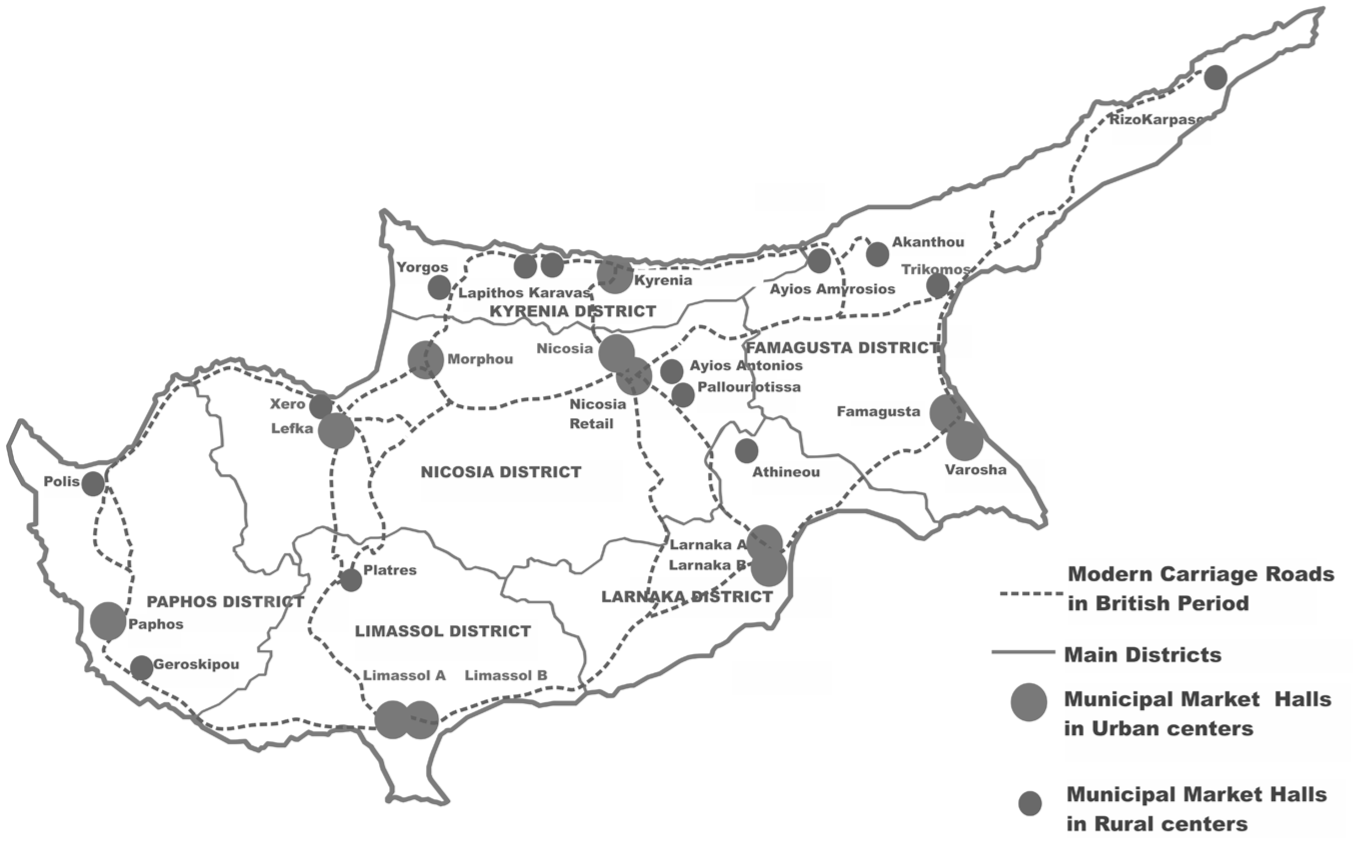
Geographic distribution of the twenty-six identified Municipal Market Halls (MMHs) in Cyprus.
Colonial Modernism: Modernist/Colonial Moment and The Rise of Market Halls
Colonialism and modernization are deeply intertwined forces that reshaped much of the non-Western world under the dominance and political control of Western imperial powers. 9 As a political-economic phenomenon and a practice of domination, Western colonialism—spearheaded by European imperial nations—entailed the exploration, conquest, settlement, and exploitation of colonized territories, harnessing their natural resources and labor to create new markets for exported goods. However, by the nineteenth century, a new form of colonialism emerged, centered not only on economic extraction but also on ideals of Westernization, civilization, and modernization. This shift provided colonial rule with a veneer of legitimacy by framing it as a civilizing mission that aimed to improve the material and moral conditions of the colonized. 10 Civilization, in this discourse, was not simply about technological advancement or infrastructural development; it also carried normative implications regarding the moral and cultural progress of society. 11 It implied the eventual dissolution of colonial rule and the imagined equalization of colonizer and colonized. 12 From this perspective, imperial colonialism was portrayed less as a system of political domination and economic exploitation, and more as a paternalistic mode of governance—one that exported civilization and undertook modernization for the supposed benefit of local populations. 13 The project of modernity, in this context, introduced modern values and institutions into colonized societies, where they interacted with indigenous traditions to produce hybridized forms of modernism. As Mohanty argued “the pre-colonised world is typically represented as the repository of all that is traditional and the colonised world—either in positive or negative terms—is seen to embody (or have the potential to come to embody) the modern.” 14
Colonial policies implemented from distant imperial metropoles often generated tensions between the metropole and colony, colonizer and colonized, West and East, indigenous and modern, and self and other. 15 In an effort to mitigate these tensions during the height of late nineteenth and early twentieth century imperialism, modern colonial powers sought to reshape perceptions and preserve selected memories within colonized communities across disparate regions. 16 Despite the despotic governance, systemic injustices, and economic exploitation perpetrated by Western colonial regimes, colonialism also introduced bureaucratic state structures that expanded their reach into various aspects of public life. These included public health and sanitation, education, legislation and law enforcement, protection of property rights, commercial regulation, and economic planning—contributing to significant changes in socio-political organization. In the public spaces of many mid-century colonial cities, modernity became both visually and aurally pervasive. Telegraph and telephone wires, electrical lines, railway tracks, paved roads, newspapers and magazines, bicycles and automobiles, brick and stone buildings, streetlights and neon signage, train whistles, radio broadcasts, and the clamor of machinery all marked the compressed and often coercive process of social, economic, political, and cultural transformation. These material and sensory indicators did not simply reflect a new lifestyle or mindset, but rather the deliberate engineering of colonial societies to meet the administrative and ideological goals of imperial modernity. As Atkins aptly notes, “if modernization directed by the colonial regime is the process, then presumably colonial modernity would be the result or product.” 17
Postcolonial scholars such as Crinson, Scriver and Prakash, Wright, King, and Cooper and Stoler have highlighted the enduring legacy of colonialism and imperialism in shaping hybrid cultures and architectural forms. 18 In Architecture and Independence, Jon Lang, Madhavi Desai, and Miki Desai examined the evolution of architecture in India, specifically its response to political transformation over the past century. 19 Imperial power profoundly influenced architectural typologies, the emergence of Modernism, and the formation of colonial discourses surrounding Indian architecture. As a tangible outcome of colonialism, architecture was shaped by the forms, materials, stylistic conventions, and legislative frameworks imposed by colonial hegemonies. Similarly, Demissie asserted that colonizers used architecture both as a symbolic medium and a functional tool to project the authority and solemnity of empire, reinforce social and ethnic hierarchies, and safeguard the identities of colonial settlers. 20 Additionally, Whealan contended that colonial regimes employed architectural and urban projects as mechanisms for social control, discipline, and surveillance. 21 In this context, architecture served as a mediator between colonizer and colonized, articulating their power relations and the identities each group sought to assert. Particularly in the post–Second World War period, modern architecture within colonial contexts gave rise to new discourses. Avermaete, Karakayalı, and Osten argued that “colonial modern” focused on the “twofold relationship between the post-war aesthetic regime of Modernism and the project of modernisation in architecture and urban planning in colonial geographies.” 22
The advent of Modernism and the rationalizing discourses on colonial architecture have been largely overlooked and many of those universal speculations on material culture criticize postcolonial binaries of colonizer-colonized or the European-other. 23 In various colonial geographies, Modernism and the interwoven dimensions of colonial modernity have been conceptualized through frameworks such as “other modernisms,” “indigenous modernisms,” and “tropical modernisms.” 24 The notion of the Other has been a central concern of postcolonial scholars including King, Metcalf, Wright, Al Sayyad, and Rabinow. 25 On one side of this discourse lies the dominant representation of European architecture; on the other, the hybridization and perceived deformation of local architectural identities. This dualism intensifies the tension between tradition and modernity. As Al Sayyad and Crinson have argued, Western cultural and technological superiority was disseminated through architecture as a means of establishing and maintaining hegemony over the Other. 26 Even Western architects of the era turned their gaze toward colonial territories, treating them as experimental grounds for Modernist ideologies. In this regard, Al Sayyad asserted that Le Corbusier’s plan for Algiers exemplified European imperialist ideology embedded in Modernist principles. 27 Furthermore, King 28 contended that colonies functioned as social laboratories during the 1920s—an argument supported by Wright in her studies of French colonial contexts. 29 Crinson and King suggested that architecture for the Other constituted an “imagined practice of hegemony,” one that persisted in postcolonial settings in various forms to maintain structural dominance. 30 Drawing on the work of Metcalf, Rabinow, and Wright, it is evident that architecture, as an artistic and ideological form, embodied the philosophy of the Other in service of the colonial mission. 31 In this framework, the Other became a vehicle for exploitation, 32 while the civilizing or universalising mission of colonial powers sought to erase the distinctions between colonizer and colonized. 33
In the early stages of colonialism, colonizers typically sought to sustain existing Western architectural forms for public buildings. As Brook observed, colonial architecture was often transplanted directly from the metropole and designed by architects for themselves, with little consideration for the local context; even construction materials and labor were frequently imported. 34 However, in later periods, hybrid architectural forms emerged, layered between Western-colonial and local-indigenous traditions, as part of a strategy to address the political tensions within colonized societies. In many cases, the Public Works Departments established in colonial regions oversaw this process of architectural amalgamation. Hybridization thus became a mode of negotiated consensus between colonizer and colonized. This architectural hybridity was intended to reshape the perception of colonial rulers—not as foreign occupiers, but as legitimate and integrated authorities within the local context. As Metcalf and Wright have argued, Western architectural languages were blended with indigenous architectural vocabularies through an exploration of architectural practice grounded in the socio-cultural contexts of the Other. 35
The architectural dialogue between local and Western forms, the post-war aesthetic regime of Modernism, and the broader project of modernization in architecture and urban planning contributed to the emergence of new architectural typologies in colonial geographies. Public buildings such as hospitals, post offices, and train stations began to display innovative forms, initially adorned with classical elements of Western architecture and later influenced by the International Style of Modernism. The functional spatial layouts of these buildings were often adapted to respond to local environmental conditions through the incorporation of traditional building forms, materials, and construction techniques. In this context, market halls—particularly those in British colonies—stand out as unique examples of “other modernisms” and architectural hybridization in the colonial periphery. Notably, even in the metropole (Britain), the market hall was a relatively new institution and architectural program by the mid-eighteenth century. Its widespread acceptance and popularity within Britain made it a suitable model to export across the colonies. As James Schmiechen and Kenneth Carls observed, the British market hall represents “the embryo of the modern, environmentally controlled retail spaces.” 36 In their book The British Market Hall: A Social and Architectural History, they argue that market halls both produced and symbolized modern urban space. These halls became instruments of municipal governance and spatial planning, aimed at promoting safe, controlled, and hygienic market environments. Ian Mitchell, in Tradition and Innovation in English Retailing, 1700 to 1850: Narratives of Consumption (2014), describes MMHs as municipally operated institutions housed in enclosed, modern buildings offering various amenities. 37 Politically supported and functionally progressive, market halls played a significant role in the everyday food trade by establishing social and functional networks and providing institutional space tailored to middle-class consumption. 38 Ultimately, market halls contributed to urban prosperity and social cohesion. As Carls has noted, market halls embodied “middle-class models of respectability, social order, and civic virtue.” 39 From the mid-nineteenth century onwards, the architectural program of the Victorian market hall in England began to be implemented in various British colonies. Prakash, for instance, refers to the modern market in India as “a universal sign of modernity and progress,” 40 likening its organized and rational layout to that of a museum with scientific displays. Similarly, Sohoni, in his work on market halls in colonial India, highlights the transformation from disorganized, chaotic marketplaces to efficient and rational urban spaces with specialized functions as a key expression—and emblem—of modernity. 41 He described market halls as “technological intervention[s] that furthered the colonial civilising mission without promulgation.” 42 In India, market halls were indeed modern institutions and extensions of Victorian Britain, yet they soon developed distinct identities, offering the native population the benefits of regulation, discipline, and consumerism. 43
In sum, market halls in Britain and its colonies are regarded as representations of civic pride, reflecting the success of colonial governance in collaboration with local authorities and the integration of local communities with their own evolving identities. Urban historians often trace the origins of civic pride to the architectural realm, with market halls frequently cited as emblematic structures. 44 These halls played a crucial role in fostering civic pride and became integral to the histories of cities, both shaping and being shaped by political communities in which individuals shared a sense of identity and common purpose. 45 Collins emphasized the importance of localism and local government in shaping community identity, referencing Joseph Chamberlain’s (1885) terms “local spirit” and ‘municipal patriotism’—concepts that fostered alignment between institutions and localities while safeguarding local interests and values. 46 Certainly, local governments promoted and defended civic pride as a political value. Shapely argued that civic pride remained evident in the post-war period, both as a guiding principle in urban development and as a symbolic form of power that shaped city identities and preserved local spirit and values. 47 As a key concept manifest in municipal parks, galleries, and town halls, civic pride came to symbolize status, wealth, and authority. 48
Paving the Way from the Oriental to the Occidental Context
The built environment of Cyprus testifies to rich living patterns and complex interactions among various Mediterranean communities and cultures over successive generations. Situated at the historic crossroads of trade and cultural routes in the easternmost part of the Mediterranean Sea, Cyprus has held strategic importance and served as a base for regional control by different powers for over three millennia. 49 These successive cultures contributed diverse meanings and images to the island’s cultural landscape and ultimately left a significant legacy of cultural heritage. Retail spaces and marketplace practices offer compelling evidence of this cultural accumulation and the island’s ongoing urban transformation. In numerous travelers’ memoirs, Cypriot marketplaces and market life occupy a prominent place, often described with vivid detail highlighting their cultural diversity and material richness. These accounts frequently reference the material prosperity of medieval Cyprus and its influence on the urban development of towns. Moreover, the vicinity of city gates, public squares, and intersections of labyrinthine streets is often depicted as the setting for markets, celebrations, executions, and other central activities of public life—mirroring patterns found in other medieval European towns. 50 The inherited medieval urban fabric is described as having evolved in alignment with Ottoman urban principles and social structures. Under Ottoman rule, Cyprus experienced a vibrant and free commercial life, evidenced by the establishment of numerous bazaars (street markets) that supported the production and trade of a wide range of local goods (Figure 2). 51 Archduke Louis Salvator of Austria (1983), who visited the island in 1873—just prior to the arrival of the British—reported that there were more than twenty-three distinct bazaars in the capital, each dedicated to a specific trade or craft. 52 Similarly, Mrs. Esmée Scott-Stevenson, who arrived in 1878 during the first year of British occupation and remained for five years as the wife of a British Commissioner, vividly described the bustling bazaars and the thriving business life of the capital city. 53
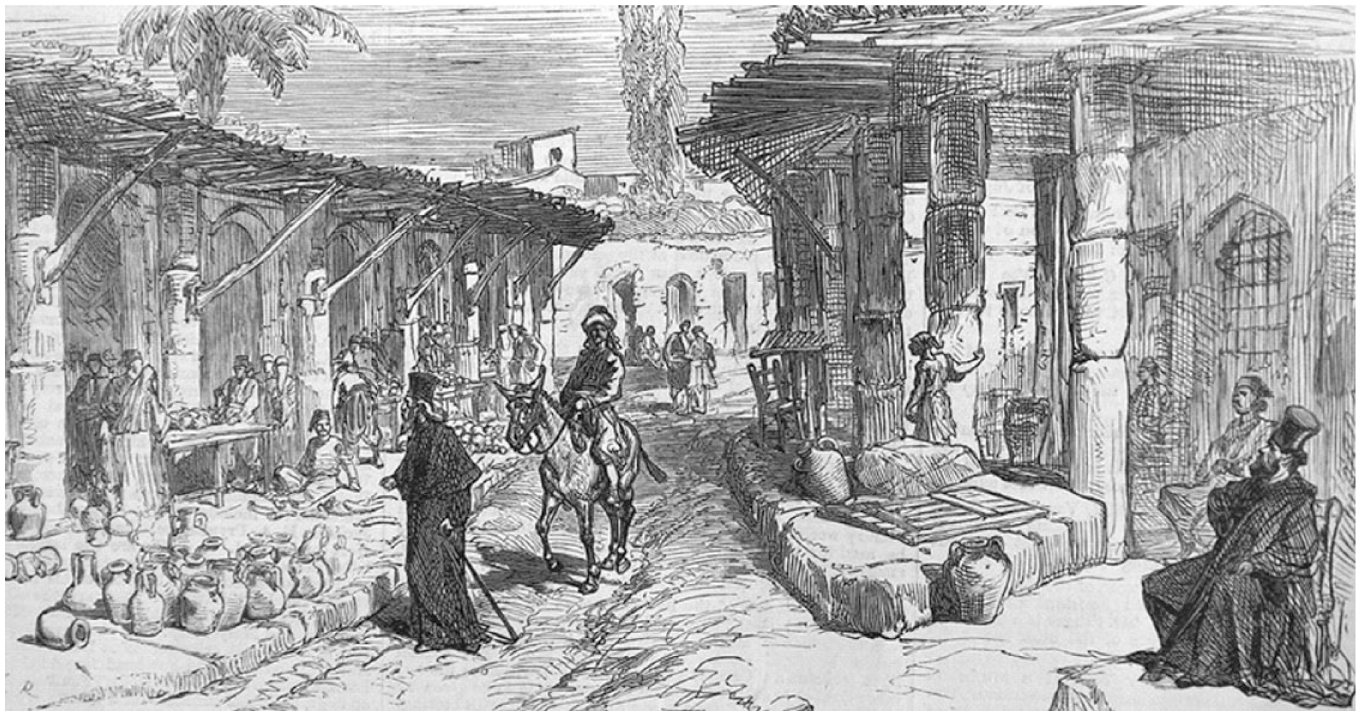
Illustration of the bazaar at Larnaka during the early years of British rule in Cyprus.
During this period, intercommunal credit between Muslims and Christians was an integral component of the towns’ economic life. As spaces of economic, social, and cultural interaction, bazaars served both the Christian and Muslim populations of the island, offering equal opportunities within the framework of their respective traditions. There were no restrictions on any branch of the economy or commercial activity, and importantly, no evident prejudice against the non-Muslim inhabitants of Cyprus. 54 In fact, bazaars functioned as both a social construct and a communal space that encompassed various yet interconnected segments of society. These spaces were traditionally associated with groups of individuals who shared similar perceptions, behaviors, uses, and visions of the marketplace. Over time, while maintaining the core values of this social construct, bazaars were physically transformed into spatial environments shaped and regulated by the principles and policies of modern governance introduced by the British colonial administration.
In the early decades of the twentieth century, environmental hygiene, public health, architecture, and town planning—along with various other aspects of civil administration—were reformulated and upgraded under the modern governance and urban reform initiatives of the British colonial authorities. 55 Although Cyprus officially became a Crown Colony in 1925, British officials had already prioritized public health upon their initial arrival, implementing targeted projects in specific areas. Within the framework of the colonial regime and the British conception of modernity, existing commercial environments—such as open-air bazaars—were subject to modernization. Their hygiene conditions, social significance, and spatial characteristics were re-evaluated, restructured, and improved. 56
Over the decades, bazaars shaped by both Eastern and Western retail traditions evolved into hybrid entities. In British Cyprus, they ultimately took their final form in conjunction with the emergence of modern governance and urban reforms during the early decades of the twentieth century. This transformation culminated in the establishment of MMHs, 57 where Eastern and Western codes of conduct, ethical frameworks, and retailing traditions were interwoven. These spaces embodied specific behavioral patterns and unique spatial configurations in retail practices, playing a significant role in driving urban transformation. During this period, MMHs were strategically situated within the urban fabric and stood out as distinctly modern elements against the backdrop of Post-Medieval Ottoman townscapes across Cyprus. At the turn of the twentieth century, the implementation of regulations and policies under British colonial governance enhanced market dynamics and improved the physical infrastructure of bazaars. While modernization in many European towns often disrupted traditional marketplaces, in Cyprus, informal bazaars remained vibrant urban spaces, coexisting with the structured architectural presence of MMHs. Functionally, the distinction between these market forms was not always pronounced. MMHs, characterized by their adaptability and flexibility, proved capable of responding to evolving patterns of demand, changes in the urban landscape, and shifts in political regulation during the British colonial era.
MMHs in colonial Cyprus emerged as both a praxis and symbol of modernity. The British colonial mission facilitated not only material improvement but also the moral advancement of local communities by intersecting Occidental and Oriental cultural traditions with the dynamics of colonial modernity. Despite their relatively brief governance of the island, historical evidence suggests that the British left behind a significant architectural legacy, contributing to the lexicon of Colonial Modernism and shaping the shared cultural fabric of the island’s diverse communities. 58 Following the Ottoman period (1571-1878), British colonial rule lasted for eighty-two years, ending with the establishment of the modern Republic of Cyprus in 1960. During the early phase of their administration, British policy primarily focused on maintaining the existing Ottoman political, social, and economic systems. This approach persisted until Cyprus was officially declared a Crown Colony in 1925. 59 Although the British aimed to implement what they termed “good government,” this notion effectively translated into the imposition of British systems of governance, including administration, taxation, currency, legal structures, commercial regulations, and trade mechanisms, thereby integrating the island into the broader imperial framework. 60 At the time, however, the Ottoman administration had already cultivated enduring institutional traditions over three centuries. The Ottoman Millet system had fostered peaceful coexistence and commercial interaction among Turkish, Greek, and other ethnic communities. Recognizing the value of these long-standing socio-cultural arrangements, the British were cautious not to undermine the accumulated respect, tolerance, and strong cultural ties among the island’s inhabitants. Consequently, rather than replacing the Ottoman system entirely, the British incorporated aspects of it while gradually instituting social reforms and modernizing existing laws and practices—most notably exemplified by the revitalization of age-old bazaars.
When Cyprus was leased to the British Empire, the nineteenth century Ottoman Empire was already undergoing a period of transformation marked by the Tanzimat Reforms, which aimed to reorganize and modernize state structures. 61 These reforms had a noticeable impact on Cyprus, leading to the establishment of new institutions and the reformation of existing ones. As a result, both local communities, in cooperation with the British, took steps toward the island’s modernization. In the early years of British administration, uncertainty surrounding the legal status of Cyprus—acquired without armed conflict—led the British to refrain from implementing a direct policy of Anglicization, unlike in their other colonies such as India and Hong Kong. 62 Over time, however, colonial modernity in Cyprus evolved into a distinctive form, shaped not only by British influence but also by the concurrent impacts of the Kemalist reforms in Turkey and Greek Modernism in Greece. Although modernity on the island was often expressed through the political authority of British colonial rule, it also became a site of negotiation in the national identity formations of both Turkish and Greek Cypriot communities. As such, Cypriot modernity diverged from parallel developments in the respective motherlands—Turkey and Greece—as well as from other British colonial contexts. 63 Within this competitive and dynamic environment, both the colonial administration and the local communities came to embrace this localized variant of modernity, along with its institutional expressions, which became sources of civic pride. The British colonial government generally sought to preserve the local spirit, support a developing Cypriot identity, and foster civic engagement through the process of municipalization. This process established a tangible link between institutions and local context, exemplified most notably by the emergence of MMHs as modern civic landmarks.
Municipal Market Hall as a Spectacle of Modern Life
The MMH emerged as a new spatial domain shaped by the interplay of colonial governance and the island’s diverse ethnic communities. It functioned as a site for novel expressions of urban modernity, social interaction, and public life. By fostering economic activity, generating urban prosperity, and facilitating social cohesion, the MMH enabled new forms of sociability and everyday encounters among the populace. Yet, MMHs retained strong cultural ties to the past, preserving the learned and shared practices of commercial life rooted in the traditional bazaar. While they served the functional role of historical marketplaces, they also represented a modern institutional framework that regulated interactions between various social groups, including locals and the colonial elite. Much like their predecessors, MMHs were animated by the presence of diverse individuals—interconnected members of communities who shared similar perceptions, behaviors, spatial uses, and aspirations. These spaces became vibrant arenas where urban and rural populations, vendors and customers, and members of different ethnic backgrounds converged and interacted. In this context, the MMH embodied a distinctive form of coexistence, shaped by cultural continuity, moral values, inherited traditions, religious beliefs, and the parallel aspirations of ethnic communities to attain Western standards of modernity. This complex synthesis rendered the MMHs of Cyprus unique within the broader landscape of colonial modernism.
Cross-cultural hybridity—manifested in the fusion of Occidental and Oriental market traditions that had long coexisted on the island—endowed Cyprus’s MMHs with a distinct character and cultural vitality. The MMHs became emblematic sites where visible symbols of modernity and cultural hybridity were expressed through the everyday interactions of Cypriot individuals from diverse communities, including Turkish, Greek, Armenian, Jewish, Maronite, and Suryani populations, alongside British colonial elites. As a social nexus, the MMH facilitated intercommunal encounters, fostering cultural exchange and enabling the coexistence of Muslim and Christian traditions within a dignified, orderly, and semi-autonomous public space. Religious dietary restrictions, particularly between Christian and Muslim communities, shaped the internal organization of these halls. For instance, Turkish Cypriot halal butchers operated in distinct spatial zones equipped with the necessary tools for the ritual preparation and slaughter of animals in accordance with Islamic practices. Similarly, Greek Cypriot pork butchers conducted their trade separately, as Turkish Muslims generally refrained from purchasing pork. 64 In some instances, Greek butchers accommodated Muslim dietary requirements by using separate knives and chopping tools specifically for halal meat. Despite these religious distinctions, Christian and Muslim farmers routinely sold their produce side by side, with minimal conflict, for many years. Nevertheless, in certain cases, the construction of separate municipal markets served as a practical solution to address enduring religious and cultural differences between communities (Figure 3). 65
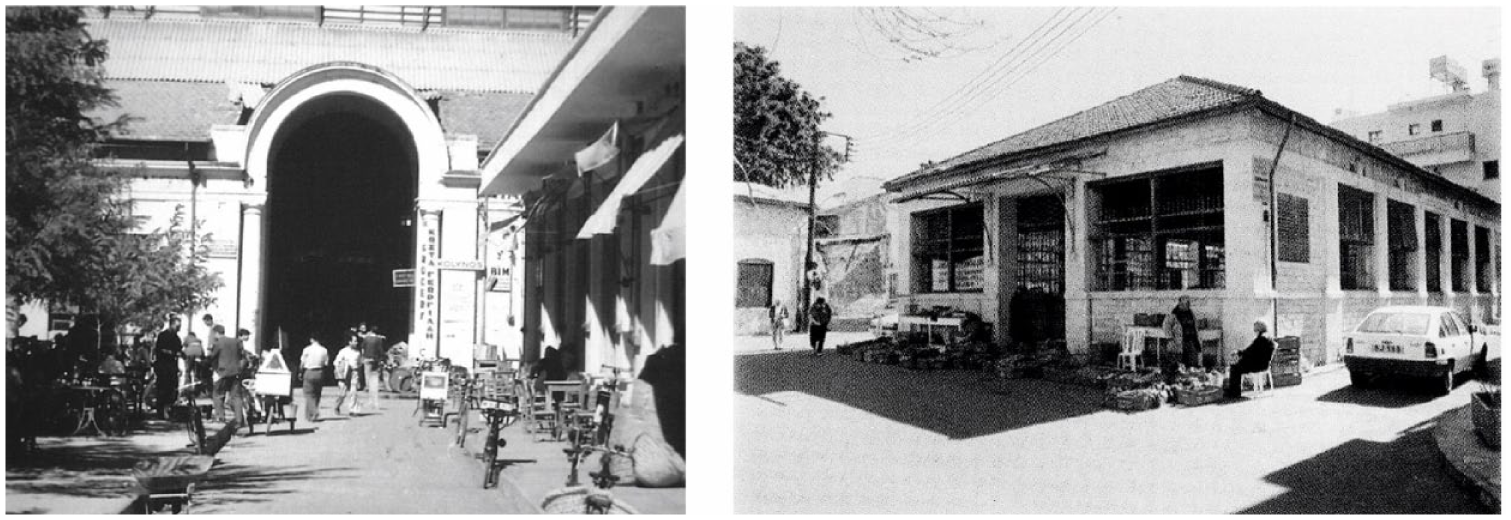
(Left) Municipal Market Hall (Greek Bandaboulia) in Limassol, opened in 1917. (Right) Municipal Market Hall (Turkish Bandaboulia) in Limassol, opened in 1934.
The shared use of MMHs by various ethnic communities contributed to a distinctly modern atmosphere of public communication and social cohesion. These spaces facilitated everyday interactions that spanned a range of domains, from commerce and politics to public announcements and religious observances. Communal memories surrounding the MMHs reveal how these institutions supported diverse aspects of daily life, functioning not only as economic centers but also as vital arenas for social integration. Villagers and farmers—key figures in the regional economy—regularly traveled from surrounding settlements to town markets to sell agricultural products and household goods, as well as to conduct their own weekly shopping. As one interviewee recalled, “We were collecting figs in the morning to be sold in the Nicosia market by wholesalers.” 66 Fridays saw heightened activity, as rural populations converged with town dwellers to shop and attend prayers at their respective places of worship. One butcher, whose father had operated a stall in a Nicosia municipal market since its establishment in the 1930s, noted, “It was so crowded that nobody could walk freely without crashing into somebody, and it was not possible to pick up the money off the floor if you dropped it.” 67 As vibrant meeting places, MMHs followed daily, weekly, and seasonal rhythms that encouraged the flow of information between urban and rural communities. They were important venues for exchanging news, gossip, and public discourse; marketgoers routinely discussed political developments, shared headlines, and debated ideologies. These markets also acted as democratic spaces where individuals of different religious and political backgrounds could interact freely. 68 Visiting the MMH was often considered a significant social event, akin to the experience of colonial elites attending Victorian market halls. This is reflected in the way people dressed for the occasion. One interviewee recalled, “We—my mother and aunt—were going to the MMH on Fridays, and it was a prestigious event that required special attention to how we dressed.” 69
For women, visiting the MMH was a significant social activity that combined commerce with sociability. The MMH provided a valuable opportunity not only for shopping but also for interpersonal interaction and the maintenance of social networks. Women often used these trips to visit relatives or friends living nearby, making market visits an integral part of their urban routines. 70 Notably, there was a strong and visible presence of working women within the MMHs, particularly as vendors and stall owners. This presence became more prominent during the Second World War, when many Turkish and Greek Cypriot men were enlisted to serve as soldiers in the British Army. In their absence, women increasingly assumed responsibility for family businesses and market operations. Unlike in many other sectors of the wartime economy, female vendors in the MMHs often became full proprietors, with the legal rights to expand or transfer their enterprises on equal terms with men. This shift was perceived as progressive, and these pioneering women came to occupy prominent roles within their communities, serving as role models for others. 71 Their visibility and success in the marketplace marked a significant transformation in gender dynamics, particularly within the traditionally male-dominated sphere of public commerce. Importantly, the modern notions of social control, discipline, and surveillance embedded in the colonial administration contributed to the respectability of the MMH as a working environment. This regulatory framework provided a relatively safe and structured space for women’s economic participation, thereby facilitating their integration into public and commercial life.
The modern spatial configuration of MMHs continued to support and sustain local traditions, serving as vital settings for communal life. Religious celebrations, such as Bayram (Islamic holidays), remained inseparable from the socio-economic and cultural fabric of Cypriot society and were closely associated with the MMHs. Before and during Bayram, MMHs transformed into festive public spaces, bustling with people engaging in holiday shopping, reconnecting with relatives visiting from abroad, and socializing through face-to-face interactions. As one of the few true spaces for communal interaction, the MMH held a particularly strong emotional and social significance during these periods. A woman who regularly shopped at the Nicosia MMH remarked: “Bayram means a visit to the MMH for shopping; without it, Bayram shopping would not be complete” (Figure 4). 72 Similarly, MMHs were central to Christmas preparations for Greek Cypriots and other Christian ethnic minorities. These spaces enabled a shared experience of religious festivities, where people from different faiths mutually respected and participated in one another’s celebrations. Throughout the year, this convivial co-existence reflected a deeply rooted Cypriot model of civic virtue, social order, and respectability, embedded in the hybrid modern-traditional setting of the MMH.
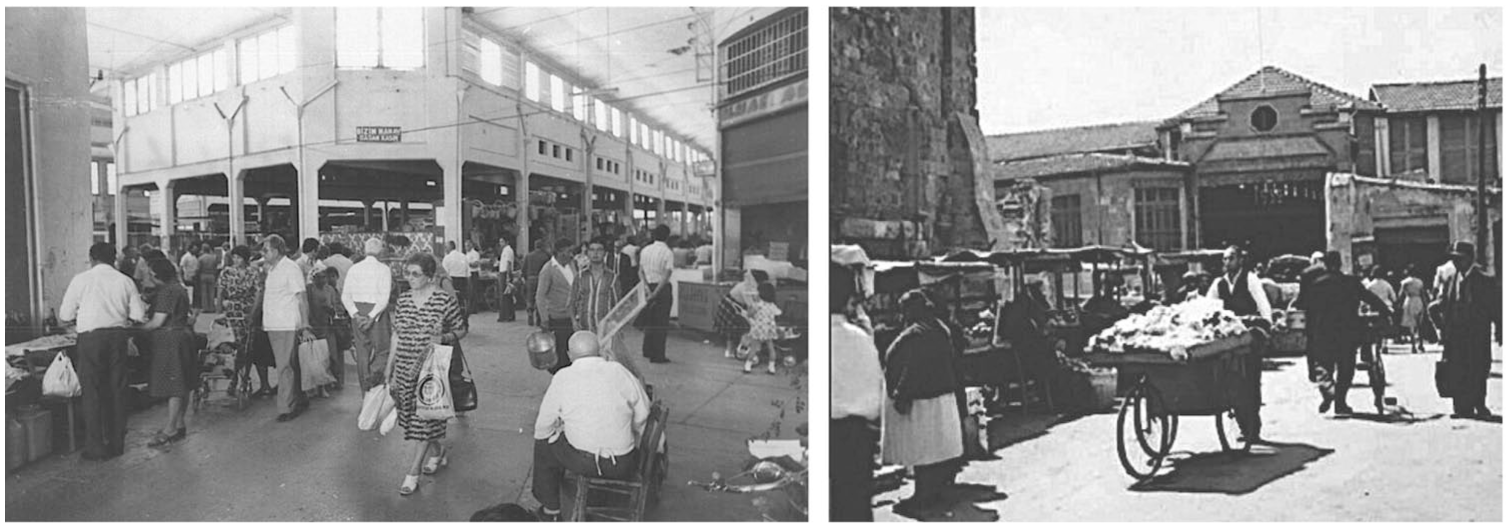
Interior and exterior views of the Nicosia Municipal Market Hall in the 1980s.
Daily routines within the MMHs fostered strong interpersonal bonds and communal trust among vendors. It was common practice for stallholders to entrust their businesses to neighboring vendors when temporarily absent. Moreover, cooperation rather than competition defined the commercial ethos: vendors would actively assist one another, often directing customers to stalls of colleagues who had not sold enough during the day. 73 In this way, the MMH generated a complementary commercial environment that also benefited adjacent retail establishments. Family ties and kinship networks further reinforced the MMH’s role as a foundation for economic activity. A family’s involvement in the market often led to the growth of retail businesses across time and space. By the late 1940s, many family enterprises—initially rooted in MMHs—expanded into independent shops selling household goods such as sewing machines, refrigerators, and other consumer appliances. Being a vendor in the MMH became a family tradition, with stalls and businesses commonly passed down from one generation to the next. Certain family names even became synonymous with specific goods, such as Yumurtacıoğulları (“sons of the egg seller”) or Kasapoğluları (“sons of the butcher”). Visits to the MMHs also held cultural significance beyond economic exchange. They were occasions for sampling traditional foods and engaging in the ritual of bargaining, a cherished practice that fostered long-term relationships between customers and vendors. Many patrons regularly shopped with specific sellers—preferring, for instance, to buy from Butcher Yanni or Grocer Mehmet—not only for product quality but also for the familiarity and trust established through repeated social interaction. 74 Over time, the MMH evolved into more than just a venue for food trade. As a modern institution, it nurtured community cohesion, fostered social interaction, and provided an institutional space for the transmission of cultural norms, values, and practices across generations.
Beyond their social and economic functions, MMHs in Cyprus deeply shaped the personal experiences and memories of those who frequented them, becoming integral to local identity. However, colonial rules and regulations occasionally clashed with the rhythms of daily life and the ingrained sense of place that characterized MMHs. These spaces were imbued with a vibrant sensory palette—forms, colors, sounds, and smells—that emanated from the abundance of crops and products on display, as well as from the multilingual and multicultural conversations between vendors and customers from the island’s diverse ethnic communities. Auditory experiences played a particularly significant role in shaping the atmosphere of the MMHs and are retained vividly in the memories of their users. Although colonial bylaws aimed to regulate social behaviors—seeking to impose order on what was traditionally a more dynamic and expressive marketplace—the MMHs largely retained the Eastern tradition of animated buying and selling, marked by a distinctive cacophony of sound. One such regulation stated: “No person shall advertise anything whatsoever either by shouting or by posting up or distributing any papers or by sounding any instruments.” 75 In practice, however, such prescriptions were often ignored or loosely enforced. The vocal exchanges between vendors and customers, along with other market sounds, became cherished components of the MMH experience. As one vendor from Nicosia recalled, “When I remember the MMH, I hear the voices of butchers and the sound of their bells ringing after the sale of products to invite new customers.” 76 These sensory experiences fostered a profound bond between people and place, contributing to a sense of belonging, emotional attachment, and the construction of both collective and personal memory. The smells and tastes associated with MMHs—whether pleasant or otherwise—served as enduring links between past and present. A shopper at the Nicosia MMH reflected, “When you enter the MMH, you smell the fruits and vegetables. On one side, the smell of the cucumber, and on the other, the color of the watermelon invites you to buy them.” 77 Even pungent or offensive odors, such as those emanating from the butchery or fishmonger sections, contributed to the distinct identity of the space and became evocative markers of specific market areas.
In brief, MMHs never functioned solely as sites of commerce or mere remnants of colonial governance. Rather, they became key venues for public interaction, transforming Cypriot towns from traditional settlements into modern urban centers. More than sanitized, zoned, serviced, and regulated market spaces, MMHs embodied social contracts and preserved the dynamic, lived spirit of the bazaar. They served simultaneously to legitimize colonial authority and to provide an illusion of local empowerment, sustaining long-standing market traditions within a modern framework. In this way, MMHs in Cyprus functioned as hybrid institutions that mediated between colonial order and communal life. The civic pride associated with colonial-era MMHs must therefore be understood not only in terms of their historical function, but also through the lens of nostalgia and historical continuity. In the postcolonial context, these spaces are frequently remembered and reinterpreted as repositories of collective memory—imbued with both the legacy of colonial modernity and the enduring spirit of local traditions.
Colonial Governance, Modern Space, and Society
Cyprus underwent a process of modernization in parallel with global technological advancements and socio-economic transformations, which were themselves extensions of the Industrial Revolution in the early nineteenth century. By the end of the century, both the effects of industrialization and a new administrative ethos began to reshape the island’s urban economy and everyday life. Technological innovations from the United Kingdom were introduced, and Western products and machinery were brought to Cyprus, marking a significant shift in the island’s material culture and infrastructure. Through a series of colonial reforms and development projects, the British administration expanded port facilities, constructed military installations, exploited copper reserves, improved infrastructure, and invigorated commercial activities and the broader economy. 78 Moreover, the expansion and improvement of roads facilitated greater mobility and more efficient transportation of goods between rural and urban areas. 79 A growing population, an increasing number of independent households, and the rise of wage labor further contributed to the transformation of commercial life on the island. These developments fundamentally altered both the nature and organization of commercial practices. Marketplaces—long established as the core of economic activity—were particularly revitalized under British policies.
As in the public spaces of many mid-century colonial cities, modernity in Cyprus became both visually and aurally conspicuous within its urban settlements. Modern modes of transportation—such as trains, bicycles, and automobiles—alongside the introduction of telegraph and telephone wires, paved roads with street lighting, open-air cinemas, and other urban features and sounds, signified a broader process of social, economic, political, and cultural transformation. By the 1930s, modernization efforts initiated by the colonial administration, through state-led political and infrastructural projects, brought significant changes to both the economic sphere and the rhythms of everyday social life. The British colonial authorities placed considerable emphasis on the regulation and control of public life, spaces, and safety. Semi-open areas such as coffeehouses and covered market halls were specifically targeted for discipline and order. This reflected a prevailing belief among contemporary social and moral reformers that “social behavior could be better controlled if public buying and selling moved off the streets and into a single building.” 80 As a result, a historical process of spatial interiorization began to take shape in Cyprus. Unregulated, open-air bazaars came under colonial scrutiny and were increasingly aligned with dominant models of urban modernization derived from Western European precedents. Inspired by developments in European cities, MMHs in Cyprus were often constructed near major religious buildings and typically situated on the sites of former marketplaces already familiar to local populations (Figure 5). 81 These interventions were not only spatial reorganizations but also part of a broader cultural agenda to impose modern forms of civic order and consumption.
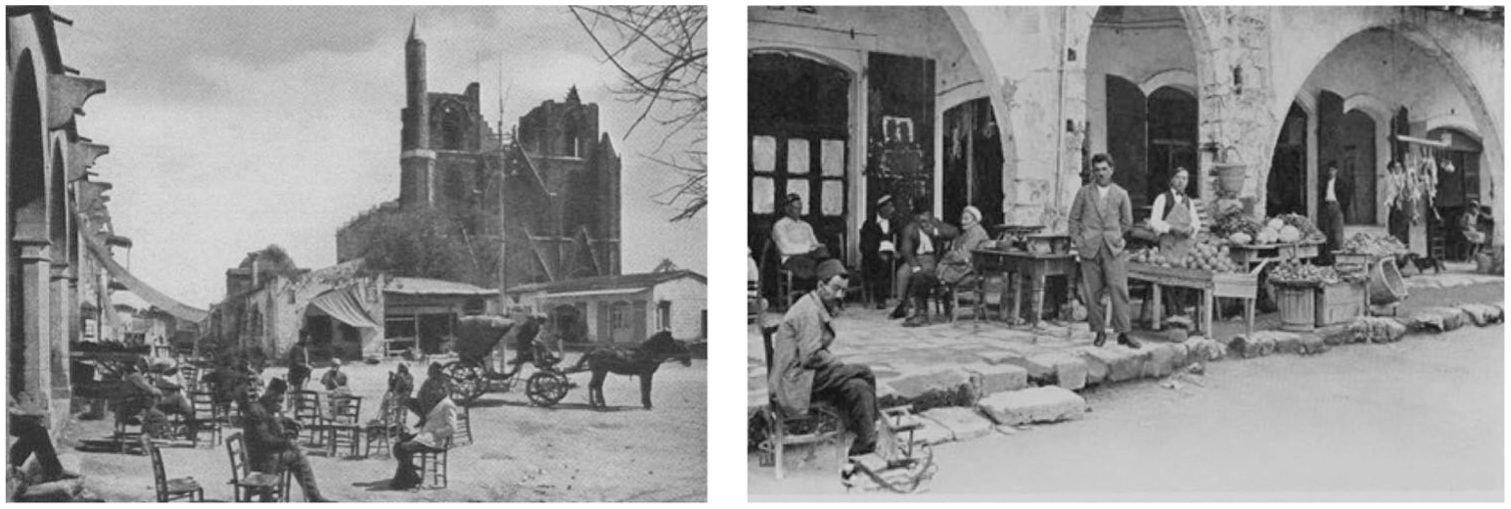
Arcades of the municipal market facing the main market square in Famagusta.
In the second half of the twentieth century, the MMH emerged as a key example of Colonial Modernism and reflected the shifting values in Cyprus during that period. Major innovations and new urban ideals played a critical role in the modernization of urban markets, which, in turn, transformed the urban economy, cityscape, and the conceptualization of public space. As instruments of urban modernization, MMHs introduced a distinct architectural typology in which retail spaces and related practices were consolidated under a single, unified roof—an approach that began to appear across various towns on the island. This period marked a shift in the spatial and operational practices of retailing, during which the norms and regulatory codes of English retail culture became influential in Cyprus. Drawing on Mitchell (2014), 82 market halls in Cyprus functioned not only as public spaces but were also subject to meticulous and systematic regulation. The construction of a MMH, therefore, went beyond the physical act of building; it represented a broader transformation in the interaction between buyers and sellers. These spaces were designed to provide a safe and orderly environment that blended the informal traditions of bazaar-style street trading with the formalized structure of a regulated public marketplace.
In January 1879, in an effort to modernize municipal administration and regulate the existing tax-collecting councils, an ordinance was published in the government gazette delineating the functions, authority, and powers of the municipal councils in the five major towns of Cyprus. 83 The establishment of municipalities marked a significant transition from Ottoman to British colonial governance. As local extensions of the colonial administration, these municipalities were primarily tasked with implementing civic improvements aligned with the colonial ideals of sanitary, efficient, healthy, and modern towns. The 1882 municipal legislation remained in effect until the enactment of modern municipal governance laws in 1930, serving as the foundational legal framework for local administration. 84 Under this legislation, municipalities were responsible for maintaining urban cleanliness, disinfecting stream beds, monitoring the health of domestic animals, and inspecting food production and sales sites. They were also charged with regulating the weights and prices of bread produced in private households. Additionally, with the approval of the district commissioner, municipalities were authorized to construct roads, parks, public toilets, and markets. Further infrastructural projects—such as the widening of roads and the construction of public buildings, including hospitals, schools, and ports—required the approval of the high commissioner. 85 These measures reflected the broader colonial agenda of urban modernization and public health reform.
Cyprus’s municipal markets addressed at an early stage and became an integral responsibility of municipalities during the colonial era. The control and supervision exercised by municipal authorities, along with the standardization of all aspects of market operations, introduced a form of corporate uniformity. Laws and regulations, which were revised in the early 1900s, aimed to prevent unfair competition among traders, uphold hygiene standards, regulate operating hours, and generate municipal revenue from shops and stalls. 86 The bylaws—adopted by the Council of Municipal Corporations and approved by the Colonial Governor—ensured the creation of safe and orderly commercial environments for both vendors and customers. The sale of perishable goods, including fruits, vegetables, and meat products, was subject to strict oversight through improved municipal services and the supervision of designated authorities. 87 Penalties for violations of these regulations mirrored those enforced in English market halls. 88 Beyond standardizing the conditions under which market activities occurred, municipalities derived significant income from tolls, stallage fees, and the rental of shops and ancillary facilities. 89 Market operators were tasked with ensuring that traders conducted business within the designated premises, paid their dues to the market authorities, and refrained from selling in surrounding streets—measures intended to maximize revenue collection. 90 Over time, British colonial policies and regulations established operational and spatial standards for municipal markets. Ultimately, the resulting legislation and spatial configuration of market halls brought about a pervasive corporate uniformity across all facets of their administration and daily function.
Politics, Positions, and People
The significance of bazaars as central hubs for urban food provisioning, economic activity, and social interaction was widely acknowledged. The early establishment of bazaar councils can be understood as a precursor to the formation of modern municipal councils. 91 In time, municipal councils came to be composed of prominent traders and the noble or affluent men of each town, who combined their recognition of the bazaar’s importance with a statutory mandate to establish and oversee municipal markets. In addition to the formal authority vested in municipal councils, other actors played crucial roles in implementing the rules and regulations within the MMHs. Chief among them was the municipal inspector—often referred to simply as the inspector—who oversaw the daily functioning of the MMH. This role bore a strong resemblance, both in practice and in authority, to that of traditional Ottoman figures such as the bazarbaşı (head of the bazaar), ihtisap ağası, or çarşı ağası (bazaar lord), who had long held responsibility for the regulation and order of market spaces. 92
Each municipal council appointed an inspector to oversee and regulate the operations of municipal markets in accordance with established rules and regulations. The powers vested in the municipal inspector were also extended to the medical officer for public health and the chief inspector. 93 Furthermore, these powers fell under the authority of the mayor, who retained overarching control. 94 The primary responsibilities of the inspector included monitoring the entry and exit of goods, ensuring adherence to quality standards, collecting taxes and rents, and managing all other market-related matters. In consultation with the mayor, the inspector determined which goods were permitted for sale and regulated their placement within the market. 95 Another critical duty of the inspector was to stamp perishable goods deemed fit for human consumption. If a product was found to be unfit for public health, it was subject to penalty and disposal, which was carried out by the medical officer under the written directive of the mayor. 96 For example, pork skin, pork meat, or any swine-derived product—as well as vehicles transporting such items—were prohibited from being brought into markets designated for perishable goods. 97 Market staff were typically municipal employees, tasked with the daily operations and maintenance of the MMHs. On-site offices housed municipal officials, including the municipal engineer, town clerk, medical officer, and the official weigher (kantarcı), the latter of whom was responsible for verifying the weight of goods prior to sale. 98
Rules and regulations played a decisive role in shaping the everyday practices and living patterns associated with the spatial and temporal organization of MMHs. According to the bylaws, any individual bringing goods into the MMH or engaging in the sale of goods was required to pay the prescribed fees to the inspector responsible for overseeing market operations. 99 The bylaws also designated specific areas within the MMH for the sale of goods, with locations regulated and enforced by the inspector. 100 These designated areas included the meat market, pork market, fish market, and sections for perishable goods. 101 For example, the market for perishable goods was defined as the collection of shops, stalls, and spaces within the MMH allocated for their sale. 102 The sale or display of such goods outside these designated spaces was strictly prohibited. Fish, for instance, could not be sold or offered for sale outside the officially designated fish market. 103 In line with broader colonial urban policy, street trading and hawking were also banned in other colonial towns, primarily because market dues could not be collected from itinerant traders. 104 Comparable regulatory efforts were observed in cities such as Kolkata and various Nigerian towns, where public traffic officials and police sought to confine hawkers and traders to newly established market facilities. 105 These restrictions aimed to enforce planning norms, reduce congestion, and protect the economic viability of formal markets. Additionally, inspectors were responsible for monitoring the cleanliness and sanitary conditions of each market shed or shop, including associated furnishings, surrounding premises, and receptacles. Vendors were required to clean their spaces at the end of each day to the satisfaction of the inspector, reinforcing the colonial emphasis on hygiene, order, and civic discipline. 106
In a similar vein, the operational hours of municipal markets were strictly regulated. Markets were permitted to remain open daily from sunrise to sunset, except on Sundays, when they were required to close at 2 p.m. Any deviations from these hours—whether extensions or alternative schedules—required the express permission of the mayor. 107 Additionally, a designated rest period, commonly referred to as a “siesta” in some locales, was mandated during the summer months. This enforced break, typically from 1 p.m. to 4 p.m., was implemented under British colonial authority and applied not only to the shops within the MMH but also to all commercial establishments and workshops in the surrounding districts. The siesta was announced each working day by the sounding of a horn from the nearby power station, signaling the beginning of the compulsory afternoon closure. 108
The political context surrounding the MMHs was shaped by the broader framework of colonial governance, which regulated the operation and administration of these buildings. British rules and regulations, implemented through municipal authorities, governed all aspects of the MMHs—defining their functions, usage, and operational standards. Collectively, these measures produced an intangible yet pervasive atmosphere of colonial authority that left a distinct imprint on the urban character of each town.
Modern Space and Urban Silhouettes
As a distinctive archetype and purpose-built form of the period, MMHs were constructed in both urban and rural settings across modest Cypriot towns as part of efforts to modernize their commercial environments. The British colonial administration established an MMH in each settlement where municipal authorities were active under the provisions of the Municipal Corporation Law. 109 Typically, these settlements were already integrated into the contemporary commercial and administrative networks, and the MMHs were strategically located at the intersections of modern roadways developed during British rule, adjacent to existing commercial zones, or in proximity to agricultural production areas and commercial ports. 110 Moreover, MMHs were sited near the densely populated centers of towns, where religious, public, and commercial life converged and remained deeply embedded in everyday practices. The fact that most new municipal markets were established on or near the sites of traditional open-air bazaars underscored the practical, modest, and locally rooted character of commercial life associated with MMHs (Figure 6). 111 As replacements for open-air markets, MMHs were sometimes initially realized as well-defined semi-open structures with a unifying roof, while in other cases they were completely reconfigured as purpose-built buildings representing a unique architectural typology.
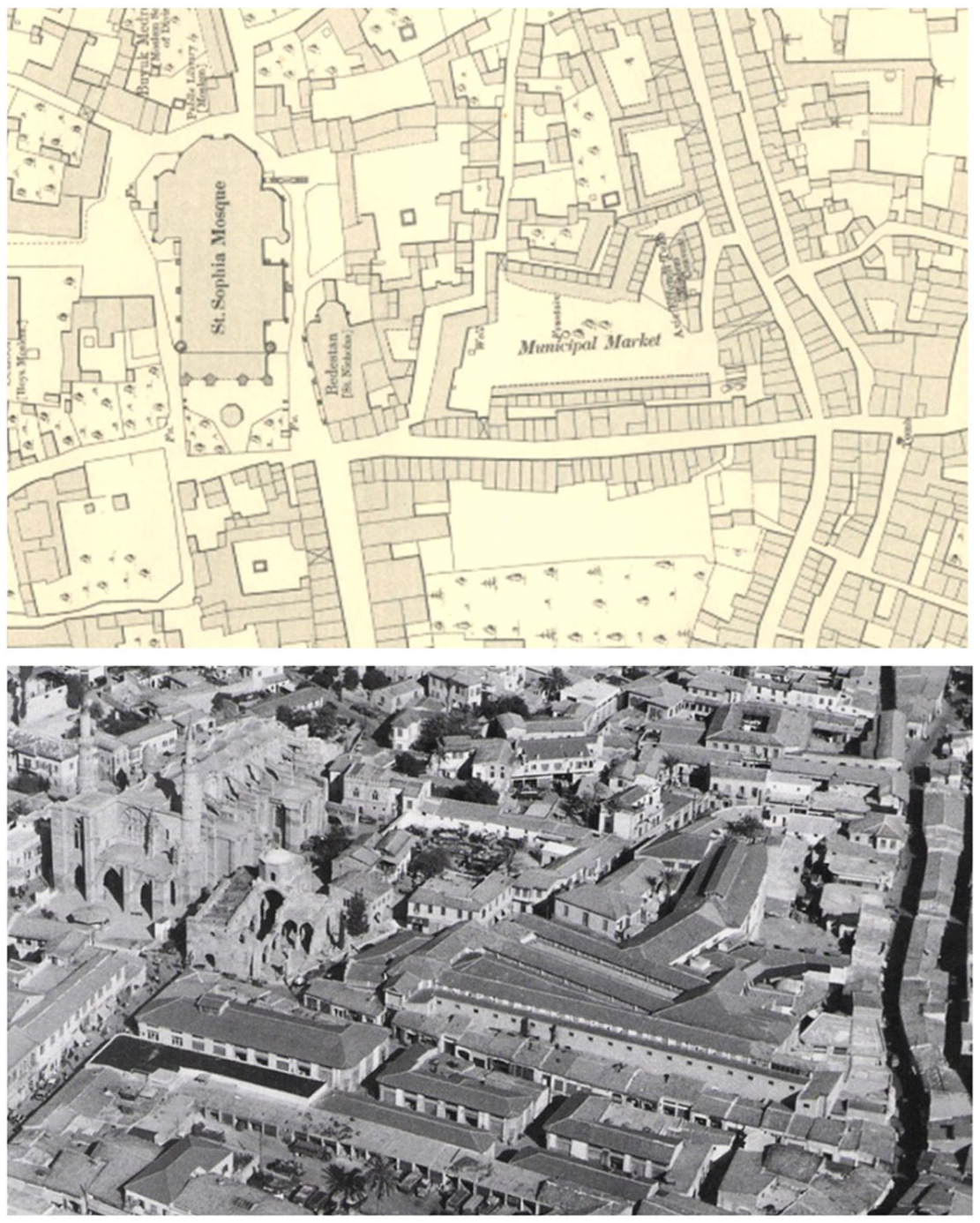
Map of Nicosia showing the open municipal market in 1912 and an aerial view of the covered Municipal Market Hall in 1932.
Depending on the economic, contextual, political, and social conditions of urban or rural settlements—including towns and villages—market buildings were either purpose-built or developed progressively. The construction of a purpose-built MMH was carefully calibrated to the specific site, with designers seeking to fulfill the functional requirements of the market while responding to the broader social environment. These buildings were designed with spatial volumes appropriate to their respective sites and were strategically positioned in relation to the character and orientation of the surrounding context. Purpose-built MMHs were in newly developed areas as part of broader modernization initiatives. In contrast, progressive development referred to the adaptation of existing structures for market functions, either by converting buildings formerly used as markets or by transforming non-market buildings to accommodate the MMH program. Often, the articulation of volumes and spatial arrangements within such MMHs reflects the layering of historical interventions, capturing the evolving character of the building over time. This mode of development typically sought to leverage the potential of the existing context and built fabric, reflecting a pragmatic response to prevailing social, political, and economic conditions.
One of the most prominent and architecturally significant examples of market halls in Cyprus is the Nicosia MMH, which was progressively developed beginning in 1914 and reopened in 1932 following the enclosure of its previously semi-open space. Situated within a historically vibrant commercial quarter of Nicosia, the market occupies a site where a dense assemblage of Ottoman-era commercial and religious structures—including the khan (courtyard inn), bedesten (covered market), bazaar, and mosque—once thrived and was frequented by a diverse range of cultural communities. The tradition of covered markets in Cyprus dates back to the Ottoman period, during which architectural forms such as the bedesten and khan played a central role in urban commerce, particularly in the trade of luxury goods like silk and jewelry imported from the East. In contrast, MMHs were purpose-built under British colonial governance to facilitate the hygienic sale of perishable goods—such as meat, groceries, and fresh produce—within covered and regulated environments. Numerous MMHs were constructed across the island, and several purpose-built examples exhibit clear Modernist tendencies, particularly in the treatment of their façades and spatial volumes.
The progressive development of urban space and the dynamic interplay between market halls and the surrounding urban fabric resulted in diverse spatial configurations and architectural typologies, including several canonical architectural models. The incorporation of modern design elements further enabled MMHs to accommodate a broader range of uses and enhance their social relevance. Although originally conceived to serve commercial functions and public health objectives, MMHs gradually evolved into key socio-economic nodes within the urban landscape. This evolution necessitated both functional and physical transformations, shifting the role of MMHs from simple marketplaces to multifaceted civic spaces. Over time, these structures were adapted to include administrative facilities and social amenities, reinforcing their identity as vibrant civic centers in the contemporary urban context.
Developments in retail formats, accompanied by newly established rules and standards of trade, enhanced not only the quality of spaces regulating retail activity but also the functional organization and atmosphere of the modern urban environment. The architecture and visual presence of MMHs embodied the principles of Modernism, contributing a distinctive layer to urban skylines otherwise dominated by Ottoman and Gothic architectural traditions—thus introducing an “other modern” within the colonial geography. Notably, the economic significance and symbolic prestige of these market halls often rivaled that of key political and religious institutions. Much like town halls, churches, or mosques, MMHs were strategically situated at the heart of towns, where they impressed the public through their monumental presence, conveyed civic values, and enhanced the symbolic and aesthetic stature of the urban landscape. This phenomenon was not unique to Cyprus but echoed in British market halls and other colonial contexts, where such structures similarly asserted both functional importance and ideological influence.
Unlike their European counterparts, MMHs in Cyprus were not originally conceived as grand or monumental structures; rather, they were modest, pragmatic, and functional, reflecting the smaller scale and demographic realities of Cypriot settlements. While many European cities of the era were home to hundreds of thousands of residents, the population of the entire island of Cyprus was approximately 310,709 according to the 1921 census, with the largest urban center, Nicosia, having only 18,579 inhabitants. 112 Despite these relatively small populations compared to rapidly urbanizing European cities, more than thirty MMHs were established across the island by the mid-twentieth century. These included facilities in principal towns, district centers, and large villages. Between 1878 and 1968, a total of thirty distinct MMHs were documented in official gazettes and in correspondence between the High Commissioner and municipal councils, illustrating the broad institutional commitment to market infrastructure during the colonial period. 113
Cypriot MMHs were among the largest structures within their immediate built environments and were equipped with the latest technological advancements to achieve the highest standards of hygiene. These included concrete flooring for ease of cleaning, clerestory windows to ensure adequate daylighting, running water for washing, sewerage systems, and electrical infrastructure for lighting and mechanical operations. The early MMHs constructed in the 1930s reflected the legacy of extensive nineteenth-century English retail architecture and commercial practices imported to the island. The architectural evolution of MMHs progressed from traditional loadbearing stone buildings with timber roof trusses to more expensive wrought iron structures, culminating in the adoption of reinforced concrete. By the mid-1960s, newly constructed MMHs exhibited the material and formal qualities of reinforced concrete architecture, representing both the hygienic imperatives and aesthetic values of Modernism (Figures 7–9). 114
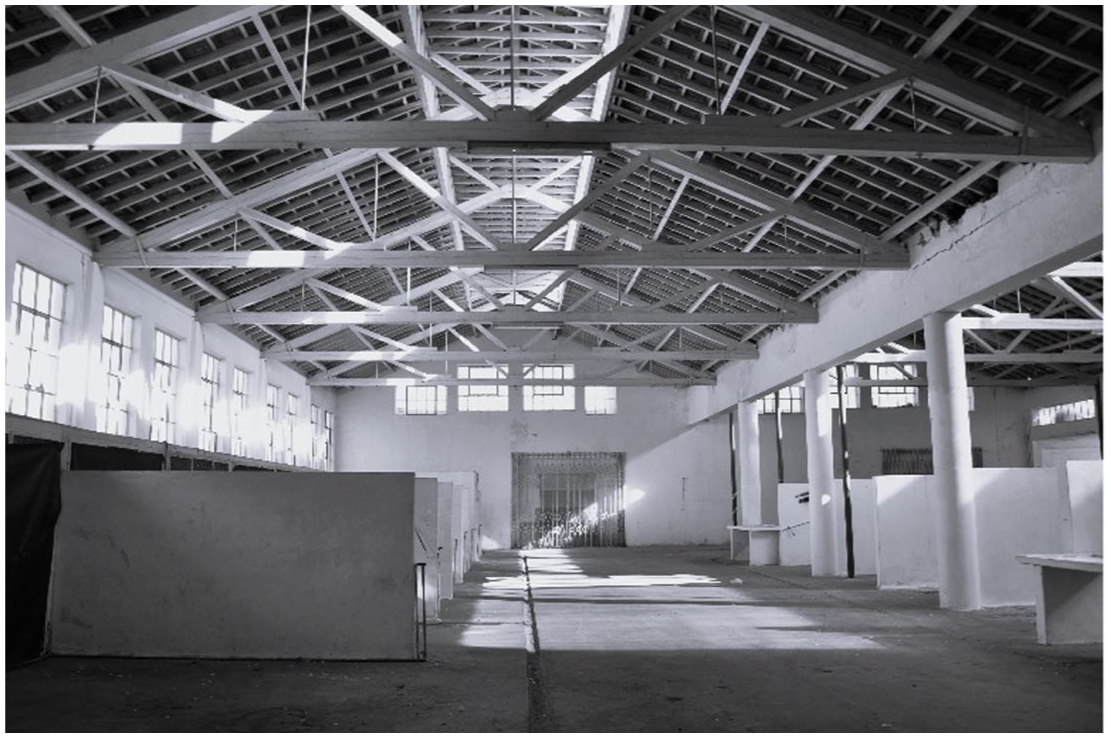
Interior views of the Municipal Market Hall in Lefka.
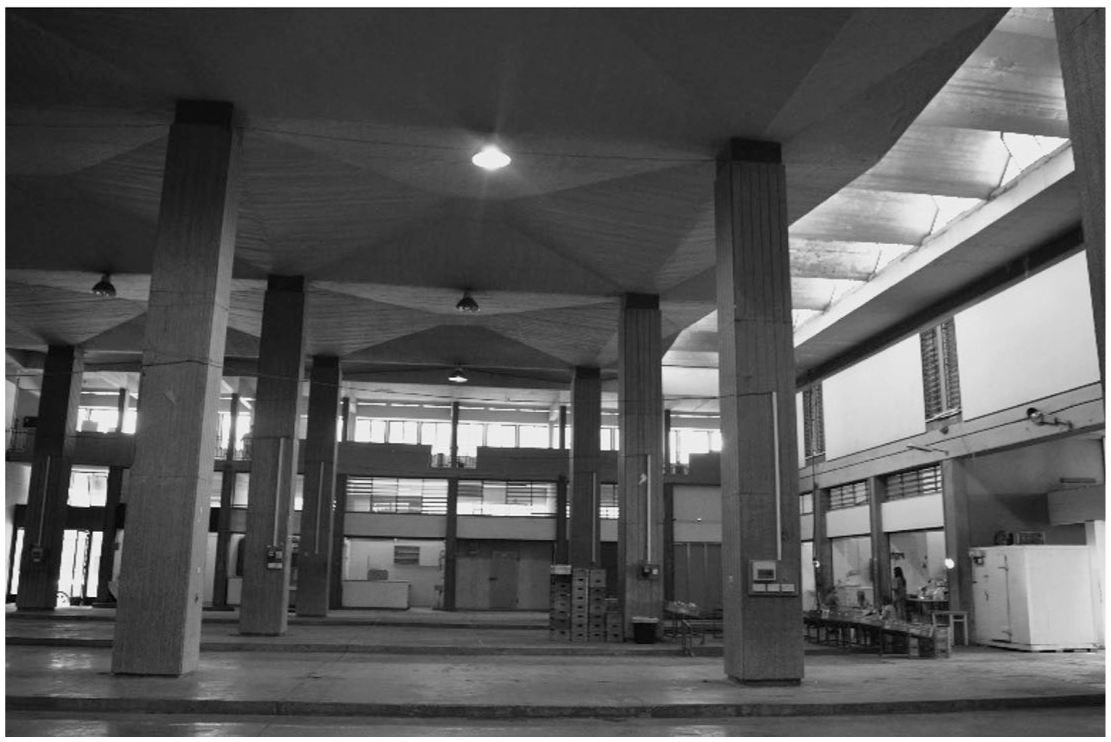
Interior view of the Municipal Market Hall in Nicosia.
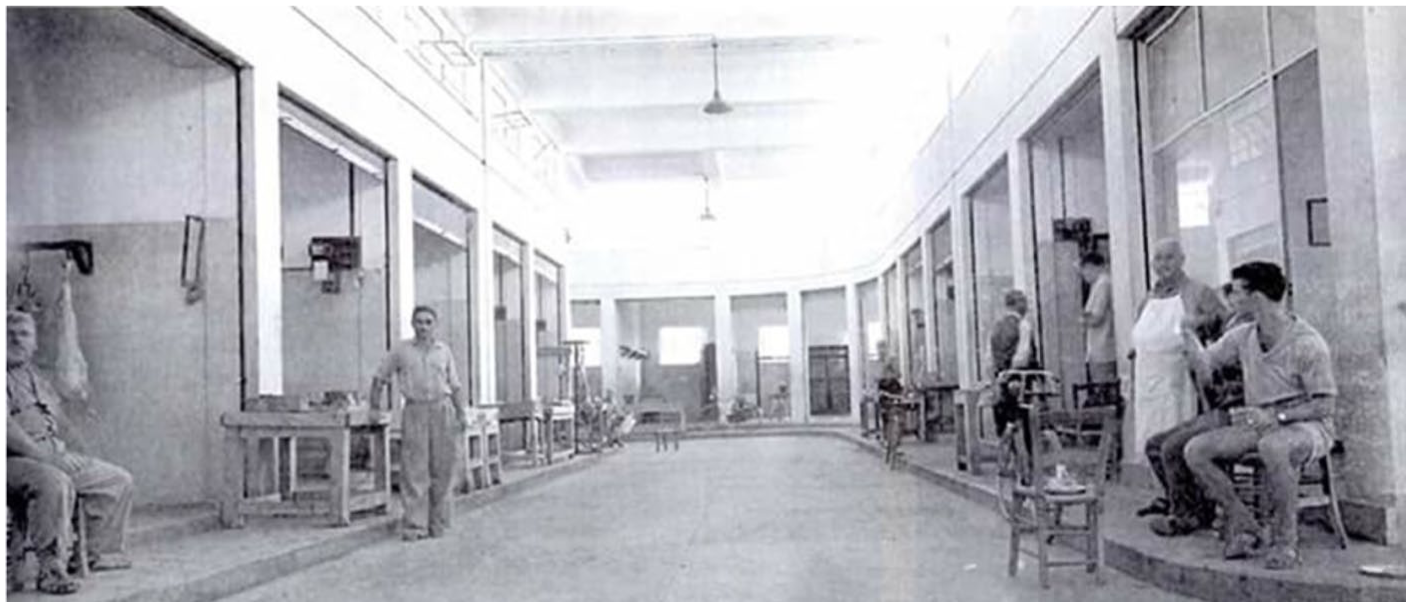
Interior view of the Municipal Market Hall in Morphou in the 1970s.
MMHs embodied the ideals of Modern architecture, particularly through their emphasis on spatial organization. The spatial logic of modernity promoted order, discipline, standardization, hygiene, and the sequencing of functions. Open-plan layouts, structural flexibility, and functionalist principles linked architectural form to broader social ideals. Modern conceptions of space and free-plan design enabled fluid interactions and continuity between retail spaces and their uses. Similar to nineteenth-century British market halls 115 —which deliberately avoided giving prominence to any single stall or shop—Cyprus MMHs upheld principles of spatial equality through uniform access, balanced entrance placement, and equitable circulation routes. The expansive interior volumes, high ceilings, and broad spans of MMHs necessitated structural solutions based on modular column designs. These columns not only supported the structural framework but also facilitated the interior organization of the markets into aisles and sections, thereby enhancing circulation and user experience. Unlike their European counterparts, whose markets varied in scale, Cyprus MMHs often featured distinct alley- and aisle-based configurations, offering welcoming and navigable environments through either centrally focused or linear layouts.
MMHs served a range of functions. Core market activities—including the sale of processed foods, fresh produce, and household goods—were typically located on the ground floor, while municipal or administrative offices were generally situated on the upper floor. The spatial organization of the MMHs was minimal and pragmatic, structured to accommodate key vendors such as grocers, greengrocers, and butchers. In some instances, additional vendors such as fishmongers, poultry sellers, pork shops, or small coffeehouses also operated within the market, contributing to its role as a vibrant social hub (Figure 10). 116 Reflecting the influence of modern planning and design, many MMHs incorporated auxiliary functions—such as cinema halls or town halls—transforming the complexes into multifaceted civic centers. MMHs that integrated town hall facilities typically featured additional floors and separate entrances to distinguish between the various uses. This multifunctional approach, which was also evident in market halls built in British colonial India, introduced architectural specifications that enriched both the massing and the surface articulation of the buildings.
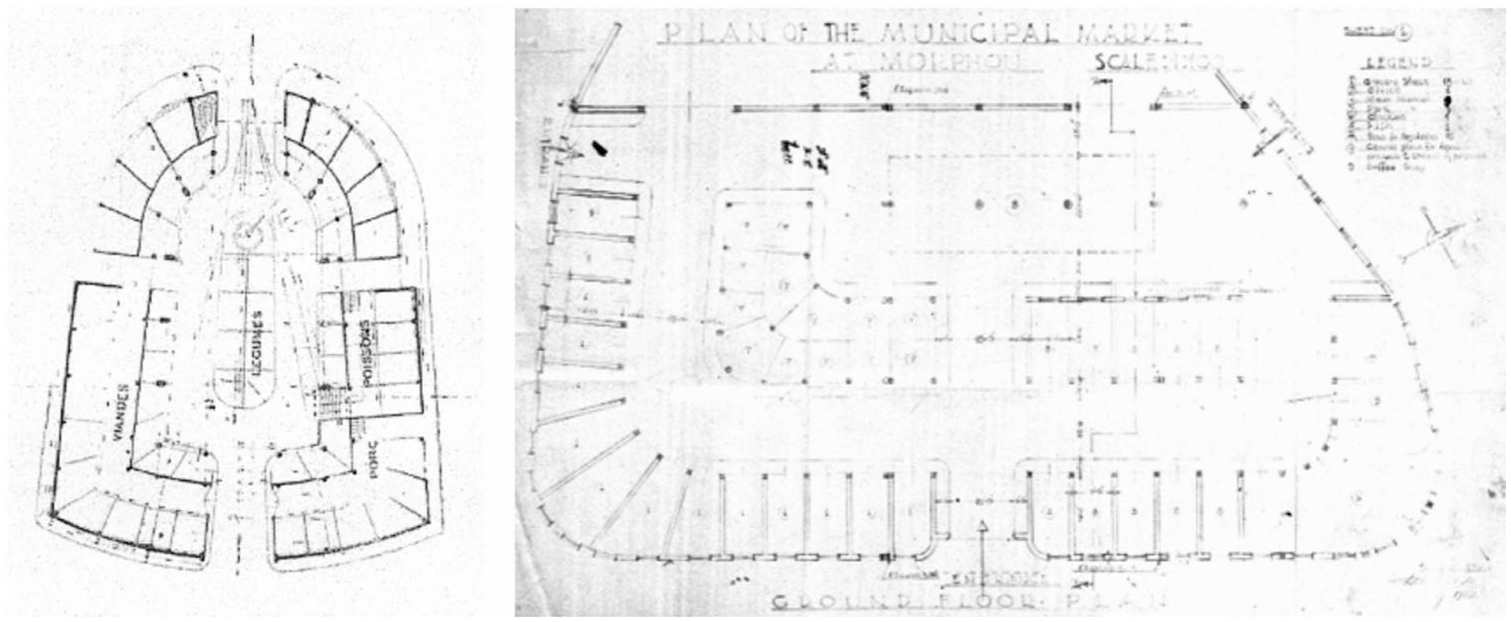
Central and Linear plan layouts showing typical distribution of functions.
By the 1920s, MMHs with specific design priorities began to renew appreciation for the marketplace tradition that had long existed across Cyprus. As a distinct building type, the MMH emerged as a complex, archetypal, and canonical modern structure, whose architectural genealogy offers insights into the island’s broader social and cultural history. These complexes increasingly functioned as civic hubs and communal gathering points—whether for shopping, submitting a municipal petition, or participating in a cultural event. By the mid-1950s, cinema had become a prominent form of cultural entertainment and social engagement in Cyprus, and cinema halls were subsequently integrated into some MMH complexes. 117 These additions reflected the evolving role of the MMH as a center of public life. Modern public services and cinema halls became signature elements in the later phases of MMH development, with the cinema, in particular, embodying the modern way of life and contributing to the overall modernist design language of the complex.
Prior to the emergence of distinctive designs by Modernist Cypriot architects, the prevailing spirit of the era and the philosophy of Modernism broadly guided the architectural approach to MMHs. These buildings embodied the neutral, pure geometric principles characteristic of Modern architecture. 118 MMHs are generally classified into early and late stages based on their massing and façade treatments. Early MMHs typically incorporate vernacular and historic influences intertwined with colonial impact. The classical past is evident in the façades of these early examples, often featuring neoclassical entrances or traditional gabled roofs (Figure 11). 119 While the gabled roof typology dominated early stages, later examples adopted flat roofs that expressed Modernist attributes, often displaying details and proportions that emphasized Art Deco Modernism and its diffusion into Cyprus (Figure 12). 120 Ashlar-clad surfaces, evoking vernacular architectural preferences, were combined with cubic volumes featuring rounded corners, strip windows, horizontal bands beneath window rows, and Art Deco porthole windows distinctive to the island (Figure 13). 121
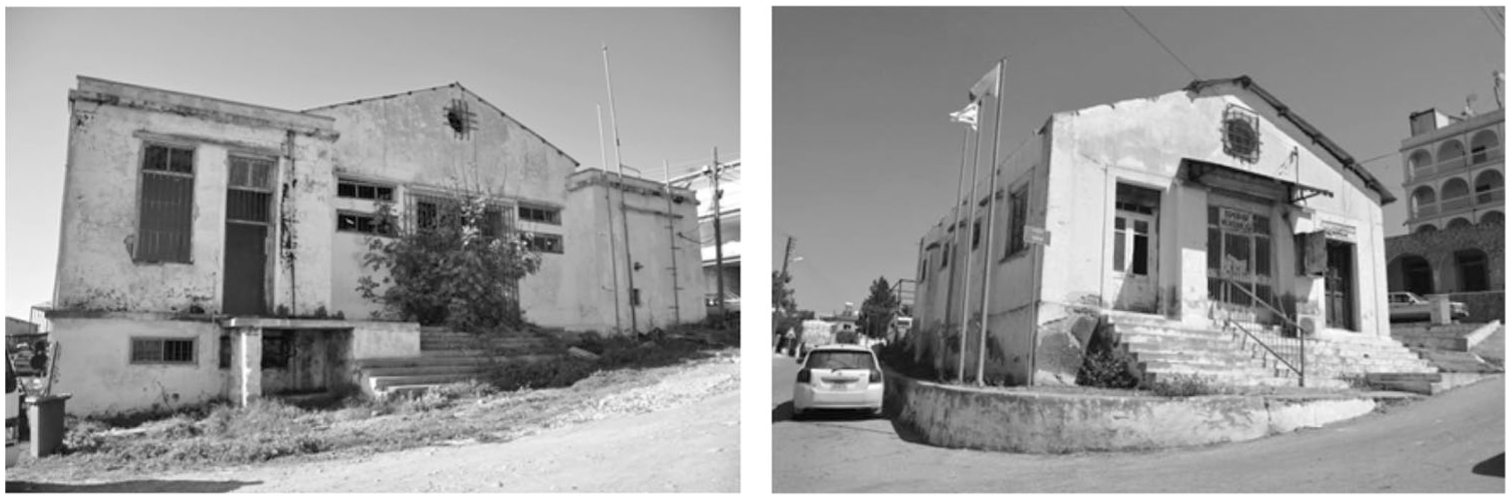
Early Municipal Market Halls in Cyprus at Rizo Karpaso and Yorgos.
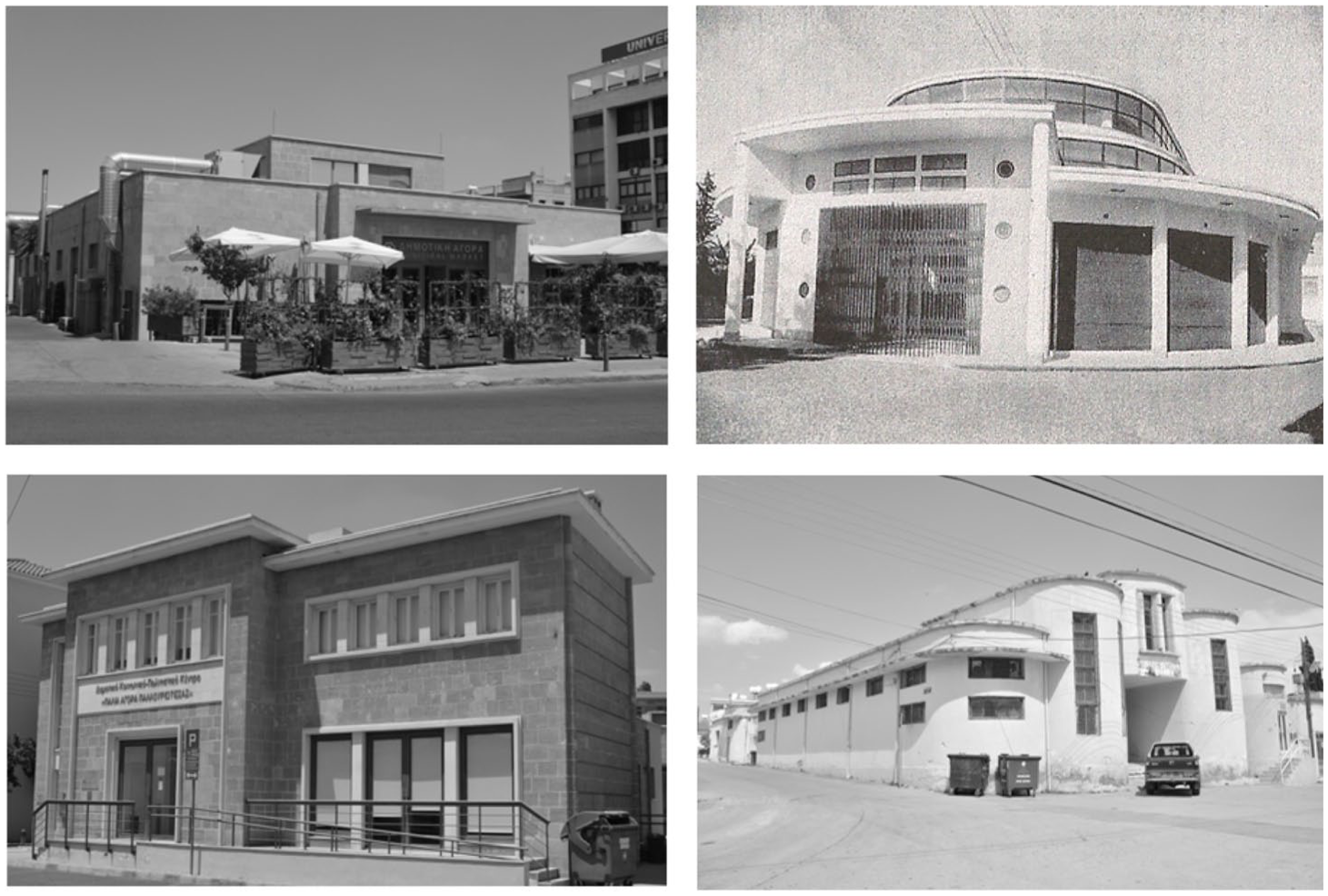
Late Municipal Market Halls with Art Deco attributes at Ayios Antonios, Larnaka; Pallouritissa; and Trikomos.
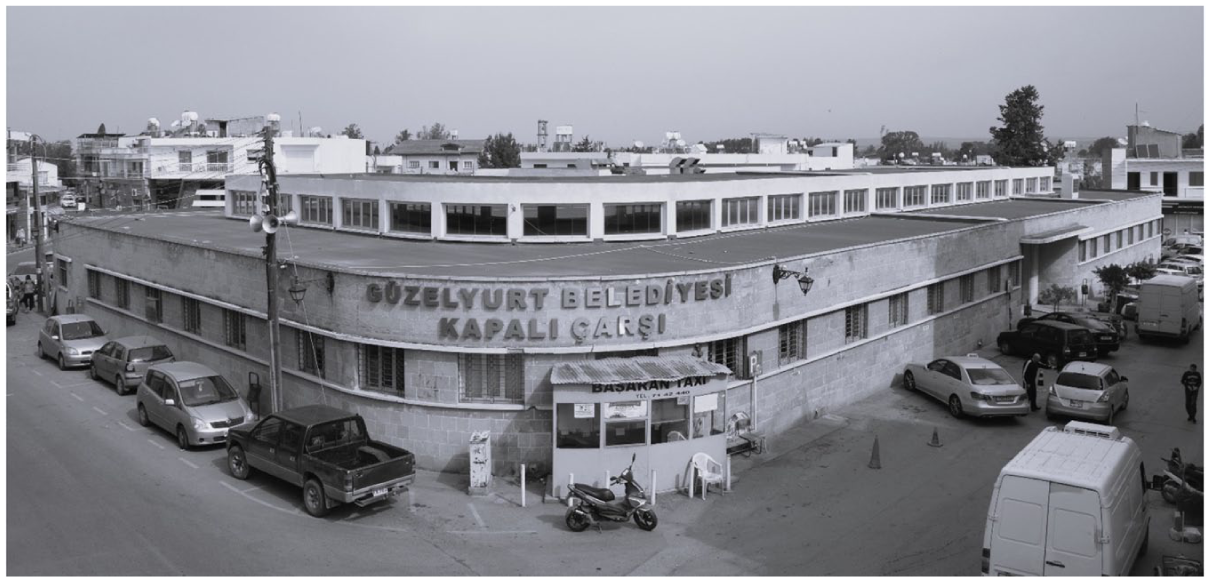
Morphou Municipal Market with Art Deco attributes.
As Cyprus approached decolonization and independence in the 1960s, the influence of the International Style became increasingly evident in the façades, massing, and spatial volumes of MMHs. Accordingly, late MMHs reveal modest iterations of the International Style, fused with Mediterranean regional identity shaped by Modernist ideals. These later market hall complexes reflect innovative design concepts, modern amenities, advanced construction techniques, and the evolving demands of contemporary social life. The incorporation of distinctive spatial configurations alongside associated technical equipment and technological advancements exemplifies the principles of Modern design. Notably, MMHs featuring butterfly or folded plate roofs represent the most developed, striking, and innovative architectural expressions within this typology (Figure 14). 122
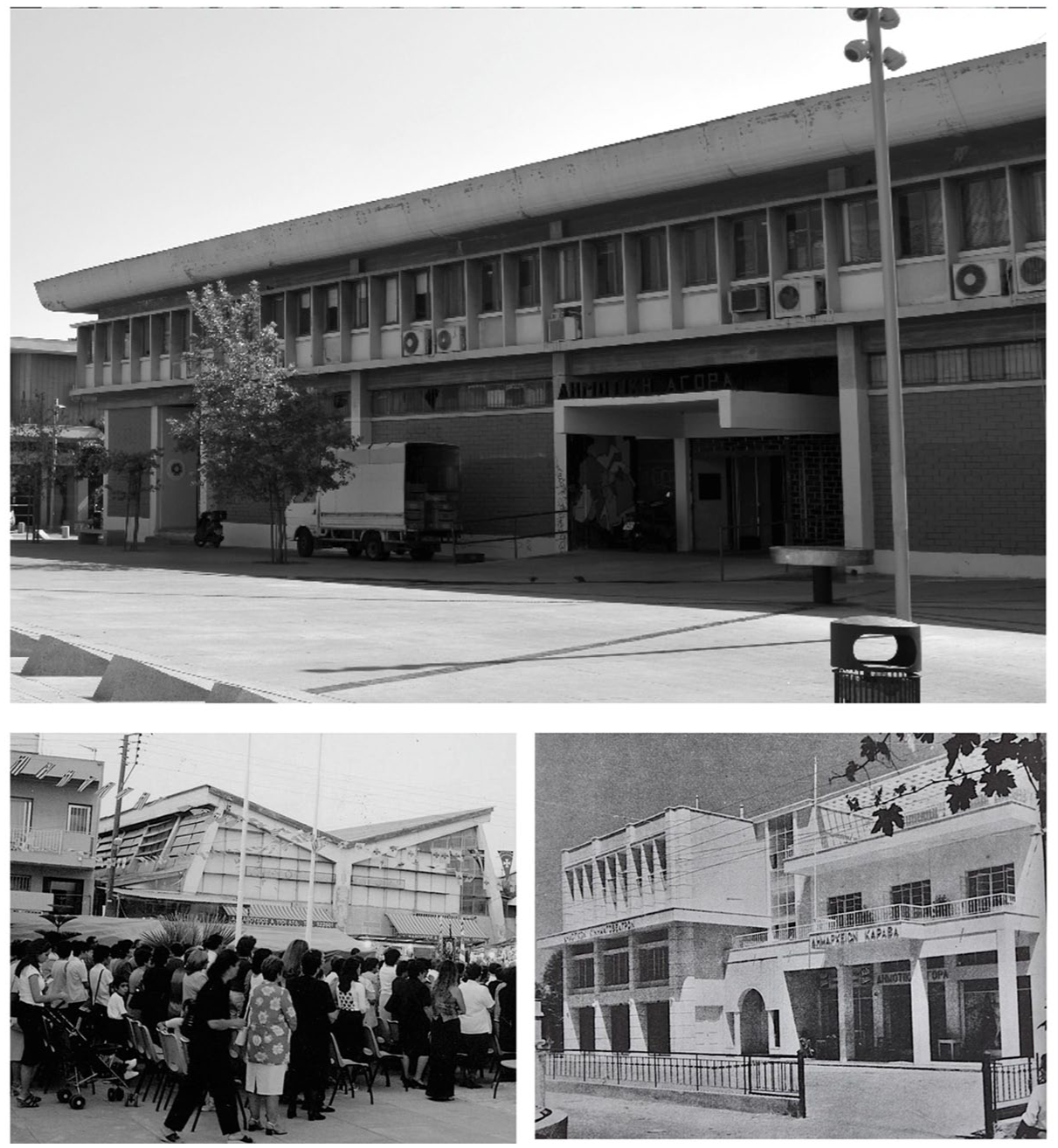
Late Municipal Market Halls with International Style attributes at Nicosia (retail), Athineou, and Karavas.
MMHs demonstrated a dynamic interplay between solid cubic forms and voids, the geometries of masses and arcades—whether vaulted or colonnaded—horizontal strip windows, awnings, and brise soleil shading devices surrounding fenestration. Vertical repetitive concrete brise soleil provided sun control, while concrete slab cantilevers extended over entrances, contributing further architectural articulation. Some of these façade treatments responded directly to climatic conditions, illustrating an early integration of climate-responsive design principles. Throughout both early and later stages, MMHs prominently defined the urban silhouette and architectural identity of Cypriot towns. The complex and heterogeneous interaction of technical, legal, and social factors within their design endowed these buildings with a distinctive architectural character and a meaningful urban presence.
Technically, the architecture of MMHs in Cyprus was, in part, a product of British colonialism and its associated urbanization efforts. Although waves of Modernism had influenced MMH development from the early years of British rule, the architectural spirit of these buildings remained deeply rooted in the Mediterranean context. It was this vernacular foundation that was gradually reinterpreted and reshaped under the influence of Modernist ideals. In this regard, MMHs in colonial Cyprus emerged as hybrid architectural forms—products of an ongoing interplay between indigenous practices, colonial governance, and modern planning ideologies—representing what might be termed “the other modern” (Figure 15). 123 Crinson encapsulates this notion, arguing that Modern architecture in colonial contexts reflects a dialogue between local traditions and international imperatives of modernization and Modernism. 124
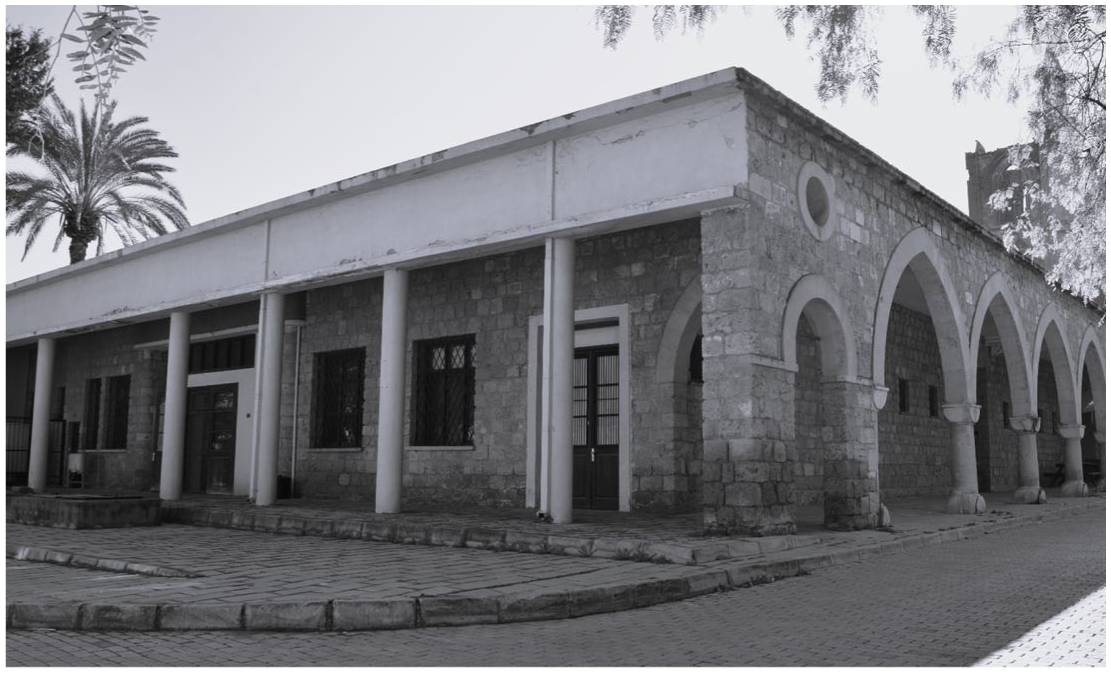
Municipal Market Hall at Famagusta featuring modern and indigenous architectural forms.
Conclusion
In Cyprus, located on the eastern periphery of the Mediterranean, the MMH—like other public buildings—served both as a catalyst for and a manifestation of social constructionism, which was one of the mechanisms through which the British Empire asserted and sustained its presence. While the concept of social construction cannot fully encapsulate the complexities of colonial urban planning practices examined in this study, the analysis strongly suggests that the design and planning of these market halls were embedded with socially constructive intentions. MMHs became some of the most tangible and visible representations of colonial modernity and Modernism on the island. Although not all MMHs can be categorized strictly within the Modernist tradition, all can be understood as products of the societal transformations brought about by colonial modernization. The convergence of colonial-modern and indigenous characteristics produced hybridized architectural forms—what may be termed “the other modern” in Cyprus. Indeed, as in many other British colonies, MMHs articulated a distinctly local expression of colonial modernity and Modernism.
Even as their physical presence and everyday functions have gradually waned, MMHs persist as critical intellectual frameworks and evocative metaphors for interpreting modern urban culture and life. The intersection of British colonial governance with local daily routines, moral codes, and belief systems fostered increasingly sanitary and regulated urban environments, within which MMHs played a pivotal role. More than mere centers for food retail and sites of routine social interaction, MMHs were architectural innovations that projected urban prestige and cultivated civic pride across Cypriot towns. They embodied the intricate interplay between culture and politics in colonial Cyprus, simultaneously preserving local identity and advancing the modernization of municipal governance. As material artifacts, MMHs offer enduring evidence of the spatial and social transformations shaped by Cyprus’s colonial past. At the same time, they serve as conduits for transmitting Cypriot traditions into the future. As some of the last remaining elements of the island’s colonial heritage, MMHs make a vital contribution to the character of Cyprus’s urban history and hold the potential to foster a more inclusive and shared civic future.
Footnotes
Declaration of Conflicting Interests
The authors declared no potential conflicts of interest with respect to the research, authorship, and/or publication of this article.
Funding
The authors received no financial support for the research, authorship, and/or publication of this article.
