



Abstract
This article addresses a research gap in conceptualizing ecosystem approaches to social entrepreneurship development and scaling social innovation. Towards that end, we performed analyses on 268 social startup projects in Hong Kong, examining target beneficiaries and social issues. Semi-structured interviews were conducted with 33 founders to collect information about critical incidents that took place after they received seed funding from an incubator. The interviews revealed distinctive struggles among social entrepreneurs including business modeling for blended value and for low-income markets as well as organizational field dynamics surrounding contested issues. We conclude by offering propositions for social enterprise ecosystem research with an issue field lens.
Keywords
Introduction
This study addresses a research gap in conceptualizing ecosystem approaches to social entrepreneurship development and scaling social innovation. Entrepreneurial ecosystems often are the result of the purposeful efforts of state actors to promote entrepreneurial activities and to accelerate the role of entrepreneurial ventures in local, regional, and national economies (Stam, 2015). Similar government actions also appear in developing social entrepreneurship with a view to catalyzing social innovation and addressing socio-economic issues (Hazenberg et al., 2016). The primary mission of social entrepreneurs is to create social value by providing solutions to social problems (M. T. Dacin et al., 2011). For example, in Hong Kong, the Social Innovation and Entrepreneurship Development Fund (the SIE Fund) was set up in 2012 by the Poverty Commission of the Hong Kong SAR Government to catalyze the development of social entrepreneurship and alleviate poverty.
A plethora of analyses on social enterprise ecosystems have focused on the historical, economic, and socio-political contexts of the evolution of social enterprise sectors and the emergence of dominant social enterprise models in different countries (Defourny et al., 2021; Hazenberg et al., 2016; Kerlin, 2010; Roy & Hazenberg, 2019). More recently, scholars have started to apply an entrepreneurial ecosystem perspective to the development of social enterprise sectors (Choi & Park, 2021; de Bruin et al., 2023; Han & Shah, 2020; Jain et al., 2020; Kabbaj et al., 2016; McMullen, 2018; Pathak & Mukherjee, 2021; Pratono & Sutanti, 2016; Roundy, 2017; Villegas-Mateos & Vázquez-Maguirre, 2020). This strand of research focuses on ecosystem elements (e.g., resource endowments) that contribute to the development of social entrepreneurship.
Yet, applying entrepreneurial ecosystem strategies to social entrepreneurship development may run the risk of neglecting the distinctiveness of social entrepreneurship (Austin et al., 2006; P. A. Dacin et al., 2010; Roundy, 2017; F. M. Santos, 2012). Although entrepreneurial ecosystem approaches promote innovation-oriented entrepreneurial activities, the primary output of entrepreneurial ecosystems typically is proxied as the prevalence rate of high-growth firms (Isenberg, 2010; Stam, 2015; Stam & Spigel, 2018). For social entrepreneurs, scaling connotes something different: it refers to scaling social innovation and driving system change (Islam, 2020). Many socioeconomic problems are the outcome of marginalization processes, and effective social innovation has to reconfigure the Social Grid across multiple sources of social power and their enactment in cognitive frames, institutions, and social networks (Mann, 2013; Nicholls & Ziegler, 2019; Robeyns, 2016; von Jacobi et al., 2017; Zahra et al., 2009).
Scaling social innovation thus requires more than an entrepreneurial ecosystem with good resource endowments; it also needs institutional support. We draw on new institutionalism, particularly discussions of organizational fields and institutional logics to shed light on institutional dynamics that affect the scaling of social innovation. Institutional theorists broadly define an organizational field as a community of organizations with a common meaning system, whose participants interact more frequently with one another than with actors outside the field (Scott, 2014). An issue field, as Hoffman (1999, p. 351) put it, “forms around a central [problem or concern] – such as pollution – rather than a central technology or market . . .” Fields become arenas in which different interests and institutional logics negotiate over issue interpretation. Hence, to bring about change, social entrepreneurs often need to navigate contested field dynamics.
Here, to further the research on ecosystem approaches to social entrepreneurship development, we bring together both entrepreneurial ecosystem scholarship and new institutionalism in the analysis of experiences of social entrepreneurs in Hong Kong. We ask the following questions: (1) whether and how do social startups benefit from entrepreneurial ecosystems; (2) whether and how do field dynamics affect the scaling of social innovation; and (3) what ecosystem mechanisms can facilitate the negotiation and adaptation of field-level logic? To address such questions, we mapped and categorized early-stage social startup projects in terms of their target beneficiaries and social issues. We coded 268 startup proposals submitted to a major Hong Kong social entrepreneurship incubator (funded by the SIE Fund) between 2015 and 2018. We then contacted the founders in May 2020 for updates on proposed innovations. To sample their experiences, semi-structured interviews were conducted to collect critical incidents over the course of project development.
The article is structured as follows. First, we take stock of research on entrepreneurial ecosystems and the distinctiveness of social entrepreneurship, seeking to highlight the inadequacy of traditional ecosystem approaches to handling contested institutional dynamics in social innovation. Second, we draw on a version of new institutionalism to further the enquiries concerning the scaling of social innovations. Third, we describe the research setting and research methods. Finally, findings are discussed and distiled to suggest propositions for future research.
Theoretical Framework
Entrepreneurial Ecosystem Approaches
The research on entrepreneurial ecosystem (EEs) has its origins in regional development studies that have a long-established tradition of looking at regional (eco)systems in order to explain the differential socioeconomic performance of regions (Cavallo et al., 2019; Stam, 2015; Stam & Spigel, 2018). EE is defined as a set of interdependent actors and factors coordinated in such a way that they enable innovation-oriented productive entrepreneurship within a particular territory (Isenberg, 2010; Stam, 2015; Stam & Spigel, 2018). Productive entrepreneurship refers to, “any entrepreneurial activity that contributes directly or indirectly to net output of the economy or to the capacity to produce additional output” (Baumol, 1993, p. 30), and it has been proxied as the prevalence rate of high-growth firms (Stam & van de Ven, 2021).
Building on previous analyses of EEs (Feld, 2012; Isenberg, 2010; Stam, 2015; Stam & Spigel, 2018; Van De Ven, 1993), Stam and van de Ven (2021) proposed an integrative model of EEs. The model outlined ecosystem elements of the EE infrastrucure, including institutional arrangements (formal institutions, startup culture, and entrepreneurs’ networks) and resource endowments (physical infrastructure, finance, leadership, talent, R&D or knowledge, intermediary services and market demand) as well as its outputs (productive entrepreneurship) and outcomes (new financial value creation).
In view of the growing popularity of EE approaches to developing social entrepreneurship, social entrepreneurship scholars began to examine and adapt EE elements in the context of social entrepreneurship (Kabbaj et al., 2016; Pathak & Mukherjee, 2021). Examples of suggested EE adaptations include increasing the diversity of investors, fostering altruistic culture, and bespoke support from infrastructure to intermediary services in high vulnerability regions where they are needed most (McMullen, 2018; Pratono & Sutanti, 2016; Roundy, 2017; Villegas-Mateos & Vázquez-Maguirre, 2020). Even so, most discussions have been theoretical and descriptive (i.e., mapping actors and ecosystem infrastructures). To examine the adequacy of traditional EE approaches to social entrepreneurship development, one needs to drill down into the distinctive processes of social innovation (P. A. Dacin et al., 2010).
The goal of scaling social innovation is to drive systems change in the Social Grid that causes marginalization (Islam, 2020; Nicholls & Ziegler, 2019). It requires more than an ecosystem with good resource endowments but also institutional processes that can reconfigure the Social Grid across multiple sources of social power and their enactment in cognitive frames, institutions, and social networks (Mann, 2013; Nicholls & Ziegler, 2019; Robeyns, 2016; von Jacobi et al., 2017; Zahra et al., 2009). Scholars have identified social entrepreneurs — social bricoleur, constructionist and engineer — that drive positive change through building social, economic, human, and political capital and at different scales (Mair, Battilana, & Cardenas, 2012; Zahra et al., 2009). For example, both social constructionists and social engineers work to bring structural changes to society, which include the emergence of more inclusive markets, changes to practices based on different ideologies, or a redistribution of rights to the disenfranchised. To further our understanding of institutional dynamics in systems change, we draw on recent discussions of organizational fields and a practice-centric views of institutional logic.
Institutional Field Perspective
A field is broadly defined as a collection of diverse, interdependent organizations that participate in a common meaning system and whose participants interact more frequently with one another than with actors outside the field (Scott, 2014). Earlier research on organizational fields primarily focused on stable or mature fields typically consisting of populations of organizations in the same industry or profession (DiMaggio & Powell, 1983; Greenwood et al., 2017; Wooten & Hoffman, 2017). Later research, particularly discussions of issue fields, leads to better understanding of field-level changes such as the emergence of new market categories and industrial practices (e.g., sustainable chemical industry; Fligstein & McAdam, 2011, 2012; Hoffman, 1999; Zietsma et al., 2017). An issue field forms around a central issue (e.g., HIV/AIDS treatment; Maguire et al., 2004). For example, Maguire et al. (2004) describe the emergence of the field of HIV/AIDS treatment advocacy in Canada, which included pharmaceutical firms, patient care advocates, physicians, members of the gay population, and others. As the field organized, many new practices, protocols, meanings, and structures emerged to manage HIV/AIDS treatment.
Scholars have suggested that stable or mature fields are often characterized by settled logic prioritizations (Zietsma et al., 2017). Thornton et al. (2012) define institutional logics as frames of reference through which actors make sense of the world, construct their identities, and interact with the world around them. In contrast, emerging fields typically have weak or sparsely elaborated institutional infrastructure (consisting of meanings, identities, roles, routines, power structures, subject positions, and governance mechanisms). Although some of these fields exhibit alignment among field members on general principles and values, others have more fragmented logics (Hardy & Maguire, 2010; Hinings et al., 2017; Hoffman, 1999; Lounsbury & Crumley, 2007; Maguire & Hardy, 2009; Zietsma et al., 2017; Zietsma & Lawrence, 2010).
Scaling social innovation and driving systems change thus necessitate institutional entrepreneurship and institutional work to address fragmented and competing logics. Institutional entrepreneurship research highlights the importance of occupying subject positions with wide legitimacy and bridging capital, theorizing new practices through discursive and political means, and embedding new practices in stakeholders’ routines and relationships (Hardy & Maguire, 2010; Maguire et al., 2004; Zilber, 2024). Despite its roots in the study of institutional entrepreneurship, the institutional work agenda has shifted toward viewing actors and agency as fragmented, distributed, and collective rather than heroic (Battilana et al., 2009; Hampel et al., 2017; Smets & Jarzabkowski, 2013). Institutional work happens through everyday practices (Hampel et al., 2017; Smets et al., 2012, 2017).
Smets and Jarzabkowski (2013) examined banking lawyers in international law firms, revealing how these professionals face conflicting institutional logics, such as balancing commercial objectives with legal requirements. They adapt at the micro level to manage these tensions, transforming routine activities like contract drafting and deal negotiation into opportunities for institutional negotiation and change. This means institutional work is not just about big reforms or strategic moves. It also is about how people navigate tensions and reconstruct meaning through everyday practices. Embracing a practice-centric view urges us to conceptualize field-level logics as emergent and evolving cultural structures, grounded in praxis rather than abstract ideals (Schildt & Kodeih, 2025). Practices themselves carry orientation: they embed norms, values, and expectations that guide actors without conscious deliberation (Cardinale, 2018). Institutional logics persist and evolve through practice constellations, which actors enact habitually and reflexively (Schildt & Kodeih, 2025). Institutional work involves not only strategic interventions but also ongoing enactment, adaptation, and negotiation of practices that reproduce or reshape logics.
In light of the institutional challenges facing social innovation, we aim to develop propositions on ecosystem approaches to social entrepreneurship development by examining three questions: (1) whether and how do social startups benefit from entrepreneurial ecosystems; (2) whether and how do field dynamics affect the scaling of social innovation; (3) what ecosystem mechanisms help facilitate the negotiation and adaptation of practice constellations and the settlement of field-level logic? First, we detail the research setting and the methods we used to explore these concerns.
Methods
Research Setting
Since 2012, the Hong Kong government has made systematic efforts to build an ecosystem for social entrepreneurship. It set up a fund, the Social Innovation and Entrepreneurship Development Fund (the SIE Fund), of HK$500 million to catalyze the growth of social entrepreneurship. The Fund’s goal is to foster an ecosystem where social entrepreneurs can thrive and create innovative ideas, products, and services that address poverty and social inclusion. To achieve those objectives, the Fund has laid out the strategies, including creating change agents such as intermediaries (e.g., incubators) to support social start-ups and innovative projects at different stages and providing specialized funds for capacity building projects that aim at developing platforms for the coordination of collective efforts and markets for social enterprise products, and funds for research projects.
Against this backdrop, this research was conducted through the Good Seed Program, the earliest (starting in 2015) and the main incubator for social startups the SIE Fund supported. The program provided incubation and seed funding for early-stage social startups. At the time of data collection, most social startups in Hong Kong had participated in this incubation program. The program includes three stages: social innovators’ classroom (stage 1), pitch competition (stage 2), and project implementation (stage 3). The first stage consisted of incubation workshops; at the end of the workship, each startup team needed to submit a business proposal for their social venture. At the second stage, the teams took part in pitch competitions to compete for seed funding (i.e., USD 12,900; HKD 100,000) from the Fund. At the third stage, the incubation program provides continuous learning and networking opportunities for the teams awarded the seed funding.
Procedure and Data Collection
To answer the research questions, we mapped and categorized early-stage social startups in terms of their target beneficiary groups and social issues. We obtained and coded the 268 business proposals submitted to the Good Seed Program between 2015 and 2018, and then we looked for updates of the proposed social startup projects through desk research (e.g., Google, Facebook page) and interviews with founders. Even though information on 181 projects could no longer be found, we did find information on 87 projects, 71 of which were still operating at the time of data collection (Jan 2020–May 2021).
Second, to further understand entrepreneurial experiences and struggles faced by early-stage social startups, the team conducted semi-structured interviews with the entrepreneurs to collect critical incidents over the course of project development (Flanagan, 1954). The Critical Incident Technique (CIT) is an interview strategy that often is used in organizational development to identify important events or actions. Rather than asking general opinions about what is considered critical to management and scaling, CIT emphasizes actual incidents. In an interview, participants may be asked to reflect on and identify incidents they perceive to be critical in shaping the course of project development. Since the research was conducted during the pandemic, all interviews were conducted through phone calls or by zoom.
Specifically, upon agreeing to be interviewed, participants were sent a semi-structured interview guide containing open-ended questions asking about critical incidents during the process of project development and scaling (which might include forming a team, ideation, pitching, prototyping, business modeling, or forming partnerships). We stopped collecting data when data saturation was reached (Guest et al., 2006; Strauss & Corbin, 1998), the point at which no new insights or themes emerged from additional interviews. In total, we interviewed 33 founders, including 19 women and 14 men. The average age of these founders was 28 years old. Among the projects, 8 had ceased to operate, and 25 were still operating at the time of the interviews.
Data Analysis
The data analysis consisted of three steps. First, to gain insights into issue fields, the research team coded all 268 business proposals in terms of target beneficiary groups, seeking to identify their problems and needs. The research team included four coders. A coding framework was developed to ensure inter-coder reliability. This framework enabled coders to identify in each business proposal: target beneficiary group, pain points (e.g., problems and needs of target beneficiaries), and proposed solutions. Three business proposals were used in a pilot coding exercise to validate the coding framework and align coders’ understandings. Krippendorff’s Alpha was 0.84 after the exercise.
From the proposed social startup projects, 15 target beneficiary groups were identified as first-order categories. The 15 target beneficiary groups were children, children with special education needs (SENs), youth, older adults, people with disabilities (PWDs), people with visual impairments, people with hearing impairments, people with mental illnesses, low-income individuals and families, women, immigrants, and ethnic minorities and other marginalized groups (e.g., ex-offenders, refugees and asylum seekers), community, local small producers and community primary care in general.
Second, to denote issue fields, we created second-order categories based on the main sectoral concerns from the social startups for the 15 target beneficiary groups. For example, the main sectoral concerns among social startups for children and youth were education and development; for people with disabilities they were social inclusion and employment. The second-order categories were children and youth, older adults, PWDs (including children with SENs), marginalized able-bodied groups (e.g., working poor, ethnic minorities, immigrants), and community and primary care. Then, we compared the number of busines proposals submitted in the five issue fields as well as the number of surviving projects in each field at the time of the interviews. This provided insight into how institutional dynamics in different issue fields could have affected scaling of social innovation.
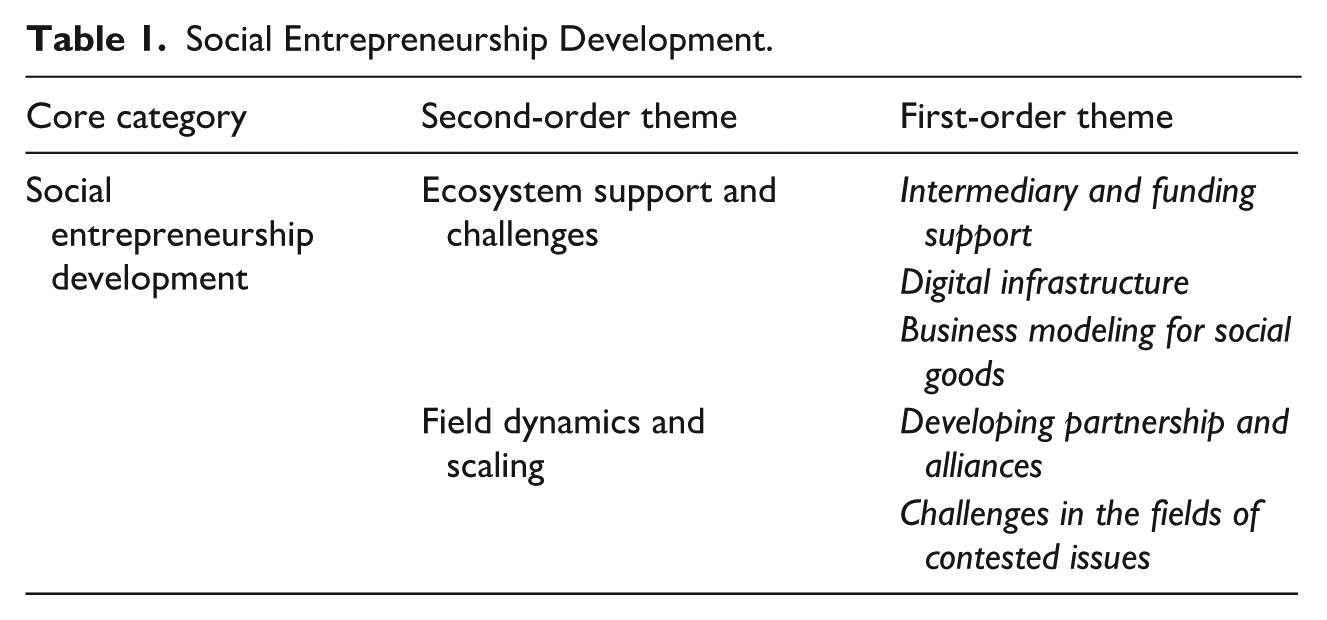
Third, our analysis of the critical incidents followed the sequence of open, axial, and selective coding (Aguinis & Solarino, 2019; Corbin & Strauss, 2014). We began by identifying an initial set of salient concepts, particularly those related to ecosystem elements, entrepreneurial activities, and challenges. Through axial coding (highlighting relationships among the open codes), we identified categories of key social entrepreneurial activities at the early stage of project development, ecosystem support, challenges faced in scaling (see Table 1). Finally, selective coding linked the analysis back to the research questions. This helped us develop propositions about ecosystem approaches to social entrepreneurship development.
Social Entrepreneurship Development.
Results
Developing Issue Field
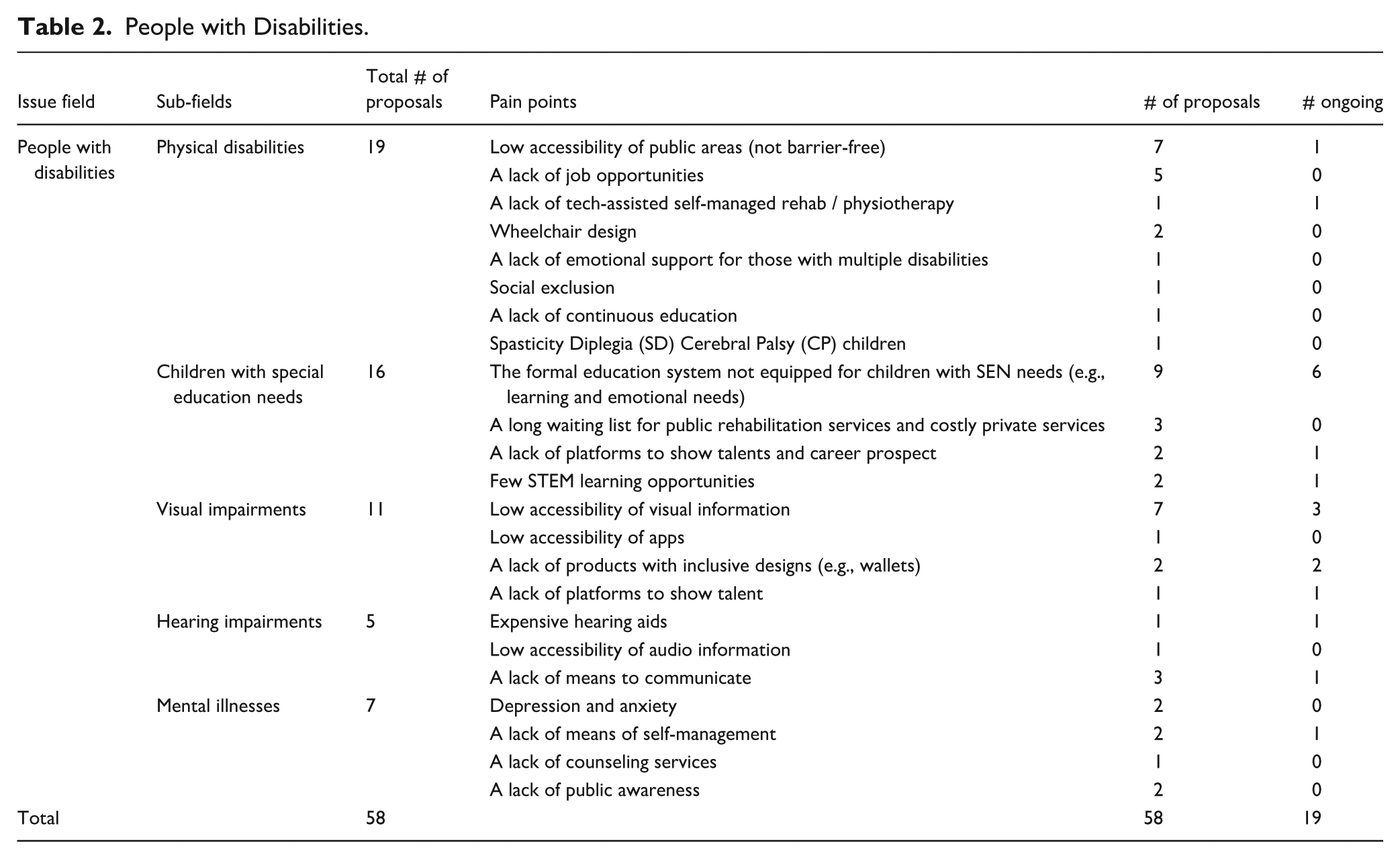
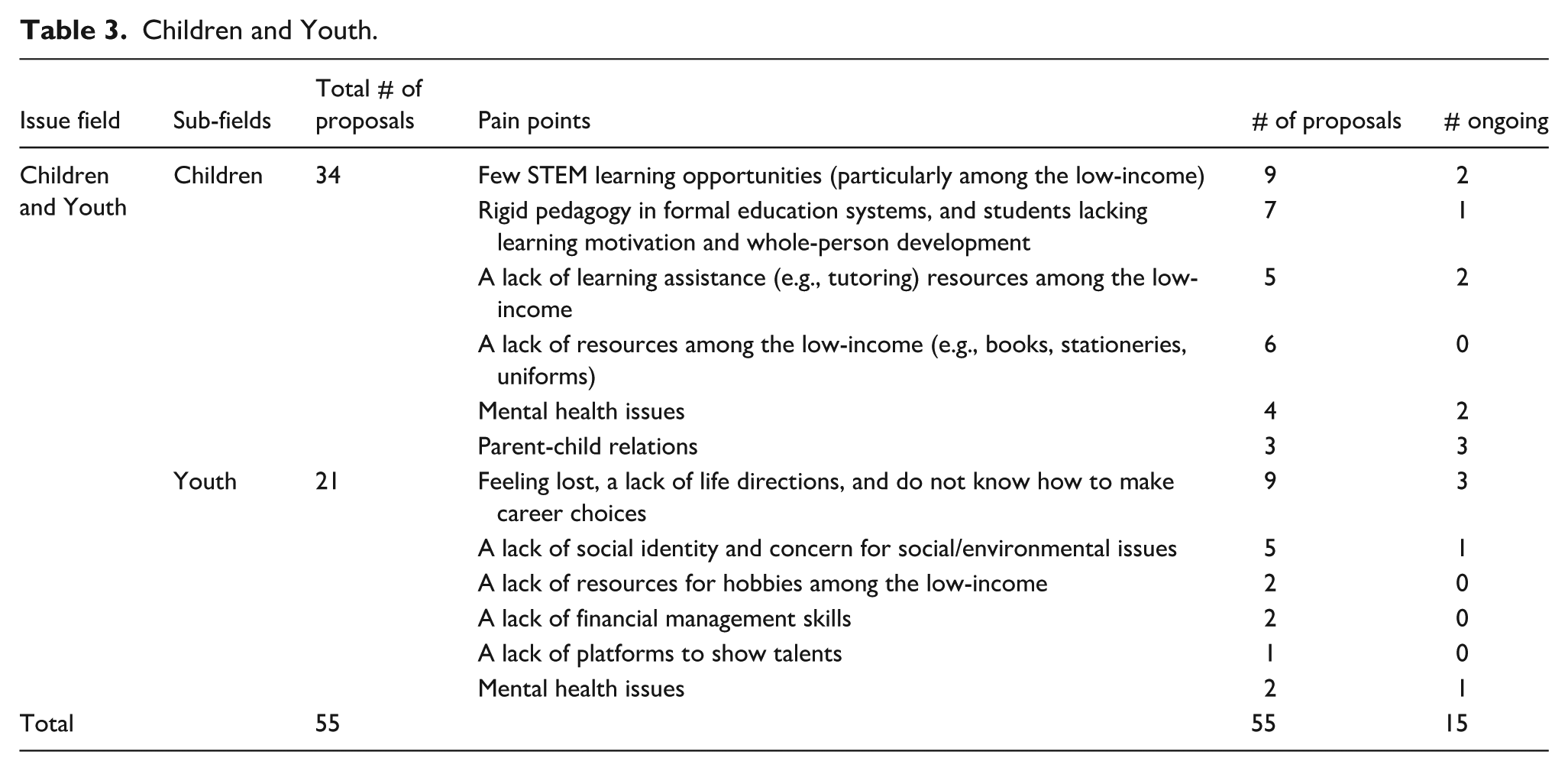
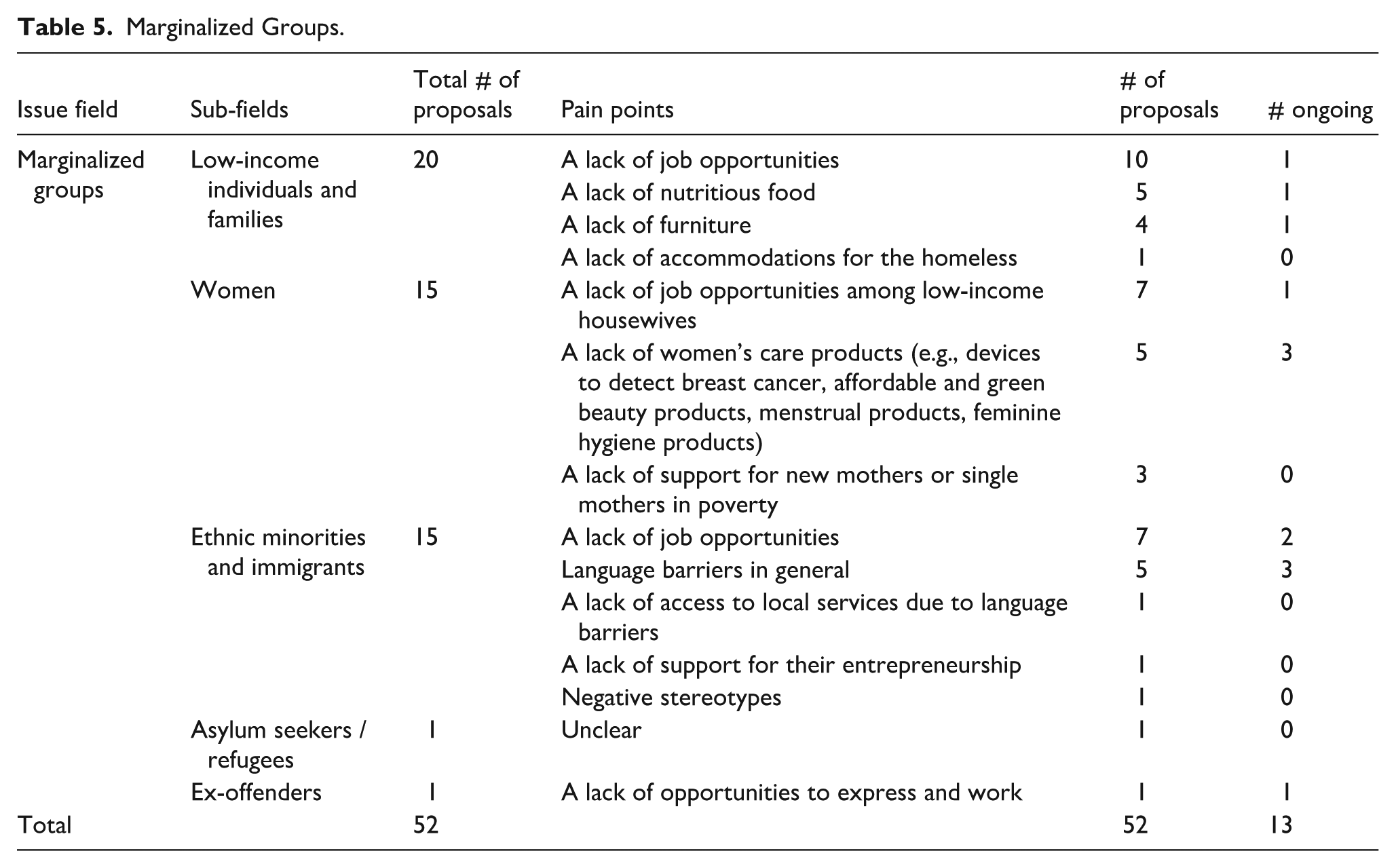
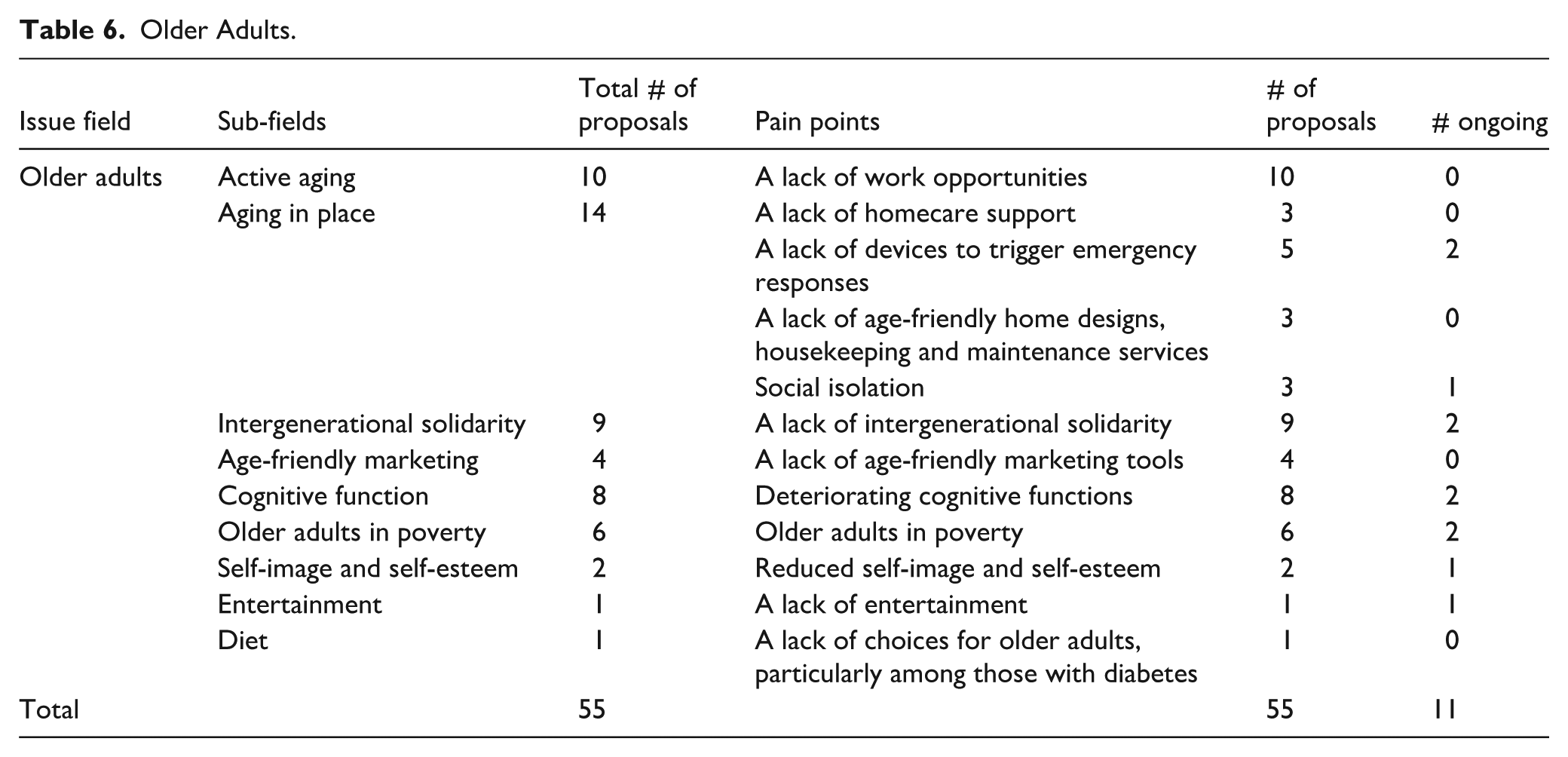
Overall, 58 proposals focused on PWDs (including children with SENs), 55 proposals on children and youth, 55 for older adults, 52 proposals in the issue field of marginalization of able-bodied groups, and 48 for community and primary care. The following tables present detail the pain points for each target beneficiary group, the number of proposals submitted for a particular pain point, and the number of projects that were ongoing at the time of the interviews.
In the PWDs issue field (Table 2), the ongoing projects were those that promoted inclusive place designs (e.g., barrier-free), education (e.g., for children with SENs), products (e.g., wallets for people with visual impairments), and services (e.g., audio-description services). None of the five projects (n = 5) that aimed to set up work-integration social enterprises (WISEs) for people with physical disabilities, though, remained in operation at the time of interviews.
People with Disabilities.
In the issue field for children and youth (Table 3), the continuing projects were those that worked on parent-child relations and children’s mental health issues, provided STEM (science, technology, engineering, and math) learning opportunities and after-school learning assistance, and supported youth in their self-discovery journey and making career choices. However, despite many submissions, fewer projects offering alternative education continued.
Children and Youth.
Turning to community and primary care (Table 4), the continuing projects were those that provided matching platforms between providers (e.g., space, services, helping hand, funding, other in-kind resources) and those in need (e.g., small businesses, community residents). Such platforms (e.g., community flea markets) were inclusive markets where marginalized users could access affordable goods and services. Although many startups (e.g., community cultural tours) sought to strengthen local residents’ local identity and sense of belonging to their communities as well as support local small businesses, only two of the 13 projects) were still operating at the time of interviews.
Community and Primary Care.
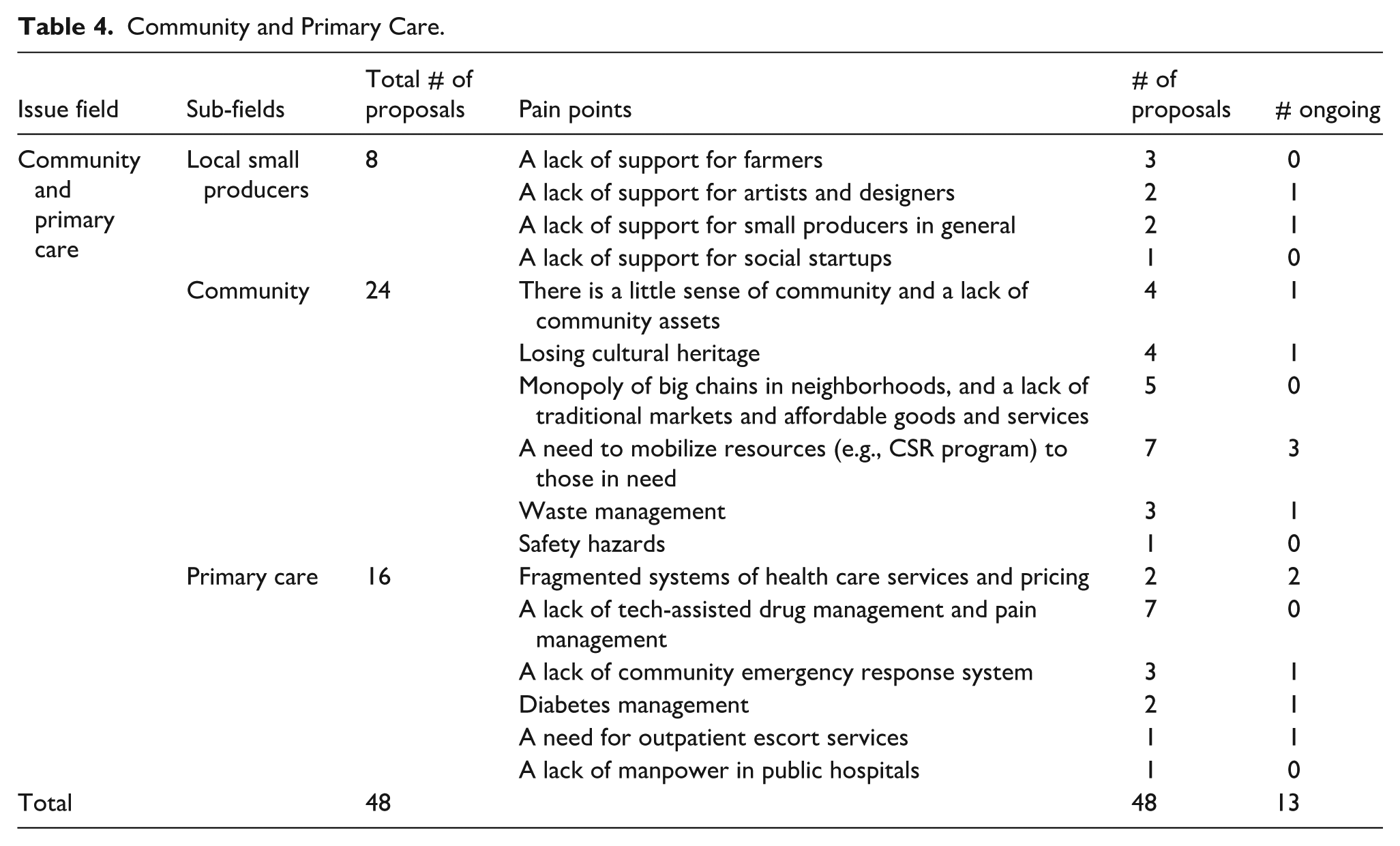
As for primary care, the continuing projects were those that integrated information between fragmented systems of health care services and pricing and those that worked on community mutual-help networks providing emergency response and out-patient escort services. Yet, though many startups worked on solutions promoting self-management of chronic conditions (e.g., drug, pain, diabetes), only one (out of 9 projects), focusing on diabetes detection, remained in operation.
Similarly, in the issue field for marginalized groups (e.g., ethnic minorities, women, low-income families), despite many WISEs, the survival rate was low (4 out of 24). (See Table 5.) The continuing projects were those that combined charity work with circular economy initiatives (e.g., recycling furniture and other appliances for low-income families). Other continuing projects focused on women’s care and the integration of new immigrants and ethnic minorities.
Marginalized Groups.
Finally, in the issue field for older adults (Table 6), despite strong messages encouraging active aging and aging at home, many startups that aimed to provide job opportunities for older adults and create age-friendly homes (e.g., safety devices, housekeeping services, diet, homecare) did not continue. The only exceptions were those working on devices that trigger emergency responses. Intergenerational solidarity was a popular agenda in Hong Kong, and 2 out of 7 projects were still operating at the time of interviews. Those aiming to delay cognitive deterioration among elders and to help older adults in poverty with specialist medical care and daily necessities such as food also survived. Four other startups tried to provide age-friendly e-commerce for older adults confronting difficulties finding services and products had not survived by the time of the interviews.
Older Adults.
Ecosystem Support and Challenges
The interviews indicate that ecosystem support, particularly intermediary and funding support and good digital infrastructure, were considered instrumental in the development of social innovation projects. The social entrepreneurs with whom we talked, however, also reported significant difficulties with business modeling for social goods.
Intermediary and Funding Support
Many of the entrepreneurial challenges social entrepreneurs faced were similar to those confronting entrepreneurs of commercial startups. Examples included the lack of entrepreneurship skills, troubles with prototyping, technological uncertainties, having no networks, and startup costs (e.g., rent and rates). Incubators provided social entrepreneurs with a range of training opportunities on design thinking, marketing, business modeling, and supports such as access to networks and funding opportunities. Some social entrepreneurs even found their partners through incubation programs, as a foiunder of a startup that provided help to poorer older adults recalled: “I met my team members through the Good Seed program. I did not know them very well at the beginning. There were different understandings regarding our roles and commitment initially. Hence, we needed time to work out our different roles.”
The abundance of incubation programs and funding opportunities also made it easier for social startups to survive. The founder of a STEM education startup commented, “Since it was just a prototype, the project did not continue as there was no more funding. But I did not give up. Eventually, I found another incubator which provided funding for me to start a similar project.”
Digital Infrastructure
Some founders noted that customer data and data security were critical to their services. For example, “data collection has been a big challenge for our business. We often need to deal with large datasets and need to comply with the standards of data security. It is difficult to make sure that all the standards are followed.”
Many benefited from digital infrastructures such as Amazon Web Services (AWS). For example, the founder of a startup providing consulting services on women’s care moved her business online using AWS’s Software as a Service (SaaS) solutions. She commented that the digital application she built for her services not only helped to reduce business uncertainties during the pandemic but also made it easier to achieve good data security and compliance standards.
Business Modeling Challenges for Social Goods
Despite ample incubator support, our findings show that not being able to find a viable business model was a major reason for startups to discontinue their projects. This was a common challenge among WISEs that were set up to provide training and job opportunities for PWDs or women. Social entrepreneurs found it difficult to charge fees for services and products of charitable nature. For example, the founder of a startup who built a barrier-free map for PWDs reported that his team focused on building the map and did not really think about how to build a business, so they had to stop the operation when the funding ran out:
We did not have a business model to earn money. It relied on funding and volunteers. But I hope my action could inspire others to do something for PWDs. It is more important to enlighten people to build a barrier free world. And I think the government should lead projects like this.
In addition, potential users’ low socioeconomic status posed a key challenge for early-stage social startups. For example, given a high poverty rate (45%) amongst older adults in Hong Kong (Census and Statistics Department, 2019), it was difficult for social startups to find a viable business model for homecare services and home improvements for poorer older adults.
Field Dynamics and Scaling
The interviews highlight that developing partnerships and community networks was key to sustaining and scaling social innovation projects. Yet, this more challenging in fields in which issues were contested and competing institutional logics were at play. Field-level events such as design competition seemed to contribute to the alignment of practices, principles, and values among actors in the issue field.
Developing Partnerships and Alliances
Partnerships were an important strategy to enhance capabilities and scale. The interviews reveal that some founders chose to merge their startups to fight for the same cause: “we found out that a group of people called Food Savior had already been working on the same idea in Hong Kong so we contacted them and joined their team.” In addition, social entrepreneurs engaged stakeholders including users, professionals, and scholars in building alliances and improving the governance of existing industrial practices. For instance, the founder of a startup that worked on the integration of the information on various charges of private primary care practices reported:
We ask patients to share their medical bills. Insights into unnecessary expenses will be gained. Developing volunteers is not enough. They do not have sufficient knowledge of the primary care system. We engage patients, doctors, other professionals and academics to change the status quo of the primary care system.
The interviews also reveal that social media (e.g., Facebook, Instagram) played important roles in enabling social entrepreneurs to engage communities and mobilize community resources. Some used social media to campaign and garner support (e.g., volunteers, donations) for their causes. According to the founder of a startup that distributed necessities to older adults in poverty, for example, “I built a distribution network of goods for older adults in To Kwa Wan. Initially, I failed to get the grant from the Good Seed program, but luckily, I have managed to sustain the project with donations, support from social media and volunteers.
In short, developing partnerships, alliances and community support could be instrumental to sustaining and scaling social innovation. Nevertheless, social entrepreneurs could face difficulties with partnerships in contesed issue fields.
Challenges in the Fields of Contested Issues
Our interviewees mentioned the importance of collaborating with NGOs and schools that interface directly with their target beneficiaries. But some mentioned in interviews that it was not always easy to build collaborations, especially when it involved disputed issues. For example, startups expressed their frustrations with the mindset of many schools. The founder of a startup providing alternative education programs commented, “it is not easy to approach schools and teachers at the initial stage; teachers’ mindset is hard to change.” Some founders suggested that the government set incentives for schools and NGOs to work with startups. They also expressed hoped that for contested issues, platforms could be structured to facilitate issue-based dialogs and build trust and mutual understanding with existing service providers such as schools and NGOs as well as other startups working on the same issue.
It is worth noting that social entrepreneurs found competitions and prizes instrumental to the promotion of their work. As the founder of a startup that sold eco-friendly products made by marginalized groups stressed, “to let more people understand my work, I participate in many competitions and have won some awards. . .People know my work through these competitions.” Many founders consideed winning prizes to be an effective means to gain credentials. More importantly, social entrepreneurs revealed that they learned through competitions and prizes the practices and values trending in a sector. Thus, we contend that competitions and prizes are important institutional mechanisms for shaping a field.
Discussion
In order to further research on ecosystem approaches to social entrepreneurship development, we bring together both scholarship on entrepreneurial ecosystem (EE) and on new institutionalism to analyze the experiences of social entrepreneurs in Hong Kong. In doing so, the research reveals that although traditional ecosystem resources (e.g., intermediaries, seed funding, digital infrastructure) were instrumental to social entrepreneurship development, social entrepreneurs may encounter difficulties in sustaining and scaling social innovation as a result of failing to develop viable business models or facing contested issues. To subsidize the operation of social ventures or low-income markets, both enabling policy frameworks and ecosystem support are needed to facilitate the emergence of issue fields and the negotiation and adaptation of field-level logic.
Based on our findings, we suggest several propositions about ecosystem approaches to social entrepreneurship development.
The research shows that many entrepreneurial challenges that social entrepreneurs confront are similar to those faced by commercial startup founders, such as lacking entrepreneurship skills, having troubles with prototyping, technological uncertainties, having no networks, and startup costs (e.g., rent and rates). Moreover, the results reveal that the social entrepreneurs in our study considered conventional EE resources such as intermediary services and funding to be helpful in dealing with entrepreneurial challenges.
Proposition 1: Traditional entrepreneurial ecosystem elements, including intermediary services, seed funding, are instrumental to developing social startups.
At the same time, as the interviews revealed, a main reason for the failure of a social startup project to scale was the absence of a viable business model. Many social entrepreneurs were driven by social mission only and focused on providing solutions to social issues as in the case of the barrier-free map for people with physical disabilities yet lacking entrepreneurial skills to develop viable business models. Additionally, our findings show that WISEs exhibit limited scalability, regardless of whether they serve individuals with learning disabilities, older adults, or other marginalized populations. Previous research suggests that WISE are inherently difficult to scale due to the distinctive business model challenge created by hybrid logics (F. Santos et al., 2015). Social entrepreneurs must balance supporting beneficiaries as workers and serving customers, making specialized investments in vocational training for workers (e.g., people with learning disabilities) beyond commercial activities.
Moreover, social startups also faced business model challenges due to the low socioeconomic status of target beneficiaries. For example, the post-intervention poverty rate among older adults in 2019 was 32% (Census and Statistics Department, 2019). Although there was a strong interest among social entrepreneurs in “aging in place” in Hong Kong, as indicated by the number of startup proposals suggesting solutions to this need, the percentage of teams continuing their proposed projects was low (3 out of 14). As Stam (2015) points out, purchasing power and potential market demand are important EE factors. Public resources may be needed to facilitate the emergence of new market with demand-side subsidies (e.g., conditional cash transfers and consumer vouchers).
Proposition 2: Policy frameworks are needed to subsidize the operation and management costs of WISEs or create demand-side subsidies to encourage markets of services and products for people under poverty.
Thompson et al. (2018) studied endogenous processes such as everyday local interactions and the development of shared language, narratives, identity, practices, and conventions underlying the formation of a social entrepreneurial ecosystem. Our results indicate that incubators played a critical role in encouraging vibrant interactions among social entrepreneurs, which led to the creation of new teams launching social enterprise projects and helped cultivate shared areas of focus among social startups tackling similar or interconnectedd needs or problems facing underprivileged children and youth, older adults, ethnic minorities, people with disabilities and the like. Moreover, as shown by the findings, connectivity not only developed between startups and NGOs, schools or companies serving same end users, but also developed amongst stakeholders (e.g., users, professionals) who recognized problems with current industry practices.
In other words, incubators catalyzed the development of networks among actors that enhanced actors’ capabilities to act and enabled collaborations as well as new practices. Moreover, field events such as design competitions allowed startups to gain credentials by winning prizes that signal important values and good practices in fields, contributing to collective sensemaking, theorization, and alignment among actors in emerging fields (Hampel et al., 2017; Monteiro & Nicolini, 2015).
Thus, while Thornton et al. (2012) suggest that “actors rely on institutional logics and their constituent identities, goals, and schemas to reproduce and transform organizational identities and practices” (p. 95), a practice-centric viewpoint offers a compelling alternative by emphasizing the dynamic co-construction of practices and beliefs and meanings (Schildt & Kodeih, 2025). A practice-theoretical lens provides an alternative grounding for scaling social innovation. Thus, we argue that incubators can contribute to the development of issue fields and scaling social innovation through relational work (i.e., fostering rich interactions and connectivity among social entrepreneurs and stakeholders), symbolic work (i.e., facilitating collective sensemaking, developing shared narratives) and material work (i.e., signaling good practices with prizes, encouraging technological innovation; Hampel et al., 2017).
Proposition 3: Incubators contribute to the development of issue fields through fostering rich interactions and connectivity among social entrepreneurs, organizing field-level events to facilitate collective sensemaking, theorization and alignment among actors, as well as encouraging technological innovation.
We contend that scaling social innovation is affected by field dynamics, and it is important to incorporate context to add needed nuance to the discussion. As previous previous research suggests, newly emerging fields with sparse infrastructure begin either in fragmented states (where the prioritization of logics has yet to be determined) or in aligned states (where there is broad agreement on the prioritization of logics; Zietsma et al., 2017). Alignment is stabilizing (Levy & Scully, 2007). Although institutional infrastructure is underdeveloped (with a lack of clear governance structures to ensure consistent practices and standards), it both creates space for innovation and keeps field boundaries porous, thereby facilitating the entry of new actors (Kipping & Kirkpatrick, 2013). However, scaling social innovations would be more difficult in mature fields.
For example, in the emerging field involving PWDs, widespread consensus exists on the importance of principles advocating user empowerment and inclusive design practices. Shared principles help actors from different sectors align their practices and connect with other actors working on similar or related issues concerning PWDs. In contrast, the results here show that social entrepreneurs experienced many difficulties in building partnerships with schools that resisted their ideas. To bring about institutional change in mature fields, previous research has emphasized how institutional entrepreneurs can use dominant subject positions, along with strategic framing and theorization, to integrate new practices into established routines and networks (Maguire et al., 2004). As the interviews revealed, social startups also called for platforms where issue-based dialogs can be organized so they could network with field incumbents, build trust with each other, and find common ground in their actions (Hinings et al., 2017).
Proposition 4: In emerging fields, incubators can contribute to the scaling of social innovation by contributing to meta-narration and alignment of understandings, principles and beliefs.
Proposition 5: In mature fields, to enable social innovation, incubators can engage in relational work such as creating arenas (e.g., forums or platforms) to facilitate issue-based dialog that is conducive to the co-creation of new narratives and practices.
Conclusion
In view of increased government actions to build entrepreneurial ecosystems for social startups, more research is needed to examine the assumptions of entrepreneurial ecosystem strategy in the context of social entrepreneurship and to further develop theories on ecosystem approaches to the development of social entrepreneurship. In line with prior research that highlighted the importance of intermediaries to the growth of ventures in emerging markets (Dutt et al., 2016; Mair, Martí, & Ventresca, 2012; Mair & Marti, 2009; Mrkajic, 2017), the results show that the abundance of EE resources such as incubation programs and funding opportunities rendered starting of social ventures easier and contributed to their survival.
Nonetheless, social entrepreneurs encounter a distinct challenge in finding viable business models for social goods. Moreover, many early-stage social startups focused more on developing solutions rather than building businesses. Furthermore, poverty may hinder the development of markets as in the instance of the market for aging-in-place services and products in Hong Kong. More bespoke training could be provided by intermediaries to enhance the awareness and skills of founders to handle business modeling challenges. In addition, we found that field dynamics can also hinder the scaling of social startups. Specifically, in contested issue fields, ideological differences could hinder partnerships between social startups and existing service operators such as NGOs and schools. To enable cooperation and partnerships, structured efforts would be needed to facilitate dialog, build shared vision, values, and trust between social entrepreneurs and existing industry incumbents in the ecosystem.
Although this research is limited by its samples of early-stage startups for which the main concern is to survive, the findings point to the potential of the analytical lens of issue fields in helping better understand the scaling of social innovation. The propositions we suggested call for future lines of research to examine the role of organizational fields, particularly issue fields, and incubation mechanisms in growing and scaling social innovations. For example, comparative studies are needed to compare pathways of social innovation scaling across issue fields and regional entrepreneurial ecosystems. Through comparisons, researchers should be able to unpack how policies and incubation services might contribute to social innovation across issue fields with varied field dynamics.
Footnotes
Acknowledgements
This research is conducted in collaboration with the Jockey Club Design Institute of Social Innovation (DISI) of the Hong Kong Polytechnic University, funded by the Social Innovation and Entrepreneurship Development Fund of the Hong Kong SAR Government. I thank Mr. Ling Kar-Kan, the Director of DISI, for his support.

Funding
The authors disclosed receipt of the following financial support for the research, authorship, and/or publication of this article: The Social Innovation and Entrepreneurship Development Fund of the Hong Kong SAR Government.
Declaration of Conflicting Interests
The author declared no potential conflicts of interest with respect to the research, authorship, and/or publication of this article.
Data Availability Statement
Research data are available upon request.