



Abstract
Military unit cohesion has been associated with team performance, combat motivation, and positive mental health outcomes. Scholarship of military cohesion has been dominated by the Standard Model of Cohesion and the Task Cohesion Approach. Recent shifts in the character of conflict alongside a range of sociopolitical changes require these models to be reevaluated. This article aims to empirically compare these models using a deductive exploratory approach to assess their utility for present-day military formations. Seven construct variables were operationalized as deductive themes, coded against 26 focus groups with personnel from three military formations. Thematic analysis was supplemented by graph modeling, allowing to visualize interactions of constructs. Findings show that military formations develop cohesion in different ways. Teams low in occupational similarity emphasized leadership and shared experiences, while those with high levels emphasized professional competence. This novel approach provided a powerful tool to analyze, visualize, and model qualitative data about cohesion.
Military unit cohesion—the shared bond between team members of a tactical military unit allowing soldiers to achieve a common purpose under stress—has been claimed to be linked to team performance (Grossman et al., 2022; MacCoun, 2010; Oliver et al., 2009), combat motivation (MacCoun et al., 2006; Wong, 2006; Wong et al., 2003), ethical behavior (Messervey, 2013; Pawiński, 2017), and positive mental health outcomes after combat experiences (Breslau et al., 2016; Jones et al., 2016; Kanesarajah et al., 2016) even after leaving military service (Fry, 2019). In Military Sociology, the debate on military unit cohesion has been dominated by two theories, developed in the 1990s and 2000s: the Standard Model of Cohesion (SMC) and the Task Cohesion Approach (TCA). For SMC, cohesion is expressed through instrumental (i.e., teamwork) and interpersonal affective aspects (i.e., trust), whereby primary cohesion consists of the bonds between peers of the same hierarchical level (horizontal cohesion) and bonds between soldiers and their leaders (vertical cohesion). Accordingly, leaders are viewed as the linchpin between the primary level and the wider organizational and institutional level (secondary cohesion), which regulates the day-to-day life within the platoon and provides institutional norms, regulations, and organizational structure (Siebold, 2006, 2007, 2010; Siebold et al., 2016; Siebold & Kelly, 1988). TCA, on the contrary, theorizes that cohesion is impersonal and arises from a collective commitment to a common task, irrespective of emotional ties and interpersonal liking (King, 2006, 2007, 2013, 2016; Knouse et al., 1998; MacCoun, 2010; MacCoun et al., 2006; Segal & Kestnbaum, 2002). King advanced the approach by arguing that professionalism acts as a unifying factor in modern military units, with professional competence generating cohesion. In this view, shared communication in conjunction with the repetition of “prescribed forms of action” (e.g., standardized drills) enables soldiers to acquire a specialized skillset, commit to the mission, and subsequently build cohesion irrespective of comradely bonds (King, 2013, pp. 32, 36).
Despite some commonalities, there are contentions between the models. These mainly relate to the dimensionality of the concept, the influence of social cohesion, the role of motivation during combat, and the directionality of the cohesion–performance relationship (Bury & King, 2015; Griffith, 2007; King, 2007, 2020; Oliver et al., 2009; Siebold, 2007, 2010, 2013). This is exacerbated by the fact that little agreement exists about how cohesion is defined, conceptualized, measured, and instrumentalized in the literature (Bruhn, 2009; Carron & Brawley, 2012; Forsyth, 2021; Grossman et al., 2022; McLeod & von Treuer, 2013; Mudrack, 1989). One major difference pertains to the fact that while TCA derives from the largely quantitative literature on the cohesion–performance effect (Mullen & Copper, 1995; Podsakoff et al., 1997; Stogdill, 1972), the discussion on task cohesion in military units has been largely theoretical without practical approaches to operationalization of the models. In contrast, SMC’s Platoon Cohesion Index (Siebold & Kelly, 1988) has been empirically tested and validated across Western military units where cohesion has been applied as both a dependent and an independent variable (Bartone et al., 2002; Orme & Kehoe, 2019; Sundberg & Ruffa, 2021). Due to this unequal conceptual development of the two models, few studies—to date—have been conducted to systematically compare the two schools of thought.
Fit for Purpose?
Recent macro shifts—in the character of conflict as well as a range of socio-political changes—have caused substantial transformations in the way military personnel are employed and deployed. This questions some of the core assumptions of these models. For example, today’s asymmetric, information-based, and urbanized warfare is characterized by increased defensive operations, fragmentation of units, and a diffusion of command (Brønd et al., 2020; King, 2021). Consequently, many Western militaries utilize interprofessional (IP) teams, drawing personnel from different military professions, and reserve components to work alongside government agencies, nongovernment organizations (NGOs), and local populations to address these various cross-domain challenges (Ben-Ari, 2020; Bury & Catignani, 2019; Schilling, 2019). However, unlike permanent military units, such teams lack the ability to go through team development prior to deployment (Siebold, 2010; Tuckman, 1965) and, due to varying occupational background, may develop cohesion differently than soldiers with years of common military socialization, deployment experience, and specialized qualifications (Bury, 2017).
Simultaneously, wider sociopolitical changes are changing how Western military forces are recruited, trained, and accommodated. For instance, the introduction of single accommodation and increased individual mobility (Adey et al., 2016), the integration of women and minorities into combat units (McGraw et al., 2016; Tepe et al., 2016), and the influence of liberal norms on military operations (Dandeker & Wessely, 2015) have all been argued to affect cohesion in military units. Yet, unlike in other disciplines, where recent years have seen an upsurge of research on cohesion and teamwork in dynamic, autonomous, and fluid teams (Forsyth, 2021; Grossman et al., 2022), to date, little research in military sociology has addressed the effect of such macro changes on military cohesion. Simply put, the modern multidomain battlefield emphasizes increased collaboration, digitalization, and individualization. Nonetheless, current military cohesion models—focusing on stable, permanent units with defined tasks, common training, and a joint integration into a wider institutional framework—may need to be reevaluated for their utility to the modern social and operating environment.
The Present Study
This article aims to comparatively evaluate two contemporary models of military cohesion to assess their utility for present-day military groups. As such, the study had three objectives. The first one was to compare SMC and TCA and identify and operationalize underlying construct variables to create a framework for subsequent analysis within distinct military formations. Given the different levels of conceptualization, such operationalization is necessary to provide a basis for subsequent analysis. The second objective was to explore and compare these construct variables cross-sectionally to highlight the value of the variables within and across military groups. Understanding the relationship of construct variables within and across military groups will not only advance the theoretical debate by exploring how construct variables interact with each other but also have consequences for the practical development of cohesion. Third, the study aims to postulate a methodological tool, which permits the comparison of variable constructs through deductive exploration, supplemented by visualization of the constructs (without neglecting the inherent messiness and complexity of the data). This approach demonstrates a novel method for subsequent research projects to analyze group dynamics by increasing the rigor and transparency of the research process. With these objectives in mind, the study will be guided by three research questions:
To this end, this article will first identify the two model’s underlying construct variables, which have been operationalized as thematic codes for subsequent analysis. Second, the article will present the findings of the thematic analysis of these deductively derived variables to highlight the value of the variables within and across three military formations. To emphasize the interactions and the relative importance of the variables, a network graph model will be employed to visualize the thematic differences and similarities between the three cases. Finally, the article will outline the cumulative findings with data from all three cases amalgamated into one graph, to provide an assessment of the overall utility of the models before discussing theoretical and practical implications.
While noting recent calls for a widening of research to non-Western and nontraditional contexts (Käihkö, 2018, 2021) and beyond the primary group level (Salo & Sinkko, 2012; Sundberg & Ruffa, 2021), this study will remain consigned to a “traditional” context, focusing on the micro level of tactical small groups in British military formations. The term formation will be used to describe the multitude of organizational groupings used in the military (e.g., platoon, squad, company, Operational Mentoring and Liaison Team, Reconstruction Teams [Ben-Ari, 2020; Brønd et al., 2020]). Due to the inclusion of different branches of the British military, the terms platoon (used by the British Army) and troop (used by the Royal Marines) will be used interchangeably throughout the article. The term profession is defined as an occupation with prolonged training and qualification, with IP team referring to a context where members of different professions (e.g., engineers, health technicians, medical personnel) are working together with a common purpose (Schilling et al., 2022).
Method
Qualitative methods, such as focus groups or participant observation, have been found to be well-suited to explore perceptions, motivations, behavior, and interactions within military units (Castro, 2016; Williams, 2016) and may be more befitting to test internal and external validity of constructs prior to subsequent empirical analysis (Cypress, 2017; LeCompte & Goetz, 1982; Leung, 2015). Particularly, semi-structured focus groups during participant observation offer the investigation of predetermined interview questions while simultaneously exploring shared beliefs, values, and attitudes toward their group and their leaders in the day-to-day context of a semi-deployed environment (Dixon et al., 2017; Kitzinger, 1994, 1995; MacLeish, 2016; Weber, 2016). Furthermore, deductive exploration (using deductive thematic analysis) has been deemed particularly useful in cases where theory is tested or revised. This is often due to new developments in the theory, which require a reevaluation of established theory (Bitektine, 2008; Casula et al., 2021; Stebbins, 2011). However, as it is often difficult to compare and represent qualitative textual data in a transparent manner, a novel approach using graphical network analysis will be used to supplement the thematic analysis. This approach provides a useful tool to visualize and explore the complexity of qualitatively coded data and to highlight the relative importance of a code and the interactions between variables without undermining inherent qualitative characteristics (Bruns, 2012; Cherven, 2015; Pokorny et al., 2018; Steinfeld, 2016). Based on these considerations, this study has adopted focus group interviews during participant observations, which were subsequently analyzed using deductive thematic analysis, supplemented by graph modeling.
Data Collection
Twenty-six cross-sectional focus groups were carried out in total. Twenty-two focus groups and five individual interviews were conducted in a semi-deployed environment of two overseas combined arms military exercises, with personnel from the Royal Marines and attached personnel from the British Army and Royal Navy. To account for power dynamics between officers and enlisted personnel, four additional but separate focus groups were conducted with prospective subunit commanders (rank of Major) from the British Army and the Royal Marines, with one group consisting of only female officers. Personnel were selected from three formations that were deemed representative of how personnel are deployed today, namely, (1) General Duty (GD) infantry personnel, representative of soldiers on their first rotation without specialization qualification (SQ); (2) Royal Marine specialized platoons, representative of personnel with specialized qualification (e.g., Mountain Warfare, Sniper, Heavy Weapons); and (3) IP teams, representative of personnel with experience working in IP teams (e.g., military medical teams, Mentoring and Liaison teams). Focus groups were semi-structured to allow for exploration of the participants’ experiences on the exercise range, employing open-ended questions relating to their personal experience with cohesion and leadership. Questions were deliberately broad to allow soldiers to describe their own experience and a more general discussion about how personnel in military units bond, without leading questions toward theoretical constructs. An example of such questions was, “How would you describe the bond in your troop/ team?” The Discussion guide is accessible in the Supplementary data: https://osf.io/ftyjh/?view_only=9e5d68f8dac34c3fb8f2f17b28d2ed5d). Data were audio-recorded, transcribed verbatim, and anonymized by giving respondent codes (e.g., RES000) to the individuals. Demographic data mentioned in the transcripts have been restricted to rank and length of service.
Study Population
Of 116 military personnel in the total sample, 33 were officers, 34 were noncommissioned officers (NCOs), and 49 were junior enlisted military personnel, consisting of personnel from combat infantry arms (n = 79), combat support, and combat service support arms (n = 37; for example, logistics, medical personnel, engineers, education, intelligence, vehicle mechanics). Due to restrictions on female entry to combat roles at the time, only nine of the participants were female. See Table 1 for an overview of personnel.
Overview of Participants.
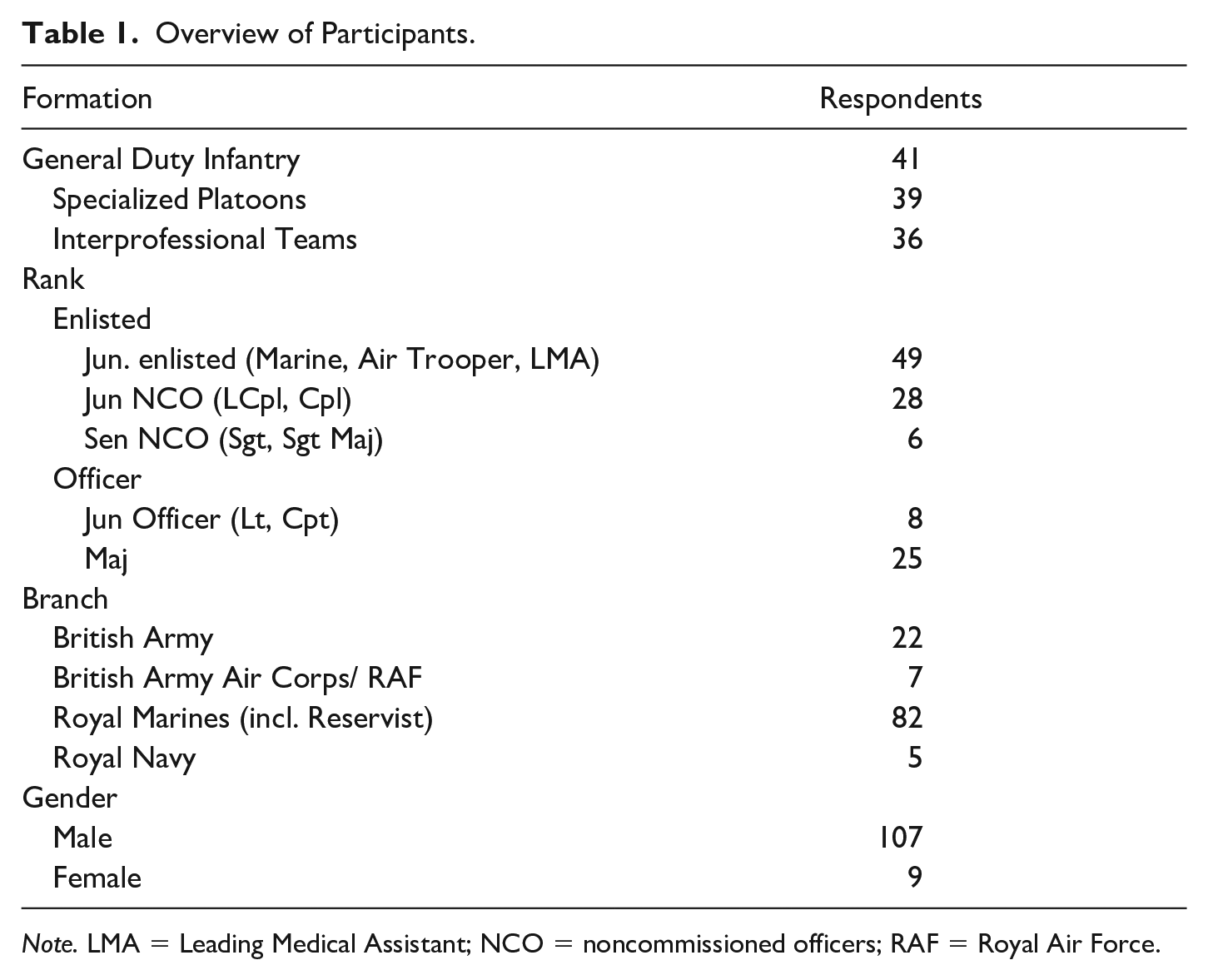
Note. LMA = Leading Medical Assistant; NCO = noncommissioned officers; RAF = Royal Air Force.
Data Analysis
The focus group interviews were transcribed, cleaned, and repeatedly read before being uploaded into NVivo (release 1.6.2) for subsequent coding (QSR, 2020; Woolf & Silver, 2017). NVivo was chosen because it allows the reporting of themes within the data while aiming to provide a rich and detailed analysis (Castleberry & Nolen, 2018; Maguire & Delahunt, 2017; Vaismoradi et al., 2013). The data were coded deductively using construct variables derived from the theoretical literature on unit cohesion. Every instance that pertained to the definition of the corresponding construct was coded against it (e.g., “work together” = teamwork). Reflecting the reality of human speech, where one reference may pertain simultaneously to several different themes (e.g., leadership, teamwork, and shared experiences) the data were coded en-bloc and against multiple codes. Third, once coding was completed, the information was extracted from NVivo and graphed as a network representing the interactions between variables. This was achieved by extracting the NVivo data of the total number of shared references between thematic codes as a Matrix (see Supplementary data for full Matrix table: https://osf.io/ftyjh/?view_only=9e5d68f8dac34c3fb8f2f17b28d2ed5d) with the number of references shared between codes formatted as weight. These tables were uploaded into Gephi 0.9.5. The resulting graphical networks were computed using the average weighted degree, centrality, and modularity of nodes (Blondel et al., 2008) and visualized with the ForceAtlas 2 graph layout algorithm. This algorithm allows the transformation of a network into a map by “spatializing” and dispersing its components (Cherven, 2015; Gemici & Vashevko, 2018; Jacomy et al., 2014). The resulting graphs show (1) the importance of a particular construct, represented by the total of references shared with a particular code (centrality and distance); (2) the size of the nodes, based on the average number of shared references with other codes (average weighted degree); (3) the number of shared references between two specific codes as links between nodes (i.e., edges); and (4) which codes are more closely related to each other than to the rest of the codes (modularity clusters). For a detailed description of the process of using network analysis for qualitative semantic data, see Drieger (2013), Kang et al. (2017), and Pokorny et al. (2018).
Identifying Constructs of Cohesion
Seven construct variables have been identified from the review of the literature of the two models. Cohesion—the shared bond between team members of a tactical military unit that allows them to achieve a common purpose—was assumed to be procedural, with concepts such as trust or teamwork defined as variable constructs of cohesion:
Both SMC and TCA consider teamwork to be necessary for cohesion, based on either the “coordinated working together by team members (usually to a performance standard) to accomplish their team tasks” (Siebold, 2006) or the “shared commitment among members to achieving a goal that requires the collective efforts of the group” (MacCoun, 2010, p. 291).
Both models discuss trust as a function of reliability, either as “having each other’s back” (SMC) or as “knowing how they will conduct themselves under fire” (King, 2006, p. 494). However, trust—especially in occupational settings—also depends on trust in someone’s technical ability (Sweeney, 2010) and on heuristic cues based on their occupational group membership (Foddy et al., 2009; McKnight et al., 1998; Platow et al., 2011; Tanis & Postmes, 2005). Therefore, trust will be defined here as the level of confidence in team members’ and leaders’ shared ability and reliability to support each other.
Although there is some overlap between TCA’s definition of professionalism (as an acquired skill enabling a specialized service) and SMC’s early concept of competence (as a technical skill inherited by officers; Siebold & Kelly, 1988, p. 8), it is only TCA that positions professional competence as a predictor of cohesion (King, 2013, pp. 374–375). Hereafter, professional competence will be included as the sense of proficiency in a specialized technical skill set.
Leadership is explicitly built into SMC as vertical cohesion, whereby leaders provide guidance and act as linchpin with the wider institution. While TCA discusses leadership by referring to Huntington (1957), whereby professional skills are embedded into an institutional framework, the exact role of leaders for cohesion is underdeveloped. Leadership will be included here as the goal-oriented direction of followers.
Both models discuss certain forms of shared experiences or actions in the development of cohesion. While TCA focuses on performative actions—specifically the repetition of ‘prescribed practices’—as a precursor of cohesion (King, 2013, pp. 32, 36), SMC stresses that arduous training and drills are just one of many different shared experiences that can influence cohesion (Siebold, 2007). It is important to note, that several meta-analyses found the performance–cohesion effect to be related to both social and task cohesion, often dependent on conceptualization and level of analysis, with no consistent directionality indicated (Beal et al., 2003; Grossman et al., 2022; Oliver et al., 2009; Salas et al., 2015). This study will thus use a wider definition of joint actions, by including shared experiences as the active involvement or experience of collective events or situations irrespective of performance of repeated practices.
According to TCA, cohesion arises from both action and communication, the latter coordinating combat action and social practices and providing shared representation and definitions of combat drills. This description, reminiscent of what has been described in occupational psychology as shared mental models (Floren et al., 2018; Salas et al., 2016), reduces communication to a goal-oriented function that precedes cohesion but neglects affective functions of communication affecting cohesion. For example, communication substantiates collective appraisal, aids in negotiating order, and can regulate stressful experiences (Brown et al., 2015; Bury, 2016; Dwyer et al., 2021; Gilbar et al., 2010). Hereafter, communication will be added as formal and informal exchange of information to coordinate actions and evaluate events and experiences.
Finally, while both models make it explicit that interpersonal relationships cannot be the essence of cohesion, there is much contention about the role of such interpersonal bonds in cohesion (King, 2013; MacCoun, 2010; Rosh et al., 2012; Wong, 2006; Wong et al., 2003). To address the role of interpersonal relationships, the article will rely on Festinger et al.’s (1950) concept of proximity, which assumes that cohesion is based on both the perceived attraction of other group members and the group’s ability to mediate goals. Therefore, the term proximity will be used interchangeably with interpersonal relationships and hereafter defined as physical or psychological closeness to other group members.
These seven identified constructs were used to thematically code the interviews with personnel from three different formations, the results of which will be presented hereafter. An overview of the theoretical constructs and the working definitions can be found in the Supplementary data: https://osf.io/ftyjh/?view_only=9e5d68f8dac34c3fb8f2f17b28d2ed5d.
Findings of the Thematic Analysis
General Duty Platoons
The thematic analysis of the seven identified constructs in GD personnel—consisting of junior Marines that recently graduated from basic training—shows that developing cohesion in this cohort relies most on leadership and teamwork. Leadership in this context was directly attributed to both physical closeness of their leaders and more importantly years of professional experience. Consequently, leadership predominantly resided with NCOs (e.g., “The boss [Lieutenant] is still learning, it’s his first draft after training, and the sergeant’s been there, done that, got the t-shirt after 15 years” [RES040]). As proprietors of professional competence and experience, these leaders were responsible for not only mentoring and instructing the team but also for setting behavioral and professional standards. For example, in one troop, a sergeant introduced a nonformalized method of upholding norms and sharing responsibility for their adherence by introducing a game where troop members fined each other for mishaps or mistakes, with the proceeds financing the next platoon event. Correspondingly, trust was determined by adherence to professional standards set by leaders and “earn[ing] trust by working together,” a process which could take anywhere from 6 to 12 months. In many cases, this meant proving oneself by doing “sprog routines” (demeaning duties) or participating in initiation rites, which were cited as early indicators of reliability in war. The lack of a general sense of professional competence was evident in the descriptions of their own competence as attitudinal (e.g., “be best,” “100% effort”) and the differentiation from other platoons based on being better at sports or military fitness. This supports the suggestions by officers and personnel in other formations that GD personnel were not considered professional yet, as they did not have specializations and were “still progressing their skills.”
Teamwork appeared to be critical to the description of cohesion in GD platoons. As frequent rotations of personnel disrupted cohesion, teamwork relied heavily on long exposure to each other and shared experiences during training or military exercises—when no personnel changes occurred—to learn skills and Standard Operating Procedures (SOPs) and to develop a familiarity with how people work. For instance, “At the beginning it’s going to be hard because you’ve not gelled yet, [but] towards the end of the trip there will be a lot more team cohesion because you know how each other work, you just gel” (RES039). Much of this depended on collective communication during debriefs, where NCOs guided the development of shared mental models (e.g., “we’ll talk through what went right . . . creat[ing] a general consensus, which we’ll then make an SOP” [RES042]). Nevertheless, despite the importance of repeated performance during training, many participants highlighted nonperformative aspects of military exercises as formative for their team, such as living with 30 other soldiers in one hut in the desert heat. Similarly, experiences in barracks, “civvy street” or while “going ashore” were also frequently quoted as important elements of building cohesion and reliability. Consequently, formal communication fulfilled functions other than mere operational learning, such as making sense of their experiences, developing emotive congruence (e.g., “aligning the story”), and reaffirming a sense of commonality. Informal chats were even more important for recognition of similarity, which, given their short time in the military, are often derived from nonmilitary themes such as football or fitness. In many cases, similarity and familiarity were attributed to the sheer amount of physical closeness in GD platoons, which bred interpersonal friendships. For instance, “You’re living together, you’re eating together, you’re doing everything together down to what you eat, when you eat, when you work out . . . it’s more of a family because you know everything about each other” (RES043). It is important to note, however, that while physical closeness accelerated the development of friendships, these appeared dependent on the adherence to common group standards, suggesting that friendships are side-effects of cohesion.
The thematic analysis suggests that cohesion in GD platoons depends predominantly on (1) leadership and (2) teamwork, with the other five constructs feeding into these. For example, leaders—specifically NCOs—were awarded leadership status through their professional competence and experience, which in turn afforded them the ability to set the behavioral and professional standards against which trustworthiness was measured. On the contrary, teamwork was developed gradually based on long periods of shared experiences and communication, which allowed personal and professional familiarity to arise. This suggests that these concepts fulfill both instrumental and affective functions, by ascertaining shared mental models and generating a sense of interpersonal familiarity and perceived similarity. The intricate relationship between construct variables is supported by Figure 1 which illustrates the relative importance of teamwork and leadership, determined by both their centrality and the size of these nodes (representing the total number of references shared by a code with other codes).
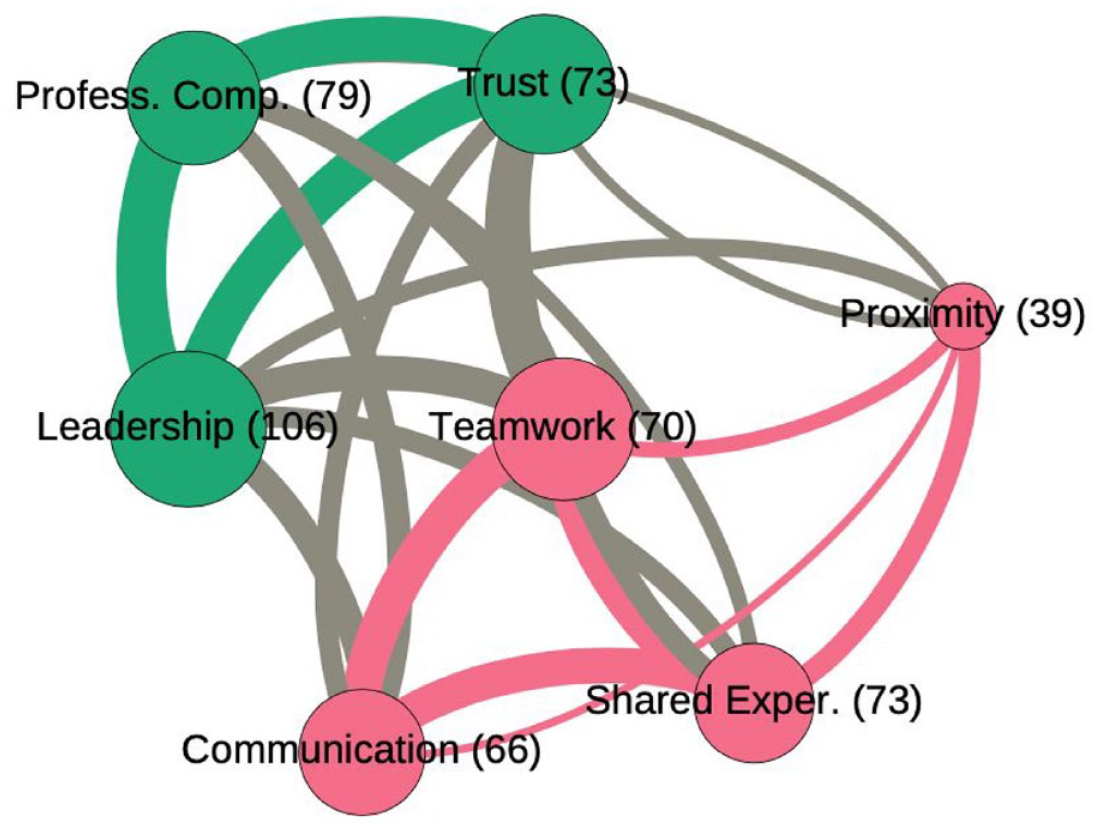
Graphical Representation of Relationships Between Thematic Codes in GD Platoons. (Avg. Weighted Degree, 139.1; Modularity: 0.019, Number of Communities: 2). For All Following Network Graphs, Node Size Corresponds to the Node’s Weighted Degree (i.e., the Total Number of Shared References With Other Codes), the Colors Correspond to Communities of Nodes Determined by How Closely These Codes Are Related to Each Other Using the Modularity Algorithm. The Number of Total References Per Code Is in Brackets. Larger Links Between Codes Represent Larger Number of Shared References Between These Two Nodes. Distance Represents the Importance of the Code to the Overall Model
The multidimensional relationship between leadership, professional competence, and trust (green cluster), as well as teamwork, shared experiences, communication, and proximity (red cluster), is highlighted by the modularity of the graph. The relationship between teamwork, communication, and shared experiences stands out, as the affective and instrumental functions of experiences and communication could imply that both social and task aspects are important for the development of cohesion. Interpersonal relations appear to be less important for the model, indicated by the size of the code proximity, suggesting that interpersonal proximity seemed to be of tangential importance. Finally, the graph highlights the finding that trust relies on long periods of working together and proving oneself, which is indicated by the relative strength of the connecting line between these two nodes. In sum, cohesion in GD personnel appears to be a function of leadership and teamwork, with trust resulting from these two constructs. Professional competence was only indirectly related to cohesion via leadership, whereas communication and shared experiences fed into teamwork.
Specialized Platoons
Cohesion for personnel in specialized units was closely linked to teamwork and professional competence, suggesting that having the same understanding of the group’s tasks is instrumental for cohesion in specialized platoons. For example,
Getting everyone to buy into the idea that the boss, the stripe [sergeant], the corporals had. If we’re all singing off the same song sheet and believe in the training, that’s cohesion; you’re all seeing the end goal and all wanting it . . . and working for each other. (RES109)
With entry into these units requiring an SQ, teamwork was always viewed through the lens of this specific professional specialization. SQs thus provide an easy heuristic to assess trust in someone’s technical ability and fit of their character, allowing integration into the team within mere weeks (e.g., “you can trust each other a lot more [because. . .] they know by the courses we’ve done that you are a decent bloke” [RES066]). This common occupational background was used to ascertain personal similarity (e.g., “tanks branch [are] all quite similar, got the same similar makeup, same humor” [RES109]). It is important to note, though, that participants routinely reported the platoon-inherent standard of excellence surpassing the SQs, which was maintained by small drills and quizzes during downtime. For example, during the participant observation, Recce soldiers quizzed each other on projectile trajectory at certain wind speeds or impact on different types of glass, whereas a Fire Support Group performed dry drills, imitating gun blockages or covering each other during reloading.
Professional competence also determined the nature of leadership and communication in these teams, whereby the high degree of collectively shared mental models permitted a diffusion of command responsibility to lower ranks and inclusion of subordinates into the planning process (e.g., “we are given a task and we achieve it how we deem fit” [RES069]). Such a flat hierarchy meant that leader legitimacy was routinely dependent on the leader’s own level of professional skills, with a lack of skills repeatedly described as a basis for degradation and ostracization of a leader (especially junior officers). This suggests that while SQs provide an initial basis for team integration, teamwork and subsequent trust in someone’s ability and reliability require adherence to the platoon’s self-imposed standards.
Given that many of these soldiers had families and lived in private accommodations outside of barracks, proximity and shared experiences (especially hardship and adversity) were described as reiterating cohesion due to the physical closeness on exercises or deployment. For example, “shared hardship definitely strengthens cohesion . . . you’ve got eating rations and spam every day to laugh about and . . . stupidly hot wind and watching people [go to the toilet] in fields” (RES102). Similarly, the physical closeness during exercises reportedly deepened this bond, by providing a sense of familiarity (knowing “how they tick” and “how they work”). This suggests that while not central to their identity, proximity and collectively shared experiences may provide important functions for replenishing cohesion. While many participants described such bonds in familial or friendship terms, “underperforming” or “not upholding standards” would still lead to ostracization, suggesting that friendships may be a result of self-selection or ostracization of in-group deviants.
The thematic interaction of construct variables in specialized units is illustrated in Figure 2. The graph shows the importance of professional competence determined by the size of the node (shared references with other codes) and its centrality in the model. The interaction between professional competence for teamwork, shared communication, trust, and leadership is demonstrated by the fact that these nodes share more references with each other (blue cluster) than with shared experiences and proximity (khaki cluster). This supports the thematic findings—in line with TCA—that in specialized personnel, professional competence is imperative for the development and maintenance of trust, teamwork, and diffusion of command responsibility. This is due to a high degree of shared mental models. Interestingly, while shared experiences and proximity have been discussed as important for the periodic replenishment of cohesion during exercises and deployment, they appear to be less central to the model. This may imply that shared experiences may predominantly have affective rather than instrumental functions in such formations.
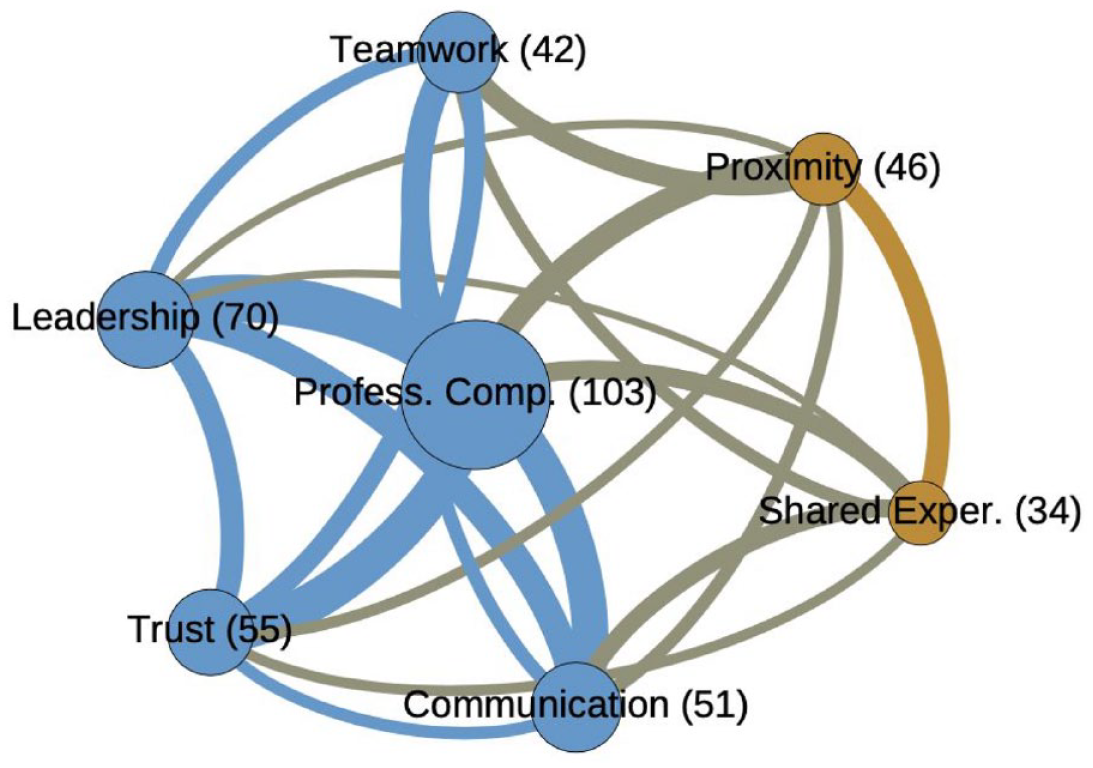
Graphical Representation of Relationships Between Thematic Codes in Specialized Platoons. (Avg. Weighted Degree, 120; Modularity: 0.014, Number of Communities: 2)
IP Teams of Attached and Task-Organized Personnel
Cohesion in IP personnel, consisting of attached and task-organized teams, was often framed in terms of teamwork and a sense of belonging despite professional boundaries. For example,
A better example of cohesion would be an exercise where you’re working with people from around the corps that you’ve not worked with before, . . . if you’re able to create a good bond with someone, a good group that gets the job done, that would be more about cohesion for me, integrating with other groups. (RES118)
Lacking specific information about someone’s actual professional skills and trustworthiness, many participants relied on occupational stereotypes about someone’s operational experiences and their occupational value to infer trustworthiness and competence. Given this reliance on stereotypes, participants described misconceptions about professional roles or a lack of shared mental models as frequent issues undermining cohesion and teamwork (e.g., “it was a constant battle between what the battle group wanted, like sending troops out in a combat support role and trying to do the stuff we were supposed to do, like building HESCO bunkers” [RES021]). With leaders themselves inhabiting only a narrow occupational background, leadership was often described predominantly as moderating team differences and coordinating the development of shared mental models. For example, when IP members were attached to a unit, leaders needed to support cohesion by clearly articulating the value of attached personnel to the unit and folding them into existing tasks. In IP teams with a wider skill mix, leaders were more involved in coordinating the collective creation of superordinate shared mental models, which utilized the subject matter expertise of individuals but transcended their prior SOPs (e.g., “we needed to be a bit more collaborative, . . . a fairly parliamentary form of leadership where we had to discuss what we thought were best ways” [RES002]). In this case—as in many others—goals and how to attain them arose from the interaction between team members.
As professional stereotypes only allowed for initial assumptions about someone’s trustworthiness, the development of cohesion depended on shared experiences and communication to confirm trust in someone’s ability and reliability, establish teamwork, and develop similarity. The importance of shared experiences was visible in many instances when cohesion was associated with a team’s specific situation and tasks. To illustrate, “physically removed from [our unit] we were a team because of location [and] isolation, . . . the randomness of us as a bunch of individuals meant that we were more adapted to the specific task of mentoring” (RES002). The direct exposure of working with each other therefore confirmed reliability, whereas informal communication allowed the recognition of similarity based on social comparison (e.g., “they’re no different, they’re just [expletive] soldiers as well” [RES102]).
Interpersonal relationships in this cohort were often attributed to the physical closeness of being in the same location (e.g., “you’re so cut off, they become your mum, your dad, your brother, the person that will give you paracetamol [and] make you feel better on a bad day” [RES113]). If such closeness was for some reason constrained (e.g., due to separate accommodation or gender discrimination), cohesion was inhibited, with respondents reporting high levels of isolation and frustration. Similarly, many participants reported a loss of cohesion after they left their team with many discussing difficulties and frustrations due to not being able to discuss their experiences with colleagues who had not been there.
The thematic findings suggest that cohesion in IP personnel depends on (1) shared experiences, which confirm trust in someone’s professional ability and their reliability, and (2) communication, which determines teamwork and the recognition of similarity. These interactions are visualized in Figure 3, which illustrates the importance of shared experiences and communication for the model through the size of the nodes and their centrality in the model. The graph highlights the relationship between trust, professional competence, and leadership (blue cluster) and between teamwork, shared experiences, communication, and proximity (red cluster). The links between codes emphasize the significance of communication for the development of teamwork and the recognition of similarity based on shared experiences. The graph highlights that professional leadership, although not sufficient for cohesion, is certainly important as a basis for initial trust based on the heuristic assumptions about team members’ occupational skills. The key role of leaders in coordinating the creation of superordinate goals and to incorporate personnel into the existing mission is visualized by the size of the corresponding node. This suggests that leaders play a crucial role in such teams by moderating professional differences and setting behavioral standards that enable trust within the team. In sum, these findings suggest that cohesion in IP teams may be of an emergent nature, developed through shared experiences, communication, and leadership with trust and teamwork depending on these.
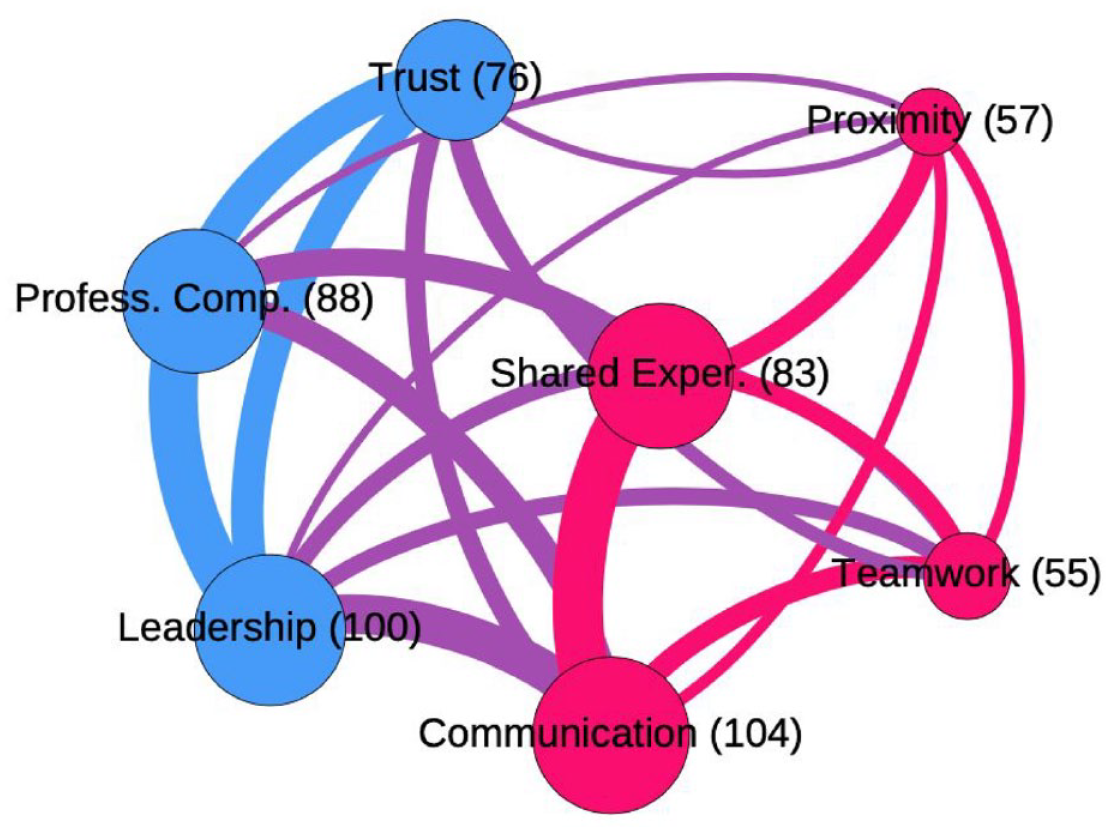
Graphical Representation of Relationships Between Thematic Codes in Interprofessional Teams. (Avg. Weighted Degree: 134; Modularity: 0.018, Number of Communities: 2)
Cumulative Findings of Constructs Across all Formations
As the deductive thematic codes have already been described in the previous three sections, this section will present the visualization of the codes and their relationships with all three formations amalgamated into one graph (Figure 4). The graph mimics earlier graphs by suggesting that cohesion across military formations is determined by two clusters: (1) teamwork, shared experiences, communication, and proximity (green cluster), and (2) leadership, professional competence, and trust (rose cluster).
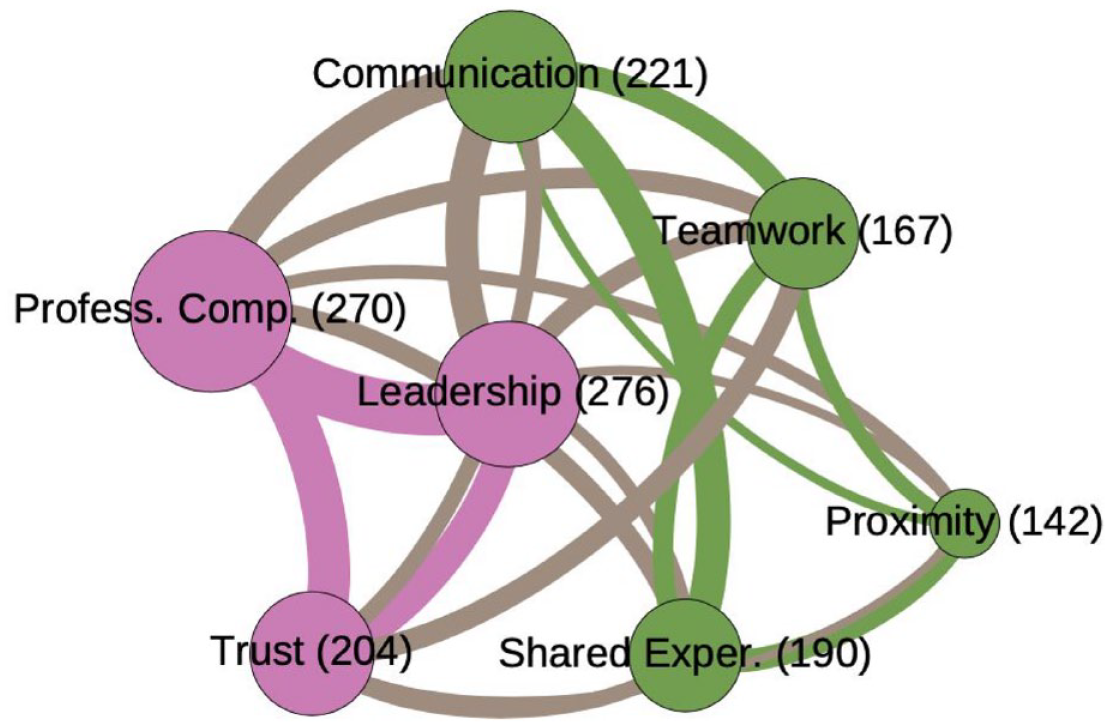
Graphical Representation of the Proportional Relationships Between Thematic Codes Across All Three Formations Combined in One Graph (Avg. Weighted Degree: 393; Modularity: 0.012, Number of Communities: 2)
It is important to note here that while professional competence is the most connected node in the network (based on its size determined by shared references with other codes), leadership is the most central node within the model. This highlights the integral function of leaders by setting professional standards or moderating between professional differences, suggesting that vertical and horizontal dimensions of cohesion are more intricately linked than previously suggested. It also illustrates that professional competence is an important element of cohesion. But as many comments—especially by GD and IP personnel—were either discussing it in terms of leadership legitimacy and a deficiency of shared professional competence or focusing on the value of a particular individual skill as an early assumption of trustworthiness, it may not be a sufficient element of cohesion. Interestingly, the figure also highlights a significant overlap of references between professional competence and trust. As trust was often described as encompassing aspects of both reliability and technical ability (e.g., “having each other’s back” and “having the skills to do the job”), this may imply a thematic closeness between trust and professional competence. Teamwork—as in prior graphs—was most related to shared experiences and communication. This suggests that successful teamwork as a precursor of cohesion is dependent on both social and instrumental factors rather than purely based on performative action. Finally, the distance and thin lines connecting proximity to the rest of the model indicate that interpersonal relations are likely a side effect of cohesion rather than a precursor. This supports the finding that the sense of interpersonal closeness with colleagues appears to result predominantly from shared experiences, whereas friendships appeared to be reliant on adherence to group-internal standards. The analysis, supplemented by the visualization of codes, signifies that across military formations leadership takes on a central role for cohesion, with shared experiences and communication supporting the development of teamwork.
Discussion
The thematic analysis supplemented by the graph model demonstrates that cohesion manifests differently across GD platoons, specialized units, and IP personnel. Units sharing occupational similarity (e.g., Heavy Weapons, Anti-Tank) rely on professional competence, whereas formations without shared professional similarity emphasize leadership, teamwork, and shared experiences. This does not mean that professional competence is not important in these units, but rather than being the essence of cohesion, it fulfills important functions required for cohesion in such teams (e.g., determining trustworthiness or leader legitimacy). The recurring modularity visible in Figures 1 to 4 indicates that cohesion is a multidimensional concept, where some factors (e.g., professional competence, trust, leadership) may be more representative of task cohesion, whereas shared experiences and proximity appear to be more representative of social cohesion. This is in line with recent quantitative scholarship, which suggests that the performance–cohesion relationship may be subject to the level of analysis and the conceptualization of the social and task dimensions (Forsyth, 2021; Grossman et al., 2022; Salas et al., 2015; Treuer et al.,2010, 2018).
The analysis indicated a thematic closeness between professional competence and trust in someone’s technical ability, with trust appearing to be a temporally emergent construct. First ascertained by heuristic assumptions about someone’s occupational value to the team (previously termed “swift trust”; Ben-Ari et al., 2010; Hyllengren et al., 2011; Meyerson et al., 1996), it was confirmed through the direct experience of working with each other. Furthermore, for these active-duty soldiers, professionalism was not viewed as a general skill related to the management of violence, but rather was strongly related to their occupation which was the basis of intragroup and intergroup comparison (e.g., Sniper, Assault Engineer, Vehicle mechanic, Medic). As such, while TCA offered important insights into cohesion in specialized personnel, the study could not fully support the assumption that cohesion is a “function of professionalism” across all three observed formations (King, 2013, p. 375). This is reminiscent of other work, which highlighted that in reserve forces professionalism—if defined as specialized skill—is situationally dependent (Bury, 2017).
The close link between shared experiences and communication for the establishment of teamwork indicates that communication not only has instrumental aspects, which support the creation of shared understanding of roles and tasks, but also has social-affective importance by allowing team members to recognize their similarity. This supports TCAs’ argument of the importance of communication for teamwork and cohesion. It is, therefore, suggested that future scholarship should pay more attention to how different shared experiences are appraised to develop cohesion. This may be particularly useful for the analysis of cohesion in nonprofessional contexts (e.g., reservists) or non-Western militaries (Bury, 2017; Käihkö, 2018, 2021). The closeness of communication to teamwork is reminiscent of literature on teamwork in other occupational settings, where shared mental models (i.e., the shared understanding of a team’s tasks, purpose, and responsibilities) have long been included in the construct of teamwork (Barnard et al., 2021; Floren et al., 2018; Manges et al., 2020; Nakarada-Kordic et al., 2016; Pearson et al., 2006). The analysis strongly supports the inclusion of leadership into cohesion; however, the evidence presented suggests that a leader’s role cannot be reduced to that of an institutional linchpin allocating missions, providing direction and resources, and scheduling activities. Instead, leaders—in particular NCOs and corps-commissioned officers—have a central role in the development of cohesion by providing meaning, moderating differences, setting standards, and thus defining what it means to be part of the team. This described role of NCOs is evocative of the Social Identity Model of Leadership that argues that leadership is based on four characteristics: (1) “one of us,” (2) working in the collective interest, (3) embodying prototypicality, and (4) providing meaning (Gleibs & Haslam, 2016; Jansen & Delahaij, 2019; Peters & Haslam, 2018; Reicher et al., 2007; Smith et al., 2018; Steffens et al., 2014). The descriptions in this study also support recent work in the U.S. Army, which highlighted the relationship between NCOs experience, length of service, and conduct with retention among junior soldiers (Wenger et al., 2018), as well as work in a Dutch infantry platoon on the importance of group processes for leadership (Jansen & Delahaij, 2019), suggesting that leadership’s role for cohesion is resonant of these four characteristics. Future research would, therefore, benefit from addressing the complicated relationship between officers and NCOs (Dandeker & Ydén, 2022; Weber, 2016) in the construction of cohesion by taking leaders’ roles, legitimacy, and acceptance into account. Interestingly, the emergent character of cohesion in IP personnel who develop cohesion based on their specific task and situation appears to be suggestive of work on emergent social identities, whereby shared experiences of mass emergencies, terrorist attacks, or natural disasters aid in developing a novel emergent identity as a cohesive group (Davidson et al., 2022; Kellezi et al., 2009; Ntontis et al., 2020). Given these similarities, subsequent analysis of the data using a social identity perspective may prove to be beneficial.
Some limitations need to be discussed. First, empirical analysis of cohesion during peacetime provides only a limited observation of the conditions under which cohesion is expressed. Collecting data during military exercises proved an imperfect yet valuable environment to analyze cohesion, as it allowed the observation of a range of different shared experiences and communication patterns affecting cohesion. Second, due to operational demands on military units, the study was reliant on observing units available to the researcher. While the choice to observe Royal Marine Commandos (RMC) as study objects reduces the generalizability of the results due to their elite status, it also provided a unique opportunity to observe relationships within IP teams, as the RMC are more reliant on combat support personnel from other branches of the U.K. military. Similarly, despite the inclusion of GD personnel being illustrative of how other non-commando infantry units develop cohesion, more research is needed to confirm the findings in different military settings. Finally, due to the coding protocol, both positive and negative comments about a construct (e.g., lack of leadership, absence of shared competence) were coded against the respective code. This means that the visualization cannot stand by itself, but requires the thematic analysis on which it is based to provide clarification. Despite these limitations, the study was able to demonstrate a novel approach to the comparison of theoretical models. As comparison is traditionally conducted either theoretically or quantitatively (Clarke, 2007; Grossback et al., 2005; Lektzian & Souva, 2009), this study exhibited a method that permitted the empirical qualitative comparison of theoretical models at different stages of variable operationalization across different cases.
Conclusion
This study made an important theoretical contribution to the analysis of cohesion and the practical development of military cohesion. It provided evidence that cohesion is a multidimensional concept, containing elements of both task and social cohesion. It also presented that military formations develop cohesion in different ways, with teams low on shared professional similarity emphasizing leadership and shared experiences, whereas teams with a higher level of occupational similarity stressing the importance of professional competence. The study, therefore, highlights that while professional competence is a necessary element of cohesion—by ascertaining initial trust in someone’s technical ability and determining leadership—it is not sufficient to develop cohesion across all military units. The study also demonstrated the importance of leaders for the development of cohesion, highlighting that leaders—in particularly NCOs—play a crucial role in shaping the instrumental and affective bonds between soldiers. The evidence suggests that future qualitative and quantitative research would benefit from taking leadership acceptance and legitimacy into account when assessing cohesion, by focusing on the role of leadership positionality vis-à-vis followers. This study emphasized the value of employing a deductive exploratory approach to compare different models across cases, using thematic analysis supplemented by graphical network analysis. This novel approach provided a powerful tool to analyze and visualize the complex relationships of construct variables of cohesion within—and between—different cases.
Footnotes
Acknowledgements
This material is the result of doctoral work conducted at King’s College London with support of the Joint Services Command and Staff College and the Royal Marines. The author thanks the anonymous reviewers as well as Dr. Chris Kinsey and Dr. Julia Pearce for their invaluable support during the doctoral journey as well as Dr. Bence Nemeth, Profs. Vincent Connelly, Eyal Ben-Ari, Uzi Ben-Shalom, and Martin Bricknell for their valuable and important suggestions and advice on earlier versions of the manuscript.
Declaration of Conflicting Interests
The author declared no potential conflicts of interest with respect to the research, authorship, and/or publication of this article.
Funding
The author received no financial support for the research, authorship, and/or publication of this article.