




Abstract
This article explores contemporary understandings of military duty and dynamics of cohesion during deployment with a focus on host–citizen relations. Duty is treated as a perception-based dynamic construct shaped, in part, by operational experiences. Traditionally, Western military duty is defined by conventional obligations of loyalty to the military unit and mission in the context of combat operations, in these ways linked to military cohesion. However, in response to increasingly “population-oriented” military operations, I argue the need to broaden the study of military duty and cohesion beyond interpersonal bonds of the military organization to include the role of host–citizen relations. In-depth interviews with Swedish service members reaffirm the centrality of conventional duty to the mission and military unit, yet also indicate varying levels and forms of obligations to local actors. Overall, understandings of duty matter to cohesion both as a unifying force and source of tension within the mission.
This article explores understandings of military duty and dynamics of cohesion in contemporary military operations with a focus on the role of host–citizen relations. 1 Military duty is central to Western military decision-making and behavior in both war and peacetime. The notion of “doing one’s duty” is treated as a core value in the military organization commonly attributed to service members’ professional obligations to defend their country, serve civil and military leadership, and protect fellow service members (Snider, 2008), particularly in contexts of armed conflict. Military duty during deployment, thus, is defined outmost by the expectation that service members fulfill their obligations (principally the mission) together, as a unit, even during high-risk situations, such as combat operations. 2 The emphasis on interpersonal military relations defined by loyalty to fellow service members and unit performance connects the concept of military duty to military cohesion: a phenomenon widely held as important to combat motivation, resilience, and effectiveness (Connor et al., 2021; Kolditz et al., 2003; Little, 1964; Shils & Janowitz, 1948; van den Aker et al., 2016).
Since the turn of the century, however, Western armed forces have mainly served in military operations part of wider international efforts for peace and security, broadly referred to as peace operations. During this period, policy and practices of international intervention have become increasingly “population-oriented” by proclaiming to protect, support, and empower foreign populations afflicted by oppressive regimes, armed conflict, and humanitarian crisis. This tendency is manifested, for instance, by past Western-led military operations in Iraq and Afghanistan, as well as the growing number of UN-led mission with “robust” Protection of Civilians (PoC) mandates, for instance, in Mali and DRC, which authorize the use of force, if necessary, to support host-nation authorities and protect the local population (Fjelde et al., 2019; Karlsrud, 2018). What is more, recent responsibilities to protect foreign states and populations at risk call on Western military forces to engage extensively with different host-nation actors, for instance by assisting, training, and mentoring local authorities for the purpose of strengthening local capabilities, ownership, and ultimately, achieve mission effectiveness.
Despite the centrality of host–citizen relations in contemporary military operations, there is limited research on how local ties (re)shape traditional, conventional notions of military duty. The purpose of this article is to explore notions of military duty during deployment with specific attention to the role of host–citizen relations. I define military duty during deployment as perceived obligations in the context of military operations. 3 Traditional, conventional understandings of military duty focus on interpersonal military relations of loyalty and collective commitment to combat effectiveness, thereby connecting duty to the phenomenon of military cohesion. Similarly, this article conceptualizes duty as nested in the social ties and practices of the military organization, mainly dynamics of military cohesion with its emphasis on interpersonal ties between service members. It is therefore necessary to pay close attention to cohesion and the literature about cohesion when exploring the role of host–citizen relations in notions of duty.
Beyond the realms of the military organization, I propose that personal experiences of mission deployment also influence how service members understand military duty. Duty is treated, thus, as a dynamic perception-based construct that adapts and evolves depending on conditions of the context—or mission—at hand. With a focus on host–citizen relations, I argue that a growing importance of local ties in current operational environments may reflect on military understandings of duty, thereby affecting how service members relate both to the local “other” and each other. Building on my previous research (Ekman, 2021), I expect that attention to local ties may expand troops’ sense of duty beyond conventional loyalty to the military organization and fellow service members. If so, perceived obligations to local actors may have implications to dynamics of military cohesion. In this article, I therefore draw on the long-standing and lively scholarly conversation on military cohesion (see, for instance, King, 2007, 2013, 2021; Siebold, 2007; Siebold et al., 2016) to revisit and possibly reconsider military duty in the context of contemporary military operations.
Recent scholarship points to the significance of operational experiences, including new missions and tasks, for different dynamics of civil–military relations. For instance, extant research argues that militaries experience difficulty in performing seemingly conflicting professional roles when engaging with host citizens, especially while fighting in a war (Meyer, 2013; Schut et al., 2015), and, moreover, suggests that militaries manage and respond to host–citizen relations in drastically different ways (Jenne, 2022; Miller & Moskos, 1995; Ruffa, 2014). In this regard, novel research on role conceptions (Harig et al., 2022) proposes that operational experiences influence how troops collectively view “the proper purpose of the military organization and of military power in international relations,” which in turn shapes how militaries “make sense” of their core purpose, both during deployment and in “society at large” (p. 3). Speaking to military duty, my previous research suggests that operational experiences of host–citizen relations in the form of personal contact with local actors can increase a sense of obligation to the host population (Ekman, 2021). Yet, little is known about the role of local ties in notions of military duty, including how perceived obligations to local actors affect relations among troops. How do host–citizen relations feature in understandings of military duty during deployment, and what are possible implications to dynamics of military cohesion among deployed service members?
To capture understandings of military duty in the context of operational experiences, I situate the empirical analysis in the mission setting where notions of duty are “put into practice.” Here, Swedish troops represent an informative case because of Sweden’s frequent military deployments to missions that proclaim to address population-oriented political and security-related concerns of host nations. In fact, such missions provide the main source of contemporary field experience (including combat operations) of most Western armed forces, Swedish military included, for instance, in Kosovo (KFOR), Afghanistan (ISAF), and Mali (MINUSMA). Thematic analysis of in-depth interviews with Swedish troops reaffirms the perceived salience of conventional duty to the mission and military unit, defined by task performance (achieving the mission) and interpersonal bonds and loyalties to fellow troops. Despite the centrality of such conventional obligations, however, the results of this small exploratory study indicate that this sample of troops also deemed host–citizen relations important; also, it seems service members understand their obligations to local actors in different forms and to varying degrees. Three key stances on local obligations are observable in the data, including a sense of direct duty, indirect duty, and no specific sense of obligation. Overall, understandings of duty during deployment seem to matter to military cohesion either as a unifying force or source of tension within the mission.
The findings are relevant for current policy and practices of contemporary military operations. At the strategic level, shared understandings and practices of how to manage host–citizen relations are crucial to maintain political integrity and unity of effort across the mission. What is more, military relations with host-nation counterparts and the wider population shape local mission support and legitimacy, with implications to the safety and well-being of both local actors and deployed militaries (Karlborg, 2014). At the operational and tactical levels of the mission, unified understandings and practices related to key tasks, including collaborative practices together with local actors, arguably matter also to relations among deployed troops manifested in group performance, cohesion, and morale (King, 2007; Ruffa & Sundberg, 2018).
The article proceeds in five sections. First, I clarify the key argument of military duty as a dynamic perception-based construct that can adapt and evolve due to personal experiences during the mission, including relations with local actors. I draw on cohesion literature to suggest that shared military understandings and practices related to the key task of building local ties matter to dynamics of military cohesion. Second, I discuss the present divide in international policy and practices of military intervention on the matter of military obligations to local actors, which I argue is rooted in—and reproduce—long-standing ideational tensions between the professional warrior and constabulary force. Third, I present the research design and discuss the use of in-depth, semi-structured interviews and thematic analysis. Fourth, I present the results of the analysis. I conclude with broader reflections.
Military Duty during Deployment: A Relational Construct
Traditional ideas of military duty are rooted in service members’ willingness, or perceived calling, to accept risks of personal injury or death to defend their country; to serve civil and military leadership; and to protect fellow service members. However, as a concept—much like the concept of loyalty in the military domain—military duty suffers from a lack of theoretical sophistication and empirical observation (Olsthoorn, 2013). Thus, when “doing one’s duty,” it is not clear what this entails to service members, particularly not when practiced in the context of contemporary military operations. Existing conceptual, theoretical, and empirical work that touch upon matters of duty (and, relatedly, loyalty) nearly exclusively focus on the relations and social bonds within the military organization during combat operations. An emphasis on interpersonal military relations defined by loyalty to fellow service members and group performance connects the concept of military duty to dynamics of military cohesion. In the cohesion literature, a feeling of belonging and sense of obligation to fellow troops is widely held as crucial to overall combat motivation and unit cohesion, thereby influencing military performance and, ultimately, mission effectiveness (Kolditz et al., 2003; Shils & Janowitz, 1948; Siebold, 2007).
In this article, I conceptualize military duty during deployment as perceived obligations to someone or something; obligations that, I argue, are rooted in a complex web of social ties and practices shaped by—but not confined within—the military organization. Military duty is conceptualized, thus, as a perception-based phenomenon nested in the wider dynamics of social and task cohesion. Moreover, I expect that military duty is also a dynamic construct that can adapt and evolve due to personal experiences of mission deployment. Notions of military duty during deployment provide a novel analytical lens through which to study relational dynamics during deployment. Complementary to research on role conceptions, which centers on collective military notions of the “proper” role and function of “the military organization and of military power” in a wider context of both domestic and international relations (Harig et al., 2022, p. 3), the concept of military duty during deployment enables a more focused analysis at the individual level by recognizing the importance of troops’ personal experiences in the specific context of military operations. With a focus on host–citizen relations, I draw on my previous research on military duty and local relations (Ekman, 2021) to suggest that personal experiences of deployment matter to notions of military duty. More specifically, I propose perceived obligations and loyalties can evolve beyond the military organization to feature other actors, including state and non-state actors in the host nation.
Speaking also to the cohesion literature, I expect that notions of duty toward local actors build upon practical and emotive elements akin to the phenomena of task cohesion and social cohesion. Previous findings indicate host–citizen relations characterized by mutual trust, loyalty, and comradeship—similar to social cohesion—function as a powerful emotive component of duty (Ekman, 2021). What is more, these prior findings also suggest military practices involving collaborative host–citizen relations in support of a common purpose—similar to task cohesion—positively influence, and expand, perceived obligations to host citizens (Ekman, 2021). It is noteworthy that a sense of duty to the local population does not seem to override more conventional commitments of accomplishing the mission and protecting fellow troops; rather, close local ties are perceived necessary to fulfill such obligations (Ekman, 2021). Military duty, thus, seems to have the qualities of a dynamic and relational construct rooted in military interpersonal bonds, yet observant also of other relationships, including with local actors.
Military Duty and Cohesion
Military cohesion is a central yet much debated concept in military studies (Schilling, 2022). Cohesion is studied mainly in the context of smaller primary groups or units, such as squads and platoons in the military organization, and commonly defined as a distinct sense of mutual motivation, which arises from the affective interpersonal bonds—comradeship—between service members. In his meticulous review, King (2013) discusses the common presumption in research on military cohesion of an inherent link between such motivation and military performance. King joins scholarship that seeks to nuance and broaden understanding of cohesion beyond affective collective motivation, noting that in high-risk environments, including combat operations, maintaining close relations within military groups constitutes also an instrumental and self-serving activity in the interest of survival. Interdependence and acts of loyalty among service members are thus also highly contextual and pragmatic responses out of perceived military necessity (King, 2013; Moskos, 1970).
Social psychology research on cohesion makes a distinction between social cohesion, referring to the strength of interpersonal and emotional bonds within a group, and task cohesion, namely the sense of shared commitment “to achieving a goal that requires the collective efforts of the group” (MacCoun & Hix, 2010, p. 139). Defined in this way, the idea of social cohesion in the military relates to feelings of loyalty among fellow troops, while task cohesion, at the surface, stands closer to the concept of military duty, namely an instrumental personal commitment to the same professional objectives (MacCoun et al., 2006, p. 652). However, to the armed forces, a key professional objective is mission effectiveness, conventionally defined by the outcome of combat operations. In combat, social cohesion and task cohesion are commonly viewed as mutually reinforcing phenomena because “[l]oyalty to one’s immediate peers, nested within wider loyalties to the organization and nation, coupled with a sense of duty to fulfill one’s mission, work to enable soldiers to kill” (Connor et al., 2021, p. 543). Even so, task cohesion has been found to have a more reliable effect on unit performance in combat than the more widely studied phenomenon of social cohesion. 4 During military operations, this suggests a shared commitment and collective action to implement tasks matter more to mission performance than whether or not service members feel emotionally connected to each other (MacCoun et al., 2006, p. 647; Mullen & Copper, 1994). What is more, high levels of social cohesion—and in-group loyalties—paradoxically can lead to negative outcomes in terms of task performance (King, 2013, p. 32). For instance, if loyalty to one’s peers leads service members to support each other’s wrongdoings, then perceived loyalties would effectively override “ethical concerns or a sense of duty” (Connor et al., 2021, p. 538; see also Coleman, 2009).
Speaking to the importance of task cohesion to military performance, King (2013, 2021) argues that professionalized militaries of today embody an impersonal professional duty, primarily concerned with accomplishing the task, or mission, at hand. Cohesion, as such, does not principally arise through “affective processes of social identification” or personal bonds between service members, but through formal training and participation in collective military practices in various forms, including military operations (King, 2007, p. 642). This is not to say a sense of comradeship and high levels of mutual trust and loyalty within military units are unimportant to combat motivation and performance; only, there is a need to broaden understanding of cohesion in practice beyond interpersonal motivation to collective action and unit performance (King, 2013).
Current military practices of population-oriented operations arguably resonate with King’s (2007) idea that “[a]ll cohesion is a form of task cohesion” (p. 643) because in these missions task performance—and, in extension, task cohesion—involves building productive relations, collaborations, and partnerships with local actors outside of the military group. By defining understandings of military duty during deployment as perceived obligations to someone or something, the concept treats phenomena of social and task cohesion, inevitably, as interlinked. The matter of host–citizen relations, in particular, is fitting for empirical exploration of these dynamics because mission objectives (or collective aims) involve building strong local ties through various collaborative practices, including, for instance, training, mentoring, and joint missions. As such, the task of building host–citizen relations seemingly conflates notions of task and social cohesion in practice. Yet, given the anticipated dynamic and subjective nature of duty, I expect that deployed troops understand and act on perceived obligations in different ways, including toward local actors. Drawing on the work of King (2007, 2013, 2021), I recognize that shared military understandings and unified military practices during deployment (or lack thereof) related to key tasks—here, local ties—affect dynamics of military cohesion. The precise ways in which host–citizen relations matter to different forms of cohesion, however, remain an empirical question.
Military Duty and Host–Citizen Relations: A Tale of Two Conflicting Military Ideals
Given the current centrality of local relationship-building, let us briefly address key tensions of military duty and host–citizen relations in international military operations. International policy and practices of contemporary intervention currently revolve around two kinds of military operations, namely stabilization operations and people-centered operations. Together, these missions manifest an uneasy coexistence of different understandings of militaries’ duty toward local actors. Stabilization operations embody an indirect duty, whereby military forces are authorized [to protect the local population by steading] the security situation in a host nation with the use of force if necessary, while extending the reach of host-nation authorities to achieve limited strategic, state-centric aims. In practice, stabilization usually entails short-term, state-centric military missions focused on countering violent extremism with brute force, such as in DRC, Mali, CAR, and South Sudan. Conversely, people-centered operations identify local actors both as main referent objects of security and as key partners to achieve political aims. These missions appoint militaries with a direct duty to address root causes of political (rather than military) conflict, while strengthening long-term conditions of local capacity and ownership through local partnerships in the host nation (Karlsrud, 2018).
The different logics of indirect and direct duty, I argue, are rooted in—and reproduce—the long-standing ideational divide in military studies between the duty of the professional warrior and constabulary force. The former, perhaps most notably captured by Huntington (1957), resonates with indirect duty through its conventional obligation to achieve national strategic objectives with the use of force and combat effectiveness. Much of the military cohesion literature, as previously mentioned, adheres to the ideal of the professional warrior by its focus on comradeship within military units, treating such relations as key determinants of combat motivation and, ultimately, combat effectiveness.
Conversely, the duty of a constabulary force, initially conceptualized by Janowitz (1960), captures the essence of people-centered missions. As a constabulary force, service members are obligated to act as pragmatic political agents who strive for “viable international relations, rather than victory” and are “committed to the minimum use of force” (p. 418). Military forces—much like war itself—should serve political objectives and revise political order; a duty that, paradoxically, does not necessarily require military victory. More contemporary interpretations of this ideal, including the “postmodern military” (Moskos et al., 2000), recognize the international responsibility of military forces, including to serve the “indigenous other” (Perez, 2012, p. 178). Nevertheless, Western armed forces, as illustrated by the U.S. military, still have limited formal guidance on ethical and political obligations to host citizens. As a result, militaries’ “[s]ervice to indigenous populations is not today an integral part of the military profession’s self-understanding even if it is becoming, perhaps unevenly and unreflectively, part of its praxis” (Perez, 2012, p. 179).
International military campaigns in Afghanistan and Iraq—with the use of both “enemy-centric” and “population-centric” counterinsurgency operations—demonstrated what challenges can arise when contradictory strategic and operational logics of host–citizen relations clash on the ground. The former logic treated the local population as a strategic resource to dismantle the insurgency, while the latter recognized local agency and productive host–citizen relations as essential for mission effectiveness. At the tactical level, previous empirical findings suggest similar tensions. In line with the professional warrior, Western troops have responded negatively to performing tasks other than combat during international deployment (Avant & Lebovic, 2000). What is more, engaging with the “foreignness” of the mission environment, including the local population, can lead to moral, psychological, and cultural stress (Azari et al., 2010). Particularly in situations of armed violence, service members tend to respond negatively to the local population (Britt, 1998; Messervey et al., 2022), manifested in reduced levels of empathy and increased propensity to abuse host citizens (Castro & McGurk, 2007). Conversely, characteristic of a constabulary force, several service members are motivated to deploy out of a sense of readiness to help or protect the local population (Kolditz et al., 2003), and cognizant of the importance of culturally competent local collaborations to mission effectiveness (Franke & Guttieri, 2009).
Existing literature mainly seeks to explain tensions of host–citizen relations as a result of factors exogenous to mission deployment. At the organizational level, research suggests the importance of military cultures, narratives, training, and prior experiences to how armed forces behave during missions (Bove et al., 2020; Jenne, 2022; Ruffa, 2017). At the individual level, others discuss the importance of military specialty, gender, and race (Castro & McGurk, 2007; Miller & Moskos, 1995; Olsthoorn et al., 2013), or personality traits (Hajjar, 2014; van Dijk et al., 2010) and prejudices (Boniecki & Britt, 2003). To date, however, considerably less scholarly work explores factors specific to deployment, with the notable exception of recent research on how operational experiences affect military role conceptions (Harig et al., 2022). Moreover, in my previous work, I have found that mission deployment, particularly the nature of institutional support together with mission-specific conditions and experiences of local interactions, can influence how militaries understand their duty toward host citizens (Ekman, 2021). First, whether political leadership and military organization support local engagements in the mission mandate, mission training, and overall resources. Second, whether the operational environment is favorable to noncombat interaction with host citizens, for instance, lower levels of armed conflict possibly invite more interaction than areas with higher levels of armed conflict. Finally, whether collaboration, as opposed to conflict, characterizes overall military experiences of host–citizen relations (Ekman, 2021). This article builds on these sparse previous findings on military duty during deployment to further explore the role of host–citizen relations with specific attention to dynamics of military cohesion.
Research Design
Due to the explorative purpose of this article, it was suitable to conduct a small-scale interview study to collect firsthand qualitative data from a select group of service members. The analysis is based on semi-structured in-depth interviews with eight Swedish service members in 2018. 5 At a glance, the official duty of Swedish Armed Forces (2017) is to be “competent team players that help each other achieve success [emphasis added]” (p. 32). 6 The definition emphasizes the importance of internal social bonds (team players) to task performance (success), but does not address obligations beyond the military organization. Since 1956, however, Swedish military forces have deployed to more than 100 international missions, more recently to address population-oriented political and security-related concerns, including protection of civilians and training, mentoring, and supporting host-nation actors. Swedish troops, thus, represent a suitable group to begin exploration of how host–citizen relations feature in notions of military duty during deployment and possible implications to military cohesion.
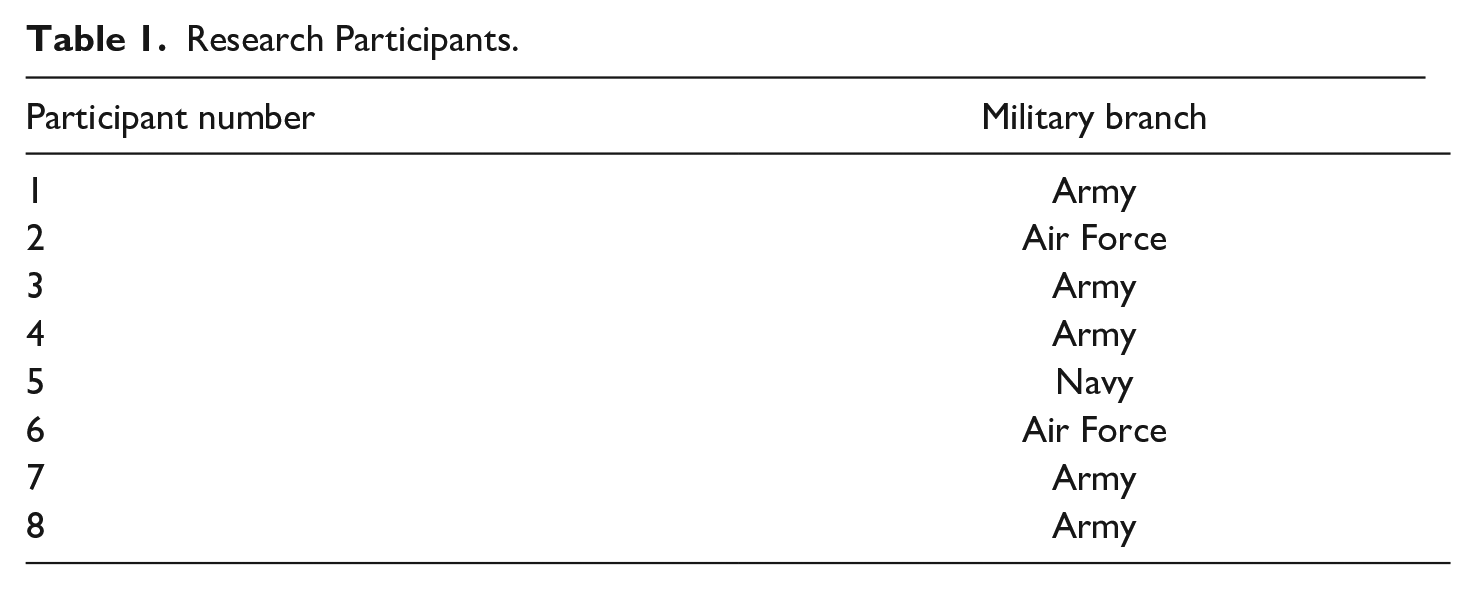
A convenience sample was recruited through contacts within the Swedish Armed Forces consisting of six senior officers and two cadets (males) aged 25 to late 40s from the Army (n = 5), the Air Force (n = 2), and the Navy (n = 1). 7 The service members together had completed 28 deployments between early 2000s and 2017 in Asia (12 deployments), Europe (9 deployments), and Africa (7 deployments). All but one service member had deployed multiple times, principally to Afghanistan, Kosovo, and Bosnia, followed by various missions in Africa, mainly Mali and Libya. Mission deployments included peacekeeping, peace-support operations, and peace enforcement missions, as well as various assistance, mentoring, and training missions. These missions differ in terms of their authorization to use force in self-defense and in defense of the mandate, including the objective of civilian protection (Howard, 2019). What is more, the service members had served in different military occupational specialties and conducted various mission tasks, which by their nature either had facilitated or restricted contact with local actors. For instance, service members principally tasked to train, assist, or mentor local actors had experienced interaction on a daily basis, while others tasked with, for example, logistical support had experienced limited firsthand contact. 8 A couple of service members had experienced extensive contact on some mission deployments, but not others. 9
Overall, inherent tensions in collective operational experiences within this limited sample and “snapshot” quality of the material proved analytically useful to identify and explore what are, ultimately, a number of commonalities in light of different mission experiences. This small heterogeneous sample, thus, served the inductive scope of the article, which is to empirically explore, not generalize, preliminary theoretical ideas about the role of host–citizen relations in understandings of military duty during deployment and possible implications to military cohesion. Inductive exploratory research, thus, can provide novel contributions to theory (Stebbins, 2001), but not confidently inform practice. For instance, empirical analysis can lead to the development of working hypotheses that help inform and systemize future data collection and analysis, including deductive exploratory research (Casula et al., 2021).
Data Collection and Method of Analysis
To capture understandings of duty among Swedish troops, in-depth interviews first addressed the service members’ reflections on their decision to join the armed forces and, further, to deploy on missions, followed by questions on personal expectations and mission experiences. Service members were asked about their understandings of mission-related responsibilities, obligations, and tasks with specific attention to the role of host–citizen relations. Interview questions were informed by previous research and predefined concepts—semi-structured—while the empirical analysis was kept largely inductive and data-driven. The interviews did not explicitly address relations with other service members or the matter of military cohesion. Such data were derived inductively through the open-ended nature of the questions (see Appendix). 10 Given that the study explores understandings of duty in light of experiences of deployment, each interview generated ample observations. A large sample, thus, was not required to gather rich empirical data and achieve saturation. What is more, service members also served as informants in that they not only shared their own experiences but also provided information on the reasoning of others.
I used thematic analysis to process the data (Braun & Clarke, 2006). The analysis was grounded within the data as “patterns of behavior or thought” (Bernard, 2000, p. 444) broadly related to understandings of duty, specifically in the context of international deployment. The first step of analysis consisted of open coding to identify meaningful units in each interview. Codes, thus, were used to categorize “a feature of the data” (Braun & Clarke, 2006, p. 88). All statements (or parts of statements) in the interview transcripts were coded. In the second step, codes were sorted under categories, meaning they represented “some level of patterned response or meaning within the data” (Braun & Clarke, 2006 p. 82). In the analysis, each service member is assigned a number in parenthesis (see Table 1). Selected quotations are used to help illustrate key categories, as well as tensions within the data. 11
Research Participants.
The study aims to capture different perspectives on a phenomenon that, thus far, has received scant academic attention. Despite many benefits of using interview data to explore individual reasoning and understandings, there are limitations to consider. As mentioned, results of this small-scale study, evidently, are not generalizable. In addition, the problem of bias in self-reported accounts is obvious, especially in an already limited sample. Self-serving bias or lapses in time can negatively affect the authenticity of accounts on events that had occurred years prior to the interview (Fujii, 2010). Moreover, the sample consists of only male participants, and therefore, the analysis does not address possible gender-based variations. On a related note, it is important to recognize possible researcher bias. The interviews were conducted by White female civilian researchers. In terms of positionality, challenges of studying military institutions and personnel are well known, including access and trust, not least for female, civilian scholars (Ben-Ari & Levy, 2014). Gender and civilian status can, however, also positively influence the interview process by inviting more detailed information on military perspectives and social practices because of assumed naïveté or harmlessness of the researcher (Ben-Ari, 2014).
Military Duty during Missions: Host–Citizen Relations and Dynamics of Cohesion
How do host–citizen relations feature in understandings of military duty during deployment, and what are possible implications to dynamics of military cohesion? The results of the study suggest that notions of duty within this sample of troops principally align with conventional attributes of military cohesion, including emphasis on task performance and loyalty to the military unit. Nevertheless, among these service members, perceived obligations to host citizens are also present, albeit in different forms and to varying degrees. Three different key stances on obligations are observable in the data. These different understandings mirror the current divide in international policy and practice on intervention, including a sense of direct duty, indirect duty, and no specific sense of obligation to host citizens. Important to the study of cohesion, understandings of military duty during deployment, at times, seemingly constituted both a source of unity and conflict among deployed military personnel.
Military Duty: A Relational and Regulatory Phenomenon
As expected, the analysis depicts military duty as a relational phenomenon, principally defined by conventional obligations to achieve the mission at hand, while committed to keeping fellow service members safe. Duty, when practiced, is perceived to function as a means of self-regulation and discipline guiding decision-making and behavior at home and during deployment, including under extreme conditions, such as combat situations when reciprocity between troops is crucial for survival and task completion (Participant 6), as well as completion of seemingly mundane tasks, for instance, standing guard in a nonviolent area of operation (Participant 1).
The regulatory power of duty reportedly draws on multiple sources of internal and external pressures instilled and shaped mainly by the military organization. The service members described how the institutional framework of the armed forces—through training, practices, cultures, and socialization measures—had instilled a set of values and behaviors that, over time, merged with their own understanding of right and wrong. In line with King’s (2013) notion of the professional soldier, military practices and drills were painted as particularly influential, specifically those rewarded as leading to successful task performance. Over time, the disciplinary nature of duty had become self-regulatory and failing to act on your duty followed by perceived guilt and shame of disappointing colleagues, or “feeling like a failure; a traitor; a loser” (Participant 1).
Although the data depict the inner bonds with the military organization and fellow troops as most influential to a sense of duty, other relations are important as well. A couple of service members described duty as rooted in social bonds of family (tradition and upbringing), or a general sense of civic responsibility (to do your part for society by taking care of others and, in extension, protecting society) (Participants 2 and 8), love for country (a sense of patriotism), and, to some service members, including also the relationship with, and obligations to, the host-nation population. Notably, one service member felt his principal duty was “supporting the [host] country in the way that the armed forces do; being there and protecting [people]” (Participant 8).
Similarly, prior to deployment, service members recalled having felt motivated to deploy due to reasons characteristic of either professional warrior or constabulary ideals, or both. Speaking to the former ideal, mission deployment represented an opportunity to prove the ability to perform under difficult conditions, to both oneself (Participants 4 and 8) and the military unit (Participants 1, 3, 6, 7, and 8). This entailed doing the job “for real,” namely applying your professional skills and military training in the context of armed conflict (Participants 3, 6, 7, and 8). Thus, task performance was initially defined by traditional, conventional high-risk contexts, including combat situations (Participants 4, 7, and 8). In line with the constabulary ideal, however, service members also had wanted to make an international contribution (Participant 2) by making the world a safer place (Participants 3, 5, 6, 7, and 8), including for the host nation and its people (Participants 4, 5, 7, and 8). They described expectations of being indirectly obligated to host citizens, for instance, by providing stability and security through their military presence (Participant 8), or strengthening local combat performance by training local military counterparts (Participant 7).
Military Duty Toward Whom?
When on deployment, service members referred to three key referent objects of duty: professional tasks (in extension, the mission), the military unit (fellow service members), and the local population.
The Mission: Centrality of Task Performance
Aligning with conventional notions of duty, service members underscored the importance of being loyal to the mission (Participants 2, 3, and 7) by accomplishing tasks together with your unit (Participants 5 and 7):
I trust that my colleagues solve their tasks, and they trust me to solve mine. Because that is my duty . . . That’s probably what military sense of duty is to me; that people—the soldiers and officers—feel a great duty toward their own task and the mission. People trust that I’ll solve my task and I’ll deliver on that task. (Participant 7)
Of importance to task cohesion, service members repeatedly made a distinction between duty toward the mission and completing specific tasks. One service member pointed out that duty to the mission was not defined by any single task but consisted of a number of different tasks. Being more or less inclined to perform certain tasks, thus, did not necessarily conflict with doing one’s duty (Participant 1). Relatedly, another service member stated that although he had never neglected to perform a task, his sense of duty had affected the level of commitment to task performance (Participant 5). Illustratively, managing host–citizen relations, generally, was considered a more relevant task to officers compared with low-level soldiers (Participant 4).
At times, however, a sense of duty had called into question assigned tasks or identified other, more pertinent tasks. One service member recalled “situations where my sense of duty and my own values have differed from the mandate and my mission” (participant 8), yet none of the service members had felt the need to abandon their formal responsibilities, and most had not experienced any critical conflict between the mission and their own sense of duty (Participants 2, 3, 4, 5, 6, and 7). Nevertheless, a few service members mentioned instances when colleagues had left deployment early because of irreconcilable differences between their own sense of duty and assigned tasks (Participants 1, 5, and 6).
The relationship between duty and tasks was particularly strained when there had been doubts about the effectiveness of Swedish military forces (Participants 2, 3, 6, and 8). At times, several service members recalled an internal moral conflict of conducting tasks believed to endanger the safety and well-being of either Swedish service members (Participant 3) or the host population because of limitations of the mission mandate or lack of resources (Participants 2, 6, and 8). In such instances, a couple of the service members remembered having experienced strong negative emotional reactions, including feelings of frustration, anger, powerlessness, and sadness due to the perceived gap between their own sense of duty and the mission at hand (Participants 2 and 8):
[O]ne of the reasons I went back to Afghanistan was because it felt like an unfinished chapter, really. And, I won’t say that I’m ashamed, but . . . until this day I struggle to accept that we didn’t do what I had wanted to do [protect the local population]. (Participant 8)
Others had coped with such tensions between their sense of duty and mission tasks by focusing on how their deployment—rather than personal contribution—had served wider political and security-related purposes (Participants 3 and 4).
The Military Unit: Tensions Between Task Performance and Cohesion
Service members identified the conventional obligation to protect fellow service members and loyalty to the military unit as both the principal feature of duty during missions (Participants 1, 2, 3, 5, 6, and 7) and the backbone of the military profession (Participants 1, 2, and 7):
[T]he unit should solve the mission in the best way. So it is the duty and responsibility toward the unit and the armed forces when you are down there that make you keep going; it’s loyalty. (Participant 7)
The strength of social bonds and friendships within the military unit seemed to have mattered greatly to the sense of duty because it had made service members more committed to ensuring the well-being of their military colleagues (Participant 3). What is more, putting your unit and the mission first was understood both as the right thing to do in terms of pulling your weight (Participants 5 and 6) and a rational choice based on self-interest of survival (Participants 1 and 5).
In the literature, task cohesion, or joint commitment to achieving a common goal collectively, is widely linked to group performance (MacCoun & Hix, 2010; MacCoun et al., 2006), and groups that perform well can develop more pronounced social cohesion (Mullen & Copper, 1994). Among service members, task performance seemed to matter greatly to internal group dynamics, including the perceived strength of social bonds and unit cohesiveness. One service member pointed out that limited pre-deployment training in Libya had led to fragmented and unrealistic expectations of task performance within the military unit. This, in turn, had made it difficult to develop into a cohesive group and generated a number of internal conflicts (Participant 6). Another service member described having felt the need, early on in the mission, to control his colleagues to make sure that they were capable of solving the task correctly, especially those with the least experience. Only when confident that general skills and task performance in the group were very high, he had felt less of a need for control (Participant 7).
The level of perceived threat in the operational environment also influenced dynamics of duty and cohesion. In Afghanistan, the high level of threat had sifted out those obligated to their unit and those not willing to, for instance, leave camp and carry out assigned tasks on behalf of the local population out of fear of getting attacked. Reluctance to perform certain tasks, or accept risks to ensure task performance, thus created division in the group as a whole, but strengthened the bonds and mutual trust between those who did their part (Participant 6). Relatedly, high-risk settings had required critical assessments of what tasks, in fact, were deemed necessary to ensure unit performance versus had served other purposes not as easily justifiable, such as to promote social bonding within or between military units (Participant 6).
Conversely, the absence of a direct military threat, for instance, in Libya, had added tensions to already strained internal unit relations because service members had struggled to see the usefulness and impact of their efforts (Participants 2 and 6). To some service members, a lack of armed events had even constituted the main reason for returning home early from deployment (Participant 6).
The ‘Locals’: Varying Forms and Levels of Commitment
Different understandings of obligations to host-citizens are observable in the data, resonating with key positions in international policy and practice on intervention, namely a sense of direct duty, indirect duty, and no specific sense of obligation to host citizens. Speaking to previous findings of a link between local noncombat contact and sense of duty (Ekman, 2021), the service members in this study with more frequent and collaborative interactions with local actors also perceived a stronger personal obligation compared to service members with less, more indirect local contact.
Four service members described having felt a direct sense of duty to the host-nation population. Three of them had experienced extensive contact with host citizens (Participants 2, 4, and 7), while the fourth had not, but his key motivation to deploy (and redeploy) was to actively engage with, and protect, the local population (Participant 8). For this service member, the sense of duty was principally located outside the military unit, namely serving the needs of the host nation before those of the military unit:
[T]he sense of duty—that was only toward the local population; there was no sense of duty toward Sweden or the military unit, or fellow comrades. Of course there is a responsibility toward other soldiers, but that wasn’t . . . my motivating force for being there. (Participant 8)
Among these service members, key perceived obligations to local actors included creating an overall more secure environment and actively protecting against military threats; supporting combat performance through training of local counterparts; tending to humanitarian needs and saving lives; and improving local conditions for livelihood and education (Participants 2, 4, 7, and 8).
One of these service members had felt largely able to follow through on his perceived obligations of improving the skills of local military forces to support their combat performance (Participant 7). The service member, nevertheless, had felt frustrated about not being able to do more to support local military counterparts; a frustration born out of feeling personally invested in local military forces’ stake in the armed conflict—feeling that “we are on their side”—even though “it was their [local military forces] war to fight” (Participant 7). Understanding task performance in this way, to depend in part on local military counterparts, suggests applicability of cohesion also in relation to actors external to the military organization. This perceived bond, nevertheless, created tensions between perceived high-level task performance and cohesion among Swedish forces vis-à-vis low-level task performance of local military forces. Relatedly, another service member had viewed dependency on local counterparts a key hindrance to Swedish troops’ task performance (Participant 8), as local Afghan police forces had been generally unwilling to patrol local communities. Among Swedish forces, such unwillingness had led to general feelings of animosity toward local counterparts. Despite having felt a “moral duty of being out and helping” (Participant 8), local reluctance to patrol had limited Swedish forces’ ability to protect the local population:
[T]hat was the frustration on our part; that our counterparts, supposed to conduct protection, did not dare or want to. . . . I couldn’t care less if local police joined us or not; I wanted to be out in the area, creating security and safety through our presence. (Participant 8)
Most of the service members in this group felt that they had not been able to act on their perceived obligations to address local security needs and concerns to the extent that they had anticipated and deemed necessary, largely due to limitations of the mission mandate, Rules of Engagement, and available resources. This inability to act was a key source of frustration and moral qualms, as well as feelings of guilt about being unable to meet both their own and local expectations of positive change, including improved security (Participants 2 and 4).
A sense of indirect duty toward host citizens included personal expectations of contributing to the local population indirectly, in the grand scheme of things, but not feeling personally obligated to actively improve the situation on behalf of local actors. In terms of local contact, two service members who described having felt passively obligated to host citizens had served in supporting roles during deployment, and correspondingly experienced only limited local contact of relatively distant, indirect nature (Participants 3 and 6):
There is indirectly a sense of duty [toward the local population] because if we’re there then things calm down and that way we help them. (Participant 3)
Finally, a couple of the service members felt that their sense of duty had featured no specific obligations to host citizens (Participants 1 and 5). Speaking to previous findings of the negative impact of precarious environments on local ties (Castro & McGurk, 2007; Ekman, 2021), these service members’ reflections similarly centered on the matter of security, suggesting that local security situations drastically influenced conditions for interaction and relationship-building on the ground. Traditional low-level threat missions, such as peace-keeping missions, had invited interaction with local communities and military counterparts (Participant 1), while missions in areas with frequent military attacks and combat operations were characterized by a lack of trust and perceived distance between military forces and, specifically, the civilian host population (Participant 1). This distance was in part due to mission caveats and matters of force protection (Participants 1, 3, and 8), yet amplified by uncertainty of “whom in the local population is your friend and your enemy, . . . and maybe that makes it difficult to build that relationship and sense of duty toward them” (Participant 5). In addition, one service member felt it had been “difficult to feel a sense of duty toward the population because they didn’t give you the task to begin with” (Participant 5).
Conclusion
This study has explored understandings of military duty in light of international deployment, specifically obligations to host citizens and implications to dynamics of military cohesion. A thematic analysis of interview data with Swedish troops offered an intriguing glimpse of understandings of military duty during deployment and how they relate to social ties and practices shaped by—but not confined to—the military organization. This small-scale exploratory study, thus, provides promising insights for future analysis. Although impossible to generalize the findings, the analysis hints at a number of theoretical implications worthy of further study. For instance, data illustrated how this group of service members viewed military duty as shaped by their personal experiences of the military organization and its organizational values, socialization, and practices, including in the mission setting. Although this group of service members deemed bonds with fellow troops most influential, they also described duty as nested in relations outside of the military, including social bonds of family (tradition and upbringing), society (civic responsibility), country (patriotism), and obligations to local actors in the host nation. The findings, thus, spoke to the relevance of widening the lens through which we study cohesion. Mirroring tendencies in international policy and practice on interventions, three principal perspectives on obligations to host citizens were identified in the data, including a sense of direct duty, indirect duty, or no specific obligations. Of theoretical relevance, empirical observations depicted understandings of military duty as shaped, in part, by mission experiences. Adding to previous findings of a link between local noncombat contact and a sense of duty (Ekman, 2021), Swedish troops in the study with more frequent and collaborative contact with host citizens had felt a greater sense of personal obligation compared to those service members with less, more indirect, contact.
How does the existence of different understandings of duty, including obligations to local actors, matter to task performance and cohesion during deployment? Following King’s (2007) concept of cohesion as conditioned on unified, collective military practices, absence of a common understanding and practices related to host–citizen relations could render cohesion “fragile and problematic” (p. 643). Understandings of military duty expressed by the service members in this study, for instance, whether service members had accepted risks on behalf of the unit or local population, mattered to military cohesion either as a unifying force or source of tension within the mission. Noted feelings of frustration, moral conflict, and powerlessness in relation to the sense of duty are alarming in the context of any military operation. What is more, such experiences can suggest a more deep-rooted conflict between an individual service member and the armed forces; a possible cognitive dissonance that can be detrimental to the perceived legitimacy of the armed forces (Ruffa & Sundberg, 2018).
Even in the smallest of samples, it was possible to detect a number of intriguing variations that speak to the continued need to research more deeply understandings of military duty and dynamics of cohesion. Such future endeavors should engage in more systematic study, for instance, cross-national studies would allow us to compare—both within and across different national contingents—how local relations of various forms interact with military cohesion. 12 In addition, in-depth case studies on different local military partnerships and joint efforts through the lens of cohesion may lead to novel theoretical insights on the usefulness of cohesion in military constellations beyond the internal military organization.
Sweden, similar to other European states, recently reintroduced conscription as part of its military recruitment system while transitioning toward total defense. In response to Russia’s ongoing military attack on Ukraine, Western commitment to national security and military defense is further reinforced at the expense of more cautious contributions to international deployments. In the midst of current turmoil and reorganization of European armed forces, including Sweden, it is necessary to give pause and (re)consider what defines military duty in contemporary military operations. Despite increased uncertainty of the future of peace operations (Hunt, 2017), international deployments still serve as the key source of Western military operational experiences. As such, acknowledging and addressing the possible role of perceived obligations to actors outside the military organization, including host-nation actors, remains important. A greater understanding of such dynamics can be useful to study military duty and cohesion also in a wider context of conventional military operations for the purpose of national or regional defense, for instance, by exploring relations between service members of collaborating national contingents.
Footnotes
Appendix
Acknowledgements
The author acknowledges the financial support received from the Swedish Defence University to conduct the study. Moreover, the author is indebted to Sofia Nilsson for support throughout the research process, as well as peers at various academic seminars and conferences for helpful comments. In particular, the author thanks the three anonymous reviewers and journal editor for their constructive feedback. Finally, the author would like to express her appreciation to the service members who participated in the study.
Declaration of Conflicting Interests
The author declared no potential conflicts of interest with respect to the research, authorship, and/or publication of this article.
Funding
The author disclosed receipt of the following financial support for the research, authorship, and/or publication of this article: The Research and Education Board (FoUN) at the Swedish Defence University generously funded this research project.