




Abstract
Brazil is often cited for its high levels of inequality. Despite some success in reducing this inequality during the Partido dos Trabalhadores (Workers’ Party—PT) period, the rise of Jair Bolsonaro as Brazil’s president threatened to reverse this trend as he actively sought to promote policies that would lead to greater financialization of the Brazilian economy. In recent years, several studies have shown that the financialization of the economy as a whole can lead to a rise in inequality, but the financialization of the health and education sectors has not been of particular interest to researchers and government officials. An empirical analysis of the pattern of income inequality in twenty-first-century Brazil paying particular attention to the potential impact of the financialization of health and education sectors on this process shows a correlation between greater financialization (especially in the health sector) and an increase in income inequality.
O Brasil é frequentemente destacado pelos seus níveis elevados de desigualdade. Apesar de algum progresso na redução da desigualdade durante o período de governação do PT, a tomada de posse como presidente de Jair Bolsonaro ameaça reverter esta trajetória, nomeadamente via o apoio a uma maior financeirização da economia. Nos últimos anos, vários estudos mostraram que a financeirização da economia como um todo pode conduzir ao aumento da desigualdade. Porém, a financeirização dos setores da saúde e da educação não tem sido alvo de interesse particular. Uma análise empírica do comportamento da desigualdade no Brasil no séc. XXI salientando o potencial impacto da financeirização da saúde e da educação, sugere que uma maior financeirização, em particular do setor da saúde, está associada a um aumento da desigualdade na repartição do rendimento no Brasil.
Income inequality has a long history in Latin America. This is especially the case with regard to Brazil. Even though it has recently seen the central government implement policies geared toward reducing inequality, the level of inequality remains one of the highest in the world. Recent data from the Instituto Brasileiro de Geografia e Estatística (Brazilian Institute for Geography and Statistics— IBGE) indicate that in 2018 the Gini index of income distribution for Brazil was 55 compared with 41 for Argentina, 40 for Uruguay, 43 for Bolivia, and 50 for Colombia. These inequalities are, according to Galeano (1987), tied to the negative impact of European colonization on the creation of local societies, which are clearly heirs to colonial societies characterized by a strict hierarchy benefiting certain classes that sought to perpetuate their power and protect their interests. Their success in this effort is responsible for the structural inequality that continues to shape Brazilian society to this day and is replicated primarily through resistance to policies that seek to improve the quality of life of Brazil’s lower classes despite the attention paid to social issues in recent years (see Matos de Oliveira, 2019; Saad-Filho, 2020b). This view of the role of a society’s history in explaining the persistence of inequality is also present in the work of Acemoglu, Johnson, and Robinson (2005), who point to differences in institutions as fundamental elements in explaining differences in economic development across countries. According to them, institutions are the main indicator of a society’s success or failure, as they are very persistent (i.e. difficult to change), mainly because of the lack of interest of the ruling class, which has no incentive to change the status quo.
This study is designed to contribute to a better understanding of the consequences of the apparent paradox described by Lavinas (2017), who writes of a transition between a period that witnessed a rise in public spending on programs that sought to reduce inequality and universalize access to basic services (such as health and education) in Brazil during the twenty-first century and a period of greater financialization with regard to health and education sectors (see Almeida, 2022; Sestelo et al., 2017). One of the most widely used definitions of financialization was coined by Epstein (2005), who defines financialization as the increased role of financial institutions, markets, and actors in the management of domestic and international economies. Bruno and Caffe define the term more directly as “the mainstreaming of monetary dominance with regard to the institutional structure of the state and as a form of regulating the economy.” According to them, financialization not only negatively impacts the state’s ability to invest but also leads to a decline in efficiency with respect to public spending policies.
Since 2014 (the year in which austerity measures were introduced) there has been an increase in the rate of financialization in Brazil’s health and education sectors and increasing destabilization of public services. Austerity makes it more difficult for the Brazilian government to invest in public services, and this reduces public spending on health and education to the point that the state is limited to providing the basic services necessary to keep the system going and widens the quality gap between services offered by the public sector and those offered by the private sector. This may contribute to an increase in inequality in that the poorest sectors of the Brazilian population often lack access to the resources necessary to take advantage of private services. Thus, the decline of public services has a negative impact on the quality of life and the formation of human capital (through education and health investments) and consequently on the income of these individuals, which will result in an increase in inequality.
At the university level, Almeida (2022) argues that the substantial increase in the number of private institutions of higher education in Brazil, created to generate profits, has, in recent years, followed a pattern that matches the way investment funds operate in the equity market with the goal of maximizing the value of stocks in the short term. This expansion may be responsible for maintaining and increasing inequality in Brazil. Private universities in Brazil for the most part attract students from poorer backgrounds who cannot enroll in public universities. Public support of enrollment in private universities increased under the PT. The governments led by Lula da Silva and Dilma Rousseff presided over a period that witnessed the emergence of state support for the financialization of Brazil’s education sector. The goal of private companies operating in Brazil’s education sector of maximizing the value of their stocks in the short term led to a pressing need to reduce costs, primarily with regard to human resources (i.e., teachers) and investment. In turn, this led to a lower quality of education in the private sector that undermined the ability of graduates to find well-paying jobs.
According to Mazzucato (2018), Stiglitz (2016), and Piketty (2014), the financialization of the economy has played an important role in the recent rise of global inequality because of its negative effect on income distribution between workers and equity holders. A recent study by Cardoso and Carvalho (2021) also demonstrates that policies relating to fiscal consolidation and austerity in different Latin American countries were crafted with the goal of bringing the public debt to a sustainable level, and this effort was accompanied by a reversal of the decline in the levels of income inequality.
These observations are a starting point for this article’s empirical analysis of the pattern of inequality in twenty-first-century Brazil. We will examine the impact on income inequality of public spending on health and education and the role of the rise of private companies in the financing of Brazil’s health and education sectors through the equity market.
Although some progress was made in reducing inequality in Brazil during the recent PT governments, the rise of Jair Bolsonaro threatened to undo all their achievements with his government’s support for financialization of the economy. This process in fact began during the PT period (see, e.g., Almeida, 2022). According to Saad-Filho (2020b: 10, 23), “The PT governments accepted that their industrial, financial, wage, and welfare policies would be bounded by the reproduction of neoliberalism: which limited the potential gains in redistribution, output, and employment.” He further states that “despite their achievements, the social policies of the PT governments were bound by neoliberalism and fostered the marketization and financialization of daily life instead of limiting the commodification of social reproduction.” He argues that the PT period encompassed two varieties of neoliberalism, inclusive (2003–2006) and developmentalist (2006–2013), followed by incoherent economic policies continuing to this day, what he calls “authoritarian neoliberalism.”
In other Latin American countries, the financialization of the economy presented its own challenges to the creation of more inclusive societies. For example, Macías Vázquez and García-Arias (2019) argue that in Bolivia financialization imposes institutional control on the management of revenue received from the exploitation of hydrocarbons. This type of control prevents this revenue from being used to create the structural changes necessary to ensure that recent socioeconomic advances become sustainable in the long term. They also state that the revenue generated from the exploitation of hydrocarbons in Bolivia was the main source of support for the country’s inclusive social policies. This explains why this source of support is now the center of attention for a segment of Bolivia’s small financial elite that seeks to gain influence and control over these resources (see Farthing, 2019). The political instability caused by the refusal to acknowledge Evo Morales’s reelection in 2019 and his subsequent resignation led to the installation of an interim government aligned with financial interests. This government was rejected by Bolivian voters in new elections that occurred at the end of 2020. There seems to be a connection between recent efforts at financialization in Brazil and Bolivia and the use of dubious democratic political maneuvers designed to introduce changes and prioritize the use of resources to benefit a small financial elite, even to the detriment of the rest of the population.
The analysis of the Bolsonaro government’s social impact since January 1, 2019, will be similar to a “real time” analysis based on an examination of readily available information, but this raises a problem relating to the availability of data. To solve this problem, this article will use an econometric analysis to retrospectively evaluate the relationship in question. The results will then be interpreted in terms of their potential implications for the Bolsonaro period. The goal is to show that, despite statements to the contrary regarding the orientation of public policy, the fight against inequality in Brazil may suffer a setback. There is a correlation between the expansion of financialization in Brazil’s health and education sectors and the decline of policies that seek to reduce income inequality. This correlation is fundamental to a better understanding of the relationship between the financialization of health and education and income inequality in Brazil. The article not only provides an empirical foundation for a theoretical discussion of this relationship but also charts a path forward for future studies that will focus on the Bolsonaro period as soon as new data become available. Data gathering and analysis concerning income distribution are long and difficult processes, and therefore it will be some time before data on the Bolsonaro government are made available to the public. From a social policy perspective, this makes it more difficult to calculate the impact of political changes on social policy. Nonetheless, this article will serve as a wakeup call to the public about the need to monitor this phenomenon.
This article is also an exploratory study that emphasizes the importance of applied research in studying the relationship between financialization and income inequality in Brazil. Brazil currently faces many challenges in its fight against high levels of inequality. These challenges threaten to erase the remarkable progress it made in fighting inequality at the beginning of the twenty-first century. For example, Matos de Oliveira (2019) warns of the possibility of a reduction in access to public services, corresponding to a loss of rights, resulting in higher levels of inequality. Carneiro (2019: 156) examines the Bolsonaro government’s economic agenda and concludes that the spread of financialization globally will probably result in greater social exclusion, given that
the liberalizing project that claims to deny the role of the state in the economy and social policies is nothing more than a financialization project dressed in anachronistic liberal clothing. Its goal is to advance financialization as well as other policies that are largely inspired by the ill-fated Washington Consensus. These same policies represent an extreme version of neoliberalism implemented in a context of political authoritarianism.
The impact of Bolsonaro’s agenda, which seeks to increase the role of the market to the detriment of state intervention (especially in terms of social policy), will probably be a rise in poverty and income inequality, since these reforms will endanger the “public, welfare, distributive, and anticyclical institutions” that are responsible for implementing the government’s social security policies (Carneiro, 2019: 156). Sestelo et al. (2017) underline the importance of deepening our understanding of the financialization of social policy in Brazil, particularly health, and its consequences, which is also fundamental from the perspective of defining public policies that are more effective in reducing the high levels of inequality in the distribution of income in Brazil.
This article is divided into four sections. In the next section we will discuss the role of the financialization of health and education in Brazil in intensifying the inequality seen in the country in recent years. In the third section we will seek to identify the impact of indicators of the financialization process on the pattern of inequality, drawing upon an econometric analysis of various time-series. The fourth section is the article’s conclusion.
Financialization and Inequality in Brazil
In 2000–2013 Brazil went through a period of significant economic growth and social inclusion whose evolution was even able to resist the negative effects of the global financial and economic crisis that began in 2007. According to data from the IBGE and the Central Bank of Brazil, in these years the annual average rate of growth of Brazil’s real GDP per capita was 2.4 percent, slightly higher than the annual average rate of growth of GDP for Latin America and the Caribbean combined (which was 2.2 percent) and also slightly higher than that of Brazil’s neighbors. This growth was caused by a rise in the price of commodities on the global market that was, in turn, sustained by the expansion of China’s economy. This expansion aided market sectors that were focused on the extraction and export of iron ore and other metals as well as on agricultural products.
In the period that immediately followed the beginning of the global economic crisis, Brazil’s economic growth was mainly based on increased public spending on infrastructure and social policies, which stimulated household consumption and aggregate demand, (Saad-Filho, 2020b). At the same time, there was a substantial reduction in income inequality. According to Neri (2019), while this reduction was common among Latin American countries, in Brazil it was accompanied not only by a period of economic growth but also by an expansion of social policies. The subsequent disappearance of this trend coincided with a recession that began in 2014 and continues to the present day, a result of the decay of terms of trade, political instability, and allegations of corruption (OECD, 2018). The implementation of public policies also changed as the government imposed limits on public spending and scaled back its support for initiatives geared toward fighting inequality.
The Impact of Financialization on Inequality
Palley (2013) argues that the financialization of the economy leads to stagnating wages and a rise in inequality. Hyde, Vachon, and Wallace (2018) have examined the relationship between three indicators of financialization—credit expansion, financial crises, and employment in the financial, insurance, and real estate sectors—and income inequality as measured by the Gini index in 18 capitalist democracies between 1981 and 2011 and concluded that every indicator of financialization was associated with an increase in inequality. Van Arnum and Naples (2013) focused on the United States between 1967 and 2010 using a multivariate regression model, where the Gini index before taxes and transfers is assumed to be influenced by several time-series variables for the United States, to assess how the degree of financialization, measured as the share of the financial, insurance, and housing sectors in gross value added, influenced inequality in the United States. This variable’s coefficient was found to be statistically significant and led them to conclude that the financialization of the economy was one of the factors that best explained the increase in inequality observed in the United States in recent decades.
Our empirical study will adopt an approach similar to that of Van Arnum and Naples (2013) since we are also only interested in the effect of financialization in a particular country (Brazil). Nevertheless, our measure of financialization and the set of control variables are different because of limited data availability.
Financialization and Public Services
In economic theory, the importance of basic services such as health and education stems from the role these services play in the formation of human capital. Existing economic models (e.g., Lucas, 1988; Romer, 1990; Mankiw, Romer, and Weil, 1992; Jones, 2005) have established the fact that human capital is essential to economic growth. In other words, a rise in the level of education and advances in general health conditions result in an increase in the contribution of human capital for aggregate output and the skills of workers in the production of new knowledge and the adoption of existing technology and thus in the potential growth of the economy (see Andrade, Simões, and Duarte, 2013; Andrade, Duarte, and Simões, 2018).
Throughout history, spending on health and education has been much less controversial than how to finance this spending and the financing’s potentially negative effects. These (often desired) public services resulted in levels of public spending and taxation that were much higher in the Northern European “social states” than in the rest of the world. The welfare states built from the mid-twentieth century on began to experience difficulties near the end of the 1970s, when Ronald Reagan was elected president in the United States and Margaret Thatcher prime minister in the United Kingdom. The “neoliberal” wave promoted reducing the role of the state in the economy, cutting spending, lowering taxes, and, above all, especially in vital areas such as health and education, encouraging private enterprise with financing from liberalized financial markets.
In Brazil, the Proposal to Amend the Constitution 55 is often seen as a landmark of neoliberal policy. Adopted in 2016 under the Temer government as Constitutional Amendment 95, it stood in stark contrast to the policies of the Luiz Inácio Lula da Silva and Dilma Rousseff governments. It froze federal spending on health and education for a period of 20 years (with the possibility of a revision in 2027 depending on the official inflation index). Bruno and Caffe (2017: 1038) have described it as a “strategy to reduce the public and universal provision of basic services that were previously offered to the general population in order to nurture and expand market niches concerning the private banking and financial sectors. The rationale for this strategy was based on the argument that it sought to balance public accounts and generate primary surpluses” (Bruno and Caffe, 2017: 1038).
Because this measure was passed only recently, its impact on the lives of everyday Brazilians (especially those in extreme poverty) and on levels of inequality remains to be seen. However, the expected decline in public services will be followed by an expansion of the private sector, and the spending used to support these services (which comes directly from their users) will also increase. This, in turn, will lead to a rise in the cost of living (especially for those in the poorest sectors of the Brazilian economy), and consumption and use of these services will decline, with negative consequences for human capital and productivity and macroeconomic performance, as we have seen. Sen (1999) points to the importance for societal development of access to public services for all. However, spending in this area can lead to private suppliers’ profiting from these services, producing concentration of income in the hands of equity holders—in other words, a rise in inequality.
Proponents of the privatization of public services in health and education argue that, if the market provides these services, citizens will have a wider range of choices and services of higher quality in terms of delivery and performance. There will also be lower costs (especially public costs) as public services are provided with maximum efficiency. Nevertheless, asymmetric information and the associated problems of adverse selection and moral hazard can prevent this market-based solution from leading to the maximization of society’s well-being (it will not necessarily be a Pareto optimum). Thus state intervention is necessary not only in the health and education sectors but also in the implementation of social policy in general (Stiglitz and Rosengard, 2015). For example, in a doctor-patient relationship, it is the doctor who has more information. This imbalance in information can create inefficiency corresponding to a situation when the patient agrees to pay a higher price than the situation demands. This situation is more likely to occur in a privatized system, where the goal of service providers is to maximize their profit. The same consideration applies to education, where the information that schools use to judge student competence differs from the information that is actually available. The privatization/financialization of these services leads to inefficiencies that may have consequences for inequality.
Public Spending, Financialization, and Inequality in Brazil
Because of the limited availability of data on public spending on health and education in Brazil, we have had to limit our analysis to the period between 2000 and 2018. According to the World Bank (2018), income inequality in Brazil shows a downward trend until 2015 and is now displaying an upward trend. There was a sharp reduction in inequality during Lula’s presidency that continued under his successor (Figure 1). Rousseff’s term was interrupted by the Senate in May 2016 when it replaced her with Michel Temer of the Movimento Democrático Brasileiro (Brazilian Democratic Movement—MDB). Besides a change of presidents, 2016 also stands out for the fact that it marked the start of a tendency toward a rise in inequality in Brazil.
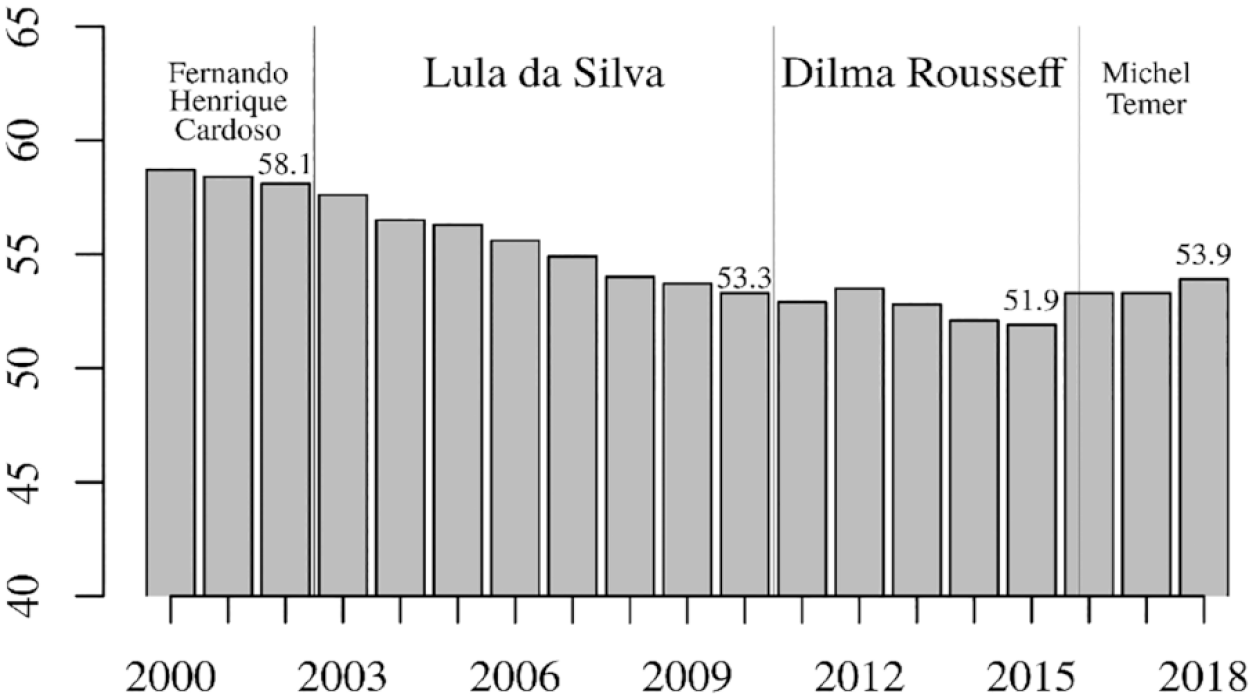
Gini index for income distribution in Brazil (%), 2000–2018 (World Bank, 2018).
The data available from the World Bank’s World Development Indicators ended in 2015 for education spending and 2017 for health, but, as we have seen, public spending on those sectors was frozen after Constitutional Amendment 95 was adopted. This information was used to calculate an estimate of the share of public spending in health and education in the missing years. More precisely, an inflation rate in accordance with the IBGE’s nationwide consumer price index was used, along with the nominal growth rate for Brazil’s gross domestic product (GDP), to calculate the values after the last available value from each of the World Bank series (Figure 2). The share of public spending on health was relatively stable throughout the period in question. In contrast, public spending on education increased substantially (close to 50 percent) and grew from 4 percent to 6 percent of Brazil’s GDP before undergoing a reversal in recent years.
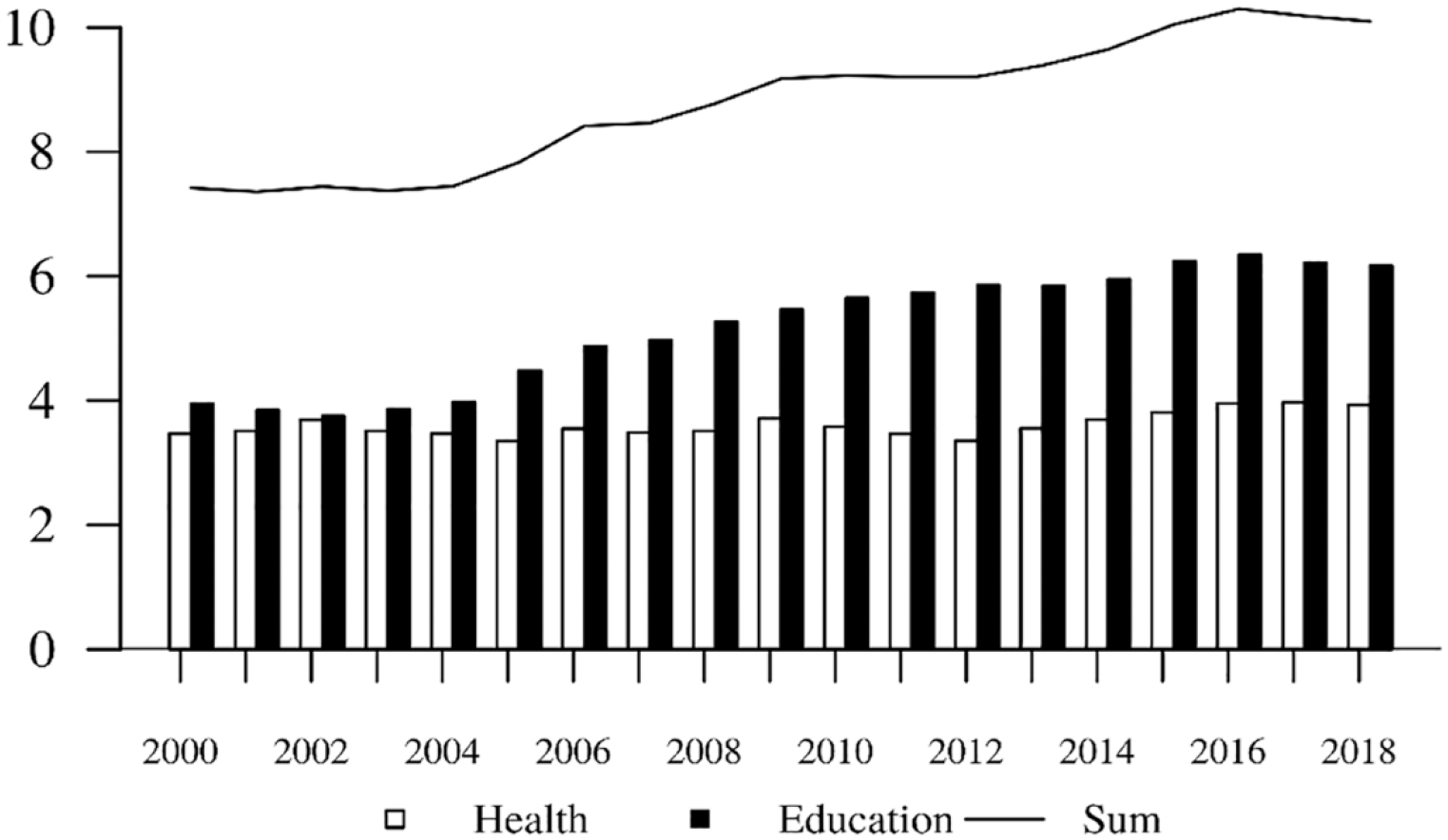
Public spending on education and health (% of GDP), 2000–2018 (data from the World Bank and the IBGE).
At the same time that public spending in Brazil’s health and education sectors was frozen, a significant increase was recorded in the degree of financialization in these sectors (Figure 3). What is interesting is the spike in financialization that occurred after 2013, reflecting the existence of a movement that replaced government intervention in education and health with the private provisioning of these services.
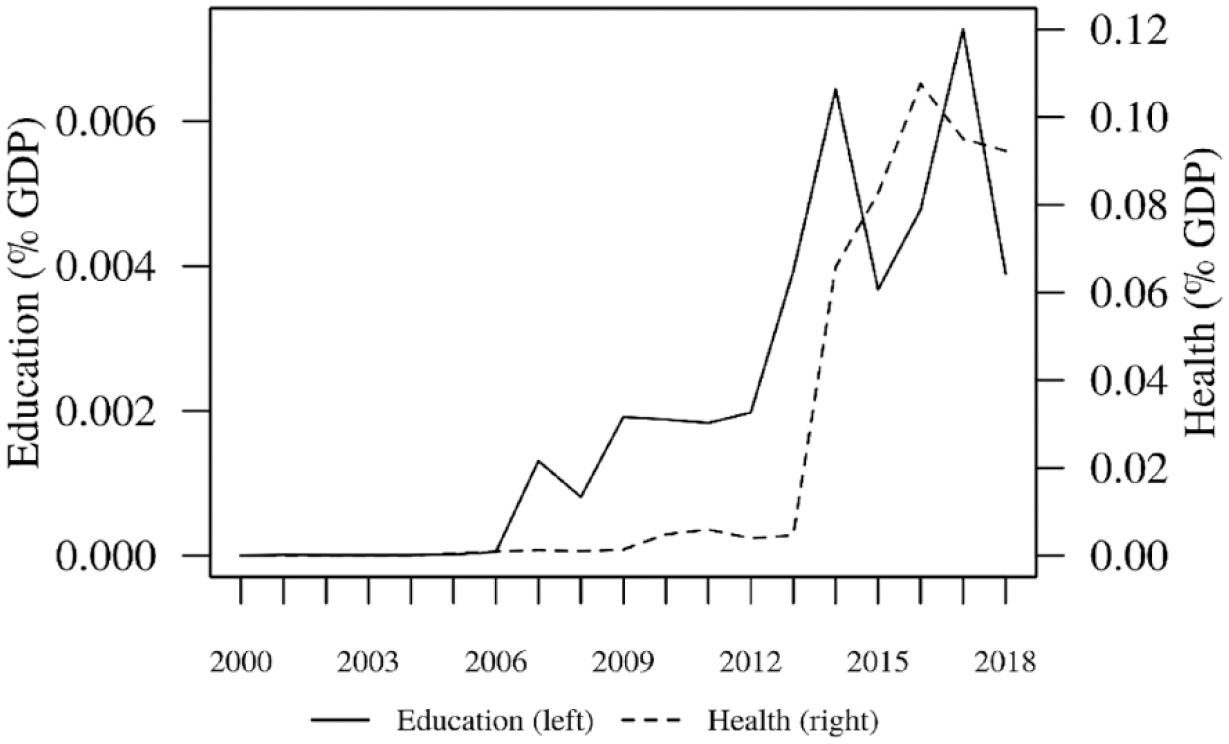
Financialization of education and health (% of GDP), 2000–2018 (data from Datastream).
The series portrayed in Figures 1 and 2 suggest an inverse relationship between the evolution of public spending on health and education and the evolution of inequality— the correlation coefficient between total public spending in the two sectors and the Gini index is equal to −0.91. This conclusion is not surprising given the results of previous studies of the matter. Huber, Gunderson, and Stephens (2020), analyzing data from 15 developed countries, have concluded that an increase in public spending on education reduces income inequality, and da Costa and Gartner (2017) have argued the same for spending on education and health for Brazil from 1995 to 2012. According to Medeiros and Souza (2013), however, the way in which public spending is generally allocated in Brazil does not play a role in reducing inequality because the allocation of public funds is determined by institutions created for the sole purpose of preserving the privileges of a small ruling elite (for more information see Almeida, 2022).
While other works cited in this article argue for the most part that the financialization of the economy leads to an increase in inequality, we are unaware of any past empirical studies (particularly with respect to Brazil) of this relationship in the case of the country’s health and education sectors. We argue that if the financialization of health and education has any effect on inequality it will be to increase it. The empirical approach we use to address this issue employs an econometric model that takes into account the influence of other possible determining factors that can affect the level of inequality. The use of a multivariate regression model seeks to listen to what the data have to say about the factors that resulted in a reversal of the pattern of inequality in Brazil. Did financialization play a role in influencing the pattern of inequality observed in Brazil, or did it simply occur roughly at the same time as other phenomena that were really responsible for the increase? Although these econometric models do not provide any definitive answers, they allow us to gain a better understanding of which explanations are the most plausible.
Empirical Analysis
While our study considers the argument that inequality can be explained through the financialization of a country’s health and education sectors, it also takes into account a host of other factors that may play an important role in explaining the evolution of income inequality as described in the following model, Equation (1):

Using Equation (1), we seek to explain to what extent the pattern of income inequality in Brazil—in this instance measured by the Gini index published by the World Bank
Besides financialization, other determining factors of inequality are included in Equation (1) on the basis of the findings of other relevant works. These factors can help explain the pattern of inequality that exists in Brazil today. Given the fact that inequality is persistent (or, rather, its changes tend to be minimal from one year to the next), we included as an explanatory variable inequality lagged one period (
The long-term pattern of inequality can also be explained by public spending on health and education (
Description of Variables.
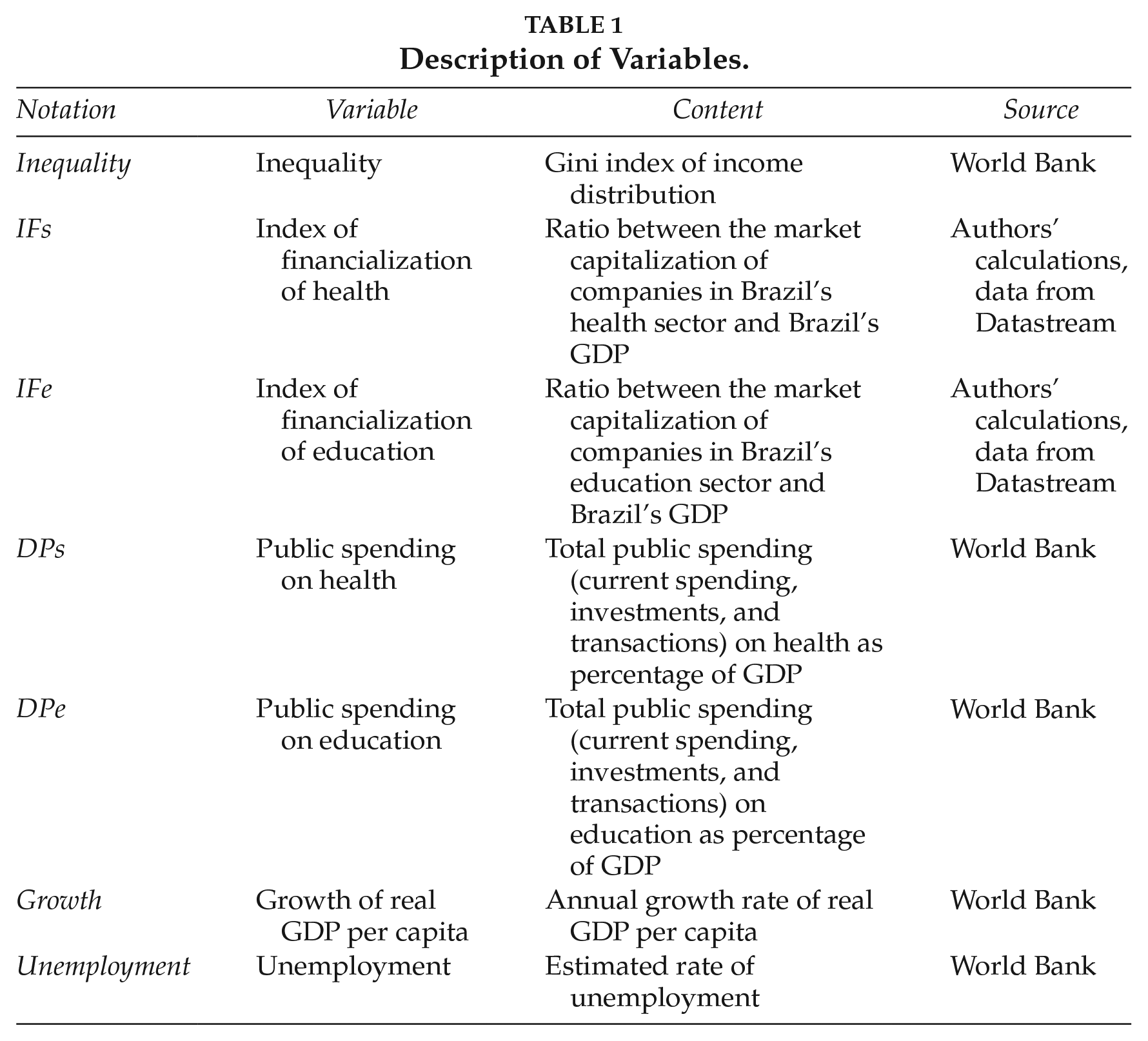
If we compare the evolution of the different series of our explanatory variables with the evolution of inequality (Figure 1), we see that public spending on health and education shows a pattern that is symmetrical to that of inequality (Figure 2). This suggests that the former plays a role in reducing the latter (correlation coefficient −0.91). The evolution of the financialization indexes (Figure 3) tends to match that of inequality, and therefore they may have a role in increasing inequality. At first glance (Figures 1 and 4), it seems difficult to identify a unique relationship between economic growth and inequality if one simply compares Figure 1 with Figure 4 (which contains economic growth).
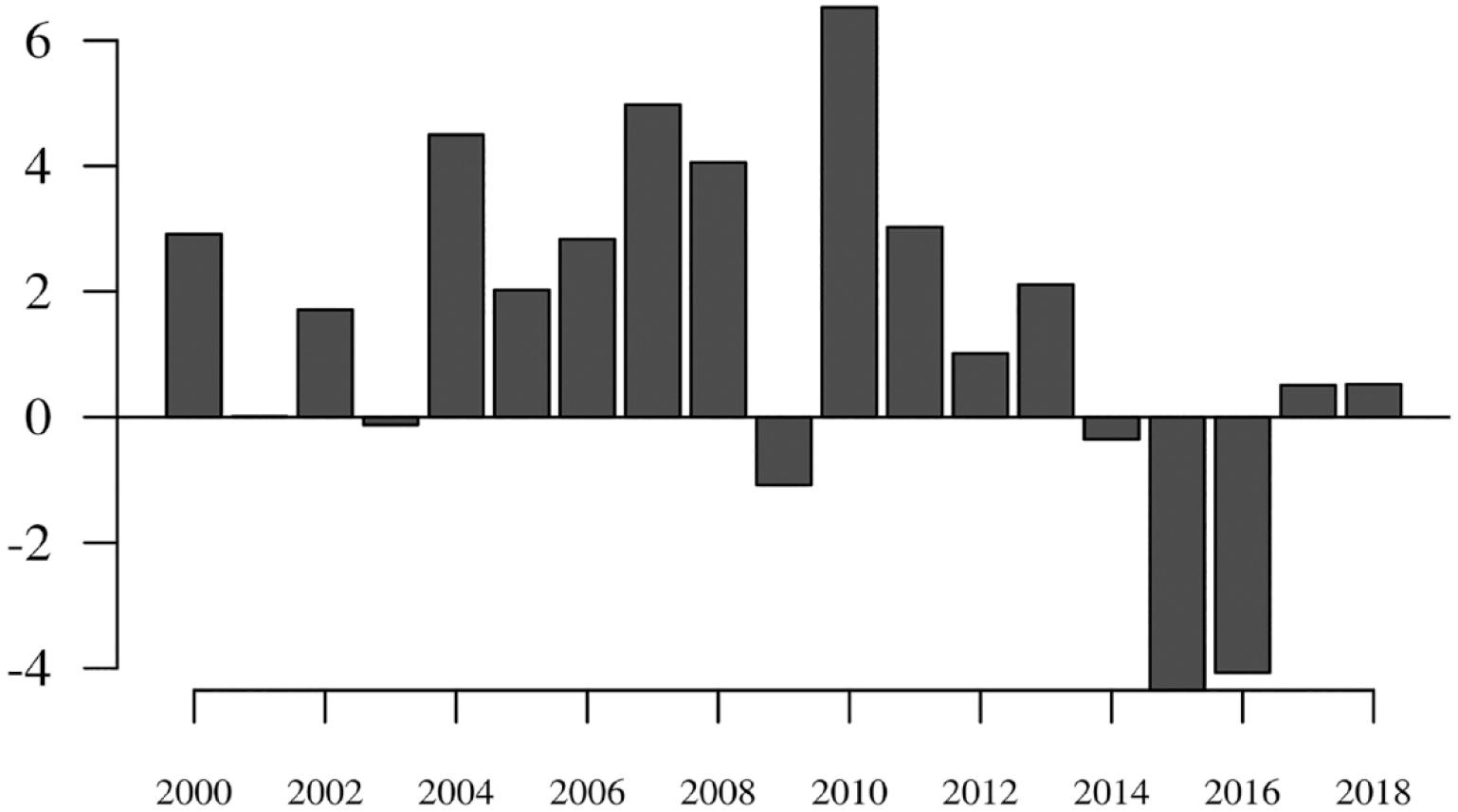
Annual growth rate of real GDP per capita (%) (data from the World Bank).
If we compare Figure 1 with Figure 5, which displays the dynamics of unemployment, we can see that periods that witnessed a drop in unemployment were accompanied by a reduction in inequality (Figure 5).
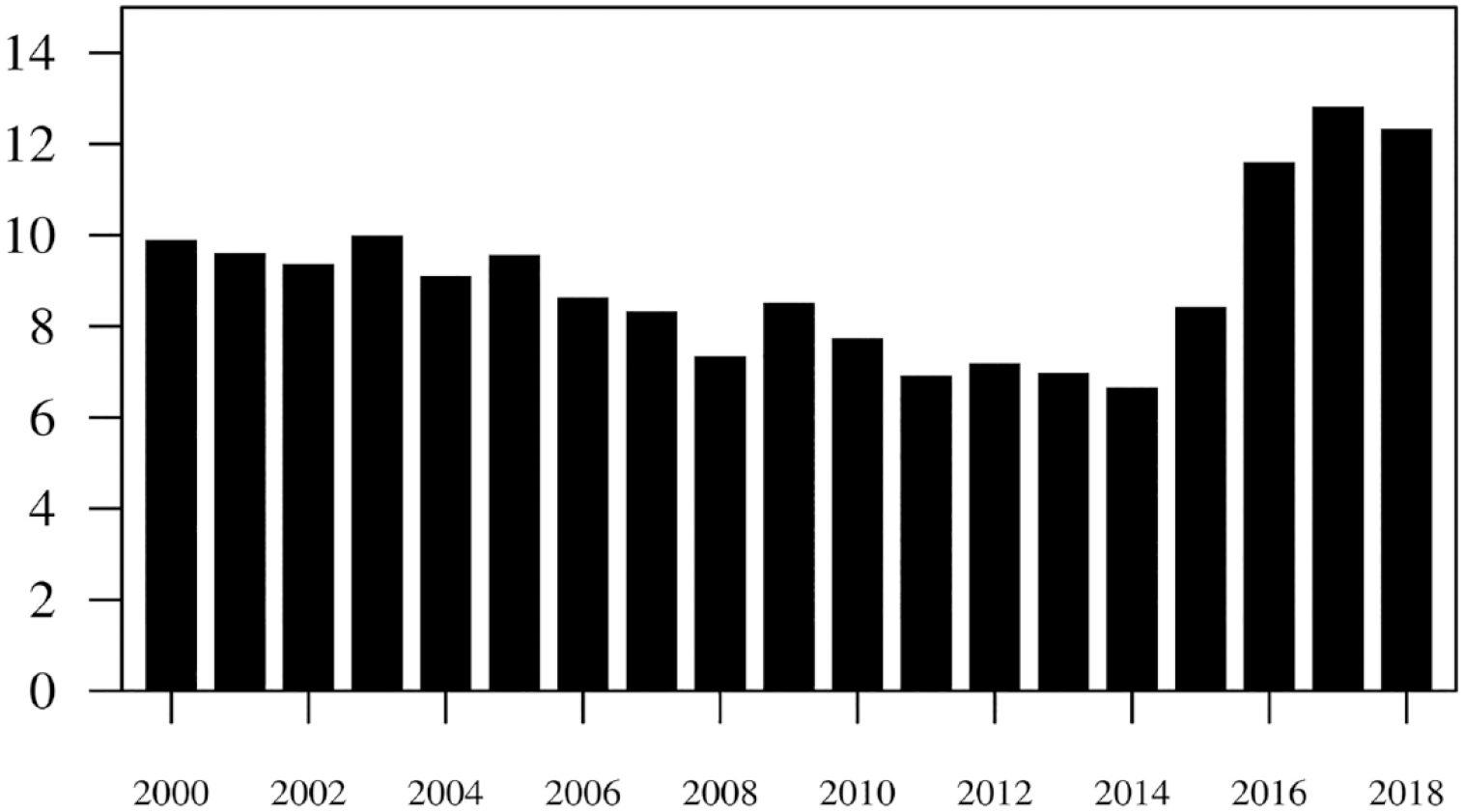
Unemployment rate (%) (data from the World Bank).
While all the factors indicated may influence inequality, there is a visible, positive correlation between financialization and inequality. However, it is necessary to analyze this relationship by estimating Equation (1) to identify the influence these different factors have on inequality simultaneously.
Our explanation for this evolution in Brazil suggests that the pattern of income inequality in the country has changed in recent years (especially since 2016). This is evident in the fact that Dilma Rousseff, in her attempts to stay in power, gave in to pressure from Brazil’s business and financial sectors and implemented various austerity measures. These measures included raising taxes on Brazil’s middle class, creating mechanisms that hindered access to workers’ rights and social benefits, and partially freezing the federal budget for social programs (see Saad-Filho, 2020b). The fact that there was also an increase in financialization in recent years does not mean that the evolution of inequality is directly tied to a rise in financialization. Correlation does not imply causation.
To reduce the possibility of obtaining statistically significant coefficients for financialization (β1 and β2 just because the increase in the former occurred, by coincidence, at the same time as the change in the pattern of behavior of inequality in Brazil, a binary or dummy variable was added to the list of explanatory variables. This variable takes the value 1 from 2014 on and the value 0 before 2014. In this way we accommodate an alternative explanation to the rise in inequality based on the increase in financialization—the possibility of a structural break in the pattern of inequality caused by something other than financialization (and other explanatory variables). This is represented by this dummy variable. Equation (1) also includes a constant (with coefficient α) and an error term (εt).
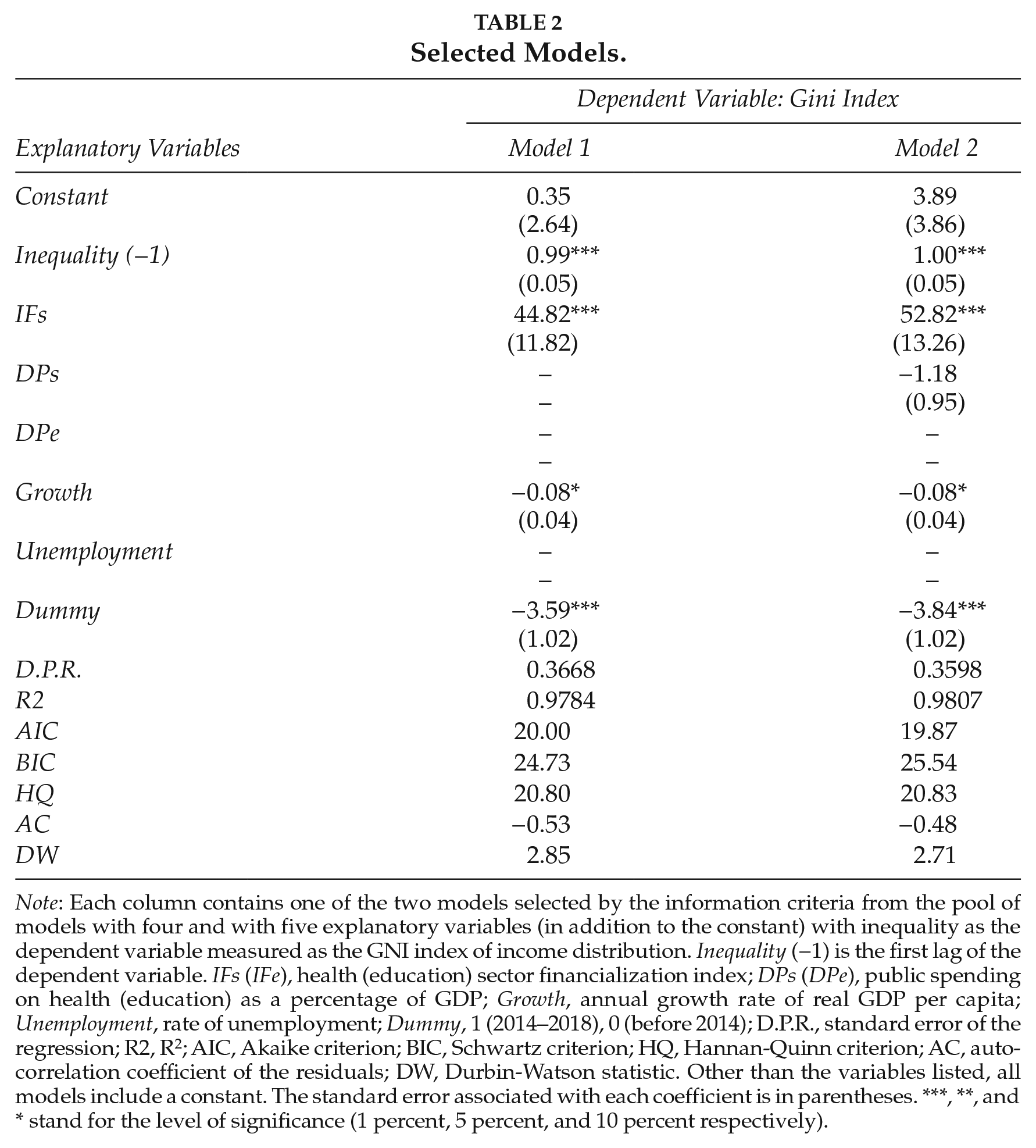
Because of the small size of the available sample, including all of the explanatory variables simultaneously in Equation (1) could hinder the robustness of the results. This makes it necessary to select a subset of explanatory variables. Information criteria such as the Akaike criterion (AIC), the Schwartz criterion (BIC), or the Hannan-Quinn criterion (HQ) can be used to this effect. The two models that the criteria identify as the best are presented (Table 2). Both these models include the health sector financialization index and the dummy variable as explanatory variables. The latter suggests that in 2014 a structural change occurred in the pattern of inequality in Brazil. The financialization of health also played a role in this change. The financialization of education is not retained as a relevant explanatory variable in any of the best models, but one cannot dismiss the possibility that this result is due mainly to the small size of the sample.
Selected Models.
Note: Each column contains one of the two models selected by the information criteria from the pool of models with four and with five explanatory variables (in addition to the constant) with inequality as the dependent variable measured as the GNI index of income distribution. Inequality (−1) is the first lag of the dependent variable. IFs (IFe), health (education) sector financialization index; DPs (DPe), public spending on health (education) as a percentage of GDP; Growth, annual growth rate of real GDP per capita; Unemployment, rate of unemployment; Dummy, 1 (2014–2018), 0 (before 2014); D.P.R., standard error of the regression; R2, R2; AIC, Akaike criterion; BIC, Schwartz criterion; HQ, Hannan-Quinn criterion; AC, autocorrelation coefficient of the residuals; DW, Durbin-Watson statistic. Other than the variables listed, all models include a constant. The standard error associated with each coefficient is in parentheses. ***, **, and * stand for the level of significance (1 percent, 5 percent, and 10 percent respectively).
Besides containing the estimated coefficients for each explanatory variable, Table 2 also includes information about other characteristics of the estimated models such as the standard error for each coefficient, measures of the quality of adjustment (the usual measures being the standard error of the regression, R2, and the information criteria), and information regarding the possible existence of autocorrelation (based on a first-order autocorrelation coefficient and the Durbin-Watson statistic). The former information indicates that these results are robust.
The health financialization index has a coefficient that is statistically significant at a level of 1 percent in both models. The same can be seen for the lag in inequality and the dummy variable. The magnitude of the estimated coefficient relating to the health financialization index is also similar in the two models. This suggests that if this coefficient rises by one percentage point of GDP, the indicator for inequality will rise close to 0.5 units. These results support the argument that an increase in financialization in Brazil’s health sector will exacerbate existing levels of inequality. By reducing access to health and diminishing the quality of health services for the poorer sectors of the Brazilian population it leads to less accumulation of human capital and negatively and disproportionately influences the productivity of poorer workers. This in turn will result in lower wages and lower income. At the same time, this trend will benefit equity holders (in this case stockholders in companies that are involved in Brazil’s health sector) to the detriment of workers. Since wages are Brazilian workers’ primary source of income, inequality will also increase through this mechanism.
This result is particularly disturbing in terms of the current pandemic caused by the emergence of a new strain of coronavirus, SARS-CoV-2 (the virus responsible for causing the disease known as COVID-19). COVID’s impact on Brazil was tragic to say the least. As of December 2021, there were more than 22 million confirmed cases and almost 620,000 deaths (Johns Hopkins University Coronavirus Resource Center, 2021). Despite the intense ongoing debate on the rise of inequality since the 1980s, the pandemic revealed the devastating consequences inequality can have on a society. Inequality exacerbated the impact of the pandemic on the poorest and most vulnerable sectors of Brazil’s population (such as the workers who work in the informal market and cannot afford to work remotely). These Brazilians live in cramped living conditions devoid of basic sanitation, drinking water, and access to effective health care (see Leiria, 2020; Saad-Filho, 2020a; Rocha et al., 2021; Pires, Carvalho, and Rawet, 2021). According to Lavinas (2020), the lack of investment in Brazil’s Sistema Único de Saúde (Single Health System—SUS), created in 1988, was followed by an expansion of private health care networks. In April 2020, the share price for private health care companies had already reached the value it had before the pandemic. This network is available virtually only to Brazilians who have health insurance. This evolution can have terrible consequences for a country with an extremely high level of income inequality. According to Pires, Carvalho, and Rawet (2021: 54), “The country’s stark inequalities in access to health care due to the duality between the private and public systems contribute to explaining why social risk factors alone do not account for observed disparities in the number of deaths.” According to Rocha et al. (2021: 791), “There are important lessons from Brazil’s experience with COVID-19, especially regarding how existing socioeconomic inequalities, rather than age and level of chronic disease, have affected the initial course of the epidemic and the deaths from COVID-19, with a disproportionate adverse burden on socioeconomically vulnerable regions, states, and municipalities.”
The Jair Bolsonaro government responded to the pandemic with a policy of denial. Bolsonaro was openly against locking down Brazilian society, wearing masks, and social distancing, opposing these measures against the advice and recommendations of Brazilian health officials and comparing COVID-19 with the flu (BBC News, 2020). The lack of a prompt and effective response to the pandemic only served to strengthen the adverse effect on Brazilian society of inequality, the SUS’s fragility, and the financialization of social policy. Investigation by a congressional committee of inquiry of corruption associated with the purchase of the Covaxin vaccine from India led to the cancellation of the order (see Taylor, 2021) and hampered the government’s response to the virus. This had major consequences for Brazil’s poor, who depended on a public system to administer health and preventive care.
Despite the lack of public investment in the health system and the challenges it faced in fighting the spread of the virus and in treating and hospitalizing the infected, the vaccination campaign against COVID-19 in Brazil (which was essentially organized and put in place by the SUS) was accepted by the public even though President Bolsonaro publicly questioned the efficacy of vaccines. The available data as of December 15, 2021 show that more than 65 percent of the Brazilian population are completely vaccinated. Despite delays, the Brazilian health system ensured that vaccines were distributed throughout the population and that all Brazilians had unrestricted access to them. The number of deaths due to COVID-19 (which previously had reached an average of close to 3,000 deaths per day) was reduced to less than 200 a day (Globo, 2020). According to Malta et al. (2020), Brazil’s public health care system is responsible for providing health care and assistance to 78 percent of the Brazilian population as well as for implementing a national vaccination program that protects 96 percent of Brazilians from diseases such as diphtheria, tuberculosis, and hepatitis. Despite the difficulties in providing care to the most vulnerable sectors of the population, this health system played an important role in the success of the Brazilian government’s vaccination campaign against COVID-19. Private health plans had absolutely no intention of covering these vaccines. In fact, the Minister of Health had to submit a request to the Agência Nacional de Saúde Suplementar (Brazilian Agency for Supplementary Health—ANS) in order for these vaccines to be included in private health plans. This demonstrates that privatization policies relating to health care (in contrast to what their proponents argue) can reduce the efficacy of preventive care.
The harmful effects that a reduction in public spending on social security can have on Brazil’s level of inequality became even more apparent during the pandemic, especially in the health sector. This reduction in public spending happened at the same time rates of financialization in social sectors were rising. Moreover, the evolution of this trend since the beginning of the pandemic shows that the lack of a program designed to fight past inequality can only serve to bolster inequality in the future. This is certainly the case when a country is affected by external shocks such as COVID-19 and has a central government that responds to these shocks with incoherent policies. It is also worth noting that, despite the budgetary incentives that were granted in monthly subsidies to people below the poverty line and informal workers, there is concern about a return to austerity policies bolstered by the “neoliberal” faction of the Bolsonaro government (see Lavinas, 2020; Malta et al., 2020; Lima and Durán, 2021). Pires, Carvalho, and Rawet (2021: 55) argue that,
in light of the evidence that social inequalities increase the breadth and length of the pandemic and the presence of a deep economic recession, the threat of a return to an economic agenda centered on cutting social expenditures poses major health and social risks. More generally, pursuing the past decades’ economic framework on a global level will accelerate the same tendencies in the labor market and in inequality that imposed high social, health, and economic costs during the COVID-19 pandemic, paving the way for further tragedies.
Lavinas (2020) describes Brazil’s current situation with the pandemic as a wakeup call that stresses the need for social policies to guarantee universal access to the health and education systems. She argues that these systems should be financed by the richest sectors of the Brazilian population. Saad-Filho (2020a: 481) says, “The crisis and the responses show that an outsized financial sector is worse than useless and that states can take progressive roles, especially when they suspend the normal workings of ‘the markets’ and mobilize resources directly to address social needs.” He appears to be skeptical about a supposed “end to neoliberalism” that this process would entail. His skepticism seems to be due primarily to the lack of leadership currently demonstrated by the Brazilian left.
Conclusion
Since 2016, despite decades that witnessed a declining trend in income inequality, inequality levels are on the rise again in Brazil. An economic crisis combined with austerity policies ended up limiting the allocation of public resources to Brazil’s health and education sectors. At the same time, however, space opened up that allowed for a significant increase in the financialization of these sectors. The results of our empirical analysis indicate that the financialization of health may be a contributing factor in the recent rise in inequality in Brazil. This is even more concerning given Brazil’s situation with the emergence of COVID-19. The weakened state of Brazilian public health services became more evident during the pandemic. This was one of the principal factors that were responsible for the occurrence of proportionally high numbers of severe cases and deaths among the poorest and most marginalized sectors of the Brazilian population. According to Rocha et al. (2021), COVID-19’s impact on Brazil was even more severe in localities with precarious socioeconomic conditions and in those that possessed a level of income lower than the national average. A greater financialization of health services may occur in areas where the public health care system shows greater signs of strain. This can result in policies that prioritize investments in private care, paid access, and places with higher average incomes. This study calls attention to the way this process affected income inequality and access to health care. The situation would be even worse if state and local governments in Brazil had not intervened to offset the more negative effects of the central government’s incompetence.
Nonetheless, this analysis (almost in “real time”) should be seen as only exploratory because of the limitations of the database that was used. The use of relatively short time series in the regressions may account for the lack of robustness of the results with respect to the role of the financialization of education in exacerbating the levels of inequality in Brazil. Therefore, the results of this study must be interpreted as suggestive of the need to continue to monitor the evolution of inequality and perhaps adopting measures to prevent this increase in inequality from worsening. This is especially the case considering the degree of expansion of financialization in the Brazilian government’s areas of intervention of social policies. The Brazilian government presided over by Jair Bolsonaro caused much concern in this regard because of the policy choices made.
Footnotes
Pedro Bação is an associate professor of economics at the Universidade de Coimbra and a researcher at its Center for Business and Economics Research. Diogo Mazeron is an economist at the Observatório de Luta Contra a Pobreza na Cidade de Lisboa. Marta Simões is an associate professor of economics at the Universidade de Coimbra and a researcher at its Center for Business and Economics Research. Heather Hayes is a translator living in Quito, Ecuador. The authors thank the editors of this issue, James Green and Tulio Ferreira, and the two anonymous reviewers for offering comments and suggestions on earlier versions of this article that were instrumental in creating the current version. They also thank COMPETE 2020, Portugal 2020, and the European Union (POCI-01-0145-FEDER-029365) for financing this project and the Fundação para a Ciência e Tecnologia I.P./ Ministério da Ciência, Tecnologia e Ensino Superior for donating national funds through the projects with the grant references PTDC/EGE-ECO/29365/2017 and UIDB/05037/2020.