



Abstract
Background
Since the Government of Canada legalized non-medicinal cannabis use/consumption on October 17, 2018, licensed private cannabis retailers have faced numerous challenges. These challenges negatively impacted retail operations and potentially undermined public health and safety. We aimed to identify these challenges to inform policy decisions.
Methods
We conducted a quantitative news media content analysis using Nexis Uni and Eureka databases to identify articles from Canada's highest-circulating newspapers and CBC News website from 2017 to 2022, referencing at least one barrier to private cannabis retailers. We screened and extracted data using Covidence and deductively coded the data using our newly developed comprehensive cannabis retail framework and inductively as new themes emerged. The barriers identified in the media were quantified through descriptive analyses.
Results
The search yielded 9,371 articles, of which 307 relevant articles were included. The main findings revealed that the barriers most commonly reported by the media were related to government regulations, supply chain, and competitors. The salience of these barriers also changed over time. These barriers were most frequently mentioned in the Globe and Mail, Calgary Herald, Toronto Star, and the National Post.
Conclusion
Our framework was suitable for describing the data and identifying several media-portrayed barriers to private cannabis retail operations in Canada and how they differed in salience over time. However, a more in-depth understanding of the barriers from retailers’ perspectives may further support the government's policy agenda of achieving public health and safety. The results from this study may also serve as a baseline measure to evaluate Canada's cannabis retail market and provide new insights into the growing body of literature about the cannabis retail market.
Background
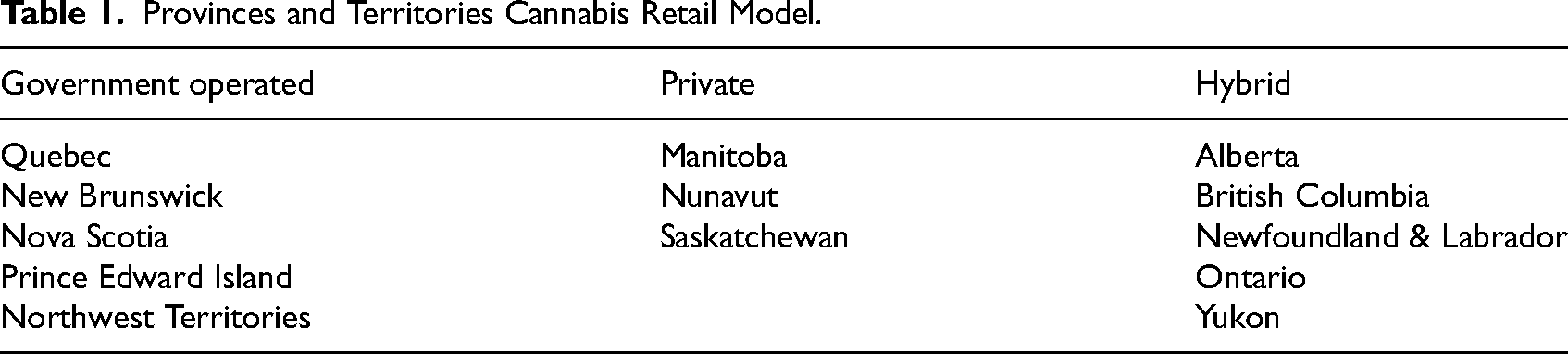
In 2018, Canada introduced the Cannabis Act to protect public health and safety by controlling the adverse effects of cannabis use. Although there are recognized health risks linked to cannabis use, including physical and mental health concerns, as well as potential long-term effects such as adolescent brain development issues, psychiatric disorders, and cannabis dependency, the government has had to weigh these considerations with the challenges associated with unregulated use (Canadian Centre on Substance Use & Addition, 2019; Fischer et al., 2022; Hasin & Walsh, 2020). Research has shown that cannabis products from the unlicensed market may contain harmful substances, such as heavy metals and pesticides, which can lead to adverse health outcomes for consumers (Dryburgh et al., 2018; Eykelbosh, 2020). For instance, a 2021 study found a high prevalence of contaminants, including pesticides, bacteria, fungi, lead, and arsenic, in cannabis samples from the unlicensed market (Ministry of Public Safety and Solicitor General, 2021). Additionally, a report from the New York Medical Cannabis Industry Association found the presence of contaminants such as Escherichia coli, salmonella, and pesticides in cannabis products from the unlicensed market in New York, as well as misleading labels and youth-targeted branding (New York Medical Cannabis Industry Association, 2022). These findings underscore the importance of regulatory oversight to ensure product safety. As such, the Act aims to reduce cannabis consumption among youth, keep profits out of the pockets of criminals, and allow adults safe access to legal cannabis (D. of J. Government of Canada, 2021). The success of these goals relies on the ability of the federal, provincial, and territorial governments to effectively regulate the legal cannabis market and implement regulations that benefit all stakeholders involved in the production, distribution, sale, and possession of cannabis for non-medical purposes (D. of J. Government of Canada, 2021; Wesley & Murray, 2021). Under this legal framework, provinces and territories have the ability to set their own objectives, rules, and regulations, choosing a retail model that is state-run (characterized by government ownership, control, and operation), privately run (independently owned and managed), or hybrid (a mix of both state- and privately run models) (Table 1). Most provinces and territories (8 out of 13) have chosen models that involve some private retail, which makes up 85% of Canada's cannabis retailers and 65% of legal sales in 2019 (Government of Canada, 2019).
Provinces and Territories Cannabis Retail Model.
While the cannabis industry has faced numerous challenges, privately operated retailers’ challenges are primarily centered on the regulatory requirements for opening and operating a retail store and competition from the unlicensed market. Most, if not all, jurisdictions have experienced a shortfall in sales, which has been attributed to provincial and municipal regulations, unlicensed market competition, accessibility, and supply chain issues (B.C. Chamber of Commerce, 2020; CBC News, 2019; Financial Post, 2019). Some reports suggested that strict regulation was the main factor contributing to the challenges faced by private cannabis retailers (Brownell, 2019; CBC News, 2019; Deloitte, n.d.; Financial Post, 2019; MacDonald, 2019). These regulations included limitations on the number, type, and location of stores, set hours of operation, restrictions on marketing and promotional activities, and a cap on the amount of tetrahydrocannabinol (THC) permitted in certain cannabis product types (Health Canada, 2019; Ontario Public Health Association, 2021). Wesley and Murray (2021) described these regulations as a demarketing approach aiming to decrease legal sales demand and encourage responsible consumption. They suggested that this approach may temporarily improve public health, but in the long run, it may harm public safety and prevent government agencies from reaching their goals of eliminating the unlicensed market (Wesley & Murray, 2021). As the National Post reported, these “well-intentioned requirements are actually barriers to long-term success” (National Post, 2021a).
The Government of Canada's justification for tightly regulating the cannabis retail market was to reduce potential health risks for consumers (Canadian Centre on Substance Use & Addiction, 2020; Health Canada, 2016). High levels of THC can lead to adverse effects such as intoxication, anxiety, and psychosis (Canadian Centre on Substance Use & Addiction, 2020; Health Canada, 2018; Matheson & Le Foll, 2020). However, the desire for higher THC products, which were either unavailable or too costly from licensed stores, may have led some consumers away from the legal market, possibly undermining public health and safety (Kaplan, 2021). As highlighted by the Cannabis task force in 2016, excessive regulations might lead to the resurgence of the illegal market, while inadequate restrictions could pave the way for an uncontrolled and potentially harmful legal market (Health Canada, 2016). They argued that a competitive licensed market regarding price, product variety, consumer education, and safe and reasonable product access is necessary to displace the unlicensed market (Health Canada, 2016).
Access to safe cannabis products through a legally regulated market is critical for minimizing potential harm associated with cannabis use. To protect public health and eliminate the unlicensed market in Canada, it is crucial to find a balance between strict regulations and providing easy access to legal and regulated products (Myran et al., 2019). Publicly run cannabis stores can assist in this effort, but the high demand for cannabis products in Canada may exceed the capacity of publicly run stores to meet this demand. For example, a study examining social media tweets about the Ontario Cannabis Store found that Canadians expressed widespread dissatisfaction with the government-controlled retail model in Ontario. This discontent stemmed from delays in product delivery due to higher-than-expected demand, limited physical stores, and restrictive purchasing options, preventing consumers from accessing their preferred cannabis products (Aversa et al., 2021). Private operators may be an organizational and sector solution to mitigate the discontent. However, if private cannabis retailers are unsuccessful in addressing this overall discontent within the regulated industry, this could lead to a shortage of legal, regulated cannabis and a possible resurgence of the unlicensed market where the products are unregulated and could harm consumers (Docherty, 2019; Wellington-Dufferin-Guelph Public Health, 2018). Given these potential risks, understanding the barriers private retailers face when opening and operating a retail store within this new market is crucial. This understanding is important for safe consumption, minimizing potential health risks, and contributing to the overall success of a well-regulated cannabis market.
The limited scientific research on the cannabis retail market since legalization highlights the importance of other sources of information, such as media coverage. Abundant media coverage of various cannabis-related topics has significantly impacted public perception and policy decisions (CBC News, 2019; Financial Post, 2019; National Post, 2021a). This extensive media coverage can serve as a valuable tool for various stakeholders, including cannabis retailers by raising awareness of their concerns and bringing attention to the most important issues, potentially influencing government policy. Through a news media content analysis, we aim to identify the specific barriers private cannabis retailers faced in Canada. This study will contribute to the scholarly understanding of the regulated cannabis industry in Canada, media dynamics, and the challenges private retailers face. It may also provide insights for policy impact assessment and the development of successful business strategies.
Theoretical Underpinnings and Conceptual Framework
The media has an essential role in society where it has the power to shape how the public and policymakers perceive the causes and solutions to public issues by selectively presenting and framing information, thereby setting an agenda for public discussions (Cook et al., 1983; Nimegeer et al., 2019). Soroka (2002) described an agenda as the ordering of issues based on their salience or importance, while Cook et al. (1983) depicted agenda setting as the “process by which problems become salient as political issues meriting the attention of the polity” (p. 17). First-level agenda-setting theory posits that the media creates salience by the number of news stories devoted to a specific topic, thereby creating an agenda effect (Anantram, 2020). The agenda-setting effects may differ due to the diverse nature of issues, but news media seems to exert a very strong agenda-setting effect as they are often viewed as a trusted source of information among the public (Soroka, 2002). Therefore, “news media are a key component of agenda-setting effect” (Luo et al., 2019), where media content can influence public discourse, playing a crucial role in getting public officials or policymakers to respond to public issues.
How the media covers political issues, such as the cannabis retail market, plays a crucial role in shaping how people understand and interact with the market. Evidence from media studies shows that media messages are not neutral but reflect the interests and preferences of government and other powerful actors in society, which can be influenced by conservative or liberal ideologies, impacting public support or opposition (Grossman, 2022; Savigny & Temple, 2010). According to Grossman (2022), the media plays a crucial role in shaping the strategies of political and collective actors, guiding politicians in monitoring news for reactions, assisting opposition forces in shaping political conflicts, and enabling powerful actors, particularly governments, to exert substantial influence through gatekeeping mechanisms. However, since news media often decides which issues receive more attention and which ones are less highlighted, it often leads to diverse interpretations, influencing shifts in public opinions and policy directions (Aversa et al., 2023; Cook et al., 1983; Nimegeer et al., 2019). For instance, the way cannabis is depicted in Canadian news has changed. It has shifted from traditionally negative representations to a more balanced perspective, highlighting aspects such as the specifics of legalization while diminishing the emphasis on crime (Aversa et al., 2023). This shift has led to a significant rise in societal acceptance and endorsement of more progressive attitudes toward cannabis (Aversa et al., 2023).
Similarly, a 2019 study suggested that the public's attitude toward cannabis shifted in a positive direction when the media predominantly framed it as a medical issue, gradually altering the perception of its harmfulness overtime (Felson et al., 2019). Additionally, the increased media framing of cannabis as a medicinal substance in Denmark has created a shift in its cannabis policy from its historical portrayal of cannabis as an illicit substance to the implementation of a medical cannabis pilot program in 2018 (Søgaard et al., 2021). This change, influenced by media coverage, citizen testimonials, and political proposals, highlights the significant influence of framing in altering both public perception and governmental priorities regarding cannabis use in Denmark (Søgaard et al., 2021). These studies illustrate that the way cannabis is presented and discussed can significantly impact policy decisions. While public and policymakers’ perspectives may not consistently drive policy changes, the likelihood of such changes increases significantly when journalists and government officials collaborate (Cook et al., 1983).
This collaboration underscores the multifaceted factors influencing cannabis policy decisions, highlighting the need for a framework that aims to balance public health and safety with the success of retail operations to effectively evaluate the cannabis retail market. To address this gap, we developed a framework called the comprehensive cannabis retail framework (CCRF), integrating concepts from the Canadian Public Health Association's public health approach to legalization, regulation, and restriction of access to cannabis and the environmental theory, a classification of the theories of retail institutional change (Brown, 1987; Canadian Public Health Association, 2017). The Canadian public health approach to cannabis focuses on regulating the cannabis retail market to ensure safe access to cannabis products through interventions that promote and protect health, reduce harm, and prevent adverse effects (Canadian Public Health Association, 2017). These interventions include a strict regulatory framework of how cannabis can be sold, where stores may be located, how stores must be operated, and who can sell cannabis (D. of J. Government of Canada, 2021). The general consensus was that cannabis-related risks could be reduced by implementing strict regulations and managing these risks through the health system (Canadian Centre on Substance Use & Addition, 2020; Crépault, 2018; Potter & Weinstock, 2019). However, a public health approach prioritizes public health and safety over retailers’ profitability and ignores the factors influencing retailers’ success and sustainability (Brown, 1987).
On the other hand, the environmental theory of retail institutional change emphasizes the role of the retail environment in shaping retail changes and suggests that retail institutions, including cannabis retail operations, must adapt to various environmental factors to succeed (Brown, 1987; Ekwochi, 2020). That is, the environment in which a business operates is crucial to its success, and to survive change and competition, it must evolve by adapting or adjusting to environmental change (Brown, 1987; Ekwochi, 2020; Kent & Omar, 2003). The environmental theory of retail institutional change primarily focuses on factors in the macro- and micro-environments, such as economic, political, legal, social, demographic, cultural, and technological factors, as well as influences from competitors, suppliers and customers, labor markets, and financial institutions (Brown, 1987; Kent & Omar, 2003).
The retail market's success depends on adapting to these factors, which may also affect the ability of cannabis retail operations to be successful and may prevent the government from achieving its objectives of protecting public health and safety and displacing the unlicensed market. However, a limitation of the retail environmental theory of retail institutional change is that it does not consider decision-makers as a factor (Brown, 1991; Roth & Klein, 1993). It does not consider “what decisions are made and why” (Roth & Klein, 1993). Relating to the cannabis retail market, decision-makers (e.g., policymakers and retailers) are essential since they determine how stores’ outcomes change in the environment (Roth & Klein, 1993).
Consequently, it is necessary to develop a comprehensive cross-discipline conceptual framework, including concepts from the public health approach to cannabis and the environmental theory of retail institutional change. This framework helps categorize the barriers private cannabis retailers faced and facilitate the study's data analysis. It may provide a more nuanced, adaptable, and practical approach to understanding and addressing the multifaceted challenges associated with cannabis retail market, enabling effective policy decisions (Figure 1). The public health variables in the CCRF represent the government's policies, specifically the retail market regulations and law enforcement that were implemented to protect public health and safety. These policies affect the retail market since they were designed to help achieve Canada's legalization goals. The retail environmental factors listed in the CCRF describe the macro- and micro-environment and represent the success factors for the cannabis retail market (Figure 1). The combined public health and environmental variables and constructs in the framework may also be used as themes.
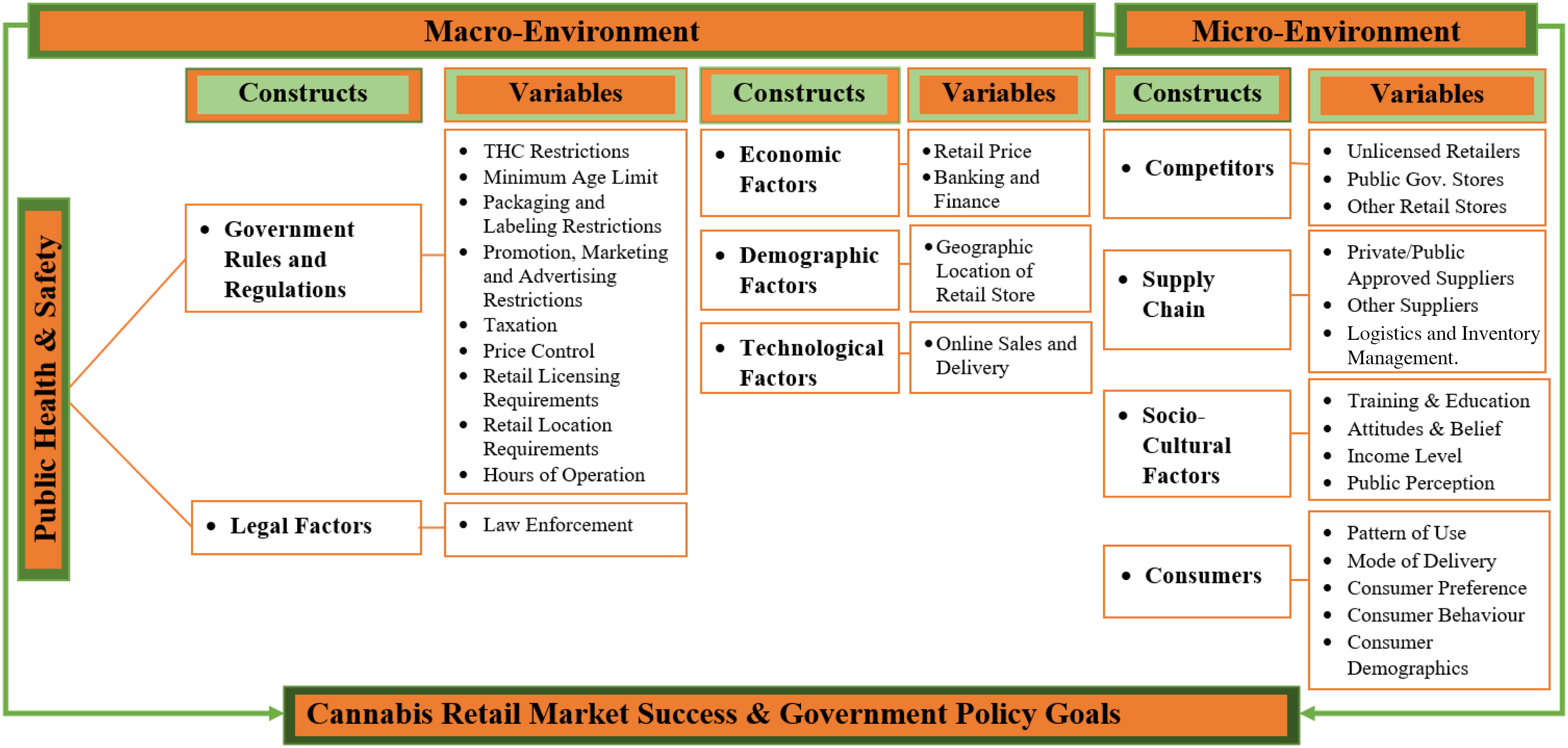
Comprehensive Cannabis Retail Framework.
For this study, we evaluated the effectiveness of the CCRF by using the combined constructs and variables as a priori themes for the coding and analysis of the data we collected. While the CCRF is designed specifically for this study, it could also prove helpful in future cannabis studies and for assessing the impact of different governments’ cannabis policies on businesses. The formulation of the conceptual framework resulted in the identification of nine main categories, along with multiple sub-categories that make up the constructs and variables of the study. The constructs include government rules and regulations, legal factors, economic factors, demographic factors, technological factors, competitors, supply chain, socio-cultural factors, and consumers. Figure 1 displays the CCRF used in the study.
Methods
In this study, we utilized the CCRF as a tool to comprehensively and systematically document the media-portrayed barriers to private cannabis retailers (both prospective and licensed) in Canada and determine how the salience of these barriers changed over time. The CCRF provided a structured approach to understanding the complex relationships between various factors influencing the cannabis retail market. To identify these issues, we performed a quantitative news media content analysis involving a systematic and structured process of identifying specific words, themes, and concepts within a given text. This enabled us to accurately describe, quantify, and analyze the relevant texts and make meaningful inferences about the messages contained within them (Columbia University Mailman School of Public Health, 2022). A summary of the methodology is presented in Figure 2.
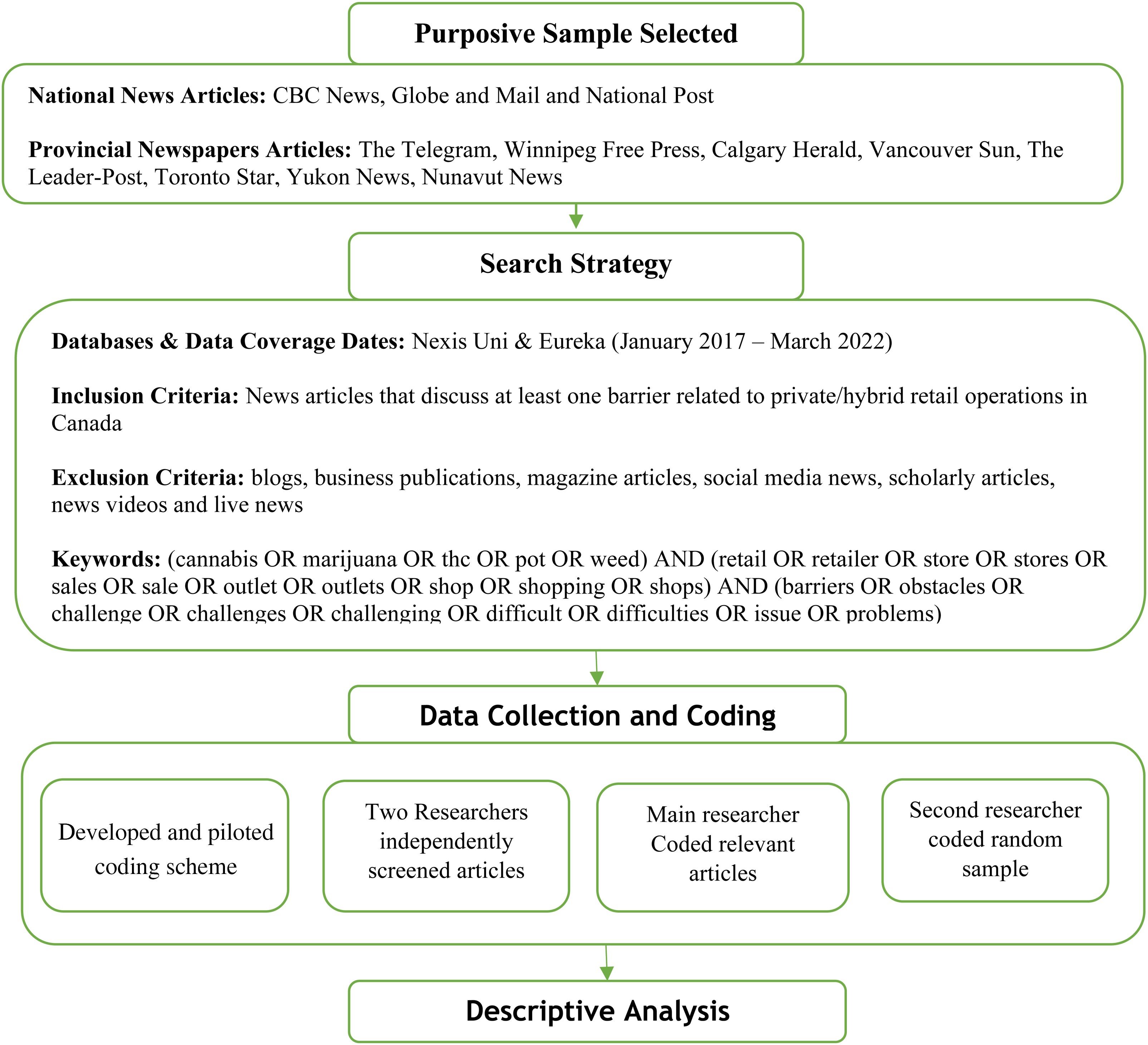
Methodology summary.
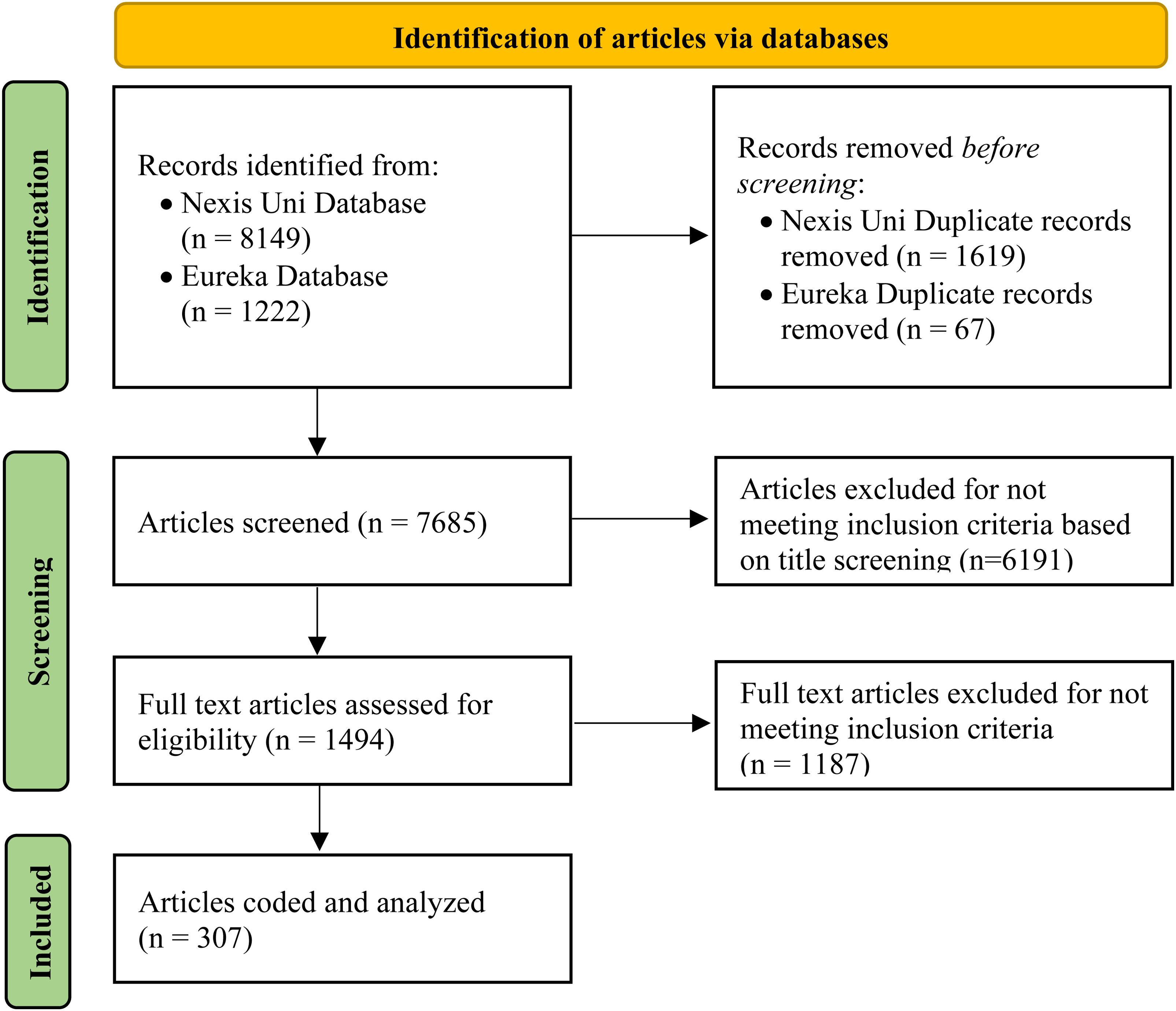
Flowchart of the selection processes and output.
Data Selection and Search Strategy
We used Nexis Uni and Eureka databases to access articles published from January 2017 to March 2022 from popular Canadian news sources (Figure 2). We chose this timeframe to establish a baseline understanding of the challenges surrounding private cannabis retailers in the period preceding legalization, particularly since some prospective retailers were in the process of applying for retail licenses leading up to that time. Recognizing the editorial position of widely circulated newspapers in Canada, we selected a purposive sample reflective of diverse political views. These include two national newspapers, CBC News articles, and eight high-circulating newspapers from provinces and territories that operate under a private or hybrid cannabis retail model (Table 1). Understanding the different editorial perspectives helps us to account for political biases and gain a more thorough understanding of the multifaceted nature of the challenges faced by cannabis retailers. We determined the editorial positions of these newspapers using the most up-to-date information on the Media Bias/Fact Check News website (Media Bias/Fact Check News, 2023). These news sources were selected because they have high-circulation counts and provide local and national coverage (World Atlas, 2019). For example, the National Post and Globe and Mail newspapers are among the most popular newspapers in Canada and provide national coverage of over 400,000 daily circulations combined, while CBC News is rooted in every region of Canada, providing local and national news (CBC News, 2012; World Atlas, 2019). We excluded provinces that only use a public retail model because the challenges faced by these provinces differ from those that use a private or mixed retail model.
Articles were included if they referenced at least one barrier to private cannabis operations in Canada. Nexis Uni and Eureka databases are practical research tools for accessing news sources, indexed journal articles, and publications from scholars, professionals, and subject matter experts (University of Waterloo, 2022). Nexis Uni includes a comprehensive set of articles from a wide range of news sources during the time period examined. Since Nexis Uni did not cover Atlantic Canada and the territories, we used Eureka as a complement to identify barriers to private cannabis operations in those areas. Eureka database provides full-text access to thousands of news sources covering a wide range of topics, including those relevant to the cannabis retail market (University of Windsor, n.d.). These databases are easy to use, allowing us to conduct this research efficiently.
Screening Process
Citations underwent a two-level screening process using Covidence, “a systematic review production tool for title/abstract screening, full-text screening, data abstraction, and quality assessment” (University of North Carolina, 2022). Two reviewers (TWB and MB) first screened the titles of each article against the inclusion/exclusion criteria, followed by a full-text screening of the context of each article selected from the title screening. A third reviewer (JD) resolved articles found to be in conflict after the two initial reviewers completed the title screening.
Data Extraction and Analysis
We manually extracted descriptive characteristics (e.g., title, date, source, jurisdiction) and all relevant quotes coded using a deductive–inductive approach for each included article. Relevant concepts from the CCRF were used as a priori themes (constructs) and sub-themes (variables). Emerging ideas were coded using an inductive approach. The study used two coders to ensure validity and reliability. The primary reviewer (TWB) coded all the articles, while a second reviewer (JD) independently coded 11% (n = 34) of a random selection of the articles to determine inter-coder reliability (McHugh, 2012). The inter-rater agreement between the two coders was measured using Cohen's kappa (Cohen's κ) coefficient. Cohen's κ is used to determine whether the level of agreement between two raters is significantly higher than what would be expected by random chance alone (Cohen, 1960). As a general guide, Cohen's κ may be interpreted as values below or equal to 0.20, indicating little to no agreement, 0.21–0.40 as fair, 0.41–0.60 as moderate, 0.61–0.80 as substantial, and 0.81–1.00 as almost perfect agreement (Cohen, 1960). The inter-coder agreement between the two coders was 0.464, indicating a moderate agreement between the raters (Cohen, 1960).
This moderate Cohen's kappa agreement score can be attributed to the complexities in our coding procedures, where multiple people who collected the data may have interpreted the phenomena differently (McHugh, 2012). Given how we categorized our themes and sub-themes, such as assigning coding to predefined categories, it can introduce complexities to achieving a high level of agreement (Kirilenko & Stepchenkova, 2016). However, our finding indicates that the coders generally agreed on the identified themes, which is unlikely due to chance, thus serving as a reliable moderate agreement in this study (Cohen, 1960). We conducted a quantitative analysis, including a descriptive analysis of the manifest content or “surface meaning” of the text. The descriptive analysis of the themes shows the trends and frequencies of barriers that retailers reported facing in each province and territory between January 1, 2017 and March 26, 2022. We focused on the article as a unit of analysis rather than the number of times a barrier was mentioned. Some articles included multiple barriers that were categorized under different themes, which may indicate different levels of significance, but the specific impact and relevance of these barriers are beyond the scope of the current study. Our analysis quantifies the themes by year, provinces and territories, and news media. We present the results of key domains in frequencies and percentages.
Results
We identified 9,371 articles, of which 307 relevant articles were included after removing duplicates and applying inclusion criteria (Figure 3).
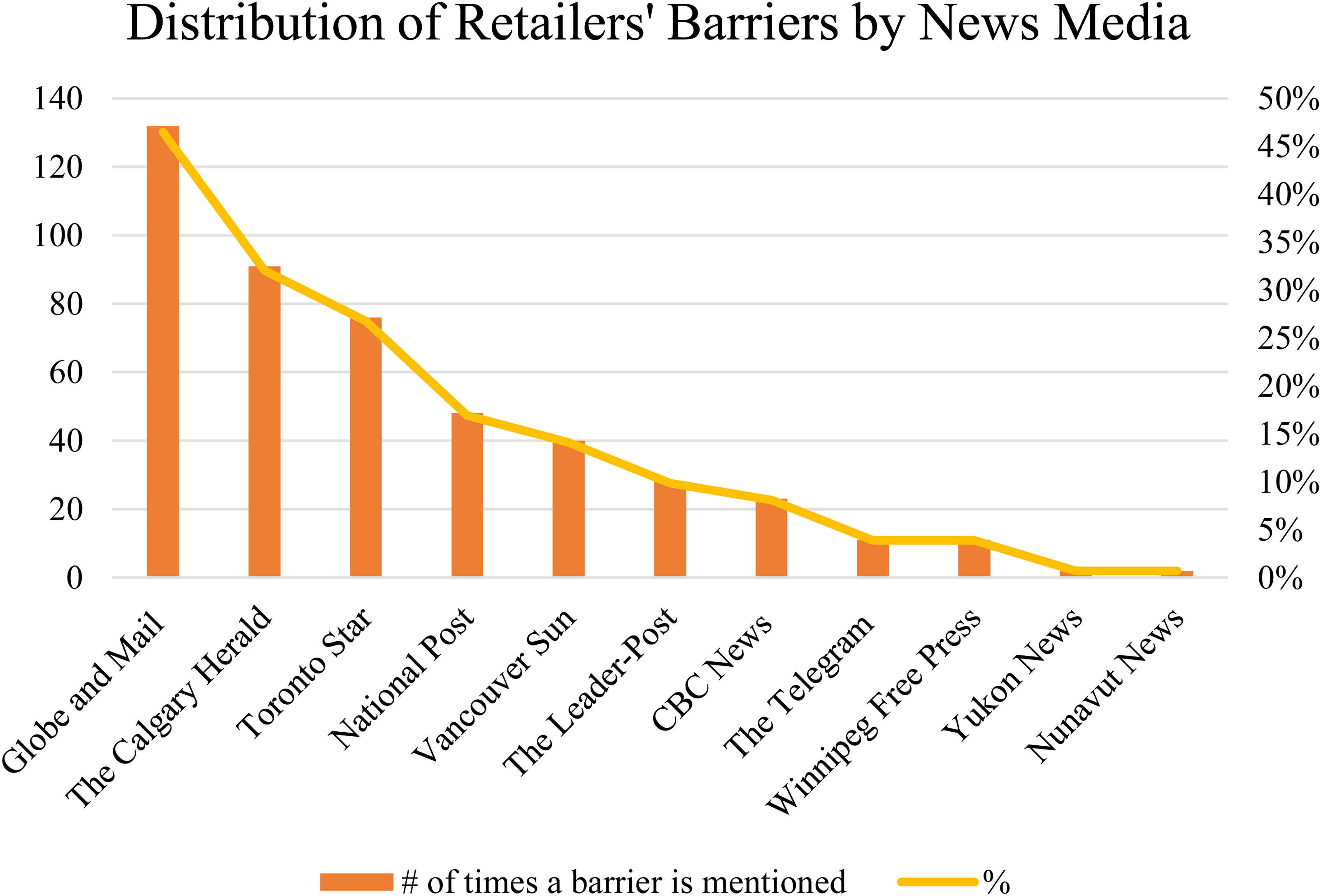
Distribution of retailers’ barriers by news media sources.
Findings From the Descriptive Analysis
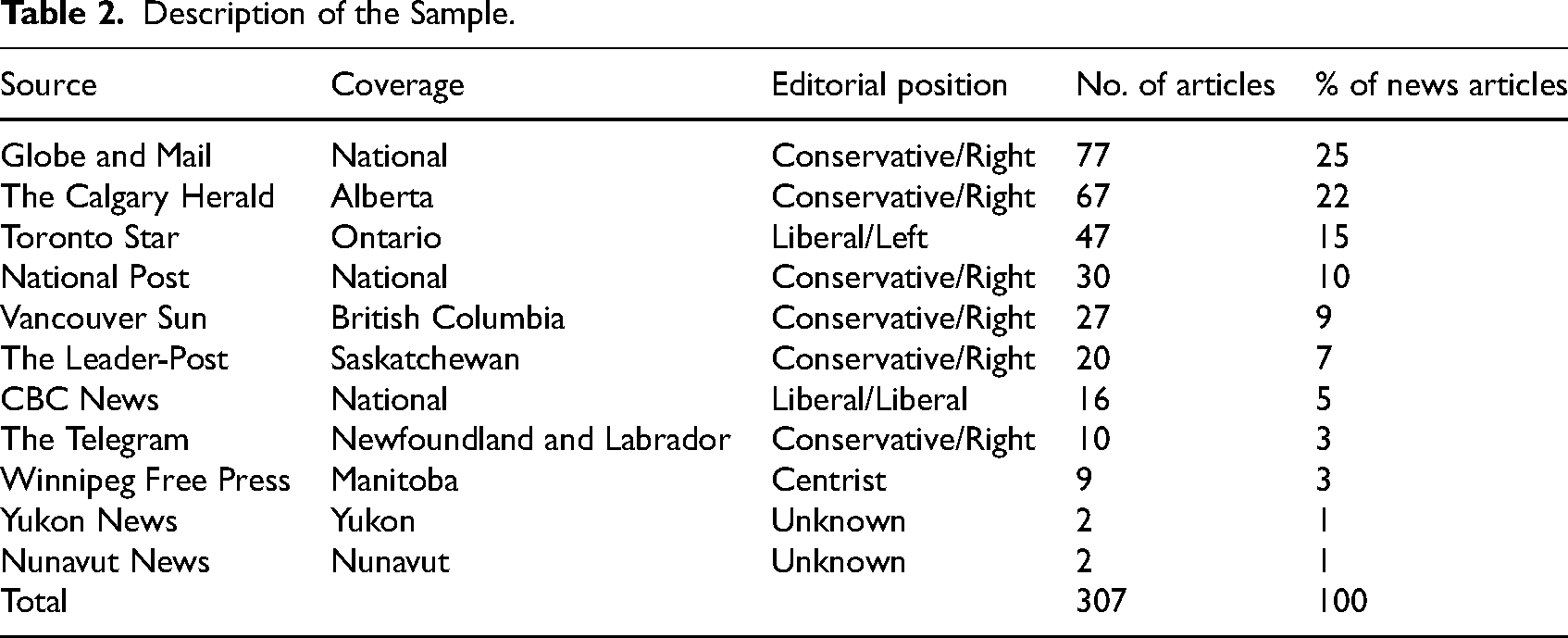
Twenty-five percent of the articles came from the Globe and Mail, 22% from the Calgary Herald, and 15% from the Toronto Star, as shown in Table 2. Additionally, 75% of the articles were published in 2018 and 2019, while 22% were published in 2020 and 2021, per Table 3. Editorially, six of the media sources we examined were considered Conservative (Right-Leaning), including the Globe and Mail and the National Post, while CBC News and Toronto Star were the only two sources that were considered Liberal (Left-Leaning). Winnipeg Free Press was the only source that provided balanced viewpoints when reporting (Centrist). The political orientation of Yukon News and Nunavut News was unknown.
Description of the Sample.
Description of the Sample by Year.

Summary of Themes and Barriers Identified in the News
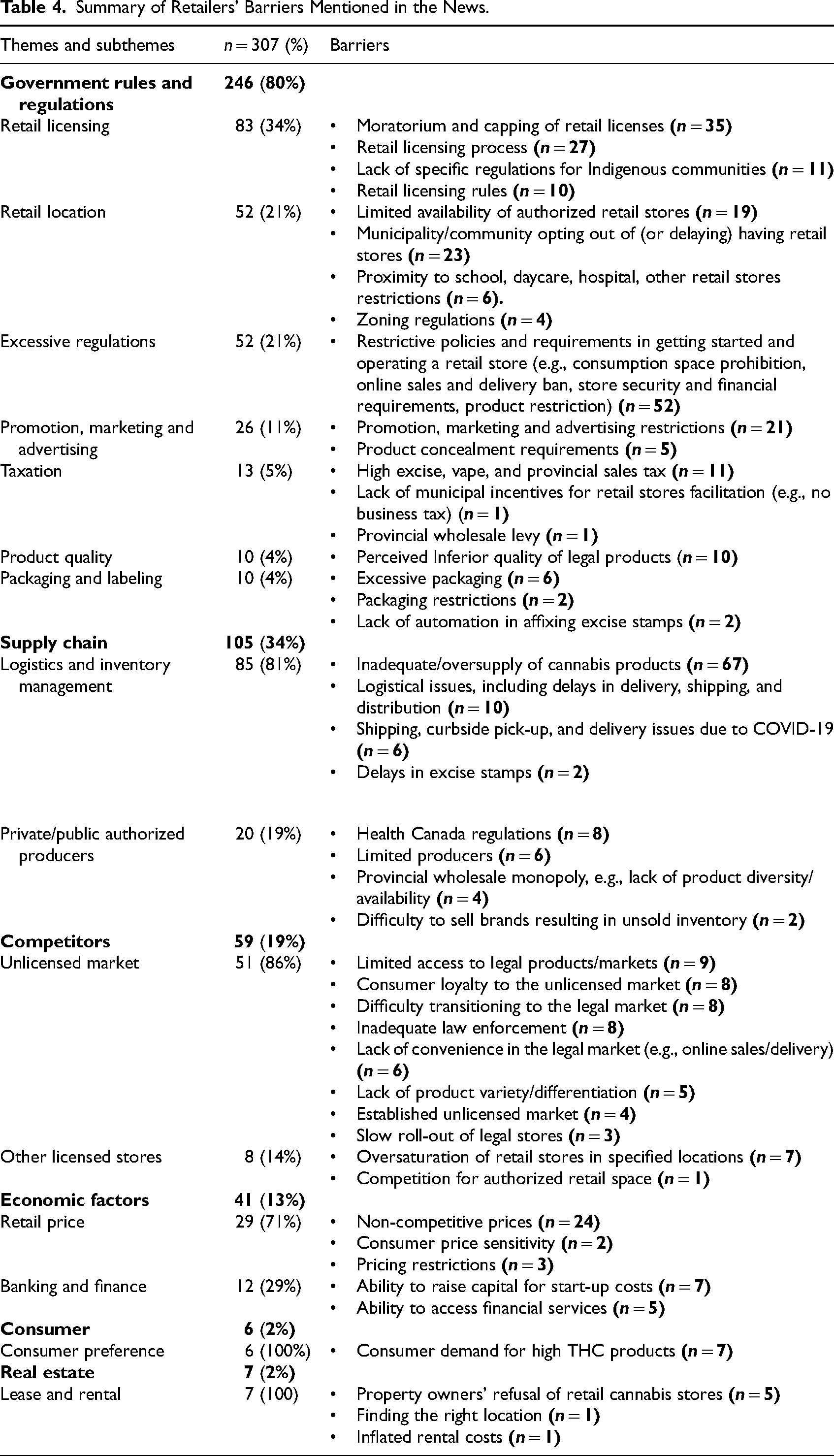
Using the CCRF, we identified six major themes and 12 sub-themes that we looked for while coding. The framework provides a logical structure for organizing and interpreting the data and captures some of the retailers’ challenges discussed in the media. The study also identified three emerging themes, one major theme (Real Estate), and two sub-themes: excessive regulations and lease and rental. The vast majority of the media-portrayed barriers mentioned were those related to government rules and regulations (80%), supply chain (34%), and competitors (19%) (Table 4).
Summary of Retailers’ Barriers Mentioned in the News.
Barriers by News Media Coverage
The top three newspapers that mentioned barriers to retailers were the Globe and Mail (46%), Calgary Herald (32%), and the Toronto Star (27%) (Figure 4).
Barriers by Editorial Position
The analysis reveals significant disparities in the perceived challenges faced by retailers according to newspapers’ editorial position. Conservative media consistently reported higher instances of perceived barriers across all major themes, accounting for approximately 75%. In contrast, sources aligned with the liberal views account for 21% of the reported barriers and are predominantly centered on government rules and regulations, supply chain, competitors, and economic factors. Centrist accounts for fewer reported barriers, mostly related to government rules and regulations and competitors (Figure 5) .
Barriers by Province and Territory
The data indicate that a significant portion of the reported barriers discussed in the news were linked to private cannabis retailers in Ontario and Alberta, accounting for 52% of the overall total. In contrast, Nunavut, Yukon, Newfoundland and Labrador, and Manitoba only accounted for 4% of the barriers mentioned. Approximately 24% of the barriers were reported as having a national scope. The results also reveal that the barriers faced by private retailers vary by province and territory. For example, issues related to government rules and regulations were more commonly reported in Ontario, British Columbia, and Alberta, while competitors were a concern for retailers in all provinces and territories, except for Newfoundland and Labrador, and Yukon. In Newfoundland and Labrador, issues related to supply chain and government rules and regulations were reported an equal number of times, while Yukon's media-reported barriers were solely related to government rules and regulations (Figure 6).
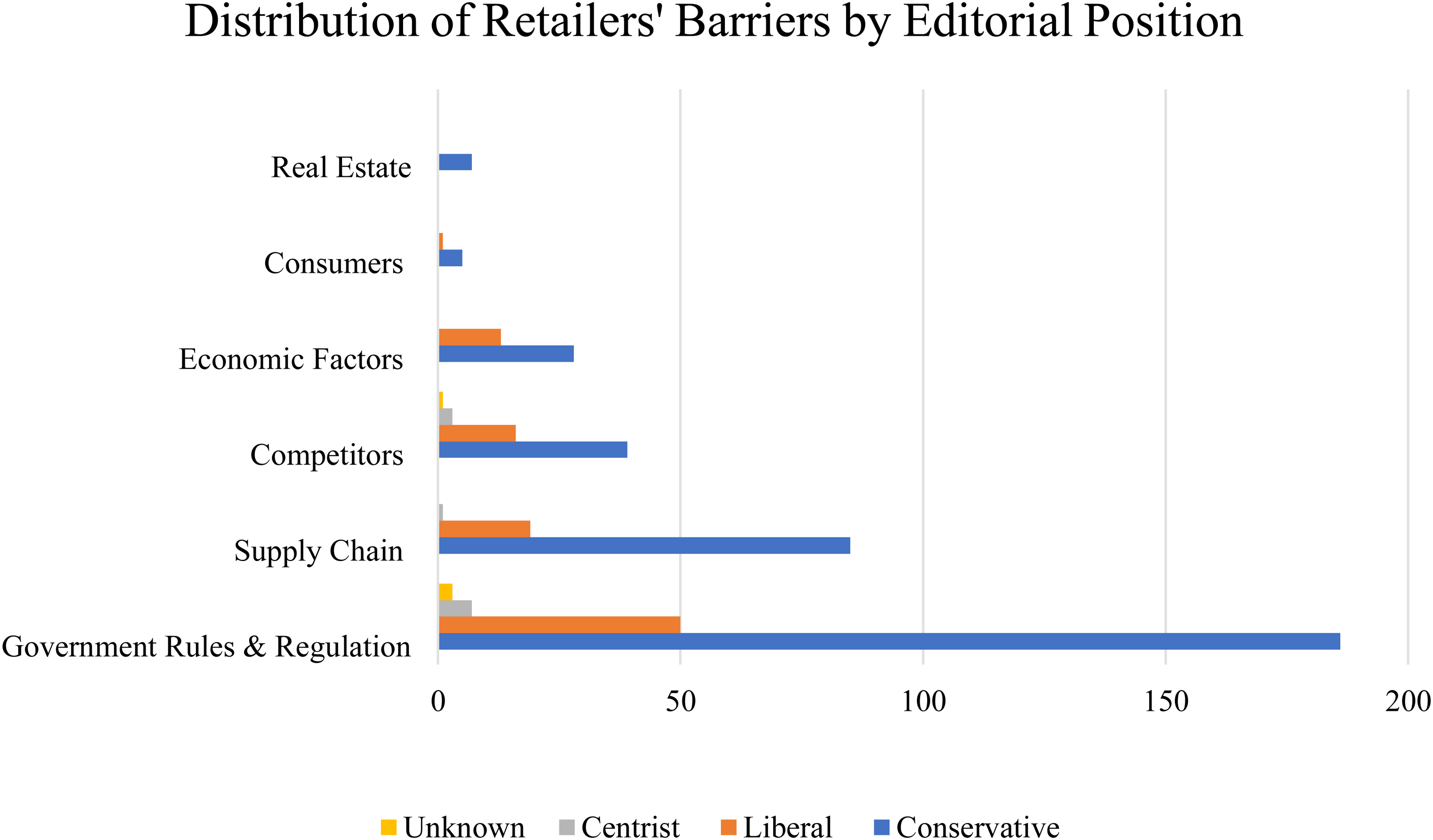
Distribution of retailers’ barriers by editorial positions.
Barriers by Stakeholders
The analysis of retailers’ barriers by stakeholders reveals diverse perceptions among different groups. Licensed and prospective retailers reported the highest percentage of barriers (57%) across major themes, while other industry players and community representatives reported the least (1% and 3%, respectively). Subject experts, including professors and researchers, reported the second-highest percentage of barriers (18%), followed by media and government representatives (11% and 10%, respectively). Despite varying reporting across stakeholders, barriers related to government rules and regulations and the supply chain remain consistent, except for community representatives who reported no supply chain-related barriers. All stakeholders reported competitor-related barriers except for other industry players, who reported none, while barriers related to consumers were only reported by licensed and prospective licensed retailers (Figure 7).
Barriers by Year
Over time, there was a shift in the media-portrayed barriers identified. In 2018 and 2019, barriers related to government rules and regulations and supply chain were more salient in the media. The barriers related to economic factors and competition were consistently mentioned every year following legalization, while consumer preference and barriers related to real estate were less prominent (Figure 8).
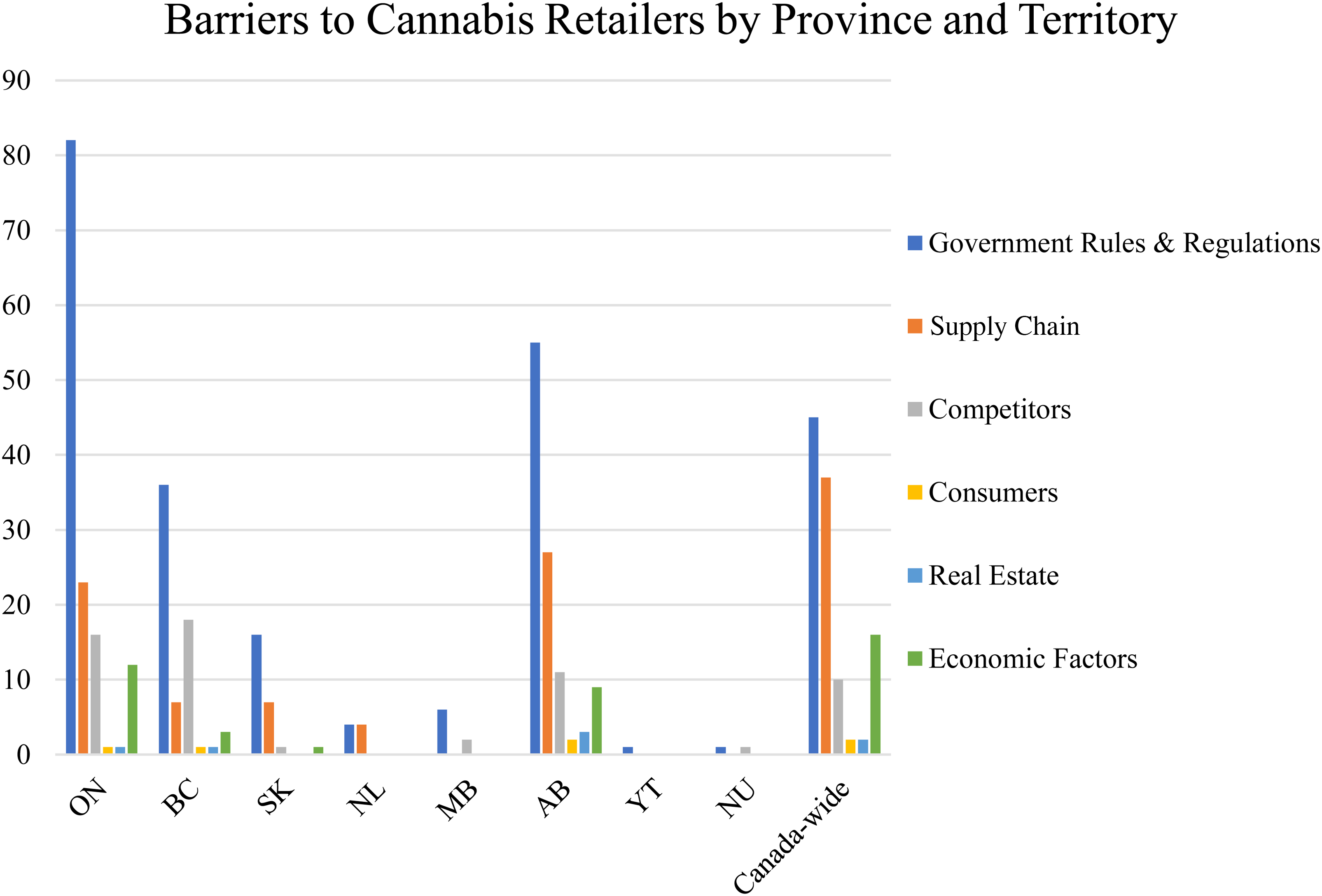
Distribution of retailers’ barriers by provinces and territories.
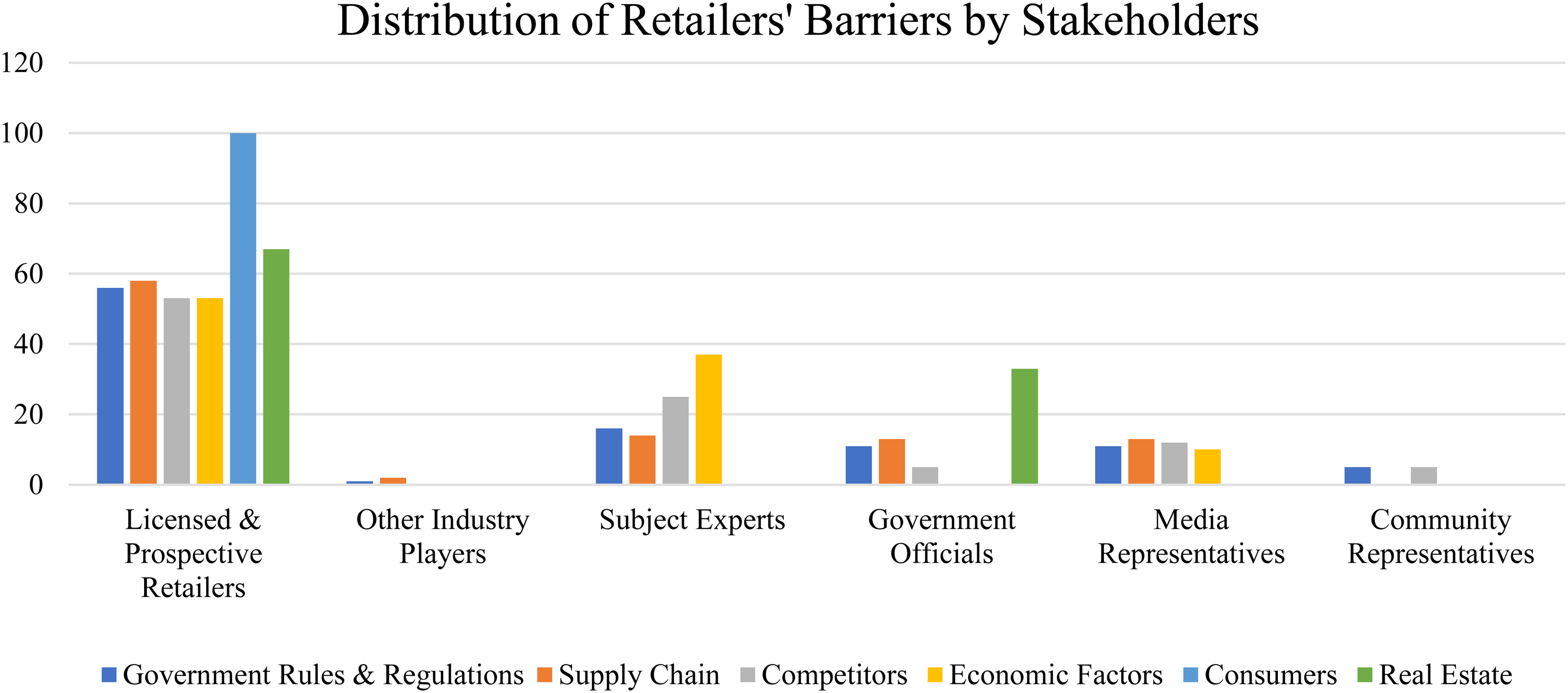
Distribution of retailers’ barriers by stakeholders.
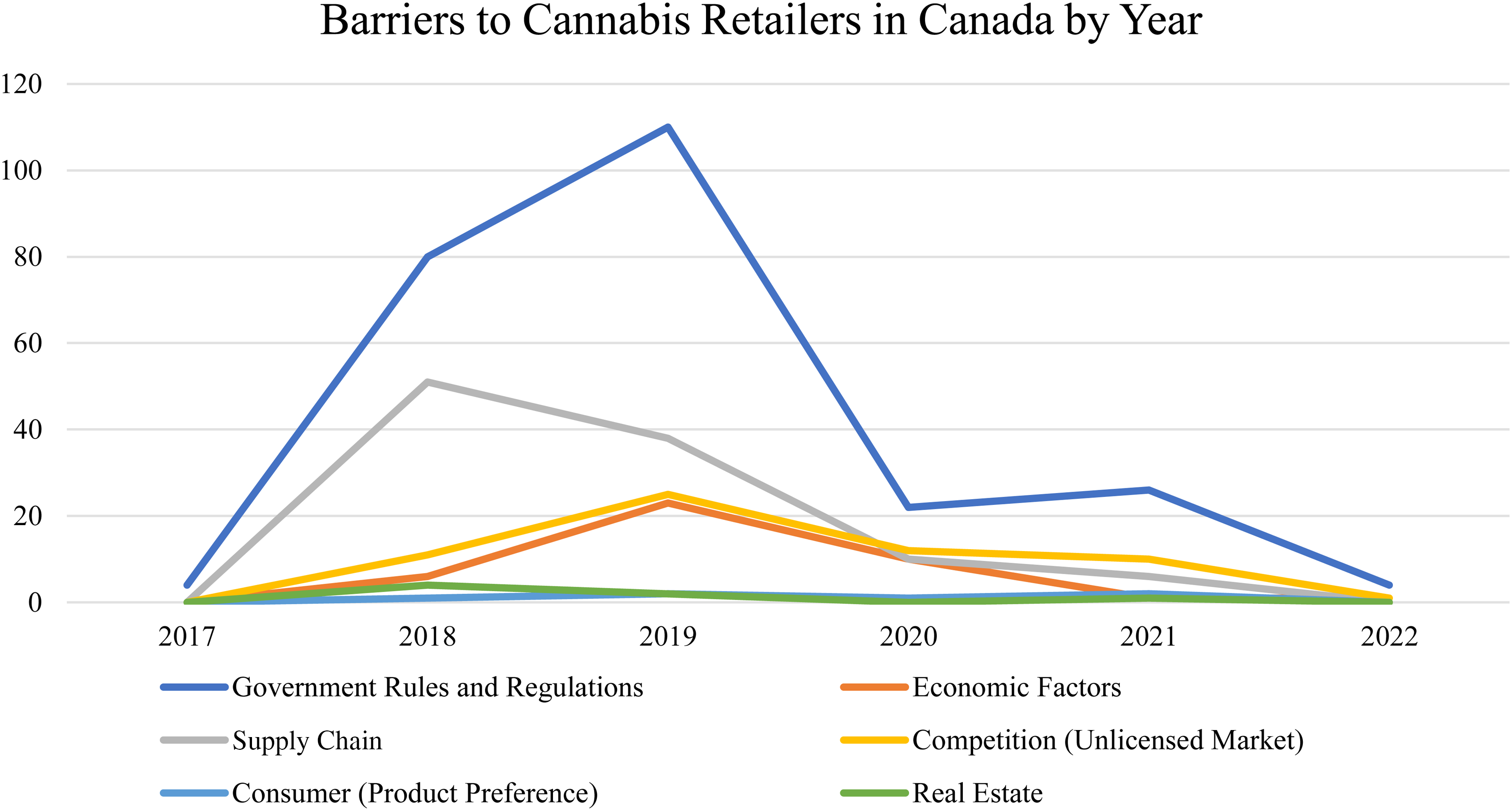
Comparison of barriers to cannabis retailers by year.
Discussion
Using the CCRF, we identified and described six significant themes from national and provincial news media sources from 2017 to 2022 and illustrated how the salience of these themes varied over time. Our study found that all six themes exhibited various degrees of salience at different times. However, barriers related to government rules and regulations, supply chain, and competitors were most prominent in the news articles we identified.
Government Rules and Regulations
Government rules and regulations emerge as an important theme, accounting for 80% of the media-portrayed barriers identified in our study. Among these, the majority (56%) were discussed by licensed and prospective retailers, primarily in conservative media outlets, with the highest media coverage occurring between 2018 and 2019. Specifically, the most salient issues associated with this theme were those related to retail licensing, retail location, excessive regulations, promotion, marketing, and advertising. These results suggest that retailers are affected by the tightly regulated market and support previous studies that indicate that strict rules hamper cannabis retailing (Centre for Addiction and Mental Health, 2022; Wesley & Murray, 2021). Consistent with the narratives in the articles we identified, a possible explanation is that in the early days of legalization, several provinces experienced a plethora of policy hiccups, including a slow retail licensing process, the capping and moratorium of licenses, and the refusal of municipalities and residents to have retail outlets in communities (Calgary Herald, 2019; Globe and Mail, 2019; The Toronto Star, 2018b; Vancouver Sun, 2019). For example, in 2018, Alberta imposed restrictions on retail licenses in response to supply difficulties and, in 2019, rejected several retail applications that were in close proximity to another store, school, daycare, or healthcare facility (Calgary Herald, 2018; The Calgary Herald, 2019). In contrast, Ontario implemented a lottery system, limiting the number of licenses available to retailers, and several municipalities delayed or opted out entirely of having a retail location (The Toronto Star, 2018a, 2019c; Vancouver Sun, 2018). Subsequently, both provinces lifted the restrictions on the number of retail stores, resulting in a surge of new retail stores, with Ontario seeing a two-fold increase in the number of retail stores per capita within 6 months of removing these limitations (Centre for Addiction and Mental Health, 2022; Edmonton Journal, 2022; Myran et al., 2022). These policy decisions may have resulted in a shift from an initial scarcity of cannabis stores to an oversaturation in some provinces, specifically Ontario, which changed from its initially planned, more restrictive public model to a hybrid one. This regulatory shift delayed the opening of private retail stores, resulting in insufficient stores (Government of Canada, 2019), and now the province has seen an oversaturation of retail outlets in some areas (The Toronto Observer, 2022).
Oversaturation hurts legal retailers, particularly small retailers (“mom and pop”), possibly threatening their survival (National Post, 2021b; The Globe and Mail, 2021; The Toronto Star, 2021). Regarding public health and safety, there is debate in the literature about the influence of the number of retail locations. For example, Armstrong argues that capping retail locations may pose serious public health and safety concerns, as limiting access to safe products may encourage consumers to purchase from the unlicensed market, leading to possibly more crime and health problems (Armstrong, 2021). However, a recent study found that the prevalence of cannabis use and customer harm increased as retail outlet concentrations increased (Centre for Addiction and Mental Health, 2022). Another study indicated that oversaturation increased consumption, potentially heightening public health and safety risks (Barrass & Jesseman, 2021). The complex interplay between retail density, consumption, and public health necessitates further research to comprehensively understand the implications of oversaturation in affected areas.
Another issue facing retailers is the restriction on promotion, marketing, and advertising. The Cannabis Act stipulates that promoting cannabis, cannabis accessories, or any related services, including sharing information about the price or distribution of cannabis in a way that could attract young people, is prohibited. This policy was in an effort to protect public health and not promote cannabis consumption as desirable, keeping in line with tobacco regulations. According to one Canadian study, fully branded cannabis products were considered more enticing to consumers, particularly youths, than those with plain packaging or merely a brand logo (Goodman et al., 2019). Making cannabis use more visible to the public could promote consumption (Barrass & Jesseman, 2021). At the same time, other literature argues that overly restrictive marketing and packaging rules prevent companies from developing a distinct brand, resulting in a more complex and costly environment for companies and consumers (Canadian Chamber of Commerce, 2019; Foster et al., 2021). Although these restrictions may help reduce harm, they make it difficult for retailers to build brand loyalty and for consumers to differentiate legal from illegal products (Ontario Cannabis Store, 2022). Tightening these restrictions is crucial to reducing youth's exposure, access, and attraction to specific products (Barrass & Jesseman, 2021; Goodman et al., 2019). However, relaxing restrictions on licensed retailers may allow them to build a stronger relationship with their customers and create a distinct brand that can compete with the unlicensed market. This can help the government achieve its goal of displacing the unlicensed market while promoting safe and responsible cannabis consumption.
Supply Chain
The second most significant theme was supply chain, consisting of logistics and inventory management and provincial and territorial authorized producers. Per our analysis, 81% of the media-reported barriers associated with supply chain are those related to logistics and inventory management, specifically, inadequate or oversupply of products and delays in delivery, shipping, and distribution. Our findings indicated that conservative leaning newspapers predominantly highlighted these issues, including viewpoints from various stakeholders such as licensed and prospective retailers (56%), subject experts (14%), and government officials and media representatives (13% respectively). However, our analysis has also shown that these issues were more salient in the news in the first 2 years of legalization than in subsequent years, suggesting that the shortages in several provinces during that time may be responsible (The Globe and Mail, 2019; The Leader-Post, 2018; The Toronto Star, 2019b; The Vancouver Sun, 2018). During this period, producers reported having several regulatory challenges, including Health Canada's rigorous and slow process of issuing the various licenses to operate and for approving certain products, as well as delivery and distribution issues (Calgary Herald, 2020; Globe and Mail, 2018; National Post, 2018; Toronto Star, 2019). These findings align with an earlier study that examined several tweets and discovered that Twitter users attributed cannabis shortages to stringent legislation restricting the number of producers and growers permitted in Canada (Aversa et al., 2021). Previous studies also confirm that producers could not ship products because excise stamps were unavailable or difficult to apply to products (Canadian Chamber of Commerce, n.d.; Foster et al., 2021; National Post, 2018). As Foster et al. (2021) claim, the excise stamp process is ineffective and places financial and administrative burdens on producers.
As a consequence of these supply challenges, retailers faced product shortages related to delivery, shipping, and distribution delays, resulting in some stores’ temporary and permanent closures or reduced hours of operation (The Telegram, 2018; The Toronto Star, 2019a; Vancouver Sun, 2018). Interestingly, our study found that the oversupply of products may have replaced these earlier challenges, creating new ones. According to more recent reports, the problem was due to an imbalance between supply and demand, leading to product overproduction (Business of Cannabis, 2021; The Toronto Star, 2022). In response, some retailers have been selling cannabis at discounted prices to remain competitive and profitable, which is unsustainable in the long run (Globe and Mail, 2022). While lower prices can attract customers and prompt them to switch from unlicensed to licensed markets, they can also have negative effects on the profits of certain retailers (Davidson and Company LLP, 2022; The Toronto Star, 2022). In particular, if retailers experience prolonged periods of negative profit margins, they may face the risk of losing their retail licenses and be required to decrease the value of their goodwill (i.e., their reputation, customer base, or brand recognition) on their financial statements (Davidson and Company LLP, 2022). Ongoing monitoring of these supply chain dynamics is required to ensure a sustainable and balanced retail market.
Competitors
Another key finding from our research is the issue of competitors. The oversaturation of retail stores in some places has created greater competition among licensed retailers, negatively impacting some of them. Meanwhile, competition from the unlicensed market has been more prevalent in the news since legalization. Our findings revealed that discussions on issues relating to competitors were mostly featured in conservative newspapers with retailers and prospective retailers contributing to 53% of the discourse, followed by subject experts at 25%. Our investigation identifies several reasons why the unlicensed market was a concern for retailers. The top salient issues were limited access to licensed products, consumer loyalty to the unlicensed market, inadequate law enforcement, and difficulty transitioning to the licensed market. Our results come as no surprise, as the unlicensed market continues to make up about 35% of consumer purchases in the first quarter of 2022, even though there has been significant progress since cannabis was legalized in 2018 (Statistics Canada, 2022). In 2018, approximately 51% of users stated that they had obtained cannabis from an illegal source, and a year later, 42% of consumers still favored the unlicensed market (Public Safety Canada, 2020; Statistics Canada, 2021). Other research has also found that store location, convenience, price, and quality of cannabis can influence whether people turn to unlicensed retailers for their cannabis purchases (Deloitte, 2021; Goodman et al., 2022). According to a previous report, in 2020, only 40% of consumers in British Columbia purchased cannabis legally due to a lack of retail outlets, a limited selection of products, and higher prices (Public Safety Canada, 2020).
Previous studies further suggest that price has been a significant driver in the continued success of the unlicensed market. For example, a recent study examining factors that affect consumer cannabis purchases found that the high cost of legal products was a significant concern for participants, especially for more experienced and frequent users (Donnan et al., 2022). Statistics Canada found that in the fourth quarter of 2019 in Canada, legal cannabis was sold at CAD 10.30 per g, which was 55% more expensive than illegal cannabis, which was being sold at CAD 5.73 per g (Statistics Canada, 2020). Furthermore, a Deloitte report indicates that 76% of consumers bought from the unlicensed market because of lower prices (Deloitte, 2021). These studies support our findings that the price disparity between the licensed and unlicensed markets is a major challenge for retailers. Although recently, due to oversaturation, many stores have lowered their prices to stay competitive and have narrowed the price gap, pricing remains a key advantage for the unlicensed market (Deloitte, 2021; Long, 2022).
However, as the sector grows, with lower pricing and more retail locations, consumers are now less devoted to the unlicensed market and are more inclined to move to the legal market (Goodman et al., 2022). Also, the COVID-19 pandemic has created a new window of opportunity. Some provinces have revised or are revising their cannabis laws and regulations to allow for private online sales and delivery by licensed retailers, which has already been established for public retailers in various locations (AGLC, n.d.; Alcohol and Gaming Commission of Ontario, 2022; The Calgary Herald, 2020). For example, Ontario recently allowed private retailers to deliver cannabis products through Uber Eats, an online food ordering and delivery platform (Alcohol and Gaming Commission of Ontario, 2022; Sabaghi, 2022). Similar initiatives may enhance the ability of private licensed retailers to better compete with the unlicensed market in Canada.
Overall, our findings demonstrate that there are variations in the representation of media coverage of these barriers across different provinces and territories, stakeholders, and editorial stance. The majority of the barriers discussed in the news were from retailers’ perspectives. Such findings provide an understanding of retailers’ firsthand experiences of the operational challenges in the industry and suggest that they play an active role in shaping the narrative surrounding their issues in the public and the media. Our study also found that most barriers were reported in Ontario and Alberta and very few in Newfoundland and Labrador, Manitoba, Yukon, and Nunavut. While not surprising, the low media coverage in these provinces may be due to a lack of interest from media outlets, limited resources, political considerations, or other local concerns taking priority. For example, the Globe and Mail and Calgary Herald, known for their conservative stance, highlighted the highest reported barriers, possibly influencing the prevalence of reported barriers in Alberta and Ontario, suggesting potential political bias in their coverage against the ruling party. In contrast, Manitoba is considered a centrist and often have a balanced perspectives when reporting, which may explain the lower frequency of reported barriers in that province. However, the low media coverage in these regions means that these findings may not be generalized across Canada. As such, future research may be needed in these jurisdictions to determine the retailers’ actual barriers.
Additionally, media coverage of these barriers varied over time, suggesting that various issues produce different agenda-setting outcomes (Soroka, 2002). More specifically, news coverage associated with the themes identified in our study went through a period of increase and decrease in salience since legalization. The possible rationale for this wax and wane in media attention may be driven by certain dramatic cannabis events happening at a particular time. We think this is due to changes in the nature of barriers facing retailers, perhaps due to changes in government policy. The basis of this assumption is that the enthusiasm for the formation of a new policy framework, such as the cannabis industry, is correlated with an increase in media attention, explaining why 75% of the articles we explored were between 2018 and 2019 (Baumgartner & Jones, 1993). For example, some issues associated with government rules and regulations may be linked to the policy roll-out of the nascent market, creating heightened media concerns with the implementation of specific policies and regulations governing the cannabis industry. However, as our results indicated, some of these issues decline in salience over time. This suggests that they may have been solved or are considered old news and therefore do not warrant the media's attention. As McCombs (2005) concludes, agenda-setting effects are substantially smaller when exposure is low, and the lack of coverage may imply the problem has been fixed.
Nevertheless, it could also be due to the media's own agenda or other external factors. If that is the case, the variation in media coverage may itself be a factor influencing policy changes by affecting how policymakers prioritize addressing these barriers. Issues that receive more media coverage are more likely to be considered important and potentially influence policy change (Baumgartner & Jones, 1993; Guo et al., 2012). Identifying these barriers is an important step in the policy change process. Our analysis supports the need for retailers’ most significant barriers to be addressed in order to protect public health and safety and displace the unlicensed market. These issues warrant the attention of policymakers and emphasize the significance of tapping into the direct experiences of industry players to better understand the opportunities and challenges of the cannabis retail market in Canada.
Limitations and Future Directions of the Study
Quantitative content analysis collects and analyzes data, identifying trends, patterns, and relationships within a dataset. As a result, this method of analysis may be subject to interpretation bias as we may have missed essential contexts or nuances that cannot be easily quantified. One approach to mitigate this concern is combining it with other research methods, such as surveys, discourse analysis, and interviews, to provide a more comprehensive analysis (McCombs & Shaw, 1972; Metag, 2016; Xu, 2020). However, we are confident in the results of our study due to our thorough, systematic approach, which enhances the validity and reliability of the results.
The generalizability of this study is limited due to two sources of selection bias. First, only articles that mentioned at least one barrier in the title were included in full-text screening, which may have resulted in excluding articles discussing barriers not mentioned in the title. Second, the articles’ selection criteria resulted in an overrepresentation of results from certain provinces and underrepresentation in others. Future research should directly examine newspapers from distinct provinces and territories instead of solely depending on databases. Moreover, our study showed that most of our selected news sources have political predispositions that could have influenced the collected data. Although we have attempted to minimize this bias by incorporating news media sources from various political perspectives, we found that most media outlets were Conservative.
Another limitation of our study is related to our novel conceptual framework (CCRF). While our framework was instrumental in identifying and analyzing the barriers to private cannabis retailers, we were not able to test it empirically as not all themes were applicable to this study. The framework should be empirically tested in a more diverse context to enhance its robustness and applicability, thereby mitigating the current limitation and offering a more validated foundation for future research in this domain.
Concerning future research directions, this study is part 1 of a two-part study, which identified the barriers to private cannabis retailers that are discussed in the news. Part 2 of this study will explore the news media narratives to gain a better understanding of how news media framed these barriers. It aims to offer insights into private retailers’ experiences and potential policy implications.
Conclusion
Our research represents a rigorous analysis of the media-portrayed barriers private licensed and potential cannabis retailers face in Canada. To our knowledge, this study is the first to provide a descriptive analysis of the barriers to private cannabis retail operations in Canada through a news media content analysis. Utilizing our conceptual framework, we identified several salient barriers to private cannabis retailers, including those related to government regulations, supply chain, and competitors, and have underscored the importance of addressing these barriers to protect public health and safety and displace the unlicensed market. Our findings have significant implications for policymakers, offering insights into the cannabis retail market and serving as a valuable resource for future researchers. This study may also guide governments in effectively deregulating or decriminalizing other controlled substances while minimizing these barriers.
In light of these findings, policymakers may want to consider implementing stricter controls over the concentration of retail stores in oversaturated areas. This could involve imposing licensing moratoriums or passing additional legislation to ensure a more balanced distribution of retail stores (Maynard, 2021).
Furthermore, federal and provincial/territorial governments may consider revising some promotional restrictions to enable licensed retailers to provide accurate product information, educate consumers on safe cannabis use, and help consumers differentiate legal products from illegal ones (Ontario Cannabis Store, 2022). Such measures could aid in achieving harm reduction goals and fostering brand loyalty among consumers.
Additionally, small cannabis retailers across provinces may consider forming co-operatives to address supply and demand imbalances. This collaborative effort may improve competitiveness through pooled resources, improving product sourcing and pricing (Co-operatives First, 2022).
However, to have a more significant impact on the policy agenda, further research is required in this field, using qualitative research methods that are interpretive, evaluative, and designed to understand retailers’ perspectives. Specifically, a direct exploration of retailers’ experiences is needed, as is an examination of the factors that enable the cannabis retail market to set the agenda for policy change and refinement.
Finally, as we did not assess whether these barriers influence policy decisions, further research is needed to determine whether federal, provincial, and territorial governments respond to the varying levels of media attention on retailers’ barriers and their potential effect on the study population. Additionally, since cannabis producers play a significant role in the cannabis retail market and can affect private cannabis retailers directly and indirectly, future studies should be conducted to examine the barriers faced by cannabis producers to fully understand the cannabis retail market in Canada.
Footnotes
Acknowledgments
A special thank you to Sandy Brennan, Web Content Manager at the Memorial University of Newfoundland, for her valuable feedback on a draft of this paper.
Declaration of Conflicting Interests
The authors declared the following potential conflicts of interest with respect to the research, authorship, and/or publication of this article: We declare that this manuscript is original, has not been published before, and is not currently being considered for publication elsewhere. There are no known conflicts of interest associated with publication. However, this research has received joint funding from the Canadian Centre on Substance Use and Addiction (CCSA) and the Canadian Institutes of Health Research. The award file number for the funding is 20200938.
Funding
The authors disclosed receipt of the following financial support for the research, authorship, and/or publication of this article: This work was supported by the Canadian Institute of Health Research/Canadian Centre on Substance Use and Addiction (CCSA) (grant number 20200938).
Consent for Publication
We declare that this manuscript is original, has not been published before, and is not currently being considered for publication elsewhere.
