




Abstract
Novel psychoactive substances (NPS) are compounds designed to mimic the effects of existing recreational drugs (classical psychoactive substances [CPS]), while eluding established legal frameworks. Little is known about their effects and potential harms, rendering the increasing number of NPS a challenge to policy makers and researchers alike. Quantitative studies on the motives underlying NPS use are limited, though understanding them is crucial for the design of effective harm prevention strategies. The present study therefore aimed to compare motivational patterns for NPS, CPS, and legal psychoactive substance (LPS) use. An online survey including questions about lifetime drug use, demographics, and motives for use was completed by 2,319 participants of which 1,967 consented and were 18 years or older. Data on lifetime use and endorsed motives are presented for 12 psychoactive substances classified into LPS (alcohol, nicotine), CPS (cannabis, MDMA/ecstasy, amphetamines, cocaine, psilocybin, LSD, ayahuasca), and NPS (synthetic cannabinoids, stimulant, and hallucinogenic) and compared between classes. Across substances, the most frequently endorsed motives were to feel euphoric (58.0%), enhance an activity (52.3%), and broaden consciousness (48.1%). Motives for use were found to differ by substance and gender, with coping-related reasons being more frequent among female participants compared to males who indicated to use for a broad range of reasons. Motivational patterns of CPS and NPS use were largely similar to their classical analogues, this was not the case for synthetic cannabinoids, which had as main endorsed motive getting intoxicated, indiscriminate of specific qualities. This information can feed into tailoring of educational campaigns and prevention strategies.
Keywords
Psychoactive substance use is a phenomenon pervasive in most, if not all, human cultures. According to the World Health Organization (WHO, 2017, 2018), approximately 15% of global deaths are accounted for by the legal drugs alcohol and tobacco. Additionally, another 450,000 casualties (0.8%) were related to the use of controlled substances in 2015 (United Nations Office on Drugs and Crime [UNODC], 2018), thereby making drug use the largest single preventable cause of death worldwide. Developing strategies to decrease drug use and prevent associated harms therefore occupies a high status on national and international health and educational agendas. This challenge becomes particularly difficult when new drugs are introduced to the market, as is the case with the recent surge of novel psychoactive substances (NPS; Weinstein, Rosca, Fattore, & London, 2017; Winstock & Ramsey, 2010).
NPS are legally ambiguous substances, often mislabeled purposefully as “not for human consumption” and openly sold on the Internet. They are used despite little to no information being available on their physiological and psychological risks. Between 2009 and December 2018, 892 such new substances have been reported to the UNODC (2019) Early Warning Advisory, amounting to more than 700 NPS currently under monitoring by the European Monitoring Centre for Drugs and Drug Addiction (EMCDDA). Among these are at least 179 synthetic cannabinoids (as of June 2018; see EMCDDA, 2018), the use of which has been found to necessitate emergency medical treatment with a higher probability than any other drug in the period 2014–2017 (Winstock & Barratt, 2013a; Winstock, Barratt, Ferris, & Maier, 2017; Winstock, Lynskey, Borschmann, & Waldron, 2015).
Understanding the motives underlying drug use is assumed to be a pivotal component in the development of effective drug harm prevention and treatment strategies (Adams et al., 2003). Previous research has sometimes evaluated drug use motivations in terms of functional reasons (Johnston & O’Malley, 1986), that is, serving different purposes. Boys and colleagues (Boys, Marsden, Fountain, et al., 1999; Boys, Marsden, & Strang, 2001) have, for example, identified five such functional domains: changing mood (e.g., to stop worrying about a problem), physical effects (e.g., to lose weight), social purposes (e.g., to enjoy the company of friends), facilitating activities (e.g., to concentrate, to work/study), and manage the effects of other substances (e.g., to ease or improve). Importantly, these functions have been found to be a powerful predictor of intensity of use and drug-associated problems, demonstrating the clinical relevance of motivational components in drug use (Boys & Marsden, 2003). Previous studies have shown that different drugs are associated with unique motivational patterns, which additionally differ by intensity of use (Nail, Gunderson, & Kolb, 1974; Segal, Cromer, Hobfoll, & Wasserman, 1982; Segal, Huba, & Singer, 1980; Shearn & Fitzgibbons, 1972), age (Boys et al., 2001; Dohner, 1972; Johnston & O’Malley, 1986), and gender (Boys et al., 2001; Newcomb, Chou, Bentler, & Huba, 1988; Terry-McElrath, O’Malley, & Johnston, 2009). It has consistently been found that females, more than males, are prone to use drugs to cope with negative emotions, such as anxiety (Newcomb et al., 1988; Stewart, Karp, Pihl, & Peterson, 1997), as well as physical purposes, for example, to lose weight (Boys et al., 2001; Terry-McElrath et al., 2009).
Harm prevention approaches are often designed to target multiple substances with similar effects (Stockings et al., 2016). Understanding the motives underlying the use of NPS and identifying parallels to better known classical psychoactive substances (CPS) such as amphetamines, cocaine, and cannabis therefore appear a promising avenue to facilitate the development and application of appropriate harm reduction strategies. However, only few studies so far have quantitatively investigated the motivational aspects specific to NPS use (Soussan & Kjellgren, 2016; Sutherland et al., 2017). It has been suggested that the lack of regulatory legal frameworks around NPS might create unique circumstantial motivations (e.g., availability, legality) for the use of these drugs, rendering substance-related functional motives secondary (Sutherland et al., 2017). This assumption was partly confirmed in a population of Australian regular psychostimulant users, for whom NPS use was most strongly motivated by “good value for money.” Of note, considerable differences between subclasses of NPS were revealed (Sutherland et al., 2017) with the use of synthetic cathinones, for example, seeming more opportunistic, as users most often reported that their reason for use was the lack of available alternatives. Another study examining both circumstantial and functional motivations similarly revealed unique motivational profiles for different NPS categories (Soussan & Kjellgren, 2016). However, for all NPS, functional motives related to subjective behavioral effects were found to be more relevant than circumstantial aspects.
The aim of the present study was to investigate and compare motives for the use of legal psychoactive substances (LPS, alcohol, nicotine), CPS (cannabis, MDMA, amphetamines, cocaine, psilocybin, LSD and ayahuasca), and NPS within a functional framework, extending previously identified motivational domains. Although ayahuasca is sometimes considered an NPS, for example, according to the UNODC’s definition of NPS as “substances of abuse, either in a pure form or a preparation, that are not controlled by international drug conventions, but which may pose a public health threat” (UNODC, 2013), for the purpose of drawing parallels between relatively unknown designer drugs and well-studied psychoactive substances, we here decided to group it within CPS (see also Labate, Cavnar, & Gearin, 2016, for a discussion of this issue). It was hypothesized that the pattern of motives underlying NPS use would be similar to that of their classical pharmacological analogues with motives for stimulant NPS use related to amphetamines/cocaine, those for hallucinogenic NPS use to LSD/psilocybin/ayahuasca, and those for cannabinoid NPS use to cannabis.
Method
Design and Participants
This study was conducted with an online questionnaire that was advertised on several drug-use-related websites and fora, including reddit discussion boards, www.shroomery.org, dhpforum.nl, and stichtingopen.nl. It was unincentivized and described as a study on individuals’ motives for drug use. Eligibility criteria for participation were being 18 years or older, previous experience with MDMA or psychedelics, and signed informed consent. Ethics approval was received from the Ethics Review Committee of Psychology and Neuroscience of Maastricht University (ERCPN-177_06_03_2017). To create and host the survey, the online software platform Qualtrics (version XM) was used. The duration to complete the questionnaire was dependent on the range of drugs participants previously used with an average duration of 96 minutes. It was possible for participants to pause the questionnaire at any point and continue it later.
Between May and August 2017, the survey was started 4,892 times; 1,967 (40%) respondents were included who consented, were older than 18 years, and completed the questionnaire.
Questionnaires
Demographic information
Respondent demographics (age, gender, geographical origin, and highest level of education) were collected. Level of education was recoded into five categories (≤high school or equivalent, high school degree or equivalent, university/college, advanced/postgraduate degree, and vocational/trade school). The number of participants per continent of origin will be reported to provide information about the geographical distribution of the sample.
Drug use
Participants were asked whether they have used or were currently using any of the following 12 drugs: alcohol, nicotine, cannabis, MDMA/ecstasy, psilocybin, LSD, ayahuasca, amphetamines, cocaine, stimulant NPS, hallucinogenic NPS, and cannabinoid NPS. When they indicated that they (had) use(d) one of the substances, they were consequently asked in-depth questions about their use including frequency and average amount of use, age of first use, and time point of last use. Substances were grouped into three categories: LPS (alcohol, nicotine), CPS (cannabis, MDMA, amphetamines, cocaine, psilocybin, LSD, ayahuasca), and NPS (cannabinoid, hallucinogenic, stimulant).
Examples were given for the different categories of NPS. Stimulant NPS included synthetic cathinones (mephedrone or “bath salts”), aminorex derivatives (“seretoni”), novel amphetamine-type stimulants (PMA, DMA, MPA), methylphenidate-like NPS (ethylphenidate; “El Burst”), synthetic cocaine substitutes (dimethocaine; p-FBT), and aminoindances (MDAI, 5-IAI). For hallucinogenic NPS, examples were phenethylamines (2C-series; NBOM-series “N-bomb’s”), tryptamines (5-MeO-DMT), and LSD-related compounds (1-P-LSD, ETH-LAD). Examples for cannabinoid NPS included JWH-018, HU-210, and 5F-AKB48 (street names: Spice, K2, Bonzai, Clockwork Orange, Psyclone).
Motives for drug use
Motives were assessed using a binary yes/no 24-item scale (Table 1), which was designed as an extended version of the 18-item reasons for drug-use scale by Boys and colleagues (Boys et al., 2001). The added items included motives related to social context, self-exploration, and escapism, as derived from qualitative interviews (Prepeliczay, 2016), as well as one open-ended question in which participants could indicate other motives that were not included in the scale.
Investigated Motives for Drug Use.
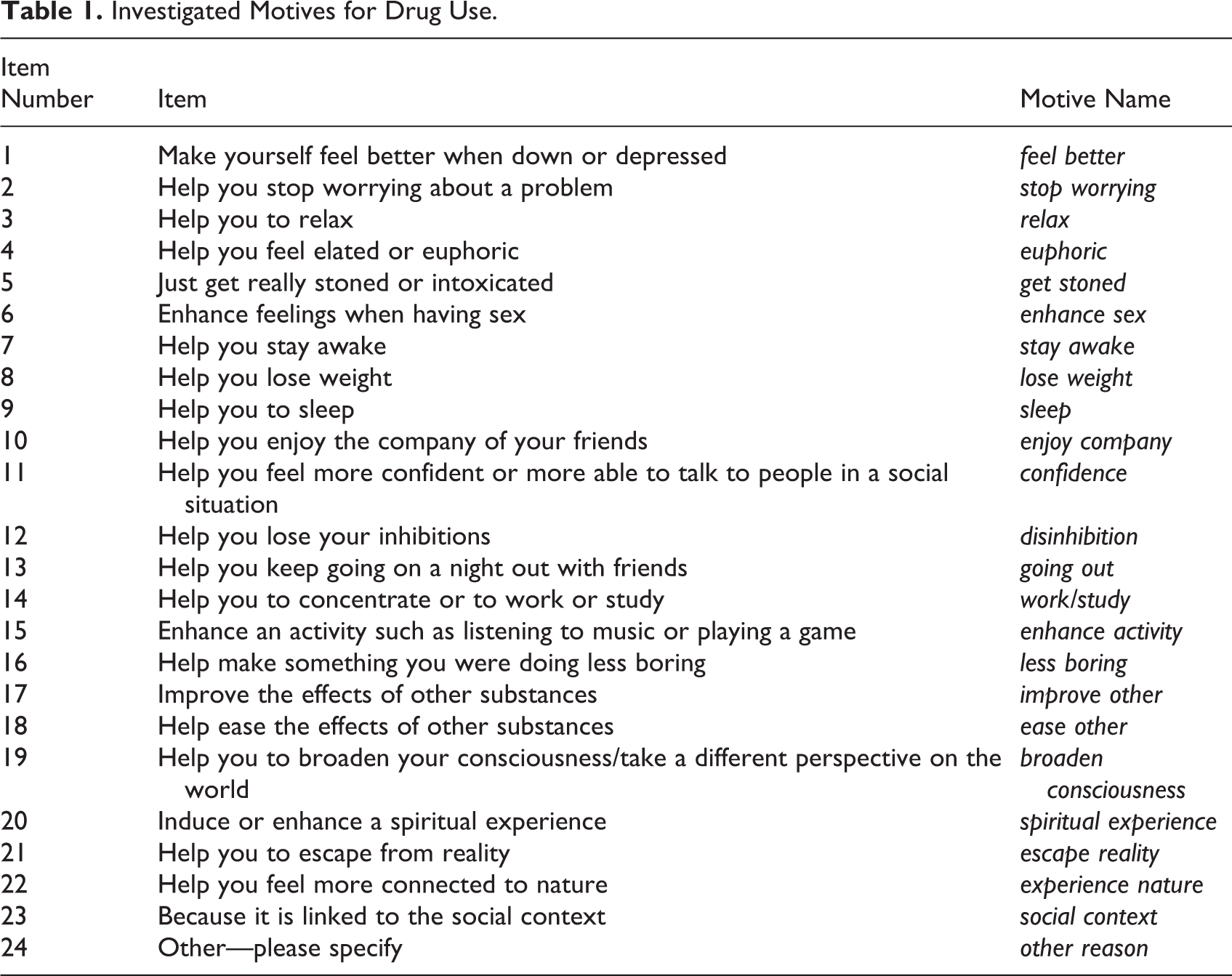
For each substance they (had) use(d), the frequency distribution of endorsed motives was determined, as well as the average total number of endorsed motives. Frequently recurring self-specified motives in response to the open-ended question were identified and are presented along with the 23 predefined motives in the Results section.
Statistics
Questionnaire data were entered into SPSS Version 24.0. Frequencies and proportions (%) are reported for demographic information, lifetime drug use, and endorsed motives for use. Due to the binary nature of the data, principle component analysis (PCA) was performed on the tetrachoric correlation matrix of motives for drug use in order to reduce dimensionality. The self-specified “other reason” was excluded in this and the following analyses due to its heterogeneous content. As correlated factors were expected, oblique (Promax) rotation was used. Eigenvalues larger than 1 were employed to determine the appropriate number of factors. Items that loaded lower than 0.5 on one factor or cross-loaded on two factors with a difference of less than 0.2 were excluded to acquire a clean factor structure. Gender differences in drug use motives were analyzed using χ2statistic for the remaining individual motives and two-sided independent sample t tests for the summed subscale scores resulting from PCA. Due to the low proportion of participants who indicated their gender as other (1.3%, N = 26), this group was omitted in the statistical analysis of gender effects. Bonferroni corrections were employed to adjust p values where appropriate, otherwise a p value of .05 was interpreted as statistically significant.
In order to test the hypothesis that specific types of NPS would exhibit motivational patterns most similar to their CPS analogues, cluster analysis was conducted based on substance-specific frequency distributions of endorsed motives. Cluster techniques group objects according to profile similarity, which in this study was used to evaluate the similarity between patterns of motives for the use of individual substances. However, different definitions of similarity cause results to vary among cluster methods. To account for this, both exploratory and confirmatory clustering processes were employed. Following Milligan’s (1980) recommendation, a k-means iterative solution was used as a confirmatory method after obtaining the optimal number of starting seeds from hierarchical clustering techniques. These included complete linkage, Ward’s linkage, and within- and between-groups average linkage to demonstrate cluster stability. Discontinuities in the agglomeration coefficients in all four hierarchical approaches indicated a four-group solution to be optimal. In all cluster analyses, the squared Euclidian distance (SED) served as similarity measure.
Results
Demographic Information
The final set of 1,967 participants consisted of 1,549 (78.7%) males, 392 (19.9%) females, and 26 (1.3%) who indicated their gender as “other,” with a mean (±SD) age of, respectively, 25.2 (8.4), 28.1 (9.1), and 27.7 (12.7) years. The most common highest level of education was university degree (56.6%), followed by high school degree/equivalent (26.5%), advanced (postgraduate) degree (12.5%), vocational/trade (2.4%), and ≤high school (1.1%); 0.9% did not specify their education. Participants originated from countries across the five continents, that is, Africa (0.7%), America (60.1%), Asia (1.9%), Australia and Oceania (3.7%), and Europe (33.4%); 0.3% did not answer this question.
Drug Use
The proportion of participants who indicated that they had used one of the 12 listed substances is presented in Figure 1. On average, participants indicated that they had used a total of 5.8 (SD = 2.1) of the 12 substances, and this did not differ significantly between genders, t(1,939) = 0.71, p = .48. Cannabis was the drug with the highest lifetime prevalence (94.1%), followed by alcohol (92.0%). The psychedelic compounds LSD and psilocybin had been used by 80.0% and 73.1% of participants, respectively. This is followed by MDMA/ecstasy (57.3%) and nicotine (56.6%), cocaine (32.7%), amphetamines (28.9%), and ayahuasca (7.7%). The most commonly used NPS were hallucinogens (34.7%), while stimulant (13.5%) and cannabinoid (8.0%) NPS had been used by fewer participants.
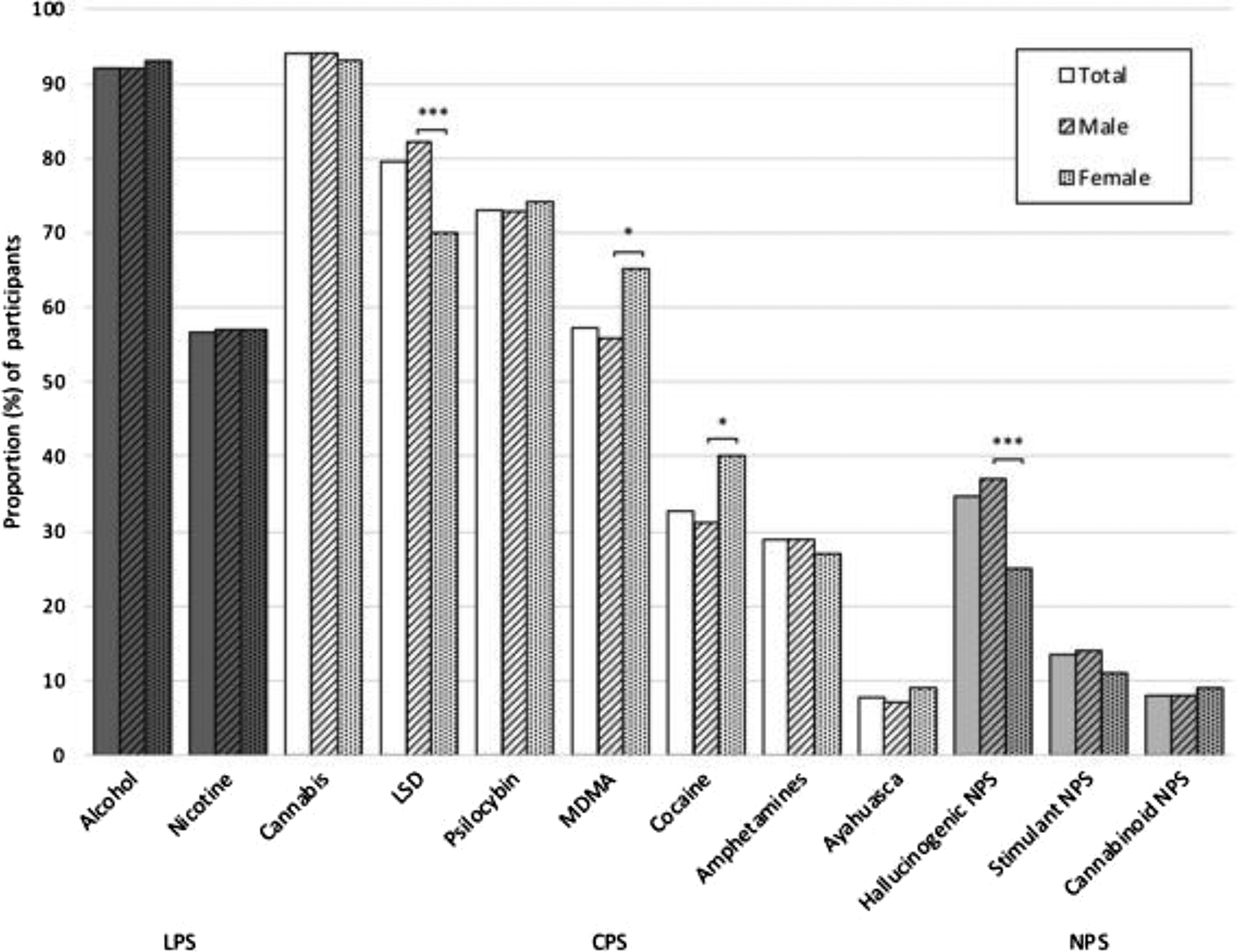
Frequency distribution of lifetime substance use among the 1,967 total, 1,549 male (striped) and 392 female (dotted) participants. Bars indicate the proportion of total, male, and female participants who stated that they had previously used the drug. *p < .004. ***p < .00008.
After p value adjustment for 12 comparisons (p = .004), gender differences in drug use history were found for LSD, χ2(1) = 25.55, p < .001, and hallucinogenic NPS, χ2(1) = 20.03, p < .001, which were more common among males, as well as cocaine, χ2(1) = 10.51, p = .001, and MDMA, χ2(1) = 10.26, p = .001, which were more common among females.
Motives for Drug Use
In the following section, endorsed motives for drug use across all investigated substances will be presented, followed by motives endorsed for the use of each class of substances, LPS, CPS, and NPS. Finally, drugs will be compared on an individual level through cluster analysis.
Overall Motives of Substance Use
Regardless of drug type, the motive most often reported by participants was to feel euphoric (58.5%), followed by to enhance activity (52.3%) and to broaden consciousness (48.1%). Least frequently endorsed motives across substances were to lose weight (3.7%), ease other drug effects (11.4%), and to sleep (15.5%; Figure 2). Across drugs, male participants reported a significantly, t(11,240) = 3.60, p < .001, higher number of motives for drug use, mean (±SD): 6.97 (4.33), than females, 6.60 (4.36).
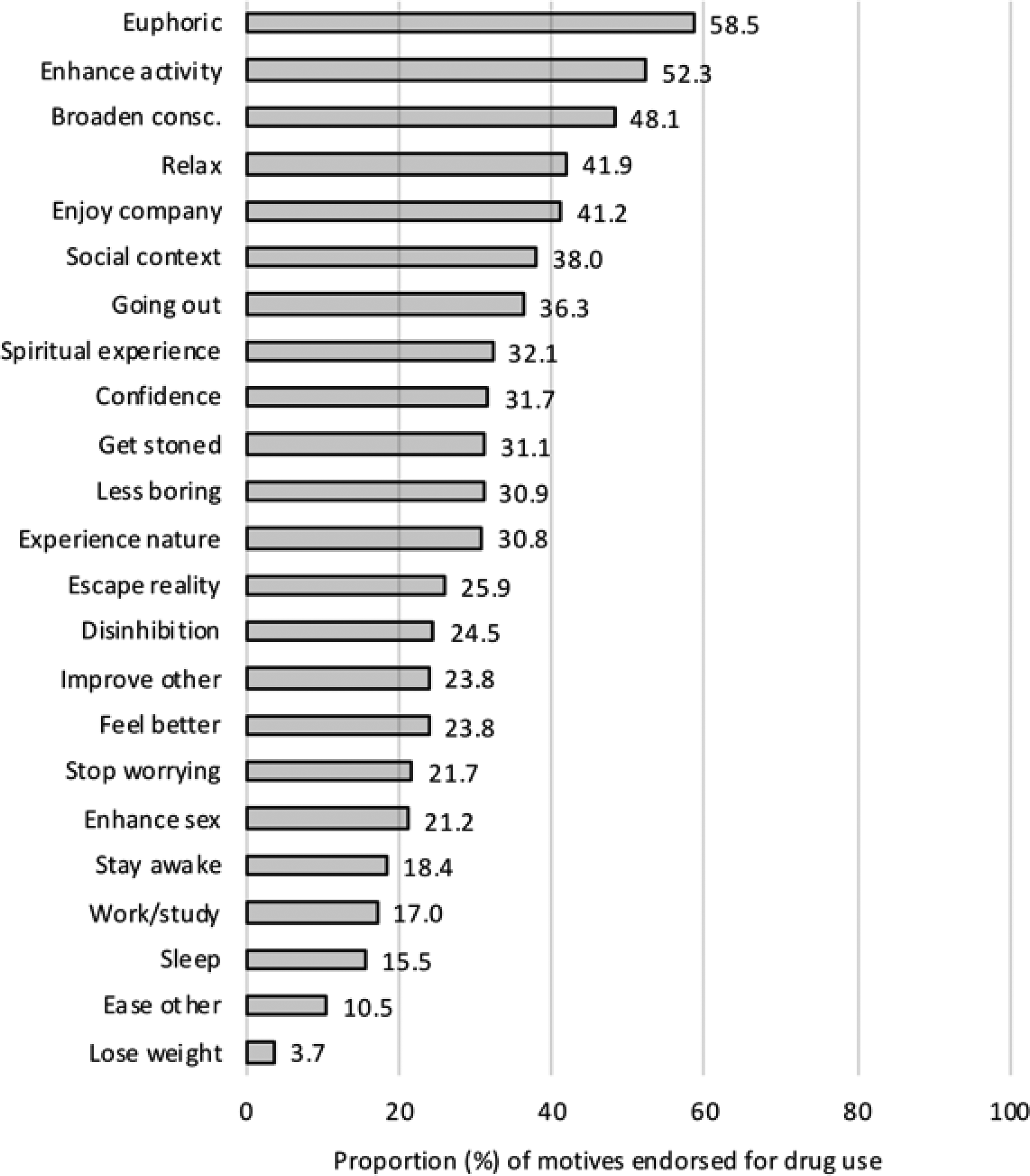
Endorsed motives across substances. Bars indicate proportion (%) of participants (N = 1,967) who endorsed each motive for any of the drugs (N [total drugs used] = 11,371).
In 10.7% of cases, participants made use of the option to specify another reason for substance use. Recurring themes were for the taste, endorsed by 3.0% of participants for alcohol use specifically, and addiction, endorsed by 6.9% for nicotine use specifically. Due to the otherwise large heterogeneity of self-specified reasons, the other category will not be included in the following sections, leaving 23 motives endorsed by participants.
PCA was performed on the tetrachoric correlation matrix of the remaining 23 binary motive items. The Kaiser–Meyer–Olkin measure of sampling adequacy was 0.859 and Bartlett’s test of sphericity was highly significant, χ2(253) = 71,698.99, p = .000, indicating suitability of the data for PCA. The resulting structure consisted of five factors with an eigenvalue larger than 1, which cumulatively accounted for 53.45% of the variance (Table 2). Sixteen items that satisfied the inclusion criteria (see Method section) were grouped into the following five subscales: “Self-Exploration” (including broaden consciousness, spiritual experience and experience nature), “Effect Handling” (improve other, ease other and sleep), “Social” (disinhibition, going out, confidence and enjoy company), “Coping” (stop worrying, feel better and escape reality), and “Activation” (stay awake, work/study, lose weight). Correlations among the resulting components ranged from −.45 (“Self-Exploration” vs. “Activation”) to .412 (“Effect Handling” vs. “Coping”). Gender differences were analyzed by comparison on these five subscales, in addition to the seven remaining individual motives, resulting in 12 tests and an adjusted p value of .004.
Principal Component Analysis Results of Motives for Drug Use.
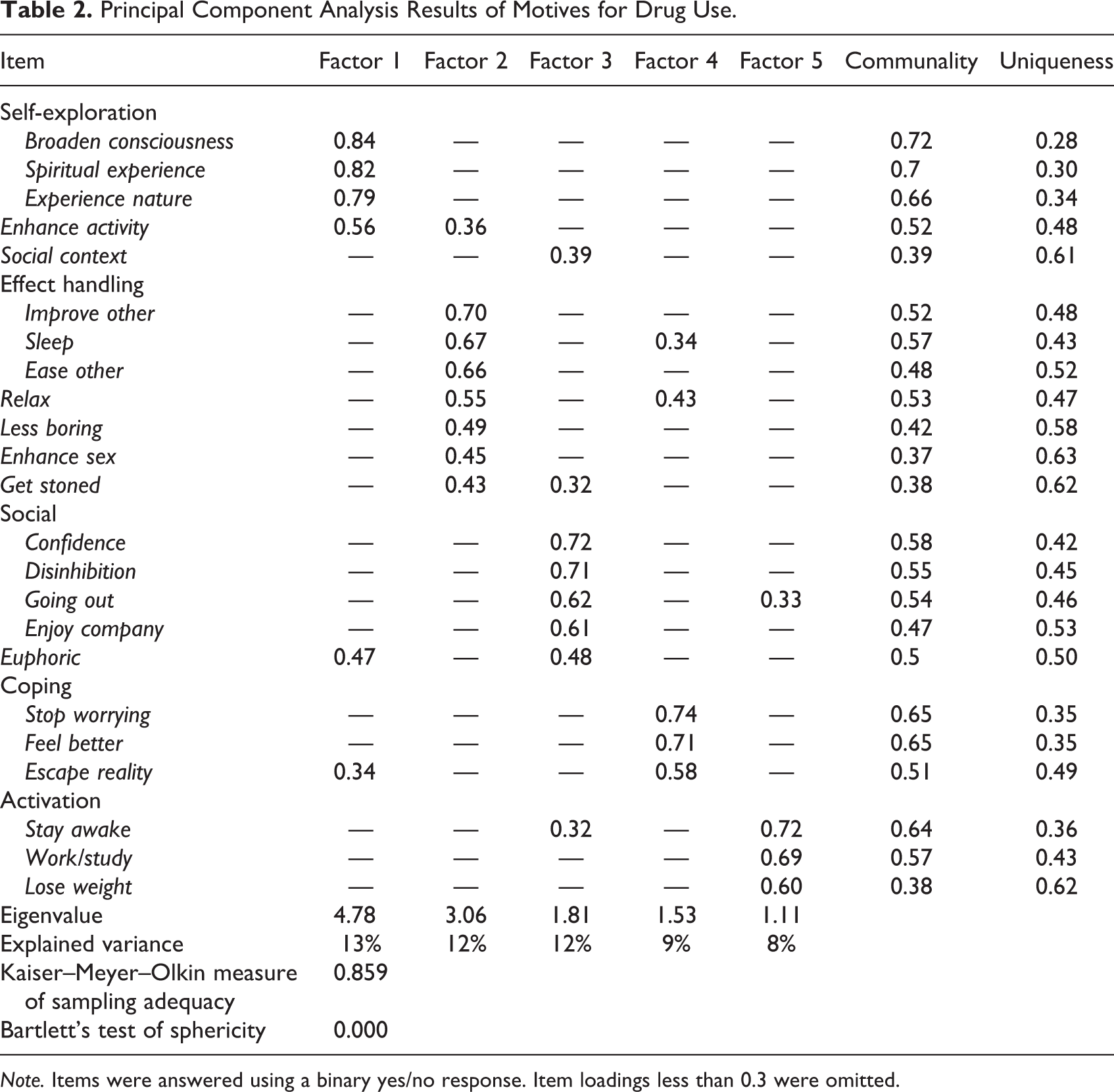
Note. Items were answered using a binary yes/no response. Item loadings less than 0.3 were omitted.
Across drugs, gender differences were identified for four of the seven individual motives and three of the five subscales. Males were more likely to have used drugs for the following reasons: feel euphoric, χ2(1) = 65.97, p < .001, get stoned, χ2(1) = 25.72, p < .001, and enhance activity, χ2(1) = 65.32, p < .001. Additionally, males scored higher, on the subscales pertaining to “Self-Exploration,” mean (±SD): 1.24 (1.29), t(3,513.11) = 3.26, p = .001, and “Effect Handling,” 0.53 (0.86), t(3,678.44) = 4.94, p < .001, compared to females, 1.14 (1.27) and 0.43 (0.79). In contrast, females were more likely to endorse the social context motive, χ2(1) = 16.48, p < .001, and scored significantly higher on the “Coping” subscale, mean (±SD): 0.77 (1.0), t(3,386.33) = −3.08, p = .002, than males, 0.70 (0.97).
Drug-Class Specific Motives
The most frequently endorsed motives for the different classes, LPS, CPS and NPS, are presented (Figure 3), along with gender differences.
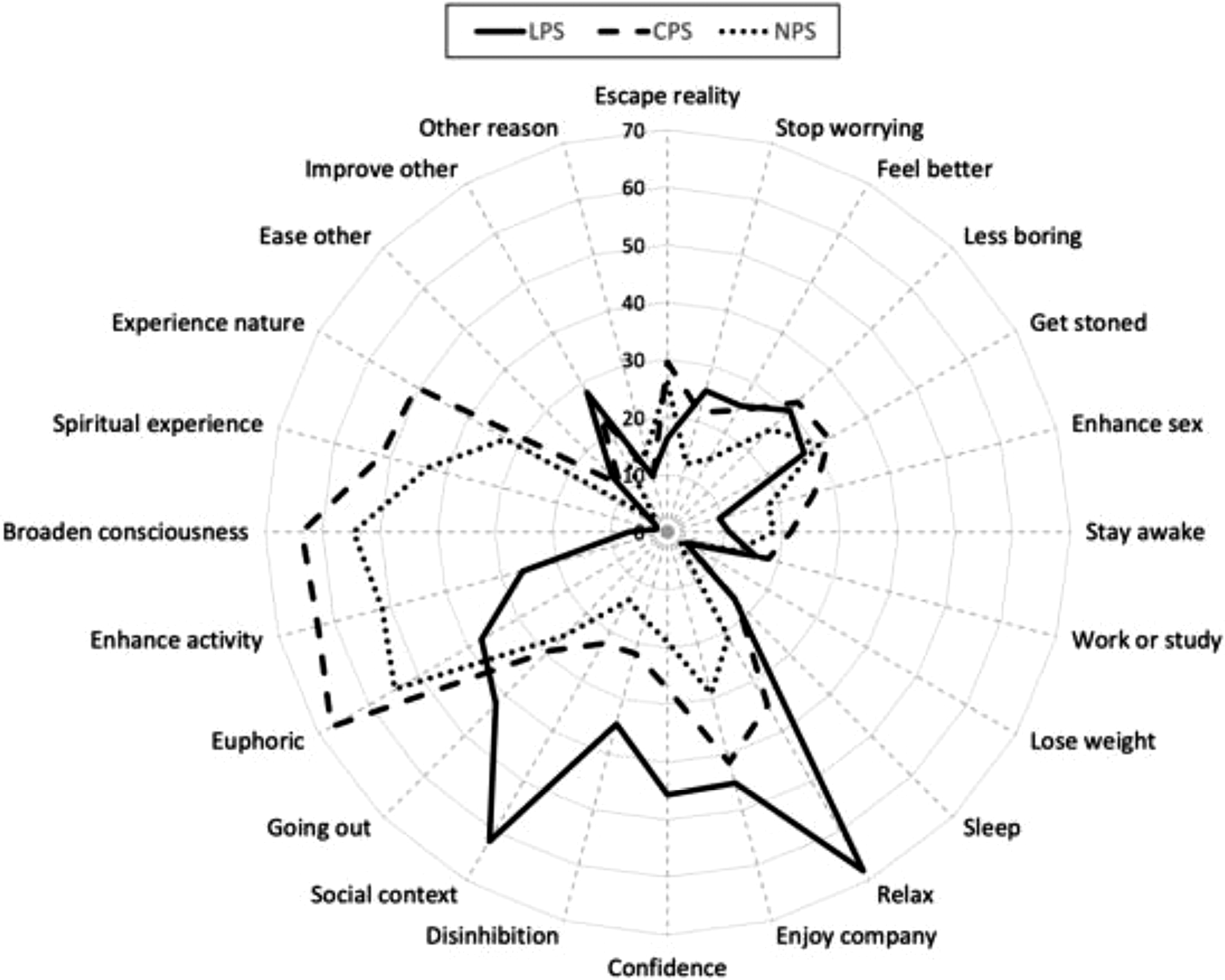
Proportion (%) of participants who endorsed a motive for legal (“LPS”: alcohol, nicotine; N = 2,888), classical (“CPS”: cannabis, amphetamines, MDMA, cocaine, LSD, psilocybin, ayahuasca; N = 7,258), and novel psychoactive substances (“NPS”: cannabinoid NPS, stimulant NPS, hallucinogenic NPS; N = 1,096).
The most commonly endorsed motives for using LPS (N = 2,888) were to relax (67.9%), social context (62.0%), enhance confidence (45.6%), to enjoy company (45.2%), and to keep going on a night out (42.2%).
Male participants were significantly more likely to use LPS to feel euphoric, χ2(1) = 14.26, p < .001, to get stoned, χ2(1) = 15.19, p < .001, and scored higher on the “Effect Handling” subscale, mean (±SD): 0.61 (0.82), t(964.74) = 3.43, p < .001, compared to females, 0.49 (0.76). Females in contrast used LPS more often to enhance sex, χ2(1) = 17.87, p < .001.
The most frequently endorsed motive for CPS (N = 7,258) was to feel euphoric (67.6%), followed by to broaden consciousness (63.3%), to enhance activity (62.9%), for the spiritual experience (51.5%), and to experience nature (50.4%).
Overall, males, mean (SD): 7.55 (4.43), endorsed a higher number of motives than females, 7.00 (4.46), for CPS, t(7,256) = 4.24, p < .001. Specifically, male participants were more likely to endorse any of the following motives: to feel euphoric, χ2(1) = 52.32, p < .001, to get stoned, χ2(1) = 16.97, p < .001, to enhance activity, χ2(1) = 73.23, p < .001, to make it less boring, χ2(1) = 15.9, p < .001, as well as motives pertaining to the “Self-Exploration” subscale, 1.68 (1.23), t(7,256) = 3.65, p < .001, and the “Effect Handling” subscale, 0.55 (0.91), t(2,489.55) = 4.23, p < .001, compared to females, 1.55 (1.27) and 0.44 (0.82).
The most frequently endorsed motives for NPS (N = 1,096) were to feel euphoric (54.8%), to broaden consciousness (54.7%), to enhance activity (51.3%), to have a spiritual experience (43.2%), and to experience nature (32.5%).
Fewer gender differences were identified for NPS than for the other substances. Male participants were more likely to endorse the motive enhance activity, χ2(1) = 9.97, p < .001, while females more frequently endorsed the social context motive, χ2(1) = 9.65, p < .001.
Substance-Specific Motives
The number of motives endorsed for any drug ranged from 3.5 (ayahuasca) to 10.7 (cannabis) of 24 response options, including the self-specified other reason. Among the most consistently endorsed motives for any substances were to relax for the use of cannabis (88.2% of cannabis users), to feel euphoric for MDMA (87.6%) as well as to broaden consciousness for the use of LSD (90.7%), psilocybin (88.8%), and ayahuasca (88.2%). Likewise, spiritual experience (81.5–87.5%) and to experience nature (56.6–79.5%) were endorsed by a majority for the use of classical psychedelics (LSD, psilocybin, and ayahuasca; Figure 4). Notably, for most substances, a range of motives were reported with an (almost) equal frequency, that is, the differences in reported frequencies were not that large for “first” and “second” picked motives. However, for cannabinoid NPS, this was not the case and one motive to get stoned (58.6%) was the most prominent.
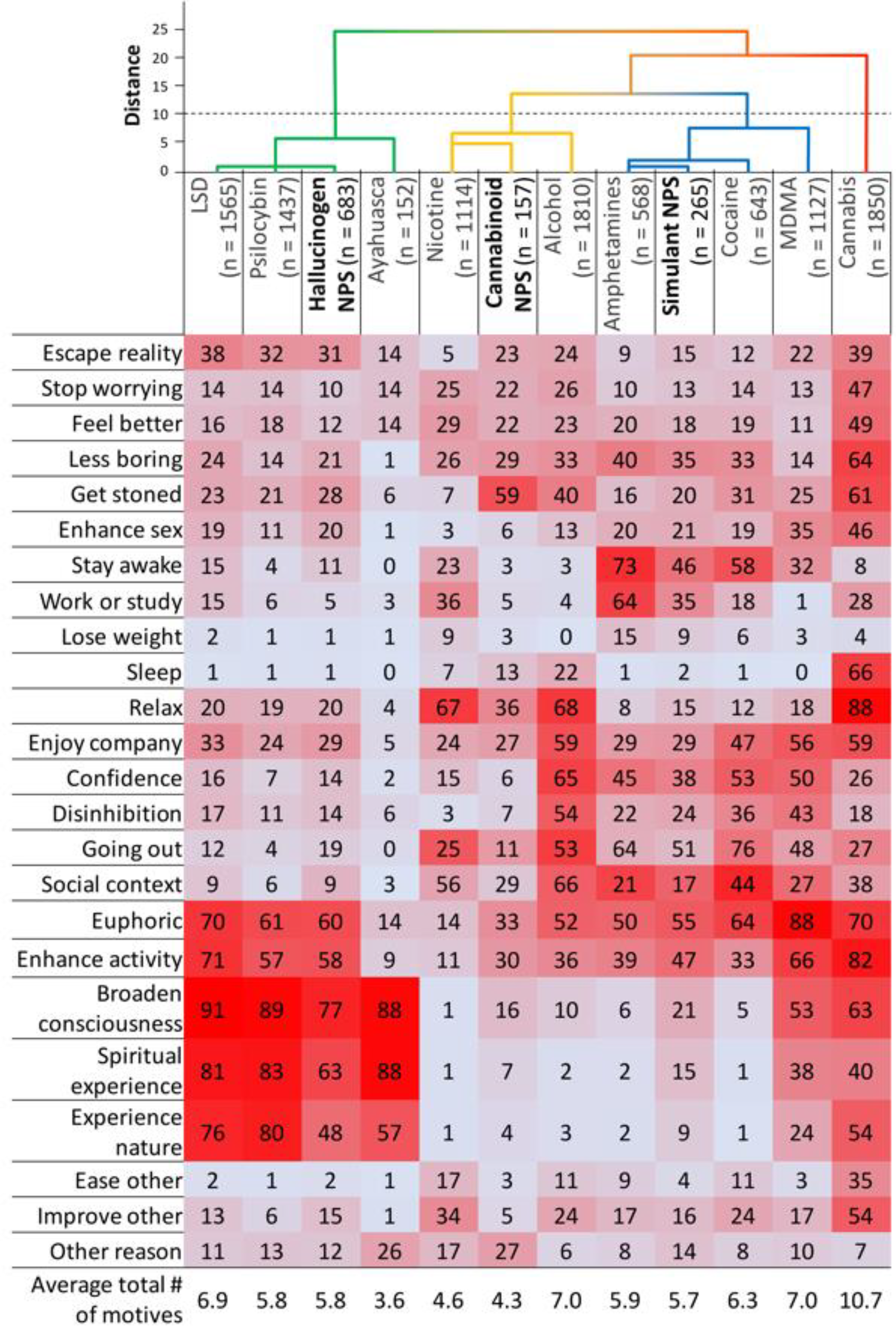
Proportion (%) of participants who endorsed a motive for use. Color indicates the proportion ranging from least (light blue) to most frequently endorsed motive (bright red). Top: Dendogram resulting from complete linkage hierarchical cluster analysis on the frequency of 23 endorsed motives (excluding “other reason”). A dotted reference line on the vertical axis marks the optimal four-cluster solution.
Multiple agglomerative hierarchical cluster analyses were performed on the proportion of endorsed individual motives for all substances, in order to detect similarities between motivational patterns across drugs and test whether the different types of NPS would be grouped with their CPS analogues. An optimal number of four clusters was indicated. As expected, the cluster composition differed slightly depending on the clustering method, despite fixed SEDs. One of the four solutions, based on complete linkage method, is presented in Figure 4 (top).
Remaining identical for all four hierarchical techniques, the proximity matrix (Table 3) revealed the two substances with the most similar motivational patterns to be LSD and psilocybin (SED = 1,024.4), followed by LSD and hallucinogenic NPS (1,866.3). The largest distance between any two substances was observed between ayahuasca and cannabis (44,889.5) and ayahuasca and alcohol (42,247.5).
Mean Proportions (%) of Endorsed Motives for Each of the Four Clusters.
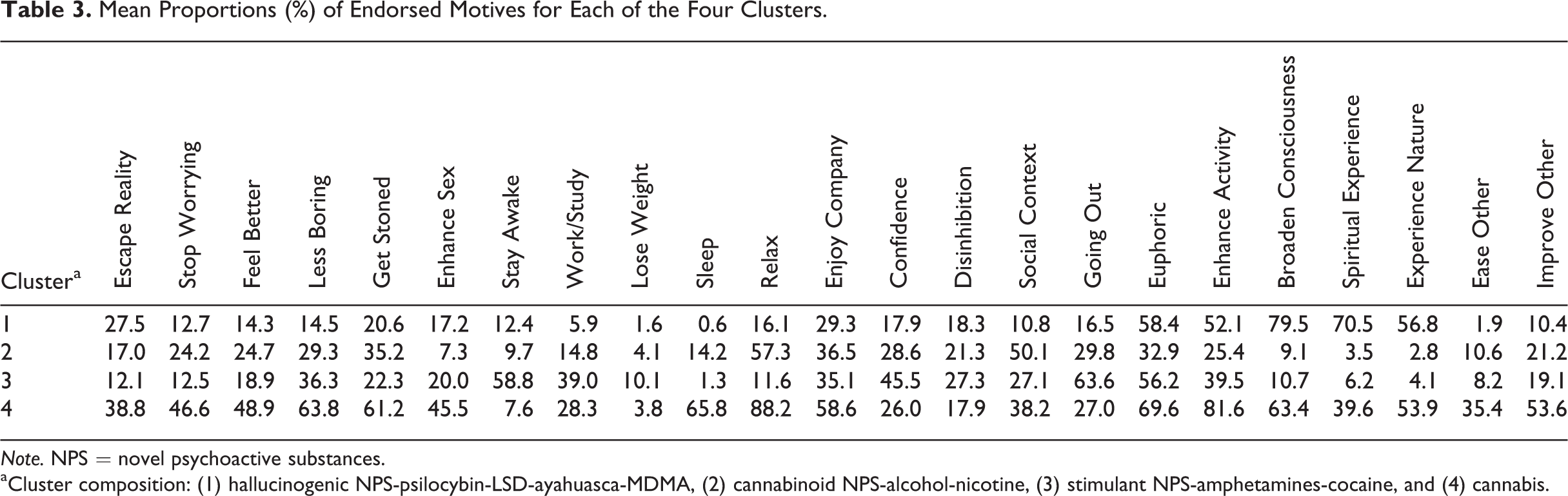
Note. NPS = novel psychoactive substances.
aCluster composition: (1) hallucinogenic NPS-psilocybin-LSD-ayahuasca-MDMA, (2) cannabinoid NPS-alcohol-nicotine, (3) stimulant NPS-amphetamines-cocaine, and (4) cannabis.
Of note, every type of NPS was most similar to a non-NPS rather than another NPS class. Specifically, the pattern of motives for the use of stimulant NPS was most similar to that of amphetamines (2,503.1) and motives for hallucinogenic NPS use to LSD (1,866.3). Surprisingly, the drug with the most similar pattern of motivations to cannabinoid NPS was nicotine (8,483.2) rather than cannabis, which, on the contrary, showed the least similar pattern of motives to cannabinoid NPS among the examined substances (25,352.9). It should be noted that this difference in the motivational pattern cannot solely be ascribed to systematic differences between user groups, as these were largely overlapping: 156 of 157 cannabinoid NPS users also reported motives for cannabis use.
The proximity between motivational patterns for NPS and CPS was reproduced through exploratory k-means iterative clustering (k = 4), which resulted in the following clusters: (1) hallucinogenic NPS-psilocybin-LSD-ayahuasca-MDMA, (2) cannabinoid NPS-alcohol-nicotine, (3) stimulant NPS-amphetamines-cocaine, and (4) cannabis. For the first cluster (i.e., hallucinogenic NPS-psilocybin-LSD-ayahuasca-MDMA), the most relevant motives were to broaden consciousness (mean proportion: 79.5%), for the spiritual experience (70.5%), and to feel euphoric (58.4%), while these substances were least likely to be consumed in order to sleep (0.6%), to lose weight (1.6%), or to ease other drug effects (1.9%). Substances of the second cluster (cannabinoid NPS-alcohol-nicotine) were used to relax (57.3%) because of the social context (50.1%) and to enjoy company (36.5%) but rarely to experience nature (2.8%) or to have a spiritual experience (3.5%). The third cluster (stimulant NPS-amphetamines-cocaine) was characterized by the motives to go out (63.6%), to stay awake (58.8%), and to feel euphoric (56.2%), while the least relevant motives were to sleep (1.3%) and to experience nature (4.1%). The last cluster only including cannabis was identical to the motivational pattern of cannabis use (Table 4).
Proximity Matrix Based on Pattern of Endorsed Motives for Drug Use.
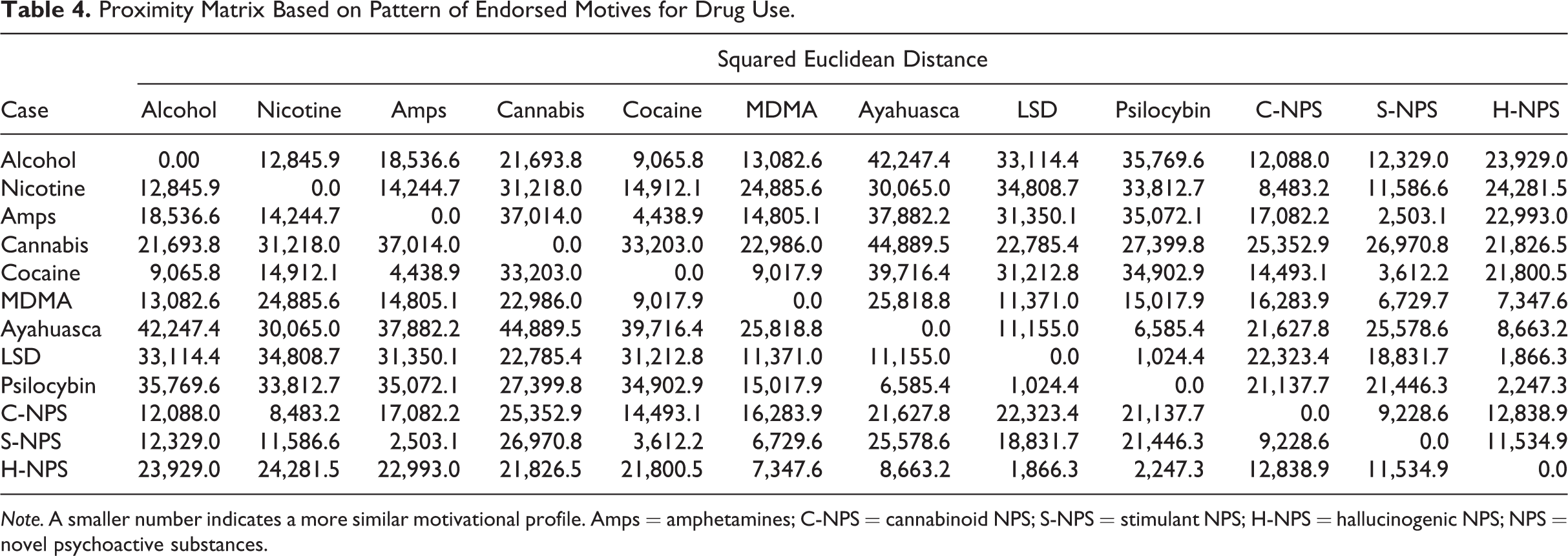
Note. A smaller number indicates a more similar motivational profile. Amps = amphetamines; C-NPS = cannabinoid NPS; S-NPS = stimulant NPS; H-NPS = hallucinogenic NPS; NPS = novel psychoactive substances.
Discussion
The present study aimed to investigate the motives for legal (LPS), classical (CPS), and novel (NPS) psychoactive substance use by means of an online survey. It was hypothesized that motives for use would be similar between NPS and their pharmacological CPS analogues. This hypothesis was partly confirmed in that hallucinogenic and stimulant NPS were used for similar reasons as classical hallucinogens and stimulants. In contrast however, cannabinoid NPS showed a motivational pattern distinct from that of cannabis and more closely related to LPS.
Drug use is motivated by a variety of reasons, as the heterogeneous pattern of motives across the 12 included substances indicates. The heterogeneity among drug use motives is further reflected by the relatively low (53%) proportion of variance explained by the five factors extracted from the 23-item motives scale. Certain functions however seem to hold a degree of universality for drug use, such as the attainment of euphoria and enhancement of activities, which were most frequently endorsed overall. In line with earlier findings (Boys et al., 2001; Newcomb et al., 1988), our results show that females use drugs more often than males for coping reasons, physical effects, and because of the social context. Males on the other hand show a more diverse pattern of motives for drug use overall, indicated by a higher average number of endorsed motives. More diverse reasons for drug use have been linked to drug problems and intensity of use (Boys & Marsden, 2003), suggesting that a functional perspective might be helpful to explain why males are more likely than females to keep using drugs after first contact and progress into dependency (Wagner & Anthony, 2007). Our findings furthermore suggest that motives in male drug use are mostly linked to hedonic functions, aiming to achieve desired states, which constitutes a striking opposition to the coping-related motives, observed in females. Thus, while females more often seem to use drugs to avoid negative or painful experiences, such as undesired emotional states or not fitting into a social group, male drug use appears to express sensation and reward-seeking behaviors, reflecting the conceptual distinction between avoidance and approach motives for drug use (Cooper, Kuntsche, Levitt, Barber, & Wolf, 2016).
Adding to previous research on functions of drug use (Boys, Marsden, Griffiths, et al., 1999; Boys et al., 2001; Johnston & O’Malley, 1986), we investigated the relevance of motives related to self-exploration and the pursuit of profound experiences. Some studies have suggested a role for such motives in classical (Prepeliczay, 2016) and novel hallucinogenic substance use (Soussan & Kjellgren, 2016). Confirming these findings, self-exploration motives were identified as a defining characteristic for classical psychedelics and hallucinogenic NPS. The observed ability of psychedelics to facilitate self-exploration through the enhancement self-awareness and reliving of autobiographic memories has been proposed as a key mechanism in early psychotherapeutic research with LSD (Vollenweider & Kometer, 2010). The question raised by this relationship, that is, what functional role self-medication might play in psychedelic use, stands out as a particularly relevant one in a time where psychedelic compounds are increasingly being reconsidered as psychotherapeutic tools (Carhart-Harris & Goodwin, 2017; Morgan, McAndrew, Stevens, Nutt, & Lawn, 2017; Tupper, Wood, Yensen, & Johnson, 2015) and should be explored in future research.
Perhaps the most surprising finding was the agglomeration of synthetic cannabinoids with alcohol and nicotine rather than cannabis. Although unexpected, this adds another angle to the emerging profile of cannabinoid NPS as inadequate cannabis substitutes (Palamar & Barratt, 2016). Synthetic cannabinoids have repeatedly been found to be perceived as less enjoyable than their organic counterpart, unable to meet the expected subjective effects (Lauritsen & Rosenberg, 2016; Palamar & Barratt, 2016; Soussan & Kjellgren, 2016; A. R. Winstock & Barratt, 2013b). This corresponds well to the finding that cannabinoid NPS were used substantially less than organic cannabis for self-exploration and hedonic motives. Instead, the most relevant motive for cannabinoid NPS use was to become intoxicated. Taken together, these results suggest that synthetic cannabinoid users often simply strive for any sort of high, without requirements to the specific effects or quality of intoxication. The reason why people still fall back on this apparently undesirable substituent, despite much greater associated health risks than for organic cannabis, can be questioned (Winstock et al., 2015). Importantly, the use of cannabinoid NPS is increasingly being associated with the disadvantaged in society, homeless, imprisoned, stigmatized groups (Blackman & Bradley, 2017). Lower prices, unavailability of safer alternatives, and efforts to avoid prosecution are therefore likely to play a proportionally larger role for cannabinoid NPS use compared to other NPS, which is supported by initial evidence for a particularly high relevance of circumstantial motives in synthetic cannabinoid use (Soussan & Kjellgren, 2016).
The current study was limited by its framework of functional motives for drug use, disregarding circumstantial reasons such as legality or detectability, which may be unique to NPS, but instead focusing on potential parallels between NPS and CPS. As an additional limitation of this cross-sectional, retrospective, self-report study, motives were endorsed based on lifetime use, not taking into account how both external circumstances such as legality and personal factors influencing motives for use may have changed between the occasion of use being reported and the time of the study. Furthermore, the self-selected convenience sample of psychedelic users was found to be highly educated and largely based in the United States and Europe. Future studies may therefore benefit from the use of different recruitment channels such as drug vendor websites.
Not everything is new about NPS; while these compounds certainly pose unique challenges to legislators, researchers, and prevention strategists, the identification of parallels to better known drugs can be a valuable aid in understanding the characteristics of NPS use. Mapping similarities and differences in the functional patterns that ultimately attract users to psychoactive substances will hopefully benefit future educational and intervention strategies, as well as allow for a more efficient allocation of resources to groups where drug use has the highest potential for harm.
This study revealed important information about the similarities and differences between motives for NPS and their classical analogues. Future research could investigate circumstantial motives on top of functional motives in order to gain additional information on differences between motives for NPS and CPS use, which can then be implemented in prevention strategies and educational campaigns.
Footnotes
Acknowledgment

Declaration of Conflicting Interests
The author(s) declared no potential conflicts of interest with respect to the research, authorship, and/or publication of this article.
Funding
The author(s) received no financial support for the research, authorship, and/or publication of this article.