




Abstract
Growth mindset (belief in the malleability of intelligence) is a unique predictor of young learners’ increased motivation and learning, and may have broader implications for cognitive functioning. Its role in learning in older adulthood is unclear. As part of a larger longitudinal study, we examined growth mindset and cognitive functioning in older adults engaged in a 3-month multi-skill learning intervention that included growth mindset discussions. Before, during, and after the intervention, participants reported on their growth mindset beliefs and completed a cognitive battery. Study 1 indicated that intervention participants, but not control participants, increased their growth mindset during the intervention. Study 2 replicated these results and found that older adults with higher preexisting growth mindsets showed larger cognitive gains at posttest compared to those with lower preexisting growth mindsets. Our findings highlight the potential role of growth mindset in supporting positive learning cycles for cognitive gains in older adulthood.
Motivational factors can indirectly impact cognitive functioning in older adulthood by influencing the quality and quantity of engagement in cognitively stimulating activities (see Hess, 2014, for a review). Continued engagement in these activities may buffer against older adults’ cognitive decline (e.g., Hertzog et al., 2008) and decrease their risk for Alzheimer's disease (e.g., Wilson et al., 2007). One important type of cognitively stimulating activity is learning new real-world skills, such as photography or a new language (e.g., Bak et al., 2016; Leanos et al., 2020; but see Berggren et al., 2020). In dynamic, increasingly technologically based environments, learning new real-world skills also may help older adults maintain their functional independence (e.g., Charness & Boot, 2009). The decision to engage in and persist at cognitively stimulating activities, such as learning new skills, may partly depend on motivational factors (Wu & Strickland-Hughes, 2019).
Prior research on motivational factors in aging has focused largely on memory self-efficacy (belief in one's memory ability) and personal control (belief in one's ability to influence outcomes in general, Hastings & West, 2009; Rebok & Balcerak, 1989). Past literature establishes a positive relationship between memory self-efficacy and memory performance in adulthood (Beaudoin & Desrichard, 2011), and a positive relationship between personal control beliefs and cognitive performance in aging is also well established (Barber & Strickland-Hughes, 2019). A motivational construct related to memory self-efficacy and personal control is growth mindset, the belief in the malleability of intelligence (Dweck, 2000). Leanos et al. (2020) incorporated growth mindset into a longitudinal multi-skill learning intervention for older adults. This study demonstrated the benefits of learning new skills on older adults’ cognitive improvement but did not examine the role of growth mindset in this process, which is the focus of the present studies. Growth mindset is not often applied to cognitive training in older adults. However, it has been linked to cognitive performance in aging (Plaks & Chasteen, 2013). Its potential positive effects may be informed by past research on the role of other related motivational factors in cognitive training for middle-aged and older adults (Hastings & West, 2009; Rebok & Balcerak, 1989). Compared to the abundance of research on growth mindset in children and adolescents (for a review, see Sisk et al., 2018), research on the effects of growth mindset in older adults, especially in relation to cognitive gains, is limited. Hence, we first briefly review research on growth mindset in younger learners before discussing growth mindset in older learners.
Growth Mindset in Younger Learners
Initially developed to address learning in children, growth mindset is a unique predictor of students’ motivation and academic achievement (e.g., Blackwell et al., 2007). Children who espouse growth mindsets show higher IQ (Cury et al., 2006; Mueller & Dweck, 1998), engagement, and persistence in challenging tasks, while cheating less (Dweck, 2000; Mueller & Dweck, 1998) and attaining better school grades (Blackwell et al., 2007; Yeager et al., 2019). Growth mindset studies with younger adults in college settings show similar benefits (e.g., Paunesku et al., 2012), and a recent meta-analysis suggests that growth mindset also may be associated with decreased psychological distress and increased active coping (Burnette et al., 2020a). Based on these findings, growth mindset interventions have been developed in educational settings to boost students’ cognitive abilities and learning outcomes (e.g., Yeager et al., 2019). These effects are particularly strong for students facing adversity, such as a lack of resources from low socioeconomic status, students struggling academically, and students of ethnic-racially marginalized groups (Blackwell et al., 2007; Yeager & Dweck, 2020; Yeager et al., 2019).
How do interventions cultivate growth mindsets? In terms of the methods for inducing a growth mindset, teachers and parents have been encouraged to use process praise, rather than ability praise, when children learn new skills and content (Gunderson et al., 2013; Ricci & Lee, 2016). Unlike ability praise (e.g., “You are so smart”), process praise commends the child's effort and persistence in the task (e.g., “You worked really hard”), thus emphasizing that intelligence and skills can be improved. However, for adolescents and other older students (e.g., college students), process praise may be misinterpreted as patronizing or indicating low ability (Amemiya & Wang, 2018). As such, another method used to increase growth mindset for more mature learners consists of teaching individuals about neuroplasticity (i.e., one's ability to induce changes in the brain via forming new connections and synapses). As demonstrated in a recent meta-analysis (Sarrasin et al., 2018), teaching neuroplasticity concepts in growth mindset interventions has been proven effective in increasing growth mindset in both adolescents and younger adults.
Growth Mindset in Older Adult Learners
Although it is argued that growth mindset may play an integral role in successful aging (Heslin et al., 2021), there is surprisingly little research on this topic. Regarding cognition, the limited extant literature on the effect of growth mindset on cognitive outcomes in older adults has revealed mixed findings. For example, Plaks and Chasteen (2013) found that endorsement of a growth mindset positively predicted older adults’ performance on a free-recall memory task, which aligns with past findings in younger adults (Jaeggi et al., 2014). However, other intervention research with older adults has shown that a growth mindset negatively predicted cognitive performance (Guye et al., 2017). One potential reason for a negative association between growth mindset and cognitive gains in older adults proposed by Guye et al. (2017) is that individuals with a growth mindset may be overly concerned with improving their performance, which increases cognitive load and hurts performance. Notably, this intervention was computer-based and consisted of working memory training. It may be the case that growth mindset operates better in a real-world skill learning environment with the appropriate learning resources (e.g., supportive instructors, learning materials). This context allows older adult learners to capitalize on growth mindset-oriented behaviors, such as embracing mistakes and failure, without the worry of objective evaluation from a computer-based program. In this way, growth mindset could motivate learners to fully engage in the learning process, improving subsequent cognitive outcomes. Additionally, as past research indicates, computer-based training may not transfer to the cognitive skills needed for everyday activities (Simons et al., 2016). Engaging older adult learners in real-world skill learning may provide them with cognitive gains that are more generalizable to the tasks of daily life, and help them to adapt in a dynamic environment (e.g., Charness & Boot, 2009).
Prior to the present study, the idea that endorsing a growth mindset would aid older adults’ real-world skill learning and subsequent cognitive gains had been proposed, but remained to be tested (Wu et al., 2017). Leanos et al. (2020) implemented a 3-month multi-skill learning intervention (e.g., simultaneously learning photography on an iPad, Spanish, and drawing) over two studies with older adults. The participants also engaged in weekly discussions on growth mindset in the context of neuroplasticity and successful aging. They observed (and replicated) considerable cognitive improvements by even halfway through the intervention (1.5 months) but did not analyze the motivational factors, such as growth mindset, that may have changed as a result of the intervention, nor how they may have impacted the cognitive improvements, which is the focus of the present research.
Growth Mindset and Cognitive Gains
Cognitive gains may be assessed across numerous domains, and the present study drawn from Leanos et al. (2020) focused on two subcomponents comprising executive functioning: working memory and cognitive control (Kramer et al., 2014). Working memory refers to the ability to temporarily store and manipulate information for complex cognitive tasks (Baddeley, 1992). Cognitive control assists the working memory process, and refers to the ability to focus attention on relevant stimuli and filter out irrelevant stimuli(Verhaeghen, 2012). These measures of executive functioning are involved in higher-order functions that are critical for older adults’ independent activities in daily life and are among the first abilities that decline in normative aging (Park & Reuter-Lorenz, 2009; Salthouse, 2006).
Past research indicates a relationship between executive functioning and growth mindset (Molden et al., 2006; Moser et al., 2011). Mindsets seem to affect individuals’ basic processing, categorizing of information (Molden et al., 2006), and attention to errors (Moser et al., 2011), which subsequently can affect performance. For example, when completing a Flanker task (a measure of cognitive control that requires participants to quickly identify targets while ignoring conflicting surrounding information), younger adults with higher growth mindsets improved their performance more after making mistakes compared to individuals with lower growth mindsets (Moser et al., 2011). EEG (scalp-recorded neural activity) markers for conscious attention to errors mediated the relationship between growth mindset and subsequent performance. Similarly, another study with younger adults found that individuals primed to endorse a growth mindset showed increased attention to error, which improved their response time and accuracy when responding to targets (Schroder et al., 2014). This research suggests that, beyond the ability to improve educational outcomes for students, growth mindset affects neural and behavioral responses in cognitive tasks, which may have important implications for individuals’ cognitive functioning.
The Present Studies
Can engaging in a multi-skill learning intervention change older adults’ endorsement of a growth mindset? How might growth mindset affect older adults’ cognitive functioning gains as a result of the intervention? To answer these questions, we analyzed the growth mindset data from Leanos et al. (2020). We examined the possibility of increasing growth mindset and its impact on cognitive abilities during the multi-skill learning intervention that included weekly motivational lectures and discussions. Study 1 included a feasibility sample with intervention and control groups, and Study 2 included a larger sample size with all participants assigned to the intervention group. In line with the growth mindset research with younger populations (e.g., Sarrasin et al., 2018; Yeager et al., 2019), we predicted that (1) across Studies 1 and 2, teaching older adults about growth mindset while engaging them in the learning of new skills would increase their endorsement of a growth mindset compared to older adults who did not participate in the intervention; (2) in Study 2, participants' mindsets prior to the intervention would predict positive change in cognitive functioning at posttest, given research with children and younger adults showing positive cognitive effects from existing growth mindset (e.g., Schroder et al., 2014; although see Guye et al., 2017); and 3) in Study 2, changes in growth mindset would predict changes in cognitive outcomes.
Study 1
Method
Participants
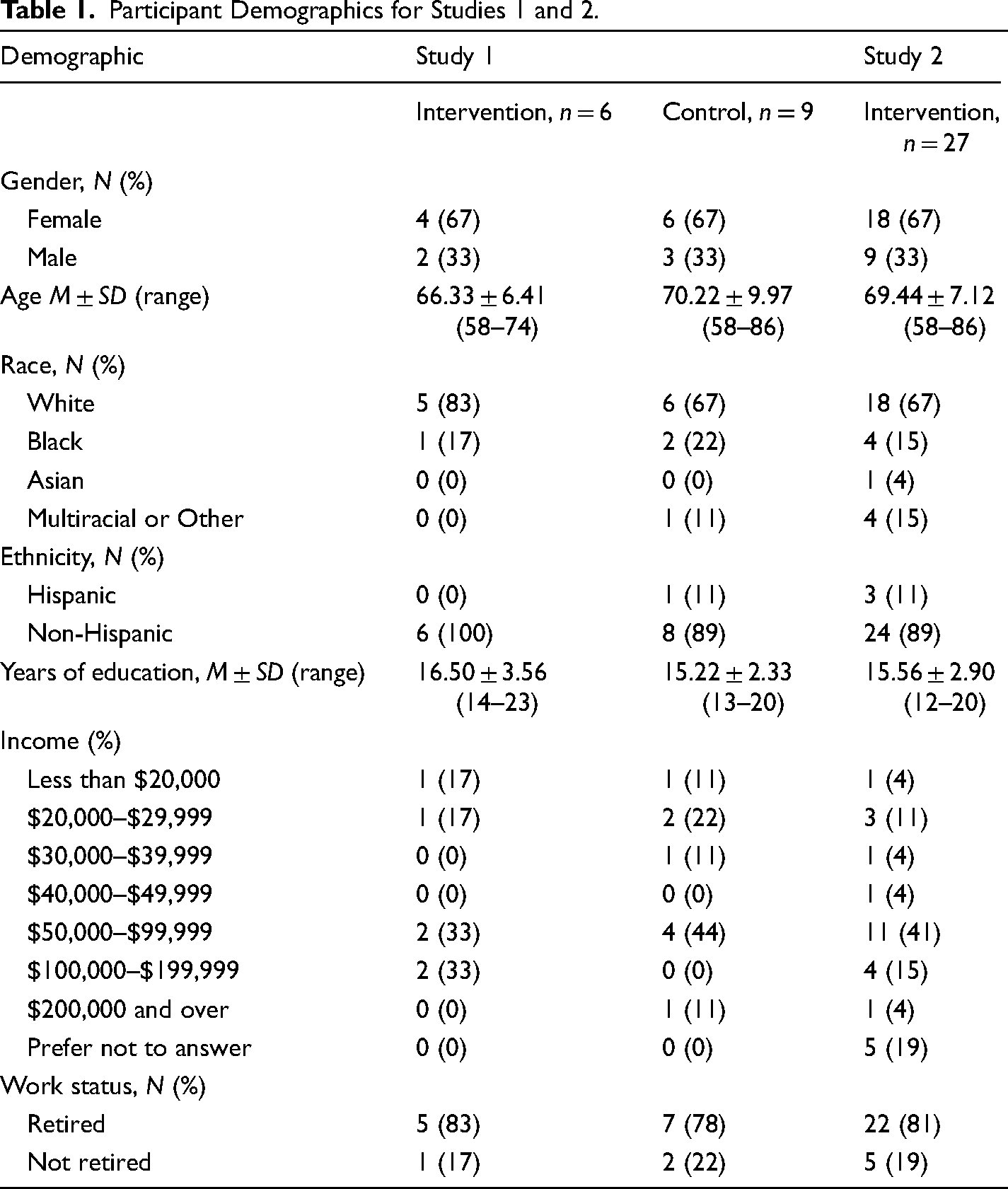
Study 1 reports data collected from 15 late middle-aged and older adult participants recruited by the University of California, Riverside to participate in a new skill-learning intervention to benefit cognitive abilities. Participants were recruited via word of mouth, neighborhood listings, and local community programs (e.g., the Osher Lifelong Learning Institute). They received $40 for each of three assessments and did not receive compensation for participating in the intervention otherwise, besides the learning materials (e.g., painting supplies, loaned iPad), and instructor time. Participants were randomly assigned to the intervention group (n = 6; 67% female; Mage = 66.33 years, 67% over the age of 65 years) or to the control group (n = 9; 67% female, Mage = 70.22 years, 67% over the age of 65 years), which were comparable in terms of gender, age, and socioeconomic status (indicated by annual household income and level of education; see Table 1 for complete demographic information). The completion rate for the intervention group was 86% (6 of 7) because one additional participant dropped out in Week 3 (before midpoint testing). The completion rate for the control group was 78% (one participant dropped out at midpoint, and one dropped out at posttest).
Participant Demographics for Studies 1 and 2.
Procedure
The 15-week intervention consisted of three courses on novel skills: introductory conversational Spanish, painting, and how to use an iPad. Each course included two weekly hours of instruction for a total of 6 hours. The three skills were selected due to their novelty and anticipated difficulty for the participants, real-world applicability, and utilization of cognitive control and working memory (the cognitive abilities measured during periodic assessments). In addition, participants engaged in a 1-hour weekly motivational lecture/discussion session conducted by the senior author. The lectures included topics on growth mindset (including a TEDx talk by Carol Dweck, https://youtu.be/_X0mgOOSpLU), grit (including a TED talk by Angela Duckworth, https://youtu.be/H14bBuluwB8), motivation, and neuroplasticity (including a TED talk on neurogenesis by Sandrine Thuret, https://youtu.be/B_tjKYvEziI) (see online Supplemental Material for a complete schedule of topics). Class discussions focused on identifying and removing barriers to learning, successful aging, and resilience. The neuroplasticity lecture included specific details and discussion about the brain's ability to form new neurons, even in older age. We selected this content to promote beliefs about the brain's malleability while dispelling negative myths about aging and cognitive ability. These topics could also help foster growth mindsets by encouraging discussion about the value of effort in improving ability and by helping participants reflect upon and recognize how their efforts directly improved their learning outcomes. To further foster growth mindset beliefs, the discussions on removing barriers to learning aimed to promote positive learning cycles during and after the intervention via improving access to learning opportunities. We enabled this by providing information about available learning opportunities (e.g., free local lectures and classes) and other online learning resources.
Measures
As part of a larger longitudinal study, participants completed a measure of growth mindset, cognitive functioning, and provided demographic information, including age, gender, race, ethnicity, education, annual income, and retirement status. Participants were assessed at three time points: pretest (Week 0, 1 week before the beginning of the intervention), midpoint (Week 8), and posttest (Week 15).
Mindset: We adapted the Dweck (2000) mindset questionnaire to better align with older adult experiences (e.g., less emphasis on academic achievement) and to emphasize novel skill learning (Table 2). The growth mindset questionnaire is a subscale of the Broad Learning Adult Questionnaire (BLAQ) (Leanos et al., 2019). This subscale includes six items measured on a 6-point Likert-type scale (1 = Strongly disagree to 6 = Strongly agree), which aim to capture a variety of socio-motivational and environmental factors that may foster optimal cognitive development in older adults.
Growth Mindset Items From the Broad Learning Adult Questionnaire (BLAQ).
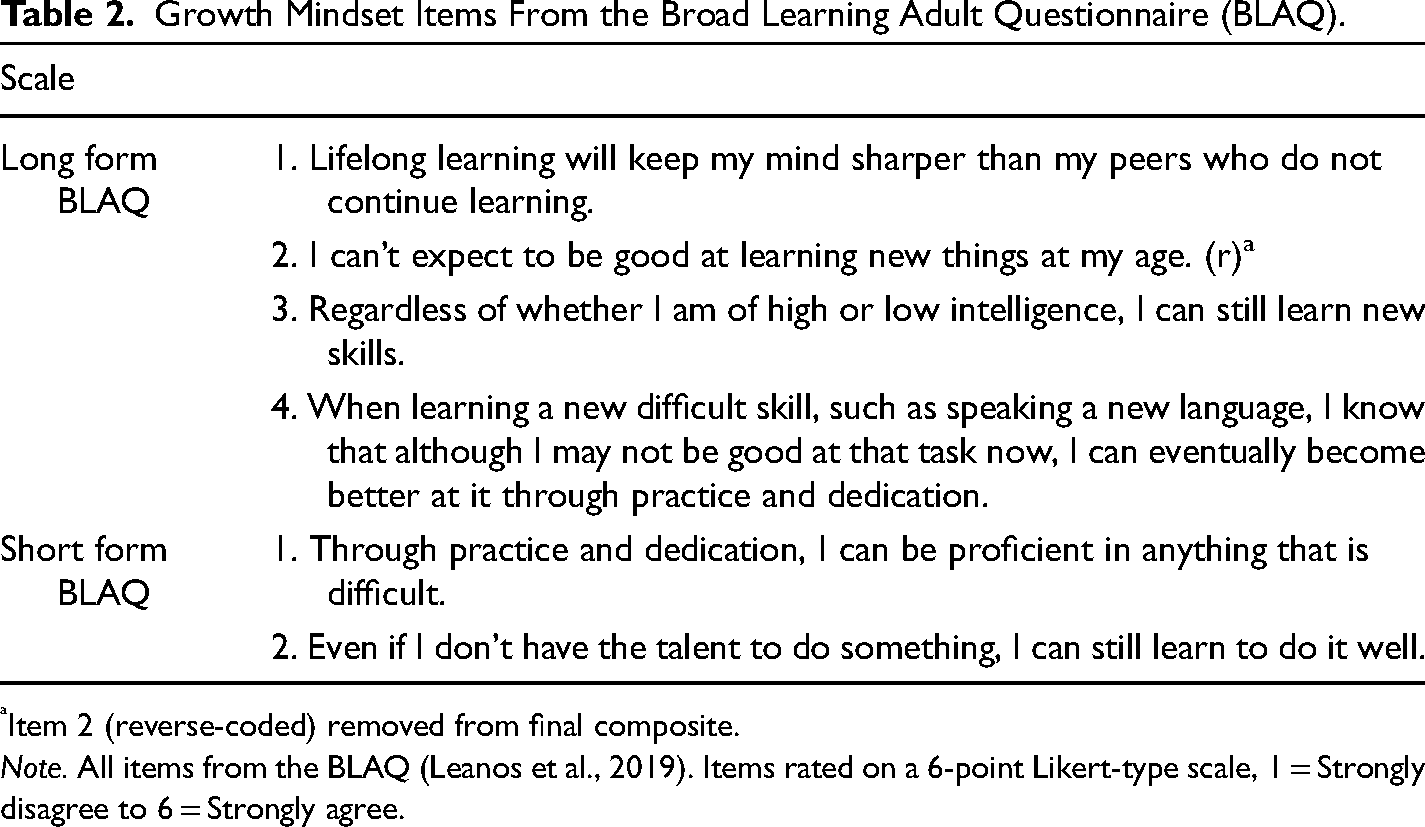
Item 2 (reverse-coded) removed from final composite.
Note. All items from the BLAQ (Leanos et al., 2019). Items rated on a 6-point Likert-type scale, 1 = Strongly disagree to 6 = Strongly agree.
Reliability analyses indicated that one item from the original long version, “I can’t expect to be good at learning new things at my age” (reverse-coded) did not align with the other items and resulted in lower reliability at pretest and midpoint (α = .35 pretest, α = .43 midpoint, α = .78 posttest). We opted to remove this item (the only reverse-coded item), given its low reliability and prior research confirming threats to validity and reliability when mixing reversed, negatively coded items with positive items (Weijters & Baumgartner, 2012). Additionally, two different items from a short version of the BLAQ were included in the composite score to increase reliability. The short version items maintain the meaning of the longer items but are more clear and concise. After the removal of the long version item and addition of the two shorter items, the measure improved its reliability (α = .62 pretest, α = .79 midpoint, α = .71 posttest), and the average inter-item correlations were within acceptable limits for all time points (r = .24 pretest, r = .41 midpoint, r = .30 posttest). However, it is important to note that these levels were lower than those reported for the growth mindset subscale in Leanos et al. (2019), possibly due to the small sample size. The revised 5-item version was subsequently used for all study analyses.
Cognitive gains: Participants’ executive functioning was measured using the NIH EXAMINER battery (https://memory.ucsf.edu/examiner; Kramer et al., 2014), which examines executive functioning using four tasks, two on cognitive control (set-shifting and Flanker), and two on working memory (1-back and dot counting). The NIH EXAMINER combines reaction time and accuracy scores on these four tasks to create an overall executive functioning composite score. Accuracy scores differ depending on the task. For example, in the one-dot task, accuracy is measured according to the number of blue circles participants could recall for each display that was shown to them in a particular order. We calculated the composite score following procedures recommended by the NIH EXAMINER development team (Kramer et al., 2014) that were based on a confirmatory factor analysis that validated a single-factor executive composite score. The cognitive data were not included in the analyses for Study 1 due to the small sample size, but were included in the analyses for Study 2.
Results and Discussion
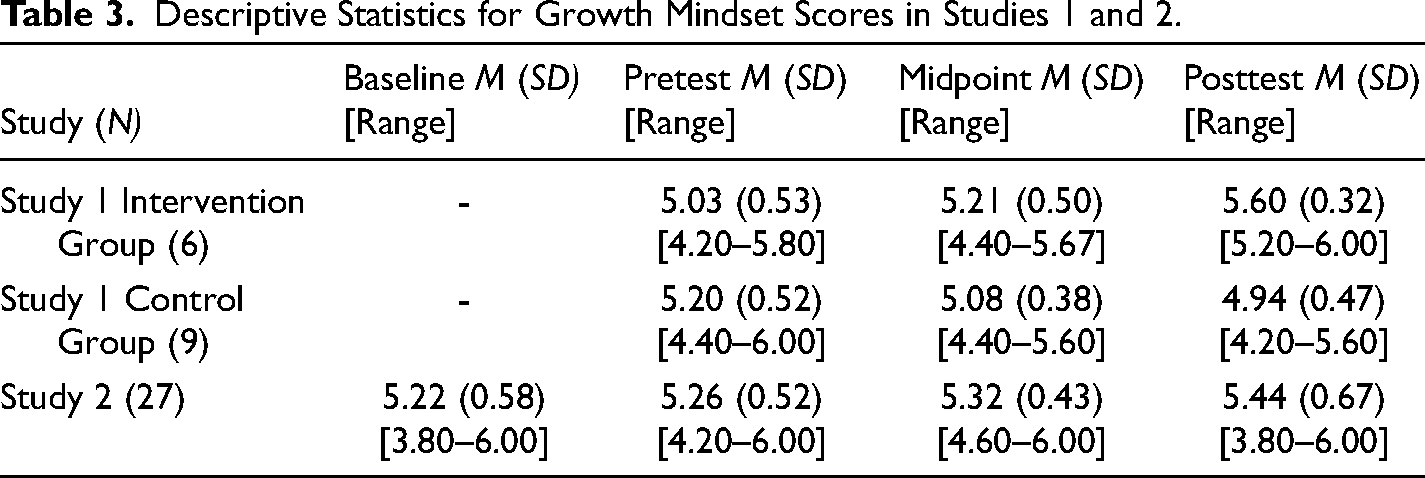
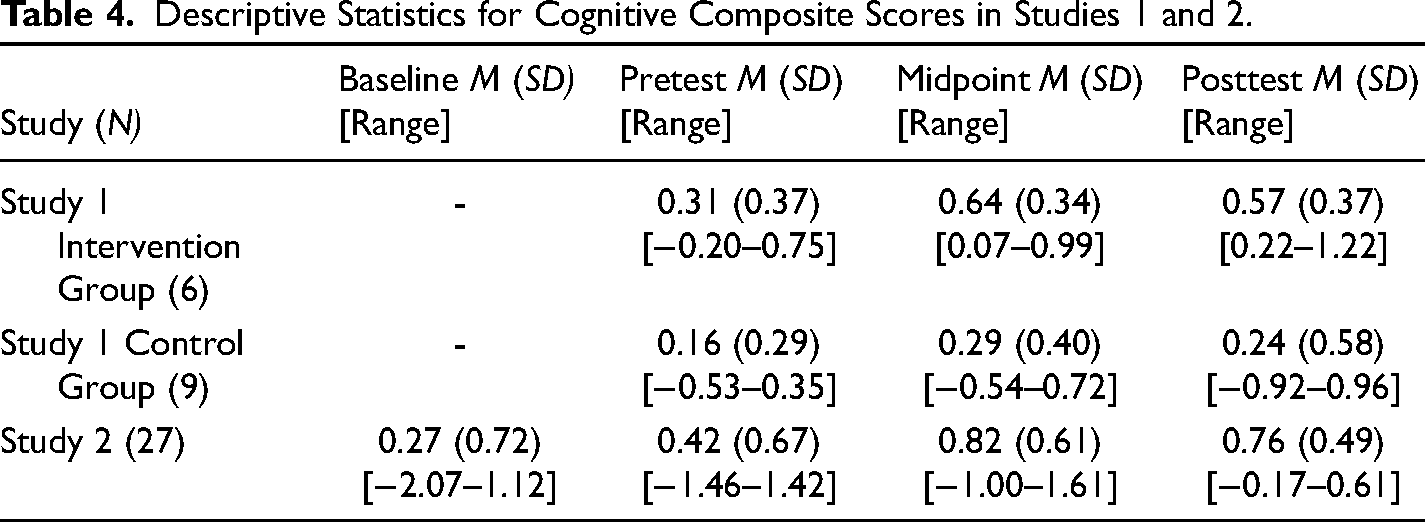
Descriptive statistics for growth mindset and cognitive scores are shown in Tables 3 and 4, respectively. To examine change in growth mindset, we conducted a linear mixed-effects model, which accommodates both fixed effects (population-level) and random effects (subject-level), to test our hypotheses. The inclusion of subject-level random effects in this model accounts for the dependence among the repeated measurements of the same participant. While theoretically equivalent to growth models, we used mixed-effects models because they outperform growth models in studies with small sample sizes and irregular measurement times (McNeish & Matta, 2018). We used these models to examine group differences, rather than trajectories, due to insufficient power to examine trajectories. 1
Descriptive Statistics for Growth Mindset Scores in Studies 1 and 2.
Descriptive Statistics for Cognitive Composite Scores in Studies 1 and 2.
The normality assumption was tested and satisfied for all models. Growth mindset scores were collected over three time points (0: pretest, 1: midpoint, and 2: posttest). Time (i.e., time point) was included as a categorical variable to allow for changes in the scores to be different among time points. Group was also included as a categorical variable (0: control group, 1: intervention group). Other factors commonly used in mindset and cognitive interventions (e.g., Hastings & West, 2009; Yeager et al., 2019) were included as covariates: gender (0: Male, 1: Female), retirement status (0: No, 1: Yes), race (0: White, 1: Non-White), age (continuous), and years of education (continuous).
In partial support of the first hypothesis, the results of the mixed-effects model indicated a marginally significant difference between groups at posttest (p = .061; see Table 5). Though marginal, this trending effect suggests that participants in the intervention group may have had an increased growth mindset from pretest to posttest, with an estimated increase of 0.58 units more than the control group. For the control group, no significant differences were found between participants’ average growth mindset score at pretest and midpoint (p = .724), nor at pretest and posttest (p = .367). From pretest to posttest, the control group's estimated growth mindsets decreased by 0.17, whereas the intervention group's growth mindsets increased by 0.41. A Wald test was performed to test additional comparisons between participants’ growth mindsets between midpoint and posttest but did not find a significant change in the control group (p = .497; 95% CI [−.47, .23]) or in the intervention group (p = .271; 95% CI [−.18, .64]). Additionally, though not central to our research questions, gender was a significant predictor of growth mindset, such that females had higher growth mindsets than males (p = .037), as was retirement status, such that non-retired participants had higher growth mindsets compared to retired participants (p = .046).
Mixed-Effects Model of Growth Mindset Changes in Study 1.
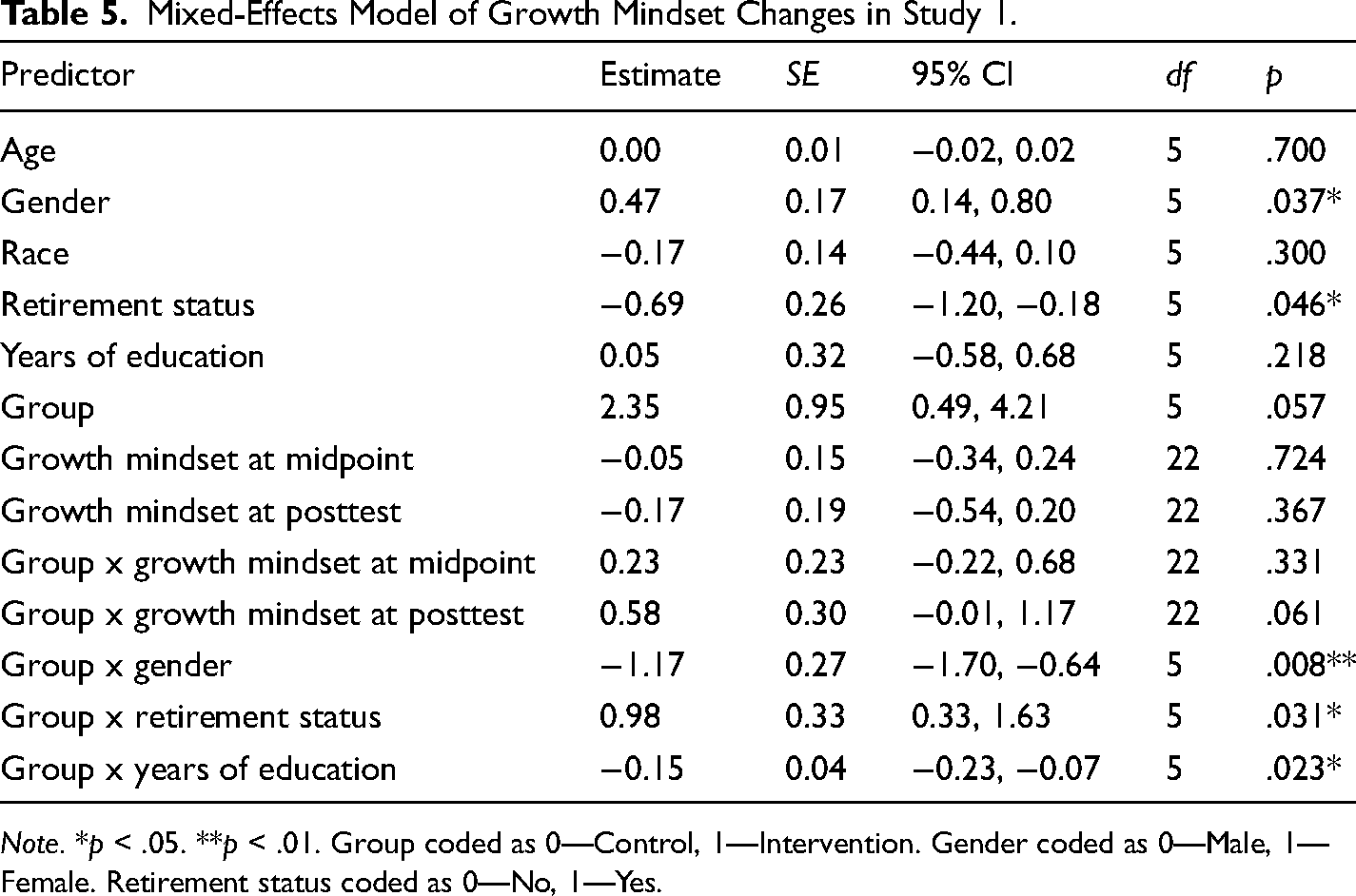
Note. *p < .05. **p < .01. Group coded as 0—Control, 1—Intervention. Gender coded as 0—Male, 1—Female. Retirement status coded as 0—No, 1—Yes.
Study 2
Method
Study 2 aimed to replicate the improvement in growth mindset from Study 1's feasibility intervention group with a larger sample. Importantly, we also investigated whether growth mindset level–both prior to the intervention and its increase during the intervention–would predict cognitive improvements. Unlike Study 1, Study 2 did not include a control group, but instead assessed participants 4–6 weeks prior to the start of the intervention and used these assessments to serve as a baseline control.
Participants
Twenty-seven late middle-aged and older adults (67% female, Mage = 69.44 years, 79% over the age of 65 years; refer to Table 1 for complete demographic information) took part in a 12-week multi-skill learning intervention. Nine of the 27 subjects withdrew at various points during the intervention (one at baseline, four at pretest, two at midpoint, and two at posttest) due to scheduling conflicts, family commitments, medical issues, or undisclosed reasons, resulting in a completion rate of 67%. All data, even partial data (i.e., participants who dropped out), were included in the final analyses, with no imputation of missing data. As in Study 1, participants were recruited via word of mouth, neighborhood listings, and local community programs and received $40 for each of the four assessments.
Measures
The growth mindset measures were the same as those in Study 1. Growth mindset was measured at baseline (4 weeks before the intervention), pretest (Week 0), midpoint (Week 6), and posttest (Week 12). Cronbach's alpha levels were, α = .77 baseline, α = .61 = pretest, α = .60 midpoint, α = .85 posttest, and average inter-item correlations were within acceptable limits for all time points (r = .42 baseline, r = .28 pretest, r = .22 midpoint, r = .53 posttest). As in Study 1, cognitive gains were also assessed using the NIH EXAMINER.
Procedure
The procedures for Study 2 were similar to Study 1 procedures, except that all Study 2 participants were assigned to the intervention (no control group was included). To maintain appropriate class sizes (i.e., low teacher-to-student ratio), participants were assigned to three of five potential classes (Spanish, photography, music composition, drawing, and how to use an iPad), depending on their prior experience and scheduling conflicts. Participants could take up to all five classes as long as they participated in the three to which they were assigned. Eight out of the 27 participants took four or five classes. In addition to pretest, midpoint, and posttest assessments, we included a baseline measure 4 weeks prior to any intervention activity. Based on participant feedback from Study 1, the intervention for Study 2 lasted only 12 weeks, to minimize interference with participants’ prior commitments (Leanos et al., 2020).
Results and Discussion
Descriptive statistics for growth mindset scores for Study 2 are shown in Table 3. Participants’ average growth mindset scores across time points for both Studies 1 and 2 are shown in Figure 1. As in Study 1, linear mixed-effects models (with normality assumptions checked and satisfied) were employed for all analyses to examine growth mindset changes over time 2 . Time was included as a categorical variable to allow changes in the scores to be different among time points. Additional factors that were included as covariates were: gender (0: Male, 1: Female), retirement status (0: No, 1: Yes), race (0: White, 1: Non-White), age (continuous), years of education (continuous), and total hours spent on homework (continuous), which was self-reported by participants on a timesheet log.
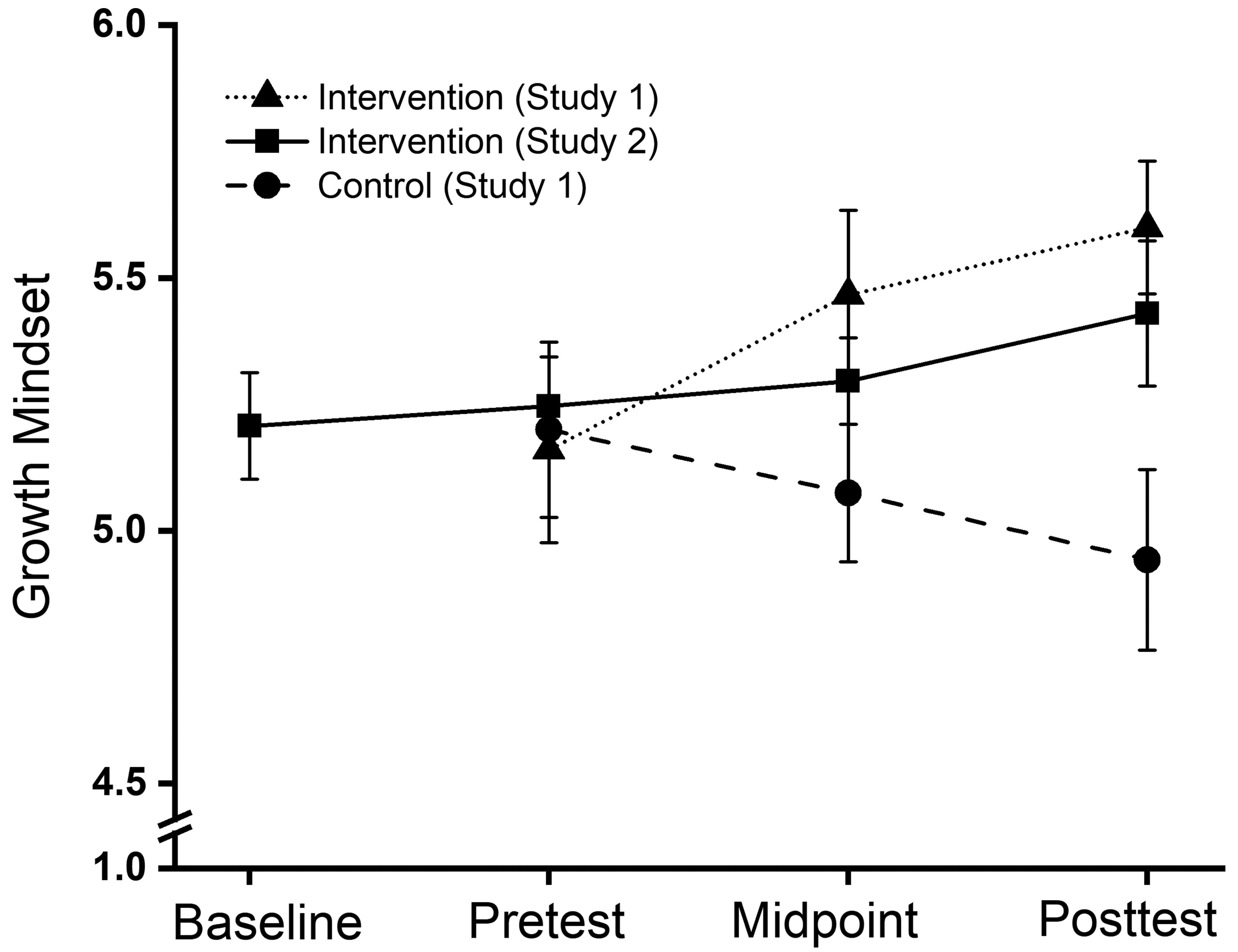
Average growth mindset scores for Study 1 and Study 2.
In support of our first hypothesis, results of the mixed-effects model indicated a significant difference between participants’ average growth mindset score at baseline and midpoint (p = .021) and at baseline and posttest (p = .028; see Table 6). More specifically, midpoint and posttest scores were estimated to be 0.15 and 0.29 units larger than the baseline scores, respectively. The model also indicated that, as education increased by 1 year, the estimated growth mindset score increased by 0.09 units, keeping all other predictors fixed (p = .022). Moreover, participants who were still employed (n = 5) showed higher average growth mindsets (0.75 higher) compared to those who were retired (n = 22, p = .037). A Wald test was performed to test additional comparisons not including the reference group (baseline), but found no significant change in participants’ growth mindsets from pretest to midpoint (p = .309), from midpoint to posttest (p = .110), or from pretest to posttest (p = .222). Additionally, although both retirement status and years of education were significant predictors of growth mindset level, hours spent completing homework was not (p = .620).
Mixed-Effects Model of Growth Mindset Changes in Study 2.
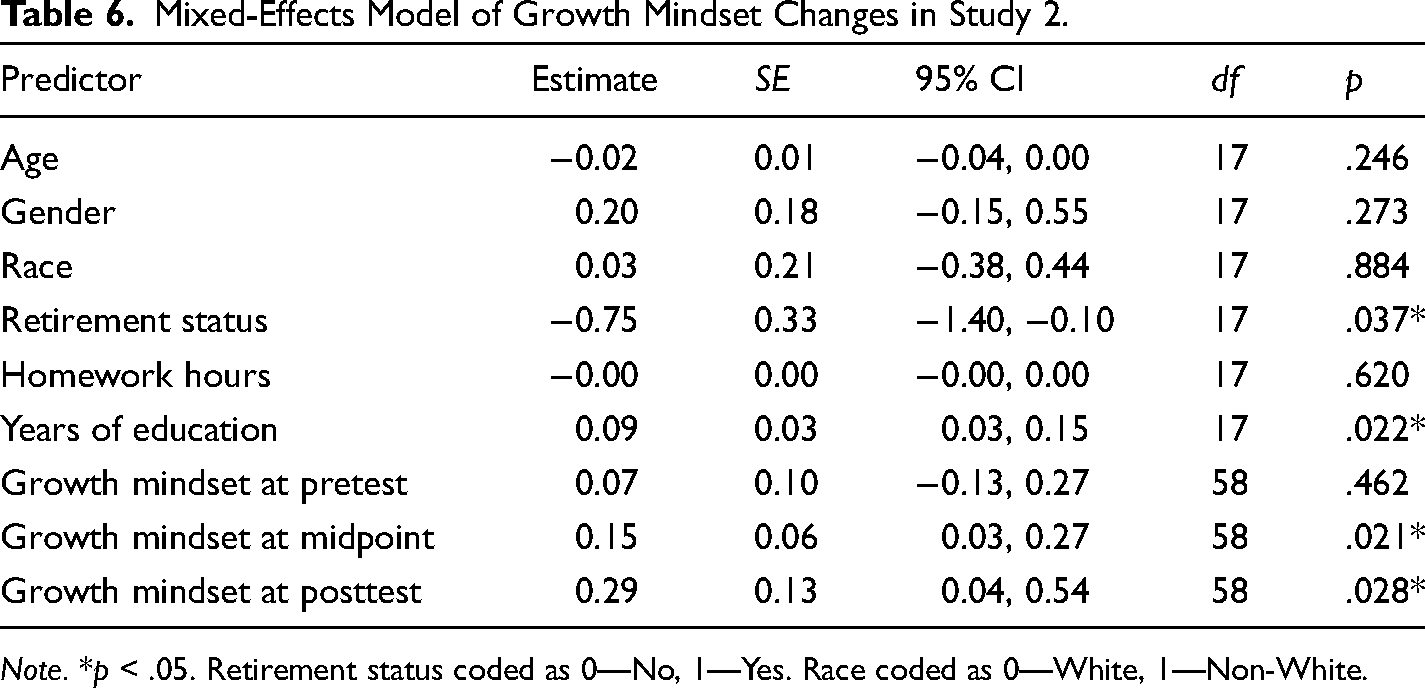
Note. *p < .05. Retirement status coded as 0—No, 1—Yes. Race coded as 0—White, 1—Non-White.
To address our second hypothesis, a second linear mixed-effects model tested the effects of participants’ baseline growth mindsets on their changes in cognitive scores at posttest. Covariates included baseline growth mindset score, gender (0: Male, 1: Female), retirement status (0: No, 1: Yes), race (0: White, 1: Non-White), age (continuous), total hours spent on homework (continuous), and years of education (continuous). Consistent with expectations, participants’ growth mindsets at baseline predicted increased positive change in cognitive composite scores at posttest. As shown in Table 7, as the baseline growth mindset score increased by one unit, the estimated cognitive composite score change increased by 0.50 units, when keeping all other predictors fixed (p = .032). An increase of 0.50 is roughly equivalent to two-thirds of the difference between average cognitive composite scores of middle-aged adults (average age of 42 years) and older adults (average age of 72 years; Leanos et al., 2020).
Mixed-Effects Model of Baseline Growth Mindset Effects on Posttest Change in Cognitive Functioning.
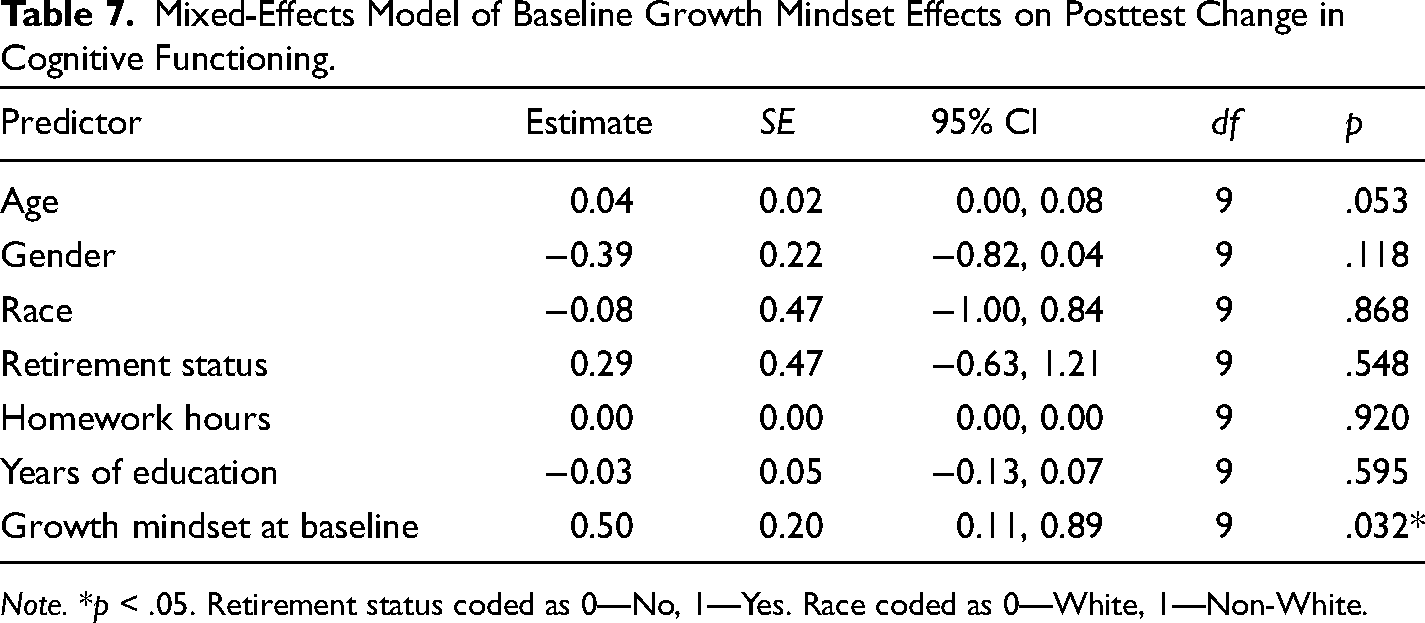
Note. *p < .05. Retirement status coded as 0—No, 1—Yes. Race coded as 0—White, 1—Non-White.
A final mixed-effects model tested our third hypothesis by examining whether the change in growth mindset between baseline and posttest affected the change in the cognitive composite score. The difference in baseline and posttest growth mindset scores (0: baseline, 1: posttest), gender (0: Male, 1: Female), retirement status (0: No, 1: Yes), race (0: White, 1: Non-White), age (continuous), total hours spent for homework (continuous), and years of education (continuous) were included as covariates. Contrary to our expectations, the change in growth mindset score did not have a significant effect on the change in the cognitive composite score (p = .203).
General Discussion
Across two studies, this research explored changes in late middle-aged and older adults’ growth mindsets within a real-world skill learning intervention, as well as the role of growth mindset in older adults’ cognitive gains after the intervention. Study 1 provided preliminary support that our multi-skill learning intervention with growth mindset training may aid in fostering older adults’ growth mindsets compared to participants who did not participate in the intervention. The results from Study 2 bolstered the finding of increased growth mindset across the intervention in a larger sample. Study 2 also revealed that the level of participants’ preexisting growth mindset predicted change in cognitive abilities (i.e., working memory and cognitive control) at the end of the intervention, though change in growth mindset did not significantly predict change in cognitive functioning. Collective findings of the present studies demonstrate that growth mindset change may be possible in older adults and, importantly, that growth mindset may impact their cognitive functioning. These results support the extant research illustrating the malleability of growth mindsets in younger age groups (e.g., Burnette et al., 2020a; Paunesku et al., 2012), as well as research on motivational beliefs in older adulthood and the importance of those beliefs within cognitive interventions (West & Hastings, 2011).
Like personal control and self-efficacy, growth mindset represents a related but unique motivational construct that may serve an important role in older adults’ cognitive functioning and in the efficacy of older adult learning interventions. As is well documented in prior literature with children and younger adults, espousing the belief that intelligence is malleable is associated with numerous learning benefits, including increased mastery goals, persistence when faced with challenge, and positive coping strategies (Burnette et al., 2020b; Mueller & Dweck, 1998). It may be the case that these were the key factors that helped maximize participants’ cognitive gains. Beyond these overt behavioral facets, growth mindset may affect individuals’ basic information processing, attention to error, learning retention, and transfer (Moser et al., 2011; Schroder et al., 2014; Xu et al., 2021). The current findings underscore the need for more research into these potential mechanisms and for the integration of growth mindset into the broader motivational literature concerning late middle age and older adult cognitive functioning.
Predictors of Growth Mindset
Both level of education and retirement status were significant predictors of growth mindset level. The finding that individuals with higher levels of education had higher levels of growth mindset is consistent with past literature showing an association between growth mindset and educational attainment (Blackwell et al., 2007; Yeager & Dweck, 2020). It may be the case that the more one learns, the more one is likely to espouse a growth mindset. On the other hand, espousing a growth mindset may also help increase individuals’ educational attainment through increasing their subjective valuing of education, as has been shown in high school students’ future STEM career aspirations (Degol et al., 2018). Likewise, late middle-aged and older adults who were still employed rather than retired showed higher levels of growth mindset. Although a majority of the employed individuals in our sample were younger than the age of 65 years and may not have reached the typical retirement age, all were within a few years of 62, the average age of retirement in the United States (Gallup, 2021). Thus, endorsing a growth mindset may increase optimism and help mitigate the effects of negative age stereotypes in the workforce, which have been shown to affect older adult employee retention and retirement attitudes (e.g., Dordoni & Argentero, 2015). This may help older adults to continue to feel competent in their work and therefore delay retirement.
Interestingly, effort (measured as hours engaged in the intervention homework) was not a significant predictor in the present models, although Leanos et al. (2020) reported that effort predicted cognitive scores at posttest, and other research suggests effort and compliance with intervention procedures is related to greater training-related gains (e.g., Bagwell & West, 2008). Although this finding is at odds with previous literature that highlights effort and persistence as core tenets of growth mindset (Dweck, 2000), it is possible that these attributes were not accurately captured in the quantitative documenting of homework hours. It may be the case that both growth and fixed mindset individuals enjoyed spending time learning their new skills. However, higher growth mindset individuals may have dedicated more of their time to the most challenging parts of the new skills, thus learning more efficiently, while fixed mindset individuals may have spent more time on comfortable material they had already learned. This is consistent with recent literature on growth mindset endorsement and increased challenge-seeking behavior in high school students (Rege et al., 2021) and points to the need for further investigation into possible differences in deliberate practice with increasing challenge (see Ericsson, 2006). Alternatively, it is important to point out that the participants differed in their availability of time, with some having limited time to expend effort in their classes due to outside commitments. As such, some participants may have been exerting the maximal effort they could, given the time they had, which was not reflected in the homework log. Future research should account for such time constraints to more accurately capture motivation and effort.
Changes in Growth Mindset and Cognitive Functioning
Although the cognitive intervention resulted in increased cognitive gains as well as increased growth mindset endorsement at posttest, change in growth mindset during the intervention was not a significant predictor of posttest cognitive improvement. However, although past research in children has shown that even brief mindset interventions can have both immediate and long-term effects on learning, it may be the case that for late middle-aged and older adults, growth mindset change takes time to substantially impact related motivational patterns of behavior (e.g., prolonged effort in challenging tasks) that affect cognitive, and perhaps functional and achievement, outcomes. It might also be possible that stronger, continuous reinforcement of growth mindset is necessary for behavioral transfer, as other mindset interventions with children have included more frequent and intensive instruction (Blackwell et al., 2007; Yeager et al., 2019). In their recent review, Yeager and Dweck (2020) argue that teaching learners the definition of a growth mindset is not sufficient to stimulate behavior change. Instead, effective growth mindset interventions should teach students what it means to have a growth mindset while also providing autonomy supportive, detailed instruction on how to put their growth mindsets into practice (e.g., embracing challenging material, trying new strategies, and asking for help). Although the mindset component of our older adult learning intervention discussed these concepts, the participants may have also benefited from the structured prompting and examples of how to apply these skills to their intervention classes and homework assignments. Additionally, it must be noted that the participants self-selected to participate in the intervention and represented individuals who were likely higher in growth mindset endorsement and eagerness to learn and improve compared to the average individual 3 . Thus, it may also be the case that participants’ change in mindset did not significantly affect motivational-related behaviors as participants were already practicing these behaviors regularly.
Considerations for Generalizability
Several limitations from our studies are important to note. First, it must be acknowledged that the data drawn for this study were part of a larger cognitive intervention using multiple skill learning for late middle-aged and older adults. Both Studies 1 and 2 were designed to test the feasibility of this type of intervention, and although Study 2 included a larger sample size to increase power compared to Study 1, both sample sizes were quite small. Additionally, Study 1 included a control group, but Study 2 did not. Although the control group in Study 1 provided evidence that the positive change in growth mindset was due to the intervention, as participants in the control group did not show increases but instead decreases in growth mindset, future studies should replicate the analyses with larger sample sizes, including a larger sample size control group, to bolster the findings. The present studies did not find evidence of age differences, which may also have been due to the limited sample sizes and age variability. Larger sample sizes would permit more in-depth comparison of different age groups, such as whether growth mindset effects on cognitive gains differ based on age, race/ethnicity, or other demographic variables.
A related constraint of the samples utilized concerns the multimodal nature of the studies. The growth mindset training component of the intervention occurred simultaneously with many other factors inherent in the study design (e.g., learning new skills, increased socialization, instructor and peer support), the interaction of which likely contributed to participants’ cognitive improvement (Leanos et al., 2020). This multimodal structure was intended to promote cognitive engagement and is argued to be more effective than unimodal training (Park & Bischof, 2013). Our findings represent a first step in examining growth mindset effects on older adults’ cognitive functioning, but more targeted, mindset-specific studies are needed to examine growth mindset training independently of these other factors to determine its unique influence.
As mentioned, variability in the growth mindset scores was limited and was mostly concentrated in the upper range. Although our levels were similar to the mTurk samples recruited by Leanos et al. (2019) in the development of the growth mindset scale, which also reported high average growth mindset among its older adults, this indicates that our participants were in general already quite high in their growth mindset endorsement, which may not be representative of growth mindset in the older adult population outside of those who choose to participate in research. Had our samples contained more fixed mindset individuals, it is possible that our results may have been different. Future research including a broader range of mindset beliefs could expand the generalizability of our findings.
Additionally, although our samples were diverse in terms of socioeconomic status, diversity in other demographics, such as ethnicity and education, was limited. The majority of our participants fit many of the WEIRD sample characteristics (majority White, educated, etc.) which are not representative of the general older adult population (see Henrich et al., 2010). Compared to their White counterparts, ethnic minority older adults in the United States, particularly those who are low in socioeconomic status and education, may age faster and be at increased risk for cognitive impairment due to greater allostatic load as a result of prejudice and discrimination experiences (Forrester et al., 2019; Williams, 1999). Growth mindset may be especially critical for these individuals in helping to buffer the effects of adverse life experiences on their cognitive health, as has been demonstrated in younger age groups (Blackwell et al., 2007; Yeager & Dweck, 2020; Yeager et al., 2019). Future research including a more racially/ethnically diverse sample could expand the generalizability of our findings as well as provide insight on how the intervention may be tailored to different populations to maximize its benefits. Finally, it is possible that self-reported measures of growth mindset, although comparable to the Leanos et al. (2019) levels, were inflated prior to the intervention, as anecdotally, participants reported that they only truly understood what was meant to have a growth mindset toward the end of the intervention, after having to challenge themselves and learn so many new difficult skills. Therefore, perhaps our results underestimate the true effect of growth mindset on cognitive growth in older adults.
Although our findings suggest that growth mindset influences older adults’ cognitive functioning, this relationship is likely bidirectional. Older adults’ perceived competence may affect their subsequent mindset endorsement, as has been found in children (Gonida et al., 2006). Similarly, past literature on academic self-efficacy demonstrates a reciprocal relationship with task performance (Villafañe et al., 2016). Other research suggests that, rather than learning beliefs prompting the pursuit of learning, exposure to new information and the action of learning itself may precede the desire to learn (Ditta et al., 2020). Thus, it may be the case that the learning of new skills and subsequent cognitive gains promote a growth mindset. More research is needed to investigate the potential bidirectional relationship between cognitive abilities and growth mindset.
Future Directions
There are many interesting directions for future research based on our findings, including (1) diversifying future interventions to include participants with a greater variety of mindset beliefs (i.e., more fixed mindset individuals), (2) examining longer-term follow-up assessments, and (3) examining the unique role of growth mindset training and assessing the role of other motivational factors and moderators. Regarding the first direction, future interventions could strive to attain a greater variety of mindset beliefs by altering the study description so as to shift the focus away from learning new skills, which may be threatening to fixed mindset individuals. For example, advertising the intervention as an “arts and crafts” or “iPad practice” activity rather than a skill learning intervention may help to recruit more fixed mindset older adults. Individuals with stronger fixed mindsets could then be compared to those with stronger growth mindsets to examine potential differences in the impact of the mindset training. This would help shed light on the question of whether initially fixed mindset individuals who dramatically change their beliefs show more cognitive benefits compared to participants with stronger initial growth mindsets, or whether there might instead be a “Matthew effect,” such that the strong growth mindset individuals “get richer” in their growth mindset (Merton, 1968).
Additionally, future research should investigate the long-term effects of growth mindset training. Examining long-term follow-up assessments can determine if growth mindset gains at posttest predict future motivational behavior, learning, and cognitive performance. In addition, the intervention provided the learning resources (e.g., qualified instructors, books, and iPads) necessary to excel at the given tasks. After the intervention, participants were encouraged to continue learning their new skills and were provided guidance on how to seek additional learning resources to maintain a supportive learning environment (e.g., local classes from the Osher Lifelong Learning Institute, free online learning opportunities). It is possible that promoting a growth mindset without having access to the appropriate support could have negative consequences, such as fostering frustration and negative learning cycles. Future studies should investigate this possibility, especially when working with older adults who may be low in socioeconomic status and under-resourced. Follow-up assessments in future learning interventions could measure and account for the learning environment and resources available when evaluating the long-term effects of growth mindset on participants’ motivational and cognitive outcomes.
Finally, follow-up studies could investigate the unique role of mindset lectures by either removing mindset lectures from skill-learning activities or including only mindset lectures. It would also be important to probe the benefits of mindset training in a group versus individual setting. Although some research suggests that individual settings may be more effective at enhancing motivation (e.g., Hastings & West, 2009), other research argues that group settings may benefit learning and motivation by providing increased peer or other social support (e.g., family), peer-led learning, and modeling (Mori & Harada, 2010). Finally, developing a growth mindset may aid in both the fostering of established motivational factors in late middle-aged and older adults, such as self-efficacy and personal control, as well as influence their motivation specifically in the context of learning new skills. Future work should simultaneously investigate these motivational factors to better understand their interplay.
Conclusion
The current findings reinforce the argument for the consideration of motivational factors in cognitive interventions (Katz et al., 2016). Growth mindset represents one such motivational factor that should not be overlooked, particularly in late middle-aged and older adult populations. Integrating growth mindset training in tandem with novel skill learning could help transform older adults’ beliefs about their abilities, which may provide them with the motivational framework (i.e., “fuel”) necessary to optimize the cognitive gains garnered from learning new skills over the long term (see Wu & Strickland-Hughes, 2019). Although the present studies are preliminary and warrant further investigation, our findings suggest that mindsets are amenable to change in later life, and that growth mindset training is a valuable tool that should not be reserved mainly for children and younger adults, but rather utilized across the lifespan. Doing so (with appropriate resources provided) could foster positive cycles for lifelong learning, and even intergenerational learning, wherein mature learners work alongside younger learners and exchange respective skills, motivated by the belief that their abilities can be improved at any age. These actions could perhaps lead to greater cognitive gains and prolonged functional independence in a dynamic environment through older adulthood.
Supplemental Material
sj-docx-1-ahd-10.1177_00914150221106095 - Supplemental material for Growth Mindset Predicts Cognitive Gains in an Older Adult Multi-Skill Learning Intervention
Supplemental material, sj-docx-1-ahd-10.1177_00914150221106095 for Growth Mindset Predicts Cognitive Gains in an Older Adult Multi-Skill Learning Intervention by Pamela Sheffler, Esra Kürüm, Angelica M. Sheen, Annie S. Ditta, Leah Ferguson, Diamond Bravo, George W. Rebok, Carla M. Strickland-Hughes, and Rachel Wu in The International Journal of Aging and Human Development
Footnotes
Acknowledgments
The authors would like to thank all of the CALLA Lab research assistants for their hard work in the intervention as well as the UCR Osher Lifelong Learning Institute and the UCR Center for Ideas and Society for the use of their facilities.
Declaration of Conflicting Interests
The author(s) declared no potential conflicts of interest with respect to the research, authorship, and/or publication of this article.
Funding
The author(s) disclosed receipt of the following financial support for the research, authorship, and/or publication of this article: This work was supported by an NSF Career Award (grant number BCS-1848026). This work was also partially supported by an American Psychological Foundation Visionary Grant.

Supplemental Material
Supplemental material for this article is available online.
Notes
Author Biographies
References
Supplementary Material
Please find the following supplemental material available below.
For Open Access articles published under a Creative Commons License, all supplemental material carries the same license as the article it is associated with.
For non-Open Access articles published, all supplemental material carries a non-exclusive license, and permission requests for re-use of supplemental material or any part of supplemental material shall be sent directly to the copyright owner as specified in the copyright notice associated with the article.
