




Abstract
Telework, which changed the work patterns of public employees, has spread since the COVID-19 pandemic. This research examined the increase in telework use before the COVID-19 pandemic and during its peak. Subsequently, this study used logistic analysis to investigate differences in teleworking among federal employees by their demographics and explored whether leader and organizational support can help reduce such disparities in telework use. Using data from U.S. federal employees collected during the COVID-19, this investigation found that 71% of the respondents used telework more frequently since the outbreak of COVID-19, and disparities in telework use occurred by age, disability status, ethnic origins, and gender of federal employees before the COVID-19 pandemic and during its peak. However, while the leader and organizational support reduced the disparities in telework use by gender, such effects were not observed for age, disability status, and ethnic origins. These results can help public organizations develop effective management strategies to create a favorable organizational environment allowing middle-aged/older employees, employees with disabilities, and minority employees to work from home.
Introduction
The outbreak of COVID-19 has changed the working patterns of public employees, the location of their work, and their work tasks (Schuster et al., 2020). The spread of telework in the public sector reflects one change in work patterns (Scheibe et al., 2022). Telework refers to a flexible work arrangement whereby “employees perform all or a substantial part of their work physically separated from the location of their employer using information technology (IT) for operation and communication” (Baruch, 2001, p. 114). Generally, telework allows employees to work outside conventional offices using computers and IT, focusing on what they do rather than where they work (Mele et al., 2021). In particular, telework studies in the public sector have discussed bureaucratic environments. Due to bureaucratic characteristics that prefer to exercise authority and direction based on visibility, the public sector was initially hesitant to adopt telework, but recently, it has also actively implemented telework (Taskin & Edwards, 2007). Consequently, telework has been studied as a family-friendly policy in the public sector (Mele et al., 2021).
Since the outbreak of COVID-19, teleworking has become a widely adopted way of working in the public sector worldwide. Contrary to conventional telework, pandemic-induced telework is characterized by restricted work time and location flexibility, sudden execution without sufficient preparation, and increased health concerns and occupational uncertainty (Carillo et al., 2021; Kruse et al., 2022; Scheibe et al., 2022).
Despite increased telework use during the COVID-19 pandemic, pandemic-induced telework has amplified negative consequences. For example, teleworkers are isolated from the office and perceive task setbacks, emotional exhaustion, loneliness, and work alienation (Carillo et al., 2021; Chong et al., 2020; Doberstein & Charbonneau, 2022; Karácsony, 2021). The telework divide, which means the disparities in telework use (Mahler, 2012), has emerged as a more serious negative consequence of pandemic-induced telework since the outbreak of COVID-19 (Schuster et al., 2020). That is, the COVID-19 pandemic raised concerns regarding the increase of the new divide among people who telework (Sostero et al., 2020). The COVID-19 pandemic may have exacerbated barriers and disparities that may prevent some employees from accessing and using telework. Barriers and challenges related to telework during the COVID-19 pandemic can be magnified for certain groups, such as low-income households, individuals with disabilities, and racial or ethnic minorities (Sostero et al., 2020). In particular, during the COVID-19 pandemic, when social distancing was prioritized, not allowing employees to work remotely might have been perceived as unequal and discriminatory treatment (Scheibe et al., 2022). More specifically, essential workers who continued to work in person during the pandemic were disproportionately low-wage workers, workers of color, and women (Gould & Kandra, 2021). In this regard, in the context of the COVID-19 pandemic and telework, it is important to consider how and why the pandemic may have created disparities in telework use.
This study examined the telework divide, which is described as a barrier to teleworking due to demographic characteristics. More specifically, this research focused on the differences in the changes in telework use according to employees’ demographics before the COVID-19 pandemic and during its peak. Based on a federal survey in the United States, Mahler (2012) identified the possibility of a telework divide between demographic groups according to their level of connectivity. In this regard, telework use could vary depending on the characteristics of public employees, such as age, disability status, ethnic origin, and gender. For example, a Eurofound survey (EU27) stated that most workers aged 50 years or older faced barriers when working from home during COVID-19 due to their electronic skills to use electronic devices and that stereotypes played a role in their adoption of telework policies (Varlamova & Previtali, 2020). In addition, pandemic-induced telework could be a barrier for people who need additional support. Minority groups and persons with disabilities may lack access to technology and have difficulty finding remote work opportunities, inadequate accommodations, and increased caregiving responsibilities (Kruse et al., 2022; Sostero et al., 2020; Tahlyan et al., 2022).
This research used data from a survey administered by the federal government, which recruited U.S. federal employees who were not forced to telework based on the Centers for Disease Control and Prevention recommendation. 1 While some federal employees physically commuted to a central office during the COVID-19 pandemic, others worked from home through telework (U.S. Office of Personnel Management [OPM], 2020). Although some studies examined the telework divide (Mahler, 2012) and the advantages and drawbacks of teleworking during the COVID-19 pandemic (Carillo et al., 2021; Scheibe et al., 2022), few studies have investigated factors associated with the change in telework use among public employees before the COVID-19 pandemic and during its peak. Thus, this research explored changes in telework use between public employees by their demographics (age, disability status, ethnic origins, and gender) before the COVID-19 pandemic and during its peak. Moreover, since support from leaders and organizations influences pandemic-induced telework (Doberstein & Charbonneau, 2022; Scheibe et al., 2022), this research further examined whether leader support (LS) and organizational support (OS) moderate the effect of public employees’ demographics on the pandemic-induced change in telework use before the COVID-19 pandemic and during its peak based on organizational support theory (OST). Therefore, this research informs public organizations about effective strategies to improve the pandemic-induced telework divide.
Conceptual Framework of Pandemic-Induced Telework Divide and Its Cause
The COVID-19 pandemic has brought about unprecedented changes to the way employees work, with a significant shift toward telework. While telework has provided new opportunities for employees to stay safe during the pandemic, it has also highlighted inequalities in access to telework, creating a pandemic-induced telework divide. Understanding the factors contributing to this divide is crucial for designing policies to mitigate the disparate effects of remote work during the pandemic and beyond. Thus, this research will explore the conceptual framework of the pandemic-induced telework divide and its causes according to employees’ demographics, LS, and OS.
Age and Telework Divide During the COVID-19 Pandemic
Research on telework has explored the relationship between age and telework, specifically by examining how telework can affect the employability of older employees (e.g., Sharit et al., 2009). Patrickson (2002) supported the idea that telework can be a valuable employment opportunity for older workers by highlighting the potential benefits of telework as a part-time option. Meanwhile, other research has claimed that older employees might be less willing to adapt or perceive barriers to telework because they are unfamiliar with IT (e.g., Sharit et al., 2009). Some studies found that older adults are less likely to use technology than younger adults in the United States (Czaja et al., 2006).
Similarly, older adults are less likely to work from home than younger adults during COVID-19. For example, the Current Population Survey (CPS) data collected during COVID-19 indicated that 50 to 64 years old workers were less likely to telework (Kruse et al., 2022). Similarly, a survey conducted in 27 EU countries indicated that, on average, just more than 30% of employees aged 50 and older and about 40% of employees aged 35 to 49 have used telework since the outbreak of COVID-19 (Eurofound, 2020). Furthermore, according to a survey of employees across the U.S. conducted in April 2020, 39% of those in the 25 to 34 age group and 34% of the 65 and older group have converted from commuting to remote work during the COVID-19, and this difference was statistically significant (Brynjolfsson et al., 2020).
Generally, older adults can perceive technology, such as computers and learning computer skills, as telework barriers because of limited technical support (Wagner et al., 2010). To successfully implement telework during the COVID-19 pandemic, it would be necessary to provide technical support and a healthy and appropriate workplace environment at home (Varlamova & Previtali, 2020). Roughly 10 to 20% of the population aged 50 and older provides informal care for someone at home, and it is difficult for them to balance their caregiving responsibilities with telework (Varlamova & Previtali, 2020). For this reason, older employees may be less likely to switch to remote work than younger employees during the COVID-19 pandemic. Thus, this research hypothesized:
Disability Status and Telework Divide During the COVID-19 Pandemic
Previous research on telework among employees with disabilities reported its positive and negative effects (Baker et al., 2006; McNaughton et al., 2014). Telework may positively influence employees with disabilities because it can provide them with work flexibility and reduce commuting time for people with mobility impairments (Schur et al., 2020). For example, the empirical study that surveyed 373 employees with disabilities demonstrated that removing physical barriers through telework decreases pain and fatigue (Linden & Milchus, 2014). In addition, Schur et al. (2020) found that employees with disabilities were more likely to work from home than those without disabilities. Meanwhile, telework may impose serious constraints on certain work tasks, work environments, and interactions with colleagues for people with disabilities (Baker et al., 2006). Furthermore, workers with disabilities experience difficulty separating their work from home lives, and they are more likely to feel a high level of social isolation because they are less connected to their workplace community (West & Anderson, 2005).
Despite the pros and cons of teleworking for employees with disabilities, these results were based on pre-COVID data. Nevertheless, the percentage of people with disabilities working from home has decreased during the COVID-19 pandemic. The U.S. Bureau of Labor Statistics (2019) data indicated that 5.5% of people with disabilities used telework before COVID-19, compared with 4.4% of those without disabilities (Schur et al., 2020). Meanwhile, according to CPS, 35.8% of workers without disabilities and 25.7% of workers with disabilities engaged in telework in May 2020 (Kruse et al., 2022). 2
There are several reasons for the disparities in telework use before the COVID-19 pandemic and during its peak between employees with disabilities and those without disabilities. Employees with disabilities experienced relatively more pandemic-related concerns about losing their jobs, reduced medical assistance, and diminished opportunities to receive support from the organization when they work from home (Kruse et al., 2022; Schur et al., 2020). Pandemic-induced telework emerged suddenly without preparation, offered limited tools, and required employees to work from home full-time; furthermore, it was linked to health concerns and occupational uncertainty (Carillo et al., 2021). In particular, people with disabilities tend to be vulnerable to the pandemic because they are likely to be at an increased risk of contracting COVID-19, exacerbating their existing health conditions (Jesus et al., 2020). Under the lockdown restriction of COVID-19, people with disabilities might have received less health care support or caregiving assistance (World Health Organization [WHO], 2020). Thus, while employees with disabilities were more likely to work remotely than those without disabilities before COVID-19, employees with disabilities were less likely to telework during the pandemic (Schur et al., 2020). Thus, this research hypothesized:
Ethnic Origins and Telework Divide During the COVID-19 Pandemic
Most research has explored the disparities in telework use by ethnicity (Asfaw, 2022; Kruse et al., 2022; Tahlyan et al., 2022), showing that Hispanic and Black workers are less likely to telework compared with White workers (Asfaw, 2022; Ray & Ong, 2021). Marginalized society members, like minorities, generally have less access to and are less likely to use digital devices and the internet (Mehra et al., 2004). For example, the research on CPS indicated Mexican Americans are 33% less likely to have internet access at home than Whites, and Black individuals are 50% less likely to use the internet than Whites at home (Fairlie, 2004).
Furthermore, some minorities are less likely to telework during COVID-19. For example, 24% of Hispanic workers used telework compared to 41% of White workers in May 2020 (Asfaw, 2022). Similarly, an empirical study based on CPS conducted during COVID-19 indicated that Black non-Hispanic people used pandemic-induced telework less than White non-Hispanic individuals (Kruse et al., 2022). Other COVID-19 pandemic research using data from 318 U.S. working adults indicated that Hispanic or Latino and Black workers perceived lower benefits and higher barriers to telework (Tahlyan et al., 2022). Most of all, minorities perceived they were more likely to lose their jobs than Whites when working from home (Gould & Kandra, 2021).
In addition, minorities also tended to telework less during the COVID-19 pandemic due to the nature of their jobs. Latino and Black workers across the United States work mostly in jobs that cannot be done remotely (Asfaw, 2022; Hall, 2020). For example, some jobs, such as construction, agriculture, transportation, meat processing, and protection services, cannot be performed remotely because it is practically impossible (Asfaw, 2022). Thus, this research hypothesized:
Gender and Telework Divide During the COVID-19 Pandemic
Many studies have found that women are more likely to take on caregiving responsibilities and therefore benefit more from the flexibility of telework to balance their work and family responsibilities (Wei et al., 2011). Although women’s participation in economic activities and men’s participation in family activities have increased, women are still mainly responsible for household chores (Alon et al., 2020; Nguyen & Armoogum, 2021). In this regard, female employees may consider telework to enhance work–life balance (de Vries et al., 2019; Mele et al., 2021).
In particular, work–family balance during the COVID-19 pandemic has become more important for female workers because child care at home and housework obligations increased due to social isolation and quarantine protocol (Çoban, 2022). Although female employees are more likely to receive lower wages when they work from home because they are more likely to work part-time, they are more likely to prefer teleworking and engaging more in children’s education and household chores (Çoban, 2022; Nguyen & Armoogum, 2021). For example, data from 355 teleworkers collected in Vietnam during the COVID-19 indicated that 56% of female teleworkers and 45% of male teleworkers had a more positive perception of telework because female employees considered family-related factors, such as child care and household chores, more than male employees (Nguyen & Armoogum, 2021). Similarly, empirical research using CPS data substantiated that female workers were more likely to telework during COVID-19 (Kruse et al., 2022). Thus, this research hypothesized:
The Moderating Effect of LS and OS on the Relationship Between Individual Demographics and Telework Divide
OST tries to explain employees’ perception of the degree to which their organization values their contributions and cares about their well-being (Eisenberger et al., 1986). This research can explain the telework use in the workplace during the COVID-19 pandemic from the OST perspective. Since pandemic-induced telework use by employees can be associated with organizational factors (Doberstein & Charbonneau, 2022), this research can apply OST to explain demographic barriers to teleworking in the workplace, focusing on the relationship between employees and organizations from the employees’ viewpoint (Eisenberger et al., 1986). According to OST, employees’ behaviors depend on their perception of favorable treatment and care from their organizations (Eisenberger et al., 1986, 1990). Similarly, employees tended to use teleworking differently during the COVID-19 pandemic, depending on the extent to which they received telework support from organizations and leaders.
According to OST, LS and OS can influence employees’ behaviors, like telework use. LS includes leaders’ supportive behaviors, such as encouraging subordinates’ growth, positively interacting with their subordinates, and listening to subordinates’ complaints and problems (Amabile et al., 2004; Wu & Parker, 2017). In the same vein, OS is “a general perception of the extent to which the organization values employees’ general contributions and cares about their well-being” (Eisenberger et al., 1990, p. 51).
In particular, LS and OS can play a role in the telework of public employees in that telework, as an innovative work type, may challenge the traditional forms of management control in bureaucratic organizational environments (e.g., hierarchical organizational structure; Mele et al., 2021; Taskin & Edwards, 2007). Most research has emphasized the role of LS and OS in teleworker-environment fit by enhancing telework-friendly organizational environments (Bentley et al., 2016). More specifically, effective telework management requires leaders and organizations to coordinate teleworkers and non-teleworkers and consider their teleworking availability (Illegems et al., 2001). In addition, an empirical study on teleworker–environment fit based on 28 New Zealand organizations indicated that LS and OS were positively associated with teleworkers’ well-being (Bentley et al., 2016). Employees are more likely to telework when leaders and organizations provide sufficient resources, a reasonable workload, and opportunities to improve skills (Bentley et al., 2016). Leaders set clear standards for telework eligibility and equitable application of telework in the workplace (Mahler, 2012).
Moreover, leaders can overcome the negative aspects of employee isolation and loss of group cohesion by establishing trust between leaders and their subordinates (Green & Roberts, 2010). For example, an empirical case study of the Army in Colorado emphasized the role of supervisors in improving communication, reducing office distractions, and increasing the inclusiveness of teleworkers (Trillo, 2019). In particular, the increased use of telework during the COVID-19 pandemic (Scheibe et al., 2022) highlights the importance of leadership and organizational support for telecommuting (Kohont & Ignjatović, 2022). Employees increased their telework use when they perceived high support from their leaders and organizations during the pandemic.
In this regard, the influence of employees’ demographic characteristics on telework use may depend on the degree to which leaders and organizations support telework. Therefore, active support of subordinates from leaders and organizations in the workplace can moderate the telework use by employees’ demographics. For example, leaders can decrease employees’ discriminatory attitudes toward older workers. The survey of 314 managers in the United States indicated that managers with more experience would be less resistant to hiring older people as teleworkers (Sharit et al., 2009). In particular, during the COVID-19 pandemic, employees with restrictions on telework needed more support from leaders and organizations. For example, empirical research using 102 structured interviews with teleworkers in Slovenia during the COVID-19 indicated that employees needed active support from leaders and organizations for teleworking (e.g., digitized archives, upgraded hardware, software, and equipment for work at home; Kohont & Ignjatović, 2022). Particularly, older and disabled employees, who found teleworking difficult due to physical distance, required more active attention, increased communication with leaders, and enhanced technical and equipment support from the organization (see Figure 1). Thus, this research hypothesized:
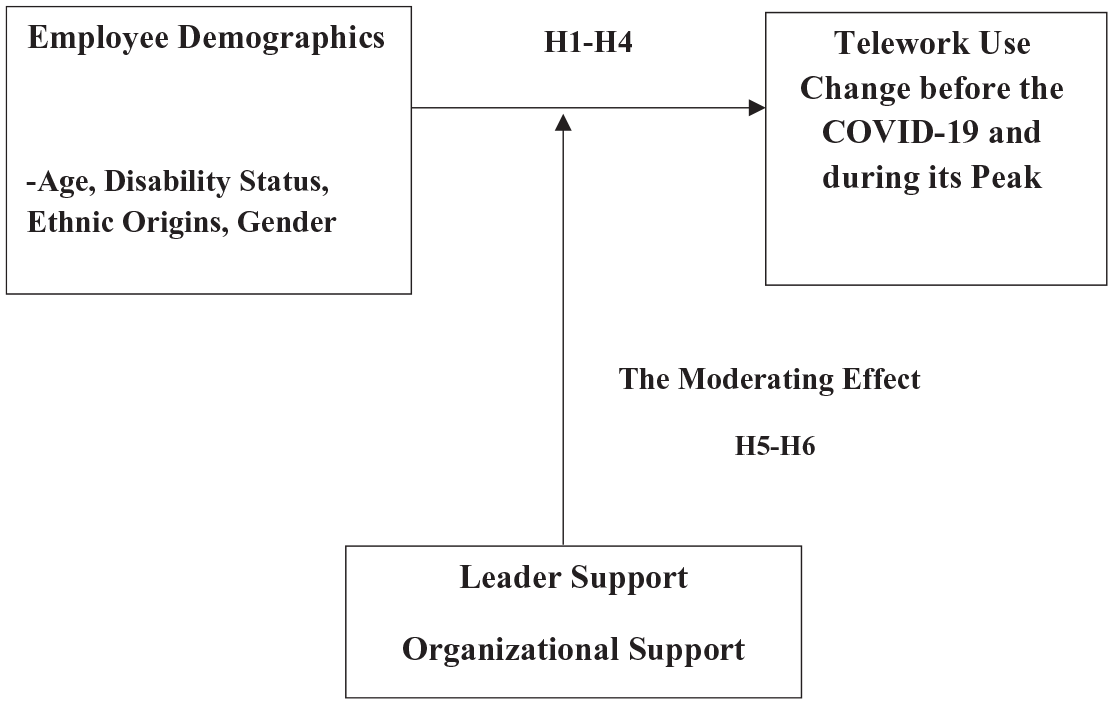
Employee Demographics, Telework Divide, and LS and OS.
Method
Sample and Data Collection
This study extracted the data from the 2020 Federal Employee Viewpoint Survey (FEVS) containing a large sample of federal employees. 3 Due to the outbreak of COVID-19 in 2020, the 2020 FEVS was significantly different from the previous year’s surveys. The 2020 FEVS focused on examining the effect of COVID-19 on U.S. federal employees (U.S. OPM, 2021). Eligible 1,410,610 employees (full-time and part-time, permanent, nonseasonal, nonpolitical employees) were invited to participate in the 2020 FEVS. Of those, 624,800 employees responded to the questionnaire, with a response rate of 44.3%. 4 The self-reported 2020 FEVS was administered between September 14 and November 5, 2020, to examine the conditions and contexts surrounding COVID-19. In addition, employees from 82 federal government agencies, ranging from department-level to large and small agencies, participated. 5
The characteristics of the respondents were as follows (see Table 1). Male employees accounted for 54.8% and women for 45.2% of the respondents. Concerning the age distribution of respondents, 23.2% were under 40 years, and 76.8% were 40 years of age or older. Most participants were White, accounting for 73.3%, followed by Black or African American at 14.4 %, Asians at 5.7%, and other groups accounting for 6.6%. Employees with disabilities comprised 14.7% of the respondents, and employees without disabilities accounted for 85.3%. Regarding the respondents’ working years with the federal government (excluding military service), those with 10 years or fewer accounted for 36.5%, whereas 36.9% had 11 to 20 years of service and 26.6% had more than 20 years of service. In addition, non-supervisor/team leaders comprised 77.1% of respondents, and the supervisor/manager/executives comprised 22.9%.
The Variables and Their Corresponding Questions.
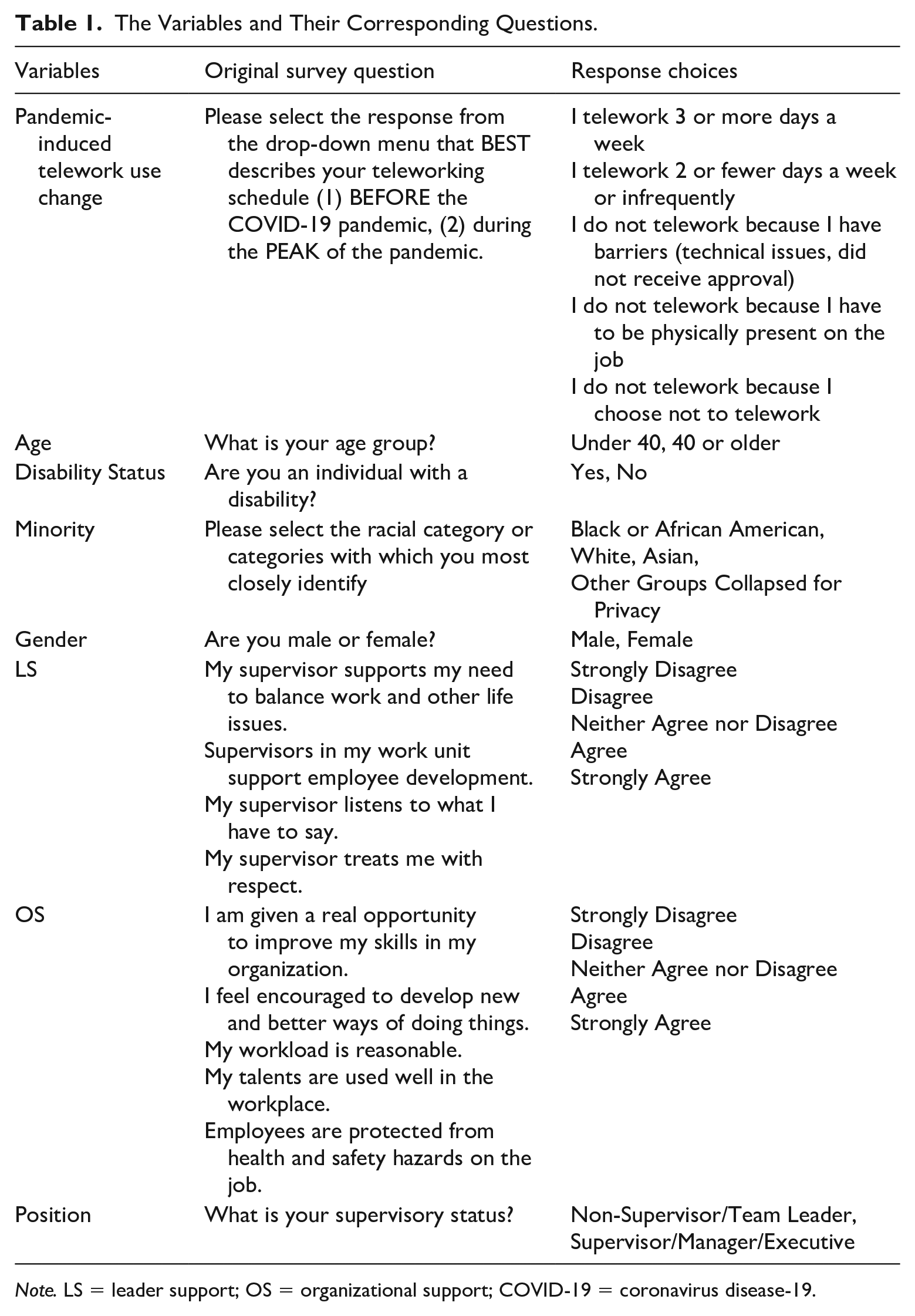
Note. LS = leader support; OS = organizational support; COVID-19 = coronavirus disease-19.
Measures and Analysis Method
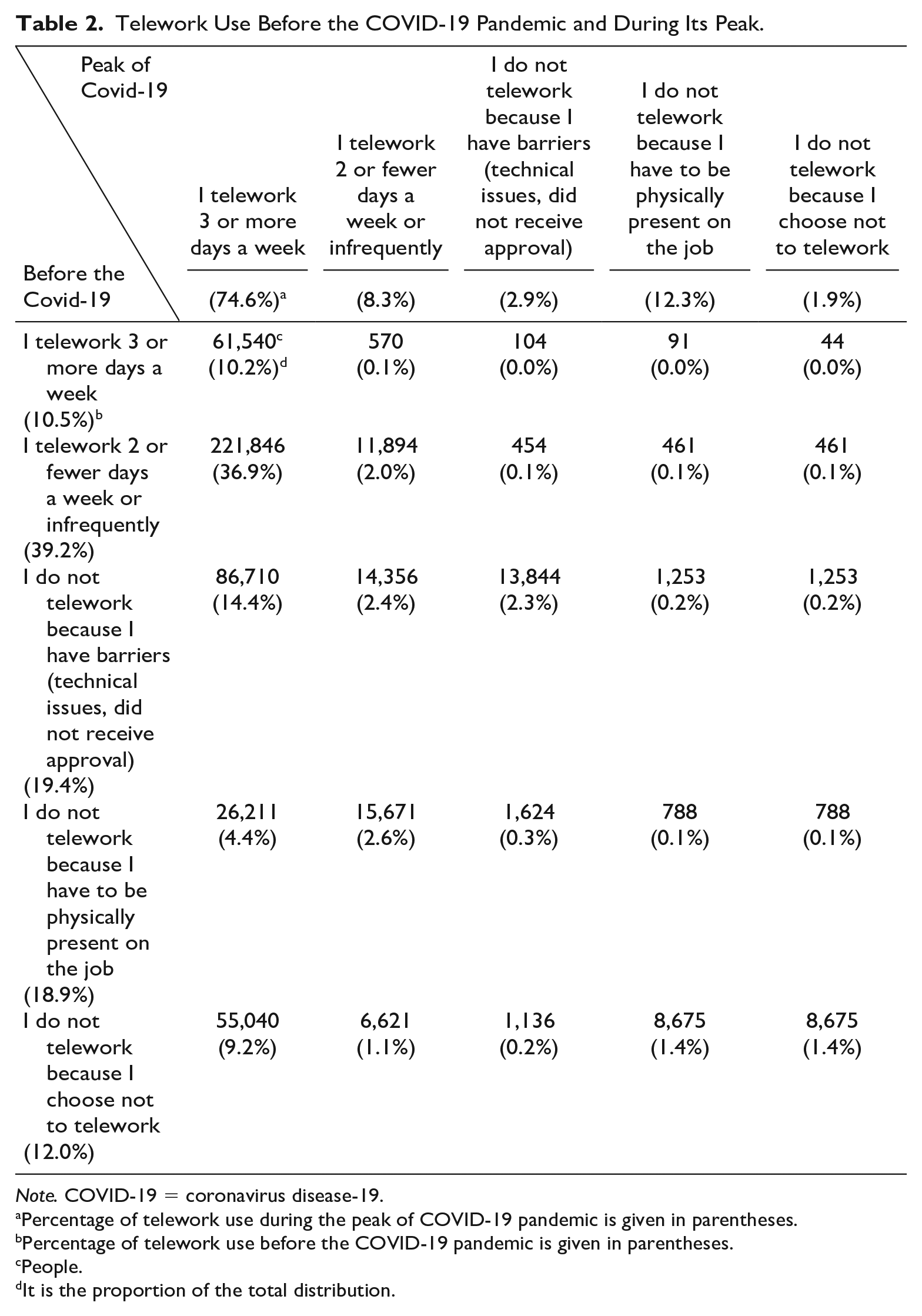
Pandemic-induced telework use change (TUC) was measured as a dependent variable following the previous research on TUC due to the pandemic (e.g., Kruse et al., 2022). Original questions assessed the frequency of teleworking both before COVID-19 and during the peak of COVID-19 (1 = I telework 3 or more days a week, 2 = I telework 2 or fewer days a week or infrequently, 3 = I do not telework because I have barriers [technical issues, did not receive approval], 4 = I do not telework because I have to be physically present on the job, 5 = I do not telework because I choose not to telework). The telework use before the COVID-19 pandemic and during its peak is presented in Table 2. This research measured the difference in teleworking before the COVID-19 pandemic and during the peak of the pandemic. Accordingly, this research coded 0 as no change or decrease and 1 as the increase in teleworking from before COVID-19 to the during the peak of COVID-19. 6 Most federal employees increased their teleworking since the outbreak of COVID-19 (M= .71, SD= .453).
Telework Use Before the COVID-19 Pandemic and During Its Peak.
Note. COVID-19 = coronavirus disease-19.
Percentage of telework use during the peak of COVID-19 pandemic is given in parentheses.
Percentage of telework use before the COVID-19 pandemic is given in parentheses.
People.
It is the proportion of the total distribution.
Employee demographics, as independent variables, included age, disability status, ethnic origins, and gender based on the previous research (e.g., Arvola et al., 2017; Baker et al., 2006; Fairlie, 2004; Kruse et al., 2022; Tahlyan et al., 2022). Employee age was divided into two groups. Following the previous research (e.g., Reinhold et al., 2014), employees were divided into “under 40 years” (coded as 0) and “40 years or older” (coded as 1; M = .768, SD=. 421). 7 In addition, employees with a disability were coded as 1, and those without a disability were coded as 0 (M = .147, SD=. 354). The U.S. OPM (2020) indicated that there were 86,736 respondents with disabilities, accounting for 15% of the sample. Employees were divided into a minority or non-minority status depending on their ethnic origins. The original question assessing ethnic origin in the 2020 FEVS asked, “Please select the racial category or categories with which you most closely identify.” The four categories of Black or African American, White, Asian, and Other Groups were collapsed for privacy and classified as a minority or non-minority status. The minority was coded as 1, and the non-minority was coded as 0 (M = .215, SD=. 411). Finally, female employees were coded as 1 and male employees as 0 (M = .451, SD=. 497).
LS, as a moderating variable, was measured following the previous research on LS (e.g., Mahler, 2012). In particular, this research focused more on supervisor support than senior leader support because the immediate supervisor can affect telework adoption directly. The four questions were measured on a five-point Likert-type scale (1=strongly disagree, 2=disagree, 3=neither agree nor disagree, 4=agree, 5=strongly agree). The mean LS was 4.237 (SD = .876; α reliability = .921). OS, as another moderating variable, was measured by five items that examine the degree to which the organization provides sufficient resources and support to its members. The variable, measured on a five-point Likert-type scale (1–5 points), was adopted from the previous research on OST (e.g., Eisenberger et al., 1986). The internal consistency was .824, with a mean of 3.761 (SD = .846).
This study controlled for whether the respondents were supervisors because the position can influence the telework divide (Mahler, 2012). Thus, this research coded non-supervisor/team leader as 0 and supervisor/manager/executive as 1. The mean position was .229 (SD = .42), which indicated that more employees were in non-supervisor/team leader positions. In addition, this study measured working years with federal government agencies as dummy variables representing three subgroups (1=10 years or fewer, 2=11 to 20 years, 3=more than 20 years). Finally, this research considered federal government agencies as a dummy control variable because telework use is associated with the characteristics of organizations (Kruse et al., 2022). 8
Finally, as the dependent variable was binary, this research conducted a logistic analysis to examine the extent to which differences in observed characteristics of employees (age, disability status, ethnic origins, and gender) and moderating variables (LS and OS) explain TUC before the COVID-19 pandemic and during its peak. In particular, to estimate the employee demographics-LS/OS interaction, this research calculated the effects of the employee demographics and LS/OS on pandemic-induced TUC using values one standard deviation above and below the centered means (Aiken & West, 1991). 9
Results
Telework Divide During the COVID-19 Pandemic in the U.S. Federal Workforce
This study examined U.S. federal employees’ experiences of a telework divide during the COVID-19 by analyzing differences in their telework use before the COVID-19 pandemic and during its peak (see Table 2). Before COVID-19, most employees teleworked less than twice a week or infrequently (39.2%), followed by those who did not telework because of various barriers (technical issues, did not receive approval; 19.4%), those who did not telework because they had to be physically present on the job (18.9%), those who did not telework because they chose not to telework (12.0%), and those who teleworked three or more days a week (10.5%). The percentage of respondents who worked from home (49.7%) was comparable to the percentage of those who did not telework (50.3%) before COVID-19.
Overall, telework use has increased significantly since the outbreak of COVID-19. During the peak of COVID-19, those who teleworked three or more days a week accounted for the absolute majority (74.6%). In addition, employees who teleworked less than twice a week or infrequently made up 8.3%, those who teleworked at least once a week accounted for 82.9%, and those who did not work from home accounted for 17.1% during the peak of COVID-19. Since the outbreak of COVID-19, the number of federal employees working from home has drastically increased (49.7%→82.9%). Moreover, crosstab analysis indicated a statistically significant change in telework adoption before the COVID-19 pandemic and during its peak (χ2(df)= 442,029.2 (16), p < .001). In particular, 36.9% of the respondents moved from teleworking two days or less to more than three times a week, and 28% of all respondents went from not teleworking to working remotely more than three times a week. Thus, this investigation observed that telework has become common in U.S. federal government agencies since the outbreak of the COVID-19 pandemic.
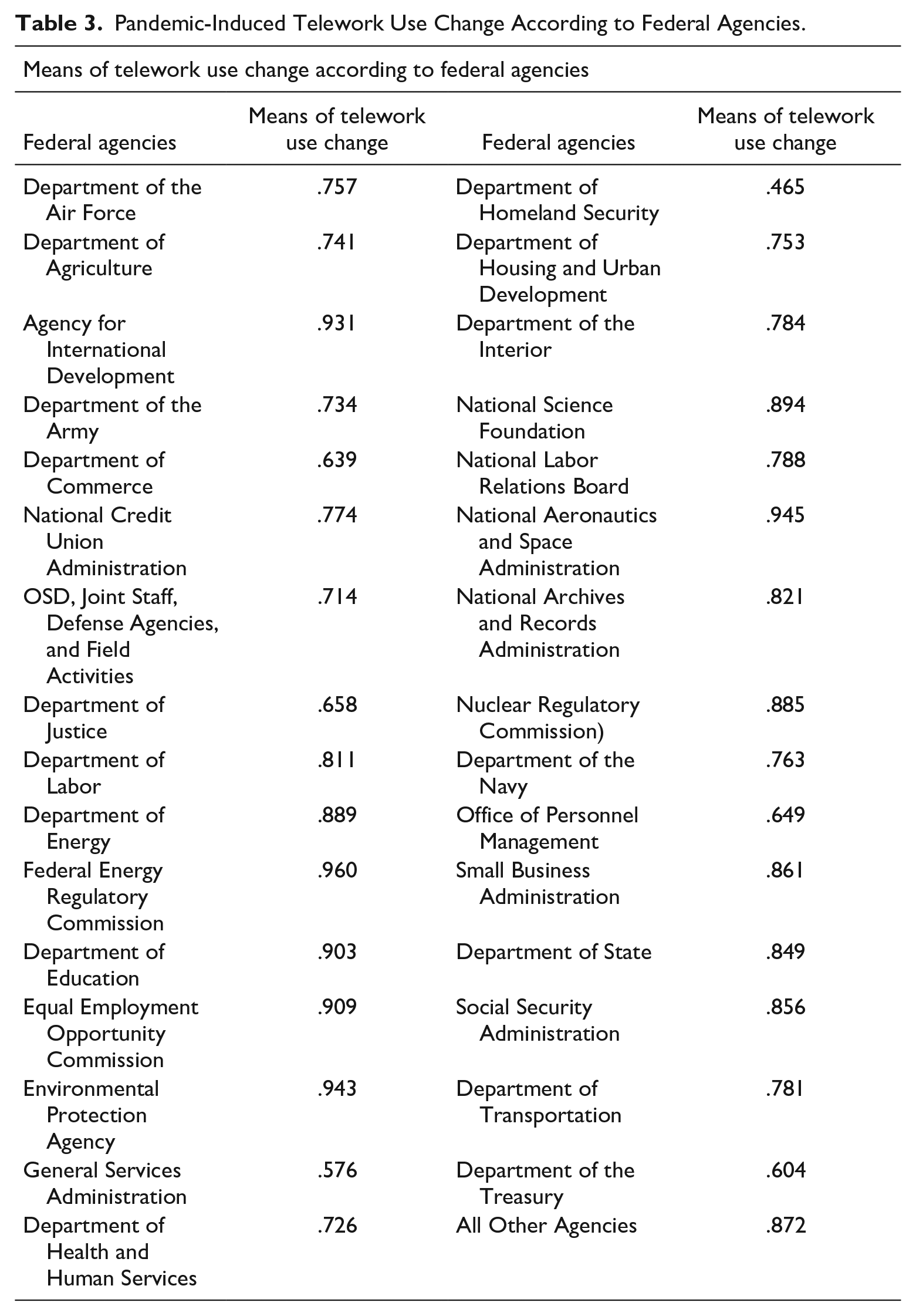
The analysis of the changes in telework use before the COVID-19 pandemic and during its peak revealed that 71% of the respondents increased their telework use compared with before, and 29% decreased or maintained the same level. This study found the mean of pandemic-induced TUC was .71. More specifically, this investigation observed the telework divide by federal government agencies, working years with federal government agencies, and workforce positions (see Table 3). Federal Energy Regulatory Commission was the federal government agency with the highest increase in telework use during COVID-19 (M = .96), and the Department of Homeland Security was the agency with the lowest increase (M = .465). In particular, the Department of Homeland Security, with numerous tasks that require work in the field, had low TUC despite the outbreak of COVID-19. More specifically, the respondents who did not telework because they had to be physically present during the peak of COVID-19 accounted for 39.1% of all respondents in the agency.
Pandemic-Induced Telework Use Change According to Federal Agencies.
Means, standard deviations, and correlations are presented in Table 4. A simple correlation matrix showed that TUC correlated positively with employee demographics, such as non-minority, non-disability, younger age, and female gender. In addition, TUC increased when employees perceived a high level of support from their leaders and organizations.
Descriptive Statistics: Means, Standard Deviation, Reliabilities a , and Correlation.
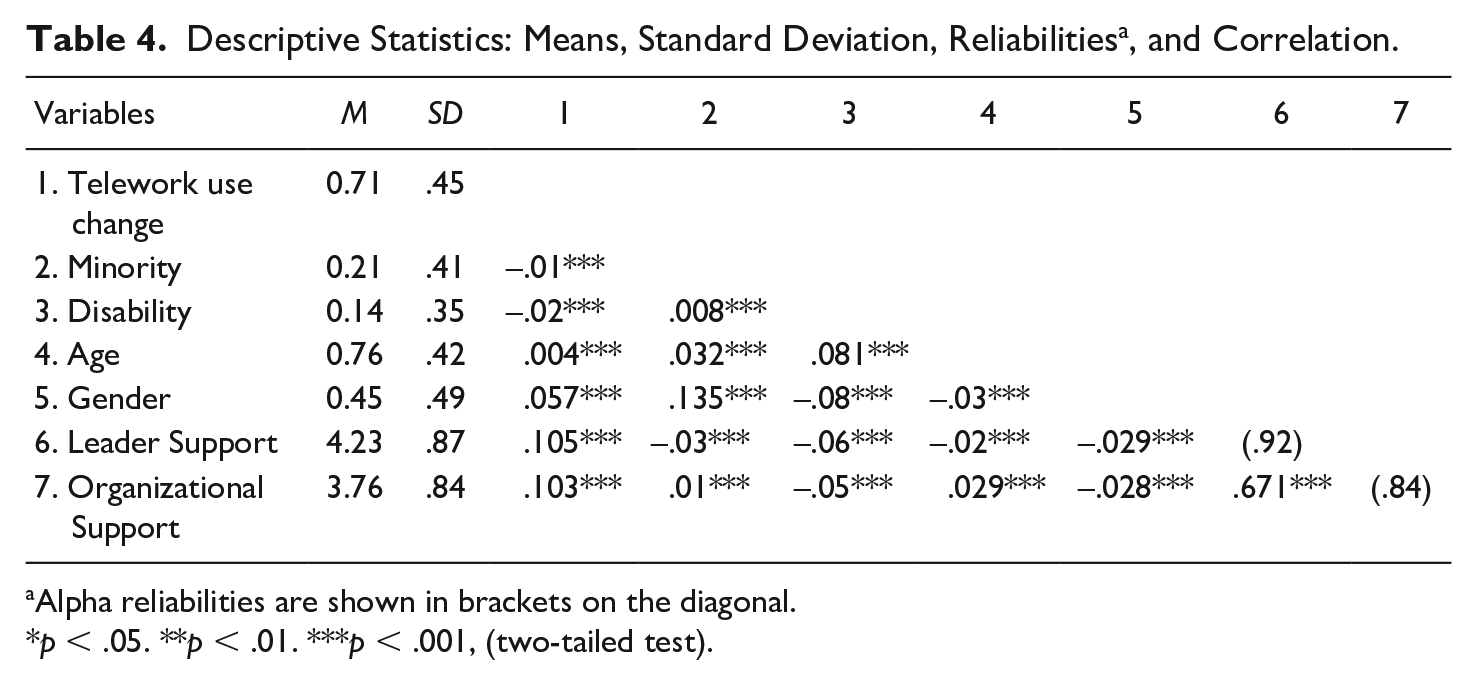
Alpha reliabilities are shown in brackets on the diagonal.
p < .05. **p < .01. ***p < .001, (two-tailed test).
Testing Hypothesized Models
Hypotheses 1 through 6 were tested using logistic regression that modeled the probability of a discrete TUC given input variables, as shown in Table 5. More specifically, Table 5 reports the results of the logistic regression examining the relationships of employee demographics with TUC (Hypotheses 1 through 4) and the moderating effect of both LS and OS on the relationship between employee demographics and TUC (Hypotheses 5 and 6). All the effects in all models were represented as odds ratios measuring the association between an exposure and an outcome, indicating “the odds that an outcome will occur given a particular exposure, compared to the odds of the outcome occurring in the absence of that exposure” (Szumilas, 2010, p. 227). Table 5 shows the models in three columns. Model 1 examined the influence of employee demographics (age, disability, ethnic origins, and gender) on pandemic-induced TUC; Model 2 added moderating variables (LS and OS); and Model 3 included all employee demographics–leader LS/OS interaction variables.
Results of Logistic Analysis With the Pandemic-Induced Telework Use Change.
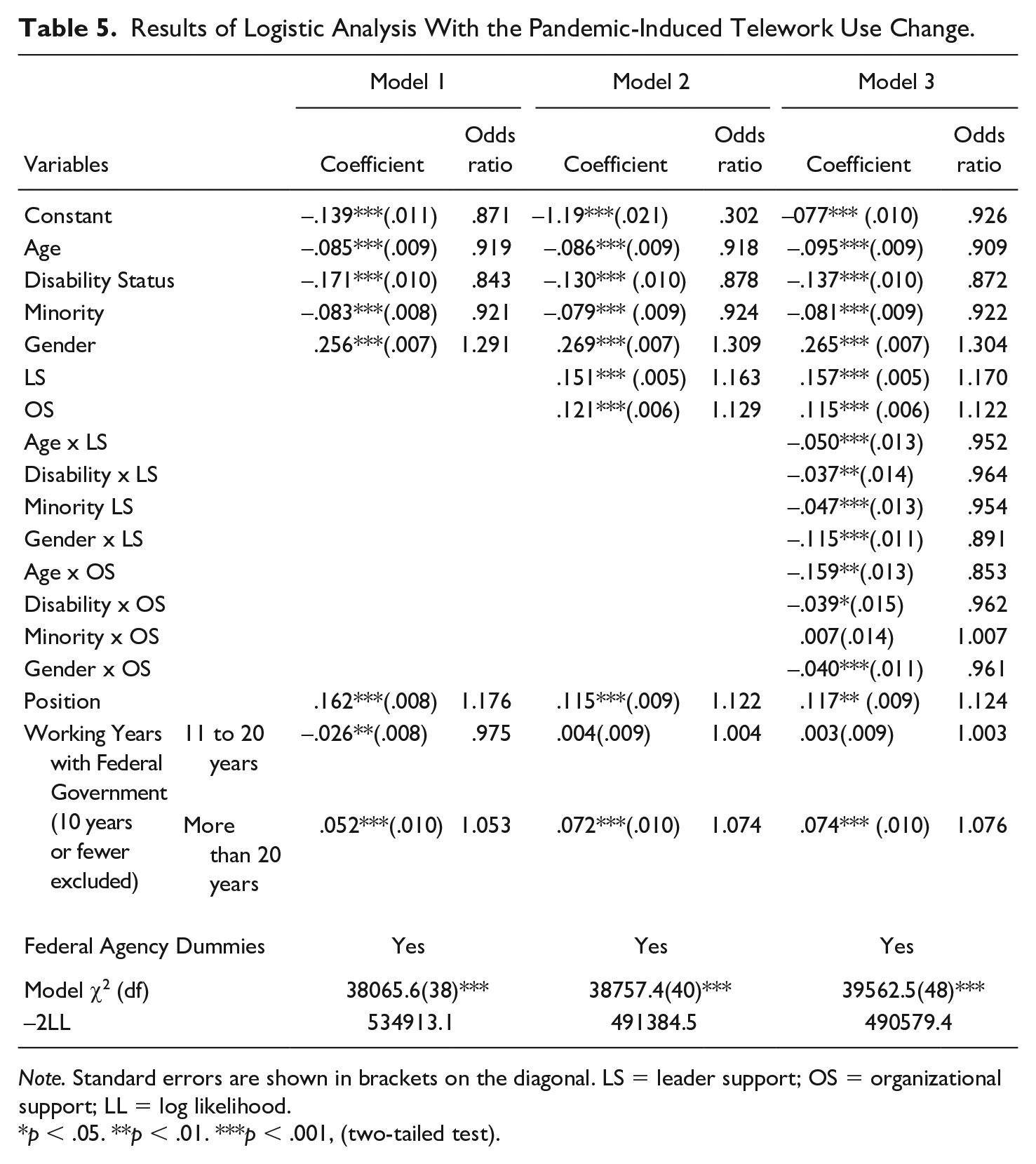
Note. Standard errors are shown in brackets on the diagonal. LS = leader support; OS = organizational support; LL = log likelihood.
p < .05. **p < .01. ***p < .001, (two-tailed test).
First, this research found that middle-aged/older employees, employees with disabilities, minority employees, and male employees were less likely to increase TUC since the outbreak of COVID-19. More specifically, Model 1 indicated that middle-aged/older employees, employees with disabilities, and minority employees were less influenced by an increase in their telework use before the COVID-19 pandemic and during its peak than younger (under 40 years) employees, employees without disabilities, and non-minority (White) employees. Meanwhile, female employees reported increased telework use before the COVID-19 pandemic and during its peak than male employees. Thus, Hypotheses 1 through 4 were supported. Similar to previous research on the telework divide by workers with disability (Kruse et al., 2022), this research substantiated the divide by age, disability status, ethnic origins, and gender of U.S. federal employees since the outbreak of COVID-19. These results showed that the pandemic led to disparities in telework use among federal employees by their demographics. In particular, this research found a large difference in the telework use by gender and disability status of federal workforces since the outbreak of the COVID-19 pandemic.
Second, Models 2 through 3 indicated that the moderating variables (LS and OS) were positively and significantly related to TUC, and all interaction effects were statistically significant except for minority–OS interaction. Most of all, the significant interaction effects were negative. Specifically, the moderating effect of LS and OS on the relationship between federal workforce demographics and pandemic-induced TUC was significantly negative in that greater positive LS strengthened the negative effects of age, disability status, ethnic origins, and gender on TUC. LS strengthened the negative effect of middle-aged/older employees, employees with disabilities, and minority employees on pandemic-induced TUC. Meanwhile, LS weakened the positive effect of women employees on TUC. While LS appeared to reduce the telework divide by gender, it tended to amplify it by age, disability status, and ethnic origin. Thus, Hypothesis 5 was partially supported.
In the same vein, OS had a significantly negative moderating effect on the relationship between age, disability status, gender, and TUC. While OS did not moderate the effect of ethnic origins on the pandemic-induced TUC, OS strengthened the negative effect of middle-aged/older employees and employees with a disability on TUC and weakened the positive effect of women employees on TUC. Accordingly, while OS seemed to reduce the telework divide by gender, OS tended to amplify the divide by age and disability status. Thus, Hypothesis 6 was partially supported. Contrary to expectations, these results showed that U.S. federal government leaders (supervisors) and organizations effectively bridged the telework divide only by gender but not by age, disability status, and ethnic origin.
Third, this study found differences in pandemic-induced TUC by positions because supervisors/managers/executives had more TUC than non-supervisor/team leaders. Hence, federal workforces with higher positions were more likely to use pandemic-induced TUC. In addition, this investigation examined pandemic-induced TUC by working years, excluding working for the federal government for 10 years or less as a baseline. As a result, the effect of working for the federal government from 11 to 20 years on TUC was non-significant. However, employees who worked for the federal government for 20 years or more reported greater TUC than those with 10 years or less. These results demonstrated that pandemic-induced TUC was more common among federal employees in high positions and with greater tenure.
Discussion and Conclusion
Using the data from U.S. 2020 FEVS, this research examined the changes in teleworking among federal employees before the COVID-19 pandemic and during its peak and the telework divided by their demographics. This investigation revealed three significant findings. First, this study found that teleworking has increased significantly among federal employees as COVID-19; nearly 71% reported increased telework use compared with pre-COVID-19; thus, most federal employees shifted to telework during COVID-19. Second, this study found the telework divide between federal workforces by age, disability status, ethnic origin, and gender since the outbreak of COVID-19. Particularly, middle-aged/older employees, employees with disabilities, minority employees, and male employees were less likely to have experienced the increase in their telework use before the COVID-19 pandemic and during its peak. Third, this investigation examined LS and OS’s role in reducing the pandemic-induced telework divide. However, although LS and OS significantly reduced the telework divide by gender, they did not reduce the telework divide by age, disability status, and ethnic origin. Based on these results, this research suggests the following theoretical and practical implications.
The major theoretical implication of this study is that demographic characteristics, particularly age, disability status, ethnic origins, and gender, influenced employees’ telework behaviors according to the LS and OS in the context of COVID-19. That is, OST, which focuses on the employees’ behaviors according to their perception of favorable treatment from organizations (Eisenberger et al., 1990), can be applied to the teleworking behavior of public employees depending on the level of LS and OS in crises such as COVID-19. During COVID-19, support from leaders and organizations became even more important in that LS and OS significantly moderated federal employees’ teleworking. Specifically, supervisors were required to ensure their subordinates worked in a safe environment. The organizations also needed to provide them with the necessary skills and sufficient resources for telework (Kohont & Ignjatović, 2022). During COVID-19, LS and OS played significant roles in providing equal opportunities for federal workforces to use telework regardless of gender. Accordingly, this research empirically substantiated the applicability of OST to telework during the pandemic.
Nevertheless, unexpectedly, LS and OS within the U.S. Federal agencies did not mitigate the negative effect of middle-aged/older employees and employees with disabilities on the increase in telework use before the COVID-19 pandemic and during its peak. This result can be related to the broader context of COVID-19, which can be associated with the argument that older employees and employees with disabilities may be medically vulnerable to COVID-19 (Jesus et al., 2020; Varlamova & Previtali, 2020; WHO, 2020). In the context of COVID-19, when organizations and leaders are unable to actively provide technical, medical, and financial support for middle-aged/older employees and employees with disabilities to work from home, middle-aged/older employees and employees with disabilities would refrain from using teleworking during the COVID-19. 10 Thus, in a situation where middle-aged/older employees and employees with disabilities are concerned about diseases such as COVID-19, the support from leaders and organizations would be essential to revitalize their telework use.
Based on the results of this research, public management strategies for coping effectively with telework should consider the telework divide by public employees’ demographics since the outbreak of COVID-19. First, public organizations must recognize that telework can become inevitable for public employees, even post-COVID-19. COVID-19 has radically changed the working patterns of public employees, increasing telework use. This research found that 71% of the respondents used telework more frequently during COVID-19. However, telework during COVID-19 has been regarded as an essential working pattern because of the external pressures to prevent the spread of an infectious disease (Carillo et al., 2021). Thus, public managers and organizations need to resolve the negative effects of teleworking in the post-COVID-19 era.
Second, public organizations need to recognize the telework divide by public workforce demographics as one of the negative effects of telework. The telework divide emerged by age, disability status, ethnic origins, and gender of public workforces since the outbreak of COVID-19. Middle-aged/older participants, people with disability, ethnic minorities, and males were less likely to have experienced increased telework use before the COVID-19 pandemic and during its peak. The telework divide by age, disability status, ethnic origin, and gender of public employees might increase their perceptions of discrimination and inequality. Thus, public managers and organizations need effective management to reduce the pandemic-induced telework divide because public employees’ perceptions of discrimination and inequality in the workplace could negatively affect organizational productivity.
Third, public managers and organizations need to reduce the pandemic-induced telework divide by maintaining frequent, transparent, and consistent communication about telework use, providing sufficient resources and skills to disadvantaged telework users, cultivating a user-friendly culture, and improving a teleworker-organizational environment fit. Most of all, as LS and OS appear to amplify the telework divide by age and disability, U.S. federal government leaders and agencies must reduce this divide. In particular, leaders need to give all their subordinates equal opportunities to work from home, regardless of subordinates’ age and disability status, accommodate those who have difficulties working from home, offer them education and technical support, and address disadvantages associated with teleworking. For example, leaders need to allow their subordinates to provide real-time anonymous feedback about their use of telework. Leaders and organizations must create a favorable organizational environment for middle-aged/older employees, employees with disabilities, and minority employees to work from home.
Despite several meaningful findings, this research had some limitations. First, although this study focused on telework use before the COVID-19 pandemic and during its peak, it did not conduct a longitudinal analysis. The COVID-19 crisis could be considered a punctuated-equilibrium point for teleworking of public employees in that the number of teleworkers has increased rapidly during the COVID-19 pandemic compared with pre-pandemic time. Furthermore, even after COVID-19, telework can be widely used in the public sector. Accordingly, future research needs to conduct long-term studies on the telework divide.
Second, this research had limitations related to the measurement of variables because it used secondary data. In particular, this study did not measure age groups as a continuous ratio variable (e.g., younger 25, 25–35, 35–45, 45–55, 55 and older) to better capture the effect of age on the digital divide because the 2020 FEVS originally divided the age groups into two groups, creating a dichotomous categorical variable (“under 40 years old and ‘40 years or older than 40 years”). However, due to data limitations, this research coded age as 40 and older, representing middle-aged/older rather than older adults who are generally categorized as aged 65 and older. Accordingly, these results were not interpreted as pertaining to older adults only. In addition, this research did not measure federal employees’ preference for telework before the COVID-19 pandemic and during its peak due to data limitations. Examining the extent to which federal employees preferred to work from home would allow public organizations to find the relationship between employees’ preference for telework and their actual telework use according to their demographic characteristics during the COVID-19 pandemic. Thus, future study needs to examine the influence of public employees’ subjective preference for telework on their actual telework use within their organization during the pandemic. Such research would clarify the extent to which employees can choose their telework use and the extent to which their organizations support such behavior.
Third, although this research measured LS and OS, it did not consider the effects of organizational factors (e.g., organizational culture, structure, and climate) on telework use during COVID-19. As telework use by public employees is particularly associated with bureaucratic features, like authority and direction, separation of professional and personal life, and modularity (Mele et al., 2021), future study needs to focus on the association between bureaucratic organizational characteristics and telework use. Fourth, this research had the limitation of inflated significance due to the large dataset. That is, the larger the dataset, the greater the chance of finding statistically significant results. Thus, to address the problem of inflated significance, future research needs to conduct a replication study with a different dataset to confirm the results (Flake et al., 2022).
Finally, although this research focused on the telework divide by public employees’ demographics, it did not examine their perceptions of discrimination and inequality in teleworking. As the existing studies have suggested that the telework divide can increase employees’ perceptions of discrimination (e.g., Mahler, 2012), future research could examine the extent to which public employees recognize discrimination and inequality in teleworking and the measures leaders and organizations can take to resolve these perceptions.
Telework has become a major working pattern in the public sector since the COVID-19 pandemic (Schuster et al., 2020). Effective telework management is an important issue in public management. This research can provide public organizations with public management strategies to improve the pandemic-induced telework divide.
Footnotes
Declaration of Conflicting Interests
The author(s) declared no potential conflicts of interest with respect to the research, authorship, and/or publication of this article.
Funding
The author(s) received no financial support for the research, authorship, and/or publication of this article.
