




Abstract
Tourism’s workforce resilience remains vitally important as the industry continues to build capacity in its long recovery from recurring global crises. Resilience is hindered by persistent structural issues that obstruct recovery efforts. Adopting and extending a novel paradox dynamics model, this research holistically considers employees, operators, and stakeholders, by modeling the process across four dimensions of unresolved paradoxical tensions. Based on qualitative data engaging multiple stakeholders in impacted regional tourism destinations, the results reveal a “vicious-virtuous” process in explaining workforce resilience building from a shifting paradox dynamics view. Theoretically, we augment the shifting paradox dynamics by recognizing the complexity of multiple tourism workforce actors, the diffused nature of organizational agency, and the lack of a central orchestrator. We augment the model to accommodate these empirical insights. Practically, the study identifies resolutions to further deep structural issues that obstruct resilience and recovery.
Introduction
Continued critical labor shortages in most developed economies (Janta & Ladkin, 2024) are compounded by relatively scant knowledge concerning workforce resilience (Ritchie & Jiang, 2019a, 2019b). Indeed, having a resilient workforce is a high priority for both organizational and policy leaders in the tourism sector because, regardless of their scale or developmental phase, tourism is inherently vulnerable to a range of crises from natural disasters to global conflicts and economic downturns. Resilience, or a workforce that can survive and thrive in crises, is what makes the difference between merely recovering and advancing forward (Prayag, 2020). Recent tourism literature, while acknowledging the need for systemic approaches to build resilience, has focused predominantly on individual (worker) (e.g., Kimbu et al., 2023); or organizational resilience (e.g., Chowdhury et al., 2019; Lim et al., 2020) but less holistically (Prayag et al., 2024; Robinson et al., 2024).
This is a shortcoming as structural issues, as deep and persistent tourism and employment characteristics straddling the individual, organizational and external environments, exacerbate tensions in tourism employment when navigating increasingly volatile contexts and crises (Ladkin et al., 2023). These structural tensions are increasingly empirically evidenced, inter alia seasonality, stochastic demand and lack of services (Rodrigues et al., 2025), precarious and insecure working conditions and remuneration in “the people industry” (Mitsakis et al., 2025), opaque career paths, low entry barriers into both jobs and enterprises, the divergent and high mobility of labor, modest attraction-poor retention (Booyens, 2022), sizeable gray economies intersecting the formal (Wilson & Dashper, 2023), high tech-high touch work (Fan & Mattila, 2021), lacking precise definitions of what is and isn’t tourism employment, susceptibility yet an apparent imperviousness to crisis (Prayag et al., 2024), and so on. As has been previously observed, from these structural issues and tensions arise paradox (Baum et al., 2016). Embracing paradox enables us to suspend seemingly irreconcilable tensions in balance to find mutually beneficial resolutions (Lewis & Smith, 2014).
Theorizing paradox has captured the attention of scholars across myriad fields from gerontology (Ashok & Ali, 1999) to public administration (Vangen, 2017) and organic chemistry (Shahidi & Zhong, 2011). In tourism, paradox has specifically been applied to sustainability research (e.g., Weaver, 2017) or tourist behavior research (e.g., Wu et al., 2021) but rarely regarding its workforce (see Baum, Mooney, Robinson, & Solnet, 2020; Robinson et al., 2014). While it is within the organizational sphere that the theory has most developed (Berti et al., 2021), this study mobilizes a dynamic of paradox conceptualization that at once addresses two shortcomings in the paradox literature. First, paradox theory has focused predominantly on the organizational and then individual levels (Miron-Spektor et al., 2018) to the neglect of both broader environmental phenomena and the interplay between these three agents. Second, the unfolding of the processual dimensions of paradox is not well understood (W. K. Smith & Lewis, 2011). Together these gaps provide insight into the interplay between the multi-actor systemic, relational and process dynamics of tourism employment’s structural complexity and its workforce resilience. Accordingly, in this study we apply and advance Pradies et al.’s (2021) paradox dynamics model, characterized by its structural and relational explanatory value, to further unlock processes involving all three individual, organizational and systemic agents, collectively, that build the commensurately dynamic resilience (cf. Luthar et al., 2021) in tourism employment.
Therefore, adopting a positive paradox perspective, and specifically a shifting paradox dynamics view, this research (i) explores key structural issues and tensions contributing to tourism workforce resilience, and (ii) investigates strategies to resolve resilience challenges based on collective perspectives. The paper is structured as follows: a review of literatures pertaining to tourism’s workforce, its resilience during crisis and a critical discussion of the paradox dynamics model, its antecedent literatures and core elements. The methods, centering on data elicited from 15 focus groups comprising a total of 92 employees, operators and stakeholders from government, education/training, and associated bodies in Australian regional destinations, are detailed, before findings are iteratively discussed in conversation with the literature and structured around the four-stage paradox dynamics model. The article concludes with theoretical and practical implications and limitations and future research.
Literature Review
Tourism Workforce Resilience During Crisis
Workforce resilience is the ability of both organizations and employees to brace against and deal with crises or disruption, and the capacity to adapt to challenges by utilizing resource networks. A resilience-oriented workforce cyclically balances decisions and trade-offs while responding to shocks and stressors (Madrigano et al., 2017). A workforce can be conceptualized as a collective group, with members ideally working collaboratively rather than independently (Wyche et al., 2011). Regarding resilience, two perspectives dominate the literature—the organizational (operator/owner-driven) level capability to react and adapt to crises and the individual (employee) level self-regulatory processes harnessing personal growth in reaction to employment trauma or work-related challenges (Lim et al., 2020).
Organizational level resilience research mainly focuses on how organizational strategies, management practices and procedures, or organizational culture contribute to the development of workforce resilience. For example, Ngoc Su et al. (2021) highlighted the importance of human resources practices in building a resilient workforce during the crisis or turbulent environment. Furthermore, they identified that an ongoing learning culture and adaptive capacity in the organization as important factors that can increase tourism workforce resilience in the face of a global crisis. Likewise, it is suggested management practices that can strategically meet organization and employees’ goals can promote resilience (Gamage et al., 2024). Moreover, Sharples et al. (2023) examined the crucial role of organization’s internal communication strategy to foster workforce resilience in the cruise industry.
Turning to an individual perspective, personal resilience is conceptualized in different ways. Some researchers adopt a static view of resilience and conceptualize it as a personality trait (Wright & Masten, 2015), an important psychological resource (Shin et al., 2012), the ability, capacity and/or capability allowing individuals to overcome adversities (Luthans & Youssef-Morgan, 2017). This line of enquiry also identified a range of individual-level protective factors, such as self-esteem, self-efficacy, length of work experience, competence, and optimism, that relate to resilience (Raetze et al., 2021). For example, Prayag and Dassanayake (2023) examined the influence of individuals’ creative self-efficacy on their own resilience. Conversely, and crucially for this study, others treat resilience as a dynamic process “encompassing positive adaptation within the context of significant adversity” (Luthar & Cicchetti, 2000, p. 543). Supporting this definition, the dynamic view of individual resilience has focused on how resilience develops within individual employees, suggesting that resilience can be developed with cognitive transformation and personal growth training (Tebes et al., 2004).
Bridging the two perspectives—the organizational level and individual level of resilience—a burgeoning line of scholarly inquiry is exploring the interdependencies between them, suggesting that their interplay is cyclical. On the one hand, aligning with the notion that resilience is the result of the interplay of individual and environmental factors (Näswall et al., 2019), research shows that individual resilience has positive effects on organizational resilience. For example, empirical evidence from a recent study shows that tourism workforce resilience is a complex system and the interplay between organization and individual is critical (Robinson et al., 2024). Relatedly, research also finds that resilient employees are often proactive contributors to building supportive environments, subsequently contributing to an organization’s ability to react and adapt to crises (Prayag et al., 2024). On the other hand, the resilience of an organization can play a crucial role in shaping the resilience of its members. Organizations with continuous learning programs, training programs, and adaptive operational strategies, can provide a conducive environment for individual resilience building (Caniëls & Baaten, 2019). Thus, individual resilience and organizational resilience create a feedback loop of mutual reinforcement (Linnenluecke, 2017).
Increasingly, tourism research emphasizes the importance of multi-level analysis, including micro (individual), meso (organizational), and macro (societal or policy) perspectives when examining workforce issues. For instance, Mölk et al. (2022) applied a multi-level framing approach to explore how tourism employment is discursively constructed, showing that dominant frames can either radicalize or attenuate perceptions of tourism work across different stakeholder levels. Similarly, Auer et al. (2021) illustrated how potential employees interpret employer branding signals through individual (micro-level) meaning making, influenced by broader organizational and societal cues. Furthermore, Jiang et al. (2025) adopt a community capitals framework to examine retrospective and prospective resilience across multiple levels in hospitality firms, showing how resources and adaptive capacities at the community (macro), firm (meso), and individual (micro) levels interact to shape tourism resilience outcomes during crises.
In sum, this approach is especially pertinent in tourism, where workforce resilience is not merely a product of internal capacities, but also shaped by how tourism employment is perceived, communicated, and valued at different systemic levels (e.g., Robinson et al., 2024). This broader framing provides a valuable foundation for the next section, which introduces the theoretical lens of paradox dynamics, highlighting both dysfunctional (vicious cycle) and functional (virtuous cycle) processes that shape workforce resilience in tourism. Guided by this synthesis, this study seeks to explore the structural issues and tensions shaping tourism workforce resilience and to identify strategies for addressing these challenges through collective perspectives.
Paradox Dynamics Shifting for Agents
This research draws on theoretical developments vis-à-vis the dynamics of paradox. According to W. K. Smith and Lewis (2011, p. 382), paradox is defined as “contradictory yet interrelated elements that exist simultaneously and persist over time.” For example, during the crisis, many organizations faced a profit-people paradox, or the classic short-term-long-term paradox (Collings et al., 2021). Paradoxes exist at various levels: from individual (worker) experiences to intra-organizational demands, and to inter-organizational challenges and broader environmental issues (Lewis & Smith, 2014). Despite this spectrum, existing literature has mainly centered on individual and organizational levels (e.g., Miron-Spektor et al., 2018), with relatively limited attention to the broader systemic levels, or, for that matter, the interplay between these three agents comprising the workforce.
Central to the paradox perspective is the “both/and” mindset, as opposed to the “either/or” mindset (LÜScher & Lewis, 2008). This notion posits that confronting two conflicting options does not necessarily lead to a solution, which often entails a winner and a loser, or compromise. Instead, it can pave the way for novel solutions. Relatedly, and a driver of this study, tensions generated by a crisis can act as the trigger for change, where agents might reframe existing polarities and embrace more complex interrelationships (Lewis, 2000). For example, research shows that the crisis presents human resources leaders with opportunities to deliver a balance between short-term and long-term value propositions for the organization and strengthen connections with stakeholders (Collings et al., 2021).
This line of literature has further conceptualized paradoxes as continuously unfolding as actors respond to paradox (P. Jarzabkowski et al., 2007). Fundamentally, there are two primary types of responses to paradox—defensive and active (W. K. Smith & Lewis, 2011). Defensive responses provide short-term relief, a sense of control, temporarily reducing anxiety by suppressing tensions, rather than pursuing a new way to understand and embrace the coexistence of both (Lewis, 2000). While several defensive paradox responses have been observed, two primary strategies emerge. “Splitting” prevents the interaction of two (paradoxes) poles, and “repression” suppresses the paradox by ignoring one pole (of the paradox) in favor of the other (P. A. Jarzabkowski & Lê, 2017). Splitting effectively denies the existence of a paradox, disabling a resolution, while repression will eventually reinforce an either/or choice between opposing poles—where one pole is repeatedly chosen over the other (W. K. Smith & Lewis, 2011). Such polarized responses will potentially result in vicious cycles or dysfunctional paradox dynamics that escalate the underlying tensions or structural issues (W. K. Smith & Lewis, 2011).
By contrast, active responses involve three central approaches—acceptance, confrontation, and transcendence—where actors overcome their defensiveness to embrace the tensions, view them as an opportunity, and attempt to deal with paradox on a longer-term basis (W. K. Smith & Lewis, 2011). Acceptance is finding a way to balance the elements that cause tension (Sundaramurthy & Lewis, 2003), confrontation is to directly address and work through the sources of tension, and transcendence is a synthesis of opposing elements at a higher level and finding new ways of framing in which tensions are viewed as opportunities (K. K. Smith & Berg, 1987). The active responses capture self-correcting patterns where each pole is valued, and the conflicting elements are viewed as intertwined in meaningful ways (W. K. Smith & Lewis, 2011). Such responses will stimulate paradoxical thinking and reframe the tension via a both/and mindset (W. K. Smith & Lewis, 2011), potentially leading to virtuous cycles or functional paradox dynamics.
Both dysfunctional (i.e., vicious cycles) and functional (i.e., virtuous cycles) dynamics, or different types of responses to paradoxes, have been theorized and examined. Yet the way paradox dynamics shift and, particularly, how focal actors shift from vicious to virtuous cycle remains an underexamined phenomenon. Recent work from Pradies et al. (2021) offers some insights to this problem by assuming a social-symbolic theoretical lens, which accounts for material, relational, and (language) symbolic factors across individual, organizational and stakeholder groups (Lawrence & Phillips, 2019). Specifically, Pradies et al. (2021) introduce a three-phase model that delineates the social-symbolic elements that facilitate a shift from vicious to virtuous cycles. Their model suggests that organizational actors progress from vicious to virtuous cycles by undergoing a cycle break followed by a cycle reversal (Pradies et al., 2021). One of their key findings is that the broader system of social relationships plays a crucial role in unlocking these paradox dynamics. More specifically, their findings posit that the dynamics shift is a collective effort that involves both internal organizational actors, such as leaders and managers who can influence the reward systems, and those external to the paradox, such as consultants and educators who can empower focal actors with new skills to navigate paradoxes (LÜScher & Lewis, 2008). Thus, the collaboration between insiders (to the organization) and outsiders (to the paradox) leads to the breaking of dysfunctional dynamics, the facilitation of new responses for cycle reversal, and the subsequent embedding of virtuous dynamics within the organization (Pradies et al., 2021).
To explore key structural issues and strategies for addressing resilience challenges in the Australian tourism industry—specifically in regional Queensland, this study adopts a paradox dynamic lens with an interpretivist paradigm to explore the research question: How do multi-level actors navigate the tensions that emerge during crises? In particular, we examine the responses of tourism workforce actors to paradoxical challenges and explore possible shifts from dysfunctional (vicious) to functional (virtuous) dynamics within the tourism sector.
Methods
Research Context and Design
The tourism industry in Queensland is dominated by small-to-medium-sized businesses, with more than nine in ten of Queensland’s 64,000 tourism-related businesses employing fewer than 20 people (Tourism and Events Queensland, 2024). The economic contribution of tourism decreased by 20% to $22.7 billion in the initial period of the COVID-19 crisis (March to June 2020) (Tourism and Events Queensland, 2021) and tourism employment in Queensland declined by 11.8% to 207,000 jobs in total, though mitigated by active labor market policies such as JobKeeper and the Work in Paradise Incentive Scheme (Department of Tourism, Innovation and Sport, 2022).
During the COVID-19 crisis management, multi-level stakeholders (e.g., employees, tourism organizations, industry associations, councils, educators/trainers and government bodies) were involved in the response and recovery phases in Queensland (Queensland Government, 2023). These agents were collectively important in making decisions for employment support, especially for workforce resilience capacity building for recovery. Each agent responded differently to resilience challenges; hence conflicts and tensions arose amid challenging circumstances, further impeding resilience outcomes. Thus, different perspectives are needed when considering actions and strategies for recovery.
To achieve the study aim, we adopted our methodology, using focus groups, aligned with our theoretical framework by facilitating rich discussions among diverse actor groups—employees, operators, and stakeholders—while also striving for consensus within these groups (A. Parker & Tritter, 2006). A semi-structured focus group protocol was scaffolded around PowerPoint slides, which were designed to facilitate conversations. Specifically, the PowerPoint slides were initially drafted by two members of the research team, drawing on existing literature and contextual knowledge of each study region. The materials underwent several rounds of revision informed by pre-testing and feedback from two additional researchers involved in the project. These colleagues, based in two of the destination regions, provided valuable insights into the clarity, relevance, and framing of the slides. Each set of slides was tailored to one of the three actor groups (employees, organizations, and stakeholders), resulting in three versions per region. This ensured contextual and group-specific relevance. Focus group questions were designed around (1) workforce resilience issues faced by different tourism actor groups (i.e., employees, operators, stakeholders), (2) the support they are looking for, and (3) the ways actors had sought to address their challenges. This method enabled the generation of rich conversations and interactions among participants regarding the crisis’s impacts on each actor group.
To conceptualize the involvement of multi-level stakeholders, focus groups were designed with specific participant groups, predominantly with either (1) tourism/hospitality employees, (2) tourism business operators/owners/managers, or (3) tourism industry stakeholders (government representatives, industry association managers, consultancy firms etc.). This enabled us to obtain clear, consistent, and consensual information on workforce challenges and resilience goals from different actors’ perspectives. By engaging distinct participant groups, we aimed to capture a comprehensive view of the paradoxical tensions and gain insights into the potential shifts from dysfunctional to functional paradox dynamics, to enrich understanding of workforce resilience in the face of adversity.
Data Collection Procedures and Samples
Data were collected through focus group interviews conducted across five tourism destinations in Queensland, Australia. These regions were purposively selected either because of their heavy economic reliance on the tourism industry and the vital importance of tourism to their sense of community and sustainability. Participant recruitment was facilitated through a purposive sampling strategy, designed to ensure representation across multi-level actor categories, including employees, business operators, and broader stakeholders (e.g., government representatives and industry associations).
Destination Marketing Organisations and Regional Tourism Organisations assisted in the dissemination of a call for participation, which was circulated via their routine email newsletters to reach relevant members and industry stakeholders. The call directed potential participants to an Eventbrite registration portal, where they could express interest and register for a focus group session in their region. Additionally, the research team utilized professional and community networks to further promote the study and invite suitable participants. This multi-channel recruitment strategy helped reach a diverse pool of tourism workforce actors with lived experience and knowledge of the challenges faced during the COVID-19 crisis (see Figure 1).
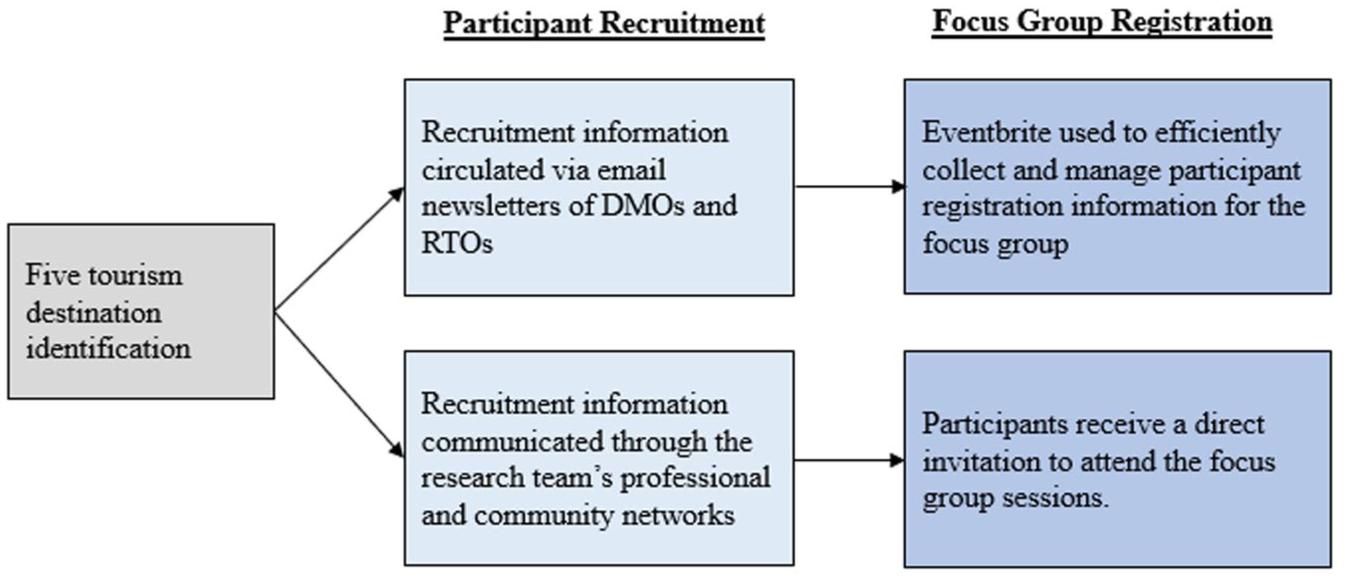
Participant recruitment procedures.
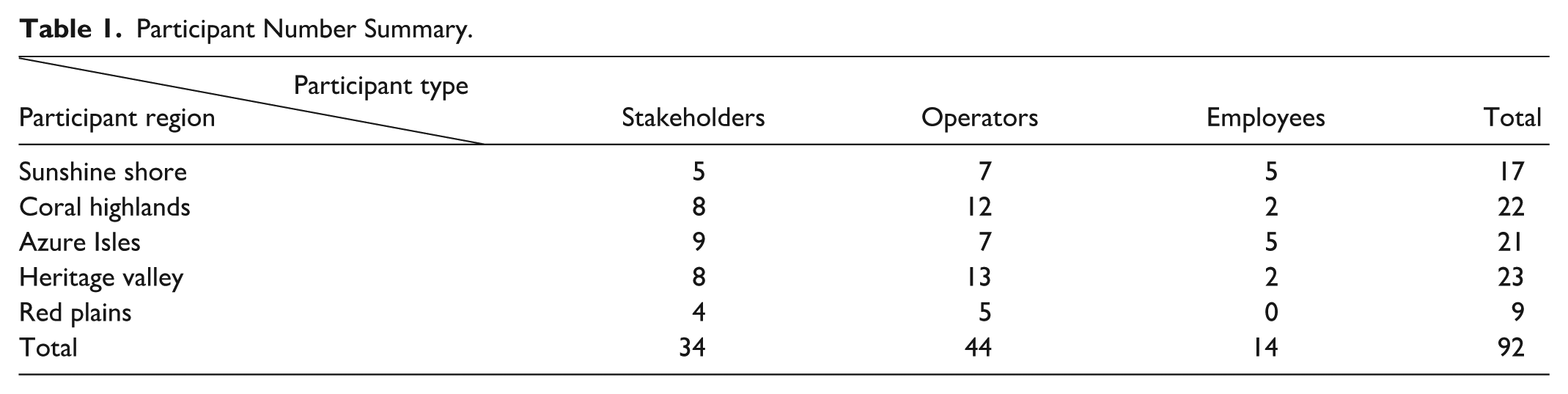
Between 2021 and 2022, a total of 15 focus groups were conducted across five tourism destinations. Of the 126 individuals who registered their interest, 92 ultimately participated, resulting in a 73% attendance rate. In each region, the three actor groups were consulted: employees (supervisory level or below), operators (business owners/senior management), and stakeholders (people working “on” the industry). All workshops were conducted face-to-face in-region, except for Red Plains 1 whose participants joined virtually. The focus groups were facilitated by members of the research team, following a semi-structured discussion guide aligned with the study’s interpretivist approach.
Of the 92 participants, 48% were operators/senior managers, 37% were stakeholders, and 15% were employees (see Table 1). Each session lasted approximately 90 min and was audio-recorded with participant consent for transcription and subsequent analysis. All focus groups’ interview data were transcribed into Word files with over 310 single-spaced pages in total, providing a rich data source for further thematic analysis.
Participant Number Summary.
Data Analysis Approach, Paradigm, and Trustworthiness
This study is grounded in an interpretivist paradigm (Pervin & Mokhtar, 2022; Thanh & Thanh, 2015), which seeks to understand the meanings and social constructions behind tourism workforce resilience rather than quantify the prevalence of themes or categories. Our inductive qualitative approach prioritizes rich, contextual insights, which aligns with our aim of exploring complex paradox dynamics across multi-level actors. While some qualitative traditions, particularly those aligned with a post-positivist stance (e.g., Chang et al., 2009; Deacon, 2008), emphasize structured, enumerated analysis and empirical validation, our approach focuses on in-depth interpretation and theory building to illuminate the evolving processes shaping workforce resilience.
Our analyses aggregated data from the five regions and focus on inter-actor group responses and comprised a sequential inductive followed by a sensitized two-stage coding process. Transcriptions were imported into NVivo12 for the first stage of coding, guided by Strauss and Corbin’s (1990) three core steps schematic. We first conducted open coding to organize first-order codes and identify initial categories using descriptive, data-driven phrases. These open codes were then grouped by actor categories (e.g., employee, organization, stakeholder) to facilitate comparison and help identify both commonalities and group-specific perspectives. In the second stage, we engaged in axial coding to explore and map relationships among the initial categories. This allowed us to generate higher-order categories by identifying inherent relationships, contextual factors, and interconnections across themes. In the final stage, we compared emergent themes across actor groups to identify key tensions and dynamic interactions regarding crisis impacts, response strategies, and workforce resilience. This structured yet iterative process enabled us to capture the underlying relational patterns embedded in the data (Corbin & Strauss, 2014).
In Figure 2, we visually represent our data structure for four aggregated theoretical dimensions, comprised of data/evidence), first-order codes, and second-order codes. For the second stage of analysis, we used the four main stages, drawing from paradox dynamics shifting, as sensitizing (King, 2004) or provisional coding (Miles & Huberman, 1994). These were identified as vicious cycle, cycle break, cycle reversal, and virtuous cycle, and various second-order themes from this second analysis stage are discussed in the following findings sections. These processes demonstrate the dynamic shifting process for workforce resilience building. Particularly, three major employment tensions were found at the employee (micro), operator (meso), and stakeholder (macro) levels, which also reflected the multi-actor structure of our research design.
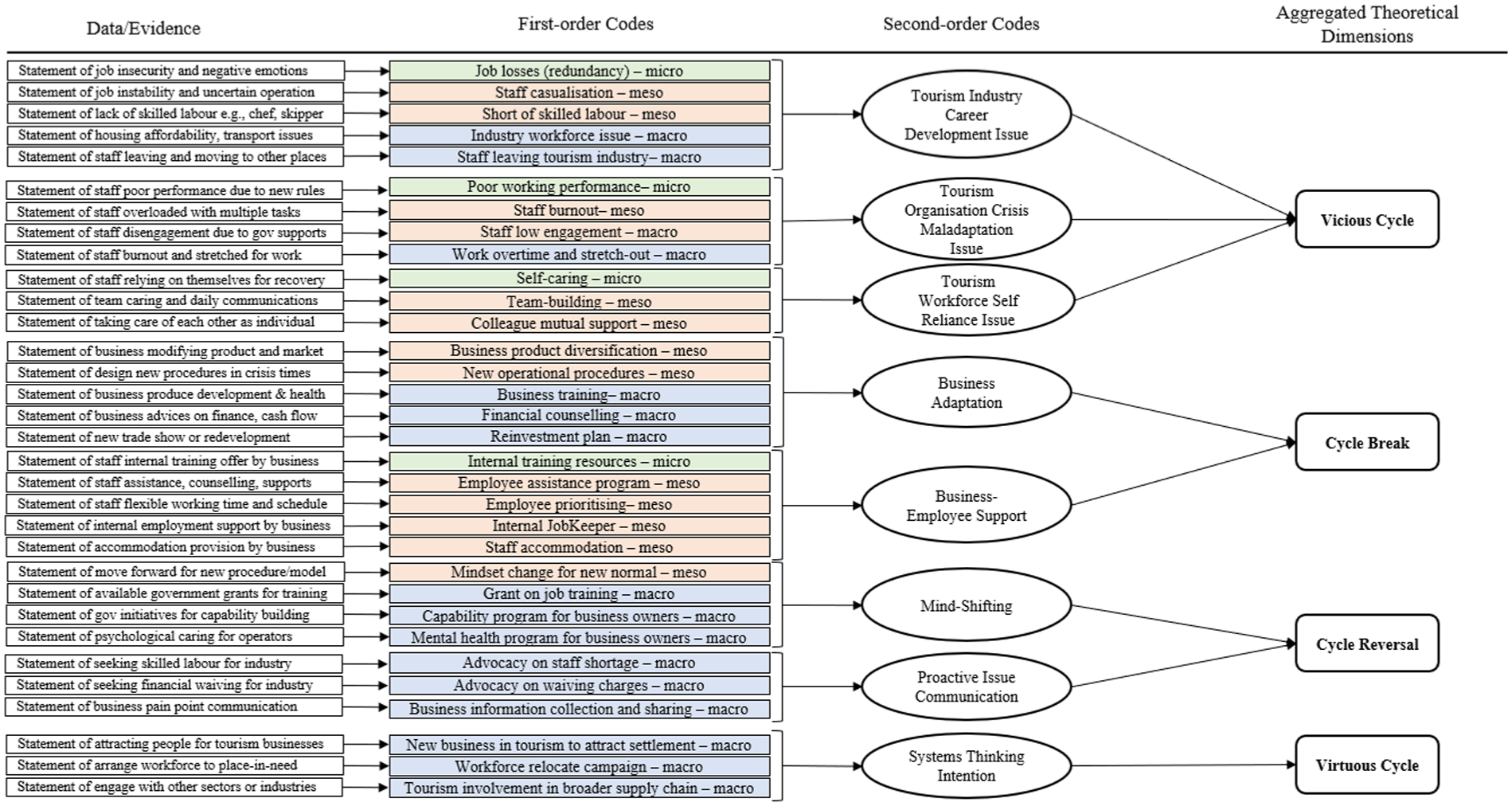
Coding framework and key findings summary.
To ensure the trustworthiness of the analysis, several strategies were implemented throughout the research process. The design of the semi-structured interview protocol and accompanying PowerPoint prompts was informed by regional knowledge and pre-tested with local collaborators to ensure contextual relevance and to elicit rich, meaningful data (Adeoye-Olatunde & Olenik, 2021). In addition, all transcripts were managed and coded using NVivo 12, which supported systematic data organization, transparency in coding, and consistency across actor groups (Alam, 2021). The software enabled the development of a clear audit trail and the identification of meaningful thematic patterns, enhancing the credibility and dependability of the analysis. Furthermore, cross-coding was undertaken by multiple researchers, with iterative comparisons and team discussions to ensure consistency and reduce individual bias (Miles & Huberman, 1994). The coding framework (Figure 2) reflects the analytical logic and interpretive rigor underpinning the study and demonstrates how meaning was derived from the data and lays the groundwork for the thematic narratives presented in the next section. Building on this coding framework, the following findings section introduces a “vicious–virtuous” process that portrays workforce resilience as a dynamic and evolving outcome, shaped by shifting paradox dynamics across tourism actor groups.
Findings and Discussion
Actor groups respond differently to resilience challenges. Thus, different perspectives are needed when considering actions and strategies for recovery. A collective perspective that seeks resolution, or a middle ground, is proposed as a way forward. Our focus on resilience has unearthed pre-existing structural tensions between tourism workforce actor groups that require resolution. Through the focus group research, we identified a “vicious-virtuous” process to demonstrate and explain workforce resilience building from a shifting paradox dynamics view (Pradies et al., 2021). In this conceptual framework, four stages are manifest (see Figure 3):
vicious cycle: workforce dilemma identified from each actor group,
cycle break: change-making attempts dominated by organizational/operator actors,
cycle reversal: fundamental practices for root problems dominated by stakeholder actors (policy makers, peak associations etc.), and
virtuous cycle: transformative approach for dynamics shifting, mutually reinforcing and co-evolving among actors.
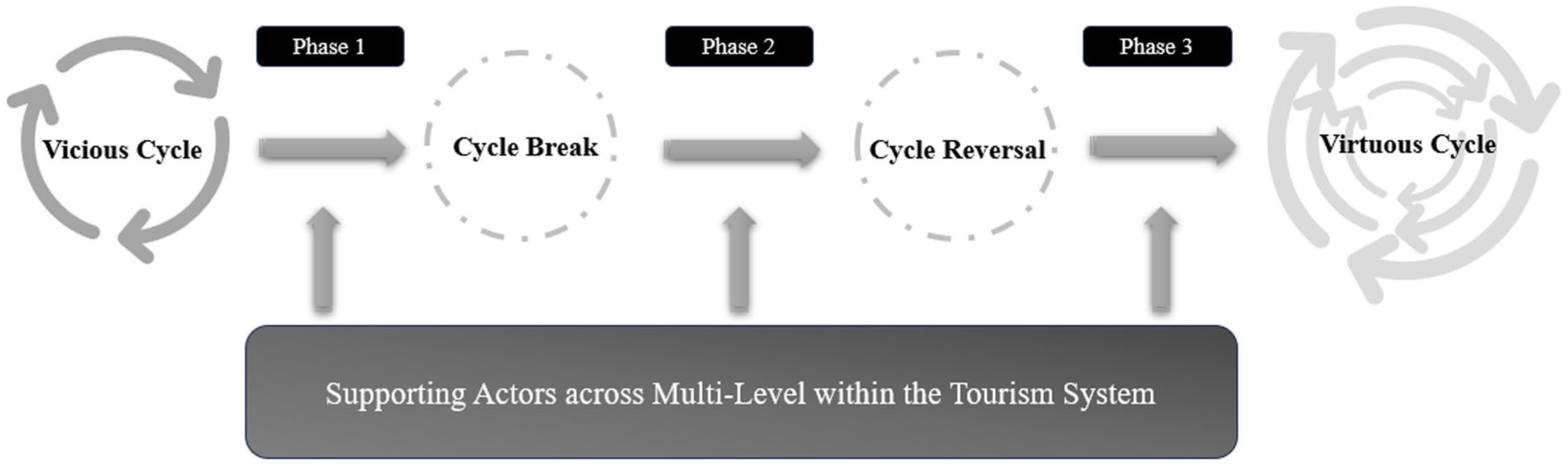
Vicious-virtuous process through a shifting paradox dynamics view (adopted & modified from Pradies et al., 2021).
Importantly, the dynamic “vicious–virtuous” process is not linear or fixed. Rather, it is cyclical and iterative, with each phase potentially recurring multiple times over varying durations. The movement between stages is shaped by evolving contextual factors and disruptions within the tourism industry or broader system (e.g., Jiang et al., 2021). These variations highlight the complexity and fluidity of workforce resilience dynamics (El-Said et al., 2023; Prayag & Dassanayake, 2023). In the following sections, we examine each phase in detail, illustrating how they unfold and interact across multi-level actors in tourism.
Vicious Cycles: crisis impacts and key issues for tourism actors
Tourism Industry Career Development Issues (Macro)—Vicious Cycle: Staff Casualization–Absent Career Development–Work/Living Environment-Related Issue
The tourism/hospitality industry suffers from a vicious cycle of “labour shortage – staff casualisation – no career development – labour shortage.” This critical structural issue was found and reflected in our data themes from different groups. Employees were either made redundant or had their working hours reduced during the COVID-19 crisis, causing job insecurity. The crisis has been the last straw for many people leaving the tourism industry. Operators were claiming labor shortages (especially skilled labor that requires planned training), with people leaving the industry due to casualization and absence of career development. This workforce casualization also resulted from the seasonality of tourism businesses, so operators cannot afford the baseline wages at low operational levels. Thus, tourism workforce resilience building cannot rely on any party but requires a joint resolution considering respective needs. There is a need for diffusion of responsibility from each group onto other actor groups. Indicative quotes include: I’m looking for work for months but seemed like everyone was fighting for the same jobs, tried to get out of the tourism industry (Employee-09) Most of our workforce now is casual and part-time, just because we don’t have the confidence to put them on full-time contracts (high baseline wage) (Operator-11)
Other industry-level issues identified by stakeholder groups included “housing affordability,” and “transport network issues”, which are core infrastructure and environmental supports for the community domains of employee retention and embeddedness (Lee et al., 2014). The labor shortage issue is thus exacerbated by the absence of local infrastructure, which poses challenges for workers in terms of affording living expenses and accessibly commuting between their workplace and home. Without adequate infrastructure, workers struggle to sustain employment. This can ultimately lead to further labor shortages and hinder the economic growth and development of the region. This was a prolonged issue identified by operators and stakeholders, but still no effective solutions were proffered. Housing was a pervasive issue, There’s been an issue of being able to keep staff. They just couldn’t find rentals and couldn’t buy their own place because they didn’t have a full-time job to get support from banks (Operator-01) The other issue is the housing affordability. . .I moved up here to the region and displace people that were renting and there is nowhere to live (Stakeholder-02)
as was transport provision and the labor pool to sustain it and the workforce’ community needs.
When you look at tourism, many of the jobs are not 9-5, Monday to Friday that they’re 24-7 or shift or rostered work, and we don’t have the transport network yet that’s mature enough (Stakeholder-01) They can’t find enough bus drivers, and neither can the city bus offices. What’s going to motivate them. . .especially without a nursery, or on a permanent basis? We struggle in that regard. It’s not exactly a wonderful place to live (Stakeholder-15)
The intersection of structural and labor issues, both materially and relationally (Lawrence & Phillips, 2019), is manifestly evident.
Tourism Organization Crisis Maladaptation Issue (Meso)—Vicious Cycle: Burnout–Low Engagement–Lack of Work Motivation
Due to labor shortages, existing workers experienced working overtime and burnout. New operational procedures required swift adaptation but could also lead to crisis maladaptation. Maladaptation “symptoms” include inertia, poor use of information in the design of adaptive strategies, promoting behaviors with only short-term benefits but resulting in unsustainable practices in the long run, or failing to identify potential challenges in implementing adaptive strategies (Jones, 2015). Crisis maladaptation, when left unaddressed, can lead to a cycle of compounding structural workforce issues that perpetuate the crisis and make crisis response and recovery more difficult (Novalia & Malekpour, 2020).
Instead of finding appropriate solutions, tourism organizations could engage in strategies or actions that prolong the crisis impacts or create new problems. For example, in the crisis response phase, tourism operators and industry stakeholders acknowledged performance changes but also lacked the capacity to improve their situation. Some staff were working overtime and were stretched, but they couldn’t afford to lose them. Thus, there is an imbalance and tension cycle of a “lack of skilled labour/new operational procedures – staff burnout – disengaged performance – reluctance to invest in training – lack of skilled labour.” As operators noted: People returning from crisis don’t want to invest in retraining because why should they pursue a supervision role when they might be laid off again (Operator-22)
As operators and stakeholders noted, the reticence of employees to commit led to strain and burnout for those that remained.
The biggest challenge has been the limited number of staff, and the demand placed on the existing staff to work across multiple departments (Operator-39) As we are currently experiencing some peaks, they don’t have enough staff, or they need to limit their occupancy, taking on multitasking roles (Stakeholder-18)
Government authorities launched active labor market policies (e.g., JobKeeper) aiming to help retain employees in their jobs to cope with the economic downturn caused by the crisis. However, some maladaptive effects also occurred in demotivating staff engagement and initiating poor performance when there was no work to do or too much work to do. The provision of JobKeeper (direct to organizations rather than to the individual), a symbolic gesture (Pradies et al., 2021) signaling a prioritizing of businesses over the agency of employees, prevented people who would like to leave the tourism or hospitality industry, thus creating negative workplace behaviors. Participants from all actor groups signaled the counterproductive aspects of this labor market policy, considering inequities in payment and workload resulting from the flat-rate payment of $1,500 per employee: The performance standards have decreased. . .what’s considered acceptable. They’re so used to people suddenly delivery crap performance. . .They’re always short-staffed, even the worst performers manage to keep their jobs due to labour shortage (Employee-11) An 18-year-old who was working just 1-2 shifts was going home and getting paid the same amount as the Director of Sales and Marketing. I don’t know what the solution was (Operator-20) There was reluctance from people that were on JobKeeper to do anything outside their job; they would say, it’s not my job (Stakeholder-02)
While the employee (instructively a manager) in this bank of quotes from the data also “others,” or implicates, workers—the last two statements mobilize language to demonize employees, evidencing tensions between actor groups. This exemplifies the paradoxical vicious cycle.
Tourism Workforce Self-Reliance Issue (Micro)—Vicious Cycle: Self-Isolation–Self-Reliance/Colleague Caring–Lack of External Resources/Connection
The tourism industry is a significant contributor to many economies worldwide, providing employment opportunities and contributing to economic growth. However, one of the key challenges facing the industry is the issue of self-reliance among the tourism workforce in coping with uncertain environments (Sun et al., 2017). Self-oriented or peer-support strategies were found to be the main solutions for tourism employees to survive crises, with few resources and collaboration from other levels. Although self-reliance means that tourism employees have the skills, knowledge, and resources necessary to survive or succeed in their jobs and advance their careers, it also indicates that staff could be left relationally isolated and materially unsupported (Lawrence & Phillips, 2019) in turbulent and fast-changing environments. These could lead to long-term issues of job insecurity and staff losing confidence in their careers (Jiang & Wen, 2020): “I miss the social aspect of it, but I’m quite extroverted so for me to be told to stay isolated. . .it’s difficult” (Employee-08).
In coping with crisis impacts, employees highlighted both team-building activities and colleague caring as key supports for their wellbeing development during lockdown and quarantine. These mutual supports mainly come from employees’ family/friends, or colleagues at the workplace. As several employees mentioned, different activities were done during the crisis: We did do meetings every morning, so everyone had some normal routine to interacting with people. It did help a lot because we still see people’s faces (Employee-03) Team/zoom chats and even when we work from home. We did regular catch ups and made sure we checked in on each other (Operator-01)
Also, with staff burnout or job overload, colleagues were normally the first choice for help. This was more important during crisis with occurrences of fatigue or emergent ill health. One participant noted that: “It’s normally small groups of people, and you [only]have a few guys to share the workload. As you go down. . .to manage your fatigue” (Employee-09). Furthermore, these relational team-building activities and mutual support can trigger a tighter workplace relationship but only at the individual employee level, and depleting individual resources, (as Employee-09 notes)—rather than at the employee-organization level: “We got a lot of the other jobs done and kept people onsite, this looks very team-building so people feel like they went through something [and] came out the other side together” (Operator-42). So, while the data speak to support mechanisms at the relational level, crucially the support appears lateral within organizations with no explicit mention of managerial/organizational resource supports. isolation and individual level challenges clearly set the context.
Cycle Break: Event-Driven Reflexivity and Reactive Strategies to Manage Crisis Impacts
Several organization-driven activities have been conducted in response to the three identified vicious cycles. They were categorized as (1) business adaptation activities and (2) business-employee supports. Notably, these reactive practices normally targeted short-term crisis challenges without necessarily considering their root causes or developing long-term coping strategies. These actions are aimed at maintaining the functioning of the tourism system, while striking a balance between ensuring business survival and supporting employees.
Business Adaptation Activities
Tourism businesses can adopt different resources and capabilities to change their operation routines in times of crises (Jiang et al., 2019, 2021). In the short-term post disaster stage, these capabilities include (1) reconfiguring dynamic capabilities that combine and deploy existing resources to produce new competitive advantage, (2) creating dynamic capability that explores new knowledge from internal resources, or (3) developing dynamic capability that generate new knowledge outside the business through recombination of partners or collaborators (Jiang et al., 2022; Jiang & Ritchie, 2017). In the crisis response phase, these are reflected in various aspects. For example, businesses used product diversification strategy to maintain revenue, sometimes with support from industry advisory or government incentives support. Apart from this, financial counseling advice support also took place for both businesses and individual staff.
We were acting as small business coaches and helping them to diversify their offerings to adapt. For instance, transitioning from a physical shop front to one that caters towards agility, adding an online shop. This aim was to diversity their businesses and give them more options for earning income (Stakeholder-16) We have a small business financial counselling program which we all speak on behalf of the state and federal government. . . now we’re not seeing a large number relative to the size of our audience coming for support. . .we’re not the only group that they’d come to support (Stakeholder-31)
Evidently, symbolism is thick in these data, with speakers invoking catchphrases such as “agility” and “adapt,” yet a rhetoric that despite the offer take-up is low.
Furthermore, new positions/roles were created to cater for crisis operations considering social distancing or hygienic requirements. A lot of staff switched their positions and could not stay in their original roles that were impacted, as one participant noted: We had a new job created because of social distancing policy, basically making sure that guests were adhering to socially distancing guidelines. Those new positions were temporary. . . we moved people who were unable to work in their original positions to fill these new positions (Operator-37)
Businesses that were unable to reopen during the crisis chose to implement their reinvestment plans during this downtime. For example, during a period of reduced business, a commune resort with approximately 10 rooms underwent renovations. The owners reassigned their staff to paint and strip rooms, resulting in one worker discovering a newfound passion for the construction industry and pursuing a career change, which ironically was induced amidst crisis turnover (Liu-Lastres et al., 2023)—a cycle break individually, but not at the meso- or macro-level. Nonetheless, the renovation project not only kept the staff occupied and productive but also contributed to their overall job satisfaction during the slowdown.
Business-Employee Support
Tourism employee support is important during difficult times in retaining its workforce and attracting new talent. The employee self-reliance issue was discussed in the above section and businesses supports for employees mainly surfaced in several ways including (1) internal training resources: operator has spent much time maintaining job performance with adequate training; (2) job security: operators have their internal “JobKeeper” to keep long-term experienced staff; (3) work flexibility: flexible working arrangements such as working from home to take care of their families; and (4) accommodation tension: building a staff village to provide a secure place as staff accommodation, or paying half the rent for employees to retain the staff.
Apart from these supporting areas, workforce wellbeing support is also considered mainly under the Employee Assistance Program. These include caring and consultation provision for employees’ mental health and financial wellbeing concerns in a 24-7 mode: They could call and get some assistance in that space. Anonymous it’s a phone call 24/7 so that was a critical thing for us to ensure that there was someone to talk to. Because at night-time, we knew things get quietened down and that’s when it gets difficult for people who require access (Operator-01)
However, the implementation and outcomes of the Employee Assistance Program activities did not achieve the intended goals for several reasons. First, small tourism businesses are often unable to provide access to Employee Assistance Programs due to a lack of awareness and understanding of their benefits, as well as financial constraints. This lack of access can result from a company culture according to one participant: “The program needs a business culture [that prioritises wellbeing]”—Stakeholder-14. As a result, employees at small tourism businesses may not receive the necessary support and resources to address mental health issues or personal crises that could impact their job performance and overall quality of life. Second, during crisis times, two major obstacles to implementing Employee Assistance Programs are the time required to set up and administer such programs, as well as the financial resources needed to support them. Small business owners and managers may be hesitant to invest time and money, or material resources (Lawrence & Phillips, 2019), especially when they are struggling to keep their businesses afloat during a crisis.
Furthermore, the shift to an online-only environment during the crisis has significantly reduced the efficacy of these programs, which typically rely on face-to-face interactions to provide the necessary support and resources for employees. This virtual environment has created new barriers to access and engagement, including a lack of personal connection, or relational factors, between employees and program providers. As a result, employees may be less likely to seek out and utilize the services offered by these programs, which can have a negative impact on their mental health and well-being, as well as their job performance. As indicated by participants: One of the key issues with the program is that it’s all online. Many of our employees prefer face-to-face interactions. You don’t want to communicate with a computer, you want to speak to a person, so they can read your emotions, and you can understand theirs (Stakeholder-14)
Cycle Reversal: Mind-Shifting Thinking and Trying Out New Ways of Behaving
In the cycle reversal phase, practices for root problems have been led mainly by macro-level stakeholders to pursue virtuous outcomes with new ways of behaving. They were reflected in two aspects: (1) mind shifting and (2) proactive issue communication (being heard). Different from actions conducted in the cycle break phase, these practices are proactive and targeted at developing long-term coping strategies to achieve a resilient tourism industry. These actions aim to transform the traditional functioning of the tourism system and enhance soft skills such as innovative capabilities and psychological resilience (wellbeing).
Mind Shifting
Mind shifting is reflected in several aspects. For example, in coping with environmental uncertainty, bouncing back to normal or previous operating states is not the best solution for business continuity. Considering the ongoing and increasing frequency of crises and disasters, tourism operators started realizing the importance of skills training and dynamic capabilities development (Jiang et al., 2019, 2021). A change in a mindset for a new normal (i.e., bouncing forward for a new equilibrium) is vital to pursue virtuous outcomes. As a participant noted: We did a lot of workshops with local business [with] a coaching organisation who came into the business and tried to get everybody to reset. This is what we’ve been through, and what we’re going to have to try and do to move forward. This is what the new normal looks like (Employee-01)
Led by macro-level stakeholders, multiple programs targeting capability enhancement, funds for job training, or destination new icons funding is put in place aiming for new ways of behaving. For example, due to border closures and significant declines in international markets, businesses are trained and supported in adapting to domestic markets: “there were government initiatives that helped support businesses, like our capability programs to help businesses recover their revenue and redevelop their approach to the domestic market (Stakeholder-01).” Staff upskilling and capability programs were also provided in relation to finance and workforce retention for better career development pathways: “the question relating to people leaving the industry. . .monitoring credentialing or capability programs to upskill the workforce, so it is a great opportunity for staff upskilling and to still engage in the workforce” (Stakeholder-30).
Also, at the state government level, a tourism icon program was initiated to assist economic recovery from the COVID-19 crisis. The $25m attraction funding program provided uniformity to various areas in balancing tourism resources and maximizing state-wide dynamic activeness. This icon program not only can help stimulate local economies and business recovery but also create job opportunities within the tourism industry by increasing the visibility and promotion of a destination. This is important in times of crisis when people were gradually losing confidence and interest in travel. Furthermore, community pride and engagement can also be built, bringing positive social impacts on community wellbeing.
This came along with a mental health support program for business owners and employees. Recognizing the significance of mental health issues and the role of psychological resilience in recovery strategies has been pivotal in shifting the focus from “economic recovery” to “social recovery.” This mindset shift acknowledges the importance of addressing emotional well-being, fostering community support, and building psychological strength as integral components of a comprehensive recovery approach. As participants noted: There were some support mental health programs for business owners that were put into play to funnel them to their employees. We are also working on mental health and suicide prevention with our council initiative and with our other two councils (Stakeholder-01)
Proactive Issue Communication
It is important to note that information sharing (specifically issues sharing) is critical for business-government communication during crisis times. “Being heard” and “information collection” should be key tasks to involve business operations in coping with turbulence. Being heard is an inside-out approach to expressing “needs” of business pain points, of which many tourism business operators did not realize their importance; while information collection is an outside-in approach to obtain “external (relational) resources” to address those pain points, which has been proven to be a critical element for dynamic capability building in a turbulent environment (Jiang et al., 2023). As participants noted, the necessity and importance of issues communication to turn vicious cycles into virtuous ones: Our people are hesitant to seek assistance because they don’t want to appear as though they are financially struggling. . .We still have a crisis consultation group where operators talk about their challenges and receive support through the Regional Tourism Organisation. We need to know the pain points of businesses so that we can help them, we can advocate effectively to the government. Even if businesses think they’re doing really well, there is a risk of falling off a cliff, so we need everybody to remain focused (Stakeholder-34)
Advocacy activities play an imperative role in advancing issues and changing opinions and decisions. During crisis times, numerous issues that may not be immediately apparent in normal circumstances can become magnified and prominent (Gkeredakis et al., 2021). These issues can surpass individuals’ capacity to cope or overwhelm the absorptive and adaptive capacity of the tourism system. Thus, advocacy activities were formed and led by industry stakeholders to seek adoption of new policies and regulations to address issues for desired improvements, or to drive system reform. For example, in the crisis, two major issues were identified as staff shortages and broken cash flows: “we were losing those international workers,” “the marine tourism operators struggle to pay their environmental management charges, and so therefore they’ve been waived” (Stakeholder-01). Advocacy activities were undertaken to actively communicate the challenges and issues with both federal and state governments in sharing critical issues and collecting feedback: We tried to work with advocacy with our federal MP and our state politicians in some areas with success. . .with our chamber, tourism organisation and the industry, so getting everyone in the room to actually hear factual opinion rather than the hearsay so documenting those conversations, so that we could be more informed with our advocacy. . .to try and get a few issues sorted (Stakeholder-01)
However, a flipside of charge waiving advocacy could be a lower tourism budget in the following year or shrinkage in available job opportunities: “That’s how they feel they can support businesses and residents as well as to keep those rate rises to a minimum. But what that does flipside is it impacts tourism budgets, and in every other budget as well” (Stakeholder-14). This double-edged-sword situation has resulted in a call for systems thinking for resilience building.
Evidently, the cycle reversal was activated by material, relational and symbolic actions (Lawrence & Phillips, 2019) instigated at the macro-level or by stakeholders. It is noteworthy, however, that this was often the result of sustained pressure, whether direct or indirect, from operators/industry (rather than employees), even though likely facilitated by intermediaries such as peak bodies or even the media.
Virtuous Cycle: Systems Thinking
Systems thinking is an approach that takes a holistic view on understanding the interconnections and relationships between various components of a system (Rebs et al., 2019). It has been demonstrated that the behavior of a system is influenced by the interaction and feedback loops between the components or key actors. In COVID-19 crisis management, a systems thinking approach holistically understands patterns and structures that drive the behavior of the system in coping with crises. Led by macro-level stakeholders, there are different types of systems thinking intentions found at the industry level to pursue a dynamic shifting toward a virtuous cycle.
First, in coping with insecurity in labor force issues, discussions were not only related to sustainability of tourism/hospitality career pathways but also to promoting lifestyle in the community as an attraction. The tourism industry and its way of living can be intertwined in a mutually beneficial relationship. Suggestions were made on leveraging new tourism business opportunities to attract people to settle in destinations that provide conducive local lifestyles but can also provide a decent living from tourism. As one participant noted: Some of my colleagues moved out there with family and are doing a great lifestyle. . .Particularly we’re looking to open a new cafe here, trying to attract young families with children because we have childcare and schools nearby. We believe this is a fantastic lifestyle opportunity that hasn’t been really promoted well to encourage people to start their own businesses (Stakeholder-32)
Second, workforce relocation campaigns could be a systemic solution to skilled labor shortages. Following the idea of the sharing economy, workforce relocation based on industry needs and skill sets has been discussed among participants. However, cost of living and housing affordability need to be dealt with to support the feasibility of this campaign. One participant noted: Regarding the workforce issue, we are amid the second phase of workforce campaigns, trying to generate that interest in those southern states for the workers who may still find themselves unemployed to relocate to the Azure Isles and really sort of playing on that liveability. We initiated this campaign last year and have been working with government incentives to facilitate relocation (Stakeholder-08)
Third, from an ecosystem view, tourism involvement can be expanded in the broader supply chain. It could create opportunities for local businesses to provide goods and services to the tourism industry, and the increased demand could lead to business expansion and job creation. Furthermore, when tourism is integrated into various sectors such as agriculture, manufacturing, retail, or the film industry, a more resilient economy can be created to withstand fluctuations. As one participant stated: The sports sector has been increasingly busy, partly overlapping with tourism. . .My involvement was trying to get a lot of our tourism businesses involved in supply chains and assessing investments from both private and public sectors. We’re starting to see an influx coming through of different ideas and new proposals (Stakeholder-25)
In synthesis, Figure 4 was developed to illustrate the dynamic interplay between vicious and virtuous cycles, offering a shifting paradox dynamics perspective on tourism workforce resilience. This framework draws on three identified vicious cycles within the tourism workforce system: (1) tourism industry career development issue (precarious work cycle); (2) tourism organization crisis maladaptation issue (burnout cycle); and (3) tourism workforce self-reliance issue (isolation cycle). Our analysis suggests that the breaking of these cycles is predominantly driven by meso-level actors, namely organizations and operators, who support employees during crises. In contrast, the reversal of these cycles and movement toward virtuous dynamics appear to depend more heavily on macro-level industry stakeholders who can foster mind shifts and promote proactive, multi-level communication. However, we found relatively limited evidence of the final stage—full emergence of a virtuous cycle rooted in systems thinking. This is perhaps unsurprising given the fragmented nature of the tourism system and persistent structural challenges facing its workforce (Ladkin et al., 2023).
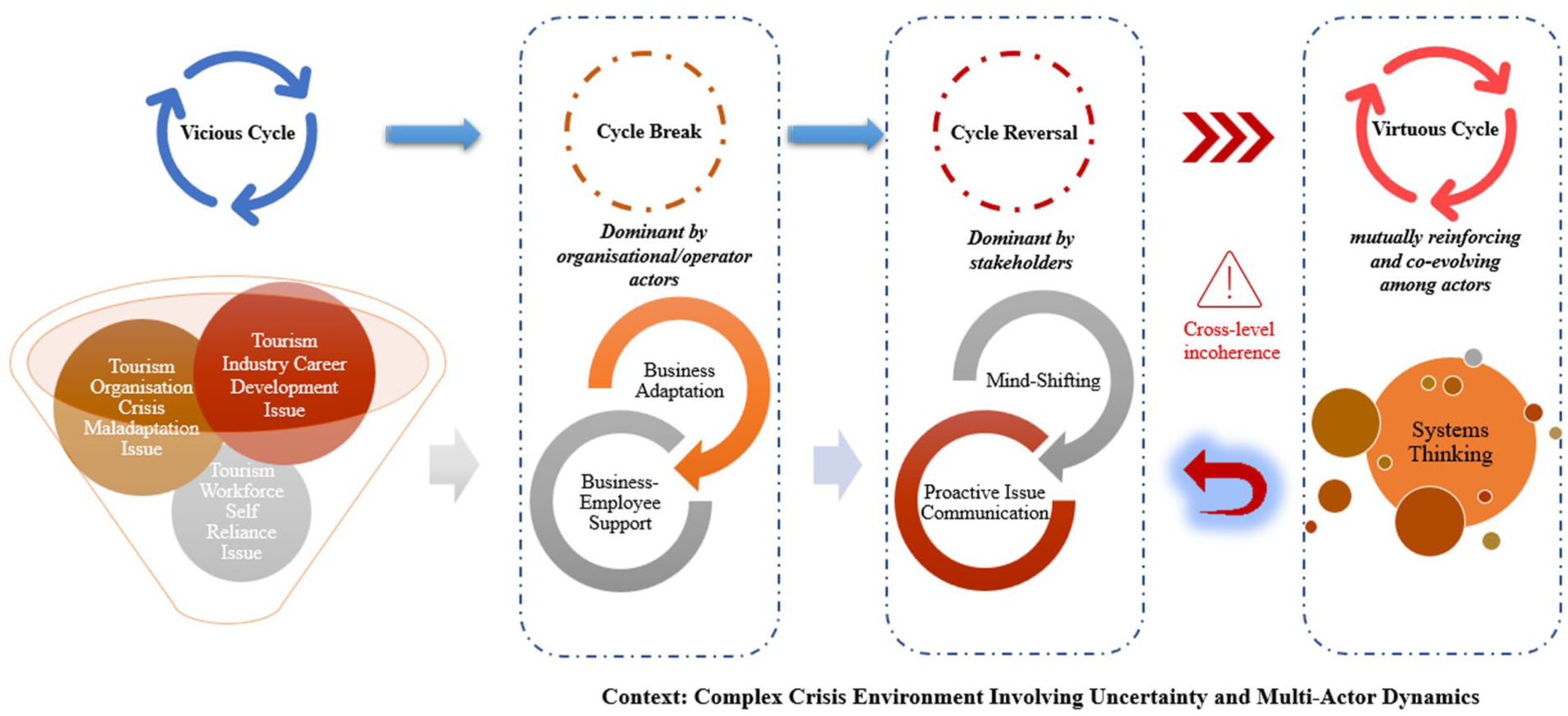
Tourism workforce resilience from a shifting paradox dynamics view.
Conclusions
Theoretical Implications
On the one hand, our study has validated the dynamic paradox theory whereby actor groups experience conflicting demands and responses (Pradies et al., 2021). We acknowledge the value of Pradies et al.’ ideal-type model, which outlines a pathway through which supporting actors can help shift paradox dynamics from vicious to virtuous cycles. Evidently, different actors play various roles in leading/facilitating cycle changes. However, our study offers three distinct empirical and theoretical contributions by (a) testing this model within a complex, crisis-driven, and uniquely multi-level actor context, thus (b) exposing tensions, slippages and fragmented intergroup coordination, and finally (c) demonstrating the disconnect between the ideal model’s theoretical assumptions of coordinated leadership across the system level. In so doing, we identify the limitations and adaptations required for its application in different contexts.
Our empirical testing of the shifting paradox dynamics “vicious to virtuous cycles” model in the complex COVID-19 context extends its parameters. Complex systems theory emphasizes that outcomes often emerge from nonlinear interactions and evolving relationships, which simpler models may overlook (e.g., Ladyman et al., 2013; Thurner et al., 2018). By situating our model in such a rich context, we contribute to a deeper understanding of its robustness and applicability in real-world scenarios where complexity and change are inherent. We show that this is substantially driven by the legacy of unresolved, persistent structural (tourism) issues (Ladkin et al., 2023), including workforce precarity, negative mobility, perceived low skills and poor career perceptions that impact resilience building and recovery, which are in turn magnified under crisis conditions (Baum, Solnet, Robinson, & Mooney, 2020) and naturally attract reflection on system functioning. Moreover, under (post)crisis conditions, we show that this process is an evolving, dynamic, and fluid “vicious-virtuous” progression, which in turn extends the stage-based models of crisis recovery and resilience (e.g., Jiang et al., 2021; Ritchie, 2004). Each phase can occur multiple times for a short or long period, depending on various events occurring in the tourism industry or system (Pradies et al., 2021). Our study introduces the noise of “cross-level incoherence” into a revised model (see Figure 4) to capture the implications of this complexity. This “messiness” reflects chaos theory (Murphy, 1996), which suggests that issues unfold unpredictably through nonlinear interactions, where small disturbances can significantly alter system behavior, and compound persistent structural issues, underscoring the inherent complexity and instability in navigating paradox during turbulent times. This highlights the need for adaptive, iterative approaches in theoretical frameworks that account for recurring, irregular, and evolving phases.
More specifically, our study has revealed fragmented inter-group coordination. This contribution was empirically activated by the novel study design of introducing a multi-actor framing. Our study empirically demonstrates what has previously been theorized (Lewis, 2000), that paradoxical dynamic shifts and complex interactions among these actor groups are triggered and/or amplified in (post)crisis conditions. While Pradies et al.’s (2021) focus on supporting actors such as HR professionals in relatively stable organizational contexts, our study explores how paradox dynamics unfold across three interrelated actor groups (employees, tourism operators, and stakeholders) under conditions of crisis and uncertainty. We find that while some of our themes affirm the model from Pradies et al. (2021) (e.g., adapting to new ways of behaving, flexible role crafting during crisis), the transitions between stages are far less linear or orderly in our context. The idealized progression from vicious to virtuous cycles is frequently disrupted by tensions, ambiguity, slippages, and fragmented intergroup coordination, highlighting what we term the “messiness” of real-world paradox navigation. In particular, our study adds weight to nascent literature that challenges the primacy of the organization as the fulcrum of “organising” (S. Parker & Parker, 2017), which challenges and extends upon Pradies et al.’s (2021) focuses on organizational actors and supporting internal actors (i.e., “outsiders within”) within the organization. As Burke and Morley (2023) argue, the capability and capacity of organizations to control and affect change within complexities of the “new order,” multi-level frameworks which account for the broader ecosystem require accommodation.
This culminates in our third theoretical contribution. In contrast to Pradies et al.’s (2021) structured setting where an action researcher actively facilitates paradoxical shifts (p. 1260), our study identifies naturalistic and contested processes of issue negotiation and resolution among actors without a central orchestrator. This demonstrates that the capacity to shift paradoxes may not always depend on an insider or a formally designated supporting actor. Instead, we show that actor positioning, perceived legitimacy, and broader systemic enablers or constraints influence how and whether paradox shifts occur. For example, rather than HR professionals as “outsiders-within” (as in Pradies), in our case, tourism operators (meso) or local tourism stakeholders (macro) may attempt to mediate between top-down crisis decisions and community-level impacts with varying success. This accords with broader paradigm shifts in management thinking that promote ecosystem approaches to responding to change, and orchestrating interactions between key stakeholders (see Subramony et al., 2024). However, we did not observe clear evidence of supporting actors consistently enabling paradox shifts across all levels; rather, we evidence that various actors in the ecosystem assume dominant roles at different stages of the process cycles (see Figure 4)—or don’t, accounting for slippages back into vicious cycles. An emerging theme around “systems thinking intention,” primarily discussed at the macro stakeholder level, suggests a potential pathway toward a virtuous cycle. This theme was far less visible at the meso and micro levels, suggesting a lack of coherence and coordination across actor layers, ultimately limiting the system’s capacity to address structural workforce challenges in the face of crisis. These findings underscore the challenges of activating paradox navigation and resolution in practice, especially in fragmented, crisis-affected systems where no single group consistently takes on the role of orchestrating or enabling cross-level shifts.
Thus, we contribute to the literature by empirically grounding and extending Pradies et al.’s (2021) model in a high-pressure (post)crisis-induced, multi-actor environment, marred by pre-existing long-term structural issues and by emphasizing the challenges of sustaining paradox navigation when roles are less clearly defined, organizations no longer are singularly in control, leadership support is ambiguous, and transitions are shaped by intergroup tensions. This responds to Pradies et al.’s (2021) call for future research to explore how shifts from vicious to virtuous cycles persist, revert, or require new forms of supporting actor engagement under different contextual constraints. Given that these issues arise from a confluence of actors, this study’s contribution highlights the importance of using a multi-perspective approach to investigate workforce resilience (Robinson et al., 2024).
Practical Implications
Three major policy and practical implications become apparent. First, measures should address structural issues identified in the literature, such as insecure work and infrastructure gaps, to positively prime the resilience process. Specifically, policymakers at the regional and national levels need to implement targeted programs to develop clear career pathways through vocational training and certification schemes, improve affordable housing availability, and upgrade transport infrastructure connecting key tourism hubs. Local governments and tourism organizations can collaborate to create workforce stabilization initiatives, such as offering incentives for long-term employment contracts and supporting mental health resources for workers.
Second, recovery strategies should target the vicious and reversal stages of the paradox cycle process to enable movement to the break and virtuous stages to mitigate processes that undermine resilience. Practically, tourism businesses and industry associations can establish monitoring systems to identify early signs of negative cycle patterns, such as declining visitor numbers or workforce burnout, and deploy phase-specific responses, including targeted financial support, mental health programs, or innovation grants. Policymakers can support these efforts by providing adaptable frameworks that allow for rapid policy adjustments based on real-time system feedback, ensuring interventions remain aligned with the current stage of the tourism system’s recovery.
Third, effective communication strategies have emerged as crucial for cross-level issue resolution. Implementing proactive communication and feedback mechanisms is vital for businesses and employees to express their needs, receive support, and adjust strategies based on real-time information. At the individual level, organizations can establish regular, transparent channels for employee input, such as anonymous surveys and participatory forums. At the meso-organizational level, industry bodies can facilitate dialog platforms connecting employees, businesses, and local authorities to collaboratively identify and address emerging issues. At the macro-policy level, governments need to institutionalize these feedback loops to ensure employee voices meaningfully influence policy formulation, enabling policies that cyclically benefit employees and businesses alike. These communication strategies should be designed with adaptability, allowing for evolving issues and stakeholder dynamics as crises unfold and resolve. It is especially important to enable the genuine voices of employees in bridging the meso-organizational level to inform the macro-level policies such that benefits cycle back to employees as well as businesses for mutual benefit.
Limitations and Future Research
It is apparent that workforce resilience challenges are not determined by workers, nor can they be resolved only at the micro and meso-levels. A systems thinking approach is proffered as a future theoretical way forward. Tourism workforce resilience instead is contingent on understanding and actioning strategies that reflect the tensions between three key actor groups: employees, organizations, and stakeholders. The resilience literature, alike the workforce literature (Walmsley & Partington, 2014), has traditionally focused on employee, or individual level, and organizational, or firm level, resilience. Adopting the tenets of stakeholder (cf. Baggio et al., 2010) or ecosystems (Subramony et al., 2024) theories to consider the perspective of other macro-level actors has enabled a more holistic perspective. These actor groups respond differently when asked how their resilience was challenged. It follows that they have different perspectives when considering actions and strategies for recovery. These divergent approaches are not constructive when considering the resilience and recovery of the tourism industry holistically. A collective perspective that seeks resolution, or a middle ground, is proposed as a way forward. More critically, as Baum, Mooney, Robinson, and Solnet (2020) opined, it appears that a focus on resilience has unearthed pre-existing structural tensions between tourism workforce actor groups that require resolution.
Future research should pursue intensive, ideally longitudinal, case studies that engage closely with destinations, applying our extended model as a practical framework to guide the negotiation of roles and responsibilities across pre-crisis, crisis-response, and crisis-recovery phases. This approach will deepen understandings of multi-actor collaboration and how diverse stakeholders coordinate efforts to progress through the paradox stages toward the virtuous resolution point. Additionally, future research should address the ambiguity around lead agents by identifying which actors effectively provide crisis leadership at different stages, yet in consort with other actors in the system. Our findings highlight chaotic, fragmented coordination and shifting power dynamics, reflecting challenges noted in crisis leadership literature that call for adaptive and distributed leadership to manage uncertainty (e.g., Hannah et al., 2009; Kapucu & Ustun, 2018). Investigating how leadership roles emerge and evolve among multiple stakeholders can inform targeted strategies to restore coordination and enhance resilience in complex crisis environments. Furthermore, unraveling the dynamics of governance structures that can effectively manage complexity and foster collaboration among stakeholders is also critical to advancing resilience in tourism systems (Rotmans & Loorbach, 2009). Methodologically, future studies should leverage tools such as feedback loop analysis (e.g., Akbar et al., 2018) to capture dynamic interactions and emergent behaviors within these multi-actor networks.
This study has limitations regarding the context of the study being relative to a specific region. Focus groups generally have inherent limitations to equitable participation of members and working within time constraints; however, most participants were active and invested members in the industry who were often known to each other. These factors mitigated the limitations of larger than usual focus group numbers in some sessions, for example, by reducing the need for formalities, and discussion was generally shared and robust. Nonetheless, the self-selected sample was likely not representative of an industry where many stakeholders are disengaged—indeed, many are unaware they are even actors. Of note, various factors, such as churn in the industry post-COVID-19, and reliance on Destination Marketing Organisations and Regional Tourism Organisations for recruitment, limited the employee voice. We found it more difficult to evidence the final virtuous cycle, though this is a somewhat intuitive finding. Further research is invited to pursue a systems approach (e.g., Robinson et al., 2019), further explore the seemingly irreconcilable tensions manifest in dynamic systems paradox theory, and seek resolutions rather than solutions (Baum, Mooney, Robinson, & Solnet, 2020) to build resilience pre- and post-crisis culminating in the virtuous.
Footnotes
Author Contributions
Richard N.S. Robinson: Conceptualization; Data curation; Funding acquisition; Investigation; Methodology; Project administration; Resources; Writing—original draft; Writing—review & editing. Yawei Jiang: Conceptualization; Data curation; Formal analysis; Methodology; Visualization; Writing—original draft; Writing—review & editing. Hongmin Yan: Conceptualization; Writing—original draft; Writing—review & editing.
Declaration of Conflicting Interests
The authors declared no potential conflicts of interest with respect to the research, authorship, and/or publication of this article.
Funding
The authors disclosed receipt of the following financial support for the research, authorship, and/or publication of this article: Advance Queensland Industry Research Fellowship – Queensland Tourism Workforce Strategy V2: A Crisis Resilience and Recovery Plan.
