




Abstract
Using the lens of congruity theory, we developed and tested an integrative framework to examine tourists’ pro-environmental behavior at eco-destinations in Pakistan and the United Kingdom. Specifically, we examine the multi-dimensional effects of tourists’ need for uniqueness, materialism, and perceived destination experience on pro-environmental behavior mediated via actual and ideal self-congruity. Using structural equation modeling, the data analysis of 325 tourists in Pakistan and 388 tourists in the UK revealed that pro-environmental behavior could be triggered by self-ensuring motives among tourists from developed countries; in contrast, self-enhancing motives have more significant potential among tourists from developing countries. Creative choice counter-conformity, the pursuit of happiness and different perceived brand experience elements are essential for triggering pro-environmental behavior; however, they also serve as drivers for establishing a match between the eco-tourism destination and its tourists. Our findings offer a novel approach to enhancing eco-tourism with substantial theoretical and managerial implications.
Introduction
Eco-tourism involves “traveling to relatively undisturbed or uncontaminated natural areas with the specific object of studying, admiring and enjoying the scenery and its wild plants and animals”Ceballos-Lascurain (1987, p. 13). With tourists showing heightened interest in open-air and nature-based tourism, eco-destination footfalls are burgeoning worldwide (Cabral & Dhar, 2020; Paul & Roy, 2023; UNWTO, 2023). Additionally, the COVID-19 pandemic confined people to their homes, prompting them to reconsider outdoor activities, nature, and mobility, which contributed to an increased interest in eco-tourism and open spaces among tourists (Karagöz et al., 2023). However, scholars have cautioned against rising environmental degradation and destruction of wildlife at many destinations due to tourist misconduct and irresponsible behavior (Chou, 2014; Dickinson & Robbins, 2008; Logar, 2010).
Recent studies with a focus on eco-tourism have investigated various interesting drivers of tourist behavior, such as interest and attitude (Lu et al., 2016), self-ecotourism personality (Moons et al., 2020), tourist engagement (Paul & Roy, 2023), accessibility (Garrod & Fennell, 2023), experience (Sudhagar, 2019), intention (Chi & Pham, 2022), destination authenticity and attachment (Rather, 2021), and inclusivity (Fennell & Garrod, 2022) and loyalty (Mengkebayaer et al., 2022) in a piecemeal fashion. Moreover, socio-psychological theories, such as the theory of planned behavior (Ajzen, 1991) and value-belief-norm theory (Stern et al., 1999), were used to explain tourist’s intention to adopt green behavior at eco-destinations (C.-K. Lee et al., 2021; T. H. Lee & Jan, 2018; Sharma & Gupta, 2020). However, G. I. Huang et al. (2023) and Paul and Roy (2023) still observe that existing research narratives are severely hindered by the lack of a holistic approach in modeling and testing key drivers that influence tourists’ pro-environmental behavior (PEB) at eco-destinations. On the other hand, tourism and marketing research has shown that individuals often make choices underpinned by self-consistency versus self-enhancement motives (Sirgy, 1985; Sirgy & Johar, 1999). Hence, the congruity theory can be constructive in explaining what motivates tourists to consider eco-tourism destinations as their travel choice and to explain drivers of their pro-environmental behavior while at the site. In addition, past studies have recommended intertwining the congruity theory with other theoretical perspectives to gain holistic insights into pro-environmental tourist behaviors (Loureiro et al., 2022; Moons et al., 2020).
Therefore, to develop a multifaceted understanding of tourists’ pro-environmental behavior (Cifci, 2022; Cooper et al., 2024; Viglia et al., 2024), we aim to combine the lens of congruity theory with theories of uniqueness, materialistic values, and perceived destination experience. Specifically, we proposed and tested a framework that explores how tourists’ need for uniqueness determines their pro-environmental behavior at eco-destinations, mediated by how they perceive themselves (i.e., actual self-congruity) and how they would like to perceive themselves (i.e., ideal self-congruity). Since the need for uniqueness is known to shape an individual’s expression of identity and non-conforming motivational tendencies in a society (Karagöz & Uysal, 2020; Tian & McKenzie, 2001), we investigate the effects of three sub-dimensions, that is, creative choice counter-conformity, unpopular choice counter-conformity, and avoidance of similarity on tourists’ PEB at eco-destinations mediated via actual and ideal self-congruities.
The framework also considers materialism a dominant force driving consumers’ myriad behaviors (Alzubaidi et al., 2021; Felix & Almaguer, 2019; Tang & Hinsch, 2018). It has been opined that materialistic values enable individuals to signal, develop and enhance their self-identity (Belk, 1988; Gasiorowska et al., 2022; Gatersleben et al., 2018; Hurst et al., 2013; Liobikienė et al., 2020; Mainolfi, 2020; Nepomuceno & Laroche, 2015) underpinned by self-serving mechanism (Fastoso & González-Jiménez, 2018; Gu et al., 2020). Building on the work of Lu et al. (2016), we adopted a multidimensional perspective on materialism by exploring how acquisition centrality, possession-defined success, and the pursuit of happiness affected tourists’ PEB at eco-destinations, mediated via their actual and ideal self-congruities.
Lastly, the model also propositions the role of perceived destination experience in explaining tourists’ PEB, especially within the eco-tourism context. Furthermore, as advocated by Sirgy (1982) and Sirgy and Su (2000), self-congruity serves as a means for consumers to express themselves, their lifestyles, and their personal beliefs. Thus, focusing specifically on the experiential aspects of eco-tourism, we argue that different types of perceived destination experiences may enable tourists to draw unique congruence between their actual and ideal selves. Hence, aligned with the literature, we studied the effects of affective, sensory, behavioral, and intellectual experiences (Brakus et al., 2009) on tourists’ actual and ideal self-congruity, leading to their pro-environmental behavior at eco-destinations.
Our study tested the model in two countries – a developed and a developing country. This fills the lacuna of studies overfocusing on explaining eco-tourist behavior in developed countries (Lu et al., 2016), often ignoring cultural differences between the tourists of developed and developing countries (e.g., Filimonau et al., 2018; Hansen et al., 2023; He & Filimonau, 2020; Lin et al., 2022). Thus, to understand the mechanism underlying differences and similarities in PEB among tourists visiting eco-destinations in developed and developing countries, the Lake District in the United Kingdom and the Hunza Valley in Pakistan were selected as representative eco-destinations. Both study sites are renowned eco-destinations offering astounding natural landscapes, mountains, lakes, and places with historical significance (Forbes, 2019; Tripadvisor, 2023).
Eco-Tourism, Self-Congruity and Pro-environmental Behavior
Eco-tourism has been recently described as a nature-based, sustainable, and environmentally educational tourism that provides tourists with an immersive cultural experience (Dowling et al., 2002; Paul & Roy, 2023). It represents environmentally responsible travel and visitation to undisturbed protected areas, allowing individuals to enjoy and experience nature and culture while promoting conservation behaviors that benefit local populations and the destination (Council, 2022; Tourism, 2024). Even though eco-tourist destinations provide a reasonably sustainable platform (Boley et al., 2018; Chen & Rahman, 2018; Moons et al., 2020), tourists can also contribute to environmental degradation through pollution activity, overcrowding, destruction of wildlife, and other environmental unfriendly practices (Chou, 2014; Dickinson & Robbins, 2008; Logar, 2010; UNWTO, 2023). Such adverse effects compel scholars and practitioners to limit or prevent the damaging impacts of tourism on the environment and explore the mechanisms that can assist in the practice of PEBs at eco-tourist destinations (Balderjahn et al., 2018; Kiatkawsin & Han, 2017; Su, Huang, & Hsu, 2018; Su, Swanson, & Chen, 2018). The PEB are actions aimed at safeguarding the environment or mitigating the adverse impacts of human activities, whether in daily routines or outdoor environments (Kollmuss & Agyeman, 2002; Miller et al., 2015; Steg & Vlek, 2009).
As tourism activity impacts the destinations’ environmental and natural attractiveness (Balderjahn et al., 2018; Kiatkawsin & Han, 2017; Su, Huang, & Hsu, 2018; Su, Swanson, & Chen, 2018), studies have examined the role of environmental values and various adoption processes promoting PEB (De Groot & Steg, 2007; De Groot & Steg, 2010; De Groot & Thøgersen, 2018; Steg et al., 2014; Steg & Vlek, 2009; Stern et al., 1999). Chi (2021) advocates for eco-tourism destination marketing as vital in promoting sustainable tourism practices. However, market segmentation is crucial as it assists destination marketers in understanding and shaping complex psychological dynamics and meanings associated with eco-tourism destinations (Dolnicar & Leisch, 2003). Marketers can tailor their strategies by identifying specific market segments to facilitate tourist identities, experiences, and behaviors inherent to eco-tourism destinations.
Scholars have highlighted that individuals are more likely to be drawn to a destination that aligns with their self-concepts and identities (Šegota, 2023; Šegota et al., 2022; Sirgy, 2018). Self-image congruity refers to the cognitive synchronization between consumers’ self-concept and product or brand name, store image, or destination image (Šegota et al., 2022; Sirgy, 1982, 1985, 2015; Sirgy et al., 1997; Sirgy & Su, 2000). It suggests a greater degree of harmonization, resulting in a higher probability of intention to purchase and visit (S. Li et al., 2020; Moons et al., 2020; Sirgy & Su, 2000; S. A. Sop & Kozak, 2019; Usakli & Baloglu, 2011). The congruity theory also offers a deeper insight into psychological and symbolic connections tourists may establish with a destination (Beerli et al., 2007; Chon, 1992; Sirgy, 2018). The symbolic connections refer to the emotional, cultural, and symbolic meanings that tourists associate with the destinations beyond their physical attributes (Hammerl et al., 2016; Hirschman, 1981; Islam et al., 2019; Solomon, 1983). In the tourism context, Šegota (2023) explored destination attributes- and user imagery-based pictures to evaluate the impact of advertisements on destination choice; the results demonstrated that people quickly assign emotional and cultural meanings to destinations that span beyond their physical attributes.
Linking the self-congruity concept to the tourists’ PEB, the stronger the relationship between destination image and one’s self, the more likely tourists will indulge in PEB at eco-destinations. The congruity lens is relevant to PEBs as it confirms that the eco-tourism experience contributes to travelers self-identity (Cifci, 2022; Guo et al., 2022). However, studies suggest that individuals tend to protect, maintain, and enhance their self-image while making decisions (S. S. Lee et al., 2022; Moons et al., 2020; Šegota et al., 2022; Z. Wang et al., 2022); postulating the differences in theoretical underpinnings for actual and ideal self-congruities (Sirgy, 1982; Sirgy & Su, 2000; Z. Wang et al., 2022). The actual self-congruity is driven by the self-consistency motive, which ensures that a consumer is motivated to opt for a product or service that is congruent with their self-perception. Meanwhile, ideal self-congruity fosters self-esteem and enhancement motives that drive individuals’ desire for upward mobility.
Hence, identifying people motivated to seek out experiences and environments that reflect or reinforce their values, beliefs, and identities enhances the effectiveness of destination marketing efforts and contributes to the broader goals of sustainability and cultural preservation within eco-tourism destinations. On the other hand, the congruity theory suggests that individuals are motivated to visit such destinations if the destination aligns with how they perceive themselves (actual self) and/or how they would like to perceive themselves (ideal self). Therefore, in the context of eco-tourism destinations, we hypothesize that:
Hypothesis 1: Actual self-congruity (H1a) and ideal self-congruity (H1b) positively impact tourist’s pro-environmental behavior at eco-tourism destinations.
Extending the Congruity Theory
The congruity theory can be constructive in explaining what motivates tourists to consider eco-tourism destinations as their travel choice and in explaining the drivers of their pro-environmental behavior while at the site. However, past studies have recommended intertwining the congruity theory with other theoretical perspectives to gain holistic insights into pro-environmental tourist behaviors (Loureiro et al., 2022; Moons et al., 2020), suggesting that the theories of uniqueness, materialistic values, and perceived destination experience are complementary to the congruity theory. Therefore, we propose (and test) a framework that extends the congruity theory by incorporating tourists’ need for uniqueness, materialism, and the effects of affective, sensory, behavioral, and intellectual destination experiences on their pro-environmental behavior at eco-destinations.
Materialistic Values
Materialism refers to the firm belief that objects are essential and valuable (Micken & Roberts, 1999). In this study, materialism is approached from an individual-level perspective, representing an individual-centric trait expressed through various decisions people undertake concerning tourism activity (Alzubaidi et al., 2021; Richins & Dawson, 1992). Hence, materialistic values are conceptualized as an individual’s personal and psychological values reflected by the importance they ascribe to possessions (Nepomuceno & Laroche, 2015; Richins, 2004; Richins & Dawson, 1992). Prior research (Gu et al., 2020; Hultman et al., 2015; Hurst et al., 2013; Kilbourne & Pickett, 2008; Lu et al., 2016) suggests that if people with dominant materialistic values are informed about their negative environmental behaviors, their negative behavior will be discouraged, as it can cause damage to their status and identity. These assertions led us to believe that tourists’ pro-environmental behaviors could be influenced by underlying mechanisms linking an individual’s two dimensions of self-congruity and materialistic values, with the latter divided into three realms: acquisition centrality, possession-defined success, and pursuit of happiness (Richins & Dawson, 1992).
The acquisition centrality signals a lifestyle characterized by high material consumption levels that contribute to an individual’s status and identity (Y. Hwang & Mattila, 2019; Liobikienė et al., 2020; Liobikienė & Juknys, 2016). Consumers who attain satisfaction and happiness through material acquisitions are generally considered to engage in environmentally unfriendly behaviors (Hurst et al., 2013; Kasser, 2016). However, this can be challenged if the ecological behaviors (acquisitions) at eco-destinations are signaling status, personal gain, and meaning in their lives (Griskevicius et al., 2010; Palomo-Vélez et al., 2021; Segev et al., 2015; Sexton & Sexton, 2014). Likewise, a destination that depicts a particular lifestyle or prestige would be an attractive option. The motivation for pro-environmental behavior at such a destination could originate from self-related symbolic benefits (Fastoso & González-Jiménez, 2018; Hurst et al., 2013; Kasser, 2016; Polonsky et al., 2014) that tourists’ actual and ideal self-images might incentivize. Hence, we hypothesize the following:
Hypothesis 2: Actual (H2a) and ideal (H2b) self-congruity mediate the relationship between acquisition centrality and tourist’s pro-environmental behavior.
Possession-defined success is the degree to which individuals use possessions as indicators of success and achievement (Richins & Dawson, 1992). The possessions include brands, products, and specific lifestyles, where visiting specific destinations could also define an individual’s success. Studies have claimed that materialists can still indulge in PEB, despite the paradoxical relationship between environmental and materialistic values, provided the actions lead to the development or enhancement of self-identity and status (Liobikienė et al., 2020; Ryoo et al., 2020). According to Webster and Beatty (1997), materialists with possession-defined success tend to attach social status to themselves and others based on possession quantity and quality. Eco-tourism is primarily driven by environmental values and ego-enhancing attributes, such as status enhancement and identity (Beall et al., 2021). Therefore, it is proposed that tourists behave responsibly at the destination, which signals and symbolizes achievement when actual and ideal self-congruity is present. Here, self-congruity serves as a mechanism that helps determine whether tourists opt for consistency (actual congruity) or enhance their image (ideal congruity). Therefore, we posit the following:
Hypothesis 3: Actual (H3a) and ideal (H3b) self-congruity mediate the relationship between possession-defined success and tourist’s pro-environmental behavior.
The pursuit of happiness refers to possessions vital to an individual’s well-being and satisfaction in life (Lyubomirsky et al., 2005; Richins & Dawson, 1992). Studies suggest that reconnecting with nature enhances happiness and well-being and has a positive impact on the environment (Bimonte & Faralla, 2015; Buckley, 2020; Lane, 2017). Thus, tourists may engage in activities and experiences that bring them happiness and resonate with their identity and motives (Yang et al., 2023). The common suggestion from self-congruity studies, for example, (Jeong & Jang, 2018; S. Sop, 2020; S. A. Sop & Kozak, 2019; C.-Y. Wang & Wu, 2011; Xu (Rinka) & Pratt, 2018) is that tourists engage in activities that align with their actual or ideal selves in the pursuit of happiness and satisfaction with life. For those with greater materialistic values, the mirrored suggestion would be that if tourists enjoy luxurious experiences, they are more inclined to choose high-end and luxurious destinations (e.g., luxury resorts) that resonate with their actual and ideal selves. Thereby, we hypothesize the following:
Hypothesis 4: Actual (H4a) and ideal (H4b) self-congruity mediate the relationship between the pursuit of happiness and tourist’s pro-environmental behavior.
Consumer Need for Uniqueness
The need for uniqueness helps consumers gain intrinsic satisfaction and differentiate themselves from others (Cengiz & Akdemir Cengiz, 2023; W. Wang et al., 2018) while developing unique self-image and self-identity (Abosag et al., 2020; Tian et al., 2001). Snyder and Fromkin (1977) assert that individuals perceive high levels of similarity as unpleasant. To counter the similarity, individuals tend to behave in a manner that makes them different and unique. They aspire to be identified differently by adopting unconventional and unusual choices (Simonson & Nowlis, 2000; Veblen, 1992, 1994). The repercussions are loss of interest in products and brands commonly used by others, social disapproval, and risk of isolation (Abosag et al., 2020).
The concept of uniqueness has diverse operationalizations depending on the research context. For instance, Hyun and Park (2016) and Ginting (2020) have examined the distinctive characteristics of restaurants and destinations. Tourism literature has investigated the significance of uniqueness contributing to the destination’s competitive advantage, motivation, and experience (Dey et al., 2020; Zabukovec Baruca & Čivre, 2022; Zhang et al., 2024). However, within the realm of eco-tourism, the role of the need for uniqueness as a motive for tourists’ pro-environmental behavior in eco-destinations is underexplored.
Tian et al. (2001) operationalized the need for uniqueness as a multifaceted construct, encompassing creative choice counter-conformity, unpopular choice counter-conformity, and avoidance of similarity. Creative choice counter-conformity is developed when individuals choose products and services that create personal styles and express individual self-images in society (Snyder & Fromkin, 1977). Such individuals seek to purchase more creative products and services to express themselves and receive positive social evaluations (Cengiz & Akdemir Cengiz, 2023; Karagöz & Uysal, 2022; Kron, 1983). Hence, in an eco-tourism context, tourists with high creative choice counter-conformity are more likely to choose eco-destinations to differentiate themselves from societal norms or expectations (Richards, 2020). For example, tourists might opt for eco-friendly lodges instead of luxury resorts to enhance their social image. Thus, tourists’ creative choice counter-conformity is likely to lead toward pro-environmental behaviors. Hence, we hypothesize the following:
Hypothesis 5: Actual (H5a) and ideal (H5b) self-congruity mediate the relationship between creative choice counter-conformity and tourist’s pro-environmental behavior.
The concept of unpopular choice counter-conformity refers to individuals choosing destinations, services, or brands that deviate from social norms (Abosag et al., 2020; Karagöz & Uysal, 2020; Tian & McKenzie, 2001). It is important to note that despite establishing an individual’s distinct self-identity, the latter may not be socially accepted or liked (Tian et al., 2001). Previous studies have shown that counter-conformity, which involves unpopular choices, impacts emotional value (Knight & Young Kim, 2007), attitudes (J. Hwang & Hyun, 2017), self-concept, and identity (Abosag et al., 2020; Karagöz & Uysal, 2020; Simonson & Nowlis, 2000). In an eco-destination context, tourists might opt for unpopular or unconventional activities. Such activities can lead to socially positive or negative behaviors; they can highlight differences and uniqueness among individuals, helping them develop their unique self-image. For example, they might volunteer for wildlife conservation to establish a different self-image. Thus, we propose the following:
Hypothesis 6: Actual (H6a) and ideal (H6b) self-congruity mediate the relationship between the unpopular choice counter-conformity and tourist’s pro-environmental behavior.
Avoiding similarity refers to individuals’ tendency to move away from situations, choices, or behaviors that align too closely with those of others and pursue distinctiveness (Thompson & Haytko, 1997; Tian et al., 2001). Previous research has demonstrated that avoiding similarity is evident in various aspects of tourist behavior, including their attitudes (J. Hwang & Hyun, 2012) and actions (Karagöz & Uysal, 2022). The avoidance of similarity also enables individuals to develop or enhance their self-image (Abosag et al., 2020; Aw et al., 2019; J. Hwang & Hyun, 2017; Karagöz & Uysal, 2022; Snyder & Fromkin, 1977). Moreover, in the context of coffee brands, avoidance of similarity positively impacts self-congruity (Aw et al., 2019). These propositions suggest that tourists’ intentions to avoid popular destinations can influence pro-environmental behavior, and in this sense, the actual and ideal self-congruity may serve as an arbitrator. Thus, we suggest:
Hypothesis 7: Actual (H7a) and ideal (H7b) self-congruity mediate the relationship between avoiding similarity and tourist’s pro-environmental behavior.
Perceived Brand Experience
Eco-destinations promote affiliation with nature, local culture, and the surrounding fauna and flora, fostering a deeper attachment in travelers (Luong, 2023; Qu et al., 2024; Xu et al., 2023). Hence, the eco-tourism experience is propositioned to simulate tourists’ senses, generate opinions, seek novelty, and engage in activities and cognitive processes (Chan & Saikim, 2022). With a specific emphasis on pro-environmental behavior, Kwon and Boger (2021) demonstrated that the green hotel brand experience positively impacts the tourists’ behavioral intentions, while Fu et al. (2020) showed positive relationships between theme park brand experience and self-congruity. However, the studies did not expand beyond these conclusions as they treated either the self-congruity or brand experience as unidimensional constructs. The latter prompted us to investigate the conceptual differences between the actual and ideal self-concepts, encompassing affective, sensory, behavioral, and intellectual aspects of brand experiences.
Tourism literature indicates that the affective destination brand experience significantly predicts tourist behaviors (Beckman et al., 2013) and influences tourist satisfaction, intention to revisit, and destination recommendations (Barnes et al., 2014). However, links between affective brand experiences, self-congruity, and pro-environmental behavior are under-investigated (Fu et al., 2020). As destination experiences are both symbolic and functional and unique to the geographical location (T. Li et al., 2021; Ngwira et al., 2023), the sentiments attached to eco-destinations can enhance the tourist experience and facilitate a sense of congruity with the particular destination. We suggest that an affective brand experience may help tourists maintain their actual selves or enhance their ideal selves (Cifci, 2022; Šegota et al., 2022; Sirgy, 1985), leading to more environmentally friendly behavior. Hence, we propose the following:
Hypothesis 8: Actual (H8a) and ideal (H8b) self-congruity mediate the relationship between the affective brand experience and tourist’s pro-environmental behavior.
The sensory experience at the destination comprises attributes that can positively stimulate people’s senses (Barnes et al., 2014; Beckman et al., 2013; Ramaseshan & Stein, 2014) and could lead to a willingness to pay a premium (Safeer et al., 2021), behavioral and attitudinal loyalty (C.-C. Huang, 2017), word of mouth, and revisit intentions (Beckman et al., 2013). Tourists can utilize sensory cues to distinguish between the experiences offered by destinations and relate them to their identity (Ngwira et al., 2023). Fu et al. (2020) suggest that brand experience is an optimal predictor of self-congruity, as it evokes individual-brand connections, providing an opportunity to evaluate how sensory brand experiences influence the links between tourists’ behaviors and their self-images. Thus, we suggest:
Hypothesis 9: Actual (H9a) and ideal (H9b) self-congruity mediate the relationship between the sensory brand experience and tourist’s pro-environmental behavior.
The behavioral experiences of tourists reveal their preferred lifestyle and leisure activities (Beckman et al., 2013). They are significant for contemporary tourists as they want to express themselves by performing actions (Agyeiwaah et al., 2019). In an eco-tourism context, purchasing the destination’s traditional crafts, engaging with local communities, participating in conservation volunteer work, and advocating for environmental conservation can be considered activities that comprise behavioral experiences. Such behavioral brand experiences enable individuals to develop associations and congruencies with destinations (Beckman et al., 2013; Brakus et al., 2009; Kwon & Boger, 2021; Nysveen et al., 2013). Building on this premise, we propose the following:
Hypothesis 10: Actual (H10a) and ideal (H10b) self-congruity mediate the relationship between the behavioral brand experience and tourist’s pro-environmental behavior.
Intellectual brand experience refers to experiences when a brand, product, or destination stimulates curiosity and cognition among individuals (Barnes et al., 2014; Brakus et al., 2009; Schmitt et al., 2014) through various stimuli such as logos, colors, slogans, demonstrations, guided tours, etc. (Beckman et al., 2013; Fu et al., 2020; Zarantonello & Schmitt, 2010). As consumers associate meaning and interpretations with products, services, and destinations, this can establish a consumer-brand relationship (or a consumer-destination relationship; Ahn & Back, 2018; Ngwira et al., 2023). Educating tourists about environmental concerns and destination preservation can formulate an intellectual experience in an eco-destination context. Such knowledge and intellectual stimulation enable tourists to commit to and support sustainable practices. Additionally, a commitment to knowing and doing could originate from conformity or an enhancement of self-image. Hence, we propose that:
Hypothesis 11: Actual (H11a) and ideal (H11b) self-congruity mediate the relationship between the intellectual brand experience and tourist’s pro-environmental behavior.
Based on the previous discussion, Figure 1 depicts the framework encompassing all proposed relationships between constructs.
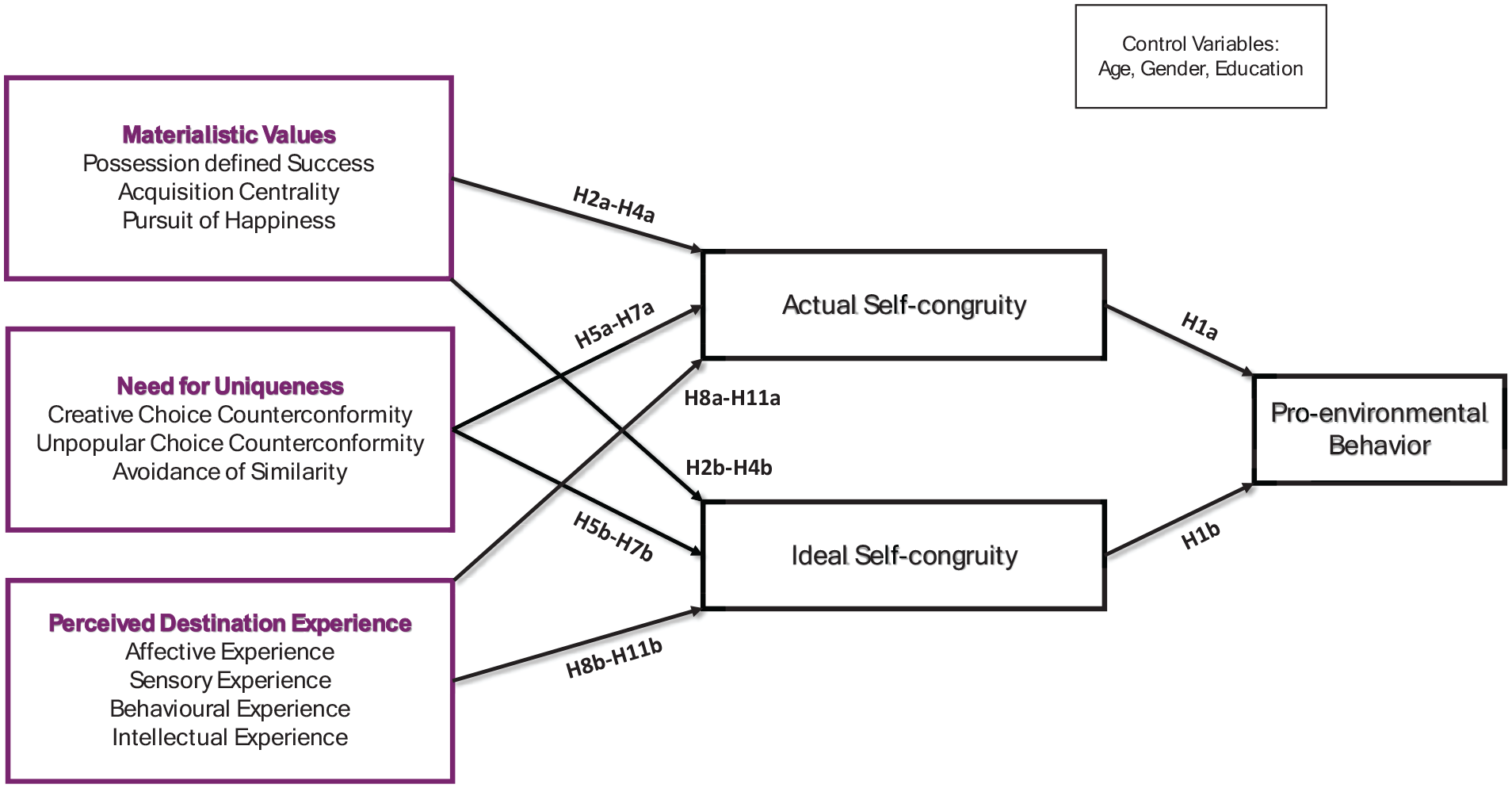
Research model.
Research Methods
Study Locations
The eco-destinations selected for the study were the Lake District National Park in the United Kingdom and the Hunza Valley in Pakistan. According to Lake District Park (2024), 18.11 million people visited the Park, contributing USD 2.92 billion toward tourism revenue. According to the National Parks and Access to Countryside Act 1949 passed by the UK, the Lake District has protection and conservation rights under UK law (UNESCO, 2023). It is the largest park in the UK and has been a UNESCO World Heritage Site since 2017. Furthermore, the Lake District is positioned as an eco-destination, offering carbon-neutral accommodations, including eco-lodges, water sources from local wells, ground-sourced heat pumps, and reliance on locally generated wind electricity (District, 2024). The Lake District also offers hiking and cycling activities, low-impact non-motorized watercraft, wildlife tours, and local, farm-based dining experiences (Beattie, 2024). Moreover, the UK national parks, including the Lake District, are protected areas that form part of a worldwide network of more than 100,000 protected areas overseen by the International Union for Conservation of Nature (IUCN; Tourism, 2024; UK, 2020). The UK government also recognizes the contribution of national parks in protecting wildlife and natural landscapes, and allocates funds to maintain, create sustainable mobility schemes and conserve natural beauty, cultural heritage, and wildlife (GOV.UK, 2023).
Similarly, Hunza Valley attracts almost 2 million people annually, with Ali (2023) estimating that the total annual recreational value amounts to USD 22.8 million for the region. Hunza Valley is located at the intersection of the Himalayan, Karakoram and Hindukush mountain ranges (Karim et al., 2013), and it offers astounding natural landscapes, mountains, lakes, places with historical significance, and locally renowned flora and fauna (Forbes, 2019; Mock & O’Neil, 2019; Tripadvisor, 2023). In Pakistan, destination protection laws are not as well-developed as in the UK. However, local and international NGOs and communities are determined to sustain and protect natural landscapes, wildlife, and cultural artifacts in this endeavor (Council, 2021; Network, 2024).
Measurement Instrument
A structured questionnaire was used for data collection with measurement scales adopted from past studies. A 5-point Likert scale with anchors “1 = strongly disagree and 5 = strongly agree” was used for all the constructs measured in the study. Tourists’ actual and ideal self-congruity were measured by four items each and were adapted from Moons et al. (2020). Creative choice counter-conformity and avoidance of similarity were measured using five items for each of the constructs, adapted from Karagöz and Uysal (2022). Unpopular choice counter-conformity (five items) was adapted from J. Hwang and Hyun (2017). Possession-defined success, acquisition centrality, and pursuit of happiness (with three items each) were adapted from Richins and Dawson (1992). Affective experience, behavioral experience, sensory experience, and intellectual experience (with three items each) were adopted from Brakus et al. (2009). Pro-environmental behavior was measured using three items adapted from (Miller et al., 2015). The measurement instrument is listed in Table 2 below, along with more detailed specifications for each item.
Sampling and Data Collection
This study employed a questionnaire administered on Qualtrics, a method also used in previous hospitality and tourism studies (Tse & Tung, 2022). Before administering the survey, a pilot study was conducted using a preliminary questionnaire among 20 respondents from the UK and Pakistan to test for any ambiguity with the survey. This study used non-probability sampling methods, specifically purposive sampling for the UK study and convenience sampling for the Pakistan study.
In the UK, data were collected using Prolific from June to July 2022, and the sample consisted only of UK residents. We used Prolific based on its wide use in tourism and hospitality studies (Bhattacharyya et al., 2023; Dhir et al., 2024; Shuqair et al., 2024) and because it was acclaimed for its reliability (Peer et al., 2021), quick response time, stringent recruitment standards and user-friendliness (Tandon et al., 2023). Prolific also abides by transparent payment rules, and researchers can reject payments to the participants if their responses are inaccurate (e.g., they fail to answer reverse-coded questions correctly). Initially, the participants were briefed about the study and eco-destinations but were not explicitly informed about the Lake District. Then, we asked two questions that we used to filter participant eligibility according to the study conditions. Such purposive sampling promoted reliability and accuracy in the data and assisted in targeting groups most beneficial to the research’s purposes (Fowler, 1995; Malhotra, 2020). Hence, the first filter question pertained to participation in tourism-related panels over the last 6 months. We aimed to prevent participant overexposure, which can lead to panel conditioning and biased responses, thereby severely impacting data quality (Warren & Halpern-Manners, 2012). Then, we asked the second filter question about whether respondents visited the Lake District at least once in the past year. The recency effect can ensure that respondents have accurate memory recall, thereby strengthening data quality and credibility (Malhotra, 2006). Therefore, only participants who had not participated in tourism-related panels in the last 6 months and had visited a specific eco-destination within the previous year were considered part of the study and were sent the questionnaire through their recorded Prolific IDs. Such a purposive sampling approach gave us a sample comparable to those found in studies focusing on the tourism context (Liu et al., 2019; Luna-Cortés & Brady, 2024; Qiu et al., 2022; Sun et al., 2024).
In Pakistan, the first author collected the data during a visit to the Hunza Valley from July to August 2022. Initially, the participants were approached based on convenience, briefed about the study, and asked if they were residents of Pakistan. This was enabled by the personal approach and the author’s proficiency in the local language. Additionally, we employed another filter question to verify that participants had not been part of tourism-related panels within the past 6 months. Study participants could complete a paper-based survey or fulfill it digitally through the Qualtrics QR code. Most participants opted for a digital survey.
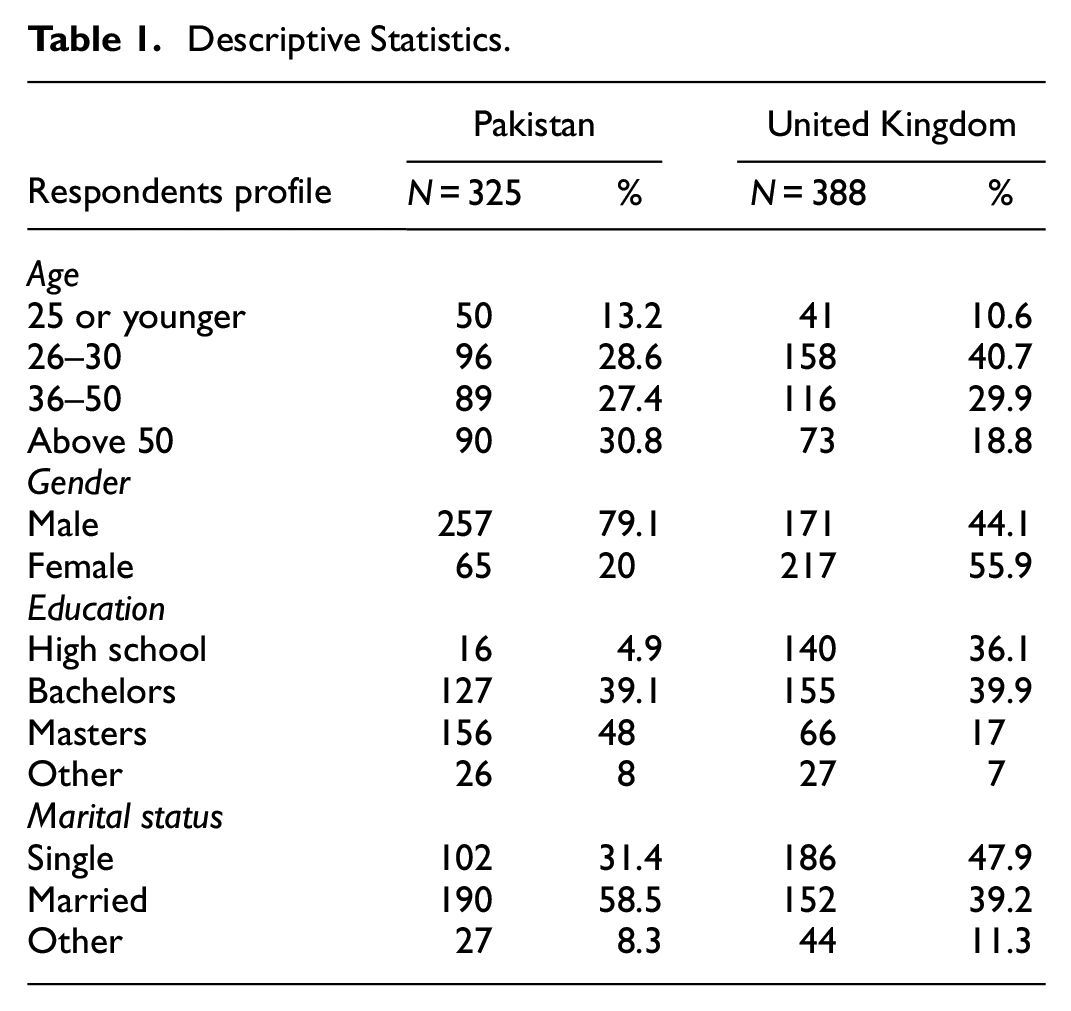
The total usable samples comprised 388 (UK; 38% response rate) and 325 (Pakistan; 32% response rate) valid respondents as the filtration process was used. Moreover, our study controls for age, education, and occupation, and the sample’s descriptive statistics are reported in Table 1.
Descriptive Statistics.
Data Analysis and Results
Common Method Bias
Harman’s single-factor test was applied using unrotated exploratory factor analysis (EFA) on all the variables used in this study to test the presence of common method bias in the data. The single factor explained 14.891% (the UK) and 12.209% (Pakistan) of variance, which is less than the 50% threshold, indicating the absence of the issue of common method bias (Podsakoff et al., 2003). Then, a marker variable test was carried out (Lindell & Whitney, 2001), which did not indicate any issues of common method bias.
Data Analysis Using Covariance-Based Structural Equation Modeling
Covariance-based structural equation modeling (CB-SEM) was utilized for analyzing data considering its ability to assess the measurement error, estimate latent constructs through observed variables, estimate complex models (Stein et al., 2012), and compare complex theoretical models across different countries (Steenkamp & Baumgartner, 1998). AMOS 28 with maximum likelihood estimation was used to run the model. CB-SEM models differ from conventional regression models in that they involve estimating multiple and interrelated relationships (Hair et al., 2006). We applied the CB-SEM rather than the Partial Least Squares-based Structural Equation Modeling (PLS-SEM), as suggested by Hair et al. (2017) since CB-SEM is more stringent and suitable for theory testing and confirmation. We used CB-SEM in two stages for empirical analyses: (a) validating the measurement model and (b) testing the structural model. Confirmatory factor analysis was used to assess the scales’ validity and reliability, followed by the structural model to test all the hypotheses (Byrne, 2013).
Validation of the Measurement Model6
In particular, for Pakistan data (see Table 2), factor loading ranges from 0.419 to 0.936, exceeding the recommended cut-off level of 0.40 (Stevens, 2002); composite reliability ranges from 0.761 to 0.90, exceeding the recommended threshold of 0.60 (Bell et al., 2018; Fornell & Larcker, 1981a); AVE ranges from 0.517 to 0.656, exceeding the recommended cut-off level of 0.50 (Bagozzi & Yi, 1988). For the UK data (see Table 2), factor loading ranges from 0.41 to 0.945, composite reliability ranges from 0.752 to 0.909, and AVE ranges from 0.504 to 0.687. In addition, nomological validity testing revealed that correlations among variables from both datasets were significant at p < .01, with no value exceeding the threshold of 0.90 (Tabachnick & Fidell, 2014), confirming that multicollinearity was not a significant issue in this research. Convergent validity was achieved, as all average variance extracted (AVE) values were above 0.5. The square root of the average variance extracted from each construct was greater than the correlation between each pair of constructs, suggesting discriminant validity (Fornell & Larcker, 1981)
Measurement and Reliability.
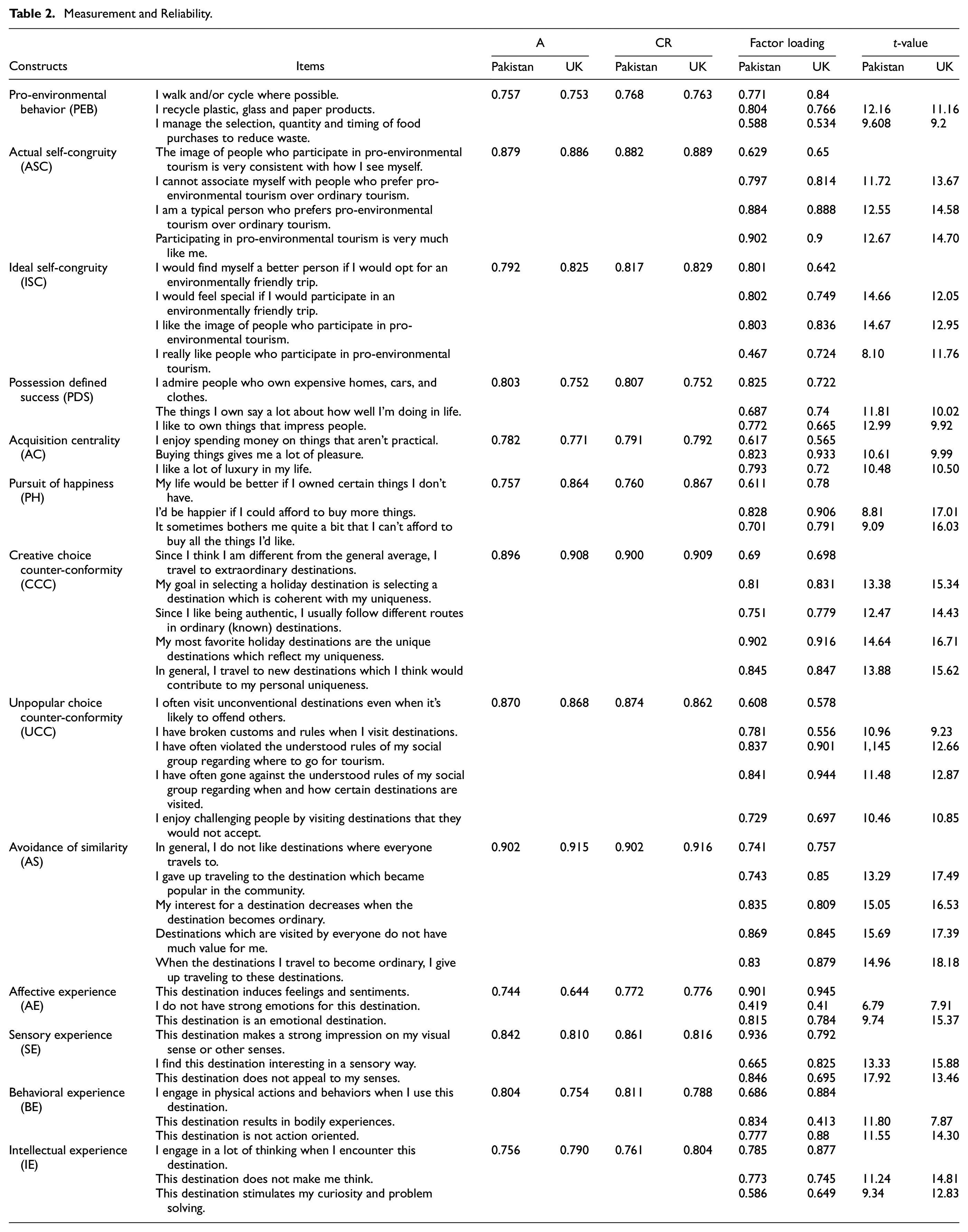
The measurement model was assessed through fit statistics using confirmatory factor analysis (CFA; Hair et al., 2010). Overall, the CFA results for the Pakistan (Chi-square = 1710.206, DF = 934, CMIN/DF = 1.831, RMSEA = 0.051, SRMR = 0.054, CFI = 0.903, NFI = 0.875, TLI = 0.898, PNFI = 0.701, PCFI = 0.780) and the UK (Chi-square = 1775.638, DF = 946, CMIN/DF = 1.877, RMSEA = 0.048, SRMR = 0.058, CFI = 0.918, NFI = 0.842, TLI = 0.906, PNFI = 0.737, PCFI = 0.803) suggest that the model fits the data satisfactorily for both countries.
Testing the Structural Model
Hypothesis testing through SEM enables the evaluation of direct and indirect relationships, generating more nuanced insights (Dash & Paul, 2021). Hence, we tested the hypothesized structural model separately for the UK and Pakistan. AMOS was used to estimate the path coefficients of the relationship between constructs, employing the Maximum Likelihood Estimation (MLE) method to compute the estimates. The results from the structural model analysis show an adequate model fit for Pakistan (Chi-square = 1987.33, DF = 988, CMIN/DF = 2.011, RMSEA = 0.056, SRMR = 0.070, CFI = 0.897, NFI = 0.778, TLI = 0.863) and the UK (Chi-square = 1834.737, DF = 989, CMIN/DF = 1.855, RMSEA = 0.047, SRMR = 0.062, CFI = 0.917, NFI = 0.840, TLI = 0.909).
Table 3 presents the results for Pakistan, showing the direct and indirect effects of the variables as postulated in the structural model. Here, the standardized coefficients (γ) of all causal paths showed that ideal self-congruity has a positive and significant relationship with PEB (γ = 0.525, p < .05), which leads to the support of the H1b. As H1a was statistically insignificant, all related indirect hypotheses mediated by actual self-congruity were not supported. Among the indirect effects shown in Table 3, we will present significant ones. The ideal self-congruity negatively mediated a few relationships: between acquisition centrality and PEB (ab: −0.181***, p < .05;95% CI [−0.226, −0.081]; supporting H2b), between the pursuit of happiness and PEB (ab: −0.090*, p < .05; 95% CI [−0117, −0.006]; supporting H4b), and between unpopular choice counter-conformity and PEB (ab: −0.113*, p < .05; 95% CI [−0.181, −0.031]; supporting H6b). On the other hand, ideal self-congruity positively mediated the relationships between creative choice counter-conformity and PEB (ab: 0.146**, p < .05; 95% CI [0.055, 0.169]; supporting H5b) and between sensory experience and PEB (ab: 0.090* p < .05; 95% CI [−0.129, 0.014]; supporting H9b).
Multilevel Path Analysis for Pakistan (N = 325).
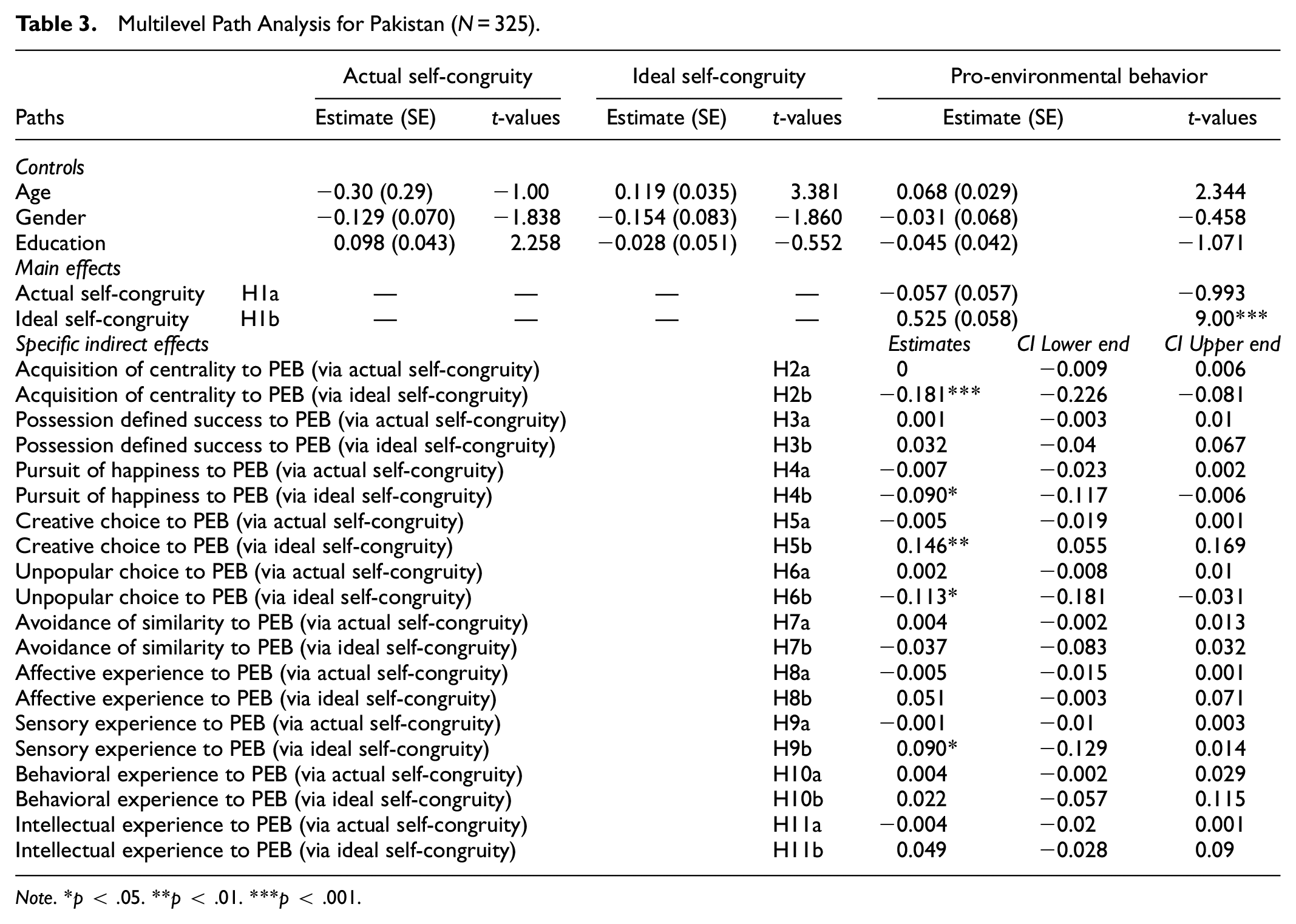
Note. *p < .05. **p < .01. ***p < .001.
For the UK respondents, the results, as shown in Table 4, indicate that actual self-congruity has a positive and significant relationship with the tourist’s PEB (γ = 0.267, p < .05), supporting H1a. As H1b was statistically insignificant, all indirect hypotheses mediated by ideal self-congruity were not supported. Similar to the previous presentation of results, we will only show the significant indirect effect analysis, as highlighted in Table 4. The actual self-congruity positively mediated only one relationship between the pursuit of happiness and PEB (ab: 0.027*, p < .05; 95% CI [0.042, 0.003]; supporting H4a). On the other hand, actual self-congruity was found to positively mediate the relationships between creative choice counter-conformity and PEB (ab: 0.061**, p < .05; 95% CI [0.02, 0.104]; supporting H5a), between affective experience and PEB (ab:0.029*; 95% CI [0.04, 0.089] (supporting H8a), between behavioral experience and PEB (ab: 0.034* p < .05; 95% CI [0.006, 0.07]; supporting H10a), and between intellectual experience and PEB (ab: 0.035*, p < .05; 95% CI [0.007, 0.075]; supporting H11a).
Multilevel path analysis for the UK (N = 388).
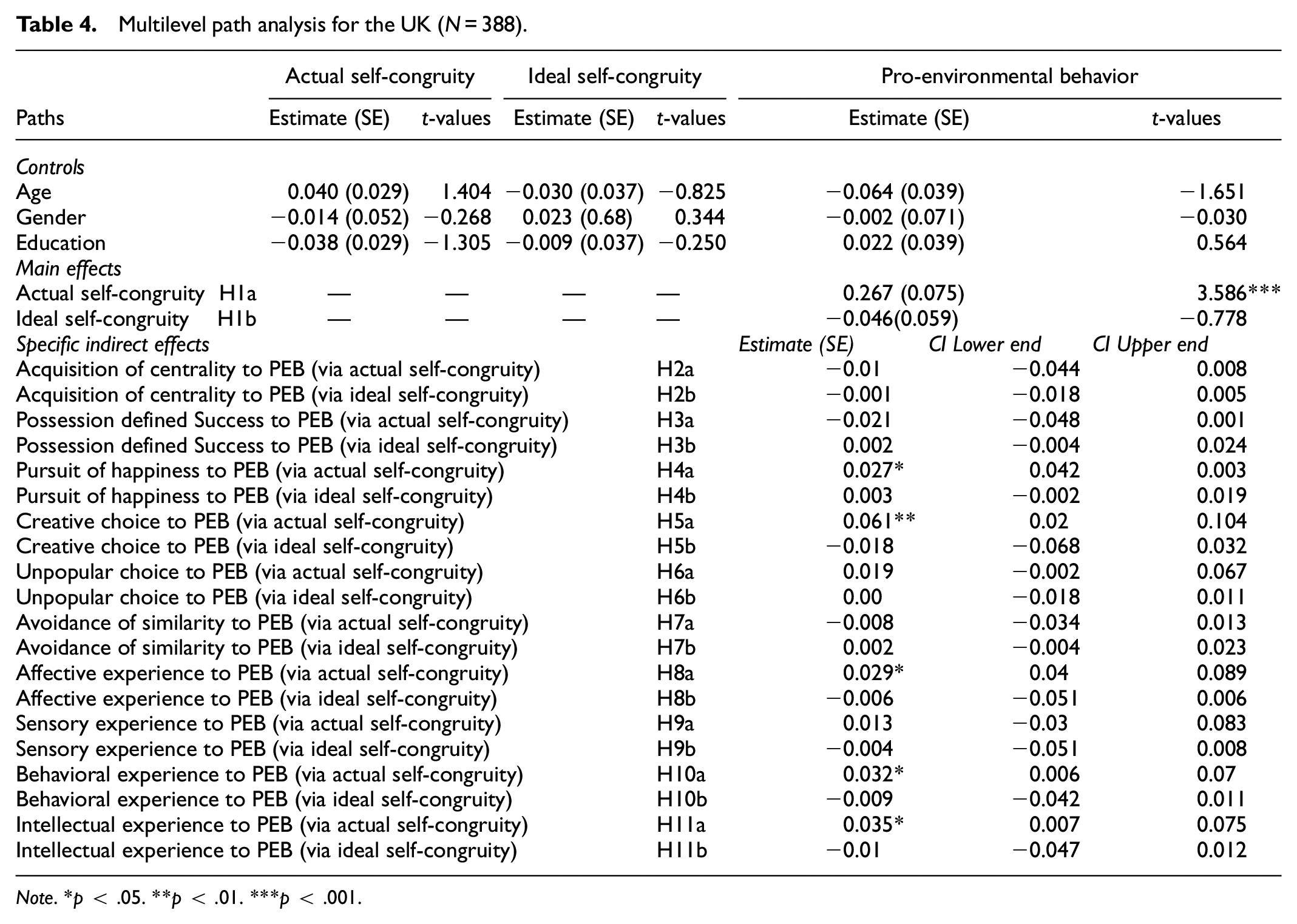
Note. *p < .05. **p < .01. ***p < .001.
Discussion
Our findings offer a more detailed, multi-dimensional explanation of self-congruity theory within the context of eco-tourism. By exploring the impact of self-congruity on tourists’ pro-environmental behavior at eco-tourist destinations, we relied solely on domestic tourists. This enabled us to differentiate between a developed and developing country, the UK and Pakistan, respectively. The proposed framework was tested separately for the two countries, and the results confirmed our decision to distinguish between the two contexts, as suggested by Gonzalez-Jimenez et al. (2019).
The results of our study showed that domestic tourists visiting eco-tourism sites in Pakistan are more likely to engage in pro-environmental behavior when their ideal self-image aligns with the eco-friendly image of the destination, that is, ideal self-congruity. This could be attributed to the increasing awareness of environmental issues in Pakistan (Raza et al., 2024), as many travelers are motivated by a sense of personal values to protect natural resources and support sustainable practices that contribute to the well-being of local communities (Díaz et al., 2020). Moreover, when a Pakistani tourist’s ideal self-image aligns with the image of an eco-destination, the importance of acquisition as a dimension of materialistic values negatively impacts their pro-environmental behavior. In Pakistan, material possessions are culturally perceived as markers of success and social status (Majeed et al., 2022; Ullah et al., 2024). Thus, the emphasis on acquisition may supersede the motivation to engage in pro-environmental behavior as the latter is deeply rooted in values and is therefore influenced by national cultural values (Dunlap et al., 2019; Rokeach, 1973; Schwartz, 1994). Previous research has also demonstrated a negative relationship between materialistic values and PEB (Hurst et al., 2013; Liobikienė et al., 2020), suggesting that materialistic and environmental values often conflict and have a contradictory relationship (Kilbourne et al., 2005; Kilbourne & Pickett, 2008; Polonsky et al., 2014). For Pakistani tourists, enhancing their ideal self mediates the relationship between pursuing happiness and PEB, but the effect is negative. We need to be aware that the pursuit of happiness is represented through the belief that one’s life is bettered if one owns specific things and can afford more materialistic possessions. The latter suggests that, for many Pakistani tourists, striving for an idealized version of themselves may involve prioritizing material gains and status, which can divert attention away from environmentally friendly actions (Ali et al., 2020; Dev et al., 2018). The results also indicate that for Pakistani tourists who pursue creative choice counter-conformity, engaging in pro-environmental behavior mediates their ideal self-congruity. By integrating pro-environmental behavior into their ideal self-concept, Pakistani tourists strive to adopt unique approaches toward creative sustainability initiatives that reflect their distinct identities (Aziza & Pervaiz, 2018; M. Li et al., 2023; Raza et al., 2024; Tan et al., 2020). On the other hand, Pakistani tourists might not indulge in pro-environmental behaviors if the destination is unpopular and thus does not match their ideal self. In line with previous studies, current findings showed that the destination’s popularity and environmental reputation reinforce responsible tourist behavior (Liu et al., 2022; Su et al., 2020; Thi Khanh & Phong, 2020). When it comes to brand experience, in Pakistan, sensory experiences significantly impact tourists’ pro-environmental behavior, provided that how they wish to see themselves matches the eco-destination image (i.e., ideal self-congruity). Hence, attributes like announcements, visual signs, and thought-provoking activities related to preserving the destination have an impact toward environmentally friendly behaviors (Alyahya & McLean, 2022; Fu et al., 2020; Kah et al., 2023; H. Li et al., 2023).
The results of our study show a very different picture of UK tourists. For example, tourists visiting eco-tourism sites in the UK, a developed destination, tend to act in environmentally responsible ways when their actual self-image matches the destination’s eco-image (i.e., actual self-congruity). These tourists are more inclined toward their actual self-congruity, as their indulgence in pro-environmental behavior is strongly associated with bolstering consistency motives (Cifci, 2022; Sirgy, 1982, 1985; Sirgy & Su, 2000). Looking at materialism as a multidimensional construct, UK tourists’ pursuit of happiness is positively linked to PEB when they seek to maintain their actual selves. For them, happiness is found in aligning their actions with their actual self-concept, which often includes a stronger commitment to eco-friendly practices (Buckley, 2020; Filep, 2011). Moreover, the need for uniqueness for UK tourists is linked to their actual congruity, which stems from a desire to maintain this self-concept and reflects their existing beliefs and values. Their pro-environmental behaviors exhibit elements of creative choice counter-conformity, affirming their existing beliefs while also differentiating themselves through unique expressions of sustainability, which helps them stand out (Kastanakis & Balabanis, 2012; Shahabi et al., 2022; Zhang et al., 2024). The results reveal that avoiding similarity does not play a crucial role in driving tourists’ pro-environmental behaviors, even when they align their actual selves with eco-tourism destinations. This contradicts the previous research, which links avoidance of similarity with perceived quality, revisiting intention, and attitudes (Aw et al., 2019; J. Hwang & Hyun, 2017; Knight & Young Kim, 2007). Concerning the perceived brand experience, affective, behavioral, and intellectual destination experiences positively influence UK tourists’ PEB because these experiences align with their actual self-identity (Cifci, 2022). Their environmental actions at eco-tourism destinations are consistent with how they already perceive themselves, demonstrating that their actual self-congruity serves as a mediator in the relationship between destination experiences and pro-environmental behaviors. This aligns with previous research, which highlights the importance of brand experience, satisfaction, and intentions to recommend and revisit behaviors in hospitality and tourism contexts (Barnes et al., 2014; Beckman et al., 2013; Kumar & Kaushik, 2018; Safeer et al., 2021).
Conclusions
We aimed to develop and empirically test an integrative framework that explains the underlying mechanism determining tourists’ perceived behavioral intentions (PEB) at eco-destinations, pulling together the perspectives of congruity theory, the theory of uniqueness, materialism, and subjective experience. Our study aims to contribute to the debate on fostering pro-environmental behaviors (Dolnicar, 2010, 2022; Dolnicar & Leisch, 2008; MacInnes et al., 2022; Turnšek & Kokot, 2025) by focusing on the psychological aspects of identity maintenance or enhancement motives, specifically actual and ideal self-congruity.
The results consolidated and validated the conceptualization of actual and ideal congruity within the eco-tourism literature. Past congruity-focused studies have primarily focused on Western consumers (Sirgy, 2018), raising an important question about whether the congruity effect applies beyond the Western context (Gonzalez-Jimenez et al., 2019). Our findings demonstrated that the congruity theory is consistently applicable to both developing and developed countries, supporting its use in a multi-country context. For example, nudging Pakistani tourists to behave in an environmentally friendly manner should be based on messages that enhance their self-perception and promote a sense of responsibility. In contrast, the messages, including establishing self-consistency, would likely be more effective for UK tourists. Hence, destination marketers should include content that fulfils the target audience’s self-congruity motives. Although behavior change has been challenging for practitioners, understanding tourists’ symbolic (self-related) associations is vital when developing communication content for eco-tourism destinations targeting different market segments.
Our theoretical expansion of congruity studies considers materialistic values that lead to pro-environmental behaviors, with findings supporting the idea that self-congruity states can provide materialists with a purpose and rationale for engaging in pro-environmental behaviors (PEB). However, they appear to be supportive and positive in developed countries (e.g., the UK) and negative in developing countries (e.g., Pakistan). Marketers must be cautious when utilizing such content. On the other hand, pursuing happiness as a materialistic value can be showcased in advertisements as awareness content that contributes to responsible practices. As recommended, our empirical findings support the theoretical importance of including self-related benefits for materialists, which can promote positive behaviors (Gu et al., 2020; Kilbourne & Pickett, 2008; Liobikienė et al., 2020).
In the study, we included the need for uniqueness as a predictor of actual and ideal self-congruity. Theories were shown to coexist and homogenize as tourists seek to visit socially unique destinations while simultaneously requiring them to resonate with their own identities (Abosag et al., 2020). Since the need for uniqueness encompasses both popular and unpopular destination choices, practitioners should regularly assess people’s perceptions of the destination’s popularity to keep it relevant and maintain its positive image, thereby fostering pro-environmental behaviors.
Lastly, perceived brand experiences were shown to enable tourists to draw congruences with destinations, resulting in a greater willingness to behave in an environmentally friendly manner. The integration of both theoretical perspectives suggests that destination experience is a critical component in creating self-congruity profiles that can facilitate and maximize participation in PEB, especially in the context of a developed country. Hence, destination managers should emphasize activities and content that comprise memorable and emotionally charged experiences while also incorporating intellectually stimulating activities that promote sustainable and responsible behavior.
Limitations and Future Research Recommendations
This study is not without limitations. Theoretically, we only considered two congruities, which do not consider the social element of identity formation. Actual and ideal congruities only reflect people’s needs to behave in ways that help them maintain internal consistency. At the same time, we did not use the social and ideal social congruities that help maintain external consistency. Future studies would benefit from considering congruity holistically, including all four dimensions. Presumably, the social self-concept is gradually gaining importance as both personal and social factors increasingly trigger tourist behaviors. As self-congruity is considered a genuine predictor of pro-environmental behavior, this theory could be used to minimize the attitude-behavioral gap, treating it as a moderator. Travelers have generally shown a positive attitude but have been reluctant to adopt sustainable practices (Juvan & Dolnicar, 2014; Kollmuss & Agyeman, 2002; Ribeiro et al., 2023; Wu et al., 2021). Therefore, this can pave the way for future investigations to account for the social aspect of self-congruity theory.
Another notable opportunity is replicating the study in other settings, such as urban, rural, island, or mountain areas, to evaluate whether the inclination toward pro-environmental behavior can be extended to these settings. Our study focused on two eco-tourism destinations. Visitors to these two sites may be more inclined to behave responsibly and environmentally friendly due to the nature of these two destinations. This is something we did not control for; therefore, future studies replicated in different settings and contexts would be beneficial for testing the extended framework of the self-congruity theory. Furthermore, future scholars could also compare and contrast congruity mechanisms across different types of tourists (e.g., domestic vs. international), the purpose of visit (e.g., recreational vs. educational), or the length of stay (e.g., day trip vs. single-night vs. more extended stay) to develop nuanced insights for practitioners and public policymakers.
Methodologically, our research aligns with a body of cross-sectional and cross-country studies. It would be refreshing to see a longitudinal study and compare differences in variations reported. Such studies could include the same participants (potential, one-time, or repeated visitors) and differentiate between domestic and international tourists to test for differences. Our study revealed that maintaining or enhancing self-esteem has different effects on tourists from developed and developing countries, which can significantly influence their inclination toward responsible behavior in eco-tourism destinations. Moreover, our study relied on a questionnaire, where congruity with pro-environmental tourism was probed using statements. As Šegota (2023) suggested, such measurement instruments leave space for ambiguity, which could be addressed by integrating experimental data collection methods that allow participants to respond more creatively, for example, through pictures and video simulations, building scenarios, and real-life experiment settings. We have used CB-SEM to test and confirm the theoretical relationship between variables. Future scholars could also use PLS-SEM to provide predictive and external validity comparisons between developed and developing country contexts.
Lastly, upcoming studies can also explore other theoretical lenses toward the preservation of eco-tourism destinations, for example, psychological ownership (Kuo et al., 2021), destination attachment (Ramkissoon et al., 2012, 2013; Ramkissoon & Mavondo, 2015) and also protection motivation theory (Rogers, 1975). These three theoretical perspectives could provide a more in-depth exploration of tourist psychology, including whether the pro-environmental behavior at eco-tourism destinations is driven by attachment, ownership, or protection.
Footnotes
Author Contributions
Declaration of Conflicting Interests
The author(s) declared no potential conflicts of interest with respect to the research, authorship, and/or publication of this article.
Funding
The author(s) received no financial support for the research, authorship, and/or publication of this article.
Ethical Approval
All procedures performed in studies involving human participants were in accordance with the ethical standards of the institutional and/or national research committee and with the 1964 Helsinki declaration and its later amendments or comparable ethical standards.
Informed Consent
Informed consent was obtained from all individual participants included in the research.
