




Abstract
Findings from behavioral economics suggest the currently low take-up of voluntary carbon offsets (VCOs) could be increased by changing the way choices are presented. In this article, we lean on prospect theory to test the effect of loss framing on air traveler’s VCO behavior and whether this contrasts with attitudes and behavioral intentions. Borrowing from experimental economics, we conduct an incentive-compatible online experiment with a real-effort task. We find that under certain conditions a loss-framed VCO message leads to higher likelihood of offsetting, indicating some presence of loss aversion. The results also reveal a substantial attitude-behavior gap and intention-behavior gap, previously postulated to be particularly strong in the tourism setting but not yet quantified. Importantly, 28% of participants with a negative attitude toward VCOs chose to offset nonetheless, indicating positive attitudes are not a pre-requisite for behavior, as hitherto stipulated. Practical, theoretical, and methodological implications of the findings are discussed.
Keywords
Introduction
Air travel is an important contributor to global greenhouse gas emissions and, with this, to climate change. An estimated 2% to 2.5% of global emissions of CO2 is attributed to air transport (UNWTO-ITF, 2019), representing half of all transport-related tourism CO2 emissions (UNWTO-ITF, 2019). Due to its non-CO2 emissions of NOx and soot, both of which contribute strongly to surface warming, aviation is also estimated to contribute 3.5% to net anthropogenic effective radiative forcing (Lee et al., 2021). Despite the temporary drop in air travel owing to the Covid-19 pandemic and accompanying travel restrictions (e.g., Le Quéré et al., 2020), passenger journeys are predicted to recover fully by 2024 (ICIJ, 2022) and continue to grow at a rate of up to 3.8% per annum until 2040 (IATA, 2020).
The need for the future is not only to reduce carbon emissions from air-travel but to bring them to zero. Fuel efficiency will, despite its forecasted gradual improvements, be insufficient to counterbalance future demand, estimates ICAO (2019). Innovations and technologies aimed at mitigating the aviation industry’s impact on the environment, specifically into biofuel- or hydrogen-powered planes, are not yet close to being implemented. In the meantime, normative policy measures and initiatives that stimulate change in human behavior can be introduced. Understanding human behavior allows us to propose more targeted and efficient policy measures to mitigate climate change. One such measure could be targeted at discouraging individuals from flying. Yet, cutting back on air travel enough to even stabilize its contribution to global CO2 emissions, let alone reduce it, is socially and economically unsustainable given the contribution of the industry to global economy and employment (both hovering around 10% in pre-pandemic times; WTTC, 2019). Individuals are also unlikely to want to stop flying altogether. One mechanism for reducing aviation carbon emissions without foregoing air travel is carbon offsetting.
Carbon offsets are reductions in CO2 emissions paid for by individuals, companies, governments or other entities in order to compensate CO2 emitted from own activity (Carbon Offset Guide, n.d.). Individuals can reduce their carbon footprint from air travel by purchasing voluntary carbon offsets (VCOs) from airlines directly or from non-governmental organizations acting as intermediaries in the voluntary market. However, take-up is low. On average, only 1% to 3% of passengers purchase an offset for their flight when booking a plane ticket (Aviation Benefits, 2020), with even the most ambitious estimates not exceeding 10% for overall purchases (Choi et al., 2018 The reasons for the low adoption rates identified in the literature range from lack of knowledge and awareness of these schemes (e.g., Kim et al., 2016) to the price of the offset (Araña & León, 2013), specific project’s attributes (Ritchie et al., 2021; Rotaris et al., 2020), and the message’s credibility (Zhang et al., 2019b), and visual appeal (Babakhani et al., 2017). Another challenge are the controversies surrounding VCO projects reported by the media. Most news articles in this context involve reports on the overestimation of CO2 emission prevention or reduction brought about by forest protection schemes such as Reducing emissions from deforestation and forest degradation (REDD+) (Fischer & Knuth, 2023; Greenfield, 2021). Academic research has presented a more positive account of REDD+ and its results (Guizar-Coutiño et al., 2022; Simonet et al., 2019). Nevertheless, the negative publicity may have had an impact on both attitudes toward VCOs and actual participation rates, though to the extent of our knowledge, this effect has not yet been empirically evaluated in the scientific literature.
Two key avenues for encouraging pro-environmental behavior have been identified in the literature. The first takes the consumer preference perspective. Grounded in theories from psychology, this approach features in most empirical tourism studies. It stipulates that in order to change behavior, we need to better understand attitudes and improve these further first (Ritchie et al., 2021). A different approach stems from behavioral economics: pro-environmental behavior can be triggered subconsciously and does not necessitate a change in attitudes. According to nudge theory, we can “nudge” individuals toward desirable behavior by altering the choice architecture (R. H. Thaler & Sunstein, 2009). We take this approach and look at a particular type of nudge—loss framing. The idea rests on prospect theory’s loss aversion hypothesis (Kahneman & Tversky, 1979), which states that people prefer to avoid losses than achieve commensurate gains. We extend this concept to the domain of non-monetary public goods. Specifically, we test whether framing the description of voluntary carbon offsets as an environmental loss to be avoided (rather than gain to be achieved) leads to higher propensity to offset.
Most studies on voluntary carbon offsetting rely on self-reported (past or future) behavior or stated preferences, such as attitudes, willingness to pay and beliefs. Yet, as shown for pro-environmental behavior more generally, there is a persistent gap between attitudes and intentions, on the one hand, and behavior on the other (Kollmuss & Agyeman, 2002; Yüksel, 2017). The few studies measuring real behavior (e.g., Araña et al., 2013) rely on field experiments, which hinder comprehensive data collection needed to match preferences, demographics, and psychographics to the behavior. This study seeks to overcome this gap: we conduct an online experiment with a real behavior dependent variable and a questionnaire component to match preferences to behavior.
The objective of this paper is thus twofold. First, the study conducted here seeks to identify whether loss framing can be used as an effective nudge to encourage individuals to offset their flights and other polluting activity in an incentive-compatible real-behavior setting. With this, we aim to understand loss framing effects on pro-environmental behavior that bears financial costs, an outcome that has been largely neglected in this literature. This financial cost, coupled with the absence of immediate or visible personal benefits, makes VCOs particularly challenging for green nudges: if proven successful here, it is easier to conceive of successful application to other settings. Second, leveraging the ability of online experiments for measuring both stated preferences and behavior, this paper also aims to identify and quantify the attitude-behavior and intention-behavior gaps. These have been discussed and alluded to frequently in sustainable travel research (e.g., Barr et al., 2010; Juvan & Dolnicar, 2014), but not measured empirically.
Literature Review
Voluntary Carbon Offsetting
There has been a growing interest in voluntary carbon offsetting among tourism scholars. Research in this field includes exploring cognitive antecedents of offsetting, cataloging profiles of offsetters, and testing changes to the VCO message that would improve take-up. Within the first group, researchers have identified a number of cognitive factors that affect VCO-related outcomes: subjective norms (Choi et al., 2016; Ritchie et al., 2020), anticipated emotions (Chen, 2013), perceived behavioral control (Kim et al., 2016), knowledge of VCOs (Denton et al., 2020; Tao et al., 2021), perceived VCO project efficacy (Choi et al., 2016; Lu & Shon, 2012), and environmental beliefs (van Birgelen et al., 2011). The outcomes measured here are almost exclusively stated preferences: attitudes, beliefs, intentions to purchase and willingness to pay. Bringing the characteristics associated with these outcomes together, a number of studies also divide individuals into profiles (Mair, 2011; McLennan et al., 2014; Ritchie et al., 2021). The third group of studies focuses on manipulations to the presentation or description of VCO projects, typically through discrete choice modeling or contingent valuation. Willingness to pay is found to be influenced by project type, with individuals preferring reforestation projects (Rotaris et al., 2020; Schwirplies et al., 2017) or renewable energy projects (Cheung et al., 2015; Choi et al., 2018). Willingness to pay is also higher for domestic projects (Hinnen et al., 2017; Ritchie et al., 2021), projects certified by governments (Blasch & Farsi, 2014), projects that carry co-benefits (MacKerron et al., 2009; Zhang et al., 2022), and projects that are managed by non-profit organizations (Ritchie et al., 2021). In terms of message presentation, Babakhani et al. (2017) find that individuals pay more attention to shorter messages, whilst Zhang et al. (2019b) establish importance of the messenger’s credibility.
The majority of this literature takes the perspective of consumer preferences. As Ritchie et al. (2021, p. 2), write, “Understanding heterogeneity in consumer preferences for voluntary carbon offsetting schemes for specific travel contexts, therefore, is critically important to being able to develop offsetting schemes that are attractive to distinct subsets of air passengers.” According to this argument, VCO behavior requires a change in attitudes: “positive attitudes and purchase intentions are prerequisites for purchasing environmental goods and services” (Zhang et al., 2019b, p. 718). This approach is based on the theory of planned behavior (Ajzen, 1991), which asserts that attitudes lead to intentions, which drive behavior. The assumption here is that even though there is a gap between attitudes and behavior, behavior can be improved through interventions that improve consumer attitudes first.
The second strand of research, one that we lean on here, borrows from behavioral and experimental economics. Developed as a critical response to neoclassical economics, the discipline’s main argument is that human behavior diverges strongly and systematically from the assumptions of unlimited human rationality, willpower, and self-interest (Mullainathan & Thaler, 2000). Literature in behavioral economics often rests on dual process theories of the mind, which stipulate that human reasoning can be divided into automatic processes on the one hand (“System 1”), and conscious and deliberate ones on the other (“System 2”) (Kahneman, 2011; Wason & Evans, 1974). Here it is conceivable that behavior occurs subconsciously without a corresponding change in attitudes. This is in contrast to the theory of planned behavior, which does not foresee behavior as independent of deliberate mental processes. The premise of nudge theory is that by merely changing the decision environment without interfering in the list of options available or associated economic incentives, “choice architects” can influence individual action (R. H. Thaler & Sunstein, 2009). Since automatic and conscious mental processes are presumed to be systematically different, studies in this field measure real behavior through experiments.
Two types of nudges have been tested in the VCO literature: social comparison and changing the default option. Environmental messages that include a social comparison nudge rest on the assumption that people conform to social norms (Allcott, 2011). Huber et al. (2018) find that purchases of VCOs are positively impacted by institutional signals but negatively impacted by comparison with peers, though Löschel et al. (2013) find no effect of social comparison on payments. The second type of nudge—changing the default—leans on the “default bias,” which is the tendency to accept a preselected option due to either loss aversion, implied endorsement or limited cognitive capacity to make a decision (Johnson & Goldstein, 2003). In line with this, VCO take-up may increase if flight offsets are presented to air travelers as the default option when purchasing an online ticket. Araña and León (2013) do indeed find that average payment for offsets is 54% higher when participants are given the option to opt-out rather than opt-in. However, changing the default setting to increase payment by consumers is surrounded with ethical issues (Smith et al., 2013) and goes against European Union consumer protection regulation (Directive 2011/83/EU, Article 22), reducing its practical applicability. The mentioned studies that test nudges through field experiments observe real behavior but not attitudes. It can therefore not be established whether the nudge impacted an individual’s attitudes toward VCOs and corresponding behavior; it is not clear if a nudge influenced the behavior through attitudes, or subconsciously without a change in the behavior-specific attitude.
Loss Framing
Loss framing stems from the loss aversion hypothesis, a component of prospect theory. The loss aversion hypothesis postulates that the gains and losses that individuals experience relative to a reference point are asymmetric, with the pain of losses stronger than the enjoyment of gains (Kahneman & Tversky, 1979). The phenomenon is related to negativity bias, whereby people pay more attention to- and are more affected by negative information than by positive information (Meyerowitz & Chaiken, 1987). Loss and gain framing are the empirical extension of loss aversion: they portray the outcomes of the same action either negatively or positively (Levin et al., 1998), typically with the aim of changing behavior. Though loss aversion was initially conceived for decision making between monetary gambles, it was later extended to riskless and non-monetary decisions (R. Thaler, 1980).
In the environmental context, prospect theory would suggest that messages, which frame the environmental consequence from an action as a loss to be avoided (rather than gain to be achieved), will increase the likelihood of green behavior. Though limited in number, existing evidence suggests loss framing does indeed perform better in encouraging pro-environmental action than gain framing (Ropret Homar & Knežević Cvelbar, 2021), which did not succeed in inducing green behavior in any of the studies reviewed. Loss framing was shown to be especially effective for encouraging recycling behavior (Grazzini et al., 2018; Poortinga & Whitaker, 2018; White et al., 2011), as well as more efficient energy use (Gonzales et al., 1988) and anti-pollution advocacy (Nabi et al., 2018). Of these, only Grazzini et al. (2018) examine the effect of framing on pro-environmental behavior in the tourism context: their study finds that hotel guests can be swayed to recycle more if presented with a loss-framed environmental appeal. One further study examines loss and gain framing in tourism, though not in a real-behavior setting: Zhang et al. (2019a) test the effects of loss and gain framing on the credibility of VCO messages, finding that neither frame influences perceived message credibility. To the best of our knowledge, no real behavior experiments of framing have been carried out in the context of voluntary carbon offsetting.
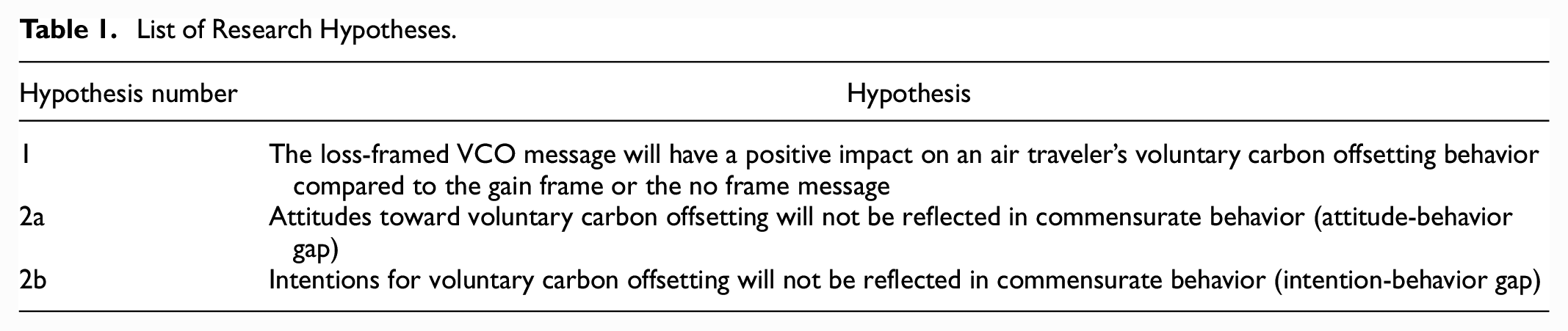
Based on prospect theory and the results of real behavior studies already examined in the environmental domain, we propose the following first hypothesis:
H1: The loss-framed VCO message will have a positive impact on an air traveler’s voluntary carbon offsetting behavior compared to the gain frame or the no frame message.
Most framing literature in this setting leans on self-reported measures, such as attitudes, intentions and willingness to pay, rather than real behavior. Ropret Homar and Knežević Cvelbar (2021) show that this holds for 89% of studies captured in their literature review of the effect of loss and gain framing on pro-environmental decisions. When researchers measured stated preferences, gain framing was more effective than when real behavior was measured: 46% (loss framing: 57%) compared to 0% effectiveness in real behavior experiments (loss framing: 86%). Interestingly, it outperformed loss framing when the focus was on pro-environmental attitudes (65% success rate compared to 38% from loss framing). In the few studies that measure both attitudes and behavior (Lord, 1994; Nabi et al., 2018), gain framing led to more positive attitudes but it was loss framing that triggered the desired behavior change. This further hints at an attitude-behavior gap, which has been observed for pro-environmental behavior more generally (Peattie, 2010), and in the travel and tourism context, in particular (Birch & Memery, 2020; Oates & McDonald, 2014). Based on the findings of these studies, coupled with the postulates of nudge theory discussed above, we hypothesize the following:
H2a: Positive attitudes toward voluntary carbon offsetting will not be reflected in commensurate behavior (attitude-behavior gap).
Similarly, White et al. (2011) observed equal loss and gain framing effects on an individual’s intention to recycle, but stronger loss framing effects on recycling behavior. Outside of loss and gain framing, individual studies that measure both constructs also show a clear gap. In Seip and Strand’s (1992) experiment, for instance, 64 out of 101 participants expressed a willingness to pay for a membership fee for an environmental association, yet only 6 (9%) of those actually paid. Similarly, Bouma and Koetse (2019) find hypothetical willingness to pay to be 3.5 times higher than actual payment toward farmers’ land conservation. A meta-analysis on the relationship between self-reported measures of preference and actual pro-environmental behavior found that although the relationship is positive, 79% of the variance in this correlation could not be explained (Kormos & Gifford, 2014). These findings are consistent with predictions of nudge theory and dual process theory, according to which reported intention (an outcome of the more deliberative System 2) could be quite different from the action taken automatically (System 1). This leads us to our final hypothesis:
H2b: Positive intentions for voluntary carbon offsetting will not be reflected in commensurate behavior (intention-behavior gap).
Table 1 presents a summary of the three hypotheses studied.
List of Research Hypotheses.
Methodology
The study used an online experiment to examine the effects of message framing on air traveler’s attitudes and behaviors surrounding voluntary carbon offsetting. The rationale for running the experiment online lies in the possibility to measure attitudes, behavioral intentions, and behavior within the same setting. Observed empirical discrepancies between attitudes, behavioral intentions and behavior necessitate that we measure all three, ideally simultaneously, yet due to methodological constraints very few studies do so. In our within-subject design, we were able to better connect stated preferences to behavior and isolate the effect of the intervention. Our chosen methodology also allowed us to match behavior to the individual’s socio-demographic and psychographic characteristics.
Surveys and choice experiments, employed most often, can paint a detailed picture of an individual’s preferences and economic valuation of environmental goods. Yet they cannot detect actual behavior and are thus vulnerable to hypothetical bias (Beck et al., 2016). Field experiments, by contrast, allow the measurement of behavior and enjoy high external validity, but risk external confounding and allow for only limited knowledge on the participants. Finally, conventional laboratory experiments allow for a less diverse subject pool and a more artificial setting than online experiments (Grootswagers, 2020). Weaknesses of online experiments, such as greater risks of random responses, pre-screen lies and dropout, can all be addressed and mitigated in the experimental design stage.
Research Design
Experiment Setup
The study started with a general, value-neutral description of VCOs (provided in the Appendix). Subjects in the loss and gain treatment groups then read a loss- or gain framed message: a brief summary of the impact of purchasing a VCO on the environment, manipulated so as to emphasize either the negative changes for the environment (losses) from flying without offsetting one’s flight, or the positive changes for the environment (gains) from purchasing a VCO. The frames follow similar studies in the past (e.g., Amatulli et al., 2019; Nabi et al., 2018) and were verified in a qualitative and quantitative pre-test. In order to avoid any confounding, the framed component of the VCO description was as succinct as possible and no graphics were used.
The subjects in the loss treatment read the following message:
“Therefore, by taking a flight without purchasing a voluntary carbon offset, we may be contributing to higher net carbon emissions and with this to a more polluted and unhealthy environment.”
Meanwhile, the gain treatment group saw message:
“Therefore, by purchasing a voluntary carbon offset for a flight, we can contribute to reducing the net climate change impacts of air travel, and with this to a cleaner and healthier environment.”
Since the frame was the main explanatory variable of the study, it was of crucial importance that the experiment participants pay attention to both the VCO description and framed summary. To verify this, they had to answer two attention checks (one on the description and one on the frame); failing these would lead to exclusion from the study. The participants in the control group saw only the value-neutral description of VCOs.
The experiment continued on to a real effort task (described below), which was presented to the subject as a way of earning an additional £1.00 for purchasing a VCO. At this stage, the experiment participants were led to believe that all task proceeds go toward carbon offsetting (see Appendix); as such, an intention to do the task implied an intention to offset one’s carbon emissions within the experiment. The £1.00 cap reflected the minimum cost of offsetting a short haul flight (e.g., Native, n.d). After finishing the task, the participant was asked either to choose one of the four listed VCO providers from which he or she would like to purchase an offset, or collect the additional earnings. If the respondent chose to skip the task, they would be taken directly to the questionnaire part of the study. This section included questions on VCO-specific attitudes and beliefs, as well as questions capturing value orientation, environmentally-relevant behavior and habits, flying habits, and socio-demographics.
To minimize common method bias, the survey order was randomized, such that half of the participants followed the order specified above, while the other half first filled out questions on attitudes and beliefs, before being invited to complete the task and indicate how they would like to allocate their potential earnings (the behavior component).
Real Effort Task
Real effort tasks are a way to study or incorporate effort into economic experiments. They range from the cognitively simple typing and clerical tasks to the more cognitively demanding decoding, arithmetic and puzzle tasks (Carpenter & Huet-Vaughn, 2019). Real effort tasks have been used widely to test the effect of loss and gain framing in contract literature. Studies here focus on personal financial consequences of task performance, namely the effect of different compensation framing (deduction from endowment as loss frame; bonus over and above the initial endowment as gain frame), finding support for loss framing effects (Lagarde & Blaauw, 2021; von Bieberstein et al., 2020), though not universally so (Buckley et al., 2021). Using real effort tasks to examine framing effects on non-financial outcomes appears to be less common. Lagarde and Blaauw (2017), for instance, examine the effect of framing in combination with social incentives in the health domain. To the extent of our knowledge, ours is the first study to use a real effort task to test framing effects in the environmental context.
The motivation for including a real effort task in the experiment was two-fold: constituting a form of work, the task leads to earnings, which (i) reduce the house money effect attached to a £1 gift, and (therewith) (ii) drive decisions that better mimic real world economic decision-making. The experimental method also allowed us to overcome one of the main criticisms of real effort tasks put forward in the literature. Namely, there is argued to be little opportunity cost of the effort, that is, of engaging in the task (Dutcher et al., 2015). For laboratory experiments, where the subject is often faced with the only alternative option of waiting in place, this does indeed present a risk to the validity of the effort component of the real effort task. However, in our online experiment, the opportunity cost is the time saved by not doing the task (approximately 5 min), and on the research platform used for survey distribution (Prolific) this could enable earnings from a different experiment or survey.
In order to avoid the test of any cognitive ability, we used a simple slider task (Gill & Prowse, 2012). The task involved moving 10 sets of four sliders to a specified value, as shown in Figure 1. In order to continue to the next set, the participant had to correctly place all four sliders. The subject could choose to end the task at any time, with earnings calculated based on the number of completed sets, each set yielding £0.10.
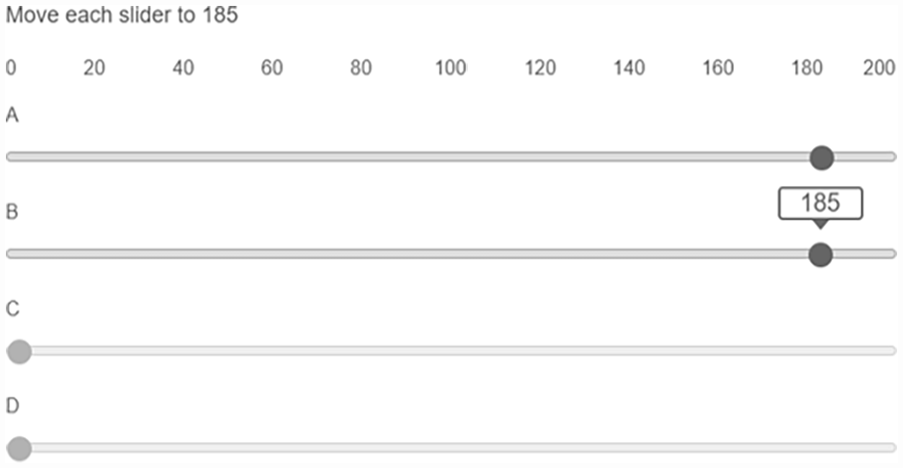
Schematic representation of the slider task used in the experiment.
Measurement Items
The primary dependent variable in focus was offsetting behavior. This was measured as a binary variable, coded as 1 for undertaking the task and purchasing an offset and 0 if the participant chose to collect their earnings from the task or if they chose to not engage in the task that would earn them an offset. Since it is clear from the task introduction (Appendix A2) that the aim of the task is to earn money toward a VCO, participants choosing to skip the task (thus deciding not to offset upfront) can be considered together with the participants who did the task and chose not to offset thereafter.
To gage stated preferences, we included attitudes toward VCOs as a second outcome variable measured in the experiment. The construct was measured through three statements on a 6-point slider scale, adapted from Choi and Ritchie (2014), as shown in the table in Appendix A3. Cronbach’s alpha was .784, which exceeds the threshold of .70 recommended in the literature (Hair et al., 1998), indicating sufficient reliability and internal consistency of the measurement scale.
A number of other factors may impact the decision on whether or not to purchase a VCO and were included as control variables in our study. Where more statements were used to represent one variable, we conducted scale reliability analysis. Cronbach’s alpha improved with the removal of item “World at peace” from the altruistic value orientations scale (+.005), the removal of “Wealth” from egoistic value orientation (+.006), and the removal of “Accept higher unemployment” from the environment-economy trade off (+.033). The items were removed from their respective constructs to optimize construct reliability. For all variables used in the analysis Cronbach’s alpha exceeded the threshold of .7. Finally, two pairs of variables were combined for the final model in order to reduce the dimensionality of the data. A principal component analysis showed green daily behavior and green identity to load strongly together, as did trust in VCO projects and belief in their output efficacy.
Data Collection
The study was conducted in two stages: a mixed-methods pre-testing stage and a quantitative on-line experiment. All data were collected between October 2021 and January 2022.
Stage 1: Pre-testing
A focus group was first conducted on six participants enrolled in an international tourism master program. The focus group protocol included open-ended questions on the participants’ experiences with voluntary carbon offsetting and reasons for purchase or lack thereof. They were also walked through the draft experimental design to verify the constructs, and ensure clarity and understanding of each question. The protocol consisted of a manipulation check to confirm correct interpretation of the loss and gain framings of the VCO description. Following the focus group discussion, the loss-framed description was amended slightly.
The quantitative phase of the pre-test comprised a screening survey and pilot test, which were both prepared on Qualtrics, an online survey tool, and run on Prolific. Prolific (n.d.) is an online platform for recruitment and payment of participants for academic research. Compared to MTurk and CrowdFlower, two alternative online research platforms, Prolific participants have been found to be more diverse, have better response rates and, most importantly, produce higher data quality (Peer et al., 2017). The survey distribution tools ensured that both the participation in the study and the remuneration were completely anonymous, thus minimizing risk of social desirability bias.
The aim of the screening survey was to identify individuals who have taken and booked a flight for leisure since 2015. This was a pre-requisite for participation in the experiment since people may feel less personal responsibility for a polluting activity if it was not their choice to engage in it (Schwirplies et al., 2017), if they were not the ones who paid for it or if it took place long ago. Due to the nuanced differences in the frames, participants were also required to be native English speakers.
A pilot test was run on 60 individuals, divided randomly and evenly into the loss treatment group, the gain treatment group and the control group. The aim was to verify the intended frame manipulation and test the reliability of the constructs. Since it was important that the frames are correctly understood by the respondents, we followed the description with a manipulation check. The manipulation check asked the participants in the loss and gain treatment groups to indicate whether they think the description emphasized what will be gained/improved from purchasing a VCO, and whether they think it emphasized what will be lost/worsened, both on a 5-point Likert scale from “strongly disagree” to “strongly agree.” An independent samples t-test was used to compare their responses. In line with the manipulation’s intentions, the gain frame was perceived to focus on gains (not losses) to the environment from purchasing an offset (Mgain4.4, Mloss2.5, p < .01) and the loss frame was interpreted as highlighting the losses to the environment (Mgain1.65, Mloss4.3, p < .01), as shown in Table 2. This confirms effective manipulation of the messages.
Manipulation Check Results.
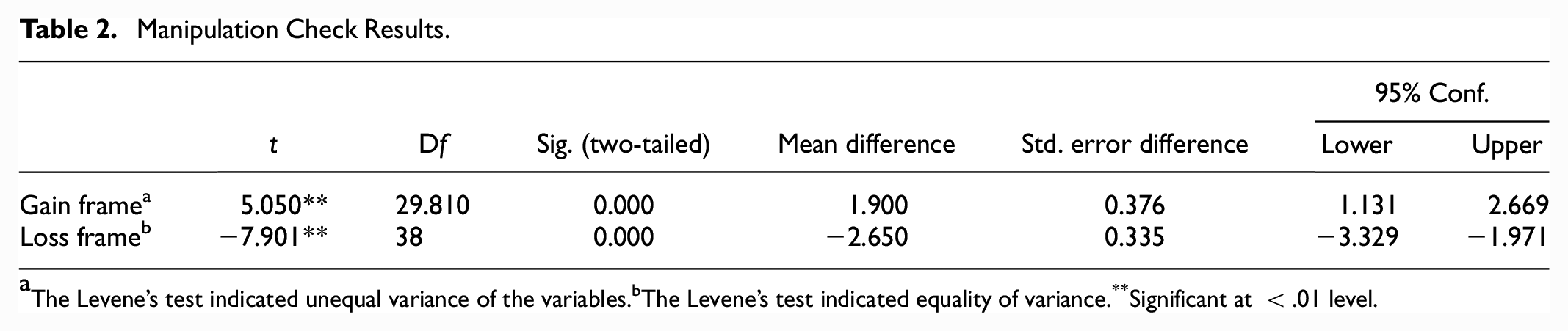
The Levene’s test indicated unequal variance of the variables.
The Levene’s test indicated equality of variance.
Significant at <.01 level.
Stage 2: Main Experiment
A total of 465 subjects participated in the experiment. They were randomly allocated to the loss treatment, gain treatment, and control, each with a sample size of n = 155.
Data Analysis
The data were analyzed in Stata 16.0 and SPSS 26.0 for Windows. A linear regression on attitude was first run to establish a potential indirect channel of influence of the treatment on behavior through attitude. Since neither the gain nor the loss frame had a statistically significant effect on attitudes (the output of this analysis is provided in the Appendix), a path analysis was not necessary and a logistic regression considered more appropriate. To test the effect of framing on behavior, we ran the following univariate and multivariate logistic regression models:

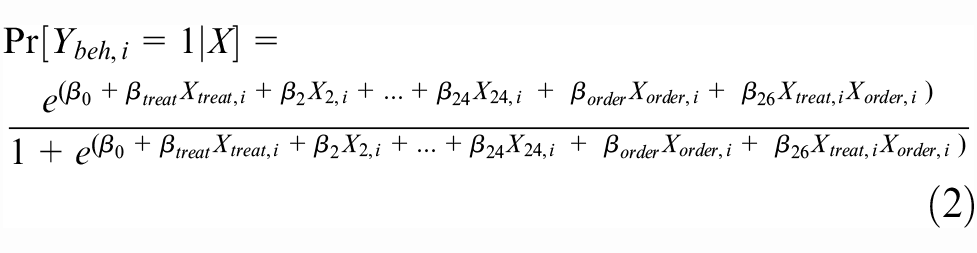
Following the univariate regression, we ran a multivariate regression with all 26 control variables (Equation 2) as well as a number of permutations in order to identify the model with the best fit and explanatory meaning. The dependent variable in this model is the probability that Ybeh (behavior, i.e., the allocation of task earnings to a voluntary carbon offset), assumes a value of 1. Variables X3 to X25 represent the control variables and β0 to β26 the corresponding parameters to be estimated. β26 represents the interaction effect between survey order (X25) and treatment, included to ensure survey order randomization was effective in reducing common method bias.
Before running the analysis, we sought to verify whether the main logistic regression assumptions were met. We tested for linear independence between the explanatory variables by calculating the Variance inflation factor (VIF). All final predictors for the model have a VIF value below the conservative threshold of 2.5 (Johnston et al., 2017), indicating adequate independence between the variables (table provided in the Appendix).
Results
Sample Characteristics
The sample characteristics are presented in Table 3. Distributing the experiment through the Prolific research platform produced a good split between different groups for all socio-demographic characteristics. To verify that the randomization process was successful in allocating individuals from different socio-demographic groups to the loss treatment, gain treatment and control, we ran a chi-square test of independence, shown in the far right column in Table 3. The χ2 significance values all exceeded 0.1, indicating that randomization was ensured.
Experiment Participants’ Demographic Profile by Treatment Group.
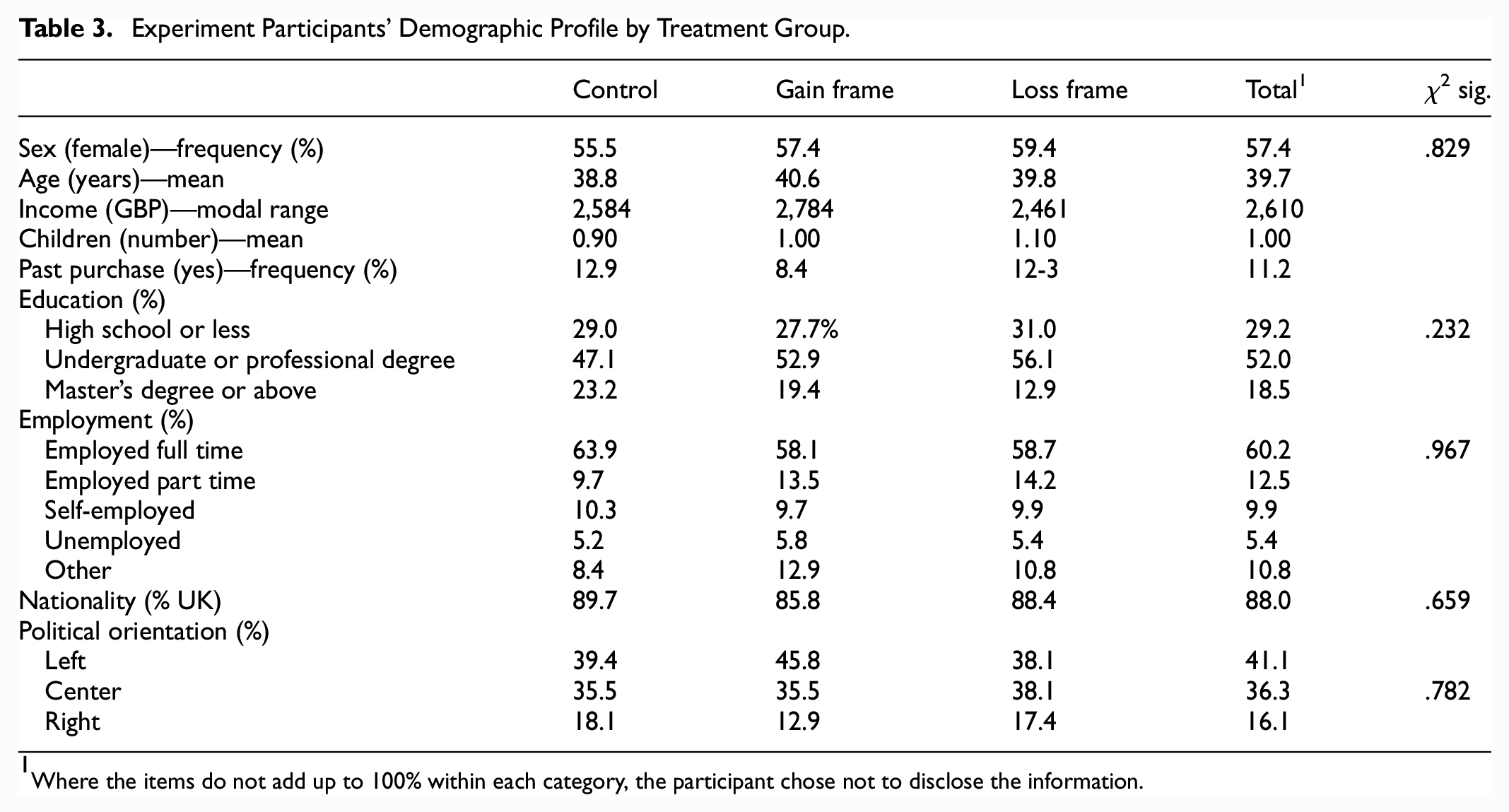
Where the items do not add up to 100% within each category, the participant chose not to disclose the information.
Descriptive Statistics
In total, 179 participants (39%) allocated their task earnings toward voluntary carbon offsetting. Of the remaining 286 participants, 74 (26%) chose not to do the real effort task and 212 (74%) carried out the task but decided to collect their earnings instead. Almost all of the respondents who engaged in the task (391 out of 465) completed all 10 sets of sliders. As such, rather than effort exerted reflecting different degrees of willingness to contribute (with corresponding different earnings and therewith potential VCO payment), the intention variable became de-facto binary.
Treatment Effect on Behavior
In addition to the full model (Equation 2; output provided in the Appendix), we ran a number of modified versions. The reduced-size model that is theoretically meaningful and at the same time has the highest relative level of fit in terms of the Akaike information criterion is presented in Table 4. The first two columns show the results of the analysis for the entire sample, with the second column including interaction effects between survey order and treatment. The results show that neither the loss (β = .125, z = 0.50) nor the gain (β = −.205, z = −0.80) frame had a statistically significant main effect on the likelihood of offsetting within the experiment.
Treatment Effect on Behavior.
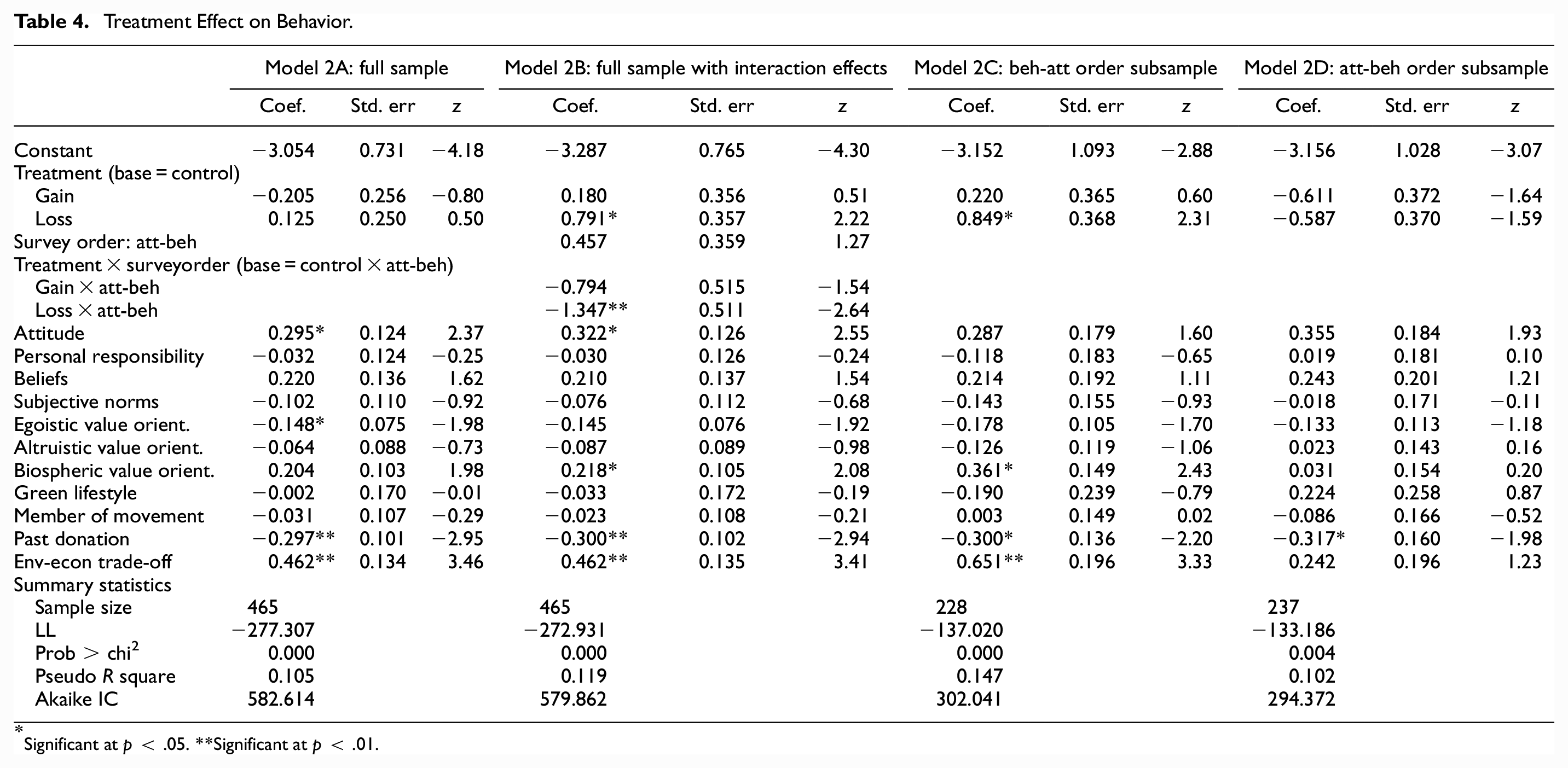
Significant at p < .05. **Significant at p < .01.
There is, however, a statistically significant interaction effect between survey order and the loss frame treatment at the 0.05 level (column 2 and Figure 2). In the survey order, in which the real effort task and subsequent decision on behavior immediately followed the framed description and preceded the questions on attitudes, the loss frame had the predicted positive effect on behavior at the 5% significance level (β = .791, z = 2.22). Neither the loss nor the gain framed messages, when compared to the no-frame baseline, had a statistically significant effect in the survey order, in which questions on attitude preceded the behavior decision. By extension, within the loss treatment group, the attitude-then-behavior survey order was associated with a lower propensity to offset than the behavior-then-attitude order at the 1% significance level (β = −1.347, z = −2.640). To make this clearer, a regression analysis of subsamples according to survey order was also run (columns 3 and 4 of Table 4).
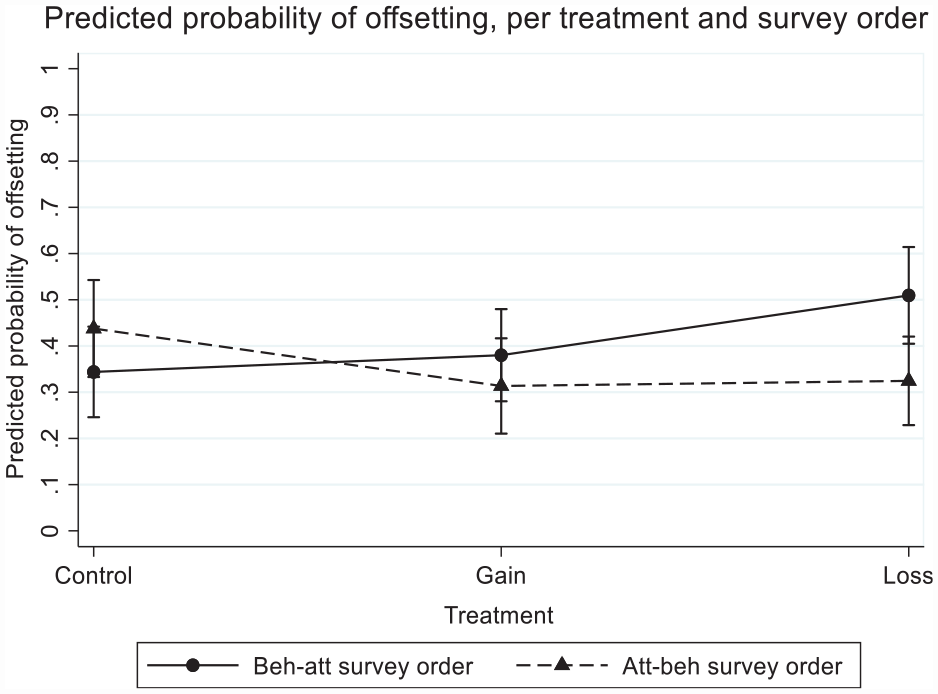
Predicted probability of offsetting (with 95% confidence intervals) by experimental condition and survey order.
Hypothesis 1 is thus only partially supported: loss framing was effective in the behavior-then-attitude survey order, but not in the attitude-first survey order.
Three additional variables influenced the offsetting decision: biospheric value orientation (β = .218; z = 2.08), past donation to environmental causes (β = −.300; z = −2.94), and one’s position on the environment-economy trade-off (β = .462; z = 3.41), the first at the 5% level and the latter two at the 1% significance level.
Behavior-specific beliefs and subjective norms, an individual’s involvement in environmental movement and his or her green lifestyle had no statistically significant effects on action; neither did controls for Covid-19 impacts on travel, frequency of flying and past experience or familiarity with VCOs (see table in Appendix A6). Finally, behavior did not differ significantly across socio-demographic characteristics of gender, age, income, education, employment, political orientation, and family size.
As a robustness check, we ran the same models on only the 391 participants who carried out the task. The results, shown in Appendix A7 and Appendix A8, confirm that the loss frame remains statistically significant in the behavior-first survey order.
Relationship Between Stated Preferences and Behavior
Attitude toward voluntary carbon offsetting had a statistically significant effect on behavior: for each additional 1-point increase in attitude (on a 6-point Likert scale), the odds of purchasing an offset increased by 38% (p < .011). Yet, transforming attitude into a binary variable (indicating a value between 1 and 3 for the question “For me to pay for voluntary offsets of my flights would be” represents negative attitude and indicating a value between 4 and 6 represents positive attitude) exposes a significant gap between positive attitude and corresponding behavior. A proportion analysis with confidence intervals (Figure 3) shows that only 46.6% of participants who expressed a positive attitude toward voluntary carbon offsetting chose to purchase a VCO within the study. Of those, 16% had offset their flight or other polluting activity in the past and 84% had not (yet) done so. Looking at the confidence interval, the analysis shows that between 40.4% and 52.8% of the population with a positive attitude toward VCO are predicted to not purchase a VCO (at the 95% confidence level), implying an attitude-behavior gap above 40%. Attitude is thus positively associated with behavior but does not predict it perfectly, providing support for Hypothesis 2a.
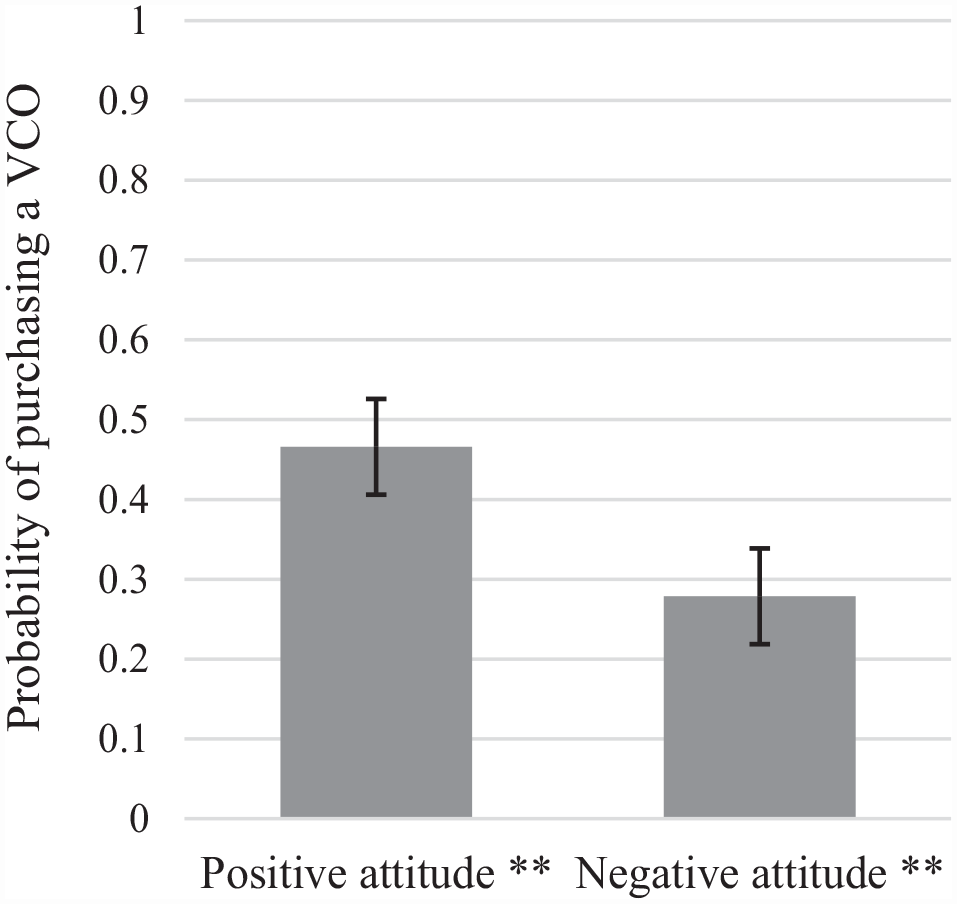
Predicted probability of purchasing a VCO (with 95% confidence intervals) for participants with a positive and negative attitude toward VCOs.
At the same time, 28% of respondents with an overwhelmingly negative attitude toward offsetting chose to purchase a VCO within the experiment. The predicted probability of the statistical population with a negative attitude toward VCOs purchasing an offset ranges between 21.7% and 34.1% (at the 95% confidence level). This probability exceeds 20% for all experimental conditions and survey orders (Figure 4) and is statistically significant. The results imply that a positive attitude may not be a prerequisite for pro-environmental behavior.
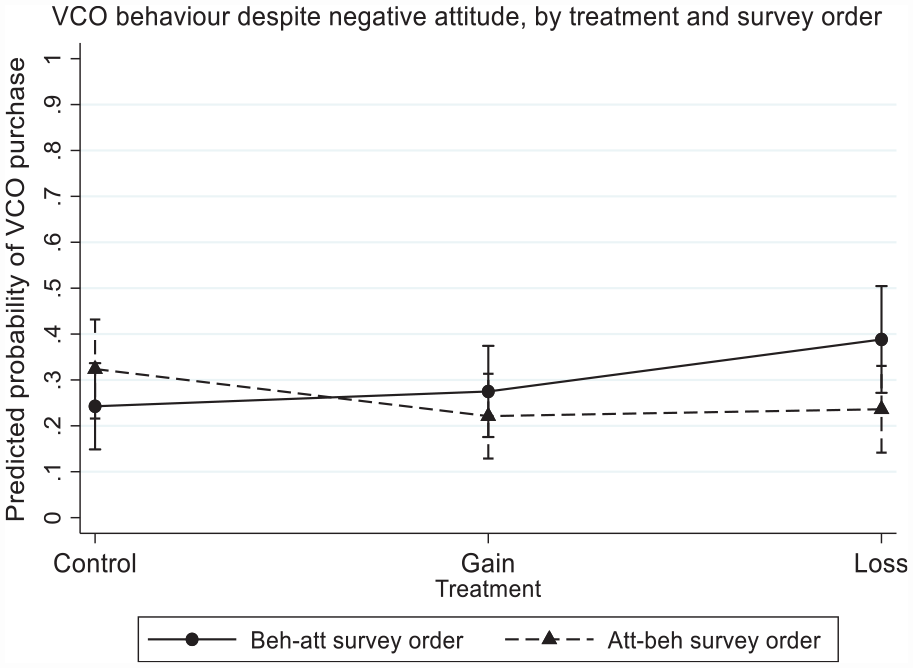
Predicted probability of offsetting (with 95% confidence intervals) among individuals with a negative attitude by experimental condition and survey order.
Turning to intention, 54.2% of participants who expressed a positive intention to allocate the task earnings to an offset provider chose not to do so. A proportions analysis with confidence intervals (Figure 5) predicts that between 49.3% and 59.2% of individuals with an intention to purchase a VCO will not do so (at least not the next time they are given this opportunity), confirming the presence of a gap between intention to offset and offsetting behavior. A regression of intention on behavior was not possible due to complete separation, since a “no” on intention would by design lead to “no” on behavior. Hypothesis 2b, which postulates that a positive intention will not be reflected in commensurate behavior, is thus supported.
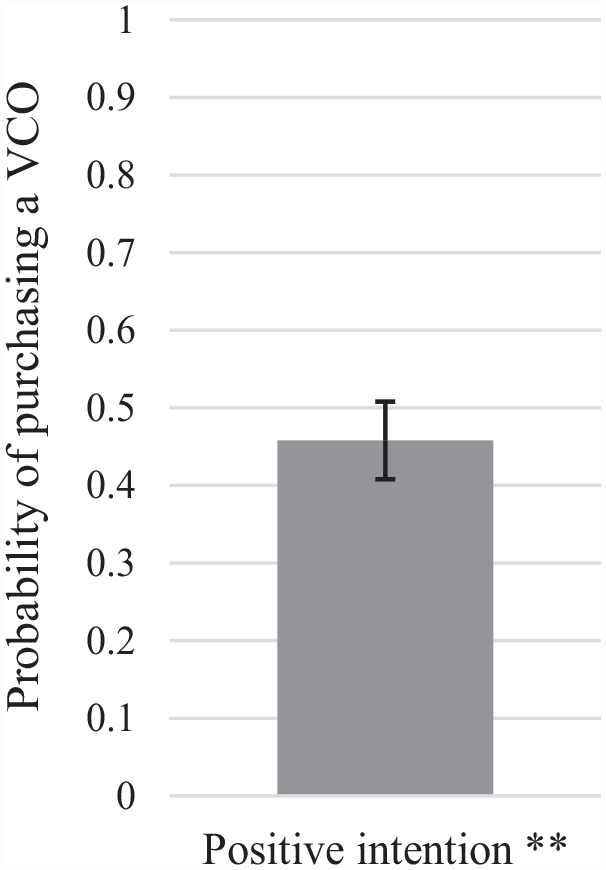
Predicted probability of purchasing a VCO (with 95% confidence intervals) for participants who expressed positive behavioral intention.
Taken together, these results reveal a 42% attitude-behavior gap and a 46% intention-behavior gap.
A post-decision question was included to better understand the participants’ own subjective reasoning for purchasing an offset (Table 5). The majority of participants chose to offset for moral reasons (74%) or because it gives them a warm glow (64%). For the individuals with an overwhelmingly negative attitude toward VCOs, the warm glow was the most common reason provided, followed by moral reasons (“It is the right thing to do”).
Reasons for Offsetting.
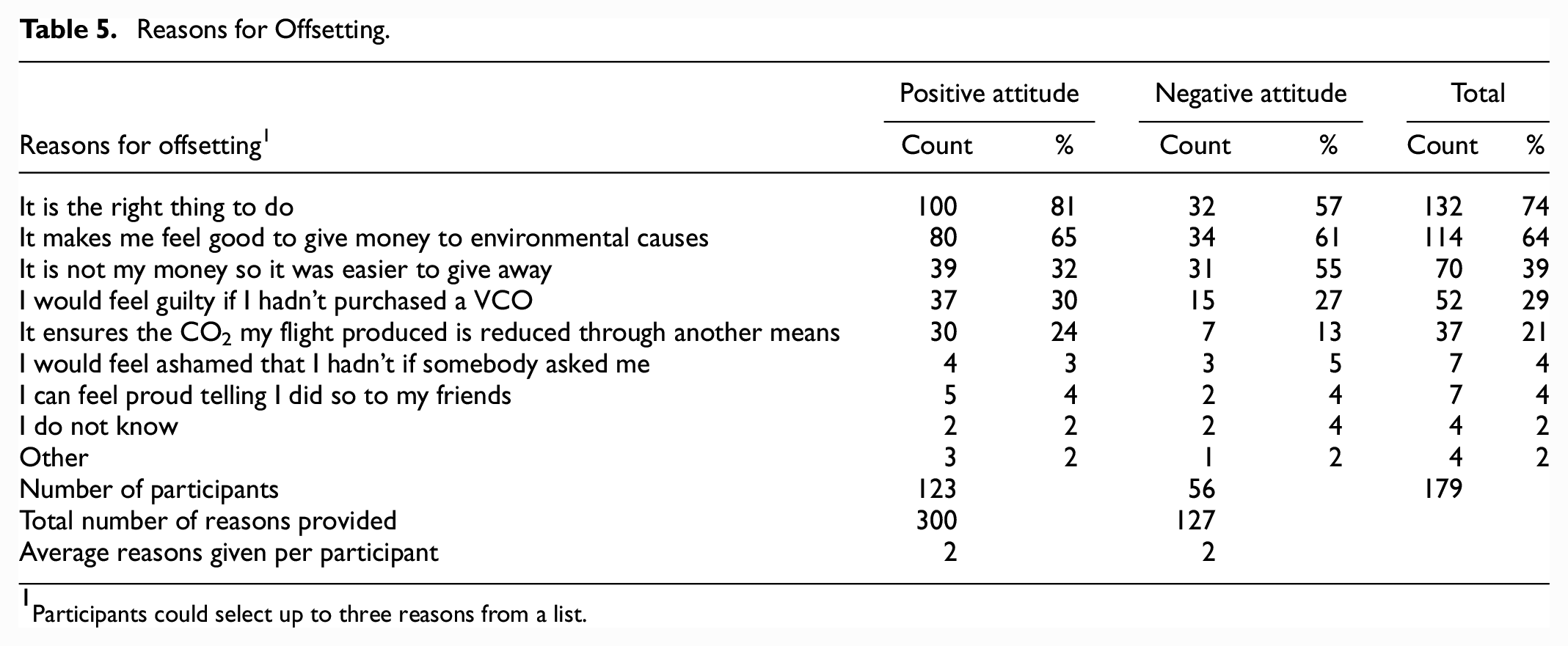
Participants could select up to three reasons from a list.
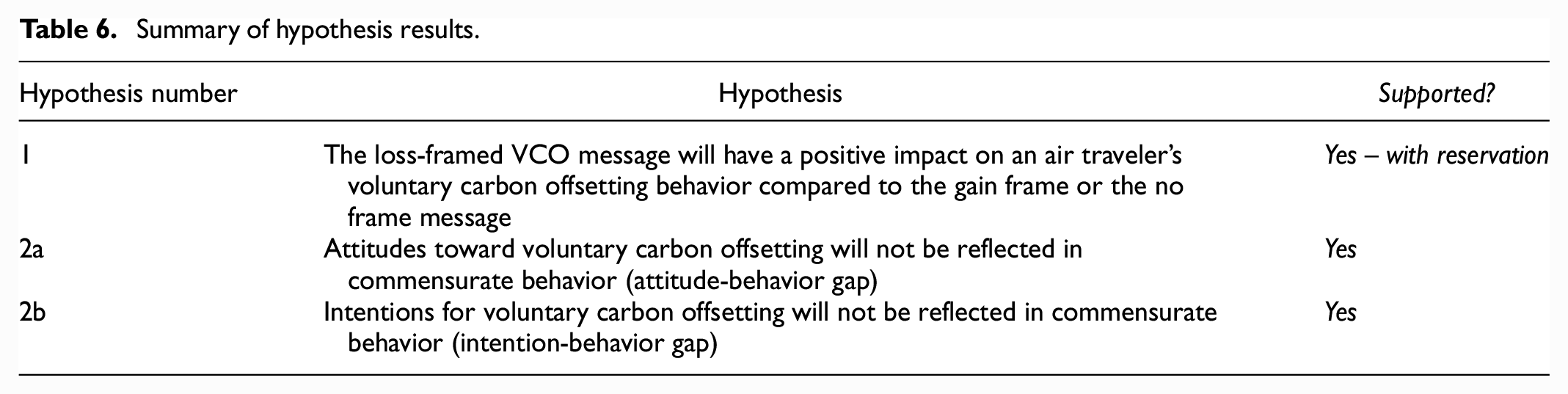
Table 6 below provides a summary of the hypotheses results.
Summary of hypothesis results.
Discussion
Our results indicate that the loss frame had the theory-predicted statistically significant effect only when the framed message immediately preceded the behavior; the statistical significance of the effect disappeared once questions on attitude toward VCOs were moved between the framed VCO description and the offsetting decision. One explanation for the ambiguity of the results in contrast to those of other framing studies—90% of which found either loss or gain framed messages to effectively induce pro-environmental behavior (Ropret Homar & Knežević Cvelbar, 2021)—lies in the pecuniary nature of the cost of behavior. Indeed, in none of the studies reviewed did the participants suffer a financial loss from engaging in the behavior. By contrast, the study reported on here asked the participants to make an economic decision that was associated with a loss in earnings, similar to how they would in the real world. Quite discouragingly (though not surprisingly), these results suggest that green nudging may be less effective in encouraging green behavior if it carries a financial sacrifice, rather than effort, time or other inconvenience.
Nevertheless, for the behavior-then-attitude survey order, a loss framed environmental message did have a statistically significant effect at the 5% level. To explore why this may be the case, we turn to dual process theories of the mind. The importance of survey order for the significance of loss framing suggests that the framing effect may have taken place as a “System 1” nudge, influencing a decision-making process that is automatic, subconscious and effortless (Wason & Evans, 1974). By contrast, by forcing the subject to reflect on their opinion of voluntary carbon offsets, questions on attitudes and beliefs transformed the decision on purchasing a carbon offset from a “System 1” to a “System 2” (i.e., a deliberative and conscious) process, thereby diminishing the effect of loss framing. Supporting this interpretation is the fact that in the control group (without the framing nudge), it was the attitude-then-behavior survey order, which demanded more deliberate reasoning, that was associated with a higher likelihood of offsetting. Using response time data, Lohse et al. (2017) reach similar conclusions upon finding that decisions that were made slower in their experiment were more likely to be associated with purchasing an offset.
An alternative interpretation sees the reason for the different effects of the two survey orders to lie in the effort and time taken to participate in the study before the decision on behavior had to be taken. Namely, where the behavior decision followed questions on attitudes, participants may have felt they deserve the remuneration more since they spent more time on the survey up to that point.
This study provided further support for the attitude-behavior gap reported for pro-environmental behavior in tourism (Juvan & Dolnicar, 2014) and more generally (e.g., Kollmuss & Agyeman, 2002). In support of Hypothesis 2a, less than half of the participants that expressed a positive attitude toward VCOs went on to purchase an offset within the experiment. One reason for this could be that these subjects had already purchased a VCO in the past, though this explains at most 16% of the gap. Similarly, 54% of respondents who indicated an intention to allocate the proceeds from the task to a VCO changed their minds once given the opportunity to collect their earnings instead. A number of justifications for the attitude-behavior and intention-behavior gaps proposed in the environmental psychology literature are not tenable here. In terms of measurement (Sheeran, 2002), both the attitude and behavior questions pertained to voluntary carbon offsetting specifically (rather than climate change, for instance). That said, the decision for intention in this study was not semantically identical to the decision on behavior. Namely, it could not capture individuals who would have purchased a voluntary carbon offset within the study but would have preferred to do so with their own money (or those earned from participating in the study itself) rather than engage in a task, which they may consider time-consuming or tedious. Notwithstanding, these individuals would not have changed the intention-behavior gap, as measured in terms of number of people deviating from their expressed offsetting intention. Other barriers to behavior, such as absence of infrastructure to carry out an action (Kollmuss & Agyeman, 2002), scarce financial resources, lack of knowledge or ability for execution, and absence of opportunity (Sheeran, 2002), can also be excluded in this setting.
A further explanation for the discrepancy is offered by the low-cost hypothesis of environmental behavior, which postulates that the strength of the effect of environmental concern on behavior increases with decreasing costs of that behavior (Diekmann & Preisendörfer, 2003). In other words, an individual with pro-environmental attitudes will undertake the corresponding behavior when the costs of doing so—in terms of either money, time or effort—are sufficiently low. This is because when costs are low, explain Diekmann and Preisendörfer (2003), the utility of carrying out the pro-environmental behavior—in particular from complying with the norm or reducing own cognitive dissonance—may compensate for its cost relative to the alternative. For the study reported on here this would mean that low or no cost of voluntary carbon offsetting should be associated with higher congruency between attitudes toward VCOs and the offsetting decision, whilst a high cost of offsetting should lead to a greater gap between the two variables. Since the pro-environmental decision in this study was associated with a cost, any environmental concern in the form of positive VCO attitudes may have been less likely to lead to behavior. Whilst the behavior cost of £1.00 is low compared to the price of offsetting in the real world, the very existence of a cost represents a stark contrast with other loss framing studies where there is no cost to the participant at all (or, indeed, there is a financial gain). It has also been shown that the difference between £0 and £1 is psychologically greater than between other amounts with an equal difference of £1: in the area of product demand, an experiment found the difference between $ 0 and $ 0.1 to be much more impactful than $ 0.14 and $ 0.15 (Shampanier et al., 2007), whilst studies in probability show people’s perception of zero probability (as well as certainty) to be substantially different to those of small probabilities (e.g., Kahneman & Tversky, 1979).
Another conscious reason—one which was not captured in the questionnaire—could be an absence of trust in the experimenter. Finally, insofar as expressing a positive attitude toward offsetting improves utility through positive self-image, indicating a positive attitude (or even intention) but not engaging in behavior may be the rational decision. In other words, an attitude-behavior gap is not a “theoretical anomaly.” It does, however, suggest proceeding with caution when inferring plausible behavior from expressed attitudes and intentions.
The results also showed that 28% of participants with an overwhelmingly negative attitude toward VCOs chose to offset nonetheless. One explanation can be drawn from studies on affect. The loss frame could induce feelings of guilt or shame among the participants (e.g., Amatulli et al., 2019), leading to a higher propensity to offset without a change in attitudes. Asked about their (subjective) reasons for choosing to offset, however, participants with a negative attitude cited emotional consequences of not doing so only a third of the time (27% guilt and 5% shame).
It can alternatively be contested that behavior is a result of heuristics in judgment and decision making, justifying an absence of conformity with stated preferences. Dual process theories of the mind and the associated empirical evidence evoke the possibility that, everything else equal, individuals make different environmentally-relevant decisions simply because they relied on intuition (System 1) or reflection (System 2) (Lohse et al., 2017). System 1 is also characterized by cognitive biases to a greater extent than System 2. This can lead to a gap between the behavior and the outcome-relevant preferences.
Conclusion
Building on existing VCO literature, this study examined real behavior responses to a behaviorally-informed intervention. By also measuring attitudes and intention, we were able to confirm the existence of a gap between the two stated preference variables and behavior. In the study’s controlled environment, a number of explanations offered in the literature can be excluded; instead, we propose our own, borrowing both from utility theory and behavioral economics. We also show the importance of the researcher’s decision on measurement instruments and warn against drawing definitive practical implications from stated-preference results alone.
This study found loss framing to have a statistically significant effect on pro-environmental behavior when attitude is not (yet) asked after. To public and private stakeholders in tourism, the findings on loss framing effects suggest introducing or manipulating an existing description so it presents the negative outcomes of not carrying out a pro-environmental action. They would also be advised to place the framed description temporarily and/or physically next to the desired behavior, rather than as part of an information campaign. For instance, travel agents may decide to rephrase descriptions of VCOs that accompany the option to purchase them directly at the point of reservation of air travel or other public transport tickets online. Non-governmental organizations selling VCOs could do the same. Elsewhere in the domain of pro-environmental behavior in tourism, this may mean placing loss-framed environmental appeals on recycling bins to encourage recycling, in hotel bathrooms to encourage reductions in water use or next to air conditioner displays to encourage more frugal energy use. Loss framing may by contrast be less effective when used in education or information campaigns.
This study makes a methodological contribution in bringing in good practice from experimental economics to tourism studies. To the extent of our knowledge, real effort tasks have not yet been used in tourism studies and represent a useful method for generating income within the experiment that the participant can then allocate as he would in the real world.
Limitations
Methodological limitations were unavoidable. The trade-off between how well an experimental setting reflects reality and how much control it allows us as experimenters meant that subjects, conscious of their participation in an experiment, may have made different decisions than they would have in the real world. In particular, even though we did filter-in individuals who flew for leisure, we could not control the frame of mind or point of reference they had when they were doing the experiment. Rotaris et al. (2020), for instance, prompted their subjects to think about their last flight when doing the survey, though this too has limited scope of influence. This lower external validity of this method compared to field experiments could mean that the willingness to offset was higher within the experiment than it would have been in the real world.
The study was part of academic research and was presented to the participants as such. A private airline using loss framing to encourage passengers to purchase an offset may be interpreted as greenwashing and met with a more negative reaction. Voluntary carbon offsetting is also accompanied by the same risks as other nudged green behavior. One of these risks is moral licensing, whereby undertaking a pro-environmental action—say, purchasing a VCO—is used as self-justification for engaging in more environmentally-damaging activity later on (Merritt et al., 2010). This can unfortunately, however, be neither measured nor influenced by the experiment.
Suggestions for Further Research
We urge scholars researching pro-environmental decision-making in different settings to continue measuring real behavior and to be cautious in drawing conclusions from attitude and intention measures. The numerous studies on VCOs are a treasure chest for understanding individual preferences, in particular as pertaining to the project attributes they would be happy to finance and how much they would hypothetically be willing to pay. We suggest building on this research to examine how actual payment varies across project- and message characteristics. We would finally propose to bring VCO experiments to the field: partnerships with an airline, travel agent, or other transport company to experiment with differently framed VCO messages on the reservation website would bring a refreshing dose of realism to our collective understanding of VCO take-up.
Footnotes
Appendix
Appendix A2: Task introduction
On the next page is an
(followed by task description and instructions)
Acknowledgements
We would like to thank Bettina Grün, Leonhard Lades and Thomas Post for their valuable comments and suggestions in the process of preparing this article. Thank you also to the three anonymous reviewers who helped us improve the quality of the manuscript.
Declaration of Conflicting Interests
The author(s) declared no potential conflicts of interest with respect to the research, authorship, and/or publication of this article.
Funding
The author(s) disclosed receipt of the following financial support for the research, authorship, and/or publication of this article: This research was financially supported by the Slovenian Research Agency ( ) within the research program P5-0441, research program P5-0410 and research project JF-1783. The funders had no role in the study design, data collection and analysis, decision to publish, or preparation of the manuscript.