




Abstract
We leverage anthropomorphism—attributing human-like characteristics (e.g., speech and emotions) to non-human objects (i.e., towels)—to communicate appeals from various theoretical perspectives to prompt hotel guests to reuse their towels. In survey experiments, we directly compare interventions based on competing theoretical constructs such as social norms, environmental beliefs, enjoyment, and perceived effort, with and without anthropomorphism. Results from two survey experiments show that anthropomorphizing towels made people perceive them as more human-like and experience higher levels of self-transcendent emotions (e.g., empathy) toward the towel. Anthropomorphism combined with a message about the effort of reusing a towel significantly increased hand towel reuse in a field experiment without affecting guest satisfaction. However, the effect was limited to hand towels. This cost-effective intervention can be readily implemented to enhance sustainability and reduce laundry costs. Nonetheless, stronger interventions, such as default changes, may be needed to achieve a larger impact on towel reuse overall.
Introduction
Water is a key resource that is central to tourism (Hadjikakou et al., 2013), with an average of 1,500 L used per room per day. This is significantly more than local people at most destinations use (Sustainable Hospitality Alliance, 2018). The tourism industry’s rapid growth has led to the depletion of groundwater, salinization, subsidence, and inefficient water management, leading to social tensions within tourism destinations (Tortella & Tirado, 2011). Managing water consumption has received increasing consideration (S. N. Gosling & Arnell, 2016), with research focusing, for instance, on enticing guests to reuse their towels (e.g., Baca-Motes et al., 2013; Goldstein et al., 2008, 2011).
Towel reuse can be considered a pro-environmental behavior—a type of behavior that minimizes the negative impact of an individual’s actions on the environment (Kollmuss & Agyeman, 2010). Other pro-environmental behaviors in the tourism context include waiving room cleans, not running heating or cooling when it is not needed and not wasting food at an all-you-can-eat breakfast buffet (Demeter, Fechner, & Dolnicar, 2023). Beyond water use, laundering towels is also energy-intensive (Máša et al., 2013) and requires detergents (Giagnorio et al., 2017). Washing 1 kg of laundry in a modern machine uses approximately 13 L of water, 0.2 kWh of heat energy and 0.12 kWh of electrical energy. A further 1.5 kWh of heat energy and 0.1 kWh of electrical energy would be necessary to dry 1 kg (∼2 bath towels) of towels (Máša et al., 2013). Further, non-renewable chemicals present in laundry detergents are a significant source of pollution in waterways, with billions of tons of such chemicals being discharged into these water bodies annually (Bajpai & Tyagi, 2007).
Encouraging towel reuse is not only beneficial for the environment, but it is cost-effective for hotels as it reduces water, energy, and labor costs while also prolonging the lifespan of towels. Hotels spend between $2.15 USD (Goldstein, 2009) and $11.30 USD (Griffin, 2001) per room per day on towel replacement, adjusted for 2023 inflation rates. Towel and linen reuse programs can save a hotel with 150 rooms up to 143 gallons of detergent and 210,000 gallons of water each year (Dimara et al., 2017; Green Lodging Calculator, 2016). Therefore, it is advantageous for hotels to encourage guests to reuse towels.
Although typical strategies to trigger pro-environmental behaviors such as towel reuse include messages (Nisa et al., 2017), alternative approaches—such as structural changes and gamification—have emerged as the most effective triggers of pro-environmental behavior change (Greene, Demeter, & Dolnicar, 2024). They are, however, more labor-intensive or can require major disruptions to procedures, which is why they are less commonly adopted. A meta-analysis including towel reuse field studies (Nisa et al., 2017) found that the majority of interventions communicate environmental information (e.g., “HELP SAVE THE ENVIRONMENT. You can show your respect for nature by reusing your towels during your stay,”Bohner & Schlüter, 2014) or social norms (e.g., “the majority of guests reuse their towels,”Goldstein et al., 2008) via messages. Such interventions can be referred to as theory-based messaging approaches, as they include messages grounded in established psychological frameworks. However, meta-analyses by Greene, Demeter, and Dolnicar (2024) and Nisa et al. (2017) found that environmental and social norms messages have mixed effects on behavior, with the average effect being small.
We identified two gaps in the literature on towel-reuse interventions. First, as shown in the meta-analysis by Nisa et al. (2017), messages were limited to only specific theoretical perspectives (i.e., strengthening environmental and normative beliefs). Messages from more diverse theoretical perspectives might prove more effective than the dominant messaging approaches. Hence, in this study, we adopt theory-based messaging by leveraging diverse established psychological theories and perspectives. These perspectives help explain how and why certain messages might influence behavior. We test messages from four different perspectives, including both dominant and non-dominant theoretical approaches. From the dominant perspectives, we develop messages from (1) the environmental perspective, which posits that values and environmental beliefs drive pro-environmental behaviors, and (2) the identity and norm perspective, by creating messages aimed at activating social norms and environmental identities, drawing on research by van der Werff et al. (2013) and Goldstein et al. (2008). From the non-dominant approaches, we design messages from the hedonic perspective to make towel reuse more enjoyable (Cabanac, 1992; Cabanac & Bonniot-Cabanac, 2007; Kahneman et al., 1999) and from the path of least resistance perspective (e.g., Thaler & Sunstein, 2003), by presenting towel reuse as an effortless or habitual action.
However, irrespective of the perspective from which an intervention is communicated, it might be overlooked by guests as a small sign in the bathroom might not draw their attention. Therefore, we leverage anthropomorphism—communicating the intervention message using an object with human-like characteristics and personality (Chan, 2012). Anthropomorphism has been shown to increase attention and engagement in marketing research (e.g., Ha et al., 2022). Additionally, people can become annoyed and defensive when asked to behave in environmentally friendly ways (Sparks et al., 2010). Anthropomorphized messages might decrease negative reactions and increase positive ones because people react differently to products they believe have human qualities (e.g., Aggarwal & McGill, 2007). People attribute emotive benefits to the humanized characteristics of the product, establishing an emotional connection similar to that with other humans (e.g., Aggarwal, 2004; Tam, 2013). In our study, we use an elephant towel named Terri with a human-like personality to explore whether anthropomorphism can improve the effectiveness of messaging strategies.
The second gap is that many interventions are not pre-tested in survey experiments to determine if they are able to successfully strengthen their target theoretical construct (e.g., perceived norms, anthropomorphic beliefs). Testing whether theoretical constructs are activated or strengthened is critical for developing effective behavior change interventions (van Valkengoed et al., 2022). A combination of survey experimentation (to determine if and which theoretical constructs are strengthened) and field experimentation (measuring real behavior) can provide more detailed insights into the comparative effectiveness of different interventions, and the theoretical reasons for differences in effectiveness. Consequently, the overarching aim of this study is to develop alternative messaging-based strategies from diverse theoretical perspectives to prompt towel reuse in hotels and test their effectiveness in survey and field experiments.
Past Research
Anthropomorphism
Sometimes, people attribute human qualities to objects, such as soft toys (Veer, 2013) and cars (Waytz et al., 2010). The films Toy Story and Cars illustrate this concept of anthropomorphism well. Marketers have embraced anthropomorphism by making objects like coffee mugs and appliances appear human (e.g., Lombart & Louis, 2016). The personification of an object can take various forms: visual, verbal, or written. Written stimuli include naming the object (e.g., “Hello, my name is Charlie”; Shao et al., 2021) and making it speak (“I’m your car’s automated system. I see we are going to a shopping mall that’s approximately five miles away”; Waytz et al., 2014). Visual stimuli involve giving the object a face (e.g., a face on a reusable coffee cup; Han et al., 2019).
A recent meta-analysis found that in the tourism and hospitality context, most research is focused on technology anthropomorphism, with both product and brand anthropomorphism being understudied (A. Ding et al., 2022). However, in marketing and consumer psychology fields, a significant amount of research on the anthropomorphism of products and a broad range of objects has been conducted. For instance, research indicates that when people perceive objects or products as living entities, they are less inclined to replace them (Chandler & Schwarz, 2010). Therefore, anthropomorphizing a hotel towel might make people less willing to replace it. Further, visual personification in advertising, by showing a non-human object engaging in human behavior, can trigger anthropomorphism and positive reactions toward the advertised product (e.g., Aggarwal & McGill, 2007; Delbaere et al., 2011; Wang et al., 2020). This type of anthropomorphism can increase positive emotions and attitudes toward the brand.
In the sustainability context, the anthropomorphizing of products has been seen to prompt sustainable consumption under specific circumstances (Chen et al., 2021; Cooremans & Geuens, 2019; Han et al., 2019). Anthropomorphism also plays a role in consumer evaluations of sustainable products (e.g., Shirai, 2023). Specifically, anthropomorphizing sustainable products increases positive responses from consumers because they perceive the product to be more relevant to them (Shirai, 2023). Further, anthropomorphic messages can influence consumer sustainability behavior by eliciting empathy and a sense of responsibility (Ketron & Naletelich, 2019).
A recent systematic review (Williams et al., 2021) found that anthropomorphism consistently correlates with pro-environmental variables (e.g., behavioral intentions). Researchers have also investigated the potential of anthropomorphism to elicit sustainable behavioral intentions experimentally (Chan, 2012). For example, anthropomorphizing nature as feminine can enhance connectedness to nature and pro-environmental behavioral intentions (Liu et al., 2019). Likewise, anthropomorphizing reusable coffee cups increased people’s intention to use a reusable cup (Han et al., 2019), and anthropomorphizing express packaging by giving it a cartoon shape increased people’s willingness to recycle it (Z. Ding et al., 2021). Regarding towel reuse, Do et al. (2021) found that communicating a social norms message through Mr. Nature (i.e., an Earth with a happy face) increased towel reuse intentions.
We expand on the study by Do and colleagues by (1) anthropomorphizing the physical hotel towel (an object i.e., directly part of the behavior) as an elephant named Terri, (2) creating a diverse range of theoretical messages for Terri to communicate, and (3) testing the efficacy of anthropomorphism in the field on real towel reuse behavior.
Theoretical Underpinnings
Dolnicar (2020) suggested four distinct perspectives to prompt pro-environmental behavior among tourists: (1) the environmental concern perspective (Bamberg, 2003), (2) the identity and norm perspective (e.g., Goldstein et al., 2008; van der Werff et al., 2013) (3) the hedonic perspective (e.g., Cabanac, 1992; Cabanac & Bonniot-Cabanac, 2007; Kahneman et al., 1999), and (4) the path of least resistance (e.g., Thaler & Sunstein, 2003). We design messages that fit into each of these four perspectives.
Based on this classification, value-belief-norm theory (Stern, 2000)—which states that values, beliefs, and norms prompt pro-environmental behaviors—falls under the environmental concerns perspective. With values steady over time, and beliefs a prerequisite to norms, the two crucial constructs for behavior-change interventions are awareness of the negative environmental consequences of a behavior (awareness of consequences) and one’s perceived ability to take personal responsibility to reduce those consequences (ascription of responsibility). If true, merely educating people about the negative environmental impacts of their actions and suggesting ways they can contribute positively should (1) change their beliefs about the behavior and (2) prompt pro-environmental behavior. However, environmental messaging has not been very successful in prompting pro-environmental behavior (Demeter, Fechner, & Dolnicar, 2023; Greene, Demeter, & Dolnicar, 2024). Most standard environmental messaging does not efficiently capture these two specific beliefs and rarely tests whether the messages strengthen pro-environmental beliefs. We test messages designed specifically to align with both belief categories.
Interventions, in line with the identity perspective, could activate specific identities, including social or self-identities. Self-identity is defined “as the salient part of an actor’s self which relates to a particular behavior” (Conner & Armitage, 1998, p. 1444). In the context of pro-environmental behavior, a person’s self-identity can relate to specific pro-environmental behaviors (e.g., recycling) or pro-environmental behaviors in general (Vesely et al., 2021). van der Werff et al. (2013) found that activating an individual’s environmental self-identity increases pro-environmental choices by enhancing implicit motivation through a sense of moral obligation. The authors argue that interventions can avoid the need for incentives by leveraging the link between environmental self-identity and intrinsic motivation. In Van der Werff’s study, environmental self-identity was activated by reminding people of their past environmental actions. Hotel interventions could use a similar strategy with messages. Additionally, interventions can leverage social norms by highlighting typical behaviors of a reference group. Descriptive norm messages like “the majority of guests reuse their towels” have successfully increased towel reuse (Goldstein et al., 2008). However, Goldstein et al. (2008) did not test whether this message strengthened normative beliefs.
Theories founded in the hedonic perspective, such as theories of hedonic psychology (Kahneman et al., 1999) and self-determination theory (Deci & Ryan, 2012), posit that individual benefit (e.g., intrinsic or extrinsic motivation) prompts pro-environmental behaviors (Cone & Hayes, 1980). Benefits can be monetary rewards, prizes, or enjoyment derived from specific behaviors. Few towel-reuse studies have manipulated enjoyment. Incentivizing guests to reuse towels via donations to charity (indirect incentive) was ineffective (Mair & Bergin-Seers, 2010).
The last group of messages subscribes to the path of least resistance paradigm (Thaler & Sunstein, 2003), assuming many behaviors are automatic (e.g., Dual Process Theory) and that people are more likely to engage in behaviors requiring little effort or thought (Cymbal et al., 2020). Decreasing the effort associated with the target behavior (e.g., changing defaults) has proven effective at prompting pro-environmental tourist behavior (Greene, Demeter, & Dolnicar, 2024). Habit theory (Wood et al., 2002) aligns with this perspective; it posits that people are habitual and display behaviors automatically in response to a cue. Habit has only recently gained traction in tourism (e.g., MacInnes et al., 2022) and, according to a recent review, has not been manipulated to prompt pro-environmental tourist behavior in the field (Greene, Demeter, & Dolnicar, 2024).
Examples of habit, effort, and enjoyment messages can be found in a study that tested through survey experiments interventions to reduce food waste at buffets (Greene, Grad et al., 2024). These are as follows: “Breakfast buffets can overwhelm you with choice. Selecting your breakfast should not be an effort. (…)” (effort); “At home, you worked hard to establish your perfect breakfast habits. Keep up those good habits. (…)” (habit); “Some foods go well together- others don’t at all. Choose a breakfast combination you will enjoy” (enjoyment).
Overview of Present Study
In our research, we test messaging interventions informed by each of the discussed theoretical perspectives. Specifically, we will test messages falling under (1) the environmental concern perspective (Bamberg, 2003) which align with value-belief-norm theory (Stern, 2000) and address ascription of responsibility; awareness of consequences; and a combination of both; (2) the identity and norm perspective, leveraging self-identity (e.g., Conner & Armitage, 1998) and descriptive norms (similar to Goldstein et al., 2008); (3) the hedonic perspective (e.g., Cabanac, 1992; Cabanac & Bonniot-Cabanac, 2007; Cone & Hayes, 1980; Kahneman et al., 1999) leveraging enjoyment; and (4) the path of least resistance (Thaler & Sunstein, 2003) leveraging effort and habit.
This article consists of three parts: two survey experiments, and one field experiment. Study 1 (survey experiment) tests how effectively each message strengthens the targeted theoretical construct (e.g., whether the environmental beliefs message strengthens environmental beliefs; see Figure 1 for all specific theoretical constructs) and if each individual message triggers positive or negative reactions (pre-testing protocol; Zinn et al., 2024). In Study 2 (survey experiment), we further investigate the underlying mechanisms of the anthropomorphism manipulation (i.e., empathy toward and connectedness with the anthropomorphized towel). In Study 3 (field experiment), we worked with two hotels, to assess the impact of two messages that appeared promising from the results of the first two studies on real towel reuse behavior.
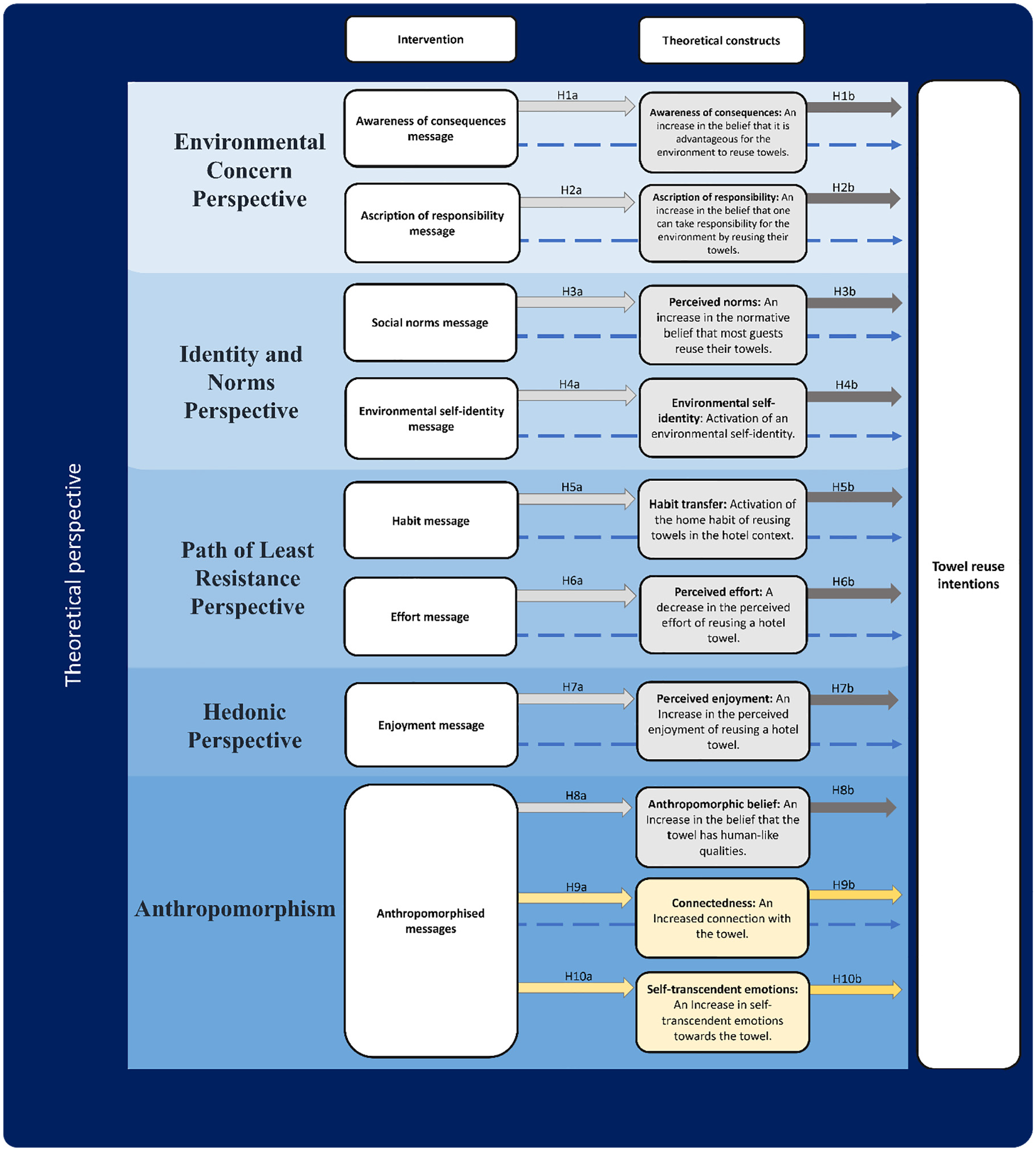
Conceptual model and hypotheses for Study 1 (in gray) and Study 2 (in yellow).
This group of studies makes key theoretical and practical contributions. We determine the comparative effectiveness of alternative theoretical approaches on prompting towel reuse behaviors/intentions and explain the differences in effectiveness by understanding which theoretical constructs are strengthened by each of the messages. This enables a much more detailed theoretical understanding of what drives behavior change among consumers in this context than previous studies—focused either on behavior only or on latent theoretical constructs only—have been able to deliver. Findings from our studies are of immediate practical benefit to accommodation providers: they can implement an experimentally proven cost-effective strategy to prompt towel reuse. In implementing this strategy, accommodation providers can contribute directly to United Nations Sustainable Development Goal 12—ensuring sustainable consumption and production patterns.
Study 1: Survey Experiment One
In Study 1, we test which theoretical constructs (i.e., awareness of consequences, ascription of responsibility, social norms, environmental self-identity, habit transfer, perceived effort, perceived enjoyment, and anthropomorphic belief; Figure 1) from diverse perspectives can be effectively strengthened through messaging. These perspectives have shown mixed results or have been rarely tested in past studies; thus, we make no predictions about which will outperform others. We follow the extended pre-testing protocol by Zinn et al. (2024), which recommends pre-testing pro-environmental behavior change interventions in survey experiments for: (1) the message’s impact on the theoretical construct (manipulation check; e.g., does the ascription of responsibility message increase belief in one’s responsibility for the environment by reusing towels), (2) whether the construct predicts behavioral intentions (e.g., is ascription of responsibility positively correlated with towel reuse intentions), and (3) the message’s impact on behavioral intentions. They also recommend pre-testing emotional reactions to the materials. Measuring emotional responses allows us to explore whether anthropomorphized messages are more positively perceived than non-anthropomorphized ones.
Figure 1 summarizes all hypotheses for Study 1 and 2. For Study 1, the messages based on the different theoretical perspectives—the boxes on the left—are hypothesized to strengthen their intended theoretical constructs (H1a-H8a). For example, we predict that the effort message will significantly decrease the perceived effort (theoretical construct) to reuse a towel compared to the control. Likewise, the anthropomorphized messages are hypothesized to strengthen anthropomorphic belief
Next, we make predictions about the correlations between theoretical constructs and intentions. Specifically, we predict that awareness of consequences (H1b), ascription of responsibility (H2b), perceived norms (H3b), environmental self-identity (H4b), habit transfer (H5b), perceived enjoyment (H7b) and anthropomorphic belief (H8b) will be positively associated with towel reuse intentions. We predict that perceived effort will be negatively associated with towel reuse intentions (H6b). The dotted lines are exploratory. We test the impact of messages on self-reported towel reuse intentions only as a secondary objective because intentions are not a reliable substitution for real behavior (Karlsson & Dolnicar, 2016). Intentions to engage in pro-environmental behaviors can even be high under control conditions, likely in part due to socially desirable responding, creating a ceiling effect.
Methods
Participants and Procedure
All studies were approved by the university’s human ethics committee (2022/HE002310 (survey studies), 2023/HE000111 (field experiment)). We used a 2 (anthropomorphism: anthropomorphic towel vs. non-anthropomorphic towel) × 9 (theoretical construct: no construct, ascription of responsibility, awareness of consequences, beliefs combined, social norms, environmental self-identity, enjoyment, effort, habit) between-subjects design. We anthropomorphized messages by using first-person language communicated through a personified towel (Figure 2). For example, in the awareness of consequences condition the basic message reads: “Washing your towel every day uses a lot of water, chemicals, and electricity. This means that daily towel washes can cause environmental harm. Please reuse your towel.” The equivalent anthropomorphized message reads: “Hi, I am Terri Towel. Washing me every day uses a lot of water, chemicals, and electricity. This means that washing me daily can cause environmental harm. Please reuse me” (Figure 2). All messages are provided in the Supplemental Materials.
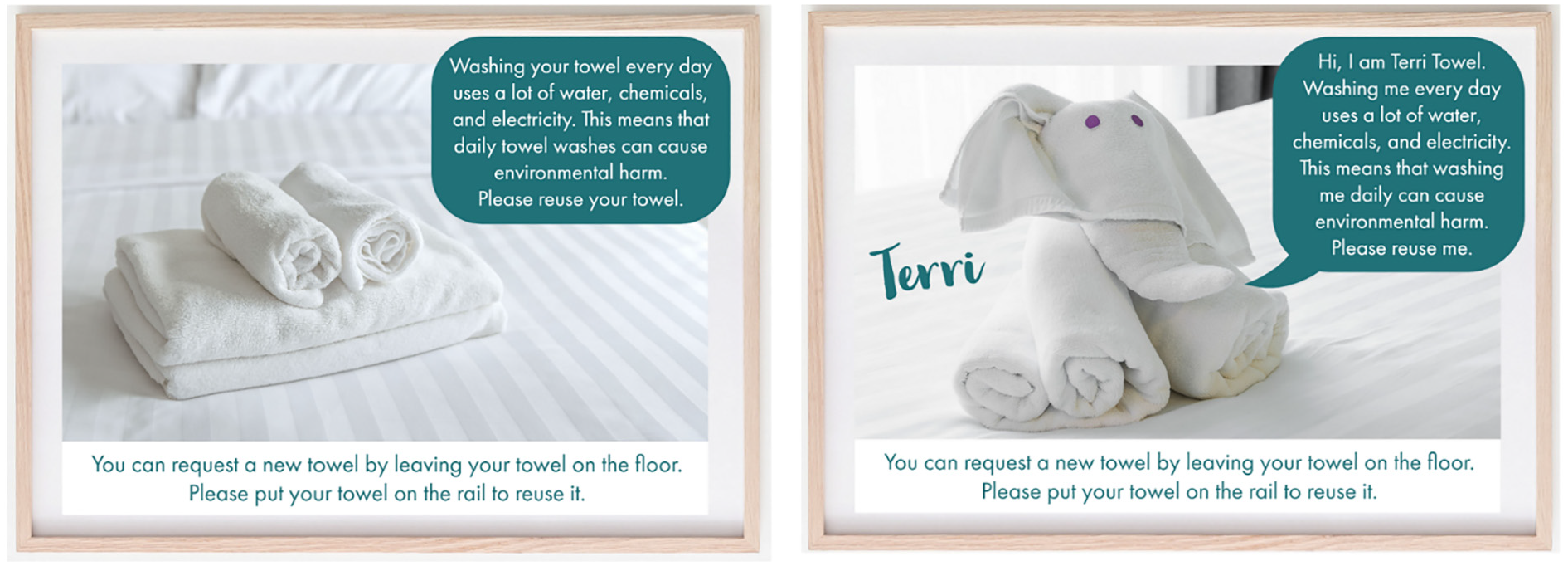
Example stimuli form survey study 1.
We recruited 50 people per group through prolific. To be eligible, participants had to reside in Australia or the UK; be fluent in English and be above 18. Our final sample size was 900, with an equal number assigned to each of the 18 conditions. Most participants were UK residents (89%). Participants were on average 42 years old (SD = 13.66); 48% identified as female, 51% as male, and 1% as non-binary or preferred not to disclose.
After answering basic demographics questions, participants were asked to imagine being on holiday in an all-inclusive resort for 5 days (based on Demeter, MacInnes, & Dolnicar, 2023). They were then randomly assigned to one of the conditions. Participants then answered the following questions:
Towel Reuse Intentions
We measured intentions to reuse towels with two questions: “At this hotel, how likely would you be to (1) Hang your towel on the rail to reuse it at least once? And (2) Hang your towel on the rail to reuse it two or more times?” Respondents answered using a slider scale ranging from 0 (extremely unlikely) to 100 (extremely likely).
Anthropomorphism
We measured anthropomorphism using three questions (adapted from Delbaere et al., 2011): “The towel that I just saw in the imaginary hotel was portrayed as an animate object,”“It’s as if the towel I just saw at the imaginary hotel was alive,” and “It’s as if the towel I just saw at the imaginary hotel had a personality of its own.” Respondents reported their level of agreement on a slider scale ranging from 0 (strongly disagree) to 100 (strongly agree). We computed an average score. In the current study, this measure has good internal consistency (α = .78).
Positive and Negative Reactions
Participants used an adapted version of the Positive and Negative Affect Schedule (PANAS; Watson et al., 1988) to report how the signs made them feel. They rated twelve emotions—six negative (e.g., irritable, upset) and six positive (e.g., amused, entertained)—on a slider scale ranging from 0 (not at all) to 100 (extremely). Average scores on positive and negative emotions were computed separately. Internal consistency was excellent for both subscales in the present sample (Negative affect, α = .88; Positive affect, α = .89).
Beliefs and Social Norms
We measured awareness of consequences (“It would be advantageous for the environment if I reused my towel at this hotel”) and ascription of responsibility (“I can take responsibility for the environment by reusing my towel at this hotel”) using adapted versions of Kaiser et al. (2005)’s items. Our questionnaire contains an additional item capturing obligation: “Because I feel an obligation toward the environment, I would reuse my towel at this hotel.” Although not a manipulated construct, we retained this question for exploratory purposes. We measured social norms with a single question (“Most guests at this hotel reuse their towel”). Individuals responded to these items on a visual analog scale ranging from −50 (disagree) to +50 (agree).
Environmental Identity
To assess whether the identity message led to a short-term change in the salience of participants’ environmental self-identity, we included one item from the PANAS scale that asks how “sustainable” (salience item) the sign they just saw made them feel. We also included two items that measured the general strength of identification with an environmental self-identity but given that identity tends to be stable over time we do not anticipate that a message would impact general identification (Fielding et al., 2008; Lauren et al., 2016), therefore, we did not analyze these items.
Habit, Enjoyment, and Effort
We measured towel reuse habits at home (“At home, would you say it is a habit to use your towel for more than one day?”), and on holiday (“On holiday/vacation, would you say it is a habit to use your towel two or more times?”). Both questions were adapted from MacInnes et al. (2022) and answered on a slider scale ranging from 0 (no, not a habit at all) to 100 (yes, a very strong habit). These questions were included to prompt guests to think about their home and holiday habits. Habit transfer was measured with the question “When thinking about how likely you would be to hang the towel on the rail to be reused at this hotel, did you transfer your towel use habits from home?” on a slider scale ranging from 0 (not at all) to 100 (very much so). This served as the manipulation check. Enjoyment was measured with two items: “How enjoyable would it be for you to reuse your towel at this hotel?” and “How enjoyable would it be for you to get a fresh towel every day at this hotel?,” with answers recorded on a slider scale ranging from 0 (not at all enjoyable) to 100 (extremely enjoyable). Additionally, participants who were in the basic enjoyment condition were asked “How much would you like to win a hotel towel?” and in the anthropomorphized draw condition “How much would you like to win a Terri Towel?” on a slider scale ranging from 0 (not at all) to 100 (very much so). Effort was measured with a single item “While at this hotel, how much effort would it be for you to reuse your towel?” adapted from Hart and Staveland (1988) on a slider scale ranging from 0 (no effort at all) to 100 (a huge amount of effort).
Data Analysis
All analyses were conducted in SPSS (IBM Corp, 2020). For all main analyses, we used Bayesian independent samples t-tests assuming unequal variances to compare the different experimental groups to the control or equivalent basic group. We also report the frequentist aspects of these tests—namely the t-statistic and p-value. First, we tested whether a theory-driven message strengthened the relevant construct (shown by a significantly higher mean score on this construct than in the control group; H1a-H8a). Likewise, for exploratory purposes, we compared whether anthropomorphized messages further increase (or decrease in the case of effort) their theoretical construct compared to their equivalent basic message. To test for emotional reactions from participants, we compared mean scores between the control and each experimental group on overall positive and negative affect. Further, we compared each message pair (i.e., basic vs. anthropomorphized messages) on reactions. For our exploratory analyses of behavioral intentions, we compared the mean intentions in each experimental group to the control group.
We computed Cohen’s d as a measure of effect size for pairwise comparisons. Generally, a small effect is between 0.20 and 0.49, a medium effect is 0.50 to 0.79, and a Cohen’s d larger than 0.80 is large (Cohen, 1988). To test hypotheses H1b-H8b we computed bivariate correlations between towel reuse intentions and each theoretical construct within relevant groups. For example, we computed correlations between anthropomorphic belief and towel reuse intentions only for participants exposed to anthropomorphized messages.
We note that we are analyzing many hypotheses in this study; therefore, we supplement effect sizes with BF01 to quantify the support in favor of our hypotheses or the null hypothesis (Hoijtink et al., 2019). Traditional methods of testing can lead to increases in type-1 errors when multiple comparisons are made, but Bayesian methods mitigate this issue by providing a measure of evidence that is not dependent on the number of tests or comparisons being made (Hoijtink et al., 2019). BF01 is a ratio of the likelihood of the observed data under two competing hypotheses, which quantifies the support in favor of our hypotheses or the null hypothesis. BF01 should be considered on a continuum but some general rules of interpretation are as follows: between 1 and 3 are considered weak evidence, 3 to 10 moderate evidence, 10 to 30 strong evidence, 30 to 100 very strong evidence, and >100 extreme evidence for the null hypotheses (Lee & Wagenmakers, 2013). Conversely, 1/3-1 is considered weak evidence, 1/10 – 1/3 is moderate evidence, 1/30– 1/10 strong evidence, 1/100–1/30 is very strong evidence and less than 1/100 is extreme evidence for the alternative hypothesis (Lee & Wagenmakers, 2013).
Results
Manipulation Checks (H1a–H8a)
All manipulation checks, accompanying effect sizes and Bayes factors (BF01) are summarized in Table 1. Compared to the control group and equivalent basic messages, beliefs that the towel had human-like qualities (anthropomorphic belief) was significantly stronger across all anthropomorphized messages—supporting hypothesis H8a (Table 1). Bayesian analyses indicate extreme support for our hypotheses that anthropomorphized messages increase anthropomorphic beliefs compared to the control and equivalent basic messages.
Manipulation Checks for Each Message Including Effect Sizes.
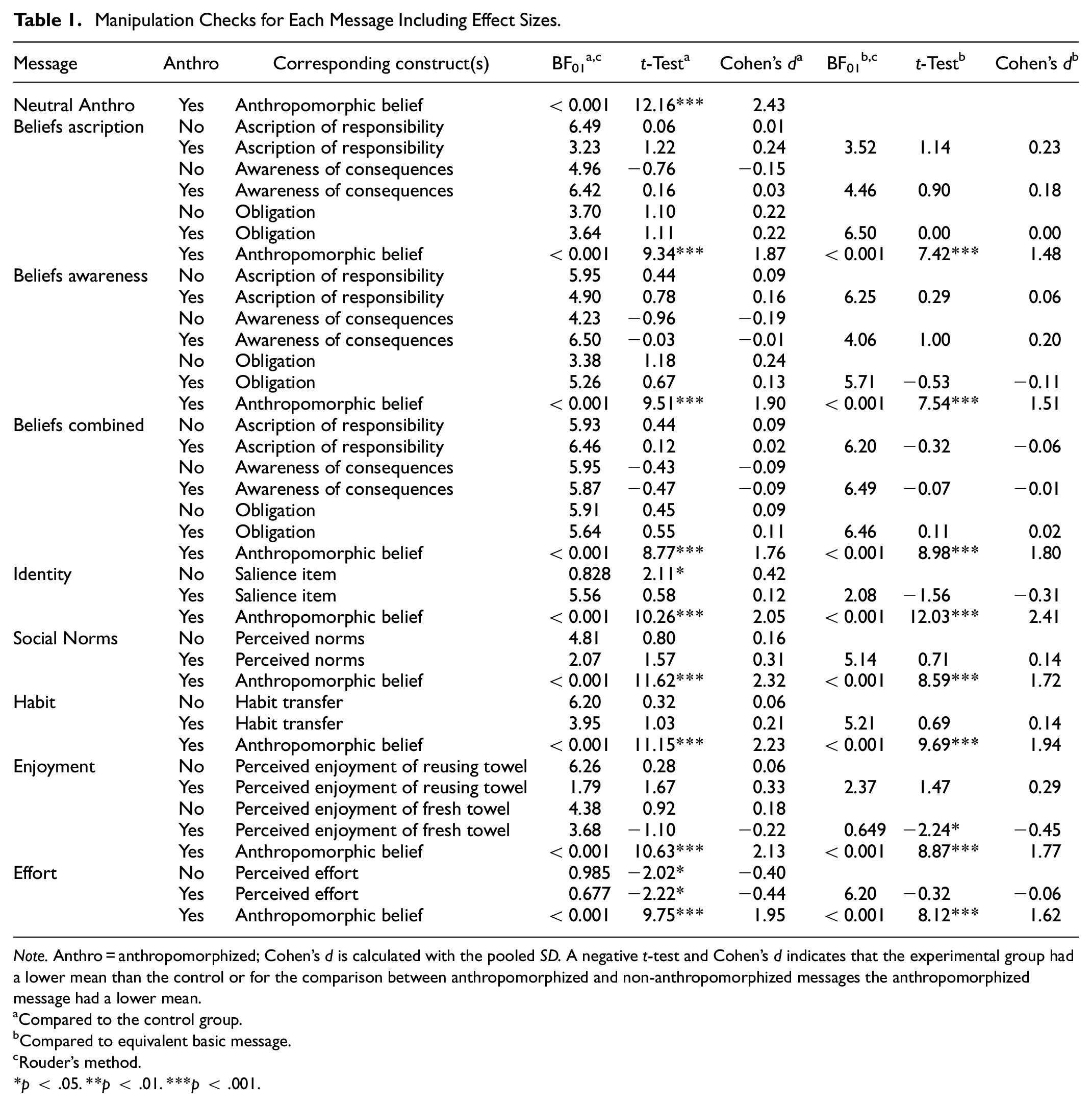
Note. Anthro = anthropomorphized; Cohen’s d is calculated with the pooled SD. A negative t-test and Cohen’s d indicates that the experimental group had a lower mean than the control or for the comparison between anthropomorphized and non-anthropomorphized messages the anthropomorphized message had a lower mean.
Compared to the control group.
Compared to equivalent basic message.
Rouder’s method.
p < .05. **p < .01. ***p < .001.
The effort messages (with and without anthropomorphism) passed the manipulation check by significantly reducing participants’ self-reported perceived effort of reusing the towel as compared to the control group. The basic identity message led to a significant increase in the extent to which participants reported feeling “sustainable” (salience item) as compared to the control condition. However, Bayesian analysis suggests that with the current data, evidence is inconclusive and is only weakly in favor of H6a (effort) and H4a (identity). Interestingly, the anthropomorphized identity message did not pass the manipulation check.
All belief messages and the habit messages did not result in a significant increase in the corresponding constructs as compared to the control condition with Bayesian analysis showing moderate evidence in favor of no effect—therefore not supporting H1a, H2a, or H5a. Both the social norms and enjoyment messages that included anthropomorphism showed a trend toward increasing the related construct, normative beliefs, and perceived enjoyment of reusing a towel respectively. Nevertheless, Bayes factors for and against our hypotheses were inconclusive in both cases (H3a, H7a; Table 1). The basic versions of enjoyment and social norms messages did not pass the manipulation check.
Besides anthropomorphic belief, the only notable difference between anthropomorphized messages and their equivalent basic message was on the perceived enjoyment of receiving a fresh towel. The perceived enjoyment of receiving a fresh towel every day was significantly lower in the anthropomorphized enjoyment condition compared to the basic enjoyment condition. However, evidence in favor of this effect was weak (BF01 = 0.649). Interestingly, compared to the basic enjoyment group people in the anthropomorphized enjoyment group did not find it significantly more enjoyable to win a hotel towel (d = 0.13; p = .54).
Behavioral Intentions (H1b–H8b and Exploratory Analyses)
Within their relevant groups all theoretical constructs apart from normative beliefs were associated with at least one of the two behavior intentions questions (Table 2). Therefore, hypothesis H3b was not supported, but H1b, H2b and H4b–H8b (see Figure 1) were at least partially supported. Further, positive affect was positively associated with behavior intentions and negative affect was negatively associated with behavior intentions (Table 2).
Correlations Between Theoretical Constructs, Affect and Behavior Intentions.
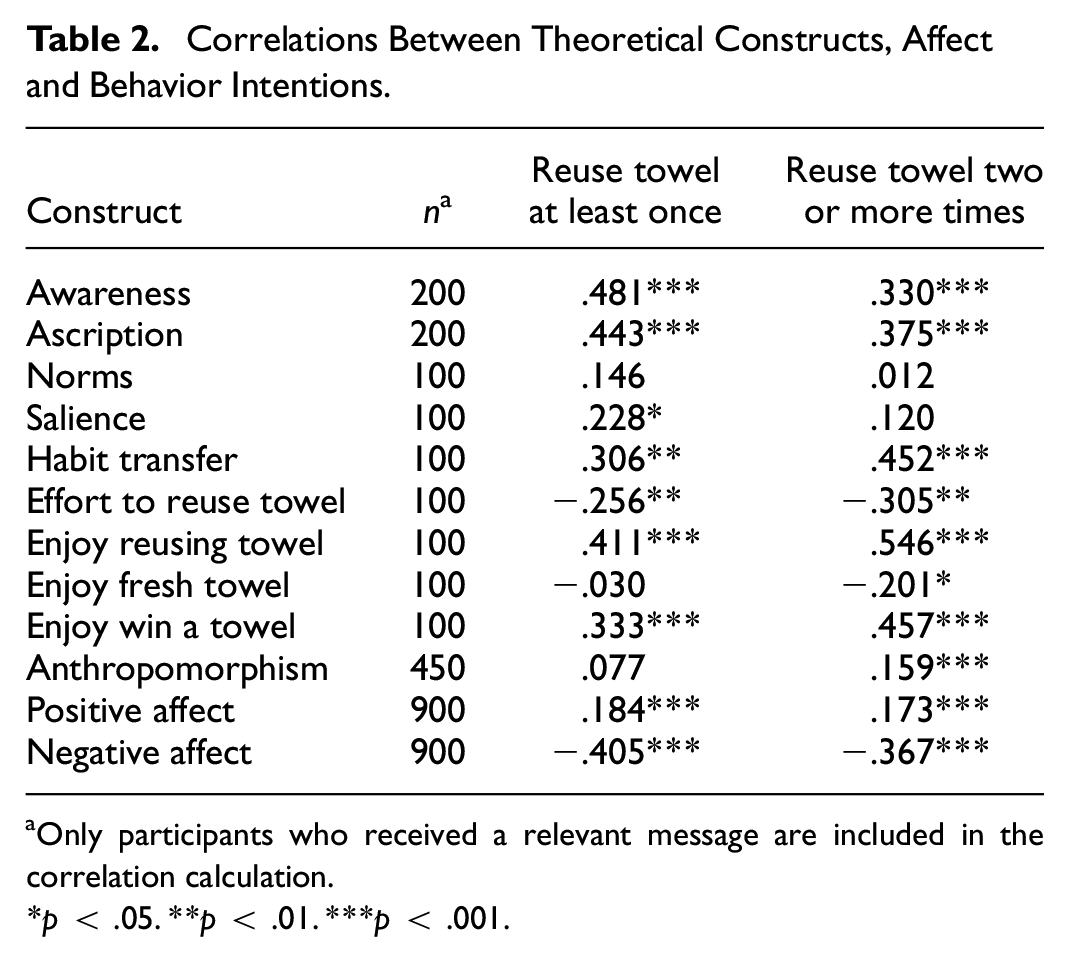
Only participants who received a relevant message are included in the correlation calculation.
p < .05. **p < .01. ***p < .001.
Inspecting pairwise comparisons of intentions against the control, showed no group was significantly different in towel reuse intentions (see Supplemental Materials). As expected, the lack of differences between groups might be accounted for by a ceiling effect of behavioral intentions with the control group having very strong intentions to reuse their towel at least once (M = 89.90/100; SD = 19.99) and moderate-strong intentions to reuse their towel two or more times (M = 73.14/100; SD = 33.53).
Reactions From Participants
Only the enjoyment message paired with anthropomorphism was perceived significantly less negatively than the control. Even in this situation, the evidence in support of this difference was weak (Table 3). Further, it should be noted that none of the messages were perceived significantly more negatively than the control. Bayesian analysis showed that evidence was generally moderately in favor of a null effect (no difference) across comparisons (Table 3). Pairwise comparisons between the basic messages and the equivalent anthropomorphized messages showed non-significant differences in negative affect apart from the enjoyment messages (Table 3). Specifically, there was weak evidence for the anthropomorphized enjoyment message being perceived less negatively than its equivalent basic message.
Emotional Reactions From Participants Including Bayes Factors and Effect Sizes.
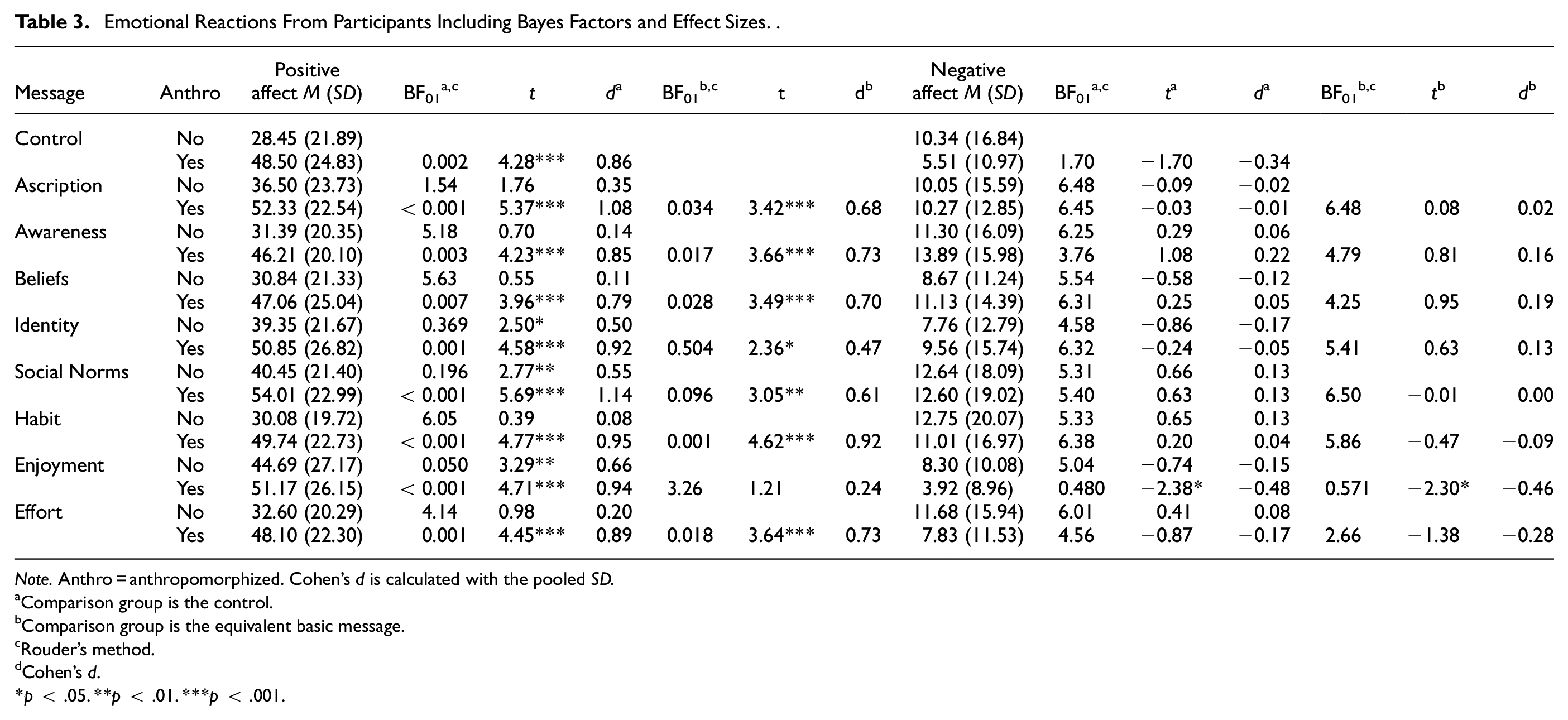
Note. Anthro = anthropomorphized. Cohen’s d is calculated with the pooled SD.
Comparison group is the control.
Comparison group is the equivalent basic message.
Rouder’s method.
Cohen’s d.
p < .05. **p < .01. ***p < .001.
All anthropomorphized messages and the basic enjoyment, identity, and social norms messages were perceived more positively than the control. Bayesian analyses showed that the evidence for these effects was strong to extreme, except for the basic identity message, where the evidence was weak, and the basic social norms message, where the evidence was moderate. Pairwise comparisons between basic messages and their equivalent anthropomorphized messages found that for all except the enjoyment messages, the anthropomorphized message was significantly more positively perceived than the equivalent basic message. Evidence in favor of there being no differences in positive affect between the enjoyment messages was weak. For all other messages, bar the identity messages (weak evidence) evidence in favor of differences in positive affect between the anthropomorphized messages and their equivalent basic message was generally strong (Table 3).
Study 2: Survey Experiment Two
From Study 1, we know that presenting the towel as a talking elephant led to people anthropomorphizing it. We build on this in Study 2 to investigate whether our anthropomorphized messages change how people relate to the towel. Simply believing an object is a living being is unlikely to strongly drive pro-environmental behavior. Instead, how people connect with the object is more likely to drive behavior. It is proposed that when an object is anthropomorphized, people relate to it similarly to how they relate to other humans (Aggarwal, 2004; Chen et al., 2021). Also, when an object is anthropomorphized, people can form an emotional connection with it—more so than if it appears as an inanimate object (Aggarwal, 2004; Chen et al., 2021). Connecting and relating to the object might be what increases engagement in pro-environmental behavior.
People also empathize and feel sympathy toward an anthropomorphized object more than an inanimate one (Tam, 2013). Empathy means understanding and sharing another’s emotional state and is a significant driver of pro-social behavior (e.g., helping behavior; Pavey et al., 2012). Empathy consists of two aspects: affective (sharing emotional experiences) and cognitive (comprehending emotions via prospective thinking; Tam et al., 2013). Both aspects are intertwined. In line with Perspective Taking (e.g., Li & Edwards, 2021), when participants see Terri Towel in a dilemma (i.e., wanting to be reused), they are more likely to empathize with Terri and want to help by reusing the towel. These feelings (e.g., sympathy and empathy) are collectively known as self-transcendent emotions.
Although these explanations for why anthropomorphism might drive behavior are widely cited, few interventions studies test whether their interventions strengthen connectedness and self-transcendent emotions. This is a major theoretical gap. The primary purpose of Study 2 is to evaluate whether anthropomorphized messages, compared to non-anthropomorphized ones, increase people’s connectedness with and self-transcendent emotions toward the towel (Terri).
We make additional hypotheses for this study (Figure 1). The anthropomorphized messages are hypothesized to strengthen beliefs in the towel having human-like qualities compared to non-anthropomorphized messages (H8a; equivalent to Study 1). The anthropomorphized messages compared to the non-anthropomorphized messages are hypothesized to increase 1) connectedness to the towel (H9a), and 2) self-transcendent emotions toward the towels (H10a). Further, we predict that anthropomorphic belief (H8b; equivalent to Study 1), connectedness to the towel (H9b) and self-transcendent emotions (H10b) will be positively associated with towel reuse intentions. For exploratory purposes, we compare all experimental conditions to the control on towel reuse intentions.
Methods
We only included promising messages from Study 1 and the control messages. We included the enjoyment message because it was the only message to reduce negative affect and because the concept of receiving your own Terri could strengthen anthropomorphism and related constructs such as connectedness in real life. We, therefore, also included the basic enjoyment message for comparison. We included the basic effort message and anthropomorphized effort message because they significantly decreased perceived effort in Study 1 (i.e., passed manipulation check). Considering that only the basic identity message passed manipulation check and not the anthropomorphized version, we did not include these messages in Study 2. Therefore, this study followed a 2 [anthropomorphism: anthropomorphic towel vs. non-anthropomorphic towel] × 3 [theoretical construct: control message vs. path of least resistance (effort) vs. hedonic psychology (enjoyment)] between subject’s design.
We aimed to recruit 100 participants per condition through Prolific to be able to detect a small-medium effect if it does exist (Brysbaert, 2019). The participation criteria were equivalent to Study 1. Our final sample size was 599 participants with a nearly equal number of participants across each of the six conditions (n = ∼100). Most participants were UK residents (71%); they were, on average, 40.97 years old (SD = 13.78). Regarding gender, 53% identified as female, 46% as male, and the remaining 1% as non-binary or did not disclose.
After answering demographic questions, participants were asked to imagine they were on a summer holiday for 10 days (to allow for more towel-reuse opportunities) and to immerse themselves in the experience. They were then informed: “Once you have entered the room, you look into the bathroom. The hotel supplies you with one bath towel, one face towel, one bathmat, and one hand towel per person.” Participants were then randomly assigned to one of the six conditions and answered the following questions. Note that participants also answered questions about behavior-specific self-efficacy but given this is not a main outcome of the current study we detail this measure and group differences on self-efficacy in the Supplemental Materials.
Anthropomorphism
We measured anthropomorphism with three questions: (1) “It’s as if the towel I just saw was alive.,” (2) “It’s as if the towel I just saw had a personality of its own,” and (3) “It’s as if the towel I just saw had its own thoughts and feelings” (adapted from Delbaere et al., 2011). Participants rated these questions from 0 (no, not at all) to 100 (yes, very much so). An average score was calculated. The items had high internal consistency (α = .95).
Self-Transcendent Emotions
We measured empathy toward the towel with the item “I could empathise with the towel I just saw” and sympathy toward the towel with the item “I have sympathy for the towel I just saw.” We also included less direct measures of these feelings: “I feel sorry for the towel I just saw” and “I want to help the towel I just saw.” These items are adapted from Ketron and Naletelich (2019). Participants rated these questions from 0 (no, not at all) to 100 (yes, very much so). We computed an average score across these items labeled them “self-transcendent emotions.” These items had excellent internal consistency (α = .92).
Connectedness
People’s ability to relate to the towel was measured with one item (“I feel I could relate to the towel I just saw in a similar way as I could relate to other humans”), as was an emotional attachment to the towel (“I feel emotionally attached to the towel I just saw”). Participants rated these questions from 0 (no, not at all) to 100 (yes, very much so). An average combined score (connectedness) was calculated. These items had good internal consistency (α = .84).
Towel Reuse Intentions
We measured intentions to reuse different types of towels (i.e., bath towels, face towels, hand towels, and bathmats) with the following question format “How many new […] towels would you request during your stay” for each towel type separately. Participants could request between 0 and 9 of each type of towel because they would automatically receive their first set of towels upon check-in. We include this alternative formulation to increase the variance in responses because the typical intention questions may have a ceiling effect (as observed in Study 1) and are prone to socially desirable responding (Zhu et al., 2024). We also asked about different towel types (matched to the field experiment) because there may be a difference in people’s willingness to reuse different types. Finally, participants were asked more generally about their overall bath towel reuse: “How likely are you to hang your bath towel on the rail to reuse it four or more times? (i.e., use a towel for two or more days at a time)?”
Data Analysis
The focus of the pairwise comparisons was between the control and experimental conditions, and the anthropomorphized experimental conditions and their equivalent non-anthropomorphic conditions. Therefore, to test hypotheses H8a–H10a we ran Bayesian independent samples t-tests assuming unequal variances. To evaluate differences in intentions we ran Bayesian independent samples t-tests assuming unequal variances between the experimental groups and the control. To test hypotheses H8b–H10b, we computed correlations between anthropomorphic beliefs, self-transcendent emotions, connectedness, and general bath towel reuse intentions among participants who saw an anthropomorphized message.
Results
Manipulation Check (H8a–H10a)
As with Study 1, all three anthropomorphism messages strengthen anthropomorphic beliefs compared to the control message and their equivalent non-anthropomorphized message (Table 4). Bayesian analysis suggests very strong to extreme evidence for hypothesis H8a (Table 4). Likewise, people who saw the anthropomorphized messages reported higher levels of self-transcendent emotions toward the towel (H10a) and connectedness with the towel (H9a) compared to the control message and the equivalent non-anthropomorphized message. Bayesian analyses showed very strong to extreme evidence in favor of both hypotheses (Table 4).
Manipulation Check Comparisons for Anthropomorphism and Self-Transcendent Emotions.
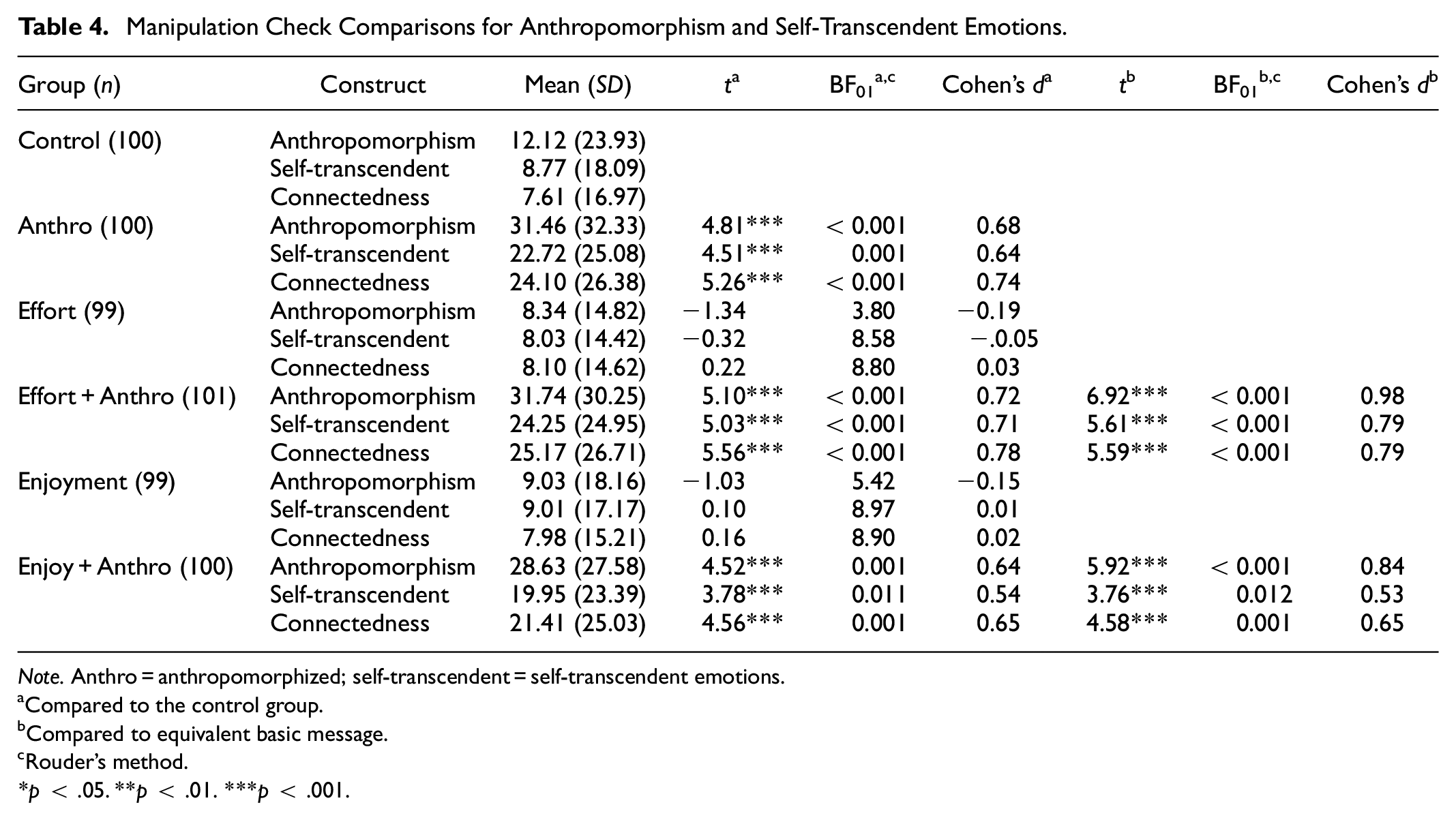
Note. Anthro = anthropomorphized; self-transcendent = self-transcendent emotions.
Compared to the control group.
Compared to equivalent basic message.
Rouder’s method.
p < .05. **p < .01. ***p < .001.
Behavioral Intentions (H8b–H10b and Exploratory Analyses)
Among people who saw the anthropomorphized messages, there was a positive correlation between intentions to reuse a towel two or more times and anthropomorphic belief (r = .116, p = .044) and self-transcendent emotions (r = .125, p = .030) but not connectedness with the towel (r = .109, p = .059). This supports hypotheses H8b and H10b but not H9b. It should be noted all these correlations are weak.
Compared to the control condition, people who were in the effort condition, or the anthropomorphized effort condition expressed intentions to request significantly fewer bathmats (both effort conditions) and hand towels (basic effort condition only) during their stay (Table 5). Additionally, participants in the effort, anthropomorphized effort, and anthropomorphized enjoyment conditions reported a significantly higher likelihood of hanging their bath towel for reuse compared to the control. However, these effects should be interpreted with caution, as Bayesian analyses indicate only weak evidence in favor of these differences. No other significant differences in towel reuse intentions were observed between the experimental groups and the control.
Mean Differences in Behavior Intentions Across Towel Types in the Experimental Groups Compared to the Control.
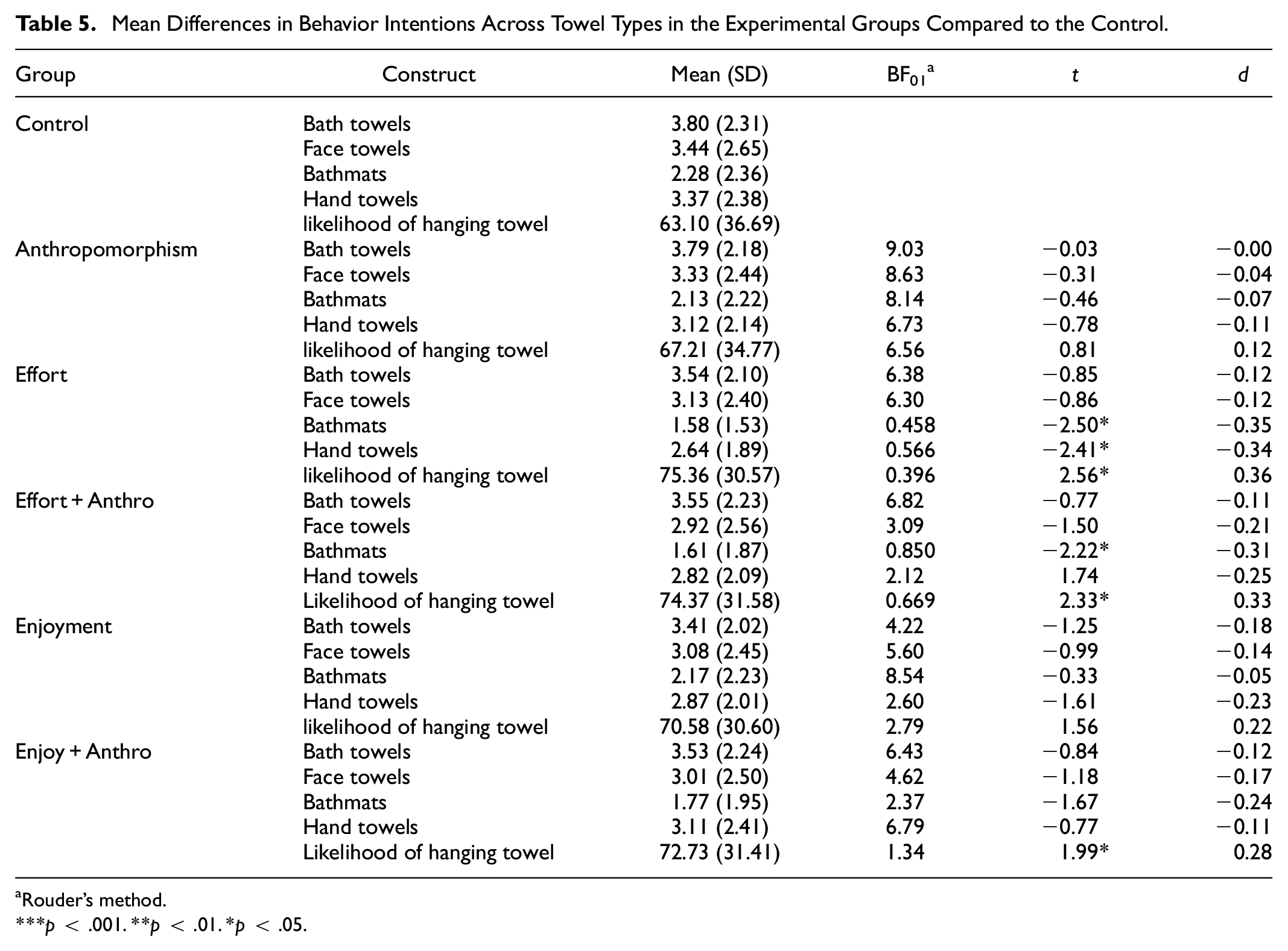
Rouder’s method.
p < .001. **p < .01. *p < .05.
Study 3: Field Experiment
Studies 1 and 2 showed that the basic anthropomorphized message, basic identity message, anthropomorphized effort message, and potentially the anthropomorphized enjoyment message appeared promising, warranting field testing. Although in Study 2 we did find some group differences in behavior intentions, intentions are not an accurate measure of real behavior (Nguyen et al., 2022). Only through field experiments can we test the impact of an intervention on real towel-reuse behavior. To address this, we ran a field experiment in two Australian hotels to test the effect of two of the most promising messages (basic anthropomorphism message and anthropomorphized effort message) on actual towel reuse behaviors and guest satisfaction.
We hypothesized that, compared to the baseline measurement, the number of towels per person per day or per room per day will significantly decrease for both the basic anthropomorphized message (H11a) and the anthropomorphized effort message (H11b).
Methods
In Study 3, we asked our hotel partners to choose from the messages that passed the manipulation check. We did this because it is not possible to force specific interventions on hotel managers, to ensure buy-in from the hotel for the field study, and because only behavior change interventions that hotel managers are willing to adopt are relevant and have the potential to improve the environmental sustainability of hotels. One of the partner hotels chose the basic anthropomorphized message and the other the anthropomorphized effort message. Given, that the anthropomorphized effort message was chosen for the field, we wanted to have more confidence that this message does indeed decrease perceived effort, therefore we collected an additional ∼65 participants for the control, effort, and anthropomorphized effort messages (to Study 1), and there was moderate evidence in favor of an effect on perceived effort when comparing the anthropomorphized effort condition to the control condition (t(223) = −3.00, p = .003, BF01 = 0.129, d = −0.40; see Supplemental Materials for details). It should be noted that the content of the chosen messages did not change between the survey and field experiments.
There are 257 rooms total across both hotels. Both were midrange hotels (∼4-star rating) of the same branch and located in cities in Tasmania, Australia. We collected data points at the day level. We first measured baseline towel use for approximately 2 months, then collected 2 months of experimental data during which the hotels each displayed one of the signs. The signs were placed in the bathroom of all hotel rooms and one folded Terri towel was displayed at reception along with a satisfaction stand (Figure 3). We included a 4-day window between the baseline and experimental conditions to minimize the overlap in guests between the conditions. We had 61 data points at baseline and 59 usable data points for the intervention period for the hotel that chose the anthropomorphized effort message, and 62 data points at baseline and 58 data points for the intervention period for the hotel that chose the basic anthropomorphized message.
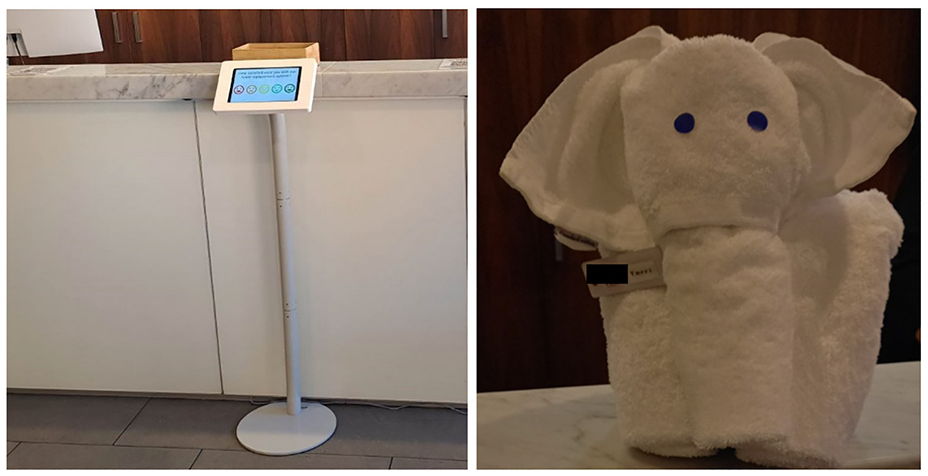
Photographs of satisfaction stand and Terri at one of the hotels.
Measures
Guests and Room Numbers
The hotel manager provided data on how many guests stayed at the hotel on any given day. There are three types of guests: those who arrived, guests who checked out, and stayers (i.e., those guests who had the option of reusing their towels or not). This information allowed us to exclude unavoidable replacements (i.e., checkout guests). This same level of information and division was also provided for rooms.
Towels
Hotel staff recorded how many bath towels, face towels, hand towels, and bathmats they replaced each day. During baseline and experimental conditions staff were instructed to only replace towels (including bathmats) that were not hung up (e.g., over rails or over the bath/shower). Bath towels and face towels are provided per person, bathmats, and hand towels typically per room. One of the hotels only provided face towels upon request and did not keep accurate daily records of these requests, therefore we did not analyze face towels for that hotel.
Satisfaction
Guest satisfaction was measured using a feedback stand at reception to measure whether our interventions annoyed guests. At one hotel guests were asked specifically about their satisfaction with the towel replacement service but at the other, they were asked about general satisfaction. Guests could select from five faces that showed colored emojis expressing the following emotions: very satisfied, satisfied, neutral, unsatisfied, and very unsatisfied. They were coded as 1 to 5; higher scores indicate higher levels of satisfaction. Please note that throughout both the baseline and experimental periods the satisfaction measurement kiosk experienced some connectivity issues leading to some missing data. However, this was consistent across both intervention periods, and this error was random and would not be systematic to any specific response (e.g., very unsatisfied).
Data Analysis
For towel-reuse behavior, our unit of measurement is day level. First, we computed the number of avoidable towels that were replaced each day by subtracting the number of checkout guests/rooms (dependent on towel type) from the total number replaced for each towel type. We then computed how many of each type of towel was being supplied per person per day and per room per day. Sometimes, checkout replacements were left to the following days if for example staff numbers were low. This leads to a lot of noise in the data—whereby one day there is a large underestimate of avoidable towels replaced and the next day(s) there is a large overestimate. To account for this, we computed an average score (across each group of impacted days—smoothing data) of towels per person/room per day and imputed this average score for those data points. Although not a perfect solution- this method keeps the mean constant but reduces the unnecessarily large standard errors and deviations—for which we know part of the source. Considering that each hotel ran a different experimental message, and each had its own baseline, we treated them as two separate experiments. For the four types of towels, we conducted Mann-Whitney U tests alongside Bayesian independent Samples tests due to deviations from normality (See Shapiro-Wilk test in Table 6) to compare towels per person per day and towels per room per day from baseline to intervention for each hotel. We also compared satisfaction during the baseline and experimental conditions using Mann-Whitney U tests because the outcome variable was ordinal.
Descriptive Summary and Results of the Field Experiment.
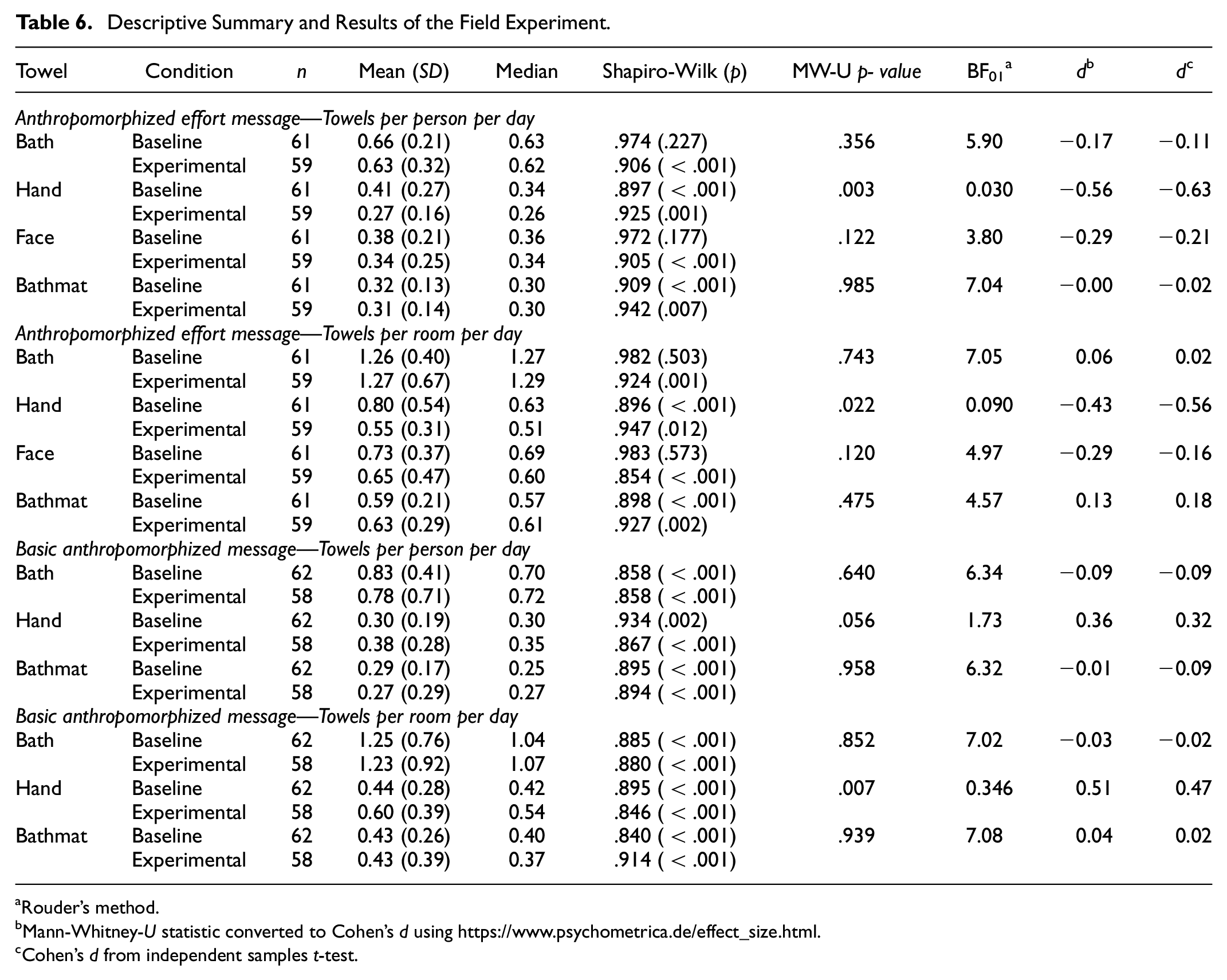
Rouder’s method.
Mann-Whitney-U statistic converted to Cohen’s d using https://www.psychometrica.de/effect_size.html
Cohen’s d from independent samples t-test.
Results
Towel Reuse Behavior (H11a, H11b)
Compared to the baseline, the basic anthropomorphized message condition did not reduce towel replacements (see Table 6) but weak evidence in favor of an increase in handtowels per room per day (but not per person) use was observed from baseline to experimental period. It should be noted from information supplied by the hotel that considerably more face towels were supplied during the baseline period compared to the experimental period—therefore during the intervention period more guests might be using their hand towels as face towels.
Most importantly, the anthropomorphized effort message condition had a medium effect on hand towel replacements both per room and per person per day. Using Bayesian analysis, the current data provided strong evidence in favor of these effects. However, there was no impact on the other three towel types. Thus, H11a was not supported and H11b was partially supported.
Satisfaction
General guest satisfaction was maintained at baseline to the experimental condition at the hotel that trialed the anthropomorphized effort message (Mean rank(baseline) = 414.07, n = 518, versus Mean rank(experimental) = 398.82, n = 298, p = .362, d = −0.06). There was a small effect on satisfaction with the towel replacement system from baseline to the experimental condition for the hotel that trialed the basic anthropomorphized message (Mean rank(baseline) = 125.35, n = 175, vs. Mean rank(experimental) = 145.23, n = 88, p = .038, d = 0.25). Figure 4 shows the proportions of people who responded in each satisfaction category split by hotel and experimental period.
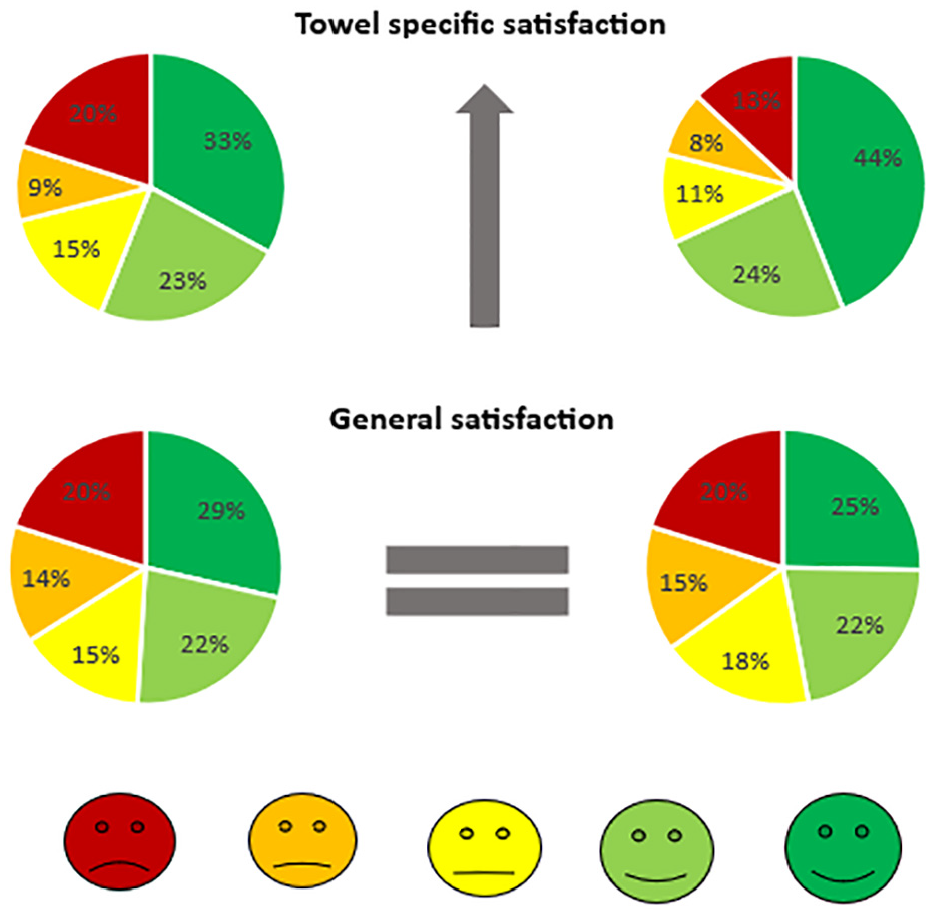
Satisfaction ratings. The left side is baseline data, and the right side is experimental data.
Discussion
Past studies to prompt towel reuse among hotel guests have typically focused on strengthening environmental beliefs or social norms with mixed results (Nisa et al., 2017). The main aim of the current paper was to test a variety of theory-driven messages and constructs to examine their effect on towel reuse in hotels. Across two survey experiments and one field experiment, we tested the effectiveness of theory-driven messages from four distinct perspectives: (1) environmental concerns (2) identity and norms (3) hedonic and (4) the path of least resistance. As part of the survey experiments, we tested whether each message activated the relevant theoretical construct (e.g., anthropomorphic belief). Further, in the field, we tested whether two anthropomorphized messages led to real behavior change.
The results of Study 1 showed that only effort, environmental self-identity, and anthropomorphic beliefs were successfully manipulated. As anticipated, people who received the anthropomorphized messages perceived the towel as having human-like qualities and a mind of its own compared to those who did not. However, anthropomorphism did not further strengthen the theoretical constructs (e.g., environmental self-identity, perceived effort) leveraged by the messages. Although anthropomorphism did not further strengthen theoretical constructs, it enhanced positive reactions, which were positively associated with towel reuse intentions. These findings align with previous research showing that anthropomorphism correlates with pro-environmental behavioral intentions (see, e.g., Williams et al., 2021). Anthropomorphizing messages also increased connectedness with, and empathy and sympathy toward, the pictured towel (Study 2), which is promising for prompting pro-environmental behavior. Past research has shown that connectedness to a place, nature, or object increases pro-environmental behavior (E. Gosling & Williams, 2010). Therefore, on a practical level, we suggest that if hotels choose messaging approaches to prompt towel reuse, they should consider anthropomorphizing them.
Based on our survey experiment results, we tested two anthropomorphized messages in the field. We found that the anthropomorphized effort message increased hand towel reuse, while the basic anthropomorphized message did not. There was no difference in the reuse of other towel types across both messages compared to the baseline. This aligns with Study 2, where the effort message increased hand towel reuse intentions, but the basic message did not. This may be because the effort message more effectively prompts reuse, as reduced perceived effort is likely a stronger behavioral driver than anthropomorphism alone. Terri asking guests to reuse towels without context may not be enough. Theoretically, these findings support the path of least resistance approach (Thaler & Sunstein, 2003), showing effort as a key driver of towel reuse. The results also contribute to anthropomorphism literature by suggesting it may only influence real pro-environmental behavior when paired with theory-based messages. Alternatively, the hotel testing the basic anthropomorphism condition only offered face towels on request. Guests may have used hand towels as face towels, soiling them faster and requiring more replacements. Still, considering both field and survey results, the anthropomorphized effort message appears more promising for implementation.
In Study 2, we observed an increase in bathmat reuse intentions alongside hand towels for the effort-based messages. However, for bathmats did not translate to the field. This discrepancy might be due to structural reasons. Specifically, bathmats are more likely to be left on the ground by mistake, as hanging bathmats may not be a habitual behavior for some guests. Additionally, guests reading the sign in real life might not associate bathmats with towels because they are not explicitly mentioned. Therefore, future research should consider creating interventions that explicitly include bathmats. On the other hand, hand towels might not be replaced as often as intended because they are usually placed on a towel rail or basin rather than on the floor. However, this pattern of behavior would be consistent in both the experimental and baseline conditions, so it does not account for any potential differences between them. Nonetheless, hotels might want to consider this in their instructions to guests.
Although simple messaging strategies might be favored by hotels as they have the least impact on operations, they are perhaps not the most effective manipulation of some constructs, namely: effort, habit, and enjoyment. For example, our habit message asked people to keep up their good home habits on holiday by not requesting towel replacements. This intervention might be successful as a reminder for guests who are already in the habit of reusing their towels at home but might be futile for guests who are not (i.e., you cannot transfer a habit you do not hold). Instead, bad holiday habits such as unnecessarily requesting towels might be better disrupted (MacInnes et al., 2022). For example, changing towels only upon request helps prevent guests from maintaining or getting into the habit of requesting new towels daily. This can be done with limited disruptions to operating systems by asking the guests to hang up a door sign when they want their towels replaced.
Likewise, although our effort messages did reduce the perceived effort of reusing towels, effort could be more strongly manipulated by architectural changes (Thaler & Sunstein, 2003). Some staff might replace towels that are left anywhere apart from the hanging rails. The effort of reusing the towel could be decreased by increasing the area in which it could be left or only replacing towels that are left in a specific smaller area. Another choice architecture intervention would be to increase the visibility, size, or availability of towel rails. This will enable guests to have more opportunity to keep their towels dry and clean which will likely make people more willing to reuse them.
Enjoyment can be enhanced through incentives—such as offering discounts for reusing towels for two or more days—or through gamification, where guests earn points for each reuse. At the end of the week, the floor with the highest score could win a prize, turning sustainability into a fun, collective challenge. In summary, our study provides important theoretical and practical insights into the hedonic perspective (e.g., Kahneman et al., 1999) and the path of least resistance perspective (Thaler & Sunstein, 2003). It suggests that alternative approaches, beyond messaging, which manipulate habit, effort, and enjoyment, may be necessary to effectively utilize these perspectives.
Practical and Methodological Contributions
Our results have valuable practical implications for hotel owners. Although the anthropomorphized effort message only had a moderate impact on hand towel reuse, considering that the intervention also increased guests’ positive reactions (Study 1), it would be beneficial for hotels to implement. For example, for every 100 people in baseline conditions, approximately 41 hand towels would be required, whereas in the anthropomorphized effort condition, approximately 27 would be needed. The average hand towel weighs ∼100 g, saving 1.4 kg of washing per 100 guests. This equals a saving of 18.2 L of water, 2.10 kWh of heat energy, and 0.31 kWh of electrical energy (Máša et al., 2013) and associated costs. However, since we found no impact on other towel types, managers might wish to implement stricter interventions—such as providing fresh towels only upon request.
We also highlight the importance for hotel owners to be conscious of the context of their messages. Specifically, people who reacted more negatively to the messages had lower intentions to reuse their towels, while those who reacted more positively had stronger intentions. Anthropomorphism increased positive reactions toward most messages. Therefore, we suggest that hotels unwilling or unable to adopt more extreme structural changes could consider anthropomorphizing their messages.
As reported earlier, there were some inconsistencies between the results of our survey experiments and actual behavior in the field. For instance, we found that behavioral intentions (Study 2) only translated to real behavioral changes for hand towel reuse. These findings align with previous literature highlighting the importance of field studies due to discrepancies between behavioral intentions and real behavioral change (e.g., Juvan et al., 2025). Nevertheless, our research also shows the value of additional survey experiments to learn more about underlying theoretical constructs (e.g., perceived effort, environmental beliefs) and emotional reactions of participants. Taken together, our findings support the complementary nature of survey and field experiments in investigating novel behavioral change approaches.
Limitations and Future Research
In our anthropomorphic conditions, we only considered Terri with a neutral expression. Studies 1 and 2 broaden our knowledge of anthropomorphism. Our results show that anthropomorphizing a towel to communicate towel reuse at hotels positively influences people’s emotions (Study 1) and increases their empathy and sympathy toward the anthropomorphized towel (Study 2). Future research should consider a range of emotions with various facial expressions (e.g., happy, excited, upset, angry). For example, a happy Terri towel might signify enjoyment from avoiding a wash, or an upset Terri could indicate displeasure from being left on the floor. Displaying such emotions, could further increase empathy and modify behavior.
We tested our messages in two midrange hotels that cater to a mix of tourists and business travelers. However, anthropomorphism may prove more effective in family-oriented hotels, where children—who naturally engage in anthropomorphic thinking (Airenti, 2018)—might be more drawn to and emotionally connected with characters like Terri. Future research should investigate the impact of anthropomorphized messages in these family-orientated hotels.
Our data collection was limited by real-world constraints. Due to time pressures (the hotels wanted to implement a new cleaning system), we could only run one condition per hotel. Ideally, we would have implemented four conditions: (1) baseline, (2) effort-only message, (3) basic anthropomorphism, and (4) anthropomorphized effort message, to separate the effects of effort and anthropomorphism in the field. We could only collect one data point per day per hotel, requiring 2 months of baseline and 2 months per condition, making it impossible to test all four. Changing the hotel system to detailed recording per room per day wasn’t feasible due to staff time and privacy concerns. We also could not determine the guest mix or length of stay, which would have shown whether our intervention worked better for certain groups.
It should be noted that guests are not in complete control of whether their towels are changed. Although staff are trained not to change hung-up towels, adherence can be inconsistent. For instance, a cleaner might change a towel perceived as unclean to avoid complaints, despite the guest’s intention to reuse it. Additionally, staff might fear that replacing fewer towels could reduce their hours or staff numbers. If fewer towels are replaced, cleaning staff might finish their tasks more quickly, potentially resulting in reduced hours due to the time saved. These behavioral inconsistencies can undermine guests’ pro-environmental efforts. To address this, hotels could implement clear communication and training protocols to ensure staff understand the importance of towel reuse procedures and feel secure in their jobs.
Conclusion
The presented studies tested different messages from four distinct theoretical perspectives to increase the reuse of towels in hotels. One of the key theoretical contributions is the direct comparison of messaging approaches from different theoretical perspectives and testing whether leveraging anthropomorphism can increase the effectiveness of these messages. We found that anthropomorphism can be a helpful tool to increase positive reactions. Practically, anthropomorphized messages—such as the effort message tested in our field study—can easily be implemented by hotels to increase (hand) towel reuse. Even though we only found an effect on hand towel reuse, this intervention and future adaptations can help hotels to reduce their environmental footprint while not decreasing guest satisfaction.
Supplemental Material
sj-docx-1-jtr-10.1177_00472875251349233 – Supplemental material for “Hi, I’m Terri Towel. Please Reuse Me.” Can Anthropomorphizing Towels Prompt Tourists to Reuse Them?
Supplemental material, sj-docx-1-jtr-10.1177_00472875251349233 for “Hi, I’m Terri Towel. Please Reuse Me.” Can Anthropomorphizing Towels Prompt Tourists to Reuse Them? by Danyelle Greene, Anna K. Zinn, Csilla Demeter and Sara Dolnicar in Journal of Travel Research
Footnotes
Acknowledgements
During the preparation of this work the authors used Azure OpenAI Service/Microsoft Copilot in order to check the language and readability of some sections. After using this tool/service, the authors reviewed and edited the content as needed and take full responsibility for the content of the publication.
Author Contributions
Danyelle Greene: Conceptualization; Data curation; Formal analysis; Investigation; Methodology; Visualization; Writing—original draft; Writing—review & editing. Anna K. Zinn: Data curation; Formal analysis; Methodology; Writing - original draft; Writing—review & editing. Csilla Demeter: Conceptualization; Writing—original draft; Writing—review & editing. Sara Dolnicar: Conceptualization; Funding acquisition; Writing—original draft; Writing—review & editing.
Declaration of Conflicting Interests
The author(s) declared no potential conflicts of interest with respect to the research, authorship, and/or publication of this article.
Funding
The author(s) disclosed receipt of the following financial support for the research, authorship, and/or publication of this article: The authors acknowledge support from the Australian Research Council (FL190100143).

Supplemental Material
Supplemental material for this article is available online.
Author Biographies
References
Supplementary Material
Please find the following supplemental material available below.
For Open Access articles published under a Creative Commons License, all supplemental material carries the same license as the article it is associated with.
For non-Open Access articles published, all supplemental material carries a non-exclusive license, and permission requests for re-use of supplemental material or any part of supplemental material shall be sent directly to the copyright owner as specified in the copyright notice associated with the article.
