




Abstract
Destinations are increasingly focusing on sustainability awareness through tourism campaigns, but effective communication remains challenging. This research, rooted in consumption value theory, delves into the influence of message appeal (environmental vs. personal benefit) and information type (objective vs. subjective) on tourists’ behavioral intentions through two online experiments. Study 1 demonstrates the positive impact of environmental benefit message appeals on behavioral intentions toward destinations, both directly and indirectly, by enhancing destination brand quality and perceived green value. Study 2 validates these findings and extends the analysis to include click-through behavior as a proxy for real behavior. Our research emphasizes the importance of environmental benefits alongside objective information in destinations’ sustainability messages within social media advertisements. This approach serves to bolster destination brand quality, perceived green value, and ultimately, positive behavioral intentions.
Keywords
Introduction
The rise of consumer awareness regarding the detrimental environmental impact of tourism on destinations (Beeharry et al., 2021; Gao & Zhang, 2021; Han, 2021) has prompted destinations to embrace sustainability initiatives within their marketing campaigns. Notably, tourists are recognizing and valuing sustainability efforts by destinations (Bernini et al., 2021; Bilynets et al., 2023). Sustainable destination practices not only enhance destinations’ competitiveness but also significantly influence tourists’ experiences, purchase behavior, and loyalty (Santos et al., 2022). However, the challenge remains regarding what message or what kind of information destination brands should convey to effectively communicate sustainable practices, including the cues embedded in a brand’s message to persuade consumers, known as message appeals (Kaushik et al., 2023).
Meanwhile, in the contemporary landscape, potential tourists predominantly utilize the Internet and social media platforms as their primary sources of information, establishing them as the foremost channels for accessing travel-related information (Dedeoğlu et al., 2020). Particularly within the domain of destination marketing, social media emerges as an invaluable tool for destinations to elevate their competitiveness and effectively convey their dedication to sustainability. Destination management organizations are increasingly incorporating the social media into their strategies for destination branding communications (Stojanovic et al., 2022). Consequently, the current research is specifically geared toward the communication of destinations’ sustainability endeavors through social media advertisements.
While research on message appeals has predominantly focused on accommodations and travel agencies (e.g., Kapoor et al., 2021; Zanon & Teichmann, 2016), there is a dearth of research on persuasive communication strategies promoting sustainability and influencing individuals’ choices toward a destination (Japutra & Loureiro, 2020; Melo & de Farias, 2018). For example, Wehrli et al. (2017) examine the effectiveness of emotional versus rational communication for sustainable tourism products in travel brochures. Hardeman et al. (2017) investigate the impact of self-benefit messages over non-self-benefit messages used by tour operators to influence customers’ sustainable holiday choices. Despite these contributions, limited research has focused on identifying the most persuasive communication styles to promote sustainability for influencing individuals’ choices toward a destination (Melo & de Farias, 2018). For example, Wang and Lehto (2020) revealed that neither benefit-oriented nor attribute-oriented message appeal were consistently more effective in destination advertising. Their effectiveness depended on factors such as the psychological distance of the audience. Hence, there remains a pressing need for further research to delve into the nuanced message strategies that destinations can employ to ameliorate effectively communicate their sustainability efforts (Hanna et al., 2018). Such research can contribute enhancing behavioral intentions of potential tourists, ultimately convincing individuals to experience sustainability efforts within destinations.
The consumption value theory is centered on the decision-making process of consumers, elucidating the factors influencing their choice to purchase, utilize, or abstain from a particular product (Sheth et al., 1991). This perspective seamlessly aligns with the understanding of tourists’ sustainable travel preferences through the integration of consumption value theory. Here, individuals, including tourists, aim to maximize overall benefits. Within this framework, tourists strategically maximize benefits, weighing both functional (i.e., destination brand quality) and experiential (i.e., green perceived value) aspects in their destination choices. The evaluation of a destination’s overall quality is influenced by its environmental conditions, encompassing various attributes that define the appeal of the destination brand (Bianchi et al., 2014). Tourists tend to place substantial reliance on marketing communications, especially destination advertisements, to decide visiting a destination (Byun & Jang, 2018; Segota, 2024) and to grasp an understanding of the quality offerings of a destination without first-hand experience (Can et al., 2023). Notably, highlighting environmental benefits in these communications can play a crucial role in building consumer trust and enhancing their perception of quality. Furthermore, the manner in which a product is communicated can shape consumers’ perceptions of its value (Grimmer & Woolley, 2014; Japutra et al., 2022).
Messages that emphasize environmental benefits have the potential to enhance individuals’ perceptions of a product’s green value. Higher product quality and perceived green value, in turn, contribute increased intentions to revisit (Riva et al., 2022). Additionally, the types of information provided about sustainability practices can also strengthen the persuasiveness of sustainability communication on travelers’ intentions (Kapoor et al., 2021). For example, providing specific and precise data, which refers to objective information, or using information that is subject to personal interpretations, represents the subjective information type can either strengthen or lessen the impact of a message on the recipient’s response (Jeong & Koo, 2015). Building upon these notions, the present research aims to investigate
How do different message appeals (environmental vs. personal benefit) along with information types (objective vs. subjective) affect tourists’ behavioral intentions toward a destination through social media advertisements?
What underlying mechanisms such as destination brand quality and perceived green value, explain the effects of message appeals and information types on behavioral intentions?
This study makes three contributions to the existing literature. Firstly, to the best of our knowledge, it is the first study to empirically examine whether environmental or personal benefit appeals are more persuasive in the context of destination sustainability. This provides valuable causal evidence for developing successful and sustainable marketing campaigns in social media advertisements. Secondly, our research examines how different information types such as the objective or subjective information about destination sustainability practices, influence tourists’ behavioral intentions, contributing to the understanding of sustainability communication for tourism destinations on social media. Lastly, this study uncovers the underlying mechanisms, such as destination brand quality and perceived green value, which explain the effects of message appeals and information types on the tourist behavioral intentions.
Related Concepts and Hypotheses
Consumption Value Theory
The consumption value theory posits that consumer choice is influenced by various attributes, encompassing functional, social, conditional, emotional, and epistemic values (Sheth et al., 1991; Tanrikulu, 2021). Functional value, a crucial aspect, suggests that consumers are drawn to alternatives with prominent physical and utilitarian attributes (Sánchez-Fernández et al., 2007; Tapachai & Waryszak, 2000). For instance, a tourist might choose a destination based on functional values like perceived quality. The theory extends its purview to include perceived green value, especially pertinent in contemporary sustainable tourism.
The consumption value theory, delineating primary elements contributing value or serving as key drivers in the process of destination selection, underscores its enduring relevance in tourism marketing research (Phau et al., 2014; Tapachai & Waryszak, 2000). This theory furnishes a valuable framework for delving into the intricate dynamics of consumer decision-making, sustainable communication, and the landscape of message appeal, particularly in the context of emerging trends such as sustainable and green tourism. Within this dynamic framework, the consumption value theory, encompassing functional (i.e., destination brand quality) and experiential (i.e., green perceived value) aspects, persists as an invaluable tool for comprehending the multifaceted factors influencing destination choices.
Sustainability Communication and Message Appeals
Sustainability communication is considered as a potent tool for informing travelers about sustainable products and services, thereby motivating them toward making sustainable choices (Kapoor et al., 2021). Despite its potential, a sustainability message is complex and diverse, impacting individuals’ choices (Randle et al., 2019). The persuasive powers of sustainability communications are intricately tied to message appeal, the overarching theme of the sustainability message (Cozzio et al., 2020; Wang & Lehto, 2020).
Previous research has explored different message appeals in sustainability communication, including rational versus hedonic, sensual versus guilt, emotional versus functional, and emotional versus rational appeals (Kapoor et al., 2021; Matthes et al., 2014; Melo & de Farias, 2018; Wehrli et al., 2017; Zanon & Teichmann, 2016). However, limited attention has been given to the distinction between environmental benefits, which denote positive impacts on the environment, associated with sustainability and personal benefits, referring to the individual advantages or rewards (Kang & Sung, 2022).
Adding to this gap, conflicting findings have emerged concerning the effectiveness of environmental and personal benefit appeals. While Ferreira et al. (2010) suggest that personal benefits from green consumption can evoke a sense of self-satisfaction, Hartmann and Apaolaza Ibáñez (2006) argue that consumers prioritize feeling good about themselves over the environmental outcomes of their purchase decisions. In addition, the natural and ecological elements within destination environments can contribute to tourists’ personal well-being, which is closely tied to the concept of personal benefit message appeal. This influence extends to shaping their perceptions of a particular destination and impacting their behavior (Qui et al., 2022).
On the other hand, Zanon and Teichmann (2016) highlight the crucial role of green appeal advertisements in raising consumer environmental awareness and enhancing their evaluation and purchase intentions of environmentally friendly products and services. Similarly, Wang et al. (2017) propose that proud and admiring green message appeals positively influence consumers’ purchase intentions. Kang and Sung (2022) demonstrate that environmental message appeals yield more positive consumer responses than personal benefit message appeals, particularly in the context of luxury consumption. Messages that incorporate environmental values can enhance advertisement effectiveness, thus aiding conveying a brand’s commitment to sustainable values (Huertas-Garcia et al., 2016). This connection between sustainability messaging and consumer behavior is expected to extend to sustainability efforts in tourism destinations. Specifically, environmental message appeals are anticipated to elicit favorable consumer responses, such as enhanced behavioral intentions. Hence, we posit the following hypothesis:
Effects of Subjective Versus Objective Information Type
In the realm of sustainability communication, it is crucial to acknowledge the fundamental disparity between subjective and objective information. Subjective information, shaped by personal opinions, or qualitative interpretations (Lee & Koo, 2012), contrasts with objective information, which relies on verifiable information or facts free from personal biases (Dursun et al., 2019). Understanding this crucial difference is vital as it significantly impacts consumers’ responses. Subjective messages often evoke emotional engagement and personal interpretations, while objective messages are generally perceived as more credible, thereby leading to positive behaviors and enhancing the overall value of the communication process (Alniacik & Yilmaz, 2012; Ganz & Grimes, 2018).
The insights provided by Jarrari et al. (2023) contribute significantly to our understanding. Objective information is characterized by veridical, context-independent facts and concrete forms that maintain their existence independently of the observer, extending beyond mere content or specific wordings. In contrast, subjective aspects of information, in line with interpretive approaches, perceive information as an intangible, subjective phenomenon existing in people’s minds and practices, with interpretation occurring in relation to context.
In the realm of destination sustainability, we align with Jarrari et al. (2023), viewing certifications or awards from international organizations as objective markers. While these accolades offer tangible evidence, it’s important to note that varying criteria among organizations can introduce subjective elements. Conversely, information shaped by people’s perceptions is considered subjective due to its reliance on personal opinions and interpretations.
When communicating environmental information about green credentials in advertisements, persuasive information can take the form of assurance or certification cues, influencing consumer attitudes toward brands (Bickart & Ruth, 2012). Specifically, in the sustainability context, credible information, such as eco-labels, serves as a persuasive cue in advertisements. This enhances green information processing and contributes positively to consumers’ evaluations of the brand (Kumar et al., 2021). So et al. (2017) emphasize the association between message information and individuals’ attitudes, highlighting the relevance of this distinction. Recent findings further suggest that the effectiveness of environmental benefit-focused messages on consumers’ perceived corporate social responsibility submotives is notably strengthened when the messages are objective (Kang & Sung, 2022). Consequently, it is anticipated that the impact of message appeals on tourists’ behavioral intentions will be more pronounced when the destination sustainability message is objective rather than subjective, thus contributing significant value to the overall sustainability communication strategy. Building upon these insights, we propose the following hypothesis.
Mediator Effect of Destination Brand Quality
Consumers evaluate the quality of a brand based on their favorable assessment of a business’s products or services (Alamsyah et al., 2021; Can et al., 2023). In response to this consumer behavior, many destinations are currently emphasizing the enhancement of their brand quality to differentiate themselves from other tourist destinations (Stepchenkova & Li, 2014). Lam et al. (2016) underscore the critical role of integrating sustainability into the marketing communication of these destinations, highlighting its significance in shaping a unique brand image.
Tourists take potential factors into account when considering a destination, given the limitations in fully experiencing the quality of its offerings beforehand. To address these considerations, tourists rely on the messages conveyed through marketing communications. For example, the eco-friendly initiatives of green hotels can enhance their brand image, resulting in a favorable perception of brand quality (Kim, et al., 2017). Notably, messages highlighting environmental benefits play a crucial role in building consumer trust and enhancing their perception of quality (Wasaya et al., 2021), thereby generating positive responses (Wang et al., 2020).
Building on these arguments, we anticipate that the appeal of environmental messaging will have a positive influence on the perception of the brand’s quality, thereby fostering intentions to visit and recommend the destination. Moreover, the impact of such messaging is expected to be strengthened when destinations emphasize verifiable or objective information regarding their sustainability initiatives in their communication strategies (Chi et al., 2021). Accordingly, we propose the following hypothesis:
Mediator Effect of Perceived Green Value
Perceived value refers to consumers’ comprehensive evaluation of a product’s utility, considering what is received in relation to what is given (Zeithaml, 1988). On the other hand, perceived green value involves a thorough evaluation of the environmental attributes of a green product, considering both its associated benefits and drawbacks (Ariffina et al., 2016). This assessment is based on consumers’ perceptions of what they receive from the product in terms of environmental benefits and what they give, considering potential ecological impacts or resource usage. Environmental benefit message appeals typically emphasize the broader implications for the environment, reflecting a value for the greater good (Polonsky, 2011).
Conflicting results exists in the literature concerning the impact of environmental or green appeals on consumer behavior. For instance, while eco-certification is perceived as offering an environmental sustainability benefit, it may not necessarily translate into increased value in terms of purchase intentions for eco-certified tourism products (Karlsson & Dolnicar, 2016). Conversely, Wang et al. (2017) report that the use of admiring green appeal is more effective than a disdainful green appeal in enhancing perceived green value. Recent research has highlighted the impact of environmental message appeals, in contrast to personal appeals, on consumers’ evaluations of companies, especially concerning brand values and corporate social responsibility (Kang & Sung, 2022). Similarly, we expect that sustainability messages emphasizing environmental benefits would heighten people’s perceived green value from such destinations.
Understanding consumers’ value is crucial, as it not only affects their evaluations but also their future attitudes and behaviors (Chen et al., 2020; Jiang & Hong, 2023; Luo et al., 2020). Specifically, concerning perceived green value, Chen and Chang (2012) affirm the positive impact of perceived green value on green trust and consumer preferences. Further supporting this, Wang et al. (2017) propose that an emotional green appeal type message can impact consumer behavior through the lens of perceived green value. Based on these empirical findings that confirm the effect of green perceived value on consumer behavior, we expect that green perceived value would foster tourists’ behavior toward destinations.
Furthermore, the value associated with sustainability efforts is greatly enhanced when destinations receive recognition or certification from relevant organizations or institutions (Carballo & León, 2018; Costa et al., 2019). This recognition leads consumers to perceive such destinations as more environmentally friendly and dedicated to a higher environmental standard compared to those without such labels. Consequently, the green perceived value of these destinations increases among consumers. Therefore, we postulate that environmental messages, in conjunction with objective information about destinations’ sustainability initiatives, contribute to fostering travelers’ perception of perceived green value, ultimately shaping their behavior. Based on these premises, our hypothesis is as follows:
Serial Mediator: Destination Brand Quality and Perceived Green Value
The reviewed literature consistently examines the relationships between perceived quality and perceived value (Coelho et al., 2020; De Toni et al., 2018; Petrick, 2004). For instance, Jang et al. (2012) show the positive impact of perceived service quality on customer value in a specific context. Similarly, Chen et al. (2020) establish a direct relationship between consumers’ perceived service quality and their perceived value in relation to certain products or services. However, Ryu et al. (2012) present contrasting evidence regarding the relationship between service quality and customers’ perceived value within a particular industry.
Furthermore, previous studies indicate the influence of perceived value and brand quality on consumer behavioral intentions (De Toni et al., 2018; Ha & Jang, 2010; Jang et al., 2012; Luo et al., 2020). Nonetheless, some studies present contradictory results. For example, Chen et al. (2020) reveal that perceived service quality does not impact consumer behavioral intentions in certain contexts. Similarly, Muskat et al. (2019) find no direct effect of perceived service quality on behavioral intentions. Additionally, the impact of perceived value on behavioral intention remains inconclusive (Mao & Lyu, 2017), especially in the context of the influence of perceived green value on travelers’ behaviors—an area that lacks comprehensive study. While perceived value involves consumers’ assessment of whether a product attribute can meet their needs and provide satisfaction in a given situation (Lim et al., 2014), green perceived value specifically assesses the environmental attributes of a product or service. This underscores the distinct environmental sustainability considerations that may shape travelers’ behavioral intentions.
De Toni et al. (2018) emphasize that the perceived quality of sustainable offerings determines their perceived green value, thereby shaping consumer behavior. In the realm of destination marketing, it is crucial for destinations to uphold brand quality to foster positive perceptions of green value. Consumer future behavioral patterns are closely tied to the positive perceived value of destination brand attributes (Kim, 2014), a relationship we anticipate will extend to green perceived value. For instance, Chen and Chang (2012) demonstrate the impact of green perceived value on consumer behavior, specifically in terms of purchase intention. Despite this, there remains a gap in understanding the effects of environmental message appeal, along with information type, on destination brand quality and perceived green value within the context of a tourism destination. To bridge this, we propose the following hypothesis:
Figure 1 illustrates the research model. We test the aforementioned hypotheses through two online experiments. Study 1 examines the effects of environmental message appeals on tourists’ behavioral intentions directly and indirectly through destination brand quality and perceived green value, utilizing a real tourism destination brand (i.e., Baião, Portugal). For Study 2, we employ a different real tourism destination brand (i.e., Bitez, Turkiye) and deploy click through behavior as the main dependent variable to enhance behavioral realism and the external validity of Study 1 findings. Study 1 utilizes Instagram advertisements, whereas Study 2 employs Facebook advertisements, aligning with suggestions for increased external validity by Winer (1999).
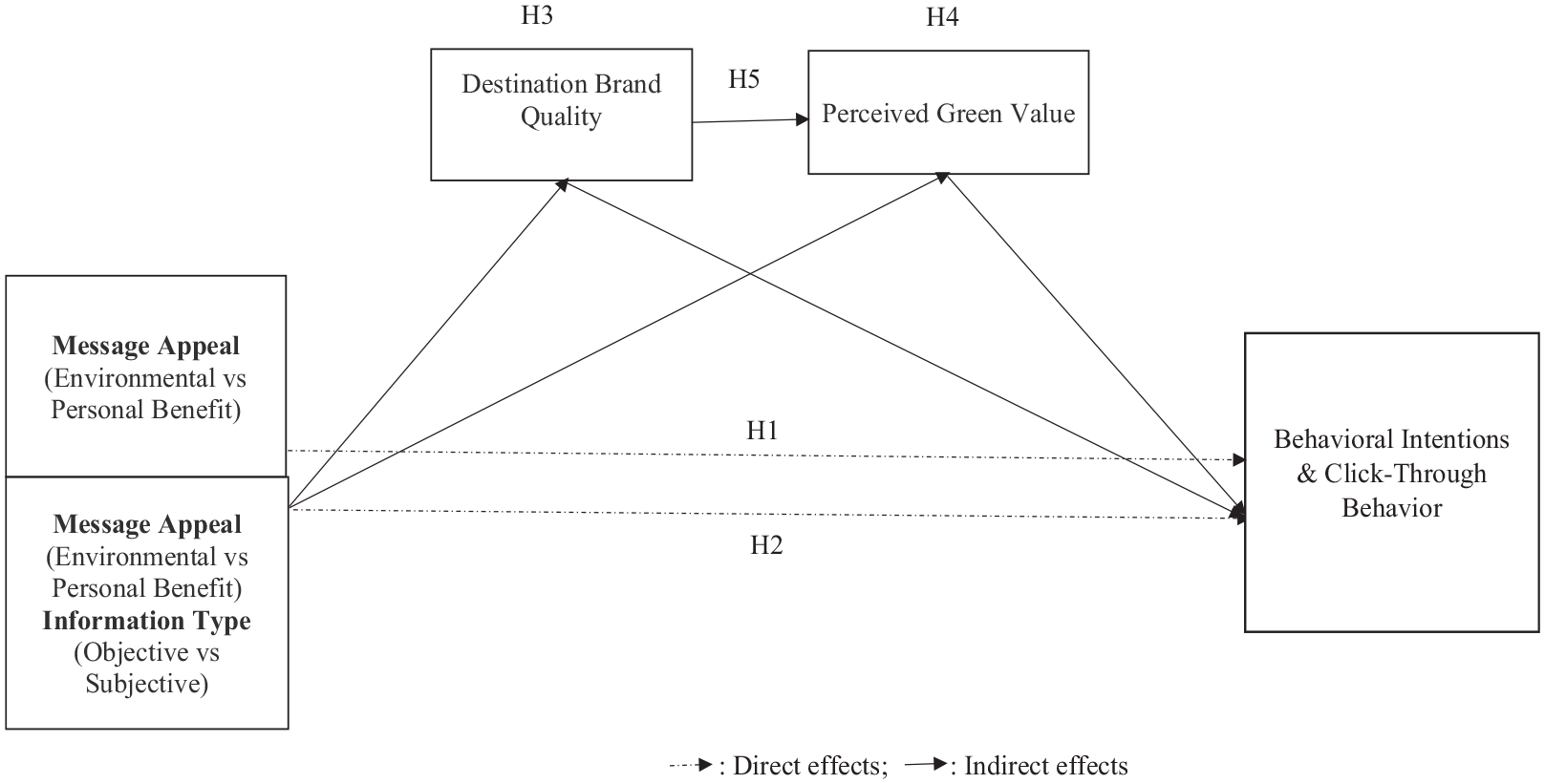
The research model.
The rationale for selecting these particular destinations is grounded in their recognition by esteemed international organizations specializing in green certifications and awards, such as the Global Sustainable Tourism Council (gstcouncil.org) and Green Destinations (greendestinations.org). Portugal and Turkiye, with 22.3 and 50.5 million international tourist arrivals (United Nations World Tourism Organization, 2023), respectively, emerged as favored destinations within the certified roster of these organizations. This deliberate choice extends beyond general appeal, incorporating manipulations of objective information to increase study realism. By focusing on these influential travel destinations, we anticipate gaining nuanced insights into tourist behavior, destination brand quality, and perceived green value, contributing to a comprehensive understanding of our research model.
Study 1
Stimuli, Procedures, and Measures
We apply a 2 (message appeal: environmental vs. personal benefit) × 2 (objective vs. subjective information) between-subjects online experimental design to test the proposed hypotheses. The messages for environmental and personal benefits are adapted from Kang and Sung (2022). The former states “FEEL GOOD AND RESPONSIBLE! Baiã, as a tourism destination, is committed to make your tourism experience to be more sustainable and enhance your personal well-being”. The latter includes a message that emphasizes, “SAVE THE ENVIRONMENT! Baião, as a tourism destination, is committed to protecting the quality of water, air and soil, as well as the diversity of animal and plant species.” The subjective information includes the statement: “Baião has been perceived as a sustainable destination by many travelers”, while the objective information states “Baião has been certified as a sustainable destination by Global Sustainable Tourism Council”. For added realism, a captivating image from Baião’s official tourism portal (visitbaiao.pt/en/) is chosen as a visual stimulus, aiming to authentically represent the destination under various conditions. The selected landscape imagery not only facilitates visual storytelling (de San Eugenio Vela et al., 2017) but also serves to potentially emphasize Baião’s strong commitment to sustainability. Highlighting Baião as a certified sustainable destination by the Global Sustainable Tourism Council adds profound realism to our message appeals. These impactful messages, disseminated through Facebook outlet for Baião (see Appendix 1), underscore the conscious choice represented—an unwavering dedication to effective sustainable tourism communication.
We conducted a pre-test with 160 participants (Mage = 38.93, Female: 51.9%) recruited from an online platform to determine whether message appeals were perceived in the same way as intended. Participants evaluated message appeals and information types based on a seven-point semantic differential scale (i.e., 1 = personal benefits, 7 = environmental benefits; 1 = subjective information, 7 = objective information). As expected, participants perceived message appeals with environmental benefits (M = 4.31) to highlight more environmental benefits compared to those with personal benefits (M = 3.59, t[158] = 1.12, p= <.001). Objectively framed destination sustainability information (M = 4.96) was perceived to be more objective than the subjectively framed destination sustainability information (M = 2.95, t[158] = 4.02, p ≤ .001). The pre-test confirmed the suitability of message appeals and information types for destination sustainability.
To determine the sample size, a priori analysis was conducted using the ANOVA test to determine the sample size through G*Power (Kang, 2021) with parameters of a medium effect size of 0.25, significance levels set at α = .05, and a power of 0.8 (1 − β error probability). The analysis indicated a required sample size of 188 participants, with 47 participants allocated to each experimental condition. Subsequently, for the main study, we recruited a total of 308 participants among British residents who are at least 18 years old and have regularly used Instagram for a minimum of 1 month. Participants are automatically selected and assigned through Prolific as an online survey platform, which is suitable for social science experiments (Palan & Schitter, 2018). Participants were randomly and equally allocated to four experimental groups, 77 per group, meeting the minimum requirement of 30 per condition (Sawyer & Ball, 1981). The conditions included the following: Condition 1: Personal Benefits, Subjective Information-reference category; Condition 2: Personal Benefits, Objective Information; Condition 3: Environmental Benefit, Subjective Information; and Condition 4: Environmental Benefit, Objective Information.
Respondents assessed behavioral intentions (i.e., visit and recommend intentions) with six statements (α = .90) adapted from Can, Ekinci, and Pino (2021), perceived green value with three statements (α = .93) adapted from Ng et al. (2014), and evaluated destination brand quality with four statements (α = .93) adapted from Buil et al. (2008). All items are measured on a 7-point Likert scale, (1 = strongly disagree, 7 = strongly agree) (see Appendix 2). Brand familiarity and past visits to the destination were included as controlled variables. We measured the former using five statements (α = .97) adapted from Artigas et al. (2015), whereas we measured the latter with one question asking whether participants have ever visited the destination or not. We applied an independent sample t-test and one-way ANOVA to test the main relationships along with the PROCESS macro (Model 6, Bootstrap: 5000; Hayes, 2018) for serial mediator analysis.
Findings
Respondent Profile: Participants are almost equally distributed in terms of gender (Female: 50.3%; Male: 49.4%). The majority of them have an annual income level of £20,000 to 39,999 (34.4%), with the average mean age being 38.5.
Manipulation Check: A one-way ANOVA reveal that there are no statistical differences among experimental conditions regarding the understandability of the messages (F[3, 304] = 1.88, p = .13). Participants perceive that environmental benefit message appeals (M = 6.27) highlight more environmental benefits than personal benefit message appeals (M = 4.09, t[306] = 8.67, p ≤ 001). Also, information that includes objective destination sustainability (M = 5.95) is perceived as more objective than subjective destination information (M = 2.59, t[306] = 9.18, p ≤ 001).
We perform an independent samples t-test to assess the effects of message appeals on behavioral intentions. The results show that messages that highlight environmental benefits (M = 4.98) foster greater behavioral intention than those emphasizing personal benefits (M = 4.79, t[306] = .08, p = .05). Hence, this result supports H1. A one-way ANOVA results shows that participants’ behavioral intentions statistically differ based on their assigned conditions (F[3, 304] = 5.78, p = .001). That is, messages that highlight environmental benefits and include objective destination sustainability information (M = 5.13) stimulate greater behavioral intentions as opposed to those that emphasize personal benefits that include subjective information (M = 4.58, p = .001). However, such an effect is not statistically significant for environmental benefits messages that include subjective information (M = 4.99, p = .74) and personal benefit messages that include objective information (M = 4.83, p = .13). Thus, these results support H2 for only one condition.
We apply PROCESS Macro (Model = 6, 5,000 bootstrapped resamples) for a multi-categorical serial mediation model (see Table 1).
Model Summary Information for the Serial Mediator Model.
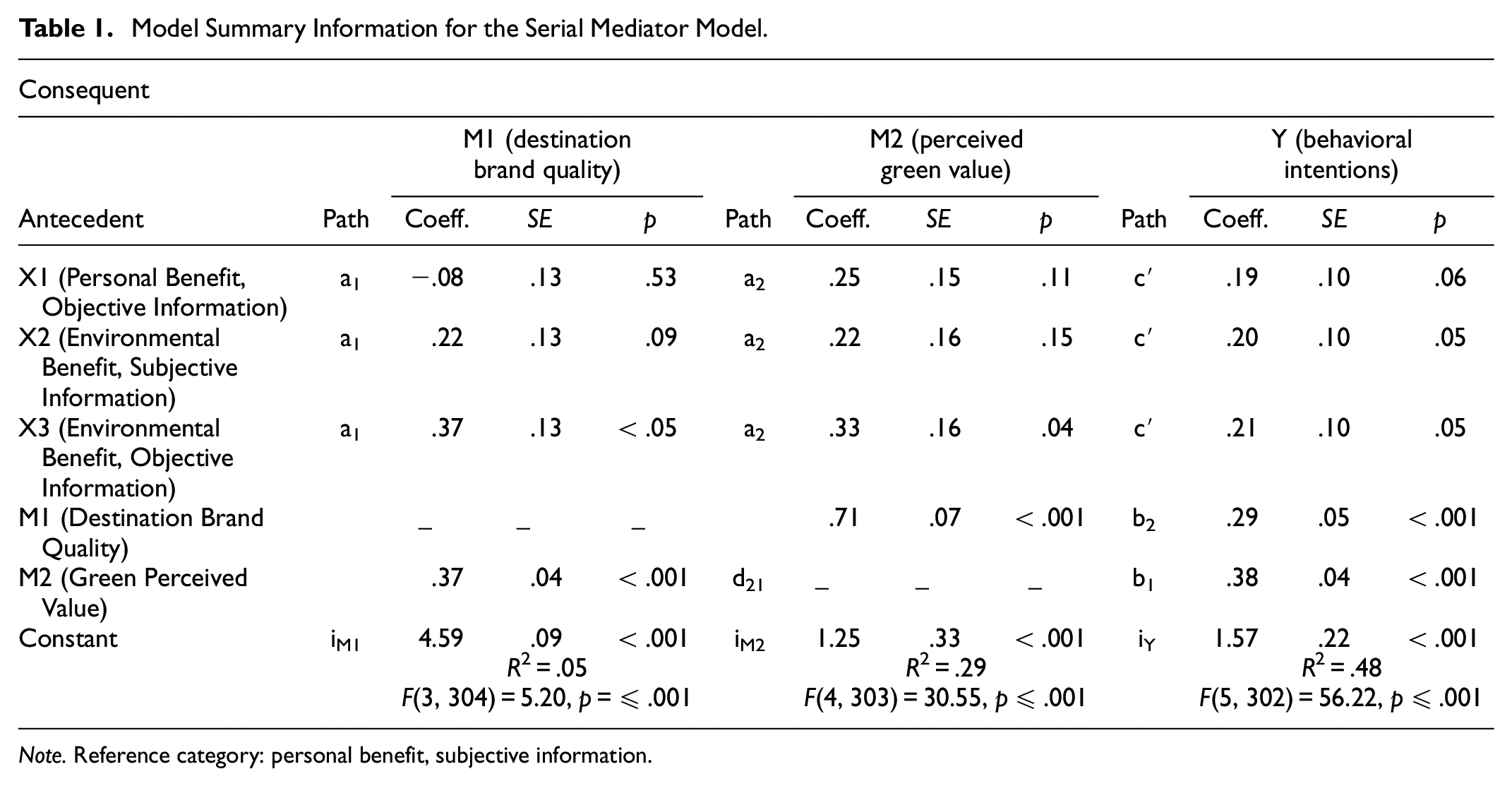
Note. Reference category: personal benefit, subjective information.
The mediating effects of destination brand quality and perceived green value on the relationship between message appeals along with information types and behavioral intentions are shown in Table 2.
Model Summary Information for the Serial Mediation Model.
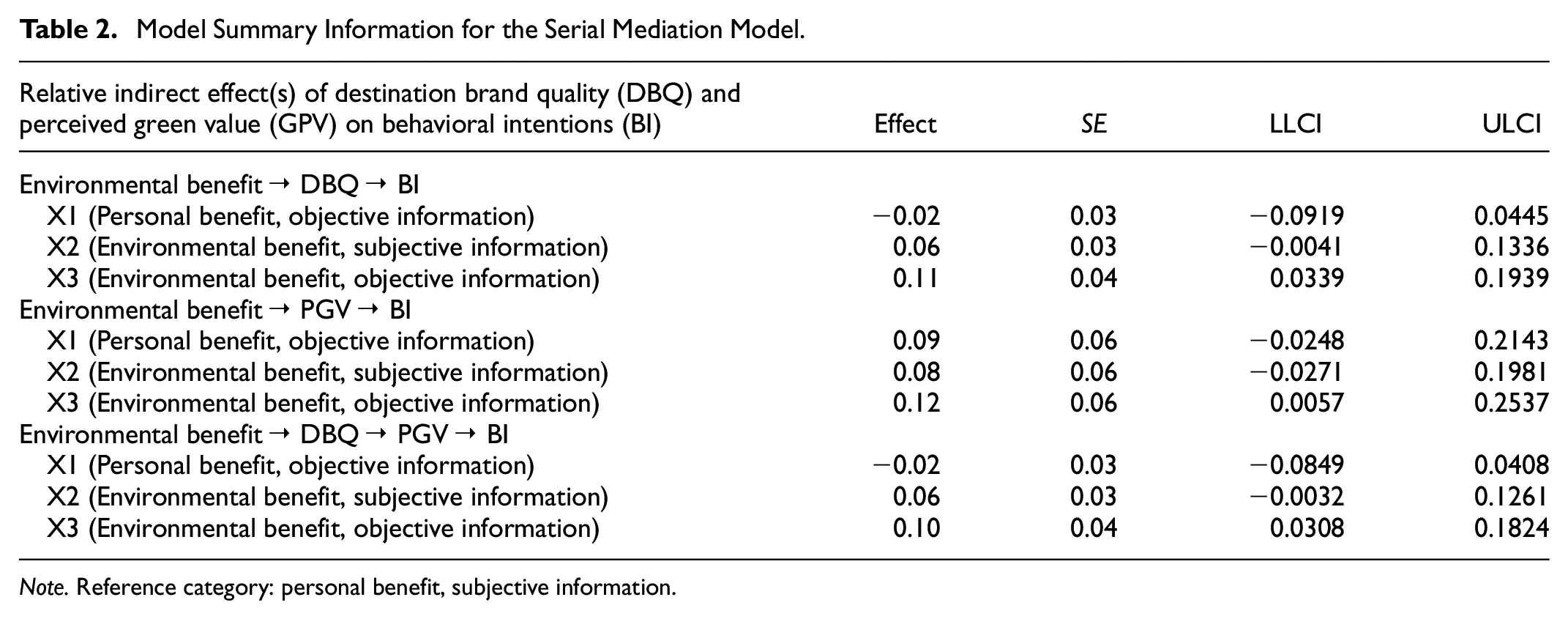
Note. Reference category: personal benefit, subjective information.
The results indicate that the mediator role of destination brand quality in the relationship between message appeal along with information type and tourists’ behavioral intentions is statistically significant only for one group, but not other two groups, and thus, the results partly provide support for H3. Perceived green value also partially mediates this relationship for only environmental message appeals with objective destination sustainability information. Such a mediation effect is not statistically significant for messages that focus on environmental benefits with subjective information and personal benefits along with objective sustainability information. Thus, these results provide partial support for H4.
Furthermore, a significant “environmental benefit along with objective information → destination brand quality → perceived green value → behavioral intentions” serial mediation process for message appeals is found. However, this result is not statistically significant for the other two conditions. These results provide partial support for H5. We re-ran the analysis by adding past visit to the destination and familiarity with the destination as covariates to the model; however, the results did not significantly change.
Study 2
Stimuli, Procedures, and Measures
Study 2 aims to examine the impact of environmental message on tourists’ click-through behavior, both directly and indirectly through destination brand quality and perceived green value. This study involves using a 2 (message appeal: environmental vs. personal benefit) × 2 (information type: objective vs. subjective information) between-subjects online experimental design by employing Bitez (Turkiye) as a different tourism destination. We use the same messages for environmental and personal benefits as in Study 1. Since Bitez as a tourism destination has been awarded as being a green destination by Green Destinations (greendestinations.org), we have slightly updated the information messages that include destination sustainability to enhance realism. Messages with subjective information include the statement: “Bitez has been perceived as a green destination by many travelers,” whereas messages with objective information state “Bitez has recently won the Green Destinations People’s Choice Award.” As a stimulus, we chose one image of Bitez from its official tourism portal (bodrum.goturkiye.com) for all conditions. Also, we advertise these messages in a sponsored post format on Facebook (see Appendix 3).
We conducted a pre-test with 160 participants (Mage = 36.84, Female: 53.8%) recruited from an online platform. Participants perceived an objectively framed destination sustainability information message (M = 5.11) to be more objective than a subjectively framed destination sustainability information one (M = 4.76, t[158] = 2.59, p = .001). This result confirmed the appropriateness of the manipulations.
For the main study, we recruited a total of 320 participants among British residents who are at least 18 years old and regular users of Facebook. These participants were selected and randomly assigned through the crowdsourcing platform as for Study 1. Participants were equally allocated to four experimental conditions; 80 per condition. We employed logistic regression analyses to test the main effects and the PROCESS macro (Model 6, Bootstrap: 5,000; Hayes, 2018) for serial mediator analysis.
We utilized the same measurements as in Study 1, while click-through behavior was measured as a proxy for behavioral intention as the main dependent variable in this study (Can et al., 2020; Morales et al., 2017).
Results
Manipulation Check: Participants assigned to the environmental benefit condition (M = 6.33) perceive messages as highlighting more environmental benefits than those who are allocated to the personal benefit message condition (M = 3.86, t[318] = 18.78, p = <.001). Also, as intended, they perceive objective messages as having more objective destination sustainability information (M = 5.84) than subjective ones (M = 2.59, t[318] = 15.96, p = <.001). Moreover, there are no statistical differences among experimental conditions regarding the understandability of the messages (F[3, 316] = 2.48, p = .06).
Logistic regression analyses indicate that environmental messages foster higher click-through behaviors than personal ones (β = .84, Wald χ2 = 10.80, p = .001), thus providing support for H1. Also, compared to personal message appeals that include subjective information, environmental message appeals that include subjective (β = .93, Wald χ2 = 6.13, p = .01) or objective information are more effective in activating participants’ click-through behaviors (β = 1.15, Wald χ2 = 9.46, p = .00), whereas personal message appeals that include objective information are not (β = .38, Wald χ2 = .95, p = .33). These results partially support H2.
Then, we conduct a serial mediation analysis using the PROCESS Macro for SPSS (Model 6) with 5,000 bootstrap samples. This analysis assesses the serial mediator effect of message appeals along with information type on click through behaviors via destination brand quality and perceived green value (see Table 3).
Model Summary Information for the Serial Mediation Model.
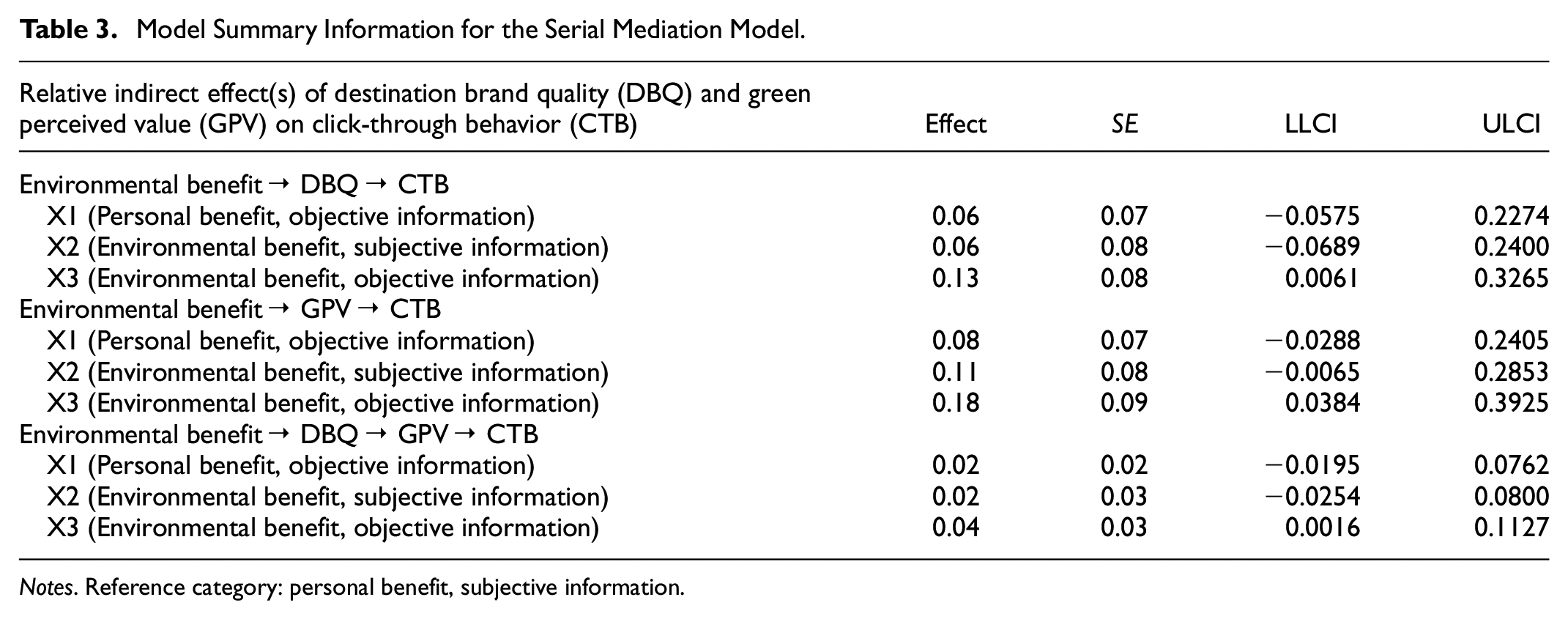
Notes. Reference category: personal benefit, subjective information.
The results indicate that the mediating effects of destination brand quality and perceived green value are not statistically significant for two conditions: environmental message appeals that include subjective information and personal benefits that include objective destination sustainability information. However, these variables partially mediate the relationship between environmental message appeals, specifically those with objective information, and click-through behavior. Thus, these results partially support H3 and H4. Finally, destination brand quality and perceived green value serially mediate the effect of message appeals along with information type on click-through behavior only for one condition (i.e., environmental message appeals with objective information). These results partially support H5.
We carry out analysis for behavioral intentions. Figures 2 and 3 show the mean degrees of the measured variables (see also Appendix 2).
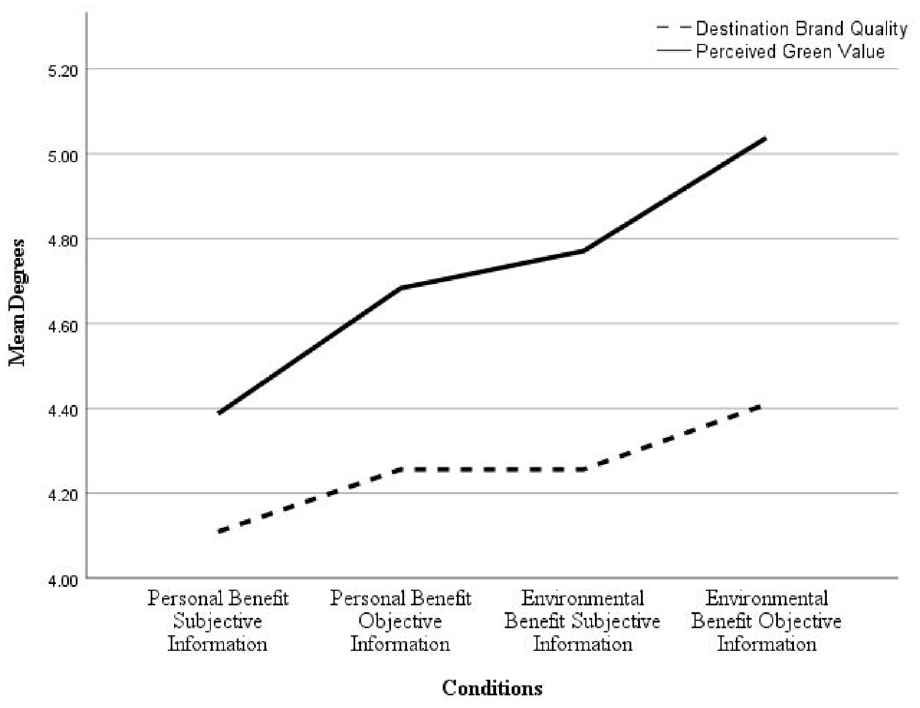
Interaction effects of message appeals and information types on destination brand quality and perceived green value.
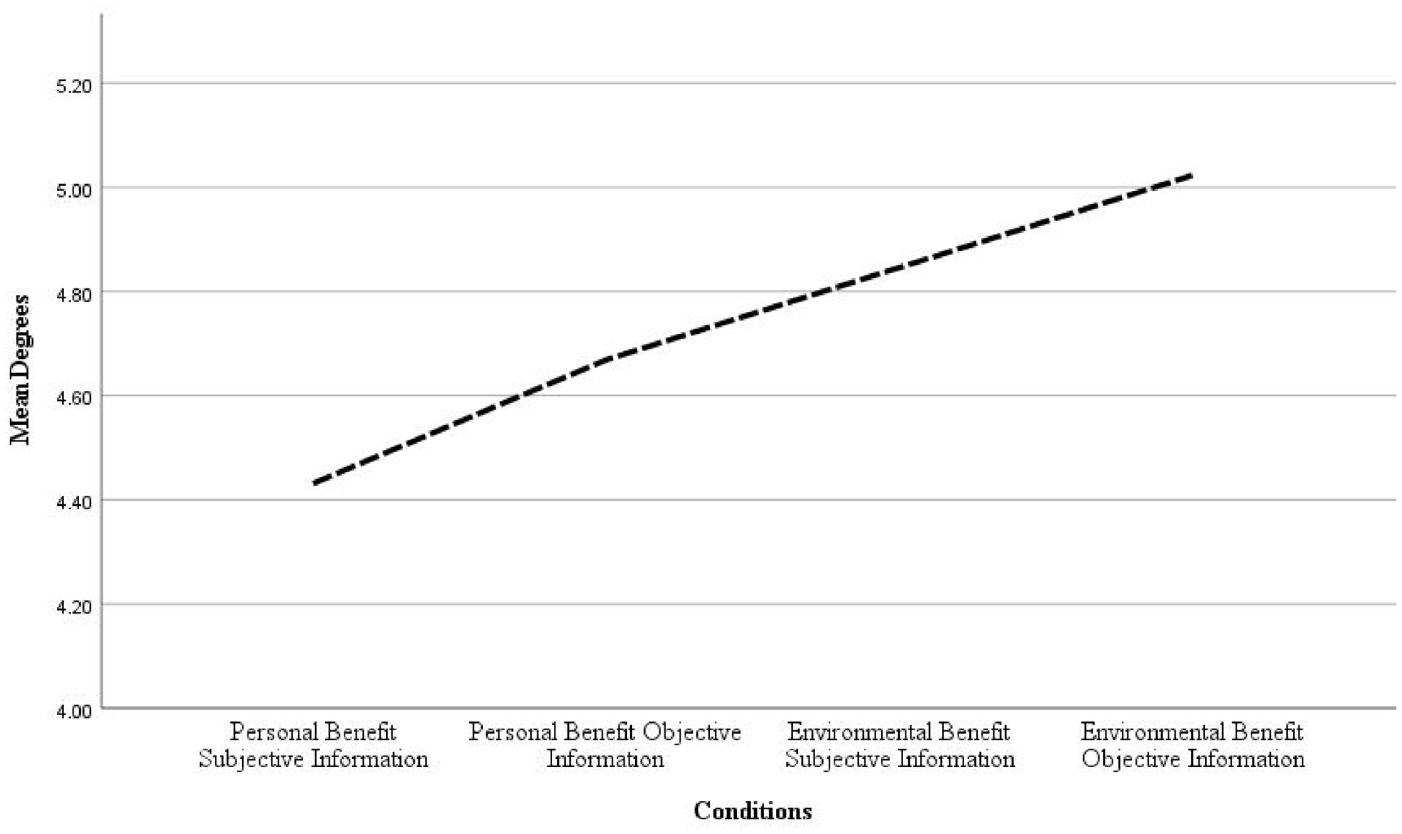
Interaction effects of message appeals and information types on behavioral intentions.
Bootstrap analysis results from another serial mediation analysis indicate that the mediator role of destination brand quality is statistically significant for only one condition (Condition 4: Effect = 0.12, 95% CI: [0.01, 0.24]), but not for the other two conditions (Condition 2: Effect = 0.06, 95% CI: [−0.05, 0.17]; Condition 3: Effect = 0.06, 95% CI: [−0.06, 0.19]), thus providing partial support for H3. The results confirm the mediator role of perceived green value for environmental messages that include either subjective (Effect = .08, 95% CI: [0.00, 0.17]) or objective information (Effect = 0.13, 95% CI: [0.05, 0.22]), but not for messages that include personal benefits with objective information (Effect = .06, 95% CI: [−0.02, 0.14]). These results partially support H4.
The results also confirm that destination brand quality and perceived green value serially mediate the relationship between message appeals along with information type and behavioral intentions for environmental messages that include objective destination sustainability information (Effect = 0.03, 95% CI: [0.00, 0.07]). Such an effect is not statistically significant for environmental message appeal that includes subjective destination brand sustainability information (Effect = 0.02, 95% CI: [−0.02, 0.05]) and personal message appeal along with objective information (Effect = 0.02, 95% CI: [−0.01, 0.05]). Thus, these results support H5 for only one condition. When we repeat the analysis, including past experience with the destination and familiarity with the destination as covariates in the model, the results do not significantly change.
In summary, Table 4 outlines the findings from hypotheses testing in both Study 1, where behavioral intention is the outcome, and Study 2, which considers click-through behavior.
Hypotheses Testing Results.
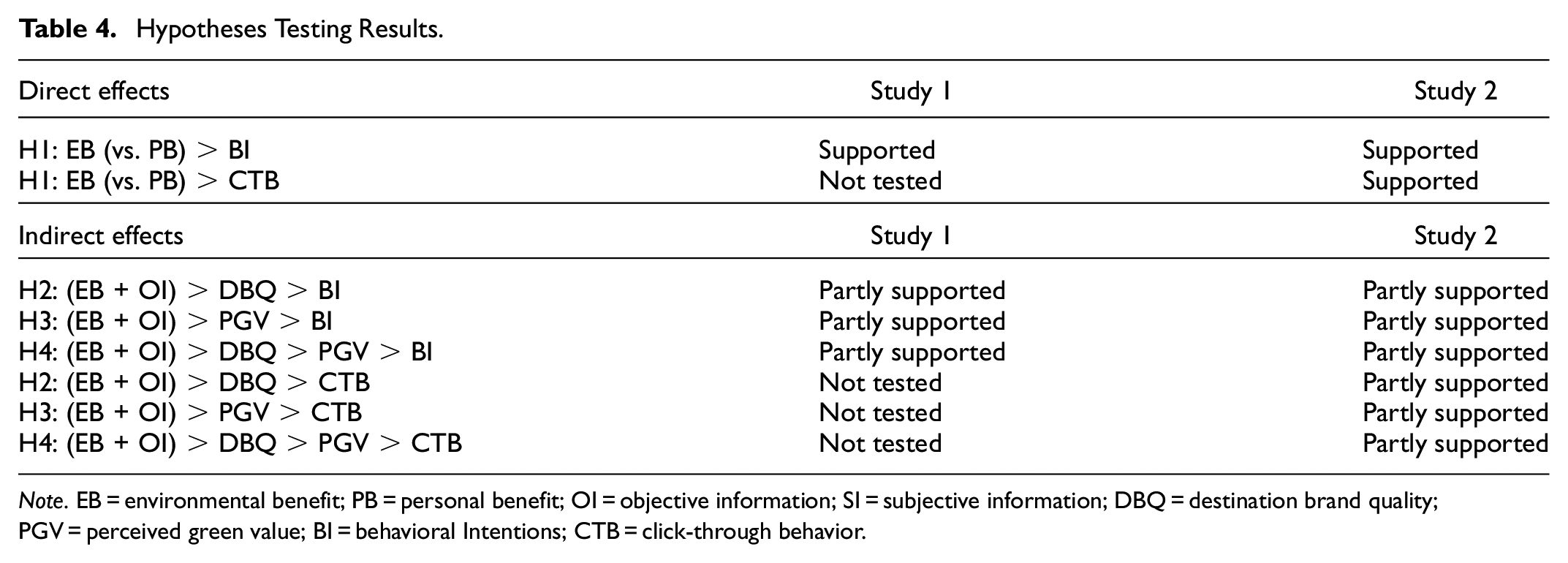
Note. EB = environmental benefit; PB = personal benefit; OI = objective information; SI = subjective information; DBQ = destination brand quality; PGV = perceived green value; BI = behavioral Intentions; CTB = click-through behavior.
The results indicate a positive impact of environmental message appeal (H1) and such an appeal, along with objective information (H2) over personal message appeal on behavioral intentions and click-through behavior . The mediator effects of destination brand quality and green perceived value on the relationship between environmental message appeal with objective destination sustainability information and behavioral intentions, as well as click-through behavior, are partially confirmed (H3 and H4). Furthermore, the serial mediator effect of destination brand quality and green perceived value on the relationship between environmental message appeal along objective information and behavioral intentions as well as click-through behavior is also partly supported (H5).
Discussion and Conclusions
Despite the diverse topics covered in tourism destination sustainability, experimental research still remains limited, particularly on the compatibility between message appeals along with information types and behavioral intentions. Not only to infer causality, it is also important to understand the underlying factors explaining the effects of message appeals on tourists’ responses. The current research involves delving into the effects of message appeals along with information types on behavioral intentions. Also, whether destination brand quality and green perceived value explain such effects is investigated.
The findings from Study 1 suggest that on Instagram, sustainability messages with an environmental benefit appeal are more persuasive in encouraging tourists to visit a specific destination compared to messages with a personal benefit appeal. Additionally, incorporating objective sustainable destination information enhances the persuasiveness of this appeal. The results of Study 2 highlight the effectiveness of such message appeal, particularly in Facebook adverts where the impact, specifically click-through behavior, was observed. Importantly, our primary focus is on evaluating the impact of sustainable tourism communication strategies rather than directly comparing the effectiveness of Instagram and Facebook platforms. These insights offer valuable contributions with both theoretical and practical implications for enhancing our understanding of sustainable tourism communication strategies.
Theoretical Implications
The current study introduces novel insights into how destinations can persuasively communicate sustainability practices through messages in social media advertisements. While consumers generally express a desire for environmentally beneficial products, the persuasiveness of advertising messages incorporating such benefits may vary based on contextual factors (Royne et al., 2012). Despite prior research indicating no substantial difference between the promotion of environmental and personal benefits (Grimmer & Woolley, 2014), our study challenges this perspective by revealing that messages emphasizing environmental benefits exert a more pronounced impact on behavioral intention than those highlighting personal benefits. This alignment with the findings of Kang and Sung (2022) stands in contrast to the conclusions drawn by Gomes et al. (2023). The divergence from the latter could be attributed to contextual variations and sample profile differences. Gomes et al. (2023) suggested the ineffectiveness of perceived green benefits on the willingness to pay more for green products, specifically focusing on Generation Z and green products. In contrast, our study considered a broader sample of general consumers within the tourism context, potentially contributing to the differing results.
It is crucial to note that the impact of environmental message appeal on behavioral intentions is not evident when messages include subjective information. This effect is only apparent in combined messages that incorporate both environmental benefits and objective or verifiable information. This observation aligns with the findings of Gursoy et al. (2022), who demonstrated the effectiveness of combining emotional appeal with objective information in public health communications. Building upon this existing finding, our present study extends the understanding by suggesting that the inclusion of verifiable information might enhance the persuasiveness of claims related to environmental benefits. This emphasizes the importance of not only conveying the environmental aspects but also supporting them with verifiable information, rather than relying solely on perceived information, to strengthen the persuasive impact on consumer behavioral intentions.
Furthermore, our research contributes novel insights aligned with consumption value theory, emphasizing the potential influence of consumption values on consumer choices. While previous studies confirm the impact of consumption values on destination choice (Phau et al., 2014) and tourism destination loyalty (Wang et al., 2018), our study uniquely applies these concepts to environmental versus personal message appeals, along with the inclusion of destination sustainability information. We revealed that when consumers face uncertainty regarding destination attributes such as service or product quality, they assess functional consumption value of quality and perceived worth or value based on sustainability attributes.
Lastly, our study extends the understanding of the relationship between the functional utility of a brand based on brand quality, and perceived value as documented in general marketing literature (Vera, 2015). We demonstrate the validity of this relationship in tourism context concerning environmental message appeals for destination brand quality and green perceived value.
Practical Implications
The valuable insights from our study present compelling opportunities for destination marketers to bolster their persuasive marketing communication strategies regarding sustainability on social media advertisements. Our research underscores the importance of positioning of the preservation of natural environments as a central element in attracting potential tourists. However, the effectiveness of this approach hinges on the craft of persuasive messaging by advertisers, placing a deliberate emphasis on environmental benefits over personal gains for tourists.
Moreover, these messages should not only underscore the positive impact on the environment but also be bolstered by concrete, objective information about the destination’s commitment to sustainability. For instance, a specific destination can showcase its eco-label certifications as sustainable labels, such as the Certificate for Sustainable Tourism (CST) as a prestigious destination certification. A compelling social media advertisement could visually depict the CST logo alongside imagery symbolizing the destination’s environmental sustainability efforts. This tangible evidence serves as a powerful message, thus signifying not only a dedication to environmental sustainability but also conveying the exceptional quality of the destination’s natural attractions. The persuasive messaging would then intricately detail how the destination’s eco-friendly practices actively contribute to preserving its unique ecosystems, offering tourists an unparalleled and high-quality experience.
In light of our findings, we recommend that destination marketers strategically highlight the dual impact of destination brand quality and perceived green value in their social media advertisement messages to influence travelers’ behavioral intentions. Specifically, highlighting the superior quality of services and product offerings at the destination contributes to a positive visitor experience. Additionally, integrating messaging that underscores the experiential aspects, particularly the environmental value visitors can enjoy during their stay, is crucial. To maximize impact, we advise marketers to weave these insights into their social media advertisements. They should craft compelling narratives regarding their sustainability efforts, showcasing the quality benefits and the experiential values of the destination, to resonate more effectively with the target audience and ultimately influence positive behavioral intentions among potential travelers.
Limitations and Future Research Avenues
The current study has not considered any potential moderators or other mediators for the claimed effects. For example, brand credibility could be one of these mediators (Jiménez-Barreto et al., 2020). Thus, rather than brand quality, it would be interesting to understand how messages with different appeals as well as different information types can help in building brand credibility. Previous studies have also discussed different types of authenticity that lead to various favorable outcomes (e.g., Yi et al, 2022). It would be interesting to explore how different sustainable message appeals and information types affect perceptions of authenticity. There might also be moderators that affect how the appeal of environmental messages affects behavior. For instance, earlier research revealed that environmental concerns of travelers affect sustainability communication (e.g., Han et al., 2019). Future research could, therefore, test this moderator on the proposed model.
Footnotes
Appendix
Stimuli for Study 2.
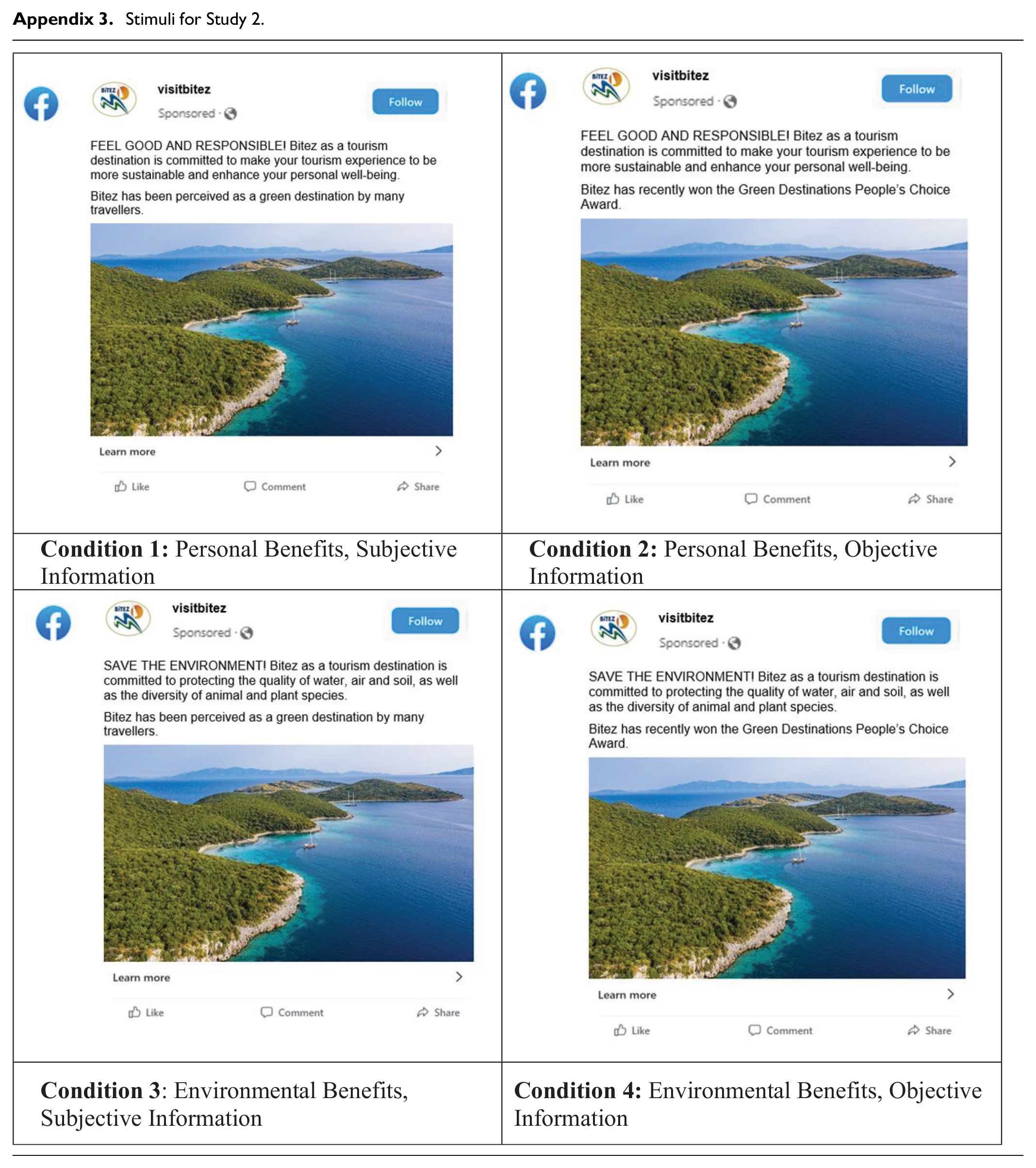
Condition 1: Personal Benefits, Subjective Information |
Condition 2: Personal Benefits, Objective Information |
Condition 3: Environmental Benefits, Subjective Information |
Condition 4: Environmental Benefits, Objective Information |
Declaration of Conflicting Interests
The author(s) declared no potential conflicts of interest with respect to the research, authorship, and/or publication of this article.
Funding
The author(s) received no financial support for the research, authorship, and/or publication of this article.
