




Abstract
As sustainable tourism gains momentum, understanding the impact of Cittaslow promotion on tourist behavior is crucial yet remains unexplored. This study addresses this gap by investigating the effect of Cittaslow promotion on tourists’ behavioral responses, especially within social media contexts and small urban tourism destinations. Applying signaling theory, we conducted a field experiment with real Instagram advertisements (n1 = 51,089 impressions) and an online experiment (n2 = 212). Results reveal that Cittaslow promotion campaign directly enhances tourists’ interest in the Cittaslow destination, willingness to visit, and likelihood to recommend. Furthermore, Cittaslow promotion indirectly influences these behaviors through destination brand identification, brand quality, and brand attachment. Notably, the serial mediation effect through destination brand quality and attachment is stronger for travelers with a higher need for restoration. These insights suggest that small urban tourism destinations can enhance tourist interest in the destination, brand identification, and brand quality, and foster emotional bonds through Cittaslow promotion campaigns.
Keywords
Introduction
Small urban tourism destinations, known for their rich cultural heritage, intimate settings, and slower pace of life, face significant competitive challenges due to limited financial resources, low brand awareness, and unclear market positioning (Goffi & Cucculelli, 2014). A key issue for these destinations is developing a favorable brand image and attitude to influence tourists’ behavioral intentions. The Cittaslow movement aligns well with the unique attributes of small urban destinations, thereby offering immersive, sustainable tourism experiences that address these challenges (Oh et al., 2016).
A distinct destination brand identity fosters positive tourist attitudes and encourages favorable behavioral responses toward destinations (Ekinci, 2014; Han et al., 2019; Park & Kim, 2016). Drawing inspiration from broader concepts such as “slow tourism” and “slow food,” the Cittaslow movement aims to improve the quality of life in small towns with populations under 50,000 by cultivating unique destination brand images. Currently, the Cittaslow Union encompasses 297 member towns across 33 countries (cittaslow.org). This movement promotes a slower, more mindful pace of life, rooted in seven sustainability principles, including environmental preservation, sustainable agriculture, and renewable energy (Hatipoglu, 2015; Moira et al., 2017; Nilsson et al., 2011). The promotion of Cittaslow as a brand represents a strategic approach to differentiation and positioning, utilizing distinctive logos and informational cues to emphasize a destination’s sustainability initiatives and the quality of its products and services. This approach has the potential to shape tourist behavior by aligning with their values and preferences for sustainable and high-quality experiences.
Despite growing interest in the Cittaslow movement over the past decade, previous research has been conceptually and geographically limited, focusing mainly on “slow tourism destinations” and specific countries like China, the USA, and Türkiye (Conway & Timms, 2012; Ekinci, 2014; Semmens & Freeman, 2012; Servon & Pink, 2015). Furthermore, these studies have primarily explored slow tourism from the perspectives of local communities (Park & Kim, 2016; Pekerşen & Kaplan, 2023) or tourist satisfaction and loyalty (Dickinson et al., 2011; Hatipoglu, 2015; Presenza et al., 2015; Tu et al., 2022). Another important issue is that travelers increasingly rely on social media for travel-related information in the digital era. As a result, Destination Management Organizations and tourism practitioners are integrating social media into their marketing and branding strategies. Therefore, evaluating the effectiveness of social media campaigns on tourist behavior is crucial (Dedeoğlu et al., 2020; Stojanovic et al., 2022). To the best of our knowledge, no study has yet examined the effectiveness of Cittaslow promotions on social media, particularly in the context of small urban tourism destinations. This gap highlights the need to research whether Cittaslow promotions influence tourist behavior and contribute to the competitiveness of small urban tourism destinations from a tourist’s point of view.
Therefore, this study addresses the following research questions: RQ1: Do Cittaslow promotions influence tourists’ behaviors, including click-through behavior and behavioral intentions toward destinations? RQ2: Do factors such as destination brand identification, brand quality, and brand attachment mediate the impact of Cittaslow promotion on tourists’ behavioral intentions? RQ3: Do varying levels of tourists’ need for restoration moderate the effect of Cittaslow promotion on the sequential relationships among destination brand identification, quality, and attachment? To address these questions, this study is grounded in signaling theory as its core theoretical foundation. The concept of information asymmetry, central to signaling theory, has substantial potential to shape tourist behavior. By incorporating Cittaslow principles and its logo, we propose that social media promotions can strategically enhance the perceived quality of destinations, thereby effectively reducing information asymmetry and fostering stronger destination loyalty. Hence, the aim of this study is to investigate the direct effect of Cittaslow promotion on tourists’ behavioral responses toward small urban tourism destinations. This research specifically proposes that Cittaslow campaigns influence tourist behavior while enhancing perceived destination brand quality, brand identification, and brand attachment. When tourists perceive a Cittaslow destination as high-quality and experience a sense of belonging, they are more likely to develop a strong emotional connection, which fosters destination loyalty (Japutra, 2022).
The study makes significant contributions in four areas. First, it examines the impact of Cittaslow promotion on tourists’ behavioral responses toward small urban destinations. While previous studies have explored slow tourism, empirical evidence on the effectiveness of Cittaslow promotions on social media is lacking (Chi & Han, 2020; Park & Kim, 2016). This study addresses this gap by investigating the direct impact of Cittaslow promotions on behavioral responses (i.e., click-through behavior, willingness to visit and recommend) through a combination of field (Study 1) and online experiments (Study 2). The field experiment responds to Demeter et al.’s (2023) call for real-world applications in sustainable tourism, thus offering practical insights into the effectiveness of Cittaslow promotion on social media. The online experiment provides controlled insights into its impact.
Secondly, this study explores the mechanisms through which Cittaslow promotion impacts tourists’ behavioral responses. Previous research indicates that tourist behavior is shaped by cognitive, symbolic, and emotional components (Ekinci et al., 2013). Shimul (2022) emphasizes the importance of further investigating brand attachment within sustainable tourism, particularly as Cittaslow promotion indirectly influences tourists’ behavior through functional (brand quality), symbolic (brand identification), and emotional (brand attachment) benefits (Can et al., 2023). Accordingly, this study contributes by examining how Cittaslow advertising affects these critical dimensions, shedding light on the pathways that foster tourists’ positive behavioral responses.
Thirdly, this research applies signaling theory to the Cittaslow context, addressing a notable gap in its application to sustainability in small tourism destinations and social media. By doing so, it expands the understanding of how signaling theory can enhance sustainable practices and communication strategies in niche tourism markets. Signaling theory, commonly used in marketing to address consumer information asymmetry (Shahid et al., 2024), suggests that consumers infer product attributes to reduce uncertainty about quality and value (Loureiro et al., 2019; Rao et al., 1999; Spence, 1973, 2002). In tourism, marketing signals—such as destination logos, eco-labels, and brand heritage—play an influential role in tourist perception (Can et al., 2023; Cerqua, 2017; Qiu et al., 2023; Song & Kim, 2022). Cittaslow promotion, particularly by using its logo and highlighting its principles, has the potential to signal a destination’s commitment to sustainability, high living standards, and cultural preservation (Ekinci, 2014; Park & Kim, 2016), thereby enhancing traveler confidence in the destination’s quality (Chi & Han, 2020). However, there is currently a lack of empirical evidence supporting this potential. Accordingly, this study aims to determine whether Cittaslow promotion effectively signals destination attributes, reduces information asymmetry, and guides tourist decisions in the context of small urban destinations and social media engagement.
Finally, the impact of Cittaslow promotion on behavioral responses through brand identification, brand quality, and brand attachment may be more significant for individuals with a higher need for restoration, defined as the desire to recover from mental fatigue in relaxing environments (Hartig & Staats, 2006). This need can influence preferences for urban sustainability areas that offer restorative qualities (Van Den Berg et al., 2007). While tourism literature identifies the need for restoration as a key motive for engaging in tourism and leisure activities, it is unclear whether such motives affect tourists’ reactions to advertising stimuli (Pearce & Lee, 2005; Vada et al., 2023). Thus, our study examines whether individuals with a higher need for restoration are more likely to respond positively to sustainability cues, enhancing their perception of destination brand quality, strengthening brand identification, and deepening brand attachment. To explore this, the study employs a moderated serial mediation analysis to reveal how these relationships vary based on a traveler’s need for restoration.
Conceptual Framework and Research Hypotheses
Slow Tourism and Cittaslow
Slowness stands as the core principle uniting initiatives like slow food, slow city, and slow tourism, all of which can be intricately linked to sustainable development by incorporating key elements (Klarin et al., 2024; Lin, 2017, 2018; Walker & Lee, 2021). Slow tourism revolves around the idea of deceleration, opting for shorter travel distances, and enriching the overall tourist experience both during the journey and at the destination (Lumsdon & McGrath, 2011). The scope of the Cittaslow extends beyond the slow city concept, encompassing a range of interconnected initiatives addressing climate change, environmental sustainability, ecosystem preservation, economic progress, social advancement, and the promotion of sustainable energy solutions (Cittaslow International, 2023). These initiatives share three fundamental pillars: the importance of doing things at the right speed, changing attitudes toward time, and its utilization, and prioritizing quality over quantity (Heitmann et al., 2011).
Cittaslow offers an alternative to fast-paced living, thereby emphasizing local diversity, cultural strengths, historical roots, and a relaxed lifestyle while also promoting sustainable development. Originating in 1999 under the leadership of Paolo Saturnini, the mayor of Greve in Chianti, Italy, Cittaslow establishes standards and plans to create calm urban areas and encourages cities to adopt these measures (cittaslow.org). A key aim is to mitigate commercialization and mass tourism’s impacts (Heitmann et al., 2011).
Unlike other slow tourism practices, Cittaslow prioritizes improving the quality of life for local communities. It aims not only to create a relaxing experience for tourists but also to foster a deeper, lasting connection between tourists and the destination through meaningful interactions. Furthermore, Cittaslow initiatives address the social, cultural, and economic aspects of a community, promoting a balanced approach to sustainability. Consequently, Cittaslow represents a holistic movement that transcends tourism, encompassing environmental, cultural, and social dimensions, setting it apart from other slow tourism practices (Ekinci, 2014; Park & Kim, 2016). This multifaceted approach can lead to distinct tourist behaviors and perceptions in Cittaslow destinations. While other slow tourism practices might focus on environmental appreciation, Cittaslow emphasizes sustaining community well-being, preserving cultural heritage, and reinforcing local identity (Goffi & Cucculelli, 2014; Park & Lee, 2019; Presenza et al., 2015). This deeper focus facilitates stronger connections between tourists and residents, resulting in higher satisfaction, loyalty, and community bond (Japutra et al., 2018; Ostroff et al., 2005; Rather & Camilleri, 2019). Accordingly, Table 1 highlights the emerging body of research on Cittaslow and slow tourism within destination marketing.
Empirical Studies on Slow Tourism and Cittaslow Within Destination Marketing Context.
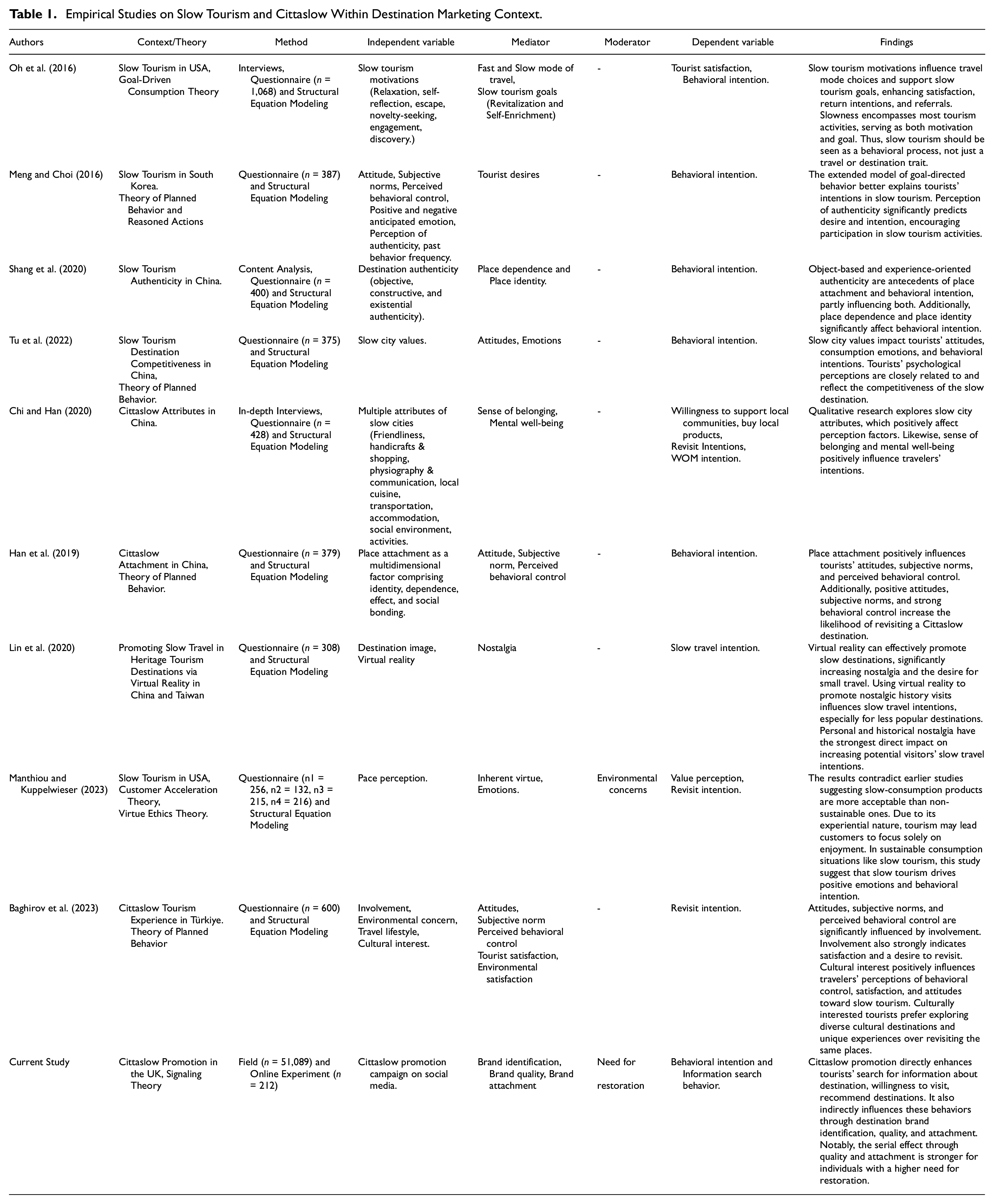
As evidenced by Table 1, most prior research has focused on the concept of slow tourism (e.g., Manthiou & Kuppelwieser, 2023; Oh et al., 2016; Shang et al., 2020), with limited attention specifically devoted to Cittaslow advertising (e.g., Baghirov et al., 2023; Han et al., 2019; Tu et al., 2022). Klarin et al. (2023) have highlighted the scarcity of theoretical applications to slow tourism and travel, particularly within the context of Cittaslow discourse. While Meng and Choi (2016) have emphasized the importance of advertising the characteristics of slow practices on social media, few studies have applied Cittaslow promotion specifically within the social media context. Notably, none of these studies have investigated the effect of Cittaslow promotion on social media advertisements on tourists’ behavioral responses. Furthermore, there is a notable absence of research employing real-world advertising and examining the moderation effects of tourist motivation on Cittaslow promotion on social media.
Signaling Theory
Signaling theory, rooted in the concept of information asymmetry, highlights the unequal access to information between signalers and recipients (Erevelles et al., 2001). According to this theory, a signal represents the valued qualities or characteristics of the signaler (Connelly et al., 2011). Brands often employ various cues to help customers alleviate uncertainty regarding unobservable aspects of the product (Shahid et al., 2024). In the tourism context, Cerqua (2017) categorizes tourism as an “experience dominant product” closely linked to information asymmetry regarding product features. Information asymmetry is particularly relevant for Cittaslow destinations, which are often small, lesser-known cities. A discrepancy exists between the benefits these destinations offer—such as sustainability, high quality of life, and cultural heritage—and tourists’ awareness of them. The Cittaslow certification helps bridge this gap, mitigating the effects of information asymmetry by signaling these unique qualities to potential visitors.
Signaling theory has been applied to explain various sustainable tourism behaviors and attitudes. For instance, Cerqua (2017) found that the Blue Flag sustainability label significantly influences domestic tourists’ intentions to visit, while Ahn (2019) demonstrated that corporate social responsibility initiatives by cruise companies serve as signals that shape tourists’ evaluations and identification with the company. In tourism, travelers frequently encounter information asymmetry due to limited awareness of destination sustainability efforts. This study posits that tourists exposed to Cittaslow promotion, as message receivers, actively seek and interpret signals from social media advertisements, which act as cues influencing their behavior. By embedding Cittaslow principles and its logo in social media messages, destinations can signal service quality and sustainability, offering cues that tourists can resonate with, thereby reducing information asymmetry and fostering emotional connections with the destinations.
Effect of Cittaslow Promotion on Tourists’ Behavioral Responses
The Cittaslow movement exhibits specific aspects that enhance the positive impact of tourism sustainability practices on tourists’ behavioral responses. Cittaslow is often associated with well-being, mindfulness, and mental calm (Oh et al., 2016). Visitors may be drawn to its values of sustainable living, cultural preservation, and community engagement (Ekinci, 2014). Individuals seeking a rejuvenating and enlightening travel experience may be particularly attracted to advertisements highlighting the connection between a leisurely lifestyle and enhanced well-being (Chi & Han, 2020). Recent research by Japutra et al. (2024) demonstrates that incorporating environmental sustainability cues in social media advertisements can improve individuals’ behavioral responses and product interest.
A well-crafted advertisement can establish cognitive and emotional associations between tourists and destinations through the destination attributes, such as relaxation, cultural richness, and a connection with nature. Prior research indicates that these attributes can serve as cues, influencing people’s intention to visit (Can et al., 2023; Cerqua, 2017). These associations act as mental shortcuts for individuals when contemplating travel possibilities, searching for information about destinations, and influencing their desire to visit (Kirmani & Rao, 2000). Signaling theory supports this perspective, where the Cittaslow certification serves as a signal for tourists to associate the destination with positive attributes like sustainability, thereby influencing their behavioral responses.
H1a: Cittaslow promotion boosts tourists’ interest and encourages destination information searches, as evidenced by click-through behavior.
H1b: Cittaslow promotion enhances tourists’ behavioral intentions toward destinations, leading to a higher likelihood of visiting and a greater propensity to recommend the destination.
Mediating Effect of Destination Brand Identification
Cittaslow promotes a deliberate lifestyle focused on community, sustainability, and high living standards (Presenza et al., 2015), serving as a signal for tourists. These signals highlight symbolic aspects like eco-friendliness, thereby leading consumers to identify with the destination (Can et al., 2023; Cerqua, 2017; Connelly et al., 2011). Promoting these values encourages individuals to internalize them and see the destination as a reflection of their personal values (Büyükdağ & Kitapci, 2021; Wen & Huang, 2021).
Dickinson et al. (2011) argue that self-identity is intertwined with slow tourism, where tourists use associated symbols to express themselves. Travel choices thus become a form of self-expression. Symbolic properties significantly influence tourist destination choices. Those who identify with the Cittaslow brand are more likely to exhibit brand loyalty (Rather & Camilleri, 2019) and consistently choose destinations aligning with their identity and beliefs (Voorn et al., 2021). Ekinci et al. (2013) found that brand identification and lifestyle congruence determine tourists’ symbolic responses to destinations. Kladou et al. (2017) suggest that destination identity, culture, and image are key brand elements affecting behavior. Based on these insights, we suggest that:
H2: Destination brand identification mediates the relationship between Cittaslow promotion and tourists’ behavioral intentions toward destinations.
Mediating Effect of Destination Brand Attachment
Brand attachment represents the emotional connection that consumers develop with a brand (Thomson et al., 2005). A destination brand embodying Cittaslow values and goals is expected to evoke feelings, thoughts, and a sense of connectedness (Zhang & Bloemer, 2011) associated with community, sustainability, and a slower pace of life. This can foster strong emotional bonds between tourists and destinations, stemming from shared values (Ostroff et al., 2005), an aspirational lifestyle (Gross et al., 2008), or positive emotional associations with the brand’s promotion (Hosany et al., 2017).
Brand attachment is often characterized by feelings of trust, affection, and commitment (Thomson et al., 2005). Destinations adhere to specific criteria and consistently assess current circumstances to obtain Cittaslow certification (Cittaslow International, 2023; Park & Kim, 2016). These requirements instill trust in tourists by guaranteeing destination quality (Chi & Han, 2020), potentially leading to emotional brand attachment. Individuals with a deep emotional tie to a brand, especially one aligning with Cittaslow ideals, are more inclined to exhibit loyalty (Japutra et al., 2018). Based on these insights, we propose the following hypothesis:
H3: Destination brand attachment mediates the relationship between Cittaslow promotion and tourists’ behavioral intentions toward destinations.
Mediating Effect of Destination Brand Quality
Destination brand quality image pertains to tourists’ overall perception of a destination’s offerings, including infrastructure, amenities, services, and overall experience (Japutra et al., 2024). The intangible nature of destination services makes it challenging for consumers to assess quality (Bebko, 2000). Therefore, destination brands often use quality certifications, such as eco-labels, to shape tourists’ perceptions of quality (Can et al., 2023). Cittaslow is one such certification for small urban tourism destinations.
Cittaslow certification covers various quality standards, including urban life policies, infrastructure, hospitality, awareness, and training (Cittaslow International, 2023). These standards align with community, sustainability, and quality of life, signifying quality assurance inherent in the Cittaslow philosophy. This fosters a favorable perception of destination brands that adopt Cittaslow principles (Chang, 2008). Consumers exposed to Cittaslow promotion are likely to associate the brand with these characteristics, enhancing the perception of destination brand quality (Park & Lee, 2019).
Perceived brand quality impacts consumer behavior for both tangible and intangible products, including destinations and services (Tran et al., 2013). Cittaslow promotion can signal destination benefits such as quality (Cerqua, 2017), portraying the destination brand as offering superior services. This fosters trust and loyalty toward the brand (Tran et al., 2022). Thus, promotional messages associated with Cittaslow are expected to enhance the perception of destination brand quality, influencing behavioral responses. Stated formally:
H4: Destination brand quality mediates the relationship between Cittaslow promotion and tourists’ behavioral intentions toward destinations.
Serial Mediators: Destination Brand Identification and Destination Brand Attachment
Cittaslow promotions emphasize the unique attributes and sustainable qualities of Cittaslow destinations, showcasing eco-friendly practices, cultural diversity, and a slower pace of life (Wen & Huang, 2021). These marketing initiatives are designed to strengthen the sense of belonging and connection among visitors, particularly when the destination’s values resonate with their personal goals or ideals (Rather et al., 2019). As tourists identify with the destination brand, they develop a stronger emotional bond or attachment to the destination (Han et al., 2020; Japutra, 2022). This emotional bond, established through destination brand attachment, translates into loyal behavior (Wang et al., 2020). Accordingly, we expect that Cittaslow promotion acts as a catalyst, influencing tourists’ identification with the tourism destination brand, which in turn fosters destination brand attachment and ultimately results in favorable behavioral responses. Hence, we propose that:
H5: Destination brand identification and brand attachment serially mediate the relationship between Cittaslow promotion and tourists’ behavioral intentions toward destinations.
Serial Mediators: Destination Brand Quality and Destination Brand Attachment
The principles upheld by Cittaslow, which emphasize sustainability and cultural richness, serve as a foundational pillar influencing perceived destination brand quality (Park & Lee, 2019). When a destination is perceived as a high-quality brand, it fosters a deeper emotional connection among tourists. This emotional connection encourages loyalty behaviors, such as increased visitation and recommendation intentions (Tran et al., 2022).
Building on this reasoning, we propose that Cittaslow promotions contribute to an enhanced perception of brand quality. In turn, this heightened perception of quality is expected to cultivate brand attachment. The emotional connection established through brand attachment is anticipated to drive positive behavioral responses among tourists. Based on this framework, we propose the following hypothesis:
H6: Destination brand quality and brand attachment serially mediate the relationship between Cittaslow promotion and tourists’ behavioral intentions toward destinations.
Moderating Effects of Need for Restoration on Serial Mediators
The need for restoration refers to an individual’s desire for rest and recuperation, particularly high in those feeling mentally or physically exhausted (Feng et al., 2020; Hartig et al., 1991). This need significantly influences how individuals perceive and react to advertising stimuli (Hartig & Staats, 2006; Van Den Berg et al., 2007). Cittaslow principles, such as relaxation and peace, align with individuals’ need for rest, making the destination more appealing and fostering strong identification and emotional attachment (Ahn et al., 2013). This strong attachment enhances behavioral intentions, such as visiting or recommending the destination (Han et al., 2019).
Those seeking rest are drawn to qualities emphasized by Cittaslow promotion, such as tranquility and high quality of life, enhancing their perception of the destination’s brand quality (Oh et al., 2016). This leads to a deeper emotional bond with the destination (Pandey & Sahu, 2020), increasing their likelihood to visit or recommend it (Han et al., 2019). In contrast, individuals with a low need for restoration may find these attributes less appealing, resulting in weaker brand perception and attachment. Thus, we present the following hypotheses:
H7: The need for restoration moderates the impact of Cittaslow promotion on tourists’ behavioral intentions through brand identification and brand attachment (H7a) and through brand quality and brand attachment (H7b), with stronger effects for travelers with a higher need for restoration.
Figures 1 and 2 present the conceptual model of our study. We examine whether Cittaslow promotion directly enhances tourists’ behavioral responses (H1a, H1b), and indirectly through destination brand identification (H2), brand attachment (H3), and brand quality (H4). We also explore the sequential effects of these variables (H5, H6) and the moderating effect of the need for restoration on the serial mediators (H7a, 7b).

Study 1 conceptual model.
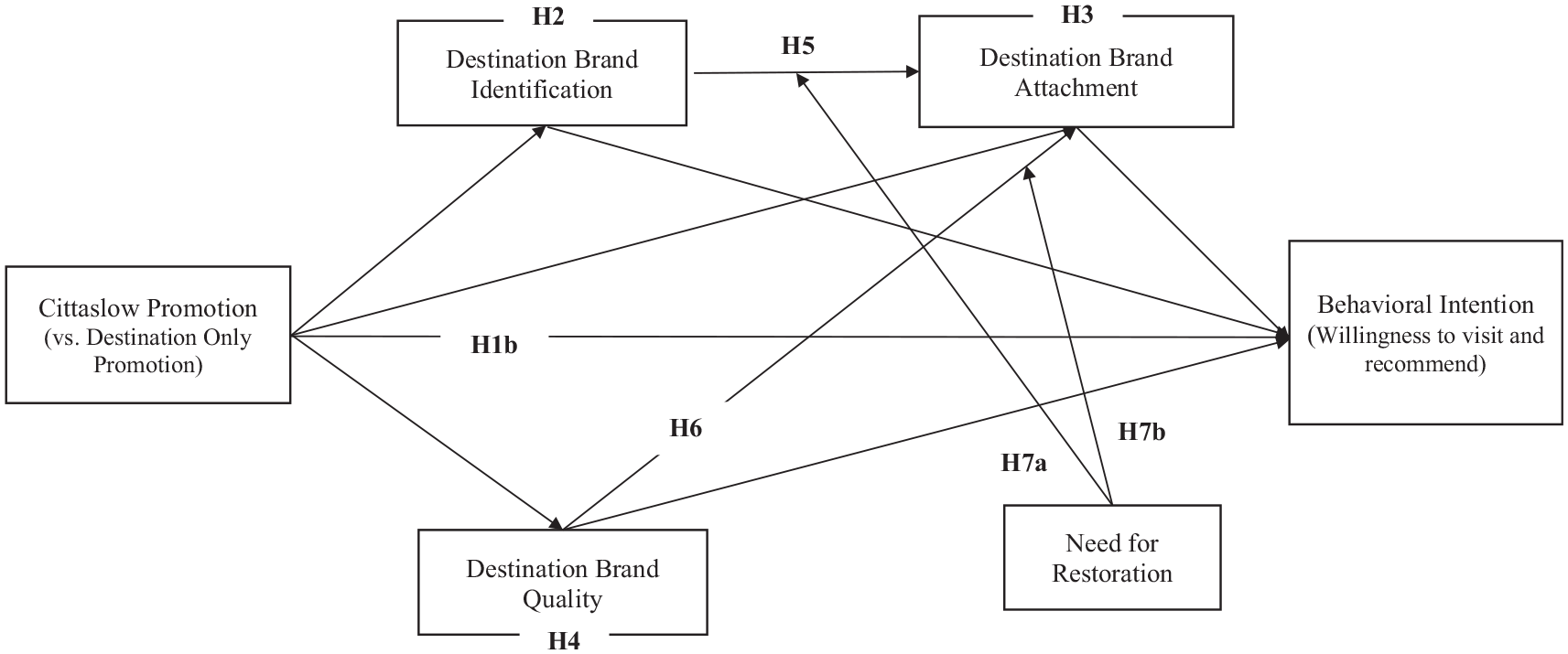
Study 2 conceptual model.
Methodology
This research comprises two studies. Study 1 examines the direct effect of Cittaslow promotion on tourists’ click-through behavior related to the Cittaslow destination (Figure 1). In contrast, Study 2 investigates both the direct and indirect effects of Cittaslow promotion on tourists’ behavioral intentions toward the destination (Figure 2).
Study 1-Field Experiment: Stimuli, Procedures, and Measures
Study 1 seeks to examine the impact of Cittaslow promotion on tourists’ click-through behavior through a field experiment. We investigated our core hypothesis, positing that Cittaslow promotion enhances click-through behavior more than promoting the destination alone (H1a). To achieve this, we implemented real Instagram advertisements for Seferihisar, a Cittaslow-recognized destination in Türkiye. For this experiment, we collaborated with Holidays Turkiye (holidaysturkiye.co.uk), an online travel company based in the UK. We used the click-through rate as a dependent variable, serving as a proxy for behavioral intentions (Can et al., 2020; Japutra et al., 2024). In the field experiment, we used destination-only promotion as the reference category (i.e., the control condition) and compared it to two treatment conditions. The first treatment condition featured Cittaslow promotion, while the second included the logo of a travel agency organizing tours to Seferihisar. The second treatment aimed to determine whether the observed effects were specifically attributable to the Cittaslow certification or simply due to the presence of an additional logo. To implement this design, we created three distinct Instagram captions corresponding to each condition, as illustrated in Figure 3.
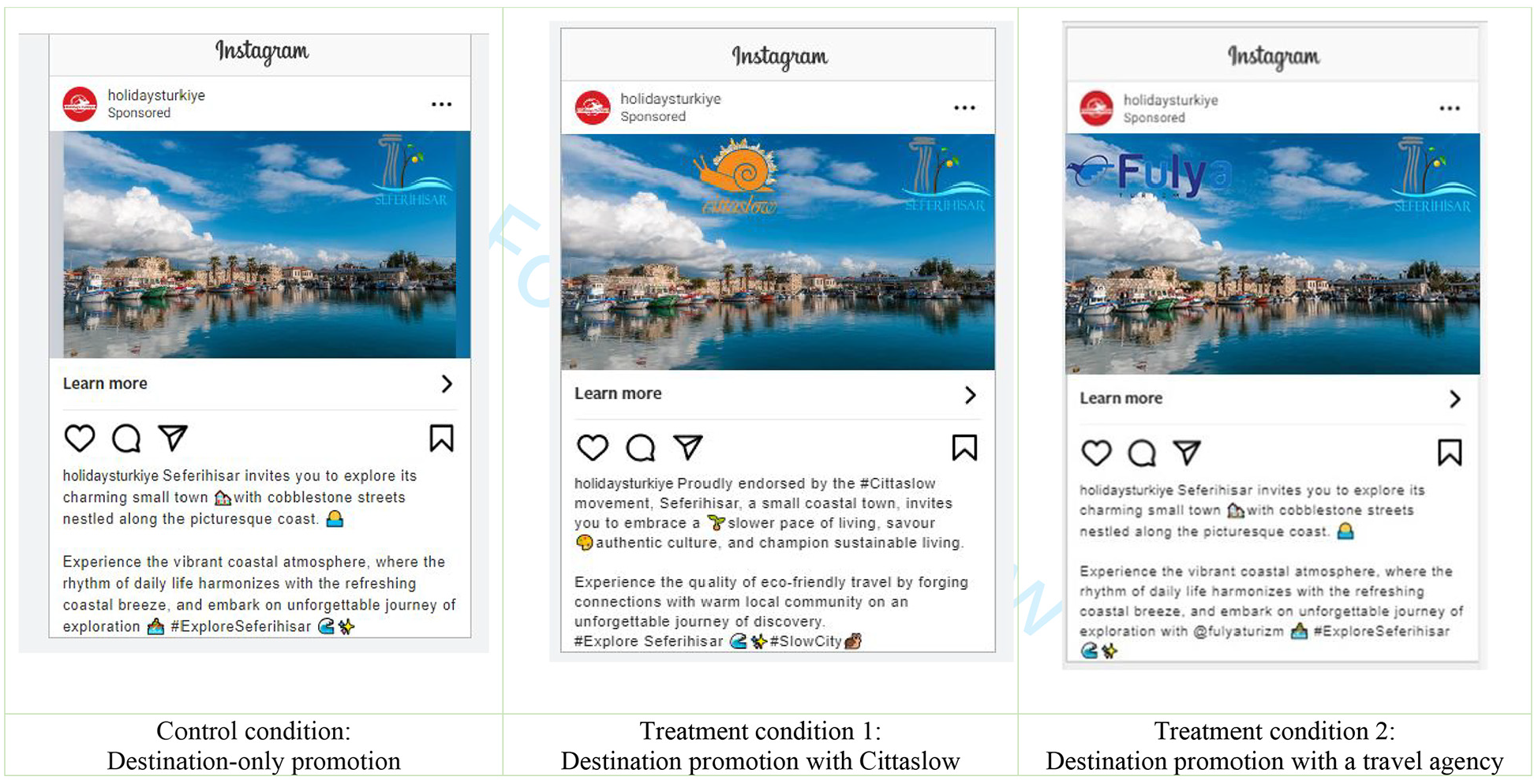
Instagram advertisements used in Study 1.
For the destination-only promotion, we featured the Seferihisar logo alongside an Instagram caption that excluded any mention of Cittaslow principles. In contrast, the treatment group’s caption incorporated Cittaslow principles, emphasizing a slow city lifestyle, local cultural context, environmental awareness, and quality transportation that promotes sustainable and eco-friendly travel, as outlined by Ekinci (2014). For the destination promotion with a travel agency, we included the agency’s logo and tagged its Instagram account in the caption. To enhance the realism of the Instagram ads, emojis were incorporated, reflecting common practices in real Instagram advertisements (Marko, 2023). To avoid potential confounding effects, no additional elements, such as slogans, were included in the captions. The real Instagram advertising campaign ran for 2 weeks, during which we tracked the number of clicks on the “Learn More” button located at the bottom of the ads. These clicks directed viewers to the HolidaysTurkiye website, providing measurable data for analysis.
The Instagram algorithm randomly displayed the adverts to either the control or treatment groups while also recording participants’ age and gender information. To ensure the appropriateness of the captions (i.e., destination only promotion and Cittaslow promotion), we conducted a pre-test with 50 British residents who held Instagram accounts and were aged at least 18 years old (Female: 54%, Mage = 38.92). Independent sample t-test results indicated that participants exposed to Cittaslow promotion evaluated scenarios as highlighting more aspects of a slow lifestyle (MCittaslow = 5.52, MDestinationOnly = 4.00, p < 0.001), local context and activities (MCittaslow = 5.06, MDestinationOnly = 4.52, p = 0.04), awareness of environmental considerations (MCittaslow = 4.88, MDestinationOnly = 3.12, p < 0.001), and the quality of transportation promoting sustainable and eco-friendly travel (MCittaslow = 3.98, MDestinationOnly = 2.86, p < 0.001). Additionally, there were no significant differences between participants’ assessments of credibility (MCittaslow = 4.98, MDestinationOnly = 5.18, p = 0.30) and comprehensibility (MCittaslow = 5.02, MDestinationOnly = 5.32, p = 0.18) of the captions. Therefore, the pre-test results confirm the effectiveness of the manipulations.
Study 2 Online Experiment: Stimuli, Procedures, and Measures
Study 2 employed a single-factorial between-subjects experimental design featuring two conditions to examine the indirect effects of Cittaslow promotion on tourists’ behavioral responses, specifically their visit and recommend the destination. We focused on three constructs: destination brand quality (H2), destination brand attachment (H3), and destination brand identification (H4). Additionally, we examined the serial mediation of these constructs (H5, H6) and the moderated serial mediation effect through the need for restoration (H7a, H7b).
We selected Capalbio, Italy, as the tourism destination for our Facebook advertisement (see Appendix 1), given that Italy boasts the highest number of Cittaslow-recognized towns (75; cittaslow.org). Our focus on social media, specifically Facebook, was driven by its widespread adoption in destination marketing, where it is extensively utilized by Destination Management Organizations to effectively promote and showcase destinations (Confetto et al., 2023). The control condition featured a Facebook caption showcasing Capalbio as a small urban tourism destination, emphasizing its destination characteristics. In contrast, the treatment condition’s caption incorporated Cittaslow features as outlined in Study 1 (Ekinci, 2014). We incorporated emojis into the captions to more closely align with actual communication styles. The image remains consistent across both conditions, sourced from Capalbio’s official website. While the control condition included the Capalbio logo, the treatment condition featured an additional Cittaslow logo. The Facebook sponsored ad format on Capalbio’s official page served as the template for this study.
As recommended by Perdue and Summers (1986), we conducted a pre-test to assess the effectiveness of the manipulation. This pre-test involved 100 British residents (51% female; Mage = 45.5) who have a Facebook account. Participants were recruited via Prolific, a reliable online panel widely recognized for delivering high-quality data in experimental research on online behavioral studies (Peer et al., 2022). The pre-test result indicated that the caption with Cittaslow is highlighted slow city lifestyle (t (98) = −3.50, p < 0.001), local context and activities (t(98) = −4.20, p < 0.001), awareness of environmental issues (t(98) = −7.84, p < 0.001), and quality of transportation in promoting sustainable and eco-friendly travel (t(98) = −7.72, p < 0.001) more than Capalbio caption without Cittaslow. Hence, pre-test confirmed the success of the manipulations.
The instrument included validated measurements from previous studies to ensure reliable and relevant data collection aligned with the study’s objectives (See Appendix 2). Participants assessed whether the captions highlighted Cittaslow movement principles through four statements derived from Ekinci (2014; e.g., “To what extent do you think this caption highlights slow city lifestyle?”). They rated behavioral responses with six statements adapted from Can et al. (2021), which were chosen to capture their reactions to the scenarios presented. Destination brand quality was assessed with four statements adapted from Buil et al. (2008), which measure perceived product and service quality. Destination brand identification was evaluated with three statements adapted from Ekinci et al. (2013), reflecting the extent to which individuals felt personally connected or saw themselves as part of the destination brand. Destination brand attachment was assessed with three statements adapted from Japutra et al. (2021), capturing the emotional bond participants have with the brand. Lastly, participants evaluated the need for restoration with seven statements adapted from Hartig and Staats (2006). All measurements were based on 7-Likert type scale, with 1 indicating “strongly disagree” and 7 indicating “strongly agree.” Finally, we measured participants’ previous visit experience with the destination and their demographic information of the participants, such as age, gender, and annual income in the instrument.
Participants started by gauging their familiarity with the destination in both conditions, which are considered as a controlled factor. This was measured with three statements adapted from Mikhailitchenko et al. (2009; e.g., “I have heard of Cittaslow as a sustainable urban lifestyle movement”). They rated their awareness, attitudes, and knowledge regarding environmental issues- serving as a proxy for environmental sustainability and referred to as environmental consciousness- using four statements (e.g.; “When two products are similar, I tend to select the one that harms the environment less, even though it is more expensive”; Gaspar Ferreira & Fernandes, 2022), which was considered as a controlled factor. These scales were chosen to ensure that familiarity with sustainable movements and destinations, as well as individuals’ baseline knowledge and attitudes toward sustainability, do not affect the proposed model results.
Due to the reliance on self-reporting measures, there is a possibility of encountering common method bias in our data. Thus, we utilized both procedural remedies and statistical tests to address the issue of Common Method Variance (hereafter, CMV). Initially, we carefully developed the questionnaires to ensure the items were straightforward and comprehensible. At the beginning, we explicitly stated to the participants that their responses would be kept anonymous and emphasized that there were no objectively correct or incorrect answers. Once the data was gathered, the assessment of CMV was conducted using statistical tests. The first test used to check CMV was Harman’s single-factor test. The analysis identified three factors, with the first factor explaining 27.90% of the variance. This percentage was less than the majority (>50%) of the total variance explained, which was 77.05%. We also used a one-factor model in CFA. The model fit indices of this model were poor (χ2 = 1684,051; df = 104; χ2/df = 16,193; CFI = 0.53; NFI: 0.52 TLI = 0.46; GFI = 0.44; RMSEA = 0.27). These results indicate that CMV is not a threat to the study (Leonidou et al., 2013; Podsakoff et al., 2003).
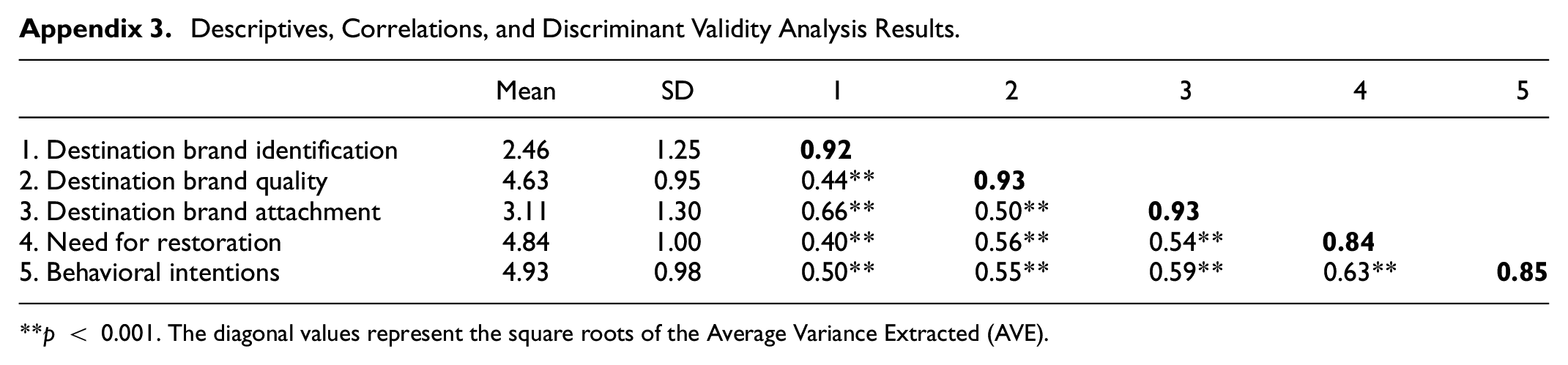
We utilized G*Power 3.1.9 software to determine the sample size appropriate to the main study. Setting parameters at α = 0.05, power = 0.8, and an effect size (f) of 0.25, the calculated required total sample size was 176, 88 per group. Accordingly, we recruited 212 British residents aged 18 or older, all active Facebook account holders from the same platform in the pre-test. The participants were randomly divided into equal groups for the control and the treatment conditions. We analyzed the main effect using an independent sample t-test. Additionally, we employed the PROCESS Macro for examining mediations (Model 6) and moderated mediation effects (Model 91; 5,000 bootstrapping samples), following the methodology outlined by Hayes (2018). Additionally, the study involves interrelated constructs related to destination brands, which could raise concerns about discriminant validity. To ensure these constructs are statistically distinct, we conducted a discriminant validity test following the Fornell and Larcker (1981) criterion. The results show that all correlation coefficients are lower than the square roots of the AVE values, confirming that the research variables are statistically distinct (see Appendix 3).
Results
Study 1: Field Experiment
Out of the total 51,089 individuals who viewed the real Instagram advertisements, 17,028 were exposed to Cittaslow ad, 17,011 viewed destination-only ad, and 17,050 viewed the destination with a travel agency. Among the viewers, 50% were female. Regarding age distribution, 31% (15,843) were aged between 25 and 34, 22.2% (11,325) were between 18 and 24, 14.8% (7,573) fell into the 35 to 44 age group, 13.4% (6,873) were 65 or older, 11.3% (5,750) were aged 55 to 64, and 7.2% (3,725) were aged 45 to 54.
Given the dichotomous nature of the dependent variable, click-through rate (0 = no-click, 1 = click), we utilized binary logistic regression analysis to examine our first hypothesis. The results revealed that the Cittaslow ad received 36% more clicks compared to the destination-only ad (Click NoCittaslow: 250 vs. Click NoDestinatin only: 183, respectively; β = 0.315, SE = 0.10, Wald = 10.34, p = 0.001, 95% CI [1.13, 1.66]) and 26% more clicks compared to the destination ad with a travel agency (Click NoCittaslow: 250 vs. Click NoTravel agency: 198; β = 0.238, SE = 0.10, Wald = 6.15, p = 0.01, 95% CI [1.05, 1.53]). Additionally, there was no statistically significant difference between destination only ad and destination ad with a travel agency (Click NoDestinatin only : 183 vs. Click NoTravel agency: 198; β = 0.077, SE = 0.10, Wald = 0.56, p = 0.45, 95% CI [0.88, 1.32]). Thus, this result confirms H1.
Study 2: Online Experiment
In Study 2, participants were nearly evenly distributed in terms of gender, with females comprising 51.4%. The average age was 45, and a significant percentage indicated an income range of £20,000 to 39,999 (36.3%).
We first assessed the success of our manipulation. Participants in the Capalbio promotion with Cittaslow condition indicated that the caption highlighted a slow city lifestyle (MCapalbio = 5.08, SD = 1.45, vs. MCittaslow = 5.85, ; t(210) = −4.39t(210) = −4.39, p < 0.001), local context (MCapalbio = 4.42, SD = 1.51, vs. MCittaslow = 5.44, SD = 1.14; t(210) = −5.51, p < 0.001), environmental awareness (MCapalbio = 3.02, SD = 1.62, vs. MCittaslow = 5.36, SD = 1.27; t(210) = −11.68, p < 0.001), and eco-friendly travel (MCapalbio = 2.53, SD = 1.44, vs. MCittaslow = 5.09, SD = 1.54; t(210) = −12.49, p < 0.001) more than the caption in the only Capalbio promotion condition. Next, we analyzed participants’ judgments of the credibility and comprehensibility of captions. There were no statistically significant differences between the credibility (MCapalbio = 4.74, SD = 1.05, vs. MCittaslow = 4.93, SD = 1.28; t(210) = −1.22, p = 0.22) and comprehensibility (MCapalbio = 5.11, SD = 1.19, vs. MCittaslow = 5.20, SD = 1.30; t(210) = −0.49, p = 0.62) of the captions. Furthermore, the mean scores for familiarity with Capalbio showed no statistically significant difference between the control and the treatment group (MCapalbio = 1.31, SD = 0.77, vs. MCittaslow = 1.39, SD = 0.85; t(210) = −0.73, p = 0.47). Moreover, participants in the control and treatment group did not differ in their mean environmental consciousness scores (MCapalbio = 4.78, SD = 1.12, vs. MCittaslow = 4.83, SD = 1.17; t(210) = −0.36, p = 0.72).
We conducted an independent samples t-test to investigate potential differences in behavioral responses to Facebook advertisements for Capalbio between the control and treatment groups. The findings indicate that respondents exposed to the Cittaslow advertisement showed higher behavioral intention scores compared to those who were exposed only to the Capalbio advertisement (MCapalbio = 4.68, SD = 0.98, vs. MCittaslow = 5.16, SD = 0.91; t (210) = −3.71, p < 0.001). The analysis using the PROCESS macro further confirmed the total effect of the Cittaslow promotion on behavioral intentions, providing additional support for H1 (See Table 2, Model 1: β = 0.21, SE = 0.11, p = 0.05; Model 2: β = 0.30, SE = 0.11, p < 0.01).
Model Summary Information for the Serial Mediator Model.
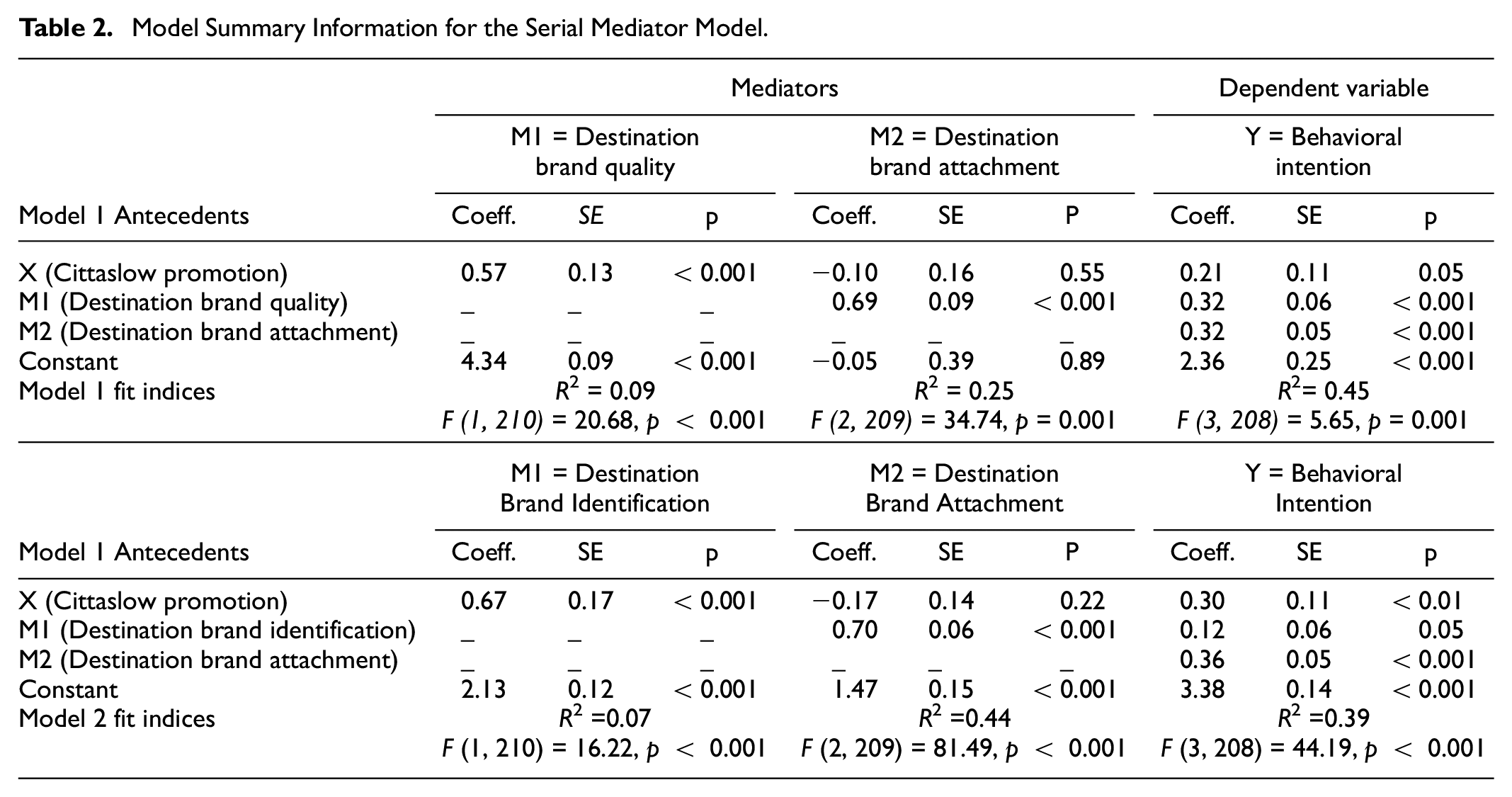
Table 2 presents the results of serial mediation analyses conducted using the PROCESS macro. In the first model, destination brand quality and destination brand attachment were examined as mediators, confirming the total effect of Cittaslow promotion on behavioral intentions (Model 1: β = 0.21, SE = 0.11, p = 0.05) with an R2 value of 45%. In the second model, destination brand identification and destination brand attachment served as mediators, also confirming the effect (Model 2: β = 0.30, SE = 0.11, p < 0.01) with an R2 value of 39%. These findings further support H1 by demonstrating the impact of Cittaslow promotion on enhancing tourists’ behavioral intentions.
We performed an independent samples t-test to assess whether participants’ evaluations of destination brand quality, brand identification, and brand attachment differed between those exposed to destination-only promotion and Cittaslow promotion. The findings indicate that participants who viewed the Cittaslow promotion exhibited higher destination brand quality (MDestOnly = 4.34, MCittaslow = 4.91, p < 0.01) and brand identification (MDestOnly = 2.13, MCittaslow = 2.80, p < 0.01) and brand attachment (MDestOnly = 2.96, MCittaslow = 3.26, p = 0.09 – one-tail t-test).
Additionally, as depicted in Table 3, the bootstrapping analysis confirmed that the indirect effect of Cittaslow promotion → destination brand quality → behavioral responses was statistically significant (Effect = 0.27, 95% CI [0.10, 0.46]), supporting H2. Similarly, the indirect effect of Cittaslow promotion → destination brand identification → behavioral responses was statistically significant (Effect = 0.07, 95% CI [0.00, 0.16]), supporting H4. However, the indirect effect of Cittaslow promotion → destination brand attachment → behavioral responses was not statistically significant (Model 1: Effect = −0.03, 95% CI [−0.13, 0.07]; Model 2: Effect = −0.06, 95% CI [−0.15, 0.03]), indicating no support for H3.
Indirect Effect(s) of Destination Brand Quality, Destination Brand Identification and Destination Brand Attachment.
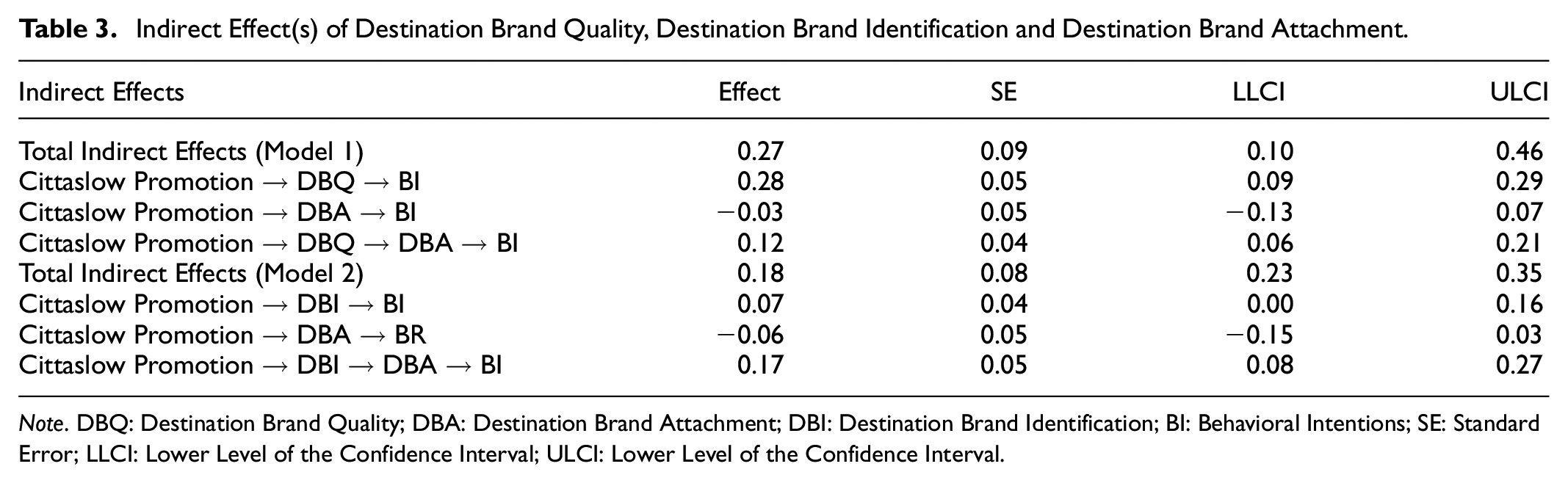
Note. DBQ: Destination Brand Quality; DBA: Destination Brand Attachment; DBI: Destination Brand Identification; BI: Behavioral Intentions; SE: Standard Error; LLCI: Lower Level of the Confidence Interval; ULCI: Lower Level of the Confidence Interval.
As depicted in Table 3, the outcomes provide confirmation for H5, revealing that the indirect effect of Cittaslow promotion → destination brand identification → destination brand attachment → behavioral intention is statistically significant (Effect = 17, 95% CI [0.08, 0.27]). Additionally, the results support H6, affirming the sequential impact of destination brand identification and destination brand attachment on the association between Cittaslow promotion and behavioral intention (Effect = 0.12, 95% CI [0.06, 0.21]).
Rerunning the analysis with need for restoration as a moderator shows that the serial effect of Cittaslow promotion > destination brand identification > destination brand attachment > behavioral intentions is insignificant (Index of Moderated Mediation: Index = 0.00, 95% CI [−0.02, 0.02]). However, the results indicate the moderator role of the need for restoration on the serial mediation effect through brand quality and brand attachment is significant (Index of Moderated Mediation for Cittaslow promotion: Index = 0.02, 95% CI [0.00, 0.04]). Thus, these results support only H7b, but not H7a. Furthermore, including covariates, such as tourists’ previous visit experience with the destination, familiarity with the destination, environmental consciousness, age, gender, and annual income did not significantly change the results.
In summary, the findings substantiate that Cittaslow promotion yields positive effects on destination brand quality and destination brand identification, which in turn enhances behavioral intention. Furthermore, both destination brand quality and destination brand attachment, as well as destination brand identification and destination brand attachment, sequentially mediate the relationship between Cittaslow promotion and tourists’ behavioral intentions toward a Cittaslow destination. Moreover, the effect of Cittaslow promotion on behavioral intention through brand quality and brand attachment is stronger for travelers with a higher need for restoration.
Discussion and Implications
Given the growing importance of sustainability (Nguyen et al., 2024) and slow tourism (Conway & Timms, 2010; Dickinson et al., 2011; Manthiou & Kuppelwieser, 2023), the Cittaslow movement presents valuable opportunities for product differentiation, market competitiveness, and branding of small urban tourism destinations (Örs et al., 2022). However, there is a lack of theoretical and real-life empirical evidence supporting this notion from a tourist’s point of view. Therefore, our study aims at exploring the impact of Cittaslow promotion on tourists’ behavioral responses toward small urban tourism destinations across two studies.
In Study 1, we conducted a real Instagram advertising campaign and found that Cittaslow promotion increased tourists’ click-through behavior. In Study 2, through an online experiment using Facebook ads, we confirmed this effect for visit and recommend intentions. Additionally, we discovered that Cittaslow promotion enhances destination brand identification and brand quality, leading to increased destination brand attachment and ultimately fostering favorable behavioral intentions. Furthermore, the study found that travelers with a higher need for restoration experience a stronger effect of Cittaslow promotions on destination brand quality, leading to stronger attachment and higher behavioral intentions. Thus, our study provides both theoretical and practical insights into the role of Cittaslow promotion in shaping tourists’ behavioral responses toward small urban tourism destinations.
Theoretical Implications
The present study adds to existing literature in various aspects. First, our study broadens the existing knowledge of destination sustainability promotions on social media, particularly within the context of small urban tourism destinations, with a specific focus on the Cittaslow promotion. Previous research has predominantly explored Cittaslow from the perspectives of local communities (e.g., Küçükergin et al., 2024; Kucukergin & Ozturk, 2020; E. Park & Kim, 2016) and policymakers (e.g., Conway & Timms, 2010; Ince et al., 2020; Kim et al., 2022; Presenza et al., 2015). However, limited attention has been given to whether Cittaslow promotion on social media enhances tourists’ behavioral responses. Our research addresses this gap by demonstrating that incorporating Cittaslow principles, such as a slower pace of life, appreciation of local traditions, and promotion of sustainable practices, into the social media campaign positively influence tourists’ click-through behavior, as well as their likelihood of visiting and recommending the destination. Consequently, the results indicate that the Cittaslow promotion can offer a competitive advantage to small urban destinations, positioning them to effectively differentiate themselves in the tourism sector. This strategy is particularly effective among tourists prioritizing sustainable, quality-focused travel experiences.
Furthermore, our research offers an insightful perspective on the potential of Cittaslow principles to serve as a strategic tool for enhancing tourists’ behavioral intentions. The results emphasize the symbolic and functional attributes that resonate with tourist motivations. Accordingly, our study reveals that the symbolic and functional aspects of destinations associated with Cittaslow are the underlying mechanisms affecting tourists’ behavioral intentions. Previous research has indicated that symbolic, functional, or emotional utilities impact tourists’ behavior (e.g., Ahn et al., 2013; Can et al., 2023). For instance, Ekinci et al. (2013) demonstrated that symbolic factors such as self-congruence, brand identification, and lifestyle congruence influence tourists’ behavioral intentions toward destinations. Similarly, Dedeoğlu (2019) found that the functional benefits of a destination, including destination service quality and nature quality, affect tourists’ intentions to revisit and recommend. Our study extends this understanding by applying it to the context of Cittaslow. It shows that tourists consider not only functional aspects, such as the quality of destination facilities or identification, but also symbolic aspects like identification when evaluating destinations.
Furthermore, our findings indicated that Cittaslow promotion can foster emotional bonds with destinations when they highlight either the quality aspects of the destination or features that enable tourists to emotionally connect with them. This finding aligns with the conclusions of Pandey and Sahu (2020), who propose that brand quality leads to destination attachment, ultimately triggering word-of-mouth intentions toward heritage destinations. Additionally, we found that aspects of destinations that facilitate identification can significantly contribute to creating emotional bonds with those destinations, thereby enticing potential tourists.
The findings reported here provide new insights into the role of the need for restoration. This effect is crucial, as the results demonstrate that tourists do not respond uniformly to Cittaslow promotion. Specifically, destination brand quality and brand attachment sequentially mediate the relationship between Cittaslow promotion and behavioral intentions. Furthermore, the need for restoration strengthens this relationship, thereby offering a deeper understanding of how specific psychological conditions can influence brand-related behaviors in the slow tourism context. This finding is consistent with previous studies (e.g., Hartig & Staats, 2006; Vada et al., 2023) that establish a connection between the need for restoration and engagement in leisure activities, tourism, and natural environments. Lehto (2012) provides a relevant context by demonstrating that destinations with restorative qualities are valued by tourists seeking recovery from mental fatigue. While Lehto’s work predates our study, it underscores the broader significance of restorative qualities in tourism, helping to frame the importance of our findings regarding the moderation effect of the need for restoration.
In contrast, the need for restoration did not exhibit the same moderating effect on the identification-attachment mediators. This discrepancy can be explained by the fact that the need for restoration is more related to functional needs rather than emotional and symbolic needs, as one of the main motivations for vacations and Cittaslow is relaxation and escape from everyday life (Pearce & Lee, 2005; Vada et al., 2023). Therefore, individuals with a high need for restoration might seek more quality and associate it with destination brand attachment. However, this functionality-related need did not interact with identification, which is a symbolic attribution of the destination. This result is significant for Cittaslow promotions, as it demonstrates that tourist responses to Cittaslow promotions are not uniform and can vary based on travel motivations.
Finally, our findings confirm the usefulness of signaling theory in destination promotion. By utilizing Cittaslow promotion, destinations can effectively signal the quality of their offerings and highlight aspects that facilitate identification with their sustainability efforts. While this theory has previously been applied in various contexts, such as sustainability eco-labels (e.g., Can et al., 2023; Cerqua, 2017), our study extends these findings by demonstrating that even potential tourists who may not be aware of a destination’s sustainability efforts due to a lack of information can be influenced by Cittaslow promotion. This result highlights the relevance of signaling theory in understanding how destinations communicate their attributes to potential tourists, emphasizing the importance of both quality and identification in destination promotion. Meanwhile, this indicates that signaling theory is a helpful framework not only for destination branding but also for broader tourism marketing strategies that emphasize sustainability and quality. This insight opens new avenues for future research to explore how signaling specific attributes can attract niche segments of travelers related to sustainability and contribute to long-term brand goals in slow tourism.
Managerial Implications
This study also provides actionable practical implications, particularly for small urban tourism destinations. The findings suggest that destinations should first seek accreditation with Cittaslow to leverage its label and values. Subsequently, they should tailor their social media advertising campaigns to align with Cittaslow principles such as slowness, locality, and sustainability. By doing so, they can direct potential viewers to specific websites to provide more information about the experiences that they can potentially have during their visits. Destinations should craft narratives that showcase the slow pace of life, the unique character of local communities, and their commitment to environmental preservation. Highlighting these aspects can attract travelers seeking sustainable experiences.
Small urban tourism destinations should leverage social media to emphasize the exceptional quality of their product and services. For instance, a social media campaign focused on Cittaslow can effectively showcase the superior accommodations, amenities, and facilities. By highlighting these elements, destinations can create a strong association between Cittaslow and high-quality experiences. This strategy not only differentiates destinations from their competitors but also reinforces their commitment to providing an outstanding experience. As a result, these destinations can attract travelers seeking exceptional standards and unique experiences, as well as those with a higher need for restoration. Furthermore, by integrating AI to identify and target these quality-seeking travelers, destinations can effectively showcase their superior offerings and secure a distinctive market position.
Furthermore, small urban tourism destinations should provide cues for identification in their communications, enabling tourists to see themselves reflected in the destination’s narrative on social media. This could be achieved through crafting narratives around local traditions, cultural heritage, and community values that align with potential tourists’ interests. By fostering a sense of connection and belonging, destinations can establish a deeper bond with visitors, cultivating positive perceptions and encouraging desired behaviors. This strategic approach strengthens the appeal of destinations and contributes to their long-term success and sustainability efforts. Lastly, Cittaslow advertisements should specifically target tourists with a high need for restoration to enhance the effectiveness of their promotion campaigns.
Limitations and Future Studies
Our study has successfully highlighted the impact of Cittaslow promotion on tourists’ behavioral responses; however, the generalizability of these findings is limited by certain factors. Firstly, while click-through behavior is used as a proxy for tourists’ behavioral intentions, it may not comprehensively capture tourists’ true visit behavior and recommend a destination. Nevertheless, click-through behavior remains a valuable indicator of tourists’ online interactions, often reflecting their interest in and connection to a destination.
Secondly, consumer responses to sustainable tourism can vary significantly across cultures (Chwialkowska et al., 2020). Future research would benefit from incorporating participants from diverse cultural backgrounds to increase the generalizability and robustness of the findings. Thirdly, while we controlled for age as a covariate, the age distribution in Study 1 was skewed toward a younger demographic, which may have introduced a bias in the results. This limitation may also apply to Study 2. Further investigation into how age interacts with the effects of Cittaslow promotion could offer deeper insights into the relationships among the variables examined.
Finally, our research model considered the need for restoration as a moderator to explain the effect of Cittaslow promotion on tourists’ behavioral intentions. However, there may be other potential moderators that could influence this effect. For instance, travelers who choose a slower pace, characterized by a more deliberate and mindful approach to experiencing a destination, can better appreciate the tranquility and cultural richness of Cittaslow places, which improves their sense of brand quality. A faster pace, on the other hand, may result in a poorer destination brand perception since crucial characteristics of Cittaslow are neglected. Thus, the pace of travel (fast-slow), which is closely related to slow tourism and Cittaslow (Oh et al., 2016), may impact the overall findings.
Footnotes
Appendix
Descriptives, Correlations, and Discriminant Validity Analysis Results.
| Mean | SD | 1 | 2 | 3 | 4 | 5 | |
|---|---|---|---|---|---|---|---|
| 1. Destination brand identification | 2.46 | 1.25 |
|
||||
| 2. Destination brand quality | 4.63 | 0.95 | 0.44** |
|
|||
| 3. Destination brand attachment | 3.11 | 1.30 | 0.66** | 0.50** |
|
||
| 4. Need for restoration | 4.84 | 1.00 | 0.40** | 0.56** | 0.54** |
|
|
| 5. Behavioral intentions | 4.93 | 0.98 | 0.50** | 0.55** | 0.59** | 0.63** |
|
p < 0.001. The diagonal values represent the square roots of the Average Variance Extracted (AVE).
Declaration of Conflicting Interests
The author(s) declared no potential conflicts of interest with respect to the research, authorship, and/or publication of this article.
Funding
The author(s) received no financial support for the research, authorship, and/or publication of this article.
Ethical Approval
Regarding human participants, the authors followed all procedures of the institutional or national research committee’s ethical standards, the 1964 Helsinki Declaration, and its later amendments or comparable ethical standards.
Informed Consent
All participants in this study volunteered throughout the research procedure, and their consent was obtained at the outset.
