



Abstract
Although social media-based brand equity has become a vital area of interest for brand managers, insights into its destination-based dynamics and applications remain scarce, specifically in the destination brand context. To address this gap, we develop and test a theoretical model to investigate the role of destination marketing organization-generated and tourist-generated social media communication to determine the brand awareness and brand image of the Gilgit-Baltistan region, which in turn influence customer-based brand equity (CBBE) (i.e. perceived quality), satisfaction, and loyalty. Data come from well-known tourist sites in Gilgit-Baltistan. Using the multi-sequential approach in WarpPLS 7.0, findings shows that the social media communication dimensions show differential impacts on brand awareness as a metric of CBBE. Second, destination awareness demonstrates a differential impact on perceived destination image dimensions. Third, the destination image dimensions exert different effects on the perceived quality of the destination. Fourth, perceived quality positively influences satisfaction, which in turn enhances loyalty. We offer important implications that emerged from the analyzes and also suggest directions for future research.
Keywords
Introduction
Reputation in the tourism context is essential for a well-developed tourism economy (or market) (Rather et al., 2021). Social media content focusing on destination marketing organization- (DMO-) generated and tourist-generated communication, tourism-based destination awareness, and tourism-led destination image strategies have enabled tourism to strengthen its competitiveness (Ebrahimi et al., 2020; Huerta-Álvarez et al., 2020; San Martín et al., 2019) and help to enhance negative images of some tourist destinations.
Although a considerable knowledge gap exists between the effectiveness of tourism promotional campaigns (Dedeoğlu et al., 2020) and the relationship between social media and destination brand equity (image, awareness, and quality), satisfaction, and loyalty, research on the latter factors to understand the synergy is lacking (Tasci et al., 2022). Place (destination) branding has become popular in the tourism marketing and destination field (Hanna et al., 2021; Rather et al., 2020). As globalization has made tourism a popular leisure activity, attempts to measure brand (destination) value are increasing (Hanna et al., 2021). This value refers to brand equity, a multi-dimensional construct originally developed by Keller (1993) and Aaker (1996) in the goods and service areas and now extended to places/destinations (Hanna et al., 2021; Huerta-Álvarez et al., 2020).
Despite increasing scholastic interest in DMO-generated, tourist-generated social media communication, brand equity (i.e. destination awareness, quality), destination image, and other related concepts (Ebrahimi et al., 2020; Hanna et al., 2021; Liao et al., 2021), limited remains known about the theoretical interface of these factors in tourism-destination context (Huerta-Álvarez et al., 2020; San Martín et al., 2019; Tasci et al., 2022). Based on this research gap, we aim to develop/test a theoretical model, which explores the effect of DMO- and tourist-generated social media communication on brand awareness. Second, we investigate the impact of destination awareness on perceived destination image dimensions. Third, we examine the influence of destination image dimensions on perceived quality. Finally, we explore the impact of perceived quality on tourist's satisfaction, which consequently effects destination loyalty. Accordingly, this study adds three contributions to the research in the marketing and tourism.
First, we break down destination image further by considering two measurements: affective (full of feeling) and cognitive (intellectual) (San Martín et al., 2019). Most current models consider only one dimension of the image - either self-image or social image (Agapito et al., 2013). We argue that marketers must be aware of the diverse features of a destination image (Kim, 2018) to promote appropriate marketing strategies and enhance loyalty. Less focus on cognitive image dimensions such as natural attraction, cultural attraction, infrastructure & facilities, price value results in low tourists’ satisfaction loyalty towards the destination (Lee and Hsieh, 2021; San Martín et al., 2019; Stylidis et al., 2021; Tasci et al., 2022; Yap et al., 2018). A tourism-destination is important either because of its natural attraction, strong/diverse cultural heritage, beautiful/ancient/attractive infrastructure, and value-added services, including its pricing. These dimensions are crucial as they generate a sense of affection and attachment among tourists for the specific place of visit. Tourism-marketing literature has provided a generic overview of cognitive image dimensions, whereas a detailed dimensional-level examination to measure customer satisfaction is missing. Thus, we employ a multi-sequential approach to examine a destination image's contribution to building satisfaction and loyalty. In particular, a destination image brings about feelings, both positive and negative, among tourists (San Martín et al., 2019). Therefore, exploring the impacts of two components of image (e.g. psychological image and affective image) independently is essential. Furthermore, tourist firms have used social media to a limited extent to promote tourism in Pakistan (Hasni et al., 2021). This study intends to fill this gap by developing and testing a theoretical model that sheds light on the impact of DMO- and tourist-generated social media interaction on destination brand equity in place/destination branding. This is because, in general, Pakistan suffers from a negative image around the world (Ahmed and Anwar, 2016), resulting in a dearth of tourists.
Second, the model contributes to customer satisfaction, which has a positive association with customer loyalty toward the tourism-destination. According to Rather and Hollebeek (2019), satisfaction is a behavioral phenomenon, and it plays a significant role as it constitutes the primary goal of marketing practices and, in particular, is a cornerstone for individual prosperity (see also Rather, 2017). Beyond these conditions, various sources have verified the relationship between customer satisfaction and loyalty in marketing studies as well as in tourism industry, but research has explored such a relationship only to a limited extent in tourist destinations, especially in the context of Gilgit-Baltistan.
Third, our proposed model provides guidance for different stakeholders, including practitioners, academics and policy makers, on how to use social media-generated communication to spark tourism growth and revitalizate the negative image of Pakistan. As the region of Gilgit-Baltistan has abundant natural attractions (e.g. mountains, lakes, glaciers, valleys), well-known hospitality, delicious foods and is a well-placed geographic location, we address how DMO- and tourist-generated social media communication would affect the overall brand equity (i.e. destination branding) of Gilgit-Baltistan. In particular, destionation marketers should be attentive to how technological advancement can drive social change, economic growth, and business performance in emerging economies.
Research context
Gilgit-Baltistan, a famous tourist destination in Pakistan (Blood, 2008; Hussain et al., 2018), is the home of the world's three highest mountain ranges (i.e. the Hindu Kush, Himalayas and Karakoram) (Ashraf et al., 2021). The British Backpacker Society ranks Gilgit-Baltistan as one of the top four destinations in the South Asia region and declares it among the “top-twenty adventure destinations” worth visiting (Baig and Hussain, 2020).
As Gilgit-Baltistan is still unexplored in terms of its potential as a tourism hotspot (Baig and Hussain, 2020), DMO management is particularly relevant (Giuseppe et al., 2022). Gilgit-Baltistan is known for its inimitable culture, handicrafts, unique music, mountain sports, festivals, organic food and fruits, clean air, and natural beauty (Baig et al., 2020). In 2017, Pakistan's travel and tourism contributed 2.7% of total gross domestic product (WTTC, 2018), and in 2019, it contributed 4.7%; the industry is worth Pakistani rupee (PKR) 116.2 billion and creates 3.8 million jobs (WTTC, 2020). Reports expect the travel and tourism contribution to gross domestic product to reach 7.4% in 2028 (WTTC, 2018). In recent years, travel growth has become more distinct in Pakistan's northern mountain regions (Gilgit-Baltistan, Chitral, Azad Kashmir), with urban planners progressively turning to rural area tourism to increase economic growth of the region (Ali, 2020).
Study framework and hypotheses
Customer-based destination brand equity
Literature has provided several definitions of and different multi-dimensional structures for CBBE. In the past, studies have claimed that there is an unending need for investigating CBBE intensity, given inconsistencies surrounding the construct (Huerta-Álvarez et al., 2020; San Martín et al., 2019). Research has well documented that CBBE includes four dimensions: brand awareness, brand image, perceived quality, and loyalty (Barnes et al., 2014; Huerta-Álvarez et al., 2020). Our study includes another factor—namely, satisfaction—which is also integrated in topical studies on destination brand equity (San Martín et al., 2019). Similar to Boo et al. (2009) and Gomez et al. (2015), we limit our study to destination brand image, or tourist-based self-image and social components encompassing feelings (or emotions) and beliefs. San Martín et al. (2019) suggested to study four additional dimensions to the cognitive image in the model of destination awareness: natural image (e.g. landscape, weather), cultural image, infrastructure and facilities (e.g. transport, road safety, accommodations), and price value (comparison of actual cost and benefits).
Brand awareness is a vital component broadly adopted as a global dimension of CBBE within the hospitality context (Sürücü et al., 2019) and particularly in the tourism destination setting. Brand awareness reflects tourists’ knowledge and understanding of a specific destination (brand) or the presence of a place/destination (brand) in their cognitions in a certain traveling context (Huerta-Álvarez et al., 2020). Destination brand loyalty, the main measurement of brand equity (Aaker, 1996; Keller, 2003), refers to a tourist's intention to revisit and disseminate word of mouth (WOM) to others (Dedeoğlu et al., 2019). Also with regard to customer behavior, a crucial variable for tourist attractions’ success is tourist satisfaction (Liao et al., 2021).
Hypotheses development
Effect of DMO-generated social media communication on destination awareness
Social media has rapidly changed the paradigms of consumer-centered modes of communication. Online social platforms are now acting as active tools to communicate different brands. Tourist service firms are engaging with their customers to communicate the positive side of destination places. These communication channels play a prominent role in heightening awareness of specific places among potential tourists. Previous studies have focused on social media (network-) generated communication content, showing the significance of Web 2.0 (De Rosa et al., 2019; Huerta-Álvarez et al., 2020). Through social media–generated communication, two-way interactive technologies facilitate new ways of interacting, offering avenues for communicating services/products and disseminating information virally through the internet (Tavitiyaman et al., 2021). Similarly, social media platforms help customers (users) generate and share content (Huerta-Álvarez et al., 2020), ultimately making this content a reliable form of communication.
Only a few studies have measured destination awareness as a metric of CBBE via company-generated social media communications (Godey et al., 2016; Pike and Bianchi, 2016). Social media platforms offer countless opportunities for firms to develop relationships with social networking communities (Ekici Cilkin and Cizel, 2021), resulting in an influence of such platforms on CBBE. Godey et al. (2016) show that social media–led marketing efforts of affluent brands have a positive impact on brand awareness as a metric for CBBE (Godey et al., 2016). Dedeoğlu et al. (2020) examine the influence of social media sharing on tourist destination brand awareness, advocating that firms can capitalize on social media–led communications to increase customers’ knowledge. Given this discussion, we propose the following:
Effect of tourist-generated social media communication on destination awareness
From a business standpoint, the curation, dissemination, and interactions of tourists through social media platforms are well documented (Dedeoğlu et al., 2020; Huerta-Álvarez et al., 2020). A considerable amount of literature exists in the context of tourism marketing and tourists’ perspectives, such as the effect of electronic word of mouth (eWOM) and user-generated content (UGC) (Mauri and Minazzi, 2013). However, studies have shown that the effect of eWOM on tourist place decisions is limited (Huerta-Álvarez et al., 2020). Such eWOM helps other tourists develop perceptions of and make informed decisions about a specific place. Prior research indicates that customer-to-customer interactions are important tools of social media communication (Gallaugher and Ransbotham, 2010). In many instances, with little interaction among tourists, consumer dissatisfaction and negative WOM can arise from tourism's image reputation (when customers articulate dissatisfaction) caused by the absence of compliance with corporate policies or poor quality (Dixit et al., 2019). Complaints in the form of eWOM can generate negative consequences and a higher magnitude of reputational effect for CBBE.
Therefore, organizations should use social media platforms to best identify the innate dynamics of UGC and to uncover which information and data are crucial to consumers (Diga and Kelleher, 2009). Overall, UGC's capacity to communicate positive opinions significantly influences equity/brand awareness and therefore should not be overlooked (Dedeoğlu et al., 2020; Huerta-Álvarez et al., 2020). Thus, we propose the following:
Chain effect of destination awareness and image
Huang et al. (2019) argue that with awareness, brands become an integral factor in consumers’ consideration sets and the likelihood of purchasing also increases. Moreover, the associative network model suggests that memory comprises information units or nodes that are interconnected. The strength of these connections may vary, and this entire phenomenon is called “stored information” (Keller, 1993). Pike and Bianchi (2016) demonstrate that a knowledge structure is formed when a potential node is identified in a destination brand, eventually leading to associated linkages. Brand association can be explained as a phenomenon in which a customer tenders a meaning to the brand upon identifying it (San Martín et al., 2019). Brand-related associations are influenced by brand awareness, and thus anticipating destination awareness can further enhance the perception of its brand image (Al-Ansi and Han, 2019).
The set of expectations, ideas, beliefs, feelings, and impressions about a tourist destination represents the destination image (i.e. brand image; Khan et al., 2019; Parrey et al., 2018 2018). Recent research has enriched the understanding of destination image by considering affective and cognitive associations (Al-Ansi and Han, 2019). Considering this theoretical notion, we posit that different emotions are evoked by a tourist destination, among which excitement and pleasure remain dominant. Consequently, the feelings of individuals toward a destination are based on the knowledge and beliefs they hold of the destination (Stylidis, 2020). In addition, studies have examined dimensions of cognitive image, including natural image, cultural image, infrastructure and facilities, and price value. San Martín et al. (2019) explore the antecedents of cognitive image to configure their multi-dimensional impact. Chekalina et al. (2018) examine the role of destination awareness in developing tangible and intangible destination resources (e.g. infrastructure, culture, atmosphere, accommodation, facilities) and price value (value for money) in the Swedish mountain destination context. Grounded on the aforementioned theoretical foundations, we offer the following hypotheses:
Chain effect of image on perceived quality
The configuration of both affective and cognitive images on perceived quality may lead to concurring results. Prior studies examining tourists’ behaviors have argued that perceived destination image has a strong causal relationship to perceived quality (San Martín et al., 2019). However, research has not unpacked the cognitive image antecedents to configure the dimensional effects of destination image on perceived quality. According to Liao et al. (2021), assessments of a particular destination have an impact on the relationship between image and quality. In other words, building a strong image of a destination can lead to perceived quality. Thus
Impact of perceived quality on satisfaction
CBBE entails a direct link between perceived quality and loyalty. In accordance with customer behavior and marketing research (Liao et al., 2021), if people have a direct experience with a brand (e.g. tourist destination), their future behaviors will also be influenced by their satisfaction with the consumption experience.
Customer-perceived quality acts as a key foundation for customer satisfaction in tourism (destination) management (Hallak et al., 2018). Tourists can be attracted to a destination that offers unique services and perceive high quality (Tasci et al., 2022). Furthermore, according to theoretical underpinnings on the association between perceived quality and satisfaction (Rather, 2017; |Rather et al., 2018, 2019), customers can create a behavioral order instigated by a cognitive phase (i.e. component that needs stronger relevance in quality assessments) and an affective/emotional phase (i.e. component that indicates stronger importance in satisfaction). Thus:
Impact of satisfaction on tourist loyalty
Increasing travelers’ satisfaction levels and loyalty is pivotal in the travel industry (Hallak et al., 2018). Satisfaction assumes a basic role in anticipating and understanding a person's responses to an experience. In this regard, research has broadly investigated and affirmed the connection between satisfaction and loyalty (Hallak et al., 2018; Tasci et al., 2022), though many studies have taken an attitudinal approach to loyalty into consideration rather than a behavioral focus. With regard to the attitudinal approach to loyalty, studies have shown that tourist satisfaction positively influences revisiting intention toward a destination and recommending the destination/brand to others (Rather & Camilleri, 2019; San Martín et al., 2019). When visitors are satisfied with their tourist destination, recommendation and re-purchase rates are likely to remain constant or increase over time (Rather, 2020; Rather & Hollebeek, 2019). In accordance with these studies, we thus hypothesize (refer also Figure 1):
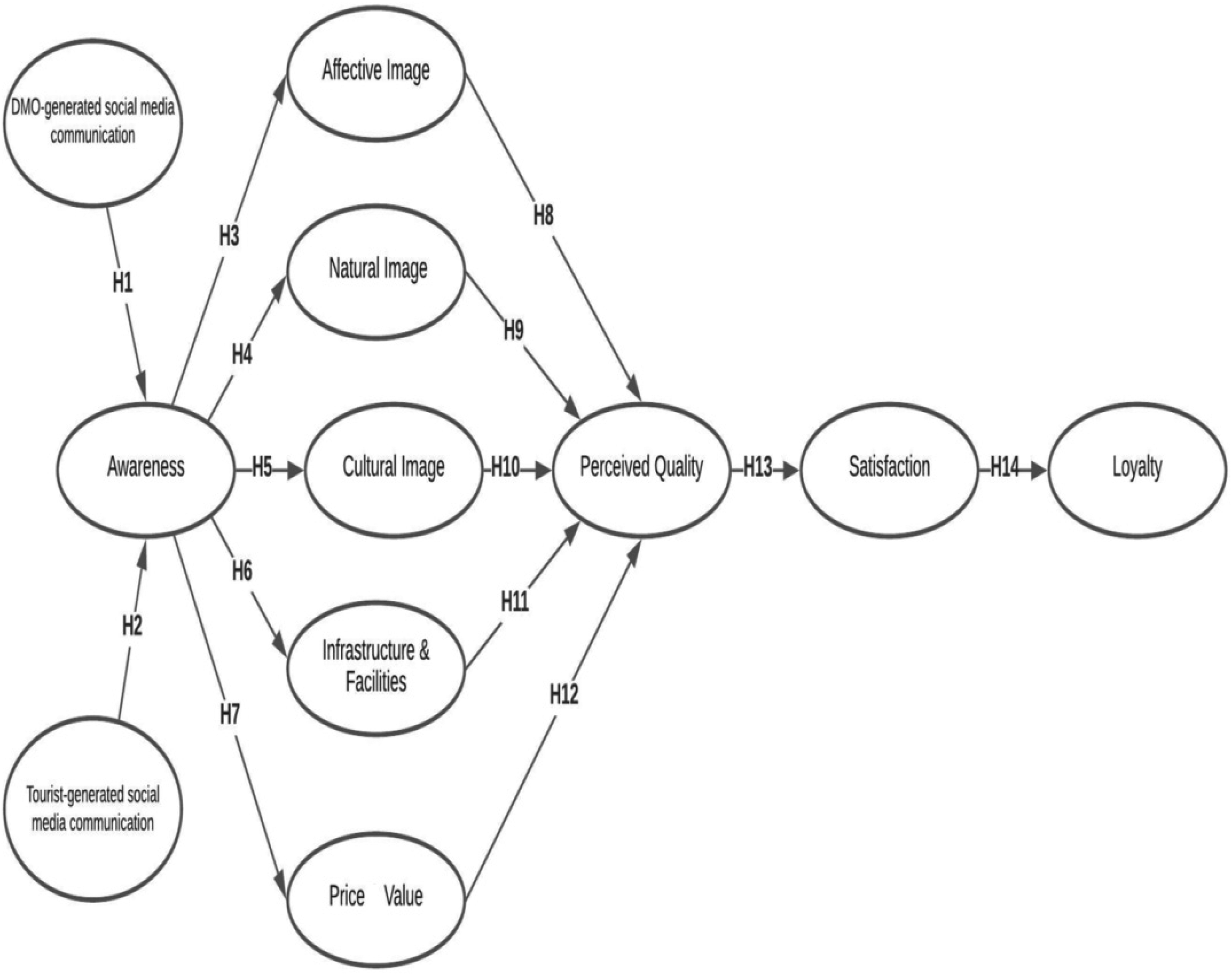
Theoretical framework.
Research method
Measurement
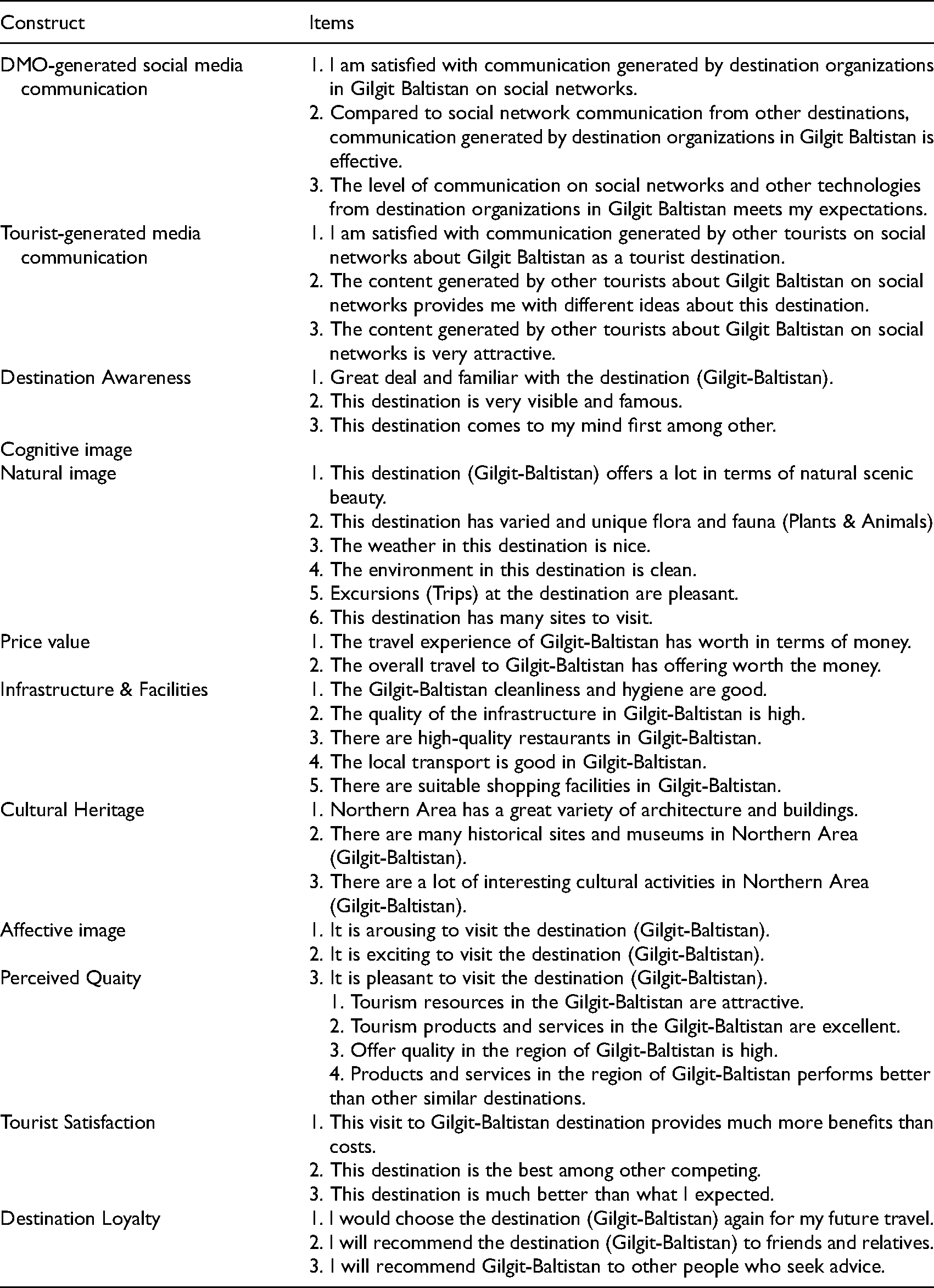
We employed a quantitative study through questionnaire surveys. We adapted questionnaires on DMO-generated social media communication and tourist-generated media communication (Huerta-Álvarez et al., 2020) of a tourism destination from prior research. We adapted items to examine the natural image, cultural image, and infrastructure and facilities (Lin et al., 2007; San Martín et al., 2019). Furthermore, we adapted items to assess affective image, destination perceived quality, awareness, loyalty, and satisfaction from Lassar et al. (1995) and San Martín et al. (2019) and price value from Zeithaml (1988). The items were measured on 5-point Likert scales (1 = strongly disagree, 5 = strongly agree), see Appendix A for the study's questionnaire.
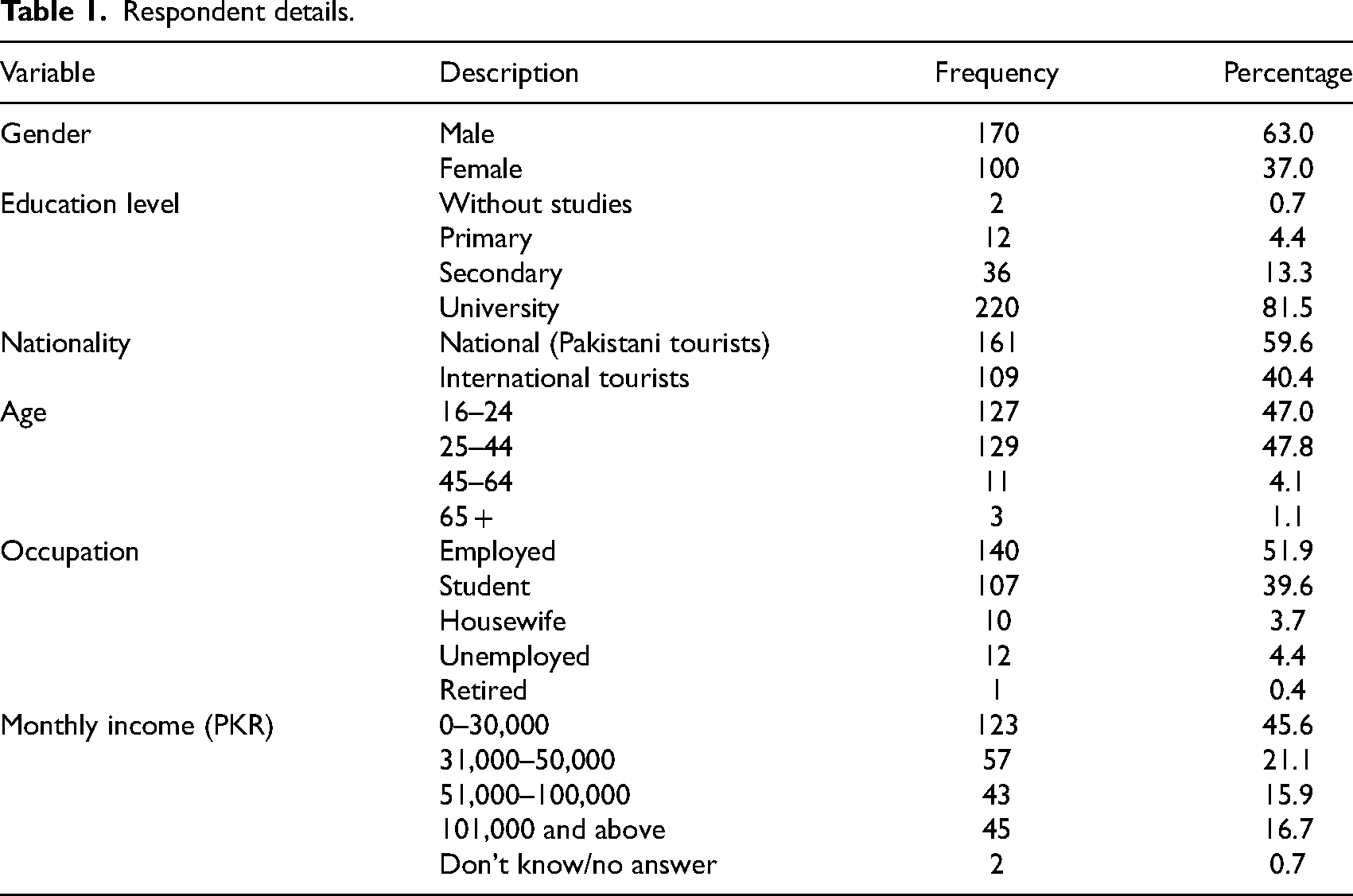
To reduce the risk of methodological sampling prejudice, we deployed a purposive sampling approach, as we had certain criteria for selecting respondents (Etikan et al., 2016). This approach is feasible for assembling data from a restricted number of categories. When approaching the respondents online, we specifically requested tourists who had joined social media groups (e.g. Gilgit Baltistan Pakistan, a group that has been around for seven years) and visited Gilgit-Baltistan for data collection. The respondents took approximately 10 min on average to complete the survey. For the sample size, we used G*power 3.0, which claims a lower bound sample size of 138 for studies given input parameters (effect size = 0.15, α err prob = 0.05, power = 0.95, and no. of predictors = 5) (Faul et al., 2007). We used online and offline self-administered data collection methods to collect data. First, we approached around 120 tourists who had joined online groups and visited Gilgit-Baltistan. After multiple reminders, we managed to obtain 80 valid responses (for a 66.6% response rate). Second, we disbursed 250 hardcopy survey questionnaires and collected 210 responses, for a response rate of 84%. We removed 20 questionnaires with missing values and incomplete responses. Thus, the final test was run on a data sample of 270 national and international tourists who had visited Gilgit-Baltistan. Table 1 provides the demographic distribution.
Respondent details.
Data analysis methods
Using WarpPLS software, we employed the partial least squares structural equation modeling (PLS-SEM) approach to analyze the conceptual model. The software performs analysis in two steps: first, the measurement model and, second, the structural model (Hair et al., 2019). PLS-SEM is an expedient and insightful approach when different constructs are investigated together, if the measuring objective is testing a novel relationship, or for theory development and extension (Hair et al., 2020). We adopt a multifaceted model that contains different latent constructs, and therefore PLS-SEM is a viable approach for our study.
Results
Measurement model
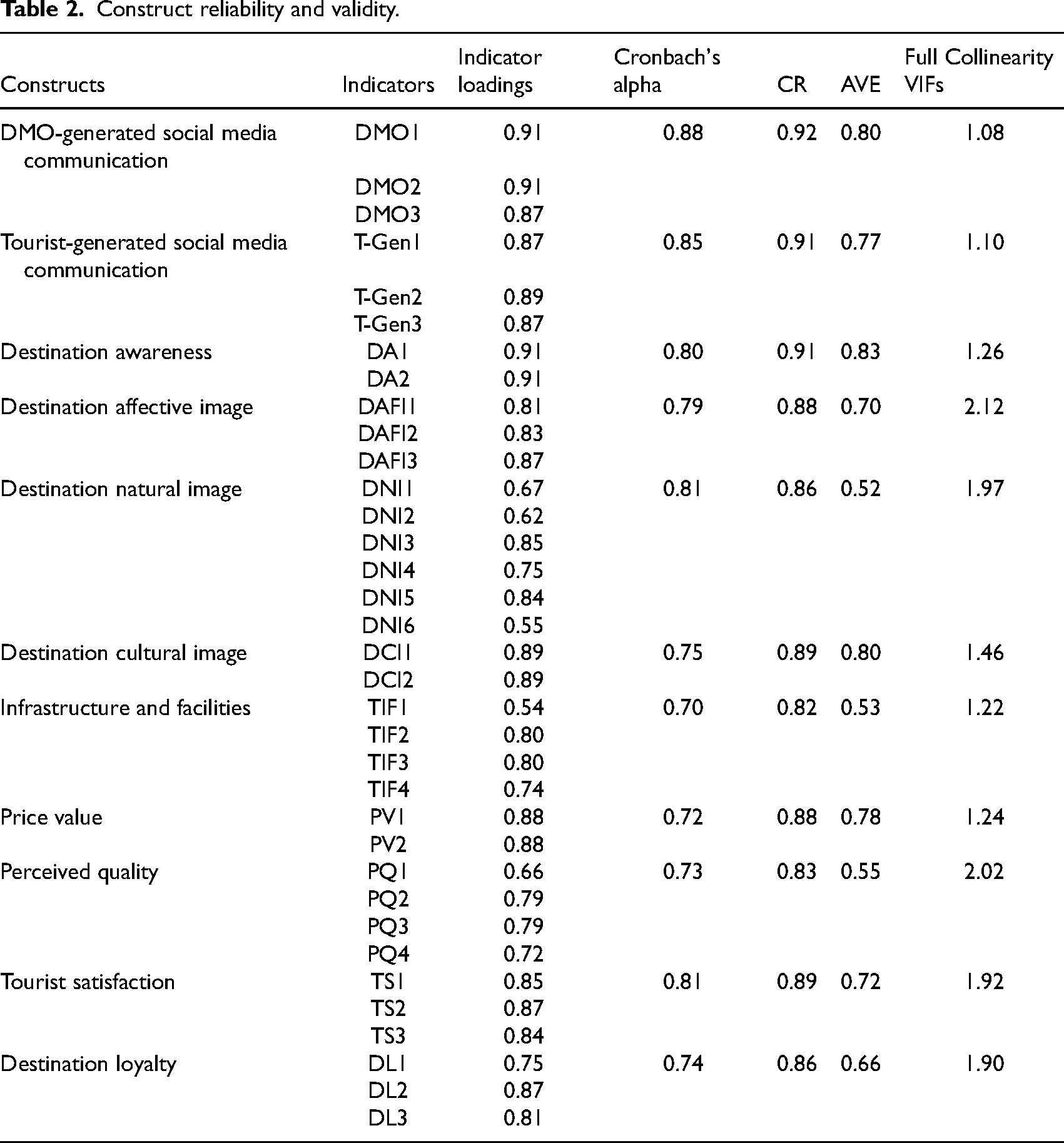
In the first stage measuring the reflective constructs, we checked the reliability and validity through outer loadings, composite reliability (CR), Cronbach's alpha, average variance extracted (AVE), and heterotrait-monotrait (HTMT) ratio (Hair et al., 2020). The criteria for outer loadings are between 0.4 to 0.6 (Abbasi et al., 2019). Other threshold value criteria of item loadings include Cronbach's alpha, CR greater than 0.7, AVE greater than 0.5, and full collinearity variance inflation factors (VIFs) less than 5 (Hair et al., 2019, 2020). As Table 2 shows, internal consistency reliability, indicator reliability, and convergent validity are achieved. All item loadings exceeded the threshold criteria of 0.7, except DNI1, DNI2, DNI6, TIF1, and PQ1, which are between 0.5 and 0.7. According to Hair et al. (2016), if loadings are between 0.5 and 0.7 and do not affect internal consistency reliability and convergent validity, they can be retained. The CR and Cronbach's alpha values (>0.7), AVEs (>0.5), and VIFs (<5) all met the threshold standard; thus, we retained all item loadings.
Construct reliability and validity.
To quantify the discriminant validity of the variables, we employed the HTMT method proposed by Henseler et al. (2015). The correlation threshold of the HTMT ratio is less than 0.85 for dissimilar constructs (Hair et al., 2020). Table 3 shows that the requisite criteria of discriminant validity are achieved, as the HTMT values are lower than 0.85.
Discriminant validity (HTMT).
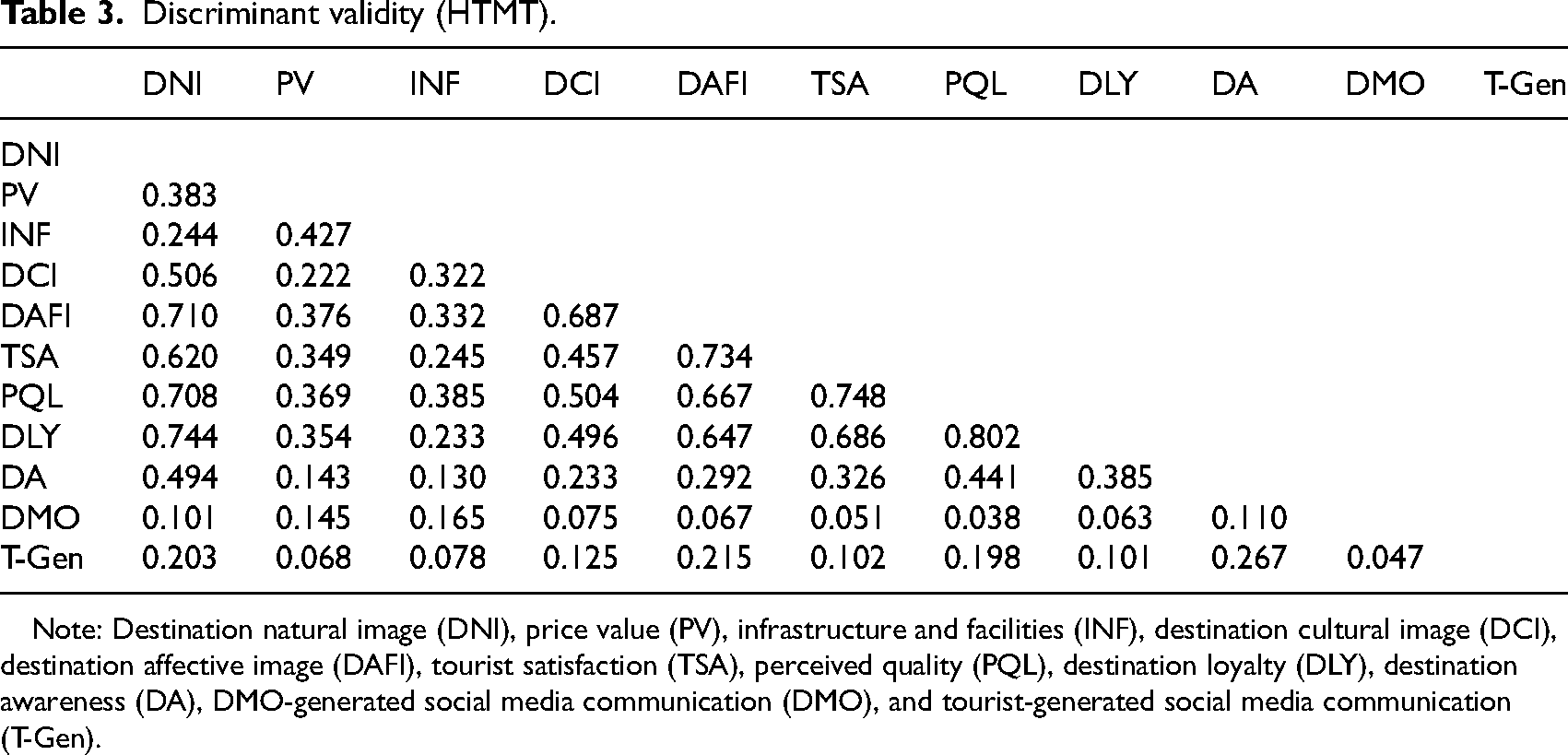
Note: Destination natural image (DNI), price value (PV), infrastructure and facilities (INF), destination cultural image (DCI), destination affective image (DAFI), tourist satisfaction (TSA), perceived quality (PQL), destination loyalty (DLY), destination awareness (DA), DMO-generated social media communication (DMO), and tourist-generated social media communication (T-Gen).
Structural model
To investigate the structural model and test the hypotheses, we used WarpPLS 7.0 to gauge the relationships between variables. These relationships ranging from H1 to H14 can be quantified by the path coefficient effect size, standard error, p-value, f2, R2, and Q2. Table 4 and Figure 2 show the results of the hypotheses and R2 and Q2 results.
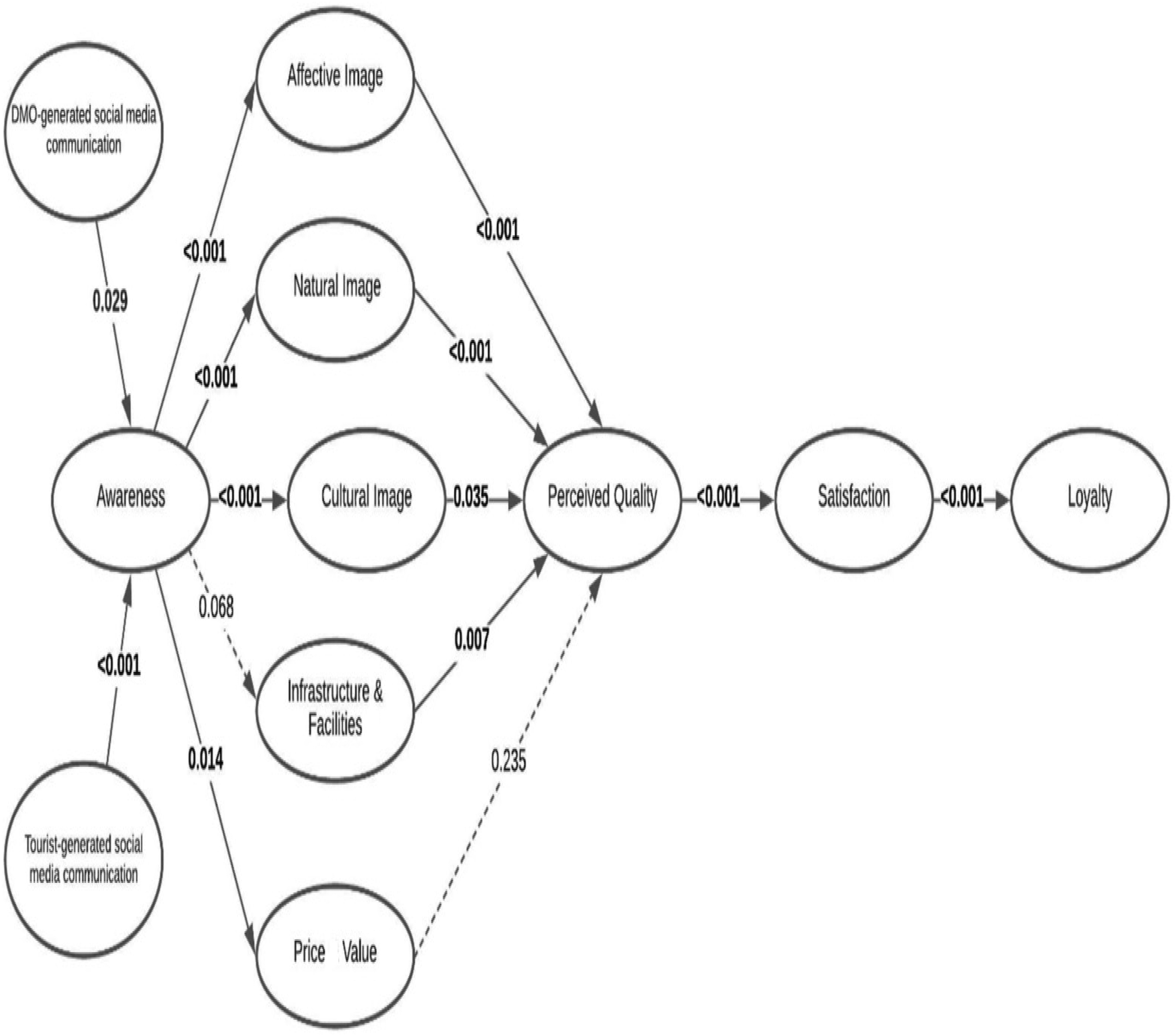
Empirical testing of the study's model.
Structural model assessment: hypotheses testing.
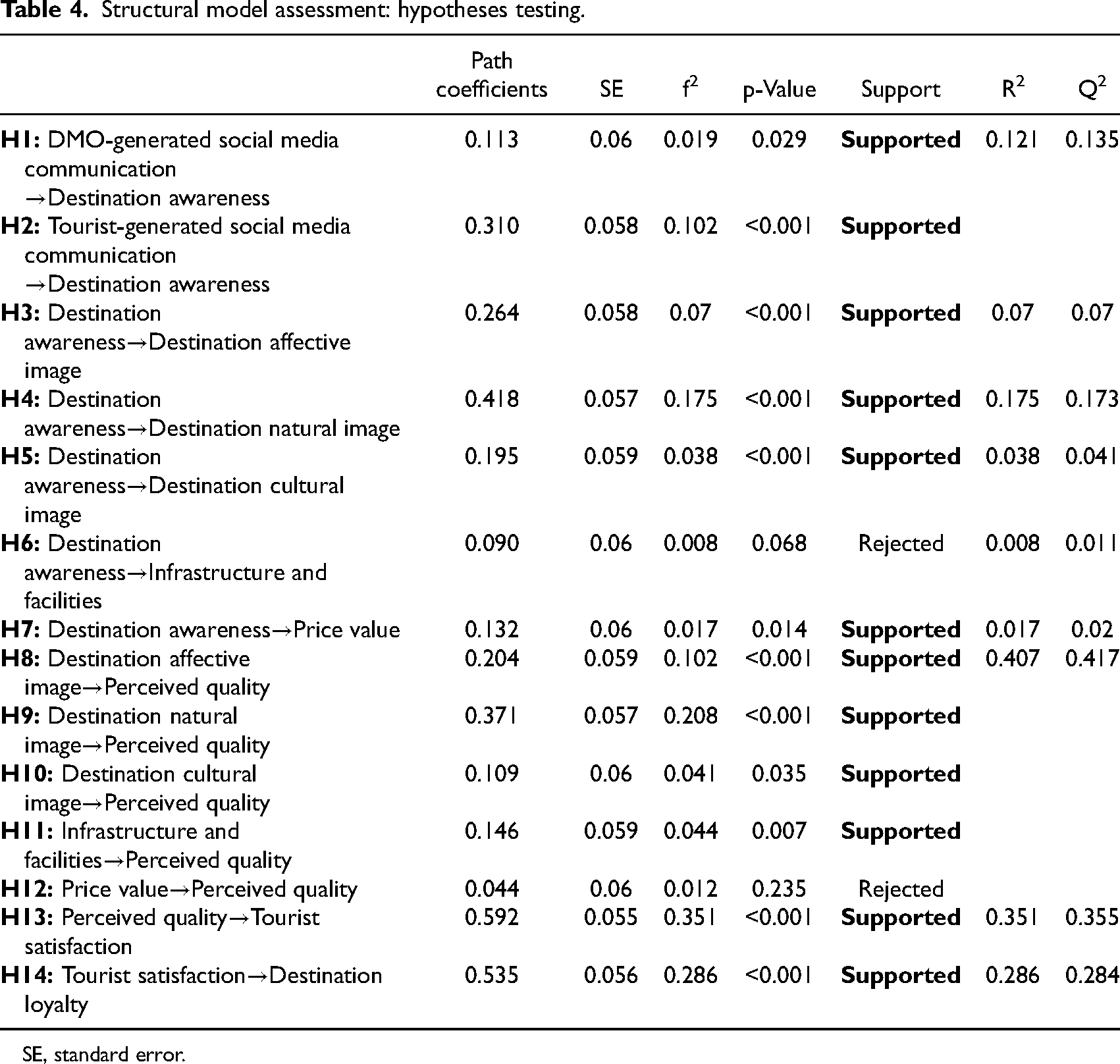
SE, standard error.
Conclusion
As outlined, social media-based brand equity has become an important area of interest for marketing (brand) marketers (Hanna et al., 2021; Liao et al., 2021), however insights into its destination-based dynamics remain limited in tourism-destination context (Dedeoğlu et al., 2020; Huerta-Álvarez et al., 2020; San Martín et al., 2019; Tasci et al., 2022). Thus, this research advanced the existing literature to develop/test a theoretical model, which explores the effect of DMO- and tourist-generated social media communication on brand awareness and image, which consequently affects perceived quality, satisfaction, and loyalty. Using multi sequential-based empirical findings, we conclude that social media communication dimensions (i.e. DMO- and tourist-generated) confirmed significant positive effects on brand awareness. Further, we indicated that destination awareness revealed differential impact on destination image dimensions, which in turn also exerts different effects on perceived quality. We also revealed that perceived quality positively influences tourist satisfaction, which in turn increases destination loyalty. Overall, our study results bridge important gaps in existing tourism, marketing and branding literature and elucidate novel associations in social media-based brand equity, satisfaction and loyalty context.
Discussion and implications
Theoretical implications
First, our research contributes to tourism marketing literature by exploring social media, destination branding (brand equity management), and their inter-relationships. Our findings extend prior research on brand equity management in marketing domain. In response to calls for more empirical investigation into social media and tourism destinations (Dedeoğlu et al., 2020; Huerta-Álvarez et al., 2020; Lee and Hsieh, 2021), we developed and tested a comprehensive tourism destination–based model. We expect our findings to generalize to other service contexts (e.g. hospitality, education, food tourism), thus generating future research opportunities.
Second, our study offers unique aspects (i.e. uncontrolled and controlled communication) both jointly and separately from a tourist perspective in the tourism destination brand equity context. In particular, uncontrolled communication enables consumers to interact (communicate) with both negative and positive content outside a firm's control (Huerta-Álvarez et al., 2020). The findings reveal that DMO- and tourist-generated communication are important factors to raise destination awareness, which is a key metric of CBBE. Moreover, controlled communication exemplifies the traditional profile of the brand equity marketing factor; firms establish a mixture of investments, channels, and platforms through which to communicate with the market (Tarutė and Gatautis, 2014). Thus, there is a positive relationship between tourists’ perceptions of controlled communication and destination awareness.
Both uncontrolled and controlled communication have a positive and significant effect on destination awareness. In particular, our findings show that organic information sources (solicited or unsolicited) created by tourists have a stronger effect on destination brand awareness than information generated by tourism agencies and marketers. Our findings support those of Huerta-Álvarez et al. (2020), which reveal that the lesser control exercised over communication produced by DMOs, the higher is its impact on destination brand awareness. Thus, DMO-generated content is positively associated with tourists’ recommendations, leading to destination awareness and positive destination image.
Third, prior research has treated the destination brand image as a unidimensional factor (i.e. self-image or social image) (Pike and Bianchi, 2016). By contrast, we measured brand image as a multidimensional construct in our proposed destination brand equity model that includes affective image, natural image, cultural image, infrastructure and facilities, and price value (San Martín et al., 2019). This approach sheds more light on the effect of this factor on the development of destination brand equity. Our empirical findings also indicate that in the development of customer-perceived quality through destination experience, affective and natural images are the strongest drivers. This may be due to the tourist experience, which compared with other consumption environments, has more emotional content, which in turn heightens customers’ feelings in their destination assessments.
Fourth, we also examined the role of customer satisfaction in the chain of associations between destination brand equity dimensions. Although research has extensively investigated satisfaction in the tourism area, it has largely ignored the impact of satisfaction in the brand equity domain (Huerta-Álvarez et al., 2020). From this perspective, our study corroborates the impact of the tourist–satisfaction relationship on loyalty to the destination. That is, after tourists have visited the destination, satisfaction emerges as an important factor for destination brand equity and operates as a solid precursor of destination loyalty in terms of the willingness to recommend the attraction to others and revisit it in the future.
Practical implications
This research has several key implications for destination/tourism managers and marketers. First, in exploring the impact of DMO- and tourist-generated social media communication on destination brand awareness, we show that awareness affects destination image dimensions, including perceived quality, loyalty, and satisfaction. Pakistan is a rich land with diverse places of attraction, and many social media vloggers have promoted the beauty of the northern region of Gilgit-Baltistan. However, despite many attempts to promote Pakistan's tourism areas, most of its tourist attractions remain unexplored. To attract tourists, DMOs can adopt strategies for multi-channel transmission of traditional and/or controlled communication. To do so, DMOs should view social media networks as a tool to reach out the marketplace and assess tourists’ views of their sites through their comments, stories, photos, and advice about destination (Lee and Hsieh, 2021).
Second, DMOs can encourage active tourists’ participation in communicating constructive messages about their experiences of destinations/sites (Rather and Hollebeek, 2021). Moreover, technological-led efforts or investments are important for developing markets to efficiently link with visitors.
Third, information and communications technology (ICT) provides a means for DMOs to communicate and interact with customers. Such an environment produces a wealth of information (e.g. big data) on customer attitudes, profiles, tastes, and so on. ICT has also become an important way to encourage tourist co-creation processes, obtain customer-to-customer feedback, satisfy consumer needs, and develop customer-company relationships (Lee and Hsieh, 2021). We show that DMOs can use social media as a core medium to exchange information with customers and thus co-create value. Customer-to-customer feedback is a key consideration, as many tourists seek such feedback before visiting a specific place of attraction. Thus, tourist firms should initiate a platform that can enhance the chances of co-creation paradigms with customers. Leveraging ICT as a co-create platform would help providers glean more insights through the co-creation process.
Fourth, our study also has key implications for fostering tourist loyalty. According to Pike (2007), brand awareness is “the ticket to enter the market.” Thus, we suggest that tourism marketers expend efforts in strengthening the destination brand awareness. We show that social media is a strong tool for highlighting tourist hotspots. However, a destination can suffer despite attracting attraction if it is not well-known in the targeted marketplace. Therefore, the destination should adopt strategies such as social communication and traditional campaigns to make the destination/brand name more prominent and familiar to potential tourists (Huerta-Álvarez et al., 2020; San Martín et al., 2019).
Fifth, destination communication can also develop a consistent and positive image based on both affective- and cognitive-related issues. As our findings show, affective image plays a more important role in the “quality–satisfaction–loyalty” sequence than cognitive image; thus, marketers can also work to reinforce or create an affective image of the site in their positioning strategies (Rather and Hollebeek, 2021). Relatedly, positioning mostly derives from the combination of emotions/feelings (e.g. excitement, fun, pleasure), which the site can evoke among visitors by considering their motivations for visiting. Cognitive associations generally derive from major attractions and resources of sites interested by target markets. Thus, for Gilgit-Baltistan, tourism-managers should work to communicate its attractive drivers, which would help customers recognize the hidden beauty of the region.
Sixth, as perceived quality and tourist satisfaction are important drivers of destination loyalty, destination managers should take long-standing proactive management approaches to both factors. Furthermore, destination marketers should continually evaluate the destination's perceived quality and visitor satisfaction to monitor both factors. To manage both customer-company and company-customer communication flows, care should be taken to identify more important events/trends in consumer-to-consumer communication to identify tourists’ satisfaction level, tastes, expectations, and needs; marketers should also carefully watch rival destinations/firms (|Rather, 2018, 2021). Moreover, tourism firms/brand develop suitable channels (e.g. customer service, physical offices, online brand communities, web pages) to handle tourists’ complaints and offer a speedy reply to resolve or improve quality issues and other sources of tourist dissatisfaction.
Finally, destination marketers should reward customers for their loyalty and for recommending the attraction to others. On one side, direct marketing strategies or campaigns could encourage revisits of satisfied visitors, by reminding them about their past experiences and highlighting other novel sites, attractions, and resources. Promotional-incentives (e.g. discounts, coupons) could be offered to encourage revisits (Rather et al., 2022; San Martín et al., 2019). On the other side, loyal customers can serve as a source of positive WOM of destinations to others. ICT can facilitate eWOM, and these recommendations have a global impact (Rather, 2021). As such, tourism agencies and marketers should take the lead in technologies to encourage loyal tourists to upload content on specialized networks (e.g. Instagram, YouTube) and social media sites (e.g. Facebook) and to post ratings on destination sites (e.g. Tripadvisor, Booking.com). To do so, DMOs and tourism agencies could have their own profiles on recommendation websites and social media platforms and use them to promote and share eWOM from loyal customers.
Limitations and future research direction
This study has some limitations that may present opportunities for future research. First, we carried out the research in a single marketplace (Gilgit-Baltistan), and thus our findings may not generalize to other cultures or destination sites (Hollebeek and Rather, 2019). Future research could investigate the link among social media, brand equity, and loyalty in other cultures and markets. Second, data came from a specific tourist destination. Thus, future studies should test our findings in other countries/regions, to increase the validity of our findings. Third, our study relies on cross-sectional data; thus, we suggest conducting longitudinal research on the relationship between the modeled variables.
Fourth, future research might investigate brand equity of alternative nomological networks, incorporating constructs such as WOM, customer engagement, co-creation, or commitment (Abbas et al., 2020; Islam et al., 2020; Khan et al., 2022; Rather and Hollebeek, 2020). Fifth, future research might examine our proposed conceptual model in other (tourism- or hospitality-based) contexts, such as tourism bookings, restaurants, or hotels.
Sixth, given the global COVID-19 outbreak, scholars might want to replicate our research design in crisis or disaster contexts (Rather, 2022). Sixth, while we examined three aspects of CBBE, we ignored other elements that help predict overall CBBE, including destination association and trust Future studies might incorporate other factors and financial-based brand equity to examine destination performance.
Footnotes
Acknowledgements
We are thankful to International Collaborative Research Fund, Grant #015ME0-247, for supporting this research.
Declaration of conflicting interests
The author(s) declared no potential conflicts of interest with respect to the research, authorship, and/or publication of this article.
Funding
The author(s) received no financial support for the research, authorship, and/or publication of this article.

Appendix A
| Construct | Items |
|---|---|
| DMO-generated social media communication | 1. I am satisfied with communication generated by destination organizations in Gilgit Baltistan on social networks. |
| 2. Compared to social network communication from other destinations, communication generated by destination organizations in Gilgit Baltistan is effective. | |
| 3. The level of communication on social networks and other technologies from destination organizations in Gilgit Baltistan meets my expectations. | |
| Tourist-generated media communication | 1. I am satisfied with communication generated by other tourists on social networks about Gilgit Baltistan as a tourist destination. |
| 2. The content generated by other tourists about Gilgit Baltistan on social networks provides me with different ideas about this destination. | |
| 3. The content generated by other tourists about Gilgit Baltistan on social networks is very attractive. | |
| Destination Awareness | 1. Great deal and familiar with the destination (Gilgit-Baltistan). |
| 2. This destination is very visible and famous. | |
| 3. This destination comes to my mind first among other. | |
| Cognitive image | |
| Natural image | 1. This destination (Gilgit-Baltistan) offers a lot in terms of natural scenic beauty. |
| 2. This destination has varied and unique flora and fauna (Plants & Animals) | |
| 3. The weather in this destination is nice. | |
| 4. The environment in this destination is clean. | |
| 5. Excursions (Trips) at the destination are pleasant. | |
| 6. This destination has many sites to visit. | |
| Price value | 1. The travel experience of Gilgit-Baltistan has worth in terms of money. |
| 2. The overall travel to Gilgit-Baltistan has offering worth the money. | |
| Infrastructure & Facilities | 1. The Gilgit-Baltistan cleanliness and hygiene are good. |
| 2. The quality of the infrastructure in Gilgit-Baltistan is high. | |
| 3. There are high-quality restaurants in Gilgit-Baltistan. | |
| 4. The local transport is good in Gilgit-Baltistan. | |
| 5. There are suitable shopping facilities in Gilgit-Baltistan. | |
| Cultural Heritage | 1. Northern Area has a great variety of architecture and buildings. |
| 2. There are many historical sites and museums in Northern Area (Gilgit-Baltistan). | |
| 3. There are a lot of interesting cultural activities in Northern Area (Gilgit-Baltistan). | |
| Affective image | 1. It is arousing to visit the destination (Gilgit-Baltistan). |
| 2. It is exciting to visit the destination (Gilgit-Baltistan). | |
| Perceived Quaity | 3. It is pleasant to visit the destination (Gilgit-Baltistan). 1. Tourism resources in the Gilgit-Baltistan are attractive. 2. Tourism products and services in the Gilgit-Baltistan are excellent. 3. Offer quality in the region of Gilgit-Baltistan is high. 4. Products and services in the region of Gilgit-Baltistan performs better than other similar destinations. |
| Tourist Satisfaction | 1. This visit to Gilgit-Baltistan destination provides much more benefits than costs. |
| 2. This destination is the best among other competing. | |
| 3. This destination is much better than what I expected. | |
| Destination Loyalty | 1. I would choose the destination (Gilgit-Baltistan) again for my future travel. |
| 2. I will recommend the destination (Gilgit-Baltistan) to friends and relatives. | |
| 3. I will recommend Gilgit-Baltistan to other people who seek advice. |