




Abstract
This study inductively applies the Feedback Intervention Theory by empirically demonstrating the effectiveness of continuous, real-time eco-feedback and its interaction with motivational factors in modifying showering behavior. We conducted a covert true experiment across six tourist accommodations in Denmark, Spain, and the UK, where we deployed smart technology, in the form of a timer to provide the eco-feedback, coupled with persuasive messages. Data from over 17,500 showers showed that continuous, real-time eco-feedback reduced water runtime by 25.79% (CI = 8.24%; 39.98%). When the eco-feedback was paired with the most effective message—priming pro-environmental values and requiring a high effort to comply—water runtime was reduced by 23.55% (CI = 17.53%; 29.13%). The study’s robust experimental design, and its emphasis on actual behavior measurement, highlight the potential of smart technology to facilitate resource conservation.
Introduction
Depletion of freshwater is a global threat (IPCC, 2022). Over a third of the global population live in high water-stressed countries (Kuzma et al., 2023), many of which are tourist hotspots. Tourism is responsible for much of the water consumption, for example, 24.2% in the Balearic Islands, one of Europe’s major Mediterranean destinations (Garcia et al., 2023). Tourists exert pressure on water resources not only because they are an “artificial” population but also because individuals consume more water on holiday (350 L per tourist/day; Gössling, 2015) than at home (120 L per person/day in Mumbai, 142 in the UK, or 170 in Beijing and Los Angeles [50L Home Coalition, & Arcadis, 2021]).
Within tourism research to date, only 6.85% of studies on behavioral change interventions have studied water conservation, and all of these have measured attitudes/beliefs instead of actual behaviors; moreover, none included a control condition (Demeter, Fechner, & Dolnicar, 2023). To address this gap, we adopt an inductive, impact-driven approach to: (i) understand some of the contextual factors, and determinants, of water usage, (ii) develop an intervention, and (iii) contribute to theory (Nielsen et al., 2021). Specifically, we conduct a covert true experiment, deploying innovative technology, to collect behavioral information accurately and unobtrusively while nudging consumers to conserve water. As the combination of this type of technology with other behavioral insights has been found to optimize behavioral interventions (Günther et al., 2020; Karlin et al., 2015; Tiefenbeck, 2017), we combine 13 behavioral change techniques from the Behavior Change Technique Ontology (Marques et al., 2023), see Table 1.
Behavioral Change Techniques Used in This Study. Adapted from: Behavioral Change Technique Ontology (Marques et al., 2023).
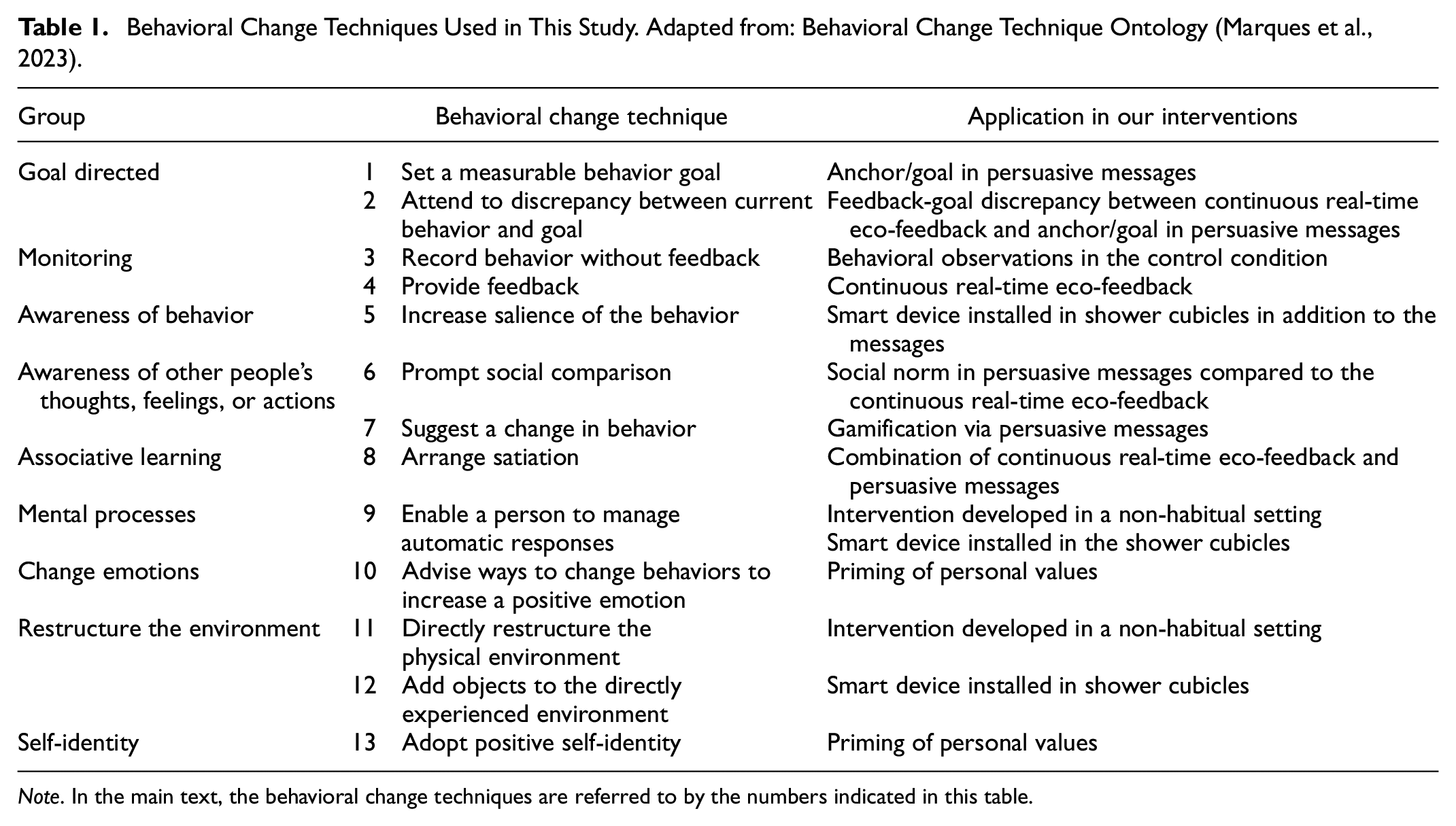
Note. In the main text, the behavioral change techniques are referred to by the numbers indicated in this table.
Showering constitutes a significant water and energy-intensive behavior both at home (50L Home Coalition, & Arcadis, 2021; Tiefenbeck et al., 2018; Willis et al., 2010) and in tourist accommodations (Gössling, 2015; Gössling et al., 2012; MacAskill et al., 2023). Reducing shower duration mitigates water consumption, and reduces the energy usage, and associated carbon emissions, of water heating. MacAskill et al. (2023) report that 36% to 42% of the in-room water used by guests at two Australian tourist accommodations is hot water and reductions in usage largely depend on guest behavior rather than on the hotelier. Tourist accommodations are a convenient setting for disrupting habitual showering behavior and driving change, as people are away from their everyday cues and, thus, more receptive to feedback or information in the new setting (Verplanken et al., 2008). Furthermore, tourist accommodations offer opportunities to reach, and gather data from, a diverse population, especially in destinations where short stays are typical resulting in high population turnover.
Enticing pro-environmental behavior change is crucial for curbing water use (Amel et al., 2017; Nielsen et al., 2021). Such behavior entails minimizing harm to, or benefiting, the environment (Steg & Vlek, 2009). Many behavioral change techniques have been used across different contexts (Marques et al., 2023), from information campaigns that boost knowledge to persuasive communications to stimulate action (e.g., Dolnicar, 2020). One such technique is that of Providing Feedback (technique 4 in Table 1 [Marques et al., 2023]), which is the process of feeding information back to individuals about their behavior or task performance. Feedback is a tool for driving change, especially as a key moderator in goal-performance effects (Locke & Latham, 1990, 2019). Specifically, eco-feedback aims to reduce individuals’ environmental impacts (Froehlich et al., 2010). In residential settings, saving resources can reduce costs, but guests in tourist accommodations lack that economic motivation as utilities are all-inclusive, which removes the traditional, rational driver (Diekmann & Preisendörfer, 2003). Thus, compliance with eco-feedback may imply to individuals an increase in their personal, behavioral costs (i.e., effort, inconvenience, money, time) to achieve collective benefits. In the case of showering, the individual must increase their effort to take a faster shower, or their inconvenience to turn off the water during the shower, to preserve water resources for the community.
This study uses a smart device to empirically test the effectiveness of a novel type of eco-feedback, that of continuous real-time eco-feedback. We aim to determine whether providing this type of feedback during the behavior’s execution may interrupt habitual performance (technique 9 in Table 1) by curtailing shower durations (Gardner et al., 2019). The Feedback Intervention Theory (Kluger & DeNisi, 1996), a reference for feedback interventions, does not categorize feedback types but recognizes that feedback content is a crucial factor in its effectiveness, so conceptualizing continuous real-time eco-feedback within the broader framework of the Feedback Intervention Theory will enhance our understanding of its underlying mechanisms and effects (Karlin et al., 2015). A key argument of the Feedback Intervention Theory is that behavior is regulated by comparing feedback with a standard or goal (technique 1 in Table 1), and that this can, potentially, trigger a feedback-goal discrepancy (Kluger & DeNisi, 1996) (technique 2 in Table 1).
The effectiveness of feedback interventions is highly variable, with many failing when not designed appropriately (Karlin et al., 2015; Kluger & DeNisi, 1996). According to the Feedback Intervention Theory, the focus of attention in the feedback-goal discrepancy influences that variability (Kluger & DeNisi, 1996). Attention to the self (for instance, by appealing to personal values) may divert attention from the task itself; similarly, the level of behavioral cost required to perform a task may impact an individual’s performance. While personal values and levels of cost are not the central focus in the Feedback Intervention Theory, they are indirectly related to its core principles. For instance, both are relevant moderators in the Goal Setting Theory (Locke & Latham, 1990, 2002, 2006), a key theory informing the Feedback Intervention Theory (Kluger & DeNisi, 1996). Thus, we incorporate these two factors by embedding them in persuasive messages (techniques 5 and 8 in Table 1), to measure empirically their effects on the feedback intervention. Our intention is to deepen our understanding of how these factors interact within the framework of the Feedback Intervention Theory. Between 2006 and 2021, only three out of 146 tourism field experiments (2.05%) utilized feedback (Demeter, Fechner, & Dolnicar, 2023), and none of these were informed by the Feedback Intervention Theory (Dolnicar & Demeter, 2024).
Our study expands this limited body of work, contributing to the largely underexplored field of inducing water conservation (Haggar et al., 2023; Koop et al., 2019; Otaki et al., 2017). We consider a novel domain, showering, with a novel type of feedback, continuous real-time eco-feedback. We use smart technology developed by the Danish company Aguardio, in the form of unobtrusive devices installed in shower cubicles that provide continuous information to users via a timer display, while also enabling active tracking of shower duration and other metrics. Our methodology is an example of a covert true experiment. This type of research design aims to establish a causal relationship in the real world, but has largely been neglected in tourism despite its potential for external validity (Dolnicar et al., 2024; Fong et al., 2016; Viglia & Dolnicar, 2020). The focus on actual behavior is crucial to improve generalizability and impact (Lange et al., 2023); moreover, it offers powerful insights for the tourism industry regarding intervention approaches that are either effective, or less fruitful, under specific conditions (Dolnicar, 2023; Dolnicar & Demeter, 2024).
A Feedback Intervention
Feedback Intervention Theory: Key Assumptions
Feedback encompasses any type of performance information (Kluger & DeNisi, 1996), while eco-feedback refers to natural resource usage (Froehlich et al., 2010). Eco-feedback has sustained academic attention for nearly 50 years (Karlin et al., 2015) with studies mostly focused on energy behavior (Darby, 2006; Ehrhardt-Martinez et al., 2010). The Feedback Intervention Theory is a reference to understand how feedback works. However, it does not categorize feedback by content or style (e.g., eco-feedback) and lacks specific predictions and details, suggesting a need for further development (Alder, 2007). Also, the Feedback Intervention Theory was developed following a comprehensive literature review and meta-analysis by Kluger and DeNisi (1996), so the authors referred to it as a “preliminary theory” (Kluger & DeNisi, 1996, p. 254). It provides valuable insights into how the motivational and informational properties of feedback can influence behavior and enhance behavioral effectiveness. Although feedback interventions generally improve performance, in some cases performance diminishes, particularly when the core assumptions posited by the Feedback Intervention Theory are not comprehended or implemented effectively (Fulham et al., 2022; Kluger & DeNisi, 1996). Therefore, in this section, we review the three assumptions that explain behavior change through feedback: goal, goal hierarchy, and attention (Karlin et al., 2015; Kluger & DeNisi, 1996).
First, a goal can be an individual’s personal standard, a past behavior, and/or an anchor/target established by an intervention (technique 1 in Table 1). The Feedback Intervention Theory posits that if there is a feedback-goal discrepancy, an individual’s motivation (or lack thereof) to narrow or close the gap becomes integral to the feedback’s effectiveness at changing their behavior (Kluger & DeNisi, 1996). This argument relies heavily on the Goal Setting Theory (Kluger & DeNisi, 1996), a strong theory on work motivation (Locke & Latham, 1990, 2002, 2006). The Goal Setting Theory posits that individuals may be motivated to align their behavior with the goal via four different mechanisms: by increasing the effort, by lowering the goal, by rejecting the feedback, or by disengaging from the situation or behavior (physical or mental disconnection; Kluger & DeNisi, 1996). The Feedback Intervention Theory does not predict which mechanism individuals will follow but it suggests that an individual’s response is contingent upon the task itself, the content of the feedback, the individual’s inherent characteristics (Karlin et al., 2015) and the situational factors at play (Karlin et al., 2015; Ross & Nisbett, 2011).
The second assumption, goal hierarchy, indicates that personal goals are organized hierarchically, according to Kluger and DeNisi (1996), in three levels. Meta-task processes, at the highest level, are centered around the self, such as personal values, life goals, or self-efficacy. Task-motivation processes, in the middle of the hierarchy, involve factors that influence an individual’s motivation to perform the task. Task-learning processes, at the lowest level, involve developing or learning the steps or skills required to accomplish the task (Kluger & DeNisi, 1996).
The third and final assumption, attention, refers to the need for an individual to redirect their attention toward the feedback-goal discrepancy (Karlin et al., 2015). Naturally, the initial step requires the individual to be aware of the feedback, but the Feedback Intervention Theory is not explicit in this prerequisite (Karlin et al., 2015). Given individuals’ limited cognitive resources (Kahneman, 2012; Steg & Vlek, 2009), feedback can go unnoticed and, therefore, fail to influence behavior. Potentially, this explains the failure of many attitude-based interventions in tourism contexts (Dolnicar & Demeter, 2024). However, once feedback is noticed, the Feedback Intervention Theory argues that its effectiveness varies depending on the level of the hierarchy it addresses (Kluger & DeNisi, 1996). Specifically, the most effective feedback directs attention to the task-learning processes, focusing on the smaller steps needed to improve task performance. The next most effective is feedback that targets task-motivation processes. Feedback that focuses on meta-task processes, on the self, is generally less effective because the recipient’s attention is shifted away from the task and toward a self-evaluation that can cause defensive reactions (Kluger & DeNisi, 1996).
As indicated, feedback effectiveness is influenced by the task, the situational characteristics, the content of the feedback, and the recipient’s characteristics (Kluger & DeNisi, 1996). Next, we look in more detail at each of these factors.
The Task and Situational Characteristics: Showering Behavior in Tourist Accommodations
Showering is a highly habitual behavior, characterized by repeated actions within a specific context, typically at home. This context cue instigates a behavior, and its execution (Gardner et al., 2019), that become automatic (Wood et al., 2022). Showering in tourist accommodation can disrupt habits, due to the unfamiliar environment (techniques 9, 11 in Table 1). Introducing a novel cue like a smart shower device in the shower cubicle (techniques 5, 12 in Table 1) can further disrupt habits (Verplanken et al., 2008).
Another relevant, contextual characteristic is that guests at tourist accommodations are not economically motivated to save water or energy. Pro-environmental, and/or altruistic, behaviors usually involve personal sacrifice or inconvenience for the sake of collective or environmental benefits, in stark contrast to tasks that directly benefit the individual (Diekmann & Preisendörfer, 2003). This distinction has implications for feedback effectiveness as it affects the recipient’s motivational processes (Kluger & DeNisi, 1996). While it is beyond the scope of this study to compare, empirically, different types of tasks, the data collected in this research, openly available in https://osf.io/stbe4/, could enable future exploration into how different motivational tasks (e.g., economic vs. non-economic) influence behavior, reflecting the inductive methodology followed in this study.
The Type of Feedback: Continuous Real-Time Eco-feedback
Eco-feedback is generally effective at reducing resource use. A meta-analysis revealed that, on average, eco-feedback reduces energy consumption by 10% (Karlin et al., 2015). However, real-time eco-feedback generally yields better results, with studies showing savings of 19.6% in overall household water consumption (Sønderlund et al., 2014) and 22 to 27% in shower water consumption (Stewart et al., 2013; Tiefenbeck, 2017). While the Feedback Intervention Theory does not categorize feedback types based on their effects on performance, it does emphasize the importance of the feedback’s focus level (i.e., meta-task, motivation-task, learning-task) in influencing attention and behavior (Kluger & DeNisi, 1996). Also, the Feedback Intervention Theory does not directly address feedback frequency, but it does suggest that frequency helps to create a clearer feedback-goal discrepancy at the task level, which, in turn, can improve performance (Kluger & DeNisi, 1996). Although some studies find that higher frequency leads to more effectiveness (e.g., Darby, 2006), a meta-analysis did not find a significant link between frequency and effectiveness, which surprised the authors; which they explained as the result of potentially confounding effects (Karlin et al., 2015).
To the best of our knowledge, only three studies of tourist accommodations have used a water-saving technology for showers with continuous real-time eco-feedback capabilities to reduce resource consumption (i.e., Günther et al., 2020; Pereira-Doel et al., 2019; Tiefenbeck et al., 2019). In Tiefenbeck et al.’s (2019) study, users received the following continuous real-time metrics while showering: water consumption in liters, energy used in kWh, the energy efficiency class, and an animation of a polar bear on a gradually melting ice floe. Their intervention—a covert true experiment—resulted in a 11.4% reduction in energy consumption. Pereira-Doel et al. (2019) achieved a 12.06% reduction in shower duration using the same technology as in our study. Günther et al.’s (2020) study reported a non-statistically significant energy reduction of 3.9% to 5.5%, using the same technology as in Tiefenbeck et al. (2019). Yet, none of these studies were framed within the Feedback Intervention Theory to discuss the findings. We posit the following hypothesis:
The Feedback Content
In this section we review the theories behind feedback that emphasizes value orientation and level of effort, followed by the opportunities arising from the combination of behavioral change techniques.
Value Orientation and Level of Effort
Priming is the delivery of a cue that triggers the activation of a relevant idea from memory, in our case, appealing to personal values. The cue can be a conscious or subconscious stimulus (Dolan et al., 2012). A meta-analysis of priming effects revealed that messages that align with an individual’s priorities and values are most impactful (Weingarten et al., 2015). Priming can, therefore, act as a value activator (Bardi & Goodwin, 2011; Evans et al., 2013), increasing the likelihood of behavioral change when the primed value matters to the individual (Verplanken & Holland, 2002). Values are desirable, trans-situational goals that serve as guiding principles in people’s lives (Schwartz & Bardi, 2001). Values are among the most important psychological constructs (Maio et al., 2001) as they are universal (Schwartz, 1994) and strongly influence some of the other psychological factors that shape behavior (Dietz et al., 2005; Stern et al., 1995), such as beliefs and attitudes. Consequently, priming personal values, reflected in the Behavioral Change Technique Ontology (Marques et al., 2023) as Self-identity (technique 13 in Table 1), may exert substantial influence on behavior (Sagiv et al., 2017; Schwartz, 1994; Stern, 2000; Stern & Dietz, 1994).
Self-enhancement, or selfish, values prioritize one’s own interests, status, welfare, pleasure, and/or achievements over those of other people and/or nature. Conversely, self-transcendence, or selfless, values prioritize the interests of others, including other social groups and nature (Schwartz, 2012). Selfless values can strongly trigger pro-environmental behavior (Dietz et al., 2005; Stern & Dietz, 1994). Yet, priming selfish values can also foster pro-environmental behavior if it aligns with personal goals (Bolderdijk et al., 2013; Kesenheimer & Greitemeyer, 2020; Taufik et al., 2015; Tolppanen & Kang, 2021), for instance, the motivation to have a shorter shower for the feel-good factor of doing good (Bolderdijk et al., 2013; Steg, 2016). The value orientation (selfish vs. selfless) that most commonly motivates pro-environmental behavior remains unclear (Bolderdijk et al., 2013; Herziger et al., 2020; Kesenheimer & Greitemeyer, 2020; Tolppanen & Kang, 2021). Tolppanen and Kang (2021) identified biospheric values (i.e., selfless pro nature values) as being the strongest values for fostering pro-environmental behavior across several contexts. However, Steg (2016) argued that people endorse both selfless and selfish values to varying degrees, yielding diverse outcomes depending on the person and the context. Tourist accommodations are generally hedonic contexts, as most people are on vacation (Demeter, MacInnes, & Dolnicar, 2023) and, thus, people tend to prioritize pleasure over environmental concerns (Dolnicar, 2020; Dolnicar et al., 2017a, 2017b; Miao & Wei, 2013; Rodriguez–Sanchez et al., 2020).
The Feedback Intervention Theory suggests that appealing to the self (i.e., meta-task level, such as personal values) may detract from task performance by diverting attention away from the primary task (Alder, 2007; Karlin et al., 2015; Kluger & DeNisi, 1996). However, it lacks specificity regarding the nature of this self-focus. Thus, we empirically test the role of value orientation in persuasive messages (technique 13 in Table 1) to understand how values affect intervention effectiveness. Drawing from the previous arguments, we formulate the following hypothesis:
A goal set by the intervention, reflected in the Behavioral Change Technique Ontology (Marques et al., 2023) as Goal directed (techniques 1, 2 in Table 1), can also act as an anchor, that is, a cognitive heuristic whereby an initial value serves as a reference point toward a subsequent decision (Kahneman, 2012; Tversky & Kahneman, 1974). The anchor (e.g., shower in under 4:50 min) creates a competitive component (e.g., Will you beat the clock?; technique 7 in Table 1) (Karlin et al., 2015; Klöckner, 2015). A goal/anchor is central to the Feedback Intervention Theory as it enables identification of the feedback-goal gap (e.g., for this study, the timer provided by the smart device, and the goal/anchor defined by the message) (Karlin et al., 2015; Kluger & DeNisi, 1996). Goal-related terms can activate goal-directed behavior, especially if the outcome is important to an individual (Locke & Latham, 2002; Weingarten et al., 2015). For example, when a goal aligns with an individual’s values, it shifts the individual’s attention to the motivation to perform the task (Karlin et al., 2015; Kluger & DeNisi, 1996). Thus, in this study, we experiment with two goals/anchors in the persuasive messages: 3:30 and 4:50 min. These goals may affect the tourists’ motivational processes differently as they require varying degrees of effort to achieve, entailing different physical demands, comfort levels, cognitive engagement, and/or difficulty (Wu et al., 2021). Thus, we posit:
The Feedback Intervention Theory suggests that feedback directed to the self is generally less effective in task performance, and that this effect is more pronounced for complex tasks than easy tasks (Kluger & DeNisi, 1996). Simultaneously, the Goal Setting Theory (Locke & Latham, 1990, 2019) indicates that difficult, yet achievable, goals generally lead to higher performance when there is a commitment to those goals (i.e., motivation) that is influenced by personal values, belief in the goals’ importance, and/or self-efficacy. These seemingly contradictory views are, in fact, complementary as the two theories address different aspects (feedback and goals, respectively). Understanding how the motivational aspect of goals (i.e., high vs. low task difficulty) interacts with value motivations (i.e., selfless vs. selfish) will provide a holistic insight on feedback effectiveness. Consequently, we posit the following hypothesis:
Combining Behavioral Change Techniques
The effectiveness of feedback interventions is highly variable, mostly depending on how the feedback message focuses the recipient’s attention to address the feedback-goal discrepancy (Karlin et al., 2015; Kluger & DeNisi, 1996). The degree of personal relevance of a message may be influential in how well it affects a change in behavior, as it might direct the recipient’s attention to task-motivation processes (Kluger & DeNisi, 1996). In general, combining behavioral change techniques is more effective at fostering behavior change than relying solely on one approach (Abrahamse et al., 2005; Darby, 2006; Karlin et al., 2015; Koop et al., 2019; Stern, 2000). Thus, in addition to the continuous real-time eco-feedback (i.e., Monitoring), we include five other behavioral change techniques higher-order groups in our persuasive messages, involving the following six techniques (see Table 1) based on the Behavior Change Technique Ontology (Marques et al., 2023): (1) Set a measurable behavior goal, (2) Increase salience of the behavior, (3) Prompt social comparison, (4) Suggest a change in behavior, (5) Advise ways to change behavior to increase a positive emotion, and (6) Adopt positive self-identity. We hypothesize that:
The methodology section indicates how these techniques are applied in each message.
Methodology
We tested the first version of the continuous real-time eco-feedback device developed by the Danish company Aguardio (see Figure 1) in combination with persuasive messages reflecting value orientation (selfless vs. selfish) and goal effort (high vs. low). The Aguardio device was equipped with sensors to detect showers, and with Wi-Fi connectivity to unobtrusively collect the shower data. Through a sensor unit, the device continuously measured shower data, specifically water sound, motion detection, temperature, and humidity. Based on these parameters, the device identified showers in real-time. Aguardio also provided a display unit that showed the length of shower time. The study design involved experimental and control settings. In the experimental settings, an Aguardio display unit was installed, allowing users to monitor how long they were showering. In the control settings, the display unit was not installed.
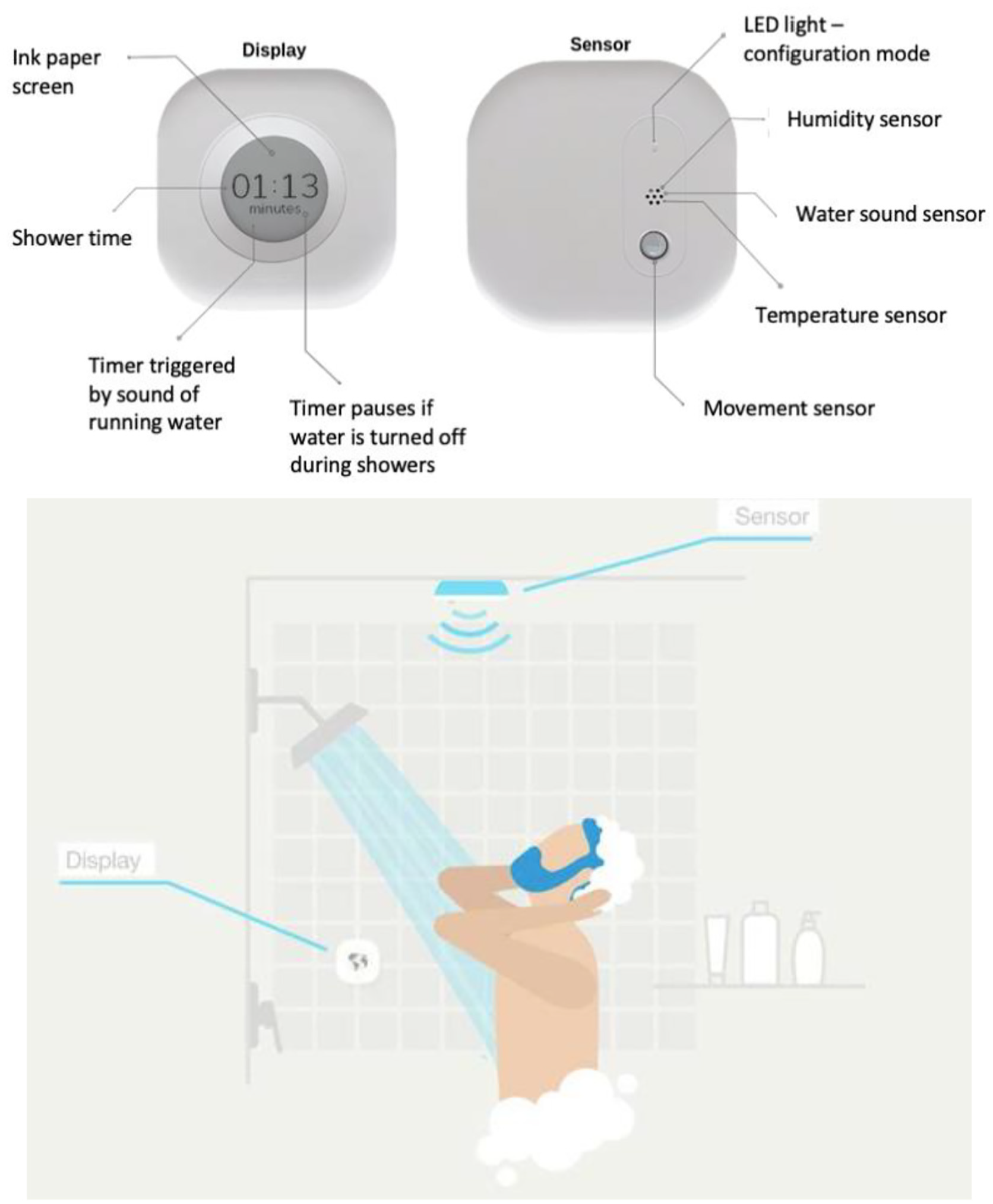
Aguardio device (display and sensor units) and their location in the shower cubicle.
We installed 108 Aguardio units in showers within six tourist accommodations that varied in: location (Denmark/Spain/United Kingdom), markets (beach/urban), comfort (hostels/hotels), service (all-inclusive/room-only) and management (independent accommodation/small and large chain). The study’s population of interest was tourists (i.e., consumers outside their habitual context), all of whom were unaware of being part of the study and were not economically motivated to reduce water and/or energy. Our behavioral intervention measured the actual showering behavior of a large, randomized sample taken from the population of interest. We developed a covert experiment to prevent behavioral biases among participants aware of the intervention (Al-Ubaydli & List, 2015). The study received a favorable ethical opinion from the Research Integrity and Governance Office at the first author’s university (UEC 2019 001 FASS).
Messages
We purposefully designed the content of the persuasive messages to have a low cognitive overload (Klöckner, 2015; Perloff, 2017; Petty & Cacioppo, 1986) since individuals’ cognitive processing capacities are limited (Kahneman, 2012; Steg & Vlek, 2009). Table 2 shows the messages—four persuasive messages and one informative message. All six tourist accommodations enthusiastically accepted the messages exactly as they had been developed, with one accommodation requesting a translation into German, to supplement the Spanish, Danish and English versions already offered. We conducted manipulation tests on the messages through two rounds of semi-structured interviews, with six and eight participants respectively, to assess the following aspects of each message: (1) general thoughts; (2) clarity, credibility and understanding; (3) the beneficiary (e.g., the person vs. the environment); (4) the level of effort required to comply with the goal (e.g., low vs. high); (5) whether the interviewee would (or would not) engage with the task, and why; and (6) additional comments.
Persuasive and Informative Messages.
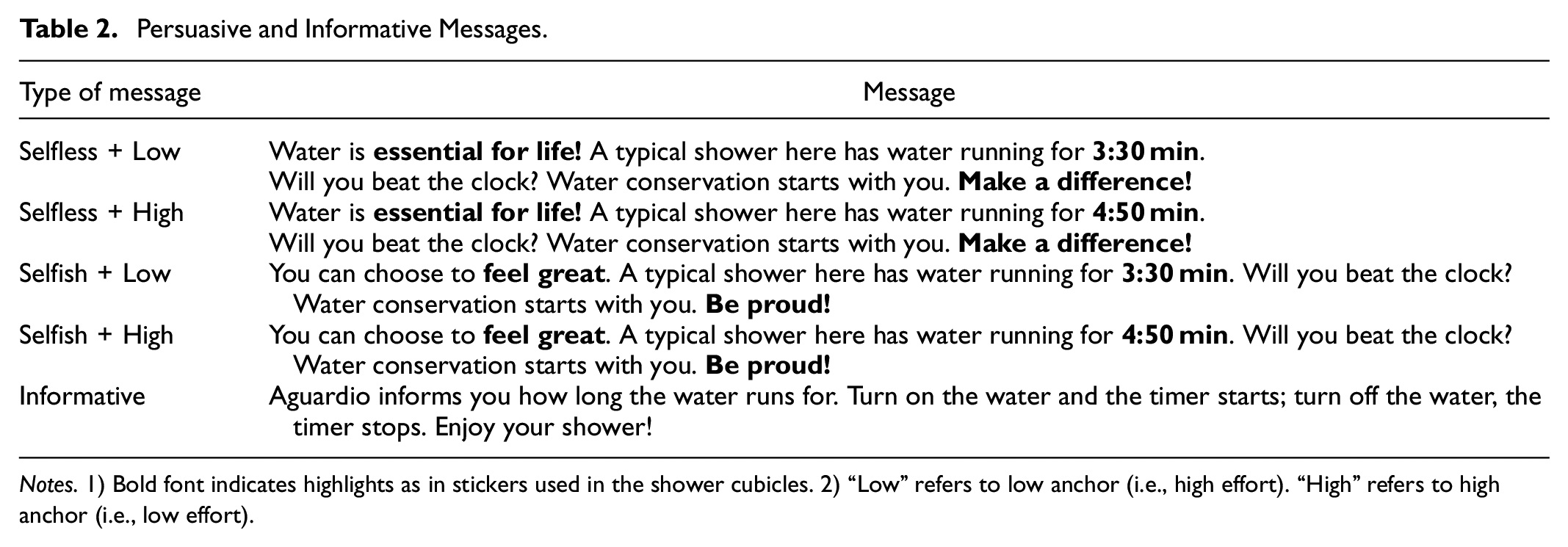
Notes. 1) Bold font indicates highlights as in stickers used in the shower cubicles. 2) “Low” refers to low anchor (i.e., high effort). “High” refers to high anchor (i.e., low effort).
Several techniques (see Table 1) were reflected in the four persuasive messages, as follows: (1) Set measurable behavior goal (e.g., clear goals/targets of 3:30 or 4:50 min; technique 1), (2) Increase salience of behavior (i.e., by reminding that “Water conservation starts with you”; technique 5), (3) Prompt social comparison (i.e., “A typical shower here has water running for…”; technique 6), (4) Suggest a change in behavior (i.e., including the gamification element “Will you beat the clock?”; technique 7), (5) Advise ways to change behavior to increase a positive emotion (i.e., by priming selfless or selfish personal values; technique 10), and (6) Adopt positive self-identity (i.e., by using sentences that relate to either set of personal values; technique 13).
Selfless Versus Selfish
The selfless value orientation was communicated in two parts. The first part, “Water is essential for life!”, aimed to remind the user about the significance of water for the ecosystem; an appeal to protect the environment (Stern et al., 1993). The second part, “Make a difference!”, aimed to be a call to action, an opportunity to change something for collective benefits. Both sentences reflected an altruistic / biospheric value orientation (Stern et al., 1993).
Likewise, the selfish value orientation was communicated in two parts. The first part, “You can choose to feel great,” aimed to reinforce the benefit to the user by complying with the message, potentially increasing their self-emotional wellbeing (Vinzenz et al., 2019) by focusing on the self (Schwartz, 1994). The second part, “Be proud!”, aimed to be a call to action to acquire a feeling of pride by complying with the request, reflecting an egoistic/hedonistic value orientation (Stern et al., 1993).
High Versus Low Effort
Equally, the four persuasive messages can be classified according to the level of effort needed to engage in the behavior, reflected by anchors. So, the low anchor was indicated as 3:30 min, reflecting a high effort to achieve this goal, and the high anchor as 4:50 min, reflecting a low effort. To set these low and high anchors, a pilot study was conducted in tourist accommodation 3 (see Table 3) over 6 weeks to record typical shower durations from 2,060 showers (M = 342 s [5:42 min]). Similarly, Pereira-Doel et al. (2019) reported an average shower duration of 339 s.
Tourist Accommodations (TA).
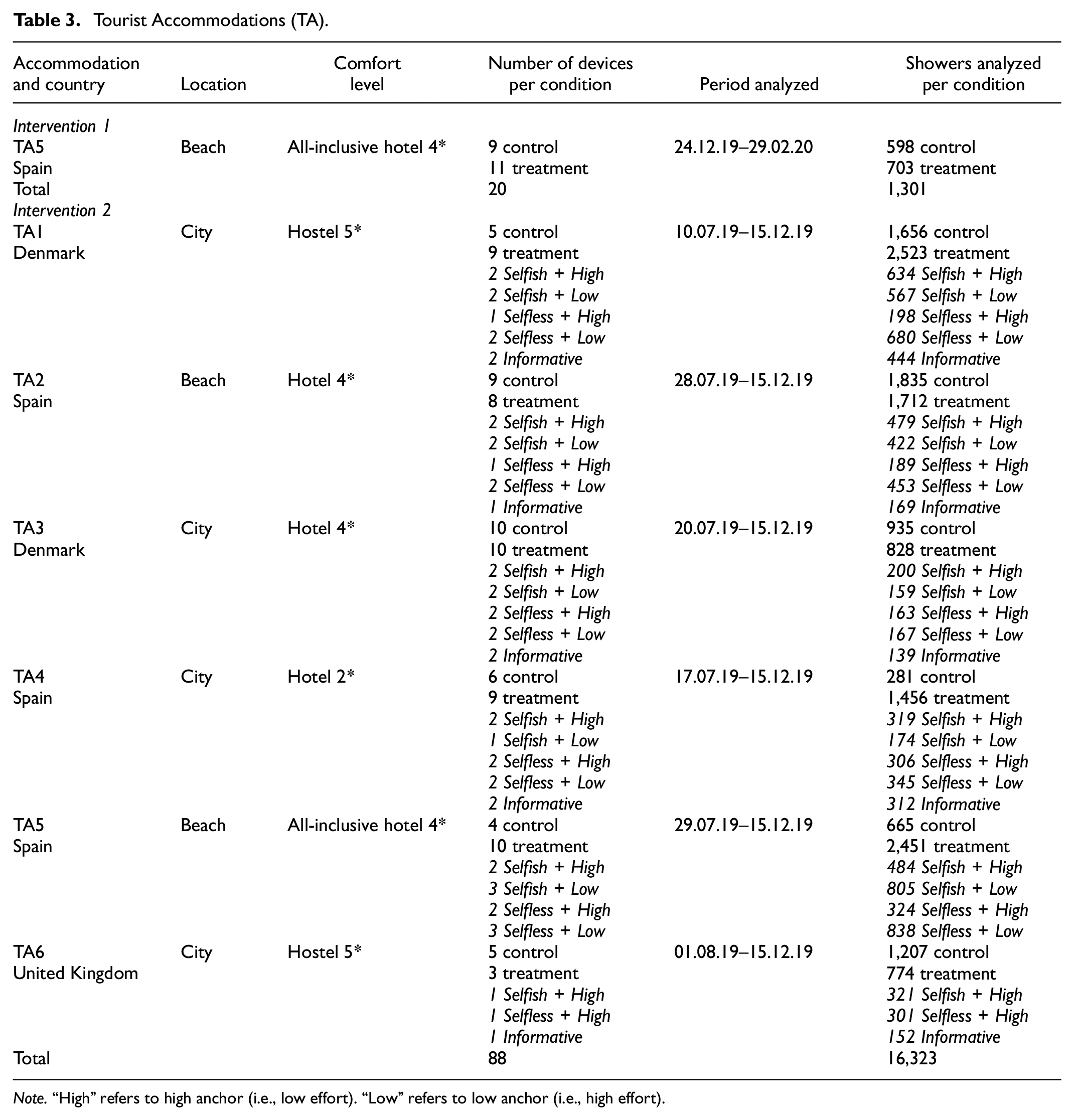
Note.“High” refers to high anchor (i.e., low effort). “Low” refers to low anchor (i.e., high effort).
Finally, an informative message without any of the behavioral change techniques (i.e., simply reporting what the technology was doing) was also tested.
Intervention 1: Continuous Real-Time Eco-feedback
We explored the effect of the continuous real-time eco-feedback provided by the technology on shower water runtime (i.e., water pauses were removed) compared to no-feedback (i.e., where no display unit was installed) as a control (technique 3 in Table 1), following the methodology reported by Pereira-Doel et al. (2019). A total of 20 units were installed in tourist accommodation 5, an all-inclusive 4-star beach resort in Spain (see Table 3). We captured data from 1,301 showers over 2 months with similar weather conditions (December 24, 2019–February 29, 2020). The number of showers analyzed per condition is reflected in Table 3. These two conditions were then compared, addressing Hypothesis 1.
Intervention 2: Continuous, Real-Time Eco-feedback and Messages
We explored shower water runtime from a control condition, as in the previous intervention, and five treatment conditions, that is, each with the continuous real-time eco-feedback in addition to one of the five messages indicated in Table 2, addressing hypotheses 2a to 2d. We captured data from 16,323 showers over five consecutive months (from July 10 to December 15, 2019) via 88 units installed across all six of the study’s tourist accommodations (see Table 3). We used 39 rooms across the six accommodations for control purposes, where only the sensor unit was installed (no display unit) to collect data from 6,579 showers (technique 3 in Table 1). In the other 49 rooms, display units were also installed, so guests in these rooms, with interventions, were exposed to the continuous real-time eco-feedback through the display. They were also exposed to one of the five messages shown on a sticker placed next to the display (i.e., where the behavior occurs, nudging guests’ attention during the behavior (e.g., Dolnicar and Demeter, 2024); technique 8 in Table 1). The number of showers collected per condition is reflected in Table 3.
Shower Detection and Shower Data
Showers were identified based on the sensors’ data (e.g., motion, sound, humidity, and temperature) and then processed by an algorithm. The algorithm recognized many variations that can occur during a shower (e.g., the user may turn off the tap while soaping; turn on the tap but enter the shower cabin later, etc.). However, not all possible variations could be controlled for (e.g., two people showering together; one person showering while another person used the sink; different consecutive showers, etc.), leading to some errors in the shower data. A manual cleaning of the data was performed by comparing the algorithm data with the shower data, and removing those showers where the two datasets did not match; thus, ensuring data accuracy and reliability.
Data Analyses
All statistical analyses were conducted in R (Version 4.2.3; R Core Team, 2023). The code and dataset for both interventions are openly available in https://osf.io/stbe4/. Data exploration revealed one duplicate in Intervention 1 and two duplicates in Intervention 2, which were removed. Intervention 1 addressed Hypothesis 1, thus, it focused on the differences in shower water runtime between the experimental condition with continuous real-time eco-feedback (i.e., both the sensor and display units installed) and the control condition with no feedback (i.e., only the sensor unit installed). We assumed that showers within guest stays (i.e., same people showering) and within same rooms (i.e., same conditions such as water pressure, water flow, or showerhead) were correlated. Since the data were strictly positive and right-skewed, we fitted a Gamma random intercept regression model (Fahrmeir et al., 2013) with the mgcv package (Wood, 2011), using restricted maximum likelihood (REML) estimation, as it is the preferred method with limited number of conditions (Huang, 2023), and using device ID (i.e., room ID) as random intercept. Given the covert nature of the interventions, guest IDs were not collected, which prevented their use as random intercepts. Thus, the model is written as:

Based on a visual check, the residual distributions did not substantially deviate from the model assumptions. The device random intercept captured 8.2% of the residual variation (i.e., ICC) and the model explained 9.6% of the overall deviance.
Intervention 2 examined the differences in shower water runtime between the different conditions. In addition to correlations in showers within guest stays (i.e., same people showering) and within same rooms (i.e., same conditions such as water pressure, water flow, or showerhead), we assumed that showers within the same tourist accommodations were correlated. As in Intervention 1, the data were strictly positive and right-skewed. Consequently, we fitted a similar Gamma random intercept regression model, incorporating an additional random intercept for the accommodations. Again, guest IDs were not collected, which prevented their use as random intercepts. Thus, the model is written as:
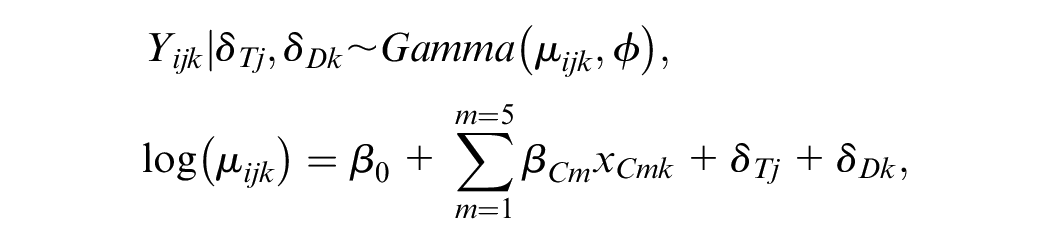
Based on a visual check, the residual distributions did not substantially deviate from the model assumptions. The accommodation and device random intercepts captured 1.6% and 1.7% of the residual variation (i.e., ICC), respectively, and the model explained 6.0% of the overall deviance. The low values of explained deviance were probably partly because the models did not account for the correlation between multiple showers of the same person. We evaluated whether a general autocorrelation process in the model residuals could explain that. However, the absence of significant structural autocorrelation in the residuals indicated that our model adequately accounted for any temporal correlation.
Contrast analyses were performed to test Hypotheses 2a to 2d by changing the reference levels for each hypothesis in the condition variable in the models.
Results
Intervention 1: Continuous, Real-Time Eco-feedback
This intervention aimed to address hypothesis 1:
We investigated whether the continuous real-time eco-feedback resulted in shorter showers compared to those of the control condition, at tourist accommodation 5 (see Table 3 for details and Figure 2 for the boxplot). The Odds Ratio coefficients from the Gamma random intercept model are presented in Table 4 and visualized in Figure 3. The model reveals a significant variability of shower water runtime between the devices (p < .001). The average shower water runtime in the control condition was approximately 297 s; in rooms with continuous, real-time eco-feedback, it was 25.79% shorter on average, thereby supporting Hypothesis 1.
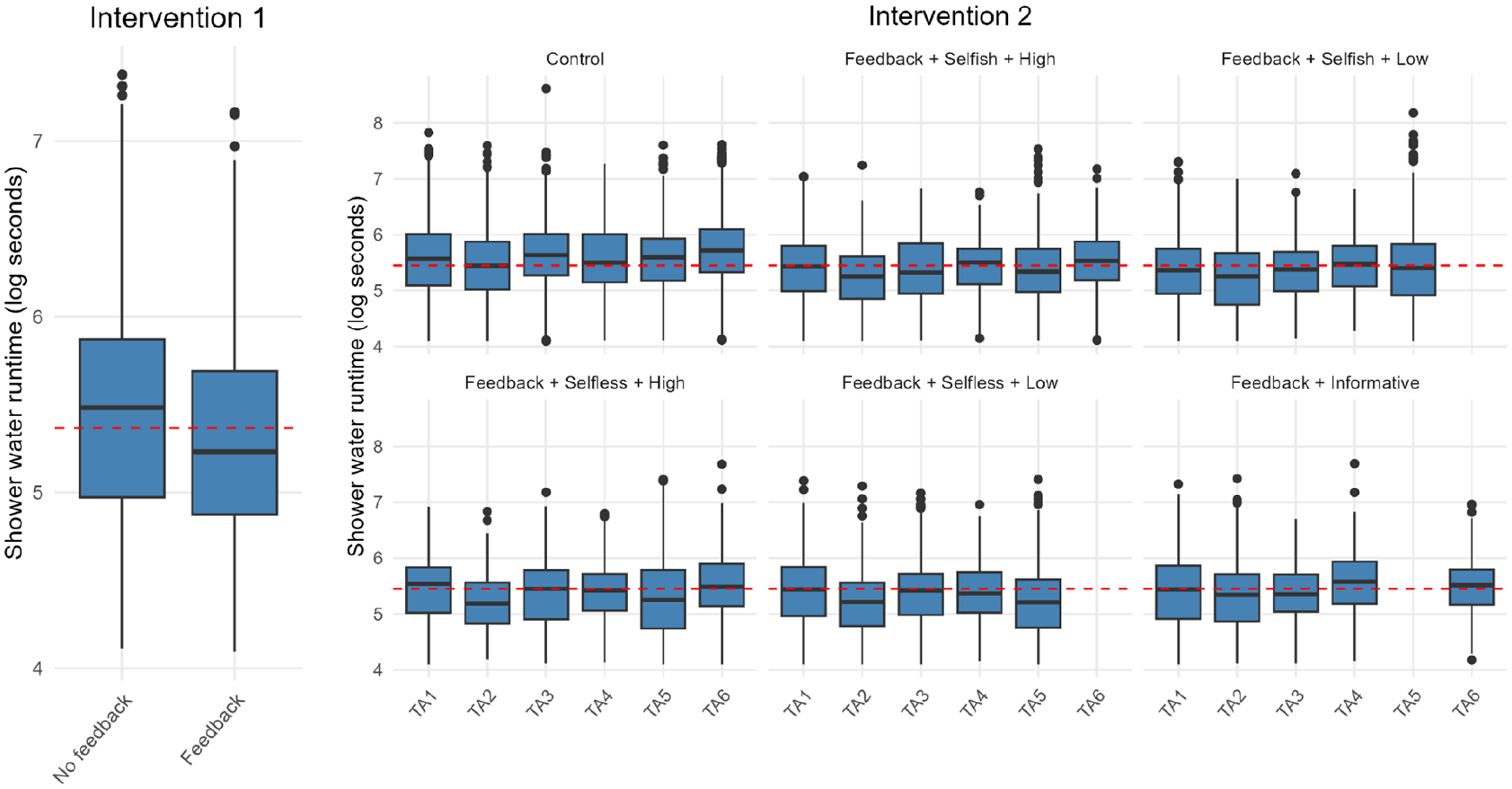
Boxplots for both interventions.
Odds Ratios and 95% Confidence Intervals (CI) for the Gamma Random Intercept Models.
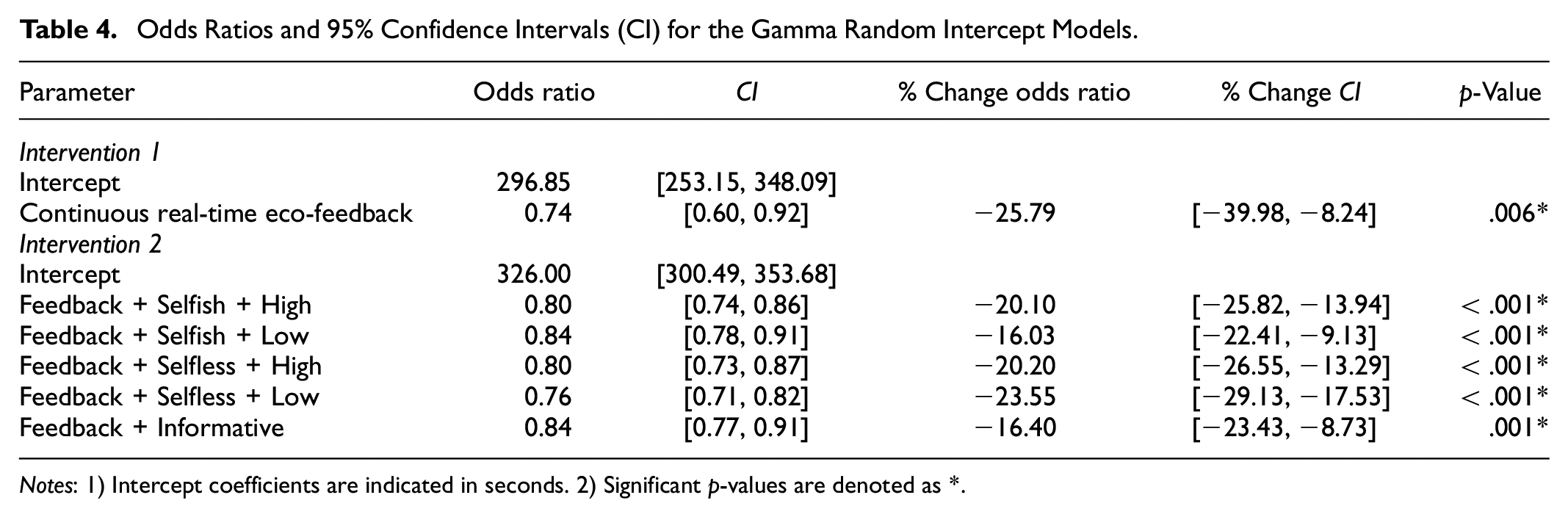
Notes: 1) Intercept coefficients are indicated in seconds. 2) Significant p-values are denoted as *.
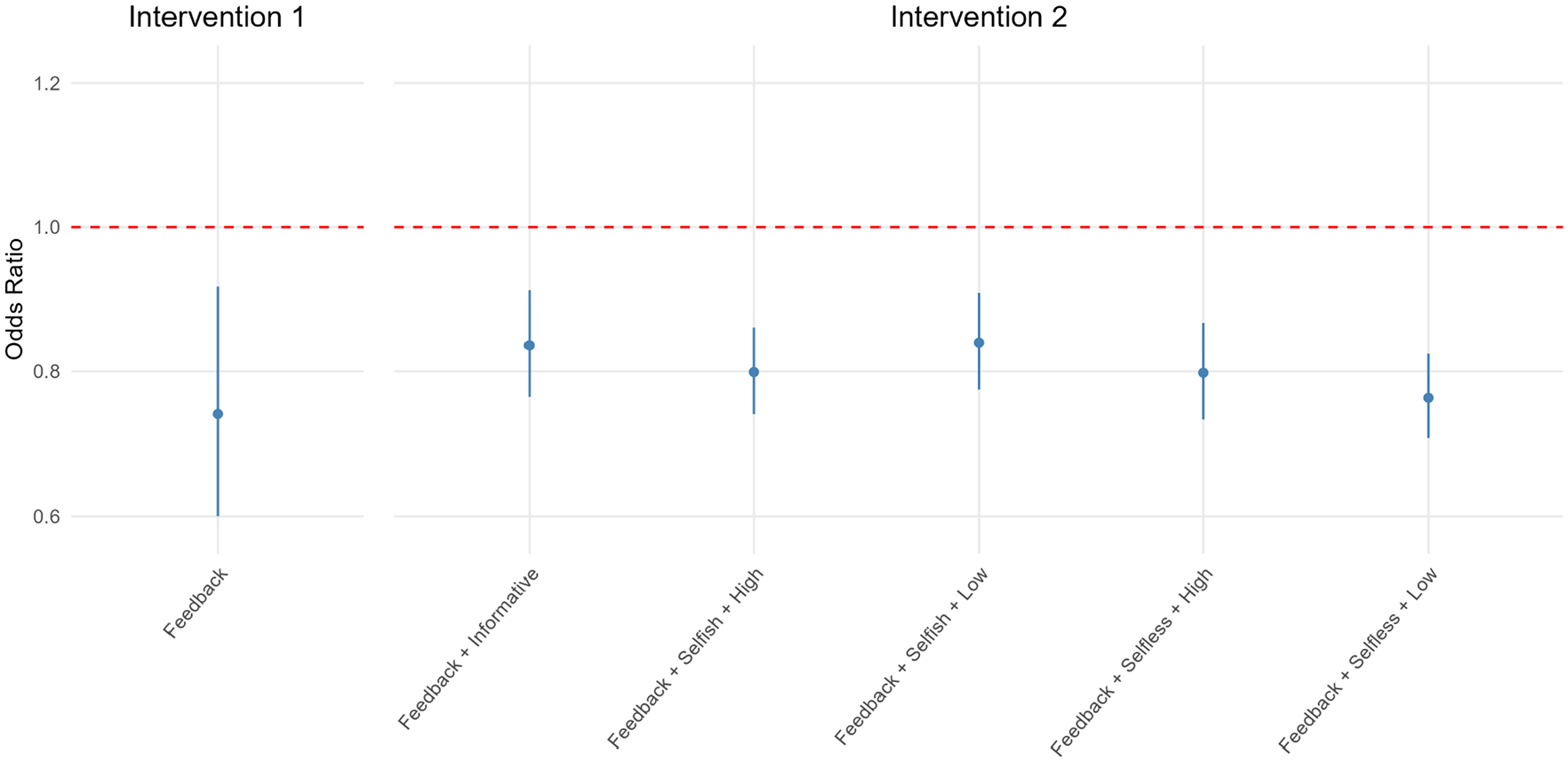
Effect plots based on the estimated regression models.
Intervention 2: Continuous, Real-Time Eco-feedback and Messages
This intervention aimed to address hypotheses 2a to 2d:
We tested the effects on shower water runtime of adding messages to the continuous real-time eco-feedback, across tourist accommodations (see Table 3 and Figure 2). Odds Ratio coefficients from the Gamma random intercept model are presented in Table 4 and visualized in Figure 3. The model reveals a significant variability of shower water runtime across tourism accommodations (p < .001) and devices (p = .003).
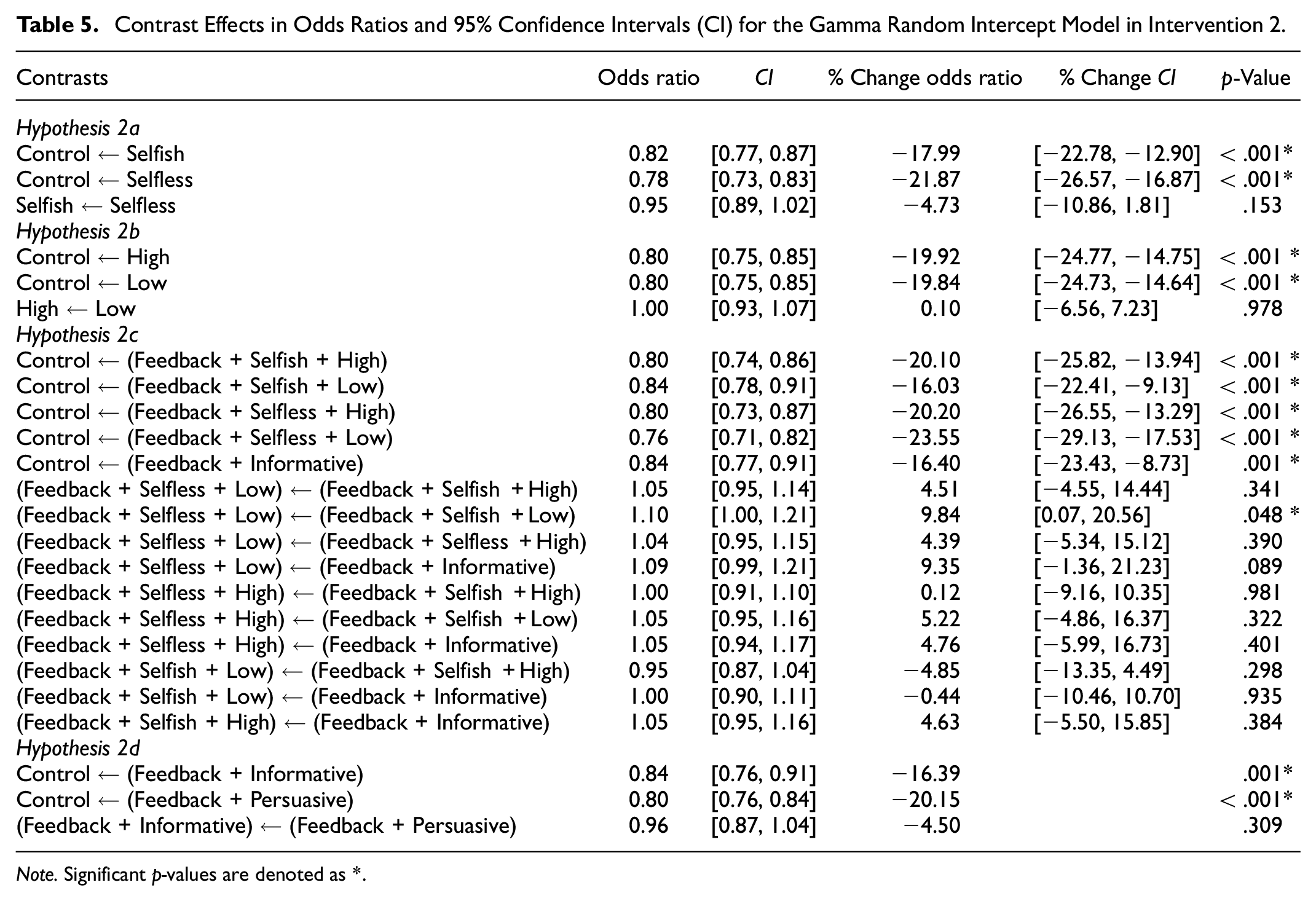
Hypothesis 2a posited that priming different value orientations (i.e., selfless vs. selfish) results in different levels of task performance. Contrast analysis (see Table 5) reveals that the condition that primed a selfless value orientation was significantly more effective in reducing shower water runtime (21.87%) than the condition that primed a selfish value orientation (17.99%). However, the difference between the selfless and selfish value orientation (4.73%), while suggestive of a trend, does not reach statistical significance at the 5% level. This suggests that Hypothesis 2a is supported by our data when the effects of conditions with the different value orientation are compared against the control, but it is not supported when they are compared against each other.
Contrast Effects in Odds Ratios and 95% Confidence Intervals (CI) for the Gamma Random Intercept Model in Intervention 2.
Note. Significant p-values are denoted as *.
Hypothesis 2b posited that goals reflecting different levels of effort result in different levels of effectiveness. Contrast analysis (see Table 5) reveals that the condition with the high anchor (i.e., low effort) was as effective in reducing shower water runtime (19.92%) as the condition with the low anchor (19.84%). The difference between high and low anchors (0.10%) is not statistically significant. This suggests that Hypothesis 2b is not supported by our data.
Hypothesis 2c posited that altering the content of the feedback, combining goal effort (high vs. low) and value orientation (selfless vs. selfish), results in different levels of task performance. The feedback content of the message (i.e., informative or persuasive, the latter combining goals and values) is generally effective in reducing shower water runtime compared to a control condition; the most successful message (i.e., selfless + low anchor) reduced shower water runtime by 23.55% on average. Contrast analysis reveals that only the conditions involving “feedback + selfless + low” and “feedback + selfish + low” yield statistically significant differences (see Table 5), with the selfish message increasing shower water runtime an average of 9.84%. Thus, Hypothesis 2c is only partially supported.
Lastly, Hypothesis 2d posited that persuasive messages with several behavior change techniques, in addition to the continuous real-time eco-feedback, increase task performance (i.e., reducing shower water runtime). Contrast analysis indicates that both the condition with the informative message, and the condition resulting from combining the persuasive messages, significantly reduce shower duration compared to the control condition (see contrasts in Table 5). Notably, the combined effect of the four conditions involving the persuasive messages shows a greater reduction (approximately 20.15%) in shower water runtime than does the informative message (16.39%). However, the difference between these two conditions (4.50%), while suggestive of a trend, does not reach statistical significance at the 5% level. This suggests that the additional impact of the combination of the behavioral change techniques in the persuasive messages, over the informative content alone, is not conclusively supported by our data. Thus, Hypothesis 2d is supported by our data when the effect of the combination of the behavioural change techniques in the persuasive messages is compared against the effect of the informative message, but it is not supported when they are compared against each other.
Discussion
Interventions encouraging water conservation are scarce (Haggar et al., 2023; Koop et al., 2019). We designed and implemented a covert true experiment within six tourist accommodations located in Denmark, Spain, and the UK, involving two behavioral interventions (see Table 3). The experiment’s primary goal was impact-focused (Nielsen et al., 2021): to encourage guests to conserve water (and the related energy and carbon emissions) by shortening the time of running water during their showers. We combined continuous real-time eco-feedback, delivered through smart shower sensor and display devices (see Figure 1), with five types of messages, four of which specifically aimed to reduce shower duration (see Table 2). We applied 13 behavioral change techniques from the Behavioral Change Technique Ontology (Marques et al., 2023; see Table 1) to enhance the effectiveness of these interventions and to optimize their impact.
The experiment was purposely conducted in an environment where the participants, who were real tourist accommodation guests: (i) were not financially responsible for resource usage, (ii) were randomly assigned to the different experimental conditions, and (iii) were unaware that their behavior was being recorded. This approach ensured that our findings would be robust, based on actual behavior data, and would provide strong external validity and improved generalizability. This type of experimental design, using actual behavior, is scarce in tourism and hospitality research (Dolnicar et al., 2024; Fong et al., 2016; Viglia & Dolnicar, 2020), making our study a significant methodological contribution.
We present strong empirical evidence that demonstrates the efficacy of providing continuous, real-time eco-feedback during showers, via a smart device, in reducing running water. Specifically, guests who received this feedback shortened water runtimes by an average of 25.79%. In the context of a typical five-minute shower at tourist accommodations, as observed in our study, this reduction translates to saving 77 s of (hot) water, or around 10 L (2.64 gallons) at a flow rate of 8 L/min. The voluntary nature of these reductions, without financial returns to the users, whether conscious or not, underscores the significant potential for positive environmental impact if such practices are widely adopted.
Furthermore, we demonstrate that combining continuous, real-time eco-feedback with different types of message content creates a synergy that can either increase or decrease the effectiveness of the intervention, depending on the nature of the message content. Specifically, our findings indicate that the most effective message (23.55% water runtime reduction, see Table 5) primed selfless values and indicated a high effort goal. Next, we explore the theoretical implications of our findings through the lens of the Feedback Intervention Theory (Kluger & DeNisi, 1996).
Intervention 1: Continuous, Real-Time Eco-feedback
We investigated whether providing continuous, real-time eco-feedback would entice tourist accommodations’ guests to have shorter showers, addressing Hypothesis 1. The results show that continuous, real-time eco-feedback reduced shower water runtime by 25.79%. This finding aligns with previous showering research that has reported water reductions of 22% to 27% using real-time eco-feedback (Stewart et al., 2013; Tiefenbeck, 2017). Moreover, our results are consistent with analogous studies conducted in residential environments (Tiefenbeck et al., 2018; Willis et al., 2010), academic institutions (Dickerson et al., 1992), and broader energy conservation interventions (Karlin et al., 2015), and choice architecture studies (Mertens et al., 2021). We, however, report higher reductions than previous research in tourist accommodations have shown (Günther et al., 2020; Pereira-Doel et al., 2019; Tiefenbeck et al., 2019).
Context is important in influencing behavior (Guagnano et al., 1995; Ross & Nisbett, 2011). Tourist accommodation provides a non-habitual context to develop interventions that can facilitate the disruption of habitual showering routines, according to the habit discontinuity hypothesis (Verplanken et al., 2008). We argue that guests are more likely to be attentive to new cues in this novel environment, such as the presence of our smart shower devices, which facilitated the feedback intervention by providing continuous, real-time eco-feedback via a display unit. Attention to the feedback content is crucial for behavior change to happen and one of the main assumptions in the Feedback Intervention Theory (Kluger & DeNisi, 1996). We argue that the continuous nature of real-time eco-feedback contributes to direct guests’ attention toward the task motivation processes, as outlined by Kluger and DeNisi (1996), leading them to shorten their showers. Guests could perceive the feedback as a personal challenge or a sort of game, potentially increasing their enjoyment during the task, which might increase the efficacy of the feedback (Greene et al., 2023).
It is noteworthy, however, that the Feedback Intervention Theory does not explicitly indicate the need to direct individuals’ attention to the feedback medium as a necessary first step to influence behavior (Karlin et al., 2015). Facilitating access to decision-making information removes a key barrier for behavior to change (Mertens et al., 2021). We suggest that the novelty of both the context and our smart device facilitated guests to pay attention to the feedback content provided by the device in the form of a timer, and to the tasks involved in showering (i.e., removing auto-pilot behavior). The device reduced the likelihood of the feedback being overlooked, as suggested by studies in similar contexts (Dolnicar et al., 2017b; Dolnicar & Demeter, 2024). Then, the individuals’ attention was maintained, due to the continuous provision of eco-feedback during the behavior. Although the Feedback Intervention Theory does not explicitly refer to types of feedback, it emphasizes the importance of timing and frequency (i.e., immediate vs. delayed, frequent vs. infrequent). The theory suggests that higher frequency creates a clearer feedback-goal discrepancy, leading to more attention to the task itself (Kluger & DeNisi, 1996). Thus, we suggest that continuous, real-time eco-feedback enhances guests’ awareness of the feedback-goal discrepancy, which motivates them to act.
Interestingly, our study determined that frequent eco-feedback is not consistently found to be more effective (Karlin et al., 2015), instead, it is found to be even less effective (Alder, 2007). Feedback frequency emerges as a critical factor, but equally important is how seamlessly that feedback is integrated into the user experience. In some interventions involving continuous real-time feedback, users had to actively pull the information from a system (Karlin et al., 2015). In contrast, our interventions seamlessly integrated feedback during the behavior to increase the behavioral opportunity (Mertens et al., 2021). Haggar et al. (2023) found that feedback on showering duration showed no statistical significance when it was provided via email the day following the behavior. We concur that continuous, real-time eco-feedback keeps the desired behavior salient during the actual task (Günther et al., 2020; Pereira-Doel et al., 2019; Tiefenbeck et al., 2018, 2019), which increases opportunities for individuals to focus their attention on the information provided (Karlin et al., 2015).
This study inductively contributes to the Feedback Intervention Theory by providing empirical evidence of the effectiveness of continuous, real-time eco-feedback provided by a novel, smart device, in a novel setting. These insights suggest a need to better understand how different types of feedback (i.e., differing in frequency, visibility, medium, context, integration) influence attention to the feedback-goal discrepancy, and how these variations impact task performance. Thus, further research should explore different types of feedback, to further the inductive expansion of the Feedback Intervention Theory.
Intervention 2: Continuous Real-Time Eco-feedback and Messages
We explored the effect of different messages coupled with the continuous real-time eco-feedback on shower water runtime, addressing hypotheses 2a to 2d. From the contrast analysis in Table 5, in terms of percentage change Odds Ratio, we can observe four key insights when comparing the treatment conditions with the control condition. First, the selfless value orientation performed better than the selfish value orientation (Hypothesis 2a). Second, anchors/goals, reflecting the level of effort required, performed similarly (Hypothesis 2b). Third, while the low anchor performed better when coupled with the selfless value orientation than with the selfish value orientation, the high anchor performed similarly regardless of the value orientation it was coupled with (Hypothesis 2c). This shows that only the low anchor was affected by the value orientation. Fourth, the combined effect of all the persuasive messages performed better than the informative message (Hypothesis 2d). Moreover, both the combined effect of all the persuasive messages, and the most effective individual message (selfless with low anchor), were marginally less effective than the real-time eco-feedback condition from Intervention 1, in percentage change over their control conditions. We discuss each insight next.
Value Orientation
People usually endorse both selfless and selfish value orientations to varying extents (Steg, 2016), acting differently depending on the particular individual and situation (Ross & Nisbett, 2011). Those who see themselves as pro-environmental and/or altruistic are more likely to engage in such a type of behavior (Carfora et al., 2017; Whitmarsh & O’Neill, 2010). Thus, we suggest that those guests exposed to selfless value messages likely reinforce their pro-environmental self-identity (Van der Werff et al., 2014), which, in turn, increases their motivation to engage with the task, as posited by the Feedback Intervention Theory (Kluger & DeNisi, 1996). This is particularly relevant given the strong influence of values on behavior (Sagiv et al., 2017; Schwartz, 1994). These findings, however, diverge from Dolnicar et al.’s (2017b) field experiment, where a selfless value orientation appeal failed to improve towel reuse and electricity consumption within a tourist accommodation, probably due to the type of feedback chosen, which, arguably, failed to capture (enough) attention (Kluger & DeNisi, 1996). We argue that even individuals who do not self-identify as pro-environmental are likely to be motivated to act (Kluger & DeNisi, 1996) for selfish reasons, because doing good feels good (Bolderdijk et al., 2013; Taufik et al., 2015; Van der Linden, 2015). Our data show that priming either value orientation leads to shorter showers, consistent with existing priming literature (Bardi & Goodwin, 2011; Bolderdijk et al., 2013; Dolan et al., 2012; Evans et al., 2013), with selfless value orientations proving to be the most effective, even in a private context (such as a shower cubicle), where people are not economically motivated to save nor have direct peer pressure.
Level of Effort
Goal setting lies at the core of the Feedback Intervention Theory, as feedback establishes performance against a specific goal for individuals to achieve (Karlin et al., 2015; Kluger & DeNisi, 1996). We suggest that the goal, reflected as the anchor in the messages, directed the individual’s attention toward the feedback-goal gap, which, in turn, triggered the task-motivation processes for the individual to accomplish that goal (Karlin et al., 2015; Kluger & DeNisi, 1996; Locke & Latham, 2002). We suggest that guests interpreted the anchor-based messages through a competitive lens (Klöckner, 2015; Weingarten et al., 2015), especially considering the likely hedonic setting where the intervention took place (Demeter, MacInnes, & Dolnicar, 2023); this led them to an emotional engagement with the designated task in the message (Dolan et al., 2012; Vinzenz et al., 2019). Achieving similar reductions in shower water runtime with both anchors is an unexpected outcome, given that anchors, as robust heuristics, are effective even when unrelated to the task (Dolan et al., 2012; Tversky & Kahneman, 1974). Exploring the anchoring effect, in combination with value orientations, could provide further insights.
Value Orientation Coupled With Level of Effort
Messages priming selfless values emerged as the most effective for reducing shower water runtime. The selfless messages, when combined with the two levels of effort (high and low) to achieve the goal/anchor, did not give statistically significantly different results, which suggests that the effect of a selfless value orientation is stronger than the effect of a goal/anchor.
We now consider the results from the levels of effort perspective. Here, only the high effort (i.e., low anchor) led to a statistically significant difference between the selfless and the selfish messages. This shows that, in our experimental context, only the high effort action was significantly affected by the value orientation primed. In other words, for the high effort request of showering under 3:30 min (see Table 2), priming selfless values to engage in the action led to significantly better outcomes than priming selfish values. Moreover, when selfish values were primed with the same high effort request, it led to the lowest performance, indicating that selfish motivations are more effective if the request is easy.
From a Feedback Intervention Theory perspective, we suggest that a possible interpretation of these findings is that individuals driven by selfless values, especially those with a pro-environmental self-identity, as discussed above, demonstrate a higher motivation to apply additional effort to align their actions with their values, triggering their task-motivation processes (Kluger & DeNisi, 1996). Even for those individuals more driven by selfish values, being exposed to selfless motivation seems to be effective at channeling their attention to their task-motivation processes (Kluger & DeNisi, 1996). Selfless values motivate users to act pro-environmentally, even when met with demanding effort (Steg, 2016; Verplanken & Holland, 2002). This reasoning, however, challenges the assertions made by Guagnano et al. (1995) or Diekmann and Preisendörfer (2003) that high effort deters selfless-oriented individuals from engaging in the behavior. Our interpretation aligns with analogous behaviors, such as: (i) recycling, where environmental concern is more salient when the difficulty of recycling is high (Schultz et al., 1995); or ii) energy, where a combination of feedback and difficult goals tends to be more effective (Becker, 1978). These examples highlight, again, the relevance of priming selfless values to motivate action, and the importance of accounting for the role of the level of effort needed to engage in the desired behavior (Wu et al., 2021). In contrast to these concurrences with earlier findings, our interpretation diverges from research on transport behavior, where Lange et al. (2018) found that the higher the effort the lower the engagement in the pro-environmental option. Thus, the relative influence of the effort level appears to depend on the type of behavior and context factors (Guagnano et al., 1995; Ross & Nisbett, 2011).
Combined Persuasive Messages
Our data shows that combining behavioral change techniques is more effective than using a single change technique at motivating change, which concurs with the literature (e.g., Abrahamse et al., 2005; Darby, 2006; Koop et al., 2019). Based on the Feedback Intervention Theory, we suggest that this effect is the result of guests feeling more motivated with the persuasive messages than with the informative message, to address the feedback-goal discrepancy. With both types of messages, the guests’ attention would have been directed to their task motivation processes, as it is normally directed to the middle level of the hierarchy, that is the factors that influence an individual’s motivation to perform the task (Kluger & DeNisi, 1996).
Readers may question why the intervention involving messages underperformed compared to the first intervention that had only the continuous real-time eco-feedback. We know that the interventions took place in different settings, with different moderators affecting the experiments (e.g., different accommodation, types of guests, climate, water flows), and that the sample size for each intervention varied greatly. While there is no definitive answer to the opening query, from a Feedback Intervention Theory perspective, we suggest two reasons.
First, despite the combination of behavioral change techniques in the persuasive messages, all of them lacked a channel factor—a behavioral facilitator or stimulus (Ross & Nisbett, 2011)—on what specific steps users could take to achieve the goal. Priming values or intentions (i.e., motivating individuals to act) might not be enough, as individuals may not know what to do (Hodges et al., 2020). Adding an additional sentence to our messages, such as: “turn off the water while lathering up,” could have improved performance. Sussman and Gifford (2012) found that a simple message next to a light switch, requesting individuals to “switch off the light,” significantly increased the behavior. From a Feedback Intervention Theory perspective, an indication of what guests could do to reduce their water runtime would have directed their attention to the task-learning processes at the bottom of the hierarchy, potentially resulting in stronger feedback effects (Karlin et al., 2015; Kluger & DeNisi, 1996).
Second, the Feedback Intervention Theory posits that there is a decline in feedback effectiveness when feedback pertains to the meta-task level (i.e., introspective processes related to the self, such as reflecting on one’s own values), in contrast to a focus on the task itself (Kluger & DeNisi, 1996). Thus, we suggest that the messages might have somehow deviated the guests’ attention to their self-processes instead of focusing their attention on the task of shortening their shower. These interesting findings indicate that further research must be conducted on the role of combining technology with other behavioral change techniques if we are to understand better how to optimize interventions.
Conclusions
We conducted a covert true experiment across six tourist accommodations in Denmark, Spain, and the UK, where we deployed smart shower technology to provide continuous, real-time eco-feedback in the form of a timer, coupled with persuasive messages. In the messages, we manipulated two key moderators: individuals’ value orientation (selfless and selfish), and the level of effort (low and high) required to engage consciously in reducing water runtime during showers. Data from over 17,500 showers provided empirical evidence that the continuous, real-time eco-feedback led to a 25.79% (CI = 8.24%; 39.98%) reduction of water runtime in our first intervention. In our second intervention, the most effective message, which reflected a selfless value orientation while demanding a high effort behavior, led to a 23.55% (CI = 17.53%; 29.13%) reduction in combination with the eco-feedback. The effectiveness of the other messages varied, depending on the combination of value orientation with level of effort. Remarkably, the reductions were achieved from a large sample of tourist accommodation guests, in a rather hedonic context, who were unaware of being part of the experiment, had no economic motivation to save water or energy during their stay, and from a private behavior free from direct peer pressure.
The theoretical novelty of this study lies in its inductive approach to the preliminary Feedback Intervention Theory, through the combination of a novel type of feedback (continuous, real-time eco-feedback) with two key moderators (level of effort and value motivation). Specifically, we contribute to the theory by providing empirical evidence from showering behavior in a tourist accommodation context. We show that: (i) continuous, real-time eco-feedback provided by a smart shower sensor is effective at reducing water runtime; (ii) feedback content that primes selfless values is more effective than content that primes selfish values, independent of the level of effort required to engage with the behavior; (iii) the effectiveness of feedback content that primes selfish values is affected by the level of effort required to engage with the behavior, with the low effort being more effective than the high effort; (iv) the effectiveness of a feedback content that primes selfless values is also affected by the level of effort required to engage with the behavior, with the high effort being more effective; (v) the effectiveness of an easy behavior does not depend on the value orientation primed; and (vi) persuasive messages need to be carefully, and purposefully, designed for them to improve the effectiveness of simply the continuous, real-time eco-feedback alone.
The methodological novelty of this study lies in its robust approach that aims to establish causality by measuring actual behavior (i.e., conducting a covert true experiment) with a large, randomized, sample of tourist accommodation guests, unaware of being part of the experiment and with no utilitarian benefits. The findings, therefore, have high external validity and generalizability. In this regard, we contribute to the hospitality and tourism research field with a methodology that is extremely rare. However, all methodologies have limitations. First, as we acknowledged in the methodology section, the covert nature of the interventions meant that we could not account for guests’ IDs to reflect potential correlations in showers coming from the same guests. Second, we did not account for other potential moderators that could have affected shower duration, such as the number of showers per guest per day, the external temperature/weather, the water flow, the water pressure, and other technical aspects that can influence the shower experience.
As suggested in recent academic articles, more experiments are needed in hospitality and tourism. Smart technology that allows researchers to collect data on actual behavior from participants offers numerous opportunities for experimental research. We have provided suggestions for future research topics in this article. For instance, to test how different channel factors added to our selfless messages would increase their effectiveness. Covert true experiments could contribute to the design of general (sustainability or marketing) messages in the hospitality and tourism field. Another recommendation is to test the effect that other potential moderators (listed above) might have on shower water runtime.
Last, this study was inherently designed with a focus on impact. The study proves that our strong collaboration with the Danish company Aguardio amplifies the impact beyond what either party could achieve independently. The study also proves that academic research can (and should) contribute beyond theory and methods development with more impact-focused research. All of the tourist accommodations that participated in this study saved water, energy, and carbon emissions (from heating the water for the showers); such savings, if implemented more widely, represent a critical step in addressing the pressing challenges of climate change and water scarcity. Specifically, our best performing condition led tourist accommodation guests to voluntarily save around 10 L (2.64 gallons) of (hot) water per shower. Guests in tourist accommodations demonstrate a readiness to conserve water when hoteliers offer the enabling technology to support such practice.
Footnotes
Acknowledgements
We extend our heartfelt gratitude to the team at Aguardio ApS, developers of the innovative smart technology deployed in this project, for their active involvement and support. Our sincere appreciation also goes to the hospitality businesses and organizations involved in this research: Asociación Empresarial Hotelera y Turística de la Comunidad Valenciana (HOSBEC), Danhostel Copenhagen City, Hilton Hotels & Resorts, Hostelling International, Hotel Spero, Hotel Poseidon, Red Española de Albergues Juveniles, Scandic Jacob Gade, Sleep’n Atocha, TUI Magic Life Fuerteventura, and YHA Cardiff Central. Their collaboration and commitment were invaluable to the successful execution of this study. Lastly, we extend our gratitude to Dr Benjamin Gardner and Dr Alexander Bauer for their invaluable feedback on this manuscript.
Declaration of Conflicting Interests
The author(s) declared no potential conflicts of interest with respect to the research, authorship, and/or publication of this article.
Funding
The author(s) disclosed receipt of the following financial support for the research, authorship, and/or publication of this article: School of Hospitality and Tourism Management, Faculty of Arts and Social Sciences, University of Surrey, provided a full PhD scholarship to the first author.
UK South-East Network for Social Sciences (SeNSS) & Impact Acceleration Account Business Boost provided financial help to the first author to rent the smart technology.
Cátedra de Estudios Turísticos Pedro Zaragoza Orts from the University of Alicante (Spain) provided financial help to the first author for a field visit to one of the tourism accommodations that participated in this project.
The support of the Economic and Social Research Council (UK) is gratefully acknowledged. The first author was awarded a Post Doctoral Fellowship (grant ES/W006812/1) to support the writing of this article, among other activities.
The funders did not have any role in the study design; collection, analysis, and interpretation of data; in the writing of this article; nor in the decision to submit this article for publication.
