



Abstract
Governments and policymakers play a crucial role in promoting consumer behaviors to mitigate climate change. The research on environmental policies over the past decades has not significantly increased knowledge regarding how effectively these policies help consumers embrace pro-environmental behaviors. Using the motivation–opportunity–ability (MOA) framework, this systematic review reveals that regulatory policies that constrain opportunities are more likely to promote pro-environmental behavior. Furthermore, economic policy instruments that facilitate opportunities are also more likely to promote pro-environmental behaviors. Despite being more commonly employed, informational policy instruments are less effective than regulatory and economic instruments. Although informational policy instruments that target opportunities instead of motivations and abilities can result in better outcomes, behavior change remains a challenge. This systematic review is significant because it clarifies mixed results in the literature regarding the effectiveness of environmental policies in promoting pro-environmental behaviors. Accordingly, a framework of MOA-based policy mix is proposed to help policymakers develop effective instruments that stimulate pro-environmental behaviors.
Keywords
Introduction
Nearly two thirds of greenhouse gas emissions are linked to individual consumption activities (Williamson et al. 2018). The adoption of pro-environmental behaviors, encompassing personal choices benefiting or refraining from harming the ecosystem, is widely conceived to make a significant impact (Steg and Vlek 2009; Williamson et al. 2018). Nonetheless, the challenge persists in embracing pro-environmental consumer behavior, for example, conserving energy, using public transportation, reducing waste, and supporting eco-friendly products and services, as an effective means of addressing climate change (Terzi 2020). This challenge arises because such a macroscale problem extends beyond individual behavioral responses and requires collective efforts at various levels, including mesolevel action by firms and macrolevel action by the government (United Nations 2022).
The acknowledgment regarding the interconnectedness of micro-, meso-, and macro actors aligns with the principles of macromarketing research, especially those studying marketing systems in relation to climate change mitigation (e.g., Akaka et al. 2023; Aschemann-Witzel et al. 2018; Dermody et al. 2021; Pai, Laverie, and Hass 2022). Macromarketing is the study of marketing systems, which refer to “a network of individuals, groups, and/or entities linked directly or indirectly through sequential or shared participation in economic exchange that creates, assembles, transforms and makes available assorts of products, both tangibles and intangibles, provided in response to consumer demand” (Layton 2007, p. 230). Individual behavior, in this regard, is signified as being neither in opposition to nor prior to macro structure and process but “macro process at work” (Dolan 2002, p. 171).
Challenges in addressing climate change–related problems could be unpacked from the interconnection of the micro-, meso-, and macrolevel systems. At the micro level, consumers are deeply embedded in the dominant social paradigm—the prevailing societal norms, beliefs, and values that emphasize economic growth, individualism, and materialism (Mittelstaedt, Kilbourne, and Shultz 2015). Public concern for the environment and climate change is more than ever high as consumers are slowly moving from need-driven to driving needs (Gorge et al. 2015). Nonetheless, mesolevel corporate practice knowingly or unknowingly promotes environmentally harmful consumption-production patterns through its market-driven approach (Sheth and Parvatiyar 2021). In contrast, rather than focusing on fulfilling consumers’ immediate needs, corporations can take a market-driving approach to redirect consumer needs and expectations toward ecologically less harmful consumption (Sheth and Parvatiyar 2021).
Nevertheless, relying solely on market forces and corporations would not be sufficient; government is a crucial stakeholder in addressing sustainability-related problems (Sheth and Parvatiyar 2021). Governmental measures nudge businesses to internalize environmental costs or limit the damage from them. Moreover, the role of governments has extended beyond being regulators to being champions in leading the world toward sustainable development (Sheth and Parvatiyar 2021). They can implement environmental policies that produce institutional constraints as well as opportunities to correct the marketing structures and foster sustainable practices among individuals.
Most studies of pro-environmental consumer behavior, however, overlook the interdependence between actors at different levels, thereby failing to provide a consistent understanding of how to reduce negative externalities from consumer behavior. Indeed, micromarketing research mainly focuses on microlevel processes and characteristics such as personal values, attitudes, and beliefs, calling for information-based interventions to raise awareness, environmental attitudes, and intentions (Spangenberg and Lorek 2019). In contrast, macromarketing research recognizes the importance of macro processes such as cultural meanings, social relations, and initiatives created by businesses and governments (Gossen, Ziesemer, and Schrader 2019; Kilbourne, McDonagh, and Prothero 1997; Schaefer and Crane 2005). Adopting macromarketing thinking, these studies advocate for more stringent policy instruments, such as economic incentives and regulations, to create the necessary arrangements for pro-environmental behavior (Gollnhofer and Schouten 2017).
Because the literature remains divided on the most influential drivers of pro-environmental consumer behavior (Gossen, Ziesemer, and Schrader 2019; Kilbourne, McDonagh, and Prothero 1997; Schaefer and Crane 2005), research that encapsulates the holistic picture of the interdependence between macro- and microlevel factors can help improve understanding of how to increase consumers’ engagement with pro-environmental activities (Dolan 2002; Ganglmair-Wooliscroft and Wooliscroft 2022; Keller, Halkier, and Wilska 2016; Sheth and Parvatiyar 2021). A lack of such an integrated approach would jeopardize the development of effective environmental policies aimed at stimulating consumers’ motivations, abilities, and opportunities to adopt pro-environmental behaviors (Wang, Cao, and Zhang 2021). Nevertheless, extant literature highlights the scarcity of, and repeated calls for, future studies to consider a systematic and integrated approach when determining pro-environmental behavior change and related policies (e.g., Ozanne et al. 2021; Prothero et al. 2011; Thøgersen 2014).
To address the identified research gap, we conduct a systematic review to improve understanding of the interdependence between macrolevel factors (being environmental policies) and microlevel processes (being the changes in consumers’ motivation, ability, and opportunity and subsequently pro-environmental behavior). Our study, therefore, draws from a microlevel perspective to demonstrate the effectiveness of environmental policies and derive macromarketing implications. As individual consumer behavior is conceived as a manifestation of the macro process (Dolan 2002), behavior change in response to environmental policies serves to determine environmental policies’ effectiveness. This focus is particularly relevant to macromarketing, where sustainability represents broad topics that have been examined at the macro level but remains limited with regard to climate change topics (see Hall 2018; Helm and Little 2022). Thus, the research question is “How do environmental policy instruments influence consumers’ motivations, abilities, and opportunities and, consequently, pro-environmental behavior?”
To demonstrate the effects of environmental policies on pro-environmental consumer behavior, this systematic review employs the motivation–opportunity–ability (MOA) model (MacInnis 2011). Unlike previous studies that examine specific pro-environmental consumer behavior such as food waste (Block et al. 2016) or automated vehicles (Greenwald and Kornhauser 2019), or a single type of environmental policy instrument such as eco-labels (Grolleau et al. 2016) or carbon pricing (Maestre-Andrés, Drews, and van den Bergh 2019), our review considers how different types of environmental policies impact pro-environmental consumer behavior broadly. We categorize policy instruments into subcategories to explore differences between and within these types. Based on this analysis, we develop a recommendation framework of environmental policy combinations using the MOA model, in line with previous research (e.g., Rothschild 1999), to link motivations, abilities, and opportunities in order to derive macromarketing implications. This framework is directly drawn from the understanding of how environmental policies increase consumers’ engagement with pro-environmental activities, thereby empowering policymakers to develop effective policies that encourage pro-environmental behavior (Belaïd and Joumni 2020; Ozanne et al. 2021).
Theoretical Background
The Motivation–Opportunity–Ability (MOA) Framework
The MOA model (MacInnis and Jaworski 1989; MacInnis, Moorman, and Jaworski 1991) has been an important framework for understanding environmentally friendly behavior (Thøgersen 1994). The MOA model is underpinned by multiple theories of consumer behavior and evolved from the insight that individual decision-making and behavior are co-determined by personal characteristics and external conditions (Ölander and Thøgersen 1995). The MOA model posits that, in order to study consumer behaviors that have impacts on the environment, at least three classes of determinants must be included: motivation, ability, and opportunity (see Figure 1; cf. Ölander and Thøgersen 1995). An explanation of the MOA model is summarized below and illustrated in Figure 1.
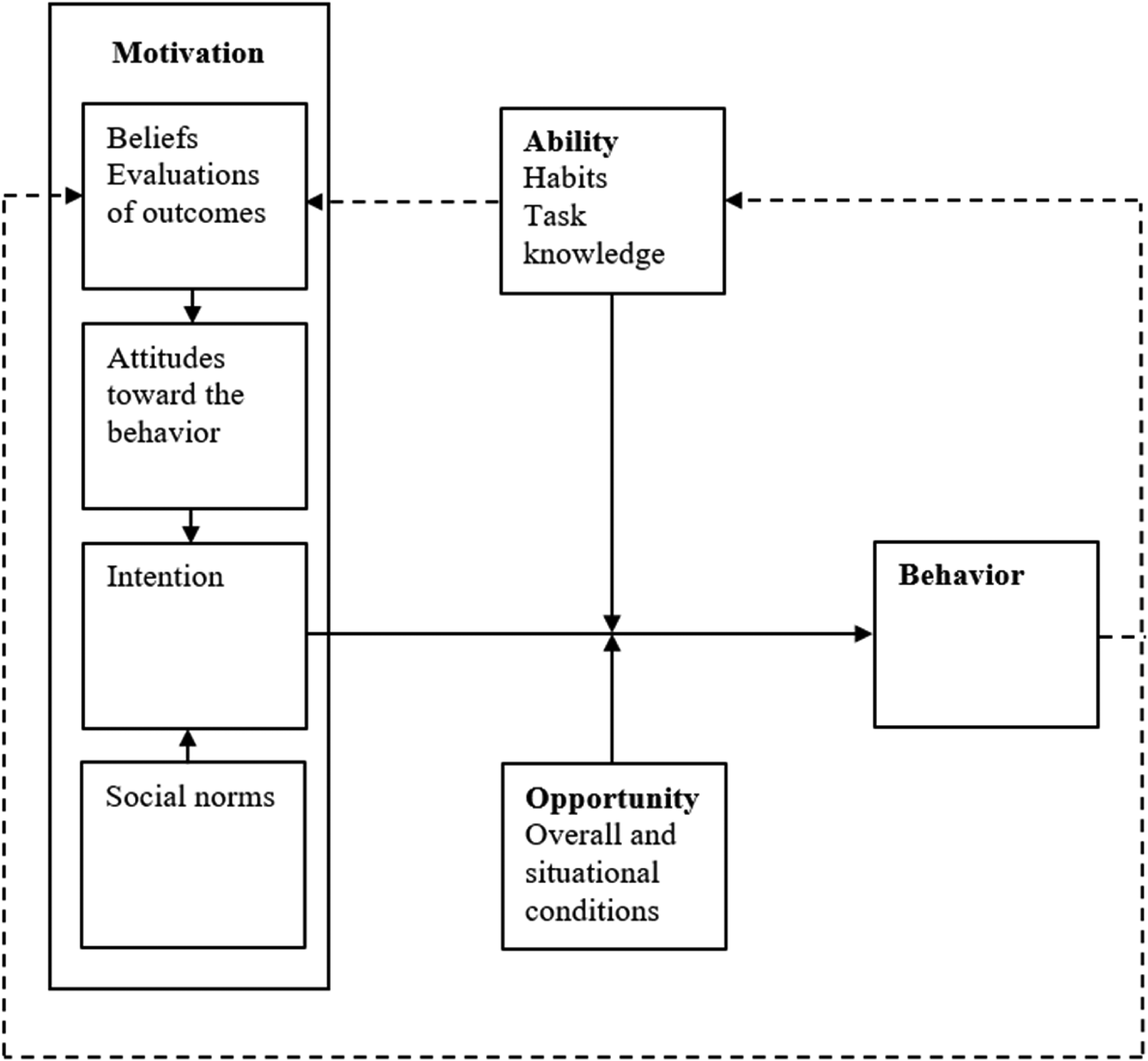
A behavioral science frame of reference (Thøgersen 1994).
Motivation. The first component of the MOA model is the motivation to choose one or the other alternative act toward a target object. The most popular approach to conceptualizing motivation has been Fishbein and Ajzen's theory of reasoned actions (Ajzen and Fishbein 1977, 1980; Gill, Crosby, and Taylor 1986; Goldenhar and Connell 1992, 1993; Jones 1990; Seligman, Hall, and Finegan 1983) and Ajzen's theory of planned behavior (Ajzen 1985). According to these theories, a person's intention to engage in a behavior captures motivational factors and transforms them into a behavioral disposition (Ajzen 1988). These motivational factors have their roots in values, beliefs about outcomes, attitudes, and norms (Thøgersen 1994).
Ability. The second component of the model is the ability to carry out the intention. That is, one's motivation will lead to a performance of the behavior only if he or she commands the required abilities to perform (Pieters 1991). According to Pieters (1991), the ability concept is operationalized in two factors: habit (Bagozzi 1982; Triandis 1977) and task knowledge (Verhallen and Pieters 1984).
Opportunity. The final precondition for the performance of the behavior is the opportunity to carry out the intentions (Ajzen 1985, 1988; Sarver 1983). Although opportunities are usually conceived as objective preconditions for the behavior (e.g., in Belk's 1975 “situational variables” and Triandis's 1977, 1979, and Dholakia, Dholakia, and Fuat Firat 1983 “structure of available alternatives”), consumer research acknowledges that individuals may perceive the same conditions differently and hence subjectively see different opportunities (e.g., Ajzen's 1985 “perceived control”).
Following MacInnis’s (2011) suggestions on conceptual contributions in the field of marketing research, this present research employs the MOA model as a useful heuristic for classifying theories that previous studies used to investigate the effectiveness of environmental policies into each class of determinants.
Environmental Policy Instruments
Environmental policy instruments exist to address ecological and long-term global resource problems. This literature review focuses on the downstream effects of environmental policies, which means how environmental policies provide direct structural opportunities for, or limits to, individuals’ consumption, promote environmental awareness, disrupt environmentally harmful habits (Dietz and Stern 2002), and subsequently influence pro-environmental consumer behavior (Lubowiecki-Vikuk, Dąbrowska, and Machnik 2021; White, Habib, and Hardisty 2019).
Environmental policy instruments are classified into regulatory, economic, and informational instruments (Acciai and Capano 2021). These instruments vary in their use of coercive power, from regulatory policy instruments that deem certain behaviors unlawful and require the most significant amount of direct control to informational policy instruments that are essentially persuasive communications (Böcher 2012). Regulatory policy instruments pressure consumers to change their behavior by employing explicit restrictions, commands, limitations, or procedures that cannot be lawfully circumvented (Orviska, Hunady, and Mlynarova 2019). Economic instruments are financial incentives (e.g., subsidies) or disincentives (e.g., taxes) that aim to constrain choice through cost-based mechanisms (Steg, Dreijerink, and Abrahamse 2005). Informational policy instruments (e.g., energy labeling and educational programs) disseminate information and knowledge (Schubert 2017).
Although it is reasonable to expect that regulatory, economic, and informational policy instruments differ in their effectiveness on pro-environmental behavior because of different levels of coerciveness (Böcher 2012), there is little empirical evidence to support this assumption. It is also not clear why each type of policy instrument is or is not effective. For example, although regulatory policy instruments might be effective because of their enforcement power, these policies might also cause consumer reactance (Nielsen, Holmberg, and Stripple 2019). Economic instruments might be effective if the incentives are sufficiently high, but these extrinsic rewards can overrule intrinsic motivations (Yang and Thøgersen 2022). Finally, although informational instruments might increase environmental awareness, they unfortunately do not effectively convert to pro-environmental behavior (Grolleau et al. 2016). Because of the piecemeal approach such that previous studies tend to employ only one type of policy instrument, research on environmental policies has made limited progress (Boström and Klintman 2019) as to whether there are differences between and within these three types of policy instruments.
A holistic approach to pro-environmental behavior change, consisting of empirically identifying the most important determinants of behavior and then selecting and designing instruments geared toward stimulating changes in those factors, is rarely undertaken by researchers or practitioners (Ölander and Thøgersen 1995; Steg and Vlek 2009). For instance, regulatory instruments could be used as a starting point, followed by determining what makes those instruments effective rather than considering effective pro-environmental behavior change and examining the policy instruments needed to support that change (Ölander and Thøgersen 1995). Therefore, the present research provides a timely evaluation of multiple environmental policies worldwide against the MOA framework, thereby improving the current understanding of the effectiveness of environmental policies and guiding the development of effective policy mixes.
Method
Systematic Review
A domain-based systematic review (Paul and Criado 2020) using a framework-based approach was chosen to develop a comprehensive review of the extant literature on environmental policies and pro-environmental consumer behavior. The framework adopted to theoretically organize the types of environmental policy instruments and their relationships with pro-environmental consumer behaviors was Ölander and Thøgersen's (1995) MOA model.
Procedure
This research followed the 2020 PRISMA (Preferred Reporting Items for Systematic Reviews and Meta-Analysis) guidelines (O’Dea et al. 2021) to curate a collection of articles relevant to environmental policies in marketing journals as well as articles relevant to pro-environmental consumer behavior in public policy journals. This protocol consists of four stages—identification, screening, eligibility, and inclusion—and was selected because it provides a clear guideline for the review process. The details of each stage are presented in Figure 2 and explained as follows.

Systematic review: Methodology.
The identification stage was executed based on four considerations in the following order: (1) search engine and source type, (2) search period, (3) search keywords, and (4) source quality. Different multidisciplinary, comprehensive scientific databases, namely, Scopus, Web of Science, ProQuest Central, and Business Source Complete, were used to identify relevant journal articles. Clear criteria were set to limit the search to only English-language peer-reviewed papers and articles published in journals.
In terms of the search period, this review identified articles on pro-environmental behavior and policies in searches of the period 1 January 2009 through 31 December 2022. On 17 November 2007, the Intergovernmental Panel on Climate Change (IPCC) released a climate change synthesis report warning of accelerating greenhouse gas emissions and pressing for more effective climate change mitigation policies (Bernstein et al. 2008). Thus, we chose 2009 because this year marks the start of increasing academic responses to calls for climate change mitigation solutions. Prior to 2009, there were limited relevant studies in this field. For example, Qin et al. (2022) systematic review on green energy adoption reported a similar pattern, with only one paper published between 2007 and 2009, while the publication volume grew substantially between 2010 and 2020 (e.g., 175 papers published in 2019). The search ended in December 2022 to ensure that all relevant and recent articles at the time of the writing had the opportunity to be considered for inclusion in this systematic review. Given the aim of the research, our search strings were deliberately broad in order to identify relevant literature that did not employ the terminology of environmental policy and pro-environmental consumer behavior. In particular, in the search strings, the keywords and associated iterations of the four main search items included (1) pro-environmental, (2) behavior, (3) consumers, and (4) policy (see Figure 3). In total, 49,308 results were returned from the search.
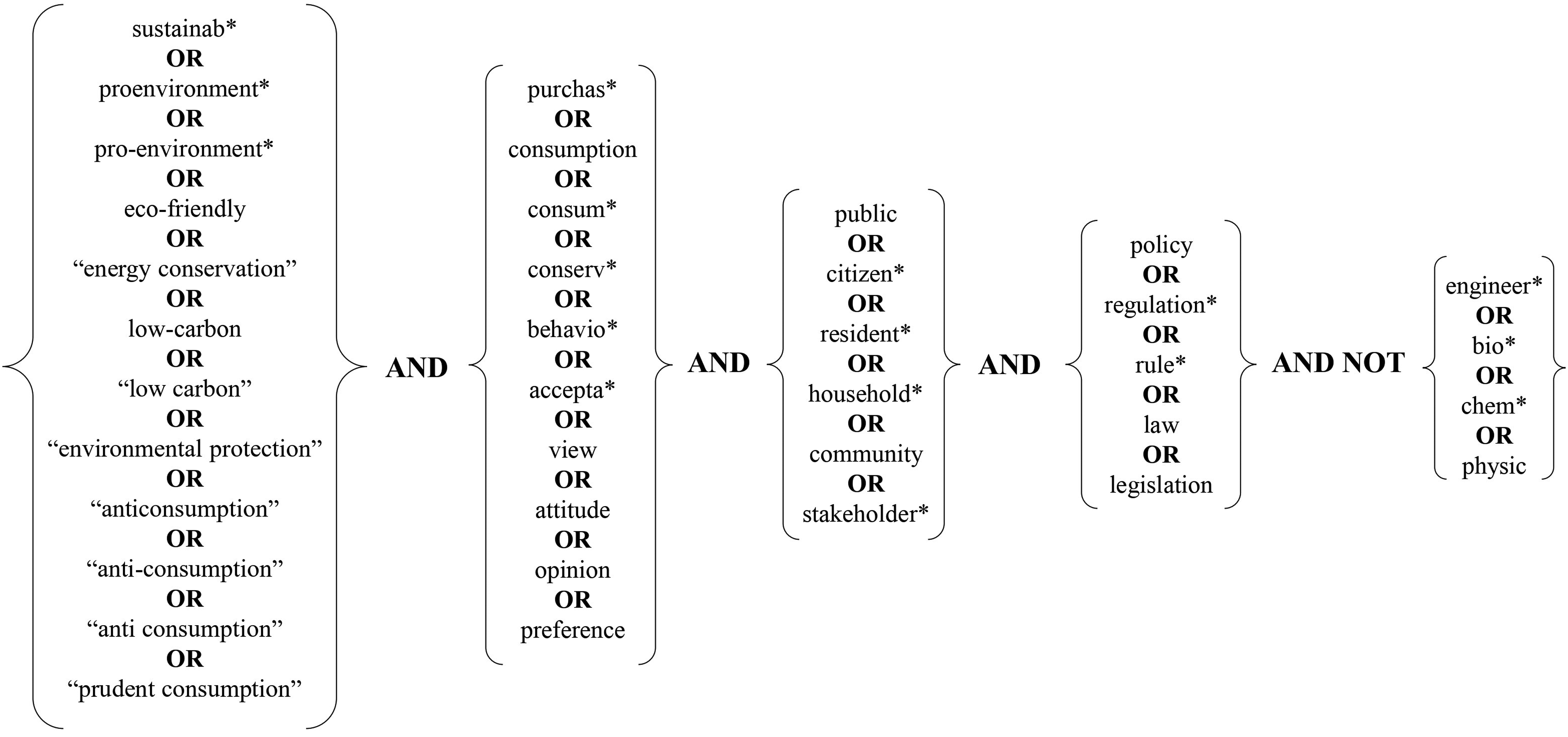
Search string.
The screening stage was executed using a four-step approach (see Figure 2): (1) screening articles returned from the search that were duplicates; (2) identifying and excluding articles that were not journal articles; (3) conducting two search strategies to identify articles from policies and marketing journals; and (4) focusing on articles published in Q1- and Q2-ranked journals in (i) marketing and (ii) management, monitoring, policy, and law to identify studies that were representative and pushing the boundaries of a research area (e.g., Rashidi-Sabet, Madhavaram, and Parvatiyar 2022; Vlačić et al. 2021) and, at the same time, to ensure that we did not miss any relevant important topic. We also looked at earlier reviews (e.g., Abrahamse et al. 2005; Schanes, Dobernig, and Gözet 2018; White, Habib, and Hardisty 2019) to identify specialist journals that were closely aligned with the topics of our systematic review. As a result, we found 20 additional journals that were not picked up in the Q1-ranked or Q2-ranked list:
1. Appetite 2. British Food Journal 3. Conservation and Recycling 4. Critical Public Health, PloS One 5. Ecological Economics 6. Energy and Buildings 7. Environment and Behavior 8. Food Quality and Preference 9. Journal of Applied Behavior Analysis 10. Journal of Applied Psychology 11. Journal of Applied Social Psychology 12. Journal of Business Ethics 13. Journal of Business Research 14. Journal of Cleaner Production 15. Journal of Economic Psychology 16. Journal of Environmental Psychology 17. Journal of Environmental Systems 18. Resources 19. The Sociological Review 20. Waste Management
All authors were involved in the screening process to reduce potential bias. This process resulted in 5098 articles that needed to be assessed manually for eligibility. The eligibility stage was executed based on content relevance, comprising a list of inclusion and exclusion criteria. Specifically, articles were selected for inclusion if they (1) studied environmental policies (e.g., existing policies or hypothetical policies) as independent variables, (2) examined consumer (pro-)environmental behaviors as dependent variables, and (3) conceptualized such behaviors as “(pro-)environmental behaviors” (behaviors or behavioral intentions that aim to have a positive influence on the natural environment) either in the method section or in the introduction. Articles were excluded if they focused on (1) non-environmental policies, (2) corporate social responsibility, (3) non–end users (e.g., policies’ macroeconomic impact or engineering aspects), or (4) behaviors that are not explicitly conceptualized as (pro-)environmental behaviors. Based on the inclusion and exclusion criteria, we assessed the titles and abstracts of all 5098 articles, which resulted in the exclusion of 4432 articles. The full text of the remaining 666 articles was thoroughly assessed to ensure that only articles focusing on environmental policies’ effects on pro-environmental consumer behavior were included. This process resulted in 171 articles for inclusion in the literature review.
The inclusion stage encapsulated a content analysis, guided by the MOA framework, of the articles in the review. Following the (theoretical) thematic analysis guideline suggested by Braun and Clarke (2006), one coder read the articles independently to become familiar with the data (i.e., content). Then, the coder generated initial codes and combined them into categories aligned with the MOA framework. For instance, environmental policy instruments were coded to reflect regulatory, economic, and informational instruments as well as motivations, opportunities, and abilities. Positive (+), negative (–), or ineffective or inconclusive (?) codes were statements from the retrieved articles that reflected how the instruments positively, negatively, or ineffectively stimulated individuals toward pro-environmental participation (Soma, Li, and Maclaren 2021).
Vote counting was used to aggregate the associations between codes to see the relationships between environmental policy instruments and pro-environmental consumer behaviors, whereby a vote was allocated each time an association was encountered. For example, every time a policy's effect was evaluated, it would yield one vote. Such a voting method has been used previously (Rossiter 2001) to describe the rigor of associations. Researchers define the prevalence of a theme as the number of times the theme appears in a data set rather than resorting to vague observations. The associations and categories were then reviewed and agreed on to ensure that they reflected the code and content of the articles. All authors were involved in the process of identifying the keywords and the inductive coding process. Two authors did the content analysis independently. Consistent with previous systematic reviews (e.g., Gossen, Ziesemer, and Schrader 2019; Nill and Schibrowsky 2007), any disagreement in the classification was then discussed with two other authors on the team until an agreement was reached. The outcomes of the content analysis are reported in the next section.
Descriptive Review of the Literature
In this section, we report observations of theories, contexts, methodologies, and how key concepts were used to determine the validity of research findings and help expose any inconsistencies across studies.
Theories
Research on environmental policies and pro-environmental behavior draws on various theoretical frameworks and paradigms to explain relevant effects. These theories can be roughly categorized into three groups according to their similarity in terms of the core psychological mechanism that is presumed to underlie the adoption of pro-environmental behavior (i.e., motivation-related, ability-related, opportunity-related, and integrated theories that look at the interconnection among motivation, ability, and opportunity). Table 1 provides an overview of all theories used in environmental policy and consumer behavior research. It is worth noting that this table is not meant to be an exhaustive or definitive categorization of all behavior-change theories, and some theories could arguably be placed in different groups depending on the interpretation. Classification in this table is dependent on both the theory itself and how the theory has been used in the research paper(s) it is associated with. Nonetheless, it provides a useful overview of how different theories relate to the MOA framework and highlights the diverse perspectives and approaches to behavior change.
The MOA Model and Associated Theories.
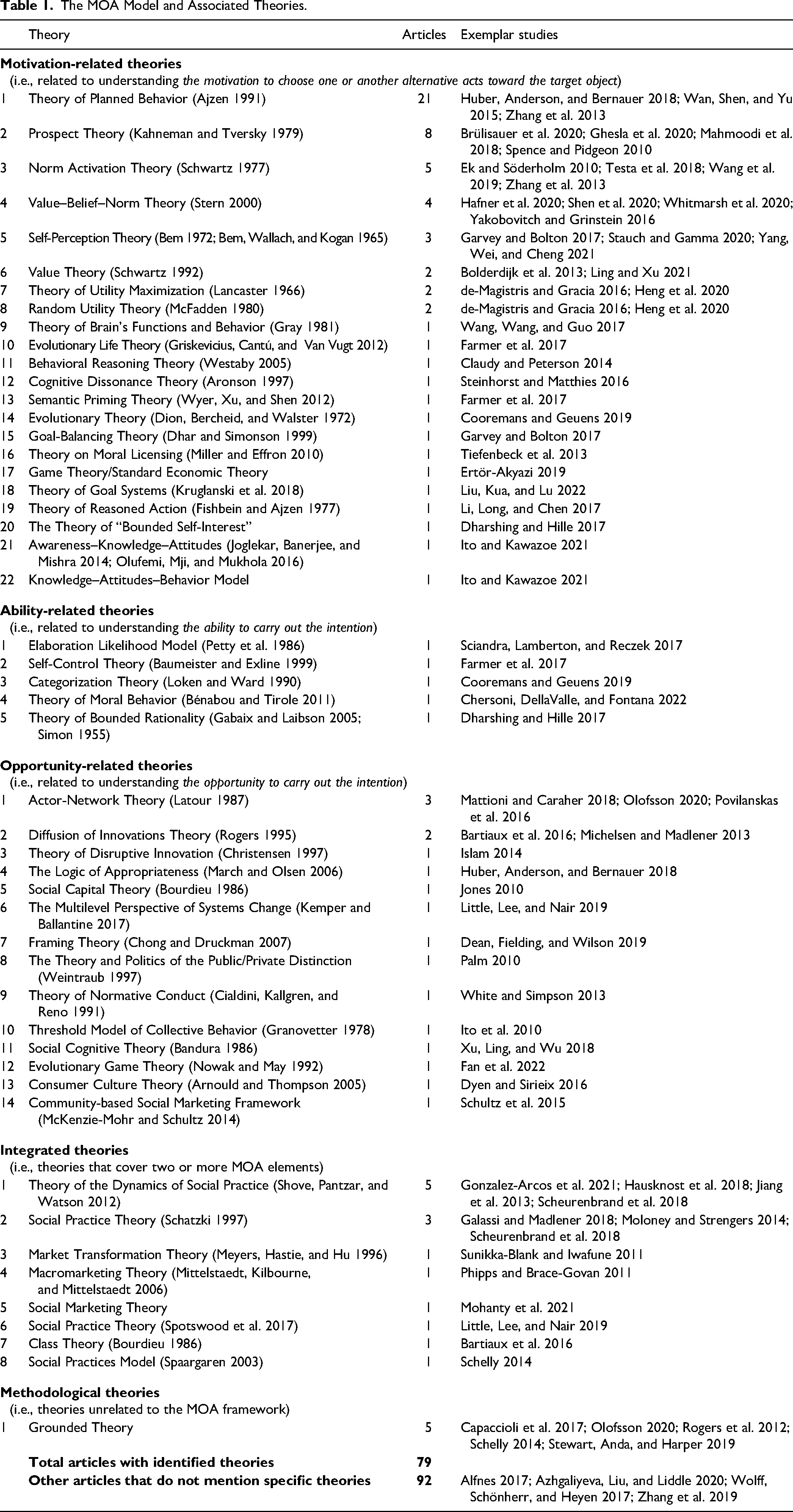
In the following section, we discuss the mechanisms and related theories.
Motivation-related theories. Motivation-related theories are the most commonly used, especially the theory of planned behavior (21 articles), prospect theory (8 articles), norm activation theory (5 articles), and value–belief–norm theory (4 articles). Research adopting this group of theories mainly focuses on how environmental policies create values through social, informational, and economic rewards; influence attitudes; and activate social norms around pro-environmental behavior (Priessner, Sposato, and Hampl 2018). Moreover, the adoption of pro-environmental behavior, which relies on consumers’ asymmetric reactions to benefits and losses offered by environmental policies via informational framing, is another focus in these studies (e.g., Brülisauer et al. 2020). In addition, studies within this stream also examine how environmental policies can induce motivational conflicts (reinforcement) that induce negative (positive) spillover effects on subsequent adoption of pro-environmental behavior (e.g., Stauch and Gamma 2020).
Values, beliefs, and emotions can significantly influence the relationship between environmental policies and pro-environmental consumer behavior. In particular, information that delivers messages that align with one's values and beliefs can stimulate a significantly greater level of pro-environmental behavior adoption and is more likely to lead to long-term behavioral changes. For instance, people with high susceptibility to social influence are more likely to be driven by social norms–based messages (e.g., Sciandra, Lamberton, and Reczek 2017). Information congruent with one's political ideology would also stimulate pro-environmental behavior (e.g., Kidwell, Farmer, and Hardesty 2013). In contrast, information that makes people act against their values and beliefs would result in motivational crowding out or undesirable moral licensing effects. This would occur when consumers’ interests are greatly threatened by complying with social norms (Garvey and Bolton 2017). At the same time, providing and communicating financial benefits may also decrease a willingness to buy community solar among green consumers whose intrinsic motivation to behave in an environmentally friendly way is high (Stauch and Gamma 2020).
Emotion is another important determinant of the behavior-change effects of environmental policies (Catlin et al. 2021). Indeed, the emotive quality of the message is likely to impact how consumers respond to an informational policy (Spence and Pidgeon 2010). Utilizing gain and loss framing or attributing humanlike characteristics to nonhuman agents and objects, information can create positive and negative affective responses, which can stimulate the adoption of pro-environmental consumer behavior (e.g., Cooremans and Geuens 2019).
Ability-related theories. Studies adopting ability-related theories mainly focus on the effects of environmental policies, especially informational ones, in addressing the cognitive ability to process information and act pro-environmentally (e.g., the theory of bounded rationality, elaboration likelihood theory, and categorization theory). For instance, the theory of bounded rationality underpins consumers’ limited cognitive ability to make pro-environmental decisions and their tendency to rely on cognitive bias when making decisions (Gabaix and Laibson 2005; Simon 1955).
Within the domain of ability-related theories, habit can significantly influence the relationship between environmental policies and pro-environmental consumer behavior. Habits are behaviors that persist because they have become relatively automatic over time because of regularly encountered contextual cues (Kurz et al. 2015). Therefore, habit tends to be one of the best predictors of many behaviors with a high frequency of performance, such as residential energy conservation, travel model choice, and food consumption (Verplanken and Roy 2016). When environmentally harmful behavior is strongly habitual, environmental policies, especially informational ones that solely focus on disseminating information, will have many challenges in stimulating the adoption of pro-environmental behavior. This is consistent with habit architecture theory, which proposes that just because an individual is motivated to curtail an unsustainable habit does not mean the habit will cease (Verplanken and Whitmarsh 2021). In contrast, more tangible policy instruments, such as penalties or economic incentives, can cause habit discontinuity and facilitate pro-environmental habit formation (Jiang et al. 2013).
In addition, following the stream of thought of bounded rationality as well as the habit literature, studies on relatively widespread policy instruments emerge, namely, nudge (e.g., default settings, choice editing or architecture, changing size and colors), which aims to edit the context to tackle routinized behavior, address cognitive limitation, and provide the opportunity for new pro-environmental behavior (Dharshing and Hille 2017). Energy feedback and prompts that are provided when habitual behavior often occurs to remind consumers of the desired pro-environmental behavior are a common means of encouraging pro-environmental habit formation (e.g., Brülisauer et al. 2020).
Opportunity-related theories. Opportunity-related theories focus specifically on the role of the external environment on behavior change; of these, actor-network theory (3 articles) is the most utilized. Researchers within this research stream are interested in exploring the role of environmental policies in the interactions and dynamics between multiple human actors other than individual consumers (e.g., government agencies, policymakers, business, local community) and nonhuman actors (e.g., natural resources, technologies, and the physical environmental itself; e.g., Olofsson 2020). Note that, within this stream of literature, studies also focus on the sociocultural influence of pro-environmental consumer behavior, in particular how culture, social norms, reference groups, and ethnicity could complicate or impede an individual's opportunity to act pro-environmentally. Theories adopted in this regard include the theory of normative conduct, the threshold model of collective behavior, and consumer cultural theory, to name a few (e.g., Ito et al. 2010).
Among different external variables, price significantly impacts the relationship between environmental policies and pro-environmental behavior. If not able to address price barriers, economic incentives will remain ineffective at stimulating adoption of pro-environmental behavior (e.g., renewable energy adoption; Mohanty et al. 2021). Other contextual elements that influence environmental policies’ effectiveness include the presence of favorable market context and the political consensus among consumers, the rural structure, population intensity, and cultural and social norms (Goggins et al. 2022). These macrolevel antecedents are lock-ins that circumscribe consumer options to exercise certain behaviors (Claudy, Peterson, and O’Driscoll 2013). Thus, exploration and empirical testing are needed to enrich insights in this area, such as how societal obstacles and inductors create conditions that reduce barriers and societal constraints to enhance the behavior-change effects of environmental policies (Casais and Faria 2022).
Integrated theories. The interconnection of all three MOA determinants of pro-environmental behavior is central to integrated theories, among which the theory of the dynamics of social practice (5 articles) and social practice theory (3 articles) are mostly applied. Researchers utilizing these practice theories provide an in-depth explanation of environmental policy's long-term effect, that is, the disruption of environmentally unsustainable social practices and the reinforcement of pro-environmental ones, which are an integration of consumers’ skills, derived meanings, material artifact, and infrastructure (Shove, Pantzar, and Watson 2012). However, social practice theories are relatively new and less utilized than motivation- and ability-related theories mainly because they often require qualitative and longitudinal research to track behavior and practice over time (Keller, Halkier, and Wilska 2016). Despite methodological challenges, there is growing recognition of the relevance of social practice in understanding the effects of environmental policies. As interdisciplinary research continues to evolve, social practice theories will likely gain more traction and contribute to a deeper understanding of environmental policies’ effectiveness (see Little, Lee, and Nair 2019).
It is important to note that our analysis suggests that in many cases, researchers merely refer to certain theories without extensively discussing them when developing specific hypotheses. At the same time, grounded theory (5 articles) is among the most applied theory in the literature on pro-environmental behavior and environmental policies. This once again reinforces that from a micromarketing perspective, the study of environmental policies’ behavior-change effects is an emerging research stream. Moreover, from a macromarketing perspective, study regarding the link between environmental policy and marketing systems remains nascent. In the attempt to unpack the complexity of environmental policy effectiveness, which involves multiple stakeholders and nonhuman actors with diverse interests, and dynamic systems, researchers focus on generating new insights and theories that cannot be adequately explained via existing theories that solely focus on micro drivers of policy effectiveness.
Contexts
Research undertaken in high-income regions (World Bank 2020) is dominant, with European countries (i.e., Germany, the United Kingdom, Sweden, Switzerland, Spain, Greece, Slovenia, Italy, Ireland, France, Austria, Turkey, and so on; 56 articles), China (37 articles), the United States (17 articles), Australia (8 articles), and Japan (8 articles) being commonly sampled (see Figure 4). Meanwhile, the literature lacks insights into the effectiveness of environmental policies in lower-middle/low-income countries despite continuing calls for testing the transferability of existing environmental policies (Azhgaliyeva, Liu, and Liddle 2020). Indeed, only four lower-middle/low-income countries are studied in the retrieved articles, namely, India (3 articles), Tanzania (2 articles), Nepal (1 article), and Madagascar (1 article). Hence, the need for new insights from lower income countries remains a future research opportunity.
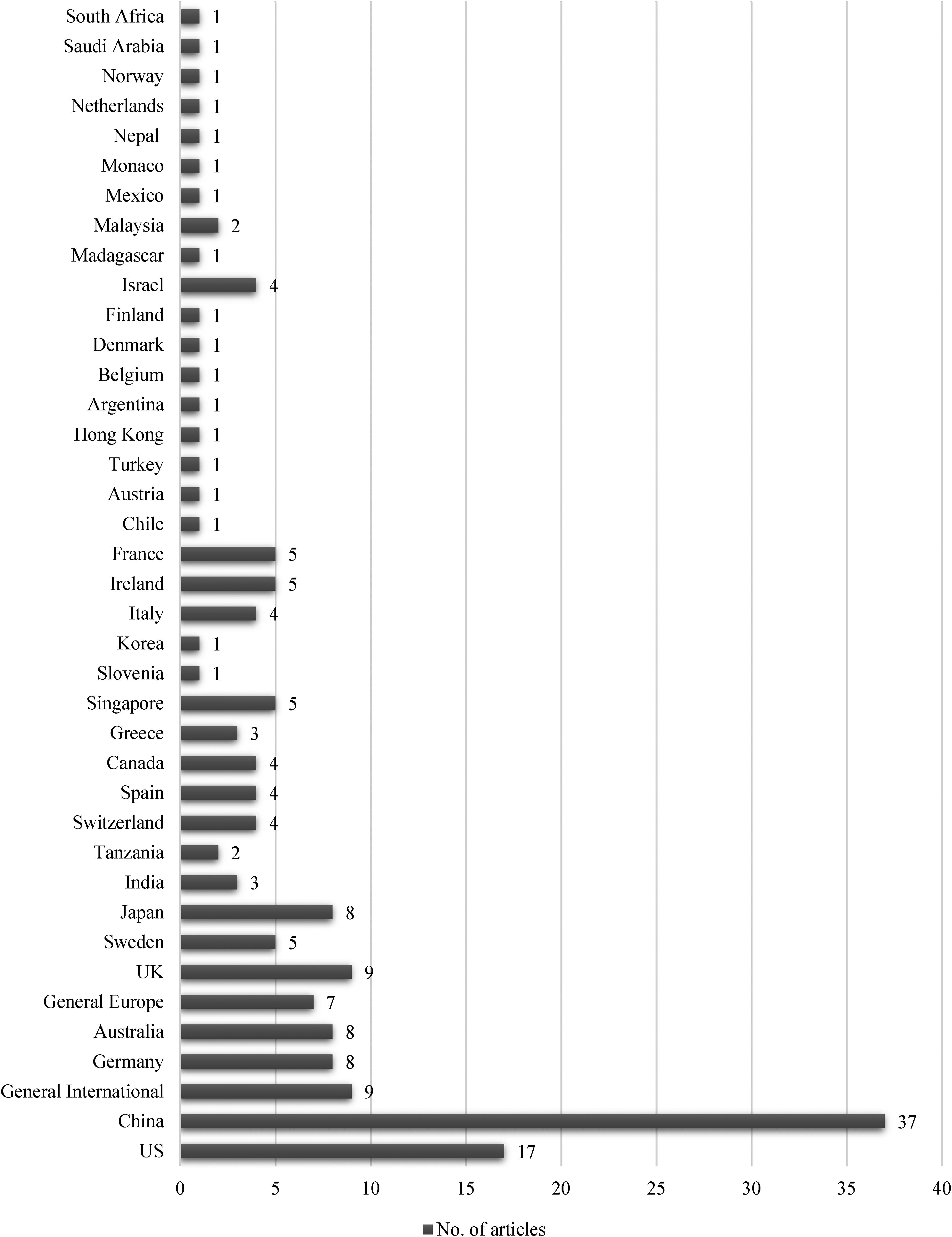
Context coverage.
Methodologies
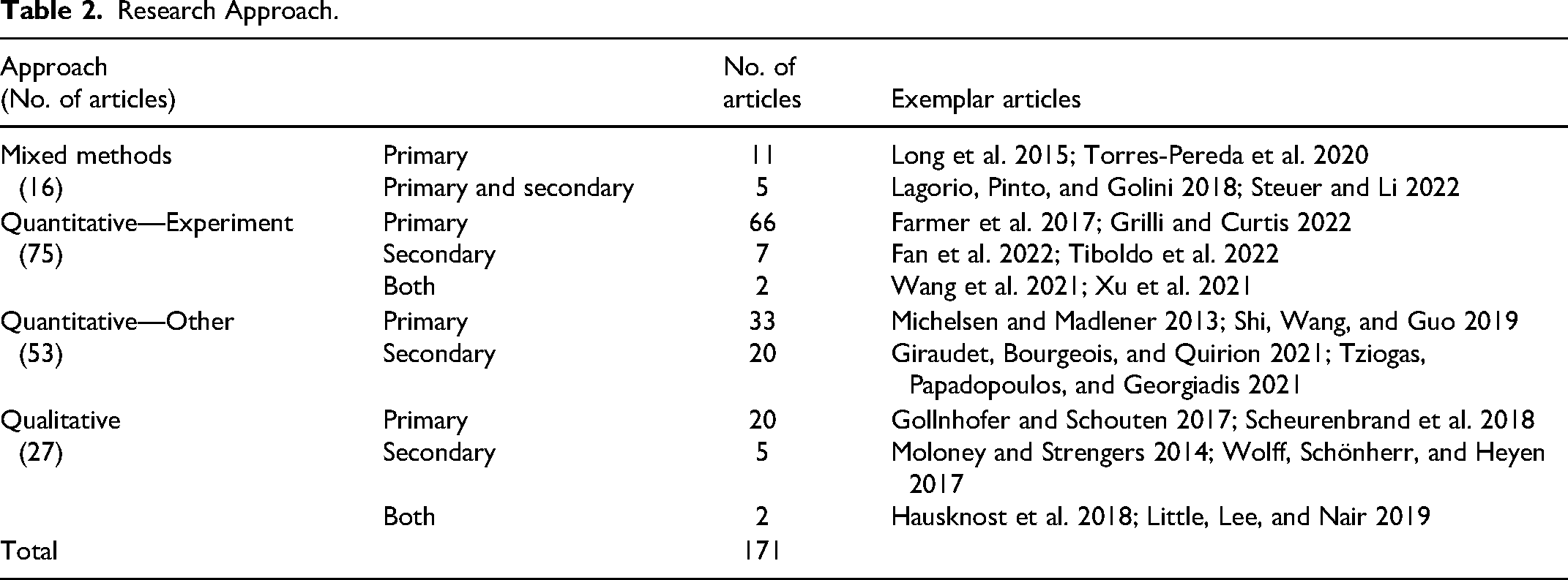
This review considers two significant methodological attributes that characterize the 171 articles for review: research approach (see Table 2) and data (see Table 3). The dominant research approach is quantitative (128 articles), followed by qualitative (27 articles) and then mixed methods (16 articles). Experiments are the most preferred quantitative method (75 articles), and in-depth interviews are the most preferred qualitative method (12 articles).
Research Approach.
Research Data.
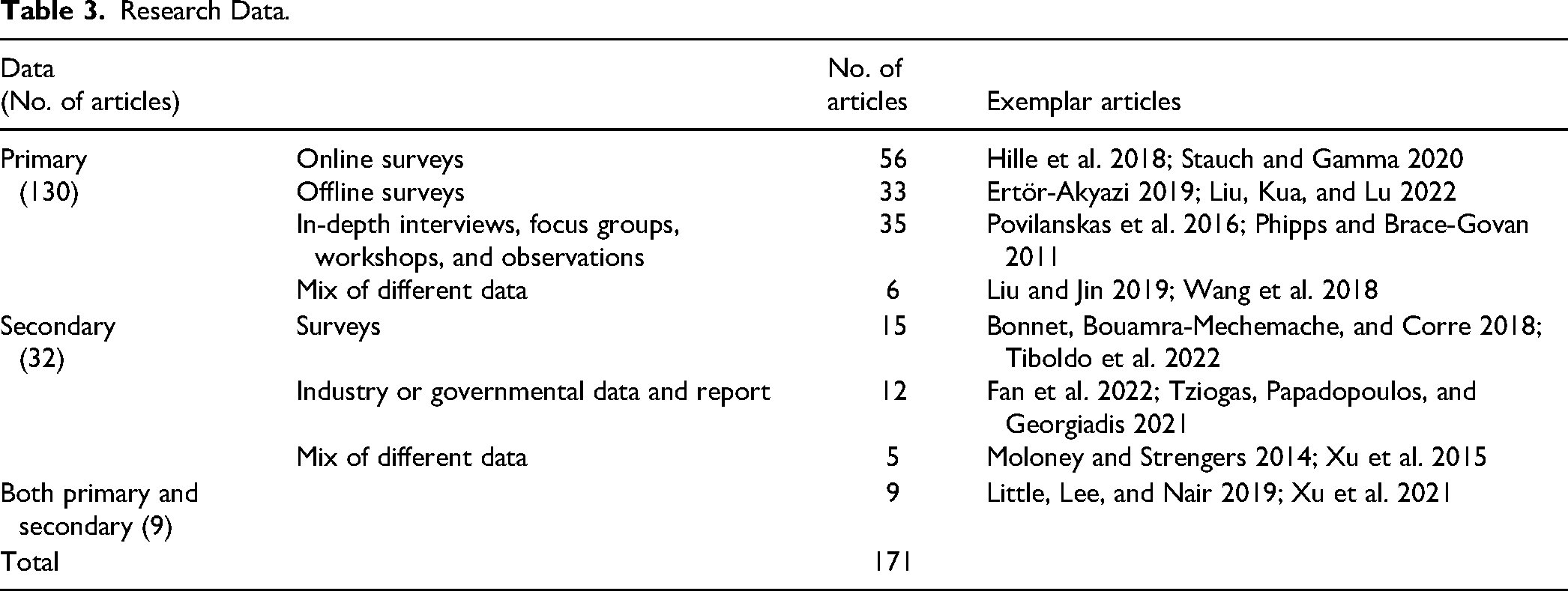
Data are mainly primary (130 articles), collected mostly via online surveys (56 articles) and offline surveys (33 articles); both types of survey (6 articles); or in-depth interviews, focus groups, workshops, and observations (35 articles). Thirty-two (32) articles use secondary data mainly derived from surveys (15 articles) and industry and governmental reports (12 articles). The remaining 9 articles use both secondary and primary data. This indicates a lack of variety in data artifacts that could be suitably used to enrich the symbolic meanings that typify qualitative insights.
Analysis of the Literature Based on the MOA Framework
This section critically analyzes and synthesizes the findings from the articles identified in this review through the lens of the MOA framework (MacInnis 2011). The articles were first organized into three main categories based on environmental policy instruments (i.e., regulatory, economic, and informational). Most (135) articles focus on only one policy instrument (informational: 77, economic: 43, regulatory: 15). The remaining 36 articles focus on two or more policy instruments. As some articles investigate multiple types of policy instruments, the total number of observations of policy effects is larger than the sample size of reviewed articles. In particular, across the 171 articles reviewed, there are 319 observations, among which informational policies are the most popular type of pro-environmental consumption policy, receiving 159 observations of their effects, followed by economic instruments with 105 observations of their effects and last regulatory policy with 55 observations.
Through the process of reading the reviewed articles multiple times, we noticed the emergence of certain subcategories of policy instruments within each type of regulatory, economic, and informational policy. In particular, different policy instruments can constrain or facilitate specific elements of the MOA framework, hence having a distinct influence on the adoption of pro-environmental behavior. Following the emerging themes, we articulated the specific elements of the MOA framework through which the different policy instruments influence pro-environmental behavior and classified the policies based on constraining versus facilitating (for economic and regulatory instruments) or facilitating motivation, ability, or opportunity (for informational instruments). Last, we integrated positive/negative/ineffective (inconclusive) codes for the policy effectiveness observations to reflect how effective instruments are at influencing individuals toward pro-environmental participation (Soma, Li, and Maclaren 2021).
The way in which information can be used as a governance instrument is vast and diverse in terms of the messages delivered as well as delivery mechanisms (e.g., public communication campaigns, labeling, demonstration, training programs). This makes it challenging to completely enumerate and classify informational policy instruments (Bemelmans-Videc, Rist, and Vedung 1998). Nevertheless, our analysis reveals that informational instruments mainly focus either on motivation, ability, or, to a lesser extent, opportunity. In particular, motivation-facilitating informational instruments focus on the different types of messages that influence factors that motivate the uptake of pro-environmental behavior, such as highlighting social norms and raising consumers’ awareness of ecological or personal consequences of pro-environmental behavior (Kang and Park 2011; Wang, Cao, and Zhang 2021). Ability-facilitating informational instruments focus on improving individual task-related knowledge, skills, and proficiency via instructional tools such as energy-saving skills (Jiang et al. 2013; Stewart, Anda, and Harper 2019). Opportunity-facilitating informational instruments are informational interventions that provide minor alteration of the external environment where pro-environmental behavior occurs. They include point-of-action interventions that aim to affect consumers’ physical surroundings and decision context, such as carbon labeling (Yakobovitch and Grinstein 2016), in-store posters (Catlin et al. 2021; Cooremans and Geuens 2019), routine feedback on energy use (Brülisauer et al. 2020; Tiefenbeck et al. 2013), leaflets/stickers (He and Kua 2013), and web-based energy monitoring and control systems (Sunikka-Blank and Iwafune 2011). Within the opportunity-facilitating instruments, a limited number of informational interventions foster two-way dialogue that focuses on relationship building within communities and among stakeholders.
Regulatory and economic instruments can strongly affect the opportunity element, as defined by the external environment that invites behavior change, including time, place utility, and cost (MacInnis and Jaworski 1989). As regulatory and economic policy instruments involve more direct and tangible interventions, they can conveniently fall into two main categories: opportunity facilitating and opportunity constraining. Opportunity-facilitating instruments can be conceived as creating more favorable conditions for consumers’ adoption of pro-environmental behavior. In contrast, opportunity-constraining instruments create less facilitating conditions or increase the barriers to consumer engagement in environmentally unsustainable behavior.
In particular, economic instruments address consumers’ opportunity to act pro-environmentally by acting on economic and cost-related elements of the behavior (Dutt 2020; Wang, Cao, and Zhang 2021). Facilitating economic instruments (e.g., subsidies) can reduce the financial barriers (e.g., a high purchase price) to adopting the desired behavior (e.g., installing solar photovoltaics). Constraining economic instruments (e.g., surcharges) can increase the financial barriers to performing an anti-pro-environmental behavior (e.g., consuming energy during peak hours). Opportunity-constraining regulatory instruments refer to policy instruments that place institutional constraints on consumers’ opportunities to engage in environmentally unsustainable practices via direct enforcement or restricting the availability of non-environmentally friendly products. Opportunity-facilitating regulatory instruments are mandatory government provisions to increase the availability of environmentally friendly products and enhance material infrastructure, facilitating pro-environmental behaviors. For example, facilitating regulatory instruments such as improved container facilities and suitable collection time schedules would provide individuals with the convenience of recycling opportunities.
Informational Policy Instruments
One hundred and fifty-nine (159) observations are made of the effects of informational policy instruments, among which there are 56 observations of motivation-facilitating, 18 of ability-facilitating, and 85 of opportunity-facilitating informational instruments (see Table 4).
Comparison of Informational Policy Instruments.
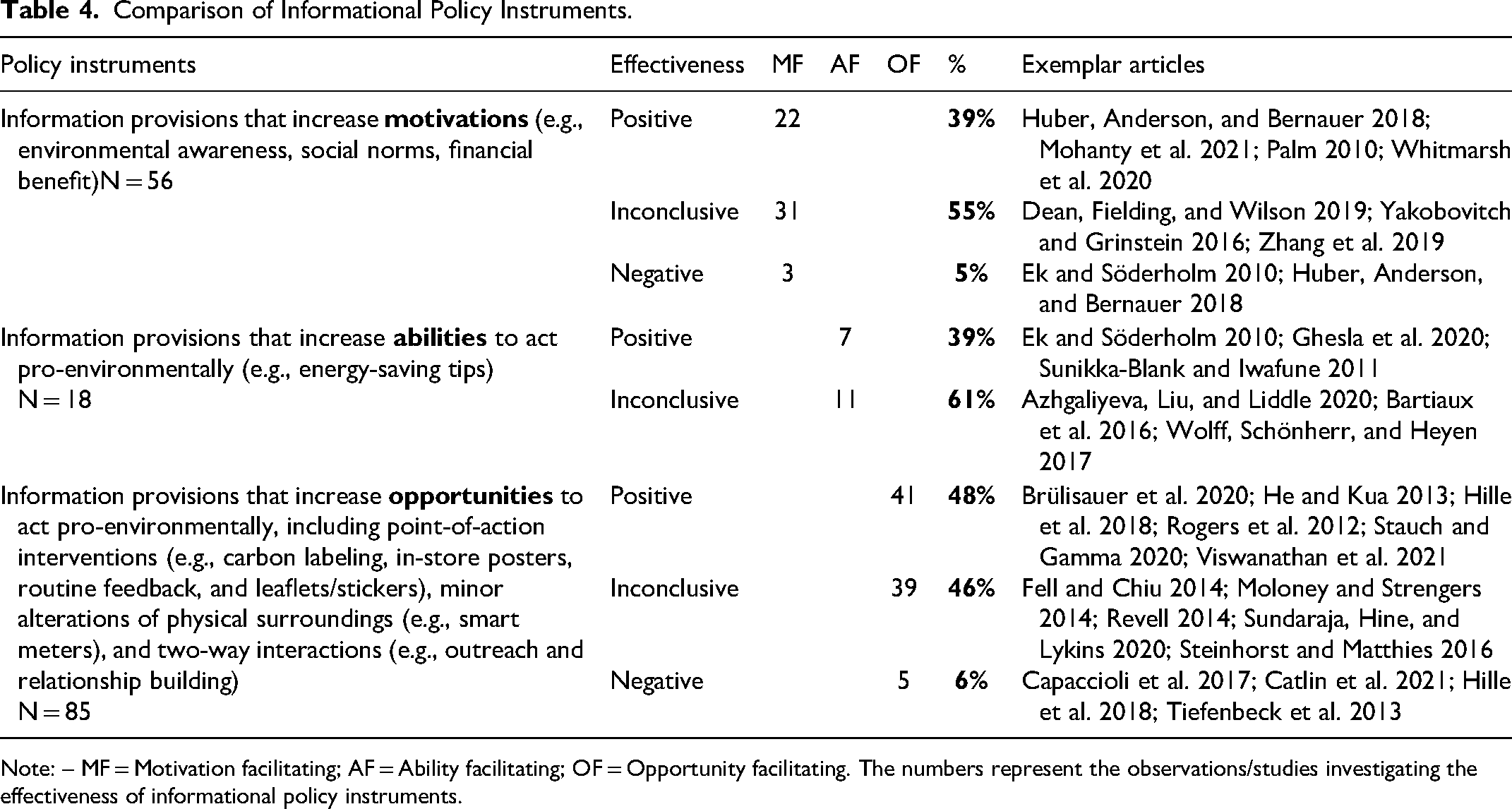
Note: – MF = Motivation facilitating; AF = Ability facilitating; OF = Opportunity facilitating. The numbers represent the observations/studies investigating the effectiveness of informational policy instruments.
Our analysis reveals that although informational policy instruments might improve consumer motivation and ability, they do not effectively create opportunities for pro-environmental behavior. Indeed, 39% of the observations of motivation-facilitating policy instruments reported positive effects, 55% reported inconclusive or ineffective results, and 5% reported negative effects. Similarly, across 18 observations of ability-facilitating policy instruments, 39% reported positive effects and 61% reported inconclusive and ineffective results. Our review shows that there is a consensus that highlighting the financial rewards of pro-environmental behavior has not been sufficient to positively influence behavior uptake regarding energy conservation (Ek and Söderholm 2010), environmental information-seeking (Dean, Fielding, and Wilson 2019), or environmental policy acceptance (Steinhorst and Matthies 2016), to name a few. Studies that observe positive effects rely on experimental designs using hypothetical policy instruments, in particular nudge-based instruments that prime a specific piece of information to elicit motivations such as goal setting (loss and gain; e.g., Ghesla et al. 2020), social norms (Brülisauer et al. 2020; Sciandra, Lamberton, and Reczek 2017), or adherence to one's values and beliefs (White and Simpson 2013).
Regarding opportunity-facilitating policy instruments, 48% of the observations reported positive effects, 46% reported inconclusive or ineffective results, and 6% reported negative effects. This indicates that, unlike motivation- and ability-facilitating informational instruments, opportunity-facilitating ones are relatively more effective at stimulating pro-environmental behavior. Nevertheless, designing informational interventions that induce pro-environmental behavior remains challenging. Indeed, through the lens of the MOA framework, the opportunity category typically arises from structural, material, and potentially systemic changes occurring upstream of the household level. Informational interventions like awareness campaigns do not play a significant role in comprehensively addressing the systemic opportunity to shrink anti-pro-environmental behaviors. These instruments will only lead to the execution of pro-environmental intentions in situations when opportunities to act pro-environmentally are present.
Economic Policy Instruments
One hundred and five (105) observations are made of the effects of economic policy instruments, among which there are 37 observations of the effects of opportunity-constraining economic instruments, 59 observations of the effects of opportunity-facilitating economic instruments, and 9 observations of the effects of economic instruments that combine elements of both opportunity constraining and facilitating (see Table 5).
Comparison of Economic Policy Instruments.
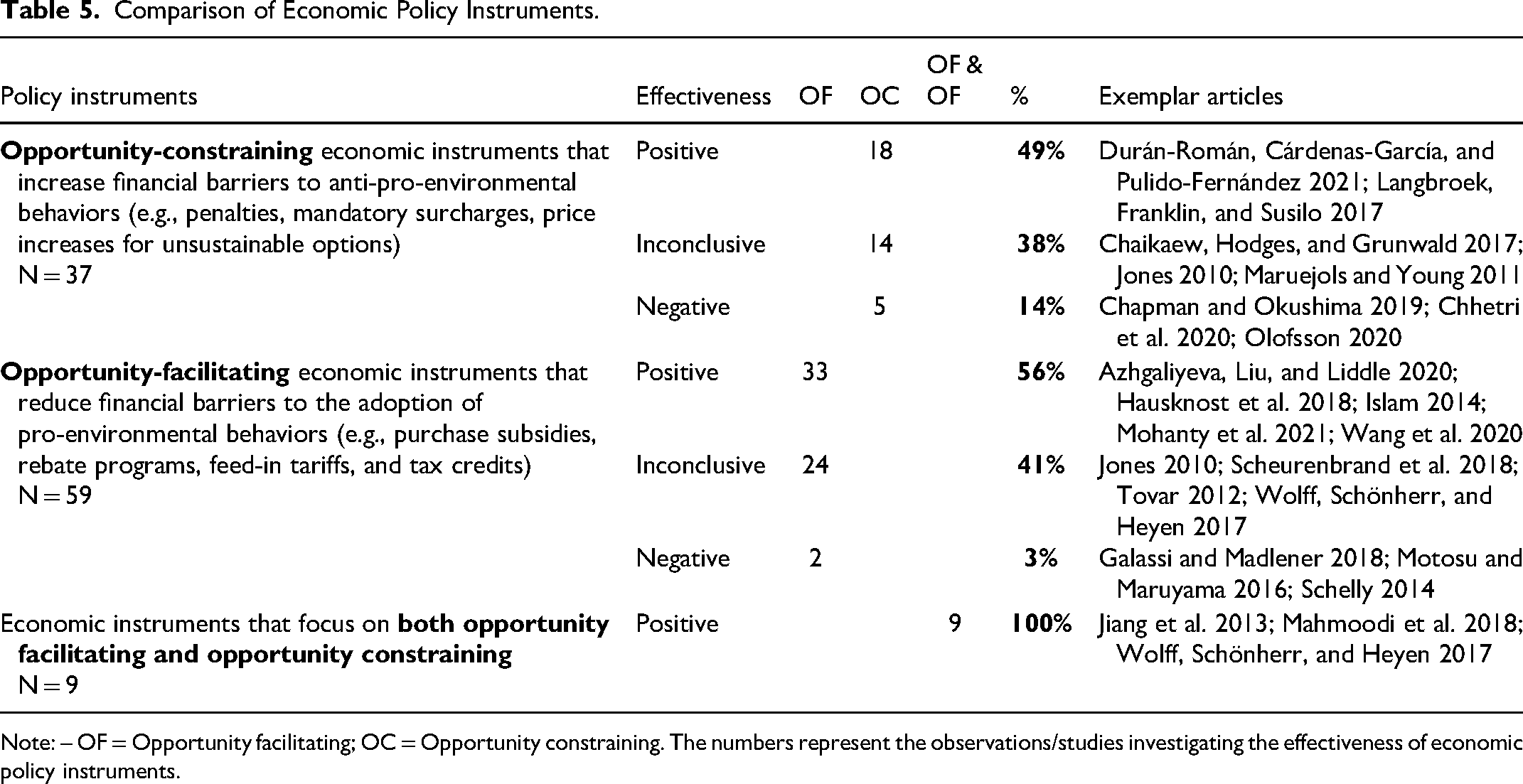
Note: – OF = Opportunity facilitating; OC = Opportunity constraining. The numbers represent the observations/studies investigating the effectiveness of economic policy instruments.
Regarding constraining economic policy instruments, 49% of the observations reported positive effects, 38% reported inconclusive or ineffective results, and 14% reported negative effects. This means that economic disincentives (e.g., penalties, mandatory surcharges, price increases for unsustainable options, and flat payments on pro-environmental options) lead to behavioral change outcomes. Indeed, economic disincentives are found to effectively halt anti-pro-environmental behaviors (e.g., Ertör-Akyazi 2019; Olabisi et al. 2019; Wolff, Schönherr, and Heyen 2017). However, they could negatively influence consumers’ uptake of pro-environmental behavior.
Regarding facilitating economic policy instruments, 56% of the observations reported positive effects, 41% reported inconclusive or ineffective results, and 3% reported negative effects. This indicates that overall, facilitating economic instruments lead to the adoption of pro-environmental behavior either through reducing the initial investment barriers to one-off pro-environmental behavior (e.g., purchase subsidies and rebate programs) or helping consumers overcome maintenance expenses or enhancing the long-term affordability of energy-efficient projects (e.g., feed-in tariffs/production incentives, tax credits).
Note that economic incentives can be more effective in higher income nations compared to lower income countries (Azhgaliyeva, Liu, and Liddle 2020). Moreover, studies (i.e., Heng et al. 2020; Islam 2014; Schelly 2014) found that consumers in higher income countries are more responsive to maintenance-focused incentives, which offer longer term financial benefits, rather than initiation-focused policy interventions that address a lack of capital (Schleich et al. 2016). These findings are consistent with those of Bartiaux et al. (2016), highlighting the use of policies to address the specific element of MOA that is lacking.
Our findings indicate that facilitating economic instruments are slightly more effective than constraining economic instruments (56% and 49% of positive-effect observations). Nevertheless, such findings are inconsistent with previous studies. For instance, Michelsen and Madlener (2016) found that an economic disincentive of an increase in fuel price significantly stimulated homeowners’ decisions to adopt renewable residential heating systems in Germany, whereas government grants did not. The literature also shows concerns regarding the short-term effects of opportunity-facilitating economic instruments targeted toward one-off pro-environmental purchases failing to lead to changes in everyday environmental activities (Claudy and Peterson 2014; Hausknost et al. 2018). For instance, subsidizing e-bikes and bicycles does not guarantee reduced private car use (Hausknost et al. 2018) or increased bicycle use (Claudy and Peterson 2014). Moreover, the rebound effects of these policy instruments are a major concern (Olofsson 2020; Stauch and Gamma 2020) because economic incentives represent an extrinsic motivation to undertake pro-environmental behavior (Grilli and Curtis 2021).
Few papers focus on factors that can potentially resolve these short-term and rebound effects. For instance, better results are found when opportunity-constraining economic instruments are combined with opportunity-facilitating economic instruments (Jiang et al. 2013; Mahmoodi et al. 2018; Wolff, Schönherr, and Heyen 2017). A successful implementation combining opportunity-constraining and opportunity-facilitating economic instruments is a credit card system at Fudan University (China), where if electricity use is less than a certain amount, a discount on the cost of electricity will be awarded (Jiang et al. 2013).
Regulatory Policy Instruments
Fifty-five (55) observations are made of the effects of regulatory policy instruments, among which there are 24 observations of the effects of opportunity-constraining regulatory instruments and 31 observations of the effects of opportunity-facilitating regulatory instruments (see Table 6). Results indicate that opportunity-constraining regulatory instruments have significantly greater effects on influencing pro-environmental behavior than opportunity-facilitating regulatory instruments.
Comparison of Regulatory Policy Instruments.
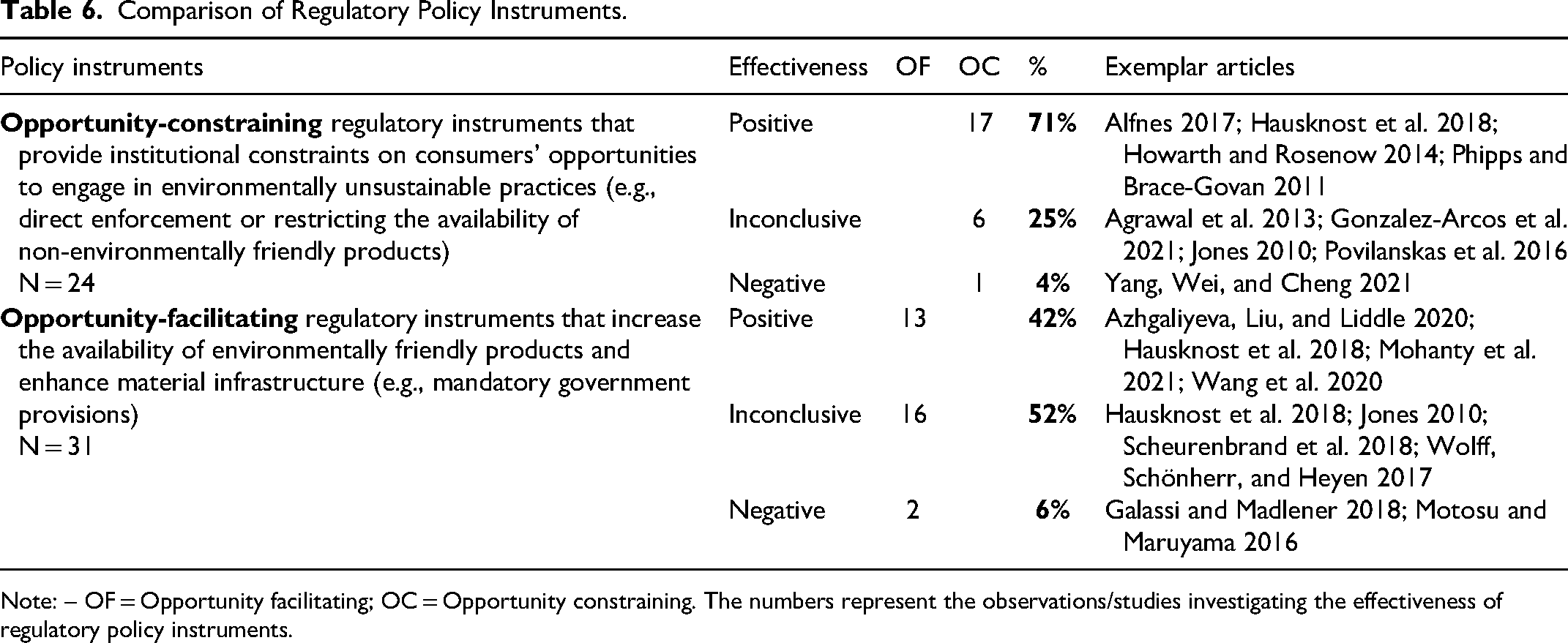
Note: – OF = Opportunity facilitating; OC = Opportunity constraining. The numbers represent the observations/studies investigating the effectiveness of regulatory policy instruments.
Regarding constraining regulatory policy instruments, 71% reported positive effects, 25% reported inconclusive or ineffective results, and 4% reported negative effects. These policy instruments, such as the water restriction in Australia in 2007 (Phipps and Brace-Govan 2011) or the phasing out of incandescent lighting in Germany (Howarth and Rosenow 2014), were found to increase initial awareness effectively, shrink unsustainable habits, and result in a long-term influence on pro-environmental social norms. Simultaneously, these constraining regulations (e.g., Chile's 2019 plastic bag ban, Gonzalez-Arcos et al. 2021; Greece's household waste sorting, Jones 2010) also had a downward impact on stimulating motivations to act pro-environmentally.
Regarding facilitating regulatory policy instruments, 42% reported positive effects, 52% reported inconclusive or ineffective results, and 6% reported negative effects. Opportunity-facilitating regulations only effectively change the framework conditions but do not directly interfere with anti-pro-environmental habits (Hausknost et al. 2018) or improve macro-environmental well-being (i.e., mitigating greenhouse gas emissions). These findings were found in China's infrastructure development for electric vehicle adoption (Wang, Cao, and Zhang 2021) and Spain's regulation of the separate collection of organic waste (Wolff, Schönherr, and Heyen 2017), to name a few.
Despite the ineffectiveness of opportunity-facilitating regulations, these regulations can improve consumers’ motivation to act pro-environmentally. The provision of supportive material arrangements (e.g., Finland's public catering requirements) triggers public debates, increases environmental awareness (Wolff, Schönherr, and Heyen 2017), and improves favorable attitudes toward pro-environmental behavior adoption (Mohanty et al. 2021). If used as complementary measures rather than stand-alone policy instruments, opportunity-facilitating regulations can lead to long-term behavior change (Wolff, Schönherr, and Heyen 2017).
In addition, we found that regulatory and economic policy instruments are more effective than informational ones (55%, 57%, and 44%; see Table 7). In particular, more than half (55%) of the observations of regulatory instruments indicate positive effects. Similarly, more than half (57%) of the observations of economic instruments indicate positive effects. In contrast, less than half (44%) of the observations of informational policy indicate positive effects.
Comparison of Informational, Economic, and Regulatory Instruments.
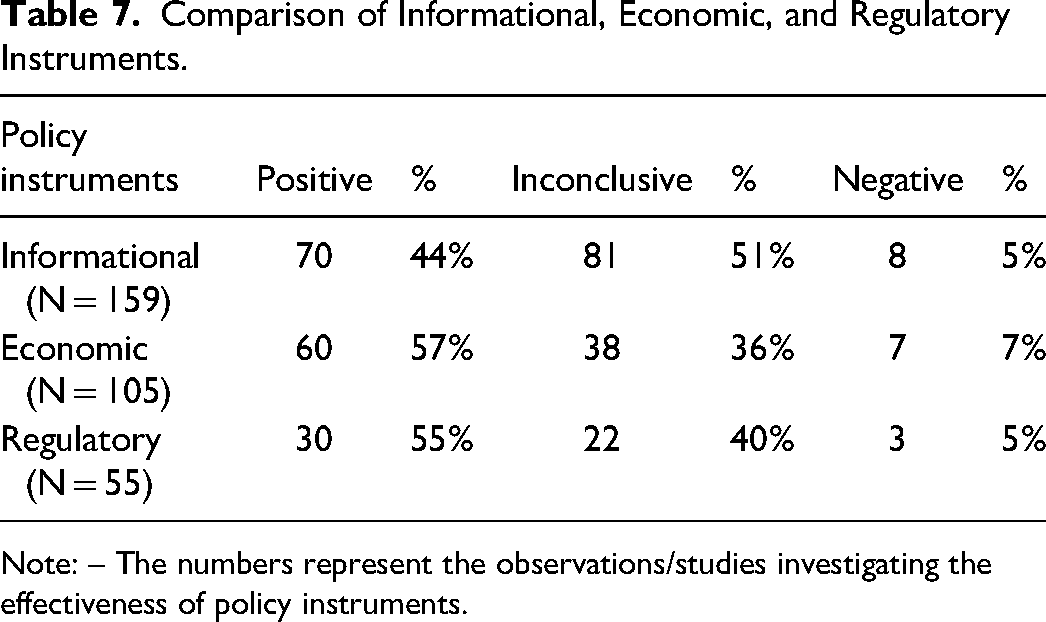
Note: – The numbers represent the observations/studies investigating the effectiveness of policy instruments.
Our findings are consistent with several studies examining the relative effects of different environmental policies that note that constraining regulatory instruments are the most effective (e.g., Azhgaliyeva, Liu, and Liddle 2020; Hausknost et al. 2018; Sunikka-Blank and Iwafune 2011; Wolff, Schönherr, and Heyen 2017). For instance, Wolff, Schönherr, and Heyen (2017) found that mandatory policies (e.g., energy-saving obligations) fulfilled their carbon emissions saving goals. In contrast, informational policies (e.g., residential energy usage training schemes) and economic incentives (e.g., fees on single-use beverage packaging) were slow or failed to achieve their goals.
Despite being the most effective tool in policymakers’ toolkit, only a small number of environmental policy instruments are opportunity constraining (Wolff, Schönherr, and Heyen 2017). This may be because policymakers are reluctant to implement interventions that impact individuals’ private space (Heiskanen, Mont, and Power 2014). In addition, rather than seeing policy instruments as singular choices, policymakers should consider different combinations of policy instruments to influence pro-environmental behaviors effectively. This recommendation emerges in context-specific studies of environmental policies and consumer research (e.g., Heffernan et al. 2021; Mohanty et al. 2021; Sandberg 2018). Furthermore, depending on which element of the MOA framework is lacking, policymakers should employ compatible policy instruments.
MOA-Based Policy Recommendation
With a view to providing practical suggestions to help policymakers employ compatible policy instruments in specific circumstances, we adopted Rothschild's (1999) policy mix framework and propose here an MOA-based environmental policy mix framework. Table 8 presents eight consumer segments that differ in terms of their MOAs and the corresponding policy mixes that can effectively stimulate pro-environmental behavior. Column 1 presents the policies needed to stimulate pro-environmental behavior for consumers who are most prone to act pro-environmentally because all MOA elements are fulfilled. For this segment, informational policy instruments are sufficient.
A Framework of MOA-Based Environmental Policy Mix.
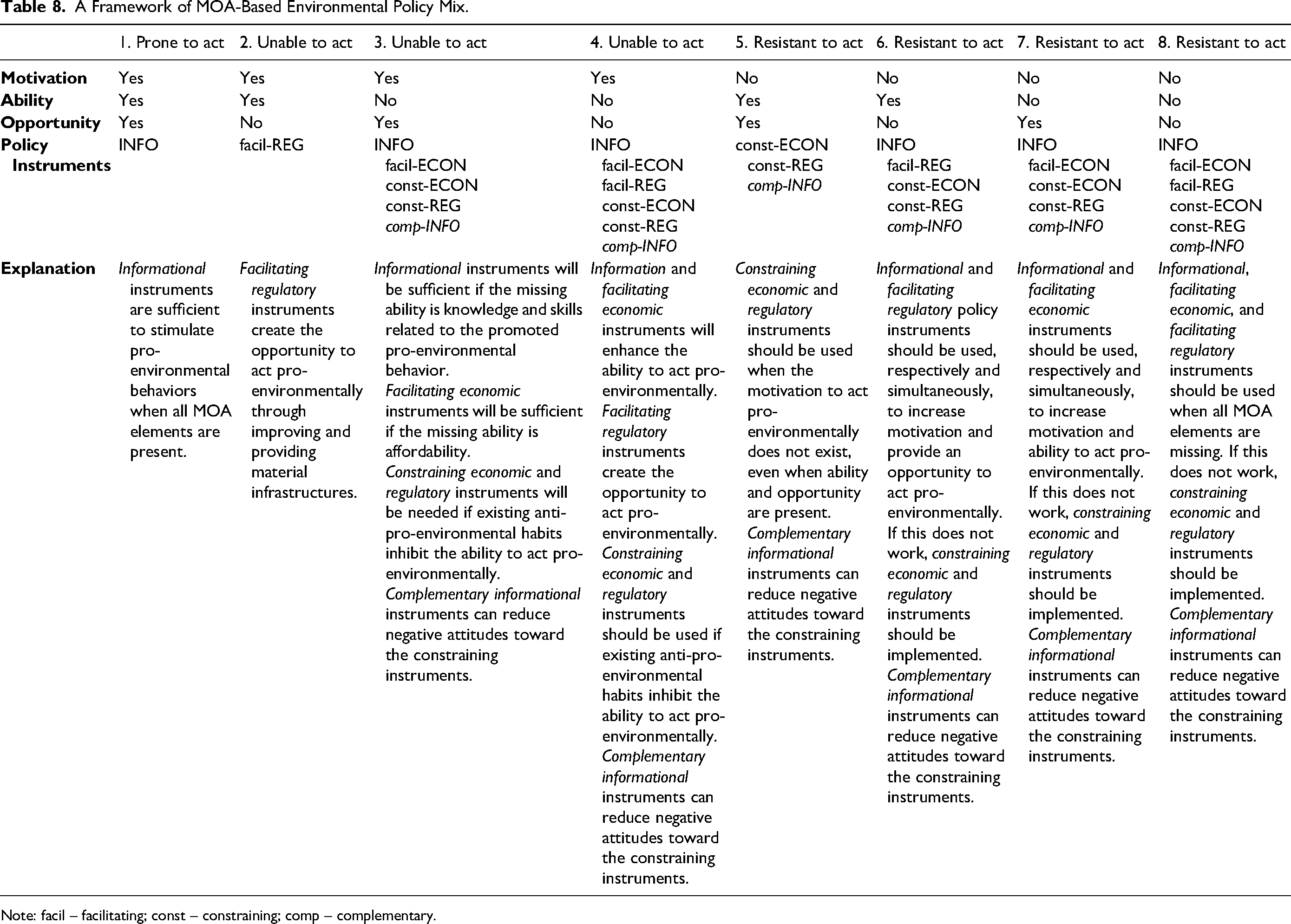
Note: facil – facilitating; const – constraining; comp – complementary.
Columns 2–4 present the policies needed to stimulate pro-environmental behavior for motivated consumers who are unable to act because they might lack opportunity and/or ability. If they lack opportunity (Column 2), facilitating regulatory instruments should be adopted to create the opportunity to act pro-environmentally through improving and providing material infrastructures. In contrast, if they lack ability (Column 3), suitable policy instruments will depend on the type of ability absent. For instance, informational instruments will be sufficient if the missing ability is knowledge and skills related to the promoted pro-environmental behavior. Facilitating economic instruments will be adequate if the absent ability is affordability. Opportunity-constraining economic and regulatory instruments will be needed if existing anti-pro-environmental habits inhibit the ability to act pro-environmentally. Finally, if consumers cannot act pro-environmentally because of a lack of opportunity and ability (Column 4), then all of the recommended instruments should be implemented.
Columns 5–8 present the policies needed to stimulate pro-environmental behavior for consumers who are resistant to act because they lack the motivation to act in an environmentally friendly way. For example, even when ability and opportunity are present, consumer motivation to act can still be missing (Column 5). In this case, constraining economic and regulatory instruments should be used. Complementary informational instruments should also be considered to reduce negative attitudes toward the constraining instruments. When these resistant consumers lack opportunity (Column 6), informational and facilitating regulatory policy instruments should be used, respectively, to increase motivation and create opportunity for acting pro-environmentally. Alternatively, opportunity-constraining economic and regulatory instruments should be implemented.
In situations where resistant consumers lack ability (Column 7), informational and facilitating economic instruments should be used, respectively, to increase motivation and ability to act pro-environmentally. Alternatively, opportunity-constraining economic and regulatory instruments should be implemented. Finally, when resistant consumers lack all elements in the MOA framework (Column 8), informational, opportunity-facilitating economic, and regulatory instruments should be used first before resorting to constraining economic and regulatory instruments.
This framework is significant because it will help policymakers and scholars improve past ineffective environmental policies and produce more effective ones in the future. For instance, consumers strongly expressed negative attitudes toward Chile's 2019 nationwide ban on plastic bags (Gonzalez-Arcos et al. 2021). Although the policy helped consumers break unsustainable habits, the lack of motivation and ability to adapt to the new restraint in their shopping behavior was one of the primary reasons they objected to the plastic ban (Gonzalez-Arcos et al. 2021). Hence, for such resistant consumers (Column 7), the constraining regulation that impacted opportunity could have been sustained longer if there were informational instruments that addressed consumers’ motivations and abilities. Another example is from Claudy and Peterson's (2014) study, in which Irish people who own bicycles still refuse to commute to work by bike because of opportunity-related problems (Column 2). Thus, improvements and dedicated biking facilities (opportunity-facilitating regulations) should be provided. Alternatively, restrictions on vehicles in the city that consume fossil fuel (opportunity-constraining regulations) should be considered (Hausknost et al. 2018).
General Discussion
Building on the analysis of multiple environmental policies through the lens of the MOA framework, our findings help evaluate the current state of the literature regarding how effective environmental policies are in stimulating pro-environmental behaviors. Note that this systematic review reveals the superior effects of constraining regulatory policy instruments over facilitating ones and the superior effects of facilitating economic policy instruments over constraining ones. Informational policy instruments, despite being commonly employed by policymakers, are less effective than regulatory and economic instruments. Nevertheless, although positive behavior change remains challenging, informational policy instruments that aim to facilitate consumers’ opportunity rather than their motivation and ability might help policymakers achieve better results.
Little is known regarding why there are asymmetric effects between constraining and facilitating regulatory policy instruments. However, literature on habit interruption and loss aversion could provide a starting point to enrich explanations of the underlying factors driving the differences in policy effectiveness. Indeed, frequently performed behavior in stable contexts is unlikely to be spontaneously reconsidered and changed unless that stable context is disrupted (Verplanken and Roy 2016). Opportunity-constraining policy (e.g., an introduction of plastic bans) provides disruption and alters the performance context in which cues for former non-environmental routines exist. In turn, this drives people to adopt new pro-environmental behavior, despite the policy not necessarily capitalizing on motivations. Loss aversion is another factor that appears to determine the substantial effects of constraining regulatory policies compared to facilitating ones. Prospect theory suggests that people go the extra mile under the threat of punishment, leading to greater compliance to avoid penalties (Kahneman and Tversky 1979). Indeed, many behavior changes are triggered more quickly and become more persistent in response to punishments than rewards (Sutter, Haigner, and Kocher 2010). Nevertheless, only a few scholars (e.g., Brülisauer et al. 2020; Ghesla et al. 2020; Mahmoodi et al. 2018) have applied this theory specifically to examine the effects of economic instruments but not to understand regulatory instruments’ effectiveness.
Although they effectively drive pro-environmental behavior change, opportunity-constraining regulatory instruments are found to negatively impact motivation to act pro-environmentally (Gonzalez-Arcos et al. 2021; Jones 2010). Time and complementary policy instruments are the primary reasons for the distinct effects on environmental motivation and behavior. First, consumers tend to have adverse attitudes toward the policies at the beginning of their implementation (Jones 2010), as shown by the freedom of choice criticism in response to the regulatory bans on incandescent lamps (Howarth and Rosenow 2014) and plastic bags (Gonzalez-Arcos et al. 2021). Self-determination theory provides an explanation for this effect, as consumers’ autonomy (sense of freedom) is threatened by the introduction of rules and sanctions for noncompliance (Schleich et al. 2016). This individualism tendency is also present via consumers’ preference for regulations that might be perceived to be less opportunity constraining (Alfnes 2017; Chaikaew, Hodges, and Grunwald 2017) and a shared ideology that only industrial parties should be regulated, not households (Sunikka-Blank and Iwafune 2011).
Second, the lack of complementary or facilitating measures to help consumers adapt to new regulations has resulted in negative attitudes toward constraining regulatory instruments (Gonzalez-Arcos et al. 2021; Povilanskas et al. 2016). For instance, emotional discomfort and consumer resistance to change in response to Chile's 2019 plastic bag ban eventually led to a partial reversal of the ban. This reversal ostensibly restored customer “dignity” by forcing retailers to provide at least one plastic bag per customer (Gonzalez-Arcos et al. 2021).
Information provision and economic incentives can be used to mitigate consumer resistance to opportunity-constraining regulations (Gonzalez-Arcos et al. 2021; Wolff, Schönherr, and Heyen 2017). Supporting this, Phipps and Brace-Govan (2011) found that combining the Melbourne water ban, education, public discourse, and economic incentives for water-efficient appliances facilitated consumer support for the overall change in the marketing system and the responsibilization of efficient water consumption. These instruments can also help increase consumer acceptance of (Bögel et al. 2021) and adherence to (Motosu and Maruyama 2016) regulatory measures, thereby increasing regulatory policies’ effectiveness (Gonzalez-Arcos et al. 2021; Howarth and Rosenow 2014; Povilanskas et al. 2016; Wolff, Schönherr, and Heyen 2017). However, research that builds on the integrated implementation of policy instruments to tackle pro-environmental behavioral objectives is still scarce, which highlights the significance of our proposed framework.
Conclusion
“The sustainability of final consumption depends on individual consumer choices, but individual choices are severely constrained by a range of macro and structural factors” (Thøgersen 2010, p. 181), among which are environmental policies. To help mitigate the deeply felt climate change crisis caused by individual consumption, this research is the first framework-based systematic review to develop holistic insights concerning the effectiveness of environmental policies targeting individuals. This review has provided a thorough grasp of state-of-the-art insights into the behavior-change effects of policies that aim to tackle macro sustainability issues, which empower policymakers. Thus, our research contributes to the macromarketing literature by drawing insights from the microlevel perspective into the policy context of the marketplace that perpetuates sustainable growth (Layton 2015; Varey 2012; Wooliscroft and Ganglmair-Wooliscroft 2018).
This research has three main contributions. First, this systematic review adopts the MOA model to develop microlevel behavioral insights at the intersection of environmental policies and pro-environmental consumers and, as a result, provides practical implications for macrolevel issues in marketing management and public policy. Specifically, our analysis highlights the importance of (1) constraining regulatory, (2) facilitating economic, and (3) opportunity-facilitating informational instruments in promoting pro-environmental consumer behavior. From a macromarketing lens, such findings reinforce the importance of transforming the whole system of society that sustainable marketing involves (Assadourian 2010) to construct a market-driving process (Sheth and Parvatiyar 2021). That is, multi-stakeholder action is needed to encourage the uptake of pro-environmental behavior.
When the structure of the market system changes, consumer habits are disrupted, allowing a more environmentally friendly habit to emerge. There are, however, significant challenges associated with structural changes in the market system, such as consumers’ emotional resistance and sacrifice (Gonzalez-Arcos et al. 2021). Thus, policymakers should make use of facilitating economic instruments to promote ethical product development and design, incentive distribution, and price reduction. Indeed, our research finds that facilitating (vs. constraining) economic instruments are more effective at stimulating pro-environmental behavior, supporting the premise that removing price barriers to pro-environmental purchasing can reduce consumer sacrifices and increase pro-environmental intentions. Therefore, business and governmental actors should warrant barrier-free selling conditions for purchasing and acting pro-environmentally in terms of product utility, in-store communication, and distribution accessibility (Phipps and Brace-Govan 2011).
In addition, the effectiveness of environmental policy combination requires the empowerment of pro-environmental consumption and the social valorization of pro-environmental consumption as a social identity (Papaoikonomou, Cascon-Pereira, and Ryan 2016). Even though most informational policies were found to have little effect on the actual uptake of pro-environmental behavior, informational instruments that aim to change consumers’ external context (i.e., both physical material and social contexts) are promisingly effective. Outreach and relationship-building initiatives (Rogers et al. 2012) that leverage peer influence (Davies and Gutsche 2016) are one example of such informational instruments. These consumer-driven interventions relieve pressure on policymakers and retailers to safeguard consumer satisfaction and sustainability by facilitating the network of people who are willing to adopt pro-environmental actions. Nevertheless, this relaxation of responsibility allows the major stakeholders to make meaningful progress toward achieving environmental sustainability goals that otherwise would be hindered by conflicting with priorities of the dominant social paradigm (Gollnhofer and Schouten 2017).
The second contribution of this research is that, through the lens of the MOA framework, our systematic review illustrates how the effectiveness of these policy instruments can be mixed, supporting concerns raised in previous literature (e.g., Grolleau et al. 2016; Nielsen, Holmberg, and Stripple 2019; Yang and Thøgersen 2022). By classifying the environmental policies based on constraining versus facilitating (for economic and regulatory instruments) or facilitation of motivation, ability, or opportunity (for informational instruments), our review highlights how each type of environmental policy has its own benefits as well as drawbacks.
Note that constraining regulatory, facilitating economic, and opportunity-facilitating informational instruments are the most effective at promoting pro-environmental consumer behavior. These important findings depart from previous literature that characterizes (1) regulatory policy instruments as merely suppressing, coercing, and bringing about unsettling emotions from the public (Nielsen, Holmberg, and Stripple 2019); (2) economic instruments as not effective once they are removed (Yang and Thøgersen 2022); and (3) informational policies as limited in stimulating actual uptake of pro-environmental behavior (Grolleau et al. 2016). Thus, instead of relying on one type of environmental policy, our research suggests that macromarketers and policymakers should consider the different levels of coercion within each category of regulatory, economic, and informational instrument, as well as the potential combinations of these instruments, in stimulating changes in consumer behavior and marketing systems as a whole.
Finally, the third contribution of our research is that, to the best of our knowledge, this is the first theoretical framework-based systematic review that adapts a holistic approach to reveal insights into the effectiveness of environmental policies on pro-environmental consumer behavior.
Limitations and Future Research
There are some limitations to the scope of this study. First, our systematic literature review methodology was limited to only empirical articles published in marketing and policy journals (ranked Q1 and Q2 in the Scimago journal ranking list) and some specialized journals focusing on environmental policies and pro-environmental consumer behavior. Although this decision was necessary to achieve quality research topics as well as a realistic sample size of review papers, other relevant studies might not have been included in this review. Second, this review was constrained to the macro sustainability impact of environmental policies, which was supported by calls from past scholars (e.g., Belaïd and Joumni 2020; Ozanne et al. 2021). Nevertheless, it is important to note that the behavior-change effects of an individual policy do not always reflect the effectiveness of that policy in making a difference in terms of environmental impact. Finally, one can argue that the MOA model is a reduction of complex realities and may be too simplistic (Verplanken 2018). Under a specific (pro-environmental behavioral) context, a more specific version of the MOA model may be construed once other important dimensions are identified (e.g., Parkinson, Schuster, and Russell-Bennett 2016).
From the descriptive findings of this systematic literature review, we derive future research avenues to enrich the emerging literature on the link between environmental policies and marketing systems. First, our descriptive results regarding the lack of integrated theories emphasize macro perspectives for understanding the policy context in relation to a marketing system that influences and is influenced by environmental issues. Second, our findings regarding the main discourse on environmental policies and pro-environmental behavior from the perspective of a high-income country highlight future research avenues to broaden the research sample to low-/middle-income countries. This is because people from these countries can substantially differ in their social and cultural norms surrounding pro-environmental behavior compared to those in Western countries. Thus, they may respond to environmental policies differently.
In conclusion, unsustainable demand for natural resources due to individual consumption has tremendously impacted the natural environment and the deeply felt climate change crisis, one of the greatest issues of our times. To help resolve such a problem, this systematic review evaluates the overall effectiveness of environmental policies worldwide in the period from 2009 to 2022. Therefore, derived from microlevel insight on drivers of pro-environmental purchasing and behavior, this research offers important implications for macromarketers, such as determining certain public policy actions to prioritize.
Footnotes
Associate Editor
Alexandra Ganglmair-Wooliscroft
Declaration of Conflicting Interests
The authors declared no potential conflicts of interest with respect to the research, authorship, and/or publication of this article.
Funding
The authors received no financial support for the research, authorship, and/or publication of this article.
